Category: News

Data Centers Are A Repeat Of History In PA’s Coal Region
Data Centers Are A Repeat Of History In PA’s Coal Region
Authored by Jake Wynn via RealClearPennsylvania,
By the 1920s, Pennsylvania’s anthracite coal region was already living with the consequences of decisions made far from its towns and patch villages. The industry that had built the coal towns and cities of eastern Pennsylvania was no longer organized around mineworkers or the communities they lived in, but around efficiency, scale, and centralized control. Mechanization, electrification, and consolidation were already reshaping daily life above and below ground.
Coal companies framed these changes as modern necessities. In 1929, the president of the Philadelphia & Reading Coal & Iron Company (P&RC&I) explained declining production not as a crisis of employment, but as a problem of outdated infrastructure. The solution, Andrew J. Maloney argued, lay in “more flexibility in our producing units,” achieved through “the construction of two modern centralized breakers to electrify the mines tributary thereto.”
The new Locust Summit and St. Nicholas district breakers, authorized just before the stock market crash of 1929, embodied that logic. Electricity would streamline production, while centralization would reduce costs. Smaller collieries – especially those farther from rail lines or markets – would simply disappear under this scheme.
They did. As mammoth central breakers came online, operations of the P&RC&I in places like Tower City, at the western edge of Schuylkill County, and other outlying communities were shuttered. Instead of work migrating slowly and evenly toward the centralized facilities, jobs vanished completely in many communities.
According to historians Thomas L. Dublin and Walter Licht in their 2005 book, Face of Decline, about this topic, Mahanoy City saw six of seven collieries closed. In Shamokin, four of five mines stood idle.
They also noted that in Lykens, the town’s lone mine, the Short Mountain Colliery, was shut down entirely. The promise of “efficiency” translated into widespread unemployment across the anthracite coal counties. The coming of the Great Depression worsened the matter, as companies like the P&RC&I had overleveraged themselves constructing the massive centralized breakers, forcing more closures to cut costs to meet payments on their debt.
Strip mining deepened the rupture. It required fewer workers and moved relentlessly across landscapes that had once supported deep mines and densely packed communities. Combined with centralization, it ensured that even when coal was extracted, it no longer sustained local labor at the scale needed for deep mining operations. By the early years of the Great Depression, the anthracite economy had collapsed into something unrecognizable just a decade earlier.
This situation started a pattern that saw the sudden collapse of the economy in communities all over the coal region. In the decades that followed, attempts at revitalization and to find new investment largely failed to replace what coal had done to build these communities. People began to leave the region. Some found new purpose: Mauch Chunk for example re-invented itself as Jim Thorpe, Pennsylvania in the 1950s and leaned into tourism to replace the industries that once built the town.
But for most communities, that struggle for purpose and a stable economy went on into the late 20th and early 21st centuries. New investment did come from companies and corporations seeking cheap land and ready access to interstate highway corridors with easy access to metropolitan areas like Philadelphia and New York. Since the early 2000s, warehouses and fulfillment centers have become essential to the coal region’s economy.
Yet now, a century after the beginning of the end of the namesake industry in the coal region, there are some unsettling parallels to the past.
The warehouses and fulfillment centers sitting on reclaimed mine land are often the largest employers in many coal region communities. Once again, outside capital has arrived with promises of stability and modernity. As happened 100 years ago, efficiency is the guiding principle. Automation and artificial intelligence already threaten to reduce these jobs, just as electrified mines, strip mining, and centralized breakers once did. Proposed data centers – vast, energy-intensive, and labor-light – signal another shift toward consolidation without community security.
History offers no easy answers nor perfect comparison, but it can offer some past examples in strange new times.
When jobs disappear suddenly and at scale, the consequences echo for generations. The collapse of large-scale mining in the 1920s and 1930s reshaped the coal region for the next hundred years. The choices made today – about automation, land use, and whose interests are prioritized – will shape the next century just as profoundly.
Tyler Durden
Wed, 02/11/2026 – 12:05
https://www.zerohedge.com/political/data-centers-are-repeat-history-pas-coal-region

Southland crime: Home burglary in Homewood, house selling scam in Palos Heights, and more
The following items were taken from police and court reports and news releases. An arrest does not constitute a finding of guilt.
Alsip
RECKLESS DRIVING: Giovanni D. Cisneros, 25, 11300 block of Avon Avenue, Alsip, is scheduled to appear in Cook County court at Bridgeview Feb. 17, charged with reckless driving and aggravated speeding/more than 35 mph, police said. Cisneros was arrested Jan. 11 by an officer who followed him to his home after clocking him driving 92 mph northbound in the 12000 block of Cicero Avenue, police said.
Burbank
STORE BURGLARY: Several people wearing masks and gloves and carrying burglary tools exited a car early Dec. 2 at a liquor store in the 5100 block of 79th Street, but left without attempting entry, police said.
SHOTS FIRED: Men suspected of stealing tools from a vehicle early Jan. 26 in the 7500 block of Lockwood Drive exchanged shots with several other people, with one pointing a pistol-like object at a resident calling police, police said.
Crete
GUN POSSESSION: Kirby L. Anderson, 30, 3500 block of Donovan Drive, Crete, is scheduled to appear in Will County court Feb. 18, charged with felony unlawful possession of a weapon, according to court records online. Anderson was arrested Jan. 26 in that block after officers recovered an unloaded shotgun and determined he was a felon whose gun permit had been revoked, police said.
Harvey
GUN POSSESSION: Blake McGary, 28, first block of Chilton Drive. Lynwood, was charged with aggravated unlawful possession of a weapon after officers recovered a loaded 9 mm pistol with a loaded extended magazine and determined he lacked gun permits during a Jan. 30 stop in the 100 block of West 159th Street, Cook County sheriff’s police said.
Homewood
RESIDENTIAL BURGLARY: Jeffery Rhyns, 25, 19000 block of Jonathan Lane, Homewood, was arrested Dec. 26 and accused of residential burglary after entering an undisclosed address and removing items valued at about $1,720, police said.
GUN POSSESSION: A Highland, Indiana, man had a loaded 9 mm pistol and a loaded magazine without a gun permit and concealed carry license when stopped Feb. 3 in the 17400 block of Halsted Street, Cook County sheriff’s police said. Christopher Holycross, 36, is scheduled to appear in Cook County court at Markham March 3, charged with aggravated unlawful possession of a weapon, sheriff’s police said.
Lansing
Anthony E. Davis, 28, homeless, was charged Jan. 4 with criminal damage to property and aggravated battery to a police officer after throwing chairs and damaging a cash register at a restaurant in the 17000 block of Torrence Avenue and then kicking an officer in the leg while being taken into custody, police said.
Monee
ARSON: A Richton Park man accused of setting fire to restroom toilet paper at a restaurant in the 5700 block of Monee-Manhattan Road is scheduled to appear in Will County court March 2, charged with aggravated arson and criminal damage to property, according to police and court records online. Julius J. Peebles, 33, 4300 block of Whitehall Lane, was arraigned Jan. 22 on the Dec. 29 offense, court records show.
New Lenox
AGGRAVATED BATTERY: Ryan A. Buchhaas, 35, 100 block of Hickory Street, New Lenox, is scheduled to appear in Will County court Feb. 19, charged with aggravated domestic battery, according to court records online. Buchhaas was arrested Feb. 1 in that block, police said.
Oak Lawn
GUN POSSESSION: Khalil Zoghlami, 24, 12000 block of Kildare Avenue, Alsip, was charged with aggravated unlawful use of a weapon after an officer recovered a 9 mm pistol and two loaded magazines and determined he lacked gun permits during a Jan. 26 stop in the 9800 block of Pulaski Road, police said.
Orland Park
DUI CRASH: Jeffrey K. Robillard, 31, Chicago, was arrested Jan. 18 and charged with driving under the influence of drugs and failing to reduce speed to avoid a collision after officers recovered an undisclosed pill during a one-vehicle crash investigation at 163rd Street and LaGrange Road, police said.
DUI CRASH: Jolanta Czerwonka, 41, 15700 block of Ravinia Avenue, Orland Park, is scheduled to appear in Cook County court at Bridgeview March 5, charged with drunken driving, hit-and-run and failing to reduce speed to avoid a collision stemming from a Jan. 21 two-vehicle crash at 163rd Street and LaGrange Road, police said.
Palos Heights
SPEEDING DUI: Adrian A. Salcedo, 33, Argo, was arrested Jan. 31 in the 11900 block of Pulaski Road and charged with drunken driving, speeding and failing to provide proof of insurance during a stop for driving 25 mph above the speed limit, police said.
DUI CRASH: Daniela Hernandez, 23, 2200 block of 123rd Street, Blue Island, was arrested Feb. 1 and charged with drunken driving, improper lane use and illegally transporting alcohol after driving into a ditch in the 6600 block of College Drive, police said.
SCAMMING ALLEGED: A Riverside teen accused of bilking a Palos Heights-based title company out of $72,000 by using counterfeited ownership documents to sell a home in Burbank in November turned himself in Feb. 4 to face charges of forgery and theft, police said. Muhammad N. Salem, 19, filed the deed in April that falsely showed he had purchased the 938-square-foot, two-bedroom Burbank home, selling it seven months later to a real estate company for $132,000, according to Cook County property recordings and real estate information.
Thornton
CAR-TRAIN COLLISION: A Riverdale man accused of driving around operating railroad crossing gates into the path of an oncoming train is scheduled to appear in Cook County court at Markham March 4, charged with drunken driving and other traffic offenses, police said. Robert E. Atkins 34, 14500 block of Wallace Avenue, was transported to a hospital at about 12:30 a.m. Feb. 1 for treatment of minor injuries from the Margaret Street collision, which damaged the car he was driving and the railroad gates and signs. police said.
Will County
CHILD PORNOGRAPHY: Gabriel J. Lopez, 21, 16600 block of 145th Place, Lockport Heights, was arrested Feb. 9 on a warrant charging him with possessing pornographic video involving at least one child younger than 13, based on a Sept. 21, 2023 tip from the Internet Crimes Against Children Task Force, sheriff’s police said.
https://www.chicagotribune.com/2026/02/11/southland-crime-homewood-burglary-palos-scam/

Samu, devastado por perderse el Mundial con España por grave lesión de rodilla
MADRID (AP) — El joven delantero Samu Aghehowa manifestó sentir “devastado más allá de las palabras” tras sufrir una lesión del ligamento cruzado anterior, que le costará disputar su primera Copa Mundial con España.
Samu, de 21 años, se lesionó el lunes en el empate 1-1 del Porto contra Sporting de Lisboa en la liga portuguesa. Lo calificó como “el día más desafortunado de mi carrera”.
El Porto informó que sufrió una rotura del ligamento cruzado anterior en la pierna derecha.
“He sufrido una lesión grave. Todavía no lo creo, estoy devastado más allá de las palabras”, dijo Samu en Instagram. “Voy a estar fuera del césped por unos meses. Me duele no poder ayudar al equipo como me gustaría, luchando en el campo. Ahora soy un seguidor más apoyando nuestros objetivos. Confiando en el plan de Dios, ser fuerte y positivo es lo que me hará volver más fuerte que nunca”.
Samu debutó con la selección absoluta de España en 2024. Formó parte de la selección que se adjudicó la medalla de oro en los Juegos Olímpicos de París 2024.
Había anotado 20 goles en 32 partidos con el Porto esta temporada.
Se trata del segundo golpe adverso para España rumbo al Mundial que se disputará en Estados Unidos, México y Canadá el próximo verano boreal. El volante Mikel Merino (Arsenal) acaba de pasar por el quirófano para operado de una fractura en el pie derecho.
___
Deportes AP: https://apnews.com/hub/deportes

Adolescente armado de 17 años ataca escuela en el sur de Tailandia; hay 3 heridos
HAT YAI, Tailandia (AP) — Un joven de 17 años abrió fuego en una escuela secundaria pública del sur de Tailandia y tomó brevemente a varias personas como rehenes el miércoles, en un ataque de dos horas que dejó al menos tres heridos, informaron la policía y autoridades locales.
La policía también hirió al agresor en un tiroteo en la escuela Patongprathankiriwat, en la provincia de Songkhla, antes de detenerlo para poner fin al enfrentamiento, señaló el gobierno provincial en un comunicado. El ataque ocurrió a última hora de la tarde, poco después de que se suspendieran las clases.
El director de la escuela resultó gravemente herido por disparos, y un estudiante también fue herido de bala, mientras que otro alumno se lesionó al saltar desde un edificio al intentar huir del lugar, indicó el gobierno provincial.
Las autoridades locales identificaron al sospechoso como un joven de 17 años con antecedentes de abuso de drogas y problemas de salud mental.
El motivo del ataque aún estaba bajo investigación.
La violencia con armas de fuego es frecuente en Tailandia, que tiene una de las tasas más altas de posesión de armas y de muertes relacionadas con armas en Asia, aunque los tiroteos masivos son poco comunes.
En datos recopilados en 2017 por los grupos Small Arms Survey y GunPolicy.org se encontró que había alrededor de 10,3 armas por cada 100 personas en Tailandia, en comparación con menos de una por cada 100 en la vecina Malasia. Si se suman las armas ilegales al total, la tasa de Tailandia es de 15,1.
En octubre de 2022, un sargento de policía que fue despedido de su trabajo mató a 36 personas, entre ellas, dos docenas de niños pequeños, en una guardería del pequeño poblado nororiental de Uthai Sawan. El impactante ataque con arma de fuego y cuchillo impulsó llamados a endurecer los controles de armas, aunque no ha habido reformas importantes.
En febrero de 2020, un soldado tailandés molesto por una disputa financiera con su oficial al mando, desató una ola de disparos en la ciudad nororiental de Nakhon Ratchasima, matando a 29 personas e hiriendo a decenas más antes de que la policía lo abatiera a tiros tras un asedio nocturno en un gran centro comercial.
___
Esta historia fue traducida del inglés por un editor de AP con la ayuda de una herramienta de inteligencia artificial generativa.
Kimberley Young, Jennifer Abbatacola seated on Kane County Board after monthslong selection process
After a monthslong selection process, Kane County’s two new board members were sworn in Tuesday and took their seats for the first time at the board’s monthly meeting.
Kimberley Young will serve as the new District 2 member and Jennifer Abbatacola is filling the District 9 seat.
Both seats have been vacant for some time as the board debated how to fill the spots before the upcoming 2026 general election when both positions will be up for grabs.
Young was one of the candidates originally floated for the District 2 seat, a recommendation that previously failed to secure board approval in November. Abbatacola was former District 9 board member Gary Daugherty’s stated pick to succeed him in the role.
Kane County’s District 2 board seat had been vacant since early October, when board member Dale Berman died at the age of 91. Berman was a longtime resident of North Aurora and a four-term village president, and had served on the Kane County Board since 2021.
The board sought applications for Berman’s seat and made several attempts to appoint someone to fill the spot until it’s up for election in the fall of 2026, but ultimately failed to vote in a candidate in November.
The District 9 seat, on the other hand, opened after former board member Daugherty resigned in December, citing illness as the reason for his stepping down. The county began seeking candidates to fill Daugherty’s seat later that month, and officially declared the seat vacant in January.
For both seats, an appointment by the board is only set to last through November, when candidates for both will be voted on by residents of their respective districts in the fall general election.
Of the two newly-seated board members, Abbatacola, a Republican, is running in the March primary in advance of November’s election, while Young is not, records from the Kane County Clerk’s Office show. Another Republican candidate, Jeffrey R. Magnussen, is also running in the Republican primary for the District 9 seat, and Marc A. Guttke is running as a Democrat. Three Democrats are currently in the running for the District 2 seat: Ellen Nottke, Martha Davidson and Matthew Dingeldein.
Throughout the candidate appointment process, the impending election became a snag in the board’s plans to appoint candidates to the seats, with Kane County Board Chair Corinne Pierog expressing hesitation to appoint a candidate who was in the running in 2026 out of concern that the appointee would gain an unfair edge in the race.
Some board members also criticized the selection process itself, requesting greater transparency. Similar criticisms arose when the board made its last appointment — District 7 member Alex Arroyo, who in early 2025 replaced former board member Monica Silva after she was elected Kane County coroner.
There was also the issue of state statute, which stipulates that a new county board member has to be approved within 60 days of a vacancy occurring. It has been fewer than 60 days since Daugherty’s resignation, but the seat formerly held by Berman has been vacant for about four months.
In November, when the board failed to approve a District 2 candidate, the Kane County State’s Attorney’s Office said it was unclear what would happen if the board passed 60 days without selecting a candidate, but said the board could bring up a resolution to appoint someone any time before the 2026 general election and that such an appointment would be presumed valid unless challenged.
The board ultimately revisited the potential appointments in January, two candidate search committees met and made their selections and the full board approved Young and Abbatacola’s appointments at a special board meeting last week.
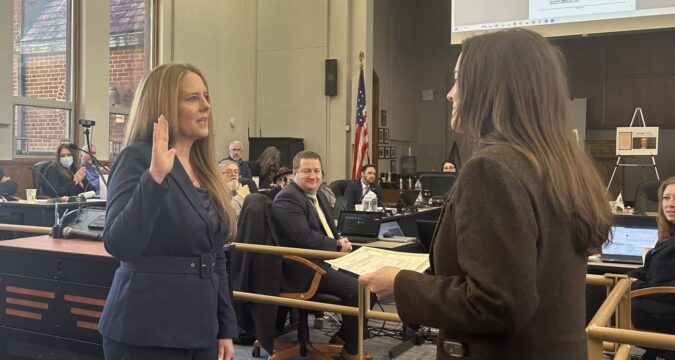
Then, on Tuesday, the two candidates were sworn in, and officially took their seats on the board.
At Tuesday’s meeting, Pierog said she is “sure (the board is) going to welcome them with open arms, with guidance, an opportunity to share with them, for the next several months until the end of November, the workings of this board.”
She also encouraged the two new board members to ask questions as they get to work.
Abbatacola said she works in marketing for local businesses, but was a “complete political outsider” until somewhat recently, she told The Beacon-News on Tuesday. She had not been involved in local politics before but said that when it seemed as though former board member Gary Daugherty would not be running for reelection and that his seat would be open, she started learning more about local government and ultimately decided to run for the District 9 seat in the 2026 election.
“I just took it one step at a time, and I figured at any point in time, someone was going to tell me I shouldn’t be doing this,” Abbatacola told The Beacon-News on Tuesday. “And that’s not what happened … I sat in people’s living rooms and talked to them, and they thanked me. They were like, ‘We need fresh ideas.’”
Abbatacola, whose district encompasses the northwest corner of Kane County, including portions of Hampshire, Huntley, Pingree Grove and Elgin, is from Hampshire, and she was born and raised in Illinois.
She called Daugherty’s support for her being appointed to the seat “an honor,” and, now that she’s been selected, said she is “excited to work hard” in the role. Her “number one priority,” she said on Tuesday, is to represent western Kane County, an area that is fast-growing and “needs attention.”
“Those are good people, and they have quietly paid their taxes and raised their families,” Abbatacola said. “And they deserve a strong voice on the board.”
Kimberley Young is sworn in as the Kane County Board’s new District 2 member on Feb. 10, 2026. (Molly Morrow/The Beacon-News)
Young, the new District 2 member, is originally from Aurora, she told The Beacon-News on Tuesday. She spent her career working as a dentist, but has since retired, and then started getting involved in community organizations.
Serving in a political office, however, had not been in her plans, she said, calling herself a “behind the scenes person.” But then she heard about the open District 2 seat and decided to apply.
Young is not running for the seat in the 2026 general election. On Tuesday, Young cited her age – she said she is approaching 70 years old – and said she “would really like to see younger people” serving on the board in the future.
She also noted that the timeframe means she will likely be limited in terms of what she can accomplish, and expects that she will “just barely be out of the learning curve” when her time on the board ends, but said it’s “all about service.”
“It’s a matter of service to the community,” she said.
mmorrow@chicagotribune.com

Somali Fraud: Three Key Takeaways From Tuesday’s Senate Hearing
Somali Fraud: Three Key Takeaways From Tuesday’s Senate Hearing
Authored by Janice Hisle via The Epoch Times (emphasis ours),
The magnitude of Minnesota’s Somali welfare-fraud problem has only begun to surface – and it is tied to other fraud in ways that many Americans do not realize, according to statements made during a Feb. 10 Senate hearing in Washington.
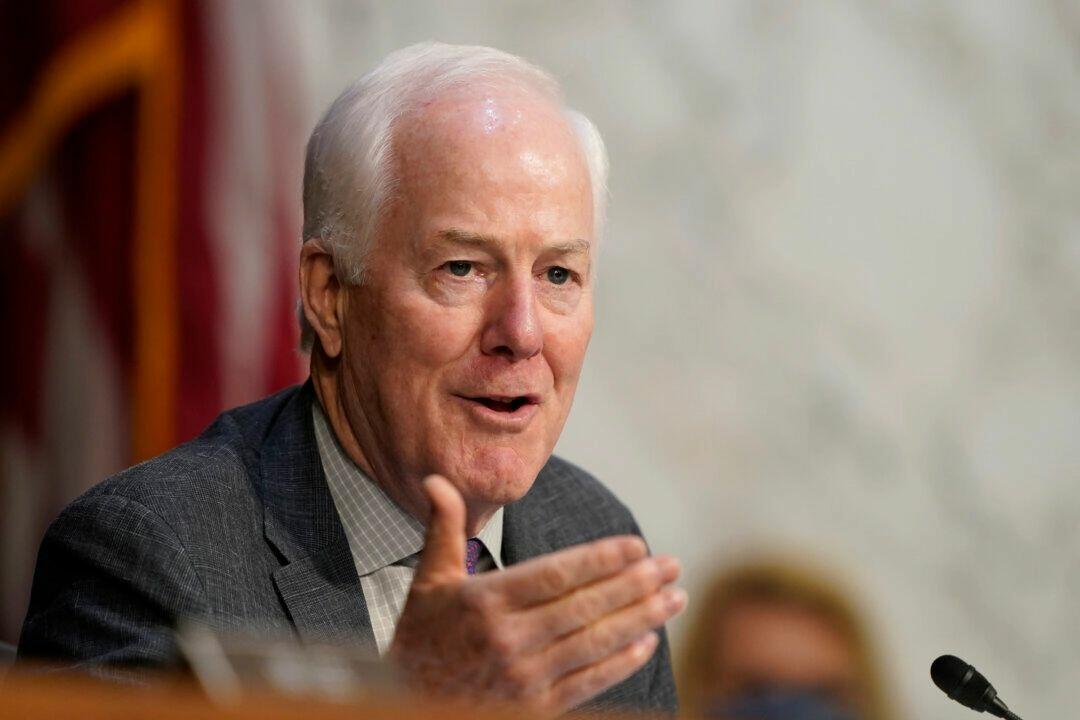
Sen. John Cornyn speaks on Capitol Hill on Oct. 14, 2020. Susan Walsh-Pool/Getty Images
A subcommittee focused on immigration and border security held a two-hour hearing titled, “Somali Fraud in Minnesota—The Tip of the Iceberg.” Both houses of Congress are exploring the problem and its possible remedies.
Two witnesses who testified are former State Department employees who worked abroad as foreign service officers. Both men reported seeing weaknesses in America’s systems for verifying backgrounds and identities of foreigners who apply for U.S. immigration benefits.
Committee chair Sen. John Cornyn (R-Texas), announced he is preparing legislation to stop fraudsters from sending stolen U.S. taxpayer dollars overseas with no meaningful scrutiny.
The committee’s ranking member, Sen. Alex Padilla (D-Calif.) said, “No one is here to defend fraud.” But he accused Senate Republicans of “choosing to point to a few isolated incidents and using them to cast suspicion on entire communities.”
1. The ‘Tip of the Iceberg’
Prosecutors estimated that fraudsters bilked $9 billion or more from 14 of the state’s Medicaid programs since 2018—and “credible reports” indicate some Minnesota officials knew about fraud dating to 2011 yet allowed it to persist, Cornyn said.
The Justice Department has charged 98 defendants, 85 of whom are of Somali descent, in Minnesota fraud cases; 64 have been convicted. Prosecutors have issued more than 1,750 subpoenas, executed more than 130 search warrants and conducted more than 1,000 witness interviews, he said.
Despite those large numbers, Cornyn said, “This recent episode, unfortunately, appears to be just the tip of the iceberg.”
The depth of Minnesota fraud is still being uncovered—and more schemes are now coming to light in states such as California.
Sen. Amy Klobuchar (D-Minn.) said she has previously asked for more resources for the U.S. Attorney’s Office in Minnesota, which has brought the federal fraud charges.
Recently, 14 assistant U.S. attorneys left that office, Klobuchar said, citing news accounts indicating those prosecutors resigned over a controversy related to investigating the death of 37-year-old Renee Good, who was fatally shot by an Immigration and Customs Enforcement agent on Jan. 7.
“If we’re going to go after fraud, losing that talent is a huge problem,” she said.
Nationally, the Government Accountability Office estimates that between $233 billion and $521 billion are lost each year to “fraud and improper payments of federal benefits and other public funds,” Cornyn noted, repeating the numbers twice for emphasis.
Besides inflicting financial damage, fraud “directly affects the safety and security of Americans,” Cornyn said, adding that “much of the fraud is committed by aliens—many of them criminal aliens—and we don’t know what they’re doing with those stolen funds.”
Across America, illegal immigrants reap $8 billion in Medicaid fraud and $3 billion in earned-income tax credits per year, according to 2023 estimates from the Federation for American Immigration Reform (FAIR), Cornyn said.
2. Illegal Immigration Tied to Less-Obvious Fraud
Matt O’Brien, a former immigration judge who serves as FAIR’s deputy executive director, testified that many Americans do not realize that “immigration-related fraud represents a large and largely unacknowledged share” of the nation’s fraud losses.
That type of fraud includes “crimes committed to maintain life in the United States when someone lacks lawful status,” he said. Examples include identity theft, false U.S. citizenship claims, Social Security fraud, and tax fraud.
Migrants, facing pressure to succeed, “recognize opportunities created by weak oversight,” O’Brien said.
They also “may rationalize fraudulent conduct based on ideological narratives common in their home countries.”
“The result is widespread, repeated fraud that touches nearly every part of our government systems,” he said.
Yet data about immigration-related fraud is “remarkably scarce,” O’Brien said, noting the best figures are probably two decades old.
In addition, there is no “coordinated federal strategy” for detecting and prosecuting immigration fraud. Those responsibilities are “scattered across” state agencies and at least seven federal agencies.
Simon Hankinson, a senior research fellow who focuses on immigration issues for The Heritage Foundation, testified that in his former work as a foreign service officer, he was “lied to many times a day about every aspect of applicants’ cases.”
A U.S. consulate officer who interviews applicants serves as “the first line of vetting;” the next step involves checking U.S. databases for records about the person. But, he said, if the applicant comes from a nation that lacks accurate records or is unwilling to share the data, the records check is useless.
“Typically, the more corrupt and poor a country is, the more visa fraud,” he said, adding, “Somalia is as poor and corrupt as countries get.”
His former duties included supervising consular operations in Somalia. There, he routinely saw fraudulent marriage claims and unauthorized letters of support from the Somali government, among other falsifications.
Crime and corruption “seem to follow immigrant populations into host countries, at least in the first generation,” Hankinson said.
3. Low-Tech and High-Tech Solutions
Another former foreign service officer, Phillip Linderman, a board member of the Center for Immigration Studies, said it is a “supreme challenge” for consular officers to properly vet documents. And, he said, “there were always powerful voices in Washington constantly insisting that all visas be issued—and fast.”
A simple policy change could be effective, he said. “U.S. policy should curtail visa services in those countries that tolerate or are complicit in high levels of fraud,” Linderman said.
The State Department already tracks which countries have high visa fraud rates. But officials in that agency keep those records to themselves and “do almost nothing with them,” he said. “This is a big mistake.’
He urged the State Department to use that information in diplomatic relations with those countries.
Linderman also encouraged agencies to “apply the growing power of artificial intelligence and to look at fraud patterns in all immigration benefits—from visas all the way through to naturalization.”
In general, immigration benefits should be denied for people “whose identities we cannot verify and whose documents are unreliable and whose criminal records cannot be checked adequately,” he said.
Cornyn suggested both high-tech and low-tech measures.
“We can invest in fraud prevention and detection mechanisms … [and] require agencies to require biometric identification,” Cornyn said, before any applicant receives government money or benefits.
“Furthermore, we can require automated and recurrent identity verification, random audits and in-person identity verification” for programs that receive public funds, he said.
As a low-tech measure, Cornyn said he will propose the “Stop Somali Cash Fraud Act,” which addresses a problem that Homeland Security highlighted recently.
During the past two years, $700 million in cash—packed in suitcases—“has been flown out of the Minneapolis airport,” Cornyn said, noting many of those funds were “tied to Somali couriers.” Homeland Security officials said that practice has occurred for nearly a decade, Cornyn said.
That money “could be used to fund Somali terrorist organizations like al-Shabaab,” Cornyn said. The Treasury Department began investigating that possibility in December.
Under Cornyn’s proposal, noncitizens would be required to disclose the source of large sums of cash they intend to transport overseas. They also would need to give additional background details 72 hours prior to scheduled air travel, which would give officials time to investigate.
David Bier, director of immigration studies at the Cato Institute and a former policy adviser for a Republican congressman, agreed with Democrats who said Somalis and other immigrants were being unfairly characterized.
After leaving “terrible conditions,” many immigrants start businesses and otherwise contribute to society, he said.
Bier proposed a sweeping change: “Congress should end the broken welfare systems—namely the oversight-free aid to states that led to all the fraud in Minnesota.”
Tyler Durden
Wed, 02/11/2026 – 11:30
https://www.zerohedge.com/political/somali-fraud-three-takeaways-tuesdays-senate-hearing

New trail to be built on Waverly Road bridge in Porter
A new multi-use trail will be developed for the Waverly Road bridge over Interstate-94 to the Orchard Apartments in Porter.
Michael Barry, the town’s director of development and building commissioner, said the Indiana Department of Transportation is overseeing the project.
There is currently a wider-than-normal berm on the north side of the bridge.
Barry said that the project will set the trail off with guardrails to better protect bicyclists and pedestrians.
The town’s share of the project will be a maximum $669,000.
Construction will include resurfacing the bridge. Barry said there will be no disruption of traffic, with one lane always remaining open.
When the bridge over the Little Calumet River was replaced in 2024 just south of the I-94 span, Waverly Road was closed for seven months.
Eventually, the town wants to extend the trail north on Waverly Road, making connections with the Dunes Kankakee Trail and the Marquette Greenway. One proposal calls for a trail that would go all the way north to Porter Beach.
The Town Council also approved an agreement with the National Park Service concerning the construction of a 1.04-mile section of the Marquette Greenway on the Mnoke Prairie.
Porter’s Redevelopment Commission last month awarded a $1,668,400 contract for the trail’s development.
Barry said that an agreement was needed with the National Park Service because the trail is on land in the Indiana Dunes National Park.
The neighboring town of Burns Harbor also will have to sign a similar agreement, Barry said.
Barry said that Porter’s portion of the trail will stretch from the Burns Harbor corporation limit at Babcock Road east to Howe Road. The Marquette Greenway Trail, when it’s completed, will stretch 56 miles from Calumet Park in Chicago to New Buffalo, Michigan. During the past few years, communities have been building portions of the trail.
The council also awarded a $368,004 contract to Milestone Contractors for paving projects this year.
Barry said that the bids came in lower than estimated. The town will only have to pitch in $45,000 as a match for the Community Crossing grant the town received from the state.
The town is working on an agreement with Chesterton to share the match cost for paving 23rd Street between Wood Street and Washington Street. The street serves as a boundary between the two communities.
Oak Street and Dunes View Avenue will also be resurfaced this year.
Jim Woods is a freelance reporter for the Post-Tribune.
https://www.chicagotribune.com/2026/02/11/new-trail-to-be-built-on-waverly-road-bridge-in-porter/

Another Operation Midway Blitz protest case evaporates in federal court
A judge has dismissed yet another set of Operation Midway Blitz related charges, this time against against a man who had been accused of resisting or impeding federal agents during the Trump administration’s expansive immigration raids in and around Chicago late last year.
Prosecutors moved to drop the charges Feb. 5, according to court records. Erik Meier had been due back in court for a hearing Wednesday morning, with a trial scheduled for March 9, records show.
Magistrate Judge Maria Valdez’s Tuesday order to dismiss the misdemeanor case against Meier without prejudice makes him at least the 17th defendant swept up and charged in protests around Operation Midway Blitz last fall to later be cleared. Meier’s attorney didn’t immediately respond to a request for comment.
The case is the latest in a string of charges stemming from the Blitz to later fall apart weeks or months after they are brought. That trend that prompted one federal judge to excoriate the U.S. attorney’s office for bringing charges at such speed that later facts hamstrung a grand jury indictment or forced prosecutors to dismiss a case as not provable.
The initial accusations against protesters — such assault for shutting a car door on the leg of a federal agent or ramming and domestic terrorism for participants in protesting car caravans — mirror repeated claims from senior officials from the U.S. Department of Homeland Security that their agents suffered horrific abuses at the hands of protesters. But those allegations of abuse have disintegrated under judicial review over and over, even as DHS officials insist they stand by the statements they made in September and October at the height of the blitz.
Marimar Martinez, the highest-profile defendant to be cleared of wrongdoing while protesting the operation, has said that all she wants is “a simple sorry” and an acknowledgment from the government that she is not a domestic terrorist.
Late Tuesday, the government released a new trove of evidence in the now-dismissed case against Martinez, the 30-year-old citizen who was shot while protesting against the raids in the Brighton Park neighborhood.
Martinez, a Montessori School teacher whom DHS officials called a domestic terrorist, still cannot close her right hand over a pen, she told members of Congress last week. The case against her fell apart weeks after text messages from the agent who shot her surfaced in court, showing him bragging about wounding Martinez and declaring that he was up for “another round of (expletive) around and find out.”
Of the 106 people identified in a Tribune analysis as having been caught in the federal dragnet while protesting the operation, just nine resulted in pending felony charges.
https://www.chicagotribune.com/2026/02/11/operation-midway-blitz-case-dropped/

El ucraniano Vladyslav Heraskevych entrena de nuevo con casco vetado, pese a fallo del COI
Por TIM REYNOLDS
CORTINA D’AMPEZZO, Italia (AP) — El ucraniano Vladyslav Heraskevych, que compite en el skeleton, volvió a entrenar el miércoles con su casco vetado, un día antes del inicio de su prueba en los Juegos de Milán-Cortina y con el Comité Olímpico Internacional pidiéndole que expresara su mensaje de otra manera.
Heraskevych llegó a los Juegos Olímpicos con un casco personalizado que muestra los rostros de más de 20 deportistas y entrenadores ucranianos que han fallecido durante la guerra de su país con Rusia, un conflicto que comenzó poco después de que terminaron los Juegos de Beijing 2022.
Pero el COI informó el lunes por la noche que el casco no estaría permitido en competencia, al citar una norma que prohíbe hacer declaraciones políticas en el terreno de juego olímpico. Aun así, Heraskevych usó el casco en el entrenamiento del martes y del miércoles, sabiendo que el COI podría, en última instancia, impedirle participar en la prueba olímpica.
“El casco no viola ninguna norma del COI”, sostuvo Heraskevych.
El COI discrepa y planeaba hablar de nuevo con Heraskevych el miércoles para discutir qué se permitiría, señaló el portavoz Mark Adams.
Adams se pronunció aproximadamente una hora antes de la sesión de entrenamiento del miércoles de Heraskevych, por lo que no estaba claro de inmediato cuándo o si esa conversación ocurriría.
“Reiteraremos las muchísimas, muchísimas oportunidades que tiene para expresar su dolor”, afirmó Adams. “Como ya hablamos antes, puede hacerlo en redes sociales y en conferencias de prensa en la zona mixta. Así que intentaremos hablar con él sobre eso e intentar convencerlo”.
“Queremos que compita. De verdad, de verdad queremos que tenga su momento. Eso es muy, muy importante. Queremos que todos los atletas tengan su momento y de eso se trata. Queremos que todos nuestros atletas tengan un terreno de juego justo y en igualdad de condiciones”, añadió.
Otros deportistas ucranianos están manifestando su apoyo a Heraskevych con un mensaje en sus manos.
“Recordar no es una infracción”, escribió en la palma de su guante la ucraniana Olena Smaha, atleta de luge, durante las dos últimas bajadas de la prueba femenina de luge el martes por la noche, en una clara referencia al casco y a las repercusiones. (Smaha ya había escrito otros mensajes en su guante antes de carreras en el pasado). Y el miércoles, apenas unos instantes después de cruzar la meta en la prueba masculina de super-G, el esquiador ucraniano Dmytro Shepiuk levantó su guante derecho para mostrar “UKR heroes with us” (“Héroes de UKR con nosotros”) en otra muestra de solidaridad con Heraskevych.
El casco fue creado hace unas semanas por un artista ucraniano, y una de las razones por las que Heraskevych cree que debería permitirse es que a algunos atletas se les ha autorizado rendir homenaje a otros al final de su competencia.
Un ejemplo: el patinador artístico estadounidense Maxim Naumov llevó una foto de sus padres fallecidos —los ex campeones mundiales de parejas Evgenia Shishkova y Vadim Naumov, quienes estuvieron entre las 67 personas que murieron en un accidente aéreo el 29 de enero de 2025— al área de “kiss-and-cry” después de su presentación en Milán el martes por la noche.
“Un homenaje hermoso”, expresó Heraskevych.
El COI le ha ofrecido a Heraskevych la posibilidad de usar un brazalete negro en competencia como muestra de su dolor y de luto por sus compatriotas, aunque ese tipo de homenajes por lo general no se permiten. Adams dijo que eso representa una concesión, pero a Heraskevych no le interesa.
“Creo que la manera en que esperamos poder manejar esto es a un nivel humano. Tendremos conversaciones con él para intentar explicarle que, en realidad, es del interés de todos que compita y que también pueda decir lo que quiere decir”, manifestó Adams. “Así que no estoy diciendo que tengamos una solución, una solución lista, para esto. Pero creo que aquí es mejor que la gente hable con la gente y que la interacción humana, con suerte, se imponga”.
Heraskevych es un legítimo aspirante a medalla en Cortina: su peor resultado ha sido un sexto lugar en cinco descensos oficiales de entrenamiento esta semana, en la antesala de la prueba olímpica.
___
El redactor deportivo de AP Pat Graham en Bormio, Italia, contribuyó a este despacho.
___
Deportes AP: https://apnews.com/hub/deportes

Kraft Heinz pauses plans to split into 2 companies, says its problems are ‘fixable’
Kraft Heinz said Wednesday it’s pausing its plans to split into two companies.
Steve Cahillane, a former Kellogg Co. chief who became CEO of Kraft Heinz on Jan. 1, said he wants to ensure that all of the company’s resources are focused on profitable growth.
“I have seen that the opportunity is larger than expected and that many of our challenges are fixable and within our control,” Cahillane said in a statement.
The company’s shares dropped 5.2% in early trading Wednesday as Kraft Heinz reported lower quarterly and annual results.
Kraft Heinz announced in September it was splitting into two companies a decade after a merger of the brands created one of the biggest food manufacturers on the planet.
One of the companies would include stronger-selling brands such as Heinz, Philadelphia cream cheese and Kraft Mac & Cheese. The other would include slower-selling brands like Maxwell House, Oscar Mayer, Kraft Singles and Lunchables.
At the time, Kraft Heinz said it expected the split to be finalized in the second half of this year.
On Wednesday, the company said it will pivot from the split and invest $600 million in marketing, sales and product development.
In its fourth-quarter earnings release Wednesday, CEO Steve Cahillane said Kraft Heinz’s balance sheet and free cash flow potential were strong.
“We are confident in the opportunity ahead and believe this investment will accelerate our return to profitable growth,” Callihane said.
https://www.chicagotribune.com/2026/02/11/kraft-heinz-split/