Category: News

Lily Fish, the first regional champ in program history, puts Reavis girls wrestling on the map. ‘Very proud.’
Lily Fish has been a trailblazer for girls wrestling at Reavis.
When Fish was a freshman, she was one of just three girls in the program, practicing and competing with mostly boys.
“It was hard,” she said. “It was awkward being one of the only girls and having all these guys looking at me like, ‘What is she doing here?’ It was weird at first, but I’m really glad I stuck it out.
“If it wasn’t for my parents guiding me to stick with it, I never would have gotten here.”
Fish, now a senior, has certainly come a long way in four years. On Saturday, she became the first regional champion in program history, winning the 155-pound title at the Ag Science Regional in Chicago.
“Seeing me make it this far after knowing what I was like my freshman year, it’s really incredible to me,” Fish said. “I’m very proud of myself.”
Reavis’ Lily Fish, right, reacts after defeating Hillcrest’s Melissa Nance in the 155-pound championship match of the Ag Science Regional in Chicago on Saturday, Feb. 7, 2026. (Troy Stolt / Daily Southtown)
Fish (29-3) pulled off a thrilling 7-6 win in the championship match against Hillcrest’s Melissa Nance, scoring the decisive reversal with just seven seconds left.
Reavis coach Kyle McKinley was elated to see Fish reach new heights.
“It’s very special,” McKinley said. “She built the program. She’s the winningest girls wrestler we’ve had. There are not enough good things to say about her.
“Of all the boys and girls I’ve ever coached, she’s one of the hardest workers I’ve ever been around. She deserves this.”
Reavis’ Lily Fish, bottom, scores a takedown on Hillcrest’s Melissa Nance during the 155-pound championship match of the Ag Science Regional in Chicago on Saturday, Feb. 7, 2026. (Troy Stolt / Daily Southtown)
Fish is a three-sport athlete and a captain on all three teams, including volleyball and softball. She plans to play softball at Moraine Valley.
Fish had never wrestled before high school and joined the sport mostly on a whim, looking for something to fill the void between her other two seasons.
“I used to play basketball, but when I got to Reavis, I really didn’t want to try out for the basketball team here,” Fish said. “But I wanted to do three sports. I was like, ‘Why not wrestling?’
“I was basically just like, ‘YOLO — you only live once.’”
Reavis’ Lily Fish, top, defends a takedown attempt by Hillcrest’s Melissa Nance during the 155-pound championship match of the Ag Science Regional in Chicago on Saturday, Feb. 7, 2026. (Troy Stolt / Daily Southtown)
At first, wrestling was a just a fun diversion on the side. But after a couple of years in the sport, Fish came to the realization it could be more than that.
“My sophomore year, my first time making it to sectionals, I realized I could go far with this if I stuck with it, practiced hard and gave it my all,” Fish said. “At first, it was mostly just me and my friends messing around and having fun on the mats.
“Now, it’s become something really big and incredible.”
Along the way, Fish has been a mentor for many other wrestlers. Reavis’ program has grown to the point where it had a full lineup of 14 individuals at the regional for the first time.
Hailey Canvin finished third at 235 and Ezra Velez placed fourth at 190 to join Fish in advancing to this weekend’s Phillips Sectional.
“Lily leads the way on the mat and off the mat,” Canvin said. “During practice, she helps us learn better techniques and everything. She’s made us better. She’s just a great partner to wrestle with.”
Reavis’ Lily Fish, bottom, fends off a takedown attempt by Hillcrest’s Melissa Nance during the 155-pound championship match of the Ag Science Regional in Chicago on Saturday, Feb. 7, 2026. (Troy Stolt / Daily Southtown)
As captain in three sports, Fish never takes that role lightly.
“I appreciate my coaches thinking of me as a captain,” she said. “I love stepping up and I love helping other people and making sure they know the right thing to do in the moment and making sure I know when to tell people yes or no.
“I feel like I’ve proven myself to be a leader and it means a lot to me.”
Fish now has her sights set on qualifying for state for the first time. She fell one win short each of the last two seasons, losing in the blood round at sectionals.
“I don’t care if I finish first or fourth at the sectional,” Fish said. “I just want to make it down to state. It would mean a lot to me.”
https://www.chicagotribune.com/2026/02/11/lily-fish-reavis-girls-wrestling/

“They Thought They Were Untouchable”: US Seizes 134 Acres In Texas Used By Mexican Cartel
“They Thought They Were Untouchable”: US Seizes 134 Acres In Texas Used By Mexican Cartel
Authored by Naveen Athrappully via The Epoch Times,
More than 134 acres in Texas that was being used by a drug cartel for smuggling activities has been taken over by U.S. authorities, Customs and Border Protection (CBP) said in a Feb. 10 post on X.
“We took the land and everything on it,” the post said.
A video shared with the post showed law enforcement officers arresting several people.
“They thought they were untouchable. They were wrong. Over 134 acres of land and property, taken from the westside Gulf Cartel, a terrorist organization operating near Rio Grande City, Texas,” according to the video.
The Gulf Cartel is a drug trafficking organization from Mexico that moves arms and migrants into the United States, and has engaged in the kidnapping and murder of American citizens. Drug cartels have been known to use U.S. lands to grow marijuana, with such activities exploiting sanctuary state policies and the sovereignty of native tribal lands.
In a message to the cartels, CBP said, “You think this is just about arrests? It’s not. We are dismantling your operations from the ground up. We’re cutting out your safe houses, your staging areas, your corridors. This is your warning.”
Over the past year, authorities have seized several cartel-linked assets.
In May, the Treasury’s Office of Foreign Assets Control sanctioned two high-ranking members of the Cartel del Noreste (CDN), a drug trafficking organization from Mexico. As a result, all assets and interests in assets of the designated individuals in the United States were blocked.
In March, the Office of Foreign Assets Control sanctioned six people and seven entities for being involved in money laundering activity to support the Mexico-based Sinaloa Cartel, resulting in blocking their assets in the United States.
“Laundered drug money is the lifeblood of the Sinaloa Cartel’s narco-terrorist enterprise, only made possible through trusted financial facilitators like those we have designated today,” Treasury Secretary Scott Bessent said at the time.
“Treasury, as part of a whole-of-government approach to addressing this pressing national security threat, will use all available tools to target anyone who assists the cartels in furthering their campaign of crime and violence.”
Sen. Mike Lee (R-Utah) has introduced the Cartel Marque and Reprisal Authorization Act to seize cartel assets, according to a Dec. 18 statement from the lawmaker’s office.
The bill would authorize President Donald Trump to commission private U.S. operators under letters of marque to take over cartel assets on land and sea. A letter of marque is a written authority granted to a person by the government to seize the goods of enemies. Such letters once used to be a common tool against piracy.
Under the bill, private operators would have the right to employ “all reasonably necessary means” to seize assets outside the United States.
“The Constitution provides for Letters of Marque and Reprisal as a tool against the enemies of the United States,” Lee said.
“Cartels have replaced corsairs in the modern era, but we can still give private American citizens and their businesses a stake in the fight against these murderous foreign criminals. The Cartel Marque and Reprisal Authorization Act will revive this historic practice to defend our shores and seize cartel assets.”
In January, Trump said that the United States will start launching strikes targeting cartels in Mexico. Last month, Mexico transferred 37 members of drug cartels to U.S. authorities amid pressure from the Trump administration to crack down on drug operations in the country.
Crackdown on Cartel Finances
In February 2025, the State Department designated several Mexican drug cartels and transnational criminal gangs as global terrorist organizations.
The designation allows authorities to block all assets of these entities in the United States, the department said.
“Terrorist designations expose and isolate entities and individuals, denying them access to the U.S. financial system and the resources they need to carry out attacks.”
In testimony during a Feb. 10 House hearing, Rodney Scott, commissioner of the CBP, said that cartels engage in human trafficking, of children and those exploited for labor, and use the profits generated by these activities to fund their illegal operations.
“Breaking this cycle requires certainty of consequences and complete border security. When we secure the border and deny illegal entry, we are not just enforcing a statute—we are bankrupting a cartel operation and protecting innocent people,” he said.
“When illegal entry no longer guarantees release into the interior, and when [unaccompanied alien children] are protected and monitored, the cartels lose their product, their presence in the United States, and their ability to profit from our failures.”
According to a Feb. 4 CBP statement, Border Patrol released zero illegal immigrants into the United States in January for the ninth consecutive month.
“Every individual apprehended was processed according to law—a milestone unmatched in modern border history,” it said.
Tyler Durden
Wed, 02/11/2026 – 20:55

BP, USW negotiations continue after strike preparations
An agreement still has not been reached nearly one week after the United Steelworkers union announced it was prepared for a strike or lockout at the BP Whiting refinery.
The groups are expected to continue negotiations.
The USW, on Feb. 6, reached an agreement with Marathon for a four-year national pattern, which covers about 30,000 union oil workers for dozens of employers, according to a union news release. The affected workers are represented through the USW National Oil Bargaining Program, and they work in more than 200 units that include refining, production, pipelines, maintenance storage, petrochemical and renewable facilities.
BP responded to the agreement in a Feb. 6 statement.
“We are aware that the USW Policy committee voted to approve Marathon’s offer,” the statement said. “Regardless of what was agreed upon at the national level between Marathon and the international USW, the Whiting Refinery is, in no way, obligated to follow the ‘pattern.’ We will continue to bargain in the best interests of our employees, our company and the community.”
BP plans to pursue a longer-term contract of six years and has proposed wage percentage increases consistent with the National Oil Bargaining Program pattern, according to a company update.
Eric Schultz, president of USW 7-1, said in a Wednesday statement that BP maintains that they have no plans to honor the National Oil Bargaining Program, claiming this is the first time that’s happened.
“We’ve spent most of our negotiations discussing BP’s concessionary proposals that would eliminate local jobs, reduce pay across the board and strip us of bargaining rights,” Schultz’s statement said. “We will continue to operate in good faith.”
On Wednesday, BP posted an update on its bargaining website, saying the company issued a comprehensive offer and explained what it is.
According to the company, a comprehensive offer is common in negotiations, and it represents proposals that have been discussed and sometimes tentatively agreed upon, and “items that are open but not yet agreed upon.”
“The Whiting Refinery issued a comprehensive offer, which included proposals that have been tentatively agreed upon and those are very important to the future of the refinery and that have been extensively bargained since the start of negotiations on (Jan. 5) but remain open,” the company update said. “This does not represent the conclusion of negotiations but is an important step in signaling progress.”
On Jan. 5, BP and the union started negotiations for a new collective bargaining agreement, according to Post-Tribune archives. The previous agreement expired at 11:59 p.m. Jan. 31, and the two parties couldn’t reach an agreement by deadline.
Both parties have since agreed to rolling 24-hour extensions of the agreement for Whiting refinery workers. The USW is prepared to strike in order to move toward a fair agreement, the union announced last week.
No update on a strike or lockout has been given since its Feb. 5 announcement.
In preparation of a strike or lockout, the union encourages members to remove personal belongings from the workplace, schedule any medical, dental or vision appointments, refill prescriptions with 90-day supplies and postpone major purchases or financial obligations until an agreement is reached.
According to the BP website, if employees are absent from work because of a strike or lockout, they will not be eligible for employee benefits. They can still receive benefits through alternative means, according to BP, including COBRA.
The USW claims that BP’s proposal would “gut the union,” alleging that they asked the union to waive many of their legal bargaining rights and allow for tracking and artificial intelligence surveillance of the refinery’s union employees. The union also claims that BP has rejected its proposals with little discussion.
“We remain focused on reaching a fair and equitable agreement and avoiding a work stoppage,” a previous BP statement said. “Allegations that there has been little dialogue between BP and the union are inaccurate. BP continues to bargain in good faith with the USW to improve the long-term competitiveness of our business and create a sustainable future for our workforce, company and community. The BP Whiting Refinery is committed to safe, compliant, and efficient operations. We value our employees and their contributions.”
The company has held 42 documented bargaining sessions with the union since Jan. 5, according to an email from its spokesperson. The parties have also met in informal settings to discuss the proposals.
BP has also trained replacement workers, consisting of current and former employees, to operate the refinery safely and in compliance with regulations if a work stoppage occurs, according to a Thursday email.
Negotiations updates from BP are available online at whitingnegotiations.com.
https://www.chicagotribune.com/2026/02/11/bp-usw-negotiations-continue-after-strike-preparations/

US, China Work To Preserve Fragile Trade Truce Ahead Of Trump’s April Visit: Report
US, China Work To Preserve Fragile Trade Truce Ahead Of Trump’s April Visit: Report
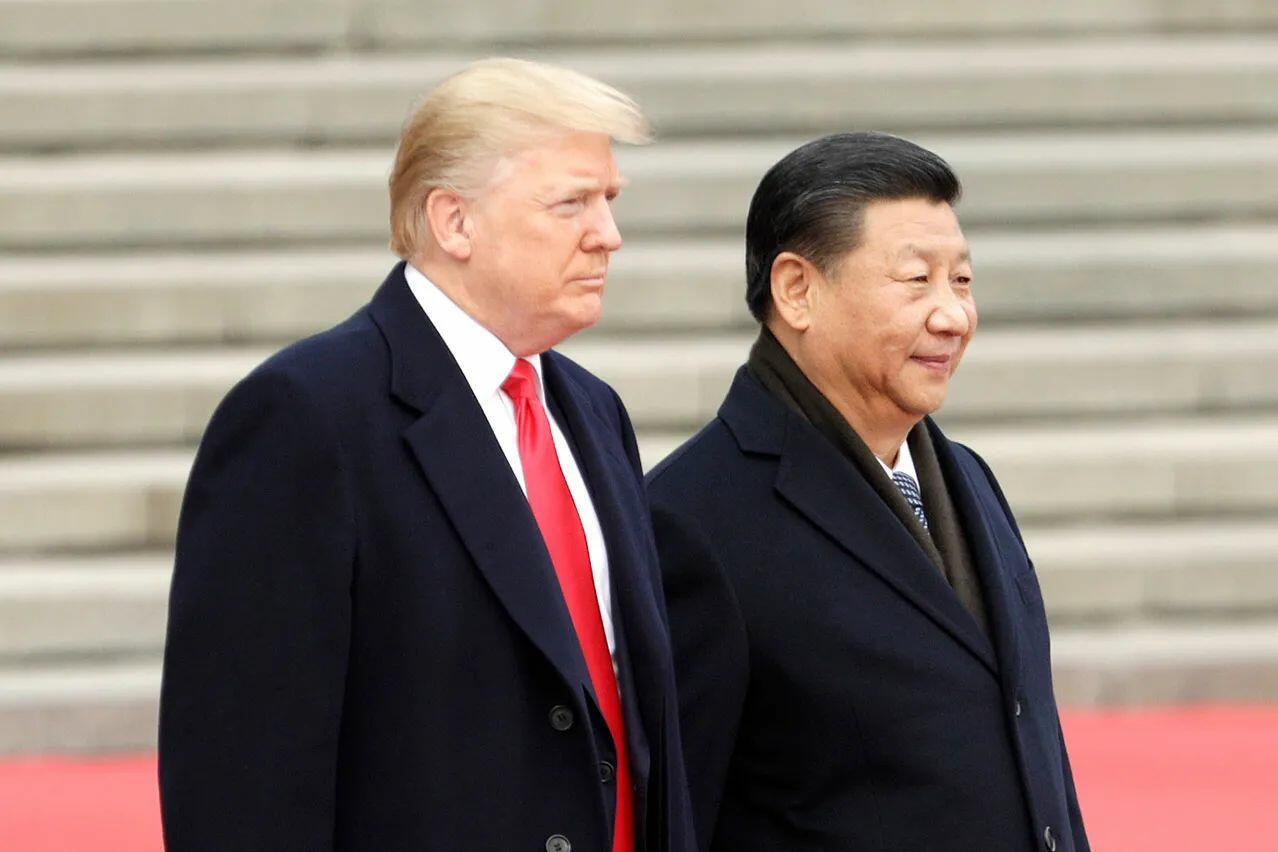
The United States and China are seeking to preserve their fragile trade truce before President Donald Trump visits Chinese President Xi Jinping for a high-stakes summit in Beijing this spring, according to the South China Morning Post.
Donald Trump and Xi Jinping in 2017. Photographer: Qilai Shen/Bloomberg
On the sidelines of the 2025 APEC summit in Busan, South Korea, Trump and Xi held a pivotal meeting that produced a significant—though temporary—trade agreement. Following months of escalating tariffs, curbs on rare-earth exports, and agricultural boycotts, the two leaders agreed to a one-year truce that provided a measure of relief to the world’s two largest economies.
“There seems to be a really strong appetite to maintain that fragile trade truce that we saw struck in late 2025,” Nick Marro, global trade lead at the Economist Intelligence Unit, told SCMP. “I think, at best, we could see this continuation of a detente in tariff policy.”
South China Morning Post reports:
Extending the informal months-long understanding, a step seen by officials as realistic and achievable, would anchor the summit around short-term economic wins, including fresh Chinese purchase commitments, the sources said.
Trump is expected to travel to China in early April, according to four people familiar with the plans. An initial arrival date under consideration was March 31, leading to a bilateral meeting with Xi in the first week of April as part of a visit lasting about three days, two of the people said.
Trump described the 2025 deal as a “massive victory,” announcing reductions in certain U.S. tariffs on Chinese goods (from around 57% to 47% in key areas like fentanyl-related levies), while China committed to resuming large-scale purchases of American soybeans, sorghum, and other farm products, suspending new rare-earth restrictions, and cooperating on fentanyl flows.
The Busan agreement gave American farmers and manufacturers some breathing room, halted further escalation, and opened the door to potential longer-term negotiations, even as deeper structural issues around technology and supply chains remain unresolved.
“Both sides will look for deliverables that can be packaged as wins they can present at home,” Wang Dan, China director at Eurasia Group, told SCMP, adding “This could include numerical commitments for soybeans, energy and manufactured goods from the US.”
Treasury Secretary Scott Bessent is expected to meet his Chinese counterpart, Vice Premier He Lifeng, in the coming weeks to discuss deliverables ahead of the meeting, sources told the South China Morning Post.
Last week, senior @USTreasury staff visited China to strengthen channels of communication and advance the dialogue between our nations.
During their visit, our teams discussed preparation for the next high-level meeting on U.S.-China trade between myself and Vice Premier He…
— Treasury Secretary Scott Bessent (@SecScottBessent) February 9, 2026
Last week, Trump and Xi held their first phone call in months, which the president characterically called “excellent.”
“I have just completed an excellent telephone conversation with President Xi, of China. It was a long and thorough call, where many important subjects were discussed, including Trade, Military, the April trip that I will be making to China (which I very much look forward to!), Taiwan, the War between Russia/Ukraine, the current situation with Iran, the purchase of Oil and Gas by China from the United States, the consideration by China of the purchase of additional Agricultural products including lifting the Soybean count to 20 Million Tons for the current season (They have committed to 25 Million Tons for next season!), Airplane engine deliveries, and numerous other subjects, all very positive!” Trump posted on Truth Social.
“The relationship with China, and my personal relationship with President Xi, is an extremely good one, and we both realize how important it is to keep it that way,” the president continued. “I believe that there will be many positive results achieved over the next three years of my Presidency having to do with President Xi, and the People’s Republic of China.”
China’s official readout presented a more pointed tone, emphasizing Xi’s focus on Taiwan and urging Washington to reduce tensions over the self-ruled island.
On Monday, US ambassador to China, David Perdue, said at an event organized by the China Council for the Promotion of International Trade in Beijing said that the US was “not closing the door to doing business with China.”
“As President Trump has said, we want to trade with China, we need to trade, but that trade should be balanced and with full reciprocity,” Perdue said. “I’m very optimistic about the year ahead and also clear-eyed. The challenges are real.”
Xi called the U.S. approach to Taiwan “the most important issue in China-U.S. relations,” declaring that China “will never allow Taiwan to be separated from China.”
Tyler Durden
Wed, 02/11/2026 – 20:30
Illinois sues Trump administration over more than $100 million in planned cuts to health care grants
President Donald Trump’s administration is moving to cut more than $100 million in federal health care grants for Illinois, a step that was quickly met with a lawsuit filed by Attorney General Kwame Raoul and his peers in three other states.
Illinois, California, Colorado and Minnesota sued the Trump administration Wednesday over the Office of Management and Budget’s directive to the Centers for Disease Control and Prevention to cut more than $600 million in grants to those states. The grants, which could be terminated as soon as Thursday, are for states to track disease outbreaks, maintain and improve their data systems and collect public health data, according to the lawsuit.
“Rather than making life easier and more affordable for our families, Donald Trump is stripping critical public health funding with the singular goal of harming states he does not like,” Gov. JB Pritzker said in a news release. “It’s a slap in the face to the people of Illinois and the public health leaders who have stepped up as his (U.S. Department of Health and Human Services) takes a sledgehammer to public health infrastructure. Illinois will not stand by idly as Trump illegally cancels the Congressionally-allocated funding we are owed.”
The U.S. Department of Health and Human Services did not immediately respond to a request for comment Wednesday evening, but a spokesperson said earlier this week in a statement, “These grants are being terminated because they do not reflect agency priorities.”
In Illinois, the grant dollars targeted for cuts include more than $86 million slated to go to the Illinois Department of Public Health for public health efforts and prevention of HIV and sexually transmitted diseases, and more than $61 million for the Chicago Department of Public Health for similar work, according to information obtained by the Tribune.
The largest grant at risk is the Public Health Infrastructure Block Grant, which in Illinois funds lead poisoning prevention grants to 25 local health departments and grants that support 674 public health jobs at 96 local agencies, according to the lawsuit. If Illinois were to lose that money, it would have to terminate 99 Illinois Department of Public Health employees, harming the state health department’s ability to “perform core public health functions” including disease surveillance, data analysis, workforce management and regulatory compliance, according to the lawsuit.
Grant money for other nongovernmental organizations in Illinois is also at risk. The list of grants to be canceled includes $5.2 million for Lurie Children’s Hospital for HIV prevention, according to information reviewed by the Tribune. It also includes $7.2 million that was supposed to go to the Chicago-based American Medical Association to increase screenings for infectious diseases, improve blood pressure control, help physicians navigate brain health and dementia care, and improve care for people living with pain.
A spokesperson for the Chicago Department of Public Health said of the reported cuts: “This is an evolving situation. We are actively working to identify the specific grants that could impact CDPH, and our priority is to ensure we minimize any potential impact on Chicagoans.”
Lurie said in a statement Tuesday: “We are evaluating the circumstances that have been reported by the media regarding this research grant. We conduct all of our research to improve the lives of children, adolescents and families.”
Other cited potential cuts include $1.4 million in grants for the Itasca-based American Academy of Pediatrics for provider education and school-based mental health; $600,000 for the Puerto Rican Cultural Center for HIV Prevention; $400,000 for the South Side Help Center for HIV prevention; and $523,000 for the University of Chicago for violence prevention.
The grants listed for cancellation were multiyear grants, and the figures do not include money that has already been distributed as part of those grants. A spokesperson for the U.S. Department of Health and Human Services did not immediately answer a question Wednesday afternoon about whether money that has already been given out could be clawed back or if the cuts would only affect grant money moving forward.
Many of the grants are related to HIV prevention. John Peller, president and CEO of the AIDS Foundation Chicago, said now is “exactly the wrong time to cut HIV funding and programs in Illinois,” noting that there were nearly 13% more new HIV cases in Chicago in 2024 than 2023.
Peller worries that fewer resources may mean fewer people getting tested and fewer learning about PrEP, medication that is taken before potential exposure to HIV that can reduce a person’s chances of catching it if they’re exposed.
“The lifetime cost of treatment for someone living with HIV is over $420,000, so we think HIV prevention programs are a bargain and a prudent public health investment,” Peller said. “It just doesn’t make sense to cut HIV funding.”
Illinois and the three other states affected by the cuts allege in their lawsuit that the Office of Management and Budget’s directive to government agencies to terminate the grants violates the U.S. Constitution and the Administrative Procedure Act because they are arbitrary and capricious and the move exceeds the agencies’ statutory authority.
Over the past year, the federal government has worked to slash a number of health care-related grants to Illinois.
Last month, the Trump administration said it was terminating nearly $6 million of behavioral health and suicide prevention grants for the state of Illinois, along with millions more in grants that go to Illinois nonprofits to support mental health and substance use disorder services — news that sparked outrage and confusion among providers. The federal government, however, quickly backtracked, saying it would no longer cancel the grants.
That same month, the Department of Health and Human Services said that it would freeze about $10 billion in funding for child care and family assistance programs in Illinois, California, Colorado, Minnesota and New York over concerns that the benefits “may have been improperly provided to individuals who are not eligible under federal law.”
Illinois and the other states sued the federal government, and a federal judge last week issued a preliminary injunction in the case preventing the assistance funds from being frozen while the case proceeds.
In March, the federal government said it would pull back $125 million in funding from the Illinois Department of Public Health and 97 local health departments for activities related to COVID-19 and other infectious diseases. Illinois and other states sued over the cuts, and a federal judge issued a preliminary injunction in mid-May prohibiting the federal government from cutting the money from those states, including Illinois, while the case proceeds.
https://www.chicagotribune.com/2026/02/11/trump-administration-health-care-grants/

‘Diversity’ Judge Cuts Sadistic Rapist’s Sentence in Half
‘Diversity’ Judge Cuts Sadistic Rapist’s Sentence in Half
Authored by Kevin Downey Jr. via PJ Media,
A diversity judge just cut a sexual deviant’s sentence from 65 years down to 30. Why? Because Marxism.
A Jefferson County, Ky., judge, Tracy Davis, decided to cut the sentence of convicted rapist Christopher Davis by 35 years because, despite his heinous crime, he is just a poor lad who “fell through the cracks” and “experienced this society.” In other words, systemic racism made him don a mask, point a gun at a woman, kidnap her, sexually assault her, rob her, and sexually assault her again — all because his brain hasn’t fully developed yet.
I don’t want to get into the details of Thompson’s savagery, so I will let KTSA tell you:
In July 2023, Christopher Thompson, then 18, wore a ski mask and forced his way into a woman’s car at gunpoint in south Louisville, driving her to Sanders Elementary School where he sexually assaulted her twice and forced her to withdraw $220 from an ATM. DNA evidence from a water bottle left in the victim’s vehicle led to his arrest in January 2024. After a four-day trial in December 2025, a jury convicted Thompson of robbery, kidnapping, sodomy, and sexual abuse, recommending a 65-year prison sentence for what prosecutors called “every woman’s worst nightmare.”
Davis and Thompson had a little back-and-forth in the courtroom, during which Thompson incredulously repeated that God was with him.
This conversation took place (I’m going to bold the parts where it seems as though the judge is coaching Thompson on what he should be saying to get a reduced sentence):
Judge Davis: The thing is, when the court is considering that and considering sentencing you and applying the actual law – Because you’d be surprised, me in this seat, I apply the law. Regardless of what the media thinks, regardless of what anybody thinks, I apply the law. I do not judge people before they walk before me. I don’t. I reviewed your PSI (pre-sentencing investigative report). I looked at who you were. You refused to come over. I ‘by any means’ you because you deserve to be here and to say whatever it is that you want to say to the court prior to the court imposed a sentencing.
No person, as long as they are breathing, is beyond rehabilitation and being on the correct path. So if you know anything about God in your Bible, you know about Barabbas. At the very last minute, what happened to him?
It’s not about your past. It’s about your future. And it’s about you not being angry. This is your whole life. Your whole life. And if for one second, you came in here and said, “Judge Davis, you know what? I want to be a different person. Regardless of what my past is, regardless of how angry I’ve been, regardless of the things that I have said, regardless of how you look at that, I don’t want to be that person from today into the future.”
Thompson: “It’s hard to be that when I’m in jail.”
Judge Davis: “And if you give me that opportunity, and sentence me to the minimum, I can show you that I will go to school. I will get training. I will do everything that I can so that when my sentence is done, I can be an active member of society.” But that’s not what you’ve done. You came in here off the cuff saying negative things, trying to get a response out of everybody, and that’s not it. I hope that you get what you need while you are incarcerated.
If that didn’t make you puke, read how the judge refuses to even tell Thompson that he caused harm to the community:
Thompson: I got Jesus. I don’t need nothing else.
Judge Davis: I hope that somewhere along the line, your brain fully develops, and you begin to make better decisions so that you are not someone that can cause harm to the community, and so that you yourself do not get harmed.
Thompson: So you’re saying I did cause harm to the community?
Judge Davis: I didn’t say that. I said so that you would not. I didn’t say that you did.
Thompson: All right.
Ugh.
Poor Thompson, according to the judge, isn’t a vile, remorseless rapist who hates everyone. He is a tragic victim of “society” and just requires a little brain development.
BILLY MAYS-O-RAMA! But wait, there’s more!
Thompson didn’t care about the coaching, the proceedings, the victim, or the victim’s family, and he had some saucy words for the judge and prosecutor as well. I’d write them out, but the “naughty word” alarm would melt, so I’ll let you watch Thompson lay into everyone around him:
Despite Thompson showing no remorse and a ton of attitude — not to mention suggesting he’d spit on the judge if he could, and suggesting the judge ingurgitate his membrum virile — Davis decided 65 years in the hoosegow for the career animal was too much time and knocked his sentence down to 30 years. With good behavior, which seems wildly unlikely, Thompson could be out in 20 years when he is 40 years old.
FACT-O-RAMA! The Marxist judge was also aware at the time of sentencing that Thompson is facing an assault charge against a corrections officer.
SHOCK WARNING: Judge Davis is a pronoun Punchinello, and check out her Twitter handle:
This filthy, DEI Marxist just cut a savage rapist’s sentence in half. He even insulted her in her own court.
She didn’t care. For the communists, it’s all about the “revolution.” pic.twitter.com/vcxkDYs32E
— The Kevin Downey, Jr. Show Mon- Fri. 9-11 am EST! (@KDJRadioShow) February 10, 2026
In that potty-mouthed exchange video, you may have heard Anthony Piagentini, councilman for Metro Council District 19, mention “shock probation.” What’s that?
Kentucky’s definition: Shock probation is when a judge ignores a convict’s sentence and chooses to send him to jail for a substantially shorter sentence, in order to “shock” the guilty into the reality of prison life and, hopefully, compel the prisoner into a life of lawfulness.
KDJ’s definition: It’s a reason to let animals out of jail as soon as possible. The communists need crime and chaos to destabilize our nation, and nothing does that better than violence in our streets.
It seems Judge Davis has applied “shock probation” 40 of the 44 times she’s been requested to do so, more than any other judge in Jefferson County.
What could go wrong by letting violent criminals out of jail?
This:
Meet Judge David Kelly of Chicago. Prosecutors begged him not to release Davaughn Credit who was arrested for a series of violent robberies.
He released him anyway on an ankle monitor.
Well Davaughn escaped the monitor and just allegedly moIested a young girl.
These… pic.twitter.com/e1yknuSnn1
— Libs of TikTok (@libsoftiktok) December 11, 2025
FACT-O-RAMA! The party that lets criminals walk out of jail early also has a pesky habit of trying to take away your guns. We call those people Democrats.
You may be wondering what you can do to stop Democrat, pinko judges from letting animals out of prison early.
For starters, you should convince your family and friends to never vote for a Democrat again:
A man attempted to assassinate Justice Kavanaugh.
Maryland Biden Judge Deborah Boardman sentenced him to only 8 years.
A man attempted to assassinate President Trump.
Florida Trump Judge Aileen Cannon sentenced him to life.
Too many of today’s Democrat judges are truly evil. pic.twitter.com/nH5ZhTsaT9
— 🇺🇸 Mike Davis 🇺🇸 (@mrddmia) February 4, 2026
Tyler Durden
Wed, 02/11/2026 – 20:05
https://www.zerohedge.com/political/diversity-judge-cuts-sadistic-rapists-sentence-half

La manía por pines olímpicos hace que coleccionistas corran entre sitios y colmen un centro de canje
Por COLLEEN BARRY
MILÁN (AP) — Una decena de personas fuera de una estación del tren subterráneo de Milán miraban fijamente sus teléfonos el miércoles hasta las 8 de la mañana, cuando una publicación de Instagram proporcionó una ubicación.
“Corre, no camines: estamos en la zona del Castello”, indicaba la publicación. “Hay pines disponibles hasta agotar existencias”.
Eso hizo que el grupo saliera corriendo.
A primera hora de cada mañana en Milán, coleccionistas entusiastas se han estado reuniendo para esperar noticias del lugar exacto donde pueden conseguir pines olímpicos muy codiciados y de edición limitada que son gratis —siempre y cuando la persona en cuestión sea lo suficientemente rápida.
Ilaria Pasqua se ha levantado y ha salido temprano todos los días desde el sábado para hacerse con los codiciados prendedores de YesMilano, la agencia de promoción de la ciudad, y planea completar la colección de siete barrios —incluidos Isola y Porta Venezia—, así como de cinco lugares emblemáticos, como el Duomo. Se unió a tres coleccionistas que conoció el primer día, y han desarrollado un sistema para estar entre los primeros de la fila.
“Sé que puede sonar un poco extremo, y como una pérdida de tiempo. Pero en realidad, he conocido a estas personas con las que estoy haciendo esto, así que está bien”, comentó Pasqua, profesora de inglés en Milán. “Es una manera de conocer la ciudad en la que vives o que estás visitando. También es algo social. La verdad es que lo estoy disfrutando mucho. Y te llevas a casa un pequeño tesoro cada día, así que es divertido”.
Cada día, después de recibir sus pines, Pasqua cuenta que se los guarda bien al fondo del bolsillo del abrigo, fuera de la vista de los rezagados que buscan un canje que ella no quiere hacer.
Orden de prioridad
Coleccionar pines es una parte esencial de la subcultura olímpica. Muchas personas viajan desde muy lejos a los Juegos sólo para abultar lo que a menudo es una colección muy considerable de pines esmaltados que guardan en casa.
Quienes tienen poca paciencia para la búsqueda del tesoro y quieren ir directo al grano han encontrado una buena noticia en Milán. Ésta es la primera edición olímpica que ofrece un centro oficial de intercambio de pines desde Pyeongchang en 2018.
Patrocinado por Warner Brothers, el centro incluye un área donde los niños pueden interactuar con personajes de Looney Toons con disfraces, cultivando la próxima generación de intercambiadores de pines, además de una docena de mesas donde ávidos comerciantes de lugares tan lejanos como Estados Unidos y Japón exhiben tableros con sus artículos.
Eddie Schneider, de Lindenhurst, Nueva York, lleva intercambiando estas insignias desde los Juegos de Verano de 1984 en Los Ángeles. Entre sus 25.000 pines hay uno de los Juegos de Londres de 1948, a los que asistió su madre.
“Lo considero como ir a una Exposición Universal cada dos años”, expresó en el centro. “Puedes ir a distintos lugares, experimentar diferentes culturas y divertirte”.
Los “reyes” de los pines
Los coleccionistas de élite conocen el valor intrínseco de cada categoría, incluidas las de venta minorista, delegación, equipo, patrocinador, medios y comités olímpicos nacionales. Los pines de medios japoneses están entre los más codiciados por los coleccionistas más dedicados, por su rareza, mientras que en Cortina los atletas estaban ansiosos por conseguir un prendedor de Irán.
Y en París, las insignias de Snoop Dogg fueron las que más dieron de qué hablar.
Los pines oficiales incorporan el logotipo de Milán Cortina 2026 y los aros olímpicos, y son producidos en exclusiva por la empresa Honav, con sede en Los Ángeles, titular de los derechos para los Juegos de Invierno de Milan Cortina y los próximos Juegos de Verano de Los Ángeles 2028.
El propietario de Honav, Mario Simonson, señaló que su empresa diseñó cientos de pines y produjo millones para estos Juegos —cada uno con el sello posterior de Honav como garantía de autenticidad. El Comité Olímpico Internacional recauda regalías por el uso del logotipo y los aros.
Los pines sin esas características oficiales tienen “valor cero” para los comerciantes serios, afirmó.
“Pindemonio”
Josh Waller, residente de Londres, de 21 años, coleccionó su primer pin en los Juegos de Verano de 2012, cuando tenía 8 años. Ahora tiene más de 10.000 guardados en su habitación, y llevó 1.500 a Milán para intercambiar. Lo llama “pindemonio”.
Su colección de pines olímpicos de Londres, incluidas ediciones antiguas, ha ganado premios. Pertenece a un grupo de comerciantes en línea que creció de forma explosiva después de los Juegos de Tokio, cuando la pandemia mantuvo a los espectadores en casa.
Waller ha desarrollado software para autenticar pines de alto valor. Es voluntario en el centro de intercambio de pines, donde, según contó, miles de personas, incluidos atletas y familias con niños, hicieron fila durante el fin de semana para comprar e intercambiar.
“Toda la comunidad de intercambio de pines es muy unida”, le dijo a The Associated Press Mark Gabriel, un ejecutivo de productos de consumo de Warner Brothers.
Gabriel espera que el intercambio “alcance el clímax” en el segundo fin de semana de los Juegos.
Caza de pines
Mientras tanto, los entusiastas de los pines están recorriendo la ciudad de un lado a otro a primera hora de la mañana, en busca de la serie completa de YesMilano.
Han tenido éxito más allá de lo que imaginaban los organizadores. Si bien los pines de la ciudad han sido parte de los Juegos desde hace tiempo, la campaña de YesMilano va más allá, al promover zonas poco visitadas de la ciudad y alentar a la gente a conocer lugares emblemáticos.
El primer día, más de 1.000 personas se presentaron en el barrio del norte de Piazza Loreto (NOLO). El segundo día, en el hito arquitectónico Torre Velasca, esa cifra fue de 600, a medida que se difundía la noticia del límite diario de 250.
Los rezagados reciben pegatinas como premios de consolación, pero pueden comprar los prendedores de YesMilano con vendedores oficiales de recuerdos por 20 euros (24 dólares), frente a un precio inicial de 12 euros debido a la demanda.
Beatrice Biondi se levantó a las 6:30 de la mañana para viajar a Milán desde Varese, a una hora de distancia, con el fin de ser la primera en la fila en el Castillo Sforza. Era su primer intento de coleccionar recuerdos olímpicos, un día después de terminar los exámenes universitarios.
“Tuvimos que correr un poco, pero lo logramos, así que estamos muy contentos”, manifestó.
Después de conseguir su pin del Castillo Sforza, planeaba añadir el pequeño colgante con forma de bolsa de focaccia de la cadena de supermercados Esselunga, y un pin de Coca-Cola del patrocinador olímpico.
“Todos los pines que pueda encontrar, me los llevaré”, afirmó Biondi.
_____
Deportes AP: https://apnews.com/hub/deportes
Senado da luz verde a reforma que reduce la jornada laboral de 48 a 40 horas en México
Associated Press
CIUDAD DE MÉXICO (AP) — El Senado de México avaló el miércoles una reforma constitucional para reducir de manera gradual la jornada laboral de 48 a 40 horas en los próximos cuatro años.
Con 103 votos a favor y 15 en contra, los senadores respaldaron el proyecto de reforma que propuso en diciembre pasado la presidenta Claudia Sheinbaum para acortar la jornada laboral, una medida que se estima beneficiará a 13,5 millones de trabajadores, que representan menos de la mitad de la población económicamente activa de México estimada en casi 62 millones de personas.
La reforma pasará ahora a la Cámara de Diputados para la aprobación final.
De acuerdo con el texto aprobado por los congresistas, la reducción de la jornada laboral se dará de forma progresiva dos horas por año, a partir del 2027, hasta llegar a las 40 horas en el 2030.
El gobierno ha previsto que durante este año habrá un “período de adecuación” en el que las empresas y los trabajadores organizarán, planificarán y adaptarán sus procesos productivos para iniciar los cambios en 2027.
Asimismo, los congresistas establecieron un nuevo tope de tiempo de trabajo extraordinario de 12 horas a la semana distribuidas en un máximo de cuatro horas diarias y hasta cuatro días a la semana, y se prohibió que los menores de 18 años sean empleados en jornadas extraordinarias.

Número de muertes durante represión de las protestas en Irán rebasa los 7.000, afirman activistas
Por JON GAMBRELL
DUBÁI, Emiratos Árabes Unidos (AP) — El número de muertes debido a la represión a las protestas del mes pasado en Irán alcanzó al menos 7.002 personas, y se teme que muchas más hayan perdido la vida, señalaron activistas el jueves.
El lento aumento en el número de muertes se suma a las tensiones generales que enfrenta Irán tanto al interior del país como en el extranjero, mientras intenta llegar a un acuerdo con Estados Unidos sobre su programa nuclear. Una segunda ronda de conversaciones sigue siendo incierta después de que el primer ministro israelí Benjamin Netanyahu expuso su caso directamente al presidente estadounidense Donald Trump para que intensifique sus demandas sobre Teherán.
“No se alcanzó nada definitivo, salvo que insistí en que continúen las negociaciones con Irán para ver si se puede consumar un acuerdo. Si es el caso, le hice saber al primer ministro que esa será la preferencia”, escribió Trump en su plataforma Truth Social.
“La última vez Irán decidió que les resultaba mejor no llegar a un acuerdo, fueron atacados. Eso no les salió bien. Ojalá y esta vez sean más razonables y responsables”.
En tanto, Irán se enfrenta a una ira aún latente en el interior del país por su amplia represión de toda disidencia en la República Islámica. La indignación podría intensificarse en los próximos días, a medida que los familiares de los fallecidos comiencen con su tradicional luto de 40 días.
Aumenta número de muertos
Las cifras más recientes provienen de la Agencia de Noticias de Activistas de Derechos Humanos, un grupo con sede en Estados Unidos que ha sido preciso al informar sobre el saldo de víctimas en disturbios anteriores en Irán y cuenta con el apoyo de una red activistas en el país para verificar el número de muertes.
El informe de decesos se produce a medida que la agencia ha podido cotejar poco a poco la información, después de que los residentes de la República Islámica continúan con problemas con los sistemas de comunicación.
El gobierno de Irán ofreció su único balance de fallecidos el 21 de enero, cuando afirmó que 3.117 personas murieron. El gobierno teocrático de Irán ha ofrecido cifras subestimadas o simplemente ha dejado de informar sobre el número de decesos en disturbios anteriores.
The Associated Press no ha podido llevar a cabo una evaluación independiente del número de muertos debido a que las autoridades iraníes han bloqueado el acceso a internet y las llamadas internacionales en el país.
___
La periodista de Associated Press Melanie Lidman en Washington contribuyó con este despacho.
___
Esta historia fue traducida del inglés por un editor de AP con la ayuda de una herramienta de inteligencia artificial generativa.

Local Police Are Finally Arresting Anti-ICE Agitators In Minnesota
Local Police Are Finally Arresting Anti-ICE Agitators In Minnesota
Something changed in Minneapolis, and fast.
Acting ICE Director Todd Lyons told lawmakers during a House Homeland Security Committee hearing on Tuesday that local police arrested 54 anti-ICE protesters overnight, a development that would have been almost unthinkable just a few weeks ago. During his testimony, Lyons described a noticeable shift on the ground as immigration enforcement operations continue in the city.
For weeks, Minneapolis had been a flashpoint. Demonstrators swarmed federal agents. Officers were filmed, heckled, and in some cases assaulted while trying to carry out what Lyons described as “targeted, intelligence-driven enforcement operation[s].” Instead of focusing on apprehending criminal illegal aliens, agents were stuck navigating angry crowds, something they weren’t trained to do.
That appears to be changing.
Under questioning from Chairman Michael McCaul (R-Texas), Lyons confirmed that protests have cooled and ICE agents are once again able to concentrate on their core mission. “We’ve seen a de-escalation in the fact that the protests, while they still go on, have subsided, and ICE has been allowed to do their targeted, intelligence-driven enforcement operation,” Lyons said.
The key detail was who made the arrests. According to Lyons, the 54 protesters were taken into custody by local authorities. “ICE officers did not have to be engaged in that,” he told the committee.
That line spoke volumes.
For much of the recent unrest, ICE agents were left in a precarious position. McCaul pointed to what he described as a surge in hostility fueled by overheated rhetoric from Democrats about ICE. He noted “rhetoric on the left led to over a thousand percent increase in assaults on ICE officers” and “an increase of over eight thousand death threats to them.”
Those numbers help explain why federal agents found themselves pulled into crowd-control situations they were never meant to handle.
“Your officers are not trained to effectuate crowd control,” McCaul pointed out. “They are trained to move in surgically, go in and remove these dangerous, violent criminals from the United States of America.”
McCaul argued that former Border Patrol commander Greg Bovino’s leadership was the problem. He noted that under his watch, the situation deteriorated to the point where two shooting deaths occurred amid the chaos, and coordination between federal and local authorities broke down, which McCaul described as “a perfect storm.”
McCaul described Homan as “a consummate professional, law enforcement professional,” and made it very clear he supports President Trump’s move to replace Bovino with Homan. And based on Lyons’ testimony, the impact of the change has been immediate.
McCaul outlined what he sees as a return to basics: targeted enforcement actions, better coordination with state and local law enforcement on crowd control, renewed emphasis on ICE detainers, body cameras for agents, and an end to roving interior patrols in major cities. McCaul argued that patrol-style tactics belong at the border, and that Homan is “returning to the original mission of ICE.”
.@RepMcCaul says he believes Border Patrol Commander Gregory Bovino’s presence in Minneapolis “escalated the situation” in Minneapolis.
With Homan’s arrival, McCaul says order has been restored.
Acting ICE Director responds, saying that since Homan’s arrival, protests have… pic.twitter.com/dajDyOQBBn
— Jennie Taer (@JennieSTaer) February 10, 2026
The 54 arrests in Minneapolis mark a turning point. Local authorities are finally stepping in to handle protesters who try to obstruct federal operations. That shift lets ICE agents focus on apprehending violent offenders instead of fending off crowds.
Last week, Homan revealed that, thanks to cooperation with local law enforcement, he was pulling 700 federal agents out of Minnesota.
“We currently have an unprecedented number of [Minnesota] counties communicating with us now and allowing ICE to take custody of illegal aliens before they hit the streets,” Homan said.
The change in leadership and tactics is clearly paying off. There are fewer clashes, fewer distractions, and a clearer chain of responsibility between federal officers and local police.
If this trajectory holds, Minneapolis may offer a preview of how the administration intends to carry out immigration enforcement nationwide: tightly focused operations, visible coordination, and a firm line against interference.
Tyler Durden
Wed, 02/11/2026 – 19:40
https://www.zerohedge.com/political/local-police-are-finally-arresting-anti-ice-agitators-minnesota