Category: News
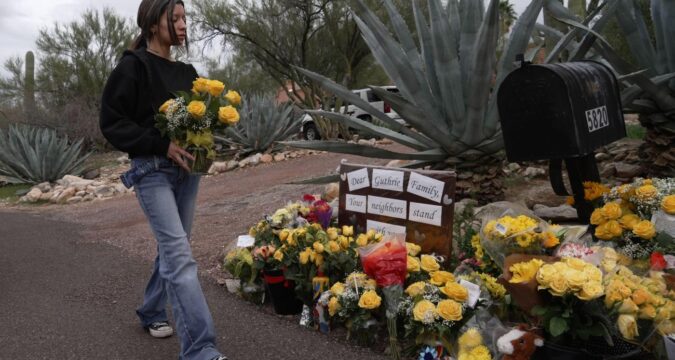
What to know about the investigation into Nancy Guthrie’s disappearance and the search for clues
TUCSON, Ariz. — Law enforcement agents have been gathering more potential evidence as the search for “Today” show host Savannah Guthrie‘s mother heads into its third week.
Nancy Guthrie, 84, was last seen at her Arizona home on Jan. 31 and was reported missing the following day. Authorities say her blood was found on the front porch. Purported ransom notes were sent to news outlets, but two deadlines for paying have passed.
Authorities have expressed concern about Nancy Guthrie’s health because she needs vital daily medicine. She is said to have a pacemaker and have dealt with high blood pressure and heart issues, according to sheriff’s dispatcher audio on broadcastify.com.
Here’s what to know about her disappearance and the intense search to find her:
Video of masked man
The Federal Bureau of Investigation released surveillance videos of a masked person wearing a handgun holster outside Guthrie’s front door in Tucson the night she vanished. A porch camera recorded video of a person with a backpack who was wearing a ski mask, long pants, jacket and gloves.
On Thursday, the FBI called the person a suspect. It described him as a man about 5 feet, 9 inches tall with a medium build. The agency said he was carrying a 25-liter “Ozark Trail Hiker Pack” backpack.
Investigators initially said there was no surveillance video available since Guthrie didn’t have an active subscription to the doorbell camera company. But digital forensics experts kept working to find images in back-end software that might have been lost, corrupted or inaccessible.
Studying DNA
Investigators collected DNA from Guthrie’s property which doesn’t belong to Guthrie or those in close contact with her, the Pima County Sheriff’s Department said. Investigators are working to identify who it belongs to.
Evidence requiring forensic analysis is being sent to the same out-of-state lab that has been used since the beginning of the case, the department said.
Investigators found several gloves, the nearest about 2 miles (3.2 kilometers) from Guthrie’s home, and submitted them for lab analysis, the sheriff’s department said. It did not specify what type of gloves.
The sheriff stressed his department is working closely with the FBI.
Sorting through tips
The Pima County sheriff and the FBI announced phone numbers and a website to offer tips. Several hundred detectives and agents have been assigned to the case, the sheriff’s department said.
The FBI said it has collected more than 13,000 tips since Feb. 1, the day Guthrie was reported missing. The sheriff’s department, meanwhile, said it has taken at least 18,000 calls.
The sheriff’s department has not said whether any tips have advanced the investigation.
Intensive searches
Late Friday night, law enforcement sealed off a road about 2 miles (3.2 kilometers) from Guthrie’s home as part of their investigation. A parade of sheriff’s and FBI vehicles, including forensics vehicles, passed through the roadblock.
The investigators also tagged and towed a Range Rover SUV from a nearby Culver’s restaurant parking lot late Friday.
The sheriff’s department said Saturday the activity was part of the Guthrie investigation but no arrests were made.
On Tuesday, sheriff deputies detained a person for questioning during a traffic stop south of Tucson. Authorities didn’t say what led them to stop the man but confirmed he was released.
The same day, deputies and FBI agents conducted a court-authorized search in Rio Rico, about an hour’s drive south of the city.
Family pleas
Savannah Guthrie, her sister and her brother have shared on social media multiple video messages to their mother’s purported captor.
The family’s Instagram videos have shifted in tone from impassioned pleas to whoever may have their mom, saying they want to talk and are even willing to pay a ransom, to bleaker and more desperate requests for the public’s help.
The latest video on Thursday was simply a home video of their mother and a promise to “never give up on her.”
A quiet neighborhood
Nancy Guthrie lived alone in the upscale Catalina Foothills neighborhood, where houses are spaced far apart and set back from the street by long driveways, gates and dense desert vegetation.
Savannah Guthrie grew up in Tucson, graduated from the University of Arizona and once worked at a television station in the city, where her parents settled in the 1970s. She joined “Today” in 2011.
In a video, she described her mother as a “loving woman of goodness and light.”
https://www.chicagotribune.com/2026/02/14/what-to-know-nancy-guthries-investigation/

Vast Majority Of Americans Want Voter ID And Democrats Don’t Care
Vast Majority Of Americans Want Voter ID And Democrats Don’t Care
Are voter ID requirements considered a controversial idea in the eyes of US citizens? If you watch the establishment media or follow leaders in the Democratic Party then you might think bills like the SAVE Act are the end of freedom as we know it. However, outside the echo chambers of DNC propaganda, the vast majority of Americans have no problem whatsoever with people proving their US citizenship before they vote in local and federal elections.
The widespread support for voter ID is undeniable. Surveys from the past year including those from Pew and Gallup show that, regardless of party or ethnicity, Americans citizens want elections to be protected from manipulation through mass illegal immigration.
A Pew Research Center survey from August 2025 found that 83% of Americans favor requiring all voters to show government-issued photo ID to vote. This includes:
95% of Republicans
71% of Democrats
Only 16% of people oppose it.
A Gallup poll from 2024 shows 84% support for requiring photo ID to vote, with 98% of Republicans, 84% of independents and 67% of Democrats in approval.
A recent CNN segment featuring number cruncher Harry Enten confirms that the backing for the SAVE Act is also dominant regardless of ethnicity: 85% of white voter, 82% of Latino voters and 76% of black voters all want voter ID. It’s difficult to find many issues which the American public universally supports at this level.
Democrat leaders, however, don’t care that the majority of their own base wants voter ID laws. Party officials and the left-wing media have engaged in a shameless propaganda campaign designed to frighten the public into opposing the SAVE Act, despite their previous platforms defending majority rule. They consistently compare the new laws to “Jim Crow” era restrictions, claiming that minorities (and rural Americans) are too dumb to figure out how to get access to state IDs and birth certificates.
In truth, every state that already has some form of election ID laws has seen a spike in voter participation, not a decline. Only 8 states have laws demanding proof of citizenship before voting (half of the states are in legal battles to implement them); the other 42 only require that you check a box that says you are a citizen.
When Democrats are asked why they are ignoring their majority of their constituents when it comes to the SAVE Act, they launch into tirades about racism and fascism, but never seem to be able to answer the question.
This SAVE AMERICA ACT debate has revealed a truth about the Left: they think black voters, married women, and rural voters are too stupid to figure out how to vote. What a wild, condescending argument. pic.twitter.com/RWQgdnxYXw
— Scott Jennings (@ScottJenningsKY) February 12, 2026
It’s difficult to reconcile the rhetoric of Democrats from 2024 when they wailed and screamed about conservatives being a “threat to democracy” compared to their rhetoric today. At bottom, the political left only supports majority public decisions when those decisions work in the favor of leftist elites.
The majority of Americans continue to support the Trump Administration’s deportations of all illegal migrants (not just migrants with violent criminal records), but Dem leaders and their NGO partners continue trying to thwart the will of the people. By extension, voter ID makes it far more difficult for non-citizens to vote and makes it easier for voting records to be checked for discrepancies.
It’s clear that ID requirements and tighter controls on mail-in ballots will work heavily against Democrats and, if passed, they are likely to see a sharp decline in votes across the board. They are fighting against the SAVE Act because they want oligarchy, not “democracy.” They want minority elitist control over government policy.
Voter ID is perhaps the most important legal question of our era; it will determine the course of elections for many years to come. Most western countries have laws in place to prevent illegal migrant voting and foreign manipulation of elections. The US is the only country in which this type of law is treated as “racist”.
Tyler Durden
Sat, 02/14/2026 – 15:45
https://www.zerohedge.com/political/vast-majority-americans-want-voter-id-and-democrats-dont-care
Más de 6.000 muertos en 3 días por ataque de grupo paramilitar en el-Fasher, Sudán, dice ONU
Por SAMY MAGDY
EL CAIRO (AP) — Más de 6.000 personas murieron en poco más de tres días cuando un grupo paramilitar sudanés desató “una ola de intensa violencia… impactante por su magnitud y brutalidad” en la región de Darfur, en Sudán, a finales de octubre, según las Naciones Unidas.
La ofensiva de las Fuerzas de Apoyo Rápido (FAR) para capturar la ciudad de el-Fasher incluyó atrocidades generalizadas que equivalen a crímenes de guerra y posibles crímenes de lesa humanidad, señaló la Oficina de Derechos Humanos de la ONU en un informe publicado el viernes.
“Las violaciones arbitrarias perpetradas por las FAR y las milicias árabes aliadas en la ofensiva final sobre el-Fasher subrayan que la persistente impunidad alimenta ciclos continuos de violencia”, dijo el alto comisionado de la ONU para los Derechos Humanos, Volker Türk.
Las FAR y sus milicias árabes aliadas, conocidas como Janjaweed, tomaron el control de el-Fasher —el único bastión que le quedaba al ejército sudanés en Darfur— el 26 de octubre y arrasaron la ciudad y sus alrededores tras más de 18 meses de asedio.
En el informe de la ONU, de 29 páginas, se detalla un conjunto de atrocidades que abarcó desde asesinatos masivos y ejecuciones sumarias, violencia sexual, secuestros para pedir rescate, tortura y malos tratos, hasta detenciones y desapariciones. También se indica que, en muchos casos, los ataques tuvieron motivos étnicos.
Las FAR no respondieron a una solicitud de comentarios enviada por correo electrónico.
El general Mohammed Hamdan Dagalo, líder de los paramilitares, ha reconocido anteriormente abusos cometidos por sus combatientes, pero ha cuestionado la magnitud de las atrocidades.
“Como la escena de una película de terror”
Las presuntas atrocidades en el-Fasher, capital provincial de Darfur del Norte, reflejan un patrón de conducta de las FAR en su guerra contra el ejército sudanés. El conflicto comenzó en abril de 2023, cuando una pugna de poder entre ambas partes derivó en combates abiertos en Jartum, la capital, y en otros puntos del país.
El conflicto provocó la mayor crisis humanitaria del mundo, en la que distintas partes del país fueron empujadas a la hambruna. También ha estado marcado por atrocidades que la Corte Penal Internacional investiga como crímenes de guerra y de lesa humanidad. El gobierno de Biden también acusó a las FAR de cometer genocidio durante la guerra en curso.
La Oficina de Derechos Humanos de la ONU dijo que documentó la muerte de al menos 4.400 personas dentro de el-Fasher entre el 25 y el 27 de octubre, mientras que más de 1.600 murieron cuando intentaban huir del ataque de las FAR. En el informe se señala que la cifra se basó en entrevistas con 140 víctimas y testigos que “son coherentes con análisis independientes de imágenes satelitales y grabaciones de video de la época”.
En un caso, combatientes de las FAR abrieron fuego con armas pesadas contra una multitud de 1.000 personas que se refugiaba en la residencia Rashid de la Universidad de el-Fasher el 26 de octubre, y mataron a unas 500 de ellas, según el informe. Se citó a un testigo que dijo haber visto cuerpos lanzados por los aires, “como la escena de una película de terror”, de acuerdo con el documento.
En otro caso, unas 600 personas, incluidos 50 niños, fueron ejecutadas el 26 de octubre mientras se refugiaban en instalaciones universitarias, indicó el informe.
En el documento, sin embargo, se advierte que la magnitud real del número de muertos de la ofensiva en el-Fasher, que duró toda una semana, era “sin duda, significativamente mayor”.
La cifra no incluye a al menos 460 personas que murieron el 28 de octubre a manos de las FAR cuando el grupo incursionó en el hospital Saudí de Maternidad, según la Organización Mundial de la Salud.
Unas 300 personas también murieron por bombardeos y ataques con drones del grupo armado entre el 23 y el 24 de octubre en el campamento Abu Shouk para personas desplazadas, a 2,5 kilómetros (1,5 millas) al noroeste de el-Fasher, se indica en el informe de la Oficina de Derechos Humanos de la ONU.
Mujeres y niñas agredidas sexualmente
Aparentemente, la violencia sexual, que incluyó violaciones simples y tumultuarias, fue generalizada durante la ofensiva en el-Fasher, y combatientes de las FAR y sus milicias aliadas atacaron a mujeres y niñas de las tribus africanas no árabes zaghawa tras acusarlas de tener vínculos con el ejército o de apoyarlo, se señala en el informe.
Türk, quien visitó Sudán el mes pasado, dijo que varias sobrevivientes de violencia sexual relataron testimonios que mostraban cómo esa práctica “se utilizó sistemáticamente como arma de guerra”.
Los paramilitares también secuestraron a muchas personas cuando intentaban huir de la ciudad, antes de liberarlas tras el pago de rescates. Miles de habitantes han sido retenidos en al menos 10 centros de detención —incluido el hospital infantil de la ciudad, que fue convertido en una instalación de detención— administrados por las FAR en el-Fasher, según el informe.
La Oficina de Derechos Humanos de la ONU también documentó 10 instalaciones de detención utilizadas por los paramilitares en el-Fasher, entre ellas, el hospital infantil, que fue transformado en un centro de detención. Varios miles de personas siguen desaparecidas y no se ha podido dar cuenta de su paradero, según el informe.
El patrón de la ofensiva de las FAR sobre el-Fasher fue un reflejo de otros ataques emprendidos por los paramilitares y sus aliados contra el campamento Zamzam para personas desplazadas, a 15 kilómetros (9 millas) al sur de la ciudad, y contra la ciudad de Geneina, en Darfur Occidental, así como la localidad cercana de Ardamata en 2023, indicó la Oficina de Derechos Humanos de la ONU.
Türk dijo que había “motivos razonables” para concluir que las FAR y sus milicias árabes aliadas cometieron crímenes de guerra, y que sus actos también equivalen a crímenes de lesa humanidad.
Pidió que se exija rendición de cuentas a los responsables —incluidos los comandantes— y advirtió que “la persistente impunidad alimenta ciclos continuos de violencia”.
__
Esta historia fue traducida del inglés por un editor de AP con la ayuda de una herramienta de inteligencia artificial generativa.

2 periodistas de Washington Post en los Olímpicos pese a despido: ‘Era importante estar’
Por ANDREW DAMPF
CORTINA D’AMPEZZO, Italia (AP) — El columnista del Washington Post Barry Svrluga informaba desde sus primeros Juegos Olímpicos de Invierno cuando Lindsey Vonn dejó su cama de hospital tras una caída y regresó a competir días después en los Juegos de Turín 2006.
Ha vuelto a Italia dos décadas después para los Juegos de Milán Cortina y también estaba allí para escribir sobre ello cuando Vonn terminó de nuevo en el hospital tras otra caída. Aunque estuviera perdiendo su empleo.
El Post anunció dos días antes de que se inauguraran los Juegos Olímpicos la semana pasada que eliminarían su sección de deportes, al tiempo que despedía a un tercio de su personal. Svrluga señaló que el periódico planeaba originalmente enviar a 14 miembros del personal a estos Juegos.
Con los boletos de avión y el alojamiento ya pagados, Svrluga es uno de los cuatro periodistas del diario que decidieron venir de todos modos: él está en Cortina, Rick Maese está en Bormio, y Les Carpenter y el reportero del equipo nacional Robert Samuels están en Milán.
“Pueden quitarnos nuestra sección”, afirmó Svrluga, “pero, en cierto modo, no pueden quitarnos nuestro espíritu”.
De los cuatro, Svrluga y Carpenter están siendo despedidos. Aun así, vinieron a su última asignación.
“Quería estar ocupado”, comentó Svrluga, que está en sus 12º Juegos. “Me encanta cubrir los Juegos Olímpicos. … Tuve a Lindsey lesionada en Sestriere y luego tuve su oro (Vancouver, 2010) y he tenido cada una de sus carreras olímpicas, fueran éxitos o no. Lo mismo con (Mikaela) Shiffrin”.
Los primeros Juegos Olímpicos en los que trabajó Svrluga fueron los Juegos de Verano de Atenas 2004, y de inmediato le llamó la atención la manera en que sus colegas del periódico colaboraban en un evento tan grande.
“Se sentía como un deporte de equipo para nosotros y eso beneficiaba a la sección y al periódico”, explicó Svrluga. “Lo que intentamos hacer aquí es recordarles a las personas —lectores y quienes toman decisiones— que hay mucha gente comprometida que hacía las cosas por las razones correctas”.
Carpenter, el redactor del Post para los Juegos Olímpicos, está en sus octavos Juegos. Ha estado cubriendo patinaje artístico, patinaje de velocidad y hockey.
“El departamento de deportes del Post siempre tuvo una conexión tan grande con sus lectores. Sentí que tenía que quedarme para contarles la historia de estos Juegos Olímpicos”, expresó Carpenter. “Es lo que yo querría como lector. Si este es el final de los deportes del Post, demos a nuestros lectores más leales lo mejor de nosotros”.
Shiffrin confió a Svrluga una noticia personal
Svrluga dio a sus lectores —y a la comunidad del esquí en general— un motivo para detenerse a pensar incluso antes de llegar a Cortina.
Una extensa entrevista previa a los Juegos con Shiffrin y su madre y entrenadora, Eileen, se convirtió en mucho más que una historia de anticipo olímpico cuando le revelaron a Svrluga por qué Eileen había estado ausente al inicio de esta temporada de la Copa del Mundo: le habían diagnosticado cáncer y enfrentaba seis semanas de tratamientos.
“Esta era una situación muy personal”, dijo Svrluga. “Les agradezco que confiaran en mí con la información. Es su historia para contarla”.
Las reducciones de personal son “trágicas para los lectores”
Los cambios en toda la industria han hecho que menos reporteros estadounidenses asistan a eventos como los Juegos Olímpicos.
“Eso es trágico para los lectores”, manifestó Svrluga, al señalar que el espacio adicional en las zonas de entrevistas para reporteros en las líneas de meta es “excelente para la logística y triste para el negocio”.
Algunas de las personas sobre las que Svrluga ha informado en los Juegos Olímpicos se han puesto en contacto con él después de que se difundiera la noticia de los recortes en el Post. También ha ocurrido de vuelta en Washington, indicó.
“Personas que han ganado Series Mundiales, personas que son dueñas de equipos. He estado allí 22 años, así que construyes relaciones con el tiempo, incluso con gente con la que te enfrentas un poco o sobre la que escribes algo que no le gusta. Aun así, hay un elemento humano”, señaló Svrluga. “Así que he sabido de más gente de la que puedo contar”.
Pero, añadió Svrluga, “no quieres ser la historia. Quieres cubrir la historia”.
El editor ejecutivo del Post, Matt Murray, calificó los despidos como dolorosos pero necesarios.
“Se podría argumentar que quizá estamos en esta posición porque no nos adaptamos o no vimos lo que venía después”, sostuvo Svrluga. “Es evidente que ahora la gente obtiene sus noticias de maneras diferentes. En un sentido, soy de la ‘vieja escuela’. … Espero que las personas que están en sus 20 y principios de sus 30, como cuando yo fui por primera vez a los Juegos Olímpicos, estén descifrando lo que venga. Me encantaría que incluyera la narración escrita, porque eso es lo que me gusta hacer”.
Una historia final y “el vino tinto correrá”
Eliminar la sección de deportes del Post fue un golpe duro, ya que el departamento ha albergado durante años muchas firmas conocidas, incluidas las de John Feinstein, Michael Wilbon, Shirley Povich, Sally Jenkins y Tony Kornheiser.
La última columna de Svrluga desde estos Juegos marcará su última historia para el Post. Mientras tanto, va a intentar disfrutar de los Juegos Olímpicos —y de estar en Italia— más de lo que suele hacerlo cuando está de asignación.
“El vino tinto”, dijo, “correrá”.
___
Deportes en español AP: https://apnews.com/hub/deportes

Rubio Says US & Europe “Belong Together”, Urges Alignment With Trump’s Vision For Western Revival
Rubio Says US & Europe “Belong Together”, Urges Alignment With Trump’s Vision For Western Revival
Authored by Tom Ozimek via The Epoch Times,
U.S. Secretary of State Marco Rubio told European leaders on Feb. 14 that Washington is not walking away from the transatlantic alliance—but called for a renewed partnership that aligns with President Donald Trump’s push for national revival, tougher border control, and a return to industrial and military strength.
Addressing the annual Munich Security Conference, Rubio sought to reassure governments unsettled by a year of tensions over trade, defense spending, and at times critical U.S. rhetoric toward NATO.
At the same time, he made clear that Washington’s commitment would be tied to what he called a broader civilizational renewal—one that calls on Europe to strengthen its own defenses and reassess policies on migration, climate, and economic globalization.
“Under President Trump, the United States of America will once again take on the task of renewal and restoration, driven by a vision of a future as proud, as sovereign, and as vital as our civilization’s past,” Rubio said.
“And while we are prepared, if necessary, to do this alone, it is our preference, and it is our hope to do this together with you, our friends here in Europe, for the United States and Europe—we belong together.”
Serving as both a warning and an invitation, Rubio’s remarks acknowledged “mistakes” made by both the United States and Europe in the decades following the Cold War, while highlighting a shared responsibility to correct course.
A Critique of the Post-Cold War Order
Rubio’s address included sharp criticism of the post–Cold War consensus, while also praising it for enabling the United States and its allies to resist the onslaught of Soviet communism and to emerge victorious and prosperous together.
“Even as World War II still burned fresh in the memory of Americans and Europeans alike, we found ourselves staring down the barrel of a new global catastrophe—one with the potential for a new kind of destruction more apocalyptic and final than anything before in the history of mankind,” he said.
With thousands of years of Western civilizational heritage hanging in the balance in the face of a threat from a nuclear-armed, expansionist “evil empire,” Rubio said that a unified resistance within the transatlantic alliance ultimately prevailed.
But what followed the “euphoria of this triumph,” Rubio said, was a descent into a “dangerous delusion” that history had ended, that every country would become a liberal democracy, that economic and trade ties would replace nationhood, that national interest would be replaced by the rules-based global order, which would usher in a world without borders.
“This was a foolish idea that ignored both human nature, and it ignored the lessons of over 5000 years of recorded human history, and it has cost us dearly in this delusion,” he said.
“We embraced a dogmatic vision of free and unfettered trade, even as some nations protected their economies and subsidized their companies to systematically undercut ours, shuttering our plants, resulting in large parts of our societies being de-industrialized, shipping millions of working and middle-class jobs overseas, and handing control of our critical supply chains to both adversaries and rivals.”
Rubio criticized what he called an excessive expansion of welfare states at the expense of national defense, noting that America’s rivals had increased military spending and did not hesitate to use hard power to pursue their national interests.
The West, he said, by contrast, adopted energy policies that impoverished its citizens in order “to appease a climate cult,” while competitors continued to exploit fossil fuels, gaining leverage over Western economies.
He also sharply criticized mass migration policies, rejecting the idea that tighter borders are expressions of intolerance.
“Gaining control of national borders is not an expression of xenophobia or hate,” Rubio said.
“It is a fundamental act of national sovereignty. And the failure to do so is not just an abdication of one of our most basic duties owed to our people—it is an urgent threat to the fabric of our societies and the survival of our civilization itself.”
Throughout his speech, Rubio said Europe and the United States are bound together in shared responsibility for a series of strategic missteps that it is now time to correct.
A Call for Restoration
Rubio repeatedly said that renewal should be a shared effort, not something the United States pursues alone. While saying Washington is ready to act independently if needed, he presented Trump’s agenda as an invitation for Europe to join in rebuilding Western strength.
“For the United States and Europe, we belong together,” Rubio said, describing the United States as “a child of Europe,” shaped by centuries of shared history, faith, culture, law, and political traditions.
He said that the fundamental question facing the alliance was not simply how much to spend on defense or how to deploy forces, but rather how to share a common understanding of what the United States and its allies are defending.
“Armies do not fight for abstractions,” Rubio said.
“Armies fight for a people. Armies fight for a nation. Armies fight for a way of life, and that is what we are defending—a great civilization that has every reason to be proud of its history, confident of its future, and aims to always be a master of its own economic and political destiny.”
Rubio called for re-industrialization on both sides of the Atlantic, saying that Europe and the United States should work together to rebuild manufacturing capacity, secure supply chains, and reduce reliance on strategic rivals for critical goods and minerals.
“What we want is a reinvigorated alliance,” Rubio said, “one that does not allow its power to be outsourced, constrained, or subordinated to systems beyond its control.”
The Munich Security Conference, which has long served as a barometer of transatlantic unity, runs through Feb. 15. It comes at a moment its organizers describe as an “inflection point” marked by the erosion of the international rules-based order and mounting instability across the globe.
Tyler Durden
Sat, 02/14/2026 – 15:10

Cerveceros y Gary Sánchez cierran acuerdo de 1 año por 1,75 millones con opción a 2027
Associated Press
MILWAUKEE (AP) — Los Cerveceros de Milwaukee y el receptor dominicano veterano Gary Sánchez acordaron el sábado un contrato de un año por 1,75 millones de dólares, con una opción mutua para 2027, informó el equipo.
Ambas partes acordaron el miércoles un marco para el contrato.
Sánchez, de 33 años, jugó con los Cerveceros en 2024 y bateó para .220 con un porcentaje de embasarse de .307, 11 jonrones y 37 carreras impulsadas en 89 juegos, como suplente del receptor venezolano William Contreras, dos veces All-Star, y con algo de tiempo de juego como bateador designado.
Sánchez, también dos veces All-Star, pasó el año pasado con los Orioles de Baltimore y bateó para .231 con un porcentaje de embasarse de .297, cinco jonrones y 24 carreras impulsadas en 29 juegos.
Sánchez batea para .224 con un porcentaje de embasarse de .309, 189 jonrones y 509 carreras impulsadas en 859 juegos de temporada regular en su carrera con los Yankees de Nueva York (2015-21), Mellizos de Minnesota (2022), Mets de Nueva York (2023), Padres de San Diego (2023), Cerveceros y Orioles.
Quedó segundo detrás de Michael Fulmer, de Detroit, en la votación al Novato del Año de la Liga Americana en 2016. Sánchez integró los equipos All-Star de la Liga Americana con los Yankees en 2017 y 2019.
___
Deportes en español AP: https://apnews.com/hub/deportes

Sigue semana caótica de Marsella tras conceder un penal en el descuento ante Estrasburgo
Por JEROME PUGMIRE
PARÍS (AP) — La semana caótica del Marsella continuó con un gol del empate en el tiempo añadido del sábado 2-2 en casa contra el Estrasburgo.
Marsella navegaba con tranquilidad con el 2-0 después de que Amine Gouiri creara un gol y marcara el otro. Pero la endeble defensa se vino abajo y el delantero argentino Joaquin Panichelli rescató un punto con un penalti en el minuto 97.
“Una vez más lo echamos todo a perder al final. Cuando las cosas pasan una docena de veces, no son las decisiones (tácticas) del entrenador, somos nosotros en el campo”, señaló Gouiri.
Los jugadores de Marsella estaban conmocionados por la salida de Roberto De Zerbi el miércoles, apenas unos días después de una humillante derrota 5-0 en el campo del PSG.
El ambiente era tenso en el Stade Vélodrome.
Las dos gradas detrás de la portería estaban vacías salvo por pancartas airadas; una instaba en términos tajantes al propietario estadounidense Frank McCourt y al presidente Pablo Longoria a marcharse.
Marsella, nueve veces campeón de Francia, no ha ganado un trofeo desde la ya desaparecida Copa de la Liga en 2012.
Los aficionados que sí acudieron el sábado abuchearon a los jugadores cuando saltaron al campo.
Gouiri asistió a Mason Greenwood para el 14º gol de la temporada del máximo artillero de la liga en el minuto 14. Controló con limpieza el balón cerca del área con el exterior del pie y metió un pase a la espalda de la defensa para que Greenwood picara la pelota hacia adentro.
Gouiri volvió a mostrar una gran técnica para colocar con efecto el segundo gol de Marsella en el 47, tras aprovechar un despeje fallido del portero Mike Penders, que intentó sacar el balón con un pase en lugar de enviarlo a saque de banda.
Sebastian Nanasi recortó distancias en el 74 y el defensor de Marseille Emerson Palmieri cometió torpemente un penalti.
En el otro partido del sábado, Lille recibió a Brest.
El campeón defensor PSG perdió 3-1 en Rennes para sufrir su tercera derrota de la campaña, una más que en toda la temporada pasada.
Más tarde, Lens necesita ganar en la cancha del Paris FC para recuperar el liderato de Paris Saint-Germain, que perdió el viernes.
___
Deportes en español AP: https://apnews.com/hub/deportes

A lawsuit seeks to stop Donald Trump’s overhaul of a 100-year-old public golf course in Washington
Two golfers in Washington, D.C., sued the federal government on Friday to try to prevent the Trump administration from overhauling a more than 100-year-old public golf course, accusing the administration of violating environmental laws and polluting a park that is on the National Register of Historic Places.
The suit is the latest in a series of legal battles challenging President Donald Trump’s extraordinary efforts to put his mark on public spaces in the nation’s capitol, including shuttering the Kennedy Center.
At the end of last year, a group of preservationists filed a similar lawsuit seeking to prevent the administration from demolishing the East Wing of the White House in order to build a ballroom — a project slated to cost $400 million.
Trump, who is an avid golfer himself, also plans on renovating a military golf course just outside of Washington that has been used by past presidents going back decades.
The complaint filed against the Department of the Interior on Friday says that the Trump administration’s reconstruction of East Potomac Park — which includes the East Potomac Golf Course — would violate the congressional act that created the park in 1897. The roughly 130-year-old act established the park for the “recreation and the pleasure of the people.”
The golf course, which has since been recognized on the National Register of Historic Places in part for its efforts to racially integrate in the 1940s. Municipal golf courses make up only 18% of courses in America.
“East Potomac Golf Links is a testament to what’s possible with public land and why public spaces matter,” said Washington resident and plaintiff Dave Roberts. “It deserves better than becoming a dumping ground for waste and yet another private playground for the privileged and powerful.”
The lawsuit came after the Trump administration in December ended a lease agreement the nonprofit National Links Trust held for East Potomac and two other golf courses in Washington. The Interior Department said it did so because the nonprofit hadn’t implemented required capital improvements and failed to meet the terms of the lease.
The Interior Department press office said in an email Friday that it doesn’t comment on pending litigation.
However, it said it would “ensure these courses are safe, beautiful, open, affordable, enjoyable and accessible for people visiting the greatest capital city in the world which is in line with President Trump’s agenda.”
The White House also didn’t respond to an emailed request for comment on Friday evening.
Construction on the East Potomac course has already begun, according to the lawsuit. In October, the National Parks Service began dumping debris from the demolition of the East Wing of the White House onto the golf course, the complaint said, raising concerns that the materials could contain contaminants that could pollute the air.
As a result, the plaintiffs argued, the administration of also violated the National Environmental Policy Act by failing to consider the harmful environmental impacts of the project.
The National Links Trust said in December they were “devastated” by the decision to terminate the lease and defended their management of the courses.
They said $8.5 million had gone toward capital improvements at the courses and that rounds played and revenue had more than doubled in their tenure managing the courses. They also added that the termination of the lease jeopardized hundreds of local jobs.
The nonprofit has agreed to keep managing the courses for the time being, but long-term renovations will stop.
The first 18 holes of the East Potomac Park Golf Course were built from 1918 to 1923.
Associated Press writer Audrey McAvoy in Honolulu contributed to this report.
https://www.chicagotribune.com/2026/02/14/lawsuit-trump-overhaul-100-year-old-public-golf-course/

The State Of Love In America: It’s Not Looking Good
The State Of Love In America: It’s Not Looking Good
Dating and relationships in the US have changed dramatically in the past decade. Once heralded as a vast clearing house for unlimited hook ups and endless partner options, online dating apps have all but imploded compared the their peak from 2016-2021. High traffic apps like Bumble have lost 90% of their market value. Tinder has lost 40% of its users since 2022. Match Group apps have lost around 50% of their engagement since 2019.
The word on the street is, the apps are cancer and no one serious about dating actually uses them. Why? Female hypergamy is the clear culprit; the fantasy that the grass is always greener on another man’s lawn. Data from match apps indicates that the average woman will only “swipe right” on 6% of all men in any given dating pool. Meanwhile, the average man will swipe right on around 60% of women.
This means that the majority of American women suffer from delusions of grandeur and refuse to settle for men that are equal to them in terms of looks and career. The end result is an increasingly desperate mob of mid-level women all fighting each other for access to the top 5% of men – Men who might sleep with such women, but also men who have no reason to settle down with them.
Too many options for women result in no options at all.
In response to the online drought and the explosion in female competition for a tiny portion of rich, successful, 6ft and fit men, Gen Z women are turning back to real world strategies to meet their potential partners. In other words, they’re trying to meet people in person like their parents did in the 1990s.
TikTok is saturated with women following the “Home Depot” strategy – Looking for marriageable men with skills by dressing up and lurking the aisles of their nearest hardware stores. The idea has met with mostly failed results.
The apps are only part of the problem. In 2025, approximately 63% of men aged 18–29 in the U.S. were single, and 34% of women the same age range were single. Women hit their “loneliness epidemic” later in life, with their chances of finding a partner quickly diminishing after age 30. Projections indicate that 45% of women 25-44 will be single and never married by the year 2030.
The media spins this trend as a “positive” consequence of women finding more satisfaction in pursuing career over marriage and family, but this is a fallacy. Women’s happiness and reported mental health has been in steady decline since the rise of Second Wave feminism in the 1970s. Women consistently exhibit worse mental health than men despite reporting “greater satisfaction” with their economic prospects . The trend tracks almost exactly with the increase in women choosing work over husbands and children.
Married mothers and fathers report having the highest rate of happiness in their daily lives.
As the establishment media gleefully reminds the public on a weekly basis, men are increasingly checking out of the dating market. They’re calling it the “men’s loneliness epidemic” and, in most cases, they blame men for the problem. Two narratives are regularly repeated: Men are either too intimidated to approach women and ask them out, or, men are too conservative, poor, unattractive, not in tune with their emotions, etc. In other words, men are not good enough and women have surpassed them in value.
Reality is quite the opposite. Men have, in fact, stopped looking at most modern women as viable partners and instead see them as a parasitic presence that feeds on their money and their peace.
To put it bluntly, relationships are in decline in the west because of women, not men. To be more specific, liberal feminist women have poisoned the dating pool and driven men to voluntarily walk away from the traditional dating scene.
Evidence of this can be seen in the lack of male participation in dating events across the country. Singles mixers in every major city are reporting a flood of female participants and a lack of male attendees. Event organizers are giving up. Men in the US are not lonely so much as they are deliberately avoiding exposure to western women.
Men who have the means are going overseas to countries with more traditional cultures in the hopes of meeting women who are not infected with feminism; women who actually have the capacity to put family above their own immediate desires. This movement of men is often referred to as “Passport Bros” and it is driving liberal women insane.
Social media is rife with complaints from feminists demanding that Passport Bros stop going overseas to “exploit” poor women in third world countries. They argue that these men are traveling because they aren’t good enough to get a “high level” women in the west. In fact, they are traveling to foreign countries because the women in the west are considered low level and not worth dating.
For example, there is no movement of foreign men traveling to the US looking for American women. Young women in the US are viewed as the worst possible prospects for a happy future – Prone to avoid having children until much later in life (if ever). Prone to high rates of divorce. Prone to be combative and unstable. Prone to put themselves and their short term happiness over the happiness of their families.
As another Valentines Day passes us by, the state of relationships and dating in the US is growing bleak. Men are giving up and women continue to suffer from an over-inflated sense of value. The ultimate solution to the decline is obvious: Put an end to feminism and recognize that a certain level of “patriarchy” is necessary for the survival of the species.
Tyler Durden
Sat, 02/14/2026 – 14:35
https://www.zerohedge.com/political/state-love-america-its-not-looking-good
Hallan 8 cabezas humanas en zona rural del suroeste de Ecuador
Associated Press
QUITO (AP) — La policía ecuatoriana reportó el sábado el hallazgo de ocho cabezas humanas en una zona rural del suroeste del país andino, asediado por una ola de violencia incontenible, y donde rige un estado de excepción.
El hallazgo ocurrió cerca de las 2:00 de la mañana, cuando agentes realizaban un patrullaje en la carretera de un recinto en la población Naranjal —250 kilómetros al suroeste de la capital, Quito— en la costera provincia del Guayas, declaró el comandante local, el coronel Marcelo Castillo.
Las cabezas cercenadas se encontraron en dos sacos de yute y correspondían a personas de sexo masculino, relató el mando policial. Un letrero que decía “prohibido robar” acompañaba a los bultos, agregó.
El crimen, según información preliminar de la policía, no se habría perpetrado en ese lugar, pues las víctimas provienen de la aledaña provincia costera Manabí, aseguró el coronel Castillo.
Manabí es una de las zonas más violentas de Ecuador y, junto a otras del perfil costero, registra un aumento de la violencia desde inicios de 2021 por disputas entre grupos delictivos vinculados a cárteles del narcotráfico transnacional, por las rutas de trasiego y distribución de drogas, de acuerdo con versiones oficiales.
A inicios de 2026, un hallazgo similar sorprendió en una playa turística de Puerto López, en Manabí, pese a que al cierre del año previo el gobierno declaró un estado de excepción que moviliza a las fuerzas de seguridad y restringe ciertos derechos.
La violencia dejó un saldo de 9.216 asesinados el año pasado, cuando Ecuador rompió el récord de muertes violentas. La mayor parte se produjeron en las provincias de Guayas, Manabí y Esmeraldas.