Category: News

FCC Chair Pushes Back On Allegations Of Censorship Over Stephen Colbert Interview
FCC Chair Pushes Back On Allegations Of Censorship Over Stephen Colbert Interview
Authored by Jack Phillips via The Epoch Times,
The chairman of the Federal Communications Commission (FCC) on Wednesday pushed back against allegations of censorship from CBS late-night host Stephen Colbert and a Democratic Texas Senate candidate.
FCC Chairman Brendan Carr said Colbert could have aired his interview with Texas state Rep. James Talarico, a Democrat running for the U.S. Senate, if the late-night TV show he hosts complied with federal equal time rules by airing interviews with other Democrats vying for the seat.
“There was no censorship here at all,” Carr told reporters.
“Every single broadcaster in this country has an obligation to be responsible for the programming that they choose to air, and they’re responsible whether it complies with FCC rules or not, and it doesn’t, and those individual broadcasters are also going to have a potential liability.”
Talarico has alleged in posts on his X account that the FCC and the Trump administration had tried to censor the interview and barred him from appearing on Colbert’s program, although the interview was published online.
“The reason the Trump administration and their billionaire friends are trying to silence me and this movement is because they’re worried that we are going to flip Texas in November,” he said in a video, which was posted on X.
Aside from Talarico’s allegations of censorship, Colbert, who is set to leave “The Late Show” in May, also criticized CBS and the Trump administration during his program.
“Then I was told, in some uncertain terms, that not only could I not have him on, I could not mention me not having him on,” the “The Late Show” host said on Tuesday, adding that “because my network clearly doesn’t want us to talk about this, let’s talk about this.”
The interview with Talarico was uploaded to Colbert’s YouTube channel on Tuesday evening.
In statements to media outlets in response to Colbert’s claims, CBS denied that “The Late Show” was barred by the network from airing the Talarico interview and instead said that its lawyers advised the company that the broadcast could trigger the equal time rule.
“The show was provided legal guidance that the broadcast could trigger the FCC equal time rule for two other candidates, including Rep. Jasmine Crockett, and presented options for how the equal time for other candidates could be fulfilled,” CBS said in the statement.
It noted that the interview was published on the show’s YouTube channel instead.
The issue came just hours before early voting opened Tuesday in Texas’s primary elections, which feature hotly contested Senate nomination races in both parties.
Talarico’s main opponent in the primary is Crockett (D-Texas) and both have built national profiles through viral social media clips.
On the Republican side, four-term incumbent Sen. John Cornyn is facing the political fight of his career against Texas Attorney General Ken Paxton and Rep. Wesley Hunt (R-Texas).
In a notice last month, the FCC said that it is changing the rules exempting certain late-night and daytime talk shows from being mandated to provide equal airtime to opposing candidates.
“Importantly, the FCC has not been presented with any evidence that the interview portion of any late night or daytime television talk show program on air presently would qualify for the bona fide news exemption,” the FCC said on Jan. 21.
“Moreover, a program that is motivated by partisan purposes, for example, would not be entitled to an exemption under longstanding FCC precedent.”
The Epoch Times contacted the FCC for comment Wednesday.
Tyler Durden
Wed, 02/18/2026 – 21:45
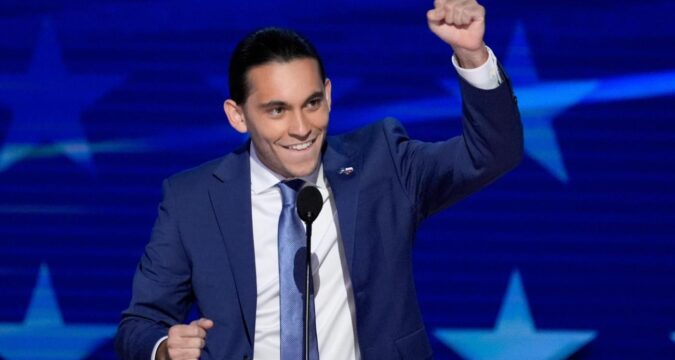
Demócratas reclutan a influencers como parte de su estrategia para recuperar a votantes hispanos
Por MATT BROWN
WASHINGTON (AP) — Un mitin para impulsar la participación demócrata de cara a las primarias en Texas contó con la presencia de algunas de las principales figuras del partido en el estado. La atención, sin embargo, se centró en alguien que no aparecerá en las boletas.
Carlos Eduardo Espina, un influencer político de inclinación progresista con más de 14 millones de seguidores en TikTok, convivió con legisladores y se tomó fotografías con muchos de los asistentes, quienes no tardaron en compartirlas en redes sociales.
La reunión del martes por la noche en un restaurante mexicano de Houston fue más que un evento político previo a las primarias. También fue una especie de antesala a una estrategia de campaña que los demócratas esperan que los ayude en las elecciones de mitad de mandato de este año y más adelante.
Espina y otros nueve influencers del área de Houston que participaron en el evento son parte central de dicha estrategia, la cual busca construir una red de creadores de contenido en línea para tener un mayor acercamiento con los votantes latinos luego de que muchos de ellos se inclinaron por los republicanos hace dos años.
Espina, quien ha promovido a candidatos y políticas demócratas en ocasiones anteriores, señaló que el partido finalmente parece haber reconocido que necesita copiar a los republicanos y encontrar la manera de conectar con los votantes fuera de los actos tradicionales de campaña.
“Creo que el Partido Demócrata ha cometido muchos errores en el pasado, pero pienso que iniciativas como esta son bastante buenas”, declaró Espina en una entrevista.
Una estrategia local para abordar una brecha nacional
La estrategia, desarrollada por el brazo político de la bancada hispana del Congreso, se está implementando en el área de Houston de cara al inicio de la votación anticipada para las primarias estatales del 3 de marzo. La idea es aprovechar la popularidad de los influencers locales y las superestrellas de las redes sociales como Espina para difundir con mayor eficacia el mensaje demócrata entre los votantes latinos.
Los estrategas esperan ampliar el esfuerzo, llamado “RUIDO” –que consiste en una red de creadores de contenido– hacia otras primarias disputadas y contiendas rumbo a la elección general en donde los candidatos y votantes latinos podrían resultar decisivos. Sin embargo, los líderes del comité de acción política de la bancada hispana aún no han decidido cuándo o dónde realizarán su próxima inversión.
“La campaña de Trump se puso en contacto con esas voces no tradicionales para amplificar su mensaje”, afirmó la representante demócrata por California, Linda Sánchez, presidenta del comité de acción política del caucus, refiriéndose a la interacción de los republicanos con influencers y podcasters hace dos años. “No anticipamos que esa iba a ser una vía por la cual se difundiera política. Hemos visto lo contrario: que también debemos estar en esos espacios”.
El lanzamiento del programa se produce mientras los demócratas siguen lidiando con un descontento generalizado hacia el partido y con preguntas sobre cómo involucrar de manera eficaz a los votantes, en particular a los jóvenes, a los de color y a los que no tienen título universitario, grupos que se alejaron del partido durante las elecciones presidenciales de 2024.
El presidente Donald Trump avanzó entre los votantes latinos ese año con una estrategia que se basó en gran medida en la interacción con streamers, podcasters y otros creadores de contenido en línea.
Una “llamada de atención”
La estrategia del Caucus Hispano ofrece estipendios a los creadores de contenido que sean aceptados en el programa. El dinero tiene como objetivo cubrir los gastos de viaje para que trabajen con campañas políticas, según material del programa.
En elecciones anteriores, ambos partidos compraron contenido patrocinado a influencers, quienes están obligados a revelar la relación. Espina explicó que la oferta monetaria que recibió fue una fracción de lo que suele ganar con sus videos, los cuales reciben cientos de miles de visitas en promedio, pero indicó que podría tener un mayor impacto para influencers con audiencias más pequeñas.
Espina, quien publica videos en español sobre cuestiones políticas y acumula regularmente cientos de miles de “me gusta”, sostuvo que los legisladores serán los que presenten en última instancia los argumentos para defender su candidatura. Pero la autenticidad y el contenido de fondo del mensaje son fundamentales para convencer a los votantes en línea, puntualizó.
El partido dejó de hablar de asuntos que afectan a “la gente de la clase trabajadora” y en su lugar empezó a abordar temas económicos y culturales de maneras que se sentían ajenas a la forma en que las personas llevan su vida, explicó Espina.
“Creo que parte de ese mensaje,digamos que se perdió hace unos años. Pero ahora, especialmente después de la llamada de atención de la elección de 2024, las cosas definitivamente han mejorado”, manifestó.
El momento de los influencers
Los nueve creadores de contenido del área de Houston reclutados por la bancada hispana —los republicanos tienen su propio grupo hispano en el Congreso— van desde influencers políticos hasta creadores de contenido sobre comida, viajes, deportes y atracciones locales, quienes tienen entre unos pocos miles de seguidores hasta alrededor de 100.000.
“La gente va a hacer más cuando lo escucha de un familiar, cuando lo escucha de un amigo”, subrayó Carlos Castillo, uno de los influencers que integró al programa. “El simple hecho de hablar con la gente de una manera orgánica, ya sea a través de videos de ‘acompáñame mientras me arreglo’ (‘get ready with me’) y mencionar: ‘Ah, y por cierto, se acercan las primarias en nuestro estado’”.
Castillo señaló que el estipendio del programa era comparable a lo que le ofrecían en comisiones empresas como Comcast, United Airlines y FIFA Houston.
No está claro si la estrategia de reclutar a influencers locales en zonas con contiendas disputas le resultará efectiva a los demócratas. Pero ambos partidos han comprendido durante los recientes ciclos electorales que necesitan complementar sus métodos convencionales de campaña para llegar a votantes que normalmente no se involucran en la política.
Eso probablemente aumente el poder de creadores de contenido como Espina.
“Sinceramente, creo que tengo más influencia, al menos ahora, como creador de contenido en redes sociales, de la que tendría en cualquier cargo público, al menos en cualquiera al que pueda postularme”, dijo Espina al ser consultado sobre si alguna vez se presentaría a un cargo público.
“Quién sabe, quizá me postule contra Ted Cruz en unos años”, añadió, refiriéndose al senador republicano por Texas. “Eso sería muy divertido”.
___
Esta historia fue traducida del inglés por un editor de AP con la ayuda de una herramienta de inteligencia artificial generativa.

Watch: Humanoid Robots In China Put On Jaw-Dropping Show
Watch: Humanoid Robots In China Put On Jaw-Dropping Show
Our coverage of humanoid robots has ramped up for a very good reason: global production is set to surge this year, these bots are getting “brains,” and dual-use concerns are rising.
In China this week, state-owned international news network, China Global Television Network, provided coverage on a Spring Festival gala showcasing the country’s technological advancements, including a wild performance featuring humanoid robots.
Four rising humanoid robot startups – Unitree Robotics, Galbot, Noetix, and MagicLab – demonstrated their robots on state TV. In one show, a dozen Unitree humanoids performed sophisticated fight scenes.
China’s humanoid robot industry is preparing for two major initial public offerings this year: AgiBot and Unitree.
As we’ve previously reported, these bots are beginning to push beyond scripted video stunts – such as shown in the video above – into real-world applications. The factory floors are now being invaded, then these bots will be battlefield-ready.
Related research and roadmap of what’s ahead:
AI’s Next Frontier Is Physical As Humanoid Robots Begin March On Assembly Lines And Beyond
Humanoid Robots Get “Brains” As Dual-Use Fears Mount
We should note that President Xi Jinping met with five robotics startup founders in the last year, compared with four electric vehicle and four semiconductor heads over the same period. Xi’s focus suggests Beijing sees humanoid robotics as the next frontier it aims to dominate.
Tyler Durden
Wed, 02/18/2026 – 21:20
https://www.zerohedge.com/technology/watch-humanoid-robots-china-put-jaw-dropping-show

Naperville News Digest: Self-operating mowers OK’d for city golf courses; ‘Preserve the Moment’ photo contest starts
SELF-OPERATING MOWERS OK’D FOR CITY GOLF COURSES
Autonomous lawn mowers might become a fixture at the Naperbrook and Springbrook golf courses.
The Naperville Park Board has approved the purchase of two Toro Turf Pro 500SL Autonomous Mowers from Reinders Inc. for $76,757, less than the $80,000 budgeted.
Golf staff believe the courses’ driving ranges in particular will benefit from the new technology, according to a park district memo.
Currently, staff mow the turf once a week, requiring the driving ranges to close early and open late one day a week so that golf balls left on the ground can be picked up, the memo said. The new mowers, however, can cut the grass without damaging golf balls so the cleanup is unnecessary.
Other benefits include reduced labor and fuel costs, zero emissions and quiet operations, staff said.
The Forest Preserve District of Will County’s “Preserve the Moment” photo contest starts this month and awards prizes for monthly entries and for the best submitted throughout the competition. (Forest Preserve District of Will County)
‘PRESERVE THE MOMENT’ PHOTO CONTEST STARTS
The Forest Preserve District of Will County is holding a “Preserve the Moment” photo contest, which runs through the end of the year.
Participants can submit up to five original photos a month taken in a Will County forest preserve or on a trail for a chance to win gift cards and be featured on the district’s website and other publications.
From February through December, a panel of judges will select three standout photos per month that will go head-to-head in a public vote on the district’s Facebook page.
Monthly winners advance to the final round for a chance at first, second and third place overall, a district news release. Prizes include a $500 MasterCard gift card for first place, a $250 MasterCard gift card for second place and a $150 MasterCard gift card for third place, the release said.
Monthly winners will receive a $75 MasterCard gift card. At the end of the contest, three participants will be randomly selected to each receive a $75 MasterCard gift card.
Photos will be judged on focus, lighting, composition, creativity, storytelling and overall impact, with special attention to native species.
Rules are available on the district’s website at www.reconnectwithnature.org.
https://www.chicagotribune.com/2026/02/18/naperville-autonomous-mowers-golf-photo-contest-county/
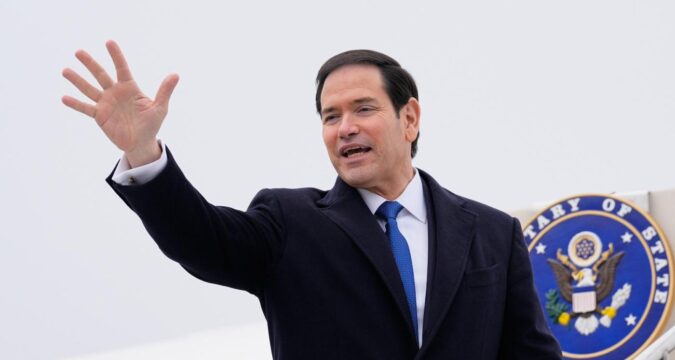
Rubio planea informar a Netanyahu sobre diálogos EEUU-Irán en Israel la próxima semana
Por MATTHEW LEE y KONSTANTIN TOROPIN
WASHINGTON (AP) — El secretario de Estado estadounidense Marco Rubio viajará a Israel la próxima semana para poner al día al primer ministro israelí Benjamin Netanyahu de las conversaciones entre Estados Unidos e Irán sobre el programa nuclear iraní, indicaron el miércoles dos funcionarios del gobierno en Washington.
Rubio tiene previsto reunirse con Netanyahu el 28 de febrero, según los funcionarios, quienes hablaron a condición de guardar el anonimato con el fin de poder detallar planes de viaje que aún no se han anunciado.
Estados Unidos e Irán han llevado a cabo recientemente dos rondas de conversaciones indirectas sobre el programa nuclear de la República Islámica. Funcionarios de ambas partes se mostraron esta semana moderadamente optimistas sobre los avances, y el ministro de Relaciones Exteriores iraní, Abbas Araghchi, incluso afirmó que “se ha abierto una nueva ventana” para alcanzar un acuerdo.
“En algunos aspectos salió bien”, comentó el vicepresidente estadounidense JD Vance sobre las conversaciones en una entrevista el martes con Fox News Channel. “Pero en otros aspectos, quedó muy claro que el presidente (Donald Trump) ha establecido algunas líneas rojas que los iraníes todavía no están dispuestos a reconocer realmente y a abordar”.
Netanyahu visitó la Casa Blanca la semana pasada para instar a Trump a que se asegure de que cualquier acuerdo sobre el programa nuclear de Irán incluya también medidas para neutralizar el programa de misiles balísticos de ese país y poner fin a su financiación de grupos aliados como Hamás y Hezbollah.
Trump sopesa la posibilidad de emprender una acción militar contra Teherán mientras el gobierno refuerza sus recursos militares en la región, lo que aumenta la preocupación de que cualquier ataque pudiera derivar en un conflicto de mayor magnitud en Oriente Medio.
El mandatario estadounidense les dijo a los periodistas el viernes que un cambio de poder en Irán “sería lo mejor que podría pasar”. Y añadió: “Durante 47 años han estado hablando y hablando y hablando”.
El gobierno de Trump ha enviado el Gerald R. Ford, el portaaviones más grande del mundo, desde el mar Caribe hacia Oriente Medio para sumarse a un segundo portaaviones, así como a otros buques de guerra y recursos militares que Washington ha acumulado en la región.
Decenas de cazas estadounidenses, incluidos F-35, F-22 y F-16, han salido en los últimos días de bases en Estados Unidos y Europa con destino a Oriente Medio, según la Military Air Tracking Alliance (MATA, por sus siglas en inglés), un equipo de unos 30 analistas de fuentes abiertas que suele analizar la actividad de vuelos militares y gubernamentales.
El equipo dice que también ha rastreado más de 85 aviones cisterna de reabastecimiento y más de 170 aviones de carga que se dirigen a la región.
Steffan Watkins, un investigador radicado en Canadá y miembro de la MATA, señaló que también ha detectado aeronaves de apoyo, tales como seis aviones E-3 de alerta temprana de las fuerzas armadas, que se dirigieron a una base en Arabia Saudí.
Esas aeronaves son clave para coordinar operaciones con un gran número de aviones. Indicó que fueron tomadas de bases en Japón, Alemania y Hawai.
———
Esta historia fue traducida del inglés por un editor de AP con la ayuda de una herramienta de inteligencia artificial generativa.
Lanzadores de Guardianes Emmanuel Clase y Luis Ortiz impugnan acusaciones de amaño
Por LARRY NEUMEISTER
NUEVA YORK (AP) — Un juicio programado para el segundo trimestre de este año por el fraude que se imputa a dos lanzadores dominicanos de los Guardianes de Cleveland podría posponerse hasta octubre, señaló el miércoles una jueza federal mientras los peloteros se declaraban inocentes de los cargos incluidos en una acusación reescrita.
La jueza Kiyo A. Matsumoto mantuvo por ahora en el calendario la fecha de juicio del 4 de mayo, pero indicó que probablemente la trasladará al último trimestre en las próximas semanas.
Mediante un intérprete español-inglés, los lanzadores Emmanuel Clase y Luis Ortiz se declararon inocentes de los ilícitos incluidos en una acusación reescrita, ante un tribunal federal de Brooklyn. Se les acusa de coludirse con apostadores deportivos para amañar resultados y traicionar el llamado “pasatiempo nacional de Estados Unidos”.
No hubo nuevos cargos en la acusación sustitutiva que se hizo pública el viernes. Los fiscales acusaron a una tercera persona de actuar como intermediaria entre los apostadores y Clase.
Esa persona también se declaró inocente el miércoles.
Los lanzadores fueron acusados por primera vez en noviembre de aceptar varios miles de dólares en sobornos para ayudar a dos apostadores de su natal República Dominicana a ganar al menos 460.000 dólares al realizar más de 100 apuestas “de proposición” en directo y combinadas sobre la velocidad y el resultado de ciertos lanzamientos.
Los cargos incluyen complot para cometer fraude electrónico y para influir en competencias deportivas.
La acusación reescrita difundida el viernes añadió señalamientos de que Clase usó palabras clave como “gallo” y “pollo” en comunicaciones sobre los lanzamientos que se iban a realizar.
Antes de un juego del 18 de mayo de 2025 contra los Rojos de Cincinnati, Clase recibió un mensaje que le pedía “lanzar una piedra al primer gallo en la pelea de hoy”. El pitcher respondió: “Sí, claro. Es un lanzamiento fácil a ese gallo”, según la acusación.
Sin embargo, Clase nunca entró al juego y no pudo cumplir el plan de lanzar fuera de la zona de strike al primer bateador que enfrentara, añade el documento acusatorio.
Un día antes, no obstante, Clase infringió las reglas de las Grandes Ligas al usar su teléfono celular en medio de un juego contra los Rojos para señalar a los apostadores que un lanzamiento estaría fuera de la zona de strike, lo que les permitió ganar unos 27.000 dólares, indica la acusación.
Clase, el ex cerrador de los Guardianes, y Ortiz, abridor, están suspendidos con goce de sueldo desde julio. Sus compañeros apenas están comenzando el campamento de pretemporada. El juego inaugural en casa del equipo es el 3 de abril.
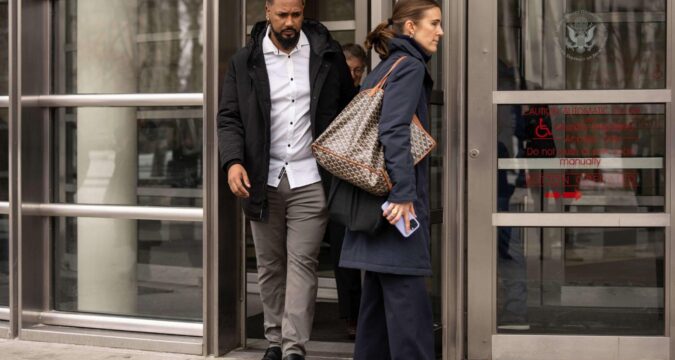
Clase y Ortiz, que están en libertad bajo fianza, salieron del tribunal por separado tras la audiencia del miércoles. Ninguno hizo comentarios. Los abogados de ambos han insistido en que sus clientes nunca se coludieron con apostadores.
Los abogados de Ortiz han pedido que sea juzgado por separado, al señalar en documentos judiciales que, si Clase transmitió a los apostadores la estrategia de pitcheo de Ortiz, lo hizo sin que este último lo supiera. También destacaron que a Ortiz se le acusa de haber realizado sólo dos lanzamientos que despertaron sospechas en un lapso de 12 días, mientras que a Clase se le imputa coludirse con apostadores en numerosos pitcheos desde 2023.
“Es posible que el señor Clase haya abusado de su relación con el señor Ortiz como amigos y compañeros de equipo al convencer al señor Ortiz de hacer ciertos pitcheos en determinados momentos —supuestamente por razones beisboleras, según lo que el señor Ortiz entendía—”, escribieron los abogados.
Indicaron que podrían plantear ante el jurado una defensa que presentaría a “Ortiz como una víctima del plan del señor Clase, en lugar de un participante consciente y voluntario”.
Clase, tres veces elegido al Juego de Estrellas, devengó un salario de 4,5 millones de dólares en 2025, la cuarta temporada de un contrato de cinco años por 20 millones de dólares. Los fiscales sostienen que comenzó a proporcionar a los apostadores información sobre sus lanzamientos en 2023, pero no buscó sobornos sino hasta el año pasado.
Los fiscales han dicho que Ortiz, quien percibió un salario de 782.600 dólares la temporada anterior, se sumó al plan en junio.
Los Guardianes y las Grandes Ligas han dicho que están cooperando con la investigación. La oficina de las mayores indicó que contactó a las autoridades federales cuando comenzó a investigar una actividad inusual de apuestas.
_____
Deportes AP: https://apnews.com/hub/deportes

Thornwood’s Amira Hondras gets drafted by Los Angeles of Women’s Pro Baseball League. ‘Seeing is believing.’
A vision that always seemed like it would stay a fantasy recently became a reality for Thornwood’s Amira Hondras.
Hondras, a senior infielder/pitcher who has continuously broken barriers as a female baseball player, was drafted in November into the new Women’s Pro Baseball League.
“Hearing my name called and being with my family was definitely a dream come true,” Hondras said. “This opportunity is something all of us wanted but never really thought we could have.”
Hondras was chosen by Los Angeles with the 11th pick of the fourth round in the inaugural draft for the new league, which also has teams representing New York, Boston and San Francisco.
Cofounded by Justine Siegal, who became the first woman to coach in MLB with the Athletics in 2015, it’s the first pro baseball league for women since the All-American Girls Professional Baseball League — featured in the movie “A League of Their Own” — dissolved in 1954.
“It’s a special thing, not only for me but all these women and the younger generation that’s coming up,” Hondras said. “Seeing is believing, so now the young girls can see this and it paves the way for the future.”
Thornwood’s Amira Hondras, right, takes it all in at the East vs. West All-Star game during the Double Duty Classic at Rate Field in Chicago on Wednesday, July 2, 2025. (Vincent D. Johnson / Daily Southtown)
Hondras was also honored Feb. 4 at the Chicago White Sox ACE signing day. Hondras, who was the first female to play for the ACE youth baseball program, was recognized along with 18 male players who were signing with colleges.
Those players included Homewood-Flossmoor’s Antonio Brown Jr. (Purdue Northwest), Ryan Myers (Morehouse) and Jamir Scott (Rust), Mount Carmel’s Connor Elenteny (Notre Dame), Ethan Hayes (Morehouse), Joey Ireland (Illinois), Mario Medina (Davenport) and Jonathan Osornio (Cowley), Marist’s Trinton Falls (Moraine Valley), Shepard’s Steve Magana (Triton), Brother Rice’s Brent Nevils (Xavier of Louisiana) and Reavis’ Jose Rodriguez (Lake Land).
Troy Williams, the White Sox director of ACE and community baseball, has watched Hondras grow up from a girl who would come watch her older brother, Tre, play for the team, into a pro who now has the merchandise to back it up.
“She’s got a really cool baseball card,” Williams said. “On signing day, she shows up with the card that has Los Angeles on there, has her picture on there, and she signed it for me. It was super cool. That was probably my favorite moment of the day.”
Thornwood’s Amira Hondras (3) slides safely into third for a stolen base at the East vs. West All-Star game during the Double Duty Classic at Rate Field in Chicago on Wednesday, July 2, 2025. (Vincent D. Johnson / Daily Southtown)
Six weeks earlier, Hondras was at JetBlue Park in Fort Myers, Florida, for a draft party, waiting for her name to be called.
“The suspense was definitely there,” Hondras said. “Sitting around waiting and every time someone with an ‘A’ in their name came up, we were like, ‘Is this it?’ But it was an incredible moment when it happened.
“I got to go out onto the field and get my picture taken with the team hat and everything. It was awesome.”
It was just the latest moment in the spotlight for Hondras, who was also recognized on the field in October at Game 2 of the World Series in Toronto, where she was given an MLB Develops Most Valuable Player award.
Amira Hondras (3) looks for the call after putting a tag on Marian Catholic’s Chace Tankson (22) during a nonconference game in Chicago Heights on Friday, March 15, 2024. (John Smierciak / Daily Southtown)
“That was such a once-in-a-lifetime experience,” she said.
Williams has seen Hondras receive plenty of those. With more to come.
“You couldn’t write a better story,” he said. “I’d equate it to a Disney movie almost. It’s super inspiring. She’s breaking down barriers and knocking the door down for other girls who want to play baseball.”
Hondras still has her senior season at Thornwood coming up. She will then join her Los Angeles team, but she won’t have to move too far right away.
The league is planning to play its entire first season at Robin Roberts Stadium in Springfield, beginning Aug. 1.
“I feel like that first game is going to mean everything for me,” Hondras said. “The last time this happened was about 70 years ago, so it’s a full-circle moment for everyone and it’s a dream come true.”
https://www.chicagotribune.com/2026/02/18/amira-hondras-thornwood-womens-pro-baseball/
Chicago funeral arrangements set for civil rights icon Rev. Jesse Jackson
A day after the Rev. Jesse Jackson’s death, officials with the Rainbow/PUSH Coalition announced funeral arrangements for the Chicago-based civil rights icon and presidential candidate.
Wednesday, February 25, 2026
Public visitation at Rainbow/PUSH Coalition
Location: 930 E 50th St, Chicago, IL 60615
Time: 10:00 AM – 9:00 PM
Thursday, February 26, 2026
Public visitation at Rainbow/PUSH Coalition
Location: 930 E 50th St, Chicago, IL 60615
Time: 10:00 AM – 6:00 PM
Friday, February 27
The People’s Celebration at House of Hope
Location: 752 E 114th St, Chicago, IL 60628
10:00 AM – 2:00 PM
Time: Doors Open at 9:00 AM
Saturday, February 28
Homegoing Services at Rainbow/PUSH Coalition
Location: 930 E 50th St, Chicago, IL 60615
10:00 AM – 2:00 PM
Time: Doors Open at 9:00 AM
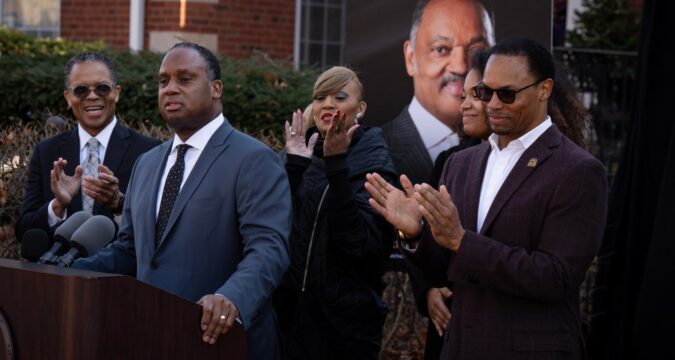
Jackson’s son, Jesse Jackson Jr., said at a Wednesday morning news conference that everyone of all political leanings are welcome to attend the services because his life “is broad enough to cover the full spectrum of what it means to be an American.” But he asked that attendees be respectful.
“Dad would have wanted us to have a great meeting to discuss our differences, to find ways of moving forward and moving together,” he said. “If his life becomes a turning point in our national political discourse — Amen.”
The founder of the Kenwood-based Rainbow/PUSH Coalition died Tuesday morning at 84, “peacefully” and “surrounded by his family.” His health has been in decline for years, and he recently spent weeks in the hospital for progressive supranuclear palsy, a rare neurological disorder.
Tributes from across the city and country poured in Tuesday, from all walks of life. Neighbors and friends remembered him for his “generous” personality, while local politicians said he was an inspiration. Gov. JB Pritzker and Mayor Brandon Johnson ordered public buildings across the city and state to fly flags at half-staff.
Yusef Jackson called his father Wednesday a “lion among lions” who dedicated his life to public service to make the nation better, the world more just and people better neighbors.
A titan of civil rights: Remembering Rev. Jesse L. Jackson
“Rev. Jackson would say ‘it is my religion that makes me political, not my politics that makes me religious,’” he said. “We, his family, and the many others touched by him, inspired by him, are left obligated to continue his work to make our nation a better place for all.”
A Baptist minister born in South Carolina, Jackson was a protégé of the Rev. Martin Luther King Jr., who participated in the Selma to Montgomery, Alabama, marches. He continued the fight for social justice and civil rights through the coalition and campaigned twice unsuccessfully for president. He stepped down as the president of Rainbow/PUSH in 2023.
Tribune columnist Steve Daley called him in 1990 a “political force of nature” who is both an “eloquent voice for the dispossessed and a relentless manipulator of events and issues, hopscotching from coal strike to South Africa to statehood for the District of Columbia.”
https://www.chicagotribune.com/2026/02/18/jesse-jackson-chicago-family-funeral/
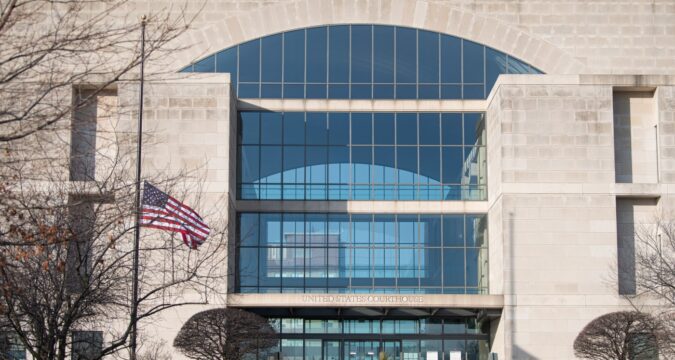
Highland doctor gets 8 years for billing fake sinus procedures
A Highland doctor was sentenced to just over eight years Wednesday for bilking nearly $22 million from the U.S. government for non-existent sinus procedures.
Bethany Cataldi, 54, of Chesterton, pleaded guilty in July to healthcare fraud. U.S. District Judge Gretchen Lund sentenced her to 97 months in prison. She faced up to 10 years.
Her lawyer, Jonathan Meltz, did not immediately respond to a request for comment.
As part of the plea deal, Cataldi will have one year of supervised release after prison and repay $19.1 million in restitution.
Court records allege the Center for Otolaryngology and Facial Plastic Surgery scheduled fake surgeries from March 2015 to December 2023. At least eight patients confirmed to investigators that their operations never happened.
In total, Cataldi’s practice billed the government for over 1,800 balloon sinuplasty procedures — an outpatient procedure used to treat chronic sinus infections. Investigators estimated she only had supplies for 100 patients.
“This sentence reflects that doctors who engage in such outrageous behavior will face significant consequences in this District,” U.S. Attorney Adam Mildred said in a statement.
As part of her plea deal, the government will seize several assets, like designer jewelry, a couple of Mercedes-Benz vehicles, expensive guitars, and several bank accounts towards repayment.
She also “agreed to sell real estate and other luxury assets” bought with the money, according to a release.
State records show her medical license is expired.
Assistant United States Attorney Francis Sohn led the case.

Surprising Revival: Gen Z Men & Highly Educated Lead Return To Religion
Surprising Revival: Gen Z Men & Highly Educated Lead Return To Religion
Authored by Joel Kotkin, Bheki Mahlobo via RealClearInvestigations,
The decline of religion remains a fundamental reality in most Western countries, particularly in Europe, where over 50% of those under age 40 do not identify with any faith. Even in more religious America, some estimate that as many as 100,000 churches will close in the near future. Meanwhile, the ranks of “Nones,” those outside religious communities, have grown so large that their numbers rival those of Catholics and evangelical Protestants.
Yet, as we document in a new report for the Chapman Center for Demographics and Policy, there are signs that religion is enjoying more than a nascent revival. Data emerging from the 2020s suggest that we are witnessing a complex spiritual restructuring that intersects with economic mobility, demographic resilience, and a profound intellectual realignment.
For the first time in decades, Pew Research notes, in the U.S. at least, Christianity has stopped its nosedive as more people begin to see the efficacy, and the rewards, of religious faith and practice.
This fragile development is especially noteworthy as it exposes growing divides and fault lines in American politics and culture. Drawing on a vast array of longitudinal studies, interviews, and other sources, one startling finding in both America and abroad is that, contrary to past assertions, today the faithful are not poor and ignorant but increasingly from the educated upper middle class.
Even the cognitive elites are experiencing a growing trend to embrace religious activity. Indeed, in a rebuke of the aggressive New Atheism of the early 2000s advanced by thought leaders such as Richard Dawkins and Christopher Hitchens, a counter-movement appears to be growing among scientists, philosophers, and public intellectuals who view religious tradition not as a delusion to be eradicated but as a sustainable civilizational operating system.
As our politics splinter along gender – with women increasingly forming the base for Democrats and men, for Republicans – it is men who are leading the return to church. Reversing a 25-year-long trend, men reported higher church attendance than women in 2025. This growing divide may continue to separate men and women, with grave implications at a time when rates of marriage and parenthood are declining.
Even in places where religion continues to decline, the remaining faithful are shifting away from more liberal faiths to those hewing closer to traditional values. For many, more orthodox sects provide existential security and create a sustainable sense of community.
As our report makes clear, the budding religious revival taking place in the U.S. reflects a global trend, especially strong in Africa, which is now the most demographically robust place on the planet.
The implications and promise of this trend cannot be overstated. Data show that religious communities function as potent engines of human capital accumulation, risk mitigation, and social capital. These mechanisms effectively propel adherents up the socioeconomic ladder.
There is considerable evidence that faith is again gaining adherents, even in Europe. Last year, for example, there was a 45% increase in the number of people baptized in France. In the U.K., according to an April study by the Bible Society, the number of 18- to 24-year-olds saying they attended church at least monthly has jumped from 4% in 2018 to 16% today. Among young men, it’s increased 21%. Most of this growth is concentrated among Catholics and Pentecostals; the Bible Society suggests there are now more than 2 million more people attending church than in the last decade.
Spiritual Hunger
In the U.S., there are also signs of spreading spiritual hunger, according to Pew. Relatively few “nones” identify as either atheist or agnostic but consider themselves spiritual outside organized faith. One recent survey showed young people are increasingly embracing a higher power, often using the internet to access traditional beliefs. Research also suggests that most Gen Z teens are interested in learning more about Jesus, with younger cohorts leading the way in the growth of new commitments.
This is particularly marked among men, marking the closing of the so-called “God Gap” between the sexes. In both the U.S. and the U.K., Gen Z men are now retaining or adopting Christian identity at rates equal to or higher than their female peers. Many young men report feeling culturally dislocated or villainized by progressive secular discourse regarding masculinity. Traditional forms of Christianity, particularly Catholicism and Orthodoxy, offer a narrative of responsibility, sacrifice, and hierarchy that appeals to men seeking a defined role in a fluid world.
Public intellectuals like Jordan Peterson have played a crucial role in re-enchanting the Bible for a secular male audience. By framing biblical narratives as psychological maps for meaning rather than just metaphysical claims, they create an on-ramp for secular men to enter religious spaces. The internet has further facilitated this through the rise of digital orthodoxy, where the aesthetic of antiquity and rigorous discipline appeals to young men to the spiritual vacuity of modern life.
More surprising may be the nascent embrace of religion by scientists and other learned classes. In the early 2000s, the New Atheism gained traction for the view casting religion as a dangerous delusion. By 2025, this movement has largely exhausted itself, replaced by nuanced curiosity and, in some cases, a robust defense of religion among the epistemic elite.
Longitudinal research by sociologist Elaine Howard Ecklund, based on surveys of scientists in eight regions, including the U.S., the U.K., Turkey, India, and Taiwan, reveals that scientists in Taiwan, Hong Kong, and India are often more religious than the general public. They view science and religion as overlapping or independent spheres, not enemies.
This perspective is emerging in the U.S. as well. Although still a distinct minority, younger scientists under the age of 35 are more likely to attend religious services than the older baby boomer cohort, suggesting that the rigid secularism of the academy is softening with the new generation. Even two decades ago, only 15% of scientists considered religion in conflict with science, while 70% did not see that conflict.
There are even signs of a revival in the technological heartland of secular America – Silicon Valley. Leading figures, including Pat Gelsinger, former head of Intel, Gary Tan, CEO of Y Incubator, and the venture capitalist Peter Theilopenly embrace Christianity. The world’s most important innovator, Elon Musk, has recently become more public in his embrace of Christianity, which he described as “ a religion of curiosity” and “greater enlightenment.”
Membership at Our Lady of Peace Church and Shrine in Santa Clara has risen to more than 3,000 families, according to Father Brian Dinkel, who said the Catholic church hears an estimated 50,000 confessions a year. “People who may be doing well also want something more,” notes Father Dinkel. “Our people work at Google and Apple, but there’s a real search for the truth beyond tech.”
Orthodoxy Flourishing
Even amidst a fledgling religious revival, mainline Protestantism, once a primary cultural and political pillar of American life, is in freefall. Episcopalians, Methodists, Presbyterians, Lutherans, and others now account for less than 11% of the population, down 40% since 2007, according to the Pew Religious Landscape Study. Since 1960, for example, the Episcopalian share of the population has dropped by two-thirds, the Disciples of Christ and United Church of Christ by even more. Lutherans and even Baptists have seen their share shrink by 50%.
More recently, traditional faiths, such as Greek Orthodoxy, have done particularly well. A survey of Orthodox churches around the country found that parishes saw a 78% increase in converts in 2022, compared with pre-pandemic levels in 2019. And while historically men and women converted in equal numbers, vastly more men have joined the church since 2020. The average age of attendees is 42, with 62% between 18 and 45. That’s significantly younger than other major traditions.
The appeal of Greek Orthodoxy, notes religious intellectual and convert Matt Mattingly, actually lies not in politics or race, but in ancient values. Mattingly, himself a convert, notes in conversations with recent American converts, “I have talked with, I would estimate, 100+ young men headed into Orthodoxy in the past decade or so. It is true that most are strong supporters of this ancient faith’s teachings on marriage, family, sexuality, and gender. Many of these single men are highly motivated to get married and start families. Yes, they are worried about trends in American life and many mainline pews.
Even more ascendant are the Pentecostals, who emphasize direct contact with God. Their numbers have swelled, particularly among immigrants and in the developing world, as well as in the U.S. By some accounts, it is the fastest-growing religion in the world, with over 600 million adherents today and projected to reach one billion by 2050.
Similarly, among Jews, reform and even conservative synagogues are struggling while those of Orthodox Judaism, particularly the thriving Chabad movement, have gained both members and influence. Critically, it has enjoyed the greatest growth in engagement since the Oct. 7 attack on Israel. In contrast to Chabad’s assertive embrace of the Jewish state, some progressive reform rabbis have embraced anti-Zionism, even in the face of overwhelming support among Jews for Israel. Today, Orthodoxy represents one in seven Jews, but by 2040, that is projected to be one in five.
Elite Marker
A central tenet of secularization theory was that higher education would inevitably lead to lower religiosity. This pattern still holds in Europe, but the 2022-2023 Cooperative Election Study, which included nearly 85,000 respondents, indicates a positive correlation between educational attainment and religious attendance in the United States. High school graduates report attending religious services weekly at a rate of approximately 23%, whereas graduate degree holders report attending weekly at a rate of approximately 30%.
This suggests that religion is becoming an elite marker in America.[i] Increasingly, at least in the U.S., religious affiliation has become a form of elite social behavior associated with stability, community leadership, and bourgeois respectability. Indeed, a deep dive into the data shows that, over the past 15 years, religiously engaged people have become more likely to be well-educated, while atheists are less so. Generally, the nones tend to be somewhat less schooled than their more religious counterparts.
These findings shatter the notion that religious people are generally less curious, less ambitious, and less intelligent than their non-believing counterparts. Religious groups such as Jews and Hindus, as well as Episcopalians, also outperform atheists and agnostics, while many others, such as Mormons, Lutherans, and other Protestant groups, do as well.
Nowhere is the efficacy of religion more obvious than among poorer Americans. Inner-city boys who attend religious school are twice as likely to graduate from college as their socio-economic counterparts in public schools, notes Tulane sociologist Ilana Horwitz. Critical here, notes Horwitz, are the attributes of the religiously engaged, such as respect for elders and learning, with the deepest divergence felt among working- and middle-class children.
This may be one reason enrollment in private Christian schools has shot up across the nation in recent years. The K-12 enrollment at the Association of Christian Schools International, “one of the country’s largest networks of evangelical schools,” increased 12% between 2019-20 and 2020-21. Since then, particularly during and after the pandemic, private schools, mostly religious, gained 300,000 new students between 2019 and 2023 while public schools lost 1.2 million.
That jump mirrors other migrations out of public school systems, including a doubling in the percentage of kids being homeschooled. In the 2019-20 school year, 6% of all American students, some 3.5 million, attended religious schools. The rise of voucher programs, including in such large states as Texas and Florida, has largely benefited religiously oriented schools.
Pathway to Success
One subtle effect, most importantly for the poor, is that religious institutions provide a connection to the more affluent. This is a critical factor for success as outlined in the “Social Capital Atlas” project led by Harvard economist Raj Chetty. Utilizing privacy-protected data from 21 billion Facebook friendships linked to tax records and census data, the report found the degree of social interaction between low-income and high-income individuals as the single strongest predictor of whether a poor child would rise out of poverty. High exposure to wealthier peers increases lifetime earnings by an average of 20%.
Chetty’s team found that poorer people associate more with the affluent at religious institutions than at secular institutions like high schools, colleges, and workplaces. A low-income individual attending a religious congregation is significantly more likely to form a meaningful friendship with a high-income congregant than they would be in a workplace, school, or neighborhood group.
Perhaps most critically, religion provides a sense of community and ties that are more tangible than those found online, at school, or in the workplace. For instance, just 10% of religious observants say they have no close friends; the number almost doubles for those who have no faith. For young families, in particular, the religious community offers a village in which to raise children in an era of atomized parenting. This functional utility is a major driver of individuals returning to church in their thirties.
The church, notes Aaron Renn, a leading protestant intellectual, provides a mechanism, particularly for the young, to escape the loneliness and alienation associated with the “negative world.” Even though plagued at times by racial and ethnic division, the church’s role was “not merely socially useful but as “part of a gospel obligation.”
Three-quarters of those who attend church weekly give to the poor, compared with 41% of non-observants. Overall, 73% of all charitable contributions come from religious sources, while 60% of all beds for the homeless are from faith-based institutions.
Indeed, when volunteerism has been on a decline among the young, the young religious are more likely to perform community work than their nonreligious Gen Z counterparts. Data from a nationally representative survey of nearly 2,000 young adults ages 18 to 25 coordinated by Neighborly Faith reveals that half of religious Gen Zers report volunteering in the community often or very often, compared with 30% of slightly religious Gen Zers and just 21% of not religious Gen Zers.
In the end, our report finds that the growing evidence of religion’s basic utility, including its provision of a spiritual anchor, seems likely to grow, by offering a viable alternative to hyper-competition and individualism rife in secular-driven societies.
Tyler Durden
Wed, 02/18/2026 – 20:55