Category: News
Nacional Potosí sorprende en la altura a Botafogo, en 2da fase preliminar de Copa Libertadores
Por JOSÉ MANUEL VALLADARES
Con un gol de Óscar Baldomar al comienzo de la segunda parte, Nacional Potosí venció el miércoles 1-0 a Botafogo en el encuentro de ida de la segunda fase preliminar de la Copa Libertadores.
El equipo boliviano se apoyó en los 3.885 metros de altitud de su sede y redujo la condición de favoritos de los brasileños, que ganaron el torneo en 2024.
En los otros partidos de la fecha, Argentinos Juniors superó 1-0 a Barcelona, mientras O’Higgins derrotó por ese mismo marcador a Bahía.
La Fase 2 de la Libertadores cerrará este jueves la tanda de ida con los enfrentamientos Juventud–Guaraní y Deportivo Táchira–Tolima.
La próxima semana se disputarán los partidos de vuelta, que definirán los ocho clasificados a la última ronda preliminar, la cual otorgará cuatro cupos para la fase de grupos del certamen.
El sorteo de la fase de grupos se realizará el 18 de marzo. Esta ronda se iniciará la semana entre el 7 y el 9 de abril. Se extenderá hasta la última semana de mayo.
La final de la Copa Libertadores 2026 está prevista para el 28 de noviembre en Montevideo.
En el estadio Víctor Agustín Ugarte, de Potosí, Nacional llevó la iniciativa y se adelantó a los 47 minutos con la anotación de Baldomar, quien remató de cabeza en el primer palo un centro de Jorge Rojas.
El cuadro boliviano dominó las acciones con 65% de posesión y 54 remates ante un Botafogo que sufrió los efectos de la altura y buscó mantener un resultado corto antes de jugar como local la siguiente semana en Río de Janeiro.
Desde 2021, sólo dos equipos de Brasil pudieron conseguir triunfos como visitante en Bolivia por la Libertadores: Palmeiras, en dos ocasiones, e Internacional.
Nacional extendió a siete encuentros su invicto como local en torneos de la CONMEBOL.
En Guayaquil, Argentinos Juniors, campeón de la Libertadores en 1985, resistió con un jugador menos más de media hora para vencer 1-0 a Barcelona.
El elenco argentino obtuvo el triunfo a domicilio con un remate de Diego Porcel a los 91 minutos.
El zaguero Francisco Álvarez recibió la tarjeta roja a los 65 por una infracción sobre Sergio Núñez en una ocasión manifiesta de gol.
Argentinos Juniors logró su primera celebración como visitante ante contrincantes ecuatorianos en su tercera oportunidad.
En Rancagua, O’Higgins superó a Bahía con un potente disparo de Francisco González a los cuatro minutos.
Tras ocho victorias y tres empates, el equipo dirigido por Rogerio Ceni sufrió su primera derrota de la temporada en la Libertadores.
_____
Deportes AP: https://apnews.com/hub/deportes
How A Water War Is Brewing Over A Drying Lake In Nevada
How A Water War Is Brewing Over A Drying Lake In Nevada
Authored by John Haughey via The Epoch Times,
A Nevada lawsuit trickling toward trial could determine how the nation’s most arid state balances the legal rights of upstream landowners to divert water from rivers for agricultural irrigation with the impacts those withdrawals have on downstream ecologies and economies.
Water rights exceed water supply across much of the western United States. With many watersheds failing to deliver enough water for local needs, the suit is being watched by attorneys, state water managers, and federal agencies. It could potentially set a precedent in revising how states across the West regulate access to water.
The Nevada case, filed by the Walker River Paiute Tribe and Mineral County, may also present an opportunity for a win-win solution, in which nonprofits and government entities purchase private water rights from willing upstream sellers and dedicate them to downstream public benefit.
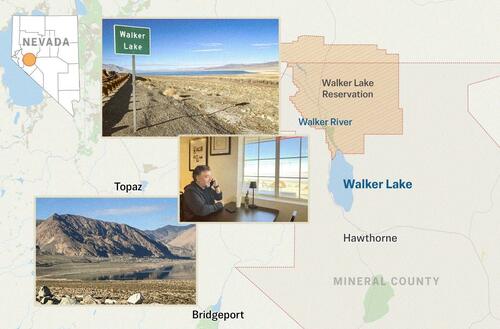
Without public-private intervention and the changes in state water law that the suit seeks, geologists and environmental experts agree the future is bleak for Walker Lake, a 13-mile long terminal lake about 75 miles southeast of Reno near the California state line in rural, sparsely populated Mineral County.
The lake is completely dependent on diminishing Sierra Nevada snowmelt runoff into the Walker River—runoff that, for decades now, has been almost entirely diverted for irrigation by upstream farmers and ranchers.
As a result, a desert oasis that once generated more than half of Mineral County’s economic activity through recreational pursuits such as fishing, migratory bird-watching, boating, and camping is now a lifeless “sludge pond,” while the town of Walker Lake faces an accelerating prospect of extinction.
“The last fish was caught in 2013 or 2015, I believe. When the fish died, the fishing died; boating, recreation, that all just disappeared,” Mineral County Commissioner Tony Ruse said.
“There were restaurants here. There were hotels here. There were businesses here. Now? All gone, just 300 residents struggling.”
A Mineral County native, Ruse returned in 2020 after working 34 years as a Switzerland-trained chef in Europe and Asia, including 20 years in South Korea, to open The Big Horn Crossing, a restaurant and convenience store in a shuttered bait shop. It’s now Walker Lake’s only remaining retail business.
“It was dead. There was nothing,” he told The Epoch Times. “We should be selling bait here. We should be selling fishing supplies. There should be boats parked in our driveway right now.”
(Top) Mineral County Commissioner Tony Ruse fields a phone call at The Big Horn Crossing, a restaurant and convenience store that is the only remaining retail business in Walker Lake, Nev., in January 2026. (Bottom) Walker Lake, a town of fewer than 400 people, is anchored on the slopes of Mount Grant, but no longer supports a fishery, boat races, or the waterfront restaurants and hotels that once made it a desert oasis for tourists, anglers, and campers, in Mineral County, Nev., in January 2026. John Haughey/The Epoch Times
Marlene Bunch and her husband Glenn lead the Walker Lake Working Group, created in 1991 to ensure water reaches the lake to sustain its recreational economy.
“Upstream diversions have been our nemesis, and that’s what our legal case is for,” Bunch, a former Mineral County clerk and treasurer, told The Epoch Times.
Bunch.has lived in Walker Lake since the 1960s. She recalls a 1991 discussion with Nevada Department of Wildlife fisheries biologist Mike Sevon about what would happen if water levels continued to drop.
Diminishing Returns
Walker Lake retains water flowing east 100 miles from California’s Bridgeport and Topaz reservoirs through Nevada’s Smith and Mason valleys and the Walker River Paiute Tribe’s reservation. According to the U.S. Geological Survey, its water levels have declined more than 160 feet since 1882. Nearly 30 miles long in 1850, the lake is only 12 miles long today.
The runoff provided hydrological pressure that sustained area water wells, especially in Walker Lake, where Ruse said residents are seeing “very brackish” water coming from taps, a potential death knell for the town.
“It’s getting harder and harder to keep the federal standards for potable water,” he said. “So there’s going to be a day—and I’m waiting for the call—that we need to put a reverse-osmosis system in, which we couldn’t afford to do.”
Walker Lake and nearby Hawthorne, the Mineral County seat, struggle in the desert—Hawthorne has seen its population decline 60 percent from 10,000 in 1980 to just over 3,000 in 2020. Meanwhile, agriculture in the Smith and Mason valleys has thrived.
(Top) Walker Lake has receded well beyond the sign on U.S. Route 95, in Mineral County, Nev., in January 2026. Decades ago, anglers could shorecast for fish that can no longer survive in the shrinking lake. (Bottom) Nevada’s Walker Lake, a 13-mile-long lake about 75 miles southeast of Reno near the California state line in rural Mineral County, was once more than 30 miles long and 160 feet higher than it is now, in Mineral County, Nev., in January 2026. John Haughey/The Epoch Times
But with mountain runoff unreliable for decades now, when upstream users divert their share, little to no water makes it to Walker Lake, leaving once-bustling waterfront businesses marooned as hulking shells far from a distant, receding shore.
The case, United States and Walker River Paiute Tribe v. Walker River Irrigation District, is not a new case, but ongoing litigation arising from a lawsuit filed in 1924.
It’s part of a flood of litigation stemming from Walker River allocations, going back to 1902, when rancher Henry Miller sued Thomas Rickey over water rights on the river.
A 1936 Walker River Decree issued by the Nevada U.S. District Court finalized water rights for more than 500 private landowners, primarily farmers and ranchers, within the Walker River Basin, including those in the Walker River Irrigation District, under a “first in time, first in right” policy that remains the standard almost a century later.
Like Nevada, most western states allocate water by the policy, known as prior appropriation. Therefore, under the 1936 decree, upstream users have legal priority to Walker River water.
But in 2015, Mineral County filed a lawsuit citing the public trust doctrine, the legal principle that certain natural and cultural resources be preserved for public use.
The lawsuit claimed that under the public trust doctrine, it is the state’s duty to maintain minimum inflows into public waters, such as Walker Lake, to sustain environmental, wildlife, recreational, and economic resources.
The U.S. District Court ruled in the county’s favor. The irrigation district appealed. The U.S. Ninth Circuit Court overturned the ruling; the public trust doctrine, it held, was a state law issue that had not been decided in Nevada.
That kicked the case back to the Nevada Supreme Court, which in 2020 determined all Nevada waters will now be allocated under the public trust doctrine—but that already-issued water rights would not be, and can never be, reallocated.
The Supreme Court of Nevada building in Carson City, Nev., in this file photo. In 2020, the court determined that all Nevada waters will now be allocated under the public trust doctrine. Steven Frame/Shutterstock
The court directed Mineral County to recommend ways to restore the lake without reallocating water rights, and to work with the Walker Basin Conservancy, a nonprofit created in 2014 with federal funding initially secured by Sen. Harry Reid (D-Nev.) and the National Fish and Wildlife Foundation’s Walker Basin Restoration Program.
In 2021, Mineral County amended its 2015 complaint to intervene in the decades’-long parallel suit by the Walker River Paiute Tribe seeking to boost Walker River flows into a reservation reservoir and secure water rights for 167,460 acres added to the reservation since 1936.
The county’s complaint includes 24 “actions … necessary to restore and maintain Walker Lake’s public trust values.”
After years of procedural delays, including a requirement to individually serve more than 1,000 watershed landowners across the country, the case is set to proceed into discovery. A potential trial looms.
But an alternate “win-win” solution orchestrated by the Walker Basin Conservancy is gaining traction and could, perhaps, mitigate the need for a court-ordered resolution.
‘The Only Solution’
Since its creation, the conservancy has restored public access to 33 miles along the Walker River and purchased more than 13,700 acres of water rights, enough to restore about 60 percent of the river inflow biologists maintain is needed to restore the lake’s fishery.
Conservancy CEO Peter Stanton and Water Program Director Carlie Henneman did not return emails and repeated phone requests for comment about the program from The Epoch Times. Nor did the Nevada Department of Conservation and Natural Resources, Walker River Irrigation District attorney Gordon DePaoli, or Walker Basin Working Group’s Oregon-based legal advisers, Jamie Saul of the Wild & Scenic Law Center and Kevin Cassidy of Lewis & Clark Law School’s Earthrise Law Center.
Several attorneys representing different parties would only speak off-the-record, underscoring the contentious complexities of the case.
A sign of the Walker River Paiute Tribe in Shurz, Nev., on Oct. 16, 2024. Walker Lake retains water flowing east 100 miles from California’s Bridgeport and Topaz reservoirs through Nevada’s Smith and Mason valleys and the Walker River Paiute Tribe’s reservation. Frederic J. Brown/AFP via Getty Images
Roderick E. Walston, an attorney with Best Best & Krieger in Walnut Creek, Calif., told The Epoch Times his clients above the Bridgeport Reservoir in California are apprehensive about Mineral County’s suit, which he said essentially demands the federal court to reallocate existing water rights under the public trust doctrine.
“Our response is basically that the Nevada Supreme Court resolved that issue four years ago,” he said.
Walston was a California deputy attorney general in 1983 and argued the Mono Lake case before the California Supreme Court. In that case, the state’s public trust doctrine was used to thwart Los Angeles from purchasing Mono Lake water rights that would have devastated the lake’s ecology and Sierra Nevada economies.
“So I argued both the case in California Supreme Court 40-something years ago and then also argued the case in the Nevada Supreme Court about four years ago,” he said.
Walston said the case could have “great impact” on water disputes in states that uphold the prior allocation doctrine. “This is an absolutely large case,” he said.
Meanwhile, Mineral County District Attorney Ryan McCormick, who assumed his post seven weeks ago, told The Epoch Times he’s playing catch-up in reading filings “from decades and decades of litigation.”
A sign is pictured at Walker Lake in Hawthorne, Nev., on Oct. 16, 2024. According to the U.S. Geological Survey, Walker Lake’s water levels have declined more than 160 feet since 1882. Nearly 30 miles long in 1850, the lake is only 12 miles long today. Frederic J. Brown/AFP via Getty Images
“In a perfect world, if we get some specific performance and find a way to divert water back into the lake and have the levels rising again, that would be absolutely ideal,” he said, adding he isn’t privy to the reasoning behind all of the 24 actions assembled by the Walker Lake Working Group.
It’s a complicated case in a long-litigated watershed but the best resolution is simple, McCormick said. “With the best interests of Mineral County, Hawthorne, and Walker Lake in mind here, we would like the lake to be receiving fresh water again. It would be nice to see some economic development right now, right?”
But Walston said odds are slim the court will cast aside the state’s Supreme Court determination that existing water rights cannot be reallocated.
Working with the conservancy and other groups to purchase water rights from willing landowners at $3,000 to $4,000 per acre foot—an acre of one-foot deep water—is a win-win for all involved, he said.
“It’s the only solution, really. The Nevada Supreme Court has said you can’t just take water rights that have been adjudicated and take that water and put it into Walker Lake,” Walston said.
“But you can go to various water users and negotiate with them and buy their water rights. In that case, then you could reallocate.”
Tyler Durden
Wed, 02/18/2026 – 22:35
https://www.zerohedge.com/personal-finance/how-water-war-brewing-over-drying-lake-nevada
Cowboys dan la bienvenida a Christian Parker y esperan que enderece una pésima defensiva
Por SCHUYLER DIXON
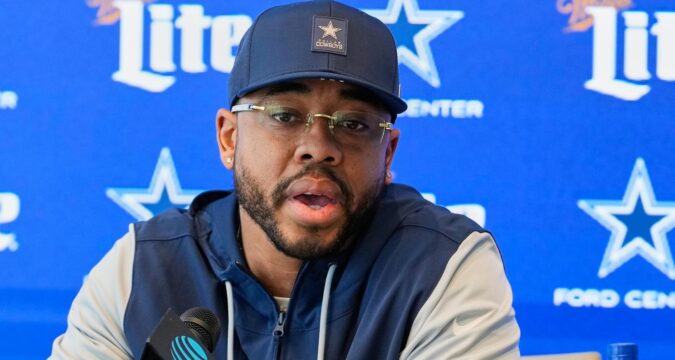
FRISCO, Texas, EE.UU. (AP) — El nuevo coordinador defensivo de los Cowboys de Dallas, Christian Parker, recuerda cuándo conoció al entrenador en jefe Brian Schottenheimer. Fue un saludo muy rápido hace unos años durante el campamento de entrenamiento.
“Buena memoria, amigo”, comentó Schottenheimer el miércoles, durante la conferencia de prensa de presentación de Parker. “¿Ven lo inteligente que es? Yo no me acordaría de eso”.
Eso no quiere decir que Schottenhaimer no tuviera en el radar a Parker, tanto así que se esforzó por arrebatárselo a Filadelfia, un rival de la División Este de la Conferencia Nacional.
“Este es un nombre que he tenido en mi libreta durante los últimos dos años”, señaló Schottenheimer, quien afronta su segunda temporada al frente de los Cowboys tras un cuarto de siglo como asistente en la NFL. “La gente no paraba de hablar de este tipo de Denver, bueno, originalmente de Green Bay, pero Denver y Filadelfia. Era un nombre del que llevaba mucho tiempo oyendo hablar”.
Parker estaba con los Broncos en 2022, cuando tuvieron una práctica conjunta con Dallas, y un encuentro social después. En ese momento no habló de fútbol americano con Schottenheimer, quien era consultor de los Cowboys, así que este proceso de entrevistas marcó la primera vez que conversaron.
Schottenheimer indicó que el club realizó más de 40 entrevistas, entre ellas las de nueve coordinadores defensivos.
Parker era el coordinador del juego aéreo y entrenador de backs defensivos de los Eagles. Ello significaba que debían concederle a los Cowboys permiso para hablar con el asistente de 34 años porque reemplazar a Matt Eberflus, despedido tras apenas una temporada como coordinador defensivo en Dallas, supondría un ascenso.
El esquinero de Filadelfia Cooper DeJean, quien necesitó apenas dos temporadas para convertirse en All-Pro bajo las órdenes de Parker, dejó claro en redes sociales lo que sintió cuando se conoció la noticia. En X plasmó un emoji de cara con gesto adusto: “¡Hombre!, se llevaron a uno grandísimo — no sería el jugador que soy sin CP”.
“Creo que los grandes jugadores hacen grandes entrenadores”, expresó Parker, quien la temporada pasada tuvo a otro esquinero de segundo año convertido en All-Pro, Quinyon Mitchell. “Cuando estás rodeado de personas talentosas que aman este deporte como tú y están dispuestas a hacer ese trabajo, sin duda hay una combinación feliz cuando se trata del desarrollo del jugador”.
Parker será el cuarto coordinador defensivo de Dallas en las últimas cuatro temporadas. Con Eberflus, los Cowboys permitieron la mayor cantidad de puntos (511) con la menor cantidad de intercepciones (seis) en la historia de la franquicia.
Dallas tuvo la peor defensiva contra el pase de la NFL, mientras que los Eagles tuvieron una de las mejores de la liga en ambas temporadas con Parker. Con él en el cuerpo técnico, Filadelfia fue el primer campeón divisional en revalidar su cetro en la División Este de la Conferencia Nacional en 21 años y ganó el Super Bowl para cerrar la temporada 2024.
Los Cowboys estuvieron plagados de asignaciones fallidas porque tuvieron dificultades con el esquema de Eberflus, cargado de coberturas en zona. Parker aporta un enfoque 3-4, a la vez que enfatiza múltiples variantes, y habla de coberturas en zona y hombre a hombre como intercambiables.
Parker estará a cargo de una defensa de la NFL apenas siete años después de ingresar a la liga como asistente de control de calidad con los Packers. Pasó seis temporadas en el ámbito universitario.
“Estoy listo”, afirmó Parker sin dar más detalles cuando le preguntaron si estaba preparado para su nuevo rol.
___
Deportes en español AP: https://apnews.com/hub/deportes
Estado mexicano de Puebla investiga intoxicación de 7 niños presuntamente por fentanilo en tamales
Associated Press
CIUDAD DE MÉXICO (AP) — Las autoridades de Puebla, al este de Ciudad de México, investigan la intoxicación de siete menores, una de las cuales dio positivo a fentanilo, presuntamente con tamales que se vendían en la calle, informó el miércoles el gobierno de ese estado.
Los niños, de edades comprendidas entre los 2 y los 11 años, se intoxicaron en Huauchinango, un pueblo de la sierra.
Seis de ellos fueron atendidos en un hospital y dados de alta cuando fueron estabilizados, pero una niña de 10 años quedó bajo observación después de que los estudios toxicológicos “arrojaran resultado positivo a fentanilo”, según explicó la víspera la secretaría estatal de Salud. La menor fue dada de alta el miércoles.
Las intoxicaciones de menores con drogas han ocurrido en otras ocasiones en distintos puntos de México. A finales de 2022 hubo una en escuelas de Chiapas, en el sur del país, presuntamente con cocaína diluida en agua, según denunciaron entonces los padres de los afectados.
A principios de 2023 hubo ingestiones masivas de pastillas tranquilizantes en una escuela de Ciudad de México y también de la norteña Monterrey, aparentemente debido a retos en las redes que proliferaban entre adolescentes.
En el caso reciente de Puebla, alarmó que se encontrara fentanilo en una de las niñas, la droga más lucrativa y mortífera de la actualidad que se ha convertido en el gran enemigo a combatir por la administración del presidente estadounidense Donald Trump.
El embajador de Estados Unidos en México, Ronald Johnson, se refirió el miércoles al tema en sus redes y lo puso como ejemplo de “la urgencia de desmantelar las redes que envenenan a nuestras comunidades”.
“El fentanilo no distingue si eres de los Estados Unidos o de México”, escribió en su cuenta oficial de X. “Como dolorosamente lo demuestra este caso, tampoco distingue entre un adulto y un niño indefenso”.
El gobierno de Puebla aseguró en un comunicado que las secretarías de Salud, Seguridad Pública y las autoridades de procuración de justicia “realizan las investigaciones pertinentes para proceder con todo el peso de la ley en contra de las o los responsables.

Naperville Police Arrests for Feb. 11-14
The following items were taken from Naperville police reports and press releases. An arrest does not constitute a finding of guilt:
An 18-year-old man from Plainfield was arrested on five counts of aggravated assault/use of a deadly weapon, one count of aggravated use of a weapon and one count of aggravated assault/wearing a hood, robe or mask at 7:39 p.m. Feb. 11 in the 100 block of North Sleight Street.
A 60-year-old man from Aurora was arrested on charges of improper lane usage and driving under the influence of alcohol at 12:59 a.m. Feb. 11 at Beebe Drive and West 75th Street.
An 18-year-old man from Bolingbrook was arrested on a warrant at 9:42 p.m. Feb. 11 at West 75th Street and Olympus Drive.
A 41-year-old man from Naperville was arrested on a warrant at 8:14 a.m. Feb. 12 at East Ogden Avenue and Naperville Wheaton Road.
A 38-year-old woman from Chicago was arrested on a charge of unlawful use of cannabis by a driver at 8:48 a.m. Feb. 12 at North Naper Boulevard and East Ogden Avenue.
A 38-year-old man from Bolingbrook was arrested on a charge of unauthorized video recording/transmission with no consent at 3:54 p.m. Feb. 13 in the 600 block of South Route 59.
A 20-year-old woman from Aurora was arrested on a warrant and on charges of failure to dim headlights and driving on a suspended license at 10:33 p.m. Feb. 13 at North Aurora Road and the Canadian National railroad crossing.
A 41-year-old man from Aurora was arrested on charges of driving on a suspended license and improper lane usage at 10:53 p.m. Feb. 13 at North Aurora Road and North Route 59.
A 26-year-old woman from Sauk Village was arrested on charges of improper lane usage, driving the wrong way on a divided highway or cross median and driving under the influence of alcohol at 1:05 a.m. Feb. 14 at Beebe Drive and West 75th Street.
https://www.chicagotribune.com/2026/02/18/naperville-police-arrests-blotter-february-4/
“Ejecuciones, tortura, secuestros, violaciones”: El conflicto oculto de Etiopía
Por AMIR AMAN KIYARO
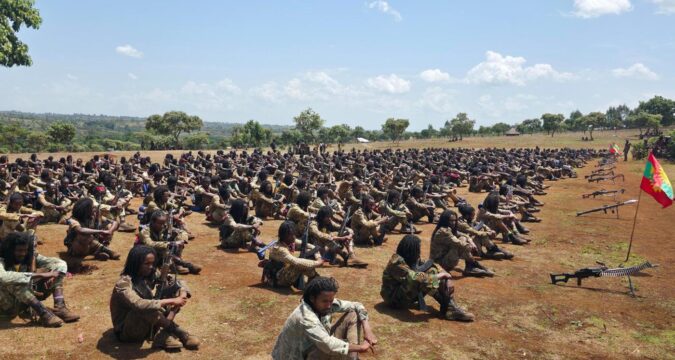
Buscado por el gobierno etíope, el líder militar rebelde Jaal Marroo se mueve constantemente para adelantarse a los drones que lo persiguen desde el cielo.
El comandante insurgente lidera el Ejército de Liberación Oromo (ELO) desde una serie de puestos de avanzada remotos en la selva de Oromía, la región más grande del país, con una población de aproximadamente 40 millones de personas.
El gobierno ha designado al exestudiante como terrorista, y ha acusado al ELO de masacrar civiles en ataques motivados por la etnia. Pero en una inusual entrevista desde uno de sus escondites, Marroo rechazó las acusaciones de que sus combatientes ataquen a civiles.
“Nuestra guerra no es contra el pueblo”, le dijo a The Associated Press. “Es contra el régimen brutal que ha ocupado y oprimido a la nación durante generaciones”.
Y añadió: “Luchamos para corregir un sistema que trata a los oromo como súbditos, en lugar de (como) ciudadanos. Nuestro objetivo es establecer un orden político democrático e inclusivo basado en la voluntad del pueblo”.
“Casi imposible viajar”
El ELO ha combatido al gobierno de Etiopía desde 2018, aunque en ocasiones la rebelión se ha visto eclipsada por los otros conflictos del país, como la guerra de 2020-2022 en la región norteña de Tigray. Investigadores de Naciones Unidas han acusado al ELO de cometer abusos graves, incluidos asesinatos, violaciones y secuestros.
Sin embargo, observadores de los derechos humanos, quienes también han documentado violaciones cometidas por las fuerzas gubernamentales, reportan que los ataques indiscriminados con drones, las ejecuciones extrajudiciales y las desapariciones se han convertido en un sello distintivo de su campaña de contrainsurgencia.
“La investigación que realizamos sitúa tanto al ELO como a las fuerzas gubernamentales en el centro del conflicto en términos de ejecuciones sumarias, en términos de torturas, en términos de secuestros, en términos de violaciones de mujeres”, denunció Sarah Kimani, portavoz regional de Amnistía Internacional, organización que publicará un informe en marzo sobre violaciones de los derechos humanos en la región.
“Nuestro informe permite identificar que ambos grupos han sido responsables de las atrocidades que se cometen en la región de Oromía y que continúan cometiéndose contra la población civil en la región”, declaró a la AP.
Ayantu Bulcha se encontraba en su casa en Adís Abeba, la capital, cuando se enteró de que los soldados habían llegado a la casa de su familia en Oromía en diciembre. Su primo recibió un disparo afuera de la propiedad, refirió. Luego, los soldados se llevaron a su padre y a su tío a un campo cercano, donde también fueron asesinados, agregó. Habían sido acusados de luchar junto al ELO.
“Ha habido amenazas contra mi familia desde los asesinatos, e incluso antes de eso”, añadió Bulcha, quien es integrante de un partido de la oposición etíope. Ella niega las acusaciones de que sus familiares pertenecieran a los rebeldes.
Lensa Hordofa, funcionaria pública de la región de Shewa, en Oromía, manifestó que su familia sufre acoso y extorsión constantes por parte de hombres armados. Esto incluye exigencias de alimentos y otros suministros. Su tío fue detenido recientemente, y sólo lo liberaron tras pagar un rescate de 100.000 bires etíopes (650 dólares).
“El desplazamiento de un lugar a otro se ha vuelto cada vez más restringido”, señaló. “Es casi imposible viajar”.
Bulcha expresó que tenía demasiado miedo de regresar a casa por temor a sufrir represalias de las fuerzas gubernamentales.
“Mi frágil madre se ha quedado sola en una casa vacía, de luto. Ni siquiera puedo ir allí a acompañarla en el duelo”, agregó. “Me preocupa mi propia seguridad”.
Ataques a hospitales y clínicas
Etiopía restringe el acceso a Oromía a periodistas y grupos defensores de los derechos humanos, lo que significa que el conflicto permanece oculto en gran medida.
“Desafortunadamente, la situación de los derechos humanos —así como la crisis humanitaria general en Oromía— no recibe la cobertura suficiente”, destacó Getu Saketa Roro, cofundador de la Human Rights League of the Horn of Africa (Liga de Derechos Humanos del Cuerno de África), un organismo activista sin fines de lucro.
Representantes de los gobiernos regional y federal no respondieron a las solicitudes de comentarios.
En enero de 2025, la ONU informó que 3,2 millones de niños no asistían a la escuela debido a los enfrentamientos. En el distrito de Wollega, donde vive la familia de Bulcha, los grupos de ayuda humanitaria enfrentan dificultades para distribuir suministros, lo que contribuye a una alta tasa de desnutrición.
Hospitales y clínicas también han sido objeto de ataques. En 2023, el Comité Internacional de la Cruz Roja informó que “casi todos” los 42 puestos de salud del distrito de Begi, en Oromía, habían sido saqueados o dañados.
Tulu Getachew, un caficultor de Wollega, no ha podido regresar a casa desde hace tres años debido a la inseguridad. Contrató trabajadores para recolectar sus granos, pero hombres armados robaron su cosecha.
“Una parte te perjudica porque dice que perteneces a la otra”, expresó. “Tú sufres porque ellos dicen que tu familiar está afiliado al gobierno o al ELO”.
Aunque Abiy Ahmed, el primer ministro etíope, es de Oromía —y los oromos representan aproximadamente el 35% de la población etíope—, muchos oromos reportan que siguen marginados en el sistema federal de Etiopía, que otorga recursos y derechos de autogobierno según la etnia.
“Oromía es muy insegura”
Las recientes ofensivas del gobierno han erosionado la capacidad militar del ELO, dicen analistas. A finales de 2024, las autoridades convencieron a uno de los principales comandantes del grupo para que desertara, lo que degradó aún más sus capacidades.
El gobierno alega que cientos de miles de desplazados han podido regresar a sus hogares. No obstante, el conflicto sigue desestabilizando la región, en la que civiles se ven inmersos en la violencia.
Miembros de la etnia amhara, el segundo grupo más numeroso de Etiopía, han sido blanco de ataques, según observadores de derechos humanos. Mientras tanto, insurgentes de la región de Amhara también han perpetrado ataques en Oromía.
Asimismo, el bandolerismo armado es frecuente, y el secuestro se ha convertido en un problema particular. No siempre está claro quién es responsable de los secuestros.
“Oromía es muy inseguro, no sólo por el ELO, sino también por otros grupos que operan como organizaciones criminales (y) participan en extorsiones, secuestros y robos”, indicó Magnus Taylor, director para el Cuerno de África del International Crisis Group, una organización no gubernamental y sin fines de lucro dedicada a prevenir y resolver conflictos mortales.
_____
Para más información sobre África y el desarrollo, visite: https://apnews.com/hub/africa-pulse The Associated Press recibe apoyo financiero de la Fundación Gates para la cobertura global de salud y desarrollo en África. La AP es la única responsable de todo el contenido. Consulte los estándares de la AP para trabajar con organizaciones filantrópicas, una lista de patrocinadores y las áreas de cobertura financiadas en AP.org.

Watch: “Drunk As A Skunk” TV Reporter Does Snow Angels, Slurs Through Winter Olympics Broadcast
Watch: “Drunk As A Skunk” TV Reporter Does Snow Angels, Slurs Through Winter Olympics Broadcast
Australian television journalist Danika Mason left viewers stunned after a bizarre live broadcast from the snowy chaos of the 2026 Milano Cortina Winter Olympics in Italy.
The Today Show sports presenter appeared to slur and stumble her way through her segment amid snowstorm, rambling incoherently before dramatically throwing herself to the ground to make snow angels.
Social media has lit up with speculation after popular Channel 9 sports and rugby league host Danika Mason appeared on morning television struggling to get her words out while covering the Winter Olympics in Italy.
📌 READ MORE: https://t.co/HKql0kBobM pic.twitter.com/G3yCeBsJFj
— The Advertiser (@theTiser) February 18, 2026
Channel 9 has refused to respond to questions about sports reporter Danika Mason after she appeared to struggle through live Winter Olympics crosses, slurring words and losing focus on air.#SydneyConfidential 🌟 https://t.co/Atasz2fKbD
Get the news first with The Daily… pic.twitter.com/afLOFpCDn7
— The Daily Telegraph (@dailytelegraph) February 18, 2026
In the awkward clip that’s now going viral, Mason veered off topic, declaring: “The price of coffee over here is actually fine… it’s actually the price of coffee in the US we have to get used to… I’m not sure about the iguanas?”
A confused Mason then added: “Where are we going with that one? Anyway, let’s get into today’s sport because there’s plenty happening back home.”
As if the slurring and stammering weren’t cringe-worthy enough, the presenter suddenly rolled around in the snow like a giddy child, creating snow angels for the cameras — leaving co-hosts and viewers alike gobsmacked.
Back in the Sydney studio, host Karl Stefanovic rushed to her defence, blaming the freezing conditions.
“You get out of a car over there (in Italy) and there is such a cold wind, you can’t actually move your lips,” Stefanovic claimed. Mason could be seen giggling at Stefanovic’s quip before the camera mercifully cut away.
Social media users weren’t buying the ‘cold lips’ excuse, flooding platforms with savage mockery, with many bluntly suggesting the reporter was drunk on air.
After hitting the piste, sports reporter Danika Mason files her next live cross with Karl Stefanovic getting right down to the bottom of the story. pic.twitter.com/A4ttolnUUi
— The Kangaroo Court (@TheKangCourt) February 18, 2026
Now crossing live to Danika Mason #Olympics2026 pic.twitter.com/IvQtAn9Ofl
— Max King (3-4 Weeks) (@Deyterkmahjerb) February 18, 2026
and now we cross live to Danika Mason pic.twitter.com/CG4Zklfbhr
— V ✨ (@TicsVitsJacThic) February 18, 2026
Is Danika Mason doing the sports reports on Today while drunk?
A lot of slurring, pausing and uncertainty in her live crosses
— feliz navidud (@DesignedToFade) February 17, 2026
Haha.. Danika Mason drunk as a skunk on live tv 😂 @TheTodayShow
— Liam☘️ (@sergeantshamrog) February 17, 2026
Channel 9 letting Danika Mason on while she’s off her face on pingers is incredible stuff
— Seccy29 (@KurtSymington10) February 18, 2026
One TV insider slammed the decision to keep her on, telling The Sun that Stefanovic and co-host Jayne Azzopardi should have cut her off immediately.
“Even if producers didn’t cut her off, Karl and Jayne (Azzopardi) have been in this game long enough to know she should not have been on air,” the source said. “There’s an entire control room of staff who could have cut her from the broadcast.”
Channel 9 insiders revealed the network is now scrambling to investigate how the control room allowed the chaotic performance to drag on for hours.
“Why did she keep getting let back on? It was clear early”, a source told Daily Mail.
Tyler Durden
Wed, 02/18/2026 – 22:10

Naperville SD203 to spend $12.3 million on new transportation center
Naperville District 203 School Board members voted 5-1 Tuesday to spend nearly $12.3 million on a new transportation center, which will be built with energy savings in mind.
The board, which has been studying plans to replace its aging facility since May 2025, approved moving forward with the project in August. In the fall, it was updated to include geothermal wells and solar panels to align with the district’s carbon action plan.
With the updated environmental features, the district is projected to save about $4.3 million in energy costs through 2050.
Initial costs estimates indicated the project would cost between $14.8 million and $17.4 million, which would be paid for with savings built up over time. Adding geothermal powered mechanicals and full rooftop solar was expected to add about $2 million.
That bids came in so much lower than expected is a boon for the district, board member Joe Kozminski said.
“In my mind, this is also an investment for the long-term future of the district with the renewable energy and infrastructure improvements we are putting in there,” he said. “Strategic investments like this are also good because it’ll be saving money down the road for the district.”
Board member Kristine Gericke said the district had been putting “Band-Aids” on the transportation center for a long time. Superintendent Dan Bridges agreed, saying they’d been using mobile units that far exceeded their useful life.
The district is now paying about $4,000 a month in a rented space until the new center is complete.
Board member Holly Blastic added that the building is a key component for the district’s transportation system, and is used throughout the day and the year and not just during peak bus hours.
Board member Melissa Kelley Black cast the sole vote against the project citing budget concerns.
Michelle Mullins is a freelance reporter for the Naperville Sun.
https://www.chicagotribune.com/2026/02/18/naperville-203-12-million-transportation-center-hub/
Congreso elige a José Balcázar como nuevo presidente interino de Perú tras la destitución de José Jerí
LIMA (AP) — Congreso elige a José Balcázar como nuevo presidente interino de Perú tras la destitución de José Jerí.

UN Security Council members blast Israel’s West Bank plans on eve of Trump’s Board of Peace meeting
UNITED NATIONS — Members of the United Nations Security Council called Wednesday for the Gaza ceasefire deal to become permanent and blasted Israeli efforts to expand control in the West Bank as a threat to prospects of a two-state solution, coming on the eve of President Donald Trump’s first Board of Peace gathering to discuss the future of the Palestinian territories.
The high-level U.N. session in New York was originally scheduled for Thursday but was moved up after Trump announced the board’s meeting for the same day and it became clear that it would complicate travel plans for diplomats planning to attend both. It is a sign of the potential for overlapping and conflicting agendas between the United Nations’ most powerful body and Trump’s new initiative, whose broader ambitions to broker global conflicts have raised concerns in some countries that it may attempt to rival the U.N. Security Council.
Pakistan, the only country on the 15-member council that also accepted an invitation to join the Board of Peace, denounced Israel’s contentious West Bank settlement project during the meeting as “null and void” and said it constitutes a “clear violation of international law.”
“Israel’s recent illegal decisions to expand its control over the West Bank are gravely disturbing,” Pakistani Foreign Minister Ishaq Dar said.
The foreign ministers of the United Kingdom, Israel, Jordan, Egypt and Indonesia also attended the Security Council’s monthly Mideast meeting after many Arab and Islamic countries requested last week that it discuss Gaza and the West Bank before some of them head to Washington.
“Annexation is a breach of the U.N. Charter and of the most fundamental rules of international law,” Palestinian U.N. Ambassador Riyad Mansour said. “It is a breach of President Trump’s plan, and constitutes an existential threat to ongoing peace efforts.”
Israeli Foreign Minister Gideon Saar said that attention was not on the U.N. session and that the focus of the international world would be on the Board of Peace meeting.
Saar also accused the council of being “infected with an anti-Israeli obsession” and insisted that no nation has a stronger right than its “historical and documented right to the land of the Bible.”
Bigger ambitions for the Board of Peace
The board to be chaired by Trump was originally envisioned as a small group of world leaders overseeing his 20-point plan for Gaza’s future. But the Republican president’s new vision for the board to be a mediator of worldwide conflicts has led to skepticism from major allies.
While more than 20 countries have so far accepted an invitation to join the board, close U.S. partners, including France, Germany and others, have opted not to join yet and renewed support for the U.N., which also is in the throes of major reforms and funding cuts.
British Foreign Secretary Yvette Cooper said there is an opportunity for the U.N.’s most powerful body to help build “a better future” for Israelis and Palestinians despite the “cycle of violence and suffering” over the more than two-year war between Israel and Hamas.
“Gaza must not get stuck in a no man’s land between peace and war,” Cooper said as she opened the meeting.
Mike Waltz, the U.S. ambassador to the U.N., appeared to criticize countries that had not yet signed on to the Board of Peace, saying that unlike the Security Council, the board is “not talking, it is doing.”
“We are hearing the chattering class criticizing the structure of the board, that it’s unconventional, that it’s unprecedented,” Waltz said Wednesday. “Again, the old ways were not working.”
The Security Council is meeting a day after nearly all of its 15 members — minus the United States — and dozens of other diplomats joined Palestinian ambassador Mansour as he read a statement on behalf of more than 80 countries and several organizations condemning Israel’s latest actions in the West Bank, demanding an immediate reversal and underlining “strong opposition to any form of annexation.”
In the last several weeks, Israel has launched a contentious land regulation process that will deepen its control in the occupied West Bank. Israeli Energy Minister Eli Cohen said it amounts to “de facto sovereignty” that will block the establishment of a Palestinian state.
Outraged Palestinians, Arab countries and human rights groups have called the moves an illegal annexation of the territory, home to roughly 3.4 million Palestinians who seek it for a future state.
‘A pivotal moment in the Middle East’
The U.N. meeting also delved into the U.S.-brokered ceasefire deal that took effect Oct. 10. Israeli and Palestinian civil society representatives briefed the council for the first time since the Hamas-led Oct. 7, 2023, attacks on Israel that launched the war.
Hiba Qasas, a Palestinian who is founding executive director of Geneva-based Principles for Peace Foundation, and Nadav Tamir, a former Israeli diplomat who is executive director of J Street Israel, both said they represent a strong coalition of Israelis and Palestinians who believe the only way to end the conflict is through a two-state solution.
“Israel cannot remain the democratic homeland of the Jewish people if Palestinians are denied a homeland of their own. Our futures are interdependent,” Tamir said.
U.N. political chief Rosemary DiCarlo told the council that “this is a pivotal moment in the Middle East” that opens the possibility for the region to move in a new direction. “But that opening is neither assured nor indefinite,” she said, and whether it will be sustained depends on decisions in the coming weeks.
“The Board of Peace meeting in Washington, D.C., tomorrow is an important step,” she said.
In unusually strong language, DiCarlo rebuked Israel’s unilateral actions in the West Bank, saying the world is witnessing its “gradual de facto annexation.”
Aspects of the ceasefire deal have moved forward, including Hamas releasing all the hostages it was holding and increased amounts of humanitarian aid getting into Gaza, though the U.N. says the level is insufficient. A new technocratic committee has been appointed to administer Gaza’s daily affairs.
But the most challenging steps lie ahead, including the deployment of an international security force, disarming Hamas and rebuilding Gaza.
Trump said this week that the Board of Peace members have pledged $5 billion toward Gaza reconstruction and will commit thousands of personnel to international stabilization and police forces for the territory. He didn’t provide details. Indonesia’s military says up to 8,000 of its troops are expected to be ready by the end of June for a potential deployment to Gaza as part of a humanitarian and peace mission.
https://www.chicagotribune.com/2026/02/18/un-security-council-on-israel-west-bank-plans/