Category: News

Los aranceles pagados por empresas medianas de EEUU se triplicaron el año pasado, dice JPMorganChase
Por JOSH BOAK
WASHINGTON (AP) — Los aranceles pagados por empresas medianas de Estados Unidos se triplicaron a lo largo del año pasado, según mostró el jueves una nueva investigación vinculada a uno de los principales bancos de Estados Unidos, otra evidencia de que el impulso del presidente Donald Trump por cobrar impuestos más altos a las importaciones está causando disrupción económica.
Los impuestos adicionales han significado que las empresas que emplean en conjunto a 48 millones de personas en Estados Unidos —el tipo de negocios que Trump había prometido reactivar— han tenido que encontrar maneras de absorber el nuevo gasto, ya sea trasladándolo a los clientes en forma de precios más altos, contratando a menos trabajadores o aceptando menores ganancias.
“Ese es un gran cambio en su costo de hacer negocios”, afirmó Chi Mac, director de investigación empresarial del JPMorganChase Institute, que publicó el análisis el jueves. “También vemos algunos indicios de que podrían estar alejándose de realizar transacciones con China y quizá orientándose hacia otras regiones de Asia”.
La investigación no indica cómo se están transmitiendo los costos adicionales a través de la economía, pero señala que los aranceles están siendo pagados por empresas de Estados Unidos. Forma parte de un conjunto creciente de análisis económicos que contradicen las afirmaciones del gobierno de que los aranceles los pagan los extranjeros.
El informe del JPMorganChase Institute utilizó datos de pagos para examinar a empresas que podrían carecer del poder de fijación de precios de las grandes multinacionales para compensar los aranceles, pero que quizá sean lo suficientemente pequeñas como para cambiar con rapidez sus cadenas de suministro y minimizar su exposición a los aumentos de impuestos. Las compañías solían tener ingresos de entre 10 millones y 1.000 millones de dólares, con menos de 500 empleados, una categoría conocida como “mercado medio”.
El análisis sugiere que el objetivo del gobierno de Trump de depender menos directamente de los fabricantes chinos se ha estado produciendo. Los pagos a China por parte de estas empresas fueron un 20% inferiores a sus niveles de octubre de 2024, pero no está claro si eso significa que China simplemente está canalizando sus productos a través de otros países o si las cadenas de suministro se han trasladado.
Los autores del análisis subrayaron en una entrevista que las empresas aún se están ajustando a los aranceles y señalaron que planean seguir estudiando el tema.
El gobierno de Trump ha insistido en que los aranceles son una bendición para la economía, las empresas y los trabajadores. Kevin Hassett, director del Consejo Económico Nacional de la Casa Blanca, arremetió el miércoles contra una investigación de la Reserva Federal de Nueva York que mostraba que casi el 90% de la carga de los aranceles de Trump recaía sobre empresas y consumidores de Estados Unidos.
“El documento es una vergüenza. Es, creo, el peor documento que he visto en la historia del sistema de la Reserva Federal. A las personas asociadas con este documento, presumiblemente, se les debería sancionar”, afirmó Hassett a CNBC.
Trump elevó la tasa arancelaria promedio al 13% desde el 2,6% el año pasado, según los investigadores de la Fed de Nueva York. Afirmó que los aranceles sobre algunos artículos como el acero, los armarios de cocina y los muebles de baño eran de interés para la seguridad nacional del país También declaró una emergencia económica para eludir al Congreso e imponer el pasado abril, en un acto que llamó “Día de la Liberación”, un impuesto base a los productos procedentes de gran parte del mundo.
Las tasas elevadas provocaron pánico en los mercados financieros, lo que llevó a Trump a dar marcha atrás con sus tasas y luego entablar conversaciones con múltiples países que derivaron en un conjunto de nuevos marcos comerciales. Se espera que la Corte Suprema falle pronto sobre si Trump excedió su autoridad legal al declarar una emergencia económica.
Trump fue elegido en 2024 con la promesa de controlar la inflación, pero sus aranceles han contribuido a la frustración de los votantes por el costo de vida. Si bien la inflación no se ha disparado hasta ahora durante el mandato de Trump, la contratación se desaceleró con fuerza y un equipo de economistas académicos estima que los precios al consumidor fueron aproximadamente 0,8 puntos porcentuales más altos de lo que habrían sido de otro modo.
___
Esta historia fue traducida del inglés por un editor de AP con la ayuda de una herramienta de inteligencia artificial generativa.
David Schwimmer is doubling down on Lookingglass Theatre
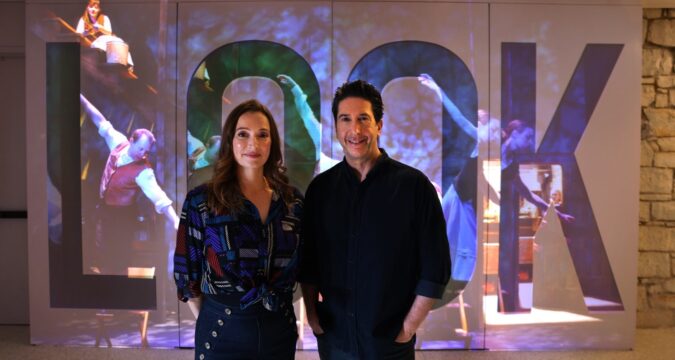
David Schwimmer, long a close friend of the Lookingglass Theatre, is re-engaged, reenergized and determined to coax the struggling Chicago theater company where he began his career back to life.
The 59-year-old actor, who shot to fame playing Ross on the hit sitcom “Friends,” has joined the Lookingglass board of directors, grabbed a spot on its finance committee, started taking meetings with everyone from the arts booster Lou Raizin to the mayoral candidate Alexi Giannoulias and brought in a fancy new website development team. He’s co-hosting an upcoming gala, dreamed up new Lookingglass merch, planned events with his longtime pal Billy Dec, walked into corporate boardrooms to raise money, and generally put himself out there in service of what can reasonably be called a major Lookingglass rebrand — with Schwimmer as the de facto chief marketing officer.
“I want to use whatever juice I have left,” Schwimmer said, clearly understating the amount of available juice, “to help boost the theater. I am doubling down.”
And it is not difficult for Schwimmer to book a meeting with a potential donor.
A reboot for the theater — Schwimmer calls it both a “relaunch” and a “bounce back” — certainly was necessary.
Lookingglass, founded by a highly talented group of Northwestern University graduates in 1988 and named after a student production of André Gregory’s “Through the Looking Glass,” brought something fresh and transformative to the then-grungy Chicago theater scene.
Before Lookingglass, Chicago theater was underpinned by the in-your-face acting style embodied by John Malkovich and Gary Sinise at the Steppenwolf Theatre, and by the improv-driven sketch comedy at Second City. The erudite Lookingglass, which featured famously good-looking actors and looked to such influences as the Pilobolus dance company and Cirque du Soleil, added a crucial third leg to the city’s cultural stool.
Its Northwestern University heritage gave it another advantage, too. The Evanston school’s performance and theater departments had a heritage of exploring non-dramatic texts like novels and narrative poems, with scholar-artists like Robert Breen and Frank Galati turning them into theater. One of Galati’s students, Mary Zimmerman, became both a MacArthur Foundation “genius” and a Lookingglass ensemble member and created some of its biggest hits, including an unforgettable 1992 adaptation of “The Arabian Nights,” as well as “Eleven Rooms of Proust” (2000) and “Metamorphoses,” a stunning retelling of the Greek myth that ran for a year at the now-defunct Ivanhoe Theatre on Chicago’s North Side and had a similar run at Broadway’s Circle in the Square, after first offering balm to grieving New Yorkers in the weeks following the Sept. 11 terrorist attacks.
Schwimmer was there from the start, directing “The Jungle” in 1990 at the Lakeview building that’s now Theater Wit. This was an adaptation of the 1906 novel about the meatpacking industry by Upton Sinclair; famously, Lookingglass actors hung by their heels, depicting the draining carcasses of the Chicago Stockyards. He acted, too, appearing in a 1998 adaptation of Fyodor Dostoevsky’s “The Idiot.”
But Lookingglass was hardly dominated by Schwimmer, a founding member along with Eva Barr, David Catlin, Thomas J. Cox, Larry DiStasi, Joy Gregory, David Kersnar and Andy White. In the 1990s and early 2000s, gifted early ensemble artists like Heidi Stillman (who created “Hard Times” and other famed shows), and Laura Eason emerged from its productions. Some left for New York or Los Angeles to become screenwriters and showrunners. Others remained, working on shows like “Metamorphoses.”
In 2003, Lookingglass Theatre landed a sweetheart deal brokered by then-Department of Cultural Affairs commissioner Lois Weisberg, a famous mover and shaker, to become the anchor tenant in the Water Tower Water Works, a prime location on Michigan Avenue, directly across from Chicago’s famed Water Tower and, at the time, the epicenter of the Midwest’s leading retail district. The rent was $1 a year over a 20-year lease, although it cost Lookingglass $8 million to outfit the theater and move in. And once arrived, it had to pay to run a historic venue to which you could not attach a marquee.
Lookingglass prospered in the heady Chicago cultural years of the early 21st century, welcoming Sasha and Malia Obama to its summer student program and scoring a big hit with the circus-fused “Lookingglass Alice,” among many other shows. Its board, and its best seats, became prestige perches among the affluent residents of the Gold Coast and North Shore. Its vibe was hip and classy.
But in the years approaching COVID, the theater began to suffer from an identity crisis. Its core ensemble had grown older, and busier. For the most part, the original members were newly unfashionably homogenous: caucasian, roughly the same age, educated at a private university. New ensemble members like J. Nicole Brooks and Anthony Fleming III had been added, and there were genuine successes as the profiles of the newcomers rose, but as the years went by, resources rarely matched the theater’s lofty ambitions. And its environs, the Magnificent Mile, ended up with troubles of its own as retail and restaurants began to struggle.
Director David Schwimmer at the Lookingglass Theatre in 1990. (Chuck Osgood/Chicago Tribune)
At the turn of the millennium, Lookingglass had fought its way into the top tier of resident Chicago theaters, turning the big five of Goodman, Steppenwolf, Court, Second City and Chicago Shakespeare into the big six. But unlike its peers, Lookingglass specialized in original, company-devised works, typically based not on familiar existing intellectual property but on unfamiliar or esoteric sources.
Inevitably, there was a high failure rate, especially as the company’s most talented members were attracted to more lucrative opportunities demanding their attention. COVID led to a closure of some 19 months, longer than most Chicago companies. Even after the very slow return, ever-diminishing financial resources meant that the number of productions was vastly reduced, as was their scale. The number of staffers was reduced.
The bloom appeared to have fallen off the Lookingglass rose. Questions were asked as to whether the company would even survive.
Questions were asked internally, too. “We had to ask ourselves what we wanted to hold on to, and what we were willing to let go,” Schwimmer said. “Nothing about who we were had really changed, but we had to adapt to a new and unfamiliar landscape.”
Schwimmer, of course, had been one of the group who departed for Los Angeles, landing the role of Ross Geller on “Friends,” the NBC Thursday night sitcom that made huge stars out of all its cast, who eventually made $1 million each per episode. “Friends” attracted audiences of a size unthinkable in the streaming era — more than 50 million Americans simultaneously tuned in to watch its final episode, “The Last One,” in 2004. In more recent years, “Friends” has found a new audience through online streaming, rediscovered by a new generation. This has led to what Schwimmer says is his new tactic when it comes to fundraising. “I say to people,” he said, “Why don’t you match what I am giving?”
That level of fame created a lot of attention for the actor with all the pluses and minuses, especially in regards to how an ensemble theater operates. Schwimmer has never wanted to be overly dominant, even if his longtime generosity to the company has been something of an open secret in Chicago’s theater community. “My challenge,” he said, “is always trying not to take too much of the spotlight, personally, and keeping the focus on the work.” Plus, he had moved to New York, had a kid and become very busy with post-“Friends” movie projects. “There was,” he said, “a chunk of time when I was less available. But I now have some space in my personal life where I can invest more. I think it is critical for me to step up in order to sustain this theater company.”
Schwimmer is working to boost the profile of Lookingglass’ young new artistic director, Kasey Foster, who says her goal is to return to “full seasons” of work, just as soon as the money is there. (Which is where Schwimmer comes in.)
The partners say they are planning new revenue sources beyond philanthropic giving, including renting out their large lobby (recently renovated thank to a grant from the State of Illinois) for private events; getting into the business of corporate training (long a lucrative sideline for Second City); and presenting shows from other producers in its intimate theater in an enviable location. Foster also says she wants to amp up touring of the theater’s biggest hits, such as Zimmerman’s “The Steadfast Tin Soldier.” And that she has high hopes for the next show, “White Rooster,” showcasing the relatively new ensemble member Matthew C. Yee. The next season, which will include a new Zimmerman project and J. Nicole Brooks’ play “Prince Hal,” about Mayor Harold Washington, is soon to be announced.
Schwimmer clearly sees the upcoming gala, slated for May 2 at The Wellsley in River North and themed around 37 years of Lookingglass’ costume designs, as the beginning of a new era. Foster notes that the company has just signed a new 20-year lease on its home and is finally in the final throes of getting a permitted marquee on Pearson Street above its new entrance. That will allow it to adequately advertise its offerings to a potential walk-in crowd, for the first time in 22 years. There are also eight new board members and a new donor wall in the theater.
“Who we are at our core has never changed,” Schwimmer said. “That means invention, collaboration and transformation.”
Usman Ally (front), Lauren Orkus, Douglas Hara and Louise Lamson in Lookingglass Theatre Company’s production of “Metamorphoses.” (Liz Lauren)
TIMELINE
1988: Founded by Northwestern University graduates after performing “Through the Looking Glass” on campus.
1991: Former Chicago critic Justin Hayford directs “Eurydice” for Lookingglass at the World Tattoo Gallery.
1997: Mary Zimmerman’s “The Arabian Nights” plays at the Steppenwolf Studio Theatre after an earlier production in 1992.
1998: Lookingglass produces Zimmerman’s “Metamorphoses,” which will play a long run at Chicago’s Ivanhoe Theatre (now a Binny’s liquor store) and then to Broadway’s Circle in the Square.
2003: Lookingglass moves into Water Tower Water Works; David Schimmer directs a high-profile adaptation of Studs Terkel’s “Race.”
2005: “Lookingglass Alice” bows. It will return several times.
2009: Schwimmer acts in Thornton Wilder’s “Our Town,” directed by Anna D. Shapiro and Jessica Thebus.
2012: Lookingglass collaborates with chef Rick Bayless on the upscale dinner show “Cascabel.”
2018: Zimmerman returns with “The Steadfast Tin Soldier.”
2020: The COVID crisis sparks a 19-month closure.
2025: Gov. JB Pritzker speaks in the Lookingglass lobby to herald a reopening and remodeling funded by a Rebuild Illinois grant; Atra Asdou’s “Iraq, but Funny,” is heralded for its central performance.
Chris Jones is a Tribune critic
cjones5@chicagotribune.com
https://www.chicagotribune.com/2026/02/19/lookingglass-theatre-david-schwimmer/

‘Survivor’ offering an idol hunt for viewers ahead of its Season 50 premiere
Ahead of the upcoming season of “Survivor” on Feb. 25, CBS has added an interactive element for viewers with a nationwide hunt for an immunity idol, one hidden in each of the 50 states. Those who successfully find the idol will be able to enter a sweepstakes where the winning prize is a trip to attend the “Survivor” Season 50 finale and reunion.
The Illinois clue will be revealed Friday, with the window of opportunity to find the idol itself on Saturday between 10 a.m. and 4 p.m., according to eagle-eyed fans on Reddit, who have analyzed the website code and posted their findings in spreadsheets and more.
Assuming CBS wants to rope in as many participants as possible, it’s likely the Illinois idol will be located in Chicago. Some have theorized it will be somewhere in the Loop.
“Survivor” has never done a promotion like this before, according to Andy Dehnart, the founder of Reality Blurred, a digital news outlet focused on reality TV. “At the beginning of Season 41 — the so-called ‘new era’ — they had on-screen puzzles that viewers could do, but they have never done anything in-person, so this is definitely new and a pretty incredible undertaking because it’s so wide in scale.”
Here’s how it works:
After registering for notifications at survivor50challenge.com, participants will receive a clue, in the form of a riddle, indicating the idol’s location. Anyone who successfully finds it can scan a QR code and submit a photo of themselves holding the idol, which serves as entry to the sweepstakes.
“People will probably solve the clue the second it goes live, so if people are looking to find it, I’m sure they can just hop onto Reddit or somewhere else and see what people are saying,” according to Dehnart.
When near the actual location, he recommends looking for something resembling a set with “Survivor” branding and flags. In other words, the immunity idol won’t be unobtrusively hidden somewhere. It should be fairly obvious where it is once you’re in the vicinity.
The cast of “Survivor 50” is made up of participants from previous seasons returning to compete once again. Because of COVID, the show abandoned its live finale format several years ago, switching instead to filming everything on the island. That’s been standard ever since, but for Season 50, the series is reverting back to the live finale, which is why the sweepstakes might be uniquely appealing for fans.
Dehnart says the live finale for this season is probably a one-off. “They’re saving a lot of money when they shoot it right in Fiji. Jeff Probst (the show’s host) has been clearer more recently that, even though fans want them to bring the live show back, this is a budget issue and they’re not going to do it.”
If you can’t make it out to find the immunity idol, CBS is offering a 51st state option — meaning, anyone can enter the sweepstakes online and one person from that pool will also be selected to attend the finale. “You will have just as much of a random chance to be selected as someone who went out to find the idol,” says Dehnart.
https://www.chicagotribune.com/2026/02/19/survivor-50-idol-hunt/
IEA Chief Warns Fracturing Global Order Is Splintering Energy Policy
IEA Chief Warns Fracturing Global Order Is Splintering Energy Policy
By Irina Slav of OilPrice.com
A fracturing in the “global order” is threatening the harmony in energy policies, the head of the International Energy Agency has warned.
“We see a fracturing in the global political order in general, and there are, of course, reflections of that on the energy scene. Different countries are choosing different paths in terms of energy and climate change,” Birol told the Financial Times in an interview.
The warning follows the U.S. Environmental Protection Agency’s removal of the so-called endangerment finding, which served as the basis for climate change-focused policies passed in significant numbers during the Biden administration.
The finding stipulated that carbon dioxide, methane, and four other gases were harmful to people’s health and well-being.
This was the latest move by the Trump administration to dismantle Biden’s climate regulations and legislation as it prioritizes energy security—and energy dominance—over emission reduction.
Yet even the European Union, which consistently states emission reduction is still priority number-one, has been walking back some of its new regulations and commitments, under pressure from the business world, which has been bearing the cost of those commitments, alongside consumers.
The 2035 ban on internal combustion engine cars, for instance, has been renegotiated and is no longer a done deal, and now the authorities in Brussels are mulling over ways to reduce energy costs for industrial consumers in a bid to prevent the complete deindustrialization of the bloc.
A revision of emission permit trading is also on the agenda, with the chemicals industry calling for an urgent revamp of the system and a cancellation of the planned phaseout of free carbon permits.
Climate change was “moving down the international policy agenda,” Birol said this week, summarizing the latest trends in energy policies.
That move down the agenda has even reached China, which this year reduced subsidies for electric vehicles, which immediately affected sales, leading to a 20% monthly drop.
Tyler Durden
Thu, 02/19/2026 – 06:30
https://www.zerohedge.com/energy/iea-chief-warns-fracturing-global-order-splintering-energy-policy
Letters: I’m grateful to the Rev. Jesse Jackson for his mentorship and his advocacy
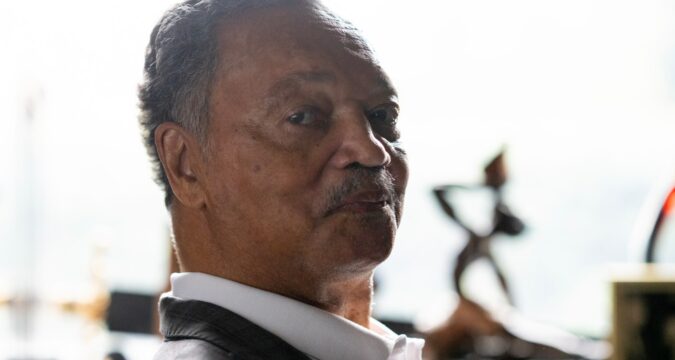
On Tuesday, we lost a dear friend and mentor.
I met the Rev. Jesse Jackson in the late 1970s as I was running a youth sports program, and his son Yusef was one of my kids. I later reconnected when I managed a bank branch at 87th and Stony Island and he came to protest, only to find I was there, and he sent the protesters home. Over the many years to follow, he became a mentor, and as I progressed through my career, he would help me navigate a world from a corporate lens, as it wasn’t built with a poor Black kid from Englewood in mind. There were times we disagreed, but there is not a single doubt that I have been afforded opportunities that only came about as a result of his tireless advocacy for all of us.
When I last saw him healthy, he gave me a picture of him and the Rev. Martin Luther King Jr. that he signed, saying, “George, keep the faith.” As I fought for 15 years in a row to convince my employer to continue to support Rainbow PUSH, I was reminded that it really is about “keeping the faith” because, once you lose faith, you’ve got nothing else to lose.
When I start to slide sideways, I look at the picture, and I straighten my back, hold my head erect and muster the will to “keep the faith.” I will continue to miss him.
My prayers go out to the family, and I’ll always cherish those times when we would connect.
Rest in peace, Reverend.
— George Wright, CEO, Chicago Cook Workforce Partnership
Jackson’s vision and legacy
Without the Rev. Jesse Jackson’s nonstop fight for voting rights since the 1960s, including during his run for president in 1984 and in 1988, we wouldn’t have had the election of a Black president sooner than many of us of color ever thought, when Barack Obama was overwhelmingly elected in 2008 as our first Black president of the United States of America.
For me, as a young brown man of Mexican descent, seeing Jackson run for president in the ’80s, when I was still a college student, made me realize that Americans of color, within and outside my community, could actually get prominent national recognition in the world of politics.
I will never forget seeing on television Jackson’s tears of pride for the Black community and for the nation as Obama and his family celebrated his 2008 victory with our Chicagoland community at Grant Park on that unforgettable Nov. 4 night.
As someone born in the early ’60s who came of age in the ’70s and and ’80s, I cannot help but profoundly appreciate and recognize the robust historical bridge that Jackson constructed and represented between the journey and legacy of the Rev. Martin Luther King, Jr. and the premise and promise of Obama.
Through such an inspiring bridge, by keeping hope alive from the late 20th century into the 21st century, Jackson’s moral vision for a better society, including his ongoing belief in a rainbow coalition that truly captures the multicultural American society that we have always been, promises to nurture a better 21st century America for new generations.
— Alejandro Lugo, Park Forest
Who keeps the fight going?
With the loss of the Rev. Jesse Jackson, Chicago and the nation mourn a civil rights titan. But beyond the grief lies an urgent question: Who picks up the mantle?
The battles Jackson fought are far from won. The Black unemployment rate remains significantly higher than the national average, and the racial wealth gap is widening, not shrinking. Yet, looking at the current landscape, there is no apparent heir with the visibility or force of personality to challenge corporate America and the government the way Jackson and his mentor the Rev. Martin Luther King Jr. did.
Perhaps that is the point. The challenges of modern systemic racism and economic inequality have become too complex for a single leader to solve. We cannot wait for another icon to emerge from the history books. We must draw from Jackson’s own philosophy: “Never look down on anybody unless you’re helping him up.”
The next phase of civil rights won’t be led by one man at a podium, but by a society that finally chooses empathy and collective humanity over division.
— Glenn Eden, Chicago
Rename park in his honor
I grew up in the 5th Ward in Hyde Park in the 1960s and ’70s, and I never gave the name Jackson Park much thought. I just loved going there and always marveled at having such a beautiful place within walking distance of my home.
Unfortunately, back then, schools did not teach us all the shameful stories of our country’s past, and I only became aware of the fact that the park was named after a terrible man, President Andrew Jackson, much later — through my own reading of history.
When the Rev. Jesse Jackson was still alive, I wrote several letters to Chicago officials urging them to rename the park in his honor and to do so as a tribute to him while he was still living. Well, that opportunity is now gone, which is a shame.
But it is never too late to do the right thing! I do not need to go over all the good that Jackson did for Chicago and the country. Nor do I need to remind readers of the atrocities committed by the president for whom the park is named.
It is past time to remove the stain of President Jackson from that beautiful place and organize a celebration for the renaming of Jackson Park to Jesse Jackson Park!
— Jonathan G Steinhoff, Portland, Oregon
Making news for the cause
It seems only appropriate that the Rev. Jesse Jackson would pass during Black History Month. In death, much as in life, the outspoken and controversial civil rights leader always seemed to know how to grab the headlines while drawing everyone’s attention to his cause.
— Bob Ory, Elgin
Submit a letter, of no more than 400 words, to the editor here or email letters@chicagotribune.com.
https://www.chicagotribune.com/2026/02/19/letters-021926-jesse-jackson-death/
Editorial: Our endorsements for the Cook County Board of Review
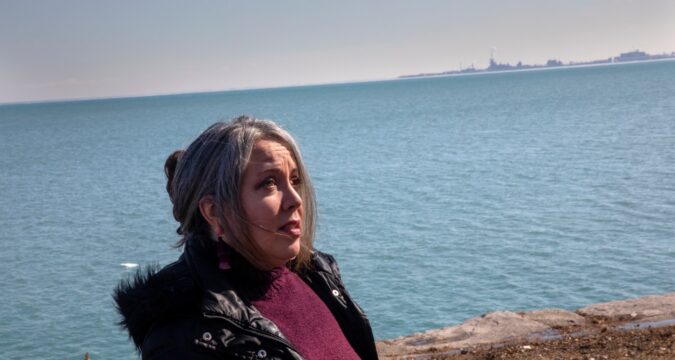
Voters have a difficult decision in the contest between the experienced but troubled incumbent Samantha Steele and challenger Elizabeth “Liz” Nicholson, a professional political fundraiser backed by the Cook County Democratic Party whose lack of experience in this field may perpetuate an unfair system.
The Cook County Board of Review, which is divided into three geographic districts, gives taxpayers an opportunity to appeal their property assessments. One of the biggest challenges facing the property tax process in Cook County is that the board and the assessor are using two different appraisal methods. This job cannot be done for the benefit of taxpayers if this fundamental disparity exists, and the problem must be resolved.
We’ve long been concerned that the Board of Review is too vulnerable to being influenced by contributions from property tax appeal attorneys and others who benefit from its role in reducing taxes on commercial properties. The practice of lawyers giving money to politicians responsible for their tax appeal cases is legal in Illinois, though it shouldn’t be. It must stop if taxpayers who don’t “pay to play” are ever going to get a fair shake.
Steele doesn’t take money from the property tax appeal industry, which notably sets her apart from her fellow incumbents on the three-member board, George Cardenas and Larry Rogers.
Right now, the board and the assessor, Fritz Kaegi, have an adversarial relationship. The members of the board themselves don’t get along, either. Both Steele and Cardenas told us they don’t speak to each other, an indication of just how dysfunctional this important office has become. That has to change, too.
Steele has other problems that raise serious concerns about the public trust.
She is contesting charges that she was driving drunk when she crashed a car in November 2024. She gave the police officers investigating the wreck a hard time, according to body-camera footage, initially refusing to provide her driver’s license, exit her damaged vehicle or take a sobriety test.
She also told them, “I’m an elected official,” evidently trying to persuade the officers to treat her differently from any other DUI suspect. The body-cam footage shows the officers discussing the smell of alcohol on her breath and the presence of a half-empty wine bottle in the car.
Steele maintains she was not driving drunk, saying a medical condition caused her to lose control of the car. Her criminal case has dragged on, unresolved, and she is entitled to be presumed innocent. But given her behavior with the arresting officers, we are skeptical of her explanation.
As if that conduct doesn’t raise enough questions about her fitness, Steele has faced reprimands for allowing staff to stray from official Board of Review business while on county time.
Also, Nicholson has filed a complaint accusing Steele, through intermediaries, of offering her a six-figure job in the Board of Review office if she would drop her election challenge. Steele has denied that accusation and demanded a retraction.
Nicholson is certain to benefit from Steele’s widely publicized problems. But it is rich indeed for a candidate taking money from the lawyers whose cases she would decide to declare that Steele’s controversies “undermine confidence in an office that requires the highest ethical standards.”
We enthusiastically endorsed Steele when she ran for her current post, and while we admire her independence we cannot endorse her again until questions about her conduct are resolved.
We are choosing to make no endorsement.
Voters have a clear choice for the other Board of Review seat at play in the primary. Cardenas is facing off against the dynamic Juanita Irizarry, former executive director at Friends of the Parks, who is backed by Kaegi.
Irizarry promises to bring greater transparency and oversight by expanding the scope of inspector general reviews and enforcing strict conflict-of-interest standards. She won’t take money from tax appeal lawyers or other firms that appear before the board, she declares. And she rightly denounces the system of “backroom deals” that hurt Cook County homeowners and renters.
Cardenas is a thoughtful public servant with a long track record, but it confounds us that he can’t put aside differences and have a functional working relationship with one of his fellow board members, which we view as disqualifying.
Irizarry is endorsed.
Submit a letter, of no more than 400 words, to the editor here or email letters@chicagotribune.com.
https://www.chicagotribune.com/2026/02/19/irazarry-steele-nicholson-cardenas-board-of-review/
What to do in Chicago: Brandi Carlile, Andrea Bocelli and a muddy trail run
Our picks for events in and around Chicago this weekend.
Jim Gaffigan
Everyone’s favorite dad is back with a night of stand-up. The Elgin native stops at the Chicago Theatre on his “Everything is Wonderful!” tour. Expect his dry humor to leave you feeling better about the world as he points out just how ludicrous life is. 7 p.m. Feb. 20 at the Chicago Theatre, 175 N. State St.; tickets from $80.05 at msg.com
Nicole Byer
You don’t watch “Nailed It!” for the disastrous cakes alone. You watch to see how Nicole Byer and pals will skewer them. Byer, who’s received an Emmy nomination for her hosting skills and is an alumna of the Upright Citizens Brigade, will tape a special this weekend at the Den Theatre. Don’t wait to watch it on a screen; go see her live. 7:15 and 9:30 Feb. 20-21 at the Den Theatre, 1331 N. Milwaukee Ave.; tickets from $27 (two-item minimum) at thedentheatre.com
Andrea Bocelli
The beloved tenor Andrea Bocelli, now 67, plays United Center this week, a stop on a tour celebrating the 30th anniversary of his hit album “Romanza.” The 1997 record went triple platinum and is still one of the best-selling non-English language albums. 8 p.m. Feb. 25 at United Center, 1901 W. Madison St.; tickets from $150.15 at unitedcenter.com
Brandi Carlile
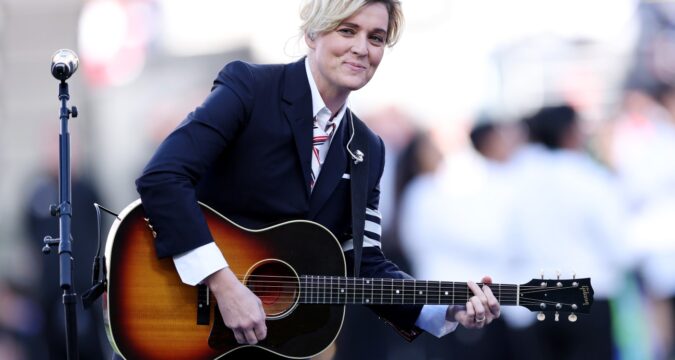
Perhaps you were too wowed by Bad Bunny to catch that Brandi Carlile sang “America the Beautiful” at the Super Bowl. It’s well worth watching if you missed it. The Grammy and Emmy Award-winner told USA Today that her interpretation meant to focus on how the lyrics read “more like a prayer than a boast.” If it resonates, you might consider heading to Allstate Arena to catch the Chicago stop on her “Human” tour. The Head and the Heart will also perform. 7 p.m. Feb. 20 at Allstate Arena, 6920 N. Mannheim Road, Rosemont; tickets from $68.40 at rosemont.com
Alicia Villarreal
The Latin Grammy Award-winner brings her “Donde Todo Comenzó 2.0” tour to Rosemont. Expect her to play songs from the album released at the end of 2024, as well as hits from earlier in her 30-year career. 8 p.m. Feb. 20 at Rosemont Theatre, 5400 N. River Road, Rosemont; tickets from $72.15 at rosemont.com
Cody Combs with Pablo David Laucerica, Megan McGinnis and Elaine Watson in “Dear Evan Hansen” at Paramount Theatre in Aurora. (Boris Martin)
“Dear Evan Hansen”
Director Jessica Fisch has put together a “remarkable” production of “Dear Evan Hansen,” according to a Tribune review. “Fisch just somehow always seems to manage to cast in such a way that high-quality singing accompanies truthful and vulnerable acting.” It’s well worth the schlep to Aurora. Through March 22 at Paramount Theatre, 23 E. Galena Blvd., Aurora; tickets from $47 at paramountaurora.com
“A Night of Broadway”
A bevy of Broadway stars performs at this weekend’s fundraiser supporting the Illinois Conservatory for the Arts. The lineup includes Joaquina Kalukango, who won a Tony Award for her role in “Paradise Square”; Eden Espinosa, who has starred as Elphaba in “Wicked” and was nominated for a Tony for her role in “Lempicka”; Kecia Lewis, who won a Tony for her role in “Hell’s Kitchen”; Michael Longoria, who’s appeared as Frankie Valli in “Jersey Boys”; Samantha Pauly, who’s appeared in “The Great Gatsby,” “Six,” and “Evita”; and Christine Sherrill, who stars as Donna in the Broadway revival of “Mama Mia!” Tickets include dinner and an after-party. 6 p.m. Feb. 21 at Hotel Arista, 2139 City Gate Lane, Naperville; tickets $250 at ilconservatory.org
Oscar-Nominated Short Films
Curious about all those short films that get nominated for the Academy Awards? See them on the big screen and judge for yourself. The Music Box Theatre will screen Oscar-nominated live-action short films and animated shorts starting this weekend. Then, next weekend, you have two days to catch the documentary shorts. Plenty of time to get ready for the Oscars broadcast on March 15. Through March 1 at Music Box Theatre, 3733 N. Southport Ave.; tickets from $11 at musicboxtheatre.com
Andrea Bocelli performs during a FIFA World Cup 2026 event at the Kennedy Center for the Performing Arts on Dec. 5, 2025, in Washington, D.C. (Mandel NGAN/Getty Images)
Universal Sole Sean McNamara Valentine’s Trail Challenge
The photos from a decade’s worth of past Valentine’s Trail Challenges show varying amounts of snow. Not likely this year. Get ready for the mud and maybe an icy patch or two as you take on the 4.5-mile race. Will’s Famous Chili will greet runners at the finish line, per tradition. 10 a.m. Feb. 21 in Schiller Woods West Forest Preserve, 8400 W. Irving Park Road; registration $60.21 at universalsole.com
Junior Archeology
Young Indiana Joneses, report to the National Hellenic Museum this weekend for a hands-on opportunity to test your skills. Kids ages 5-12 can handle replica artifacts, such as an abacus, armor and lyre, and learn how professional archeologists make inferences. The program is presented as part of a collaboration with the University of Chicago’s Institute for the Study of Ancient Cultures museum — which you should also find time to visit in Hyde Park. 1 p.m. Feb. 21 at National Hellenic Museum, 333 S. Halsted St.; tickets $12.51 at nationalhellenicmuseum.org
Have something to do around Chicago? Email events to day.chitribevents@gmail.com.
https://www.chicagotribune.com/2026/02/19/what-to-do-chicago-feb21/
Daniel DePetris: Europe debates the bomb
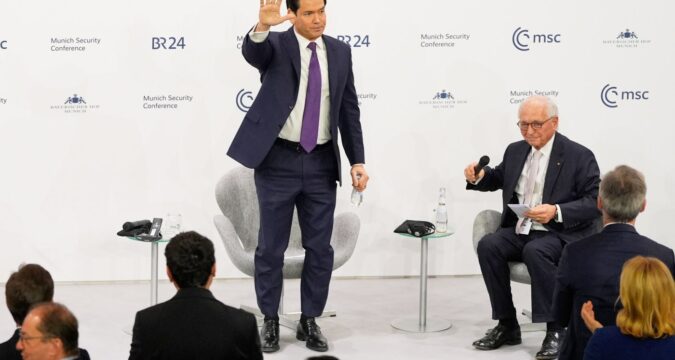
Last weekend, Secretary of State Marco Rubio traveled to Germany for the annual Munich Security Conference, where he delivered a speech that was both reassuring to the European dignitaries in the audience and nerve-wracking because of its references to the kind of MAGA culture-inspired war themes that Europe generally shivers at. After the remarks, European leaders were left obsessing about the same question they came in with: Is the United States still committed to Europe’s defense?
Ordinarily, that question wouldn’t even be asked. Since NATO was established in 1949, Europe’s security has depended on America, which deployed hundreds of thousands of U.S. troops to the Continent to keep the Soviet Union from expanding and also covered the part of Europe west of the so-called Iron Curtain with its nuclear umbrella. Once the Soviet Union collapsed and NATO expanded east, taking in former Soviet satellite states, the U.S. nuclear umbrella grew with it.
The Europeans, however, aren’t as confident now about the U.S. nuclear umbrella. President Donald Trump’s administration has spent the first 13 months of its second term browbeating European allies for penny-pinching on their militaries, opening their borders to migrants and making peace talks between Ukraine and Russia harder than they need to be.
Some of those critiques are fair. European governments are now increasing their defense budgets, though this wouldn’t have happened if Trump didn’t press the matter by threatening to make U.S. security assurances more conditional.
Nor is Trump necessarily wrong when he lashes out at European leaders over the Ukraine portfolio. The Continent’s expectations for what a peace deal should consist of, including a full Russian withdrawal from Ukrainian territory and tens of billions in Russian compensation, are entirely unrealistic given the facts on the ground.
Even so, Europe is now coming to terms with the fact that Washington’s foreign policy priorities are changing. For some, this means kicking off discussions, like whether to increase Europe’s own nuclear deterrent, that would have been unthinkable a decade earlier. As a recent report from the European Nuclear Study Group put it, “Trump’s impulsive and erratic decision-making, combined with the systematic weakening of domestic institutional constraints on presidential decision-making, raises questions about the reliability of extended deterrence.”
While those conversations are still in the early stages, more European leaders are open to having them. French President Emmanuel Macron, representing one of only two states in Europe (the other being Britain) with nuclear weapons capability, is pushing for intra-European debates on reinforcing nuclear deterrence — with or without the United States. Wary about the Trump administration’s endgame, Germany is increasingly interested in coming under the French nuclear umbrella and is reportedly in discussions with Paris about the matter. Latvia and Lithuania, which share a border with Russia, are becoming more sympathetic to the idea as well. Meanwhile, Polish President Karol Nawrocki went so far as to openly surmise that it might be appropriate for Warsaw to develop its own nuclear capability. This all comes at a time when the New START accord, the last major arms control agreement between the United States and Russia, officially expired.
On one level, Europe getting out from under the U.S. nuclear umbrella would be the ultimate example of the burden-shifting the Trump administration is so interested in. What better way to demonstrate the intent of taking primary responsibility for your own security and cutting dependency on the United States than by building your own nuclear weapons or relying more on the French and British nuclear shield? This might even appeal to Trump — recall the 2016 presidential campaign, in which he suggested that Japan, another U.S. treaty ally, should acquire nuclear weapons of its own.
On the other hand, it’s difficult to envision Washington encouraging nuclear proliferation, even if the ones doing the proliferating are allies. Covering Europe with the U.S. nuclear shield provides Washington with a certain degree of leverage, and if there’s anything Trump understands, it’s leverage. Preserving U.S. extended deterrence could also make a large-scale U.S. troop drawdown from the Continent (if such a decision is taken) more palpable to European leaders who would otherwise be apoplectic at such a scenario.
Yet in the grand scheme, Trump might not have to worry about any of this. For starters, nuclear proliferation is an extremely expensive enterprise. The United States is projected to spend about $1 trillion over the next decade just maintaining its own nuclear arsenal. Europe could come up with an equivalent amount of cash collectively to build its own nukes, but there inevitably would be some European governments opposed to contributing because their budgets are already stretched thin. European voters won’t want to sacrifice their social safety net for the world’s most dangerous weapon, which means deficits would have to rise substantially to finance any project.
Then there’s the question of whether more nukes would even improve Europe’s security in the long run. Would Germany, Poland, the Baltic states and the rest of the Continent really feel more assured if they shifted from a U.S. nuclear umbrella to a French-British one? In the event of a Russian conventional attack or a Russian nuclear strike along NATO’s eastern flank, Paris and London would be expected to step up and respond with nuclear strikes of their own. But this isn’t a sure thing, since any nuclear strike on Russian territory would leave both capitals vulnerable to retaliation from a larger nuclear weapons power.
In essence, Britain and France would have to be willing to sacrifice their own cities to defend others. Otherwise, the entire arrangement would be a bluff of historic proportions.
Like it or not, Trump has forced European policy elites to reconsider old security assumptions. Business as usual is increasingly a paradigm of the past.
Daniel DePetris is a fellow at Defense Priorities and a foreign affairs columnist for the Chicago Tribune.
Submit a letter, of no more than 400 words, to the editor here or email letters@chicagotribune.com.
https://www.chicagotribune.com/2026/02/19/column-europe-us-nuclear-weapons-depetris/

Loop 4-bedroom home with terrace, built-in wet bar: $6M
Address: 363 E. Wacker Drive, No. 6101, Chicago
Price: $6,000,000
Listing date: Jan. 6, 2026
This four-bedroom home has five full bathrooms, one half bathroom, a terrace, wide-plank hardwood floors and a dining space with a built-in wet bar. The kitchen is outfitted with Gaggenau and Thermador appliances, Snaidero cabinetry, cantilevered countertops, a natural stone backsplash and an oversized island with seating for four. The primary suite has two walk-in closets and two en suite baths featuring full-height stone, Robern cabinetry, Kallista fixtures, heated floors, and glass-encased showers. The three secondary bedrooms are separated from the primary and each has their own en suite bathroom. A powder room and a laundry room complete the home, which is located in a building with an indoor pool, a full-service spa and 24-hour concierge and butler service.
Listing agent: Ryan Preuett, Jameson Sotheby’s International Realty, (312) 371-5951.
(B.R. Lillie Photography)
(B.R. Lillie Photography)
(B.R. Lillie Photography)
(B.R. Lillie Photography)
(B.R. Lillie Photography)
(B.R. Lillie Photography)
(B.R. Lillie Photography)
Some listing photos are “virtually staged,” meaning they have been digitally altered to represent different furnishing or decorating options.
To feature your luxury listing of $1,000,000 or more in Chicago Tribune’s Dream Homes, send listing information and high-res photos to ctc-realestate@chicagotribune.com.
https://www.chicagotribune.com/2026/02/19/loop-home-wet-bar-terrace/

Julie Morita: My parents were interned in camps for Japanese Americans. We are repeating that national sin.
My parents were just children when they were wrested from their homes into tarpaper barracks surrounded by barbed wire. The message: They were not welcome.
On Feb. 19, 1942, President Franklin D. Roosevelt issued Executive Order 9066, authorizing the incarceration of more than 120,000 people of Japanese descent — an entire group of people maligned and mischaracterized as a threat.
My parents both died late last year. Sadly, in their final days, they witnessed a resurgence of fabricated fear as justification for unnecessary, unfounded and unlawful action to strip other groups of people of their rights and dignity. They lived to see Immigration and Customs Enforcement agents here in Chicago forcibly rounding up neighbors for detention camps.
The premise of a threat again is being used to create a sense of “us versus them.”
But once again, many of us see “them” as neighbors rather than threats.
During World War II, the American Friends Service Committee, a Quaker organization, helped get Japanese Americans out of the internment camps and advocated for their rights. My grandparents were able to secure employment as a doorman at the Palmer House and a maid at the Edgewater Beach Hotel as a pathway out of the camps and found a place to call home: Chicago.
A picture of Betty Morita’s fourth grade class at Minidoka internment camp in Idaho. As Japanese Americans, she and her future husband, Mototsugu Morita Jr., were both imprisoned as children in internment camps during World War II. (Erin Hooley/Chicago Tribune)
Inspired by and appreciative of the support they received when arriving in Chicago, my parents became good neighbors — ensuring newcomers felt welcome and cared for. Through their church, they hosted refugee families from Cuba and Vietnam. They opened our home to countless workers from Japan temporarily assigned to Chicago. And they became friends with new arrivals from across the U.S. who chose to relocate to the Windy City.
Our community in Chicago showed the strength of neighbors in an even bigger way recently. Like the “neighboring” we’re seeing now in Minnesota, people have stepped up to de-escalate dangerous situations, and organizations have stepped in with know-your-rights campaigns. At great risk to themselves, people are rallying together to protect our neighbors’ constitutional rights: freedom of speech, rule of law and the right to due process.
While emptying out my parents’ house, I found relics of their incarceration — my mom’s prisoner identification, pictures of my parents as small children in stark barracks and a copy of the apology letter from President George H.W. Bush that recognized the illegal actions of our federal government. They saved these artifacts so we would remember.
The internment identification card of Julie’s mother, Betty, at 10 years old. (Courtesy of Julie Morita)
Remembering this history challenges us to see how fragile our civil liberties are and how easily they can be discarded during times of manufactured fear. It also reminds us that we must be vigilant to governmental actions that target specific groups based on race, ethnicity, religion or other identities. We must remember to speak out for our neighbors and push back when we see unlawful and unjust acts.
On this anniversary of the signing of Executive Order 9066, consider attending a Day of Remembrance event in your community — not only to mark what happened but to stop it from happening once again. Learn how fragile our rights truly are, how easily fear can be weaponized by those in power and the courage it took for people, often at great personal cost, to resist and defy injustice. And, most importantly — like those who supported my family when they were forced to relocate to Chicago and like the people today who are stepping forward to protect their communities — choose to be a good neighbor.
History is echoing. What matters now is whether we answer it as neighbors.
Dr. Julie Morita is president and CEO of The Joyce Foundation.
Submit a letter, of no more than 400 words, to the editor here or email letters@chicagotribune.com.