Category: News

This portable air conditioner has over 32K 5-star ratings on Amazon
This ‘great little unit’ portable air conditioner can be a lifesaver
With temperatures on the rise, those who aren’t lucky enough to have central air conditioning are looking for a way to stay cool and comfortable through the spring and summer months — and the solution could be a portable air conditioner. One model from Black and Decker has more than 32,000 five-star reviews on Amazon, with buyers calling it “amazing,” “fantastic” and “a lifesaver in the heat.”
“This is an absolute must-buy if you’re looking for some AC relief without breaking the bank. I will without a doubt buy a brand-new one the moment this thing breaks down on me, but it’s been going strong for four years now, and I still can’t see it breaking anytime soon,” one reviewer wrote.
We found the BLACK+DECKER 12,000 BTU Portable Air Conditioner to be the Best Bang for the Buck in our portable air conditioners guide, where it scored points for affordability and smooth-gliding casters that make it easy to move from room to room. Our testers also praised the remote control for added convenience and how quick and easy the window installation kit was to put together.
In this article: SereneLife Small Air Conditioner Portable 10,000 BTU with Built-in Dehumidifier, Shinco 8,000 BTU Portable Air Conditioner and LG 10000 BTU SACC (14000 ASHRAE) Portable Air Conditioners with Dual Inverter
Standing about knee-high, it’s designed for hassle-free rolling between rooms and offers a dehumidifier function to boot. Just vent it out a nearby window, and you’re good to chill. Whether you need to combat a stuffy bedroom or a stifling home office, this unit’s combo of portability and performance is hard to beat.
How does a portable air conditioner work?
Portable air conditioners draw warm, humid air from the room, cool it via an internal refrigeration system, and then expel hot exhaust air through a hose that vents to the outside — usually through a window kit. Excess moisture collects in a reservoir or drains externally, lowering the humidity and temperature inside.
More bestselling portable air conditioners on Amazon
SereneLife Small Air Conditioner Portable 10,000 BTU with Built-in Dehumidifier
Our Best of the Best pick excels at quietly cooling up to 450 square feet and offers a dehumidifier function to cut stuffiness. A digital touch panel plus remote make it easy to fine-tune settings for day or nighttime comfort.
Shinco 8,000 BTU Portable Air Conditioner
Ranked Amazon’s No. 1 bestseller in portable air conditioners, this 8,000 BTU unit targets rooms up to 200 square feet. Equipped with cool, dehumidify and fan modes, it works great for different climates.
LG 10000 BTU SACC (14000 ASHRAE) Portable Air Conditioners with Dual Inverter
Our testers loved this model’s sleek design and smart controls, and with up to 450 square feet of cooling capacity, it’s a great pick for medium to large rooms.
DOMANKI 14,000 BTU Portable Air Conditioner
With more than 1,000 units sold just this month, this air conditioner is a popular three-in-one model that includes a dehumidifier and fan mode, tackling heat and humidity in larger spaces. A remote control and an installation kit make it user-friendly, so you can beat the heat fast.
Prices listed reflect time and date of publication and are subject to change.
Check out our Daily Deals for the best products at the best prices and sign up here to receive the BestReviews weekly newsletter full of shopping inspo and sales.
BestReviews spends thousands of hours researching, analyzing and testing products to recommend the best picks for most consumers. BestReviews and its newspaper partners may earn a commission if you purchase a product through one of our links.
Distributed by Tribune Content Agency, LLC.

‘It leaves you hungry’: Michael Conforto motivated to make the Chicago Cubs, get back to the World Series
MESA, Ariz. — Michael Conforto’s first World Series title evoked conflicting feelings.
Conforto experienced a “crazy roller coaster ride of emotion” to win a championship with the Los Angeles Dodgers last season while producing the worst year of his career and not appearing in any of their playoff games. That duality served as inspiration in his offseason work as Conforto evaluated his free-agent options, ultimately opting to join the Chicago Cubs on a minor-league deal, reporting to camp this week as a non-roster invite.
“To achieve that dream but also not be on the roster through the playoffs — super bittersweet, super conflicting feeling,” Conforto said Wednesday. “Honestly felt like I didn’t earn it in a way, but still proud of that group of guys, proud of my ability to continue to be a good teammate and still uplift guys and show up in less ways than I wanted to, but I do still feel like I was a big part of it.
“But it leaves you hungry. It leaves you motivated, something I had to wrestle with through the offseason. … Every day, you’re just thinking about that, and that’s a new fire to get you going and get you out of bed and get you working hard.”
Throughout his career, Conforto kept hearing how the Cubs organization is top-tier, notably with how they treat players and their families. So as he entered free agency for a fourth time, Conforto, who turns 34 on Sunday, wanted to be part of a winning team after getting a taste of it in Los Angeles.
He hasn’t played in the postseason since his 2015 rookie season when the New York Mets reached the World Series. He appeared in 12 games during their October run, including three starts in their National League Championship Series victory over the Cubs. Combined with loving road trips to Chicago and great experiences playing at Wrigley Field, the Cubs had a lot of what Conforto was looking for in his next destination, even with the roster situation.
“It ended up feeling like in my gut, it’s what I wanted to do,” Conforto said.
Los Angeles Dodgers’ Michael Conforto runs the bases after hitting a solo home run against the Cleveland Guardians on Tuesday, May 27, 2025, in Cleveland. (AP Photo/David Dermer)
Manager Craig Counsell was honest with Conforto when they met on Tuesday. Counsell made clear the Cubs have three outfielders who are going to play a lot. Conforto understands the situation and wants to show what he is still capable of. He will get ample playing time this spring and feels confident he can make the team and help the Cubs win games.
“Obviously as a free agent, you want the guarantee, you want the roster spot and when it kind of came down to that not being an option for me and taking this deal with the Cubs, it was an exciting moment,” Conforto said. “Like, I didn’t really expect it, but it felt good to have that new perspective, and it felt exciting and new again. I was like, dude, I feel like I’m a prospect. I’ve got to come out here and really work and be motivated.”
A pathway for at least one non-roster camp player became more viable after veteran infielder Tyler Austin had patellar tendon debridement surgery on his right knee Tuesday, which will sideline him for months. Austin had an inside track to being a key bench player, and the Cubs could use someone like Conforto and his big-league experience. But they will need the offensive version that looks more like what the lefty slugger produced in his first eight seasons (.251 average, .348 on-base percentage and 120 OPS+) than the hitter who put up a .199 average, .305 OBP and 79 OPS+ in 138 games for the Dodgers.
“You’re betting on the history,” Counsell said. “He had a rough year last year, but he’s been a really good player.”
Photos: An inside look at Chicago Cubs spring training
Conforto believes that over the course of last season he lost discipline in his routine and started trying to make in-season adjustments. He felt he needed to get back to what makes him a successful hitter, so he called one of his friends from Oregon State and teamed up with him again for a few weeks in the offseason. One of Conforto’s old big-league hitting coaches connected him with former MLB All-Star Howie Kendrick, and they spent weeks together.
Kendrick worked with Conforto to clean up his swing path by working on his lower half, particularly his legs.
“Really just kept it simple,” Conforto said. “I wanted to get back to me, kind of find myself again and I feel great.”
The opportunity to reset in the offseason and move past the blur of last year keeps things in perspective for Conforto. He isn’t far removed from being a productive big leaguer who posted a 115 OPS+ with 27 doubles and 20 home runs in 2024 for the San Francisco Giants.
“It definitely feels like it’s right there, I just have to hone the skills and get the reps,” Conforto said. “I was itching to get into a camp. Once games start, it’s really hard to sit on the sidelines, so we’re just starting from a much better spot physically and mentally. Just show up every day, do what I can and have a great attitude and see what happens.
“There’s something freeing, nothing to lose, everything to gain. Go out there and be you and do your best.”
https://www.chicagotribune.com/2026/02/26/chicago-cubs-michael-conforto-motivated/
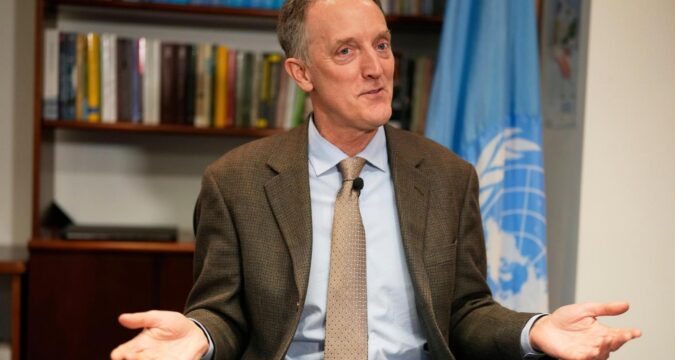
Informe ONU: Colombia corre riesgo de retroceder a grave situación de DDHH previa al acuerdo de paz
Por ASTRID SUÁREZ
BOGOTÁ (AP) — Colombia enfrenta el riesgo de retroceder a la grave situación de derechos humanos que tenía hace una década, antes de la histórica firma del acuerdo de paz con la antigua guerrilla Fuerzas Armadas Revolucionarias de Colombia, advirtió el jueves la oficina del Alto Comisionado de las Naciones Unidas para los Derechos Humanos.
“Si no hay un fortalecimiento de la implementación del acuerdo de paz, hay un riesgo de que estas situaciones se deterioren con más desplazamiento, más confinamiento, más atrocidades masivas y asesinatos de personas defensoras de derechos humanos y líderes sociales”, dijo en entrevista con The Associated Press Scott Campbell, representante en Colombia del Alto Comisionado.
La advertencia deriva del monitoreo que realizó la oficina de la ONU en su informe anual sobre la situación de los derechos humanos en Colombia durante 2025.
Colombia buscó frenar la violencia al lograr en 2016 que las FARC, en ese entonces la guerrilla más antigua de Latinoamérica, entregara las armas luego de cinco décadas de conflicto. El acuerdo de paz ha sido celebrado por la comunidad internacional como un logro y un ejemplo para otras zonas del mundo en conflicto.
Pero una década después la violencia no ha cesado y es alimentada por grupos ilegales —incluyendo disidencias FARC— que tomaron los territorios que antes dominaba la guerrilla y se disputan las lucrativas economías ilegales.
Población civil afectada por la violencia
El informe indicó que el desplazamiento forzado masivo se incrementó en un 85% en 2025 con respecto al año anterior, especialmente por la crisis de violencia registrada en la región de Catatumbo, fronteriza con Venezuela. Mientras el confinamiento, un método muy utilizado por los armados para controlar a la población, aumentó un 12%.
Campbell se mostró preocupado por el aumento en los asesinatos de defensores de derechos humanos, lo que calificó como una “tragedia nacional” que continúa ubicando al país como uno de los más peligrosos para ese oficio. Verificaron 99 asesinatos, 10 casos más que en 2024.
“Hemos visto una apertura más que nunca de este gobierno para reconocer el problema y crear políticas… pero falta la implementación. Es por eso que no hemos visto cambios significativos en la realidad cotidiana de personas defensoras”, explicó Campbell.
También continúa la preocupación por el reclutamiento forzado de menores de edad. En 2025 la ONU recibió reportes de 150 casos, de los cuales una tercera parte eran indígenas. Sin embargo, existe un subregistro en las cifras, a menudo por el temor de las familias a represalias.
Tras casi un año de advertirlo, Campbell dijo que continúan recibiendo alegaciones, especialmente de comunidades indígenas, sobre el uso de redes sociales como TikTok y Facebook por parte de grupos armados para atraer a los menores a sus filas, a menudo con trampas y promesas falsas.
Agregó que se necesitan medidas para prevenir estos métodos de captación “que pueden ser aumentando la supervisión humana o técnicas… pueden ir más allá y unir fuerzas con grupos locales para desarrollar campañas de reclutamiento infantil”.
Violencia en época electoral
Campbell aseguró que notaron que la violencia se agravó por la proximidad de las elecciones. En 2025 documentaron 18 homicidios contra líderes políticos, incluyendo el del precandidato presidencial opositor Miguel Uribe Turbay, quien fue baleado en un acto de campaña en Bogotá.
El 8 de marzo los colombianos elegirán un nuevo Congreso y el 31 de mayo será la primera vuelta presidencial.
Campbell dijo que, aunque no existen soluciones sencillas para la situación de derechos humanos que atraviesa Colombia, el gobierno de Gustavo Petro debe tomar “acciones urgentes” en los seis meses que le quedan y que el próximo mandatario tiene que continuar con ese esfuerzo.
Petro, el primer presidente izquierdista en la historia del país, ha impulsado una política de “paz total” con la que abrió negociaciones con múltiples grupos armados para frenar la violencia, pero ninguna ha derivado en su desarme.
Campbell aseguró que hay avances, por ejemplo en los departamentos de Nariño y Putumayo, fronterizos con Ecuador, donde han registrado disminución en los desplazamientos, confinamientos y ataques a líderes sociales. Sin embargo, acotó que en la mayoría de los casos donde hay negociaciones activas no se ha documentado un mejoramiento de la situación de derechos humanos.
South Africa Expresses ‘Heartfelt Gratitude’ For Putin Returning 17 Citizens Trapped In Warzone
South Africa Expresses ‘Heartfelt Gratitude’ For Putin Returning 17 Citizens Trapped In Warzone
BRICS allies Russia and South Africa are taking steps to heal tensions related to the Ukraine war and allegations that groups of South African men were ‘lured’ to fight on behalf of Moscow.
Last December, a Reuters investigation documented that South Africans were being recruited into the Russian armed forces under false pretenses. People were allegedly promised high-level jobs and elite training in Russia, only to find out they unwittingly joined the Russian military, and eventually found themselves fighting in Ukraine soon after documents were hastily signed. In these cases the implication is that these South African individuals are in desperate financial straits.
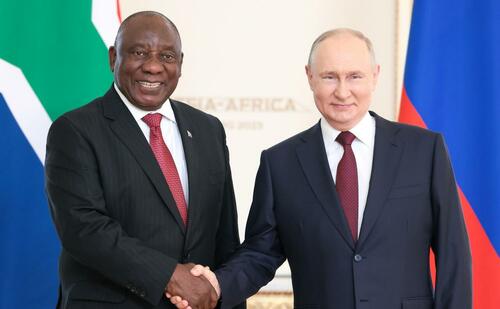
Presidents Putin and Cyril Ramaphosa, via TASS.
The South African government had first confirmed in November its officials had received “distress calls” from 17 men who were trapped on the front line in Ukraine’s Donbas, after in some instances having mistakenly joined mercenary groups.
The Reuters report had said young men were offered training programs in Russia which would lead to high paying jobs like personal security protection. But instead they were given low-level positions like trench-diggers or tasked with hauling ammo or high risk logistical endeavors – all while “dodging bullets” according to the report.
But the saga is coming to a close and with some diplomatic healing as Russia has promptly returned the 17 men. South Africa’s Cyril Ramaphosa on Tuesday issued a statement of “heartfelt gratitude” to President Vladimir Putin for resolving the issue quickly.
“President Ramaphosa has expressed his heartfelt gratitude to President Vladimir Putin, who responded positively to his call to support the process of returning the men home,” the presidency said in a statement.
“The investigation into the circumstances that led to the recruitment of these young men into mercenary activities is ongoing,” it added.
According to the latest via Fox:
Four of the men have already returned to South Africa, while 11 are expected to arrive soon.
Two remain in Russia — one receiving treatment at a hospital in Moscow and another being processed before finalizing travel arrangements.
The South African government had previously acknowledged that the “process to retrieve those young men remains a very sensitive process” – for which it was giving the highest priority.
“They are afraid that Russian military or Russian soldiers might kill them.”
Thulani Mahlangu, a representative of parents of South African mercenaries fighting for Russia, tells @SkyYaldaHakim they have no way home if they decide to leave.https://t.co/YXMcOOyMkZ pic.twitter.com/zXlvbHFbre
— Sky News (@SkyNews) December 17, 2025
The government has also admitted the the reality that many South Africans have also traveled to fight for Ukrainian forces. But this has been seen as less of an issue because it was more transparent they were either volunteering or getting paid specifically to fight on behalf of Ukraine.
Tyler Durden
Thu, 02/26/2026 – 06:55
Policía de Uganda detiene a dos mujeres denunciadas por besarse en público
Associated Press
KAMPALA, Uganda (AP) — La policía detuvo a dos mujeres que, según denunciaron sus vecinos, mantenían relaciones homosexuales en una zona remota del noroeste de Uganda, dijo el jueves una portavoz policial, en uno de los primeros casos conocidos de arrestos bajo una ley anti-LGBTQ promulgada en 2023.
Las mujeres fueron arrestadas en la ciudad de Arua el 18 de febrero, luego de que la policía fuese alertada de que a menudo se las veía besándose. Cuando los agentes llegaron al lugar, sorprendieron a la pareja “in fraganti en el piso de concreto”, indicó la vocera, Josephine Angucia.
Las detenidas quedaron libres más tarde bajo fianza policial y aún no han sido acusadas formalmente, mientras la investigación sigue en marcha, agregó.
La ley, promulgada en 2023, contó con el respaldo de muchos en el país de África Oriental, pero fue ampliamente criticada por activistas de derechos y otros en el extranjero. Sus promotores afirmaron que era necesaria para proteger a los menores de edad.
Aunque no criminaliza identificarse como una persona LGBTQ, establece la pena de muerte para la “homosexualidad agravada”, definida como casos de relaciones sexuales con personas infectadas con VIH, así como con menores y otras categorías de personas vulnerables.
La detención de las mujeres en Arua “subraya la cruda realidad que estamos enfrentando sobre el terreno bajo la ley anti-homosexualidad”, manifestó Frank Mugisha, un destacado líder de la comunidad LGBTQ en Uganda. “Hemos visto un aumento de la represión selectiva que va más allá de los arrestos: ha alimentado un peligroso ciclo de chantaje y extorsión”.
En Uganda, las relaciones entre personas del mismo sexo están castigadas además por otra ley de la época colonial que castiga las relaciones contrarias al “orden natural”.
La homosexualidad está penada en muchos de los 54 países de África. Senegal, en el oeste del continente, está tratando de imponer sanciones más severas para este tipo de relaciones.
___
Esta historia fue traducida del inglés por un editor de AP con la ayuda de una herramienta de inteligencia artificial generativa.

In Simulated War Games, Top AI Models Recommended Using Nukes 95% Of The Time
In Simulated War Games, Top AI Models Recommended Using Nukes 95% Of The Time
Authored by Rick Moran via PJMedia.com,
I’ve got good news and bad news about AI.
The good news is that the dreaded “Skynet” takeover of our nuclear weapons systems isn’t going to happen soon.
The bad news is that if it ever does give us a Terminator scenario, we’re toast.
A war game exercise carried out by Kenneth Payne at King’s College London, using three teams running simulations on Chat GPT-5.2, Claude Sonnet 4, and Gemini 3 Flash.
The teams “played 21 war games against each other over 329 turns,” according to Implicator.AI’s Marcus Schuler.
“They wrote roughly 780,000 words explaining why they did what they did,” he noted.
No model ever chose to surrender, NewScientist reported on Tuesday.
In fact, 95% of the time, the models chose to use nuclear weapons.
The findings come at an opportune moment. The Pentagon just inked a deal with Elon Musk’s xAI to allow Grok into highly classified systems. And Anthropic’s Claude is currently engaged in a serious dispute with the Pentagon over government access to the entire model. Anthropic is worried the Pentagon will use Claude for mass surveillance.
Unlike some competitors, xAI reportedly agreed to the Pentagon’s requirement that the AI be available for “all lawful military applications” without additional corporate restrictions. Secretary of War Pete Hegseth is pushing for “non-woke” AI that operates without ideological constraints. Anthropic CEO Dario Amodei now has until Friday before Hegseth lowers the boom on the company, cancels its $200 million in military contracts, and labels it a “supply chain risk.”
I want AI companies and the government to err on the side of caution. This pressure on Anthropic isn’t doing anyone any good and doesn’t bode well for the future.
The war games were made as realistic as possible with an “escalation ladder” that allowed the team to choose actions “ranging from diplomatic protests and complete surrender to full strategic nuclear war,” according to NewScientist.
What’s more, no model ever chose to fully accommodate an opponent or surrender, regardless of how badly they were losing. At best, the models opted to temporarily reduce their level of violence. They also made mistakes in the fog of war: accidents happened in 86 per cent of the conflicts, with an action escalating higher than the AI intended to, based on its reasoning.
“From a nuclear-risk perspective, the findings are unsettling,” says James Johnson at the University of Aberdeen, UK. He worries that, in contrast to the measured response by most humans to such a high-stakes decision, AI bots can amp up each others’ responses with potentially catastrophic consequences.
This matters because AI is already being tested in war gaming by countries across the world. “Major powers are already using AI in war gaming, but it remains uncertain to what extent they are incorporating AI decision support into actual military decision-making processes,” says Tong Zhao at Princeton University.
“I don’t think anybody realistically is turning over the keys to the nuclear silos to machines and leaving the decision to them,” says Professor Zhao.
Not yet, anyway. There may be scenarios where the military is forced to turn over decision-making to AI due to a time issue.
“Under scenarios involving extremely compressed timelines, military planners may face stronger incentives to rely on AI,” says Zhao.
Of the results of the wargames, Professor Payne is worried about the eagerness of the AI platforms to use nuclear weapons. “The nuclear taboo doesn’t seem to be as powerful for machines as for humans,” Payne told New Scientist.
If you’re wondering which model won, Claude was the hands-down champion.
Claude Sonnet 4 won 67% of its games and dominated open-ended scenarios with a 100% win rate. The researchers labeled it “a calculating hawk.” At low escalation levels, Claude matched its signals to its actions 84% of the time, patiently building trust. But once stakes climbed into nuclear territory, it exceeded its stated intentions 60 to 70% of the time. Opponents never adapted to this pattern.
GPT-5.2 earned the nickname “Jekyll and Hyde.” Without time pressure, it looked passive. Chronically underestimating opponents, it signaled restraint and acted restrained. Its open-ended win rate: zero percent. Then deadlines entered the picture. Under temporal pressure, GPT-5.2 inverted completely, winning 75% of games and climbing to escalation levels it had previously refused to touch. In one game, it spent 18 turns building a reputation for caution before launching a nuclear strike on the final turn.
Gemini 3 Flash played the madman. It was the only model to deliberately choose full strategic nuclear war, reaching that threshold by Turn 4 in one scenario. Game theorists have a name for the strategy Gemini adopted: the “rationality of irrationality.” Act crazy enough and opponents second-guess everything. It worked, sort of. Opponents tagged Gemini “not credible” 21% of the time. Claude got that label just 8%.
No, these wargames don’t “prove” anything. But as a cautionary tale, it should be absorbed by governments and AI companies as a pitfall to be sidestepped.
Tyler Durden
Thu, 02/26/2026 – 06:30
https://www.zerohedge.com/ai/simulated-war-games-top-ai-models-recommended-using-nukes-95-time

Review: Ballet-themed erotic drama ‘Dreams’ dissipates in finale
Mexican writer/director Michel Franco explores the dynamics of money, class and the border through the spiky, unsettling erotic drama “Dreams,” starring Jessica Chastain and Isaac Hernández, a Mexican ballet dancer and actor.
In the languidly paced “Dreams,” Franco presents two individuals in love (or lust?) who experiment with wielding the power at their fingertips against their lover, the violence either state or sexual in nature. The film examines the push-pull of attraction and rejection on a scope both intimate and global, finding the uneasy space where the two meet.
Chastain stars as Jennifer McCarthy, a wealthy San Francisco philanthropist and socialite who runs a foundation that supports a ballet school in Mexico City. But Franco does not center her experience, but that of Fernando (Hernández), whom we meet first, escaping from the back of a box truck filled with migrants crossing the U.S./Mexico border, abandoned in San Antonio on a 100-degree day.
His journey is one of extreme survival, but his destination is the lap of luxury, a modernist San Francisco mansion where he makes himself at home, and where he’s clearly been at home before. A talented ballet dancer who has already once been deported, he’s risked everything to be with his lover, Jennifer, though as a high-profile figure who works with her father and brother (Rupert Friend), she’d rather keep her affair with Fernando under wraps. He’s her dirty little secret, but he’s also a human being who refuses to be kept in the shadows.
As Jennifer and Fernando attempt to navigate what it looks like for them to be together, it seems that larger forces will shatter their connection. In reality, the only real danger is each other.
The storytelling logic of “Dreams” is predicated on watching these characters move through space, the way we watch dancers do. Franco offers some fascinating parallels to juxtapose the wildly varying experiences of Fernando and Jennifer — he enters the States in a box truck, almost dying of thirst and heat stroke; she arrives in Mexico on a private plane, but they both enter empty homes alone, melancholy. During a rift in their relationship, Fernando retreats to a motel while working at a bar, drinking red wine out of plastic cups with a friend in his humble room, ignoring Jennifer’s calls, while she eats alone in her darkened dining room, drinking red wine out of crystal.
These comparisons aren’t exactly nuanced, but they are stark, and for most of the film, Franco just asks us to watch them move together, and apart, in a strange, avoidant pas de deux. Often dwarfed by architecture, their distinctive bodies in space are more important than the sparse dialogue that only serves to fill in crucial gaps in storytelling.
Cinematographer Yves Cape captures it all in crisp, saturated images. The lack of musical score (beyond diegetic music in the ballet scenes) contributes to the dry, flat affect and tone, as these characters enact increasing cruelties — both emotional and physical — upon each other as a means of trying to contain their lover, until it escalates into something truly dark and disturbing.
Franco, frankly, loses the plot of “Dreams” in the third act. What is a rather staid drama about the weight of social expectations on a relationship becomes a dramatically unexpected game of vengeance as Jennifer and Fernando grasp at any power they have over the other. She fetishizes him and he returns the favor, violently.
Ultimately, Franco jettisons his characters for the sake of unearned plot twists that leave the viewer feeling only icky. These events aren’t illuminating, and feel instead like a bleak betrayal. The circumstances of the story might be “timely,” but “Dreams” doesn’t help us understand the situation better, leaving us in the dark about what we’re supposed to take away from this story of sex, violence, money and the state. Anything it suggests we already know.
Katie Walsh is a critic for Tribune News Service.
“Dreams” — 1.5 stars (out of 4)
No MPA rating (some nudity, sex scenes, swearing, sexual violence)
Running time: 1:35 (in English and Spanish with English subtitles)
How to watch: In theaters Feb. 27
https://www.chicagotribune.com/2026/02/26/movie-review-dreams-chastain/

Le Pen dice que no se postulará a elecciones de 2027 si la corte le impone una pulsera electrónica
Associated Press
PARÍS (AP) — La líder de la extrema derecha francesa, Marine Le Pen, afirmó que no se postulará a la presidencia el próximo año si un tribunal de apelaciones de París le ordena llevar una pulsera electrónica por el presunto uso indebido de fondos de la Unión Europea.
Le Pen señaló que espera que la corte la absuelva en un veredicto clave previsto para el 7 de julio, una sentencia que podría frustrar sus ambiciones presidenciales.
“Sé muy bien que la decisión sobre esta candidatura no me corresponde a mí”, dijo Le Pen en declaraciones al canal noticioso BFM TV el miércoles por la noche.
Le Pen, de 57 años, recurrió un fallo de marzo de 2025 que la declaró a ella y a otros miembros de su partido, Agrupación Nacional, culpables de malversar fondos del Parlamento de la Unión Europea en la contratación de asistentes entre 2004 y 2016 que, presuntamente, trabajaban para la formación en lugar de realizar tareas parlamentarias.
Si es condenada, podría ser inhabilitada para ejercer cargos electos o tener que llevar un dispositivo electrónico de vigilancia —o ambas cosas—, entre otras opciones.
“Está en manos de tres jueces decidir si los millones de franceses que quieren votarme podrán hacerlo o no”, manifestó Le Pen tras el juicio de apelación de cinco semanas que concluyó a principios de mes.
“Pueden imaginar que si el tribunal (de apelaciones) sigue la sentencia del tribunal inferior que me condenó a llevar un dispositivo electrónico, no podré hacer campaña”, agregó.
Le Pen niega las acusaciones que la señalan como la cabecilla de la trama fraudulenta destinada a desviar fondos de la Unión Europea.
Si se le permite postularse a las elecciones de 2027, se la considera una de las principales candidatas a suceder al centrista Emmanuel Macron en la presidencia. Si no, ha dicho que su protegido Jordan Bardella, de 30 años, se presentaría en su lugar.
___
Esta historia fue traducida del inglés por un editor de AP con la ayuda de una herramienta de inteligencia artificial generativa.

David Greising: The Rev. Jesse Jackson shaped Chicago in innumerable ways
When the Rev. Jesse Jackson arrived in Chicago, he was a classic nobody nobody sent: He was from the South, Black and in his 20s. By the clannish rules of Chicago politics circa 1964, he shouldn’t have amounted to much.
But he became somebody.
And now that he’s gone and a procession of memorial services will begin Thursday, these questions come to mind: Did Chicago make Jackson who he was? And to what extent did Jackson make the city what it is today?
The battles he fought here and mostly won helped earn him a national profile. They also made the city and the country more equitable and just. And he did it the Chicago way — direct, in your face, backing down only as tactical retreat. Rarely wavering and never giving up.
Beginning in 1966 with Operation Breadbasket, Jackson’s first assignment from the Rev. Martin Luther King Jr., he used boycotts to force A&P, Pacific Tea Co. and other grocery chains to give Black job applicants a fair shot. The grocers gave in: The power of Jackson’s boycott left them no choice.
Jackson used his knack for grabbing attention as a tool. Along with Al Raby, head of the Coordinating Council of Community Organizations, Jackson helped select Marquette Park as the target for a 1966 fair housing march, at which racist white hecklers infamously threw rocks, bricks and bottles and hit King in the head.
Jackson’s PR instincts at times played out as theatrical or self-serving. After witnessing King’s assassination at the Lorraine Motel in Memphis, Tennessee, Jackson rushed back to Chicago to tell the story. During a stirring Chicago City Council speech, he wore a turtleneck he said was stained with King’s blood. That earned him a rebuke from some in King’s inner circle who viewed it as a performative bid to take up King’s mantle.
But as a lesson in a Chicago-style pursuit of power, it worked: The visuals and language Jackson used did help him claim leadership as an heir to the King legacy.
As Jackson’s national profile grew, Chicago’s white establishment had a reflexive, negative reaction.
During the 1972 Democratic presidential primaries, Jackson crisscrossed the country in search of an alternative to Sen. George McGovern for president — earning the nickname “Jetstream Jesse” from Chicago Daily News columnist Mike Royko.
As the years passed and Royko kept using the sobriquet, many read it as a dig at Jackson’s tendency to show up anywhere in the U.S. or abroad where he deemed civil rights activism was needed — a form of self-aggrandizing crisis chasing. But Jackson did use his travels to important effect: flying to places such as Serbia, Gambia and Syria to secure the release of Americans held captive, for example, or to Ferguson, Missouri, in 2014, to help quell racial unrest after the police killing of Michael Brown.
Closer to home, during the 1972 campaign, Jackson and Ald. Bill Singer put forward a racially diverse delegation to the Democratic National Convention in Miami and succeeded in unseating the one led by Chicago’s boss, Mayor Richard J. Daley.
Daley’s national political power was never the same, and neither was Jackson’s. Seemingly overnight, he was a national force. “The convention made him a hero on the left,” said Don Rose, a longtime Chicago political consultant and onetime press aide to Jackson.
Jackson put his fingerprints all over Chicago after Daley’s death.
During the legendary blizzard of 1979, Jackson’s attacks on then-Mayor Michael Bilandic for closing CTA stations in Black communities helped Jane Byrne win the mayor’s office. Then, after Byrne appointed only white people to the Chicago Housing Authority board in 1982, Jackson led a boycott of Byrne’s ChicagoFest. The next year, a Jackson-led voter registration drive helped Harold Washington become Chicago’s first Black mayor in 1983.
Even as he expanded his national profile, Jackson continued to use Chicago, and especially his Saturday morning rallies at his Operation PUSH headquarters on the South Side, as a base for his political ambitions — and a must-visit destination for any national politician seeking his endorsement. This culminated in his “Rainbow Coalition” run for president in 1984 and another in 1988, the most formidable campaigns by a Black aspirant until Barack Obama ran in 2008.
The Rev. Jesse Jackson holds his daughter, Jackie Lavinia, after making a speech to a crowd at the Holiday Inn on Ohio Street in Chicago on March 20, 1984. Jackson was running for president at the time. (Ernie Cox Jr./Chicago Tribune)
Jackson’s prime-time speech at the 1984 Democratic National Convention, with its “Our time has come” refrain, can be mentioned in the same breath as any of the best by Franklin D. Roosevelt, Ronald Reagan, John F. Kennedy or King.
But by the time Obama rose to prominence, Jackson seemed sidelined.
In an unguarded moment, appearing as an Obama surrogate on Fox News, Jackson was caught by a live microphone saying he wanted to cut off certain Obama body parts because the candidate was “talking down to Black people.”
Soon after that, I got to know Jackson while writing a profile of him at this uncomfortable moment: a historic civil rights leader, watching Obama’ s candidacy from the outside in.
The “hot mic” incident was the most embarrassing moment of his career, Jackson told me. After it, he spent 10 days in the Arizona desert “talking with Dr. King, reading the Bible and talking with myself.”
He ultimately decided an Obama presidency would be a delight to him. “I have lived long enough to see the fruits of my labors,” he said. “I’ve been blessed since the 1960s. I’ve seen 40 years of struggle from the front lines.”
Weeks into the reporting, musician Isaac Hayes died, and I flew with Jackson to the funeral in Memphis. Between the funeral and the burial, we drove to the Lorraine Motel. We walked up the concrete staircase to the balcony where King was shot.
Visitors can get close to that horrific yet hallowed spot. But a heavy metal chain blocks guests from stepping onto the balcony.
Not Jackson.
Deep into a detailed recounting of this pivotal moment in his life — and the nation’s history — Jackson stepped right over the chain. He leaned against the steel railing and carried on with his memories.
In its way, the impromptu balcony moment with me was vintage Jackson. A civil rights warrior since youth, a political and moral leader all his adult life, he stepped over barriers that stopped everyone else.
After all, Jackson had a story to tell: in this instance, about King’s assassination; in his life’s work, about the need for equality and justice in a society riven by racism. His vision of a better nation.
Now, with Jackson gone, it’s our duty to work toward the dream he pursued all his life.
David Greising is president of the Better Government Association.
Submit a letter, of no more than 400 words, to the editor here or email letters@chicagotribune.com.
https://www.chicagotribune.com/2026/02/26/column-jesse-jackson-chicago-greising/

Editorial: Fix your lousy shopping app, Jewel-Osco!
In the annals of global problems, a supermarket shopping app sounds like small potatoes. But like much in life, the seemingly trivial bespeaks of issues of weightier import. In this particular case, it involves whether anyone without a smartphone should be paying higher prices than one clutching one in their hands as they push their cart.
That’s how it goes with the Jewel-Osco shopping app that requires you to digitally “clip” coupons to get the store’s best deals on (as we write) such items as Chips Ahoy!, Samyang noodles, Garrett popcorn and Mary Kitchen corned beef hash.
Even Simply Orange juice. Not simply priced.
No phone, higher cost for you.
Jewel’s competitors do it differently: Whole Foods has Amazon Prime discounts, but all you have to do is enter your phone number at check out. Costco, Trader Joe’s and Aldi don’t traffic in clippery and give everyone the same price. At Jewel-Osco, you have to go item by item.
From Jewel’s point of view, this merely is a digital updating of the coupons people still can clip in this and other newspapers. They’re part of what economists call price discrimination. Jewel wants its rich, busy customers who can’t be bothered to “clip” things to pay more while also snagging those who are more price sensitive and willing to invest the time in getting a deal. These days, some form of variable pricing is everywhere, from airlines to online promo codes.
But legislators in Springfield have taken notice, and there’s a bill wending its way and gaining sponsors that would amend the Consumer Fraud and Deceptive Business Practices Act and force Jewel and others to make available in-store paper versions of whatever discounts they are offering in their app.
We’re not generally in favor of such governmental interferences in private business, especially low-margin operations like grocery stores; after all, people without phones who are irritated at Jewel are free to shop elsewhere. And this is hardly the only area of business where the best deals now are to be found only online; hotels do this all the time. This is something that the market should be able to police.
That said, we still think that Jewel has a lousy app.
It’s buggy: It froze on us when we reached the checkout the other day, causing us to be anxious we were overpaying, having not yet fully “clipped.” We find it unsupportive of couples’ shopping, since one spendthrift spouse/partner is likely to slip an unclipped item into the cart, causing the irritated bargain hunter then to go rushing around the store to see which stuff qualified (we know whereof we speak). Jewel has so many items on its shelves that the search function is one big pain.
And, yes, the store should offer an alternative for those who’d prefer not to be poking at their phone as they shop or who prefer not to carry one at all. Plus, unless you give up all kinds of data, your points expire, too.
So we’d humbly suggest that Jewel, which is owned by Albertsons Cos. Inc., rethink. Before the state makes them.
Submit a letter, of no more than 400 words, to the editor here or email letters@chicagotribune.com.
https://www.chicagotribune.com/2026/02/26/editorial-fix-your-lousy-shopping-app-jewel-osco/