Category: News
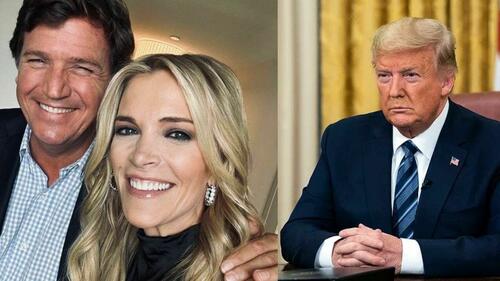
‘They’re Not MAGA’: Trump Remarks On Tucker Carlson And Megyn Kelly’s Iran Criticism
‘They’re Not MAGA’: Trump Remarks On Tucker Carlson And Megyn Kelly’s Iran Criticism
Authored by Steve Watson via modernity.news,
President Donald Trump delivered a clear message to critics within conservative media circles Monday, asserting that ‘true’ MAGA supporters back his moves to neutralize the Iranian threat and prevent nuclear proliferation that endangers the U.S. and its allies.
Dismissing pushback from Tucker Carlson and Megyn Kelly as out of step with America First priorities, Trump emphasized that securing the homeland against rogue regimes like Iran is non-negotiable—no matter the noise from sidelined commentators.
Tucker Carlson has publicly blamed Israel for pulling the U.S. into conflict with Iran, framing the strikes as unnecessary foreign entanglement rather than a direct defense of American interests.
Tucker Carlson gives a “super simple” explanation for why Israel would want to drag America into a hot war with Iran.
“It’s hard to say this, but the United States didn’t make the decision here. Benjamin Netanyahu did.”
“This happened because Israel wanted it to happen. This is… pic.twitter.com/XECY7TkTjy
— Vigilant Fox 🦊 (@VigilantFox) March 3, 2026
In a recent segment, Carlson stated, “It’s hard to say this, but the United States didn’t make the decision here. Benjamin Netanyahu did.” He added, “This happened because Israel wanted it to happen. This is Israel’s war. This is not the United States war.”
Carlson questioned the long-standing warnings about Iran’s nuclear program, asking, “Why would Israel want this?” and concluding, “Benjamin Netanyahu said yesterday, Iran’s nuclear program has been on the very verge, ‘the cusp’ of building and deploying a nuclear weapon.” He dismissed the urgency, saying, “But if it was really about that, how could this threat have lasted for 40 years?” before claiming the goal is “regional hegemony. Super simple.”
Megyn Kelly echoed similar sentiments, arguing that U.S. involvement serves foreign interests over domestic ones, especially after American service members were lost in the operation.
Kelly declared, “No one should have to die for a foreign country. I don’t think those four service members died for the United States.” She continued, “I think they died for Iran or for Israel.”
NEW: Megyn Kelly says the US service members who died in the war with Iran died for Iran or Israel, says she thinks the US is fighting Israel’s war.
“No one should have to die for a foreign country. I don’t think those four service members died for the United States.”
“I think… pic.twitter.com/WFtIErRNsA
— Collin Rugg (@CollinRugg) March 3, 2026
Emphasizing her view, Kelly said, “Our government’s job is not to look out for Iran or for Israel. It’s to look out for us. And this feels very much to me like it is clearly Israel’s war.”
President Trump addressed the criticism head-on, reaffirming that his actions align with MAGA’s core mission of keeping America safe and strong.
“I think that MAGA is Trump — MAGA’s not the other two,” Trump said, referring to Kelly and Carlson. “MAGA wants to see our country thrive and be safe. And MAGA loves what I’m doing — every aspect of it. This is a detour that we have to take in order to keep our country safe and keep other countries safe, frankly.”
On Carlson specifically, Trump noted, “(Tucker) can say whatever he wants; it has no impact on me.”
Regarding Kelly, Trump pointed out her past opposition: “Megyn was opposed to me for years when I ran the first time and nothing stopped me. And so, you know, some people are against — and they always come back. She came all the way back. But now I guess she maybe doesn’t like the idea of this war, but I do because I have to keep nuclear weapons out of the hands of the Iranians.”
Trump also urged Kelly to “study her history book a little bit,” underscoring the historical dangers of appeasing regimes like Iran.
🚨 President Trump torches Megyn Kelly and Tucker Carlson in new remarks on Monday night:
“MAGA is Trump — MAGA’s not the other two,” Trump said in reference to Carlson and Kelly.
Trump says Carlson “can say whatever he wants; it has no impact on me.”
On Kelly, Trump said:… pic.twitter.com/aKXwUN3Sbd
— Ryan Saavedra (@RyanSaavedra) March 3, 2026
These remarks came amid broader pushback from the administration, with officials like JD Vance and Pete Hegseth clarifying that the operation is not a repeat of endless wars in Iraq or Afghanistan.
The strikes, dubbed Operation Epic Fury, were based on intelligence indicating imminent Iranian threats, including potential missile strikes on U.S. targets—intelligence that critics including Carlson and Kelly have downplayed without access to classified briefings.
Debates in conservative media reveal splits on U.S. foreign policy, particularly regarding strikes on Iran’s nuclear facilities, with some emphasizing risks of escalation and others focusing on preventing potential threats.
Critics argue that involvement could draw America into prolonged conflicts, echoing past interventions, while supporters see it as a necessary step to curb nuclear proliferation.
As the Republican Party approaches midterms, these differing perspectives challenge internal unity, balancing calls for restraint against arguments for decisive action.
In broader terms, the Iran operation highlights ongoing discussions in U.S. politics about the role of military engagement in maintaining global stability.
Your support is crucial in helping us defeat mass censorship. Please consider donating via Locals or check out our unique merch. Follow us on X @ModernityNews.
Tyler Durden
Tue, 03/03/2026 – 16:20
‘They’re Not MAGA’: Trump Remarks On Tucker Carlson And Megyn Kelly’s Iran Criticism
‘They’re Not MAGA’: Trump Remarks On Tucker Carlson And Megyn Kelly’s Iran Criticism
Authored by Steve Watson via modernity.news,
President Donald Trump delivered a clear message to critics within conservative media circles Monday, asserting that ‘true’ MAGA supporters back his moves to neutralize the Iranian threat and prevent nuclear proliferation that endangers the U.S. and its allies.
Dismissing pushback from Tucker Carlson and Megyn Kelly as out of step with America First priorities, Trump emphasized that securing the homeland against rogue regimes like Iran is non-negotiable—no matter the noise from sidelined commentators.
Tucker Carlson has publicly blamed Israel for pulling the U.S. into conflict with Iran, framing the strikes as unnecessary foreign entanglement rather than a direct defense of American interests.
Tucker Carlson gives a “super simple” explanation for why Israel would want to drag America into a hot war with Iran.
“It’s hard to say this, but the United States didn’t make the decision here. Benjamin Netanyahu did.”
“This happened because Israel wanted it to happen. This is… pic.twitter.com/XECY7TkTjy
— Vigilant Fox 🦊 (@VigilantFox) March 3, 2026
In a recent segment, Carlson stated, “It’s hard to say this, but the United States didn’t make the decision here. Benjamin Netanyahu did.” He added, “This happened because Israel wanted it to happen. This is Israel’s war. This is not the United States war.”
Carlson questioned the long-standing warnings about Iran’s nuclear program, asking, “Why would Israel want this?” and concluding, “Benjamin Netanyahu said yesterday, Iran’s nuclear program has been on the very verge, ‘the cusp’ of building and deploying a nuclear weapon.” He dismissed the urgency, saying, “But if it was really about that, how could this threat have lasted for 40 years?” before claiming the goal is “regional hegemony. Super simple.”
Megyn Kelly echoed similar sentiments, arguing that U.S. involvement serves foreign interests over domestic ones, especially after American service members were lost in the operation.
Kelly declared, “No one should have to die for a foreign country. I don’t think those four service members died for the United States.” She continued, “I think they died for Iran or for Israel.”
NEW: Megyn Kelly says the US service members who died in the war with Iran died for Iran or Israel, says she thinks the US is fighting Israel’s war.
“No one should have to die for a foreign country. I don’t think those four service members died for the United States.”
“I think… pic.twitter.com/WFtIErRNsA
— Collin Rugg (@CollinRugg) March 3, 2026
Emphasizing her view, Kelly said, “Our government’s job is not to look out for Iran or for Israel. It’s to look out for us. And this feels very much to me like it is clearly Israel’s war.”
President Trump addressed the criticism head-on, reaffirming that his actions align with MAGA’s core mission of keeping America safe and strong.
“I think that MAGA is Trump — MAGA’s not the other two,” Trump said, referring to Kelly and Carlson. “MAGA wants to see our country thrive and be safe. And MAGA loves what I’m doing — every aspect of it. This is a detour that we have to take in order to keep our country safe and keep other countries safe, frankly.”
On Carlson specifically, Trump noted, “(Tucker) can say whatever he wants; it has no impact on me.”
Regarding Kelly, Trump pointed out her past opposition: “Megyn was opposed to me for years when I ran the first time and nothing stopped me. And so, you know, some people are against — and they always come back. She came all the way back. But now I guess she maybe doesn’t like the idea of this war, but I do because I have to keep nuclear weapons out of the hands of the Iranians.”
Trump also urged Kelly to “study her history book a little bit,” underscoring the historical dangers of appeasing regimes like Iran.
🚨 President Trump torches Megyn Kelly and Tucker Carlson in new remarks on Monday night:
“MAGA is Trump — MAGA’s not the other two,” Trump said in reference to Carlson and Kelly.
Trump says Carlson “can say whatever he wants; it has no impact on me.”
On Kelly, Trump said:… pic.twitter.com/aKXwUN3Sbd
— Ryan Saavedra (@RyanSaavedra) March 3, 2026
These remarks came amid broader pushback from the administration, with officials like JD Vance and Pete Hegseth clarifying that the operation is not a repeat of endless wars in Iraq or Afghanistan.
The strikes, dubbed Operation Epic Fury, were based on intelligence indicating imminent Iranian threats, including potential missile strikes on U.S. targets—intelligence that critics including Carlson and Kelly have downplayed without access to classified briefings.
Debates in conservative media reveal splits on U.S. foreign policy, particularly regarding strikes on Iran’s nuclear facilities, with some emphasizing risks of escalation and others focusing on preventing potential threats.
Critics argue that involvement could draw America into prolonged conflicts, echoing past interventions, while supporters see it as a necessary step to curb nuclear proliferation.
As the Republican Party approaches midterms, these differing perspectives challenge internal unity, balancing calls for restraint against arguments for decisive action.
In broader terms, the Iran operation highlights ongoing discussions in U.S. politics about the role of military engagement in maintaining global stability.
Your support is crucial in helping us defeat mass censorship. Please consider donating via Locals or check out our unique merch. Follow us on X @ModernityNews.
Tyler Durden
Tue, 03/03/2026 – 16:20

Telemundo transmitirá 92 de los 104 partidos del Mundial en Estados Unidos
NUEVA YORK (AP) — Telemundo planea transmitir 92 de los 104 partidos de la primera Copa Mundial de fútbol que se disputará en tres países.
La cadena dueña de los derechos de transmisión en español del torneo en Estados Unidos, presentó el martes su plan de cobertura para el Mundial que arrancará dentro de 100 días.
México y Canadá serán los otros dos países anfitriones. El partido inaugural se jugará el 11 de junio con la local México midiéndose contra Sudáfrica en el estadio Azteca. La final se disputará el 19 de julio en el estadio MetLife de East Rutherford, Nueva Jersey, en las afueras de Nueva York.
“Hemos querido crear el plan más ambicioso en plataformas”, declaró Joaquín Duro, el vicepresidente ejecutivo de deportes y jefe de streaming de Telemundo. “Queremos llegarle a todos. Estoy encantado con tantos partidos. Ninguno se pisa con otro”.
De los 104 partidos en vivo, 92 serán televisados gratis por señal abierta en Telemundo y los otros 12 por Universo.
La cobertura abarcará 700 horas de programación y presencia en vivo desde todos los 104 partidos, abarcando señal abierta, streaming y redes sociales.
Todos los 104 partidos estarán disponibles en vivo en la plataforma de streaming Peacock y en la aplicación móvil de Telemundo.
“Será la presentación más amplia de un Mundial en la historia de la televisión abierta en cualquier idioma”, manifestó Duro.
Fox Sports, a cargo de la transmisión en inglés en Estados Unidos, televisará 69 de los 104 encuentros.
Telemundo transmitió 56 de los 64 partidos en el Mundial de 2022 en Qatar.
Cuatro años después, la cadena en español planea estar transmitiendo desde las 8 de la mañana hasta la 1 de la madrugada.
“Es un Mundial en el que queremos enfocarnos en nuestra gente, nuestra lengua, nuestra historia”, indicó Duro.
Telemundo marcó el hito de los 100 días lanzando su canción oficial “Somos Más”, interpretada por Carlos Vives, Emilia, Wisin y Xavi.

Telemundo transmitirá 92 de los 104 partidos del Mundial en Estados Unidos
NUEVA YORK (AP) — Telemundo planea transmitir 92 de los 104 partidos de la primera Copa Mundial de fútbol que se disputará en tres países.
La cadena dueña de los derechos de transmisión en español del torneo en Estados Unidos, presentó el martes su plan de cobertura para el Mundial que arrancará dentro de 100 días.
México y Canadá serán los otros dos países anfitriones. El partido inaugural se jugará el 11 de junio con la local México midiéndose contra Sudáfrica en el estadio Azteca. La final se disputará el 19 de julio en el estadio MetLife de East Rutherford, Nueva Jersey, en las afueras de Nueva York.
“Hemos querido crear el plan más ambicioso en plataformas”, declaró Joaquín Duro, el vicepresidente ejecutivo de deportes y jefe de streaming de Telemundo. “Queremos llegarle a todos. Estoy encantado con tantos partidos. Ninguno se pisa con otro”.
De los 104 partidos en vivo, 92 serán televisados gratis por señal abierta en Telemundo y los otros 12 por Universo.
La cobertura abarcará 700 horas de programación y presencia en vivo desde todos los 104 partidos, abarcando señal abierta, streaming y redes sociales.
Todos los 104 partidos estarán disponibles en vivo en la plataforma de streaming Peacock y en la aplicación móvil de Telemundo.
“Será la presentación más amplia de un Mundial en la historia de la televisión abierta en cualquier idioma”, manifestó Duro.
Fox Sports, a cargo de la transmisión en inglés en Estados Unidos, televisará 69 de los 104 encuentros.
Telemundo transmitió 56 de los 64 partidos en el Mundial de 2022 en Qatar.
Cuatro años después, la cadena en español planea estar transmitiendo desde las 8 de la mañana hasta la 1 de la madrugada.
“Es un Mundial en el que queremos enfocarnos en nuestra gente, nuestra lengua, nuestra historia”, indicó Duro.
Telemundo marcó el hito de los 100 días lanzando su canción oficial “Somos Más”, interpretada por Carlos Vives, Emilia, Wisin y Xavi.

East Dundee’s St. Patrick’s Day parade comes early this year and it’s packed with entertainment
There’s a sound reason East Dundee’s Thom McNamee Memorial St. Patrick’s Day Parade is being held this Saturday, 10 days before the actual holiday.
“We did in fact move up the parade (usually held the Saturday before the holiday) in order to have more entertainment for it,” event entertainment director Lauren Schroeder said. “We wanted to have several groups that represent Irish culture.”
That means that when the parade steps off at 11 a.m. on Water Street and moves through downtown East Dundee, those along the route will be treated to not just one pipe band and one Irish dance troupe but three each, Schroeder said.
Students from McNulty School of Irish Dance will be taking part in Saturday’s Thom McNamee Memorial Parade in East Dundee. With the parade being 10 days before St. Patrick’s Day, the group was able to take part in the event for its first time. (Barbara McNulty)
“We are welcoming back the Dundee Scottish Pipe Band after a break last year and Chicago Celtic Pipe Band, back for the third year in a row,” she said. “Tunes of Glory Pipes and Drums (from Warrenville) will be participating after several years of being unavailable on our day.”
Dundee Scottish manager Lillian Prince, who’s also a piper, said the West Dundee-based group had some players out with injuries last year but now they’re back in full force.
“As much as we enjoy playing community events, we had a few parades last year that we were unable to do because we would not have had enough players,” Prince said. “This year we are doing two parades this year for St Paddy’s — the one in East Dundee and one in McHenry March 14. We are looking forward to playing them and hoping the weather cooperates.”
They’ll also be playing at Rosie O’Hare’s Public House in East Dundee at 3 p.m. Saturday.
As for dancers, Mayer School of Irish Dancing in Gilberts is a returning favorite, Schroeder said. New to the parade this year will be McNulty School of Irish Dance and World School of Irish Dance.
“We had been asked to be in the East Dundee parade before but were booked for other engagements,” McNulty School founder Barbara McNulty said.
This time, they will have about a half dozen young dancers in the East Dundee parade. The following Saturday, troupe dancers are to be part of the parades in Naperville and Galena, McNulty said.
Employees from the Fox River Valley Public Library District participate in the 2024 Thom McNamee Memorial St. Patrick’s Parade in downtown East Dundee. (Thom McNamee Memorial St. Patrick’s Parade)
The St. Patrick’s Day season is always very busy for her students, she said. All told, her stepdancers will be performing at 80 events — 40 on the weekend before the holiday and 30 on March 17.
Back for the East Dundee parade will be crowd favorites, including Chicago’s Jesse White Tumblers and the South Shore Drill Team; steel drum band Culture, Arts and Music, out of Woodstock; life-sized puppets Those Funny Little People from Willowbrook; and some circus performers, Schroeder said.
The parade is named for Thom McNamee, who organized the St. Patrick’s Day Parade in East Dundee from 2006 to 2009, the year he died. His sisters Eileen and Maribeth and other family and friends revived the annual tradition in 2012.
For more information, go to dundeestpats.org.
Mike Danahey is a freelance reporter for The Courier-News.
https://www.chicagotribune.com/2026/03/03/east-dundee-st-patricks-parade-pipes-dancers/
East Dundee’s St. Patrick’s Day parade comes early this year and it’s packed with entertainment
There’s a sound reason East Dundee’s Thom McNamee Memorial St. Patrick’s Day Parade is being held this Saturday, 10 days before the actual holiday.
“We did in fact move up the parade (usually held the Saturday before the holiday) in order to have more entertainment for it,” event entertainment director Lauren Schroeder said. “We wanted to have several groups that represent Irish culture.”
That means that when the parade steps off at 11 a.m. on Water Street and moves through downtown East Dundee, those along the route will be treated to not just one pipe band and one Irish dance troupe but three each, Schroeder said.
Students from McNulty School of Irish Dance will be taking part in Saturday’s Thom McNamee Memorial Parade in East Dundee. With the parade being 10 days before St. Patrick’s Day, the group was able to take part in the event for its first time. (Barbara McNulty)
“We are welcoming back the Dundee Scottish Pipe Band after a break last year and Chicago Celtic Pipe Band, back for the third year in a row,” she said. “Tunes of Glory Pipes and Drums (from Warrenville) will be participating after several years of being unavailable on our day.”
Dundee Scottish manager Lillian Prince, who’s also a piper, said the West Dundee-based group had some players out with injuries last year but now they’re back in full force.
“As much as we enjoy playing community events, we had a few parades last year that we were unable to do because we would not have had enough players,” Prince said. “This year we are doing two parades this year for St Paddy’s — the one in East Dundee and one in McHenry March 14. We are looking forward to playing them and hoping the weather cooperates.”
They’ll also be playing at Rosie O’Hare’s Public House in East Dundee at 3 p.m. Saturday.
As for dancers, Mayer School of Irish Dancing in Gilberts is a returning favorite, Schroeder said. New to the parade this year will be McNulty School of Irish Dance and World School of Irish Dance.
“We had been asked to be in the East Dundee parade before but were booked for other engagements,” McNulty School founder Barbara McNulty said.
This time, they will have about a half dozen young dancers in the East Dundee parade. The following Saturday, troupe dancers are to be part of the parades in Naperville and Galena, McNulty said.
Employees from the Fox River Valley Public Library District participate in the 2024 Thom McNamee Memorial St. Patrick’s Parade in downtown East Dundee. (Thom McNamee Memorial St. Patrick’s Parade)
The St. Patrick’s Day season is always very busy for her students, she said. All told, her stepdancers will be performing at 80 events — 40 on the weekend before the holiday and 30 on March 17.
Back for the East Dundee parade will be crowd favorites, including Chicago’s Jesse White Tumblers and the South Shore Drill Team; steel drum band Culture, Arts and Music, out of Woodstock; life-sized puppets Those Funny Little People from Willowbrook; and some circus performers, Schroeder said.
The parade is named for Thom McNamee, who organized the St. Patrick’s Day Parade in East Dundee from 2006 to 2009, the year he died. His sisters Eileen and Maribeth and other family and friends revived the annual tradition in 2012.
For more information, go to dundeestpats.org.
Mike Danahey is a freelance reporter for The Courier-News.
https://www.chicagotribune.com/2026/03/03/east-dundee-st-patricks-parade-pipes-dancers/
Pegah Banihashemi: Inside Iran, my family and other citizens are caught between celebration and fear
Early Saturday in Tehran, my father called me with his warm, steady voice to tell me that the attack had begun. As he always does, controlling his emotions carefully, he spoke calmly: “The war has started. They hit several places. But don’t worry — I’m fine.”
From that brief phone call, a moment filled with contradiction began. How are we not supposed to worry? How can anyone be fine?
Within an hour of that call, the internet was cut off. Only a small number of people retained access. News from Iran arrived in fragments. Then, astonishingly, the first reports of Ayatollah Ali Khamenei’s death began to circulate. Many Iranians were suspended between fear and an almost unbelievable sense of relief. Until outlets close to the regime confirmed it, the news felt unreal.
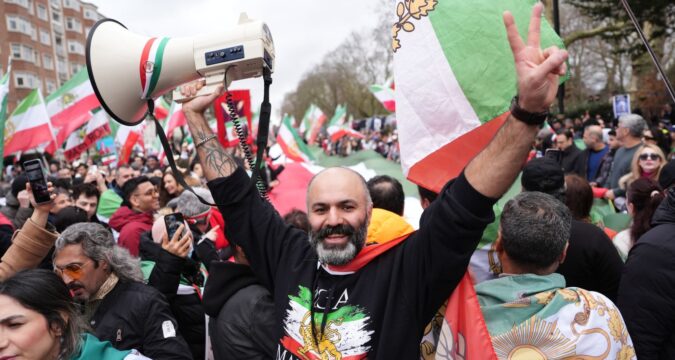
War had begun. Yet in the midst of the attacks, people in some areas took to the streets and began to dance. From inside homes came the first shouts: “Khamenei has fallen! Khamenei is dead!” Small groups gathered, lighting fires and dancing around them. One of the most striking images came not from Tehran but from London, in the Finchley neighborhood, home to large Iranian and Jewish communities. There, late into the night, Iranian and Israeli flags were raised together in celebration.
For 37 years, Khamenei presided over a transformation of Iran’s political system from what was once called a republic into a system of concentrated clerical authority — what many critics describe as absolute guardianship. By empowering the Islamic Revolutionary Guard Corps and allowing it to embed itself deeply in Iran’s economy, he consolidated his position. Those who observed him closely often described him as deeply resentful and unforgiving. In every wave of protest, his response was harsh. Many families were irreparably harmed.
Now he is dead. And even under bombardment, many people did not withhold their relief.
Meanwhile, communication became increasingly difficult. Telephone lines were restricted again. From outside the country, reaching loved ones became nearly impossible. The explosions intensified hour by hour. Then more devastating news emerged: a girls’ school had been struck, with many children killed or injured. Residents reported that the sound of the blasts was louder than anything they remembered during the Iran-Iraq war from 1980 to 1988. For a society that still carries those memories, the psychological impact is profound.
Yet amid this fear, there remains an undeniable hope for the future — hope for the fall of a system that many believe cannot be reformed.
The January crackdown, in which security forces reportedly killed and detained tens of thousands during nationwide protests, severely damaged what little public trust remained. It was unimaginable for many that armed forces would enter the streets and openly fire at citizens. Previously, during the 12-day war with Israel in June, even many regime critics avoided protest and resisted escalation. The majority of people opposed war. They did not take to the streets. That restraint could have been used as a moment of national unity and reform. Instead, the regime ignored it and responded to January’s protests with force, demonstrating that meaningful reform was not an option.
Now, with the possibility of intensified U.S. strikes, it is unclear how long Tehran’s infrastructure can withstand sustained pressure. Unlike previous crises, many residents have not left the city. They remain in their homes. Many have prepared emergency bags. Persian-language media abroad broadcast safety guidance for wartime conditions. People have stocked water and bread. There is no widespread panic or looting.
Some believe that Israel’s earlier targeted strikes signaled limited objectives, reinforcing cautious hope that this war will remain focused rather than indiscriminate. That perception has increased a fragile sense of support for a conflict that is nonetheless terrifying.
Others insist that war has never produced democracy and that the level of destruction in parts of Tehran could reach a point in which reconstruction becomes nearly impossible or extremely costly.
Meanwhile, the regional impact is growing. The Islamic Republic has reportedly expanded retaliatory strikes to countries around the Persian Gulf. Khamenei had warned that if war came, it would spread across the region. Even Oman, which had played a mediating role between Iran and the United States, has been affected. Oil prices have risen. Turkey, Iran’s western neighbor, has restricted its borders with Tehran’s agreement to prevent large refugee flows.
Inside Iran, conversations with citizens reflect the same paradox I heard in my father’s voice: joy at the fall of a leader whose system resisted change and fear of destruction and sudden death.
Regime supporters hold mourning ceremonies for Khamenei. Some gather in Tehran’s metro stations to shelter from bombardment while chanting anti-American and anti-Israeli slogans.
Only a few days into this war, it is impossible to predict what awaits the Iranian people. But one sentiment is clearer than ever: After 47 years under the Islamic Republic, many no longer want individuals tied to this political system to remain in power. They are looking toward a different future — one aligned with a more open and modern world.
In these difficult days of war, one of the most pressing questions heard in large cities such as Tehran is: Why did a government that constantly spoke of war with Israel, that even installed a countdown clock in the capital predicting the destruction of the “Zionist regime,” never build shelters for its own people? Why are there no functioning air raid sirens? Why, at a minimum, is the internet shut down instead of kept open to provide access to critical information?
These concerns were raised during the previous 12-day war, yet no meaningful steps were taken. Now they return with greater urgency. The consequences of this conflict will not remain confined to a divide between regime supporters and opponents. Prolonged war and psychological exhaustion are already creating strain even among those united in their desire for regime change. While many still hold hope for political transformation, the emotional and social toll of sustained conflict is beginning to produce fractures within the broader opposition itself.
Pegah Banihashemi, a native of Iran, is a legal scholar and journalist in Chicago whose work focuses on human rights, constitutional and international law, and Middle East politics.
Submit a letter, of no more than 400 words, to the editor here or email letters@chicagotribune.com.
https://www.chicagotribune.com/2026/03/03/opinion-iran-strikes-ali-khamenei-regime-change/
Detenido ex asambleísta constituyente en operación contra narcotráfico y mafia albanesa en Ecuador
Associated Press
QUITO (AP) — Un ex asambleísta constituyente fue detenido el martes en medio de una serie de allanamientos vinculados con las redes de narcotráfico de la mafia albanesa en Ecuador dedicada a contaminar exportaciones de banano hacia Europa, informó el policía.
El político del partido Social Cristiano, identificado como Salomón Fadul, fue parte de los asambleístas que elaboraron una nueva Carta Magna en 2008 durante el entonces gobierno del presidente Rafael Correa (2007-2017).
La policía confirmó que también fueron apresados otros 15 ecuatorianos y ocho extranjeros. También se dio el decomiso, aseguró, de un millón de dólares en efectivo, joyas y armas en más de una veintena de allanamientos en varias ciudades, entre ellas Quito, Guayaquil, Milagro y Machala, adonde fue detenido Fadul, agregó la policía.
El ministro del Interior, John Reimberg, aseguró en X que se trata de una “estructura delictiva que operaba como tentáculos de la mafia albanesa”, la cual se encargaba de “ contaminar contenedores en los puertos del país con droga para ser enviada a destinos internacionales”.
La acción policial se cumple menos de 24 horas después del anuncio del presidente Daniel Noboa sobre que este país ingresaba a una nueva fase de lucha contra las bandas criminales con acciones directas, y de la reunión con el jefe del Comando Sur de Estados Unidos, general Francis Donovan.
Ecuador es considerado por las autoridades como un centro logístico dentro de la cadena del narcotráfico, donde se acopia, almacena y distribuye la droga que ingresa especialmente desde la frontera norte con Colombia. Los alijos son transportados desde sus puertos hacia Centroamérica, Estados Unidos y Europa.
El año pasado, Ecuador incautó 214 toneladas de drogas, especialmente cocaína, una cifra por debajo de las casi 295 toneladas decomisadas un año antes, según las autoridades.

ChiArts families, teacher protest proposed changes to conservatory model
Zamara Ramos, 14, stood at the center of a crowd at the red-brick entrance of the Chicago High School for the Arts Tuesday morning. Beside her, dozens of her classmates raised hand-drawn posters: “Stop cuts, save the arts.”
“Since I was little, I’ve always wanted to be an actress,” Ramos said. “They’re breaking up hopes and dreams.”
ChiArts is known for its conservatory model, which allows students to dedicate three hours each afternoon to their chosen arts discipline. But next year, Chicago Public Schools will assume management of the Humboldt Park contract school — and its current 8 a.m. to 5 p.m. schedule will likely change.
Citing labor and funding constraints, the district has proposed embedding arts lessons throughout the day, and ending the school day at 3:30 p.m. Students could still opt into an additional 100 minutes of after-school arts programs.
Some families and educators, however, say compressing the model would strip away what makes ChiArts unique. Parents were informed of the potential changes at a community meeting last week.
“It’s a gem to be at a school that incorporates the arts,” said Ramos’ mom, Rousemary Vega. “Taking it and making it an afterschool program makes it an option, not an arts school. It’s not what they came for.”
Parents, alumni, teachers and supporters converse outside The Chicago High School for the Arts on March 3, 2026, following a press conference to demand that CPS stop the current transition plan for the school. (Antonio Perez/Chicago Tribune)
The Board of Education voted unanimously in November to absorb ChiArts, after its nonprofit operator said it would not seek a contract renewal. School officials pointed to rising operating costs and an “unsustainable” deficit.
As a contract school, ChiArts currently receives CPS funding based on enrollment, but an independent board manages day-to-day operations. During the 2023 fiscal year, the most recent publicly available data show, the school received $6.3 million from CPS, accounting for half its revenue. The school serves about 540 students, and opened in 2009.
Unchanged, the conservancy model would also cost CPS $2.5 million to maintain annually, according to Conrad Timbers-Ausar, the district’s acting chief portfolio officer. That doesn’t include the cost to fund the academic portion of that day.
“One of the reasons why we’re here is that the model is not sustainable,” Timbers-Ausar told the Tribune in an interview last week. “That’s the basis of the issue, right?”
Under the proposed changes, ChiArts would operate similar to the district’s 72 fine arts and performing arts magnet schools. Timbers-Ausar said that the goal is to maintain the conservatory model to the “greatest extent practicable.”
Due to contractual agreements, the school day has to be within 7 hours and 15 minutes, he added. “We had to look at, what are the guardrails? What is the framework to put this square peg into a circle, and how can we figure that out?” Timbers-Ausar said.
ChiArts parent Lisa Miranda argued that embedding lessons throughout the day creates a “compressed” schedule that disrupts traditional academics. Students will be unable to take non-arts electives, she said.
Miranda also voiced concerns that her daughter — who has an Individualized Education Plan providing specialized instruction — might have little flexibility throughout the day if she needs accommodations.
“They’ve made (the schedule) so tight. Students can’t do more than the bare minimum,” Miranda said. “Yes, it costs money, but you can leverage what we’re doing here.”
Lisa Miranda, parent of a student at The Chicago High School for the Arts, speaks to the media about the current transition plan for the school following a press conference on March 3, 2026. (Antonio Perez/Chicago Tribune)
The school’s teaching model may also shift. Currently, conservatory classes are taught by professional, practicing artists in each discipline, which includes theater, visual arts and music. But all teachers within CPS must hold a professional educator license.
Risha Tenae Hill, a teaching artist at the ChiArts theater conservatory, urged the district to retain the school’s current academic and conservatory staff.
“We aren’t asking CPS to just keep the lights on,” Hill said. “We are asking to keep the soul of the school intact.”
A CPS spokesperson said in a statement that the district remains committed to developing a plan that is “creative, realistic, and financially-solvent.” Conversations with the ChiArts community are ongoing, the district said.
“We remain committed to continuing productive conversations with families, staff, and district partners to ensure ChiArts’ future reflects both its artistic excellence and its responsibility as a public school,” the spokesperson said.
Outside of ChiArts, two students leaned outside of the building’s second-floor windows, peering down towards the crowd gathering below. Student body president Samantha Gonzalez, a junior studying musical theater, said ChiArts has helped her find opportunities to pursue acting professionally.
“If our classes and schedules were to change, my experience would not have been the same,” Gonzalez said. “CPS … I urge you to listen to your community and students like me.”
https://www.chicagotribune.com/2026/03/03/chicago-high-school-for-the-arts-protest/

Anxious travelers scramble as Iran war strands tens of thousands across the Middle East
Frustrated and anxious travelers clamored Tuesday for flights out of the Middle East and other regions where a widening Iran war has stranded tens of thousands of people, closed major airports and caused widespread cancellations.
The U.S. State Department urged all Americans to leave more than a dozen countries in the region, while other nations scrambled to arrange repatriation flights for their citizens. But with airspaces closed or restricted across the Gulf, many weren’t sure what to do.
“They say ‘Get out,’ but how do you expect us to get out when airspaces are closed?” said Odies Turner, a 32-year-old chef from Dallas who was stuck in Doha, Qatar. “They just have been canceling every flight. I want to go home.”
Chicago woman unsure of when she’ll return home from Dubai after US attacks on Iran
U.S. Assistant Secretary of State for Consular Affairs Mora Namdar posted Monday on X that Americans in Iran and Israel, as well as Qatar, Bahrain, Egypt, Iraq, Jordan, Kuwait, Lebanon, Oman, the Palestinian territories, Saudi Arabia, Syria, the United Arab Emirates and Yemen, should “DEPART NOW” using any available commercial transportation.
Scramble to get home
While governments around the world worked to evacuate citizens who were stuck overseas, Mike Huckabee, the U.S. ambassador to Israel, said that “right now, the options are fairly limited.” He warned there was only so much the U.S. government could do.
“The U.S. Embassy is not in a position at this time to evacuate or directly assist Americans in departing Israel,” Huckabee wrote on X, adding information about a shuttle bus to Egypt the embassy provided as a courtesy “as you make your own security plans.”
Many travelers were holed up in hotels near major Mideast gateways. Others were forced to seek shelter because of airstrikes, or were marooned on cruise ships that couldn’t sail through the Strait of Hormuz.
“We called our children at 3 a.m. to ask forgiveness because we might die and to tell them we love them and to let them know that it’s over for us,” said Mariana Muicaru, among hundreds of Romanian pilgrims who had been stranded on a church trip to Israel.
Muicara, who watched rockets fly across the sky, finally reached Bucharest on Tuesday.
Critical travel route
Anita Mendiratta, an international aviation and tourism consultant who was stuck in Bangkok, said the location of the war would inevitably upend travel and trade.
“Effectively within the Middle East, an eight-hour flying distance covers two-thirds of the world population,” she said. “When that corridor is blocked, it forces aviation to either move far north which is going into potentially other conflict airspace, such as Russia, such as Pakistan, or fly south. That puts huge pressure on the airlines.”
Still, some were slowly making their way out.
Tess Arnold, a 34-year-old travel writer from Seattle, had been caught in Dubai, but managed to get to London on Tuesday and hopes to return home a day later.
After days of the unsettling booms and the site of what appeared to be missile or drone interceptions, she was elated to be on her way.
“Huge relief,” she said by text message. “The entire plane was whooping and clapping.”