Category: News

Afternoon Briefing: Wilmette objects to Chicago Stars games at Ryan Field
Good afternoon, Chicago.
Wilmette officials are objecting to a proposal that would permit the Chicago Stars soccer team to play home matches at the new Ryan Field following the expected stadium opening later this year.
The Chicago Stars, a member of the National Women’s Soccer League, have filed an application with Evanston seeking permission to play 15 to 17 home matches annually at Ryan Field over a five-year period, with an option to extend after the third year, according to city documents. The matches would be played between March and November. Because the stadium at 1501 Central Street sits along the Evanston-Wilmette border, Wilmette officials say the additional events could negatively affect village residents.
Here’s what else is happening today. And remember, for the latest breaking news in Chicago, visit chicagotribune.com/latest-headlines and sign up to get our alerts on all your devices.
Subscribe to more newsletters | Asking Eric | Horoscopes | Puzzles & Games | Today in History
From left, Javier Ramirez and Leonardo Garcia Venegas, U.S. citizens who were detained by ICE, and Marimar Martinez, a U.S. citizen who was shot five times by U.S. Border Patrol, stand as Secretary of Homeland Security Kristi Noem testifies before the Senate Judiciary Committee on March 3, 2026, in Washington. The Department of Homeland Security has faced criticism over its handling of immigration enforcement leaving the department unfunded. (Chip Somodevilla/Getty)
DHS Secretary Kristi Noem declines to address Marimar Martinez, tells Senate panel she’s ‘not familiar’ with her shooting
With Marimar Martinez standing directly behind her, Department of Homeland Security Secretary Kristi Noem testified before the Senate Judiciary Committee in Washington today that she was not “familiar with the details” of Martinez’s shooting by an immigration agent in Chicago last fall and unaware whether the agent who shot her was still on duty. Read more here.
More top news stories:
Gov. JB Pritzker says he didn’t travel on Jeffrey Epstein’s plane following Bill Clinton testimony
In the north suburbs, US attacks in Iran provoke fear: ‘Innocent people are gonna be killed’
This Italianate-style Hyde Park home was named Woodhaven by its onetime owner Lenore Wood. (Chicago Home Photos)
U. of C. finance professor lists Italianate-style, 5-bedroom home in Hyde Park for $3.2M
University of Chicago Booth School of Business finance professor Luigi Zingales and his wife, Jill, on Feb. 10 listed their five-bedroom, 5,000-square-foot, vintage Italianate-style brick home in Hyde Park for $3.2 million. Read more here.
More top business stories:
Amazon previews Prime Air drone delivery to begin this summer in Markham and Matteson
Sunset Foods no longer planning Northfield grocery store at old Mariano’s location
Northwestern forward Nick Martinelli points to a teammate during the first half against Oregon on Feb. 28, 2026, at Welsh-Ryan Arena in Evanston. (Josh Boland/Chicago Tribune)
Nick Martinelli feels ‘grateful’ — while eyeing a few more wins — as his record Northwestern career winds down
For four years, Nick Martinelli has called Northwestern home, rising from a freshman reserve on the first of back-to-back NCAA Tournament teams in 2023 to become one of the best scorers in program history. Read more here.
More top sports stories:
Drew Dalman, the Pro Bowl Chicago Bears center, reportedly is retiring at age 27
Chicago basketball report: Hannah Hidalgo and Notre Dame gain steam — and WNBA players wary of strike
Suraya Osman, second from right, serves Samreen Ibrahim, second from left, at a community iftar hosted by the Muslim-cultural Student Association at Northwestern University on Feb. 23, 2026, in Evanston. (Armando L. Sanchez/Chicago Tribune)
Muslim students at Northwestern University carve out a homey Ramadan with iftars and free meals program
The last few years have seen broad changes in the Muslim student experience at Northwestern, specifically during the month of Ramadan, when observing students are fasting from dawn to dusk. Read more here.
More top Eat. Watch. Do. stories:
Joffrey Ballet’s next season includes ‘Sleeping Beauty,’ ‘Liliom’ and a love letter to Chicago
Review: ‘Morning, Noon, and Night’ taps into anxieties born of the COVID era
Review: ‘The Brief Wondrous Life of Oscar Wao’ is about a nerdy young man with an open heart
President Donald Trump shakes hands with Israel’s Prime Minister Benjamin Netanyahu during a news conference at Mar-a-Lago, Dec. 29, 2025, in Palm Beach, Fla. (AP Photo/Alex Brandon)
Netanyahu takes a gamble on American support for Israel with the war against Iran
By enlisting the U.S. in what he views as Israel’s existential battle against Iran, Prime Minister Benjamin Netanyahu is taking a gamble that could open up the relationship to the strain of a war with far-reaching consequences. Read more here.
More top stories from around the world:
Supreme Court blocks law against schools outing transgender students to their parents in California
Trump administration abandons efforts to impose orders on law firms
Visualizing Data Center Power Surge Before White House Meets With Big Tech
Visualizing Data Center Power Surge Before White House Meets With Big Tech
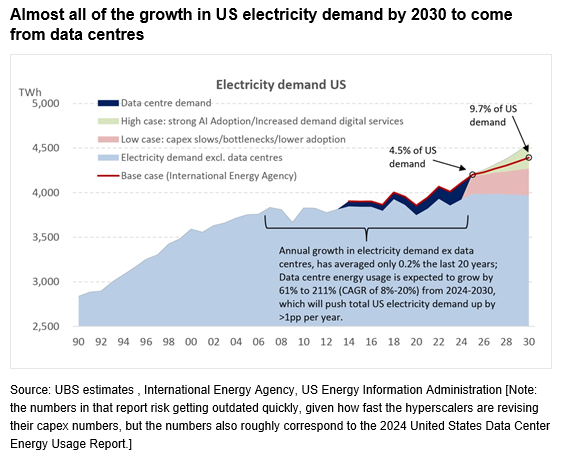
Ahead of tomorrow’s White House meeting, where representatives from Amazon, Google, Meta, Microsoft, xAI, Oracle, and OpenAI are expected to pledge that their data-center buildouts will not drive higher power bills for households near those facilities, UBS analyst Arend Kapteyn has published a new note featuring a chart of the day that visualizes the rapid growth in data center power demand on the grid.
After staying mostly flat for years, data center electricity demand has been surging since 2017, rising from about 70 TWh to more than 200 TWh, driven by cloud computing, social media, and AI workloads.
We outlined this theme a few years back in the piece “The Next AI Trade.”
The IEA’s 2025 Energy and AI report projects that U.S. data center power demand will double between 2025 and 2030, with a high-case scenario of a 160% increase to 582 TWh.
That would lift data centers’ share of total U.S. electricity demand from about 4.5% today to around 10% by 2030.
Kapteyn explained:
The share of US data centre demand for electricity is set to rise from roughly 4½% to 10% of total US demand (with substantial risks to the upside given the speed of revisions in hyperscaler capex)
US electricity demand from data centres is set to rise sharply as AI scales, raising concern that energy constraints could slow AI capex. After all, energy infrastructure takes far longer to build than data centres (4–8 years for transmission versus 1-3 years for data centres), and grid bottlenecks are worsening as wait times for critical components have doubled over the past three years. After remaining broadly flat between 2007 and 2017 despite rapid digitalisation, data-centre electricity demand has surged since 2017 – roughly tripling from around 70 TWh to over 200 TWh – driven by cloud computing, social media use, and the rise of AI, with hyperscale AI training facilities being especially energy-intensive.
According to the IEA’s 2025 Energy and AI report, US data-centre electricity demand is expected to double between 2025 and 2030 (and rise by around 160% in a high-case scenario of 582 TWh usage), lifting its share of US electricity consumption from 4½% to around 10%. That 2030 level of energy use is roughly equivalent to the total energy consumption of the UK or France at that stage, and implies roughly a 5% increase in overall US electricity demand over five years, after two decades of stagnation. The IEA estimates that about 20% of planned data-centre projects already face grid-related risks, although actual outcomes will depend on the pace and economic impact of AI adoption. While the implied demand increase is large, it remains smaller than the roughly 20pp rise in electricity generation over the past decade from gas, wind and solar that offset coal’s decline – suggesting that sustained renewable growth could help mitigate the impact.
Next week’s White House meeting with tech reps comes as the Trump administration is committed to rebuilding the power grid and lowering energy costs for all Americans after failed “green” policies collided with the data center boom and sparked a power crisis across the Mid-Atlantic region.
The chart above, showing that a greater share of U.S. electricity demand will come from data centers by the end of the decade, only reinforces our bullish stance on nuclear (explained here).
Tyler Durden
Tue, 03/03/2026 – 15:25
https://www.zerohedge.com/ai/visualizing-data-center-power-surge-white-house-meets-big-tech
Visualizing Data Center Power Surge Before White House Meets With Big Tech
Visualizing Data Center Power Surge Before White House Meets With Big Tech
Ahead of tomorrow’s White House meeting, where representatives from Amazon, Google, Meta, Microsoft, xAI, Oracle, and OpenAI are expected to pledge that their data-center buildouts will not drive higher power bills for households near those facilities, UBS analyst Arend Kapteyn has published a new note featuring a chart of the day that visualizes the rapid growth in data center power demand on the grid.
After staying mostly flat for years, data center electricity demand has been surging since 2017, rising from about 70 TWh to more than 200 TWh, driven by cloud computing, social media, and AI workloads.
We outlined this theme a few years back in the piece “The Next AI Trade.”
The IEA’s 2025 Energy and AI report projects that U.S. data center power demand will double between 2025 and 2030, with a high-case scenario of a 160% increase to 582 TWh.
That would lift data centers’ share of total U.S. electricity demand from about 4.5% today to around 10% by 2030.
Kapteyn explained:
The share of US data centre demand for electricity is set to rise from roughly 4½% to 10% of total US demand (with substantial risks to the upside given the speed of revisions in hyperscaler capex)
US electricity demand from data centres is set to rise sharply as AI scales, raising concern that energy constraints could slow AI capex. After all, energy infrastructure takes far longer to build than data centres (4–8 years for transmission versus 1-3 years for data centres), and grid bottlenecks are worsening as wait times for critical components have doubled over the past three years. After remaining broadly flat between 2007 and 2017 despite rapid digitalisation, data-centre electricity demand has surged since 2017 – roughly tripling from around 70 TWh to over 200 TWh – driven by cloud computing, social media use, and the rise of AI, with hyperscale AI training facilities being especially energy-intensive.
According to the IEA’s 2025 Energy and AI report, US data-centre electricity demand is expected to double between 2025 and 2030 (and rise by around 160% in a high-case scenario of 582 TWh usage), lifting its share of US electricity consumption from 4½% to around 10%. That 2030 level of energy use is roughly equivalent to the total energy consumption of the UK or France at that stage, and implies roughly a 5% increase in overall US electricity demand over five years, after two decades of stagnation. The IEA estimates that about 20% of planned data-centre projects already face grid-related risks, although actual outcomes will depend on the pace and economic impact of AI adoption. While the implied demand increase is large, it remains smaller than the roughly 20pp rise in electricity generation over the past decade from gas, wind and solar that offset coal’s decline – suggesting that sustained renewable growth could help mitigate the impact.
Next week’s White House meeting with tech reps comes as the Trump administration is committed to rebuilding the power grid and lowering energy costs for all Americans after failed “green” policies collided with the data center boom and sparked a power crisis across the Mid-Atlantic region.
The chart above, showing that a greater share of U.S. electricity demand will come from data centers by the end of the decade, only reinforces our bullish stance on nuclear (explained here).
Tyler Durden
Tue, 03/03/2026 – 15:25
https://www.zerohedge.com/ai/visualizing-data-center-power-surge-white-house-meets-big-tech

Drew Dalman, the Pro Bowl Chicago Bears center, reportedly is retiring at age 27
Chicago Bears center Drew Dalman has informed the team he is retiring at age 27, according to multiple national reports.
Dalman has played five seasons in the NFL, including one with the Bears. He signed a three-year, $42 million free-agent contract with the team last March.
He started at center in all 17 regular-season games and both playoff games and earned his first Pro Bowl selection. He was the only Bears player to play every offensive snap in the 2026 season.
Dalman was a big part of the offensive line revamping the Bears executed last offseason. General manager Ryan Poles traded for guards Joe Thuney and Jonah Jackson ahead of free agency, then signed Dalman to completely retool the interior of the line.
Dalman was considered the top center on the free-agent market when he signed with the Bears. A fourth-round draft pick out of Stanford in 2021, he played his four seasons with the Atlanta Falcons.
With two years remaining on his contract, Dalman now appears to be stepping away from football. That creates a big hole on the Bears offensive line with free-agency negotiations set to begin Monday.
The Bears already had questions at left tackle. Ozzy Trapilo, who started there during the second half of last season, suffered a patellar tendon injury in his knee in the wild-card round of the playoffs and is expected to miss a good portion of next season.
The Bears had backup center/guard Ryan Bates on the roster last season, but Bates is set to become a free agent. Luke Newman, a sixth-round draft pick last year, can play guard or center, but he played sparingly on offense last season.
https://www.chicagotribune.com/2026/03/03/chicago-bears-drew-dalman-retiring/

DCFS bills put on hold due of transparency concerns: ‘Not reform at all’
Several bills that had been filed in the state Senate and House of Representatives, which critics have warned would weaken reporting and training standards for the Department of Child and Family Services, have been put on hold, according to state officials.
The move comes after the child-abuse death of 8-year-old Markell Pierce in Round Lake Beach, although state officials have not attributed their decisions to the tragedy.
Cook County Public Guardian Charles Golbert had raised alarm about the bills following the news of Markell’s death, warning they would make it more difficult for the public to get information when a DCFS-involved child is killed or seriously injured, and handicap the department’s internal investigation and review processes.
Twin efforts had been filed in both the House and Senate by state Rep. Suzanne Ness, D-Carpentersville, and state Sen. Lakesia Collins, D-Chicago, respectively. Initially, in February, Ness had provided a statement explaining that the intent of the bills was to “improve — not reduce — accountability for DCFS.”
The following week, however, Ness, who is the chair of the Adoption and Child Welfare Committee, said she was holding the bills back after “speaking with concerned stakeholders.”
“My commitment is to ensure the safety of Illinois’s most vulnerable children,” she said in a statement. “I will only support the final passage of legislation that enhances protections for these children.”
In the Senate, Collins said the bills were “not moving anywhere.” Pointing to her personal experiences with the foster care system, she said she has been “one of the most outspoken” about holding DCFS accountable.
Collins said the agency had reached out to her to carry a reform bill, but after receiving it, she saw the bill was “not going to move” because it was “not reform at all.”
After speaking with the agency about her concerns, Collins said she believed DCFS was being sincere about its intentions with the bill, and wanted to work with her to modify it accordingly.
Collins said DCFS must have the proper training and staffing to catch the key signs of abuse and take reports of child abuse seriously. She also emphasized the need for transparency.
Despite what seemed to be a sometimes-strained relationship with DCFS, Collins said she is an ally of the department and praised the DCFS Director Heidi Mueller.
“I feel they look at me as someone who doesn’t support them, but that’s not the case,” Collins said.
Although Markell’s death was “a tragedy that no one wants to wake up to,” Collins said she is waiting to learn more information about the case.
https://www.chicagotribune.com/2026/03/03/dcfs-bills-on-hold/

Lawyers for woman accused of killing abusive ex-boyfriend call for case to be dropped
Lawyers and advocates for a woman charged with killing her abusive ex-boyfriend railed against prosecutors’ offer of a plea deal and probation Tuesday and renewed their calls for the Cook County State’s Attorney’s Office to drop the charges altogether.
Should Keshia Golden’s murder case come before a jury, her attorneys will argue that she was acting in self-defense when she allegedly stabbed Calvin Sidney to death during an early-morning argument in October 2022, after Sidney had allegedly slammed her into a refrigerator and hit her head against the kitchen counter. She was eight months pregnant with Sidney’s child at the time.
On Tuesday, an hour into Judge Steven Watkins’ court call, Golden got up amid a flurry of pats on the back to walk down the center aisle of Watkins’ full courtroom at the George Leighton Criminal Courthouse. She wore a lavender blazer and white pants. Her attorneys, and many others in the courtroom to support her, wore shades of purple.
Attorney Julie Koehler stood with her hand on Golden’s back as an assistant state’s attorney told Watkins that the state would offer Golden two years of probation and a second-degree murder conviction. Watkins set her next court date. Golden walked back down the aisle shaking her head. As people flooded out of the courtroom, she stood in the hallway corner with her face in her hands.
In the courthouse lobby, Koehler, the chief of the Cook County Public Defender’s homicide unit, told reporters that not only had Golden done “everything over the past three years that (authorities) have asked,” but that a case like hers should not be brought to trial and was not the kind of case that should be prosecuted in Cook County.
Kyan Keenan, another public defender, ticked off the tolls that a plea deal would take on Golden’s life as she continues to raise her young daughter.
Keshia Golden listens during a press conference following an unsuccessful call for the dismissal of charges against Golden at the Leighton Criminal Court building on March 3, 2026. (Antonio Perez/Chicago Tribune)
She could still land in prison if something happened while she were on probation, Keenan said, and she’d lose financial assistance for things like daycare and housing. Then there was the message that Keenan said Golden’s case sent to other survivors of domestic violence: “If you try to defend yourself or your unborn child you have to be labeled as a murderer for the rest of your life.”
State’s Attorney Eileen O’Neill Burke has made protecting survivors of domestic violence a centerpiece of her short time in office. Burke has even created a new unit in her office, the Special Victims Bureau, geared toward the needs of domestic violence victims as well as children, elderly people and people with disabilities who are involved in violent crimes. Koehler noted those priorities and called on Burke to “do the right thing here.”
“(Burke) has stated numerous times that she helps victims of domestic violence,” Koehler said. “Well, here’s a victim of domestic violence that she needs to help. We expect her to see the light on this case.”
Golden’s motion lists seven previous acts of alleged violence by Sidney, including four instances of domestic violence between the couple and one and one alleged instance of domestic violence between Sidney and another woman. Watkins largely rejected prosecutors’ attempts to keep that evidence out of a trial, ruling that nearly all of it could be presented.
The State’s Attorney’s office doesn’t comment on pending cases. Court records detail that Golden and Sidney had been at home in the Austin neighborhood with several relatives after the shower when Sidney got angry at Golden for trying to use the microwave before him.
He allegedly slammed the side of her head into the refrigerator, tried to throw her into the counter and started trying to beat her up, per a motion by the defense records.
Prosecutors alleged in a responding motion that Sidney was not the aggressor in the confrontation and that Sidney’s brother separated the pair when the argument began.
Golden allegedly entered and left the room the brothers were in several times to yell at Sidney, the response states, before she reached under Sidney’s brother’s arm to stab him in the leg. Sidney, who suffered a wound to his femoral artery, died soon afterward.
Golden was arrested shortly after the stabbing. Her bond was reduced from $2 million to $50,000, which court records show was raised by the Chicago Community Bond Fund to get her out of jail. Golden has since been on pretrial release as her case makes its way to a jury.
Golden is next due back in court April 7.
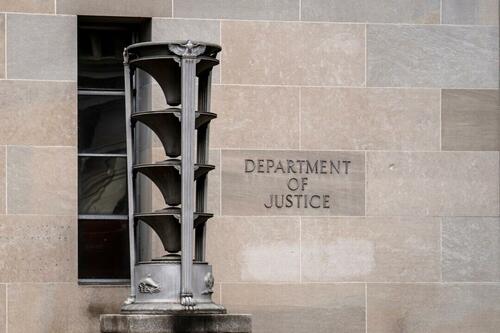
In Stunning Flip-Flop, DOJ Suddenly Revives Bid To Sanction Law Firms
In Stunning Flip-Flop, DOJ Suddenly Revives Bid To Sanction Law Firms
Update (1400ET): In a stunning flip-flop, just 24 hours after The Justice Department said it was dropping its appeal of four trial-court rulings that struck down Trump’s sanctions against law firms Jenner & Block, WilmerHale, Perkins Coie and Susman Godfrey, the DoJ told a court Tuesday that it plans to press forward with the defense of President Trump’s executive orders sanctioning law firms
The Wall Street Journal reports that the department said in a court filing that the federal appeals court in Washington hadn’t yet ruled on its request the previous day to dismiss the cases – and that it was the administration’s prerogative to instead pursue them further.
Judges across the ideological spectrum had ruled that the president’s attempts to punish law firms amounted to unconstitutional retaliation.
* * *
s Aldgra Fredly reported earlier for The Epoch Times, the Department of Justice (DOJ) filed a motion on March 2 seeking to drop its appeals of lower court decisions that struck down President Donald Trump’s executive orders sanctioning four law firms.
In its motion to the U.S. Court of Appeals for the District of Columbia Circuit, the DOJ said it decided to “voluntarily dismiss” its appeals of rulings that sided with law firms Perkins Coie, Jenner & Block, Susman Godfrey, and Wilmer Cutler Pickering Hale and Dorr (WilmerHale).
The DOJ did not provide any explanation for the decision in its filing.
Trump issued the orders in March 2025. They stated that the firms abused their pro bono practice “to engage in activities that undermine justice and the interests of the United States,” citing alleged “partisan representations” and other factors.
The orders directed all executive departments and agencies to suspend security clearances of individuals at the law firms while those clearances were being reviewed to see whether they aligned with the national interest, terminate any contracts with the law firms, and limit their employees’ access to government buildings.
The four law firms filed lawsuits challenging Trump’s orders, arguing that the orders were unconstitutional and violated their First Amendment rights. Federal judges handling the cases subsequently ruled in favor of the firms and struck down the orders last year.
The Trump administration reached deals with nine other law firms targeted by Trump’s orders, which agreed to provide pro bono legal services to the White House and to uphold “fairness in the justice system.”
In response to the DOJ’s latest filing, Jenner & Block said the decision “makes permanent the rulings” of four federal judges who found the president’s executive orders were unconstitutional.
“Our partnership is proud to have stood firm on behalf of its clients, and we look forward to continuing to serve them—guided by these bedrock values—for many decades to come,” the firm said in a March 2 statement.
Susman Godfrey said the filing indicates the government is no longer trying to defend what the firm deemed an “indefensible executive order” by Trump.
“The Government has capitulated, which is a fitting end to its plainly unconstitutional attack on Susman Godfrey and the rule of law,” Susman Godfrey said in a statement. “And we won.”
Perkins Coie said the DOJ’s dismissal of its appeal “means the district court’s decision stands as a final order, protecting core constitutional freedoms such as free speech, due process, and the right to select counsel without fear of retribution.”
WilmerHale said in a statement that it was pleased with the government’s decision.
“As we said from the outset, our challenge to the unlawful Executive Order was about defending our clients’ constitutional right to retain the counsel of their choosing and defending the rule of law,” it said.
Tyler Durden
Tue, 03/03/2026 – 15:05
https://www.zerohedge.com/political/doj-drops-bid-revive-executive-orders-targeting-law-firms
In Stunning Flip-Flop, DOJ Suddenly Revives Bid To Sanction Law Firms
In Stunning Flip-Flop, DOJ Suddenly Revives Bid To Sanction Law Firms
Update (1400ET): In a stunning flip-flop, just 24 hours after The Justice Department said it was dropping its appeal of four trial-court rulings that struck down Trump’s sanctions against law firms Jenner & Block, WilmerHale, Perkins Coie and Susman Godfrey, the DoJ told a court Tuesday that it plans to press forward with the defense of President Trump’s executive orders sanctioning law firms
The Wall Street Journal reports that the department said in a court filing that the federal appeals court in Washington hadn’t yet ruled on its request the previous day to dismiss the cases – and that it was the administration’s prerogative to instead pursue them further.
Judges across the ideological spectrum had ruled that the president’s attempts to punish law firms amounted to unconstitutional retaliation.
* * *
s Aldgra Fredly reported earlier for The Epoch Times, the Department of Justice (DOJ) filed a motion on March 2 seeking to drop its appeals of lower court decisions that struck down President Donald Trump’s executive orders sanctioning four law firms.
In its motion to the U.S. Court of Appeals for the District of Columbia Circuit, the DOJ said it decided to “voluntarily dismiss” its appeals of rulings that sided with law firms Perkins Coie, Jenner & Block, Susman Godfrey, and Wilmer Cutler Pickering Hale and Dorr (WilmerHale).
The DOJ did not provide any explanation for the decision in its filing.
Trump issued the orders in March 2025. They stated that the firms abused their pro bono practice “to engage in activities that undermine justice and the interests of the United States,” citing alleged “partisan representations” and other factors.
The orders directed all executive departments and agencies to suspend security clearances of individuals at the law firms while those clearances were being reviewed to see whether they aligned with the national interest, terminate any contracts with the law firms, and limit their employees’ access to government buildings.
The four law firms filed lawsuits challenging Trump’s orders, arguing that the orders were unconstitutional and violated their First Amendment rights. Federal judges handling the cases subsequently ruled in favor of the firms and struck down the orders last year.
The Trump administration reached deals with nine other law firms targeted by Trump’s orders, which agreed to provide pro bono legal services to the White House and to uphold “fairness in the justice system.”
In response to the DOJ’s latest filing, Jenner & Block said the decision “makes permanent the rulings” of four federal judges who found the president’s executive orders were unconstitutional.
“Our partnership is proud to have stood firm on behalf of its clients, and we look forward to continuing to serve them—guided by these bedrock values—for many decades to come,” the firm said in a March 2 statement.
Susman Godfrey said the filing indicates the government is no longer trying to defend what the firm deemed an “indefensible executive order” by Trump.
“The Government has capitulated, which is a fitting end to its plainly unconstitutional attack on Susman Godfrey and the rule of law,” Susman Godfrey said in a statement. “And we won.”
Perkins Coie said the DOJ’s dismissal of its appeal “means the district court’s decision stands as a final order, protecting core constitutional freedoms such as free speech, due process, and the right to select counsel without fear of retribution.”
WilmerHale said in a statement that it was pleased with the government’s decision.
“As we said from the outset, our challenge to the unlawful Executive Order was about defending our clients’ constitutional right to retain the counsel of their choosing and defending the rule of law,” it said.
Tyler Durden
Tue, 03/03/2026 – 15:05
https://www.zerohedge.com/political/doj-drops-bid-revive-executive-orders-targeting-law-firms
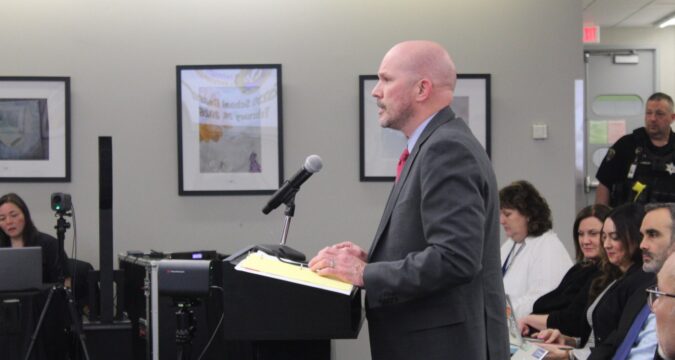
Orland School District 230 OKs $321,000 to cover Safeway bus service midyear rate hike
The Orland High School District 230 board authorized emergency funding after Safeway Transportation Services Corp. threatened to end its bus contract with the district, which would have left schools without student transportation in the middle of the year.
The district’s 2023 contract with Safeway was set to end this school year, but company officials demanded in December the contract rate be increased in the final months to account for “ongoing and sustained cost increases impacting operations,” according to the approved funding resolution.
The emergency funding went into effect Thursday night and will extend through the remainder of the 2025-2026 school year, leaving the next few years without a set transportation contract.
Board members debated Thursday whether to continue the district’s contract with Safeway or find another transportation service.
Jeff Eagan, assistant superintendent of business services, said the district could renew its contract with Safeway for one to two more years but said he anticipates rates would continue to increase in the renewed contracts.
Eagan said the district would need to build more room in the transportation budget and move some funds around or even adjust the tax levy.
“Those are all finite revenue sources,” he said. “If I put more in the transportation fund, another fund will be slighted.”
Eagan said the emergency funding came out of this year’s budget, which had room for the increase. He said the new rates with Safeway, increasing from $354 per combined morning and evening routes to $506 per combined routes, will cost the district about $321,000 between February and May.
Eagan said the transportation fund had a $350,000 surplus to cover these increased costs, but said transportation costs have run higher lately due to special education and other transportation costs that were unknown when the budget was approved last September.
When board member Mohammed Jaber asked if the district’s contract with Safeway would be terminated in the next three months, Nolting acknowledged the option to renew the contract but said he had some concerns about Safeway.
“Safeway is, obviously we have some concerns based on where we’re at today, but we haven’t necessarily ended any future relationships at this point in time,” Nolting said.
If the board does not renew its contract, board member Tony Serratore said he is concerned the district might have a gap in transportation services.
Serratore said the district needs to look for other options soon because there are a limited number of bus driving companies in the state and in the area.
He also said Safeway has problems and some schools have abandoned them for other vendors.
“There may not be anyone available to pick those routes, and we may have no choice but to potentially have to go back to Safeway,” Serratore said.
Eagan said district officials had informal conversations about cost and timeline with other transportation providers last summer and early fall, when the district began having issues with Safeway.
He said these companies estimated that it might take three months before they could take over district bus routes, due to time needed to set up buses, drivers, mechanics and other process details.
No formal action was taken, he said.
“If we give enough leeway or time to say the beginning of next school year, that would definitely provide enough time for them to make those adjustments and provide those services,” he said.
District officials said in the past year, Safeway had financial difficulties that caused concerns about the reliability of service, according to the funding resolution passed Thursday.
Safeway officials said in a statement to the district that the requested adjustment was necessary to maintain safe, reliable transportation services without compromising quality.
Safeway officials sent an email to the district in January stating the company would will not be able to continue service beyond Feb. 15 without the requested rate adjustment, according to a district statement in the Feb. 26 board meeting agenda.
District officials said the funding increase was a matter of ensuring transportation services provided by Safeway would “continue in a safe and consistent manner for the students,” according to the resolution.
Other suburban school districts also had issues with Safeway in recent years, such as Summit Hill Elementary School District 161.
District parents said kindergartners were not dropped off for hours in August 2024. District officials called for quick changes to “inexcusable” school bus services, and Safeway representatives answered questions from district officials in September 2024.
awright@chicagotribune.com
https://www.chicagotribune.com/2026/03/03/orland-district-230-bus-rate-hike/

US Launched Kamikaze Drones Against Iran, Reflecting Lessons Learned From Ukraine
US Launched Kamikaze Drones Against Iran, Reflecting Lessons Learned From Ukraine
In the first 72 hours of Operation Epic Fury, U.S. forces conducted more than 1,700 strikes across Iran on high-value IRGC military assets and leadership. These strikes relied heavily on air-delivered munitions, including bombs, air-launched rockets, and missiles deployed from stealth fighter jets, stealth bombers, fourth-generation fighter jets and bombers, as well as guided-missile destroyers.
Notably, U.S. Central Command indicated the operation also marked the first combat use by the U.S. military of one-way kamikaze drones, a newly added capability likely shaped by lessons drawn from four years of high-intensity warfare in Eastern Europe.
Another picture of a Starlink mounted on a Low-Cost Unmanned Combat Attack System (LUCAS) drone https://t.co/SDVp4gZjCK pic.twitter.com/LyxwcL5fso
— Robin (@xdNiBoR) December 4, 2025
“For the first time in history, it is using one-way attack drones in combat during Operation Epic Fury. These low-cost drones, modeled after Iran’s Shahed drones, are now delivering American-made retribution,” U.S. CENTCOM wrote on X.
CENTCOM’s Task Force Scorpion Strike – for the first time in history – is using one-way attack drones in combat during Operation Epic Fury. These low-cost drones, modeled after Iran’s Shahed drones, are now delivering American-made retribution. 🇺🇸 pic.twitter.com/VYdjiECKDT
— U.S. Central Command (@CENTCOM) February 28, 2026
OISNT account on X OSINTdefender published footage of what appears to be one of the Low-Cost Unmanned Combat Attack System (LUCAS) US drones used in the operation that crash landed.
OSINTdefender noted, “Locals in Iraq appear to have recovered a crashed and almost entirely intact Low-Cost Unmanned Combat Attack System (LUCAS), an American copy of the Iranian Shahed-136 Attack Drone, which is confirmed to have been used recently by Task Force Scorpion Strike during U.S. attacks on Iran as part of Operation Epic Fury.”
Locals in Iraq appear to have recovered a crashed and almost entirely intact Low-Cost Unmanned Combat Attack System (LUCAS), an American copy of the Iranian Shahed-136 Attack Drone, which is confirmed to have been used recently by Task Force Scorpion Strike during U.S. attacks on… pic.twitter.com/SEqO6627en
— OSINTdefender (@sentdefender) March 2, 2026
Strike Map
Related:
Drone Strikes On Amazon Data Centers In Middle East Reveal Urgent Need To Defend AI
Russian Guidance Chip With Western Parts Found In Iranian Drone That Hit UK Air Base In Cyprus
World At War: Are There Drone Spillover Threats In Caribbean
AI ‘Kill Chains’ And Rise Of Skynet-Like Weapons Offer Glimpse Of 2030s Battlefield
Whether in Iran or Eastern Europe, the rapid proliferation of low-cost kamikaze drones has permanently altered the battlefield. Four years of war in Ukraine have made it clear to military planners and weapons manufacturers worldwide that these inexpensive, mass-produced drones are no longer optional, but are increasingly pivotal in changing the economics of war.
Tyler Durden
Tue, 03/03/2026 – 14:45