
Category: News
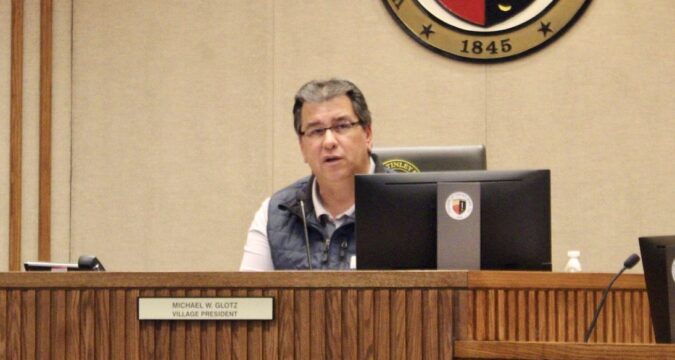
Tinley Park Village Board approves police contract after disagreement
The Tinley Park Village Board approved an agreement with the Metropolitan Alliance of Police Tinley Park Chapter 192 Tuesday night, following months of negotiation.
The union agreed to withdraw unfair labor practice charges in exchange for the village issuing retroactive payments, according to the meeting agenda.
Village and union officials reached an agreement in January, and changes were made and reviewed by village officials, union attorneys and union members, according to the agenda.
Mayor Michael Glotz thanked the village attorneys, police Chief Thomas Tilton and Village Manager Pat Carr for helping with the negotiations.
An village statement in August said Tinley Park officials had attempted to negotiate a new contract with the union for 15 months, even offering them the highest four-year pay increase in department history, according to Carr. But officials said the union’s “unwillingness to compromise” barred progress.
In August, more than three dozen Tinley Park police officers signed a vote of no confidence citing 63 reasons why they thought Tilton should be removed.
Ray Violetto, a union representative and retired detective, said at the time the village’s statement was misleading because he said the vote of no confidence has been “festering” in the department for much longer than the contract issues.
awright@chicagotribune.com
https://www.chicagotribune.com/2026/03/04/tinley-park-approves-police-contract/
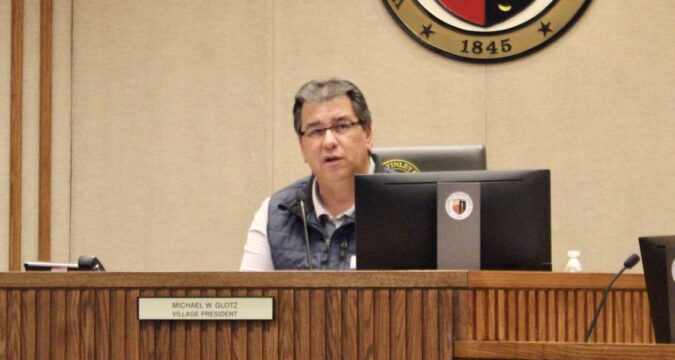
Tinley Park Village Board approves police contract after disagreement
The Tinley Park Village Board approved an agreement with the Metropolitan Alliance of Police Tinley Park Chapter 192 Tuesday night, following months of negotiation.
The union agreed to withdraw unfair labor practice charges in exchange for the village issuing retroactive payments, according to the meeting agenda.
Village and union officials reached an agreement in January, and changes were made and reviewed by village officials, union attorneys and union members, according to the agenda.
Mayor Michael Glotz thanked the village attorneys, police Chief Thomas Tilton and Village Manager Pat Carr for helping with the negotiations.
An village statement in August said Tinley Park officials had attempted to negotiate a new contract with the union for 15 months, even offering them the highest four-year pay increase in department history, according to Carr. But officials said the union’s “unwillingness to compromise” barred progress.
In August, more than three dozen Tinley Park police officers signed a vote of no confidence citing 63 reasons why they thought Tilton should be removed.
Ray Violetto, a union representative and retired detective, said at the time the village’s statement was misleading because he said the vote of no confidence has been “festering” in the department for much longer than the contract issues.
awright@chicagotribune.com
https://www.chicagotribune.com/2026/03/04/tinley-park-approves-police-contract/

Sánchez se mantiene firme contra la guerra en Irán pese a la amenaza comercial de Trump a España
Por SUMAN NAISHADHAM
MADRID (AP) — El presidente del gobierno de España, Pedro Sánchez, volvió a criticar el miércoles las acciones militares de Estados Unidos e Israel en Irán, se mantuvo firme ante nuevas amenazas comerciales de Washington y advirtió que la guerra en Irán suponía el riesgo de “jugar a la ruleta rusa” con millones de vidas.
El presidente Donald Trump amenazó el martes con poner fin al comercio de Estados Unidos con España debido a la negativa de Madrid a permitir que Estados Unidos utilice bases militares conjuntas en el país para sus ataques contra Irán.
“No vamos a ser cómplices de algo que es malo para el mundo y que también es contrario a nuestros valores e intereses, simplemente por el miedo a las represalias de alguno”, afirmó Sánchez en un discurso televisado.
No está claro cómo cortaría Trump el comercio con España, un miembro de la Unión Europea. La UE negocia el comercio en nombre de sus 27 miembros.
La UE dijo el miércoles que protegería sus intereses y trabajaría para estabilizar su relación comercial con Estados Unidos, con el que alcanzó un acuerdo comercial el año pasado tras meses de incertidumbre económica por la ofensiva arancelaria de Trump.
“Mantenemos plena solidaridad con todos los Estados miembros y todos sus ciudadanos y, a través de nuestra política comercial común, estamos listos para actuar si es necesario para salvaguardar los intereses de la UE”, afirmó el portavoz de la Comisión Europea, Olof Gill.
Después de que España no autorizara el uso estadounidense de sus bases, Trump dijo el martes que “podríamos usar su base si queremos”, en referencia a dos bases militares en el sur de España que Estados Unidos y España comparten, pero que permanecen bajo mando español. “Podríamos simplemente volar y usarla”, dijo Trump. “Nadie nos va a decir que no la usemos, pero no tenemos por qué hacerlo”.
Las amenazas del martes desde Washington ofrecían un nuevo ejemplo de cómo el presidente de Estados Unidos utiliza la amenaza de aranceles o embargos comerciales como castigo. La Corte Suprema de Estados Unidos anuló el mes pasado los amplios aranceles globales de Trump, al señalar que los poderes de emergencia no permiten al presidente imponer unilateralmente aranceles generalizados.
Sin embargo, Trump sostiene que la corte le permite, en su lugar, imponer embargos a gran escala a otras naciones que él elija.
España no ha tenido ningún contacto directo con Estados Unidos desde la diatriba de Trump, dijo el miércoles el ministro español de Economía, Carlos Cuerpo.
En declaraciones a la emisora de radio española Cadena Ser, Cuerpo dijo que quería transmitir “un mensaje de tranquilidad. Mas allá de estas declaraciones, no hay ninguna actuación sobre la mesa (de Estados Unidos)”.
Los principales grupos empresariales de España expresaron preocupación por la amenaza comercial de Estados Unidos, y calificaron a Estados Unidos como un “socio fundamental desde el punto de vista económico y político”.
“Confiamos en que finalmente nuestras relaciones comerciales no se vean afectadas de ninguna manera”, dijeron el martes las organizaciones empresariales españolas CEOE, CEPYME y ATA.
La postura de España sobre el conflicto en Irán es el último episodio de tensión en su relación con la el gobierno de Trump.
España criticó abiertamente la guerra de Israel en Gaza y atrajo la ira de Trump el año pasado cuando se retractó del compromiso de la OTAN de que los miembros aumentaran el gasto en defensa al 5% del PIB. En ese momento, España dijo que podía cubrir sus necesidades de defensa estimadas gastando menos —solo el 2,1% de su PIB—, una medida que Trump criticó duramente y ante la cual también amenazó con imponer aranceles como respuesta.
Sánchez ha calificado los ataques de Estados Unidos e Israel contra Irán como una intervención militar “injustificable” y “peligrosa”.
El líder español expresó el miércoles su preocupación de que los ataques contra Irán por parte de Estados Unidos e Israel pudieran conducir a otro costoso atolladero militar en Oriente Medio, similar a las intervenciones estadounidenses pasadas en Irak y Afganistán.
“En definitiva, la posición del gobierno de España se resume en cuatro palabras”, dijo Sánchez. “No a la guerra”.
___
Los periodistas de AP Sam McNeil en Bruselas y Joseph Wilson en Barcelona contribuyeron.
___
Esta historia fue traducida del inglés por un editor de AP con la ayuda de una herramienta de inteligencia artificial generativa.

Sánchez se mantiene firme contra la guerra en Irán pese a la amenaza comercial de Trump a España
Por SUMAN NAISHADHAM
MADRID (AP) — El presidente del gobierno de España, Pedro Sánchez, volvió a criticar el miércoles las acciones militares de Estados Unidos e Israel en Irán, se mantuvo firme ante nuevas amenazas comerciales de Washington y advirtió que la guerra en Irán suponía el riesgo de “jugar a la ruleta rusa” con millones de vidas.
El presidente Donald Trump amenazó el martes con poner fin al comercio de Estados Unidos con España debido a la negativa de Madrid a permitir que Estados Unidos utilice bases militares conjuntas en el país para sus ataques contra Irán.
“No vamos a ser cómplices de algo que es malo para el mundo y que también es contrario a nuestros valores e intereses, simplemente por el miedo a las represalias de alguno”, afirmó Sánchez en un discurso televisado.
No está claro cómo cortaría Trump el comercio con España, un miembro de la Unión Europea. La UE negocia el comercio en nombre de sus 27 miembros.
La UE dijo el miércoles que protegería sus intereses y trabajaría para estabilizar su relación comercial con Estados Unidos, con el que alcanzó un acuerdo comercial el año pasado tras meses de incertidumbre económica por la ofensiva arancelaria de Trump.
“Mantenemos plena solidaridad con todos los Estados miembros y todos sus ciudadanos y, a través de nuestra política comercial común, estamos listos para actuar si es necesario para salvaguardar los intereses de la UE”, afirmó el portavoz de la Comisión Europea, Olof Gill.
Después de que España no autorizara el uso estadounidense de sus bases, Trump dijo el martes que “podríamos usar su base si queremos”, en referencia a dos bases militares en el sur de España que Estados Unidos y España comparten, pero que permanecen bajo mando español. “Podríamos simplemente volar y usarla”, dijo Trump. “Nadie nos va a decir que no la usemos, pero no tenemos por qué hacerlo”.
Las amenazas del martes desde Washington ofrecían un nuevo ejemplo de cómo el presidente de Estados Unidos utiliza la amenaza de aranceles o embargos comerciales como castigo. La Corte Suprema de Estados Unidos anuló el mes pasado los amplios aranceles globales de Trump, al señalar que los poderes de emergencia no permiten al presidente imponer unilateralmente aranceles generalizados.
Sin embargo, Trump sostiene que la corte le permite, en su lugar, imponer embargos a gran escala a otras naciones que él elija.
España no ha tenido ningún contacto directo con Estados Unidos desde la diatriba de Trump, dijo el miércoles el ministro español de Economía, Carlos Cuerpo.
En declaraciones a la emisora de radio española Cadena Ser, Cuerpo dijo que quería transmitir “un mensaje de tranquilidad. Mas allá de estas declaraciones, no hay ninguna actuación sobre la mesa (de Estados Unidos)”.
Los principales grupos empresariales de España expresaron preocupación por la amenaza comercial de Estados Unidos, y calificaron a Estados Unidos como un “socio fundamental desde el punto de vista económico y político”.
“Confiamos en que finalmente nuestras relaciones comerciales no se vean afectadas de ninguna manera”, dijeron el martes las organizaciones empresariales españolas CEOE, CEPYME y ATA.
La postura de España sobre el conflicto en Irán es el último episodio de tensión en su relación con la el gobierno de Trump.
España criticó abiertamente la guerra de Israel en Gaza y atrajo la ira de Trump el año pasado cuando se retractó del compromiso de la OTAN de que los miembros aumentaran el gasto en defensa al 5% del PIB. En ese momento, España dijo que podía cubrir sus necesidades de defensa estimadas gastando menos —solo el 2,1% de su PIB—, una medida que Trump criticó duramente y ante la cual también amenazó con imponer aranceles como respuesta.
Sánchez ha calificado los ataques de Estados Unidos e Israel contra Irán como una intervención militar “injustificable” y “peligrosa”.
El líder español expresó el miércoles su preocupación de que los ataques contra Irán por parte de Estados Unidos e Israel pudieran conducir a otro costoso atolladero militar en Oriente Medio, similar a las intervenciones estadounidenses pasadas en Irak y Afganistán.
“En definitiva, la posición del gobierno de España se resume en cuatro palabras”, dijo Sánchez. “No a la guerra”.
___
Los periodistas de AP Sam McNeil en Bruselas y Joseph Wilson en Barcelona contribuyeron.
___
Esta historia fue traducida del inglés por un editor de AP con la ayuda de una herramienta de inteligencia artificial generativa.

Steve Chapman: For Donald Trump, the war against Iran will not be a political winner
No president has ever been as good as Donald Trump at one thing: changing the subject. He gets away with a lot through his skill in distraction. Barely has the public had time to absorb one troubling action before he takes another. The impossibility of keeping up breeds apathy and stymies opposition.
But sometimes the news dominates him rather than the other way around.
His long association with Jeffrey Epstein has become a focus of outrage. In the documents released so far, Trump’s name appears some 38,000 times. Last week, CNN and other outlets reported that the Justice Department withheld records that a woman who said Epstein abused her at age 13 also accused Trump of sexually assaulting her.
Launching an aerial war against Iran serves to pull some attention away from that unsavory topic, at least for the time being. It also changes the subject from inflation, corruption and the brutal tactics of his immigration agent goons.
Trump may hope that Americans will rally behind a campaign to rid the world of a bloody terrorist regime and give an oppressed people a chance at freedom. More likely, he’s giving unhappy voters a reason to be even more unhappy.
That was before additional American casualties occurred, with more doubtless coming. It’s also before the results play out in Iran, which could be disastrous.
There are many ways the war could go badly. It could invite a spectacular Iranian attack on American forces in the region, like the 1983 bombing of Marine Corps barracks in Beirut. It could lead to violent chaos as factions battle for control, as Barack Obama’s 2011 air war in Libya did.
The war could bring to power a more extreme ruler and rally Iranians against the “Great Satan.” It could provoke Iran’s proxies to carry out terrorist attacks on U.S. bases abroad or even on the American homeland. It could raise gas prices and boost inflation.
Trump may also find himself forced to take far greater risks to achieve his goals, whatever they are. On Monday, he said the war could go on for four to five weeks or even longer, and he refused to rule out sending U.S. ground troops.
The political hazards of an ill-fated war are obvious. Harry Truman won the 1948 election by a comfortable margin, but four years later, amid the Korean War, he lost the New Hampshire primary and ended his bid for another term. Lyndon Johnson won the 1964 election with a gaudy 61% of the vote, but by 1968, the Vietnam War had damaged his public standing so badly that he, too, stood down.
George W. Bush had overwhelming public support for the 2003 invasion of Iraq but barely won reelection in 2004. Public disenchantment with the Iraq war did much to power Barack Obama’s unlikely victory four years later.
Costly, interminable and unsuccessful wars are not a formula for presidential popularity. But neither is victory. George H.W. Bush oversaw the 1991 Gulf War, which ended in a quick and stunning triumph. Bush attained a popularity other presidents could only imagine, with 89% approval. But gratitude is not a quality of the American electorate. By November 1992, a weak economy had eclipsed all of Bush’s achievements on the world stage. His Democratic opponent, Bill Clinton, accused him of spending too much on foreign affairs, and Bush lost.
A more reflective president than Trump might realize that going to war carries serious political risks. That’s especially true today because the public is so fed up with forever wars — a sentiment that helped him get elected twice.
He’s already alienated some of his most loyal supporters. Former GOP Rep. Marjorie Taylor Greene said the president and his subordinates are a “bunch of sick (expletive) liars. We voted for America First and ZERO wars.” MAGA idol Tucker Carlson called the war “absolutely disgusting and evil.” Secretary of State Marco Rubio didn’t help the “America First” case when he said that the U.S. had to attack Iran because Israel was about to do it.
Trump should know that politics can be unfair. If this war goes badly, voters will blame Trump and his party in November. And if it goes well, voters will forget.
Steve Chapman was a member of the Tribune Editorial Board from 1981 to 2021. His columns, exclusive to the Tribune, now appear the first week of every month. He can be reached at stephenjchapman@icloud.com.
Submit a letter, of no more than 400 words, to the editor here or email letters@chicagotribune.com.
https://www.chicagotribune.com/2026/03/04/column-donald-trump-iran-george-w-bush-popularity-chapman/

Steve Chapman: For Donald Trump, the war against Iran will not be a political winner
No president has ever been as good as Donald Trump at one thing: changing the subject. He gets away with a lot through his skill in distraction. Barely has the public had time to absorb one troubling action before he takes another. The impossibility of keeping up breeds apathy and stymies opposition.
But sometimes the news dominates him rather than the other way around.
His long association with Jeffrey Epstein has become a focus of outrage. In the documents released so far, Trump’s name appears some 38,000 times. Last week, CNN and other outlets reported that the Justice Department withheld records that a woman who said Epstein abused her at age 13 also accused Trump of sexually assaulting her.
Launching an aerial war against Iran serves to pull some attention away from that unsavory topic, at least for the time being. It also changes the subject from inflation, corruption and the brutal tactics of his immigration agent goons.
Trump may hope that Americans will rally behind a campaign to rid the world of a bloody terrorist regime and give an oppressed people a chance at freedom. More likely, he’s giving unhappy voters a reason to be even more unhappy.
That was before additional American casualties occurred, with more doubtless coming. It’s also before the results play out in Iran, which could be disastrous.
There are many ways the war could go badly. It could invite a spectacular Iranian attack on American forces in the region, like the 1983 bombing of Marine Corps barracks in Beirut. It could lead to violent chaos as factions battle for control, as Barack Obama’s 2011 air war in Libya did.
The war could bring to power a more extreme ruler and rally Iranians against the “Great Satan.” It could provoke Iran’s proxies to carry out terrorist attacks on U.S. bases abroad or even on the American homeland. It could raise gas prices and boost inflation.
Trump may also find himself forced to take far greater risks to achieve his goals, whatever they are. On Monday, he said the war could go on for four to five weeks or even longer, and he refused to rule out sending U.S. ground troops.
The political hazards of an ill-fated war are obvious. Harry Truman won the 1948 election by a comfortable margin, but four years later, amid the Korean War, he lost the New Hampshire primary and ended his bid for another term. Lyndon Johnson won the 1964 election with a gaudy 61% of the vote, but by 1968, the Vietnam War had damaged his public standing so badly that he, too, stood down.
George W. Bush had overwhelming public support for the 2003 invasion of Iraq but barely won reelection in 2004. Public disenchantment with the Iraq war did much to power Barack Obama’s unlikely victory four years later.
Costly, interminable and unsuccessful wars are not a formula for presidential popularity. But neither is victory. George H.W. Bush oversaw the 1991 Gulf War, which ended in a quick and stunning triumph. Bush attained a popularity other presidents could only imagine, with 89% approval. But gratitude is not a quality of the American electorate. By November 1992, a weak economy had eclipsed all of Bush’s achievements on the world stage. His Democratic opponent, Bill Clinton, accused him of spending too much on foreign affairs, and Bush lost.
A more reflective president than Trump might realize that going to war carries serious political risks. That’s especially true today because the public is so fed up with forever wars — a sentiment that helped him get elected twice.
He’s already alienated some of his most loyal supporters. Former GOP Rep. Marjorie Taylor Greene said the president and his subordinates are a “bunch of sick (expletive) liars. We voted for America First and ZERO wars.” MAGA idol Tucker Carlson called the war “absolutely disgusting and evil.” Secretary of State Marco Rubio didn’t help the “America First” case when he said that the U.S. had to attack Iran because Israel was about to do it.
Trump should know that politics can be unfair. If this war goes badly, voters will blame Trump and his party in November. And if it goes well, voters will forget.
Steve Chapman was a member of the Tribune Editorial Board from 1981 to 2021. His columns, exclusive to the Tribune, now appear the first week of every month. He can be reached at stephenjchapman@icloud.com.
Submit a letter, of no more than 400 words, to the editor here or email letters@chicagotribune.com.
https://www.chicagotribune.com/2026/03/04/column-donald-trump-iran-george-w-bush-popularity-chapman/

Illinois comptroller race 2026: Democratic primary field angles for votes as Susana Mendoza steps down
SPRINGFIELD — Illinois’ finances were “one hot mess,” as Comptroller Susana Mendoza put it, the last time voters went to the polls to elect the state’s chief fiscal officer.
Bills went unpaid. Emergency reserves had dwindled to $48,000 — enough, Mendoza’s office said, to run state government for less than 30 seconds. A two-year budget standoff between Republican Gov. Bruce Rauner and Democratic House Speaker Michael Madigan had gutted state services and rattled the economy.
That was 2016, when Mendoza, a Chicago Democrat, won the first of three terms in office. Now, with her eyeing a run for Chicago mayor, she is stepping down after the November general election — and, for the first time in a decade, Illinois voters must choose her successor.
Four candidates are competing for the Democratic nomination in the March 17 primary: state Rep. Margaret Croke of Chicago, state Rep. Stephanie Kifowit of Oswego, state Sen. Karina Villa of West Chicago, and Lake County Treasurer Holly Kim of Mundelein. The lone Republican in the race is Bryan Drew, an attorney from Benton in southern Illinois.
Often referred to as the state’s chief fiscal officer, the state comptroller pays the state’s bills, monitors fiscal compliance, records transactions and contracts and issues reports that guide the governor and legislature on budget decisions. The office also, in one of its more obscure functions, licenses certain private cemeteries.
Margaret Croke
State Rep. and candidate for comptroller Margaret Croke stands on the floor before Gov. JB Pritzker delivers his annual State of the State and budget address Feb. 18, 2026, at the Illinois Capitol building in Springfield. (Brian Cassella/Chicago Tribune)
At a candidate forum in November at Chicago’s Rainbow PUSH headquarters, Croke described how she got her start in Cook County government at 22, fielding calls from frustrated residents puzzling over property tax bills. The experience, she said, revealed a fundamental problem in government: Information that insiders take for granted is often impenetrable to ordinary people.
“I started getting really addicted to this idea of just helping people, of trying to navigate the bureaucracy of government,” she told the crowd.
Croke has served in the Illinois House since 2021, representing a Chicago district covering parts of the North and Near North sides. She has pushed for women’s reproductive rights and, more relevant to the position of comptroller, she chairs the House Financial Institutions and Licensing Committee, which oversees financial services legislation.
If elected, Croke said she would want to improve the comptroller’s predictive financial modeling tools, revamp the vendor payment program to help businesses and nonprofits weather potential federal funding cuts and make it easier for small municipalities — often short on staff and expertise — to submit the audits required by law.
“When this office breaks down, all of state government breaks down,” she said. “It is an office where if … we don’t pay the invoices to the businesses that work with the state of Illinois, they can potentially close and never stand back up again.”
Croke entered 2026 with a commanding financial advantage over her primary opponents, ending 2025 with more than $833,000 in her campaign fund — more than her three Democratic rivals combined.
In February, Gov. JB Pritzker’s campaign contributed $72,800 to her effort, according to state campaign records. Last month, Croke also secured Pritzker’s endorsement for comptroller. Before joining the legislature, Croke worked for Pritzker as a women’s outreach director and later as a deputy chief of staff at an agency that helps secure state infrastructure funding.
Despite her history with Pritzker and his financial support of her campaign, Croke said she has “no issue as it pertains to being independent” from the governor’s office if she is elected comptroller. But that doesn’t mean she can’t be collaborative, she said.
“What I think gets conflated, though, is that independence means that you have to be combative. Independence means you have to be adversarial … That’s just not my leadership style,” she said. “I am someone who is really proud of the relationships that I’ve built. I’m someone who likes to work with people and get things done.”
Croke’s campaign has gotten money from a variety of sources, including trade and labor unions and businesses. Among them, in the last couple of years, Croke has received about $14,000 from a company called Enova International, which oversees two lending brands that were accused last month by the National Consumer Law Center of offering loans with annual percentage rates of 100% to 300%.
Asked about the donations, Croke’s campaign pointed to her support of Illinois’ 2021 Predatory Loan Prevention Act, a consumer protection measure against payday loans, as one of her first votes in office.
“Political donations don’t impact her decision-making, and she will never put her name behind a bill that is not in the best interest of Illinoisans,” a campaign spokesperson said in a statement.
Holly Kim
Holly Kim, a candidate for Illinois comptroller, attends a rally on Jan. 20, 2026, in Chicago’s Federal Plaza to support democracy on the anniversary of President Donald Trump’s inauguration. (Brian Cassella/Chicago Tribune)
Kim grew up on Chicago’s Northwest Side, where her parents ran a copier and typewriter repair shop in what was once the city’s Koreatown. Her father was a technician; her mother handled the invoicing. It was, she said at the Rainbow PUSH forum, a formative education in the mechanics of making ends meet.
“His hands were always black from toner, but those hands paid the bills and put food on the table,” she said.
Kim’s path to public office was not linear. She moved to the northern suburbs, enrolled at Northeastern Illinois University back in her old neighborhood, became pregnant unexpectedly, relied for a time on Medicaid and eventually completed her degree.
“That really gave me a lens as an elected official,” she said. “As a county treasurer, my office has been the intersection of math and social justice.”
Kim, who on Monday was endorsed by Mendoza to be her successor, has served as Lake County treasurer since 2018 and sits on a banking commission overseen by the comptroller’s office. She refers to Mendoza as her “mentor.” If elected, Kim says she would press forward with technology upgrades and make cybersecurity a signature priority, noting that protecting citizens’ financial data is especially critical given the volume of checks the comptroller’s office issues.
“I literally had a relative who stole my identity and then trashed my credit to the ground. So there’s some part of me that is, like, hellbent on protecting people, their families and their money,” she said.
In her time as treasurer, her campaign has touted how in fiscal years 2023 and 2024, Kim reinvested more than $6 million of revenue generated from interest on investments in schools, parks and libraries.
But she’s also had to answer to some critics of her office who, in 2023, pointed to myriad issues. Among those were lengthy delays in publishing statutorily required reports about Lake County’s investments, which jeopardize the accuracy of the county’s fiscal standing, and Kim’s failure to ensure there was enough money in an account for an employee to cash a check.
Kim’s office a few weeks later made clear the reports were up to date, the check-cashing incident was “caused by an error in another department” and her campaign also blamed “unexpected challenges that arose” during the COVID-19 pandemic for some of the issues in the office. Separate incidents in 2020 and 2022 involved residents with autopay accounts being double-charged on property taxes — the result, Kim said in a WBBM-Ch. 2 interview, of a “coding glitch” and later “human error.” She said all of the issues have since been resolved.
Stephanie Kifowit
State Rep. Stephanie Kifowit, a Democratic candidate for Illinois comptroller, participates in a Citizen Action/Illinois forum at the Rainbow PUSH Coalition in Chicago’s Kenwood neighborhood on Nov. 18, 2025. (Chris Sweda/Chicago Tribune)
Kifowit’s campaign rests on a straightforward argument: two decades in government finance — as an Aurora City Council member and a state representative since 2013. She’s also worked as a financial adviser. All this, she argues, gives her a depth of experience over her rivals.
A U.S. Marine Corps veteran, Kifowit co-sponsored the 2017 Debt Transparency Act that passed the legislature following the end of the two-year budget impasse between Rauner and Democratic lawmakers. The law requires state agencies to report to the comptroller the number of outstanding bills they carry and that are subject to late-payment interest penalties. Rauner vetoed it, but the House and Senate overrode him.
“The comptroller’s office is, in my opinion, the lifeline to organizations that take care of the most vulnerable in our society, the lifeline to our schools that educate our children, and to the men and women that work for the state,” Kifowit said in an interview. “We need to make sure that the lifeline of the comptroller’s office, the flow of funds to the most vulnerable remains accurate, and (accountable), and transparent, and gets to the individuals that need it the most.”
Kifowit has shown independence as a Democratic lawmaker, voting against the current budget because, in part, she felt it did not do enough to address property tax relief and, in 2020, calling for Madigan’s resignation amid a growing federal corruption investigation, even seeking unsuccessfully to replace him as speaker. Madigan eventually resigned, was convicted on corruption charges and was sentenced to 7½ years in prison.
Her tenure has not been without controversy.
In 2018, during a House floor debate over legislation related to a deadly Legionnaires’ disease outbreak at the Quincy Veterans Home, Kifowit said she wished she could brew a Republican colleague “a broth of Legionella” and infect his family after he suggested the bill would benefit trial lawyers. She later apologized.
In the interview, Kifowit has played down the urgency of modernizing the comptroller’s office, saying improvements are already underway. She is more focused, she says, on filling vacant positions and creating mentorship pipelines to draw high school students — including those who do not plan to attend college — into careers in public finance.
Karina Villa
State Sen. Karina Villa, a Democratic candidate for Illinois comptroller, participates in a Citizen Action/Illinois forum at the Rainbow PUSH Coalition in Chicago’s Kenwood neighborhood on Nov. 18, 2025. (Chris Sweda/Chicago Tribune)
On a sunny day last September, Villa witnessed firsthand a swarm of federal immigration agents making their way through Chicago’s western suburbs as part of Operation Midway Blitz, a 64-day mass deportation mission.
“This is my city!” Villa shouted at apparently masked agents, according to a video of the incident. “Take off your masks! Take off your masks!”
That moment has become something of a campaign emblem for Villa, one of the legislature’s most outspoken critics of U.S. Immigration and Customs Enforcement agents and other immigration enforcement officers. Her argument for connecting that fight to the comptroller’s office is direct: the state’s financial power is also a moral one.
“On day one, I will go through all of the contracts that we have, and if you are doing business with ICE or making profits from ICE, under my watch, you will not have a contract from the state of Illinois,” Villa told an audience at a library in northwest suburban Des Plaines last month.
That kind of aspiration is likely to require approval from the state legislature, but Villa has not wavered from that message.
A former school social worker in West Chicago and Villa Park, Villa served one term in the Illinois House before winning a state Senate seat, which she’s held since 2021. She may have a financial background that is thinner on paper than her opponents’, but she frames the comptroller’s role in broader terms.
“These political decisions of where we’re putting our dollars (are) connected,” Villa said in an interview. “How we choose to allocate them, what order we’re paying the bills in and where we’re finding more money to bring in to be able to fund the services that are getting slashed by the federal government, it’s all connected.”
Her platform emphasizes revenue: pushing corporations and the wealthy to pay more in taxes and using the comptroller’s leverage to protect safety-net hospitals that serve low-income communities.
The Republican
Bryan Drew, candidate for Illinois comptroller, speaks during a Republicans of Maine Township candidate forum at Pickwick Theatre in Park Ridge on Dec. 9, 2025. (Talia Sprague/for the Chicago Tribune)
Drew, who faces no Republican opposition in the primary, has spent 25 years as an attorney, he says, “searching out fraud” — experience he argues qualifies him to serve as the state’s fiscal watchdog.
While acknowledging the office under Mendoza’s leadership has been paying off the state’s bills on time, he thinks it’s time for someone with “a differing viewpoint” to oversee the state’s finances considering Democrats control every statewide office.
“Right now, one party controls the budget, where the money goes, the governor, and now they want to be the one to supervise how the money’s spent,” he said. “I’m telling you, the state of Illinois needs checks and balances, and the comptroller’s office is where those checks should come in.”
Illinois comptroller race 2026: Democratic primary field angles for votes as Susana Mendoza steps down
SPRINGFIELD — Illinois’ finances were “one hot mess,” as Comptroller Susana Mendoza put it, the last time voters went to the polls to elect the state’s chief fiscal officer.
Bills went unpaid. Emergency reserves had dwindled to $48,000 — enough, Mendoza’s office said, to run state government for less than 30 seconds. A two-year budget standoff between Republican Gov. Bruce Rauner and Democratic House Speaker Michael Madigan had gutted state services and rattled the economy.
That was 2016, when Mendoza, a Chicago Democrat, won the first of three terms in office. Now, with her eyeing a run for Chicago mayor, she is stepping down after the November general election — and, for the first time in a decade, Illinois voters must choose her successor.
Four candidates are competing for the Democratic nomination in the March 17 primary: state Rep. Margaret Croke of Chicago, state Rep. Stephanie Kifowit of Oswego, state Sen. Karina Villa of West Chicago, and Lake County Treasurer Holly Kim of Mundelein. The lone Republican in the race is Bryan Drew, an attorney from Benton in southern Illinois.
Often referred to as the state’s chief fiscal officer, the state comptroller pays the state’s bills, monitors fiscal compliance, records transactions and contracts and issues reports that guide the governor and legislature on budget decisions. The office also, in one of its more obscure functions, licenses certain private cemeteries.
Margaret Croke
State Rep. and candidate for comptroller Margaret Croke stands on the floor before Gov. JB Pritzker delivers his annual State of the State and budget address Feb. 18, 2026, at the Illinois Capitol building in Springfield. (Brian Cassella/Chicago Tribune)
At a candidate forum in November at Chicago’s Rainbow PUSH headquarters, Croke described how she got her start in Cook County government at 22, fielding calls from frustrated residents puzzling over property tax bills. The experience, she said, revealed a fundamental problem in government: Information that insiders take for granted is often impenetrable to ordinary people.
“I started getting really addicted to this idea of just helping people, of trying to navigate the bureaucracy of government,” she told the crowd.
Croke has served in the Illinois House since 2021, representing a Chicago district covering parts of the North and Near North sides. She has pushed for women’s reproductive rights and, more relevant to the position of comptroller, she chairs the House Financial Institutions and Licensing Committee, which oversees financial services legislation.
If elected, Croke said she would want to improve the comptroller’s predictive financial modeling tools, revamp the vendor payment program to help businesses and nonprofits weather potential federal funding cuts and make it easier for small municipalities — often short on staff and expertise — to submit the audits required by law.
“When this office breaks down, all of state government breaks down,” she said. “It is an office where if … we don’t pay the invoices to the businesses that work with the state of Illinois, they can potentially close and never stand back up again.”
Croke entered 2026 with a commanding financial advantage over her primary opponents, ending 2025 with more than $833,000 in her campaign fund — more than her three Democratic rivals combined.
In February, Gov. JB Pritzker’s campaign contributed $72,800 to her effort, according to state campaign records. Last month, Croke also secured Pritzker’s endorsement for comptroller. Before joining the legislature, Croke worked for Pritzker as a women’s outreach director and later as a deputy chief of staff at an agency that helps secure state infrastructure funding.
Despite her history with Pritzker and his financial support of her campaign, Croke said she has “no issue as it pertains to being independent” from the governor’s office if she is elected comptroller. But that doesn’t mean she can’t be collaborative, she said.
“What I think gets conflated, though, is that independence means that you have to be combative. Independence means you have to be adversarial … That’s just not my leadership style,” she said. “I am someone who is really proud of the relationships that I’ve built. I’m someone who likes to work with people and get things done.”
Croke’s campaign has gotten money from a variety of sources, including trade and labor unions and businesses. Among them, in the last couple of years, Croke has received about $14,000 from a company called Enova International, which oversees two lending brands that were accused last month by the National Consumer Law Center of offering loans with annual percentage rates of 100% to 300%.
Asked about the donations, Croke’s campaign pointed to her support of Illinois’ 2021 Predatory Loan Prevention Act, a consumer protection measure against payday loans, as one of her first votes in office.
“Political donations don’t impact her decision-making, and she will never put her name behind a bill that is not in the best interest of Illinoisans,” a campaign spokesperson said in a statement.
Holly Kim
Holly Kim, a candidate for Illinois comptroller, attends a rally on Jan. 20, 2026, in Chicago’s Federal Plaza to support democracy on the anniversary of President Donald Trump’s inauguration. (Brian Cassella/Chicago Tribune)
Kim grew up on Chicago’s Northwest Side, where her parents ran a copier and typewriter repair shop in what was once the city’s Koreatown. Her father was a technician; her mother handled the invoicing. It was, she said at the Rainbow PUSH forum, a formative education in the mechanics of making ends meet.
“His hands were always black from toner, but those hands paid the bills and put food on the table,” she said.
Kim’s path to public office was not linear. She moved to the northern suburbs, enrolled at Northeastern Illinois University back in her old neighborhood, became pregnant unexpectedly, relied for a time on Medicaid and eventually completed her degree.
“That really gave me a lens as an elected official,” she said. “As a county treasurer, my office has been the intersection of math and social justice.”
Kim, who on Monday was endorsed by Mendoza to be her successor, has served as Lake County treasurer since 2018 and sits on a banking commission overseen by the comptroller’s office. She refers to Mendoza as her “mentor.” If elected, Kim says she would press forward with technology upgrades and make cybersecurity a signature priority, noting that protecting citizens’ financial data is especially critical given the volume of checks the comptroller’s office issues.
“I literally had a relative who stole my identity and then trashed my credit to the ground. So there’s some part of me that is, like, hellbent on protecting people, their families and their money,” she said.
In her time as treasurer, her campaign has touted how in fiscal years 2023 and 2024, Kim reinvested more than $6 million of revenue generated from interest on investments in schools, parks and libraries.
But she’s also had to answer to some critics of her office who, in 2023, pointed to myriad issues. Among those were lengthy delays in publishing statutorily required reports about Lake County’s investments, which jeopardize the accuracy of the county’s fiscal standing, and Kim’s failure to ensure there was enough money in an account for an employee to cash a check.
Kim’s office a few weeks later made clear the reports were up to date, the check-cashing incident was “caused by an error in another department” and her campaign also blamed “unexpected challenges that arose” during the COVID-19 pandemic for some of the issues in the office. Separate incidents in 2020 and 2022 involved residents with autopay accounts being double-charged on property taxes — the result, Kim said in a WBBM-Ch. 2 interview, of a “coding glitch” and later “human error.” She said all of the issues have since been resolved.
Stephanie Kifowit
State Rep. Stephanie Kifowit, a Democratic candidate for Illinois comptroller, participates in a Citizen Action/Illinois forum at the Rainbow PUSH Coalition in Chicago’s Kenwood neighborhood on Nov. 18, 2025. (Chris Sweda/Chicago Tribune)
Kifowit’s campaign rests on a straightforward argument: two decades in government finance — as an Aurora City Council member and a state representative since 2013. She’s also worked as a financial adviser. All this, she argues, gives her a depth of experience over her rivals.
A U.S. Marine Corps veteran, Kifowit co-sponsored the 2017 Debt Transparency Act that passed the legislature following the end of the two-year budget impasse between Rauner and Democratic lawmakers. The law requires state agencies to report to the comptroller the number of outstanding bills they carry and that are subject to late-payment interest penalties. Rauner vetoed it, but the House and Senate overrode him.
“The comptroller’s office is, in my opinion, the lifeline to organizations that take care of the most vulnerable in our society, the lifeline to our schools that educate our children, and to the men and women that work for the state,” Kifowit said in an interview. “We need to make sure that the lifeline of the comptroller’s office, the flow of funds to the most vulnerable remains accurate, and (accountable), and transparent, and gets to the individuals that need it the most.”
Kifowit has shown independence as a Democratic lawmaker, voting against the current budget because, in part, she felt it did not do enough to address property tax relief and, in 2020, calling for Madigan’s resignation amid a growing federal corruption investigation, even seeking unsuccessfully to replace him as speaker. Madigan eventually resigned, was convicted on corruption charges and was sentenced to 7½ years in prison.
Her tenure has not been without controversy.
In 2018, during a House floor debate over legislation related to a deadly Legionnaires’ disease outbreak at the Quincy Veterans Home, Kifowit said she wished she could brew a Republican colleague “a broth of Legionella” and infect his family after he suggested the bill would benefit trial lawyers. She later apologized.
In the interview, Kifowit has played down the urgency of modernizing the comptroller’s office, saying improvements are already underway. She is more focused, she says, on filling vacant positions and creating mentorship pipelines to draw high school students — including those who do not plan to attend college — into careers in public finance.
Karina Villa
State Sen. Karina Villa, a Democratic candidate for Illinois comptroller, participates in a Citizen Action/Illinois forum at the Rainbow PUSH Coalition in Chicago’s Kenwood neighborhood on Nov. 18, 2025. (Chris Sweda/Chicago Tribune)
On a sunny day last September, Villa witnessed firsthand a swarm of federal immigration agents making their way through Chicago’s western suburbs as part of Operation Midway Blitz, a 64-day mass deportation mission.
“This is my city!” Villa shouted at apparently masked agents, according to a video of the incident. “Take off your masks! Take off your masks!”
That moment has become something of a campaign emblem for Villa, one of the legislature’s most outspoken critics of U.S. Immigration and Customs Enforcement agents and other immigration enforcement officers. Her argument for connecting that fight to the comptroller’s office is direct: the state’s financial power is also a moral one.
“On day one, I will go through all of the contracts that we have, and if you are doing business with ICE or making profits from ICE, under my watch, you will not have a contract from the state of Illinois,” Villa told an audience at a library in northwest suburban Des Plaines last month.
That kind of aspiration is likely to require approval from the state legislature, but Villa has not wavered from that message.
A former school social worker in West Chicago and Villa Park, Villa served one term in the Illinois House before winning a state Senate seat, which she’s held since 2021. She may have a financial background that is thinner on paper than her opponents’, but she frames the comptroller’s role in broader terms.
“These political decisions of where we’re putting our dollars (are) connected,” Villa said in an interview. “How we choose to allocate them, what order we’re paying the bills in and where we’re finding more money to bring in to be able to fund the services that are getting slashed by the federal government, it’s all connected.”
Her platform emphasizes revenue: pushing corporations and the wealthy to pay more in taxes and using the comptroller’s leverage to protect safety-net hospitals that serve low-income communities.
The Republican
Bryan Drew, candidate for Illinois comptroller, speaks during a Republicans of Maine Township candidate forum at Pickwick Theatre in Park Ridge on Dec. 9, 2025. (Talia Sprague/for the Chicago Tribune)
Drew, who faces no Republican opposition in the primary, has spent 25 years as an attorney, he says, “searching out fraud” — experience he argues qualifies him to serve as the state’s fiscal watchdog.
While acknowledging the office under Mendoza’s leadership has been paying off the state’s bills on time, he thinks it’s time for someone with “a differing viewpoint” to oversee the state’s finances considering Democrats control every statewide office.
“Right now, one party controls the budget, where the money goes, the governor, and now they want to be the one to supervise how the money’s spent,” he said. “I’m telling you, the state of Illinois needs checks and balances, and the comptroller’s office is where those checks should come in.”

More details emerge about proposed Joliet data center as final approval nears
Joliet wants to build the largest data center in Illinois right on top of an underground aquifer that’s running dry after 150 years of pumping.
While this has alarmed people in Joliet, rapid advances in data center technology and water from Lake Michigan could make this project viable.
In an interview with the Tribune last week, Donald Schoenheider, executive vice president of Hillwood Investment Properties, gave the clearest picture yet of his water and electricity plans at the $20 billion data center.
Two years ago, Hillwood predicted the data center would need 5 million to 6 million gallons of water a day for cooling its computer servers and for routine water uses like employee restrooms.
Now, the company has slashed this projected water use to 20 million gallons a year, Schoenheider said.
The project is a partnership between Hillwood, a Dallas-based real estate company owned by Ross Perot Jr., son of the 1992 presidential candidate, and PowerHouse Data Centers, a McLean, Virginia-based developer.
Hillwood hasn’t named the artificial intelligence and cloud storage companies who will occupy the space because they haven’t signed their leases.
The interview came ahead of a Thursday meeting at which the Joliet Plan Commission will take a preliminary vote on land annexation and related issues for the data center.
The Joliet City Council could take a final vote as soon as March 16 as debate intensifies over data centers across the United States and the Chicago region. Similar disputes are playing out in Aurora; Naperville; Yorkville; Hobart, Indiana; and Mount Pleasant, Wisconsin.
“I think people’s concerns about data centers are on point,” said Rachel Ventura, an Illinois state senator whose district includes the Hillwood site.
“These companies have made billions and trillions of dollars on our data. Then they exploit our labor forces, exploit our water and energy, and then put all the debt and all the cleanup onto taxpayers.”
Over 30 years, the data center will generate $2.1 billion in property taxes for the city of Joliet and local schools, libraries, and park districts.
As many as 10,000 union construction workers will build it. Many will return to the site, Schoenheider said, as the data center’s customers continually upgrade their equipment. He expects to hire 700 permanent employees at full buildout.
Stantec, a sustainable engineering consulting firm and their contractor, SEECO Consultants, take soil samples from a former cornfield, where Joliet hopes to build a water tower and pump station facility, in Joliet, March 14, 2025. As the aquifer that supplies water to Joliet and surrounding towns dries up, the city is racing to build a pipeline to tap into Lake Michigan water through Chicago. But massive data center and warehouse projects are raising concerns about how much water they will need to operate and how this might affect residents. (Audrey Richardson/Chicago Tribune)
Schoenheider’s sharp cut in projected water use comes as welcome news for Joliet, which, with five other towns, is building a $1.4 billion, 31-mile pipeline to buy Lake Michigan water from Chicago starting in 2030.
“The water use is not only significantly lower than what they were originally proposing, it’s less than the light industrial (warehouse) use that we had put into our planning for this area,” said Allison Swisher, Joliet’s director of public utilities, in an interview Sunday.
“The majority of the water use is irrigation,” she said, referring to landscaping around the data center buildings.
If approved, Joliet’s agreement with Hillwood will limit total water consumption at the site to 55 million gallons a year, according the city’s website.
Hillwood’s original request was so big the city could have met it only by using treated wastewater, Swisher said.
Under current plans, the data center will initially use water the city is still pumping from the aquifer, then switch to drinkable Lake Michigan water when the pipeline starts operating in 2030.
Joliet consumes 14.5 million gallons of water a day, with 29% of this amount being lost through crumbling pipes beneath the city.
The city is spending $600 million to rebuild the pipes and cut this waste to a single-digit percentage by 2030 to qualify for an Illinois Department of Natural Resources permit to buy lake water.
A closed-loop system
In 2024, Schoenheider said, Hillwood planned to cool the computer servers at the heart of the 795-acre, 24-building complex using so-called evaporative cooling.
In this method, operators pump air through water-soaked filters. As excess heat from computer servers evaporates the water, it dissipates into the air. The water in the filters, meanwhile, must be continually replenished.
Related Articles
Amid chaotic data center debates, industry warns Illinois will miss out unless privacy law weakened
Landing a data center is worth the environmental tradeoffs, Illinois towns say
Nuclear plant deal sets stage for AI billionaires like Mark Zuckerberg to reshape Illinois energy policy
Under current plans, he said, water will circulate in sealed piping to cooling equipment best suited for the type of server being used. This could mean either chilled air or liquid coolants running through the servers. The pipes will then carry the coolants to the roofs of the buildings, where outside air will help cool it.
Schoenheider calls this a closed-loop system because, as in a car radiator, the cooling liquid recycles continuously through the sealed pipes.
Hillwood will need 2.6 million gallons of water to fill the cooling system as the data center ramps up between 2028 and 2033, he said.
The company will have to flush and refill the system every 10 to 15 years after that. But these refills are included in the 20 million gallons of water the company expects to use annually for cooling and other routine water uses.
Any discharged cooling fluid would be trucked to an off-site treatment facility, according to documents on the city’s website.
“If you build 1,500 homes (on the site),” Schoenheider said, “they would use about 164 million gallons of water on a yearly basis. It’s more than eight times the amount we use,” he said, referring to cooling and other routine water uses.
If approved, the data center would lie just across Jackson Creek from where Kansas City-based NorthPoint Development has been battling residents since 2017 over its plan to build dozens of warehouses.
Schoenheider’s project is standing apart from NorthPoint.
“If someone developed this site for warehouses, they could put up 7 million square feet, and that would generate 3,000 truck trips a day,” he said. That’s a truck every 30 seconds.
“You don’t ever want that to happen,” Schoenheider said.
A big hurry
Another data center controversy surrounds electricity usage.
Data center consumption could more than triple to 17% of all U.S. electricity by 2030, according to a report last week from the Electric Power Research Institute.
The Joliet data center will need 1.8 gigawatts of electricity, Schoenheider said. That’s more than enough for all Chicago households.
To help cover future power demands, some residents and environmental advocates want data centers to pay their own way.
The Illinois Environmental Council is promoting a bill in the state legislature, for example, that would raise electricity rates for large data centers and incentivize them to build their own renewable energy sources.
Schoenheider said his customers are in too big a hurry for Hillwood to build its own Joliet source. But the company intends to buy as much renewable energy for the site as possible, he said.
On Jan. 13, Hillwood signed a transmission service agreement in which ComEd agreed to deliver power for 10 years, and Hillwood promised to compensate the utility even if its plans change.
The contract is worth “north of half a billion dollars,” said Schoenheider, the former mayor of Lake Forest.
Max Leichtman, ComEd’s director of economic and workforce development, said the utility is insisting on such commitments in part to weed out developers who promote projects in multiple states to find the lowest costs.
ComEd has signed eight such data center contracts so far, he said.
The environmental council bill would also empower the Illinois State Water Survey at the University of Illinois Urbana-Champaign to issue permits on whether nearby aquifers, rivers and lakes can sustain the cumulative water demands from data centers and others.
The state has no such permitting process for water consumption now.
Helena Volzer, water policy manager for a Chicago-based environmental group called Alliance for the Great Lakes, said closed-loop cooling uses less water on-site but requires more power.
This means closed loops can lead to “staggering” amounts of additional air pollution and water consumption wherever the power comes from, especially if the fuel is coal or natural gas, Volzer said.
Schoenheider said Hillwood chose closed-loop cooling to conserve water in Joliet. Wider environmental and rate impacts will be determined by everybody who uses the 13-state regional electricity grid that covers Joliet, he said, not his building alone.
John Lippert is a freelancer.
https://www.chicagotribune.com/2026/03/04/joliet-data-center-water-electricity/
More details emerge about proposed Joliet data center as final approval nears
Joliet wants to build the largest data center in Illinois right on top of an underground aquifer that’s running dry after 150 years of pumping.
While this has alarmed people in Joliet, rapid advances in data center technology and water from Lake Michigan could make this project viable.
In an interview with the Tribune last week, Donald Schoenheider, executive vice president of Hillwood Investment Properties, gave the clearest picture yet of his water and electricity plans at the $20 billion data center.
Two years ago, Hillwood predicted the data center would need 5 million to 6 million gallons of water a day for cooling its computer servers and for routine water uses like employee restrooms.
Now, the company has slashed this projected water use to 20 million gallons a year, Schoenheider said.
The project is a partnership between Hillwood, a Dallas-based real estate company owned by Ross Perot Jr., son of the 1992 presidential candidate, and PowerHouse Data Centers, a McLean, Virginia-based developer.
Hillwood hasn’t named the artificial intelligence and cloud storage companies who will occupy the space because they haven’t signed their leases.
The interview came ahead of a Thursday meeting at which the Joliet Plan Commission will take a preliminary vote on land annexation and related issues for the data center.
The Joliet City Council could take a final vote as soon as March 16 as debate intensifies over data centers across the United States and the Chicago region. Similar disputes are playing out in Aurora; Naperville; Yorkville; Hobart, Indiana; and Mount Pleasant, Wisconsin.
“I think people’s concerns about data centers are on point,” said Rachel Ventura, an Illinois state senator whose district includes the Hillwood site.
“These companies have made billions and trillions of dollars on our data. Then they exploit our labor forces, exploit our water and energy, and then put all the debt and all the cleanup onto taxpayers.”
Over 30 years, the data center will generate $2.1 billion in property taxes for the city of Joliet and local schools, libraries, and park districts.
As many as 10,000 union construction workers will build it. Many will return to the site, Schoenheider said, as the data center’s customers continually upgrade their equipment. He expects to hire 700 permanent employees at full buildout.
Stantec, a sustainable engineering consulting firm and their contractor, SEECO Consultants, take soil samples from a former cornfield, where Joliet hopes to build a water tower and pump station facility, in Joliet, March 14, 2025. As the aquifer that supplies water to Joliet and surrounding towns dries up, the city is racing to build a pipeline to tap into Lake Michigan water through Chicago. But massive data center and warehouse projects are raising concerns about how much water they will need to operate and how this might affect residents. (Audrey Richardson/Chicago Tribune)
Schoenheider’s sharp cut in projected water use comes as welcome news for Joliet, which, with five other towns, is building a $1.4 billion, 31-mile pipeline to buy Lake Michigan water from Chicago starting in 2030.
“The water use is not only significantly lower than what they were originally proposing, it’s less than the light industrial (warehouse) use that we had put into our planning for this area,” said Allison Swisher, Joliet’s director of public utilities, in an interview Sunday.
“The majority of the water use is irrigation,” she said, referring to landscaping around the data center buildings.
If approved, Joliet’s agreement with Hillwood will limit total water consumption at the site to 55 million gallons a year, according the city’s website.
Hillwood’s original request was so big the city could have met it only by using treated wastewater, Swisher said.
Under current plans, the data center will initially use water the city is still pumping from the aquifer, then switch to drinkable Lake Michigan water when the pipeline starts operating in 2030.
Joliet consumes 14.5 million gallons of water a day, with 29% of this amount being lost through crumbling pipes beneath the city.
The city is spending $600 million to rebuild the pipes and cut this waste to a single-digit percentage by 2030 to qualify for an Illinois Department of Natural Resources permit to buy lake water.
A closed-loop system
In 2024, Schoenheider said, Hillwood planned to cool the computer servers at the heart of the 795-acre, 24-building complex using so-called evaporative cooling.
In this method, operators pump air through water-soaked filters. As excess heat from computer servers evaporates the water, it dissipates into the air. The water in the filters, meanwhile, must be continually replenished.
Related Articles
Amid chaotic data center debates, industry warns Illinois will miss out unless privacy law weakened
Landing a data center is worth the environmental tradeoffs, Illinois towns say
Nuclear plant deal sets stage for AI billionaires like Mark Zuckerberg to reshape Illinois energy policy
Under current plans, he said, water will circulate in sealed piping to cooling equipment best suited for the type of server being used. This could mean either chilled air or liquid coolants running through the servers. The pipes will then carry the coolants to the roofs of the buildings, where outside air will help cool it.
Schoenheider calls this a closed-loop system because, as in a car radiator, the cooling liquid recycles continuously through the sealed pipes.
Hillwood will need 2.6 million gallons of water to fill the cooling system as the data center ramps up between 2028 and 2033, he said.
The company will have to flush and refill the system every 10 to 15 years after that. But these refills are included in the 20 million gallons of water the company expects to use annually for cooling and other routine water uses.
Any discharged cooling fluid would be trucked to an off-site treatment facility, according to documents on the city’s website.
“If you build 1,500 homes (on the site),” Schoenheider said, “they would use about 164 million gallons of water on a yearly basis. It’s more than eight times the amount we use,” he said, referring to cooling and other routine water uses.
If approved, the data center would lie just across Jackson Creek from where Kansas City-based NorthPoint Development has been battling residents since 2017 over its plan to build dozens of warehouses.
Schoenheider’s project is standing apart from NorthPoint.
“If someone developed this site for warehouses, they could put up 7 million square feet, and that would generate 3,000 truck trips a day,” he said. That’s a truck every 30 seconds.
“You don’t ever want that to happen,” Schoenheider said.
A big hurry
Another data center controversy surrounds electricity usage.
Data center consumption could more than triple to 17% of all U.S. electricity by 2030, according to a report last week from the Electric Power Research Institute.
The Joliet data center will need 1.8 gigawatts of electricity, Schoenheider said. That’s more than enough for all Chicago households.
To help cover future power demands, some residents and environmental advocates want data centers to pay their own way.
The Illinois Environmental Council is promoting a bill in the state legislature, for example, that would raise electricity rates for large data centers and incentivize them to build their own renewable energy sources.
Schoenheider said his customers are in too big a hurry for Hillwood to build its own Joliet source. But the company intends to buy as much renewable energy for the site as possible, he said.
On Jan. 13, Hillwood signed a transmission service agreement in which ComEd agreed to deliver power for 10 years, and Hillwood promised to compensate the utility even if its plans change.
The contract is worth “north of half a billion dollars,” said Schoenheider, the former mayor of Lake Forest.
Max Leichtman, ComEd’s director of economic and workforce development, said the utility is insisting on such commitments in part to weed out developers who promote projects in multiple states to find the lowest costs.
ComEd has signed eight such data center contracts so far, he said.
The environmental council bill would also empower the Illinois State Water Survey at the University of Illinois Urbana-Champaign to issue permits on whether nearby aquifers, rivers and lakes can sustain the cumulative water demands from data centers and others.
The state has no such permitting process for water consumption now.
Helena Volzer, water policy manager for a Chicago-based environmental group called Alliance for the Great Lakes, said closed-loop cooling uses less water on-site but requires more power.
This means closed loops can lead to “staggering” amounts of additional air pollution and water consumption wherever the power comes from, especially if the fuel is coal or natural gas, Volzer said.
Schoenheider said Hillwood chose closed-loop cooling to conserve water in Joliet. Wider environmental and rate impacts will be determined by everybody who uses the 13-state regional electricity grid that covers Joliet, he said, not his building alone.
John Lippert is a freelancer.
https://www.chicagotribune.com/2026/03/04/joliet-data-center-water-electricity/


