Category: News
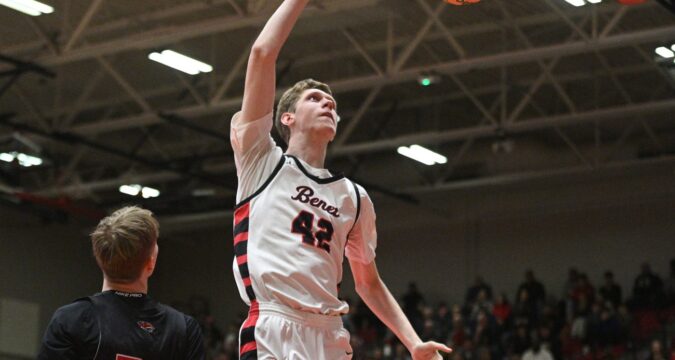
Benet’s Colin Stack puts on a dunkathon against Yorkville. Is the 7-footer the ‘best big man in the state’?
Few high school basketball teams have a unicorn like Benet’s Colin Stack.
The 7-foot-1 senior center is a matchup nightmare for opponents, and the problem he poses is getting worse with every game.
Smaller defenders — and they are always smaller than Stack — are faced with a catch-22 whenever another Benet player drives into the lane.
“We always know if we attack the rim that his guy will either have to help or I have the layup,” Benet junior forward Edvardas Stasys said. “If he comes and helps, it’s a dump-off to Stack, and we know how that goes — it’s a dunk every time.”
That’s not much of an exaggeration, as Yorkville found out Tuesday night. The North Dakota State-bound Stack took a pass from Stasys and dunked in emphatic fashion for the first basket of the game.
On the next possession, Stack dunked again, this time on an alley-oop toss from senior guard Jayden Wright, an Eastern Illinois recruit. Then Stack rebounded a missed shot from Yorkville star Joey Jakstys and fed junior forward Perry Tchiegne for a layup.
It was all part of an opening 17-3 run by the top-seeded Redwings, who rolled past the 13th-seeded Foxes 67-30 in a Class 4A Bolingbrook Sectional semifinal game.
Stack had five dunks and finished with 12 points and five rebounds for defending state champion Benet (33-1), which advances to play second-seeded Neuqua Valley (32-1) or third-seeded Bolingbrook (24-7) in the sectional final at 7 p.m. Friday. The 6-8 Stasys added two dunks and led all players with 19 points, nine rebounds and four steals.
“He makes a huge impact rebounding-wise, finishing around the rim,” Stasys said of Stack. “It’s difficult for opposing teams to match up with because, me and him, we’ve got some pretty good size. So that plays to our advantage.”
Stack gives the Redwings a huge advantage, especially when he scores early, as he did against the Foxes (16-13).
“I’d say it gave me adrenaline more than momentum,” Stack said of his first dunk. “But I just play off my teammates.
“I’m very confident that when they come in the lane, my guy is either going to rotate, or they are going to play the layup and I’m going to be on the glass getting a putback. So I just know my role, and I’ve just got to stay active on the glass. That’s the main thing for me right now.”
Stack’s presence at both ends of the floor frees up space for his teammates to do their thing. Wright scored 10 of his 12 points in the first half and added three assists, including a lob off an inbounds pass that Stasys tipped in at the buzzer to give Benet a 31-9 lead.
The Redwings made 29 of 52 shots, including 10 of 13 in the third quarter, which ended with Stack slamming home a feed from junior guard Blair Fagbemi to extend the lead to 55-24.
“Colin is a great player,” Benet coach Gene Heidkamp said. “Sometimes I think he’s underrated or underappreciated even though to me he’s the best big man in the state.
“Now I’m biased, obviously, but I also see it every day. He’s a winning-type player, and it impacts the game on so many different levels.”
Benet’s Colin Stack (42) handles the ball on a fast break during a Class 4A Bolingbrook Sectional semifinal game against Yorkville on Tuesday, March 3, 2026. (Steve Johnston / Naperville Sun)
Stack, a three-year starter, has improved his game in so many ways that it’s hard to know which aspect to mention first. He’s stronger, more astute and much more mobile than he was two years ago.
“My sophomore year, I wasn’t as athletic,” Stack said. “I was more skinny, but I would have to say my anticipation grew.”
That’s true even outside of the paint. Stack can guard smaller players on the perimeter, making it difficult for teams to get off shots. In practice, he matches up against Stasys or 6-6 junior Cormac Hanus.
“I would say they were major factors in why I got more mobile,” Stack said. “Cormac is a lefty, and if he played at a DII or DIII level, he’d probably play a 3 or 4, so I’m chasing him around during practice.”
The Redwings are chasing their second straight state title, and Stack is a major reason why they are favored to win it.
“I know how hard he works,” Stasys said. “I know what type of player he is. It’s cool that he gets to show everyone how good of a player he truly is.”
Matt Le Cren is a freelance reporter.
https://www.chicagotribune.com/2026/03/04/4a-high-school-basketball-yorkville-benet-colin-stack/
Big Ten Tournament preview: Have the Illinois women locked up an NCAA bid? Can anyone stop UCLA?
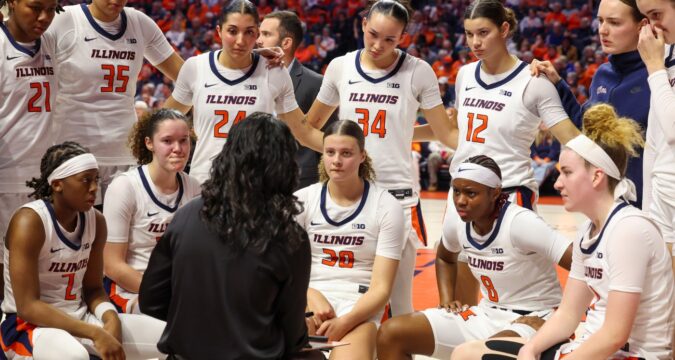
Illinois coach Shauna Green has no doubts — despite a pair of close losses to ranked teams to end the regular season — that the Illini are an NCAA Tournament team for the second year in a row.
Bracketologists seem to agree. ESPN projects Illinois as a No. 8 seed, one of 12 Big Ten teams it predicts to make the tournament.
But the Illini (19-10, 9-9), who lost by four to No. 9 Iowa and by five to No. 19 Minnesota last week, certainly can help their case by pulling off a couple of wins this week in Indianapolis at the Big Ten Tournament.
“There’s no doubt in my mind we’re an NCAA Tournament team and deserve to be in,” Green said Sunday at her news conference after the loss to Minnesota. “I think we can beat anyone we play. I have that much faith and belief in our team.
“And our team believes that. We know that. We’ve shown that. We’ve competed. We just need to continue to grow and clean some stuff up, and we’ll work as hard as we can to do that.”
Green wasn’t happy with her team’s defense and rebounding against the Golden Gophers. But she told reporters Tuesday the team quickly turned the page, skipping player film sessions on that game to move directly into tournament prep.
The recent losses dropped the Illini to the No. 10 seed in the conference tournament, and they’ll play 15th-seeded Wisconsin in the first round Wednesday at Gainbridge Fieldhouse. The Illini beat Wisconsin 92-60 on Feb. 11 in Champaign, but Green doesn’t think that was indicative of the type of game they could get this week against the Badgers (13-16, 5-13).
The winner moves on to play seventh-seeded Michigan State on Thursday.
The Illini received some good news as they enter the postseason: Three players were honored with Big Ten awards Tuesday. Sophomore forward Berry Wallace was named first-team All-Big Ten by coaches after averaging 18.8 points in a breakout season. Forward Cearah Parchment and guard Destiny Jackson were named to the all-freshman team.
Here are some other things to watch in the Big Ten Tournament, which opens with three first-round games Wednesday and concludes with the championship Sunday.
The favorite
Illinois’ Lety Vasconcelos, left, and Cearah Parchment battle UCLA center Lauren Betts for a rebound Jan. 28, 2026, at the State Farm Center in Champaign. (Stacey Wescott/Chicago Tribune)
Can any team stop UCLA this week in Indianapolis?
The Bruins, ranked second in the nation behind Connecticut, went 18-0 in conference play, the first undefeated Big Ten season since Maryland in 2014-15. They won their conference games by an average of 25.2 points, and only two teams lost by single digits: No. 11 Ohio State and No. 8 Michigan. The Wolverines came closest to an upset, losing 69-66 on Feb. 8.
It’s no surprise the Bruins nearly swept the major conference awards.
Cori Close won Coach of the Year. Lauren Betts, a 6-foot-7 senior center, became the first woman to win Player of the Year and Defensive Player of the Year in the same season. Angela Dugalić, a graduate forward from Maine West, was Sixth Player of the Year.
Only USC guard Jazzy Davidson prevented the sweep by winning Freshman of the Year.
UCLA won the Big Ten Tournament last year and advanced to the Final Four, but Close said this is the best team she has coached, noting the Bruins’ maturity, versatility and depth that have helped forge a 22-game winning streak.
“The biggest thing I told them in the locker room that we have to keep doing is surrender the outcome, focus on our growth,” Close said Sunday after a 73-50 rout of USC. “The pressure comes in when we start thinking like that. Like, ‘Oh, my gosh, we have to do this.’ If you put energy there, you’re taking energy away from actually what it takes to get there.
“It sounds like such boring coach-speak about, ‘Focus on the process.’ But I truly believe that is the key to this team playing its best basketball in the most pressurized moments.”
Next in line
Iowa center Ava Heiden goes to the basket against Michigan forward Ashley Sofilkanich (15) and guard Olivia Olson on Feb. 22, 2026, at Carver-Hawkeye Arena in Iowa City. (Matthew Holst/Getty Images)
While UCLA is the clear favorite, Michigan and Iowa — with identical 24-5, 15-3 records — check in as the likeliest challengers after closing out the regular season ranked eighth and ninth in the Associated Press poll.
First-team All-Big Ten guard Olivia Olson, who was the Big Ten Co-Freshman of the Year last season, leads the Wolverines with 19.6 points, 6.2 rebounds, 2.7 assists and 1.8 steals per game. Sophomore guard Syla Swords also was named to the all-conference first team.
Iowa was the last team to beat Michigan, 62-44 on Feb. 22. The Hawkeyes, led by 6-4 center Ava Heiden, also a first-team All-Big Ten selection, have outperformed preseason expectations, leaving some to argue Jan Jensen’s case for Coach of the Year in her second season at the helm.
Players to watch
USC’s Jazzy Davidson shoots over Northwestern’s Casey Harter on Feb. 5, 2026, at Welsh-Ryan Arena in Evanston. (Zoe Davis/Getty Images)
The biggest names are all out of LA this season.
UCLA’s Betts has been the focus of national media attention all season, and last year’s national defensive player of the year hasn’t disappointed. Betts averages 16.3 points, 8.8 rebounds, 3.2 assists and two blocks.
Fellow senior Kiki Rice has complemented her play with 15.2 points, 6.2 rebounds and 4.4 assists per game. They are two of six seniors and grad students leading the Bruins this season, and Close marveled at how they have made it work.
“When you have six players projected to be drafted, it would be so easy to be like, ‘I’ve got to snag mine,’” Close said. “But they have resisted that temptation over and over again and said, ‘No, no, I choose us. That is more important to me.’ They trust it will come back to them tenfold in the end.
“That’s not easy. That’s not easy for a 54-year-old adult, let alone the 18- to 23-year-olds we have.”
Davidson, who stepped up to lead USC with JuJu Watkins out this season with a torn ACL, has been impressive as a freshman, averaging 17.9 points, 5.9 rebounds, 4.3 assists and two steals.
Big Ten Tournament schedule
Gainbridge Fieldhouse, Indianapolis
Wednesday’s first round
All games streaming on Peacock
(12) Nebraska vs. (13) Indiana, 2:30 p.m.
(10) Illinois vs. (15) Wisconsin, 5 p.m. (approx.)
(11) Oregon vs. (14) Purdue, 7:30 p.m. (approx.)
Thursday’s second round
All games on Big Ten Network and the Fox Sports app
(8) Washington vs. (9) USC, 11 a.m.
(5) Ohio State vs. 12-13 winner, 1:30 p.m. (approx.)
(7) Michigan State vs. 10-15 winner, 5:30 p.m.
(6) Maryland vs. 11-14 winner, 8 p.m. (approx.)
Friday’s quarterfinals
All games on BTN and the Fox Sports app
(1) UCLA vs. 8-9 winner, 11 a.m.
(4) Minnesota vs. 5-12/13 winner, 1:30 p.m. (approx.)
(2) Iowa vs. 7-10/15 winner, 5:30 p.m.
(3) Michigan vs. 6-11/14 winner, 8 p.m. (approx.)
Saturday’s semifinals
All games on BTN and the Fox Sports app
First two quarterfinal winners, 1 p.m.
Last two quarterfinal winners, 3:30 p.m. (approx.)
Sunday’s final
Semifinal winners, 1:15 p.m., CBS-2
https://www.chicagotribune.com/2026/03/04/big-ten-womens-basketball-tournament-preview/
No. 13 Duke chases 2nd straight ACC tourney title, but Notre Dame features the event’s star — Hannah Hidalgo
Duke ended the regular season sitting right where the 13th-ranked Blue Devils were expected to be in the Atlantic Coast Conference: atop the standings.
The journey there was hardly direct, down to those final steps heading into this week’s ACC Tournament as the reigning champion and No. 1 seed.
Coming off a trip to the NCAA Elite Eight, the Blue Devils started 3-6 against a wicked nonconference schedule as the headliner in the league’s bumpy overall start. They regrouped to win 17 straight and take control of the ACC race despite an injury-shortened rotation — only to lose two of their last three and ultimately back into the outright regular-season crown when No. 12 Louisville lost its finale against Notre Dame.
Last year’s ACC title marked the first for Duke since 2013. The Blue Devils (21-8, 16-2) chase another against a field that includes the Cardinals and No. 16 North Carolina as play begins Wednesday in Duluth, Georgia.
“I don’t want an extra brownie from you guys for it,” coach Kara Lawson told reporters after Sunday’s loss to the rival Tar Heels. ”But what I’m saying is: I’m proud of my team how — on the fly to lose three players to season-ending stuff, with seven players —we were able to navigate the 18-game schedule and win the league.
“We always tell the truth to them,” Lawson added. “Hey, ‘Here’s where we broke down.’ But hey, ‘Here’s what you’ve done well. And here’s what we need you to carry over into the postseason.’”
Duke’s loss at UNC gave the second-seeded Cardinals (25-6, 15-3) a chance to claim a share of the regular-season crown. And like Duke, Louisville has lost two of three.
First they rallied from 13 down before losing on a late 3-pointer at home to Virginia on Feb. 22. They squandered a 60-56 lead with 4:59 left and failed to hit another basket in Sunday’s home loss to the Fighting Irish.
“You’ve got to be able to finish it off,” coach Jeff Walz said.
Ascending Tar Heels
The third-seeded Tar Heels (25-6, 14-4) have won 12 of 13 games since mid-January. The lone loss was at Duke.
The starting point was regrouping from a 23-point loss at Notre Dame on Jan. 11, a performance in which coach Courtney Banghart said her team “never even got off the plane.”
“This is a team that we’d lose, we would be so obsessed on every statistical category: we’ve got to outrebound, we’ve got take more shots, we got to turn it over less, we gotta get more steals,” Banghart said. “It’s like, ‘No, you don’t, actually.’ Just win as many statistical categories as you can and we’ll see how it all plays out.”
UNC hit a program-record 16 3-pointers at Virginia then eight more against Duke to close the regular season, while point guard Elina Aarnisalo has posted new career highs in each (20 points against Virginia, 22 against Duke).
Star watch
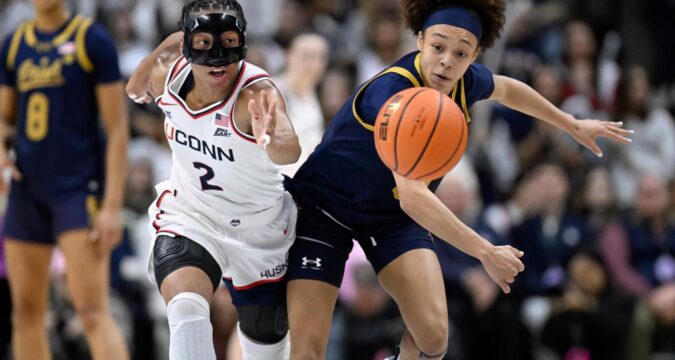
Notre Dame guard Hannah Hidalgo is the tournament’s top star as a two-time Associated Press first-team All-American. Two years ago, she was the fearless freshman who led Notre Dame to the ACC Tournament title and claimed MVP honors.
She enters the week as the nation’s No. 3 scorer (25.2) and steals leader (5.59) for the fifth-seeded Irish. She’s coming off a huge showing (30 points, 10 rebounds, seven assists and five steals) against Louisville.
Postseason prospects
The league has nine teams in Tuesday’s ESPN Bracketology projected NCAA Tournament field, headlined by Duke and Louisville as regional 3-seeds. UNC is a 5-seed but has a chance to move into a top-16 overall seed and host opening-week March Madness games.
College basketball conference tournaments: When will women’s automatic NCAA bids be handed out?
There are also two notable bubble situations to monitor in Clemson and Virginia, with both currently projected in by ESPN. The Cavaliers are chasing their first bid since 2018, which is their lone bid since 2010. The Tigers are chasing only their second bid since 2002, the other coming in 2019.
The schedule
Wednesday’s first round begins with 12th-seed Miami facing 13th-seed Stanford in the first of three games. Thursday’s second round is headlined by No. 5 seed Notre Dame, followed by No. 6 seed Virginia Tech and No. 7 seed Syracuse.
Duke, Louisville, UNC and fourth-seeded N.C. State open play in Friday’s quarterfinals, with the semifinals Saturday and the title game Sunday.
Tournament notes
This is the second time the ACC Tournament won’t have an AP Top-10 team since 1985. The other came in 2000, when No. 12 Duke was the highest-ranked team. … Boston College, Pittsburgh and SMU didn’t qualify for the 15-team event. … This is the 49th annual tournament as the nation’s oldest Division I women’s tournament, the first coming in 1978. … This is the first year the tournament will be held outside the Carolinas since moving to a neutral-site format for 1983 after beginning at campus sites. Greensboro, North Carolina, has been its longtime home by hosting every year but once dating to 2000.
AP freelance writer Steve Bittenbender in Louisville, Kentucky, contributed to this report.
https://www.chicagotribune.com/2026/03/04/acc-tournament-womens-basketball-notre-dame/
3 takeaways at Chicago White Sox camp, including Sean Newcomb competing for a spot in the rotation
GLENDALE, Ariz. — Manager Will Venable talked early on in Chicago White Sox camp about the habits the team wanted to create.
“These guys have done a great job in their pregame work, going and doing those things and making sure they are a priority in the games as well,” Venable said Sunday at Sloan Park in Mesa, Ariz. “Fielding our position with these pitchers, the way they are controlling the running. Our hitters busting out of the box.
“We are seeing some of these things in game, which is awesome. Now layering in some of the strategic stuff, first-and-third offense, other controlling of the running game stuff we have. We are really excited about where the guys are at.”
The schedule allowed for a brief break on Wednesday as the Sox had the day off. But here are three takeaways from recent activities at camp.
1. The competition for rotation spots continued with Sean Newcomb ‘able to mix and fill up the zone.’
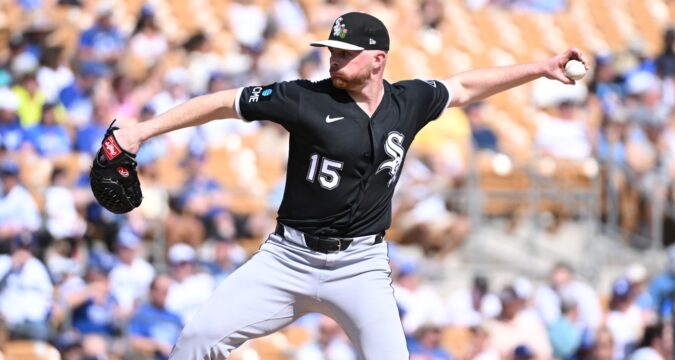
Chicago White Sox’s Sean Newcomb pitches during live batting practice at spring training at Camelback Ranch in Glendale, Ariz., on Wednesday, Feb. 18, 2026. (Eileen T. Meslar/Chicago Tribune)
The Sox are stretching out a number of pitchers as they work to build their rotation.
Sean Newcomb got the start Tuesday against the San Diego Padres at Camelback Ranch and allowed two runs on five hits with one strikeout and one walk in three innings.
“I was able to mix and fill up the zone a little bit better this time, so it felt good,” Newcomb said of his second spring outing.
The list of pitchers being stretched out includes Newcomb, Shane Smith, Anthony Kay, Davis Martin, Chris Murphy, Mike Vasil, Sean Burke, Jonathan Cannon and Erick Fedde.
Newcomb signed a one-year deal with the Sox in the offseason. He has experience as a starter and reliever.
“I was throwing the ball well last year and just being able to translate that over to this season in any fashion is my goal,” Newcomb said. “I don’t really look at it as a role necessarily, just kind of getting the ball and putting up zeroes.
“I’ve always been comfortable getting toward 100 pitches and being able to maintain my stuff. I feel that’s pretty valuable.”
2. Luisangel Acuña remained sharp after being briefly sidelined.
Chicago White Sox second baseman Luisangel Acuña walks off the field in the first inning during a spring training game against the Cincinnati Reds, Wednesday, Feb. 25, 2026, in Phoenix. (AP Photo/Brynn Anderson)
Luisangel Acuña found ways to stay sharp after missing a couple of games while recovering from a cut above his left eyebrow, which he suffered after sliding safely into second base during a steal attempt on Feb. 25, resulting in four stitches.
“I didn’t leave my focus during the days I wasn’t playing,” Acuña said through an interpreter on Tuesday. “I was still working out and doing all my stuff. I was going to the cage with a purpose and I was able to execute the job that I was doing in the cage and the drills I was practicing.
“It felt good, coming back (Monday) and being able to play and have the results.”
Acuña had two hits, including a solo home run, and two RBIs on Monday against the San Francisco Giants at Camelback Ranch.
The infielder/outfielder has spent plenty of time this spring in center field and is an option at the position formerly occupied by Luis Robert Jr. The Sox acquired Acuña in the trade that sent Robert to the New York Mets.
“I feel very comfortable (in center field),” Acuña said. “And I’m very happy to play there.”
There was some injury news for the Sox on Tuesday as reliever Wikelman González exited the game against the Padres with tightness in his lower back. The Sox said the right-hander is day to day.
3. Prospects are continuing to perform solidly at camp.
Chicago White Sox’s Braden Montgomery takes live batting practice during spring training at Camelback Ranch in Glendale, Ariz., on Tuesday, Feb. 17, 2026. (Eileen T. Meslar/Chicago Tribune)
Outfield prospect Braden Montgomery followed up Sunday’s two-hit day against the Cubs, which included a home run, with a single Monday against the Giants. He’s 6-for-15 this spring (.400).
After reaching Double A last year, Montgomery is likely to start this season in the minors. He was asked Sunday if the overall goal is to make the team, and Montgomery looked at the bigger picture, saying the overall goal was to make the Hall of Fame.
He listed Derek Jeter as one of the players who inspired him growing up.
“Obviously it’s not even day one of my big-league career yet, but I take it day by day,” he said. “If I can stack good days on good days, I’m sure the results at the end of it will be something I can live with.”
Venable said Montgomery’s answer was “awesome to hear.”
“He’s one of those guys where if that’s what he thinks, that’s what he’s working for, I just want to support him to do that,” Venable said Monday.
Infielder Sam Antonacci is another prospect having a strong camp, going 4-for-13 (.308) while being tied for the team lead with two home runs.
“He’s locked in and he has one speed, and that’s all the way,” Venable said Sunday. “It’s great to see, it really sets an example for our guys and what it’s supposed to look like.”
Antonacci is currently with Team Italy for the World Baseball Classic.
“We have a good understanding of where he’s at, certainly the assessment of him is — I don’t want to say frozen in time — but we like Sam, he’s in a good spot,” Venable said.
“Whatever that means for him, joining us whether it’s opening day or later in the year, he’s going to be someone that is going to contribute regardless of how he plays with Team Italy or the rest of camp.”
https://www.chicagotribune.com/2026/03/04/chicago-white-sox-sean-newcomb-rotation/
Chicago Bears Q&A: What are the odds DJ Moore is traded? What to make of Drew Dalman’s decision?
The Chicago Bears got stunning news Tuesday — just eight days before the start of free agency and the new league year — with reports that Pro Bowl center Drew Dalman has decided to retire at age 27.
Brad Biggs addresses the Dalman situation as well as DJ Moore’s status, Maxx Crosby trade possibilities and much more in this week’s Bears mailbag.
What are the odds DJ Moore gets traded at this point? My guess is like 80/20 in favor of trading him. — @oltmannsean
That’s a good question. It’s a little tough to read right now, but my lean would be something in that range. Maybe more like 65/35? I say that because the Bears have been very open about the possibility of dealing him, and when that happens, the player often winds up moving on. If the Bears felt strongly that Moore would be on their roster this coming season, their comments would have carried a different substance and tone.
“I have to have conversations to see what the best combination of players we can bring in (is),” general manager Ryan Poles said last week at the NFL scouting combine. “We want him here. We think highly of him. He’s a great teammate. He has been productive pretty consistently over the last (three) years he’s been here. So I have nothing but great things to say about him.
“But this is the time where we have to look at all the different scenarios to see what can allow us to put the best team out there. And I’ve talked about this before. There are relationships there. There’s a lot there that makes it really, really difficult. He’s a guy we want here. But we have to look at all the different scenarios.”
I don’t think Poles gets enough credit for being as transparent as possible most of the time. Ask a direct question, generally you get a direct response. That’s not always the case because he’s mindful of treating his players with respect, but I can tell you that a lot of other GMs around the league serve up much more word salad when responding to questions than Poles.
Poles and coach Ben Johnson were being authentic, too, when they talked about their affinity for Moore and what he brings on the field and in the locker room. He’s a team-first guy who doesn’t bring attention to himself. He backed Justin Fields to the very end, even though it was apparent the quarterback did not have a future with the organization.
If the Bears trade Moore, it’s because they have a clear plan for how to earmark the $16.5 million cap savings. It’s not addition by subtraction; it’s trading Moore to add Player A or Players A and B at other positions. So there are a lot of moving parts, and it’s this part of the equation that we’d only be guessing about.
A group of personnel men whom I chatted with in Indianapolis thought Moore’s contract would make it challenging for the Bears to find a trade partner. Others believed he would have decent value on the trade market. Just know there was a wide spectrum of opinions on this.
I’d remind you that whether you’re 80/20, 65/35 or somewhere else on the Moore situation, there’s certainly a scenario in which he’s on the roster in the 2026 season.
If you’re Ryan Poles, are you trying to package both Tremaine Edmunds and DJ Moore to Las Vegas with a pick to get Maxx Crosby? Or are you gonna trade them separately? — @kaihayes44
Raiders defensive end Maxx Crosby smiles and waves to fans during a game against the Patriots on Sept. 7, 2025, at Gillette Stadium in Foxborough, Mass. (Winslow Townson/AP Images for Panini)
Sure, that makes a world of sense from the Bears’ perspective. The best intel I can provide you right now is either the Bears are among a small group of teams exploring the possibility of a trade for Crosby, or someone (the Raiders?) is doing a good job of convincing people they are.
Let’s flip it around and examine this from the Raiders’ perspective. Fox Sports’ Jay Glazer reported a month ago that he expects Crosby to be dealt and indicated Las Vegas would aim for a huge return, loosely referencing the two first-round picks and defensive tackle Kenny Clark that the Dallas Cowboys received from the Green Bay Packers in exchange for Micah Parsons.
Glazer has a pretty damn good batting average. We all can agree on that. If the Raiders are motivated to trade Crosby in a rebuilding effort with new coach Klint Kubiak, how do Moore, who turns 29 in April, and Edmunds, who is under contract for one more season at $15 million, fit in their plans? They would be add-ons to a deal, in my opinion.
If Moore isn’t viewed as a true “No. 1 receiver” for the Bears, is he viewed differently by the Raiders? Las Vegas needs offensive help for presumed No. 1 pick Fernando Mendoza, and maybe Moore fits. It’s a good draft for wide receivers with a lot of depth, and there are interesting possibilities in free agency, including Alec Pierce, Romeo Doubs, Jauan Jennings and Rashid Shaheed.
Maybe the Bears can get something in return for Moore, and Ryan Poles certainly did nothing to tap the brakes on that possibility. I’m skeptical the Bears can get something back for Edmunds, but you never know.
If the Raiders wind up moving Crosby — and that would be my wager at this point — they’re going to wait until a team blinks and puts together an offer they cannot refuse. I think they stand firm, seeking maximum draft capital in return to restock a roster with holes all over the place. That price might not reach what the Cowboys got for Parsons. To address your question, maybe including Moore in a package headed by draft picks would put the deal over the top.
Las Vegas has five assistant coaches who were with the Bears in 2023, including offensive coordinator Andrew Janocko. So if the Raiders want opinions on what Moore and Edmunds are like in the building and on the practice field, that’s easy.
Here’s the question I would have: Could the Bears make a deal for Crosby and feel comfortable in being able to build out the rest of their roster in the next two to three years, considering the potential cost and salary-cap implications moving into 2027 and 2028? They don’t have the kind of building blocks on defense that they possess on offense right now.
It’s not an all-or-nothing proposition for the Bears with developing quarterback Caleb Williams headed into his third season.
Crosby, who turns 29 in August, is under contract for four more seasons with base salaries totaling $112.93 million. In a world in which the Bears trade for him, they probably could restructure the contract to create some cap savings on the front end. Poles talked at the combine about the challenges of winning now, building a sustainable roster and maintaining flexibility moving forward. Dealing for Crosby would be a huge win-now move that would complicate the ability to accomplish the latter two goals.
Remember, this is a really good draft for defensive linemen, especially edge rushers. That’s a factor many clamoring for a Crosby trade omit. As long as Crosby is listed on Las Vegas’ roster, there will be rampant speculation, and it’s reaching a crescendo as the new league year approaches. What’s the price and what are the implications in paying that price? How does the Bears’ plan shift if Crosby is on board?
History tells us that the last blockbuster trade the Bears made with the Raiders did not deliver the expected results. They didn’t win a playoff game with Khalil Mack, whom they acquired in 2018, and had only one winning season.
If the Bears believe they’re in a different position now — with a better quarterback and coach — perhaps they take the plunge.
Holy smokes. What do you make of the retirement of Drew Dalman after a Pro Bowl season? He was such a great signing and now Ryan Poles is back to square one at center. — John L., Roselle
Bears center Drew Dalman waits to snap the ball in the first quarter against the 49ers on Dec. 28, 2025, in Santa Clara, Calif. (John J. Kim/Chicago Tribune)
The Bears will have a different starting center in Week 1 for the fifth consecutive year after the abrupt news Tuesday, first reported by ESPN’s Adam Schefter, that Dalman is retiring. While the transaction did not make the league’s personnel notice, it is expected to before the new league year starts next Wednesday.
Which positions were a huge focus at this time a year ago, one week before the start of free agency? Center, left tackle, edge rusher, defensive tackle. In some respects, the Bears are in the same situation. Indications are they’re hopeful Ozzy Trapilo, when healthy, will have a shot at nailing down the left tackle spot. But that’s a question for the start of next season, and now the Bears have a pressing need at center.
It was a vexing position for the Bears for a long time. They were frustrated in multiple searches for the right player, and that’s why landing Dalman on a three-year, $42 million contract (he was paid $18 million in 2025) was such a huge move. He fit what they wanted to do offensively and was a great asset in the run game.
As best I understand it, the Bears were aware this was a possibility — even a probability — but that won’t make replacing him easier. They’re fortunate Dalman reached this decision at the start of the offseason and not in training camp.
The challenge is for Ben Johnson and Ryan Poles to find someone who can take all the stuff off Caleb Williams’ plate that Dalman did so well. That’s calling protections and organizing things at the line of scrimmage, crucial stuff to the success of the offense.
The Baltimore Ravens’ Tyler Linderbaum is among the best of a watered-down free-agent class. He might be the best center in the league, but he could get in excess of $20 million annually in free agency. Former Washington Commanders center Tyler Biadasz reportedly visited the Bears. The Commanders released him last week, and the word is they want to lean into more of an outside zone running scheme. I’m not sure that makes him a great fit, but the Bears need to consider a variety of options and price points.
Make no mistake, the Dalman news created waves across the league and stunned folks who work for other teams. Players will tell you that every now and then they encounter a veteran who was just working to get to the financial security of a second contract before more or less mailing it in. Their heart isn’t in it and the game doesn’t run in their blood. I don’t think that was the case with Dalman at all. He didn’t shortchange the Bears last season. He was on the field for every offensive snap.
For whatever reason, he decided it was time, and there’s something to be said for walking away on your own terms even if it’s a move that makes others uncomfortable.
What are your thoughts on the Bears trading down? I always like the idea of collecting extra second- or third-round picks. With the 25th pick, it seems like a good idea. — Chip P., Crystal Lake
I know this: The number of questions and emails suggesting it’s a good idea for the Bears to stay put in Round 1 is substantially lower than those suggesting a move up or, in this case, a move back.
All kidding aside, it’s a process every team conducts as the draft draws closer. What pool of players might be available with the pick? What would be the cost to move up, if there’s a player (or players) worth exploring a little bit higher on the board? How deep would the pool of players be if a team moved back?
In a perfect world, maybe the Bears eye a deep enough collection of players around No. 25 that they feel confident they could get one of them closer to the end of Round 1. In that scenario, maybe they trade back a few spots, pick up a little something and have a chance to get one of their guys. By staying in Round 1, they would get the fifth-year option in a contract for their first pick, which has some value to the team.
With a large amount of the Bears’ offseason resources expected to be used on the defense, where do you see the team making minor moves on the offense outside of left tackle? — @sir_daniel13
Bears offensive lineman Luke Newman listens to directions during minicamp at Halas Hall on June 4, 2025, in Lake Forest. (Stacey Wescott/Chicago Tribune)
Your question came in before the news Tuesday that center Drew Dalman is walking away with two years remaining on his contract. That’s a situation that has to be addressed, and Dalman’s departure clears $10 million in cap space — possibly more if the team pursues $4 million of the $6 million signing bonus he received a year ago.
That’s a first order of business, but don’t discount the possibility Luke Newman, a sixth-round pick last year, could figure in the mix at center. The Bears were really pleased with his development last season, and I got the idea he could challenge for a job on the interior when a need arose. That need is coming sooner than anyone figured.
After the center and left tackle situations, I think you’re looking at depth pieces for the offense. As significant as the tight end is to the offense, maybe a combination of a veteran and a draft pick joins the mix. I could see the Bears considering a reunion with Durham Smythe, who was on a one-year, $2.5 million contract last year, and then maybe adding a developmental tight end on Day 3 of the draft. It’s a good class at the position, and adding more youth to the mix could be a goal.
Otherwise, maybe a running back for depth purposes, especially considering D’Andre Swift will be entering the final year of his contract. And then more offensive linemen. The Bears simply cannot have enough big bodies. Restricted free agent Jordan McFadden might be a player they’d like back in the fold.
Let’s see what happens at quarterback. If the Bears don’t trade Tyson Bagent this offseason — and I left Indianapolis with the vibe that they would need to get a pretty solid return — they might be more inclined to make that move a year from now, as he’s signed through the 2027 season. If that’s the case, what about finding a young quarterback to add to the pipeline?
We’ll have to see what happens with veteran Case Keenum, but if he’s not back on the roster, the Bears will need a quarterback. You’d imagine they have done at least some work on potential veteran options, especially if they’re taking calls on Bagent.
The Bears have a clear need at several positions, one being linebacker. Given this upcoming draft class seems to be pretty strong at the position, can you see the Bears possibly double dipping at linebacker if they can somehow address other needs in free agency? — @da_logical_bear
It’s possible, but there’s a much greater chance they select two defensive linemen than two linebackers. If the Bears re-sign D’Marco Jackson — and he earned a nice little pay raise with how he played last season — they could fortify the position with one linebacker via the draft because there’s confidence T.J. Edwards will be healthy at some point during the offseason.
We’ll see what the market is for Jackson. I’d imagine he can get a deal for $3 million, maybe $4 million a season. My best guess is there will be some combination of a veteran addition and a draft pick after Tremaine Edmunds moves on.
Can the Bears clear up cap space by extending Darnell Wright? — @kavanpuri
Bears offensive tackle Darnell Wright heads to the locker room after a 31-28 win over the Steelers on Nov. 23, 2025, at Soldier Field. (John J. Kim/Chicago Tribune)
That’s a good question. No, the Bears would not be able to lower Wright’s cap number of $6.67 million for this season by signing him to a long-term extension. That doesn’t mean working on a multiyear deal for Wright isn’t a good idea. The team is fully expected to exercise the fifth-year option in Wright’s contract, and an extension could lower the cap hit for 2027. The option year for Wright, the 10th pick in the 2023 draft, is expected to be about $20.5 million.
If the Bears are able to extend Wright this year, they likely would be able to save a little money down the road because — as you see with the salary cap each year — prices keep going up. Wright’s game reached a new level this past season, and remarkably you can make a case he was better after suffering a torn UCL in his right elbow, forcing him to play with a brace. While Wright indicated some uncertainty about a plan for the elbow when the season ended, it sounds like there’s belief the injury will scar over and surgery won’t be required.
The only knock on Wright from last season is he had 12 penalties, tied for second in the league. That’s something I’m sure Wright and offensive line coach Dan Roushar believe can be cleaned up. A second contract for Wright isn’t a front-burner issue for Ryan Poles at this time, but there’s a decent chance the team explores one at some point in the offseason or training camp.
I was looking through past combine results and found it interesting Jeff King had the sixth-fastest shuttle time in combine history for tight ends. What are some drills and workouts you think could indicate success at the next level? — Mike F., Chicago
File this under the category of learning something every day. King, the Bears’ newly promoted assistant general manager, had a 4.09-second short shuttle at the 2006 combine before the Carolina Panthers picked him in the fifth round. It’s one of the top 10 times by any tight end since.
The short shuttle and three-cone drills are important for tight ends to determine short-area speed because that’s what is required for them to be able to uncover and work back to the football. A tight end with poor short-area speed has to be a savvy route runner and use his body to create separation.
The best receiving tight ends in the league generally have good short-area speed, and that’s an indication of how loose they are in their lower half. Poor short-area speed isn’t necessarily a fatal flaw, but it can signal a player will have a difficult time getting open against NFL coverage.
Those are two timed speeds to keep an eye on if you’re evaluating tight ends. Sure makes you wonder how King might have performed if he had been in a modern passing offense that highlights the position.
Do you think C.J. Gardner-Johnson could come back as a Jaquan Brisker replacement at safety and play CB if Kyler Gordon gets injured again? Might be able to keep him for a cheaper deal. — @bears_dubz
Bears defensive back C.J. Gardner-Johnson sacks Giants quarterback Russell Wilson on Nov. 9, 2025, at Soldier Field. (Dominic Di Palermo/Chicago Tribune)
To me, the first order of business at safety is seeing if the team can get a deal done with Kevin Byard III after his All-Pro season. If the Bears are successful in luring Byard back, I’d expect the next significant move at the position to be drafting a safety.
We’ll see what shakes out with Byard. The team has expressed a desire to bring him back. Keep in mind that any money spent to retain Byard should be considered a part of free agency because that would represent a signing to prevent a player from leaving on the open market.
I wouldn’t rule out Gardner-Johnson returning, but he’s the kind of depth piece I think the Bears would have to get at their price. They paid him the prorated minimum of $1.17 million last season as the Houston Texans were on the hook for the vast majority of his contract.
Gardner-Johnson signed a three-year, $27 million contract with the Philadelphia Eagles in March 2024 and was traded to the Texans a year later. My hunch is his market would really have to come down from that range for him to be back in a Bears uniform, especially if Byard is re-signed or the Bears go out and pay another safety. The top one on the market is probably Nick Cross of the Indianapolis Colts.
Any word if Ben Johnson and Ryan Poles are considering making any changes to the training and conditioning staff after the wave of soft-tissue injuries last year, particularly in the back seven? — @jtbcubs
They haven’t made any moves to this point, and when Poles was asked about injuries last week, he didn’t give any indication that staff turnover could be coming.
Related Articles
Gov. JB Pritzker, Mayor Brandon Johnson keep up Bears stadium pitches
Pro Bowl center Drew Dalman is retiring at 27 — adding to the Chicago Bears’ offseason needs
Detroit Lions trade RB David Montgomery — stuck behind Jahmyr Gibbs — to Houston Texans
Trade up, trade down or stand pat? 3 questions facing the Chicago Bears with the No. 25 pick in the NFL draft.
Some Indiana taxpayers not as thrilled by Chicago Bears stadium plan as lawmakers
I will say the idea the Bears had an epidemic of soft-tissue injuries is a little overblown. They had three defensive players miss significant time because of soft-tissue injuries, and one of them, cornerback Jaylon Johnson, arrived for training camp already injured. Nickel cornerback Kyler Gordon has had a history of soft-tissue injuries, and usually durable linebacker T.J. Edwards missed a good chunk of the season.
When injuries occur, folks are fast to point the finger at the training staff and the strength and conditioning coaches. Injuries are a player issue, too, right? There were other players who missed time because of soft-tissue injuries. Linebacker Tremaine Edmunds missed four games with a mild groin injury. He’s another guy who has been highly durable in his career, so it’s hard for me to blame anyone for that. These things happen.
“We look at both from the individual standpoint, how they walked into the injury, (and) we also look at it from our performance team, sports science, digging into any of the things we can do to change the health,” Poles said when asked about soft-tissue injuries last season. “I do think the one factor no one’s really talked about was last year’s unique in the sense that our first bye week was in Week 5 and then we had Friday games, Saturday games, Sunday games — we never really had a Thursday game.
“If you go back to a couple years ago, there’s a really sweet setup that we had — Thursday (game) in the first quarter (of the season), Thursday (game) in the second quarter, bye week the last possible week — and that was the most healthy team that we had.
“I think a little bit of it is schedule, a little bit of it is you do have a new staff. Guys are trying to prove themselves. The output is way higher, which you do try to manage through your sports science, but to kind of sum it up, we look through it from a team perspective of what can we do better. But we have to look at all the factors that could have led to it, too, because just resulting, we don’t want to create some chaos or redo everything because we might be doing the right thing. It was just the scenario and the environment in terms of the schedule.”
Poles made a really good point about it being Year 1 for a new coaching staff. Long ago, there was a rash of hamstring injuries in 2004 during Lovie Smith’s first season as coach when the team was doing a ton of running in training camp. The Bears got healthier in following seasons. No question players were looking to impress new coaches.
Poles didn’t guarantee there won’t be changes, but he certainly indicated the team is looking at the big picture.
https://www.chicagotribune.com/2026/03/04/chicago-bears-mailbag-dj-moore-drew-dalman/
Jadarian Price stuck out playing alongside Jeremiyah Love at Notre Dame. Will both RBs be 1st-round picks?
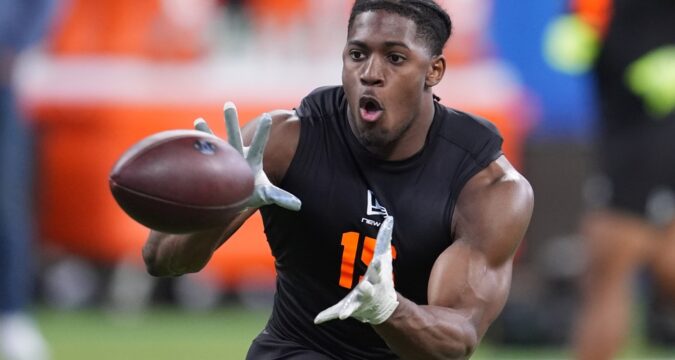
INDIANAPOLIS — As Notre Dame running back Jadarian Price cycled through his NFL scouting combine interviews last week, he received the same question from many teams.
Why didn’t he transfer to a different school to become a featured back?
Price played three seasons in South Bend, Ind., alongside Jeremiyah Love, the 2025 Heisman Trophy finalist whom some analysts call the second-best player in this year’s draft behind Indiana quarterback Fernando Mendoza. That meant a reduced workload for Price and less of a spotlight on his impressive game next to Love’s stunning highlights.
Price had the option to go elsewhere after a sophomore season in 2024 in which he rushed for 746 yards and seven touchdowns for a team that advanced to the College Football Playoff national championship game. But he wanted to stay at Notre Dame. The hardest part of that was telling his mom that he was turning down money from another school to stay.
“That was hard,” Price said Friday at the combine. “Money can be a big thing, but it’s not everything. Money isn’t everything. That was what I truly believed. The brotherhood and people I met at Notre Dame made me a better player, and I wanted to continue that, especially what we had done in the ‘24 season. We had aspirations to go back to the national championship.”
Notre Dame just missed the CFP last season, but Price rushed for 674 yards and 11 touchdowns on 113 carries and had 12 kickoff returns for 450 yards and two TDs.
NFL teams told Price in their meetings that they respect that decision. The question is if the teams respect Price’s game enough to pick him in the first round and give Notre Dame a rare feat of two running backs from the same school going so high.
Draft analysts Daniel Jeremiah of NFL Network and Mel Kiper Jr. of ESPN both rank Price as the second-best running back in the draft behind Love. Jeremiah ranks him as the No. 43 player overall, calling him “a compact running back with terrific vision and balance” and touting his patient running style, reliable hands despite minimal receiving opportunities and ability to identify blitzers in pass protection. Kiper mocked Price at No. 28 to the Houston Texans.
Price said he hoped to address questions about his receiving ability at the combine and in the predraft process. He said teams talked to him in the combine interviews about fumbling issues but also complimented his ability to get downhill quickly.
“JD has the opportunity and the potential to be one of the best running backs in the league,” Love said. “As long as he goes into it with a humble mind and a hunger to work and compete, the sky is the limit for JD. He’s going to do great things in the league and play for a long time.”
Notre Dame running back Jeremiyah Love runs a drill at the NFL scouting combine Saturday, Feb. 28, 2026, in Indianapolis. (Michael Conroy/AP)
The drawbacks to Price playing alongside Love are obvious when it comes to basic draft evaluation.
Love commanded attention — and the football — in 2025, rushing for 1,372 yards and 18 touchdowns on 199 carries and also catching 27 passes for 280 yards and three scores. The best highlight from almost any Notre Dame game was of Love, spinning or hurdling his way through defenders.
“It was a special thing,” Notre Dame wide receiver Malachi Fields said of Love at the combine Friday. “He’s a freak athlete, insane football player. Just knowing whenever he touches the ball he can take it to the house was an awesome thing. It made my job fun out there blocking for him.”
But Price also saw benefits from playing with Love, who was his roommate at the combine, just like he was during road games at Notre Dame.
He said some NFL teams have talked to him about being fresher, having less wear and tear from not having the same workload as a featured back — though he gladly would take on that load in the NFL.
He also said he and Love learned from one another.
“One thing I learned from him is it is football at the end of the day, so you can go out there and play freely, play as a kid,” Price said. “You see how he goes out there and does the moves and just plays proud and lets his talent take over. I learned to do that over my time here and not be so stressed and tense about what I need to do to succeed and just go out there and play.”
Love showcased that attitude Friday when he was asked about the pressure of being a potential top-five pick.
“No pressure at all,” he said. “I’m just being myself. And if people see that as me being a projected top-10 pick or a projected first-round pick, it really doesn’t matter to me. I’m going to go out there and be myself no matter where I go, no matter when my name is called. I’m going to be Jeremiyah Love.
“It’s a great honor seeing people recognize me as such. And I plan to go out there to prove myself right and prove everybody else right as well.”
Price said he received a flood of messages after he and Love declared for the draft, with people telling him how much they enjoyed watching the two play together. He said it made him feel proud of what they did at Notre Dame.
He thinks they’ll be fun at the next level too.
“The things that me and Jeremiyah have done have been great,” Price said. “But we’re going to be great NFL backs.”
https://www.chicagotribune.com/2026/03/04/jeremiyah-love-jadarian-price-nfl-draft/
Agencia del gobierno iraní dice que al menos 1.045 personas han muerto en la guerra por ahora
DUBÁI, Emiratos Árabes Unidos (AP) — Agencia del gobierno iraní dice que al menos 1.045 personas han muerto en la guerra por ahora.
Turquía dice que defensas OTAN interceptaron un misil lanzado desde Irán antes de que entrara en espacio aéreo turco
ANKARA, Turquía (AP) — Turquía dice que defensas OTAN interceptaron un misil lanzado desde Irán antes de que entrara en espacio aéreo turco.

In 2013, CPS tried to ban a book. It didn’t go well. A new graphic novel tells the tale.
Thirteen years ago, at Lane Tech College Prep High School on Addison Street, a school administrator approached an English teacher and told her that he needed all of her copies of “Persepolis,” the widely beloved, best-selling 2000 graphic novel from Marjane Satrapi about her childhood under the oppressive regime in Iran during the Islamic Revolution. The teacher didn’t understand the demand at first: Wait, are you confiscating “Persepolis”?
The administrator made it clearer: He needed EVERY copy, now.
Turns out, as often happens with a case of book banning, a single person had a problem with a single page in a book — in this case, a drawing of the torture of political prisoners. Students caught wind of the confiscation and quickly rallied a sizable protest outside the school. Barbara Byrd-Bennett, head of CPS at the time (later jailed on bribery charges), claimed she had nothing to do with the removal. Alas, here was an extremely rare instance of a book banning in Chicago.
It made headlines for a few days. Chicago Public Schools swore it was a case of miscommunication. With a handful of exceptions, mainly for younger students, “Persepolis” was soon returned to CPS classrooms.
The world moved on.
Except Jarrett Dapier.
He still remembers where he was when he heard about the ban:
“I was a librarian at Evanston Public Library, working on the teen desk. When the news of the ban started filtering through Twitter, I was working alone that night and I found myself waving my arms in anger, all hysterical and alone. I was totally outraged, but also pretty pumped that these teens were protesting right away and wouldn’t let it slide.”
Thirteen years later, as a way of honoring those students, while also laying out exactly how the banning incident happened and why it “foreshadows our current moment,” Dapier turned the Lane Tech controversy into “Wake Now in the Fire: A Story of Censorship, Action, Love and Hope,” a sweeping 463-page graphic novel with art by A.J. Dungo. The book’s primary characters are fictional, but many names (CPS, Bennett) are not, and the narrative itself weaves in actual texts and emails that flew between real participants. The book is also partly an adaption of a thesis paper that Dapier wrote a decade ago as a graduate student of library sciences at University of Illinois. He interviewed teachers, principals, librarians, many students involved in the protests. A year after the banning, he was still discovering fresh insights — a case of persistence that later led to an intellectual freedom award from the American Library Association.
Jarrett Dapier speaks with Chicago Teachers Union project organizer and former teacher Nora Flanagan about his graphic novel, “Wake Now in the Fire,” at The Book Cellar on Feb. 3, 2026, in Chicago. (John J. Kim/Chicago Tribune)Before a recent book-launch party for “Wake Now” at the Book Cellar in Lincoln Square, down the street from Lane Tech, he met with Nora Flanagan, one of the librarians at the center of the banning. In fact, the copies of “Persepolis” pulled from that initial classroom were put there years earlier by Flanagan herself, who bought them with her own money when she taught at Lane Tech. At the time of the ban, she was at Northside College Prep on Kedzie Avenue in the North Park neighborhood.
They curled into chairs in a corner of the store, watching a crowd filter in.
“A year after the ban, I was in a graduate class and I was looking at how censorship affects teen reading. I remember how dissatisfied I still felt about the outcome,” Dapier said. “Within a week of the protests, CPS had managed to just sweep it under the rug.”
“They walked it back so hard they fell into traffic,” Flanagan said.
Across her knuckles were tattooed letters spelling: “READ MORE.”
As they chatted, the room filled with ghosts of 2013, former students and school librarians and writers who remembered the chill set off by the banning inside the Chicago literary community. There was Levi Todd, who founded a Lane Tech club for readers of banned books; he graduated years ago. And there was Beth Hetland, cartoonist and teacher at the School of the Art Institute of Chicago; she was out of high school by 2013, but had marched alongside the students. Dapier himself met Flanagan around that time because of the ban, when he started reaching out to students and teachers who were involved. “I remember the teacher who had my copies of ‘Persepolis,’ 25 or 30, texted me right away,” Flanagan said. “She feared for her job.”
“In my book, when the (teacher) says, ‘These are personal copies, you can’t have them,’ and the (principal) is ‘Uh … you can’t … wait …,’ he’s following orders,” Dapier said.
“He’s trying to impress a boss, who is trying to impress their boss,” Flanagan said, “because that’s what happens when a big-city school system becomes a business. But really what Jarrett found here, after he FOIA’d the school, was basically incompetence.”
About a year after the ban, Dapier submitted a Freedom of Information Act request to CPS, asking for any communications about the “Persepolis” incident. When the ALA made its own FOIA request, it got back scant details, mainly redacted. “So when I sent my FOIA, I didn’t expect much,” he said. “I got back 42 pages of emails. My son was a baby and he was sitting in his highchair, so I’m watching him and flipping through pages on my phone, which are almost entirely redacted, but I also notice every time I flip a page, the redactions are gone for like a split second. So I’m like ‘Wait a second …’ I opened a review app and was able to highlight the black highlighter, and then, in a few keystrokes, there were 42 pages of emails, the whole chain of decision-making about the banning, all unredacted. I heard the person who sent me the FOIA was gone soon after, but I like to think that she was on her way out and giving a finger to the whole system.”
He learned that the spark of the ban, the initial outrage, didn’t come from a parent but a CPS network chief, a middle-manager and administrator in charge of one of CPS’s many clusters of schools, of which there are more than 600 elementary and secondary schools. He learned, though Bennett had denied being involved, that she was on all 42 pages of emails: “When the person who wanted ‘Persepolis’ removed brought it up, she almost immediately agrees, then figures, while they’re at it, get it out of every school.”
He learned CPS wanted to know who approved the book, which had been a part of its curriculum then for eight years. He learned that other books were suggested for removal.
Flanagan rolled her eyes.
“I taught English for 25 years and had parents object to books twice. One time, a parent flipped open ‘My Bloody Life’ (the autobiography of a former member of the Latin Kings street gang in Chicago), and they saw a sex scene, so I met with my principal, who was supportive about it and I remember he started the meeting: ‘So I hear you’re teaching porn?’ The other time was a book of Greek mythology; the parent had religious reasons. I don’t even think they wanted the book banned, they just didn’t want their kid reading it. See, you don’t want to pick this fight in Chicago. We have structures in place to deal with it.”
Since that incident over “Persepolis,” Flanagan left teaching to become a project organizer for the Chicago Teachers Union, specializing in academic freedom and combating censorship challenges. Dapier, who had been in Evanston five and a half years, is now a school liaison and youth librarian for the Niles-Maine District Library.
Part of the confusion with the ban was that “Persepolis” could still be checked out of the Lane Tech library, and when CPS brought back the book, it was often unclear which students were allowed to read it. Flanagan — who described the reinstatement as “convoluted at best” — noted the best result of the incident was: “Now we have a solid process for curriculum challenges, so someone can’t just storm into a school-board meeting to demand a book pulled. There’s an order of steps, starting at the school, not top down. It’s a big school system, a big teachers union. We’re not a soft target.”
That said, soon after the ban, then-Mayor Rahm Emanuel announced the closing of 50 schools; and soon after that, he announced the implementation of a new funding formula, Student-Based Budgeting, which Flanagan characterized as: “Each school receives a certain dollar amount for each student and that’s used for toilet paper and it’s used for teachers and when a school librarian needs a minimum of a masters degree, they become some of the first pushed out. You don’t have to ban books at all when you just fire the school librarians and claim that you are doing the fiscally responsible thing.”
“A lot of schools now have old libraries being used as storage rooms,” Dapier said.
Flanagan nodded. “I used to think it was weird when a school didn’t have a library, and now I’m pleasantly surprised these days when a school in Chicago has a library at all.”
Thirteen years ago, CPS had several hundred school librarians. Today, according to the Chicago Teachers Union, there are 77 librarians for 600 schools, with plans, as a part of the latest teachers’ contract, to add another 90 librarians by 2028.
“Persepolis” is still being taught in CPS.
Book bans themselves remain a unicorn in Chicago. After a wave of attempts in 2022 to remove certain books from libraries in Chicago suburbs and small Illinois towns — often led by groups like Moms for Liberty, which characterizes itself as reclaiming “parental rights” — the state passed legislation to protect Illinois libraries from book bans, the first legislation of its kind in the country.
But the truth, Dapier said, “is it’s almost impossible to track (all challenges), or if a library is not ordering certain books to avoid a challenge.”
According to a study last fall by PEN America, the nonprofit free-expression advocacy group, book challenges in the United States are almost normal now: “Never before in the life of any living American have so many books been systematically removed from school libraries across the country.” In 2013, the ALA knew of 307 challenges to reading materials in American libraries — both public and school libraries. During the 2024-25 academic year, PEN America recorded 6,870 book challenges in school libraries alone.
As if on cue, the Chicago-based YA author Jessie Ann Foley leaned in to say hello.
“Banned author!” Dapier exclaimed.
Indeed, Foley’s first novel, “The Carnival at Bray,” about a Chicago teenager who moves to Ireland, was removed from schools in 10 states. “Ten that I know of,” Foley admitted. “They said it was without literary merit, since there were two sex scenes. The funny thing is, when it was being banned, I was published by a tiny press that was folding, and because the ban renewed interest, it got reissued by a way larger press, HarperCollins.”
She took a place at the back of the crowded room and the party started.
Flanagan called out: “Raise your hand if you are or have been a CPS librarian.”
A cheer went up.
She looked relieved.
cborrelli@chicagotribune.com
If you go
Jarrett Dapier hosts “Banned Books Read-in and Discussion” at 1 p.m. March 8 at Booked, 506 Main St., Evanston; www.jarrettdapier.com

What Are The Prospects Of Putin Mediating An End To The Iran War?
What Are The Prospects Of Putin Mediating An End To The Iran War?
Russia is the only country in the world that’s on decent terms with Iran, the US, Israel, and the Gulf Kingdoms, thus making Putin the only person who could potentially mediate an end to the war.
Putin spoke with the leaders of the UAE, Qatar, Bahrain, and Saudi Arabia (de facto since he spoke with Mohammed bin Salman) on Monday, all of whose countries have been attacked by Iran on the pretext that the US military facilities on their territories are being used in the war. The Kremlin readouts that were cited above all sound the same due to them complaining about being attacked, Putin sympathizing with them without condemning Iran, and then floating suggestions that he could mediate an end to it.
Many observers have been under the false impression that Russia is Iran’s military ally, the perception of which proliferated for the reasons explained here, namely due to the alternative reality crafted over the years by top “Non-Russian Pro-Russian” influencers for whatever their reasons may have been. The objectively existing reality is that Russia carefully balances between the Iranian-led “Resistance Axis” on the one side and Israel and the Gulf Kingdoms, the UAE being Russia’s main partner, on the other.
Having contextualized Putin’s four calls, it’s now time to briefly review the goals of Iran, the US and Israel, and the Gulf Kingdoms in this conflict.
Iran only wants to survive the onslaught without regime change, demilitarization, or “Balkanization” while inflicting damage on its regional adversaries and their shared US ally as punishment for the joint US-Israeli war against it.
The US and Israel, meanwhile, want to carry out regime change, demilitarize Iran, and restore its pre-revolutionary role as their ally.
As for the Gulf Kingdoms, they don’t want Iran to attack them anymore due to the extreme fragility of their economies, but some now believe that they’re coming around to more actively supporting Iran’s demilitarization at the very least after what it just did to them.
Russia’s interests are more aligned with Iran’s this time around, though not out of political solidarity, just pragmatism; it wants the Iranian state preserved, the regional balance of power maintained to a degree, and Russian investments protected.
These interests are the polar opposite of the US and Israel’s but, apart from maintaining the regional balance of power to a degree, are arguably acceptable to the Gulf Kingdoms which want an end to hostilities as soon as possible out of fear that more Iranian attacks could destroy their fragile economies.
This explains why they all agreed to talk to Putin on Monday in the hopes that he can discover what concessions the Iranian leadership with whom he remains in close contact might be willing to make.
The Gulf Kingdoms would likely support peace given how degraded the Iranian military has already become, but the US and Israel would likely only accept at minimum an end to Iran’s nuclear program and enforceable guarantees that it won’t rebuild its armed forces, especially not their missile capabilities.
Depending on how much they degrade its military and whether certain “Balkanization” scenarios arise, they might also demand “no-fly zones” over the Azeri- and/or Kurdish-majority regions of the country.
Putin’s task is therefore to devise a reasonable set of compromises that would be acceptable for Iran. Even if these terms aren’t fully acceptable to the US and/or Israel, so long as they’re acceptable to the Gulf Kingdoms across whose airspace and from whose territory many of the US’ attacks against Iran are occurring, they might withdraw the aforesaid permission from the US out of desperation to save themselves from Iran. That could coerce the US into either ending the war or ruining ties with them.
Tyler Durden
Wed, 03/04/2026 – 06:30
https://www.zerohedge.com/geopolitical/what-are-prospects-putin-mediating-end-iran-war