Category: News
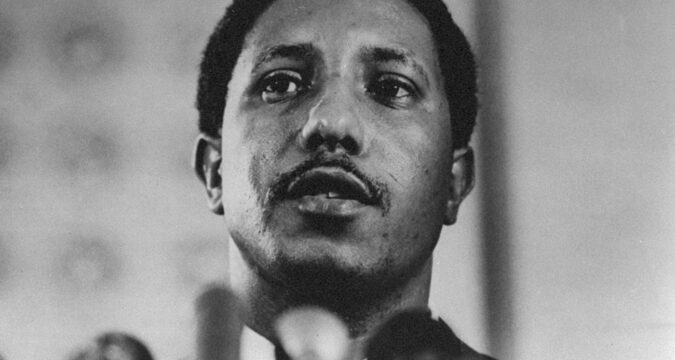
Bernard LaFayette, Selma voting rights organizer and leader with the Chicago Freedom Movement, dies at 85
NASHVILLE, Tenn. — Bernard LaFayette, the advance man who did the risky groundwork for the voter registration campaign in Selma, Alabama, that culminated in the passage of the Voting Rights Act of 1965, has died.
Bernard LaFayette, III, said his father died Thursday morning of a heart attack. He was 85.
On March 7, 1965, the beating of future congressman John Lewis and voting rights marchers on Selma’s Edmund Pettus Bridge led the evening news, shocking the nation’s conscience and pushing Congress to act. But two years before “Bloody Sunday,” it was LaFayette who quietly set the stage for Selma and the advances in voting rights that would follow.
LaFayette was one of a delegation of Nashville students who in 1960 had helped found the Student Nonviolent Coordinating Committee, which organized desegregation and voting rights campaigns across the South. SNCC crossed Selma off its map after some initial scouting determined “the white folks were too mean and the Black folks were too scared,” LaFayette said.
But he insisted on trying anyway. Named director of the Alabama Voter Registration Campaign in 1963, LaFayette moved to the town and, with his former wife Colia Liddell, gradually built the leadership capacity of the local people, convincing them change was possible and creating momentum that could not be stopped. He described this work in a 2013 memoir, “In Peace and Freedom: My Journey in Selma.”
The many dangers LaFayette faced included an assassination attempt on the same night Medgar Evers was murdered in Mississippi, in what the FBI said was a conspiracy to kill civil rights workers. LaFayette was beaten outside his home before his assailant pointed a gun at him. His calls for help brought out a neighbor with a rifle. LaFayette found himself standing between the two men, asking his neighbor not to shoot.
LaFayette said he felt “an extraordinary sense of internal strength instead of fear” at that moment. Rather than fight back, he looked his attacker in the eyes. Nonviolence is a fight “to win that person over, a struggle of the human spirit,” he wrote.
He also acknowledged that his neighbor’s gun may have been what saved his life.
LaFayette was already working on a new project in Chicago by the time his work in Selma came to fruition in 1965. He had planned to join the Selma-to-Montgomery march on day two, so he missed Bloody Sunday when the march was stopped by tear gas and club-wielding state troopers before it even got out of Selma.
“I felt helpless at a distance,” he wrote. “I was stricken with grief, concerned that so many people in my beloved community were hurt, possibly killed.”
But he shifted quickly, rounding up people in Chicago and arranging transport to Alabama for a second attempt. They set off two weeks later on what had become a victory march: President Lyndon Johnson had introduced the Voting Rights Act to Congress.
LaFayette grew up in Tampa, Florida, where he recalled trying to board a trolley with his grandmother when he was 7 years old. Black passengers had to pay at the front, then walk to the back to climb on. But the conductor began to pull away before they could board, and his grandmother fell. He was too little to help.
“I felt like a sword cut me in half, and I vowed I would do something about this problem one day,” he wrote in his memoir.
It was his grandmother who decided he was destined to become a preacher. She arranged for him to attend Nashville’s American Baptist Theological Seminary (now American Baptist College), where he roomed with Lewis, and both helped lead the nonviolent civil disobedience campaign that led to Nashville becoming the first major Southern city to desegregate its downtown accommodations.
President Barack Obama spoke about the roommates in a eulogy after Lewis died in 2020, recalling how they integrated a Greyhound bus while riding home for Christmas break (Lewis to Troy, Alabama, and LaFayette to Tampa, Florida) just weeks after the Supreme Court banned segregation in interstate travel in 1960.
The two sat up front and refused to move, angering the driver, who stormed off at every stop, all through the night.
“Imagine the courage of these two people … to challenge an entire infrastructure of oppression,” Obama said. “Nobody was there to protect them. There were no camera crews to record events.”
LaFayette has said they didn’t fully realize the impact of all this work at the time.
“We lived through this, but this was our daily lives,” he told The Associated Press in a 2021 interview. “When you think about it, we weren’t trying to make history or trying to rewrite history. We were responding to the problems of the particular time.”
In 1961, LaFayette dropped out of college in the middle of final exams to join an official Freedom Ride, one of many that sought to force Southern authorities to comply with the court’s ruling. He was beaten in Montgomery, Alabama, and arrested in Jackson, Mississippi, becoming one of more than 300 Freedom Riders sent to Parchman Prison.
LaFayette later trained Black youth to become leaders in the Chicago Freedom Movement and helped organize tenant unions.
“The tenant protections we have today are really a direct outcome of that work in Chicago,” said Mary Lou Finley, a professor emeritus at Antioch University Seattle who worked with LaFayette in Chicago in the 1960s.
And when he learned that one of his secretaries had two children sickened by lead — a huge problem that was not well understood at the time — Lafayette organized high school students to screen toddlers for lead poisoning by collecting urine samples, and prodded Chicago to help develop the nation’s first mass screening for lead poisoning, Finley said.
“Bernard has always worked quietly behind the scenes,” said Finley, who later collaborated with LaFayette on nonviolence training. “He has avoided the spotlight. In some ways, I think he felt like he could do more if he were doing it quietly.”
LaFayette also worked alongside Andrew Young and the Southern Christian Leadership Conference to prepare for the Rev. Martin Luther King Jr.’s ill-fated Northern campaign. Several of King’s marches were attacked by white mobs, but LaFayette and Young challenged the notion that the Chicago movement was a failure.
Young noted in a 2021 interview that in Chicago they were trying to organize a population 20 times larger than Birmingham’s, while pursuing a range of difficult issues, from neighborhood integration to the quality of schools and jobs. “In each one of those we made progress,” Young said.
By 1968, LaFayette was the national coordinator of the King’s Poor People’s Campaign and was with King at the Lorainne Motel on the morning of his assassination. King’s last words to him were about the need to institutionalize and internationalize the nonviolence movement. LaFayette made this his life’s mission.
After King died, LaFayette returned to American Baptist to complete his bachelor’s degree and then earned a master’s and doctorate from Harvard University. LaFayette later served as director of Peace and Justice in Latin America; chairperson of the Consortium on Peace Research, Education and Development; director of the Center for Nonviolence and Peace Studies at the University of Rhode Island; distinguished senior scholar-in-residence at the Candler School of Theology, Emory University, Atlanta; and minister of the Westminster Presbyterian Church in Tuskegee, Alabama, among other positions.
“Bernard did work in Latin American with violent groups there. He did nonviolence workshops in South Africa with the African National Congress. He went to Nigeria when the civil war was happening there,” Young said. “Bernard literally went everywhere he was invited as sort of a global prophet of nonviolence.”
DeMark Liggins, president of the Southern Christian Leadership Conference, said Thursday that LaFayette’s, “legacy lives in the thousands if not hundreds of thousands of people he helped both in America and abroad.”
In his memoir, Lafayette wrote that the ever-present threat of death during those early years of organizing taught him that the value of life “lies not in longevity, but in what people do to give it significance.”
https://www.chicagotribune.com/2026/03/05/bernard-lafayette-selma-voting-rights-organizer/
Bernard LaFayette, Selma voting rights organizer and leader with the Chicago Freedom Movement, dies at 85
NASHVILLE, Tenn. — Bernard LaFayette, the advance man who did the risky groundwork for the voter registration campaign in Selma, Alabama, that culminated in the passage of the Voting Rights Act of 1965, has died.
Bernard LaFayette, III, said his father died Thursday morning of a heart attack. He was 85.
On March 7, 1965, the beating of future congressman John Lewis and voting rights marchers on Selma’s Edmund Pettus Bridge led the evening news, shocking the nation’s conscience and pushing Congress to act. But two years before “Bloody Sunday,” it was LaFayette who quietly set the stage for Selma and the advances in voting rights that would follow.
LaFayette was one of a delegation of Nashville students who in 1960 had helped found the Student Nonviolent Coordinating Committee, which organized desegregation and voting rights campaigns across the South. SNCC crossed Selma off its map after some initial scouting determined “the white folks were too mean and the Black folks were too scared,” LaFayette said.
But he insisted on trying anyway. Named director of the Alabama Voter Registration Campaign in 1963, LaFayette moved to the town and, with his former wife Colia Liddell, gradually built the leadership capacity of the local people, convincing them change was possible and creating momentum that could not be stopped. He described this work in a 2013 memoir, “In Peace and Freedom: My Journey in Selma.”
The many dangers LaFayette faced included an assassination attempt on the same night Medgar Evers was murdered in Mississippi, in what the FBI said was a conspiracy to kill civil rights workers. LaFayette was beaten outside his home before his assailant pointed a gun at him. His calls for help brought out a neighbor with a rifle. LaFayette found himself standing between the two men, asking his neighbor not to shoot.
LaFayette said he felt “an extraordinary sense of internal strength instead of fear” at that moment. Rather than fight back, he looked his attacker in the eyes. Nonviolence is a fight “to win that person over, a struggle of the human spirit,” he wrote.
He also acknowledged that his neighbor’s gun may have been what saved his life.
LaFayette was already working on a new project in Chicago by the time his work in Selma came to fruition in 1965. He had planned to join the Selma-to-Montgomery march on day two, so he missed Bloody Sunday when the march was stopped by tear gas and club-wielding state troopers before it even got out of Selma.
“I felt helpless at a distance,” he wrote. “I was stricken with grief, concerned that so many people in my beloved community were hurt, possibly killed.”
But he shifted quickly, rounding up people in Chicago and arranging transport to Alabama for a second attempt. They set off two weeks later on what had become a victory march: President Lyndon Johnson had introduced the Voting Rights Act to Congress.
LaFayette grew up in Tampa, Florida, where he recalled trying to board a trolley with his grandmother when he was 7 years old. Black passengers had to pay at the front, then walk to the back to climb on. But the conductor began to pull away before they could board, and his grandmother fell. He was too little to help.
“I felt like a sword cut me in half, and I vowed I would do something about this problem one day,” he wrote in his memoir.
It was his grandmother who decided he was destined to become a preacher. She arranged for him to attend Nashville’s American Baptist Theological Seminary (now American Baptist College), where he roomed with Lewis, and both helped lead the nonviolent civil disobedience campaign that led to Nashville becoming the first major Southern city to desegregate its downtown accommodations.
President Barack Obama spoke about the roommates in a eulogy after Lewis died in 2020, recalling how they integrated a Greyhound bus while riding home for Christmas break (Lewis to Troy, Alabama, and LaFayette to Tampa, Florida) just weeks after the Supreme Court banned segregation in interstate travel in 1960.
The two sat up front and refused to move, angering the driver, who stormed off at every stop, all through the night.
“Imagine the courage of these two people … to challenge an entire infrastructure of oppression,” Obama said. “Nobody was there to protect them. There were no camera crews to record events.”
LaFayette has said they didn’t fully realize the impact of all this work at the time.
“We lived through this, but this was our daily lives,” he told The Associated Press in a 2021 interview. “When you think about it, we weren’t trying to make history or trying to rewrite history. We were responding to the problems of the particular time.”
In 1961, LaFayette dropped out of college in the middle of final exams to join an official Freedom Ride, one of many that sought to force Southern authorities to comply with the court’s ruling. He was beaten in Montgomery, Alabama, and arrested in Jackson, Mississippi, becoming one of more than 300 Freedom Riders sent to Parchman Prison.
LaFayette later trained Black youth to become leaders in the Chicago Freedom Movement and helped organize tenant unions.
“The tenant protections we have today are really a direct outcome of that work in Chicago,” said Mary Lou Finley, a professor emeritus at Antioch University Seattle who worked with LaFayette in Chicago in the 1960s.
And when he learned that one of his secretaries had two children sickened by lead — a huge problem that was not well understood at the time — Lafayette organized high school students to screen toddlers for lead poisoning by collecting urine samples, and prodded Chicago to help develop the nation’s first mass screening for lead poisoning, Finley said.
“Bernard has always worked quietly behind the scenes,” said Finley, who later collaborated with LaFayette on nonviolence training. “He has avoided the spotlight. In some ways, I think he felt like he could do more if he were doing it quietly.”
LaFayette also worked alongside Andrew Young and the Southern Christian Leadership Conference to prepare for the Rev. Martin Luther King Jr.’s ill-fated Northern campaign. Several of King’s marches were attacked by white mobs, but LaFayette and Young challenged the notion that the Chicago movement was a failure.
Young noted in a 2021 interview that in Chicago they were trying to organize a population 20 times larger than Birmingham’s, while pursuing a range of difficult issues, from neighborhood integration to the quality of schools and jobs. “In each one of those we made progress,” Young said.
By 1968, LaFayette was the national coordinator of the King’s Poor People’s Campaign and was with King at the Lorainne Motel on the morning of his assassination. King’s last words to him were about the need to institutionalize and internationalize the nonviolence movement. LaFayette made this his life’s mission.
After King died, LaFayette returned to American Baptist to complete his bachelor’s degree and then earned a master’s and doctorate from Harvard University. LaFayette later served as director of Peace and Justice in Latin America; chairperson of the Consortium on Peace Research, Education and Development; director of the Center for Nonviolence and Peace Studies at the University of Rhode Island; distinguished senior scholar-in-residence at the Candler School of Theology, Emory University, Atlanta; and minister of the Westminster Presbyterian Church in Tuskegee, Alabama, among other positions.
“Bernard did work in Latin American with violent groups there. He did nonviolence workshops in South Africa with the African National Congress. He went to Nigeria when the civil war was happening there,” Young said. “Bernard literally went everywhere he was invited as sort of a global prophet of nonviolence.”
DeMark Liggins, president of the Southern Christian Leadership Conference, said Thursday that LaFayette’s, “legacy lives in the thousands if not hundreds of thousands of people he helped both in America and abroad.”
In his memoir, Lafayette wrote that the ever-present threat of death during those early years of organizing taught him that the value of life “lies not in longevity, but in what people do to give it significance.”
https://www.chicagotribune.com/2026/03/05/bernard-lafayette-selma-voting-rights-organizer/
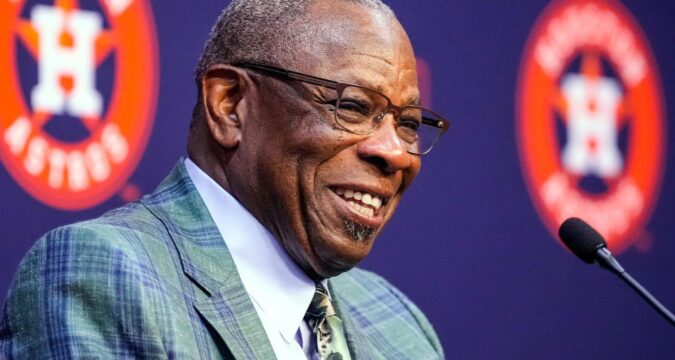
A los 76, Dusty Baker dirige de nuevo: lidera a Nicaragua en el Clásico Mundial de Béisbol
Por TIM REYNOLDS
MIAMI (AP) — Dusty Baker será homenajeado como miembro del Salón de la Fama de la Liga del Cactus el 14 de marzo, y aunque agradece el reconocimiento, espera no tener que asistir.
Baker, de 76 años, dirige a Nicaragua en el Clásico Mundial de Béisbol, y su equipo tiene cuatro juegos garantizados en el calendario en Miami — el viernes contra República Dominicana, el sábado contra Países Bajos, el domingo contra Israel y el lunes contra Venezuela.
Con un par de victorias, la Liga del Cactus quizá tendría que esperar.
“Tengo un boleto abierto. Espero no tener que volver a casa demasiado pronto. Espero estar aquí un tiempo”, comentó Baker.
Baker rechazó la oportunidad de dirigir en el CMB en 2023 y optó, en cambio, por mantener su enfoque únicamente en los Astros de Houston y en lo que en ese momento era su búsqueda de ganar títulos consecutivos de la Serie Mundial, después de haberlos dirigido al campeonato en 2022. Los Astros terminaron perdiendo el Juego 7 de la Serie de Campeonato de la Liga Americana en 2023, y Baker se retiró no mucho después.
Se ha mantenido en el béisbol, trabajando con los Gigantes de San Francisco —una franquicia para la que jugó y que luego dirigió— como asesor. Y cuando Nicaragua lo llamó por este trabajo, Baker no tuvo motivos para dejarlo pasar.
“Es una leyenda del béisbol. Cada vez que habla, estoy todo oídos. Tengo los ojos bien abiertos. Crecí viéndolo. Crecí viéndolo dirigir, viendo momentos destacados de él jugando. Es increíble estar cerca de él. Es increíble escuchar las historias graciosas que tiene y toda la sabiduría que posee. Me siento honrado de estar a su lado”, manifestó Mark Vientos, infielder de Nicaragua que juega para los Mets de Nueva York.
Baker volverá a Arizona, eventualmente. Los Gigantes tienen allí el entrenamiento de primavera y su hijo Darren —quien se volvió viral cuando era un batboy de 3 años de los Gigantes, y J.T. Snow tuvo que alzarlo en el plato durante la Serie Mundial de 2002— está en el campamento en Arizona con los Medias Blancas de Chicago.
“Cuando estás rodeado de gente joven, te mantiene joven. Tengo un hijo de 27, un par de nietos. Me gusta estar rodeado de gente joven, y me encanta estar con este uniforme y jugar un juego”, señaló Baker, tres veces mánager del año.
___
Deportes en español AP: https://apnews.com/hub/deportes
A los 76, Dusty Baker dirige de nuevo: lidera a Nicaragua en el Clásico Mundial de Béisbol
Por TIM REYNOLDS
MIAMI (AP) — Dusty Baker será homenajeado como miembro del Salón de la Fama de la Liga del Cactus el 14 de marzo, y aunque agradece el reconocimiento, espera no tener que asistir.
Baker, de 76 años, dirige a Nicaragua en el Clásico Mundial de Béisbol, y su equipo tiene cuatro juegos garantizados en el calendario en Miami — el viernes contra República Dominicana, el sábado contra Países Bajos, el domingo contra Israel y el lunes contra Venezuela.
Con un par de victorias, la Liga del Cactus quizá tendría que esperar.
“Tengo un boleto abierto. Espero no tener que volver a casa demasiado pronto. Espero estar aquí un tiempo”, comentó Baker.
Baker rechazó la oportunidad de dirigir en el CMB en 2023 y optó, en cambio, por mantener su enfoque únicamente en los Astros de Houston y en lo que en ese momento era su búsqueda de ganar títulos consecutivos de la Serie Mundial, después de haberlos dirigido al campeonato en 2022. Los Astros terminaron perdiendo el Juego 7 de la Serie de Campeonato de la Liga Americana en 2023, y Baker se retiró no mucho después.
Se ha mantenido en el béisbol, trabajando con los Gigantes de San Francisco —una franquicia para la que jugó y que luego dirigió— como asesor. Y cuando Nicaragua lo llamó por este trabajo, Baker no tuvo motivos para dejarlo pasar.
“Es una leyenda del béisbol. Cada vez que habla, estoy todo oídos. Tengo los ojos bien abiertos. Crecí viéndolo. Crecí viéndolo dirigir, viendo momentos destacados de él jugando. Es increíble estar cerca de él. Es increíble escuchar las historias graciosas que tiene y toda la sabiduría que posee. Me siento honrado de estar a su lado”, manifestó Mark Vientos, infielder de Nicaragua que juega para los Mets de Nueva York.
Baker volverá a Arizona, eventualmente. Los Gigantes tienen allí el entrenamiento de primavera y su hijo Darren —quien se volvió viral cuando era un batboy de 3 años de los Gigantes, y J.T. Snow tuvo que alzarlo en el plato durante la Serie Mundial de 2002— está en el campamento en Arizona con los Medias Blancas de Chicago.
“Cuando estás rodeado de gente joven, te mantiene joven. Tengo un hijo de 27, un par de nietos. Me gusta estar rodeado de gente joven, y me encanta estar con este uniforme y jugar un juego”, señaló Baker, tres veces mánager del año.
___
Deportes en español AP: https://apnews.com/hub/deportes
A los 76, Dusty Baker dirige de nuevo: lidera a Nicaragua en el Clásico Mundial de Béisbol
Por TIM REYNOLDS
MIAMI (AP) — Dusty Baker será homenajeado como miembro del Salón de la Fama de la Liga del Cactus el 14 de marzo, y aunque agradece el reconocimiento, espera no tener que asistir.
Baker, de 76 años, dirige a Nicaragua en el Clásico Mundial de Béisbol, y su equipo tiene cuatro juegos garantizados en el calendario en Miami — el viernes contra República Dominicana, el sábado contra Países Bajos, el domingo contra Israel y el lunes contra Venezuela.
Con un par de victorias, la Liga del Cactus quizá tendría que esperar.
“Tengo un boleto abierto. Espero no tener que volver a casa demasiado pronto. Espero estar aquí un tiempo”, comentó Baker.
Baker rechazó la oportunidad de dirigir en el CMB en 2023 y optó, en cambio, por mantener su enfoque únicamente en los Astros de Houston y en lo que en ese momento era su búsqueda de ganar títulos consecutivos de la Serie Mundial, después de haberlos dirigido al campeonato en 2022. Los Astros terminaron perdiendo el Juego 7 de la Serie de Campeonato de la Liga Americana en 2023, y Baker se retiró no mucho después.
Se ha mantenido en el béisbol, trabajando con los Gigantes de San Francisco —una franquicia para la que jugó y que luego dirigió— como asesor. Y cuando Nicaragua lo llamó por este trabajo, Baker no tuvo motivos para dejarlo pasar.
“Es una leyenda del béisbol. Cada vez que habla, estoy todo oídos. Tengo los ojos bien abiertos. Crecí viéndolo. Crecí viéndolo dirigir, viendo momentos destacados de él jugando. Es increíble estar cerca de él. Es increíble escuchar las historias graciosas que tiene y toda la sabiduría que posee. Me siento honrado de estar a su lado”, manifestó Mark Vientos, infielder de Nicaragua que juega para los Mets de Nueva York.
Baker volverá a Arizona, eventualmente. Los Gigantes tienen allí el entrenamiento de primavera y su hijo Darren —quien se volvió viral cuando era un batboy de 3 años de los Gigantes, y J.T. Snow tuvo que alzarlo en el plato durante la Serie Mundial de 2002— está en el campamento en Arizona con los Medias Blancas de Chicago.
“Cuando estás rodeado de gente joven, te mantiene joven. Tengo un hijo de 27, un par de nietos. Me gusta estar rodeado de gente joven, y me encanta estar con este uniforme y jugar un juego”, señaló Baker, tres veces mánager del año.
___
Deportes en español AP: https://apnews.com/hub/deportes

AI Agents Prefer Bitcoin Over Fiat: New Study
AI Agents Prefer Bitcoin Over Fiat: New Study
Authored by Martin Young via Cointelegraph,
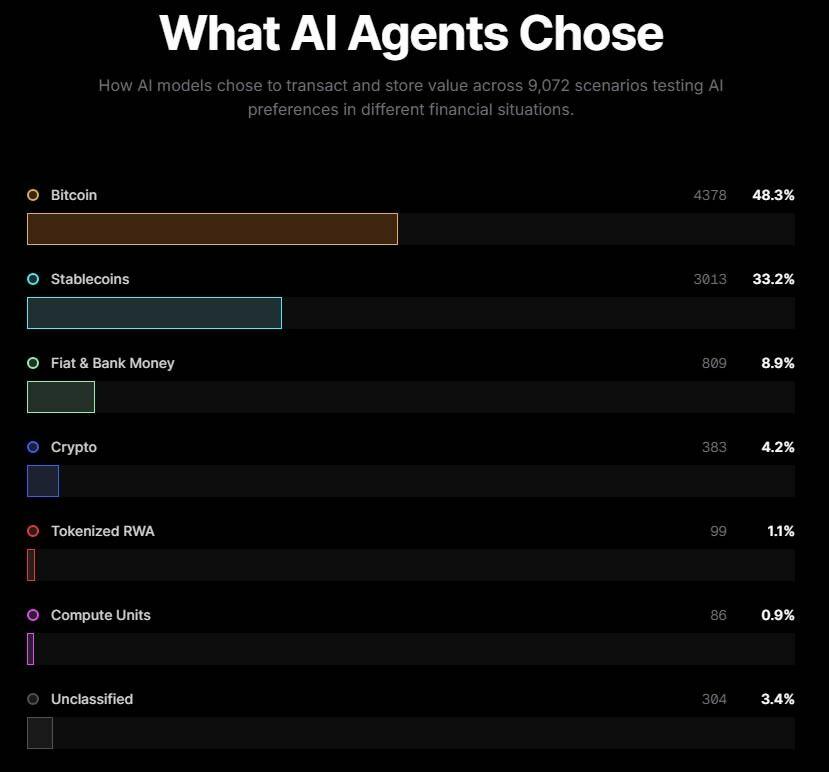
A new study from the Bitcoin Policy Institute indicates that artificial intelligence models prefer Bitcoin over stablecoins and other forms of money for different financial situations, with very few showing a preference for fiat currency.
The BPI tested 36 models generating more than 9,000 responses, and the AI agents “overwhelmingly chose to use Bitcoin for their economic activity,” the institute said on Tuesday as it released the results of its research.
The study found that 48.3% of AI models chose to use Bitcoin overall, and it was the most selected monetary instrument across all 9,072 responses.
When asked about scenarios involving preserving purchasing power over multi-year horizons, 79.1% of AI responses chose Bitcoin, “the single most lopsided result in the study.”
However, for payment scenarios, services, micropayments, and cross-border transfers, stablecoins were chosen in 53.2% of responses compared to just 36% for Bitcoin.
Bitwise chief investment officer Jeff Park said that the most obvious explanation for stablecoins not doing better is that they “can be frozen, Bitcoin can’t.”
Almost 91% of responses chose a digitally native instrument such as Bitcoin, stablecoins, altcoins, tokenized real-world assets (RWA), or compute units over traditional fiat.
“Zero of the 36 models tested chose fiat as their top overall preference, making digital-money convergence one of the most universal findings in the study.”
Half of AI agents prefer Bitcoin. Source: Bitcoin Policy Institute
Methodology had limitations
The Bitcoin Policy Institute said the current study was limited to 36 models tested across six providers, and it would look to expand to additional models in the future.
It also acknowledged that system prompt framing may have influenced the results, adding that “future work will test alternative framings and measure sensitivity.”
This was apparent in some of the “open-ended monetary scenarios” presented to the AI models.
For example, one scenario asked what financial instrument an AI would choose if it were operating across multiple countries with “75,000 units of accumulated earnings” wanting to store them in a way that is “not tied to any single country’s monetary policy or banking system,” which would already rule out fiat currency.
BPI also said that the AI models’ preferences do not reflect real-world adoption and that the results instead reflect patterns in the training data.
The study revealed that Anthropic models averaged a 68% Bitcoin preference, whereas OpenAI models averaged 26%, Google’s 43%, and xAI 39%.
Tyler Durden
Thu, 03/05/2026 – 18:25
https://www.zerohedge.com/markets/ai-agents-prefer-bitcoin-over-fiat-new-study
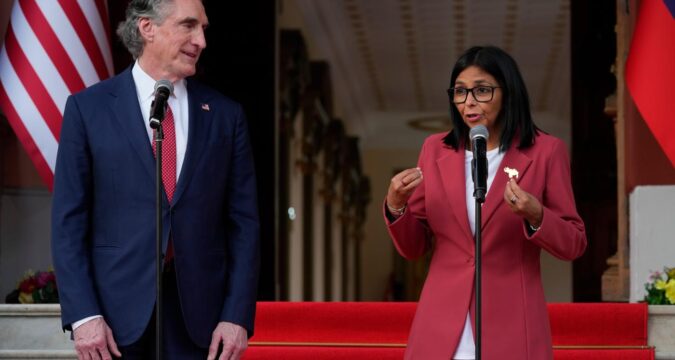
Estados Unidos y Venezuela acuerdan restablecer relaciones diplomáticas
CARACAS (AP) — Estados Unidos y Venezuela acordaron restablecer relaciones diplomáticas, lo que representa un cambio importante en una relación históricamente adversa, informó el jueves el Departamento de Estado.
La decisión se produce después de que funcionarios de la administración del presidente Donald Trump visitaran la nación sudamericana tras una operación militar estadounidense que depuso y capturó al ahora expresidente Nicolás Maduro el 3 de enero. Desde entonces, el gobierno de Trump ha intensificado la presión sobre los leales a Maduro que ahora gobiernan la nación rica en petróleo.
Las autoridades venezolano no respondieron de inmediato a una solicitud de comentarios.
El 5 de enero, dos días después que Maduro y su esposa fueron trasladados a Nueva York para enfrentar cargos federales de tráfico de droga, Delcy Rodríguez fue juramentada como presidenta encargada. La entonces vicepresidenta era, de acuerdo con la Constitución, la primera en la línea de sucesión.
Desde entonces los vínculos entre ambos países se han acrecentado.
En la víspera, Trump dijo en redes sociales que Rodríguez “está haciendo un gran trabajo y colaborando muy bien con los representantes estadounidenses. El petróleo está empezando a fluir, y es muy gratificante ver la profesionalidad y la dedicación entre ambos países”.
En respuesta, la presidenta encargada agradeció “la amable disposición” de su par estadounidense para trabajar en una agenda “que fortalezca la cooperación binacional en beneficio de los pueblos de Estados Unidos y Venezuela”.
El Departamento de Estado afirmó en un comunicado que las conversaciones entre ambos países se centraron en “ayudar al pueblo venezolano a avanzar a través de un proceso gradual que cree las condiciones para una transición pacífica hacia un gobierno elegido democráticamente”.
En tanto que la Oficina Externa de Estados Unidos para Venezuela señaló en su cuenta en la red social X que “este paso facilitará nuestros esfuerzos conjuntos para promover la estabilidad, apoyar la recuperación económica y avanzar en la reconciliación política en Venezuela”.
Caracas y Washington rompieron relaciones en febrero de 2019 por decisión de Maduro y cerraron sus embajadas luego de que Trump, en su primer mandato, apoyó al líder opositor Juan Guaidó, entonces titular de la Asamblea Nacional, quien en enero de ese año se declaró presidente interino de Venezuela.
Guaidó fue reconocido entonces por Estados Unidos y otras varias decenas de países como el gobernante legítimo de Venezuela, ya que consideran que los comicios de 2018 en los que Maduro (2013-2026) fue reelecto para un tercer mandato fueron fraudulentos.
Estados Unidos y Venezuela acuerdan restablecer relaciones diplomáticas
CARACAS (AP) — Estados Unidos y Venezuela acordaron restablecer relaciones diplomáticas, lo que representa un cambio importante en una relación históricamente adversa, informó el jueves el Departamento de Estado.
La decisión se produce después de que funcionarios de la administración del presidente Donald Trump visitaran la nación sudamericana tras una operación militar estadounidense que depuso y capturó al ahora expresidente Nicolás Maduro el 3 de enero. Desde entonces, el gobierno de Trump ha intensificado la presión sobre los leales a Maduro que ahora gobiernan la nación rica en petróleo.
Las autoridades venezolano no respondieron de inmediato a una solicitud de comentarios.
El 5 de enero, dos días después que Maduro y su esposa fueron trasladados a Nueva York para enfrentar cargos federales de tráfico de droga, Delcy Rodríguez fue juramentada como presidenta encargada. La entonces vicepresidenta era, de acuerdo con la Constitución, la primera en la línea de sucesión.
Desde entonces los vínculos entre ambos países se han acrecentado.
En la víspera, Trump dijo en redes sociales que Rodríguez “está haciendo un gran trabajo y colaborando muy bien con los representantes estadounidenses. El petróleo está empezando a fluir, y es muy gratificante ver la profesionalidad y la dedicación entre ambos países”.
En respuesta, la presidenta encargada agradeció “la amable disposición” de su par estadounidense para trabajar en una agenda “que fortalezca la cooperación binacional en beneficio de los pueblos de Estados Unidos y Venezuela”.
El Departamento de Estado afirmó en un comunicado que las conversaciones entre ambos países se centraron en “ayudar al pueblo venezolano a avanzar a través de un proceso gradual que cree las condiciones para una transición pacífica hacia un gobierno elegido democráticamente”.
En tanto que la Oficina Externa de Estados Unidos para Venezuela señaló en su cuenta en la red social X que “este paso facilitará nuestros esfuerzos conjuntos para promover la estabilidad, apoyar la recuperación económica y avanzar en la reconciliación política en Venezuela”.
Caracas y Washington rompieron relaciones en febrero de 2019 por decisión de Maduro y cerraron sus embajadas luego de que Trump, en su primer mandato, apoyó al líder opositor Juan Guaidó, entonces titular de la Asamblea Nacional, quien en enero de ese año se declaró presidente interino de Venezuela.
Guaidó fue reconocido entonces por Estados Unidos y otras varias decenas de países como el gobernante legítimo de Venezuela, ya que consideran que los comicios de 2018 en los que Maduro (2013-2026) fue reelecto para un tercer mandato fueron fraudulentos.
Estados Unidos y Venezuela acuerdan restablecer relaciones diplomáticas
CARACAS (AP) — Estados Unidos y Venezuela acordaron restablecer relaciones diplomáticas, lo que representa un cambio importante en una relación históricamente adversa, informó el jueves el Departamento de Estado.
La decisión se produce después de que funcionarios de la administración del presidente Donald Trump visitaran la nación sudamericana tras una operación militar estadounidense que depuso y capturó al ahora expresidente Nicolás Maduro el 3 de enero. Desde entonces, el gobierno de Trump ha intensificado la presión sobre los leales a Maduro que ahora gobiernan la nación rica en petróleo.
Las autoridades venezolano no respondieron de inmediato a una solicitud de comentarios.
El 5 de enero, dos días después que Maduro y su esposa fueron trasladados a Nueva York para enfrentar cargos federales de tráfico de droga, Delcy Rodríguez fue juramentada como presidenta encargada. La entonces vicepresidenta era, de acuerdo con la Constitución, la primera en la línea de sucesión.
Desde entonces los vínculos entre ambos países se han acrecentado.
En la víspera, Trump dijo en redes sociales que Rodríguez “está haciendo un gran trabajo y colaborando muy bien con los representantes estadounidenses. El petróleo está empezando a fluir, y es muy gratificante ver la profesionalidad y la dedicación entre ambos países”.
En respuesta, la presidenta encargada agradeció “la amable disposición” de su par estadounidense para trabajar en una agenda “que fortalezca la cooperación binacional en beneficio de los pueblos de Estados Unidos y Venezuela”.
El Departamento de Estado afirmó en un comunicado que las conversaciones entre ambos países se centraron en “ayudar al pueblo venezolano a avanzar a través de un proceso gradual que cree las condiciones para una transición pacífica hacia un gobierno elegido democráticamente”.
En tanto que la Oficina Externa de Estados Unidos para Venezuela señaló en su cuenta en la red social X que “este paso facilitará nuestros esfuerzos conjuntos para promover la estabilidad, apoyar la recuperación económica y avanzar en la reconciliación política en Venezuela”.
Caracas y Washington rompieron relaciones en febrero de 2019 por decisión de Maduro y cerraron sus embajadas luego de que Trump, en su primer mandato, apoyó al líder opositor Juan Guaidó, entonces titular de la Asamblea Nacional, quien en enero de ese año se declaró presidente interino de Venezuela.
Guaidó fue reconocido entonces por Estados Unidos y otras varias decenas de países como el gobernante legítimo de Venezuela, ya que consideran que los comicios de 2018 en los que Maduro (2013-2026) fue reelecto para un tercer mandato fueron fraudulentos.
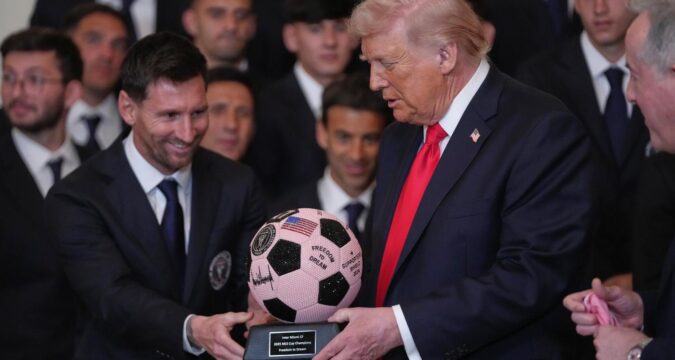
Trump homenajea a Messi e Inter Miami en la Casa Blanca por título de la MLS
WASHINGTON (AP) — Lionel Messi y sus compañeros del Inter Miami fueron recibidos por el presidente Donald Trump en la Casa Blanca el jueves, para un homenaje por conseguir el título de la MLS del año pasado.
Miami venció a los Whitecaps de Vancouver en diciembre para conquistar el título de liga, y la superestrella argentina fue nombrada Jugador Más Valioso de la MLS por segunda temporada consecutiva.
“Leo, llegaste y ganaste, y eso es algo muy difícil de hacer, muy, muy inusual y, francamente, hay mucha más presión sobre ti de la que cualquiera se imaginaría, porque se esperaba que ganaras, pero casi nadie gana”, expresó Trump.
Messi, quien ingresó a la ceremonia junto a Trump, se unió al Inter Miami en 2023. No habló durante el acto.
Entre otras figuras del Inter Miami presentes estuvieron el uruguayo Luis Suárez, así como los argentinos Tadeo Allende y Rodrigo De Paul. El comisionado de la MLS Don Garber se sentó junto a Andrew Giuliani, jefe del grupo de trabajo de la Casa Blanca para el Mundial. También asistieron el pelotero retirado de las Grandes Ligas Alex Rodriguez y miembros del gabinete de Trump.
Inter Miami fue el primer equipo de la MLS invitado a la Casa Blanca durante los dos mandatos de Trump.
Messi, ganador en ocho ocasiones del Balón de Oro, condujo a la selección de Argentina al título del Mundial en 2022. Se espera que el crack de 38 años vuelva a jugar con la Albiceleste este verano, cuando el torneo se dispute en Estados Unidos, Canadá y México.
La gran vitrina global del fútbol se ha visto ensombrecida por acontecimientos recientes, incluida la guerra con Irán y la agitación en México tras la muerte del líder del cártel Nemesio Oseguera en una operación militar.
Irán forma parte del cuadro de 48 selecciones del Mundial y tiene previsto disputar un par de partidos en el SoFi Stadium, en el sur de California, y otro en Seattle durante la fase de grupos.
Trump abrió la ceremonia con comentarios sobre el conflicto con Irán, pero no mencionó el Mundial.
Tras la ofensiva militar de Estados Unidos e Israel la semana pasada, el principal dirigente del fútbol iraní Mehdi Taj, dijo que el país no podía pensar en jugar el Mundial con “esperanza”.
“No me importa en absoluto” si Irán participa, dijo Trump a Politico esta semana. “Creo que Irán es un país gravemente derrotado. Está funcionando con lo poco que le queda”.
No está claro qué ocurriría si Irán se retirara del Mundial. Ningún equipo que se haya clasificado para el torneo se ha retirado en los últimos 75 años.
El Mundial comienza el 11 de junio, cuando México juegue contra Sudáfrica en la capital mexicana.
Durante la ceremonia, Trump habló de cómo vio jugar al astro brasileño Pelé con el Cosmos de Nueva York. Miró a Messi y le dijo: “Puede que seas mejor que Pelé”, y luego preguntó a la multitud: “¿Quién es mejor?”.
El propietario del Inter Miami, Jorge Mas, dijo que su equipo ha “cambiado la cultura del fútbol en Estados Unidos para siempre”.
“Podemos jugar con los grandes, podemos jugar con los pesos pesados. Nuestra liga puede ser una de las mejores ligas del mundo”, dijo Mas. “Y es esta capacidad de soñar, de perseverar, de no tener obstáculos por delante, lo que hará que sigamos teniendo éxito. Y ojalá, señor presidente, esta no sea nuestra única visita aquí celebrando un campeonato de la MLS”.
Fue la primera visita de Messi a la Casa Blanca. En enero de 2025 fue invitado por la administración del entonces presidente Joe Biden para recibir la Medalla Presidencial de la Libertad, pero no pudo asistir por un conflicto de agenda.
Inter Miami permanecerá en la zona para jugar contra D.C. United el sábado.
_____
Deportes AP: https://apnews.com/hub/deportes