Category: News

Terry Savage: Last chance to file the FAFSA for your college student
Time is growing short for parents of high school seniors (and those returning to college for the 2026-27 school year) to file the FAFSA — the Free Application for Federal Student Aid. This is not just for low-income parents to gain access to federal student loans. FAFSA is used in many college grants and private scholarships. So it’s critical to file FAFSA as early as possible. It’s available online at the Federal StudentAid website, StudentAid.gov.
Many state financial aid programs are on a first-come, first-served basis, so the money can run out long before you know if your student has gained admission. That’s why you file this electronic form (which became available last October 1) and list your schools in order of your priority. To get started, go to StudentAid.gov. Parents and students each get a separate FAFSA ID number. (That way, parental income and assets are not shown to their children!)
The FAFSA analysis generates a SAI (student aid index). It shows the family’s financial strength and helps schools decide how much aid the student will receive. It’s a simple math formula. The school takes the cost of attendance or COA (including tuition, room, board, books and fees), and then subtracts the SAI. The resulting number is the “need” the family has for financial aid.
The FAFSA form parents will file now for school year 2026-27 automatically downloads the parents’ 2024 income from the return that was filed in April 2025. But that information can be adjusted if one of the parents has lost a job or income has been substantially reduced in 2025. That two-year lag is a major reason to plan ahead and to know what counts as assets and income.
Brian Safdari of CollegePlanningExperts.com has helped more than 25,000 families gain admission to favored schools and get the maximum amount of financial assistance. He advises students to start early in high school to “package” themselves beyond just grades to become attractive candidates. And he says his ultimate goal is to make sure families get the maximum of “free money” without impacting their retirement!
Safdari notes that many families make mistakes in the FAFSA process that cost them loans and grants. Among the most common mistakes:
— Listing their home equity under their “net worth.” That increases their assets and reduces aid. Home equity is not counted in the FAFSA process (although it might be counted in the CSS form used by many elite private schools). So if an applicant is planning to attend a state school, and the parents have savings in their own name, it might be wise to use some of those assets to pay down the mortgage before applying.
— Not reducing their income as much as possible by contributing extra to a 401(k) plan, an IRA, a health savings account (HSA) or even cash value life insurance policies in the years for which income is calculated for the FAFSA. And if you take a loss on any investments this creates a capital loss to lower the AGI, and thus qualify for more aid.
— Misunderstanding the impact of UGMA accounts. They weigh seven times more heavily against the family in the financial aid calculation. Those accounts should no longer be opened, and if they exist, they should be transferred to 529 plans before the student starts high school.
— Not knowing their state school’s adjusted gross income threshold, below which the institution will provide grants — free money. If you know that level, you might be able to reduce your income below it — just by making an additional contribution to a 401(k) or IRA. Again, that requires advance planning, since the tax filings used for aid come from two years prior. But you have until April 15, 2026 to open an IRA (if eligible) reducing 2025 income, which will be used in next year’s FAFSA.
Safdari has one more piece of advice, just in case you don’t get enough aid from your favorite school. If you are accepted elsewhere, and receive more aid, you can appeal the aid decision of your favorite school. They just might think it’s worth contributing more to your aid package.
Related Articles
Terry Savage: Bigger tax refunds are coming to seniors, but only if they file a return
Terry Savage: Artificial intelligence and your future prosperity
Terry Savage: Making sense of annuity pitches
Terry Savage: Silver and gold — should you look for hidden treasure?
Terry Savage: What gold’s runup is warning us about
If you think this is a complicated process that could require experienced advisers, you’re likely right. Just like filing a tax return, professionals know all the twists and turns of the process. And when you’re talking about financing a four-year college education that could cost a quarter of a million dollars, any savings is welcome. That’s the Savage Truth.
(Terry Savage is a registered investment adviser and the author of four best-selling books, including “The Savage Truth on Money.” Terry responds to questions on her blog at TerrySavage.com.)
Indonesia prohibirá las redes sociales para menores de 16 años, según ministro de Comunicación
YAKARTA, Indonesia (AP) — Indonesia prohibirá las redes sociales para menores de 16 años, según ministro de Comunicación.

“Peor que una prisión”: llamadas a emergencias y entrevistas revelan problemas en gran centro de ICE
Por MORGAN LEE, RYAN J. FOLEY y MICHAEL BIESECKER
EL PASO, Texas, EE.UU. (AP) — Las emergencias médicas graves y de salud mental han sido habituales en el mayor centro de detención del Servicio de Inmigración y Control de Aduanas de Estados Unidos desde su apertura, según registros obtenidos por The Associated Press.
Los datos y las grabaciones de más de un centenar de llamadas al teléfono de emergencias 911 desde Camp East Montana, en El Paso, Texas, junto con entrevistas y documentos judiciales, ofrecen un retrato inquietante de hacinamiento, negligencia médica, desnutrición y angustia emocional.
Personas detenidas allí en la actualidad y otras que lo estuvieron en el pasado describen un campamento donde unas 3.000 personas al día han vivido en instalaciones ruidosas e insalubres. Aseguran que los detenidos tienen dificultades para obtener atención médica mientras se propagan las enfermedades, pierden peso por la falta de comida y temen a los guardas de seguridad, conocidos por usar la fuerza para sofocar los disturbios.
“Cada día se sentía como una semana. Cada semana se sentía como un mes. Cada mes se sentía como un año”, dijo Owen Ramsingh, exadministrador de propiedades en Columbia, Misuri, que pasó varias semanas en el campamento antes de ser deportado a Holanda en febrero. “Camp East Montana era 1.000% peor que una prisión”.
Un portavoz del Departamento de Seguridad Nacional que no se identificó por su nombre rechazó las denuncias sobre las malas condiciones y manifestó que los detenidos en Camp East Montana reciben comida, agua y tratamiento médico en una instalación que se limpia con regularidad.
A continuación, algunos de los puntos clave del reportaje de la AP:
Promedio de casi una llamada al día al 911 durante meses
Tras su apertura a mediados de agosto, el personal del campamento hizo casi una llamada al teléfono de emergencias 911 por día en sus primeros cinco meses en funcionamiento, según los datos que abarcan 130 llamadas desde la Ciudad de El Paso obtenidos por la AP.
En una llamada se escucha a un hombre sollozando después de haber sido agredido por otro detenido. En otra, un médico dice que un hombre se está golpeando la cabeza contra la pared mientras expresa ideas suicidas. En una tercera, una enfermera dice que una mujer embarazada tiene un dolor intenso y padece coronavirus.
Los detenidos heridos iban desde un joven de 19 años que se cayó de una litera hasta un hombre de 79 con dificultades para respirar. Se notificaron al menos 20 emergencias por convulsiones, de las cuales algunas derivaron en traumatismos craneales graves.
Las llamadas revelan repetidos intentos de suicidio
Las llamadas muestran que los detenidos han intentado repetidamente hacerse daño y han expresado ideas suicidas.
Dos incidentes tuvieron como resultado la muerte. El 3 de enero, el Servicio de Inmigración y Control de Aduanas (ICE, por sus siglas en inglés) dijo que los guardias de seguridad respondieron después de que un hombre cubano de 55 años intentara hacerse daño, y emplearon esposas y la fuerza para inmovilizarlo. Un forense determinó que la muerte de Geraldo Lunas Campos fue un homicidio causado por asfixia.
El personal reportó el 14 de enero que un nicaragüense de 36 años se suicidó días después de haber sido detenido mientras trabajaba en Minnesota.
Además, se comunicaron al menos otros seis intentos de suicidio, según los registros de la Ciudad de El Paso.
El portavoz del Departamento de Seguridad Nacional señaló que el personal del centro “vigila de cerca a los detenidos en riesgo” y les proporciona tratamiento de salud mental.
ICE no ha publicado los resultados de la inspección
The Washington Post informó en septiembre que una inspección obligatoria del ICE determinó que las condiciones en el centro violaban al menos 60 normas federales sobre arresto de migrantes. Pero ese reporte no ha llegado a hacerse público nunca, a diferencia de decenas de otras inspecciones a instalaciones que aparecen en la web del ICE.
El Departamento de Seguridad Nacional calificó de falsas las denuncias de irregularidades descritas en la información del Post, sin explicar por qué el informe de la inspección era incorrecto. La base de datos actual de ICE sobre centros de detención indica que Camp East Montana nunca ha sido inspeccionado, pero que tiene programada una revisión para este año fiscal.
Un portavoz de Seguridad Nacional dijo que la Oficina de Supervisión de Detención de ICE completó recientemente una inspección en Camp East Montana, pero no proporcionó más información y los resultados no se han hecho públicos.
Congresista pide el cierre del centro y una investigación del contrato
Verónica Escobar, una representante demócrata por El Paso que ha recorrido el campamento varias veces, reclama el cierre de las instalaciones.
“Esta instalación no debería estar operativa. Se siente como si este contratista estuviera reinventando la rueda, y la gente está perdiendo la vida en su experimento”, declaró Escobar.
Según dijo, el centro había reducido temporalmente su población por debajo de 1.900 personas cuando lo visitó el mes pasado y se cerrará temporalmente a visitas debido a un brote de sarampión.
En una de sus visitas, una detenida le mostró una escasa ración de huevos revueltos que se sirvió aún congelada por dentro. Además, se enteró de que los detenidos protestaron después de dejar de recibir jugo, fruta y leche con sus comidas.
Escobar se reunió con un detenido de Ecuador que contó que le habían roto el brazo durante un arresto violento por parte de agentes de inmigración en Minnesota. Semanas después, la congresista aún podía ver cómo los huesos fracturados de su antebrazo le sobresalían bajo la piel.
Escobar pidió que se investigue al contratista, Acquisition Logistics LLC, al que se le adjudicó un contrato de hasta 1.300 millones de dólares para construir y operar el campamento. La empresa, que no respondió a los mensajes de la AP, y sus subcontratistas no estaban prestando los servicios por los que pagan los contribuyentes, agregó.
“La gente debería indignarse por la crueldad absoluta, pero si no lo están, espero que se indignen por el fraude y la corrupción”, agregó Escobar.
___
Esta historia incluye referencias al suicidio. Si usted o alguien que conoce necesita ayuda, la línea nacional de prevención del suicidio y crisis en Estados Unidos está disponible llamando o enviando un mensaje de texto al 988. También hay un chat en línea en 988lifeline.org
___
Foley informó desde Iowa City, Iowa, y Biesecker desde Washington.
___
Esta historia fue traducida del inglés por un editor de AP con la ayuda de una herramienta de inteligencia artificial generativa.
Policía de Londres detiene a cuatro sospechosos de ayudar a Irán espiando a la comunidad judía
Associated Press
LONDRES (AP) — La policía de Londres reportó el viernes la detención de cuatro hombres sospechosos de ayudar a Irán espiando a la comunidad judía.
La Policía Metropolitana explicó en un comunicado que los sospechosos —un iraní y tres ciudadanos con doble nacionalidad británica-iraní— fueron detenidos por su presunta colaboración con un servicio de inteligencia extranjero. Se sospecha que espiaban lugares y a personas.
Los hombres, de 22, 40, 52 y 55 años, fueron arrestados en domicilios en el norte de Londres y en sus alrededores poco después de la una de la madrugada, agregó la nota. Los registros continuaban en esas direcciones y en otras propiedades cercanas.
Otros seis hombres también fueron arrestados en Harrow, en el oeste de Londres, por ayudar supuestamente a un delincuente y quedaron bajo custodia, informó la policía.
“Entendemos que la población puede estar preocupada, en particular la comunidad judía, y como siempre, les pediría que permanezcan atentos y si ven o escuchan algo que les preocupe, se pongan en contacto con nosotros”, dijo la comandante Helen Flanagan, que está al frente de la policía antiterrorista en Londres.
Las detenciones se producen mientras Estados Unidos e Israel continúan atacando Irán, que ha lanzado ataques de represalia contra Israel, contra bases estadounidenses y otros países en la región. Reino Unido no participa en operaciones ofensivas, pero colabora en la defensa regional.
___
Esta historia fue traducida del inglés por un editor de AP con la ayuda de una herramienta de inteligencia artificial generativa.
The Planned “NATO Bank” Is Expected To Finance Europe’s Impending Arms Race With Russia
The Planned “NATO Bank” Is Expected To Finance Europe’s Impending Arms Race With Russia
The Russian-Polish security dilemma will likely serve as the impetus for fully unleashing and properly managing the capabilities of European NATO as a whole per the US’ National Defense Strategy.
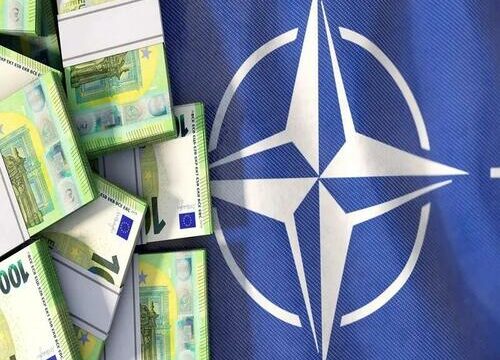
RT drew attention in late January to a report by Izvestia about the West’s alleged plans to launch a “Defense, Security, and Resilience Bank” (DSRB) by 2027. Their article relies on in-depth research by the Atlantic Council, which came up with the idea of what was at first called the “NATO Bank”. The purpose is to provide “low-interest loans for defense modernization”, thus facilitating the goal of NATO members spending 5% of GDP on defense without significantly curtailing social and infrastructure spending.
Instead of slashing such programs to redirect funds to defense at the risk of helping populist-nationalists during the next elections and/or provoking unrest, they’d only spend a fraction of the principal each year servicing their DSRB loan instead of paying the cost upfront as if it was part of their annual expenditures. The Executive Summary of the Atlantic Council’s in-depth research hyperlinked to above also notes that “An additional critical function of the DSR bank would be to underwrite the risk for commercial banks”.
This would then “enabl[e] them to extend financing to defense companies across the supply chain.” The supplementary purpose is to finance large-scale orders that these companies themselves are unable to afford on their own and most member states can’t finance either without potential populist pushback. Defense companies can then expand production, pump out the requested military-technical equipment at scale, and then sell it at a much more affordable price for accelerating NATO’s planned militarization.
The bloc’s Eastern Flank, which largely overlaps with the Polish-led “Three Seas Initiative”, is expected to benefit the most. Poland is already poised to receive €44 billion in loans from the EU’s €150 billion “Security Action For Europe” program (SAFE, which is part of the €800 billion “ReArm Europe Plan”). This should help modernize its embarrassingly underdeveloped military-industrial complex and thus enable Poland to serve as the regional core of associated processes across the rest of the Eastern Flank.
The aforesaid role would become much more likely if it and Lithuania succeed in creating a defense-centric cross-border economic zone across the Suwalki Corridor/Gap like the latter just proposed. The US National Defense Strategy assessed that “European NATO dwarfs Russia in economic scale, population, and, thus, latent military power.” This potential just needs to be fully unleashed and properly managed. Poland could pioneer the way if it allows the US to advise it on the optimal use of SAFE and DSRB loans.
It was already assessed that “Poland Will Play A Central Role In Advancing The US’ National Security Strategy In Europe” so it therefore naturally follows that it’ll play a central role in the National Defense Strategy too. Poland already spends more of its GDP on defense than any other NATO member at 4.8%, however, so anything much more might result in curtailing social and infrastructure spending, but therein lies the importance of the DSRB for enabling Poland to avert that trade-off as was explained.
Poland’s debt-to-GDP is 55.1%, which is far below the EU’s 80.7%, so it could take on more debt through these means without too much socio-political discomfort. This is feasible after Poland just became a $1 trillion economy. Any additional military spending fueled by the DSRB would further accelerate Poland’s unprecedented militarization, which has led to it having the EU’s largest army at over 215,000 troops, with plans to reach 300,000 by 2030 and half a million by 2039 (200,000 of which would be reservists).
From Russia’s perspective, this poses a serious threat to Kaliningrad and allied Belarus, ergo why it’s expected to correspondingly bolster its forces there in response. That could also include the deployment of more strategic arms to Belarus like tactical nukes, hypersonic Oreshniks, and/or whatever else it might develop by then. Such responses are in turn expected to be portrayed by Poland as the reason for its unprecedented militarization that policymakers might then demand to be sped up even further.
The Russian-Polish security dilemma, which is due to their millennium-old rivalry and the US’ empowering of Poland as an anti-Russian proxy, will likely serve as the impetus for fully unleashing and properly managing the capabilities of European NATO as a whole per the US’ National Defense Strategy. Any progress in this direction would compel Russia to keep pace with this hostile bloc’s Polish-led militarization, therefore resulting in its own continued militarization and consequently an arms race.
Unlike European NATO members which will have to take out loans to finance this, hence the purpose of the DSRB, Russia can finance everything on its own. This places Russia in a much better financial position than its adversaries, some of whom are expected to struggle with balancing their perceived military priorities with their objective socio-economic ones.
Accordingly, Russia has the edge in this impending arms race with Europe, but the EU’s potential federalization could narrow the gap if it ever happens.
Tyler Durden
Fri, 03/06/2026 – 03:30
Policía de Londres dijo que arrestó a cuatro hombres bajo sospecha de ayudar a Irán espiando a la comunidad judía
LONDRES (AP) — Policía de Londres dijo que arrestó a cuatro hombres bajo sospecha de ayudar a Irán espiando a la comunidad judía.

Celebrate St. Patrick’s Day with a homemade Shamrock Shake
Everyone has their own favorite way to celebrate St. Patrick’s Day. Your yearly tradition might include corned beef and cabbage or perhaps a big pot of Guinness beef stew. For me, there’s nothing better than a cool and creamy Shamrock Shake.
Related Articles
How to upgrade your dried dates
A simplier chicken pot pie
This popcorn tastes sweet and salty
The star of this pot roast recipe is the sauce
Brighten your table with a citrus salad
Introduced by McDonald’s around 1970, the Shamrock Shake is a green, mint-flavored milkshake topped with whipped cream. This popular seasonal treat is only available during February and March to celebrate St. Patrick’s Day. Want to learn how to make it at home? This creamy green shake comes together with just a handful of basic ingredients! Here’s our easy recipe.
Why you’ll love it
It’s just like the one from McDonald’s, but way better. And best of all, you can make this minty green milkshake anytime you please.
It’s creamy and milky, with just the right balance of vanilla and mint. It’s the classic Shamrock Shake you know and love.
Key ingredients in a shamrock shake
Vanilla ice cream: You’ll need 1 pint of vanilla ice cream (about 2 cups). Let it sit out at room temperature for a few minutes until it starts to soften.
Milk: Use whole milk for a richer milkshake.
Peppermint extract: This gives the shake its signature mint flavor.
Green food coloring: You can use liquid or gel green food coloring here.
Toppings: Garnish the shakes with whipped cream, green sprinkles, and maraschino cherries.
Variation
Boozy Shamrock Shake: There’s no alcohol in this family-friendly version, but we do have a recipe for a boozy Shamrock Shake if that’s more your speed.
Shamrock Shake
Makes about 2 1/2 cups; serves 2
For the milkshake:
1 pint vanilla ice cream (about 2 cups)
2/3 cup whole milk
1/2 teaspoon peppermint extract
8 drops liquid or 4 drops gel green food coloring
Garnish options:
Green sprinkles
2 maraschino cherries
1. Let 1 pint vanilla ice cream sit out at room temperature until starting to soften, 10 to 15 minutes (softened ice cream will blend with ease and require less milk to get things moving). Give the container a squeeze — it shouldn’t be rock hard and should give slightly when it’s ready. Meanwhile, chill the glasses.
2. If you have room in your freezer, stick two tall drinking or milkshake glasses in there, or else chill the glasses in the refrigerator. This will ensure the milkshake stays cold as long as possible.
3. Place 2/3 cup whole milk, 1/2 teaspoon peppermint extract, 8 drops liquid or 4 drops gel green food coloring, and the softened vanilla ice cream in a blender.
4. Starting on the lowest speed and working your way up to medium speed, blend until the milkshake is smooth and pourable, about 1 minute. Stop the blender and scrape down the sides or stir as needed to keep things moving.
5. Divide the milkshake between the glasses. Garnish with whipped cream, green sprinkles, and two maraschino cherries if desired. Serve immediately.
(Kelli Foster is a culinary producer for TheKitchn.com, a nationally known blog for people who love food and home cooking. Submit any comments or questions to editorial@thekitchn.com.)
©2026 Apartment Therapy. Distributed by Tribune Content AGency, LLC.
https://www.chicagotribune.com/2026/03/06/homemade-shamrock-shake/
The Roman Empire Peaked In 117 AD
The Roman Empire Peaked In 117 AD
What did Ancient Rome look like at its peak in 117 AD?
The map below from Visual Capitalist shows the maximum territorial extent ever achieved by the Roman Empire, just after their successful wars in the east, where Emperor Trajan captured Dacia (Romania), Armenia, Mesopotamia, Assyria, and the Parthian capital of Ctesiphon (in modern-day Iraq).
Click on the map to expand…
As Visual Capitalist explains further, although Trajan is rated as one of the best Roman Emperors by historians and was considered one of the strongest military leaders in Roman history, the reality is that the peak he achieved was very short-lived.
We’ll dig into that and more as we explain this map, which covers one of the most interesting periods in history, leveraging classical and modern sources including Cassius Dio, Plutarch, Cambridge Ancient History, Walter Scheidel, Fergus Millar, Adrian Goldsworthy, Anthony Everitt, and Encyclopaedia Britannica.
Trajan: The First Emperor Born Outside of Italy
Trajan was born in Italica, Spain, near modern-day Seville. He was a career soldier and became an extremely competent and respected general. He was adopted as the heir to the childless Nerva, and became emperor after Nerva’s passing in 98 AD.
Once emperor, Trajan was famous for his civic investment and military expansion. He built roads, harbors, aqueducts, and the Forum of Trajan in Rome—but he also conquered distant lands decisively.
The Roman Empire at its Overextended Peak
Various limits—cultural, geographical, logistical, and administrative—seem to prevent historical empires from achieving infinite expansion.
Trajan tested these limits and eventually came upon the breaking point. Dacia (Romania) was arguably his greatest military achievement and remained a Roman province for almost two centuries after. His experiments to the East, however, were less of a slam dunk.
His battles with Parthia (the other Mediterranean superpower at the time) led to quick expansion into Armenia, Mesopotamia, and Assyria. However, these vast territorial gains were fragile:
Supply lines were long, exposed, and costly.
Massive revolts broke out in Judea and across the Jewish diaspora, in Libya, Egypt, and Cyprus.
Parthia remained intact as a power, despite symbolic defeats.
In hindsight, the map captures not just Rome’s greatest triumph—but the moment it became overextended.
Could Trajan hold it together as the empire came under strain?
The End of Trajan’s Reign, and a New Imperial Strategy
Conquering territory and holding it are two very different challenges.
With troops diverted across multiple fronts, the new gains quickly started unraveling for Trajan. At the same time, now in his early 60s, his health also began to fail. As he was returning to Rome, he stopped in Cilicia (modern-day southern Türkiye), where he passed away.
Hadrian, the following emperor, immediately recognized that the empire had tested its limits and now needed to consolidate. He built Hadrian’s Wall in the UK, and abandoned most of Trajan’s eastern conquests to focus on stabilization.
Tyler Durden
Fri, 03/06/2026 – 02:45
https://www.zerohedge.com/political/visualizing-what-roman-empire-looked-its-peak
Mueren dos pilotos en accidente de avión de combate en India
Associated Press
NUEVA DELHI (AP) — Un avión de combate indio se estrelló durante un vuelo de entrenamiento en el noreste del país y sus dos pilotos fallecieron, reportó la fuerza aérea de India el viernes.
El Sukhoi, un caza biplaza de largo alcance, se estrelló en el distrito de Karbi Anglong, en el estado de Assam, después de despegar de una base aérea el jueves por la noche, explicaron las autoridades en un comunicado.
La Fuerza Aérea estaba investigando la causa del accidente.
El ministro de Defensa, Rajnath Singh, dijo estar “profundamente entristecido” por la muerte de los dos pilotos.
El Su-30MKI, de diseño ruso, se produce bajo licencia por la empresa estatal india Hindustan Aeronautics Ltd. Las fuerzas aéreas indias operan más de 260 de estos aparatos.
India ha registrado otros accidentes de este modelo de avión en junio de 2024 y enero de 2023.
___
Esta historia fue traducida del inglés por un editor de AP con la ayuda de una herramienta de inteligencia artificial generativa.

Australia vence 5-1 a República Checa y sigue invicta en el Clásico Mundial de béisbol
Por The Associated Press
Australia derrotó el viernes 5-1 a República Checa gracias a un jonrón de tres carreras de Curtis Mead, pelotero de cuadro de los Medias Blancas de Chicago, para mantenerse invicta en el Grupo C del Clásico Mundial de béisbol.
La selección australiana se perfila entre las favoritas en Tokio para avanzar a los cuartos de final junto con los anfitriones japoneses.
Japón es el campeón defensor y muchos esperan que llegue a la final en Miami el 17 de marzo contra Estados Unidos.
El jonrón de Mead en la tercera entrada puso a Australia arriba por 3-1 después de que los checos no concretaron una doble matanza al inicio del episodio. Finalmente, ello le dio a Mead la oportunidad de batear.
Australia sumó dos carreras en el noveno inning, incluido un jonrón solitario de Alex Hall.
Los checos tomaron ventaja 1-0 en la parte baja del segundo acto con un elevado de sacrificio de Vojtech Mensik.
Josh Hendrickson fue el pitcher ganador y Tomas Ondra cargó con la derrota.
Australia mejoró a 2-0 en el Grupo C y los checos cayeron a 0-2. Los australianos llegaron a los cuartos de final hace tres años en el último Clásico Mundial de Béisbol, pero cayeron en esas instancias ante Cuba por 4-3.
Cuentan con varios jugadores vinculados a organizaciones de las Grandes Ligas, incluido Mead. También está Travis Bazzana, la primera selección del draft amateur de las mayores en 2024, elegido por los Guardianes de Cleveland.
Japón y su superestrella Shohei Ohtani disputaban su primer juego en el Clásico Mundial de Béisbol más tarde frente a Taiwán, que perdió 3-0 ante Australia en su debut.
_____ Deportes AP: https://apnews.com/hub/deportes