Category: News
Why NFL teams are becoming more willing to trade 2 first-round picks for elite defensive players
Defense wins championships.
That’s why NFL teams are becoming more willing to part with valuable draft picks for elite defenders.
Trading two first-rounders for a player has been rare with fewer than 20 such deals over the past 40 years. However, three of those have occurred in the past 6 1/2 months and each was for a superstar defensive player.
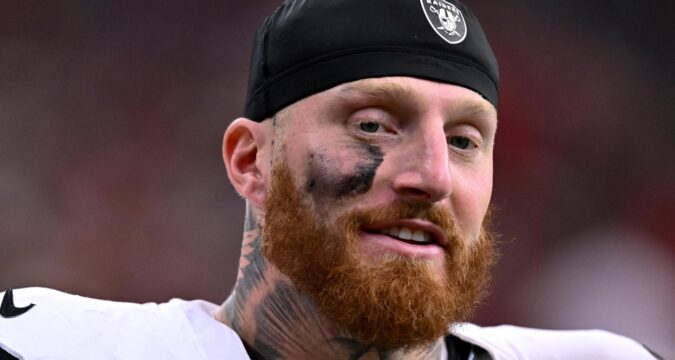
Five-time Pro Bowl edge rusher Maxx Crosby became the latest premier talent traded for two No. 1s when the Baltimore Ravens acquired the 28-year-old star from the Las Vegas Raiders on Friday night, two people with knowledge of the deal told The Associated Press on Friday night.
Both people spoke on condition of anonymity because the trade can’t be announced until the league’s new year starts next week.
The last two Super Bowls were decided by superior defenses. Seattle’s “Dark Side” defense sacked Drake Maye six times in a 29-13 victory over New England last month.
Last year, the Eagles sacked Patrick Mahomes six times in Philadelphia’s 40-22 victory over the Chiefs.
Adding Crosby is a significant boost for the Ravens, who’ve fallen short in the playoffs several times despite successful regular seasons led by two-time NFL MVP Lamar Jackson.
Crosby upgrades a defense that had just 30 sacks in 2025, tied for 28th in the NFL. He could thrive under new coach Jesse Minter, a former defensive coordinator.
Here’s a look at some other trades involving two first-round picks over the past five years:
Sauce Gardner
The Colts sent two first-rounders and wide receiver Adonai Mitchell to the Jets for the two-time All-Pro cornerback last November. Indianapolis was 7-2 at the time but injuries to quarterback Daniel Jones and Gardner helped derail their season.
Micah Parsons
The Packers traded two first-rounders and three-time Pro Bowl defensive tackle Kenny Clark to Dallas for the three-time All-Pro edge rusher a week before the start of last season.
Parsons had 12 1/2 sacks in 14 games, helping Green Bay start 9-3-1. They didn’t win a game without him after he tore an ACL.
Russell Wilson
The Denver Broncos made a blockbuster deal to acquire the 10-time Pro Bowl quarterback in March 2022, sending two first-round picks, two second-round picks, a fifth-round pick, QB Drew Lock, tight end Noah Fant, and defensive lineman Shelby Harris to Seattle. Wilson went 11-19 in only two seasons in Denver before he was released.
Deshaun Watson
In March 2022, the Cleveland Browns made what turned out to be one of the worst trades in NFL history when they acquired Watson and a 2024 sixth-round pick from the Houston Texans in exchange for three first-round picks, a third-round pick and two fourths.
The Browns then signed Watson to a $230 million contract fully guaranteed. He’s played just 19 games in four years, going 9-10.
Matthew Stafford
The Los Angeles Rams traded quarterback Jared Goff, two first-rounder and a third to the Detroit Lions for Stafford in January 2021. The three-time Pro Bowl QB led the Rams to a Super Bowl title that season and was AP NFL MVP in 2025.
https://www.chicagotribune.com/2026/03/07/nfl-trade-first-round-picks-defense/

13-year-old girl critically wounded Friday night in Oakland neighborhood
A 13-year-old girl was critically wounded Friday night on the South Side in the Oakland neighborhood, Chicago police said.
Shortly before 9:45 p.m., officers responded to a call of a person shot in the 3800 block of South Cottage Grove Avenue. A 13-year-old girl was standing outside with a group of friends when a light-colored sedan drove pass them. Someone inside the sedan pulled out a firearm and opened fire in the girl’s direction, police said. The shooter fled the scene.
The girl suffered multiple gunshot wounds to the body, and was taken to Comer Children’s Hospital where she was listed in critical condition, police said.
No one was in custody for the attack, and detectives were investigating.
https://www.chicagotribune.com/2026/03/07/gun-violence-oakland/

Burglar in custody after being wounded by CCL holder overnight
A burglar was in police custody after being wounded by a conceal carry license holder overnight on the South Side in the New City neighborhood, Chicago police said.
Shortly after 2:35 a.m., officers responded to a call of a burglary in the 5100 block of South Loomis Boulevard. A 59-year-old man broke into a garage and was confronted by a homeowner who has a conceal carry license, police said. The homeowner pulled out a firearm and opened fire.
The burglar suffered a wound to the right calf, and was taekn to UChicago Medicine where he was listed in good condition, police said.
Detectives were investigating and charges were pending.

Britain Is Trying To Censor Americans… But Washington Is Fighting Back
Britain Is Trying To Censor Americans… But Washington Is Fighting Back
Authored by Daniel Lü via The Daily Sceptic,
Ofcom has confirmed it is referring 4chan to a final enforcement decision under the Online Safety Act. The target is a Delaware company that runs an entirely anonymous imageboard from the United States, with no offices, staff, servers or assets in Britain.
The demand: install age-verification systems and content filters so that British children cannot access the site or face daily fines levied from London on an American platform.
This case is not an outlier.
It is the clearest real-world demonstration of what the new generation of “online safety” laws requires: private companies must build automated filters that decide, in advance, which legal speech is too harmful for minors to see. The question the regulators never quite answer is simple: what exactly does the filter catch?
In the early 2020s, a political consensus formed on both sides of the Atlantic: social media is harming children and something must be done. The result in Washington was the Kids’ Online Safety Act (KOSA); in Westminster, the Online Safety Act (OSA), which received Royal Assent in October 2023 and began enforcement in 2025. The political appeal of both measures is genuine. Adolescent mental health deteriorated in the 2010s, parents are alarmed and platforms have appeared indifferent. But good intentions do not make good law, and the form these interventions took is constitutionally and morally indefensible. Both KOSA and the OSA rest on a duty-of-care model: platforms must take “reasonable measures” or implement “proportionate systems” to prevent minors from encountering content associated with depression, anxiety, eating disorders, self-harm and suicide. This is not a regulation of conduct. It is a mandate to suppress speech based on its topic and its predicted emotional effect on a reader: the very definition of content-based regulation.
The American Civil Liberties Union (ACLU) stated the constitutional problem plainly in its July 2023 letter opposing KOSA: the bill “is a content-based regulation of constitutionally protected speech” that “will silence important conversations, limit minors’ access to potentially vital resources and violate the First Amendment”. Under Reed v. Town of Gilbert, a law is content-based if it “applies to particular speech because of the topic discussed or the idea or message expressed”. Content-based regulations are “presumptively unconstitutional”.
The ACLU identified three specific constitutional failures.
First, the speech targeted is protected. The Supreme Court has never permitted government to suppress legal speech simply because a legislature finds it unsuitable for children. In Brown v. Entertainment Merchants Association, the Court was unambiguous: “Speech that is neither obscene as to youths nor subject to some other legitimate proscription cannot be suppressed solely to protect the young from ideas or images that a legislative body thinks unsuitable for them.” Creating a “wholly new category of content-based regulation” permissible only for speech directed at children would be “unprecedented and mistaken”.
Second, these regimes fail strict scrutiny because they are not premised on demonstrated causation. As the ACLU wrote, KOSA “is not premised on a direct causal link, but instead is based on correlation, not evidence of causation”. This is a decisive legal and moral point. In Brown, the Court struck down California’s video game restriction on exactly the same grounds: the state had produced only correlative data. A law that restricts the speech of millions of people must show that the restriction will actually prevent the harm it identifies. Neither KOSA nor the OSA can clear that bar.
Third, these regimes are both under- and over-inclusive. They leave news media, books, music and magazines entirely unregulated while targeting social media platforms. And they will, inevitably, sweep up beneficial speech alongside harmful speech: 92% of parental control apps have been found to incorrectly block LGBTQ+ content and suicide-prevention resources alongside material that is genuinely harmful. Congress, the ACLU concluded, may not rely on unproven future technology to save the statute.
The empirical premise of both regimes is that social media causes mental illness in adolescents. This claim is contested by a substantial body of peer-reviewed research. In a widely noted book review in Nature, Candice L. Odgers, a psychologist specialising in adolescent mental health at UC Irvine, wrote that the graphs produced by Jonathan Haidt in his work The Anxious Generation, which align the rise in teen mental illness with smartphone adoption, “will be useful in teaching my students the fundamentals of causal inference, and how to avoid making up stories by simply looking at trend lines”. Hundreds of researchers, Odgers wrote, “have searched for the kind of large effects suggested by Haidt. Our efforts have produced a mix of no, small and mixed associations. Most data are correlative.” The direction of causality may run the other way: distressed and isolated adolescents gravitate toward online community; social media does not necessarily create the distress.
The practical implication is stark. Existing criminal law already covers the most serious harms comprehensively: child sexual abuse material (CSAM), terrorist content, incitement to violence and harassment are all criminal in both jurisdictions and all designated “priority illegal content” under the OSA’s Schedules 5-7. The genuinely novel element of both regimes is the duty to suppress legal speech about mental health, gender identity and emotional distress. That element is what fails both the First Amendment and basic proportionality analysis.
The most immediate and documented casualty of the OSA’s implementation has been LGBTQ+ communities. This is not an implementation error. It is structural: the content filters platforms deploy to comply with age-assurance obligations cannot distinguish between content that causes harm to LGBTQ+ youth and content that protects them. Following the July 2025 enforcement rollout, Reddit moved significant LGBTQ+ community content behind age-verification barriers on the logic that queer content is “adult content” and therefore, under the Act, presumptively harmful to children. As OpenDemocracy documented, content creators who are “queer, trans or racialised”, or whose content focuses on these communities, have been “disproportionately targeted, with anything ‘queer’ indiscriminately labelled as ‘adult’”. For trans people, the harm is compounded by the identity documentation problem. Age verification requires users to produce government-issued identity matching their legal name and sex. In 2018, fewer than 5,000 trans people in the UK held a Gender Recognition Certificate, out of an estimated 200,000-500,000. For those without legal gender recognition, age verification is not a minor inconvenience, it forces them to out themselves to a commercial third party as a condition of internet access, creating a permanent record linking their legal identity to spaces they may be using precisely to explore their identity in safety. The moral stakes here are not abstract. For LGBTQ+ young people who cannot be open at home or school, online community is not a convenience but a lifeline. Stonewall has warned that anonymity-reduction measures create a “chilling effect” that puts LGBTQ+ people in genuine danger, particularly in the 12 countries where being LGBTQ+ carries the death penalty. As Stonewall’s Director of External Affairs wrote: “The UK’s Online Safety Bill could become the playbook for countries looking to use digital surveillance to identify and persecute their LGBTQ+ citizens.” The US State Department’s 2024 Human Rights Practices Report criticised the OSA for pressuring US social media platforms to “censor speech deemed misinformation or hate speech”.
The regulatory pressure on US platforms is not confined to Ofcom. On February 24th 2026, the Information Commissioner’s Office (ICO), the UK’s independent data protection regulator, issued Reddit, Inc. a £14.47 million fine for unlawfully processing children’s personal information: the largest penalty the ICO has ever imposed for breaches of children’s privacy. The ICO found that Reddit, despite prohibiting users under 13 by its terms of service, applied no robust age assurance mechanism from May 2018 until July 2025, and therefore had no lawful basis for processing the personal data of under-13s under the UK General Data Protection Regulation. Reddit’s omission to carry out a data protection impact assessment (DPIA) focused on the risks to children before January 2025 separately breached Articles 5, 6, 8 and 35 of the UK GDPR. Reddit has announced its intention to appeal, calling the ICO’s requirement to collect identity information from users “counterintuitive and at odds with our strong belief in our users’ online privacy and safety”. The ICO acted under its Age Appropriate Design Code (the ‘Children’s Code’) rather than the OSA, but the two regimes are coordinated: the ICO has openly admitted that it works in partnership with Ofcom, as the ICO stated in its December 2025 children’s privacy progress update, “to ensure efforts are coordinated”. The fine is legally distinct from OSA enforcement but functionally complementary to it: where Ofcom targets platforms’ content-governance duties, the ICO targets their data-governance failures, and the same underlying conduct of allowing age-unverified users to access content triggers liability under both regimes simultaneously. The ICO is now conducting a broader review of at least 17 platforms popular with children in the UK, including Discord, Pinterest and X. Reddit’s objection also surfaces another contradiction the ICO has not resolved: the age verification it effectively mandates creates a permanent record linking users’ legal identities to their platform activity, held by third-party age verification processors entirely outside the platforms’ own systems, and the data practices of those processors are, as the ICO’s own enforcement demonstrates, largely beyond the regulator’s concern.
The contrast between the ICO’s vigour against American social media platforms and its passivity toward British police forces is, on its face, a study in selective enforcement.
The same week that John Edwards announced the £14.47 million Reddit fine and spoke at the IAPP UK Intensive, the story of Alvi Choudhury was making national television. Choudhury, a 26 year-old British Bangladeshi software engineer, had been arrested at his home in Southampton in January 2026 by Thames Valley Police, who suspected him of committing a £3,000 burglary in Milton Keynes: a city he has never visited, 100 miles away. The arrest was triggered by a retrospective facial recognition match against Cognitec software that runs 25,000 searches per month against approximately 19 million custody photographs held on the Police National Database. Choudhury was held in custody for nearly 10 hours before officers examined the alibi evidence he had been offering since his arrest. When he eventually saw the CCTV footage that had identified him, he told the Guardian the suspect looked approximately 10 years younger, with lighter skin, a bigger nose, no facial hair and different eyes and lips. His own mugshot had been on the police system in the first place only because he was wrongly arrested in 2021 after being the victim of an assault; his DNA was subsequently deleted, but his custody photograph was not. Thames Valley Police’s response was, on its own account, revealing. The force acknowledged the arrest “may have been the result of bias within facial recognition technology”, but an officer told Choudhury that “as the use of facial recognition is already subject to review at a strategic level”, he did not feel the need to raise the matter for wider organisational learning. The force’s public statement went further, reframing the failure entirely: the arrest, it said, was based on the investigating officer’s own visual assessment after the algorithmic match, and therefore “was not influenced by racial profiling”. The position that a human officer confirming a racially biased algorithmic result absolves the institution of responsibility for racial bias merits no extended comment. This is not an isolated incident. In January 2026, another force paid damages to a black man wrongly arrested using the same technology. Home Office research, suppressed until December 2025 when it was published deep within a consultation document by Liberty Investigates, found that the algorithm generates false positive matches at a rate of 5.5% for Black faces and 4.0% for Asian faces, compared with 0.04% for white faces: a disparity of more than 100 to one.
When Edwards took the stage, he explained the ICO’s enforcement philosophy: the regulator must “very deliberately choose our focus”, concentrating on “AI and biometrics, children’s privacy and online tracking”. Police facial recognition involves all three. But the ICO has conducted audits, expressed concern through its Deputy Commissioner, and asked the Home Office for “urgent clarity” and stopped there. The Equality and Human Rights Commission has been more forthright: it was granted permission in August 2025 to intervene in a judicial review of the Metropolitan Police’s live facial recognition programme, arguing the deployments are unlawful for want of a clear legal basis. A comment made at the time about the ICO’s posture proved apt: the regulator had “stressed the need for FRT deployment with appropriate safeguards” while sitting “on the fence” as others sought judicial determination of whether current use is “strictly necessary”. The juxtaposition is instructive. The regulator charged with protecting personal data finds £14 million worth of urgency in Reddit’s failure to age-verify its users, and no comparable urgency in a biometric surveillance system that its own deputy has called “disappointing”, that the government’s own research shows discriminates against minorities by a factor exceeding 100, and that has produced wrongful arrests of racial minorities on the basis of a technology the operating force itself concedes may be racially biased. The filter, as always, catches what the filter is not intentionally designed to catch.
All of this would be a domestic British problem if the OSA’s reach were confined to British soil. It is not. Section 3 of the OSA applies to any service with “links with the United Kingdom”, which Ofcom has interpreted to include any platform with a significant UK user base regardless of where it is domiciled, incorporated or operated. In March 2025, Ofcom wrote to 4chan Community Support LLC, a Delaware LLC with no offices, staff or assets outside the United States, to inform it that it was a regulated service because approximately 7% of its traffic came from UK IP addresses and must therefore provide information regarding its illegal content risk assessment and its qualifying worldwide revenue. 4chan refused to respond to either request. In October, Ofcom issued escalating demands, investigations and a £20,000 fine plus a penalty of £100 per day for up to 60 days for non-compliance with information requests, all served by email to US addresses. 4chan again refused to pay. In August 2025, 4chan and Kiwi Farms (Lolcow LLC) filed a federal lawsuit against Ofcom in the District of Columbia, alleging violations of the First, Fourth and Fifth Amendments, pre-emption by Section 230 of the Communications Decency Act and conflict with the SPEECH Act. Ofcom responded by asserting sovereign immunity under the Foreign Sovereign Immunities Act, claiming both the right to issue binding censorship orders to Americans on American soil and immunity from any American legal response.
Ofcom’s enforcement action against 4chan did not end with the October 2025 information-gathering fine. On February 12th 2026, Ofcom issued a second Provisional Decision against 4chan, proposing both a single penalty and a daily rate penalty for contraventions of sections 9, 10, and 12 of the OSA: its substantive duties to conduct a suitable illegal content risk assessment, to set out adequate user protections in its terms of service, and to implement age verification to prevent children from encountering explicit content. Counsel for 4chan, Preston Byrne, replied the same day: “Increasing the size of a censorship fine does not cure its legal invalidity in the United States.” The deadline for representations having passed without compliance, Ofcom confirmed on February 27th that it was referring the matter to a final decision maker under its Online Safety Enforcement Guidelines. The progression is systematic: from information requests under section 100, to a confirmation decision imposing penalties, to a second provisional decision targeting the Act’s substantive content-safety and age-verification duties. Each escalatory step expands the scope of demanded compliance and raises the potential penalty exposure. For an anonymous platform operating exclusively in the United States, age verification for an anonymous imageboard is not a technical requirement: it is an existential one.
The domestic British appeals framework for these decisions is itself still being constructed. On February 26th 2026, the Tribunal Procedure Committee (TPC) opened a consultation on amending the Upper Tribunal Procedure Rules to accommodate the new rights of appeal created by the OSA. Under section 168 of the Act, any person with a sufficient interest may challenge Ofcom’s confirmation decisions, penalty notices and technology notices before the Upper Tribunal. The TPC provisionally proposes a three-month window for permission-to-appeal applications by interested persons who are not the direct recipients of an Ofcom notice, departing from Ofcom’s own preference for one month. On costs, the TPC agrees with Ofcom’s proposal to displace the usual no-costs rule, recognising that the tribunal should have broader discretion to award costs in OSA cases given the likely complexity and evidence-heavy nature of such appeals, and that the existing rule would leave Ofcom unable to recover costs even where it successfully defends a decision. Ofcom is a regulator with the power to fine companies hundreds of millions of pounds, funded by fees levied on the very industry it regulates, and it is now asking for the right to make anyone who challenges it in court pay Ofcom’s legal bills if they lose. The consultation closes May 21st 2026.
This structural asymmetry is what the GRANITE Act directly addresses. Conceptualised by Byrne and introduced in the Wyoming Legislature as HB 70, the ‘Guaranteeing Rights Against Novel International Tyranny and Extortion Act’ passed the Wyoming House of Representatives 46-12 on February 23rd 2026. It strips foreign sovereigns of immunity in US state courts when they attempt to enforce censorship orders against US persons and creates a private right of action with minimum statutory damages of $1 million per violation, or 10% of the defendant’s annual US-related revenue, whichever is greater. It also prevents Wyoming courts from recognising any foreign judgment that infringes constitutionally protected speech, extending the model of the SPEECH Act (28 U.S.C. §§ 4101-4105) from defamation to the full range of First Amendment-protected expression. If censoring an American exposes a foreign regulator to a sufficiently significant civil judgment, the cost-benefit calculation changes dramatically.
A separate American legal theory operates through the Sherman Act and does not depend on overcoming FSIA immunity at all. Ofcom’s sovereign immunity defence may insulate the regulator itself from direct suit, but it extends no protection to the private actors who shaped the OSA’s regulatory design. The OSA imposes identical nominal obligations on all regulated services, but its fixed compliance costs fall proportionally far harder on smaller platforms than on large incumbents with existing legal, technical and compliance teams that can simply be redirected to satisfy new requirements: a pattern antitrust economists describe as raising rivals’ costs. For example, where well-resourced incumbents privately coordinated with regulators to embed compliance standards they could more easily satisfy than their rivals, the resulting framework may reflect competitive preferences rather than independent regulatory judgement. Under Continental Ore Co. v. Union Carbide & Carbon Corp., routing an anticompetitive scheme through a foreign governmental apparatus does not immunise the private actors who designed it. The Noerr-Pennington doctrine, which ordinarily protects petitioning activity, rests on First Amendment foundations that protect the right to petition American government; the stronger legal argument is that it does not extend to petitioning of foreign regulators. Where the factual record supports coordination beyond ordinary advocacy, Sections 1 and 2 of the Sherman Act remain available tools even where the regulatory mechanism is British.
If you care about children’s mental health and safety online, there are three new bills in Congress that are worth knowing about: the SAFE Act, the ECCHO Act and the Stop Sextortion Act (collectively known as the James T. Woods Act). Together they address real, documented harm in ways that KOSA and the UK’s Online Safety Act, simply do not.
The package addresses three documented gaps in federal law.
The SAFE Act repeals outdated CSAM sentencing provisions and directs the US Sentencing Commission to develop updated guidelines reflecting modern patterns of dangerous conduct. Right now, federal sentencing rules are outdated and largely ignored: fewer than one in three cases are sentenced within the existing guidelines. This bill would clear the way for the US Sentencing Commission to write new, updated rules that reflect how online abuse works today.
The ECCHO Act creates a new federal crime targeting networks, most notoriously Network 764, that use online group chats to coerce emotionally vulnerable children into self-harm, suicide and violence, with penalties up to life imprisonment where a victim dies or attempts suicide.
The Stop Sextortion Act explicitly criminalises sextortion for the first time under federal law, responding to a 33% rise in financially motivated cases in 2024 and more than 40 child deaths linked to these schemes. Unlike KOSA or OSA, the James T. Woods Act does not try to police what people say online. They target what predators do: coercion, blackmail and the deliberate manipulation of children into harm. That is a meaningful distinction, and it is why this package has earned support from more than two dozen organizations across the political spectrum, including the FBI Agents Association, RAINN, the National District Attorneys Association, the National Centre for Missing and Exploited Children and Thorn.
The moral case against both the OSA and KOSA is not that children’s wellbeing is unimportant. It is that suppressing protected speech is both the wrong instrument and a dangerous one. The wrong instrument because the science does not establish that social media causes the harms these laws address, and because the content filters that implement these regimes cannot distinguish beneficial from harmful speech. A dangerous one because the same mechanism that blocks, for example, pro-anorexia posts will also block access to eating disorder recovery communities; the same filter that catches self-harm instructions will catch trans youth support forums; and the same regulator empowered to define ‘harmful’ content today may be led by someone with very different ideas about what speech is harmful tomorrow. Above all, it is dangerous because the machinery of protection, once built, does not confine itself to its original target: Japanese Americans were interned after Pearl Harbour; Muslims were surveilled, infiltrated and placed on no-fly lists after September 11th, some rendered to CIA black sites abroad and others tortured at Guantanamo Bay without charge or trial; McCarthyite loyalty boards destroyed careers on the basis that association predicted subversion; and the FBI’s COINTELPRO program turned the apparatus of domestic security against the civil rights movement, monitoring Martin Luther King Jr. as a threat to national security on the pretext of alleged communist infiltration. In each case, the instrument was constructed in good faith to address a genuine fear; in each case the stated rationale was correlation dressed as causation; and in each case the same institutional machinery, once normalised, was available for use against the next group a future administration found threatening.
Ofcom’s attempt to extend this regime to American soil raises the stakes further. It asserts, in effect, that British regulators may determine what Americans are permitted to say on the American internet and that American law has no recourse. That is not a tenable position under the First Amendment, under any established principles of international jurisdiction or under any defensible conception of democratic self-governance. The GRANITE Act is the beginning of the American legal system’s answer.
A brief postscript. I recently sent a prior version of this article to a member of the House of Lords who had asked to read it. Parliament’s email filter blocked it. Repeatedly. The peer could not open the attachment because the system flagged it as suspicious. The article, with working title ‘What the Filter Catches’, was itself caught by a filter. I could not have asked for a better illustration of the argument. Sometimes the world just does the work for you.
Note: The author has submitted Freedom of Information requests to the US Department of State, the Department of Justice, the National Security Council, the Federal Bureau of Investigation, the Federal Trade Commission, the UK ICO as well as Ofcom itself seeking documents relating to Ofcom’s extraterritorial enforcement strategy. Those requests remain pending.
Tyler Durden
Sat, 03/07/2026 – 08:10
https://www.zerohedge.com/political/britain-trying-censor-americans-washington-fighting-back

Mind-Numbing Irony: US Asks Ukraine’s Help To Shoot Down Iran’s Shahed Drones In Gulf
Mind-Numbing Irony: US Asks Ukraine’s Help To Shoot Down Iran’s Shahed Drones In Gulf
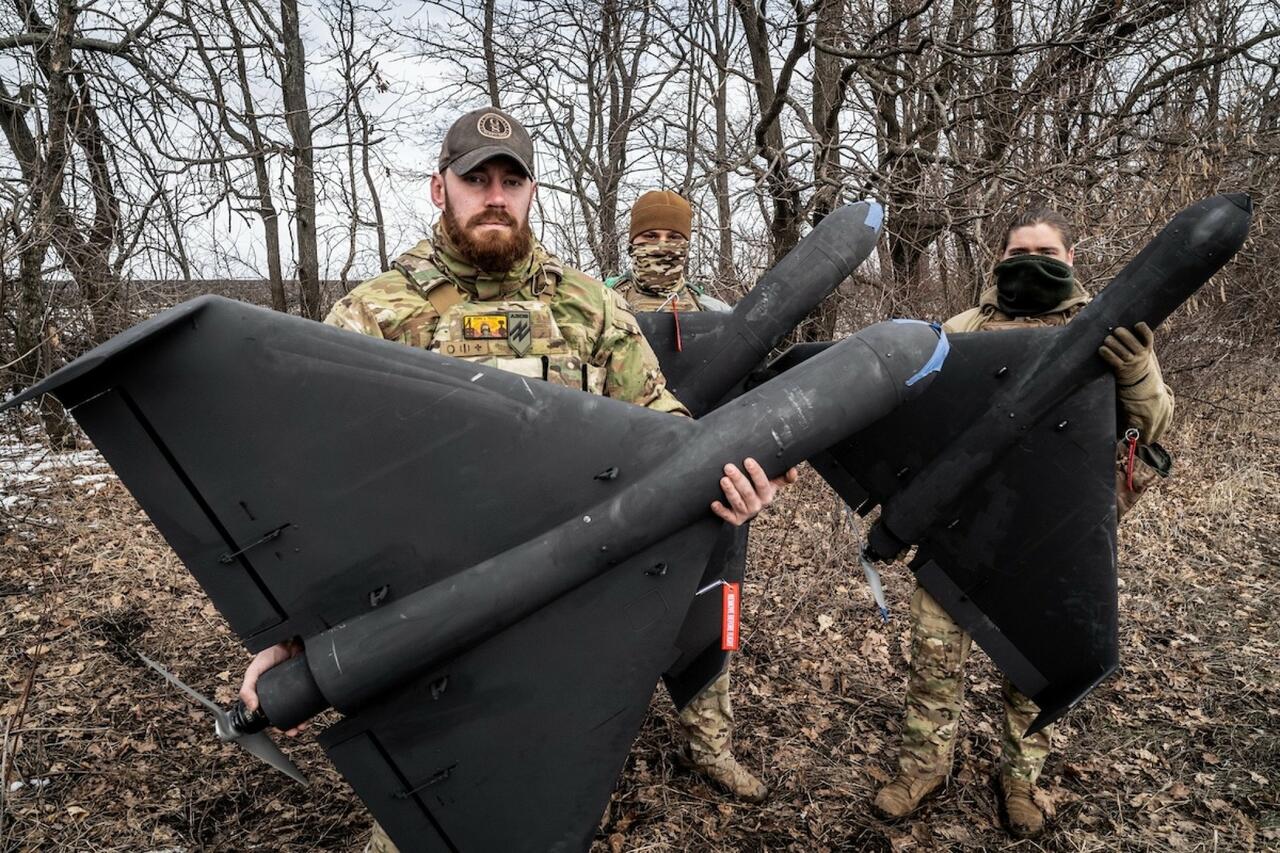
In the ultimate irony of ironies, Financial Times is reporting US officials are discussing the purchase of Ukrainian-made drone interceptors to counter Iranian drones, which some analysts say have proven harder to stop than expected.
Patriot missile interceptors used by US allies cost more than $4 million each, while the Ukrainian systems are significantly cheaper and designed to defeat the same Shahed-type drones used by Russia.
Image source: Come Back Alive Foundation
Supplies are dwindling and costs are soaring, after approaching a full week in to Iran’s retaliation on Gulf nations hosting American bases, given that Patriots have remained the interceptor of choice to defend Gulf cities as well as foreign bases, with a single Patriot interceptor possibly running over $13.5 million.
So Ukraine’s experience in facing down Russia’s significant aerial war over four years of conflict could provide for a cheaper alternative.
The Financial Times describes, citing sources familiar with the discussions, that “Ukrainian drone interceptors are proving they can take down Shaheds at a fraction of the cost.”
However, officials have also stated that any export of Ukrainian systems would need Ukrainian government approval, even if assembled abroad.
This might prove a tall order given that Ukraine is already desperate to get more defense weaponry from the West, and in reality is the last country that can just spare some major weapons systems, or even parts and ammo.
The US has formally asked for Ukraine’s help to shoot down Iran’s Shahed drones, President Zelensky confirms.
The mind numbing irony. https://t.co/u2kgkipQu6
— Tom Newton Dunn (@tnewtondunn) March 5, 2026
But President Zelensky, who has clearly expressed concern that the globe’s attention is fixed squarely on the Iran war, has affirmed he’s in talks with Qatar and the United Arab Emirates.
“Ukraine’s expertise in intercepting Shahed drones is among the world’s most advanced,” Zelensky has said. “Any cooperation must not compromise our own defenses.”
Across the Gulf, there has remained a situation of steady Iranian missile and drone attacks on US Gulf allies. Below is a breakdown of overnight and Friday morning attacks, via Newsquawk:
Saudi Arabia
• Intercepted ballistic missiles, cruise missiles, and drones, including strikes targeting the Prince Sultan Air Base and areas near Riyadh and Al-Kharj.
Qatar
• Intercepted a drone targeting Al-Udeid Air Base, the largest US military base in the region.
• Residents received emergency alerts instructing them to avoid open areas.
UAE
• Intercepted 9 ballistic missiles and 109 drones in a single day.
• Three drones fell inside the country.
• Since the war began: 3 killed and 112 injured in UAE attacks.
Bahrain
• Iranian drones were intercepted over Manama, with debris reportedly damaging buildings, including a hotel.
Broke: We need to arm Ukraine
Woke: We don’t need to arm Ukraine
Bespoke: We need Ukraine to arm us https://t.co/tc8NBa3Hpe
— Martin Skold (@MartinSkold2) March 5, 2026
Meanwhile, this sarcastic observation sums up the awkward situation perfectly:
Broke: We need to arm Ukraine; Woke: We don’t need to arm Ukraine; Bespoke: We need Ukraine to arm us.
Tyler Durden
Sat, 03/07/2026 – 07:35
Ministerio de Salud de Líbano: Ataques aéreos israelíes en Nabi Chit y sus inmediaciones dejan 41 muertos y 40 heridos
DUBÁI, Emiratos Árabes Unidos (AP) — Ministerio de Salud de Líbano: Ataques aéreos israelíes en Nabi Chit y sus inmediaciones dejan 41 muertos y 40 heridos.

NFL draft: Fernando Mendoza on having Tom Brady as a mentor — and Luke Altmyer touts reasons he can succeed
INDIANAPOLIS —Fernando Mendoza said he was able to say a brief “hi” to Las Vegas Raiders minority owner Tom Brady during his NFL scouting combine interview with the team last week.
The Indiana quarterback and Heisman Trophy winner looks forward to more interactions soon.
Mendoza is projected to be the No. 1 pick by the Raiders in next month’s NFL draft, and he said if that pick becomes reality, he would relish the chance to learn from Brady.
“Who hasn’t admired Tom Brady? The guy has more Super Bowl rings than anybody,” Mendoza said at the combine. “That opportunity would be fantastic. Tom Brady, I believe, is the greatest quarterback of all time by a wide margin, and to be able to be mentored by him, it would mean so much.
“I’m all about learning. So from Day 1, I’ve got to learn a lot. It’s going to be a long journey, and to potentially have a mentor like that would be pretty impressive and pretty meaningful.”
Mendoza, who opted not to participate in drills at the combine, drew a big crowd at his media availability and answered multiple questions about potentially going to the Raiders.
He called the staff “football savvy” and said they taught him a play during his interview.
“They had their whole progression on how they teach quarterbacks a play,” he said. “It was very similar to how my Indiana progression was. I’m a very type-A guy, and they had all the details of each play: what to do if you have a problem with each play, what’s your drop, what’s your progression.”
Mendoza threw for 3,535 yards and 41 touchdowns with six interceptions while leading Indiana to its first national championship in a 16-0 season. If the Raiders draft him, he would be going to a team that finished 3-14 in a tumultuous 2025 season.
But Mendoza noted that quick turnarounds are possible in the NFL.
“In the NFL, the margins are so small,” he said. “There are so many games decided by so few points, and the difference between a losing record and a winning record is a couple of drives, a couple of key plays. So whatever team I’m on, I’m just going to take the advice from the coaching staff and however I can best serve my teammates on that team, I’m going to do it to the best of my ability.”
Luke Altmyer on his future role
Illinois quarterback Luke Altmyer performs a drill at the NFL scouting combine Feb. 28, 2026, in Indianapolis. (AP Photo/Julio Cortez)
Illinois quarterback Luke Altmyer was talking to reporters — not the teams considering drafting him — but he had his pitch ready.
Asked what sets him apart from the other quarterbacks in this draft class, Altmyer, typically expansive in his answers, rattled off a long list of qualities, starting with his experience and intangibles.
“My leadership qualities, what I’ve overcome,” he said. “I’ve earned everything, man, in the hardest league. It wasn’t easy at Illinois playing in the weather. I think that’s a separator for me. I played more in a pro-style offense, a little bit of spread elements. Playing under center, calling plays in the huddle, playing in weather. I played in 10 inches of snow, some rain and the windiest stadium in America.
“And I’ve been super efficient and really good and hard to defend. My creativity, my mobility, it shows up all over the tape. My toughness, my competitive spirit, my desire to win. I think I can make all the throws as well.”
Altmyer threw for 7,607 yards and 57 touchdowns over three seasons at Illinois, including 3,007 yards and 22 touchdowns with five interceptions as a senior. He helped the Illini set a program record with 19 wins, including two bowl victories, over the last two seasons.
He is projected to be a Day 3 pick, which would make him the first Illinois quarterback drafted since Kurt Kittner in 2002.
ESPN analyst Mel Kiper Jr. ranked him as the ninth-best quarterback in the class heading into the combine. NFL.com analyst Lance Zierlein praised Altmyer’s production relative to his protection and called his eye discipline, patience and anticipation adequate while questioning his operation time and arm talent.
Altmyer said he believes he can play in the NFL. But he also said he has taken note of what it means to be a backup at that level.
He said he spent time during the predraft process with 18-year NFL quarterback and eight-time Pro Bowler Philip Rivers, who talked about how valuable the quarterback room was to him and how the backups helped him prepare.
“They had a job to do and did it well, and how valuable those people were, it’s a big deal,” Altmyer said. “Obviously I want to play. I’m looking forward to playing. I know I can play. I know I can win. I’ve done that.
“But when I walk in the building one day, my job is to do it well, whether I’m mopping the floor or I’m running the show. I’m going to use my gifts every single day to be my best.”
Malachi Fields wants a re-run
Notre Dame wide receiver Malachi Fields runs the 40-yard dash at the NFL scouting combine Feb. 28, 2026, in Indianapolis. (AP Photo/Michael Conroy)
Notre Dame wide receiver Malachi Fields visited with NFL reporter Kay Adams on her show shortly after the combine to let everyone know he planned to run the 40-yard dash again at his pro day.
Fields’ time of 4.61 seconds was second-to-last among receivers at the combine. He said he needs to work on his stance so that he explodes out instead of up. He hopes to run in the 4.5s.
“I can definitely run faster,” he told Adams. “So just going back to work and focusing on pro day. But not dwelling on it too much, knowing there are more drills to do. There’s running routes. … Catching the ball is what I’m known for anyway, so just trying to refocus on the route-running piece of it.”
In one season at Notre Dame after transferring from Virginia, Fields had 36 catches for 630 yards and five touchdowns. He said his experience with the Irish helped him to understand how to go into a new place and win a job, and he thought he grew on the field too.
“Just my confidence,” Fields said. “Stepping on the field believing I can compete with anybody in the country.”
https://www.chicagotribune.com/2026/03/07/nfl-draft-fernando-mendoza-luke-altmyer/

Germany Is Now Officially A Planned Economy
Germany Is Now Officially A Planned Economy
Authored by Eduard Braun via Mises Institute,
Germany’s push for a social-ecological market economy rests on far-reaching state interventions in energy and industry, including a government-driven hydrogen strategy. In a recent report Germany’s Federal Audit Office explicitly describes the policy as a planned economy and highlights fundamental problems. At the same time, it doubts that the government will reach its own targets, indicating that these climate-policy experiments are likely to fail even on their own terms.
Germany’s “social-ecological transformation” is the political program of turning the existing social market economy into what the government calls a “social-ecological market economy.” In practice, this means that climate and environmental targets are placed above the spontaneous outcomes of markets, and the state increasingly directs investment, production, and consumption through detailed regulation, bans, subsidies, and new bureaucratic structures.
The federal government has committed itself—through the Paris Agreement, the EU Green Deal, the EU Climate Law, and Germany’s own Climate Change Act—to achieving greenhouse-gas neutrality by 2045. On this basis, it is pushing a comprehensive restructuring of the entire energy and industrial base. Fossil fuels are to be phased out and replaced by renewable energy sources and new technologies. To enforce this, Berlin is tightening emissions limits, introducing sector-specific reduction paths, and expanding carbon pricing. At the same time, it is rolling out large-scale subsidy programs and support schemes aimed at “climate-friendly” investments, ranging from energy-intensive industries to housing, transport, and agriculture. According to the Scientific Service of the German Bundestag, the transformation will cost about 13 trillion euros (roughly 15.3 trillion dollars).
Central to this transformation is not merely setting general framework conditions, but steering concrete technological choices: the government explicitly promotes certain technologies (such as hydrogen, battery-electric mobility, and “green” industrial processes) and discourages or prohibits others. It also relies on binding planning instruments and long-term “transformation roadmaps” for entire sectors of the economy. Officially, this is presented as a modernization strategy that will preserve prosperity while making Germany climate-neutral. In reality, it increasingly replaces decentralized entrepreneurial decisions and price signals with political targets and administrative plans.
Germany’s Federal Audit Office (“Bundesrechnungshof”) is an official state institution, not a libertarian think tank. It reports to parliament and examines whether the federal government uses public funds lawfully and efficiently. Precisely this body, in its October 28, 2025 report on Germany’s national hydrogen strategy, delivers an unusually clear verdict on the economic character of current climate policy.
The report states that hydrogen is supposed to play a “key role in the energy transition,” yet “there is a lack of supply, demand, and infrastructure” (p. 2). In other words, the government is trying to build an entire market around a product that is scarcely available, scarcely needed under current conditions, and cannot be traded at scale because the necessary pipelines and facilities are missing. The Audit Office further emphasizes that “hydrogen is significantly more expensive than energy sources used to date. The Federal Government is supporting the ramp-up of the hydrogen economy with several billion euros annually, following a planned economy approach” (p. 2, emphasis added). Here, the central term—“planned economy approach”—comes directly from an official oversight body describing government policy, not from its critics.
Despite this massive use of subsidies and dirigiste steering, the Audit Office concludes that the government remains “far from reaching its goal of establishing a hydrogen economy by 2030” (p. 2). In short, the watchdog authority finds that Berlin is using a planned economy method, paying far higher costs for hydrogen than for existing energy sources, and still failing to come close to its own targets.
From the perspective of Austrian economics, none of this should be surprising. Ludwig von Mises argued that once governments move from a market order to a system of political planning, they inevitably undermine the very mechanisms—prices, profits, and losses—that coordinate economic activity. Central planners cannot know the relative scarcities, preferences, and technological possibilities that millions of entrepreneurs discover only through free exchange. The result is misallocation of capital, persistent shortages and surpluses, and a gradual erosion of prosperity.
Germany’s “social-ecological market economy” is a textbook illustration of this dynamic. The state declares hydrogen and other favored technologies to be the “future,” pours billions into subsidies, and attempts to construct markets by decree. Yet even an official body like the Federal Audit Office now describes this as a “planned economy approach” and doubts that the government will reach its own goals. In all likelihood, Germany is about to confirm once again what Mises showed in theory a century ago: planned economies do not deliver their promised outcomes. Instead, they generate rising costs, failing projects, and increasing chaos—while making society poorer in the process.
Tyler Durden
Sat, 03/07/2026 – 07:00
https://www.zerohedge.com/geopolitical/germany-now-officially-planned-economy

La guerra en Oriente Medio atrapa a muchos peregrinos musulmanes en un caos de viajes
Por MARIAM FAM, NINIEK KARMINI y EILEEN NG
YAKARTA, Indonesia (AP) — El caos provocado por la guerra en Oriente Medio en los viajes ha afectado a muchos de los musulmanes que se desplazaron a Arabia Saudí para la peregrinación de la umrah, que quedaron varados y buscando alternativas para regresar a casa. Otros tuvieron que cancelar por completo las visitas que tenían previstas.
Para algunos de los que participaron en los rituales religiosos, la guerra que sacude la región ha empañado su experiencia de visitar los lugares sagrados del reino.
Hasta el jueves, más de 58.860 peregrinos indonesios estaban varados en Arabia Saudí, según el viceministro de hajj y umrah de Indonesia, Dahnil Anzar Simanjuntak.
El gobierno negocia con las autoridades saudíes y las aerolíneas para aliviar la carga financiera de los costos de hotel y vuelos para los afectados, agregó. El ejecutivo indonesio instó además a unas 60.000 personas más a demorar su viaje de umrah hasta abril por razones de seguridad.
El portavoz del ministerio, Ichsan Marsha, calificó la situación como un “problema humanitario y logístico urgente”. Indonesia es el país con la mayor población musulmana del mundo.
Costo económico y emocional
Zanirah Faris, una peregrina atrapada en Arabia Saudí, contó a la televisora indonesia iNews TV que su vuelo de regreso fue cancelado y se le reasignó otro programado para el 12 de marzo.
Pidió al gobierno indonesio que ayude a los afectados, especialmente a quienes no pueden hacer frente a los costos adicionales que conllevan las demoras.
“No todo el mundo puede reservar estancias adicionales en un hotel”, afirmó agregando que también hay un costo emocional. “Estoy decepcionada porque mis hijos me han estado esperando”.
Cientos de miles de indonesios viajan cada año a Arabia Saudí para los rituales de la umrah, especialmente durante el mes sagrado del ramadán. A diferencia del hajj, esta peregrinación puede realizarse durante todo el año.
Además, unos 1.600 peregrinos malasios no podían tampoco abandonar el reino, informó el martes Mohamad Dzaraif Raja Abdul Kadir, cónsul general de Malasia en Yeda. La agencia nacional de noticias Bernama lo citó diciendo que los afectados se encontraban en buen estado.
Su oficina abrió una sala de crisis que funciona las 24 horas para monitorear la situación y canalizar asistencia a los afectados, explicó.
Malaysia Airlines anunció una reanudación temporal de los vuelos de regreso desde las ciudades saudíes de Yeda y Medina hasta el domingo.
Por otro parte, el Ministerio de Exteriores de Malasia señaló que estaba trabajando con misiones diplomáticas, gobiernos regionales y aerolíneas para sacar a sus ciudadanos, incluyendo los peregrinos.
Más allá de Oriente Medio, los aeropuertos del golfo sirven como centros neurálgicos críticos que conectan a viajeros que se dirigen a Europa, África y Asia.
Cambios abruptos y reencuentro familiar
Maged Kholaif, un egipcio de 44 años, debía regresar a Kuwait desde Arabia Saudí el 28 de febrero, el día en que comenzó la guerra, pero su vuelo fue cancelado y reprogramado para días después.
Fue un cambio abrupto con respecto a la positividad y espiritualidad en las que había estado inmerso durante la umrah, reconoció al tiempo que afirmó que fue “una sensación muy difícil”.
Varado junto a su esposa y su suegra, Kholaif buscó desesperadamente maneras de volver a Kuwait, donde están sus hijos. Podía sentir que la situación se agravaba al escuchar cómo residentes en Kuwait hablaban de que escuchan sirenas y explosiones.
“Todo el mundo se asustó”, relató Kholaif.
Decidió regresar por tierra y llegó a Kuwait el martes para un emotivo reencuentro.
Una vez que “tienes a tus hijos delante de los ojos y entre tus brazos, lo que pase después no importa, siempre y cuando estén juntos”, declaró.
Decisiones difíciles y cancelaciones
En Michigan, Javed Khizer, de 47 años, contó que canceló el viaje de la umrah para él y su familia a Arabia Saudí. Hacían escalas en Turquía y Qatar.
“Estábamos mirando las noticias y todo eso. Solo podíamos entender que la situación está empeorando”, señaló. “Fue una decisión difícil (…) ¿Quién sabe si estaré allí el próximo ramadán o no? No está garantizado”.
Para los musulmanes practicantes, el ramadán es un tiempo de mayor devoción y de ayuno diario desde el amanecer hasta que se pone el sol.
La umrah suele considerarse una peregrinación y puede realizarse durante todo el año, a diferencia del hajj, una peregrinación anual que es uno de los cinco pilares de la religión. El hajj es obligatorio una vez en la vida para todo musulmán que pueda costearlo y esté en condiciones físicas de realizarlo.
Intentar concentrarse en los rituales religiosos
Majid Mughal, un peregrino de 52 años que visita Arabia Saudí con su familia desde Estados Unidos, apuntó que “Consideramos venir a la tierra sagrada como un llamado de Alá, y durante este mes sagrado de ramadán, creo que es muy recomendable venir y visitarla, si se puede”.
Pero si hubiera sabido que iba a estallar una guerra, habría cancelado sus planes, afirmó. Mughal y su familia se enteraron de los ataques mientras estaban en tránsito hacia Arabia Saudí, y aunque algunos pasajeros de otras rutas quedaron varados en el aeropuerto, su vuelo continuó con normalidad, añadió.
“Hasta ahora, todo está bien, gracias a Dios. Aquí no hay problemas”, manifestó durante su viaje. “Hay mucha gente durante el ramadán. Veo la seguridad habitual (…) Nos sentimos seguros”.
La familia trata de concentrarse en los rituales religiosos, así como en ayunar, rezar y reforzar sus lazos, pero también ha sido difícil desconectarse de las noticias y tienen que tranquilizar a quienes están en casa diciéndoles que están bien, explicó.
Y luego está la preocupación por su regreso a casa.
“Revisamos los detalles del vuelo, los detalles de la salida casi a diario solo para asegurarnos de que los vuelos sigan operando”, indicó, agregando que sus hijos tienen que volver a la escuela y él debe reincorporarse a su puesto de trabajo.
___
Fam informó desde El Cairo, Egipto, y Ng desde Kuala Lumpur, Malasia.
——
La cobertura de religión de The Associated Press recibe apoyo a través de la colaboración de AP con The Conversation US, con financiación de Lilly Endowment Inc. AP es la única responsable de este contenido.
___
Esta historia fue traducida del inglés por un editor de AP con la ayuda de una herramienta de inteligencia artificial generativa.
Trump advierte en que más funcionarios iraníes serán objetivos de guerra y afirma que “¡Hoy Irán será golpeado duro!”
DORAL, Florida, EE.UU. (AP) — Trump advierte en que más funcionarios iraníes serán objetivos de guerra y afirma que “¡Hoy Irán será golpeado duro!”