Category: News
Bomba al borde de carretera mata a 4 y hiere a decenas en noroeste de Pakistán
Associated Press
PESHAWAR, Pakistán (AP) — Una bomba colocada al borde de una carretera y dirigida contra un vehículo policial mató a cuatro personas, entre ellas dos agentes, e hirió a cerca de dos docenas más en el inestable noroeste de Pakistán, cerca de la frontera con Afganistán, informó la policía.
La explosión ocurrió en Wana, una ciudad de la provincia de Khyber Pakhtunkhwa, indicó el funcionario policial Asghar Shah.
Los fallecidos incluían a dos agentes de policía y dos transeúntes, precisó.
Ningún grupo se atribuyó de momento la autoría del ataque, pero es probable que las sospechas recaigan sobre los talibanes paquistaníes, conocidos como Tehrik-e-Taliban Pakistan (TTP). El grupo es distinto, pero aliado, del gobierno talibán de Afganistán y en los últimos años ha intensificado su campaña contra las fuerzas de seguridad paquistaníes.
Pakistán ha sido testigo de un aumento de la violencia de los milicianos que ha profundizado las tensiones con Afganistán. Islamabad acusa al TTP de utilizar territorio afgano como refugio seguro desde que los talibanes afganos regresaron al poder en Kabul en 2021, una acusación que los talibanes afganos niegan.
___
Esta historia fue traducida del inglés por un editor de AP con la ayuda de una herramienta de inteligencia artificial generativa.

El pívot de Celtics Nikola Vucevic se opera del anular derecho tras lesionarse el viernes
BOSTON (AP) — El pívot de los Celtics de Boston, Nikola Vucevic, fue operado el sábado para estabilizar la fractura en el dedo anular derecho y será reevaluado después de al menos tres semanas.
Vucevic se lesionó en el primer cuarto del partido del viernes por la noche contra Dallas cuando el ala-pívot de los Mavericks, Khris Middleton, manoteó el balón. Abandonó el encuentro, que Boston ganó 120-100 en el regreso de Jayson Tatum tras una lesión en el tendón de Aquiles, y no volvió.
Los Celtics informaron el sábado que Vucevic será reevaluado en 3-4 semanas.
Vucevic llegó el mes pasado procedente de los Bulls de Chicago en la fecha límite de traspasos, para darle a los Celtics profundidad en la posición de hombre grande. El montenegrino de 35 años promedió 10,4 puntos y 21,7 minutos en 12 partidos con Boston.
___
Deportes AP: https://apnews.com/hub/deportes
Iran’s New Supreme Leader To Be Chosen Within 24 Hours: State Media
Iran’s New Supreme Leader To Be Chosen Within 24 Hours: State Media
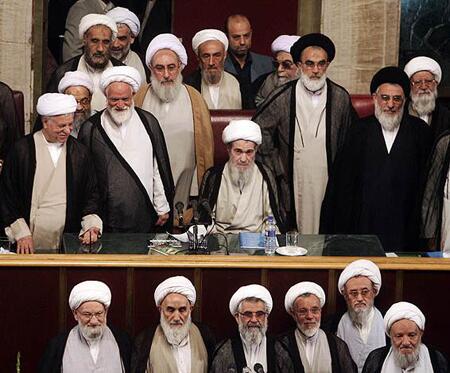
Iran could be hours away from installing a new supreme leader, with state Fars News reporting early Saturday that a successor may be selected within the next 24 hours, but there are signs of a potential factional power struggle – somewhat expected given the complex history of reform vs. hardline Islamic interpretations inside Iran.
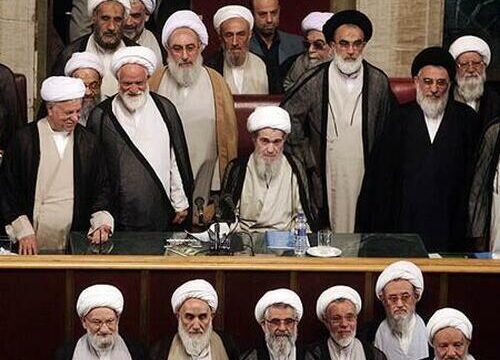
The outlet cited sources within the Assembly of Experts, which is the 88-member body of Islamic jurists elected every eight years and tasked with choosing the country’s top clerical authority. The process was “paused” this week amid the heavy bombing campaign.
File image: Assembly of Experts
There were reports earlier this week that the US-Israeli Operation Epic Fury had struck a Tehran building where the Assembly of Experts were meeting, but such battlefield claims by US and Israeli officials remain hard to ultimately verify, given the intensify of the bombardment and fog of war.
The development comes as the war continues to intensify, as President Trump vows to keep hitting Iran harder.
Iranian President Masoud Pezeshkian said Tehran will “never surrender” to Washington or Tel Aviv, even as he issued an apology to neighboring Gulf states after Iranian strikes targeted locations linked to American military assets stationed in the region. And civilian sites in Gulf cities have also clearly been directly hit, such as airports – though the Iranians’ own airports have been struck.
The process for choosing a new Supreme Leaders is likely intense as the bombs fall, and there’s likely internal divide over how to handle the crisis among the country’s long-standing political factions…
Succession Crisis in Tehran, A Coup in the Making?
Divisions inside Iran’s leadership are now spilling into the public sphere. Hardline outlet Raja News @Rajanews_ir, which reflects the views of hawkish factions within the Islamic Revolutionary Guard aligned camp, sharply… https://t.co/tBmu3G4hkm pic.twitter.com/WcaekQ5Cmt
— Basha باشا (@BashaReport) March 7, 2026
One name has emerged as likely front-runner, at least according to the Western media consensus:
The senior clerics responsible for selecting Iran’s next supreme leader met on Tuesday to deliberate, and the son of the slain former leader, Ayatollah Ali Khamenei, emerged as the clear front-runner, according to three Iranian officials familiar with the deliberations.
The officials said that the clerics were considering announcing that the son, Mojtaba Khamenei, would be his father’s successor as early as Wednesday morning but that some had expressed reservations, fearing that it could expose him as a target for the United States and Israel. They spoke on the condition of anonymity to discuss sensitive internal deliberations.
Indeed already the US has said that potential successors have already been taken out, including some that President Trump said he might have been OK with.
Any new Ayatollah would likely immediately be targeted especially by Israel, and is thus likely to be even more ‘hard line’ than the slain Khamenei. Even the CIA has long admitted in analysis that this will be the likely outcome.
Leavitt on what Trump means by demanding Iran’s unconditional surrender: “When he as commander in chief determines that Iran no longer poses a threat to the US and the goals of Operation Epic Fury have been fully realized, then Iran will essentially be in a place of unconditional… pic.twitter.com/GDgaZE5pMZ
— Aaron Rupar (@atrupar) March 6, 2026
Any new religious leader must also have the support of the hard line IRGC, which is effectively running the country and the military response at this point.
Tyler Durden
Sat, 03/07/2026 – 14:45

How springing forward to daylight saving time could affect your health
WASHINGTON — Most of America “springs forward” Sunday for daylight saving time. Losing that hour of sleep can do more than leave you tired and cranky the next day; it also could harm your health.
Darker mornings and more evening light knock your body clock out of whack — which means daylight saving time can usher in sleep trouble for weeks or longer. Studies have even found an uptick in heart attacks and strokes right after the March time change.
There are ways to ease the adjustment, including getting more sunshine to help reset your circadian rhythm for healthful sleep.
When does daylight saving time start?
Daylight saving time begins Sunday at 2 a.m., an hour of sleep vanishing in most of the U.S. The ritual will reverse on Nov. 1 when clocks “fall back” as daylight saving time ends.
Hawaii and most of Arizona don’t make the spring switch, sticking to standard time year-round — along with Puerto Rico, American Samoa, Guam and the U.S. Virgin Islands. Worldwide, dozens of countries also observe daylight saving time, starting and ending at different dates.
Some people try to prepare for daylight saving time by going to bed a little earlier two or three nights ahead. While getting back on schedule after an hour’s change may not be that difficult for some people, it’s an added challenge for the third of U.S. adults who already don’t get the recommended seven hours of nightly shuteye.
What happens to your brain when it’s lighter later?
The brain has a master clock that is set by exposure to sunlight and darkness. This circadian rhythm is a roughly 24-hour cycle that determines when we become sleepy and when we’re more alert. The patterns change with age, one reason that early-to-rise youngsters evolve into hard-to-wake teens.
Morning light resets the rhythm. By evening, levels of a hormone called melatonin begin to surge, triggering drowsiness. Too much light in the evening — that extra hour from daylight saving time — delays that surge and the cycle gets out of sync.
Sleep deprivation is linked to heart disease, cognitive decline, obesity and numerous other problems. And that circadian clock affects more than sleep, also influencing things like heart rate, blood pressure, stress hormones and metabolism.
How does the time change affect your health?
Fatal car crashes temporarily jump the first few days after the spring time change, according to a study of U.S. traffic fatalities. The risk was highest in the morning, and researchers attributed it to sleep deprivation.
Then there’s the cardiac connection. The American Heart Association points to studies that suggest an uptick in heart attacks on the Monday after daylight saving time begins, and in strokes for two days afterward.
Doctors already know that heart attacks, especially severe ones, are a bit more common on Mondays generally — and in the morning, when blood is more clot-prone.
Researchers don’t know why the time change would add to that Monday connection but it’s possible the abrupt circadian disruption exacerbates factors such as high blood pressure in people already at risk.
How to adjust to daylight saving time
Go outside for early morning sunshine that first week of daylight saving time, which can help reset your body’s internal clock. Moving up daily routines, like dinner time or when you exercise, also may help cue your body to start adapting, sleep experts advise.
Afternoon naps and caffeine as well as evening light from phones and other electronic devices can make adjusting to an earlier bedtime even harder.
Will the U.S. ever eliminate the time change?
Every year there’s talk about ending the time change. Before starting his second term, President Donald Trump promised to eliminate daylight saving time. A bipartisan bill named the Sunshine Protection Act to make daylight saving time permanent has repeatedly stalled in Congress.
But that’s the opposite of what some health groups recommend. The American Medical Association and American Academy of Sleep Medicine agree it’s time to do away with time switches but say sticking with standard time year-round aligns better with the sun — and human biology — for more consistent sleep.
https://www.chicagotribune.com/2026/03/07/daylight-saving-time-affect-health/

Darious Williams se retira tras 8 años de carrera y un anillo de Super Bowl con los Rams
Por GREG BEACHAM
LOS ÁNGELES (AP) — El esquinero Darious Williams anuncio su retiro tras una carrera de ocho años en la NFL que incluyó un anillo de Super Bowl con los Rams de Los Ángeles.
Los Rams colocaron a Williams, que cumple 33 años a finales de este mes, en la lista de reserva/retirados el sábado.
Williams jugó para Baltimore y Jacksonville, además de sus dos etapas en Los Ángeles.
Comenzó su carrera como agente libre no reclutado y se ganó un lugar en el roster de los Ravens en 2018. Los Rams lo reclamaron de la lista de waivers más tarde ese año, y con el tiempo se abrió camino hasta convertirse en titular, en el lado opuesto de Jalen Ramsey en la secundaria de Los Ángeles.
Williams fue titular en el equipo campeón de los Rams en la temporada 2021, y lideró a los Rams con ocho tacleadas en su victoria de Super Bowl sobre Cincinnati.
Luego, Williams se marchó con un contrato como agente libre por 30 millones de dólares con los Jaguars en su ciudad natal. Jugó dos temporadas como titular antes de regresar a los Rams, después de que Jacksonville lo dejara en libertad en marzo de 2024.
Las lesiones limitaron la disponibilidad de Williams durante las últimas dos temporadas con los Rams, pero en general jugó bien cuando estuvo sano. Le queda un año de contrato con Los Ángeles, que este mes acordó un canje para adquirir al esquinero estelar Trent McDuffie, procedente de Kansas City.
Williams terminó con 12 intercepciones en su carrera, devolviendo una para touchdown, además de dos recuperaciones de balón suelto y 306 tacleadas.
___
Deportes AP: https://apnews.com/hub/deportes

Jan. 6 plaque honoring police officers is installed at the Capitol after a 3-year delay
WASHINGTON — Visitors to the Capitol will now have a visible reminder of the violent attack against the building on Jan. 6, 2021, and the officers who fought and were injured that day.
Steps from the Capitol’s West Front and where the worst of the fighting occurred, workers quietly have installed a plaque honoring the officers, three years after it was required by law to be erected. The plaque was placed on the Senate side of the hallway because the Senate voted unanimously in January to install it after House Speaker Mike Johnson, R-La., had delayed putting it up.
“On behalf of a grateful Congress, this plaque honors the extraordinary individuals who bravely protected and defended this symbol of democracy on January 6, 2021,” the plaque says. “Their heroism will never be forgotten.”
The Washington Post first reported the installation of the plaque, which was witnessed by a reporter about 4 a.m. EST Saturday.
Sen. Thom Tillis, R-N.C., led the effort to install it as he commemorated the fifth anniversary of the attack and described his memories of hearing people break into the building. “We owe them eternal gratitude, and this nation is stronger because of them,” he said of the officers who were overwhelmed by thousands of President Donald Trump’s supporters and eventually pushed them out of the building.
The mob of rioters who violently pushed past police and broke in were echoing Trump’s false claims of a stolen election after the Republican was defeated by Democrat Joe Biden in the 2020 presidential election. The crowd stopped the congressional certification of Biden’s victory for several hours, sent lawmakers running and vandalized the building before police regained control. More than 140 officers from the U.S. Capitol Police, the Metropolitan Police Department and other agencies were injured.
The fight to have the plaque installed came as Trump returned to office last year and the Republican Congress has remained loyal to him. Trump, who has called Jan. 6 a “day of love,” has tried to deflect blame on Democrats and police for instigating the attack.
Congress passed a law in 2022 that set out instructions for the honorific plaque listing the names of officers “who responded to the violence that occurred.” It gave a one-year deadline for installation, but the plaque never went up.
After more than a year of silence — and a lawsuit by two of the officers who fought at the Capitol that day — Johnson said at the beginning of the year that there were technical problems with the statute and the plaque could not be erected.
Tillis went to the Senate floor shortly afterward and passed a resolution, with no objections, to place the plaque on the Senate side.
One of the officers who sued, Metropolitan Police Officer Daniel Hodges, said the lawsuit would continue. Hodges, who was crushed by the rioters in the heavy doors are steps away from where the plaque is now displayed, said Saturday that the overnight installation was a “fine stopgap” but that it was not in full compliance of the law. The original statute said that all of the officers names should be listed, among other technical specifications.
“The weight of a judicial ruling would help secure the memorial against future tampering,” Hodges said. “Our lawsuit persists.”
Associated Press contributor Allison Robbert contributed to this report.
https://www.chicagotribune.com/2026/03/07/jan-6-plaque-capitol/

President Trump encourages Latin American leaders to use military action to help US fight cartels
DORAL, Fla. — President Donald Trump said Saturday that the United States and Latin American countries are banding together to combat violent cartels as his administration looks to demonstrate it remains committed to sharpening U.S. foreign policy focus on the Western Hemisphere even while dealing with five-alarm crises around the globe.
Trump encouraged regional leaders gathered at his Miami-area golf club to take military action against drug trafficking cartels and transnational gangs that he says pose an “unacceptable threat” to the hemisphere’s national security.
“The only way to defeat these enemies is by unleashing the power of our militaries,” Trump said. “We have to use our military. You have to use your military.” Citing the U.S.-led coalition that confronted the Islamic State group in the Middle East, the Republican president said that ”we must now do the same thing to eradicate the cartels at home.”
The gathering, which the White House called the “Shield of the Americas” summit, came just two months after Trump ordered an audacious U.S. military operation to capture Venezuela’s then-president, Nicolás Maduro, and whisk him and his wife to the United States to face drug conspiracy charges.
Looming even larger is Trump’s decision to launch a war on Iran with Israel one week ago, a conflict that has left hundreds dead, convulsed global markets and unsettled the broader Middle East.
Trump’s time with the Latin American leaders was limited: Afterward, he set out for Dover Air Force Base, Delaware, to be on hand for the dignified transfer of the six U.S. troops killed in a drone strike on a command center in Kuwait, one day after the U.S. and Israel launched their military campaign against Iran.
Trump called the American deaths a “very sad situation” and praised the fallen troops as “great heroes.”
With the summit, Trump aimed to turn attention to the Western Hemisphere, at least for a moment. He has pledged to reassert U.S. dominance in the region and push back on what he sees as years of Chinese economic encroachment in America’s backyard.
Trump also said the U.S. will turn its attention to Cuba after the war with Iran and suggested his administration would cut a deal with Havana, underscoring Washington’s increasingly aggressive stance against the island’s communist leadership. “Great change will soon be coming to Cuba,” he said, adding that “they’re very much at the end of the line.”
Cuban officials have said on several occasions that they were open to dialogue with the U.S. as long as it was based on respect for Cuban sovereignty, but they have never confirmed that such talks were taking place.
Who was there
The leaders of Argentina, Bolivia, Chile, Costa Rica, the Dominican Republic, Ecuador, El Salvador, Guyana, Honduras, Panama, Paraguay, and Trinidad and Tobago joined the Republican president at Trump National Doral Miami, a golf resort where he is also set to host the Group of 20 summit later this year.
The idea for a summit of like-minded conservatives from across the hemisphere emerged from the ashes of what was to be the 10th edition of the Summit of the Americas, which was scrapped during the U.S. military buildup off the coast of Venezuela last year.
Host Dominican Republic, pressured by the White House, had barred Cuba, Nicaragua and Venezuela from attending the regional gathering. But after leftist leaders in Colombia and Mexico threatened to pull out in protest — and with no commitment from Trump to attend — the Dominican Republic’s president, Luis Abinader, decided at the last minute to postpone the event, citing “deep differences” in the region.
The Shield of the Americas moniker was meant to speak to Trump’s vision for an “America First” foreign policy toward the region that leverages U.S. military and intelligence assets unseen across the area since the end of the Cold War.
To that end, Ecuador and the United States conducted military operations this week against organized crime groups in the South American country. Ecuadorian and U.S. security forces attacked a refuge belonging to the Colombian illegal armed group Comandos de la Frontera in the Ecuadorian Amazon on Friday, authorities reported.
This joint fight against drug traffickers “is only the beginning,” said Ecuador’s president, Daniel Noboa.
Notably missing at the summit were the region’s two dominant powers — Brazil and Mexico — as well as Colombia, long the linchpin of U.S. anti-narcotics strategy in the region.
Trump grumbled that Mexico is the “epicenter of cartel violence” with drug kingpins “orchestrating much of the bloodshed and chaos in this hemisphere.”
“The cartels are running Mexico,’ Trump said. ”We can’t have that. Too close to us. Too close to you.”
The challenge from China
Trump made no mention of his administration’s insistence that countering Chinese influence in the hemisphere is a top priority for his second term.
His national security strategy promotes the “Trump Corollary” to the 19th century Monroe Doctrine, which had sought to ban European incursions in the Americas, by targeting Chinese infrastructure projects, military cooperation and investment in the region’s resource industries.
The first demonstration of the more muscular approach was Trump’s strong-arming of Panama to withdraw from China’s Belt and Road Initiative and review long-term port contracts held by a Hong Kong-based company amid U.S. threats to retake the Panama Canal.
More recently, the U.S. capture of Maduro and Trump’s pledge to “run” Venezuela threatens to disrupt oil shipments to China — the biggest buyer of Venezuelan crude before the raid — and bring into Washington’s orbit one of Beijing’s closest allies in the region. Trump is scheduled to travel to Beijing later this month to meet with Chinese President Xi Jinping.
For many countries, China’s trade-focused diplomacy fills a critical financial void in a region with major development challenges ranging from poverty reduction to infrastructure bottlenecks. In contrast, Trump has been slashing foreign assistance to the region while rewarding countries lined up behind his crackdown on immigration — a policy widely unpopular across the hemisphere.
Secretary of State Marco Rubio hosted the leaders for a working lunch after Trump left for the event in Delaware. The lunch gave Kristi Noem, whom Trump fired as homeland security secretary on Thursday, the chance to make her debut in her new role as a special envoy for the “Shield of the Americas.”
“We want our hemisphere to be safer, to be more sovereign, and to be more prosperous,” Noem told the leaders.
Durkin Richer reported from Washington. Associated Press writer Gabriela Molina in Quito, Ecuador, contributed to this report.
https://www.chicagotribune.com/2026/03/07/trump-latin-american-leaders-fight-cartels/

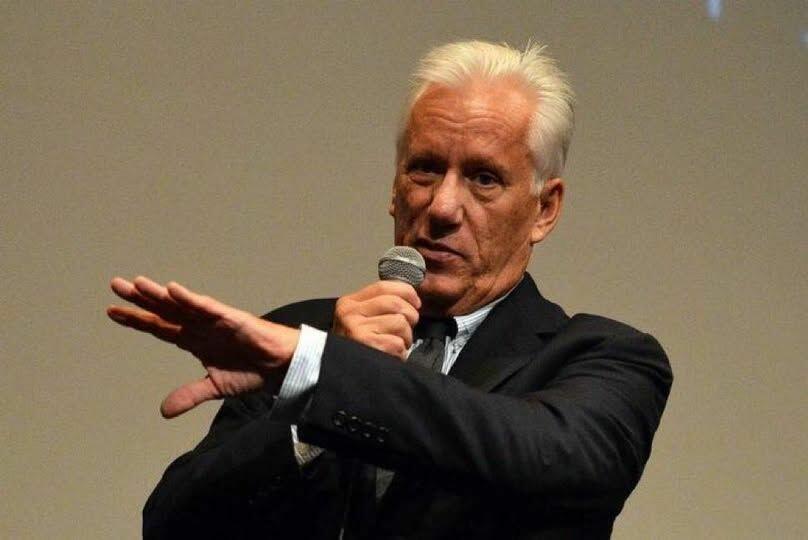
James Woods ‘Done’ With Republican Party Over ‘Uniparty Traitors’
James Woods ‘Done’ With Republican Party Over ‘Uniparty Traitors’
Conservative actor and commentator James Woods says he’s “done” with the Republican party after ‘uniparty traitors’ like John Thune (R-SD) refuse to pass the SAVE Act (Voter ID), and blocked an attempt by Nancy Mace (R-SC) to subpoena immigration records for Rep. Ilhan Omar to settle the question of whether she’s legally in the US.
“I am done with the Republican party,” Woods, 78, psted on X. “Between this and Thune’s refusal to pass the SAVE Act, I’m done with these uniparty traitors.”
“I’m changing my party affiliation to Independent. No wonder President Trump is fighting an uphill battle every day,” he added.
I am done with the Republican Party.
Between this and Thune’s refusal to pass the SAVE Act, I’m done with these uniparty traitors.
I’m changing my party affiliation to Independent. No wonder President Trump is fighting an uphill battle every day. https://t.co/Qp8zr4y4gA
— James Woods (@RealJamesWoods) March 6, 2026
Woods was replying to a video from @WallStreetApes of Mace criticizing fellow Republicans after a proposed motion seeking records related to Omar was killed in the House.
“I tried to subpoena her immigration records, her brother husband’s immigration records, and IT WAS REPUBLICANS that killed my motion,” said Mace.
WOW 🚨 The Republican Party is protecting Ilhan Omar from accountability
Rep Nancy Mace “I tried to subpoena her immigration records, her brother husband’s immigration records, and IT WAS REPUBLICANS that killed my motion”
It’s a Uniparty. One Big Club. pic.twitter.com/duCF3aV1Ki
— Wall Street Apes (@WallStreetApes) March 5, 2026
GOP lawmakers have been pushing to obtain Ilhan Omar’s immigration records.
“Let’s get to the bottom of everything. I want to know if she’s here legally, If she’s not, then we need to take appropriate action,” Rep Tim Burchett (R-TN) told the NY Post in late February, urging the House Intelligence Committee to obtain the records. Mace, meanwhile, tried to have the House Oversight Committee to subpoena Omar’s records in early January.
Mace’s subpoena specifically sought immigration records pertaining to Omar, her ex-husband Ahmed Abdisalan Hirsi (also known as Ahmed Aden before he became a citizen), her other ex-husband Ahmed Nur Said Elmi, and “any members” of her family.
She wanted the subpoena directed at the Department of Homeland Security and the US Citizenship and Immigration Services for “all records related to the immigration and naturalization” of those individuals.
Underpinning her subpoena push is a theory that Elmi was actually her brother and that they tied the knot for immigration reasons. That unproven theory originated in a Somali forum, according to the Minnesota Star-Tribune. -NY Post
And then there’s the other issue Woods has…
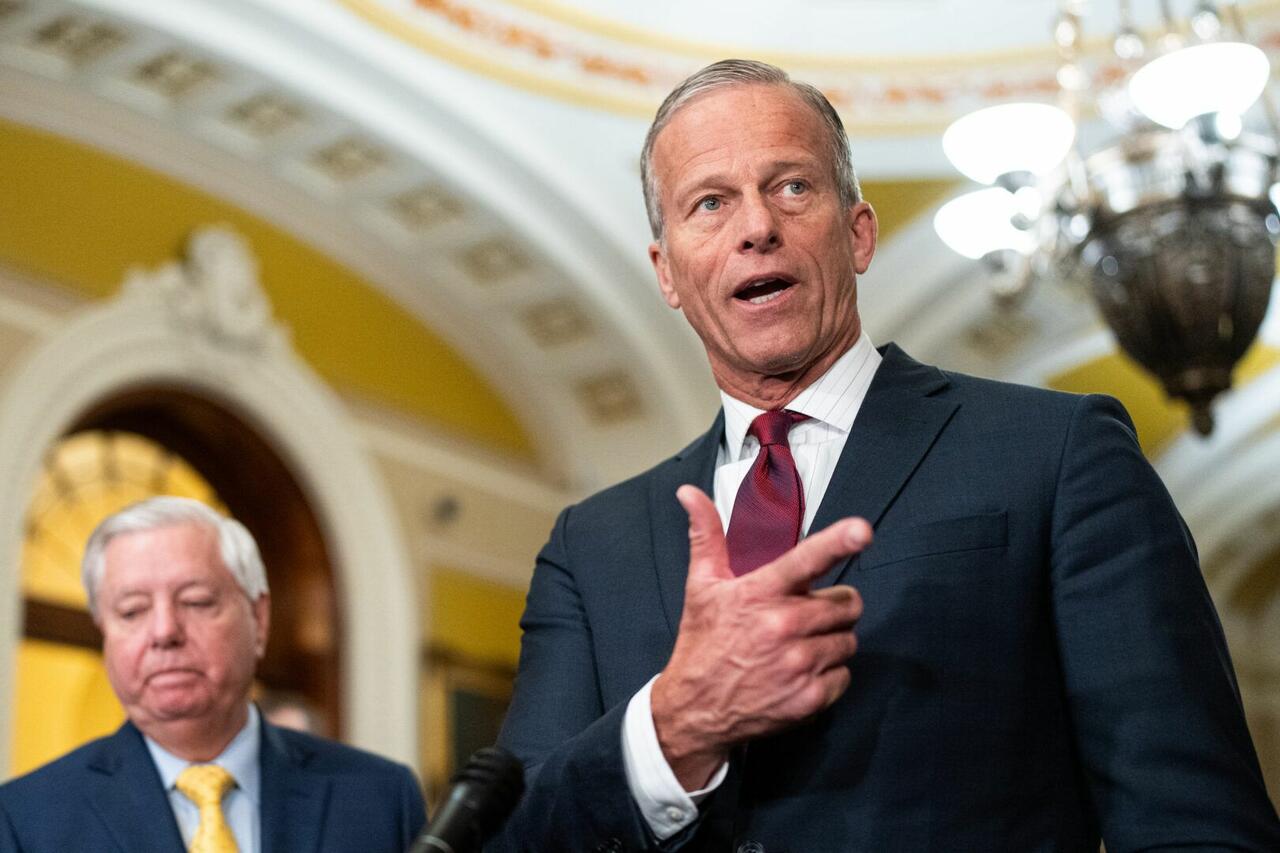
Thune and the Uniparty Traitors
Despite an overwhelming majority of Americans wanting Voter ID, Thune and other Republicans have sided with Democrats in blocking the #1 measure towards restoring faith in US elections.
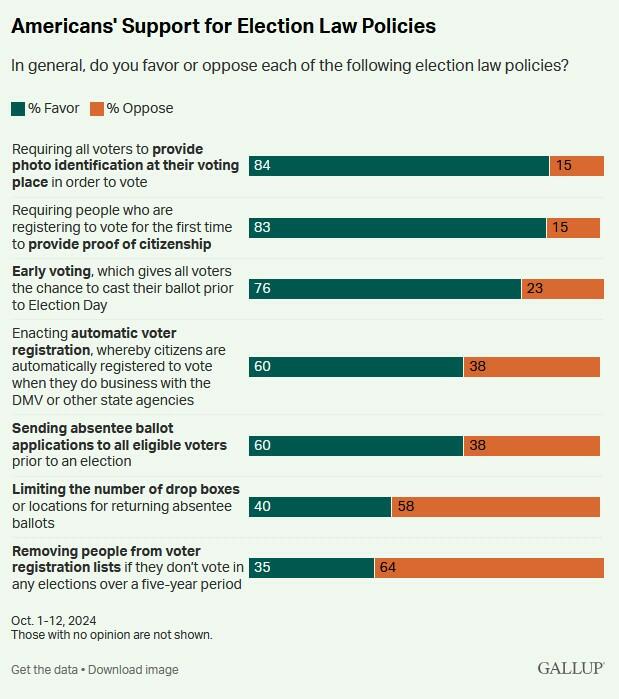
An October Gallup poll showed that roughly 80-84% of voters – including strong majorities of Democrats, independents, and Republicans – support requiring photo identification to cast a ballot and proof of citizenship for voter registration, viewing these as straightforward safeguards for election integrity rather than partisan tools.
Yet Thune has repeatedly dismissed aggressive procedural moves to advance the SAVE Act, declaring there “aren’t anywhere close to the votes, not even close” to changing or “nuking” the filibuster rules that require 60 votes to overcome Democratic opposition. He has thrown cold water on the “talking filibuster” tactic – where Democrats would be forced to hold the floor indefinitely – warning that the Republican conference lacks the necessary unity for such a strategy and that it could disrupt other priorities like DHS funding or housing legislation.
Nevermind that Democrats are going to nuke the filibuster at their earliest opportunity, so why pass the SAVE Act that would ensure Republican victories if Dems are habitually cheating (they are) to win.
Despite acknowledging broad GOP support for the bill’s substance and promising a floor vote “at some point,” Thune has not scheduled a markup or pushed forward in ways that could force the issue, effectively letting it stall under standard rules that demand at least seven Democratic defections.
At least the Democrats stage performative votes when they know they have no chance simply to get their attempt on record, so Thune is effectively running cover so Republicans don’t have to go on record over Voter ID. Strange.
Other uniparty swamp alumni are with Thune on ths: Sens. Lisa Murkowski, Susan Collins, and Mitch McConnell have voiced opposition or misgivings, with Murkowski calling it “federal overreach” into state election powers, reducing the votes needed for bolder tactics. As a caucus, Senate Republicans have resisted calls from House conservatives and Trump allies to attach the bill to must-pass measures or reform the filibuster, prioritizing preservation of Senate traditions over delivering on a policy that enjoys massive public backing and aligns with core Republican promises on election security.
No wonder Woods is done.
Now, if we could only petition the federal government to do the same. Sadly weasel John Thune is blocking the voice of the people. Somebody must have some serious dossier on this guy, that he would block the will of a super majority of Republicans and a healthy majority of… https://t.co/M9uR48aiwr
— James Woods (@RealJamesWoods) March 7, 2026
Tyler Durden
Sat, 03/07/2026 – 14:15
https://www.zerohedge.com/markets/james-woods-done-republican-party-over-uniparty-traitors
Destructores ucranianos de drones Shahed atraen el interés de EEUU y países del Golfo
Por SAMYA KULLAB y HANNA ARHIROVA
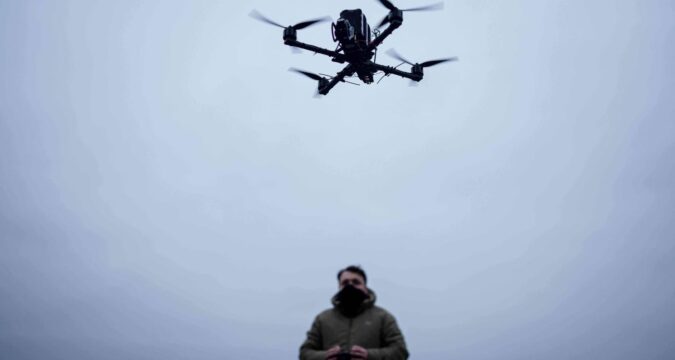
KIEV, Ucrania (AP) — Mientras la guerra en Oriente Medio pone bajo presión las reservas de misiles de Estados Unidos, Ucrania espera convertir una innovación de tiempos de guerra —interceptores de bajo costo diseñados para derribar drones de ataque rusos— en una ventaja geopolítica.
Convertida ahora en uno de los principales productores mundiales de interceptores, Ucrania ofrece esa experiencia a Estados Unidos y a sus socios del Golfo para la guerra en Oriente Medio, con la esperanza de recibir a cambio armamento de alta gama que no puede fabricar en su propio territorio.
Cuando Rusia lanzó su invasión a gran escala hace cuatro años, la industria armamentística nacional de Ucrania era pobre. Obligada a innovar para sobrevivir, desde entonces ha construido un sector de defensa de rápido crecimiento centrado en drones de bajo costo, algunos de ellos, diseñados específicamente para contrarrestar drones Shahed de estilo iraní, del tipo que Rusia ahora lanza por cientos.
Estados Unidos solicitó recientemente “apoyo específico” contra los Shahed de diseño iraní en Oriente Medio, lo que llevó a Zelenskyy a ordenar el despliegue de equipos y expertos ucranianos, aunque los detalles siguen siendo clasificados.
La guerra en Ucrania comenzó en 2022, y Kiev prohibió las exportaciones de armas. Pero ahora, fabricantes ucranianos de drones interceptores de bajo costo afirman que Estados Unidos y varios países del Golfo estarían interesados.
Aunque otros países pueden fabricar drones interceptores, Ucrania tiene el único sistema producido en masa y ya probado en combate, afirmó Oleh Katkov, editor en jefe de Defense Express. “Hay una enorme diferencia entre un sistema producido en masa, demostrado que funciona en combate real, y algo que otros solo prometen desarrollar… Es como vender la casa, no solo los ladrillos”, expresó.
Si la cooperación con los socios tiene éxito, Ucrania podría emerger como un nuevo actor en la guerra moderna, aunque sigue sin estar claro si su industria puede escalar para cumplir esa ambición o expandirse a mercados globales sin poner en riesgo su propia defensa.
El problema de los Patriot
El aumento del interés desde Oriente Medio se produce mientras los países del Golfo agotan sus reservas de costosos misiles Patriot, que han usado para derribar los Shahed iraníes, significativamente más baratos.
Un dron Shahed de diseño iraní cuesta aproximadamente 30.000 dólares, mientras que un solo misil interceptor del sistema de defensa aérea Patriot, fabricado en Estados Unidos, cuesta millones.
Lockheed Martin señaló en un comunicado que produjo un récord de 600 interceptores PAC-3 MSE para baterías Patriot durante todo 2025. Zelenskyy sostuvo el jueves que naciones de Oriente Medio gastaron más de 800 de esos misiles en apenas tres días —más de los que Ucrania ha mantenido en reserva durante toda la guerra de cuatro años.
Para contrarrestar los Shahed, Kiev desarrolló drones interceptores de bajo costo con un precio aproximado de 1.000 a 2.000 dólares, y llevó los sistemas del prototipo a la producción en masa en cuestión de meses en 2025.
Pero Ucrania nunca desarrolló una defensa contra misiles balísticos. Por eso, asegurar la obtención de misiles Patriot sigue siendo un desafío de vida o muerte para Kiev.
En este contexto, Zelenskyy propone a los socios un “intercambio”. “Nuestro mensaje es muy simple”, afirmó. “Nos gustaría, discretamente… recibir los misiles Patriot de los que tenemos un déficit, y darles una cantidad correspondiente de interceptores”.
Obstáculos a las exportaciones ucranianas
Pese al optimismo de Zelenskyy, algunos analistas advierten que entrar en el mercado global de armas no es tan simple como firmar un contrato.
“El comercio de armas es un asunto increíblemente sutil y sensible”, comentó Yevhen Mahda, director ejecutivo del Instituto de Política Mundial, con sede en Kiev. Es un mercado dominado por Estados Unidos, indicó, y advirtió que es “ingenuo” esperar que los mercados se abran simplemente porque Ucrania tiene una historia convincente. “Requiere un juego diplomático duro y calculado”.
Recientemente, autoridades ucranianas han empezado a debatir activamente un cambio: pasar de la congelación de las exportaciones de armas en tiempos de guerra a un mercado regulado por el Estado, aunque sigue sin estar claro cuándo o cómo se pondría en marcha ese sistema.
“Necesitamos más que declaraciones presidenciales. Necesitamos acción”, manifestó Mahda. “¿Cómo podemos hablar de exportaciones si oficialmente aún no estamos vendiendo nada?”
Estados Unidos y países del Golfo, entre los que están Emiratos Árabes Unidos, Bahréin, Arabia Saudí y Qatar, han solicitado repetidamente los drones interceptores producidos en Ucrania, según tres productores ucranianos de armas.
Hasta el momento, ni Estados Unidos ni los países del Golfo han respondido a una solicitud de comentarios de The Associated Press.
“Estamos listos para compartirlos, y queremos compartirlos”, declaró Marco Kushnir, portavoz de General Cherry, un fabricante ucraniano de armas que produce uno de los drones interceptores con mejor desempeño para abatir Shahed en el país.
Kushnir señaló que la decisión, en última instancia, depende del gobierno y de Zelenskyy, pero que la empresa quiere ayudar a sus socios y podría estar lista para hacerlo en cuestión de días. Añadió que tienen la capacidad de producir “decenas de miles” de interceptores al mes.
Actualmente, Ucrania tiene un excedente de drones interceptores, y los fabricantes afirman que podrían producir decenas de miles más sin poner en riesgo las defensas del país. El mayor desafío, dicen, es entrenar a los operadores e integrar los drones con sistemas de radar que puedan detectar objetivos a larga distancia.
Varias empresas ucranianas ya han desplegado sistemas eficaces. El interceptor “Bullet” de General Cherry, desarrollado a finales de 2025, ha derribado varios cientos de drones Shahed, según Kushnir, el portavoz. Otro modelo, el P1-Sun impreso en 3D de Skyfall, cuesta alrededor de 1.000 dólares y puede alcanzar velocidades de más de 300 kilómetros (186 millas) por hora, con una capacidad de producción de hasta 50.000 drones al mes, indicó un portavoz de la empresa.
La experiencia humana sigue siendo esencial
Pero mientras el marco legal para el armamento sigue en el limbo, el activo más valioso de Ucrania es la experiencia humana. Zelenskyy ha reiterado muchas veces que su país está listo para enviar instructores que puedan enseñar a usar los interceptores.
Suministrar los drones no será un problema, afirmó Andrii Taganskyi, director del área Camera Business en Odd Systems, que suministra cámaras para drones interceptores fabricados por otra empresa ucraniana, Wild Hornets. Pero entrenar a operadores extranjeros para manejar el sistema y adaptar las tácticas será esencial, agregó.
Los drones interceptores no son un producto independiente y deben integrarse en un sistema más amplio de radares que pueda detectar y seguir objetivos entrantes, explicó Taganskyi. Aunque algunos modelos están parcialmente automatizados, los fabricantes dicen que los operadores requieren entrenamiento para utilizarlos de manera eficaz.
“Esta es una herramienta que requiere entrenamiento”, dijo Oleh Katkov. “Y la experiencia real, comprobada —no solo en el papel— existe únicamente en Ucrania”.
La disposición de Kiev a enviar a sus especialistas al extranjero supone un importante sacrificio estratégico por el impacto en las propias capacidades de defensa aérea de Ucrania. Con el constante aluvión de drones desde Rusia, cada soldado entrenado es un activo vital.
“No tenemos un excedente de personal militar en el frente”, afirmó Katkov. “Sin embargo, hay una comprensión clara de que los beneficios de esa cooperación podrían superar con creces los riesgos”.
___
Kullab informó desde Nyon, Suiza.
___
Esta historia fue traducida del inglés por un editor de AP con la ayuda de una herramienta de inteligencia artificial generativa.
Ingolstadt extiende el contrato de Sabrina Wittmann, pionera en el fútbol alemán profesional
Por CIARÁN FAHEY
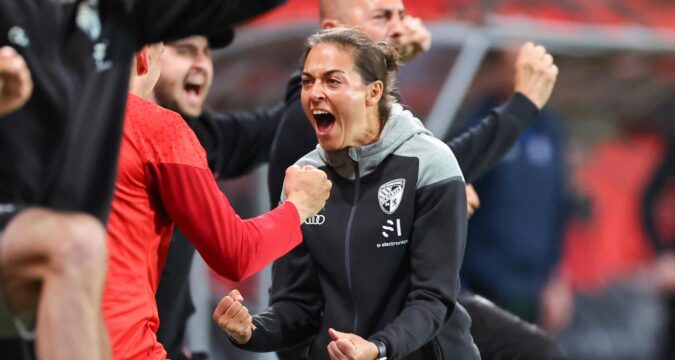
BERLÍN (AP) — Como la primera y única mujer nombrada entrenadora principal de un equipo masculino de fútbol profesional en Alemania, Sabrina Wittmann afronta más presión y escrutinio que la mayoría de sus homólogos.
Wittmann ha sido la entrenadora del club de su ciudad natal, el Ingolstadt de tercera división, desde mayo de 2024, cuando asumió para los últimos cuatro partidos de la temporada. Ingolstadt no perdió ninguno y ganó la Copa de Baviera. Wittmann luego hizo historia cuando se le otorgó el cargo de manera permanente en junio de ese año.
“Abrí un poco la puerta para las mujeres. Y al principio, sinceramente, tenía miedo de cerrar la puerta tan rápido (otra vez)”, le dijo Wittmann les a periodistas en una llamada en línea el viernes.
“Con toda la presión que sentí al principio, te acostumbras”, manifestó. “La mejor respuesta a todo esto es que ahora mismo me hacen muchas más preguntas sobre fútbol que al comienzo. Y eso es algo que me encanta”.
Apoyo y adversidad
Wittmann, de 34 años, está centrada en ella, en sus fortalezas y en lo que quiere lograr.
“Quería ser la mejor por mí, no por todos los demás… eso lo hace realmente natural para mí, y auténtico. Si una mujer intenta ser un hombre, o intenta estar en el mismo nivel, probablemente sea antinatural”, expresó.
Como entrenadora, siente que es “gestión de personas” por encima de cualquier otra cosa, y que la parte más difícil llega al tomar decisiones impopulares. La empatía ayuda mucho a aliviar tensiones mientras se exige lo mejor.
“Me siento realmente aceptada. Siempre me sentí aceptada”, comentó, atribuyéndolo a su club y al apoyo que recibe del director general Dietmar Beiersdorfer.
Pero Wittmann también ha experimentado comentarios negativos en redes sociales e incluso en los estadios.
“Intento no centrarme en esas cosas, porque si se reduce a una conversación, positiva o negativa, nueve de cada diez son realmente positivas y una es negativa”, señaló. “La más ruidosa a veces es la más negativa, pero hay nueve personas que piensan que es algo bueno, así que intento enfocarme en eso y no hacer las cosas más grandes de lo que son”.
Primeros pasos en Estados Unidos
Wittmann empezó a jugar al fútbol hasta los 14 años. Fue a Kentucky, en Estados Unidos, como estudiante de intercambio, y allí encontró trabajo como entrenadora asistente gracias a su madre anfitriona, que era maestra.
“Simplemente me enamoré de este trabajo o de esta parte de estar en el fútbol. Luego regresé (a Alemania). Quiero decir, todavía jugaba y era entrenadora al mismo tiempo”, relató.
Wittmann descubrió que el juego es mucho más físico en Estados Unidos en comparación con Alemania.
“Nunca había ido al gimnasio antes, así que fui a Estados Unidos; teníamos algo como gimnasio todos los días, algo que no hacíamos en Alemania”, contó. “Cuando volví a jugar al fútbol aquí, las chicas me dijeron que juego de una manera mucho más física que antes”.
Extensión de contrato
Ingolstadt anunció el viernes que extendió el contrato de Wittmann. Al comenzar el fin de semana, Ingolstadt estaba en la undécima posición en la división de 20 equipos antes de recibir a Verl el domingo.
“En los últimos dos años hicimos un buen trabajo aunque no subimos a la segunda división, pero creo que necesitamos construir algo durante años”, afirmó Wittmann, subrayando la importancia de la planificación a largo plazo. “Necesitamos crecer de manera saludable”.
Ingolstadt descendió de la Bundesliga en 2017 y de la segunda división en 2019. Ascendió de nuevo a la segunda división en 2021, pero volvió a bajar de inmediato la temporada siguiente.
Wittmann, que había visto a Ingolstadt en la Bundesliga desde las gradas como aficionada, dijo que el ascenso probablemente llegó demasiado pronto.
“Creo que en los últimos años, especialmente con Didi Beiersdorfer, se trataba de construir algo”, indicó, al señalar que el equipo perdió a 19 jugadores el verano pasado. “No de una manera triste, sino (porque) desarrollamos jugadores que subieron a la segunda liga o incluso a la primera. Soy entrenadora de juveniles y, ante todo, se trata de desarrollar jugadores. Cuanto mejor se vuelve el jugador, mejor es el equipo al final”.
La extensión del contrato llega poco más de un mes después de que Wittmann obtuviera su licencia profesional, la credencial de entrenamiento más alta de la federación alemana de fútbol.
Oportunidades limitadas para las mujeres
En 2023, Marie-Louise Eta, de Union Berlin, se convirtió en la primera entrenadora asistente en la Bundesliga, y en 2017 Bibiana Steinhaus se convirtió en la primera árbitra en la Bundesliga, pero por lo demás ha habido pocos avances para las mujeres en el fútbol profesional masculino en Alemania, mientras que hay muchos hombres involucrados en el fútbol femenino. Christian Wück, un hombre, es el entrenador de la selección femenina de Alemania.
Wittmann reconoció que “probablemente sea difícil encontrar” responsables de tomar decisiones en los 36 clubes de las dos primeras divisiones masculinas de Alemania que contratarían a una mujer como entrenadora principal, pero dijo que cree que ocurrirá.
“He tenido muchas conversaciones con otros responsables de decisiones de otros clubes”, comentó. “Quiero decir, hay una diferencia (entre) hablar conmigo y decirme que estoy haciendo un buen trabajo y tomar la decisión. Sé que eso va a ser difícil”.
Por ahora, toda su atención está en el club de su ciudad natal.
“Algún día probablemente va a pasar y tendré que irme de aquí, ojalá porque sea capaz de entrenar a un equipo aún mejor clasificado”, dijo Wittmann. “Sí creo que eso va a ser difícil. Lo sé, y no va a ser fácil, pero creo que en cinco años, nueve, diez años, lo que sea, espero que las cosas cambien, y no solo para mí, sino para cualquier otra mujer que quiera ser entrenadora”.
___
Deportes AP: https://apnews.com/hub/deportes