Category: News

22 Pounds: The Weight Of A Million Dollars
22 Pounds: The Weight Of A Million Dollars
Watches as Tools of Money Laundering and Illicit Finance
Luxury timepieces are one of the most effective mediums to move illicit funds around the globe and a tool to integrate those ill-gotten gains into the financial system. Transnational criminal networks, terrorists, narcotraffickers and corrupt politicians have used watches to launder money as a part of global illicit finance.
The Weight of a Million Dollars – 22 pounds
A million dollars weighs just over 22 lbs. I learned this during one of my first tours as a CIA Case Officer. Like any other morning, I mounted my Gary Fisher mountain bike and rode out the gate of our compound for a quick exercise ride in the hills surrounding the African capital where I was working. This activity was “in pattern,” should I have surveillance, they would note the departure, but it would not warrant further investigation. A trained eye might have seen that something was different, however. The dead weight of ten thousand $100 bills in my backpack made the bike top-heavy and awkward to ride.
The operation was simple and routine. After a long Surveillance Detection Route (SDR) through the hills and side streets of the third world capital, I worked my way to a predetermined ops site. The watch on my wrist would have (probably) been a Timex Ironman, my go to Digital Tool Watch (DTW) for exercise over the past two decades. I would have checked the time before moving into the site, confirming that I would hit the operational window. In espionage, timing is everything.
Right on time. I identified a couple in the alley. We established bona fides with a verbal parole — a predetermined phrase and response. I then handed them the heavy backpack in exchange for a similar one and rode off in the other direction, the entire exchange lasting less than a minute. In tradecraft lingo it was a “BE” (Brief Encounter).
A standard CIA Case Officers EDC, read more HERE
Except for the backpack stuffed with cash, it was a routine day for a case officer. Certainly not the stuff of Hollywood but instead a crucial operation for the global network of intelligence collection. Due to compartmentalization, I didn’t know who the individuals were that I handed the backpack to or why they needed the large sum of cash, though I have my suspicions. They had likely just arrived in the country and could not bring the cash in through customs without drawing scrutiny.
Watches as a Currency:
One takeaway from this operation is that money is heavy. It’s inconvenient, bulky and difficult to transport, not to mention having to explain it away if discovered. This is why many illicit actors, spies and criminal networks rely on expensive but innocuous luxury items to move funds across borders. Given the significant increase in value of timepieces, watches are a favored currency when it comes to illicit activity. I easily could have handed off a single watch to transfer that same value to the couple that morning.
The value-to-weight ratio of a Rolex, Patek Philippe, Audemars Piguet or other premium brands is exceeded only by precious gems, making it easy to physically transport a watch across international borders. The vast, unregulated, and fragmented gray market makes converting timepieces into cash relatively easy. Unlike vehicles, gold, and diamonds, there is no oversight or registration for timepieces and a million dollar Patek can be worn on your wrist, easily breezing through customs.
Lebron James wearing a “Tiffany Blue” Patek Philippe Nautilus Ref. 5711, a watch that has sold for 100 times its original price at $5,350,000 at auction.
Luxury Watches – Money Laundering:
The international financial system is heavily regulated and monitored by law enforcement and intelligence services to identify illicit activity. Transactions over $10,000 are automatically flagged and international border law restricts the amount of cash one can bring in/out of a given country undeclared.
By contrast, watches are a perfect medium for exploitation by bad actors. They are innocuous and liquid, and pawn shops, auction houses and high-end dealers often turn a blind eye to these activities. Every major auction house has been involved in a controversy where profitability triumphed over ethics at some point. This isn’t to say that they’re willfully supporting money laundering, rather that it is simply a frequent occurrence.
Eight days after 9/11, CIA officers pick up $3 million cash in three cardboard boxes. This money would enable the Northern Alliance (NA) commanders to pay their troops and convince other tribes to rally to the NA rather than fight them. (Photo Credit: CIA)
Moving Illicit Funds – A Case Study
Imagine, you need to move $1 million from the United States to Turkey. The logical choice is a traditional bank transfer, which would require you to deposit it in a financial institution. This would alert the authorities who would request an explanation for how you came about the funds, for both tax purposes and Anti-Money Laundering (AML) enforcement. Carrying cash would require a 20 pound duffel bag, making hand-carrying it cumbersome and again would cause scrutiny from customs officials, resulting in questions and import tariffs and complications. Additionally, you introduce a major security risk by carrying that much cash around and potentially becoming a target.
Customs and Border Protection (CBP) Officer processes a passenger into the United States at an airport. (DHS Photo by James Tourtellotte)
So, what do you do? You could convert it to diamonds and hide them in a tube of toothpaste (or concealed in your body), but again, if caught, this cannot be explained away. So, you visit the diamond district in New York, purchase a dozen Rolex and AP watches, each of which could be worth up to $500k per watch. You use couriers to “smurf” the watches on commercial flights, each one wearing a watch on the wrist and a couple in a carry-on bag. For the cost of a few round-trip tickets, the watches could be relocated to Istanbul relatively risk-free.
A single (new) Rolex Dayton can have a street value of $30-$50k, vintage significant higher (James Rupley)
Once you arrive in Turkey, you find the local watch dealer and offer to sell for cash, or a bank transfer to integrate them into the financial system, the first step of money laundering (placement, layering, integration). Given the illicit activity, you may lose some money on the sale, but this is simply the cost of integrating illicit funds. The dealer is happy to purchase them below market value and not ask questions.
Well over $100k in Rolex Watches (Photo Credit: Jame Rupley)
Hezbollah’s Illicit Finance:
In 2015, an investigation by the Drug Enforcement Administration (DEA) revealed that Hezbollah, a Lebanese Shia terrorist organization, purchased large quantities of watches in Europe, which were then transported by couriers to Lebanon where they were sold for cash. Hezbollah reportedly purchased €14 million in watches from a single store in Germany, thus evading international monitoring. (The movement and exchange of expensive goods has long played a role in informal Middle Eastern “Hawala” money transfer networks throughout the globe.)
This practice is so common that Dutch law enforcement has urged watch dealers to refrain from cash transactions. Several high profile arrests of criminal networks in Spain, Netherlands, Romania and Belgium revealed luxury watches as integral to the movement of illegal funds, and closely associated with the recent increase in watch crime in the region.
Money Laundering:
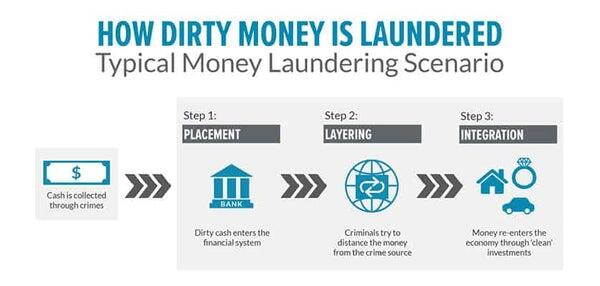
The 3 Stages of Money Laundering (Image Credit: Alessa)
Money Laundering (ML) is the act of integrating illegally acquired cash to legitimate financial institutions with the goal of concealing the illegal origins of those funds. While this is traditionally associated with criminal networks, in the intelligence world, cash is king and most intelligence services practice some form of benevolent money laundering. Watches can play a crucial part in each step of the money laundering process.
Placement: Step one is introducing illicit gains into the financial system. In the example above, this can occur with the sale of the watch and the depositing of those funds into a bank account by the purchasing party. At initial scrutiny, this will appear to be a legitimate transaction.
Breaking Bad- money laundering (AMC)
Layering: Step two is the process of moving those same funds through multiple transactions to conceal the origin of the funds. Once funds are converted, one could use the illicit funds to purchase watches, and then resell them in a manner to distance the original transaction and repeat this process. The example above of transferring watches overseas could be another example of layering in addition to potential placement.
Integration: The final last step is returning the funds to the criminal organizations for personal use, thus appearing legitimate.
Embezzlement and Money Laundering- Former Brazilian President Bolsonaro
According to press reporting, in 2022, Former Brazilian President Bolsonaro found himself in hot water for (reportedly) selling a gifted Saudi Rolex and a Patek Philippe watch, netting him $68k. Bolsonaro used a third party (smurf) to transport the watches to the United States and quickly found a buyer in a relatively obscure Pennsylvania mall.
If true, Bolsonaro used the same technique as above to transfer the value from Brazil, convert it into dollars and then (supposedly) repatriate that cash to Brazil. This is an example of Money Laundering by disguising an unreported diplomatic gift and converting that gift into a usable currency.
This is not the first scrutiny of Bolsonaro’s gifts from foreign governments, in 2021, a Brazilian government official was reportedly detained at the border with more than $3 million in jewels from Saudi Arabia in a backpack, allegedly gifts for Bolsonaro and his wife.
The world is not all flowers and rainbows and we expect to continue to see the use of luxury timepieces in the global illicit finance network, particularly as prices for these luxury goods remain high.
Tyler Durden
Mon, 03/09/2026 – 22:15
https://www.zerohedge.com/personal-finance/22-pounds-weight-million-dollars

With World Seemingly At War, DARPA Finds Time To Unveil The X-76
With World Seemingly At War, DARPA Finds Time To Unveil The X-76
Before Operation Epic Fury began, corporate media published a few very concerning headlines:
Fast forward to Monday afternoon: Operation Epic Fury against Iran has entered its 10th day. Jared Cohen, President of Global Affairs and Co-Head of the Goldman Sachs Global Institute, warned investors on the GS Weekend Macro Call that regional spillover risks worldwide were among his top concerns.
Latest headlines in the Middle East:
“Let Them Keep Playing Games”: Iran Warns Of $200 Crude Oil
G-7 Leaders Reject SPR Release Plan, But ‘Stand Ready’ After Initial Jawbone Efforts Fade
The focus of this note is not the energy market or global spillover risks. Rather, it is the fact that DARPA found time to publish a press release about an experimental aircraft with a historic lineage of X-planes.
DARPA said the new aircraft, called the X-76 and being built by Bell Textron, is designed to solve one of military aviation’s biggest trade-offs: combining airplane-like speed with helicopter-like runway independence.
The program, run jointly with U.S. Special Operations Command, aims to produce an aircraft that can cruise above 400 knots, hover in austere environments, and operate from unprepared surfaces.
DARPA said the X-76 has passed the Critical Design Review, and the program is moving into manufacturing, integration, assembly, and ground testing.
“For too long, the runway has been both an enabler and a tether, granting speed but creating a critical vulnerability,” said Cmdr. Ian Higgins, U.S. Navy, serving as the DARPA SPRINT program manager. “With SPRINT, we’re not just building an X-plane; we’re building options. We’re working to deliver the option of surprise, the option of rapid reinforcement, and the option of life-saving speed, anywhere on the globe, without needing any runway.”
It seems like DARPA found a sweet spot to debut the X-76, given the world seemingly at war. This likely means more war funding from taxpayers and, most likely, tailwinds for defense companies to push new products.
Tyler Durden
Mon, 03/09/2026 – 21:50
https://www.zerohedge.com/military/world-seemingly-war-darpa-finds-time-unveil-x-76
“Legacy Of Imbeciles”: Corpus Christi Careens Toward Water-Shortage Catastrophe
“Legacy Of Imbeciles”: Corpus Christi Careens Toward Water-Shortage Catastrophe
Submitted by Dylan Baddour via Inside Climate News (emphasis ours),
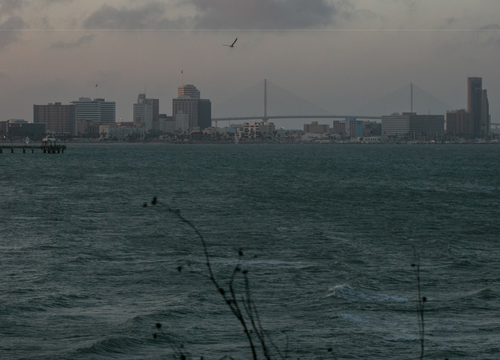
The imminent depletion of water supplies in Corpus Christi threatens to cut off the flow of jet fuel to Texas airports and other oil exports from one of the nation’s largest petroleum ports, triggering potential shockwaves through energy markets in Texas and beyond.
Without significant rainfall, Corpus Christi is headed for a “water emergency” within months and total depletion of the system next year, according to the city’s website.
“The impacts are going to be felt tremendously through the state, if not internationally,” said Sean Strawbridge, former CEO of the Port of Corpus Christi Authority, the nation’s top port for crude oil exports, in a 40-minute interview Thursday. “This should be no surprise to anybody. We were talking about this over a decade ago.”
Other current and former officials, alarmed at what they call a lack of preparations, have suggested the potential for an economic crisis involving mass layoffs, disruption of fuel supplies and billions of dollars in emergency spending to avoid an evacuation of the city.
Strawbridge, who now lives in Houston, laid the blame on city leaders, citing “their lack of experience, their lack of knowledge, their lack of recognizing the risks” in a bumbling, decade-long endeavor to build a large seawater desalination plant that would veer the region off its clear course towards calamity.
“They’ve found themselves in quite a dire predicament as a result of those poor decisions,” Strawbridge said. “Time is up.”
A spokesperson for Corpus Christi Mayor Paulette Guajardo declined interview requests, citing “prior commitments,” and did not respond to follow-up questions. City manager Peter Zanoni also did not respond to questions. Instead, Corpus Christi public information manager Robert Gonzales provided an emailed statement.
“The water shortage in the Coastal Bend is the result of a historic five-year drought,” it said. “Currently, the City of Corpus Christi has $1 billion in City Council-approved and funded water projects underway to address our water needs. The City remains committed to ensuring water security for the more than 500,000 residents and our commercial and industrial customers.”
Depletion of this region’s reservoirs would lead to “controlled depression” for the local economy, “mass unemployment” and “industrial total shutdown,” according to a two-page report by Don Roach, former assistant general manager of the San Patricio Municipal Water District, which supplies many of the region’s large industrial water users.
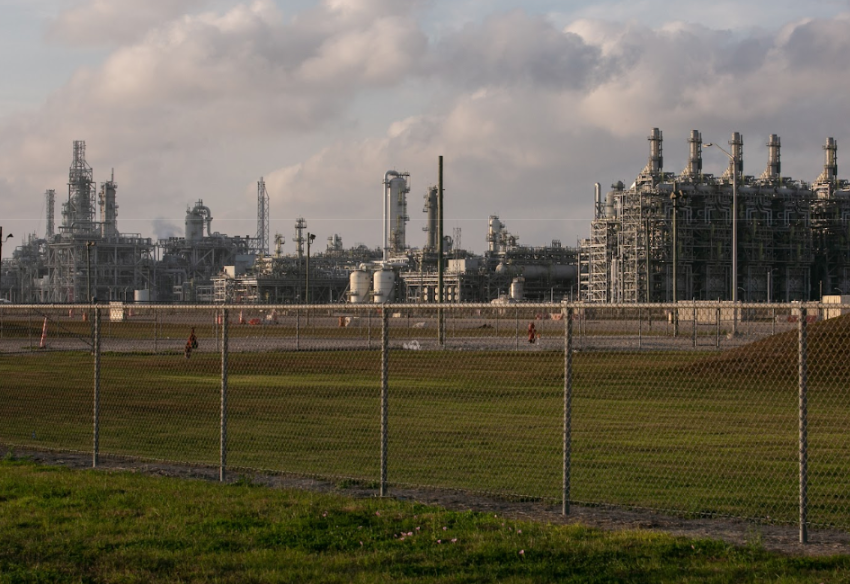
That includes refineries operated by Flint Hills Resources, Valero and Citgo that provide jet fuel to Texas airports and meet much of the state’s daily demand for gasoline.
“This waiting disaster is under the radar for the rest of the state,” said Roach, who worked 20 years at the water district and retired in 2014. “We hear nothing from the Texas politicians about the seriousness of the situation or any state plan to mitigate it.”
He no longer had access to current water data and contracts, he stressed, but produced the report based on his own knowledge. It said the costs of trucking in emergency water “would bankrupt many local small businesses and low-income households” while state emergency managers would need billions of dollars to “build emergency temporary pipelines or subsidize desalination barge rentals to prevent a total evacuation of the city.”
Strawbridge, a former director of the Port of Long Beach, said Roach’s assessment was “spot on.”
“No Time to Panic”
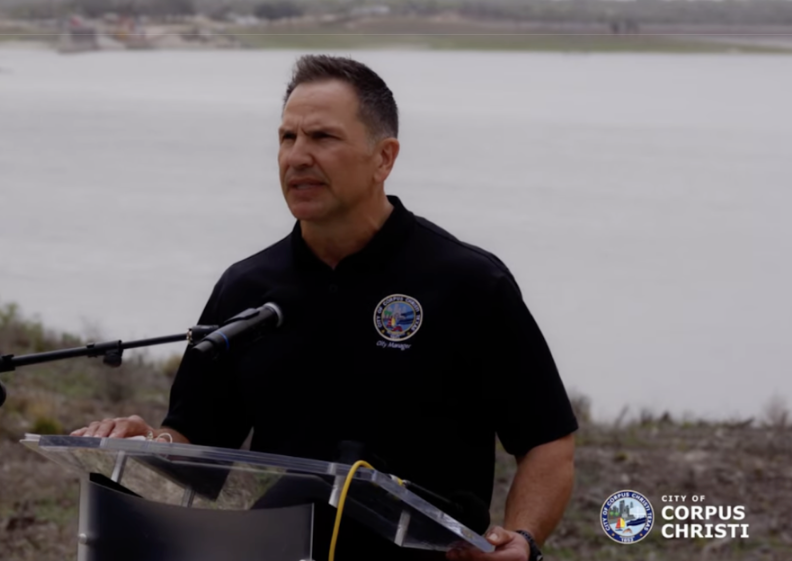
Zanoni, the city manager who has overseen Corpus Christi’s descent toward water depletion since 2019 and receives a $400,000 salary, rejected notions of imminent disaster during a press conference Thursday, when Lake Corpus Christi, one of the city’s main reservoirs, dropped below 10 percent. The press conference took place three days after Inside Climate News asked the city for comment about the impending water crisis.
“I think we are going to get through this,” he told TV cameras as he stood before the dwindling remnants of the lake. “We have confidence in what we’re doing. This is no time to panic.”
Zanoni, who holds a master’s of public administration from Florida State University, said the city had “worked tirelessly over the past months to bring everything that we humanly and possibly could to forego what could be this supply and demand issue.”
“Now we’re going to focus, with the City Council and the region, on being prepared in case supply doesn’t meet demand,” he said.
“The best-case scenario, that assumes some level of rain, has this lake here going to about the early fall,” said Zanoni, who indicated that the summer months would give the city enough time to boot up its portfolio of new groundwater water projects..”
James Dodson, a former director of Corpus Christi’s water department who retired this year as a private consultant and was involved in several of those projects, disagreed. He said residents and officials “are crazy not to be panicking.”
“It’s the very worst scenario that I’ve ever seen,” said Dodson, who oversaw a historic expansion of Corpus Christi’s water supply in the 1990s. “It’s going to be an economic disaster.”
For years, he said, the city dismissed repeated opportunities to develop groundwater import projects as it maintained a singular and fruitless focus on desalination. That includes projects that the city only recently scrambled to get started. Dodson doubted any will materialize in time.
“They’ve been kicking the can down the road for a long time and they’ve finally run out of road,” said a current regional water official who requested anonymity to preserve a working relationship with the city. “They’re looking at projects to do that they should have done five, six, seven years ago.”
The last hope to avert disaster, the official said, was a 20- to 30-inch rainfall.
“It would basically have to be a hurricane,” he said.
A spokesperson for Texas Gov. Greg Abbott, Andrew Mahaleris, didn’t address specific comments about an impending water catastrophe or disruption of the state economy. In an emailed statement, he said: “Corpus Christi is an important economic driver not only for Texas but also the nation. The State of Texas has made significant investments into ensuring the Corpus Christi area has the water resources it needs to serve citizens and industry alike.”
He added that the governor “will continue working with the legislature to ensure Texans have a safe, reliable water supply for the next fifty years.”
“I Wouldn’t Say That It’s a Disaster”
Mere months remain, according to Corpus Christi’s online water dashboard, until the city enters a “Level 1 Emergency,” which begins 180 days from projected depletion of water supplies. Functional failure of the water system, or “dead pool,” will occur before total depletion.
In a level one water emergency, the city’s plans call for an immediate 25 percent curtailment of water consumption. But city planners are only beginning to discuss what that would even look like and still haven’t determined how they would implement it.
“We can’t close and open everyone’s valves,” said Nick Winkelmann, chief operating officer of Corpus Christi Water, in an interview at City Hall last week. “One way to enact water restrictions is through pricing.”
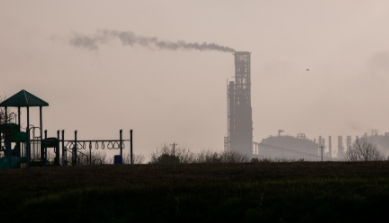
The region’s largest industrial users, which collectively consume the majority of the region’s water, remain exempt from emergency curtailment. These multi-billion-dollar refineries, petrochemical plants and liquified natural gas facilities are built to run at a steady rate and can’t simply throttle down production in accordance with water availability. They consume large volumes of water primarily in cooling towers to prevent excessive heating and explosions.
The city also may enact across-the-board, pro-rata curtailment at will, said Winkelmann, who assumed his role last September when the city’s former water director, Drew Molly, resigned days before the City Council pulled the plug on its long-running desalination project. “That will have an effect on all our customers.”
For years, local business leaders insisted desalination was Corpus Christi’s key to overcoming the water limitations that had historically plagued it on this semi-arid coastline. Massive desalination plants, the first of their kind in Texas, were supposed to kick off an era of abundant water, financial prosperity and limitless economic expansion.
Instead, the plan drove this region to the precipice of ruin.
“It has not gone as smoothly as it should have,” said Bob Paulison, a member of the Texas Chemistry Council, director of the Coastal Bend Industries Association and architect of the desalination project. “There are a lot of reasons for why that happened.”
He said he worked on desalination for 12 years, but the projects got bogged down by political fights, administrative processes, the COVID pandemic and “a tug of war which has resulted in very slow progress.”
“I wouldn’t say that it’s a disaster,” he said of the current situation, expressing faith that the city would complete new water projects before supplies run out. It was “too early” to assess when that could happen, he said.
Presented with Roach’s report, Paulison expressed a longstanding respect for the veteran water manager and said, “It looks like it’s very dire, more dire than we’ve been looking at.”
“We’re relying on the model that the city has put together,” Paulison said.
Regarding a potential shutdown of the entire refining and petrochemical complex, he said, “that could certainly shut down at some point, but we don’t see that happening in the early stages.”
Asked about plans to develop alternative jet fuel supplies for Texas airports in the case of a shutdown, Paulison said, “I’m sure that someone somewhere is working on that.”
Charles McConnell, a former assistant energy secretary with the Obama administration, wondered why concrete plans hadn’t been prepared.
“Did it take them all the way to yesterday to figure out they’re going to run out by the end of the year?” he said. “That’s pretty pathetic.”
McConnell, who now teaches at the University of Houston, doubted that a shutdown of Corpus Christi’s industrial sector would have acute or long-lasting impacts beyond Texas. New producers would fill the gap, while new pipelines and supply chains would bypass the city.
“It’s a surprise to me that none of those refineries and industries down there have their own desal plants,” said McConnell, who worked 31 years for the chemical manufacturer Praxair in Houston. “They’re using municipal water, for Christ’s sake!”
Rapid Expansion Followed the Shale Boom
The roots of this situation stretch back more than a decade, to the period of rapid downstream industrial expansion that followed the shale revolution in the oilfields of Texas. Strawbridge joined the Port of Corpus Christi Authority in 2015, as a surge of major industrial projects sought to build in the area. Even then, Strawbridge said, everyone knew Corpus Christi needed more water.
In January 2016, Abbott traveled to Israel, where he toured the world’s largest seawater desalination plant and met with Israeli officials to discuss desalination.
Later that year, an industry group called H2O4Texas, with sponsors including Dow, Chevron and Marathon Oil, hosted an event in Corpus Christi.
“They were basically saying because of the growth in the Coastal Bend, we were gonna need desalination,” said Isabel Araiza, then a professor at Texas A&M University-Corpus Christi, who attended the event.
That was the first that Araiza, a Corpus Christi native with a Ph.D. from Boston University, had heard of desalination. She said she was at the meeting for a different reason, finding it strange how many business and political leaders were there.
The oil and gas industry wanted to build enormous projects in the region, processing oil and gas from Texas’ shale fields into myriad fuels, chemicals and plastics before loading them onto tankers for export.
In March 2017, then-city manager Margie Rose sent a letter to ExxonMobil, the world’s largest private oil company, that said, “because the City aggressively protects water resources for the future by implementing a matrix of supply strategies, we feel that we have sufficient water supplies to meet your needs.”
Six days later, the city requested funding from the Texas Water Development Board to study the feasibility and do preliminary design of a seawater desalination plant.
Around that time, Strawbridge said, “it became very clear to the port authority that there was a difference of opinions as to how much water was available and how much would be needed to continue to attract large industrial investors.”
“The city felt that it had enough water to last, based on its forecast, until 2040,” Strawbridge said. “We, the port authority, had a very different view of what that demand curve looked like.”
That’s when the port began developing plans for its own desalination plant, he said.
In 2018, a new, interim city manager, Keith Selman, promised another large volume of water to Steel Dynamics, which then built a steel mill in the area.
The Emerging Solution: Four Desalination Plants
That same year, Corpus Christi created a program exempting the region’s largest industrial water users from water curtailment restrictions during drought for a fee of $0.25 per 1,000 gallons. The city said it would use the money to fund the development of a new water source. The city’s water reservoirs were two thirds full at the time.
In 2019, the city’s staff presented the City Council with a plan to build a seawater desalination facility. Exxon had taken up the city’s offer for water and planned to build a massive plastics plant called Gulf Coast Growth Ventures in partnership with Saudi Arabia’s national oil company. It would be the largest water user in the region, consuming as much as all city residents combined.
“Large increases in water demand are projected to occur in 2022,” said a presentation authored by Paulison and given to the City Council by then-Assistant City Manager Mark Van Vleck. “To meet expected water demand, we need to move forward with the procurement of a seawater desalination plant now.”
The plant would produce 10 million gallons per day, cost $140 million and take two years to build, the presentation said. It needed to begin supplying water by the start of 2023. The City Council voted unanimously to move forward.
By 2020 the size of the proposed plant had doubled. “We were recognizing that we’re going to need more water,” said Ronald Barrera, a city council member who has served since 2018. “If we want to expand our economy, then we have to recognize that’s the way to go.”
As the scale of the situation came into focus, the city proposed a second desalination plant, and the port also proposed two.
Sounding the Alarm
That’s when Encarnacion Serna, a retired chemical plant operations manager, found out about plans for one of those plants just up the shore from his waterfront home on Corpus Christi Bay.
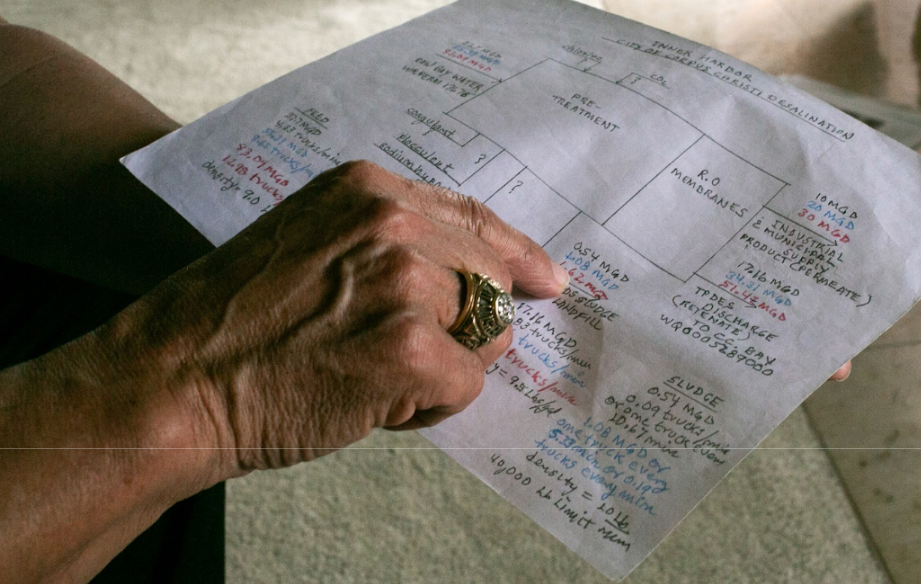
Serna, an engineer who had worked on reverse osmosis water systems for Valero and Occidental Chemical, reviewed the project’s application. What he saw, he said, astounded him: flimsy assumptions, unrealistic estimates and missing information.
A facility of that scale, he knew, would require railcars full of pretreatment chemicals, create a mountain of sludge waste every day and consume a tremendous amount of electricity. But he didn’t see serious plans for any of that, he said.
He dug deeper into the desalination boom and quickly saw what was going on: Politicians and businessmen had oversold their water supply, he said, and were scrambling for more as shortages approached. But none of them had any idea what they were doing, Serna remembered thinking as he reviewed the applications.
“I’ve been trying since 2020 to let them know how catastrophic this is going to be,” he said in an interview at his home. “They’ve acted with a profound ignorance.”
Serna, a father of four who worked his whole life at chemical plants in Texas, didn’t think any of the proposals would produce as much freshwater as projected, come online as quickly as expected or cost as little as any of the applications stated. These were not going to solve the crisis that officials had teed up, he believed.
In calls, emails and public comments to city and port officials, Serna raised the alarm at what he saw unfolding. He felt brushed off and soon stopped receiving responses.
Serna knew that chemical plants and refineries can’t just throttle down water consumption at will. The multi-billion-dollar facilities are meant to operate consistently at a steady state with a set inflow of water. Changing that balance raised risks of explosions. The whole region was skidding toward catastrophe, Serna thought at the time, with no realistic solution in sight.
In 2022, Gulf Coast Growth Ventures, the Exxon-Saudi partnership, began to draw water while the desalination facility meant to supply it still didn’t even exist on paper.
Strawbridge, then CEO of the Port of Corpus Christi Authority, insisted a private desalination operator should build and run a large facility that could sell its water to the city. But the city wanted to operate its own. Strawbridge considered the location of the city’s project unsuitable. Both sides said the other took steps to undermine the project.
Meanwhile, veteran local scientists rejected environmental studies from developers claiming the massive discharge of brine from the plants wouldn’t turn the coastal bays and estuaries into hypersaline wastelands.
“I’ve read the engineering studies,” said Paul Montagna, an endowed chair at the Harte Institute for Gulf of Mexico Studies at Texas A&M University in Corpus Christi, in a 2022 interview with Inside Climate News. “And I just don’t get it.”
Environmentalists organized against the plants. Araiza, the college professor who attended the first desalination meeting, had become a leader among groups that were fighting desalination as a means to resist the onslaught of petrochemical projects in their area, which they saw as wealthy, outside interests swooping in to hijack their resources, institutions and environment.
“They really thought it was just going to be a yes,” she said from her office at Del Mar College, beneath a poster of Che Guevara. “I think we helped slow things down.”
Barrera, the City Council member, started to feel uneasy as controversy and constant turnover on the council seemed to leave them unable to push the project forward.
“I’ve been accused of being a fearmonger,” he said in an interview at his office in downtown Corpus Christi. “Now everybody’s scared.”
It All Falls Apart
Strawbridge took an entourage of about 30 Texas lawmakers, businessmen and lobbyists to Israel in November 2022 to visit desalination facilities “to see that it is possible to solve for our water issues,” he said.
Strawbridge encouraged the lawmakers to support the port’s development of a private desalination plant, which he said was urgently needed to cover for the failures of the city. But he drew public outrage from city officials when he applied for state funding for a facility that struck them as a competitor to theirs.
Strawbridge said the trip to Israel ultimately led the Texas lawmakers to pass legislation in 2023 that created the state’s $1 billion water fund.
But the trip, not disclosed to the public at the time, ultimately ignited a scandal that led to Strawbridge’s resignation when an investigation by KRIS 6 revealed that the Port, which is not a taxing entity, spent more than $200,000 taking the crew to Israel. The station described “a pattern of lavish spending” on that trip and in prior port activities.
Strawbridge earned $750,000 in the prior year and had expensed an average of $10,000 per month on food and alcohol, including parties. One day later, Strawbridge resigned, but maintained that all expenses were incurred properly through his work representing the Port.
In an interview, he characterized the report and scandal as “a hit job” by political opponents and “an effort to hasten my departure from the Port.”
“They used the expenses from the Israel trip as a basis for smearing my good name, although the trip ultimately proved fortuitous for the state and its water funding,” Strawbridge said. “Ultimately an independent audit of the previous five years of my expenses found absolutely no irregularities or departures from policy. But of course that wasn’t covered by KRIS 6.”
That year, 2023, was the hottest on record in Texas. Water levels in Corpus Christi reservoirs continued to plummet as the drought intensified. Desalination had moved to the center of Corpus Christi’s public conversation. Local politicians spoke for or against it while activists flocked to city council meetings and permit hearings.
“Blessed be the environmentalists,” said Serna, the retired engineer. “But 90 percent of them don’t know what the hell they’re talking about.”
In January 2024, Corpus Christi City Council produced a new cost estimate for its proposed desalination plant of about $550 million to produce 30 million gallons of freshwater per day.
“These numbers are ridiculously low, fraudulent and deceitful,” wrote Serna in an email to city officials.
By that time, Serna was angry. The subject line of his email read: “The Legacy of the Imbeciles.”
Where was the city even getting this cost estimate from, he asked, if it “does not have engineering and construction drawings.”
“All the city has at this time are deficits and bills incurred by lunatics in the millions of dollars already spent in the pursuit of this Scam project with nothing tangible on hand yet,” Serna wrote.
Later that year, a new cost estimate put the project at nearly $760 million. Another estimate, in July 2025, said $1.2 billion.
Two months later, Corpus Christi City Council, dominated by newly elected members and unable to stomach the cost, voted to cancel the project after a rancorous, 12-hour public meeting that broke repeatedly into yelling from the audience. By then, the Port of Corpus Christi Authority also handed off one of its desalination projects to the nearby Nueces River Authority and mothballed another.
Corpus Christi city leaders expressed optimism over plans to quickly pipe in groundwater from the Evangeline Aquifer about 20 miles away. But when users of that water, like the small city of Sinton, requested in February 2026 that an administrative law judge review Corpus Christi’s groundwater permits, hope faded for a timely solution, other than hurricane-scale rainfall.
“Let the shit hit the fan,” said Serna. “Let dog eat dog.”
What does he think will happen to Corpus Christi? In time, he said, the refineries and chemical plants will probably build their own water projects, somehow, and possibly restart their facilities that they will have to mothball in the meantime.
For residents, he said, life might be like it used to be for him, 70 years ago, as a boy in the Rio Grande Valley, when he would hang plastic jugs on mesquite branches and carry them on his shoulder to ask nearby companies for water.
“This is the legacy of the imbeciles,” he said.
Tyler Durden
Mon, 03/09/2026 – 21:25

Five Iran Women Soccer Players Defect In Australia, Trump Urges Immediate Asylum
Five Iran Women Soccer Players Defect In Australia, Trump Urges Immediate Asylum
The ongoing Iran war is a rare modern conflict where warring powers can in an unprecedented manner (generally-speaking in terms of the modern age) address each other directly over social media. For example Iranian top official accounts are busy trying to troll Washington in defiance, even as the US bombs fall. “9 days into Operation Epic Mistake, oil prices have doubled while all commodities are skyrocketing. We know the U.S. is plotting against our oil and nuclear sites in hopes of containing huge inflationary shock. Iran is fully prepared. And we, too, have many surprises in store,” Iran Foreign Minister Abbas Araghchi wrote on X Monday.
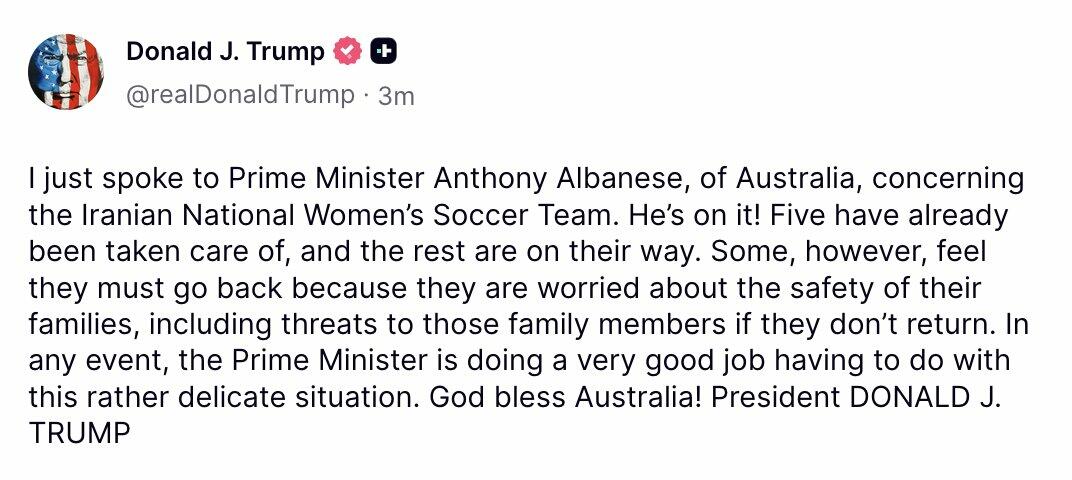
But President Trump on the same day had his own card to play, highlighting the plight of the Iranian National Women’s Soccer team, which appears stuck in increasingly sensitive and possibly dangerous situation after playing in Australia. Trump wrote: “Australia is making a terrible humanitarian mistake by allowing the Iran National Woman’s Soccer team to be forced back to Iran, where they will most likely be killed. Don’t do it, Mr. Prime Minister, give ASYLUM. The U.S. will take them if you won’t.”
Stretching back days, and weeks – even before the start of Operation Epic Fury – there were conflicting reports over the team’s response during the singing of the national anthem. There are widespread headlines they have been refusing to sing the national anthem, resulting in threats from Tehran officials.
At this point it remains anything but clear whether the entire team is requesting asylum, or whether just several individuals are. Australian broadcast reports say at least five are in hiding:
Five female soccer players who it was feared would face persecution when they returned to Iran have left their accommodation in the Gold Coast and plan to seek asylum in Australia, multiple sources have told the ABC.
Fatemeh Pasandideh, Zahra Ghanbari, Zahra Sarbali, Atefeh Ramazanzadeh, and Mona Hamoudi, who all play for the Iran women’s national football team, refused to sing the national anthem before their opening match with South Korea at the Women’s Asian Cup earlier this month.
Fears had been growing they would be targeted by the Iranian regime upon their return, after they were labelled “traitors” on Iranian state TV.
Now, a family member of one of the athletes, who we have agreed not to name, and activists within the Iranian Australian community have told the ABC the players have evaded the team’s handlers and are being protected by police in Queensland.
Trump says PM Albanese is “on it”….
The NY Times and others have since reported that an Australian government representative is in contact with the five, and has briefed them on their options. The pressure on the ladies grows, at a moment their homeland – and possibly their own family members – are under US-Israeli bombs.
Some intense public scenes have played out after the team lost its last group match at the Women’s Asian Cup on Sunday. “Just 24 hours earlier, Australian protesters laid siege to a tour bus transporting Iranian female soccer players,” one foremost Australian broadcaster reported.
Many among the crowd that rushed the bus carried pre-Islamic revolution Iran flags, and are apparently pro-monarchy Iranians which make up part of the diaspora.
Some of the chaotic scenes, which have been seized upon by Pro-Pahlavi oppositionists…
Iranian football fans plead with Australia “Save our Girls” as they surround a bus transporting the Iranian National Women’s Football Team.
The team defiantly refused to sing the Islamic Republic national anthem and could face severe retribution if they return to Iran. pic.twitter.com/kYIKrTev0z
— Oli London (@OliLondonTV) March 9, 2026
While it’s becoming clear the team could face threats from there own government at home – if not also the pressing threat of US-Israeli bombs from the sky, Al Jazeera has made clear that at least some of them want to urgently be reunited with their families at home:
While the players have not publicly aired any concerns for their own safety, they have spoken about the difficulty of playing in a tournament thousands of kilometers away from home while being “fully disconnected” from their families during the US-Israeli attacks.
Their head coach, Marziyeh Jafari, has been quoted as saying by Australian media that the players want to return to Iran “as soon as we can”.
“I want to be with my country and home. … We are eager to come back,” the Australian Associated Press quoted Jafari as saying in a postmatch news conference.
Without doubt, the international media spotlight looks to make their plight and decision-making even more difficult – again, also as people in Tehran take notice:
Islamic Republic of Iran Broadcasting presenter Mohammad Reza Shahbazi said in a video that the players showed a lack of patriotism and their actions amounted to the “pinnacle of dishonour” in footage that circulated widely on social media.
Shahbazi then stressed what is likely the prevailing Iranian government view at this moment: “Let me just say one thing: Traitors during wartime must be dealt with more severely.”
These and other comments have caused opposition voices to warn that the Woman’s Soccer Team might not only face scrutiny, investigation, and harassment upon returning home – but possibly even death, should they be deemed ‘traitors’.
Tyler Durden
Mon, 03/09/2026 – 21:00

FBI Obtains Election Records From Arizona Senate
FBI Obtains Election Records From Arizona Senate
Authored by Petr Svab via The Epoch Times,
The FBI has collected a large volume of Arizona election records from the state’s Senate as part of a grand jury investigation. The subpoena indicates a broader scope of the investigation into irregularities in the 2020 election.
The records pertain to the Arizona State Senate’s 2020 audit of Maricopa County, according to a March 9 X post by the Senate’s president, Warren Petersen. The county, where nearly two-thirds of Arizonans live, has been at the center of multiple controversies, including unsuccessful litigation by multiple Republican campaigns.
The subpoena, first reported by Just the News, was confirmed to The Epoch Times by a source familiar with the investigation. The large volume of electronic data includes ballots and voter records, according to the source.
The grand jury probe may indicate a wider investigation. In January, the FBI raided election offices of Fulton County, Georgia, which covers the broader Atlanta area, as part of a criminal investigation into potential violations of federal law. Concerned citizens have discovered a plethora of problems with the county’s 2020 election. Even if the issues didn’t affect the election’s outcome, they may still amount to criminal violations, said the search warrant’s affidavit, released last month.
The problems included chain of custody failures and duplicate ballot images, as well as incorrectly reported recount results.
The Trump administration has been moving aggressively to probe election law compliance.
The Department of Justice (DOJ) is suing at least 29 states for voter records that contain non-public information, particularly driver’s license numbers or last four digits of the social security number. The DOJ stated it has lawful authority to review the records to check for compliance with federal election laws. States, mostly those run by Democrats, have argued various state laws and privacy concerns prevent them from sharing the data.
President Donald Trump has maintained that in 2020, election victory was stolen from him. His lawyers vigorously and unsuccessfully challenged the results. Since then, Republican states have significantly tightened election rules while the Democratic ones have generally moved in the opposite direction.
Trump is also pushing a sweeping election reform bill, the SAVE America Act, which would require voters to present proof of citizenship, such as a passport or a birth certificate, to register to vote. The GOP-controlled House passed the bill last month. But Senate Republicans only have 53 votes, seven short of overcoming the filibuster. They remain divided on whether to abolish the rule.
Democrats have called the bill an attempt at voter suppression.
Tyler Durden
Mon, 03/09/2026 – 20:35
https://www.zerohedge.com/political/fbi-obtains-election-records-arizona-senate

Security Fears Suddenly Emerge Over Trump’s Visit To China
Security Fears Suddenly Emerge Over Trump’s Visit To China
President Donald Trump’s forthcoming high-stakes visit to China will be restricted to Beijing alone due to both a demanding schedule and heightened security concerns, according to a report in the South China Morning Post.
“Unfortunately, his schedule is very tight. There is no room to squeeze in a visit to a second city,” one source told the SCMP.
“While the schedule is tight, security is also a top concern,” another source told the newspaper. “Adding a second destination will likely compromise security and create a logistical nightmare, so both sides agreed that the visit will be in Beijing only. There is a chance for Trump to visit Shenzhen during Apec [in November], so why hurry?”
“Given the situation [in the Middle East], the visit’s security arrangements must be extremely careful but we are very confident that the summit will be a success,” another source told the newspaper.
The White House has confirmed that Trump will travel to China from March 31 to April 2, marking the president’s first visit to the country since 2017.
Recent U.S.-Israeli military strikes on Iran, which resulted in the death of the regime’s supreme leader Ali Khamenei, have had only a “very limited” effect on preparations for the summit, according to SCMP’s sources.
The visit will come as the U.S. and China seek to preserve a fragile trade truce. The pause in escalation stems from a meeting between Trump and Chinese President Xi Jinping on the sidelines of the 2025 APEC summit in Busan, South Korea. After months of rising tariffs, restrictions on rare-earth exports, and agricultural boycotts, the two leaders agreed to a one-year truce that eased pressures on the global economy’s two largest players.
“There seems to be a really strong appetite to maintain that fragile trade truce that we saw struck in late 2025,” Nick Marro, global trade lead at the Economist Intelligence Unit, told SCMP. “I think, at best, we could see this continuation of a detente in tariff policy.”
Trump has characterized the 2025 deal as a “massive victory,” highlighting reductions in certain U.S. tariffs on Chinese goods (from around 57% to 47% in key areas like fentanyl-related levies), while China pledged to resume substantial purchases of American soybeans, sorghum, and other agricultural products, suspend new rare-earth restrictions, and cooperate on curbing fentanyl flows.
The Busan accord provided breathing room for American farmers and manufacturers, halted further escalation, and created space for potential longer-term talks – even as underlying structural disputes over technology and supply chains persist.
“Both sides will look for deliverables that can be packaged as wins they can present at home,” Wang Dan, China director at Eurasia Group, told SCMP, adding, “This could include numerical commitments for soybeans, energy and manufactured goods from the US.”
Tyler Durden
Mon, 03/09/2026 – 20:10
https://www.zerohedge.com/geopolitical/security-fears-suddenly-emerge-over-trumps-visit-china

From Redcoats To Robots: AI Is Challenging Our Republic’s Future
From Redcoats To Robots: AI Is Challenging Our Republic’s Future
This week, thousands of workers are receiving pink slips. They are not being let go due to inflation or outsourcing to foreign countries. To the contrary, they are being fired because booming sectors of the economy no longer need them. Indeed, it is an economy that may need fewer and fewer humans.
Amazon this week announced further job cuts due to robotics and AI. Recently, Jack Dorsey, the co-founder of Twitter, announced that his company Block would be laying off 40 percent of its employees. He cited AI as reducing the need for human employees.
In my book, “Rage and the Republic: The Unfinished Story of the American Revolution,” I discuss not just the economic changes unfolding due to AI and robotics but also the political implications of those changes for the American republic.
These economic changes are unfolding all around us. We are looking at one of the greatest job losses in history.
In a free-market system, such technological changes tend to offset losses with new jobs in emerging industries. And there will be such growth with the AI and robotic revolutions. But it is also likely that we are looking at a static class of unemployed and practically unemployable citizens as this new revolution unfolds.
“Low-skill jobs are the most likely to be replaced by a robotic workforce,” I write in the book.
“Amazon warehouses are now entirely mechanized with twelve different types of over seven thousand robots moving rapidly to collect and direct goods where hundreds of people were once employed.”
But what is most notable about the Amazon announcement is that these were white-collar jobs. The impact of AI is not confined to factory workers and truck drivers.
The danger is that politicians will react predictably and try to subsidize jobs that are no longer viable and industries that are being dramatically downsized. At the same time, they are likely to expand model programs in Democratic cities for universal basic or guaranteed income.
Democrats have moved forward with more than 60 bills creating such programs, and this week, Cook County, Ill. (the second-largest county in the U.S.) made permanent the universal basic income program it had originally launched with federal COVID-19 relief funds.
The problem is the creation of what I call a “kept citizenship” in a republic designed for people who are economically and politically independent from the government.
That system is seriously undermined by a large percentage of citizens living off the government dole.
The solution cannot be an “arts-and-crafts” population kept entertained by government programs to learn glassblowing and pottery-making.
A different type of citizen would emerge that is unlikely to be sufficiently free of the government to counter its excesses or failures.
“Rage and the Republic” lays out what I call a “liberty-enhancing economy.” It notes that this is not just the 250th anniversary of the Declaration of Independence but the 250th anniversary of the release of Adam Smith’s Wealth of Nations. The founders immediately embraced Smith’s economic theories as the perfect companion for their political theories. They believed that true freedom requires economic independence from government.
That means accepting the economic changes and the loss of certain jobs. AI and robotics will largely wipe out certain jobs from taxi drivers to radiologists to warehouse workers. Meanwhile, we need to focus on homocentric jobs. In the book, I called these “Guinan jobs” after the bartender on the starship Enterprise in “Star Trek: The Next Generation.” As a kid, I was always confused by Guinan (played by Whoopi Goldberg), who would mix a drink next to a replicator that could produce the perfect Romulan cocktail every time without fail or variation. Customers clearly wanted Guinan to make the cocktail, even if it is not perfect every time.
The question I ask is, how many “Guinan jobs” are out there. There are many, including teachers, psychiatrists and lawyers, who will be affected but likely not eliminated by AI. We will still want humans in these positions.
All governments will face this existential crisis in the 21st Century. It will create growing instability globally. Although AI and robotics will make goods cheaper and more widely available, they are also likely to have a dramatic effect on populations. For example, as production costs drop with the new technology, there will be less advantage to moving factories to other countries with cheaper labor forces, such as China and Mexico.
Companies may choose to build near consumer markets to save on transportation costs while utilizing higher-skilled worker populations to maintain robotic and AI systems. That could produce massive unemployment in certain countries with low-educated, low-income populations. That in turn could destabilize governments and increase the chances of war in countries with large populations of unemployed young men.
I also do not feel great optimism for global governance systems like the European Union. The EU has largely eviscerated the elements I identify in the American Revolution as producing the oldest and most stable democratic system. Although global governance is likely to increase, it could fail spectacularly due to its inherent instabilities.
In the U.S., this period of economic change is likely to fuel calls for socialist policies. Socialism has always thrived on economic upheavals. Indeed, socialists often use their own failures to further collectivize or centralize economies.
Our republic is uniquely situated to not only survive but to thrive in the 21st Century. It was conceived in and designed for changing economic conditions. But if we are to survive, we must remain faithful to the constitutional structure that has afforded us stability for more than two centuries. Despite calls to trash the Constitution, pack the Supreme Court and change our political system, these protections are the very things that can get us through this century intact.
The Founders designed our Republic to prevent the tendency of democracies to become what one called a “mobocracy.” They knew that political and economic instability could create a form of “democratic despotism” in which democracies devoured themselves.
We have a system that has overcome challenges — from redcoats to robots — that have crushed other countries. However, we must remember who we are. Our nation, created in the winds of change by a free and industrious people, need not fear change. It is a system designed for bad times, not good times. The true crisis is a crisis of faith being fueled by some in academia and in the media.
This republic will survive so long as it does not die by our own hand.
Jonathan Turley is a law professor and the author of the New York Times bestselling “Rage and the Republic: The Unfinished Story of the American Revolution.“
Tyler Durden
Mon, 03/09/2026 – 19:45
https://www.zerohedge.com/ai/redcoats-robots-ai-challenging-our-republics-future

Jesse Jackson’s Son Rips Obama, Biden For Hijacking Father’s Memorial To Attack Trump
Jesse Jackson’s Son Rips Obama, Biden For Hijacking Father’s Memorial To Attack Trump
In a move that is sure to raise eyebrows within Democrat circles, Jesse Jackson Jr. lashed out on former Presidents Barack Obama and Joe Biden for hijacking his late father’s memorial with not-so-veiled attacks on President Donald Trump.
The son of the late Rev. Jesse Jackson, who passed away last month at 84 after a lifetime battling for the marginalized, unloaded during a private service at Rainbow PUSH Coalition headquarters, calling out the former presidents for speeches that strayed far from honoring his dad’s uncompromised “prophetic voice.”
“Yesterday, I listened for several hours to three United States presidents who do not know Jesse Jackson,” an emotional Jackson Jr. declared. “He maintained a tense relationship with the political order, not because the presidents were white or black, but the demands of our message, the demands of speaking for the least of these – those who are disinherited, the damned, the dispossessed, the disrespected — demanded not Democratic or Republican solutions, but demanded a consistent, prophetic voice that at no point in time ever sold us out as people.“
WOW🚨: Jesse Jackson Jr. just DROPPED this at his father’s memorial:
“I listened to three United States presidents who did not know Jesse Jackson.”
He added: His father had a “tense relationship with the political order” because of the demands of justice—not race or party.… pic.twitter.com/7HrcIIx3pQ
— Officer Lew (@officer_Lew) March 8, 2026
The drama began after Friday’s high-profile public memorial at Chicago’s House of Hope, where Obama delivered a doom-laden rant heavy on division and assaults on democracy, clearly aimed at Trump without dropping the name.
“Each day, we’re told by those in high office to fear each other and to turn on each other, and that some Americans count more than others, and that some don’t even count at all,” Obama warned. “Everywhere we see greed and bigotry being celebrated, and bullying and mockery masquerading as strength. It’s hard to hope in those moments.”
Biden piled on, flat-out declaring the Trump administration shares “none of the values that we have,” while former Vice President Kamala Harris, whom Trump soundly defeated in the 2024 election, couldn’t resist either, bragging that she “predicted a lot about what’s happening right now.”
“I’m not into saying ‘I told you so,’ but we did see it coming,” Harris said. “But what I did not predict is that we would not have Jesse Jackson with us right now to help us get through this.”
Trump, who skipped the service, paid own tribute following Jackson’s death, calling the reverend a “good man” who truly loved people.
Trump wrote on Truth Social at the time: “Despite the fact that I am falsely and consistently called a Racist by the Scoundrels and Lunatics on the Radical Left, Democrats ALL, it was always my pleasure to help Jesse along the way. I provided office space for him and his Rainbow Coalition, for years, in the Trump Building at 40 Wall Street; Responded to his request for help in getting CRIMINAL JUSTICE REFORM passed and signed, when no other President would even try; Single handedly pushed and passed long term funding for Historically Black Colleges & Universities (HBCUs), which Jesse loved, but also, which other Presidents would not do; Responded to Jesse’s support for Opportunity Zones, the single most successful economic development package yet approved for Black business men/women, and much more. Jesse was a force of nature like few others before him.”
Then came the zinger… Trump said Jackson played a big role in Obama’s election, without getting credit, and added that the reverend “could not stand” Obama.
“He loved his family greatly, and to them I send my deepest sympathies and condolences, Jesse will be missed!” he concluded.
Tyler Durden
Mon, 03/09/2026 – 19:20

Solar And Storage Could Reshape Rural Electricity Markets
Solar And Storage Could Reshape Rural Electricity Markets
Authored by Leonard Hyman & William Tilles via OilPrice.com,
Rural electric cooperatives may face disruption from cheaper on-site renewables.
Co-ops serve about 12% of the U.S. population but operate over 40% of the nation’s power lines.
Financial pressure could grow across the system, as co-ops remain tied to long-term fossil power contracts with generation providers while renewable alternatives become cheaper for rural customers.
Rural electric cooperatives may be next in line for meaningful disruption from lower-cost, renewable power generation technologies such as wind and solar. The co-operative movement, a creation of FDR’s New Deal, has survived the past ninety six years with a simple mandate: provide low-cost, reliable electricity in under-served rural areas.
From a business perspective rural electrification always seemed like a terrible idea. The electric utility has to spend prodigiously on poles and wires for a sparsely populated area with a few customers per mile who provide an insignificant amount of steady revenues on that enormous investment. And to make it worse from a business perspective, all the farmers wanted in 1935 was mostly electric light and maybe power for a radio. Urban utilities, on the other hand, had over 20,000 customers per mile of distribution line, making for a proper business. The investor owned utilities at the time looked at the outsized capital expenditures for a rural power distribution network and its dismal revenue prospects and said, in effect, “no thanks”.
This rural-urban divide in the electric utility industry generated a bitter conflict within the industry, now long gone from the public’s imagination. But it still manifests itself plainly on a utility’s balance sheet. Rural utilities, not surprisingly, have a relatively large percentage of assets devoted to power transmission and distribution activities, especially on a per customer basis—all those miles of poles, wires, and small substations to move electricity across a large, sparsely populated service area. Said differently, the US’s power co-ops today serve about 12% of the population, but they have about 40+% of the nation’s transmission and distribution network and cover more than 50% of the land mass of the US.
Even today, rural power distribution costs on a per customer basis are very high, about four times higher than for an urban utility. Until recently, we saw this as a competitive strength. A relatively wide and protected moat for their business. The existing rural T&D system is too expensive to replicate, so we viewed competitive threats as minimal. Now, on- site power generation (and storage) with renewables could pose an existential competitive threat. If the storage and generation are on the customers’ premises, then the expensive distribution network becomes irrelevant and a potentially stranded asset. And because this renewable power is also cheaper than current fossil alternatives, this renders the power generation contracts to serve the co-op’s load at risk as well.
In the US, there are over 800 power co-ops serving more than 40 million people. And there are about 60 larger generation and transmission (G&T) co-ops,that own mostly fossil-fired power generation assets, which sell power to the distribution co-ops under long-term contracts. If we are correct, utility customers in these rural areas might realize substantial savings by switching to on-site solar. There are two reasons for this: 1) the new solar power providers don’t have that extensive rural electricity distribution network to support physically and financially, and 2) their power costs are cheaper than coal and gas. From a business competition perspective, this isn’t even a remotely fair fight. To us, this is what utility stranded asset risk really looks like when it’s caused by a technology transition.
In our rural electrification model in the US, we broke up the integrated electric utility into two parts, the distribution entity (the co-ops) and the Generation and Transmission entities providing power. But the financial stresses of more rapid solar and renewables adoption will affect each part of the business differently. The co-ops will lose lucrative customers as large commercial and industrial loads get bid away by solar developers offering lower power costs. But real financial stresses will also occur between the co-ops and their power providers, the G&Ts. The co-ops are contractually obligated to purchase mostly fossil-fired power from the G&Ts, but the co-ops now find themselves purchasing power that is now uncompetitively priced versus renewables. And this situation will likely get worse. The current fuel mix, according to the industry’s association, NRECA, is about 25% coal, 35% gas, 14% nuclear, with the rest being renewables and hydro. It is the financial tensions between co-ops and G&Ts that may give fixed-income investors some cause for concern.
The cooperatives are customer-owned businesses dedicated to providing reliable electric service at the lowest possible cost. They can raise money at a lower cost than their individual customers, and they have service staff that covers big, sparsely populated territories. They could become sellers, owners, and maintainers of on-site generation and storage and mini-grids. But those new businesses do not address the real issue: what to do with the existing infrastructure? That is where the financial risk lies.
What a new technology like renewables exposes here is an underlying and unavoidable physical and financial fragility of rural electrification based on the prevailing technology at the time, central station power. that reached customers through a relatively high-cost distribution system. But now, renewables produce electricity at lower cost, are faster to deploy at scale, and, because their power is generated on site, they don’t need any of the extensive distribution system nor the fossil-fired plants built to serve it.
For a rural utility today we might say their assets are being stranded at both ends.
Tyler Durden
Mon, 03/09/2026 – 18:55
https://www.zerohedge.com/energy/solar-and-storage-could-reshape-rural-electricity-markets
Investigation Suggests US Navy Likely Behind Attack That Killed 150 Schoolgirls In Iran
Investigation Suggests US Navy Likely Behind Attack That Killed 150 Schoolgirls In Iran
It’s looking more and more like the US Navy was responsible for killing more than 150 Iranian schoolgirls in the first hours of Operation Epic Fury, according to separate analyses of new video performed by research firm Bellingcat and the New York Times, who each tapped weapons experts to study the footage. Their conclusions contradict President Trump’s casual accusation that inaccurate Iranian weapons were to blame.
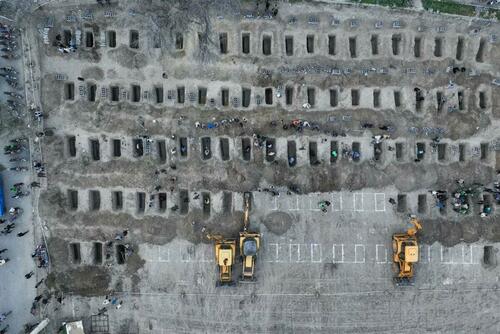
The strike occurred in the southern city of Minab on the morning of Saturday February 28 — Saturday is a school day in Iran. Iran reports that 175 people were killed, mostly children, at the girls’ elementary school near an Islamic Revolutionary Guard Corps base. While some, including former National Security Advisor John Bolton, reflexively blamed Iran for having a school near a military installation, others were quick to point out that US military bases around the world are peppered with schools, to say nothing of the fact that the United States and Israel had launched a Pearl Harbor-style surprise attack amid ongoing negotiations. Yet, the Pentagon may have relied on exceedingly obsolete intelligence, as witnesses say the school was located on a site previously used by the IRGC — some 15 years ago.
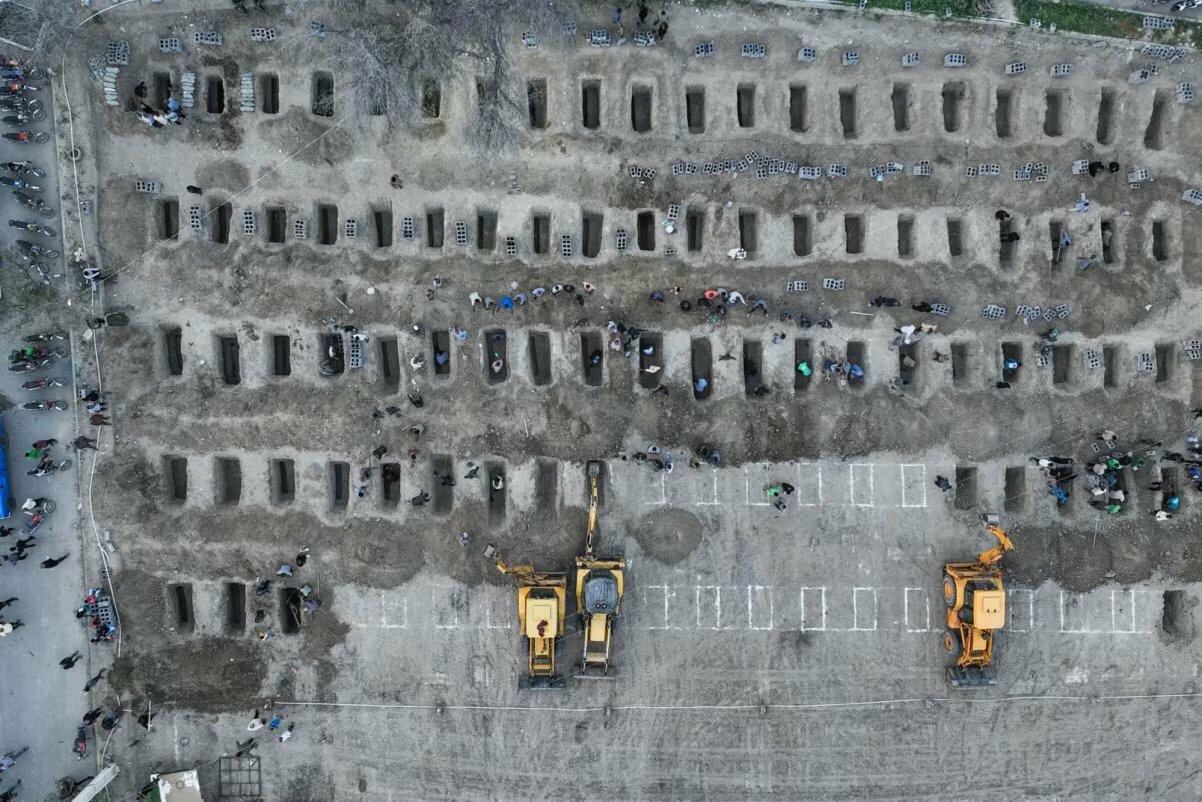
The new video captures a Tomahawk cruise missile hitting a reported medical clinic on an Iranian naval base next to the Shajareh Tayyebeh Girls’ School, with geolocation showing smoke already rising from the facility which taught 6- to 12-year-olds. Israel notably does not have Tomahawks, but the US Navy launches them from ships, and the service has posted multiple videos of cruise missiles being fired from destroyers during the war on Iran. Trevor Ball, a former U.S. Army explosive ordnance disposal technician working with Bellingcat, concluded the video shows a Tomahawk, as did Chris Cobb-Smith of Chiron Resources for the Times. In a March 2 briefing, Joint Chiefs Chairman Gen. Dan Caine told reporters that “the first shooters at sea were Tomahawks unleashed by the United States Navy.”
New video footage shows a US Tomahawk missile hitting an IRGC facility in Minab, Iran, on Feb 28, showing for the first time that the US struck the area. The footage also shows smoke already rising from the vicinity of the girls’ school, where 175 people were reportedly killed. pic.twitter.com/4jBXrNcRJO
— Trevor Ball (@Easybakeovensz) March 8, 2026
Aboard Air Force One on Saturday, President Trump brushed off the notion that the US military was responsible, instead suggesting that Iran accidentally bombed themselves. “No. In my opinion and based on what I’ve seen, that was done by Iran…They’re very inaccurate, as you know, with their munitions,” he told reporters. Defense Secretary Pete Hegseth told the reporter the incident was being investigated, adding that “the only side that targets civilians is Iran” (a claim that Gaza Palestinians and IDF whistleblowers would certainly take issue with). Trump administration officials had previously confided to members of Congress that the Pentagon was going after targets in the area, and said Israel wasn’t working that zone.
Operation Epic Fury seems to have been predicated on the ambitious assumption that a decapitation strike that took out Supreme Leader Ayatollah Ali Khamenei and senior leaders would prompt the country’s citizens to quickly sweep the remainder of the Islamic Republic’s government from power. While there have been images of small groups of Iranians cheering on the initial attacks – who have been directly threatened with death, huge masses of Iranians have turned out to show their support for the government.
The Iranian government’s social media team seized on the school attack, posting a video depicting a schoolgirl who goes about her morning only to be killed by the Americans.
🇮🇷 Iranian media published a video dedicated to the students killed in the US-Israeli attack on a school in Minab. pic.twitter.com/iGNGqVTcjR
— Sprinter Press (@SprinterPress) March 8, 2026
…In another lego style animation, Iran suggests that Israel has blackmailed Trump into the war via damning Epstein-era photos:
Iran media post lego how war ends pic.twitter.com/YVuMLXzAhA
— RT (@RT_com) March 8, 2026
Meanwhile, Matt Schlapp, who heads the CPAC-hosting Conservative Union and has been accused of homosexual predation, has been generating his own footage to inspire Iranians’ disgust for America. Schlapp suggested the 150 Iranian elementary-schoolgirls are better off dead than growing up to wear “a burka” – simultaneously demonstrating moral depravity and ignorance of the fact that Iran only requires a hair-scarf:
Absolutely disgusting.
Matt Schlapp, the chairman of CPAC — a man who has been accused multiple times of sexual assault by other men and has paid settlements to those men — suggested on Piers Morgan that the schoolgirls in Iran who were killed in a military strike are better off… pic.twitter.com/1ZsbNfEUmH
— Yashar Ali 🐘 (@yashar) March 5, 2026
Meanwhile, did Anthropic pick the site?
Was it Anthropic’s Claude that mistakenly targeted an elementary school on the former site of a Revolutionary Guard base? https://t.co/Z6A6gVjPMJ@natashakorecki | @NBCNews https://t.co/CM1S8L25ao pic.twitter.com/GwE9COu2U8
— Bad Fox Graphics (@BadFoxGraphics) March 5, 2026
Tyler Durden
Mon, 03/09/2026 – 18:30