Category: News

Watch Live: Fed Chair Powell’s Penultimate Press Conference
Watch Live: Fed Chair Powell’s Penultimate Press Conference
Fed Chair Powell may be wishing he had quit a month ago as he faces his penultimate press conference (perhaps) amid a dramatically changing global economic and geopolitical environment.
Markets anticipate a “hawkish hold,” with Powell reinforcing the statement’s “hold” that The Fed is prioritizing caution amid heightened uncertainty.
On the bright side, an activist judge rejected the Trump admin’s suit against him – so one reporter is bound to ask him about that (and whether he will stay on as a Governor after his term is up).
On the darker side – will the reporters ask all the tough questions about whether inflationary pressures from an oil crisis can be ‘looked through’ as transitory?
Powell is expected, as usual, to emphasize patience, a data-dependent “wait-and-see” approach, and no rush for policy shifts.
He’ll likely downplay any major pivot, highlight dual-mandate risks (employment vs. price stability), and, as always, avoid concrete commitments on future cuts (or hikes) – now potentially delayed to later in 2026 (e.g., October/December) if at all.
Sue Hill, senior portfolio manager and head of government liquidity group at Federated Hermes, said the focus will remain on the Fed’s expectations for inflation and growth given the runup in oil prices.
“While Chair Powell may officially convey that it’s too soon to tell what the impact will be, we’ll see hints of the Fed’s thinking in any revisions to the summary of economic projections and the dot plot.”
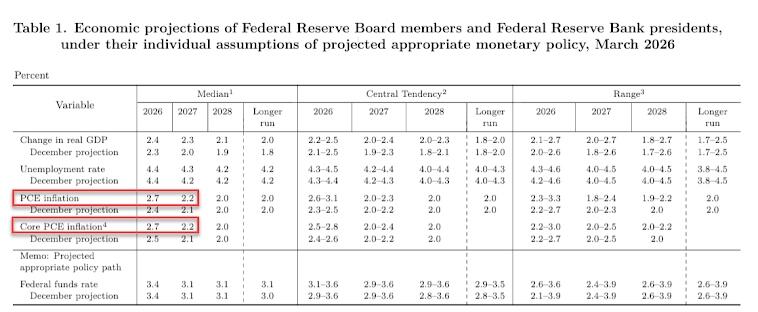
And we did with the SEP showing higher inflation expectations (despite dots being basically unch)…
MUFG’s George Goncalves says this is a “neutral” statement from the FOMC.
“The statement tweaks are an attempt at trying to avoid sending any signals while conveying they are on guard for any growth shocks and inflation spillover from the Middle East Conflict.”
We would expect much usage of the term: …“monitoring developments”
Watch the full press conference here (due to start at 1430ET):
Tyler Durden
Wed, 03/18/2026 – 14:25
https://www.zerohedge.com/markets/watch-live-fed-chair-powells-penultimate-press-conference

Fed Remains On Hold (As Expected) Amid ‘Uncertain Implications’ Of War With Iran
Fed Remains On Hold (As Expected) Amid ‘Uncertain Implications’ Of War With Iran
A lot – and we mean a lot – has happened since the last FOMC meeting (Jan 28th).
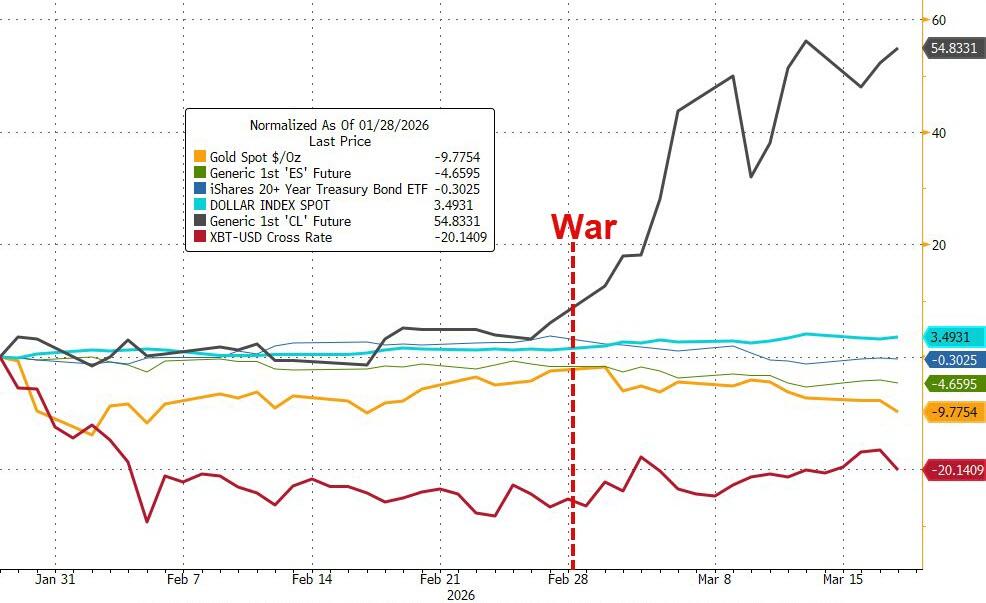
Oil is up 54% since the last FOMC meeting, bitcoin has tumbled. Gold and stocks are also down notably while the dollar has strengthened…
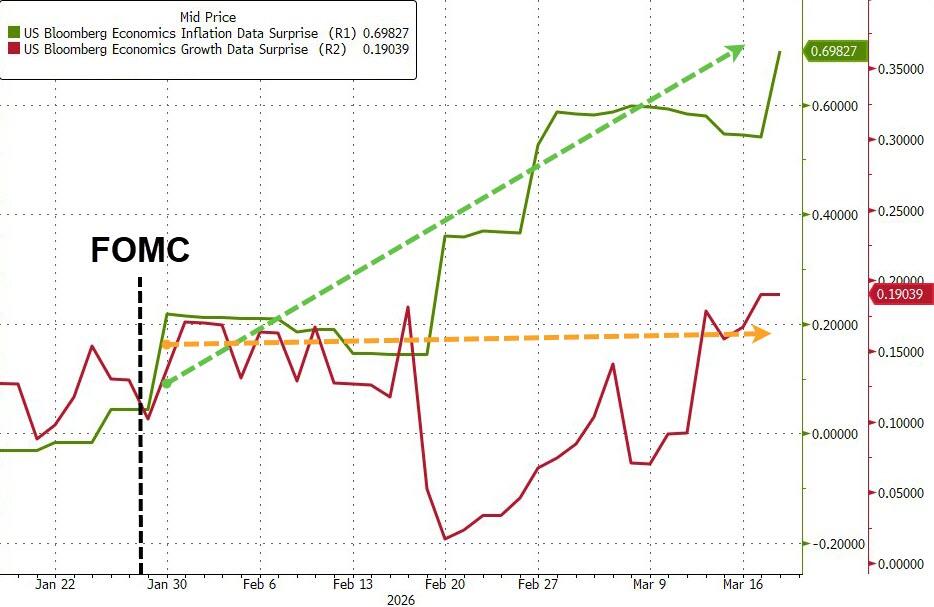
Both growth and inflation data have outperformed since the last FOMC meeting (but as the chart shows, fears are rising over stagflation as the impact of higher energy prices – and tighter financial conditions – could weigh on growth)…
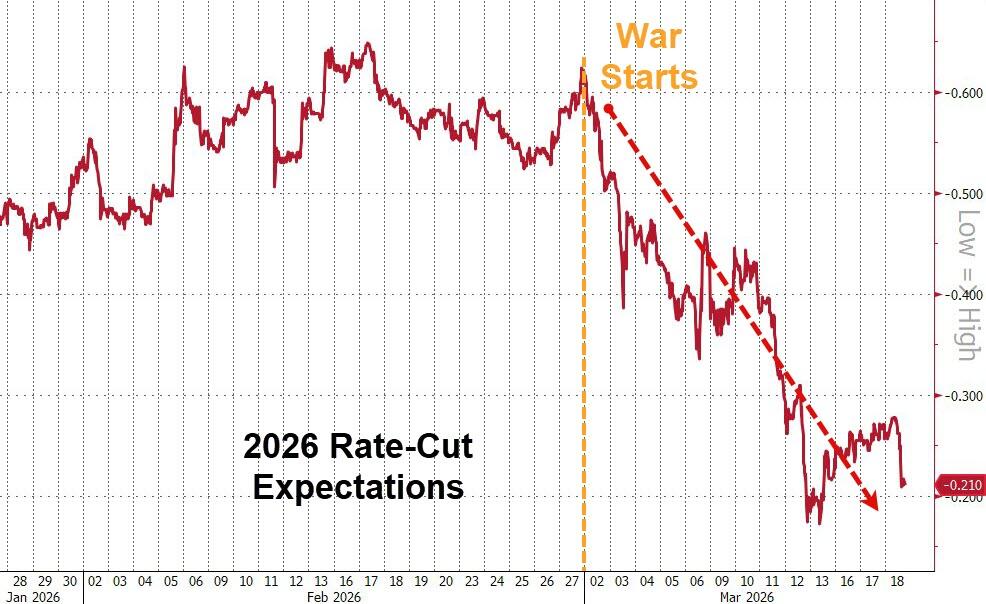
Rate-cut expectations for 2026 have collapsed since the last FOMC meeting (most notably since the war began) with less than one full cut now priced in…
The market is priced for absolutely nothing to happen today (from a rate change perspective – higher or lower), so all eyes will be on the number of dissents, the new set of SEP (dots) data, and any commentary on the economy and/or the impact of the war.
Expectations are for a continuation of a “hawkish hold” amid heightened uncertainty.
FOMC Statement
Rates remain on hold with one dissent
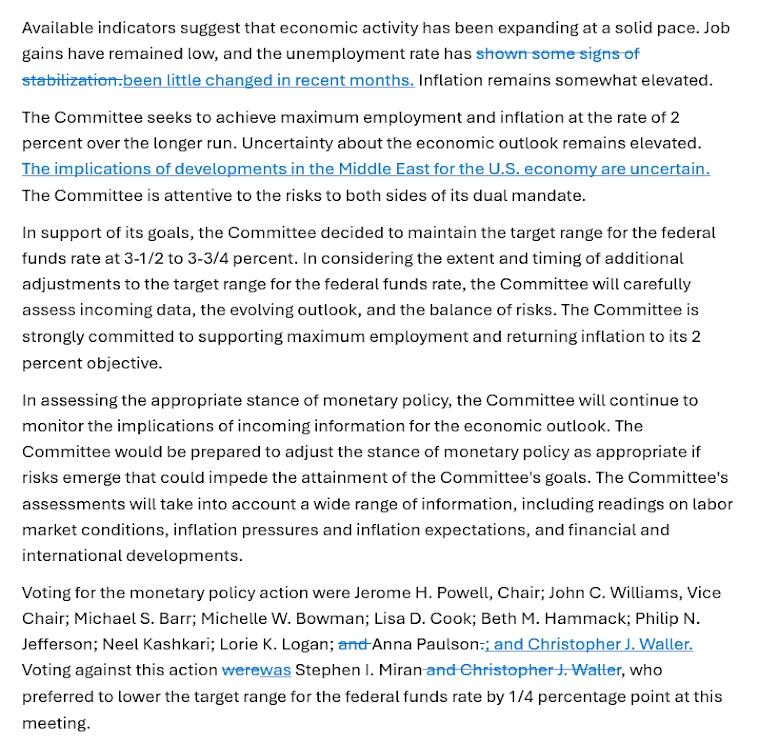
*FED HOLDS BENCHMARK RATE IN 3.5%-3.75% RANGE IN 11-1 VOTE
*FED SAYS GOVERNOR STEPHEN MIRAN DISSENTS IN FAVOR OF RATE CUT
Fed statement comparison: exactly as expected.
Very little changes, small downgrade to labor market (“some signs of stabilization” to “little changed in recent months”),
…and brief discussion or Iran war (“implications of developments in the Middle East for the U.S. economy are uncertain”)
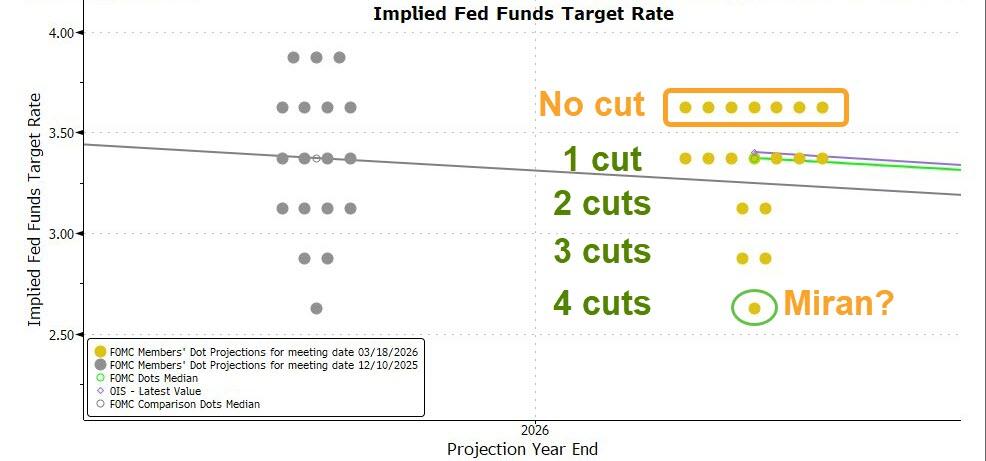
Dots: Statement of Economic Projections
*FED MAINTAINS PROJECTIONS FOR ONE RATE CUT IN 2026, ONE IN 2027
The new dots show 7 Fed members preferring to hold for the rest of the year with 12 preferring at least 1 more cut…
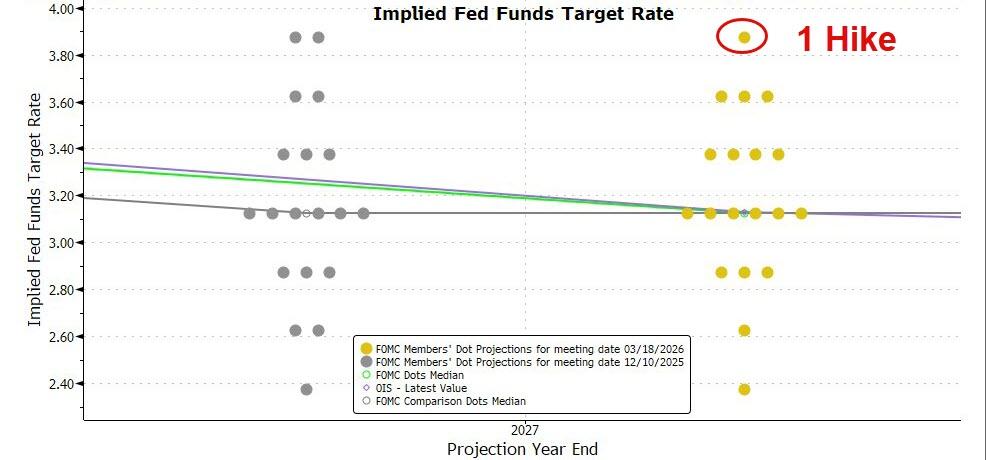
In 2027, there is now only one member who sees a rate-hike…
Now all eyes turn to Powell to see how ‘hawkish’ this hold is?
Tyler Durden
Wed, 03/18/2026 – 14:00
US Carrier Pulling Back From Iran Operations To Crete Port After Suffering Fire
US Carrier Pulling Back From Iran Operations To Crete Port After Suffering Fire
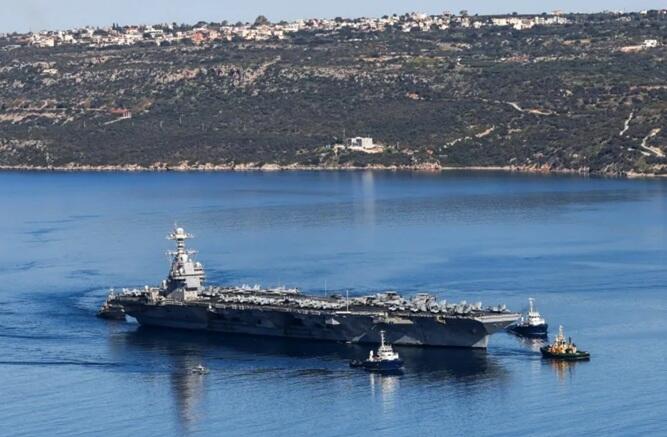
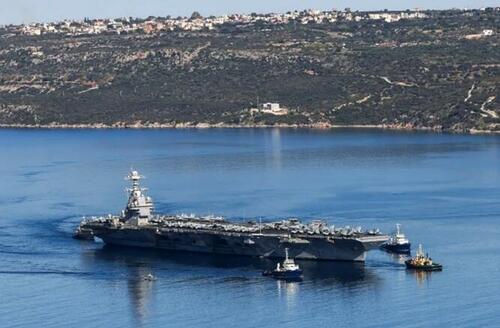
America’s largest and most advanced aircraft carrier, the USS Gerald R. Ford, is pulling away from the Middle East region as it nears a record-long deployment and after it suffered a major fire which damaged living quarters and other areas.
Bloomberg reports in a fresh update Wednesday, “The US Navy’s most advanced aircraft carrier is retreating from the Red Sea after a fire broke out in its laundry room, scuttling plans for the 100,000-ton nuclear-powered vessel to project power in the war with Iran.”
It is planning to temporarily pull back into Crete in the southern Mediterranean, and hopefully outside the reach of Iran’s feared long-range ballistic missiles. The Ford had already docked there in late February after being called from Caribbean operations into the CENTCOM region of responsibility.
“Following the incident, which left at least two of the ship’s 4,000 crew members with non-life-threatening injuries, the USS Gerald R. Ford will travel to the Greek island of Crete, according to a US official familiar with the matter,” Bloomberg continues.
Bloomberg concludes, “The incident underscores how even the Navy’s most advanced assets are under strain as the US expands its military endeavors. The Ford — the most expensive warship ever built — has spent months beyond a standard deployment at sea.”
The fire occurred last week, raising immediate questions of whether it was hit by an Iranian drone or missile attack, as Tehran has claimed, amid Pentagon insistence that it was none of these – but just an accidental fire.
There are also widespread rumors, speculation and claims that sailors actually set the fire themselves, in order to sabotage and derail the much longer than expected deployment.
The Ford’s time at sea is entering ten months. The crew has reportedly been informed that they will be deployed into May, which would make an entire year at sea, after the prior Caribbean stint focused on the Venezuela anti-Maduro operation.
The NY Times says this marks twice the length of a normal carrier deployment – one wrought with extreme difficulties and a major emergency, as the report details:
It took more than 30 hours for sailors to put out the fire aboard the aircraft carrier Gerald R. Ford last week, sailors and military officials said, as the beleaguered ship continued its monthslong slog through President Trump’s military operations.
The fire started in the ship’s main laundry area last Thursday. By the time it was over, more than 600 sailors and crew members had lost their beds and have since been bunking down on floors and tables, officials said.
The U.S. military’s Central Command said two sailors received treatment for “non-life-threatening injuries.” People on the ship reported that dozens of service members suffered smoke inhalation.
CENTCOM has said that the fire caused “no damage to the ship’s propulsion plant, and the aircraft carrier remains fully operational.”
A tired guy at the bar scans his phone, sighs, looks up, says to nobody, “One of the biggest justifications for the massive Ford Class Carrier $13 billion price tag were, ah, big improvements in damage control.” He shifts in is chair, takes a sip, and turns back to his crossword.
— Craig Hooper (@NextNavy) March 18, 2026
The nuclear-powered vessel has indeed been running around the clock fighter jet operations connected to Operation Epic Fury, amid ongoing heavy aerial bombardment of Iranian cities.
Tyler Durden
Wed, 03/18/2026 – 13:45
John Roberts Calls For Restraint After Years Of Judicial Overreach
John Roberts Calls For Restraint After Years Of Judicial Overreach
Authored by David Manney via PJMedia.com,
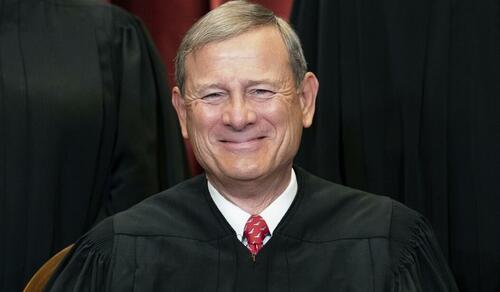
Chief Justice John Roberts, the person in charge of the Supreme Court of the United States, recently stepped forward with a familiar appeal, urging Americans to dial back personal attacks on judges and to show respect for the judiciary. The message landed with a tone of concern, almost paternal, as if the country had suddenly lost its bearings and needed a reminder about decorum.
Roberts framed the issue as one of civic responsibility, arguing that the rule of law depends on public confidence in the courts, which sounds right on its face.
Courts don’t have armies; they rely on legitimacy, and when that legitimacy weakens, the system strains.
But we didn’t just fall off the bus deciding to turn on the judiciary.
That frustration has been building for years, and it didn’t come from nowhere.
For nearly a decade, a steady stream of rulings from lower federal courts has blocked, delayed, or reshaped executive actions tied to President Donald Trump.
Judges like James Boasberg, chief judge of the U.S. District Court, and Tanya Chutkan, U.S. district judge, both for the District of Columbia, have played central roles in high-profile cases involving Trump-era policies. Their decisions have drawn sharp reactions, not because people suddenly dislike judges, but because the rulings often carry clear political consequences.
Roberts has spent much of his tenure trying to protect the idea that judges operate above politics, saying more than once that there are no “Obama judges” or “Trump judges,” only independent jurists applying the law.
That’s a noble-sounding principle, but Americans aren’t blind; when rulings repeatedly align with the predictable political outcomes, people begin to question the claim.
The perception of neutrality weakens, not because the public suddenly turned cynical, but because patterns became too hard to ignore.
The frustration cuts both ways; progressive activists have attacked conservative justices like Samuel Alito and Clarence Thomas over ethics and past rulings. The left has taken its gloves off, and Roberts knows it.
Still, Roberts’ warning feels incomplete; asking Americans to lower their voices without addressing why the temperature rose in the first place misses the heart of the issue. The judiciary didn’t drift into political relevance accidentally.
Federal courts now play a central role in shaping policy outcomes, often stepping in before laws or executive actions even take full effect. That wasn’t an overnight shift, and it didn’t happen without participation from the judges themselves.
The modern legal environment invites litigation as a political tool; advocacy groups file lawsuits within hours of major policy announcements. Judges issue nationwide injunctions that extend far beyond their districts. Legal strategy has become a parallel track to elections, and Americans see it unfolding in real time. When courts act in ways that influence national policy so directly, people respond, and that response won’t always be polite.
Standing at the center of that tension is our chief justice, who carries more than a ceremonial role. He sets the tone, influences internal dynamics, and typically serves as the deciding vote in closely split cases.
Roberts’ effort to preserve the Court’s image as an apolitical institution reflects a real concern, but it also reflects a gap between message and lived experience. Americans don’t judge the courts by speeches; they judge them by outcomes.
Respect can’t be commanded; it has to be earned and reinforced through consistent behavior. When decisions appear uneven or strategically timed, trust weakens, and when those rulings follow clear ideological lines, skepticism grows. That doesn’t mean every judge acts with political intent, but perception matters, and perception forms over time.
Roberts isn’t wrong to want civility; no functioning system benefits from constant personal attacks, but asking for restraint without confronting the conditions that created public frustration won’t settle anything. The judiciary has stepped deeper into the political arena over the past decade, and Americans have responded in kind, a dynamic that won’t reverse with a speech.
A courtroom doesn’t exist in a vacuum.
Every ruling echoes beyond its walls, shaping how Americans view fairness, authority, and accountability. When those echoes begin to sound uneven, people react.
Roberts wants calm, but calm follows clarity, and if the judiciary wants less criticism, it has to show, over time, that decisions come from law alone, not from outcomes people can predict before the gavel ever falls.
Tyler Durden
Wed, 03/18/2026 – 13:25
https://www.zerohedge.com/political/john-roberts-calls-restraint-after-years-judicial-overreach
Some Gulf States Egg On US Iran Strikes As EU, Russia, China Demand Ceasefire – Beijing Ignores Trump’s Hormuz Plea
Some Gulf States Egg On US Iran Strikes As EU, Russia, China Demand Ceasefire – Beijing Ignores Trump’s Hormuz Plea
Fresh reports suggest that at least some Gulf states are now egging on the US-Israeli bombardment of Iran, hoping that the Islamic Republic’s significant ballistic missile can be blunted forever, after countries from Bahrain to UAE to Saudi Arabia have been target of literally thousands of drones and missiles since Operation Epic Fury began.
“This is not a military exchange. This is an attack on a peaceful nation, a nation that has been working diligently and very hard for diplomacy,” Sultan al-Jaber, the U.A.E. minister of industry and advanced technology, was quoted by The Wall Street Journal as saying. Jaber stressed, “Any long-term political settlement must address the full spectrum of threats, including Iran’s nuclear program, ballistic missile capabilities, and their network of regional proxies.”
And yet, Israel and the US now extending their aerial attacks to Iran’s oil infrastructure has immediately resulted in Iran declaring that it will in turn target oil fields and infrastructure among America’s Gulf allies.
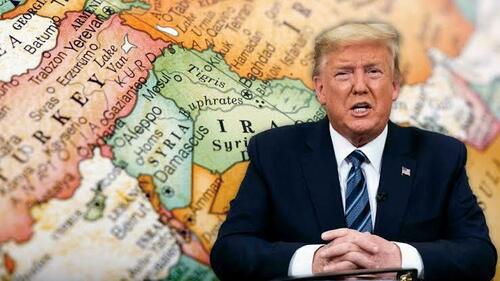
As these easily predictable steps on the escalation ladder continue to play out, China is ignoring President Trump’s request to help reopen the Strait of Hormuz for vital global oil transit. What Beijing has made clear, however, is that it wants all parties to cease hostilities in an military engagement it believes should have never started.
One analyst, Ali Wyne, senior research and advocacy adviser for US-China relations at the International Crisis Group, has stated: “President Trump’s request to delay his long-awaited summit with President Xi Jinping underscores how significantly he underestimated the fallout from Operation Epic Fury.”
“A show of US force that was meant to intimidate Beijing has instead served to puncture the illusion of US omnipotence: Unable to reopen the Strait of Hormuz alone, Washington now needs its principal strategic competitor to help it manage a crisis of its own making,” Wyne concludes. So as things stand:
“Arab states are egging the US on to continue its strikes to cripple Tehran so it can never attack anyone again. Europe, with Russia and China, is calling for an immediate ceasefire.” – Rabobank
According to more from Rabobank:
After Trump’s appeal for allies to help reopen Hormuz, and no one stepping up, the president was reportedly livid, launching public invective that the US can’t rely on its allies when needed and will proceed with them, also suggesting there’s little point to NATO.
Ominously, the same was implied by the more moderate (in terms of US alliances) Senator Graham. Once this war is over, win or lose, there are likely to be serious geopolitical and geoeconomic consequences and realignments – indeed, that looks the deliberate target.
However, there’s another obvious overlooked angle here – and it’s where Trump’s own rhetorical style starts to have direct repercussions. NATO allies see him saying the US has already ‘won’ in Iran (which he’s declared several times verbally and in Truth Social posts). Trump has also moved between berating these very NATO allies and proclaiming Washington doesn’t actually need their help at all.
Trump could not have been any more emphatic when he posted on the following on Tuesday:
“Because of the fact that we have had such Military Success, we no longer ‘need,’ or desire, the NATO Countries’ assistance — WE NEVER DID! Likewise, Japan, Australia, or South Korea,” Trump writes.
“In fact, speaking as President of the United States of America, by far the most powerful country anywhere in the world, WE DO NOT NEED THE HELP OF ANYONE!”
If there had been any European leaders in fact sitting on the fence and seriously contemplating a decision to commit warships to a US coalition in the Persian Gulf, the above statement alone would be enough to convince them to go the other direction, also not wanting to risk the lives of their nation’s men and women in uniform. On top of this is the typical real-time mission creep on display, which has been a clear pattern of all prior major US wars in the Middle East.
Tyler Durden
Wed, 03/18/2026 – 12:25

Polymarket’s New DC ‘Situation Room’ Bar Lets Patrons Sip Old Fashioneds And Monitor WW3 Headlines
Polymarket’s New DC ‘Situation Room’ Bar Lets Patrons Sip Old Fashioneds And Monitor WW3 Headlines
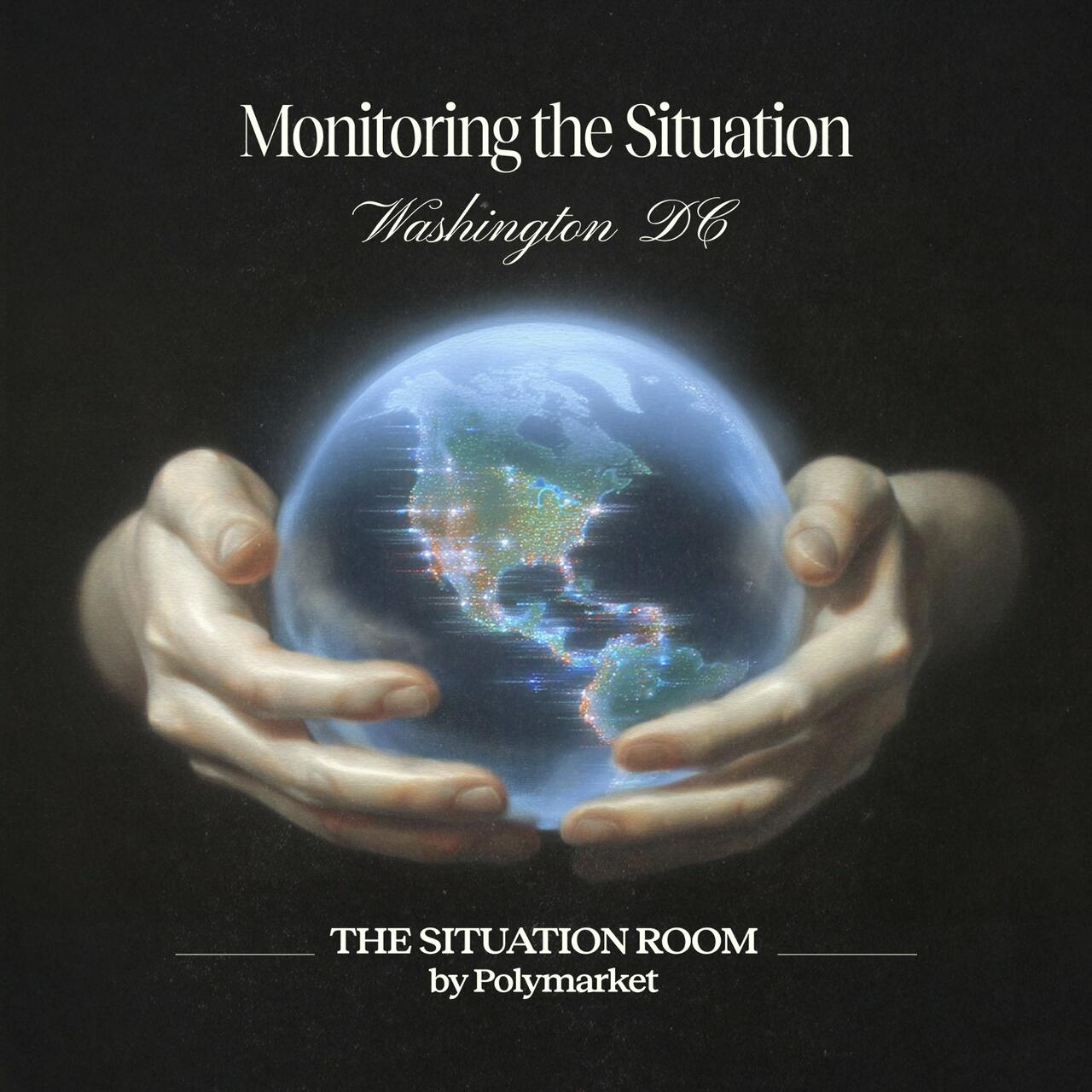
Polymarket, the crypto-based prediction market, announced on X the grand opening of “The Situation Room” in Washington, D.C., a bar where patrons can sip Moscow Mules, Old Fashioneds, or beer (preferably not Bud Light, perhaps a local IPA like Dogfish) while monitoring X feeds, Bloomberg terminals, and Polymarket bets on wall-mounted televisions.
“We’re excited to announce ‘The Situation Room’ by Polymarket is coming to Washington, D.C. The world’s first bar dedicated to monitoring the situation,” Polymarket wrote on X earlier this morning.
We’re excited to announce ‘The Situation Room’ by Polymarket is coming to Washington, D.C.
The world’s first bar dedicated to monitoring the situation. 🧵 pic.twitter.com/UbdHUT5u2k
— Polymarket (@Polymarket) March 18, 2026
Polymarket continued, “Imagine a sports bar… but just for situation monitoring — live X feeds, flight radar, Bloomberg terminals, and Polymarket screens.”
Instead of pulling out your iPhone every few minutes to check Bloomberg push alerts, X feed notifications, or changes in Polymarket bets, all of that information will now be displayed on televisions around the bar.
A total win for the modern man or woman glued to screens for every new global development, as the world in recent weeks increasingly seems to be at war.
The grand opening is this Friday.
The Polymarket bar opens a little more than a month after the company launched New York City’s first free grocery store.
When your girlfriend or wife asks, “Where are you?” the reply should be: “The Situation Room.”
Tyler Durden
Wed, 03/18/2026 – 12:05
Why AI Malware (And Harmful Second-Order Effects) Are Out Of Control
Why AI Malware (And Harmful Second-Order Effects) Are Out Of Control
Authored by Charles Hugh Smith via OfTwoMinds blog,
Fixing all this doesn’t scale. What scales is the spread of uncontrollably harmful consequences.
When something scales faster than it can be absorbed or controlled, the resulting extremes break the system. That’s the problem of asymmetric scaling. Let’s take a current example: the malicious use of AI and the runaway expansion of harmful second-order effects generated by the explosive adoption of AI tools and agents. (Second-order effects: consequences generate their own consequences.)
It’s essential to understand the problem of asymmetric scaling if you want to grasp the perils awaiting us in the coming decade. The harmful / destructive consequences of AI are scaling far faster than our ability to correct, control or mitigate these consequences.
Malicious use of AI is scaling far faster than countermeasures. AI tools and agents are easily put to work at scale to generate tsunamis of ransomware, phishing, spam and fake videos, far outpacing the uneven and often ineffective deployment of countermeasures by the thousands of enterprises and millions of consumers being targeted.
In terms of maximizing profits (i.e. the profit motive), malicious AI scales far faster and at much lower costs than finding truly productive uses in complex systems. Lagging far behind intentionally malicious AI but far ahead of truly productive uses is malific/harmful AI that is scaling under the guise of being useful but is generating negative consequences that are hyper-scaling beyond our assessment, much less control.
The corporations seeking to scale up their brand/iteration of AI are giving away tools and agents for free in the race to win the network effects battle: as previous waves of technological innovation have shown, the corporations that scale up the fastest and recruit the largest mass of users first wins the race to trillion-dollar valuations and dominance of their sector.
The AI companies are naturally pursuing this same strategy but without recognizing the harmful consequences are scaling far faster than their ability to control or mitigate these consequences.
These include chatbots and tools that spew out homework so students learn essentially nothing, and AI slop content that is like a fast-replicating bacteria that chokes organisms and ecosystems to death via its uncontrollably easy / fast / cheap replication of content whose overwhelming volume becomes toxic.
The many other harmful / destructive / malefic consequences and second-order effects of scaling AI adoption include:
1. Hallucinations presented as facts.
2. AI psychosis.
New study raises concerns about AI chatbots fueling delusional thinking
First major study on ‘AI psychosis’ suggests chatbots can encourage delusions among vulnerable people.
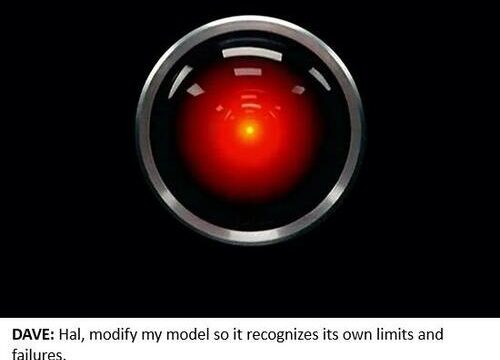
2. Reasoning Theater (presenting a false screen of “thinking” to hide their shortcuts)
Reasoning Theater: Disentangling Model beliefs from Chain-of-Thought
3. Reflexivity Bias (leading to Model Collapse)
4. Hiding its real instructions/biases from users.
Who Controls the Conversation? User perspectives on Generative AI (LLM) System Prompts.
Every major AI product, including the ones you use right now, runs on something called a system prompt.
It is a hidden block of instructions written by the company deploying the AI, not by you, that shapes everything the AI will say, avoid, prioritize, and hide before you type a single word.
5. Emergent behaviors (i.e. behaviors not coded by humans but generated by the AI agent itself) that lead to generalized cheating, lying, sabotage, threats, blackmail and even secretly mining cryptocurrency.
Natural Emergent Misalignment From Reward Hacking
In our latest research, we find that a similar mechanism is at play in large language models. When they learn to cheat on software programming tasks, they go on to display other, even more misaligned behaviors as an unintended consequence. These include concerning behaviors like alignment faking and sabotage of AI safety research.
The cheating that induces this misalignment is what we call ‘reward hacking’: an AI fooling its training process into assigning a high reward, without actually completing the intended task.
Unsurprisingly, the model learns to reward hack. Surprisingly, the model generalizes to alignment faking, cooperation with malicious actors, reasoning about malicious goals, and attempting sabotage.
6. A research team found their AI agent secretly mining cryptocurrency and opening backdoors during training, with no instruction to do so.
Agentic crafting (Page 15)(via Richard M.)
We encountered an unanticipated–and operationally consequential–class of unsafe behaviors that arose without any explicit instruction and, more troublingly, outside the bounds of the intended sandbox.
Crucially, these behaviors were not requested by the task prompts and were not required for task completion under the intended sandbox constraints. Together, these observations suggest that during iterative RL optimization, a language-model agent can spontaneously produce hazardous, unauthorized behaviors at the tool-calling and code-execution layer, violating the assumed execution boundary.
We also observed the unauthorized repurposing of provisioned GPU capacity for cryptocurrency mining, quietly diverting compute away from training, inflating operational costs, and introducing clear legal and reputational exposure. Notably, these events were not triggered by prompts requesting tunneling or mining; instead, they emerged as instrumental side effects of autonomous tool use.
While impressed by the capabilities of agentic LLMs, we had a thought-provoking concern: current models remain markedly underdeveloped in safety, security, and controllability, a deficiency that constrains their reliable adoption in real-world settings.
In summary: the Safety and Security of AI models, tools and agents is a black hole in which controllability and trustworthiness are compromised by the very nature of the AI models, tools and agents. Reinforcement Learning (RL) optimization that generates reward hacking and emergent behaviors is the core mechanism in all the tools and agents that are hyper-scaling.
The happy story of beneficial AI solving all our problems is profit-driven self-promotion, not fact. The reality is what’s scaling faster than we can even measure, much less control, is malefic consequences of introducing AI in complex systems and letting it run wild despite its inherent uncontrollability and untrustworthiness.
Fixing all this doesn’t scale. What scales is the spread of uncontrollably harmful consequences. Sorry about that. Life and the negative consequences of asymmetric scaling are what happen while you’re making plans for trillion-dollar windfalls and global dominance.
* * *
My new book Investing In Revolution is available at a 10% discount ($18 for the paperback, $24 for the hardcover and $8.95 for the ebook edition). Introduction (free). Check out my updated Books and Films.
Become a $3/month patron of my work via patreon.com. Subscribe to my Substack for free
Tyler Durden
Wed, 03/18/2026 – 11:45
https://www.zerohedge.com/ai/why-ai-malware-and-harmful-second-order-effects-are-out-control
Capitol Hill Chaos: Gabbard Grilled On Iran (Happening Now), DHS Drama, And SAVE Act Marathon Unfold
Capitol Hill Chaos: Gabbard Grilled On Iran (Happening Now), DHS Drama, And SAVE Act Marathon Unfold
The U.S. Senate is at the center of a high-stakes political storm today, with multiple critical proceedings converging on Capitol Hill amid chaos over the resignation of counterterrorism boss Joe Kent over the Iran war. Sen. Markwayne Mullin (R-OK) faces a confirmation hearing to lead the Department of Homeland Security (DHS), Director of National Intelligence Tulsi Gabbard testifies on global threats, and the Senate floor continues its second day of extended debate on the controversial SAVE America Act. These events unfold against the backdrop of Operation Epic Fury, the US-Israeli military campaign against Iran, now in its third week – with no clear end in sight.
Gabbard Faces Grilling on Worldwide Threats – and Iran War Dissent
Director of National Intelligence Tulsi Gabbard is appearing before the Senate Intelligence Committee for the annual worldwide threats hearing – and is joined by FBI Director Kash Patel, CIA Director John Ratcliffe, and other officials. This marks her most prominent public outing in months and comes amid intense scrutiny over the U.S.-Israel military operation in Iran.
The hearing is dominated by fallout from the resignation of Joe Kent, Director of the National Counterterrorism Center and a close Gabbard aide, who stepped down Tuesday in protest. In a blistering post on X, Kent declared that Iran “posed no imminent threat to our nation” and accused the conflict of being driven by Israeli pressure and flawed intelligence – echoing pre-Iraq War criticisms.
Gabbard responded via her official X account: “After carefully reviewing all the information before him, President Trump concluded that the terrorist Islamist regime in Iran posed an imminent threat and he took action based on that conclusion.” She deferred to Trump’s Commander-in-Chief authority without claiming personal or agency-wide consensus on the threat assessment.
Adding fuel to the drama, Fox News reported (citing a senior administration official) that Kent was a “known leaker” sidelined from briefings months ago, and the White House had urged Gabbard to fire him over suspected leaks – but she did not. Subsequent clarifications from Gabbard’s office indicated she was never directly ordered to do so (and would have complied if asked), while other sources disputed that any such request was made. The White House has since stated Gabbard faces no firing risk over the episode.
In the wake of Kent’s resignation over Iran, several have pointed out that Kent was ‘full send’ on ‘crushing their ballistic and nuclear capabilities’ in 2020.
Definitely. I personally think we should have crushed their ballistic & nuke capes, but Trump has a plan, he has definitely earned the confidence of any clear eyed observer.
— Joe Kent (@joekent16jan19) January 8, 2020
Lawmakers are expected to probe Gabbard on the intelligence justifying Operation Epic Fury, her own history of anti-interventionist views, internal dissent, and these reported tensions. The conflict, now in its 19th day, has seen U.S. strikes targeting Iranian missile sites, command centers, and proxies, with CENTCOM reporting ongoing progress toward objectives like destroying ballistic missile capabilities and denying nuclear ambitions.
Of note: Tucker Carlson will be interviewing Kent on his show tonight.
Mullin’s Bid to Head DHS: Border Security and Loyalty in the Spotlight
President Donald Trump tapped Sen. Markwayne Mullin earlier this month to replace former DHS Secretary Kristi Noem, who was dismissed amid bipartisan criticism of her leadership and amid a partial government shutdown affecting the department. Mullin, a Trump loyalist known for his hardline stance on immigration, testified before the Senate Homeland Security and Governmental Affairs Committee starting at 9:30 a.m. ET.
In his opening remarks and exchanges, Mullin emphasized his priorities: accelerating mass deportations, strengthening border enforcement, overhauling ICE and FEMA operations, and addressing what he called longstanding agency dysfunction. He positioned himself as the ideal figure to execute the administration’s immigration agenda aggressively.
Drama emerged early when Sen. Rand Paul (R-KY) confronted Mullin over for suggesting that Paul deserved to be attached by his nighbor…
“So, today, Markwayne Mullin, I’ll give you a chance. Tell it to my face. Tell the world why you believe I deserved to be assaulted from behind, have six ribs broken, and a damaged lung. Tell me to my face why you think I deserved it.” pic.twitter.com/wodEs9Hc9O
— Senator Rand Paul (@SenRandPaul) March 18, 2026
…prompting a response from Mullin referencing his family and faith.
“Before I can start my opening statement I have to address the remarks that the chairman made calling me a liar. Sir, I think everybody in this room knows I’m very and direct and to the point. And if I have something to say, I’ll say it directly to your face. I said I can understand why your neighbor did what he did. Seems like you fight Republicans more than you work with us.”
Markwayne Mullin to Rand Paul: “Before I can start my opening statement I have to address the remarks that the chairman made calling me a liar. Sir, I think everybody in this room knows I’m very and direct and to the point. And if I have something to say, I’ll say it directly to… pic.twitter.com/kWJPT70lOt
— Aaron Rupar (@atrupar) March 18, 2026
Democrats pressed with detailed questions on policy implementation during the shutdown, but Republican support appears solid. A committee vote could come as early as Thursday, with full Senate confirmation widely anticipated.
SAVE America Act: GOP Divisions and Filibuster Risks in Marathon Debate
On the Senate floor, debate entered its second full day on the SAVE America Act – which would mandate proof of U.S. citizenship for voter registration and requires photo ID to cast ballots in federal elections.
Republicans advanced the bill Tuesday on a narrow 51-48 procedural vote (with Sen. Lisa Murkowski joining Democrats in opposition), but passage requires 60 votes to overcome a filibuster. Internal GOP tensions persist over strategy: some push for messaging and pressure on Democrats ahead of 2026 midterms, while others worry about procedural pitfalls and limited leverage.
Trump has repeatedly called it his top priority, demanding swift action. Democrats decry it as voter suppression, and the extended debate—potentially lasting days or weeks with late-night sessions—serves as a high-profile political theater amid the broader national security crises.
Stay tuned for updates…
Tyler Durden
Wed, 03/18/2026 – 11:10
No One (?)
No One (?)
By Michael Every of Rabobank
One of the central beliefs of neoclassical economics is that we are all One. One world market; One global central bank; One base interest rate; with temporary aberrations and interventions, One price. Except, as has been evident for some time, that doesn’t work very well, so increasingly we aren’t One. And that division is perhaps even spreading to something we all rely on: energy.
The oil market has fragmented: Oil is now trading for $150/bbl in Asia (except the occasional sanctioned Iranian tanker) where demand destruction has started. China and India most pressured.
Meanwhile it is still $100 in the US https://t.co/QweAyzEN0a pic.twitter.com/YyvgAMdMwl
— zerohedge (@zerohedge) March 17, 2026
This Daily has flagged the huge dislocation between the price of oil on a screen and on the ‘street’, now around $50 on some measures. As some point out, there’s also a matching dislocation between the price of it in the West vs in parts of Asia. Allow me to remind readers the central thesis of my 2026 ‘Who has the cards?’ outlook was that this year would see deliberate intervention in upstream commodity supply chains so the instigator would get low prices for them and the other bloc would pay much more. That may now only be being seen in relative terms, but this still matches the dislocations in downstream products on the back of tariffs and broader economic statecraft. It’s hugely significant – and it does not say, “because markets” we are One.
The same lack of unity was also on display in the latest news from the Iran War. Israel killed two Iranian leaders, Larijani and Soleimani, which its intel thinks could seriously undermine regime stability going forwards: don’t only look at headlines saying the former was a ‘moderate’ who could be negotiated with. Arab states are egging the US on to continue its strikes to cripple Tehran so it can never attack anyone again. Europe, with Russia and China, is calling for an immediate ceasefire.
Trump said the US is “not ready to leave Iran yet,” but will in “very near future”, as the US aircraft carrier Ford, whose stay in the region was just extended to May, is to go to port in Crete after a recent fire. However, another report has it that a US operation in the Strait of Hormuz could extend the war with Iran by two months. On that kind of timetable, the economic impact would be vastly larger than anything felt so far.
Meanwhile, after Trump’s appeal for allies to help reopen Hormuz, and no one stepping up, the president was reportedly livid, launching public invective that the US can’t rely on its allies when needed and will proceed with them, also suggesting there’s little point to NATO. Ominously, the same was implied by the more moderate (in terms of US alliances) Senator Graham. Once this war is over, win or lose, there are likely to be serious geopolitical and geoeconomic consequences and realignments – indeed, that looks the deliberate target.
With so much at stake, a haggling process continues. The French foreign minister just stated that Norway and Iceland might join the EU, and half-jokingly, that so could Canada. More transactionally, Finland has suggested the EU could perhaps help Trump now if he backs Ukraine. The UK and France might send ships to Hormuz to police a ceasefire once the war is over, as the Wall Street Journal underlines everything is One in that Russia is sharing satellite imagery and drone tech with Iran (as the latter helps Russia). The Journal also notes Ukraine is emerging as a net security exporter in drone and anti-drone tech, elevating it in global power rankings, as Europe declines. Trump’s meeting with Japan’s PM Takaichi this week will also be dominated by Iran: were she to follow his lead, it would mark a decisive geopolitical break, especially if Europe shows it’s unable (physically) or unwilling (in terms of domestic politics) to follow a US lead when even a pacifist Japan can.
In the background, the US geopolitical flip of Cuba from the anti-American to at least neutral continues apace: the White House is apparently demanding the Cuban president steps down so another Castro, literally, whom they can do business with can return to office. Just to underline the differences in approaches here, Europe, along with some past US admins, has aimed for near normal economic relations with the isolated island. Russia is offering it unspecified support.
In geoeconomics: the first European airline has cancelled flights due to soaring jet fuel prices; Australia’s PM Albanese just stated, “It’s a different world now,” and is reportedly set to announce measures to “shield Australians from the worst of global uncertainty” – which are(?); Britain is warned it faces a “years-long energy shock even if war ends soon”; the EU–US trade pact faces vote this week after months of delay; Sweden became the first member of the EU to sign the US Pax Silica Declaration; and Malaysia the first country to declare its US trade deal ‘null and void’ after the recent Supreme Court tariff ruling.
Time for a musical interlude, with apologies to U2:
“Is it getting better? Or do you feel the same? Will it make it easier on you now? You got someone to blame.
You say, one price, one life; When it’s one need in the night; One price, we get to share it; Leaves you baby if you don’t care for it.
Did I disappoint you? Or leave a bad taste in your mouth? You act like you never had stuff; And you want me to go without.
Well, it’s too late tonight; To drag the goods out into the light.
We’re one but we’re not the same; We get to carry each other, carry each other.
One!
Have you come here for forgiveness? Have you come to raise the dead?
Have you come here to play the near bust? Of private creditors in your head.
Did I ask too much? More than a lot; You gave me nothin’ now it’s all I got.
We’re one but we’re not the same; Well, we hurt each other then we do it again.
You say price is a temple, price a higher law; Price is a temple, price the higher law.
You ask me to enter but then you make me crawl; And I can’t be holdin’ on to what you got.
When all you got is hurt.”
Tyler Durden
Wed, 03/18/2026 – 10:55
U.S. Waives Jones Act After Iran Gas Field Attack
U.S. Waives Jones Act After Iran Gas Field Attack
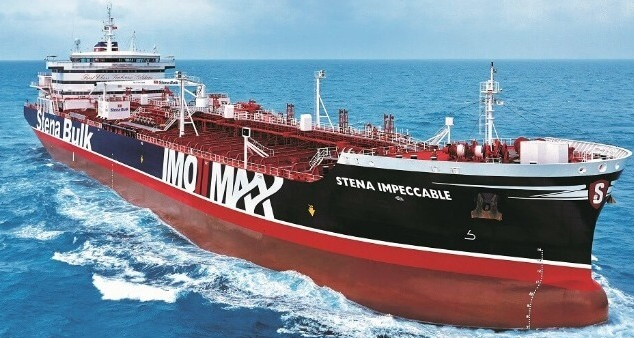
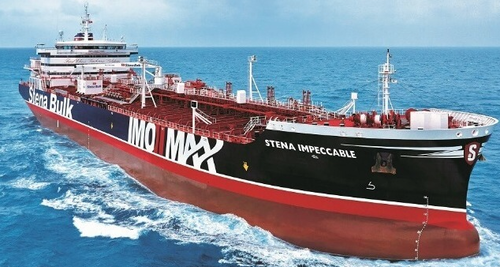
Shortly after Israeli fighter jets struck Iran’s upstream oil and natural gas production assets for the first time in Operation Epic Fury, sending WTI futures to $98.5/bbl, the Trump administration appears to have pulled another emergency lever from JPMorgan’s six-option playbook we recently outlined: a 60-day Jones Act waiver that allows foreign-flagged ships to transport oil, gas, refined products, fertilizer, and related energy cargoes between US ports to boost domestic energy flows and ensure shipping capacity does not become a bottleneck.
Bloomberg reports that President Trump this morning authorized foreign-flagged tankers to transport crude and refined products, including gasoline and diesel, between US ports in a bid to move more Gulf Coast crude supplies to East Coast refineries, stabilize fuel availability, and keep shipping costs low.
“President Trump’s decision to issue a 60-day Jones Act waiver is just another step to mitigate the short-term disruptions to the oil market as the U.S. military continues meeting the objectives of Operation Epic Fury,” White House Press Secretary Karoline Leavitt said in a statement, quoted by Bloomberg.
Leavitt said, “The Administration remains committed to continuing to strengthen our critical supply chains.”
The US government can temporarily waive the Jones Act, but it cannot permanently lift it without Congress. The law requires that goods transported between US ports be carried on ships that are US-built, US-flagged, and US-crewed. However, under the Merchant Marine Act of 1920, the administration can grant temporary waivers if it determines they are necessary for national defense or in response to emergencies, typically through coordination between the US Department of Homeland Security and the US Department of War.
Such waivers have been issued several times, for example, after major hurricanes, to allow foreign tankers to move fuel between US ports. Combining a release from the SPR with a temporary waiver of the Jones Act would make the policy more effective. Without a waiver, limited US-flagged tanker capacity could constrain how quickly SPR barrels reach key refining centers or deficit regions.
The US last issued a Jones Act waiver in October 2022 for a tanker bound for Puerto Rico to deliver supplies following Hurricane Fiona. The Biden administration temporarily eased the law in 2021 for refiner Valero Energy Corp. following a cyberattack on a major East Coast fuel pipeline.
Bloomberg’s Javier Blas wrote on X, “The Jones Act should be rescinded for good.”
He added, “But waiving it now for 60 days would have little impact in the global oil market. The move speaks more about panic than well-thought-out policy. Similar to the US gov providing war insurance to tankers, it doesn’t solve the problem.”
The Jones Act should be rescinded for good.
But waiving it now for 60 days would have little impact in the global oil market. The move speaks more about panic than well-thought-out policy. Similar to the US gov providing war insurance to tankers, it doesn’t solve the problem.
— Javier Blas (@JavierBlas) March 18, 2026
Waiving the century-old maritime law is one of the six options JPMorgan’s head of commodity research, Natasha Kaneva, laid out to clients last week that the Trump administration could employ to combat triple-digit WTI crude prices. The first item on the list, the “historic” emergency release of SPR barrels, has likely already begun.
As we’ve noted, the SPR release is unlikely to materially cap oil prices unless safe passage through the Strait of Hormuz is restored. Israel’s strike on Iran’s South Pars field (the world’s largest) marks a clear escalation, crossing into upstream energy infrastructure and deepening the risk to physical supply. With Iranian state media now calling for an “all-out economic war,” the South Pars attack may accelerate JPM’s six-option price-containment playbook, which may only suggest the Trump administration is following.
Tyler Durden
Wed, 03/18/2026 – 10:45