Category: News
Everything, Everywhere, All At Once
Everything, Everywhere, All At Once
Authored by No1 at Gold & Geopolitics substack,
Let me start with a number.
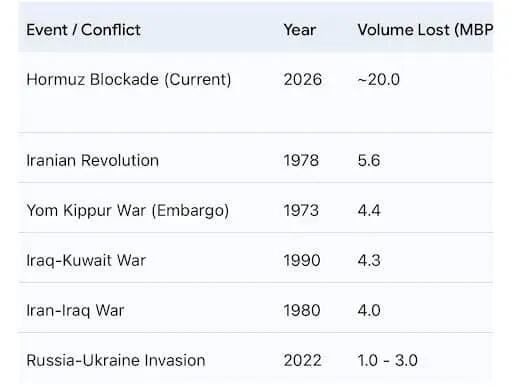
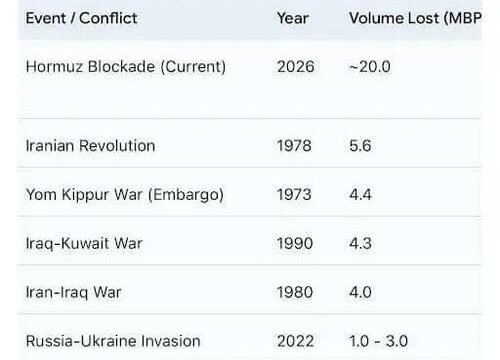
In 1980, when the Iran-Iraq war disrupted global oil supply, the volume lost was around 4 million barrels per day.
Painful. The world went into recession. Volcker raised rates to 20% to kill inflation. It nearly killed the economy in the process. We called it a crisis and we meant it.
The current Hormuz blockade is running at roughly 20 million barrels per day.
The futures market, in its infinite wisdom, is pricing a quick resolution.
Trump says the war is “basically over”.
His Defence Secretary says it’s “only just the beginning”.
One of them presumably has read the intelligence reports.
The other has a golf course booked.
That’s the pin.
But that’s not the bubble.
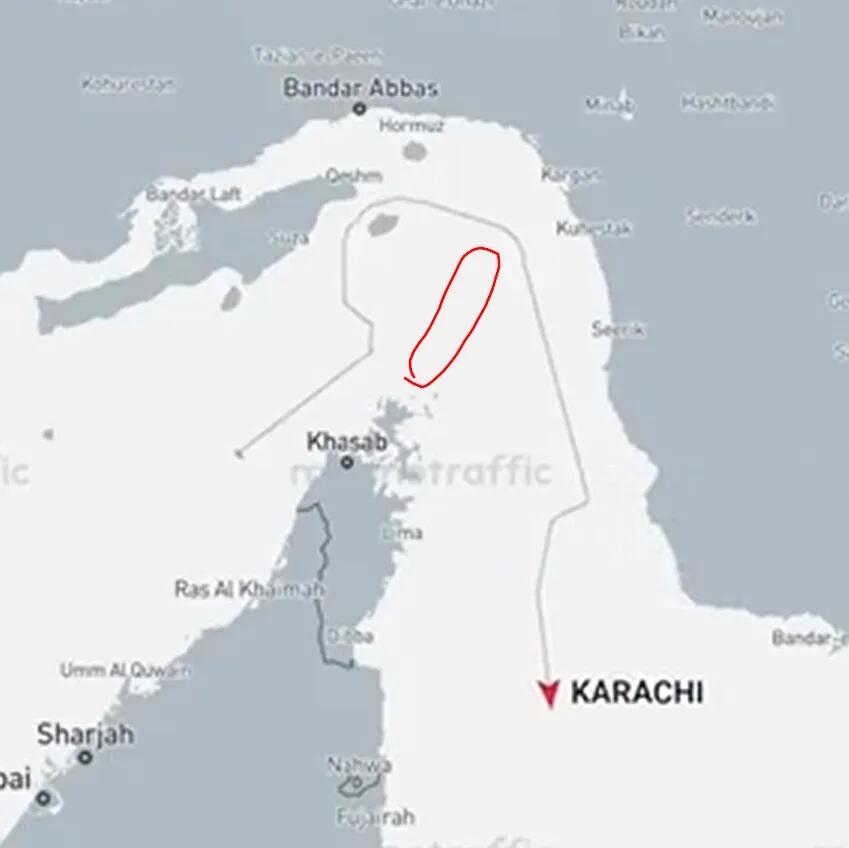
My estimation where mines are likely placed (from “War is Peace”)
Even in the most optimistic scenario – ceasefire tomorrow, everybody shakes hands – the Maersk CEO noted it takes at least ten days after a ceasefire for tanker insurance to clear. Then mine-clearing: Iran has been laying mines in the Strait, and removing them will take weeks to months. Then tankers reposition, loads getting secured, and finally the flow resumes.
The oil futures curve is pricing step five as if it follows step one with a 48-hour lag.
It cannot physically happen on that timeline.
And Iran isn’t just shooting wildly at targets. Yesterday, Fujairah – the world-class bunkering hub sitting outside the Strait, the bypass everyone assumed would soften the blow – has been deliberately targeted. Tehran isn’t just closing Hormuz. It’s also closing the workarounds. One by one. Iran got fed up and decided to take down the imposed sanctions one way or another. And USrael just gave them the ultimate excuse.
If you’ve been reading my silver papers, you know there is a gap. A gap I call “PvP”… No not the gaming term. The Paper vs Physical.
And oh boy. Is it screaming!! Brent futures in New York closed Friday at $104. Elevated but ok-ish. Dubai crude – you know, the real physical oil, real barrels, real buyers – was trading around $127-140. Normally Brent commands a premium over Dubai. Now Dubai is $37 above the paper. And that’s just crude. Bunker fuel in Singapore hit $140 per barrel this week. In Fujairah, $160. High-grade marine fuel, $175. Ships burning fuel right now are paying those prices regardless of what the futures strip says in New York.
Silver at a $12 premium to Shanghai? pffff Silver… Amateur hour compared to oil!
If you’ve read Strait to Brrrrr, none of this is surprising. Paper price is massaged. The New York futures desk is clearly on something the physical buyers aren’t.
However this started, this isn’t a military confrontation anymore. I’m even starting to doubt it ever was. The Strait stays closed, oil stays elevated. Oil stays elevated, inflation stays elevated. Inflation stays elevated, the Fed cannot cut. The Fed cannot cut, and $36 trillion in federal debt – already costing $880 billion a year in interest before the war added a billion dollars a day to the tab – gets rolled over at rates that make it progressively less serviceable. The dollar weakens under that strain. A weaker dollar makes the next barrel of imported oil more expensive in dollar terms. Which feeds back into inflation. Which keeps the Fed pinned.
It’s a loop. Iran just needs to keep the strait closed long enough for it to complete a few rotations. The bond market has noticed. Treasury yields are rising in the middle of a geopolitical crisis – not falling. Capital isn’t fleeing to bonds. It’s fleeing to gold. That is a verdict on the US fiscal position.
Trump knows the physical reality, which is why last week he called Putin. The country America has been sanctioning for four years. The one it branded an aggressor, a pariah, an enemy of the liberal world order. He called to ask for help. Then he went further and lifted Russian oil sanctions outright. A Democratic Senator responded with perhaps the best summary of the year: “Looks like we fought Iran and Russia won”.
What else? The IEA approved a record 400 million barrel reserve release. Bessent telegraphed futures market intervention to cap prices. Russian sanctions lifted. Each one a gesture. On my feed someone quoted: “The oil market is massively short of supply. The other options the administration has, other than ending the war, are actually pretty limited”. Woops.
That’s the pin. But actually, the pin in itself doesn’t matter. Really truly doesn’t matter. What does matter greatly however, is WHAT it pricked…
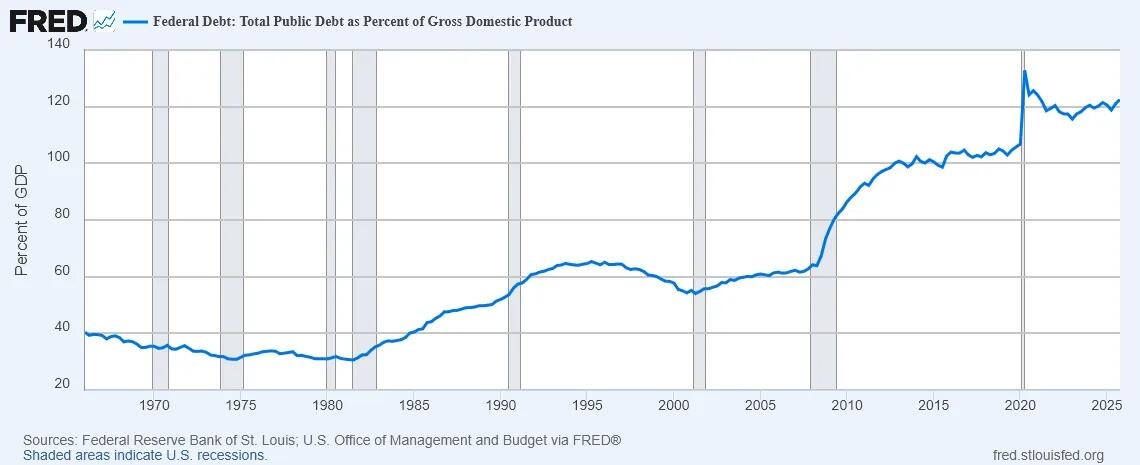
In 1980, US federal debt stood at 26% of GDP. Today it’s 120%. That’s the difference between the same shock hitting a healthy patient and hitting someone already on oxygen. The Volcker treatment that worked then is structurally unavailable now. But don’t worry! These are the same people who called inflation transitory. I’m sure they’ve got it. This time.
The interest bill on existing debt is already $880 billion a year, more than defence, more than Medicare. Rates at 20% on $37 trillion would cost more than the entire federal budget in interest payments alone. That lever doesn’t exist anymore.
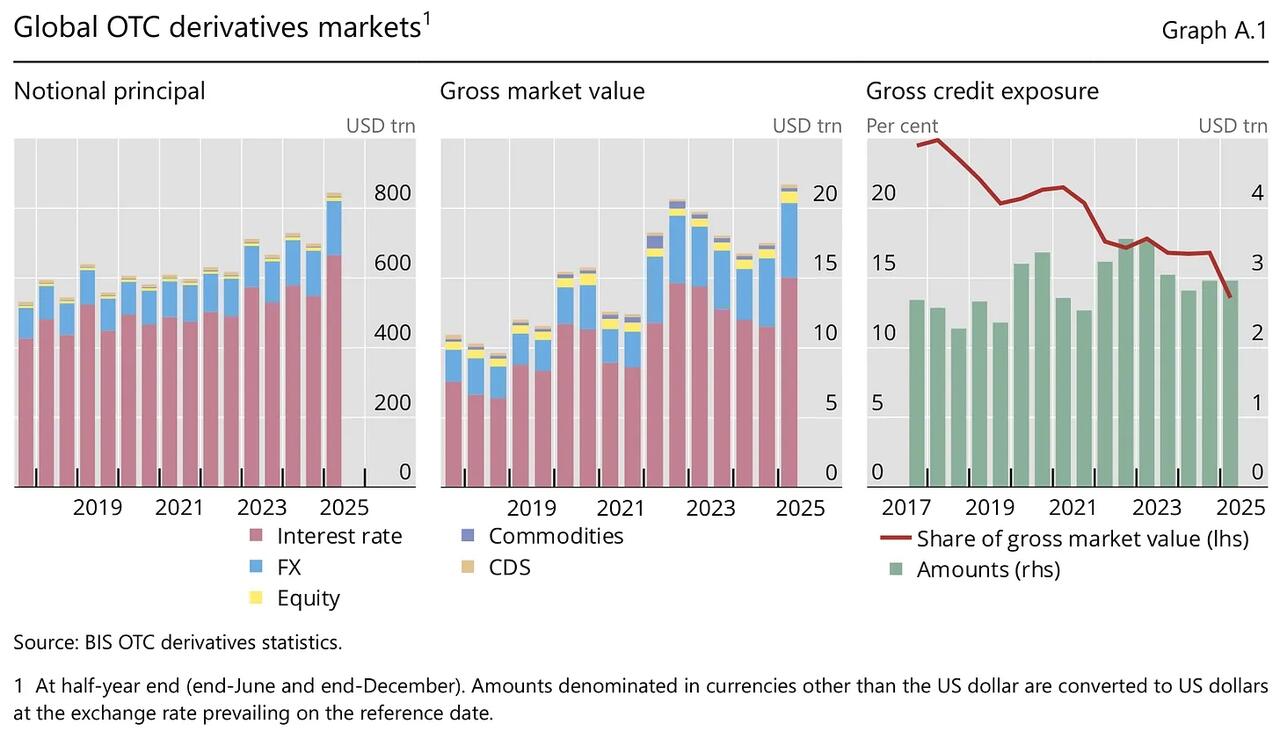
What exists instead is $846 trillion in notional OTC derivatives. Up from $108 trillion in 2000. An eightfold expansion in 25 years, and mid ‘24 → ’25 was the largest growth rate at 16% since 2008.
To put that number in some kind of human context: $846 trillion is roughly eight times the entire global GDP. With 1% of it you could buy every company in the S&P 500 twice over. With 0.01% you could buy Warren Buffett. With a rounding error – 0.0001% – a superyacht, a sports franchise, and a small Caribbean island, and you’d still have 99.9999% left. Nobody has this money, of course. Nobody owns $846 trillion. It’s the notional value of bets stacked on top of bets – leverage and hedges and derivatives daisy-chained to other derivatives. It nets out in normal conditions. In abnormal conditions, “nets out” becomes “finds out”.
Buffett called them ‘weapons of mass financial destruction’ in 2003. The book was $85 trillion then.
The bulk of the current book – around $548 trillion – is interest rate derivatives. All of it priced on a world where oil is $70 and rates are roughly stable. Guess what just happened? Oil exploding (quite literally at times) make counterparties not being able to meet margin calls (guess why gold and silver are trembling so much) and that failure cascades through the chain.
The private credit system was already the weakest link before the war. I covered the gating wave in my previous article so I’m not going to repeat it here, but the language from people who are in the know got pretty alarming. Mohamed El-Erian reached for Bear Stearns 2007 as his reference point. Dimon started talking about cockroaches. Dimon… Talking about cockroaches… The Treasury Secretary himself said he was ‘concerned’ about private credit. When the man responsible for placing a trillion dollars per quarter in new debt publicly expresses concern about the credit system he depends on to function, well… I’ll leave it at that.
Think the gating’s bad? Let me reassure you *evil grin*. One in five companies in the Russell 3000 cannot service their debt from current income. Over half of all investment grade paper is a single downgrade from junk. $5 trillion in corporate debt rolls over in the next four years at current rates, into a war-driven inflationary environment the Fed cannot cut its way out of. The losses are in there. Just not visible yet. When they surface, the institutions holding private credit will face redemption pressure at exactly the moment public markets are offering their best entry points since 2022 /s. Nah, just kidding. They dump whatever they can. Anything, just about anything unrelated with their illiquid portfolio will be hit. You’ve seen this movie before. Gold fell when Iran struck. Silver fell. Same mechanics, a tad larger. Think ‘08 or ‘00 on steroids.
Now picture what happens when the equity markets start to move. The S&P 500 closed up 1% on Sunday night. The Dow gained 388 points. Meanwhile, fertiliser benchmarks are up 25-44% in seventeen days. Think food. Helium has doubled. Think chips – not the edible ones. Pharmaceutical feedstock pipelines are depleting. The wall between the financial “economy” and the real one is still holding. Walls do that, right until they don’t.
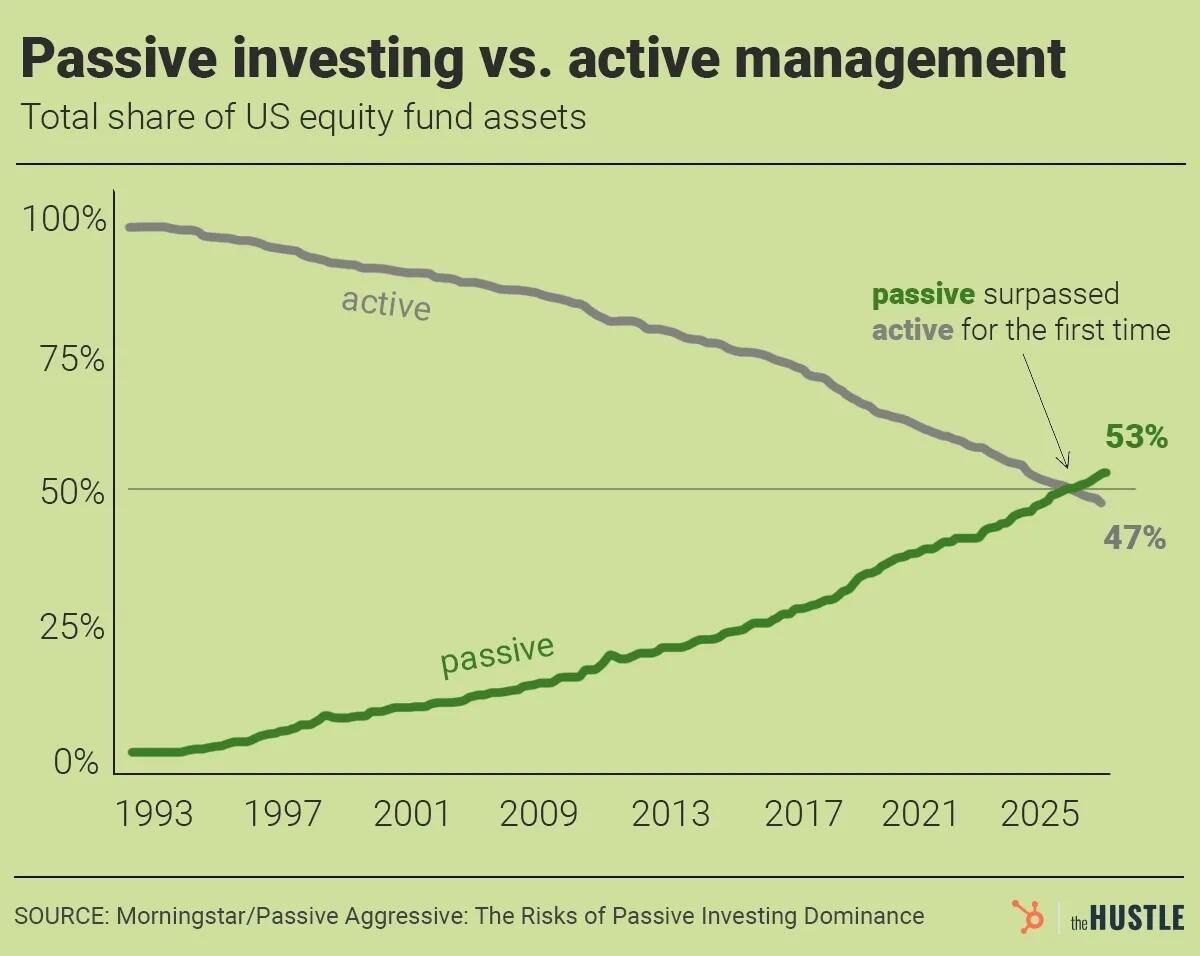
When people need cash fast, they sell what’s liquid. ETFs are the most liquid thing in the world. They sell indiscriminately – tech, gold miners, silver, and just about anything else. You don’t sell what you want to sell. You sell what has a bid. And passive investment? Volume wise, ETFs are like 60% of US equity markets (2024). In 1996 that was only 6%. Which means that when selling starts it’s mechanical. No analysis. No discrimination. Every ETF holder hitting the same exit through the same small door at the same time.
Think of “Liberation Day” as a test run. First-ever simultaneous crash in stocks, bonds, and the dollar – the thing that was supposed to go up when everything else went down.
Tie into that the 401k withdrawals that hit a record high this week. The passive investment machine is leaking from the bottom while demographics drain it from the top.
Feeling comfortable yet? *super evil grin*
Underneath all of this, slower than any war and more permanent than any crisis, is something the financial press doesn’t really mention:
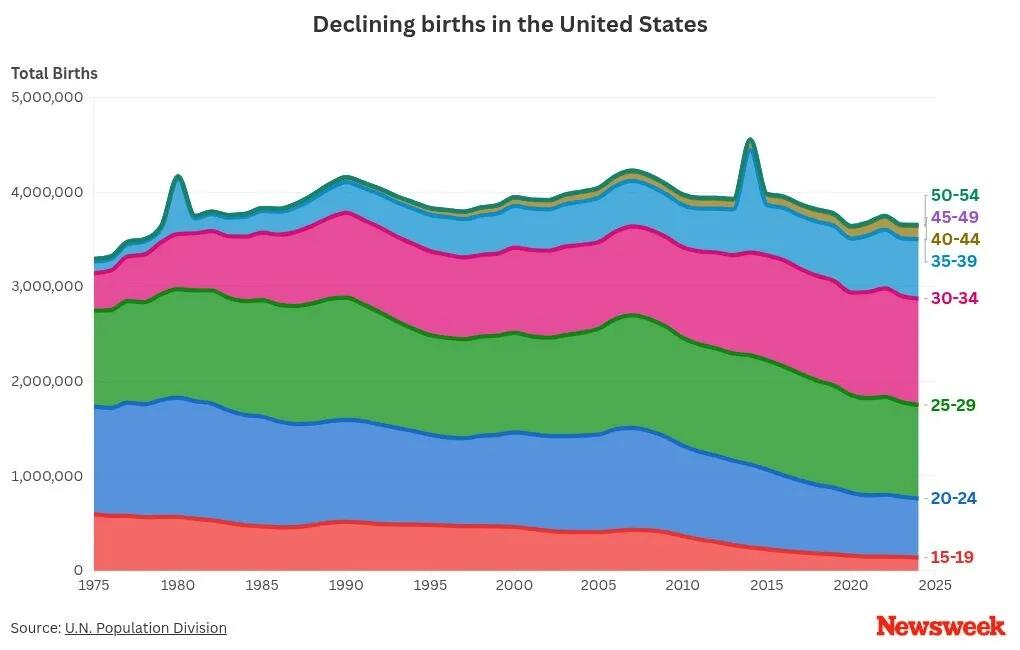
People aren’t having any children.
US fertility hit an all-time low in 2024. The general fertility rate is still falling. IMPLAN puts 1.4 million fewer Americans contributing to housing demand, retail spending, and service consumption in 2025 than trends would have predicted. To put that in numbers: $104 billion in GDP. Not exactly gone, not really disappeared. It just never existed in the first place.
It’s a vicious circle: housing is too expensive, so young people delay children. Fewer children means less future housing demand. Which should eventually reduce prices, except the lag is 20-30 years, and in the meantime housing stays expensive, so the people who couldn’t afford a house still can’t, still don’t have children, and the loop tightens at its own pace regardless of what the Fed does or what happens somewhere in the narrow waterways in exotic places.
Added: the boomers are saying bye sayonara.
The generation that inflated every asset class for 40 years through automatic 401k contributions is, somewhere around now, flipping from net buyers to net sellers. Of course it’s impossible to say like “March, 17: boomers start to cash out their 401ks”… Nope, the tide just turns. The same passive machine that provided an inexorable, automatic bid for equities and bonds and real estate – every payday, every year, for four decades – begins to redeem. Quietly. Continuously. For the next twenty-some years. Every asset they inflated on the way up faces a headwind on the way out. Not a crash. A long, grinding, demographically-inevitable ratchet.
Another angle I want to cover is the petrodollar. I covered this already in “The Bretton Whoops”. But the short version is: oil was priced in dollars, dollars were recycled into Treasuries, and the US military keeps the Gulf safe. It required two things – a reliable dollar and a credible security guarantee. The dollar’s reliability cracked in 2022 when Washington froze Russia’s reserves. The security guarantee cracked when the US started a war they cannot finish.
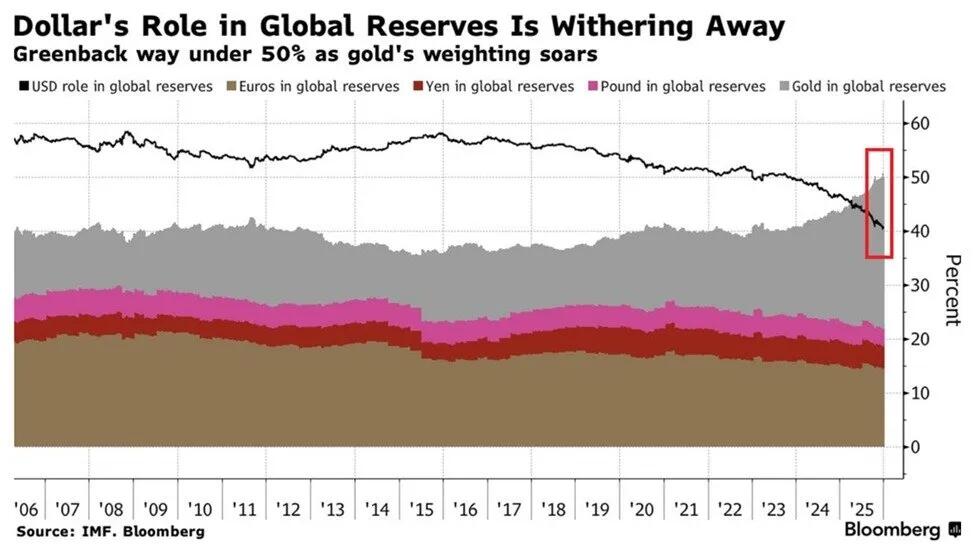
The dollar’s share of global FX reserves has since fallen to around 45%, the lowest since the 1990s. Gold’s share has quadrupled in twelve years. Gulf states are reportedly discussing pulling investment commitments from the US.
And now Iran has done something structurally interesting. It didn’t just close the Strait – it converted it into a tollgate. The toll isn’t money – yet. It’s alignment. Ten countries have been offered safe passage: China, India, Pakistan, Turkey, and others. The US isn’t on the list. This isn’t a military tactic. It’s economical.
Lots of people have the wrong framing. They think “petrodollar is dead, long live the yuandollar”. Right? Wrong frame entirely. China doesn’t want a reserve status. Couldn’t stomach it if it tried. Because a reserve currency means running a permanent trade deficits to pump your currency into the global system – America has been doing this for 50 years and the reward is a rust belt, a $37 trillion debt tab, and a bond market that needs foreigners to keep showing up or the whole thing seizes. China watched that happen and said: 不用了,谢谢. And opening the capital account enough to make yuan genuinely reserve-worthy would mean letting money flow freely across the border – ending the CCP’s ability to direct credit and control the financial system on Beijing’s terms. They’d sooner eat the wallpaper.
What the yuan-for-oil arrangement being implemented actually is, is an industrial policy dressed as currency diplomacy. You sell your oil into the permitted lane. You receive yuan. Now you’re sitting on yuan in a system with capital controls – you can’t just convert it and park it wherever you like. Your options are: buy Chinese goods, buy Chinese infrastructure contracts, invest in Chinese assets. That flow cycles straight back into Chinese factories and Chinese employment. China doesn’t have to stimulate its domestic consumption anymore. It exports the demand problem onto its trading partners and invoices it as a geopolitical arrangement. Three hundred million jobs – and unlike the US – no helicopter money required.
Those dollars that used to flow into Treasuries don’t just suddenly rush home. They just stop showing up at the next auction. Treasury needs to place roughly a trillion dollars every hundred days. Fewer buyers means higher yields. Higher yields mean the Fed is cornered. A cornered Fed means the printer runs. Same mechanism as demographics, same mechanism as the derivatives book, same direction.
My long-running conviction – and I’ve been saying this long enough that it stopped sounding contrarian and started sounding obvious – is that the world ends up back on a gold standard. Not the romanticised version where you rattle coins in your pocket. Though honestly, with modern payment rails, a gold-backed account is functionally identical to a dollar account. You’d never touch the metal. You’d just change the ticker from USD to XAU and carry on. The technology exists right now. The obstacle isn’t infrastructure. It’s that the people running the current system would rather light themselves on fire.
What happens first, before any grand declaration, is narrower: gold becomes the settlement layer between sovereigns who no longer trust each other’s paper. The US is apparently net-settling its trade deficit with China in gold – if that data holds up. In three of the last four months it seems that gold is flowing East. No Bretton Woods conference. No announcement. Just two countries quietly deciding that when the paper gets complicated, the metal clears the table. That’s how monetary systems actually change – not by proclamation but by practice, one bilateral settlement at a time, until enough of them are doing it that someone calls a conference to ratify what’s already happened. The Bretton Woods conference didn’t create the dollar system. It formalised what the war had already decided.
The next conference is coming. It just hasn’t been scheduled yet.
Silver. Because I can’t write a piece about systemic fragility without it, and because this week’s data is worth your attention even if the price chart isn’t.
The paper price looks terrible. Miners are trading like silver is heading back to $40. Silver Santa – one of the accounts I follow on Twitter (yeah, I’m old) – moved 40% to cash, describing “a strong pre-COVID feeling”. The technical picture is ugly.
But the crucial part: the physical reality didn’t get that memo.
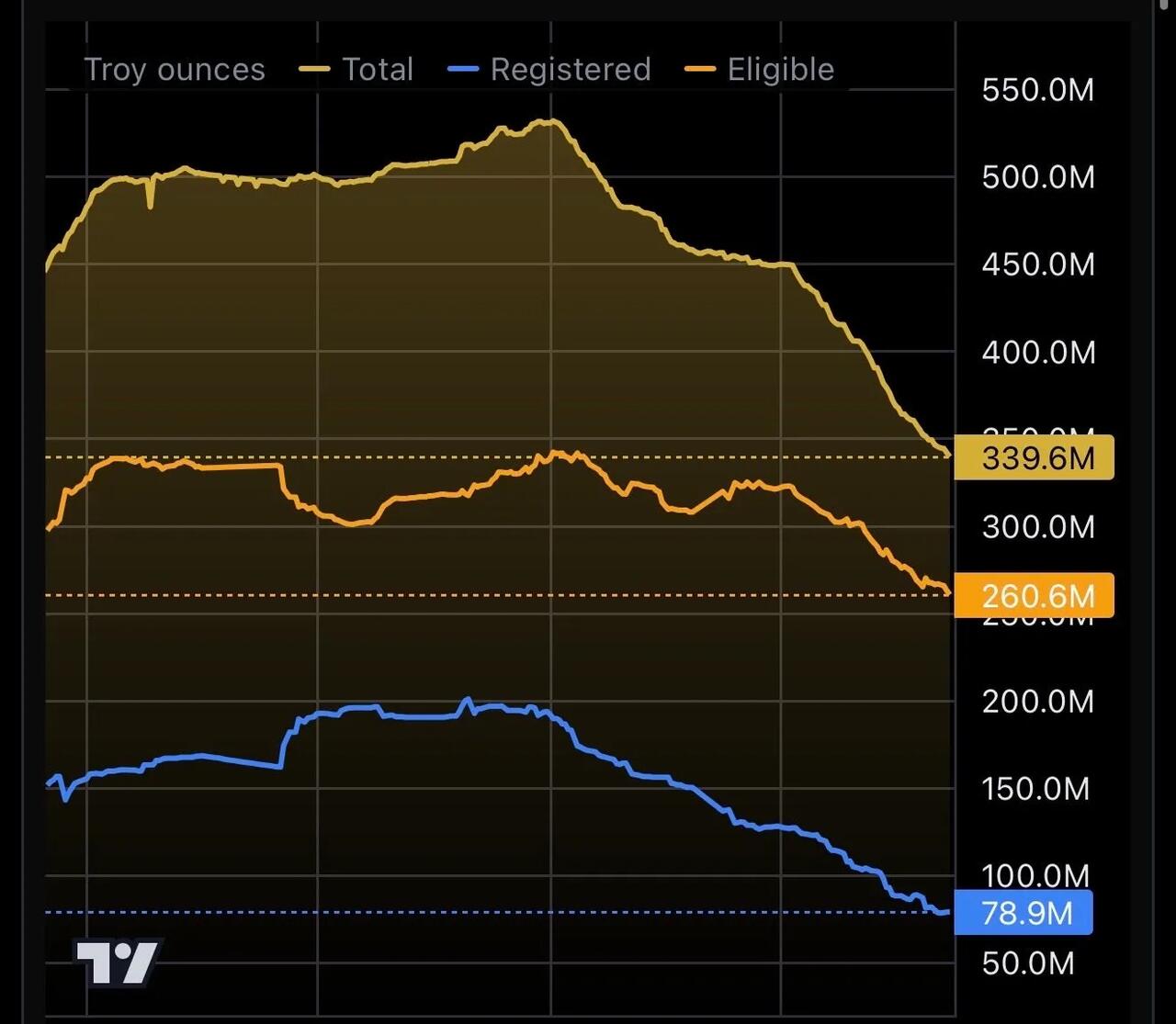
The COMEX “run rate to zero” ticked down to 89 days as of Friday, from 93 days on Thursday. Four days burned in one. The SGE briefly stopped publishing silver inventory data mid-week, then quietly resumed. Shanghai is still paying a 13-17% premium over London. The same paper/physical divergence playing out in oil is running in silver at a slower pace with a much longer fuse.
But what does a draining vault have to do with your savings account?
More than most people think. The COMEX sets the global silver price. But if the COMEX increasingly doesn’t have the physical metal – and the run rate suggests it won’t for long – then the price it sets is a fiction. An unallocated silver account at your bank is a claim on that fiction. An ETF share is a claim on that fiction. When the fiction and the physical reality eventually converge, it won’t be because the paper comes up to meet the physical. It’ll be because the paper can no longer pretend.
Same mechanism as Dubai crude. Same mechanism as the derivatives book. Just a slower fuse.
When $68 trillion in US equity markets eventually moves – and it will – and the indiscriminate ETF selling hits everything, and the margin calls cascade through a derivatives book built on assumptions that no longer hold, and zombie companies start defaulting, and the boomer redemptions add their steady mechanical pressure, and 401k hardship withdrawals accelerate – the question of where capital goes becomes very concrete. Bonds? Already struggling to absorb a trillion per quarter. Cash? In which currency? Real estate? In a demographically challenged market with rising yields?
Gold has a structural bid from central banks who drew their conclusions in 2022 and have been buying ever since. Silver has vaults on an 89-day countdown and a paper price that hasn’t caught up yet.
I’m buying the dips. Have been. Will continue.
(A small aside: I’m considering opening a dedicated Substack to document my trades in real time – with a ten-minute lag – for those who want to follow the positions, not just the analysis. The analysis stays here, free.)
None of this is hidden.
None of it requires a security clearance or even a Bloomberg terminal. It’s all there, in the vault data, the yield curves, the fertility statistics, the derivatives book, the bunker fuel prices. The information exists. The pattern is legible.
The question was never whether this would happen.
The question was always who would be holding paper when it did.
Each crisis gets a fresh name but the same printer… TALF, TARP, BTFP, BTFD, YOLO, CTRLP.
* * * STOCK UP OR REFRESH YOUR SUPPLY
4,500 Seeds – GMO-Free, non-hybrid, open-pollinated
Beef, Chicken, Sausage – Meat & Rice Survival Bucket
Tyler Durden
Wed, 03/18/2026 – 18:55
https://www.zerohedge.com/geopolitical/everything-everywhere-all-once

Why The Left Is More Distressed, Anxious, & Filled With Hate Than The Right
Why The Left Is More Distressed, Anxious, & Filled With Hate Than The Right
Authored by ‘Sallust’ via DailySceptic.org,
There is an interesting article in the Telegraph by a psychotherapist called Jonathan Alpert, called ‘There’s a reason the Left seems more psychologically distressed than the Right’ (you can read it here).
This is how he opens:
In my clinical practice, one pattern has become increasingly difficult to ignore. Among a subset of patients on the political Left, hostility toward political opponents goes beyond dislike or even hatred.
It sometimes takes the form of moralised fantasies about an opponent’s death, disappointment that Donald Trump’s shooter did not have better aim, or statements that certain public figures ‘deserve’ to be eliminated for the greater good. These remarks are rarely presented as literal intent. But they nevertheless offer a revealing glimpse into emotional regulation and psychological wellbeing.
It appears that the Left-leaning patient is quick to express his or her distress in aggressive ways:
What stands out is not only the content of these expressions, but their tone. They are often delivered with intense anger and no shame, as though such thoughts are an understandable or even justified response to the political moment. At no point does the patient see these reactions as excessive or out of control.
Similar behaviours can be observed in real life, too. I was walking around New York City in the summer after the ‘No Kings’ protests. I was looking at a heaping high pile of anti-Trump signs and a woman came up to me and said: “Aren’t these great?” My response: “I kinda like some of what Trump has done.” Her response: “WELL F— YOU THEN!”’
Conversely, those on the Right are more restrained:
Conservative patients tend to behave somewhat differently. I routinely hear strong dislike, contempt and anger toward political leaders they oppose and it’s not uncommon to hear a patient say they disliked President Biden or strongly disagreed with his stance on the border. Many patients viewed Kamala Harris as incompetent and not at all prepared to be president. Some even described her as “dumb”.
But in my experience, this hostility rarely crossed into wishes of annihilation. Political opponents might be seen as wrong, corrupt or dangerous, but they are still human. From a clinical perspective, that distinction matters.
Later in the piece, Alpert explains this different in more detail:
On the Right, by contrast, there has long been a tendency to emphasise emotional restraint. Stoicism is admired. Complaining is viewed with suspicion. Personal struggle is expected to be managed privately. I have found that conservative patients are far less likely to describe their distress in therapeutic language or frame discomfort as pathology. That does not mean they suffer less. It means they express suffering differently.
Political anger on the Right more often appears as cynicism, resentment or disengagement rather than vulnerability or victimhood. Many conservative patients view politics as important but ultimately secondary. Their primary sources of meaning might be family, work, faith and local responsibility. When elections are lost, they tend to return to careers, marriages, children and routines. Politics frustrates them, but it does not typically dominate their life.
On the Left, political identity can often become inseparable from selfhood. When politics is experienced as an all-encompassing struggle between good and evil, emotional intensity escalates. Opponents are no longer merely wrong, but dangerous. Disagreement becomes existential threat. Loss becomes catastrophe.
What Alpert doesn’t apparently consider is the extent to which this difference might be attributable to age. After all, younger adults are more inclined to be attracted to the monochrome politics of the Left, their brains as yet unsaddled with the complications, provisos and more balanced considerations of a longer life. Older adults are inevitably more inclined to the ‘seen it all before’ form of cynicism.
Another way of looking at the issue is that people who are anxious and inclined to distress, and therefore perhaps more liable to explosive outbursts of rage, are more easily attracted to Left-wing politics, as explained in an online article published by two academics on Cambridge University Press, in this instance looking at people’s attraction to Left-wing economic policy as a means of escaping their sense of social exclusion.
In ‘Why anxious people lean to the Left on economic policy: personality, social exclusion and redistribution’, Adam Panish and Andrew Delton observe that:
Right-wing beliefs function as a salve for people who are chronically anxious and fearful, at least according to one of the oldest and most influential theories in political psychology. Yet recent research shows that liberals, not conservatives, are more prone to negative emotions. The link between mental health and ideology has generated much interest, sending journalists and pundits scrambling to figure out why liberals are so “depressed, anxious, or otherwise neurotic compared to conservatives”.
An article in Columbia University Magazine explains ‘Why depression rates are higher among liberals’:
American adults who identify as politically liberal have long reported lower levels of happiness and psychological well-being than conservatives, a trend that mental-health experts suspect is at least partly explained by liberals’ tendency to spend more time worrying about stress-inducing topics like racial injustice, income inequality, gun violence and climate change.
Now a team of Columbia epidemiologists has found evidence that the same pattern holds for American teenagers. The researchers analysed surveys collected from more than 86,000 12th graders over a 13-year period and discovered that while rates of depression have been rising among students of all political persuasions and demographics, they have been increasing most sharply among progressive students — and especially among liberal girls from low-income families.
You can read the Columbia epidemiological paper here. Another paper, available on Researchgate, concluded from research that:
There is a strongly elevated risk for mental illness among the extreme liberals (+150%), a small increase among the liberals and slightly liberals (+29-32%), and somewhat lower rates among conservatives and extreme conservatives (–17-24%). Breaking the pattern, slightly conservatives had a marginally increased rate (+6%). A variant of this analysis was also carried out by including the happiness metrics reverse-coded. This produced materially the same pattern, but was weaker since the happiness items had a weaker relationship with political ideology than the mental illness variables.
The Institute for Strategic Dialogue has a piece analysing aggression in Left-wing politics, while also acknowledging its presence on the Right. But the Left has some strong defining features:
Drawing on our own definition of extremism and this crucial distinction, we suggest that Left-wing extremism should be defined as a belief system that:
Dogmatically claims the absolute moral superiority of communist or socialist political values,
That separates political actors into binary moral categories accordingly, and
That aspires to gain a monopoly of control over society.
Left-wing extremists commonly reject key tenets of liberal democracies, among them the separation of powers, universal human rights and political pluralism. They frequently express sympathies for authoritarian regimes and the conspiracy theories spread by them.
Of course, a common characteristic of the Left is to blame everyone else in a fog of febrile and desultory grievances, and that’s just as applicable to aggressive and angry speech. Trotsky exonerated such behaviour: “Abusive language and swearing are a legacy of slavery, humiliation and disrespect for human dignity, one’s own and that of other people.”
Looking up ‘Righteous Anger’ on AI produced this explanation:
Anger makes you feel righteous by functioning as a moral disinfectant, transforming feelings of powerlessness into a sense of superiority, vindication and justified control. It acts as a ‘power’ emotion that reinforces self-worth and confirms your moral standards against perceived injustice, offering a comfortable sense of being ‘right’.
Nothing could have described an angry and distressed Left-wing activist better.
Jonathan Alpert’s piece in the Telegraph is worth reading in full.
Tyler Durden
Wed, 03/18/2026 – 18:05
https://www.zerohedge.com/political/why-left-more-distressed-anxious-filled-hate-right
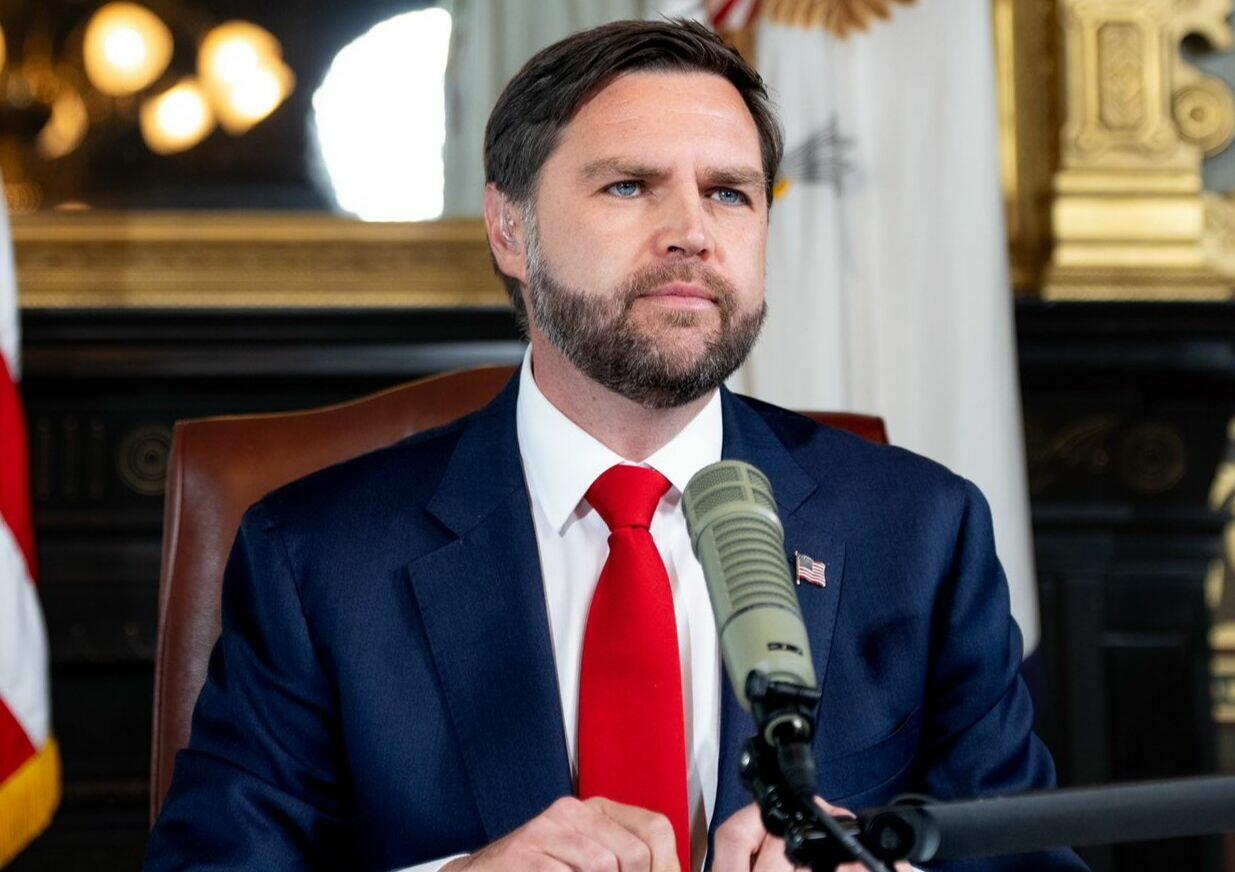
Vance Embraces ‘Fraud Czar’ Role, Dems Plan To Make It A 2028 Liability
Vance Embraces ‘Fraud Czar’ Role, Dems Plan To Make It A 2028 Liability
Authored by Philip Wegmann via RealClearPolitics,
Democrats began laying a trap the moment that President Trump announced during his State of the Union that Vice President JD Vance would lead a new “war on fraud,” salivating at the possibility of political liability and dubbing the MAGA heir apparent the “fraud czar.”
“It will be blocks of cement around his ankles,” a senior Democratic official told RealClearPolitics last month after the speech to Congress. Another operative predicted that, come 2028, the new role “will be an albatross around his neck.” A third liberal strategist said, “It will be incredible to watch – it’s like he just needed a job but can’t have foreign policy.”
Special responsibilities for vice presidents can later become campaign stumbling blocks for candidates. They provide a measuring stick for the opposition to argue about promises left unfulfilled. Democrats are already accusing the administration of hypocrisy, specifically of targeting their political enemies while turning a blind eye to the alleged fraud originating in the Oval Office. They remember how Republicans pilloried former Vice President Kamala Harris for failing to live up to her billing as “border czar.”
That was a role that Harris rejected outright and never requested. Vance, however, has embraced the brand. When RCP asked the VP about the title during remarks in the Oval Office, Trump interjected, “It’s a good title. I like it.” Moments later, during an exchange that could define him during the next presidential election, Vance followed suit.
“So, I like fraud czar. It’s certainly what we’re going to do. And look, we have to do it,” the vice president told RCP as he described the new job as central to the health of the republic.
“As the president said, this is a problem that has festered in this country for far too long, and far too few people have wanted to do anything about it. That’s what makes this administration different, is that we actually tackle the problems the American people have been confronting,” Vance added.
“I’m very happy about it,” he concluded.
The White House knows the role comes with occupational hazards.
Elon Musk, a former senior advisor to the president, became Public Enemy No. 1 in the minds of liberals as his Department of Government Efficiency made a long march through federal bureaucracy in search of waste, fraud, and abuse to eliminate. The DOGE effort began with lofty ambitions of finding enough savings to balance the budget. But after thousands of relatively small cuts and a few shuttered government agencies, it ended without making much of a dent in the deficit.
Trump was not cowed by that experience. With Vance at his side Monday afternoon, the president predicted that Vance could find “the kind of money” that would be “country changing,” envisioning a balance sheet where so much fraud had been cut that the federal government could “lower your taxes substantially for people.”
He predicted that his vice president would succeed where the last one faltered. “This will not be like a Kamala, where she was put in charge of the border,” Trump said, “and she never went there.”
“You promise,” Trump asked as he turned to Vance.
“I promise,” replied the vice president in a clip that Democrats could soon cut for a 2028 ad.
Contrary to Republican barbs, Harris was never deputized to stem illegal immigration. Former President Joe Biden tasked her, instead, with getting to the bottom of “the root cause” of the phenomenon. Aware of the optics, she still held the issue at arm’s length and only visited the southern border twice during her tenure, a fact that provided the Trump-Vance campaign with endless election fodder.
Now Democrats are preparing to run a similar kind of play, albeit with a twist for the Trump era.
“JD Vance’s first job as ‘fraud czar’ should be investigating Trump and his family for the billions of dollars they have made off of the presidency, the favors, pardons, the government positions bought by Trump’s wealthy friends, and the dropped investigations into corporate bad actors after receiving massive donations,” Democratic National Committee chair Ken Martin told RCP.
“The American people, regardless of party affiliation, want our government to take on real fraudsters,” Martin continued, “not abuse the office of the presidency to enrich themselves and go after their political enemies.”
The White House insists that the audit will be apolitical and nationwide. Vance and company will search out waste like the Medicare abuse that ran rampant in Minnesota and captured the attention of the nation. And while Trump has already singled out California, his administration says publicly that they will put red and blue states under the same microscope.
Good government experts cautiously point to an early, positive sign: the call to root out fraud among durable medical companies known to be particularly susceptible to overbilling Medicare and Medicaid. The Department of Health and Human Services has already enforced a nationwide moratorium on new suppliers, a move that affects at least one deep red state immediately: Florida ranks high in Medicare per-beneficiary spending overall.
Some in Congress are still befuddled by the idea that fraud has become a partisan issue. “Tackling waste and grift is bipartisan. We must make the case that government can be good and effective,” Rep. Ro Khanna, a California Democrat who plans to introduce legislation calling for a full audit of all 50 states, told RCP.
Republicans argue that the best way to inoculate Vance is simply to run up the score. The more dollars the vice president can save, the less of a talking point Democrats will have at their disposal.
“Honest, tax-paying Americans are terrified by the thought that Minnesota’s fraud is just one case in a nationwide pandemic of scams,” said John Ashbrook, a Republican strategist close to the vice president. “And Vance is in the perfect position to uncover and root it out everywhere.”
If the war on fraud is prosecuted properly, it could pad the vice president’s resume. “If I am JD Vance, and I do a super job of identifying fraud, finding it in all 50 states, and end up saving not just federal taxpayers but state taxpayers lots of money,” said Matt Weidinger, a scholar focusing on welfare at the conservative American Enterprise Institute, “well, when someone calls me ‘fraud czar,’ I’ll take it.”
The new job comes at a moment when Vance finds himself in a potentially precarious position. After years of building a political reputation grounded in opposition to foreign intervention, the vice president has backed a new war, this one against Iran. The White House has batted down speculation that there is any daylight between Trump and his deputy, despite Vance’s many past statements expressing skepticism of American involvement in the Middle East. Trump previously dismissed the idea that Vance required any convincing, telling RCP during a brief interview last week that his vice president “did not take persuading.”
When RealClearPolitics put the question directly to Vance in the Oval, he bristled that the press was “trying to drive a wedge between members of the administration, between me and the president. What the president said consistently, going back to 2015, and I agreed with him, is that Iran should not have a nuclear weapon.”
Asked specifically about his current support for war with Iran in light of his past condemnation of the Global War on Terror, Vance, a former Marine who deployed to Iraq, replied, “One big difference is that we have a smart president, whereas in the past we’ve had dumb presidents. And I trust President Trump to get the job done, to do a good job for the American people, and to make sure that the mistakes of the past aren’t repeated. Absolutely.”
Trump has promised a speedy end to the conflict in the Middle East. His war on fraud, meanwhile, is expected to continue all the way until he leaves office, when Vance is expected to mount his own bid for the presidency.
Tyler Durden
Wed, 03/18/2026 – 17:15
https://www.zerohedge.com/markets/vance-embraces-fraud-czar-role-dems-plan-make-it-2028-liability
Ready For War? New B-21 Raider Activity Spotted Over Mojave Desert
Ready For War? New B-21 Raider Activity Spotted Over Mojave Desert
There has been increased activity of the B-21 Raider stealth bomber, suggesting the Department of War is on an accelerated path to bring the next-generation bomber platform into service, with the USAF targeting an operational date in 2027.
Earlier this month, plane spotters appeared to capture the highly secretive B-21 refueling behind a KC-135R tanker over the Mojave Desert.
Nice! You spotted the new baby B-2, the B-21 Raider!
Bet you took that photo in Kern County, California 🤠 https://t.co/8gAWbP3xvS pic.twitter.com/zM7uVAIwJU
— Cody James 🇺🇸 (@codyaims) March 13, 2026
Separately, an account called “Mojave Planespotting” posted footage on X on Tuesday that supposedly showed the B-21 again over the Mojave Desert.
Raider over the desert 🇺🇸🇺🇸 pic.twitter.com/mQkALx2DcC
— Mojave Planespotting (@MojaveSpotter) March 17, 2026
There was no confirmation that the latest sighting was from earlier this month or on Tuesday, but it is certainly notable given everything unfolding in the Middle East (read here).
— Mojave Planespotting (@MojaveSpotter) March 17, 2026
Back in 2021, we reported that five of the stealth bombers were in final production. By late 2022, the USAF publicly unveiled the aircraft in a hangar, and the first in-flight image was released in mid-2024. Under the Trump administration, the new bomber appeared to remain a budget priority.
Is the next-gen bomber ready for war?
Tyler Durden
Wed, 03/18/2026 – 16:50
https://www.zerohedge.com/military/ready-war-new-b-21-raider-activity-spotted-over-mojave-desert
Did US Intel Agencies Hide Chinese Interference In 2020 Election From ‘Vulgarian’ Trump?
Did US Intel Agencies Hide Chinese Interference In 2020 Election From ‘Vulgarian’ Trump?
Authored by Bryan Hyde via American Greatness,
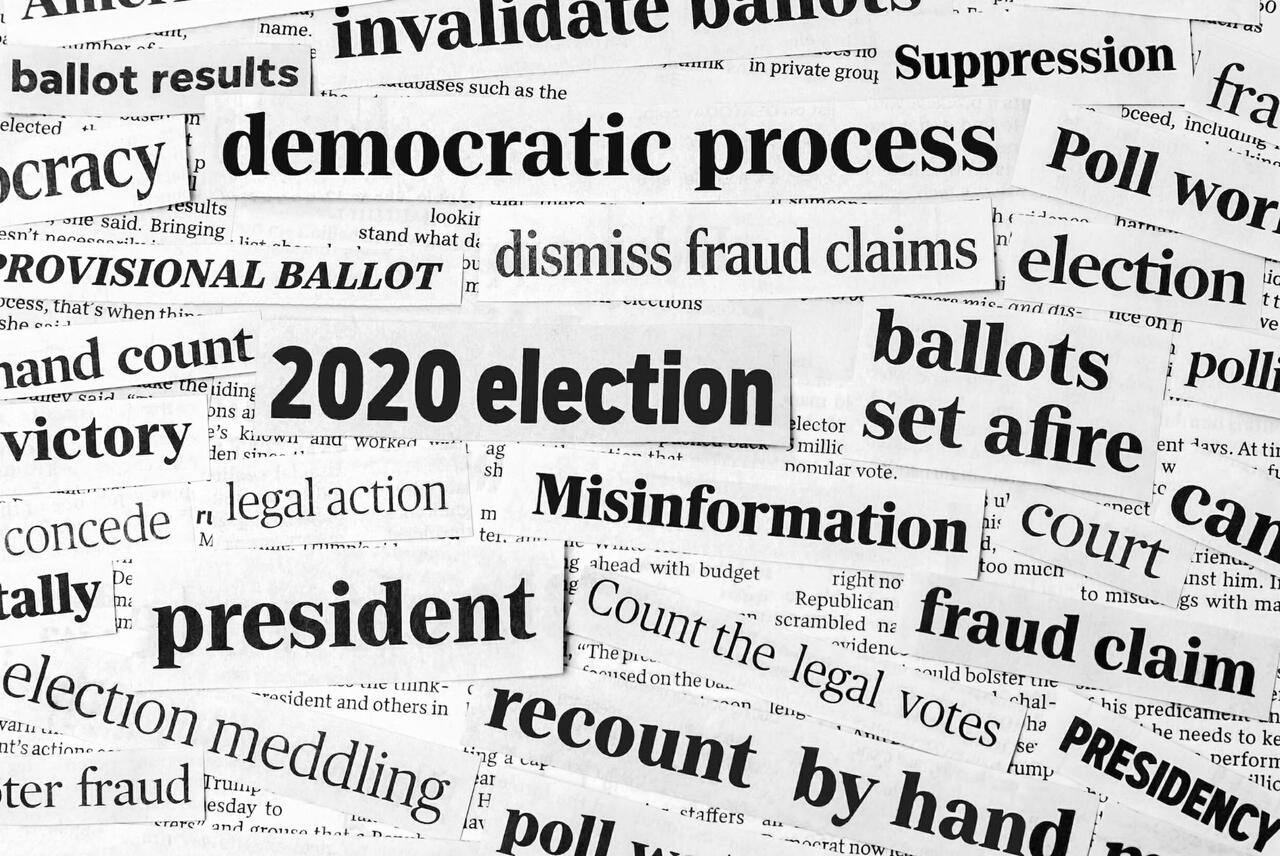
Questions over the integrity of the 2020 election continue to linger after the revelation that analysts inside the U.S. intelligence community sought to conceal evidence of Chinese interference from then-President Donald Trump.
Never before reported upon comments found in a January 2021 report written by analytic ombudsman Barry Zulauf show that intelligence analysts downplayed evidence of China’s meddling because of their disdain for Trump and a desire to undermine policies toward China that they did not support.
According to Just the News, credible evidence exists that Chinese government-linked cyber hackers and Chinese social media troll farms took aim at the U.S. presidential election in 2020 and sought to undercut Trump during his run against Joe Biden.
The FBI found evidence of China interfering in the 2020 election, “Fake driver’s licenses and fake ballots so they can help Joe Biden win”
“What does the FBI do with that one? — We’re gonna throw it in the garbage can”
Democrats rigged the 2020 electionpic.twitter.com/knEppBu5xa
— Wall Street Apes (@WallStreetApes) March 10, 2026
Zulauf, a longtime intelligence officer, explained in his 2021 report: “China analysts appeared hesitant to assess Chinese actions as undue influence or interference. These analysts appeared reluctant to have their analysis on China brought forward because they tended to disagree with the Administration’s policies, saying in effect, I don’t want our intelligence used to support those policies.”
One analyst was quoted by Zulauf during an interview later that year as having essentially said, “I don’t want my analysis going to the White House where that vulgarian . . . in the White House will use it to pursue policies toward China with which I personally disagree.”
Dr. Zulauf also pointed to differences in the way that analysts of Russia and China examined their targets with China analysts appearing “reluctant to have their analysis on China brought forward because they tended to disagree with the Administration’s policies.”
The review by Zulauf also showed that some analysts treated allegations of Russian and Chinese election interference by differing standards writing in his report: “Due to varying collection and insight into hostile state actors’ leadership intentions and domestic election influence campaigns, the definitional use of the terms ‘influence’ and ‘interference’ and associated confidence levels are applied differently by the China and Russia analytic communities.”
The ombudsman concluded that “the terms were applied inconsistently across the analytic community” and that “failing to explain properly these definitions is inconsistent with Tradecraft Standards.”
According to Just the News, the revelation of Chinese infiltration of voter data in the 2020 election is likely connected to fake IDs seized at a Chicago airport, fake ballots found, and software companies, election machine parts, and the servers around the globe tied to China.
HUGE: China infiltrated voter data in the 2020 election according to Biden-era intelligence. This goes hand in hand with the fake IDs seized at a Chicago airport, the fake ballots found, and the software companies, election machine parts, and the servers around the globe tied to… pic.twitter.com/XYV9hYqKaG
— The SCIF (@TheSCIF) March 16, 2026
Tyler Durden
Wed, 03/18/2026 – 16:25
Schiff: This War Is “Going To Cost A Lot Of Money We Don’t Have”
Schiff: This War Is “Going To Cost A Lot Of Money We Don’t Have”
Last night, ZeroHedge hosted investor Peter Schiff and Rabobank’s Michael Every to debate the question: Will the war in Iran accelerate the U.S. dollar’s collapse or is it a geopolitical chess move that could strengthen its hegemony?
Moderated by Cornell professor Dave Collum, Schiff – based in Austrian economics – argued that the war will do nothing but harm the American economy via higher prices and interest rates, while the dollar weakens.
Every believes Trump can pull a rabbit out of a hat and come out of this with the U.S. and the dollar in a stronger position. Though, he notes that some measure of economic pain is likely a necessity of war.
Below were the highlights for those short on time but we recommend listening to the full debate, linked at the bottom.
War: An Economic Nightmare
Schiff: “The war itself is inherently going to end up being inflationary… it’s going to cost a lot of money that we don’t have.”
With no plan to raise taxes, the path is clear. “We’re just going to run bigger budget deficits,” Schiff said. This will weaken the dollar while raising interest rates, an ugly combo.
“We’re going to have to borrow more money to fund the war… the Fed is going to monetize that debt because the markets can’t absorb it,” he said. “Interest on the debt is already the number two line item… and pretty soon it’s going to pass Social Security.” Already the Treasury is moving to suppress rising interest rates with the largest buybacks in history.
JUST IN 🚨: U.S. Treasury just bought back $15 Billion of its own debt, the LARGEST U.S. Treasury buyback in history 🤯👀 pic.twitter.com/m3wgoKClQv
— Barchart (@Barchart) March 17, 2026
Schiff is predicting a return of stagflation or as he’s called it, an “inflationary depression.”
“We’re going to have more inflation to pay for this war… a weaker economy, upward pressure on interest rates.” Higher energy, food, and input costs feed into that dynamic. Housing sits at the center of the fallout. “We could have a 30% decline nationwide in home prices very easily,” raising the risk of defaults, foreclosures, and stress across the banking system.
“Q4 GDP growth was 0.7… 2025 was 2.5%.” As growth slows, deficits widen on their own. Add war spending, and the trajectory steepens. “As the economy weakens, the government collects less taxes… you get bigger deficits anyway, and the war is just going to exacerbate that.”
— ZeroHedge Debates (@zerohedgeDebate) March 18, 2026
Maintaining Hegemony By Force
Michael Every argued that economic sacrifice is not a side effect but a requirement. The U.S., in his view, must redirect resources away from consumption and toward production that sustains a war effort, even if that means lower living standards and enduring economic pain. Once the war is presumably won, the economy adjusts around that outcome.
“You ultimately win a war… with enough bullets,” he said. In a world where rivals are mobilizing, he argued, the rules change. “It’s not the same game.”
According to Every, other countries are already preparing for conflict, willing to impose controls and sacrifice efficiency to guarantee output. In that environment, refusing to do the same is a losing strategy.
Schiff viewed the war with Iran as a war of choice and thus not worth the unnecessary economic burden. “Look at what we did during World War 2. All of our production was diverted… you couldn’t buy anything… everything was rationed. The whole economy suffered for the war effort.”
— ZeroHedge Debates (@zerohedgeDebate) March 18, 2026
Watch to the full debate below (also available on YouTube and Spotify):
ZeroHedge Debate: Will The Iran War Accelerate The Dollar’s Collapsehttps://t.co/0rHfkVOjCU
— zerohedge (@zerohedge) March 17, 2026
Tyler Durden
Wed, 03/18/2026 – 15:45
https://www.zerohedge.com/geopolitical/schiff-war-going-cost-lot-money-we-dont-have
US Median Rent Hits 4-Year Low, 30th Straight Month of Decline
US Median Rent Hits 4-Year Low, 30th Straight Month of Decline
Authored by Mary Prenon via The Epoch Times (emphasis ours),
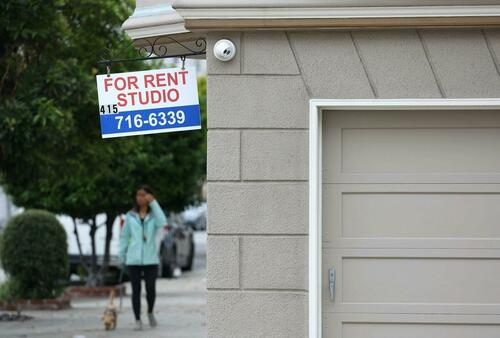
Renters across the United States may be able to save a bit more on apartment leases this month, as rents nationwide hit a four-year low last month, marking the 30th consecutive month of declines.
In its February Rental Report issued on March 17, Realtor.com recorded that the national median rent was $1,667, with 15 major markets posting rents more than 10 percent below their pandemic-era peaks.
The median rent for studio, one-bedroom, and two-bedroom apartments fell last month to its lowest level since March 2022. Nationally, the median rent fell by $29, or 1.7 percent, from a year earlier. While rents remained 14.2 percent higher than pre-pandemic levels in February 2020, they were $90, or 5.1 percent, lower than their peak in the summer of 2022.
“The persistent softness we’re seeing is increasingly translating into real savings for renters who, for a long time, felt the market was out of reach,” Danielle Hale, Realtor.com chief economist, said in the report.
Hale noted that rents typically skew lower during the winter months but are expected to rise slightly as spring approaches.
“For some areas, this will likely mean new rental price highs, even as renters in the Sun Belt continue to see notably lower rents,” she said.
Lower rents in the South were attributed to a continued boom in multifamily construction. Atlanta, Georgia, has seen 42 consecutive months of year-over-year declines, followed by Phoenix, Arizona, and Las Vegas, Nevada, both have had 41 months of decreases.
The median rent for all apartment sizes in Atlanta last month was $1,543—a 2 percent year-over-year decline. Renters in Phoenix saw a median price of $1,247, a 4.4 percent year-over-year drop, and renters in Las Vegas experienced a median price of $1,423, a 1.8 percent decrease.
According to the report, the national median rent for two-bedroom apartments declined by nearly 2 percent year over year in February, to $1,844 per month. One-bedroom apartments had a median rent of $1,548, and studios $1,393.
Oklahoma City offered the country’s lowest median rent at just $983 for all apartment sizes. Median rent in Birmingham, Alabama, came in at $1,125 last month, and in Columbus, Ohio, at $1,190. Other metros with median rents under $1,500 include Austin, Memphis, Nashville, Raleigh, and Jacksonville.
Three California metros had some of the country’s highest rents in February, with the San Jose-Sunnyvale-Santa Clara metro topping the list with a median rent of $3,331—nearly a 2 percent year-over-year increase, and the 28th consecutive month in rent growth. San Francisco’s median rent was $2,768, while the San Diego metro saw a median rent of $2, 626.
Conversely, rents increased in five metro areas in February, settling just 3 percent below their all-time highs. Virginia Beach experienced a 4.5 percent hike in the median price, to $1,620. Baltimore, Richmond, and San Jose also saw unusual spikes in median rents. While rents were relatively low in Kansas City, Missouri, at $1,387, the metro experienced a larger-than-usual rise.
“We are seeing two different stories across the country,” Realtor.com economist Jiayi Xu said in the report.
“As the spring season approaches, these markets are poised to resume an upward trajectory and push toward new all-time highs.”
A mid-February report by RentCafe predicted a mix of metro areas in the mid-Atlantic, Midwest, and South will be “hot spots” for the spring market.
Cincinnati ranked number one as the most sought-after city by renters, jumping 10 spots from 2025. The rise in its popularity was attributed to the city’s robust job market, revitalization of downtown neighborhoods, and riverfront development. Potential renters showing interest in the city were mainly from Columbus, Chicago, and New York City.
Atlanta, Minneapolis, Washington, DC, and Baltimore also made the top 5 list of popular rental cities. Even with its sky-high rents, San Jose earned seventh place on the list, due to its reputation as a tech-hub hotspot.
The only Northeast location to make the list was Philadelphia, drawing prospective renters mainly from New York City and Boston.
Tyler Durden
Wed, 03/18/2026 – 15:25
https://www.zerohedge.com/political/us-median-rent-hits-4-year-low-30th-straight-month-decline
Iran Says It Busted Up Over 100 ‘Pro-Monarchist Cells’ Working With US, Israel
Iran Says It Busted Up Over 100 ‘Pro-Monarchist Cells’ Working With US, Israel
Iranian authorities have newly announced hundreds more arrests across the country, describing that anti-government “pro-monarchy cells” and “traitors” have been exposed and caught.
Tehran officials have touted busting up more than 100 of these alleged cells in 26 of Iran’s 31 provinces in a major overnight security operation, describing that these groups were aligned with US and Israeli interests.
Security forces from the Intelligence Ministry “have identified and arrested 111 monarchist cells across 26 provinces before they could take action on the last Wednesday of the year,” the ministry stated according to Fars.
The ministry said that firearms, knives, and other weapons of various types were recovered. As for how many individuals were precisely rounded up and detained, this was undisclosed.
According to more details via Al Jazeera:
The ministry says four suspected spies linked to the United States were arrested in Hamedan city and West Azerbaijan province, both in the country’s west.
Authorities also arrested another 21 people accused of cooperating with the London-based broadcaster Iran International, which is outlawed in Iran.
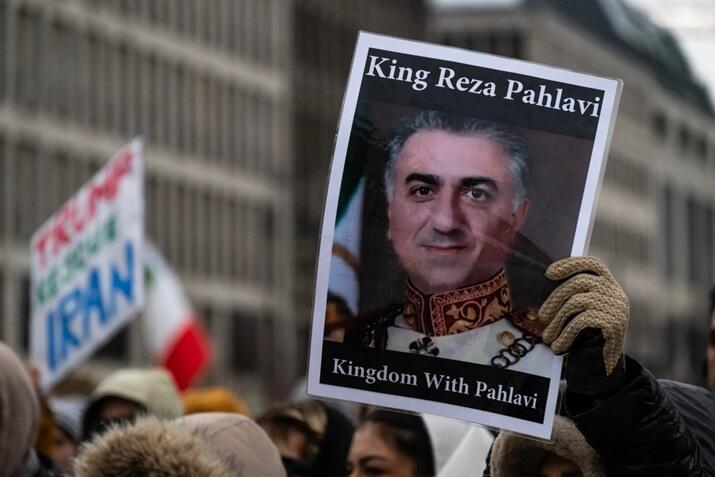
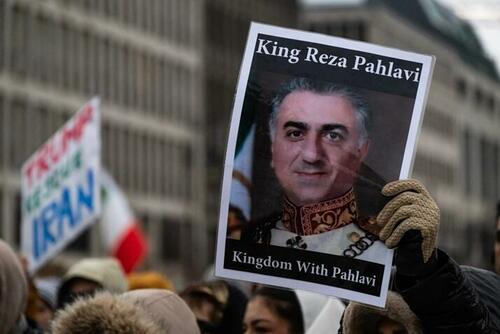
Iran has long accused the London-based outlet Iran International of being a front for Mossad, and it also reportedly has links to Saudi Arabia – and is well known for actively promoting former Crown Prince Reza Pahlavi as the next ruler of Iran.
As for Pahlavi, despite his name often appearing in Western media reports connected to the Iran crisis, the Shah’s family has been in exile for nearly fifty years – and so is a name not widely known or supported among the bulk of over 90 million citizens of Iran.
However, Reza Pahlavi’s profile has been rising – given also Western satellite and government programming has been beaming his name into the Islamic Republic, going back especially to the large deadly January economic protests.
As for domestic pressure on the Iranian government, the opposition remains fractured and small, with the Director of National Intelligence (DNI) Tulsi Gabbard telling a Senate Intelligence hearing on Wednesday “the Iranian regime appears to be intact, but largely degraded by the US military operation.”
What we are likely going to continue to see at least in the near term, amid the US-Israeli bombing campaign, is summed up in an international relations concept which is so basic and foundational (in terms of being entirely predictable as ‘blowback’) that it even has its own Wikipedia page: the rally ’round the flag effect.
#BREAKING
Iran arrests US spies, dismantles pro-monarchy terror cells pic.twitter.com/TfxTQ1V5wN
— Tehran Times (@TehranTimes79) March 18, 2026
A simple definition is the psychological and political phenomenon which describes the unification of citizens and societies behind national leaders and institutions in a time of extreme crisis or external threat, such as war or invasion by a foreign power.
Israel will in the meantime continue to try and peel away and steer opposition groups and movements inside Iran, in an effort to foment regime collapse from within, but it will be a very tall order.
Tyler Durden
Wed, 03/18/2026 – 15:10
Unearthed Docs Reveal More Names Targeted in Biden DOJ’s Fishing Expedition
Unearthed Docs Reveal More Names Targeted in Biden DOJ’s Fishing Expedition
Authored by Luis Cornelio via Headline USA,
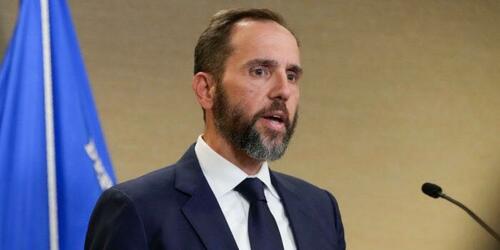
Former Special Counsel Jack Smith targeted more Republican lawmakers and conservative figures than previously known, newly unearthed documents show.
Smith, tasked by the Biden administration with prosecuting Donald Trump after 2021, has faced scrutiny since 2025, when bombshell disclosures revealed he targeted GOP lawmakers as well as dozens of conservative nonprofits and PACs.
Newly reported DOJ documents, first obtained Tuesday by Fox News, show the scope extended to former White House chief of staff Mark Meadows, Trump attorney Rudy Giuliani, and Reps. Brian Babin, R-Texas, and Andy Biggs, R-Ariz.
Also included were now-EPA Administrator Lee Zeldin, who was then a GOP lawmaker, and former Reps. Mo Brooks, Matt Gaetz, Paul Gosar, Louie Gohmert and Jody Hice.
Smith’s team internally debated seeking phone toll records for the targets, including highly sensitive data like incoming and outgoing numbers, call times and durations, before deciding whether to issue subpoenas.
The effort emerged through former DOJ attorney Timothy Duree, who was removed from the department after Trump was sworn in for a second term in January 2025.
“I’d like to seek [the Public Integrity Section’s] concurrence to get phone tolls for several MOCs who had contact with pertinent parties in our investigation,” Duree wrote.
“I’ll keep the timeframe tight—probably October 1, 2020, to January 31, 2021.”
The documents show Duree compiled a list of 16 names as he weighed whether to subpoena them all at once, though some of those records were ultimately obtained by Smith.
That list included additional Republican lawmakers previously identified in earlier disclosures, including Sens. Lindsey Graham, R-S.C., Bill Hagerty, R-Tenn., Josh Hawley, R-Mo., Dan Sullivan, R-Alaska, Tommy Tuberville, R-Ala., Ron Johnson, R-Wis., Cynthia Lummis, R-Wyo., Marsha Blackburn, R-Tenn., and Rep. Mike Kelly, R-Pa.
Sen. Ted Cruz, R-Texas, was also targeted, but his phone carrier, AT&T, pushed back against the subpoena.
The newly uncovered emails come as the Trump administration and congressional judiciary committees continue examining the scope of the aggressive prosecution targeting Trump and his allies.
The probe began under the controversial Operation Frostbite and later expanded with Smith’s appointment as special counsel.
In February, Headline USA spoke with former FBI Deputy Director David Bowdich, who appeared to play a role in the early stages of the probe.
Bowdich stated that the 2021 probe was carried out in a “non-partisan way, with professionalism and in the spirit of the law which was to follow the facts, no matter where they led.”
Duree did not respond to requests for comment.
Tyler Durden
Wed, 03/18/2026 – 14:50
Wall Street Reacts To “Neutral” Fed Hold
Wall Street Reacts To “Neutral” Fed Hold
The digital ink on the Fed statement is still wet and the kneejerk reactions are already flying. Here is a small sample of the more notable ones, with opinions ranging from this was a dovish, neutral and hawkish statement. So right in the middle, perhaps as Powell intended:
George Goncalves, MUFG: “this is a “neutral” statement from the FOMC.The statement tweaks are an attempt at trying to avoid sending any signals while conveying they are on guard for any growth shocks and inflation spillover from the Middle East Conflict.”
Sue Hill, Federated Hermes: “the focus will remain on the Fed’s expectations for inflation and growth given the runup in oil prices. While Chair Powell may officially convey that it’s too soon to tell what the impact will be, we’ll see hints of the Fed’s thinking in any revisions to the summary of economic projections and the dot plot.”
Ira Jersey, Bloomberg Intelligence: “Somewhat less obvious in the statement about Middle East led-uncertainty, but the higher inflation expectations in the SEP are certainly a sign the Fed is more concerned about current oil inflation, and less about next year. So a level shift is more or less built into their forecasts. Given how little the statement and most of the SEP changed, we’ll have to wait to hear from Powell for the market to digest about the committee’s reaction function, as a lot of questions are likely to be asked about oil.”
David Russell, Tradestation: “The dovish camp is fading as stagflation takes hold. The Fed isn’t panicking about the Iran war yet, but the higher inflation estimate shows they’re ready to get more hawkish if needed. Policymakers are watching both sides of the mandate, but price stability is getting more important.”
Brian Jacobsen, Annex Wealth Management: “They’re only guessing about what will happen with oil prices, but inflation is projected to run 0.3 percentage points hotter without a material drag on growth. That could be optimistic on their part. It’s similar to how they overestimated the effect of tariffs on inflation and underestimated the growth drag. 2026 could be like the last two years where there’s a shock, they end up being surprised, and they cut in September.”
Richard Clarida, Pimco:”The outcome is dovish constructive.AI is a support to demand in the economy that, to some extent, along with the BBB tax cuts, could probably offset the drag that would come from the oil price increases. ”
Neil Dutta, Renaissance Macro: “Waller did not dissent. I think that is notable. He understands the value of his dissent.”
Peter Boockvar, One Point BFG Wealth Partners: “In light of everything going on in the Middle East and the global ripple effects, the FOMC could not have crafted a more non-event statement that was essentially little changed with the January meeting while adding this line, ‘The implications of developments in the Middle East for the US economy are uncertain.”
Molly Brooks, TD Securities: “The market reaction hinges on Powell’s press conference as we haven’t received much new information from,” the statement and updated SEP that also saw the long-run dot nudged up to 3.1%. Markets are looking closer at the unchanged median dots for 2026, 2027 and 2028 rather than the long-run dot given the uncertainty around the near-term impacts from the conflict in the Middle East.”
Art Hogan, B. Riley Wealth: “All in, a slightly less hawkish decision than had been anticipated.”
Lindsay Rosner, Goldman Sachs Asset Management: “Despite higher inflation forecasts, the FOMC retains an easing bias.
We still see room for two ‘normalization’ cuts in 2026, although their timing remains dependent on the length of the conflict.”
Daniel Siluk, Janus Henderson Investors: “Overall: The Fed affirmed patience, acknowledged geopolitical uncertainty, and resisted a more hawkish pivot even with firmer inflation projections, likely a relief for markets already tightened by recent volatility.”
Bob Michele, JP Morgan: “gobsmacked by the Fed’s decision because it implies that despite everything going on in the Middle East, the economy will still accelerate while employment will stay stable. I just don’t see that. I think there is a real impact to inflation and ultimately to the economy and the labor market.”
Christopher Hodge, Natixis: “The increase in inflation projections while maintaining one cut conveys a slightly dovish signal, but we should not over read this as incoming data and ongoing developments of war could change the narrative quickly.”
And now we wait to see what Powell will say in the Q&A.
Tyler Durden
Wed, 03/18/2026 – 14:37
https://www.zerohedge.com/markets/wall-street-reacts-neutral-fed-hold