Category: News

Melissa Conyears-Ervin: Chicago will not help fund Donald Trump’s terror
In recent weeks, my team at the Chicago treasurer’s office and I worked tirelessly to craft our budget for City Council review. This work was conducted amid the backdrop of our federal government waging a campaign of terror against our residents and taxpayers.
I believe we have a responsibility to use every lawful tool at our disposal to push back on what they are doing. At the treasurer’s office, that tool is our investment portfolio. The dollars we invest can either quietly support that behavior or send a clear message that Chicago will not bankroll its own abuse.
Before my budget presentation on Wednesday, I informed City Council members that I would boycott the purchase of United States Treasury securities and seek their authority to grant me freedoms to modify the portfolio of the nearly $11 billion of Chicago taxpayer money the office manages.
This boycott and divestment plan is simple and targeted. First, we immediately stop making new, direct purchases of U.S. Treasury marketable securities. Second, with approval from the City Council, we will explore reducing our indirect exposure by adjusting our holdings in money market funds and other instruments that derive their value from Treasurys.
That’s it.
This is a temporary, lawful portfolio adjustment that meets our three core objectives as managers of taxpayer funds: safety, liquidity and competitive returns for the taxpayer.
The city of Chicago will not invest in a federal administration that is using the power of government to terrorize us. Federal agents in our neighborhoods pepper-spraying a 1-year-old, dragging a teacher out of a day care in front of toddlers and drawing guns on our citizens are what brought about this response.
What is happening is not normal, and pretending it is will not age well in the history books. Our constituents will remember who stood up when it mattered and who didn’t.
When I rolled out my plan, I was met with hysteria from a few members of the council and some members of the media. They sounded more concerned about aggravating Donald Trump than using every tool we have to stop his U.S. Immigration and Customs Enforcement agents from waging war on our citizens.
Others expressed reasonable concerns with the plan that we can address. I have managed more than $9 billion of our public funds on an annual basis over the past six years across two administrations. I am intimately familiar with our portfolio, my responsibility to taxpayers and the risks embedded in my decisions. I am eager to collaborate further and look forward to modernizing outdated restrictions that actually limit our ability to earn more for Chicagoans.
But let’s be clear: This is a safe move that poses no financial risk to the taxpayer, it will earn an appropriate return, it is consistent with our liquidity obligations and, most importantly, it is consistent with our values.
That’s why I was elected and what I’ve done for the past six years. We’ve outperformed previous treasurers, we’ve divested from fossil fuels, and we’ve still maintained competitive returns and strong liquidity.
Ald. Raymond Lopez, 15th, called this move “reckless,” and others reminded me that Treasurys are “the most liquid and secure debt instrument in the history of the world.” I’m well aware, but any financial expert also knows that Treasurys are not the only high-quality, secure and liquid option available.
We can and do invest in agency securities. We can and do invest in investment-grade corporate bonds. We can and do invest in municipal bonds, mortgage-backed securities and fully secured cash vehicles. These instruments are all permitted under our existing policy, widely used by large institutional investors and compatible with our fiduciary duty to keep the city’s money safe and accessible.
This is not gambling with taxpayer dollars. It’s a choice not to write a blank check to an administration that is violating our rights.
It’s also wholly transparent. The municipal code gives me authority to adopt and amend our investment policy, including the ability to direct no new purchases of Treasurys, but the next phase of this plan requires council approval. I’ve already begun those conversations, and changes will be reported publicly, fully consistent with our collateral and liquidity requirements, and voted on after an open debate.
Some suggest that by taking this stand, I’m somehow turning my back on America or violating my oath. Let me tell you what I believe as a Black woman, as a daughter of Englewood and Austin, and as a proud American: The most patriotic thing you can do in this country is to use your voice, your vote and, yes, your public office to protest your government when it is wrong.
The idea that we must silently underwrite policies we believe are unconstitutional and immoral is what’s un-American.
Finally, to those that question the impact of this decision, I say every major act of divestment, from apartheid South Africa to fossil fuels, has started with “just” one institution. I believe Chicago is in a unique position to lead.
To every resident, whether you agree with this plan or not, I want you to know I am not making this decision lightly. I know what it means to be responsible for billions of dollars. I know what it means when payroll has to be met, when pension checks have to clear, when a city has to ride out a crisis. My first obligation is to keep your money safe and accessible.
But I will not separate that obligation from our moral responsibility to ensure that our own dollars are not weaponized against us.
Melissa Conyears-Ervin is the Chicago city treasurer and running for Illinois’ 7th Congressional District.
Submit a letter, of no more than 400 words, to the editor here or email letters@chicagotribune.com.
https://www.chicagotribune.com/2025/11/17/opinion-chicago-treasurer-boycott-us-treasury-securities/
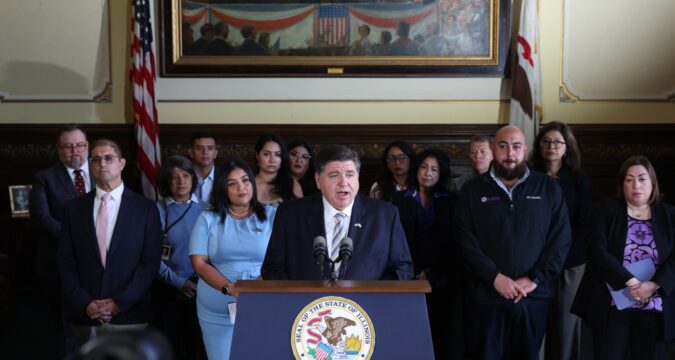
Gov. JB Pritzker’s Accountability Commission still ramping up as federal immigration surge starts to subside
Gov. JB Pritzker’s chief of staff took to social media last week to call out federal agents for taking a break from their militarized immigration enforcement operation in the Chicago area to play tourist and pose for group photos in front of the iconic Cloud Gate sculpture in Millennium Park.
“These jerks went to the Bean this morning where they took a picture where instead of saying ‘cheese’ they said ‘Little Village’ — the name of the community they terrorized over the weekend,” Pritzker chief of staff Anne Caprara wrote, sharing a link to a Block Club Chicago story documenting the photo op.
“The only good thing is we will be handing over this picture to the Illinois Accountability Commission,” Caprara wrote, referring to the body Pritzker formed late last month in order to “create an official public record” of the “impropriety, brutality and harassment perpetrated” by federal agents participating in the monthslong crackdown known as “Operation Midway Blitz.”
But more than three weeks after Pritzker drew national attention for creating the commission through an executive order, there is no apparent way for members of the public who have experienced or witnessed excessive force or other misconduct by federal immigration agents to report those allegations directly to the commission.
“I want to encourage all Illinoisans who have witnessed or experienced concerning conduct by federal agents to stay tuned at www.ilac.illinois.gov … for details in the days and weeks ahead,” Pritzker said at the Oct. 23 news conference where he announced the commission. “Donald Trump is counting on your silence. We are counting on your courage.”
Even as the controversial head of the federal operation, Border Patrol Cmdr. Gregory Bovino, has left Chicago in recent days, the commission’s website remains bare bones, with a phone number to contact an outside organization added Friday only after an inquiry from the Tribune. As of Friday, the site still did not provide an email address or other digital method for contacting the commission to share the type of eyewitness cellphone videos the governor has repeatedly asked the public to record and hand over since the chaotic, violent crackdown began in early September.
In response to questions the Tribune initially raised Nov. 10, the governor’s office in an emailed statement this past Friday referred the public to contact an advocacy group that has been tracking the federal enforcement actions, stating “members of the public who wish to share information can contact the (Illinois Coalition for Immigrant and Refugee Rights) Family Support Network & Hotline at 1‑855‑HELP‑MY‑FAMILY (1‑855‑435‑7693), listed on the commission’s website.”
Before the Tribune contacted the governor’s office about the issue, users of the state commission website had to click a link to a separate site to find the phone number. That number was added to the commission’s website Friday afternoon.
“The commission will provide updates to the public if there are other avenues to share information,” Pritzker spokeswoman Jillian Kaehler said in the emailed statement.
On the commission’s website, a section titled “Learn More” includes links to the executive order Pritzker signed and a news release announcing the commission, along with a separate news release detailing Pritzker’s request that federal authorities pause their operation over Halloween weekend, which the Trump administration sharply criticized, then disregarded.
There’s also a link to the Illinois Immigration Information hub, which provides resources to inform residents of their rights and direct them to legal help. But there’s no information on any of the commission’s plans to “collect testimony, hold hearings, and gather information and firsthand accounts from individuals, community members, subject matter, experts, local officials, journalists, faith leaders and organizations,” as Pritzker promised at his October news conference. “The mechanisms for facilitating this information gathering will be announced soon,” the website says.
The commission, which operates under the auspices of the Illinois Department of Human Rights, is charged with sending Pritzker an initial report on its findings and recommendations by Jan. 31. The governor has said the commission is necessary because neither the Trump administration nor the Republican-controlled Congress is holding immigration enforcement officers accountable for misconduct during the operation, in which one federal judge in Chicago has said agents’ “use of force shocks the conscience.”
Pritzker has yet to fill three seats on the nine-member commission. Appointments to fill the vacancies are “expected in the coming weeks,” Kaehler said.
In the meantime, the commission, headed by former U.S. District Judge Rubén Castillo, has begun meeting. In addition, the Department of Human Rights has hired the commission’s executive director and top attorneys, and the department has “developed the organizational structure for onboarding additional support staff,” Kaehler said.
The commission’s executive director is Hina Mahmood, a former deputy chief of staff at the state Department of Human Services who most recently was director of Illinois initiatives at the JB & MK Pritzker Family Foundation, the philanthropic organization the billionaire governor and his wife founded in the early 2000s. In her role with the commission, Mahmood is working on an $84.62-per-hour contract with the state, according to the Illinois comptroller’s office.
“Commission members are beginning initial outreach efforts, exploring community partnerships and collaborations, and conducting a landscape analysis of information already in the public domain to examine the roles and impact of related and ongoing litigation,” Kaehler said.
Numerous lawsuits challenging various aspects of Operation Midway Blitz have been filed against the Trump administration in federal court in Chicago.
In recent days, a federal judge said he would order the release on bond of hundreds of immigrants who’ve been arrested during raids across the Chicago area; outside attorneys paid a court-ordered visit to an Immigration and Customs Enforcement processing facility in west suburban Broadview over concerns about the conditions for arrestees held there; and a judge who has already issued temporary orders restricting the use of force by immigration agents said she would hold a hearing in the spring on whether to issue a permanent injunction.
https://www.chicagotribune.com/2025/11/17/pritzker-immigration-accountability-commission/
Lou Sandoval: Who speaks for business when companies stay silent?
Public trust in government has fallen to historic lows, and in that gap, businesses must reclaim an independent voice based on truth, balance and sustainable growth. For too long, the private sector, traditionally one of the most stabilizing forces in our civic system, has had its voice muted, restricted or ignored altogether.
Today, that silence is no longer sustainable. The stakes are too high, and the consequences of not acting are too severe.
Across Illinois and across the country, a subtle but unmistakable shift is emerging. Recently, we’ve seen events that signal the beginning of something long overdue: a revival of responsible and outspoken business leadership.
Jon Banner’s recent Tribune op-ed called on business leaders to reaffirm their role as practical stewards of civic responsibility. The United for Chicago coalition, composed of business, faith and civic leaders, came together to oppose the economic damage caused by immigration raids. That meeting emphasized an important point: Businesses are not just abstract entities; they are employers of families, contributors to communities and cornerstones of neighborhoods.
The coalition’s message was strong precisely because it was delivered without political posturing. No elected officials seeking attention, no partisan framing, just a straightforward acknowledgment of the economic and human costs of destabilizing the workforce that fuels our city.
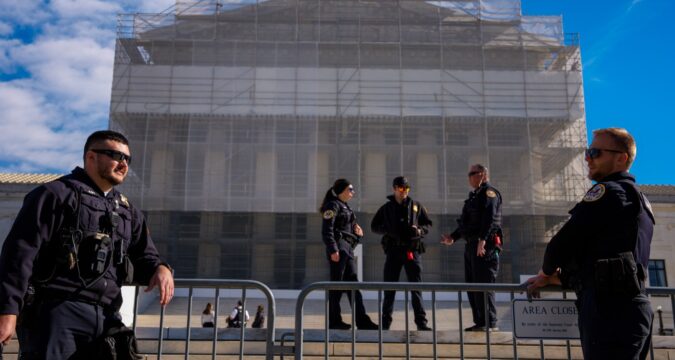
Recently, Sara Albrecht, chair of the Liberty Justice Center, took the tariff fight to the steps of the U.S. Supreme Court, representing the businesses and consumers harmed by policies created far from the shop floors, warehouses and small enterprises that feel their impact most acutely. Her stance was a reminder that when policy drifts too far from economic reality, it is business, not bureaucracy, that bears the burden.
These events are not isolated. They form a pattern. Business is beginning to speak.
But the truth is that it needs to speak louder, more consistently and with greater independence. Americans’ trust in state and federal government is waning. When confidence drops, leadership naturally shifts elsewhere. More and more, it falls on employers, innovators, entrepreneurs and job creators, those who understand the fragile balance between economic stability, workforce security, investment and long-term growth.
And yet, in Illinois, even the most respected business associations face structural constraints that limit their independence. Over the last decade, state grants, programmatic contracts and pass-through economic development funds have created quiet but consequential dependencies. These financial entanglements blur the line between cooperation and influence. When an organization’s budget is intertwined with agencies, genuine advocacy becomes difficult — not out of ill intent but out of mathematical reality.
Few associations can afford to openly oppose their funders. When they cannot, concerns about tax competitiveness, regulatory overreach or long-term fiscal health are downplayed for political reasons. This creates a troubling paradox: When clarity, conviction and honesty are most needed, advocacy becomes muted.
An example worth noting is the increasing trend of states moving away from federal tax policy. Michigan was the first to lead, followed by Massachusetts, and now Illinois has also shifted. While this may be politically convenient, these differences add new layers of complexity for multistate employers, manufacturers and service providers. The greater compliance requirements and uncertainty not only irritate businesses but also affect where they decide to expand, invest or relocate. Policymakers might view such decisions as fiscally responsible or driven by ideology, but without meaningful input from the business community, the resulting economic effects are often predictable and harmful.
When policy is crafted without partnership, capital follows the path of least resistance, too often across state lines.
Business has always held a natural seat at the civic table, one that transcends partisan cycles or ideological tides. Illinois has seen good and bad policy from all corners of the political spectrum. The goal of business leadership is not to pick sides, but to defend balance: predictable taxation, reasonable and consistent regulation, fair enforcement, and a climate that encourages innovation, investment and hard work.
When business stays silent, the extremes fill the void. And economies, local, regional and statewide, bear the cost.
Markets depend on trust, stability and clarity. When those elements erode, capital retreats. Companies slow hiring. Entrepreneurs delay investment. Banks tighten credit. Talent migrates elsewhere. These are not theoretical risks; they are patterns we have seen repeatedly in states where politics eclipse pragmatism.
Illinois, and our great city of Chicago, cannot restore economic confidence without an independent, unobstructed and unencumbered voice of business, one that is free from political influence, partisan pressure or financial leverage.
Business must lead again, not from ideology, but from discipline. The same rigor that drives strategic planning, operational efficiency and long-term value creation must be brought to public policy conversations. In that rigor lies the foundation of economic vitality. It is where jobs are created, communities prosper and states grow.
Silence is no longer an option. Not for Illinois. Not for Chicago. Not for business. And not for the future we hope to build.
Lou Sandoval is the former president and CEO of the Illinois Chamber of Commerce.
Submit a letter, of no more than 400 words, to the editor here or email letters@chicagotribune.com.
https://www.chicagotribune.com/2025/11/17/opinion-business-immigration-raids-chicago-speaking-out/
Record property tax increases slam Chicago homeowners as downtown owners see cuts
This story is a collaboration between the Illinois Answers Project and the Chicago Tribune.
Chicago homeowners are being walloped with a record property tax hike, with some of the city’s poorest neighborhoods absorbing the steepest increases even as downtown office owners see their bills fall, according to new data from the Cook County treasurer’s office.
An analysis from Cook County Treasurer Maria Pappas’ office found the median property tax bill for a Chicago homeowner jumped 16.7% since last year, the largest percentage increase in at least 30 years. The surge follows similar spikes in Cook County’s north and south suburbs over the last two years and complicates the job of the Chicago City Council as it considers tax hikes to help close a historic budget gap.
The long-awaited second installment of Cook County property tax bills was mailed to property owners on Friday and is due Dec. 15. Across the county, residential and commercial property owners are being billed a total of $19.2 billion, a nearly 5% increase from last year. But the burden is falling unequally.
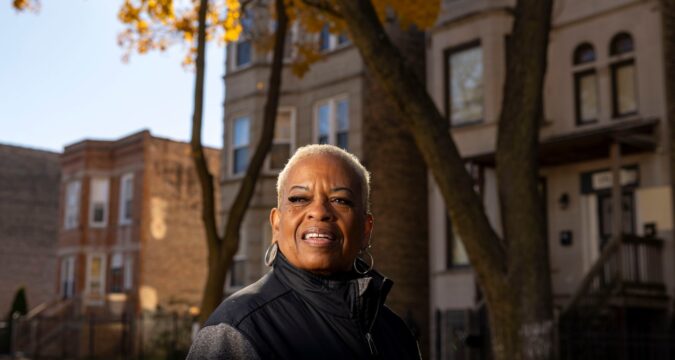
Audrey Pierce, 71, last year paid about $3,300 in property taxes for the greystone three-flat she has owned on Christiana Avenue in North Lawndale since 2000. On Thursday night, she logged onto the treasurer’s website to discover her new annual bill now is nearly $7,000.
“To put it mildly, I’m very pissed off,” Pierce said. “I mean, what are we paying for?”
The West Side native bought her first two-flat in the neighborhood in 1995 and now owns four other buildings nearby. She and her neighbors have worked over the decades to clean up the area and drive out gang activity, she said.
Following an uptick in nearby real estate interest, Cook County Assessor Fritz Kaegi’s office last year doubled its valuation of the Christiana Avenue building, from $190,000 to $380,000, according to the assessor’s website.
“I’m getting punished because I cleaned up the block,” Pierce said.
As the Illinois Answers Project and Chicago Tribune reported in September, homeowners on the South and West sides were bracing for property tax hikes after sharp assessment increases in many of those neighborhoods. The treasurer’s report confirms those fears — and highlights another powerful force behind the shift: a steep drop in the value of Loop office towers, retail properties, hotels and restaurants. The collective tax bills for those commercial properties dropped by $129 million, driven by plunging property values, effectively shifting more of the tax burden onto Chicago’s homeowners.
“When you have a vacancy rate in commercial properties the way we do in the city right now, commercial (valuations are) going to go down,” Pappas said in an interview Friday. “So, who has to pick it up? It’s like a scale. If … one side goes down, the other goes up.”
Homes in the North Lawndale neighborhood on Nov. 14, 2025. The median residential property tax bill in North Lawndale nearly doubled this year, a Cook County treasurer’s office report shows. (E. Jason Wambsgans/Chicago Tribune)
Median residential bills in nine predominantly Black Chicago community areas jumped by more than 50% compared with last year, according to the treasurer’s analysis. In West Garfield Park, the median homeowner’s bill more than doubled, rising from $1,482 to $3,448. North Lawndale saw a similar hike, with the median bill increasing from $1,905 to $3,791.
The median residential bill in the Chicago community areas of Englewood, West Pullman, West Englewood, Fuller Park, New City, East Garfield Park and Riverdale each increased between 54% and 82%. Even outside those neighborhoods, South and West Side homeowners faced steeper increases than the rest of the city.
Property owners in those neighborhoods rarely appeal their valuations, a previous study found, depriving them of the opportunity to win a reduction and potentially a significant cut in their tax bill. Meanwhile, downtown commercial property owners are more likely to hire lawyers to help them get breaks.
“When people with means appeal, which they always do, it crushes the people who don’t have the means to hire … attorneys,” said Richard Townsell, executive director of the nonprofit Lawndale Christian Development Corp.
Tax hikes could put a damper on the West Side’s burgeoning real estate market, said Richard Townsell, executive director at the Lawndale Christian Development Corp., shown in his office on Sept. 18, 2025. (Eileen T. Meslar/Chicago Tribune)
Townsell said volatile and inconsistent property taxes have chilled momentum in the West Side’s burgeoning real estate market.
“It makes it difficult, because it makes it not predictable,” Townsell said. “I go to a closing, and when I put up my escrow, what am I going to put in there?
Officials in Kaegi’s office defended the assessment spikes earlier this year, telling the Tribune and Illinois Answers that they reflected increasingly hot real estate demand in those neighborhoods.
Pappas said she’s personally noticed an increase in homebuyers walking into the treasurer’s office to express interest in Englewood.
Taxpayer service representative Mustafa Abdul Maboud, center, helps people with property tax issues at the Cook County treasurer’s office in downtown Chicago on Nov. 14, 2025. (Terrence Antonio James/Chicago Tribune)
“If you go to Englewood, you will be surprised, because these various residences and bungalows are being rehabbed, and they look stunning,” Pappas said.
The timing of the property tax bills adds a new political challenge for the Chicago City Council and Mayor Brandon Johnson as the council tackles Johnson’s 2026 budget proposal.
The mayor’s plan avoids a property tax increase but imposes new charges on businesses, such as a per-employee tax on large companies and a steep hike in the city’s tax on leases, including cloud software.
Ald. Jason Ervin, 28th, the chair of the City Council Committee on Budget and Government Operations who represents West Garfield Park, called the sharply higher bills in his community “a concern, definitely.” Ervin credited the mayor for sidestepping a property tax hike that would compound the pain next year and urged county leaders to find ways to “smooth” collections from year to year to avoid dramatic swings. Many West Side homeowners, he added, actually saw their property bills drop after the last city reassessment in 2021.
“I don’t think that having this yo-yo effect on taxes is beneficial to residents … or to the taxing bodies,” Ervin said.
This year’s bills reflect last year’s citywide reassessment by Kaegi’s office, the results of appeals before the county’s Board of Review and higher overall tax levies by local governments. The city of Chicago has not increased its levy since 2022, but Chicago Public Schools — which is the biggest recipient of property tax revenue in Chicago — has consistently raised its levy by the maximum allowed under state law and has sometimes even exceeded that cap through special carve-outs, a recent study found.
At the same time, plunging downtown office values have shifted more of the tax burden onto homeowners. Citywide, residential assessed values climbed sharply, while valuations of downtown properties plunged by more than 7%.
Commercial buildings in the Loop drove the downturn.
The median tax bill for commercial buildings in the Loop such as restaurants, stores and offices, dropped from $14,942 to $10,709. Large Loop apartment buildings saw their bills drop 5%, from about $225,000 to $214,000 on average. Commercial properties elsewhere in the city saw “meager” growth, according to the Pappas report, which was being released Monday.
“It’s probably the most unhappy ‘I told you so’ a person could offer,” said Farzin Parang, executive director of the Building Owners and Managers Association of Chicago, which represents downtown office owners. Parang said he has been warning for years that chronically high vacancies and depressed sales downtown would eventually push more of the tax burden onto city homeowners.
“It’s unfortunately proving the point that we have to invest in downtown and in policies that help revitalize the office industry, because they support everybody,” Parang said.
The numbers bolster the position of downtown and Near West Side Ald. Bill Conway’s opposition to Johnson’s $21-per-employee head tax proposal. Declining commercial values show that businesses already under strain cannot create jobs or housing if they are further burdened by a head tax, Conway said.
“Commercial property sales have fallen significantly,” because of falling rents and rising vacancies, said Conway, 34th. “So it’s not like they’re getting some break. They’re seeing their assets deteriorate in value and deteriorate in revenue too as tenants leave.”
Townsell, the West Side developer, said the explanation offers little comfort to homeowners and nonprofit developers who have been straining to bring life back to poor neighborhoods after decades of disinvestment.
“For so many years, our neighborhood has been redlined, there’s been contract sales, and we’re still suffering,” Townsell said. “And now, we’ve started to turn it around and (are) fixing it up. And we are immediately punched in the eye with a tax bill that’s untenable.”
Ald. Monique Scott, 24th, who has worked with Townsell’s organization and other development groups, said the new figures were a “catastrophe” that makes it feel like efforts to attract new housing and businesses to the 24th Ward are “in vain.”
Like Conway, it cements her opposition to Johnson’s head tax, she said. Both she and Englewood Ald. Stephanie Coleman, 16th, said they worried the additional charge on businesses would cause companies to leave the city or lay off lower-wage workers who live in their wards. “It’s not me saving billionaires, it’s me saving my residents,” Scott said.
For Pierce, the more than doubling of her bill won’t be enough to get her to stop investing on the West Side, she said. Pierce plans to organize with her neighbors to call for reforms to the tax system — including by attending a bonfire event hosted by Townsell where neighbors are invited to toss printed copies of their bills into the flames. Townsell called the event their “Boston Tea Party moment.”
“It’s my neighborhood,” Pierce said. “So, you know, I need to fight for it.”
Quig is a reporter forthe Tribune. Nitkin is a reporter for the Illinois Answers Project.
https://www.chicagotribune.com/2025/11/17/chicago-property-tax-bills-skyrocket-2025/
Editorial: A deluxe, ‘Sonoma-style’ resort is back on track for Galena, surviving a NIMBY court battle
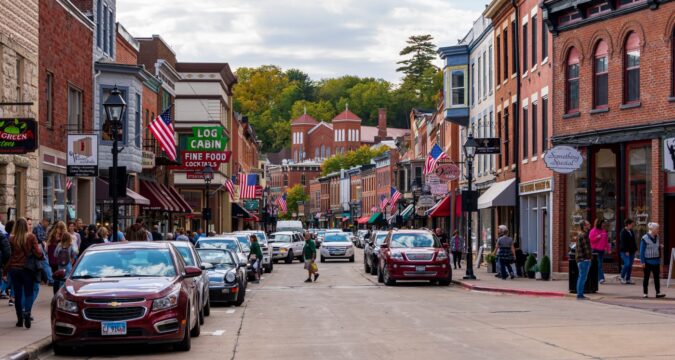
The Parker resort sounds like a heaven-sent project for Galena, Illinois, a small, scenic city along the Mississippi River that depends on tourism. But don’t try telling that to Wendy Clark, a Galena native opposed to the project who succeeded in tying it up in litigation for two years despite the city approving it.
Finally, an appellate court in Illinois has come through with a common-sense ruling that paves the way for The Parker. And while Clark and at least a few other vocal residents will no doubt continue to object, we believe this development will be a huge plus for the city and its broader region of Illinois.
For starters, The Parker project will resurrect an important part of Illinois history. Completed in 1859, the Marine Hospital in Galena was built to take care of sailors and other workers from the nearby Mississippi River. Today the abandoned, dilapidated building is among the state’s most endangered historic places.
Renovating the hospital is at the center of a development plan that would bring a California-style winery and resort to open land on the outskirts of the city. Illinois-based developers who run a pair of resorts in Wisconsin are funding the $30 million-plus project entirely with private funds, they say — no public expenditures required. The Parker could be a catalyst for reviving a desirable but underutilized slice of Illinois.
Because of Clark, however, the city has racked up a big legal bill to fend off a lawsuit that alleged a host of wrongdoing, from zoning irregularities to due-process violations. A local judge considered 10 separate counts in Clark’s lawsuit, rejecting nine.
But one stuck: In 2023, the judge ruled that Clark and others who object to the development were not given the right to cross-examine the developer and other witnesses at a series of public hearings. For that reason, The Parker plan was parked.
This page has long defended the rights of citizens to speak out and be heard about government actions affecting their lives and property. In this case, however, the elected leaders of Galena went out of their way to accommodate opponents of the project.
In 2022, a Zoning Board hearing went on for almost four hours, and Clark was the first opponent to speak, getting unlimited time to outline her concerns, according to the appellate ruling. After she and several other opponents spoke, the developer addressed some of the issues raised, clarifying, for instance, that leaders of Galena’s police, fire and emergency medical services had been consulted for the project. Clark then was invited to speak again in rebuttal.
Clark took additional opportunities to bash the project and rebut the developer at another public hearing before the Zoning Board, and at a five-hour hearing before the City Council. It’s not as if she was given two minutes and cut off, as has occurred in other Illinois public hearings that are hardly worthy of the name.
Among those alarmed by the ruling in Clark’s favor was the Illinois Municipal League, which asked the court for permission to support the appeal by the developer and city of Galena. Every public hearing at every local municipality can’t be run like a circuit court trial, after all, and in this case, Clark received proper notice and generous opportunities to be heard.
Now that the appellate court has overturned the ruling, here’s hoping The Parker comes to pass. To his credit, developer Dave Hooten of Bien Vie LLC and True North Quality Homes LLC has continued a dialogue with Galena residents. At a public hearing he hosted earlier this year, he explained in detail how the project would be phased in over time — assuming it survived the court challenge.
Now, he’s restarting it, telling this page in an interview that he is excited to pick up where he was forced to leave off, despite construction costs having soared in the meantime.
Hooten envisions a “Sonoma-style” luxury retreat, with renovated guest rooms in the historic Marine Hospital building as well as up to 120 freestanding cottages. It will have a vineyard, winery, event center, cafe, gardens, prairies and woodland areas crisscrossed with walking trails, all on a 99-acre tract of farmland and forest that he has assembled near the city’s historic downtown.
It’s a big, ambitious plan, and the No.1 objection is that it’s “over the top” and will change the character of the community.
Hardly. Galena and the region around it depend on a continued flow of investments like The Parker. Tourism already supports an estimated 3,000 jobs in a city with a population of about 3,200 (and gradually shrinking over the decades). The project will add to the tax base, helping to pay for schools and other public services.
And Galena is no undeveloped area at risk of being despoiled. Its existing resorts offer golf courses and ski hills, plus it has dozens of hotels, bed-and-breakfasts and restaurants. A big Best Western hotel is within a mile of the Marine Hospital building — and the plaintiff’s home.
Enough NIMBY, already. It’s time for progress in a part of Illinois that more people need to see and enjoy.
Submit a letter, of no more than 400 words, to the editor here or email letters@chicagotribune.com.

Editorial: Own a home in Chicago? You should be cheering for commercial property values in the Loop.
Who’s afraid of declining commercial real estate values in the Loop? We are, and you should be too, especially if you own a home in Chicago.
The reason comes into sharp focus in a new report from Cook County Treasurer Maria Pappas. It reminds us of a stark math problem: When commercial property values in the Loop fall, the tax burden shifts onto homeowners.
“When the Loop gets a cold, the rest of the city gets pneumonia,” Pappas said. “Homeowners across the city are paying the price.”
Black-majority neighborhoods on the South and West sides saw some of the steepest percentage jumps in assessed values and hence their median tax bills.
In West Garfield Park, for example, the typical homeowner’s tax bill jumped by almost $2,000 — a 133% increase. Home values in these neighborhoods have surged since the pandemic, yet assessed values in West Garfield Park remain below their 2006 levels, according to the treasurer’s office. A tight housing supply has funneled buyers into less expensive neighborhoods, intensifying these increases.
Residential properties throughout Chicago’s South and West sides, like these on West End Avenue in West Garfield Park, had their property assessments increase last year. (Antonio Perez/Chicago Tribune)
By contrast, downtown is moving in the opposite direction. The Central Region — where the Loop is located — was the only spot in the city where commercial property values declined, losing a total of $379.2 million, or 7.2%, in assessed value, according to the treasurer’s office. As a result, Loop commercial properties now are responsible for 11.2% of the city’s tax burden, compared with 13.4% the year before.
Pappas’ office accurately referred to our system as a “zero-sum game,” meaning that when one group — in this case, commercial owners in the Loop — pays a smaller share, the other groups have to make up the difference.
In years past, homeowners in Chicago benefited from sharing the tax load with owners of skyscrapers and office buildings in the Loop and elsewhere in the city. Chicago homeowners now will pay the price for the Loop collapse — in the property tax bills just arriving in their mailboxes and due Dec. 15.
All of us, in the city and beyond, have an interest in a growing Chicago business district. Growth means wealth, and more valuable commercial properties pay higher tax bills, taking the pressure off of everyone else.
We need a strong central business district for many reasons, not least of which is a thriving job market. What people often overlook is the impact the Loop real estate market has on our property tax bills. We’re confident they won’t overlook it any longer.
Property taxes long have been a big problem in Cook County, and taxpayers are facing multiple pressure points. This year is no exception. Taxes are rising throughout the county as governments continue increasing their levies. School districts alone sought $446.6 million more in 2024, according to the treasurer.
But the biggest shock this time around is tied directly to Chicago’s declining economic star. That makes reviving the Loop an urgent priority.
Yet our policymakers, particularly Mayor Brandon Johnson, consistently undermine that goal. Case in point: His rhetorical demonizing of corporate employers as he attempts to hike taxes on them. The mayor clearly wants to evade responsibility for Chicagoans’ soaring property tax bills a little over a year before he faces reelection. But his principal role in undermining private-sector confidence in the city’s future keeps businesses from investing in the city, particularly downtown.
In that way, he bears plenty of responsibility for your tax shock, South and West siders, even if he can say the city of Chicago isn’t hiking its property tax levy this year.
Submit a letter, of no more than 400 words, to the editor here or email letters@chicagotribune.com.
Bird flu cases are on the rise again, including 2 million turkeys. Will that affect your Thanksgiving dinner?
Out on his farm in Dundee Township, Cliff McConville sees geese landing in the fields where his turkeys and chickens graze. It’s a sight that often unnerves poultry producers, as migratory waterfowl carry and spread a highly infectious strain of bird flu that has been resurging in the United States for the last three years.
So far this year, McConville’s farm and most turkey farms in Illinois — of which there are more than 400 — have not been affected by the disease. Eight farms in the state have reported cases to the federal government, and only two of those were turkey flocks.
“We raise them outdoors,” McConville said of the poultry operations at All Grass Farms in the northwest suburbs. “They’re going to mix with (wild) birds. So we just have to do our best to keep them healthy. … That’s worked for us so far. Knock on wood.”
But larger turkey-producing states have been hit hard in the past couple of months. Nearly 2 million turkeys have been affected by bird flu across the country since August, accounting for roughly 24% of all new cases in commercial and backyard flocks, even though turkeys only account for approximately 2% of the U.S. poultry inventory.
According to experts, the disease — combined with a drop of almost 10% in turkey meat production from last year, rising labor costs and lower overall consumer demand throughout the year — is triggering higher prices for wholesale and fresh turkeys just ahead of the holiday season. Frozen turkeys are not likely to be as affected.
More than a third of those recent cases came from Minnesota, where, as of Friday, more than 716,000 commercial turkeys have been infected or exposed to the virus since August and over 1 million since the start of the year. Minnesota, which sells a lot of its turkey to Illinois and other states, led the country in production last year with 32 million birds.
It’s not the first time this year that bird flu has disrupted the economy. Following an outbreak last winter, egg prices hit a record high in March. Like turkeys, cases are surging again in egg-laying chickens, with approximately 5.8 million commercial egg layers affected by the disease this fall. Even so, the price of eggs continues to decline from March’s record highs — settling at a nearly 12-month low in September. More recent data on egg prices is unavailable because of the government shutdown.
Since 2022, over 183 million commercial birds have died or been killed in the country as this highly pathogenic strain of avian influenza affects poultry flocks across all 50 states. It has no treatment and continues to be spread by wild birds, causing outbreaks during migratory seasons as they return to their seasonal homes.
“The Upper Midwest, in general, is experiencing a very active highly pathogenic avian influenza season,” said Michelle Kromm, a doctor of veterinary medicine specializing in poultry and public health based in Minnesota. “I think we’re kind of toward the tail end of that activity” this fall.
Search or click on the map to see how many cases have been reported in each state.
Even though outbreaks this season appear to be subsiding, spring migration will bring renewed challenges for the poultry industry, especially as it grapples with the recent deaths of turkey breeder hens, which can have longer-term implications.
“Every breeder bird represented multiple turkeys … that are no longer being produced, and it takes a long time to adjust that supply chain,” said Jada Thompson, associate professor of agricultural economics at the University of Arkansas, whose research focuses on livestock health and the poultry industry.
Changes to the turkey market
Experts say customers buying conventional frozen turkeys for their Thanksgiving meal might not feel much of an impact on their wallets because a lot of the meat being sold by large retailers was bought before the fall spike in bird flu. Those who prefer to buy their turkey fresh for the holiday, however, might run into higher prices and fewer available options.
Wholesale costs have shot up 81% from 2024.
“That’s a huge jump,” said David Anderson, professor of agricultural economics at Texas A&M University.
According to the U.S. Department of Agriculture’s latest weekly national turkey market report, wholesale prices for whole turkeys were $1.77 per pound last week comparedwith 98 cents per pound at the same time last year.
In the lead-up to Thanksgiving and Christmas, wholesale costs aren’t expected to come down.
According to agricultural experts, bird flu has been a persistent challenge unlike other temporary market disruptions such as supply chain issues, which often resolve within months. As a result, price forecasts remain raised on “relatively tight supplies,” according to a September report from the USDA’s World Agricultural Supply and Demand Estimates.
As a result of those tight supplies in the domestic market, the United States is buying more from foreign suppliers, with turkey imports jumping roughly 9% month-over-month and more than 33% year-over-year, according to a Tribune analysis of the latest available USDA trade data from July.
On top of that, President Donald Trump’s trade war could be contributing to higher prices domestically. Currently, Canada is the sole country that exports turkeys to the United States, and with its general tariff rate set at 35% for goods not exempt under the United States-Mexico-Canada Agreement, import costs are spiking as well.
“Then you have retail prices,” Anderson said.
Grocery stores have marketing strategies and holiday specials that will probably keep prices lower — and most big chains, he said, contracted their turkeys eight or 10 months ago.
“So their contract price is most likely much lower than what we’re seeing in the wholesale spot market,” Anderson said.
In recent weeks, many stores have started to share their holiday deals and discounts.
According to the latest USDA weekly retail turkey feature activity report, retail prices for frozen conventional whole turkeys are averaging 98 cents per pound — or about 80 cents per pound cheaper than the wholesale market.
The average retail price is also roughly the same as a year ago despite the strain on inventory.
“If they (grocery stores) contracted months and months ago, before prices took off, then that explains it a little bit,” Anderson said.
Typically, the retail price for fresh turkey is higher. According to the latest data, the price of a conventional fresh whole turkey averages about $1.71 per pound nationwide.
And as Turkey Day approaches, the price tag on fresh birds is only increasing.
Related Articles
A look at consumer prices 9 months into the second Trump administration
Tariffs, bird flu and severe weather are pushing some everyday groceries to record prices
Why not vaccinate Minnesota turkeys for bird flu? It could start a trade fight.
The average retail price for a whole turkey jumped 12.5% in the second week of November.
“A fresh turkey was going to be harvested pretty close to now, so that it shows up at the store and it has not been frozen or anything. So those are much more related to production right now, which is being hit by bird flu,” he said. “I think that really hits the more fresh, specialty market — probably more than the frozen turkeys that some of us are looking for.”
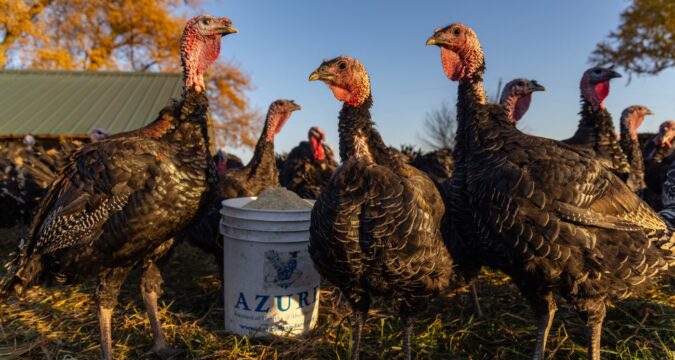
McConville’s turkeys, for instance, are fresh, pasture-raised and organic, and they sell for $7.95 a pound, which is about the same as the farm’s pricing has been in the past few years.
All Grass Farms raised about 700 turkeys this year — making it a good year, given that more survived than usually do past the young stage. So, even though processing costs went up, the farm has been able to shoulder some of that and remain profitable with the same pricing thanks to its high supply.
Employee Wyatt Mullenaux feeds the bronze turkeys, Nov. 14, 2025, at All Grass Farms in Dundee. (Dominic Di Palermo/Chicago Tribune)
The farm always sells out of fresh turkeys in November, he said, the freshest of which they harvest as late as the Monday before Thanksgiving.
“I feel like demand is pretty strong, but it’s not super high,” McConville said. “At least my feeling is not that it’s overwhelming.”
After all, what customers are willing to pay varies.
Some want fresh, such as those raised and sold by McConville and Wanda Farms in Harvard, whose turkeys go for $10 per pound.
“When we’re selling our product on the marketplace, it’s definitely a lot more expensive than if you found a basic turkey at your local grocery store,” said Joe Wanda, owner of the northern Illinois farm. “And that’s just because we’re providing a way better quality turkey that’s going to be just so much better when you cook it up because of the environment that it’s raised (in).”
A bronze turkey hen feeds on Nov. 14, 2025, at All Grass Farms in Dundee. (Dominic Di Palermo/Chicago Tribune)
Other customers would rather stick to more affordable, frozen turkeys: Anderson’s family bought their Thanksgiving turkey last weekend at 87 cents per pound at the local grocery store.
“And I thought, ‘Dang, that’s kind of a good deal,’” the economist said.
Wave after wave of challenges
The recurring market pressures of the bird flu follow the seasonal migration of the waterfowl that carry the disease, both “in the fall and vice versa in the spring,” Kromm said.
As the migratory birds start to “bunch up” or congregate ahead of their travels south, “they swap bugs,” Kromm said — increasing the circulation of the virus.
“This particular strain of influenza continues to be very unique in the fact that it’s sticking around,” Kromm said. It was first detected in spring 2022, and wild birds are still carrying it around with “spillover events” into domestic poultry.
Turkey producers specifically continue to be badly hit by the bird flu. It’s like standing in the middle of the ocean and getting hit by a wave, Thompson, from the University of Arkansas, said.
“So every time you get hit, and you think, ‘I’m recovering,’ you get hit by another wave,” Thompson said.
Because of their growth cycle, the turkey population is also still recovering from losses in the late spring. Many producers raise turkeys throughout the year to stockpile for Thanksgiving, and commercially raised hens, which are preferred for eating, take 16 to 18 weeks to reach maturity and be ready for harvest, said Wanda, the Harvard-based farmer.
The latest surge followed a steep drop-off throughout the summer.
From August to September, the number of birds affected by avian flu in the U.S. jumped a jaw-dropping 6,700%. In August, new cases were reported in only three states — representing less than 57,000 birds. By September, there were confirmed outbreaks in nearly 30 flocks across 10 states, with more than 3.8 million birds affected, according to USDA data.
In October, cases were even more widespread: Nearly 4 million birds were infected or exposed to the virus in 20 states.
A new normal
When birds test positive for avian flu, they are culled, as the USDA has a so-called stamping-out policy, meaning there’s zero tolerance for domestic poultry flocks affected with the virus. So all infected and exposed birds in a flock have to be culled.
“That killing, or what we would call depopulation in the industry, is a really important disease control step, because the birds — especially turkeys, to be honest — they’re pretty sensitive to infection,” Kromm said. “Viruses, being what they are, they require living organisms in order to replicate.”
The government usually purchases the birds that have tested positive from producers to kill them, and sometimes offers financial assistance to clean up barns and farms.
“But that typically doesn’t make everybody whole, and so, cash-flow-wise, it can get to be a big challenge” for producers, Kromm explained.
Biosecurity measures became a “normal course of business” for big commercial poultry operations after the last outbreak in late 2014.
The measures are “pathogen-agnostic,” she said, meaning they protect poultry from a variety of viruses, bacteria and other kinds of germs. “Many of the steps are just best practices for keeping birds healthy, no matter whether we’re worried about highly pathogenic avian influenza or not.”
“So a lot of the regulatory structure and expectations preceded this outbreak,” Kromm said.
But the strain is so contagious that it’s been more difficult to contain with standard precautions.
Now, under the new administration and after mass firings across federal agencies that also affected the USDA — whose Animal and Plant Health Inspection Service unit has lost over 1,300 employees since January — new, less experienced staffers are conducting biosecurity audits, Kromm said.
“You have folks coming out to audit a turkey farm that have never been to a poultry farm, or maybe never even been on a livestock operation. And so they’re coming through with a rubric and having a conversation and checking boxes,” Kromm said. “Sometimes that doesn’t go that well. … There’s a little bit more tension now, I would say.”
She said, however, that she understands the government’s emphasis on accountability and making sure everyone is doing their part to keep the animals safe.
“Ultimately, it’s taxpayers that foot the bill when these flocks break with (bird flu),” Kromm said.
Under Trump, the USDA announced in February it was investing $100 million for vaccine research to curb avian influenza. But vaccinating chickens and turkeys in the United States could affect trade, as importing countries fear asymptomatic birds can still spread infection internationally.
“(The) discussion largely hinges on export markets,” Kromm said. “So those conversations have to be had with trade partners.”
But it can be frustrating for smaller turkey producers who would rather be able to vaccinate their flocks than worry about being able to export their products.
Still, it is exciting to see research and conversation for a vaccine cautiously move forward, Kromm said.
“Because that is a tool that could be helpful in managing this disease,” she said. “Not a cure-all — we think about it similar to COVID vaccines. So it’s an added layer of protection, but that doesn’t mean that you can’t still get COVID, right?”
Bronze turkeys roam a fenced grassy area after being fed Nov. 14, 2025, at All Grass Farms in Dundee. All Grass Farms has about 300 bronze turkeys that get moved throughout the property to feed in different locations. (Dominic Di Palermo/Chicago Tribune)
In the meantime, small farmers in Illinois such as Wanda and McConville have learned to live with the uncertainty, especially when their turkeys spend most of their time outdoors.
While Thanksgiving turkey sales boost their operations, they rely on other sources of income year-round, including beef cattle, broiler chickens and pasture-raised pork.
“We just recognize this is the risk of being a farmer,” Wanda said, “that there are external factors of disease that, potentially, we could get. We just, I guess, gotta pray that we don’t get it. And thankfully — knock on wood — we have not been affected by it.”
adperez@chicagotribune.com
cmalon@chicagotribune.com
https://www.chicagotribune.com/2025/11/17/bird-flu-illinois-turkeys-thanksgiving/
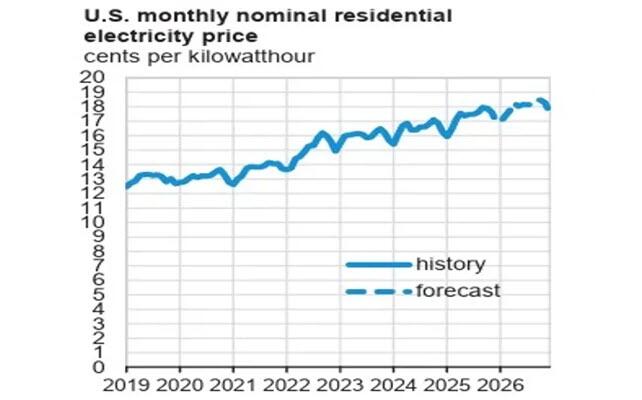
Electricity Prices Extend Rise, Regulators Rein In Data Centers
Electricity Prices Extend Rise, Regulators Rein In Data Centers
There is very little good news this week for those hoping to see relief in electricity prices next year, and more states took steps to put guardrails on data center development.
At the same time, new renewable generation projects continue to face delays and cancellations.
Here’s the story the data told this week in the electric power sector.
By the Numbers
$51/MWh
The forecast price of wholesale electricity across the country in 2026, according to the U.S. Energy Information Administration. That number, 8.5% higher than this year, is the load-weighted average across 11 regional markets, but the increases will not be felt evenly. Much of the rise in demand and price is centered on Texas and driven largely by data centers, cryptocurrency mining facilities and other energy-intensive commercial customers, EIA said.
80%
The minimum percentage of contracted monthly demand that data centers and other large load customers will be required to pay Evergy and Consumers Energy, regardless of how much they use, under new rules adopted by regulators in Kansas and Michigan. The rules are intended to shield existing ratepayers from the costs of interconnecting data centers and other large loads, especially if the demand fails to materialize after the investments are made. AEP Ohio has said its data center pipeline shrank considerably after regulators there approved a similar tariff; many states are weighing like-minded proposals.
2.4 GW
The capacity of the planned Leading Light Wind project offshore New Jersey that developer Invenergy has canceled. It cited financial, supply chain and regulatory obstacles as reasons the project is no longer viable. The cancellation of the large generation project comes as rising power prices have begun to exert political pressure on elected officials. Gov.-elect Mikie Sherrill, a Democrat, campaigned on keeping down electricity prices.
$105B
The upper end of Duke Energy’s expanded five-year capital spending plan, which it expects to roll out early next year. Executives attribute the rise in spending to rapid load growth, including many data centers, which they say is likely to continue into the early 2030s. Additional generation added to Duke’s system could exceed 13 GW in the next five years, including 7.5 GW of new gas facilities. Duke is one of many utilities that have bumped their spending in response to projected load growth from artificial intelligence, manufacturing and electrification.
20%
The percentage of planned solar capacity for which developers reported a delay in the third quarter of 2025, a decrease from 25% in the same period of 2024. The decline in delays could be related to a rush to finish solar projects before clean energy tax credits expire following the passage of the One Big Beautiful Bill Act in July. The law provided a safe harbor provision for wind and solar projects that commence construction before July 4, 2026.
Tyler Durden
Mon, 11/17/2025 – 05:45
https://www.zerohedge.com/energy/electricity-prices-extend-rise-regulators-rein-data-centers

Today in Chicago History: Tornado outbreak kills 6 people in Illinois
Here’s a look back at what happened in the Chicago area on Nov. 17, according to the Tribune’s archives.
Is an important event missing from this date? Email us.
Weather records (from the National Weather Service, Chicago)
High temperature: 74 degrees (1975)
Low temperature: 3 degrees (1959)
Precipitation: 1.43 inches (1892)
Snowfall: 3.8 inches (1927)
Irene and Frederic McLaughlin in 1928. Frederic purchased an ice hockey franchise and named them the Blackhawks in 1926. Irene is credited with creating the Indian Head design of the first Blackhawk sweater. McLaughlin owned the team for 18 years and saw it win two Stanley Cups. (Chicago Tribune historical photo)
1926: The Chicago Blackhawks won the team’s hockey opener against Toronto 4-1 at the new Chicago Coliseum rink in front of 7,000 fans. The game’s proceeds benefited the Junior League.
Pete Muldoon was the first Hawks coach in franchise history. Fired after one season, he reportedly said, “This team will never finish in first place,” a statement that later became known as the “Curse of Muldoon.”
Now, there are those who claim it never happened, that Muldoon just packed up his hockey stick and quietly left town. Yet the outcome of the team’s second season in Chicago — with only 7 wins in 44 games and a last-place finish in the league’s rankings — made some wonder if the curse was real. The Blackhawks won the team’s first Stanley Cup in 1934.
Prima donna Maria Callas is surrounded by newsmen as she arrives in Milan, Italy, by plane from Chicago on Nov. 20, 1955. Callas performed “Madame Butterfly” for her farewell performance for the Lyric Theatre company in Chicago two days before. After the performance there was a tangle in the wings when eight process servers from the U.S. Marshals Service and the Cook County sheriff’s office tried to serve Callas with summonses in a civil action on behalf of E. Richard Bagarozy of New York. Bagarozy claimed that he “discovered” Callas and signed her to a contract that entitled him to 10% of her income for 10 years to 1957. Callas said that she planned to sue Bagarozy. (AP)
1955: Process servers intercepted Maria Callas outside her dressing room in the Civic Opera House after the soprano sang her closing performance of the Lyric Opera House’s season in “Madame Butterfly.” A management group claimed she owed it some of her wages.
Callas flew to Milan, Italy, and told reporters, “I have the voice of an angel. No man can serve me.”
1984: Michael Jordan debuted the first of his signature line of sneakers in a game against the Philadelphia 76ers. The red, black and white shoes violated league policy, but Nike paid the fine for Jordan. The Air Jordan I became available to the public in 1985.
Air Jordans: A look at the sneaker institution that Michael Jordan and Nike built
People walk past the Sears State Street store on Nov. 17, 2004, after it was announced that Kmart agreed to purchase the retailer. (Chuck Berman/Chicago Tribune)
2004: Sears announced its merger with Kmart. The $11 billion deal created a new company called Sears Holdings Corp., which became the nation’s third-largest retailer.
Damage along Devonshire Road in Washington, Illinois, after a tornado tore through the area on Nov. 17, 2013. (Zbigniew Bzdak/Chicago Tribune)
2013: During an unusually warm stretch in late fall, it was a balmy 70 degrees. But by day’s end, six people were killed in Illinois in one of the most destructive tornado outbreaks in the previous 50 years. Hardest hit was Washington, a town of 15,000 people east of Peoria, which was hit by an EF-4 tornado packing winds of 170 to 190 mph.
Chicago Cubs third baseman Kris Bryant and his wife, Jessica Delp, pose with Bryant’s 2016 National League MVP award before a game against the Philadelphia Phillies at Wrigley Field in Chicago on May 2, 2017. (Chris Sweda/Chicago Tribune)
2016: Chicago Cubs third baseman Kris Bryant was named the National League’s MVP. Bryant received 29 of 30 first-place votes from the BBWAA to top Washington Nationals second baseman Daniel Murphy and Los Angeles Dodgers shortstop Corey Seager.
Bryant hit .292 with 39 home runs and 102 RBIs and led the league in runs scored with 121 while helping the Cubs end a 107-year championship drought.
“This year has certainly been one of the best years of my life, winning the World Series, and now this is just icing on the cake,” Bryant joked on a conference call after learning of his honor. “It’s all downhill from here.”
Rev. Jesse Jackson waves to the audience at the Civic Opera House in Chicago on Feb. 4, 2017. (Nuccio DiNuzzo/Chicago Tribune)
2017: The Rev. Jesse Jackson announced he had been diagnosed with Parkinson’s disease.
The civil rights leader and founder of the Chicago-based Rainbow/PUSH Coalition, has recently been hospitalized, the latest in a series of health setbacks in recent years.
Want more vintage Chicago?
Subscribe to the free Vintage Chicago Tribune newsletter, join our Chicagoland history Facebook group, stay current with Today in Chicago History and follow us on Instagram for more from Chicago’s past.
Have an idea for Vintage Chicago Tribune? Share it with Kori Rumore and Marianne Mather at krumore@chicagotribune.com and mmather@chicagotribune.com
https://www.chicagotribune.com/2025/11/17/chicago-history-november-17/
Today in History: Richard Nixon says ‘I’m not a crook’
Today is Monday, Nov. 17, the 321st day of 2025. There are 44 days left in the year.
Today in history:
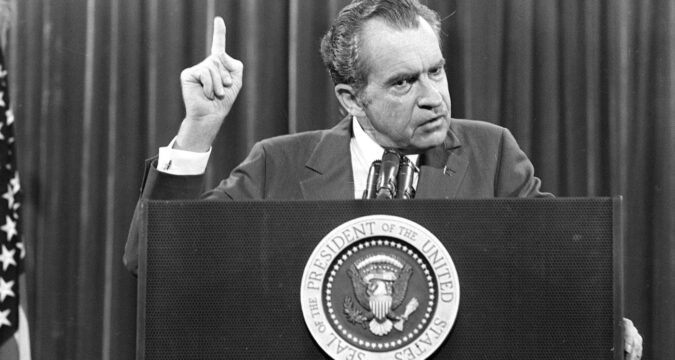
On Nov. 17, 1973, President Richard Nixon told a gathering of Associated Press managing editors at a televised news conference in Orlando, Florida: “People have got to know whether or not their president is a crook. Well, I’m not a crook.”
Also on this date:
In 1800, Congress held its first session in the partially completed U.S. Capitol building in Washington, D.C.
In 1869, the Suez Canal opened in Egypt.
In 1968, the last minutes of a tense NFL matchup on NBC between the New York Jets and the Oakland Raiders were preempted by the children’s film “Heidi.” The network received thousands of calls from angry viewers and formally apologized.
In 1989, an estimated 10,000-15,000 Czechoslovakian students demonstrated in Prague against Communist rule; hundreds of thousands joined the protests in the following days. Dubbed the “Velvet Revolution” for its nonviolent nature, the protests led to the resignation of the Communist Party’s leadership on Nov. 28 that year.
In 1997, 62 people, most of them foreign tourists, were killed when militants opened fire at the Temple of Hatshepsut in Luxor, Egypt; the attackers were killed by police.
In 2003, Arnold Schwarzenegger, the Austrian-born actor who had become one of America’s biggest movie stars of the 1980s and ’90s, was sworn in as the 38th governor of California.
Related Articles
Today in Chicago History: Tornado outbreak kills 6 people in Illinois
Valparaiso University marks 100 years of Lutheran control
Today in Chicago History: Holy cow! After 11 years with White Sox, broadcaster Harry Caray moves to Cubs.
Today in History: ‘Harry Potter and the Sorcerer’s Stone’ debuted in theaters
Today in History: World population reached 8 billion
In 2020, President Donald Trump fired the nation’s top election security official, Christopher Krebs, who had refuted Trump’s unsubstantiated claims of electoral fraud and vouched for the integrity of the vote.
Today’s Birthdays: Film director Martin Scorsese is 83. Actor-model Lauren Hutton is 82. Actor-director Danny DeVito is 81. Basketball Hall of Fame coach Jim Boeheim is 81. “Saturday Night Live” producer Lorne Michaels is 81. Basketball Hall of Famer Elvin Hayes is 80. Film director Roland Joffe is 80. Actor Stephen Root is 74. TV host-entertainer RuPaul is 65. Actor Dylan Walsh is 62. TV host-model Daisy Fuentes is 59. R&B singer Ronnie DeVoe (New Edition; Bell Biv DeVoe) is 58. Actor Rachel McAdams is 47.
https://www.chicagotribune.com/2025/11/17/today-in-history-richard-nixon-says-im-not-a-crook/