Category: News
Late Leyden School Board member Sandra Boehm’s daughter steps in to fulfill term
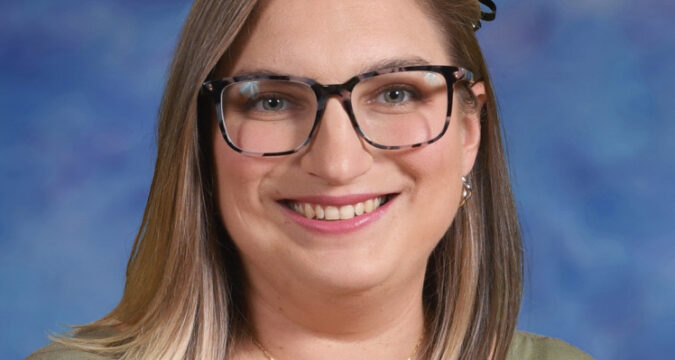
Katy Boehm will fill the role her mother once held on the Leyden High School District 212 Board of Education.
The Leyden High School District 212 School Board swore her in at its Nov. 13 meeting. For Boehm, it’s something of a return to her roots, as a graduate of the high school and then as a longtime color guard coach. But then, she’s also taking the seat of Sandra Boehm, her mother, who was a longtime board member.
She’s continuing a family legacy of service.
Her mother died in October and in an obituary, her husband, Kenneth Boehm, said the elder Boehm joined the board because of her family.
“She wanted to give back because the high school was so good to our daughters,” he said
Now, Katy Boehm will fulfill her mother’s legacy. Not that she’s a stranger to the boardroom.
Longtime Leyden High School Dist. 212 board member Sandra Boehm worked to give students opportunities to enrich their educational experiences, colleagues said. (Leyden High School Dist. 212)
“I have been taking my mom to School Board meetings for the last two-and-a-half-years now,” Boehm explained. “She was sick leading up to her passing, so that’s one of the things we did together.”
Even as her mother’s health declined, she loved the school district and the board meetings. Boehm said serving on that board had become an important part of her life.
“Getting onto the school board kind of happened at the perfect time,” Boehm said. “She was going through a rough patch and it brought a little bit of light to her life.”
The younger Boehm and her sisters all went through Leyden, and the elder Boehm enjoyed hearing about student achievements. Her mother never got tired of hearing what the kids were doing, Boehm said.
“She was really proud of all the work the kids were doing,” Boehm said. At the monthly meetings, student groups would often come in and give the board updates on various club or group or sports activities. Those were highlights.
“They would tell about their experiences, whether it be a service trip or a sport or a competition or just a class,” said Boehm. “She would light up when she would hear about what it is they were doing.”
Boehm shares her mother’s interest in education. By day, she is a librarian at Scott Elementary School in Melrose Park — one of the high school’s feeder schools, and she’d been a coach for the high school’s color guard for years. More recently, she volunteered last year to help organize Leyden’s 100th anniversary celebrations.
But she said it was her time spent in board meetings with her mother that really gave her an understanding of boardroom politics and community issues. So far, with one board meeting down, she’s looking forward to the rest of her mother’s term, which expires in the spring of 2027. Beyond that, she’s thinking she might run herself.
But that’s far in the future. For now, she’s just happy to serve and continue her mother’s legacy.
“I’m just really excited to serve the community in a different way,” she said. “Ever since I stopped with color guard, I’m excited to serve the School Board.”
Jesse Wright is a freelance reporter for Pioneer Press.
https://www.chicagotribune.com/2025/11/19/leyden-school-board-katy-boehm/

Manfred: MLB cumplirá con solicitud del Senado sobre documentos de investigación de apuestas
Por RONALD BLUM
NUEVA YORK (AP) — MLB dice que cumplirá con la solicitud de un comité del Senado para obtener documentos que detallen investigaciones sobre apuestas.
Los senadores Ted Cruz y Maria Cantwell del Comité de Comercio, Ciencia y Transporte enviaron una carta el lunes al comisionado de béisbol Rob Manfred solicitando información para el 5 de diciembre. La solicitud siguió a las acusaciones contra los lanzadores dominicanos de Cleveland Emmanuel Clase y Luis Ortiz, acusándolos de aceptar sobornos para manipular lanzamientos para apostadores. Ambos se han declarado no culpables.
“Vamos a responder de manera completa, cooperativa y a tiempo a la investigación del Senado”, señaló Manfred el miércoles durante una conferencia de prensa en una reunión de propietarios.
Dos días después de que se revelaran las acusaciones el nueve de noviembre, la MLB dijo que sus operadores de juegos autorizados limitarán las apuestas en lanzamientos individuales a 200 dólares y los excluirán de las combinadas.
“Creemos que los pasos que hemos tomado en términos de limitar el tamaño de estas apuestas de proposición y prohibir las combinadas son un cambio realmente significativo que debería reducir el incentivo para que alguien se involucre de manera inapropiada”, expresó Manfred.
Dijo que era demasiado pronto para decir si la MLB tomará una postura sobre los mercados de predicción, en los que se negocian contratos basados en eventos reales como los puntajes de los juegos.
“Estamos bien conscientes de los problemas, del marco regulatorio diferente, pero no estamos en una posición en la que quiera articular públicamente una posición al respecto”, comentó.
Manfred dijo que la investigación interna de la MLB sobre los lanzadores de Cleveland no tenía un cronograma. Ortiz fue puesto en licencia con goce de sueldo el tres de julio y Clase el 28 de julio. No están en camino de acumular salario adicional hasta el día de apertura el 25 de marzo.
“Creemos que deberíamos aprovechar la temporada baja para asegurarnos de que llevamos a cabo la investigación más exhaustiva y completa posible”, manifestó Manfred.
La MLB está ayudando a los jugadores que han recibido amenazas relacionadas con el juego tras el fallo de la Corte Suprema de Estados Unidos en 2018 que legalizó las apuestas deportivas en la mayoría de los estados.
“Hemos tenido en marcha durante algún tiempo servicios que están disponibles para los jugadores que reciben amenazas de este tipo en términos de proporcionar apoyo a través de la aplicación de la ley”, dijo. “Lo tomamos como un problema muy serio y proporcionamos apoyo de manera continua”.
Negociación colectiva
Manfred evitó discutir las posiciones de la gerencia en la negociación colectiva para un contrato laboral que reemplace el acuerdo que expira en diciembre de 2026 y si la MLB tiene la intención de presionar por un sistema de tope salarial.
“Tenemos un segmento significativo de nuestros fanáticos que han sido vocales sobre el tema del equilibrio competitivo y, en general, tratamos de prestar atención a nuestros fanáticos, por lo que es un tema de conversación”, fue lo máximo que dijo.
Se espera que la MLB cierre a los jugadores el 2 de diciembre de 2026, para intentar llegar a un acuerdo sin acortar la temporada 2027.
“Mi objetivo es lograr que este próximo se haga manteniendo ese récord intacto”, dijo Manfred, quien se unió al personal de la MLB en 1998. “Hay mucho trabajo por hacer entre ahora y entonces, pero ese es mi objetivo”.
Cambios en el receso del Juego de Estrellas
El draft se adelantará un día al sábado antes del Juego de Estrellas y el Juego de Futuras Estrellas se trasladará al domingo y será seguido por un nuevo evento con exjugadores y celebridades. NBC televisará la primera hora del draft y el resto de la ronda en Peacock y MLB Network. NBC también televisará el Juego de Futuras Estrellas.
Regreso a Iowa
El Juego del Campo de los Sueños se reanudará el 13 de agosto con Minnesota jugando contra Filadelfia en Dyersville, Iowa, que Netflix transmitirá. El Campo de los Sueños, sitio de la película de 1989, albergó a los Yankees y los Medias Blancas en 2021, y a los Cachorros y los Rojos el año siguiente antes de cerrar por renovaciones. Los Saints de St. Paul de Triple-A se enfrentarán a los Cubs de Iowa en el mismo sitio el 11 de agosto.
Manfred dijo que la MLB planea jugar en Iowa regularmente, pero quizás no anualmente.
Milwaukee jugará contra Atlanta en el Clásico de la Pequeña Liga en Williamsport, Pensilvania, el 23 de agosto.
Pitch.com
La MLB firmó un acuerdo de seis años hasta 2031 con Pitch.com, el dispositivo electrónico para que los receptores señalen lanzamientos que el deporte ha utilizado desde 2022.
“Ha sido importante tanto en términos de avanzar el juego como de disuadir el robo de señales”, dijo Manfred.
Rays y Tropicana Field
Tampa Bay sigue en camino de regresar al Tropicana Field en St. Petersburg, Florida, para su apertura en casa contra los Cachorros de Chicago el 6 de abril después de un año de juegos en casa en Steinbrenner Field en Tampa, el campo de entrenamiento de primavera de los Yankees de Nueva York. Los Rays fueron obligados a abandonar su estadio por daños causados por el huracán Milton.
“Creo que solo les quedan dos paneles, creo, y esperan que el techo esté seco la primera semana de diciembre, lo cual es un hito realmente importante para nosotros”, dijo. “Habrá nuevo césped y acolchado, nuevo piso en todo, renovaciones de las suites, las áreas de asientos. Todas las pruebas de calidad del aire han salido bien”.
¿Premio de la paz?
La MLB no tiene la intención de seguir el ejemplo de la FIFA y emitir su propio premio de la paz.
“No hay planes en ese sentido”, dijo Manfred.
___
AP MLB: https://apnews.com/hub/mlb
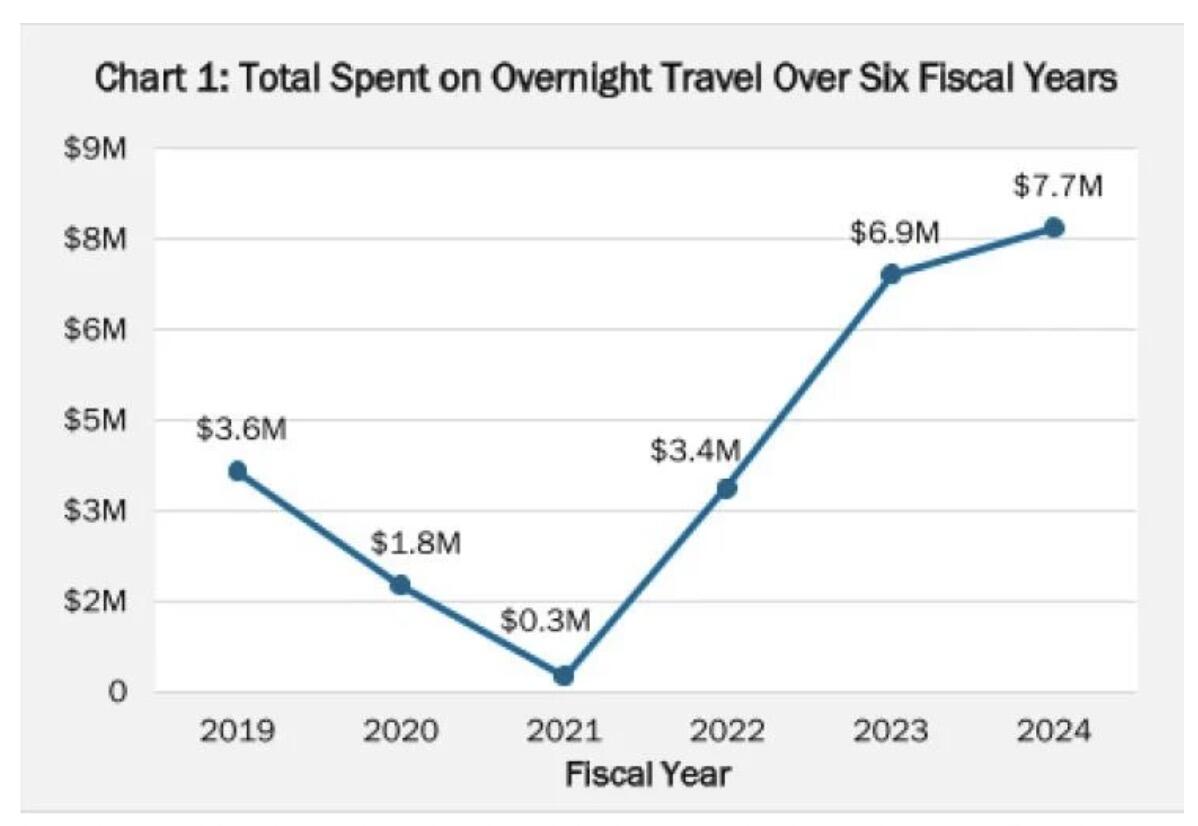
Watchdog: Chicago Public Schools Blew Millions On Trips, Spas, And Overseas Travel
Watchdog: Chicago Public Schools Blew Millions On Trips, Spas, And Overseas Travel
A new investigation by Chicago Public Schools Inspector General Philip Wagenknecht shows overnight and travel spending in the district surged from about $300,000 in 2021 to nearly $8 million by 2024, according to WTTW.
His report says some staff exploited the district’s “lax, vague, inadequate and unenforced” rules, leading to “exorbitant” post-pandemic travel funded by taxpayers.
The OIG found CPS spent roughly $14.5 million on travel in 2023 and 2024, much of it for out-of-town conferences or overnight student trips.
WTTW writes that the probe began after an elementary school paid more than $20,000 for a staff trip to Egypt without approval; CPS canceled that trip and two others. Investigators later identified more than $142,000 spent by eight schools on overseas travel — including visits to Egypt, Finland, Estonia and South Africa — that featured “tourist activities of debatable value” such as camel rides, a game park visit and hot air balloon rides.
The report also highlighted Las Vegas conferences where more than 600 employees spent over $1.5 million between 2022 and 2024. One principal booked an unapproved $400-a-night suite for himself and his wife.
According to the report, “Nearly 90% of CPS attendees stayed in hotel rooms that exceeded CPS spending limits, and at least two dozen took round-trip Chicago-Las Vegas flights costing more than $1,000,” noting that when the same conference was held in Chicago, attendance was minimal.
The OIG urged CPS to keep seminars local, stating, “Rather than spend millions on professional development at resort spas, luxury hotels and overseas destinations, CPS should keep its educational seminars as close to home as possible.”
CPS has since restricted nearly all employee travel (as of Oct. 29) and created a Travel Review Committee. A spokesperson said the district takes the findings seriously, adding, “Chicago Public Schools remains unwavering in its commitment to fiscal responsibility and the success of our students,” and that CPS is committed “to protect our investments and resources.” The district said new financial systems should strengthen oversight.
Reiterating its mission, CPS stated, “The core mission of CPS is clear: to provide every student with a high-quality, rigorous, inclusive, and enriching education… and to reduce expenditures in a sustainable way.”
Tyler Durden
Wed, 11/19/2025 – 18:00
State board approves closure of Ascension Alexian Brothers’ labor and delivery unit
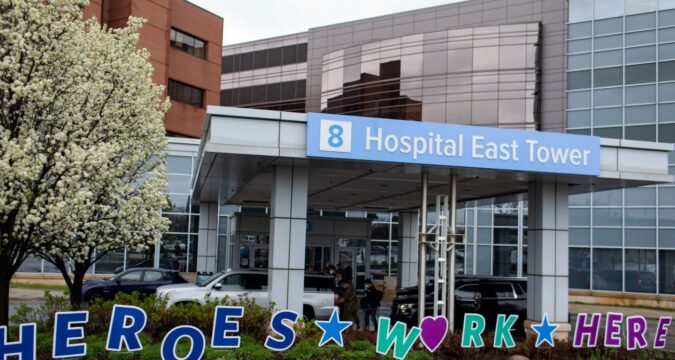
Ascension Alexian Brothers will soon close its inpatient obstetrics unit after a state board voted Tuesday to allow the move, despite outcry from nurses and community members.
The state Health Facilities and Services Review Board voted 6-3, after a lengthy discussion, to approve the hospital’s application to close the unit.
Alexian Brothers has not yet announced on what date it will stop scheduling deliveries of babies, but “will be doing so shortly,” Ascension spokesperson Olga Solares said in an email.
Prior to the vote, the board received more than 40 letters and emails from people and groups opposing the change and six letters of support.
“Removing existing services will reduce accessibility to health care for hundreds of pregnant patients,” wrote Cook County Commissioner Kevin Morrison.
A number of nurses at Alexian Brothers said that closing the unit could lead to safety issues for mothers who have to drive 15 or 20 minutes farther to reach Ascension St. Alexius in Hoffman Estates.
“There are many instances in which either a mom or baby would have literally died, had our unit not been up and functioning,” wrote Wendy Pinones, who said she is a 38-year veteran labor and delivery nurse at Alexian Brothers. “Though (St. Alexius) is close by, a 15 minute window for just the transfer would have turned a good outcome into a very poor and sad outcome on more than a few occasions.”
State Sen. Cristina Castro, D-Elgin, sent a letter of support for the move, writing, “While I understand closure of inpatient obstetric services generates angst for women in our communities, the reality is that hospitals like Ascension Alexian Brothers and Ascension St. Alexius find themselves in the position of looking to the future and planning accordingly to ensure they are able to meet the varied needs of patients well into the future.”
Ascension announced in July its plan to move inpatient obstetric care from Alexian Brothers to St. Alexius.
The change would limit “unnecessary duplication of services” at the two hospitals, Alexian Brothers wrote in its application to the state to discontinue inpatient obstetric services. Also, St. Alexius already has a neonatal intensive care unit, round-the-clock obstetric emergency department and neonatal specialty care not offered at Alexian Brothers, according to the application.
Ascension also decided to move inpatient obstetrics care to St. Alexius because of lower use of the service at Alexian Brothers, according to the application. Alexian Brothers has 28 obstetric beds while St. Alexius has 38 beds, which should be enough to treat the 34 patients expected daily, on average, between the two hospitals, according to the application.
Alexian Brothers will continue to offer outpatient obstetric care as well as emergency deliveries.
The change is part of a broader movement toward establishing “centers of excellence” that focus on certain specialities, said Dr. David Bordo, chief clinical officer for Ascension Illinois, in a statement when the plan was announced in July.
Other Chicago area health systems, such as Endeavor Health, have made similar moves, concentrating certain specialties at individual hospitals within their systems.
“Across health care, and certainly here in the Chicagoland area, the creations of centers of excellence are quickly becoming best practice,” Bordo wrote. “Community hospitals no longer can provide all services to all patients while maintaining the excellent outcomes we, as well as our patients, expect.”
Alexian Brothers will also continue to focus on growth in cardiology, stroke and spine care, Ascension said in a statement.
In recent years, many community hospitals have been closing their labor and delivery units — especially in the Chicago area — saying they are seeing less demand for their services as they compete with comprehensive women’s centers within larger hospitals. Community hospitals have also been shifting their inpatient care as demand for outpatient care grows, and they’ve been refocusing on more lucrative services.
National Nurses Organizing Committee/National Nurses United was among the groups opposing the closure of the obstetrics unit. The union says that Ascension has a history of closing labor and delivery units at hospitals across the country.
The union doesn’t represent nurses at Ascension hospitals in Illinois but represents nurses at Ascension hospitals in other states.
Anastasia Villarreal, a nurse at Ascension Seton in Texas who spoke before the board Tuesday, said that she saw the consequences of her hospital receiving more obstetrics patients after a different area hospital closed.
“Some of (the obstetrics patients) are waiting so long that they miss the window for getting pain medication,” Villarreal said.
Earlier this year, Ascension significantly reduced its footprint in Illinois, selling eight of its Illinois hospitals to California-based Prime Healthcare for more than $370 million.
https://www.chicagotribune.com/2025/11/19/ascension-alexian-brothers-labor-delivery-unit/

Sen. Dernulc received swatting call after Indiana canceled redistricting session
State Sen. Daniel Dernulc, R-Highland, received a false swatting call Wednesday — the day after the state Senate voted not to move forward with mid-census redistricting.
Dernulc told the Post-Tribune he received a call from the Highland Police Department Police Chief that a call came in about a domestic incident at his house.
“It is scary and shocking to me that someone would go so far to try to cause harm or fear to me or my family,” Dernulc said in a statement. “It is sad … that I am villainized in some minds to the point of harmful retaliation. Threats to public officials cannot and should not be the norm. I hope to see justice for this illegal behavior.”
An hour after the police chief called him about the false police report, Dernulc told the Post-Tribune that he received a delivery of pizza where his statehouse number was used to place the false order, he said.
These incidents directly stem from the Senate’s decision not to move forward with mid-census redistricting, Dernulc said. He reiterated that he hasn’t publicly stated his position on redistricting, and that he has been listening to both sides of the argument.
“I’m being vilified for a position I haven’t even taken,” Dernulc said. “That is not good for our country and our state.”
Dernulc said he was thankful that the Highland Police Department contacted him directly. But, Dernulc said he couldn’t imagine what would’ve happened if police didn’t know who he was.
“I’m disappointed that this is what we have come to,” Dernulc said.
Highland Police Department Commander and spokesman John Banasiak said the Indiana State Police will be investigating the incident because it involved a state senator.
Dernulc became the second confirmed swatting report since Sunday. State Sen. Greg Goode, R-Terre Haute, received a false swatting call Sunday after President Donald Trump mentioned him in a Truth Social post about mid-census redistricting.
President Donald Trump issued a statement on his social media site Truth Social Sunday calling out “RINO” Bray and Senator Greg Goode, R-Terre Haute, “for not wanting to redistrict their state, allowing the United States Congress to perhaps gain two more Republican seats.”
Bray, Goode and other Republican Senators “should DO THEIR JOB, AND DO IT NOW! If not, let’s get them out of office ASAP,” Trump wrote.
Goode and his family were victims of a swatting incident Sunday night after a fake communication was sent to local police, according to a statement from the senator’s office.
Vigo County sheriff’s deputies responded to the house “under the impression of a domestic violence emergency,” according to the statement.
“While this entire incident is unfortunate and reflective of the volatile nature of our current political environment, I give thanks to God that my family and I are ok,” Goode said in a statement.
The Senate had been a hurdle for Indiana’s redistricting efforts after a spokeswoman for Bray told reporters last month that the Senate did not have the votes to pass new Congressional maps.
Braun called for a special legislative session to “consider altering the boundaries of Indiana’s congressional districts” and federal and state tax compliance beginning Nov. 3, according to a news release.
Indiana House and Senate leadership announced Nov. 3 the legislature will address “time sensitive issues” — including redistricting and taxes — during the first two weeks of December. That decision seemingly canceled the special session as the legislators would be meeting during the 2026 legislative session.
The Indiana Senate announced Friday it canceled a two-week session to discuss mid-census redistricting because of a lack of votes.
“Over the last several months, Senate Republicans have given very serious and thoughtful consideration to the concept of redrawing our state’s congressional maps. Today, I’m announcing there are not enough votes to move that idea forward, and the Senate will not reconvene in December,” Bray said in a statement Friday.
During Organization Day, the Senate voted to adjourn until Jan. 5, 2025, effectively canceling the possibility of meeting in December to discuss redistricting.
The House adjourned until Jan. 5, 2025, but House Speaker Todd Huston, R-Fishers, told the representatives to keep the first two weeks of December open as they may be called back.

Aaron Rodgers sits out practice for Pittsburgh Steelers but might return Thursday with a brace on his wrist
PITTSBURGH — Aaron Rodgers is optimistic but hardly certain his broken left wrist will be good enough for him to play Sunday when the Pittsburgh Steelers visit the Chicago Bears.
There’s no question how the rest of him feels about the potential to face the Bears one last time.
The 41-year-old four-time MVP clashed memorably for so long with the Bears during his long run with the Green Bay Packers earlier in his career.
“There’s incentive for every opponent, but I have enjoyed many a Sunday and Monday and many Thursdays in that city,” Rodgers said. “It’s a great sports town, phenomenal sports fans and a great place to play.”
Particularly if you win there as much as Rodgers has through the years.
Rodgers is 11-1 at Soldier Field and permanently etched his name into the lore of the NFL’s oldest rivalry when he told the home crowd during a trip to Chicago in 2021 that he “owned” one of the league’s marquee franchises.
“I feel like we can let bygones be bygones, maybe,” Rodgers said with a smile, later adding: “I hope those fans can put that behind them. I’m sure they can’t. Don’t expect them to.”
There’s a chance Rodgers returns to practice Thursday wearing a protective brace on the wrist he broke late in the first half of Sunday’s 32-14 win over the Cincinnati Bengals. Rodgers was rolling to his left and jumped to heave a pass to the back of the end zone, then landed awkwardly on the wrist of his non-throwing hand.
Mason Rudolph, who was excellent in the second half against the Bengals, would get the nod if Rodgers is unavailable, though it seems the Steelers will exhaust every avenue to make sure Rodgers can go.
Rodgers said the primary issue will be safety. If he can protect himself and handle the ball normally, he’ll likely get the OK. He could return to practice as early as Thursday, though Steelers coach Mike Tomlin pointed to Friday as a pivotal day in deciding who will be under center when the Steelers (6-4) try to win in Chicago for just the second time in franchise history.
Rudolph is preparing to be ready if called on but knows anything can happen. He has been spectacular in his four extended appearances for the Steelers, posting a quarterback rating around 120 during a run that started with engineering three straight victories to get the Steelers into the 2023 playoffs, then a steady two quarters against the Bengals.
“I’ve got a lot of different experiences to draw from,” Rudolph said. “Whether you find out the day before the game or you’re thrown into the game first quarter or in the second half or you get the whole week of reps. So you definitely draw from those experiences.”
The environment in the quarterback room is a bit more relaxed than it was during Rudolph’s first stint with the team from 2018-23. Rodgers and Rudolph good-naturedly referred to each other as “trolls” Wednesday.
Rodgers tweaked Rudolph for the lengthy list of “dad jokes” he tries to reel off during a meeting. Rudolph called it one of the “most fun” groups of quarterbacks he has been around, even if it’s still a little surreal that he’s sharing it with a future Hall of Famer.
When Rudolph and the victorious Steelers made their way to the locker room Sunday, Rodgers was waiting outside to congratulate him.
“If the 14-year-old me knew that I was getting a nice dab from A-Rod after a game, that would be pretty darn exciting,” Rudolph said.
Still, Rudolph knows Sunday holds special significance for Rodgers beyond the opportunity for the Steelers to hold on to their slim lead over the Baltimore Ravens in the AFC North.
“He made the comment early on that there’s certain games that mean a lot and games you circle, and this was one of them,” Rudolph said. “So I understand his motivation to come back and take the field against an old rival.”
https://www.chicagotribune.com/2025/11/19/aaron-rodgers-misses-practice-pittsburgh-steelers/

QB de Steelers, Aaron Rodgers, se pierde práctica pero espera enfrentar a los Bears
Por WILL GRAVES
PITTSBURGH (AP) — Aaron Rodgers es optimista, pero no está del todo seguro de que su muñeca izquierda rota esté lo suficientemente bien como para jugar el domingo cuando Pittsburgh visite Chicago.
No hay duda de cómo se siente el resto de él sobre la posibilidad de tener una última oportunidad de enfrentarse a los Bears.
El cuatro veces MVP de 41 años chocó memorablemente por mucho tiempo con Chicago durante su larga carrera en Green Bay.
“Hay un incentivo para cada oponente, pero he disfrutado muchos domingos y lunes y muchos jueves en esa ciudad”, afirmó Rodgers. “Es una gran ciudad deportiva, con aficionados fenomenales, y un gran lugar para jugar”.
Particularmente si ganas allí tanto como lo ha hecho Rodgers a lo largo de los años.
Rodgers tiene un récord de 11-1 en el Soldier Field, y grabó permanentemente su nombre en la historia de la rivalidad más antigua de la NFL cuando memorablemente le dijo a la multitud local durante un viaje a Chicago en 2021 que él “poseía” una de las franquicias más destacadas de la liga.
“Siento que podemos dejar el pasado atrás, tal vez”, dijo Rodgers con una sonrisa, y luego agregó: “Espero que esos aficionados puedan dejar eso atrás. Estoy seguro de que no pueden. No espero que lo hagan”.
Existe la posibilidad de que Rodgers regrese a la práctica el jueves usando un soporte protector en la muñeca que se rompió al final de la primera mitad de la victoria 32-14 sobre Cincinnati el domingo pasado. Rodgers estaba rodando hacia su izquierda y saltó para lanzar un pase al fondo de la zona de anotación, luego cayó de manera incómoda sobre la muñeca de su mano no lanzadora.
Mason Rudolph, quien fue excelente en la segunda mitad contra los Bengals, será la opción si Rodgers no está disponible, aunque parece que los Steelers agotarán todas las vías para asegurarse de que Rodgers pueda jugar.
Rodgers dijo que el problema principal será la seguridad. Si puede protegerse y manejar el balón con normalidad, probablemente recibirá el visto bueno. Podría regresar a la práctica tan pronto como el jueves, aunque el entrenador de los Steelers, Mike Tomlin, señaló el viernes como un día crucial para decidir quién estará bajo el centro cuando los Steelers (6-4) intenten ganar en Chicago por solo la segunda vez en la historia de la franquicia.
Rudolph se está preparando para estar listo si lo llaman, pero sabe que cualquier cosa puede pasar. Ha sido espectacular en sus cuatro apariciones extendidas para Pittsburgh, registrando un índice de pasador de alrededor de 120 durante una racha que comenzó con la ingeniería de tres victorias consecutivas para llevar a los Steelers a los playoffs de 2023, luego dos cuartos constantes contra los Bengals.
“Creo que tengo muchas experiencias diferentes de las que puedo aprender”, comentó Rudolph. “Ya sea que te enteres el día antes del juego, o te lancen al juego en el primer cuarto o en la segunda mitad o tengas toda la semana de repeticiones. Así que definitivamente aprendes de esas experiencias”.
___
Deportes en español AP: https://apnews.com/hub/deportes

Of Notoriety: Neil Diamond stage story helping Parkinson’s awareness and education near and far
In May 2022, Elizabeth “Libby” Woodbury, founder and CEO of NWI Parkinson’s based in Highland, was a guest on my weekly Wednesday afternoon radio show on WJOB 1230 AM and she, along with Don Nagdeman, director of marketing for NWI Parkinson’s, asked me to be the emcee for the 6th Annual NWI Parkinson’s Dinner and Dance Gala in 2022.
“Our mission is to give Parkinson’s patients hope, to know that they are not alone and to bring them together for exercise, companionship and to find ways to improve their quality of life,” says Woodbury, who was diagnosed with the disease at age 49 in 2004.
“This organization started when I formed a committee to raise money through annual fundraising with a style show event I started in 2005. And by 2012, NWI Parkinson’s Inc. was officially designated by the IRS as a 501(c) (3) Charitable Organization. I’d never known I had this disease had it not been for a doctor who was shopping in my boutique one day when I mentioned I was having some balance issues. She told me to make an appointment with her office to come and see her. I’m forever grateful to her, and she’s still part of my life and this organization.”
It was in 1997 when Woodbury opened the first of her Elizabeth’s Fashions, an upscale women’s boutique, with locations in Dyer, Chesterton and Schererville.
Today, she spends much of her time at the main office of NWI Parkinson’s, 2927 Jewett Ave. in Highland, the space that was purchased in 2017 and has grown to serve more than 2,000 individuals afflicted with Parkinson’s. Woodbury said there are 1 million people in the United States and 10 million people worldwide with Parkinson’s disease, a progressive neurodegenerative disorder that impacts movements and becomes increasingly debilitating over time.
This Friday, Nov. 21, from 5:30 to 10 p.m., NWI Parkinson’s is hosting a 21st Anniversary Dinner and Style Show Fundraiser at Avalon Manor, 3550 E. U.S. 30, Merrillville. The cost is $75 by calling (219) 237-2342 or visiting nwiparkinson.org.
While chatting with Elizabeth and Nagdeman earlier this week about their event and some of the notable names with the disease, such as actor Michael J. Fox and the late fighter Muhammad Ali, who have helped raise awareness and education about Parkinson’s, the pair added the name of iconic singer Neil Diamond.
A year ago, the Midwest Chicagoland stage premiere of Neil Diamond’s new Broadway musical “A Beautiful Noise” played Chicago for a short but memorable run presented by Broadway in Chicago.
As reported in this column, readers Mike and Pegg Sangerman of the Miller Beach area alerted me in 2022 that their son Max Sangerman made his Broadway debut in November 2022 in “A Beautiful Noise,” not only in the ensemble, but also as the understudy for one of the Neil roles.
Max, who attended through eighth grade at St. Patrick’s Catholic School in Chesterton, is a 2009 graduate of Chesterton High School. He was beaming during the Nov. 2, 2022, Broadway launch preview performance of the Neil Diamond musical at Broadhurst Theatre in New York for the preview run before the big Dec. 4, 2022, opening night.
Now the hit musical is back in Chicago through Nov. 30 at the Cadillac Palace Theatre, 151 W. Randolph St., and the national touring cast is continuing to help “give back to the cause of Parkinson’s research, education and awareness.”
Diamond, 84, was diagnosed with Parkinson’s disease in 2018 and embraced the idea (after serious contemplation) for the green light to a stage show about his life, once he had to stop touring because of dealing with the symptoms of the illness.
The Broadway company of “A Beautiful Noise: The Neil Diamond Musical” created a partnership with the Parkinson’s Foundation for a successful result that has now been expanded with the North American Tour company.
Nick Fradianai stars in the role of “Neil-Then,” center with Tasheim Ramsey Pack, left, and Cooper Clack and Jeilani Rhone-Collins, right, in “A Beautiful Noise: The Neil Diamond Musical” national Broadway tour playing Cadillac Palace Theatre in Chicago through Nov. 30, 2025. (Photo by Jeremy Daniel)
The Broadway company of “A Beautiful Noise: The Neil Diamond Musical” created a partnership with the Parkinson’s Foundation for a successful result that has now been expanded with the North American Tour company.
The Parkinson’s Foundation Midwest Chapter has three Centers of Excellence, one of which is Rush University Medical Center. And since research has proven people with Parkinson’s disease benefit from dance and music therapy, a movement workshop for Parkinson’s patients was hosted Wednesday morning by cast member and co-dance captain J’Kobe Wallace, teaching the patients choreography from the production to a song from the show. The special choreography was designed for people who need to remain seated or are in wheelchairs.
“Neil Diamond’s music has influenced so many lives,” said Wallace, who has been with the national tour since August 2024.
“When you hear a particular song that you love of Neil’s, it not only takes you back in your own mind to a special time or memory, but it also energizes and inspires to get people moving.”
Tickets for “A Beautiful Noise: The Neil Diamond Musical” start at $65 at www.broadwayinchicago.com or 312-977-1700.
Philip Potempa is a journalist, published author and radio host on WJOB 1230 AM. He can be reached at philpotempa@gmail.com

Trump Names Saudi Arabia A ‘Major Non-NATO Ally’ During MbS Candlelight Dinner Attended By Tech Moguls
Trump Names Saudi Arabia A ‘Major Non-NATO Ally’ During MbS Candlelight Dinner Attended By Tech Moguls
Aside from a couple of hiccups involving exchanges with the press, Crown Prince Mohammed bin Salman’s (MbS) visit to the White House went well, after he came bearing massive gifts, especially a pledge for a whopping $1 trillion in US investment.
During the Tuesday night candlelight dinner in his honor, which was attended by Elon Musk, Tim Cook, Jensen Huang, Cristiano Ronaldo, the head of FIFA Gianni Infantino – and many other tech moguls and notable figures – President Trump took the opportunity to proclaim for the first time Saudi Arabia as a “major non-NATO ally” (MNNA).
This was based on the signing of a new security pact with MbS, called the US-Saudi Strategic Defense Agreement (SDA), during the earlier Oval Office visit.
“At tonight’s dinner, I’m happy to share that we are elevating our military partnership by officially naming Saudi Arabia a major non-NATO ally,” Trump said.
This newly designated status will give the kingdom preferential access to US military hardware, which as Trump also unveiled will include sales of F-35 fighter jets and 300 US-manufactured tanks.
To some degree the US-Saudi oil for weapons relationship has been cemented institutionally going all the way back to the 1970s, but talk of nuclear energy – and even the US providing a potential nuclear nuclear security umbrella – represents an escalation in strategic closeness and relations.
As part of this, the White House is further describing this as the “legal foundation for a decades-long, multi-billion-dollar nuclear energy partnership.”
But what else does the United States (and Israel) get out of this? MbS appears to now be ‘cooperating’ on a years-long effort for normalization of ties with Israel, after diplomacy was stalled for two years amid the Gaza War.
The crown prince told reporters, “We want to join the Abraham Accords, but we also need a clear pathway to a two-state solution.”
“We had a constructive discussion with the president, and we’re going to work together to create the right conditions as soon as possible,” he added.
As expected, all is well again despite years of Saudi Arabia being under a limited (and in reality somewhat mild) human rights spotlight:
The red carpet welcome for Prince Mohammed is an extraordinary moment in diplomatic relations with Saudi Arabia. It is his first visit to the United States since the 2018 killing of the Washington Post columnist Jamal Khashoggi, which U.S. intelligence determined the prince ordered. Prince Mohammed has denied involvement.
After Mr. Khashoggi’s murder, some Western business executives and government officials backed out of Saudi Arabia’s global investment conference, including leaders of major American financial institutions. But by the following year, top deal makers were back at the event in Riyadh, the Saudi capital.
But apparently there’s nothing that Saudi petro-billions (or now Trillion) can’t fix – it covers a multitude of sins, and elites had already been flocking back to doing business with Riyadh over the last years.
Families of the victims of the 9/11 terror attacks aren’t happy either, given the mounting evidence of Saudi Arabia’s role in that as well. But America has a short memory and attention-span, apparently.
Tyler Durden
Wed, 11/19/2025 – 17:40

Trump defiende la inmigración de mano de obra cualificada ante críticas de sus seguidores
Por WILL WEISSERT
WASHINGTON (AP) — El presidente estadounidense Donald Trump ha hecho de las políticas migratorias estrictas un tema distintivo de su gobierno, pero el miércoles reconoció que sus seguidores lo han criticado por decir recientemente que se debería permitir el ingreso al país de algunos inmigrantes cualificados.
En declaraciones ante una audiencia de ejecutivos de negocios, Trump indicó que Estados Unidos necesita inmigrantes que puedan capacitar a trabajadores nacionales en fábricas de alta tecnología, e insistió que hacerlo no contradice sus creencias políticas fundamentales.
“Me encantan mis amigos conservadores. Me encanta MAGA (siglas en ingles de su eslogan de campaña: “Hagamos grande a Estados Unidos otra vez”). Pero esto es MAGA”, manifestó Trump durante un discurso en el Foro de Inversión Estados Unidos-Arabia Saudí, al que asistió junto con el príncipe heredero saudí Mohamed bin Salman. “Esas personas van a enseñar a nuestra gente cómo hacer circuitos integrados de computadora, y en un corto período de tiempo, nuestra gente va a estar haciendo un gran trabajo. Y esas personas pueden regresar a casa”.
Los comentarios fueron recibidos con aplausos en la sala. Pero la semana pasada, Trump discutió con la presentadora de Fox News, Laura Ingraham, sobre el mismo tema. Ingraham planteó durante una entrevista a Trump que “no se puede inundar el país con decenas de miles, o cientos de miles, de trabajadores extranjeros”, ante lo cual el mandatario respondió: “También hay que traer talento”.
Cuando Ingraham dijo que Estados Unidos tenía “abundantes personas talentosas aquí”, Trump respondió: “No, no se tienen”, y agregó que “la gente tiene que aprender”.
El intercambio de opiniones generó críticas rápidas y contundentes en línea desde algunos sectores del movimiento MAGA, que se han opuesto a la expansión de las visas H-1B y otros programas diseñados para permitir la entrada de inmigrantes cualificados al país.
Eso no desalentó a Trump de reafirmar su postura el miércoles, y añadió que sus detractores son “realmente, realmente inteligentes” a pesar de su oposición a la inmigración cualificada. “Son patriotas increíbles”, expresó el mandatario. “Pero simplemente no entienden que nuestra gente necesita que le enseñen”.
Trump indicó que, cuando se trata de plantas nacionales “extremadamente complejas” que fabrican cosas como computadoras, teléfonos celulares y misiles, no es posible “pensar que puedes contratar a personas desempleadas para operarlas”.
Los propietarios extranjeros que construyen las plantas en Estados Unidos “van a tener que traer a miles de personas con ellos, y voy a dar la bienvenida a esas personas”, añadió Trump.
En un ejemplo de lo anterior, el presidente se refirió al caso de cientos de ciudadanos surcoreanos que fueron detenidos y dejaron Estados Unidos tras una redada migratoria en septiembre en la planta fabricación de vehículos eléctricos de Hyundai en Georgia. Algunos han regresado y están de vuelta en sus puestos de trabajo.
Trump indicó que a los trabajadores se les ordenó “que se fueran”, pero que él dijo (a los que los querían deportar): “Deténganse. No sean estúpidos”.
——-
Esta historia fue traducida del inglés por un editor de AP con la ayuda de una herramienta de inteligencia artificial generativa.