Category: News

Raptors ganan su quinto consecutivo, remontan en el tercer cuarto para vencer 121-112 a 76ers
FILADELFIA (AP) — Brandon Ingram y RJ Barrett anotaron 22 puntos cada uno y los Raptors de Toronto impulsaron en el tercer periodo para conseguir su quinta victoria consecutiva al vencer el miércoles 121-112 a los 76ers de Filadelfia.
Jakob Poeltl anotó 19 unidades e Immanuel Quickley sumó 18, encestando dos triples en los últimos dos minutos, para ayudar a los Raptors a ganar por novena vez en diez partidos. Scottie Barnes añadió 16 puntos, nueve rebotes y cinco asistencias.
Tyrese Maxey lideró a los 76ers con 24 puntos. VJ Edgecombe y Quentin Grimes anotaron 21 tantos cada uno.
Los 76ers lideraban 56-53 al descanso gracias a 15 puntos de Maxey. Toronto tomó la delantera con una racha de 18-7 al inicio del tercer cuarto, impulsada por siete puntos de Ingram. Los Raptors superaron a los 76ers 44-28 en el período.
Toronto atinó dos de 15 desde la línea de tres puntos en la primera mitad, pero en el tercer cuarto atinó cinco de seis desde larga distancia. Toronto tiene un récord de 7-3 como visitante y 9-2 contra rivales de la Conferencia Este.
El pívot de los Sixers, Joel Embiid (manejo de lesión en la rodilla derecha) se perdió su cuarto partido consecutivo y el noveno de 14 esta temporada. Paul George, quien debutó en la temporada el lunes, fue descartado como parte del manejo de su lesión en la rodilla izquierda.
___
Deportes AP: https://apnews.com/hub/deportes
Trump dice que se reunirá con Mamdani el viernes en Washington
Por MEG KINNARD
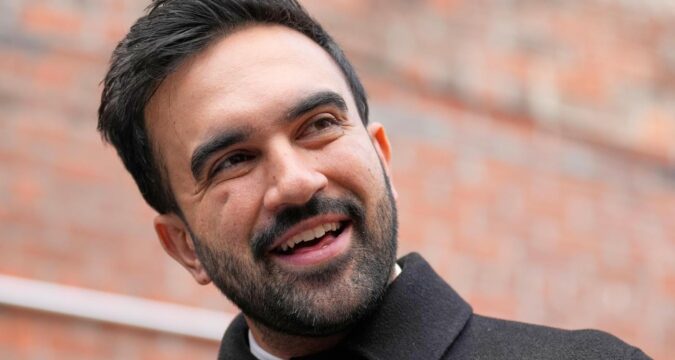
El presidente de Estados Unidos, Donald Trump, dijo el miércoles que la tan esperada reunión con el alcalde electo de la ciudad de Nueva York, Zohran Mamdani, se llevaría a cabo en Washington el viernes, lo que supone un careo entre polos políticos opuestos que durante meses se han antagonizado desde lejos.
La reunión, que Trump dijo en redes sociales tendría lugar en el Despacho Oval, podría representar una especie de distensión entre el presidente republicano y la estrella demócrata en ascenso, ya que Trump se ha inclinado en los últimos días hacia la adopción del tema central de la campaña de Mamdani sobre la asequibilidad.
Llamando a Mamdani por su nombre completo —y poniendo el segundo nombre del alcalde electo, Kwame, entre comillas— Trump publicó el miércoles por la noche que Mamdani había solicitado la reunión, y que habría más detalles después.
Afirmando que era “habitual” que el nuevo alcalde de Nueva York se reuniera con el presidente, la portavoz Dora Pekec dijo que Mamdani tenía previsto discutir con Trump “la seguridad pública, la seguridad económica y la agenda de asequibilidad por la que votaron más de un millón de neoyorquinos hace apenas dos semanas”.
Trump ha criticado a Mamdani durante meses, etiquetándolo falsamente de “comunista” y prediciendo la ruina de Nueva York si el socialdemócrata era elegido. También amenazó con deportar a Mamdani, quien nació en Uganda y se naturalizó estadounidense en 2018, y con retirar fondos federales de la ciudad.
Pero tras las elecciones de noviembre —en las que los republicanos perdieron en Georgia, Nueva Jersey, Pensilvania y Virginia—, Trump ha hablado más sobre la asequibilidad, que había sido un punto focal en las campañas de los demócratas, incluida la de Mamdani, e incluso declaró el viernes en una publicación en redes sociales que el Partido Republicano es el “Partido de la Asequibilidad”. Todo ello mientras el presidente y sus colegas republicanos insisten en que la economía de Estados Unidos nunca ha sido más fuerte.
Trump dijo a periodistas el domingo por la noche que planeaba reunirse con Mamdani. El lunes, Mamdani —quien asumirá oficialmente el cargo en enero— dijo que esperaba reunirse con Trump, confirmando que su equipo se había comunicado con la Casa Blanca para organizar una posible reunión.
Durante su discurso de victoria este mes, Mamdani, de 34 años, dijo que quería que Nueva York mostrara al país cómo derrotar al presidente.
También ha hablado sobre “blindar” Nueva York contra Trump una vez que asuma el cargo en enero, mientras promete trabajar con cualquiera, incluido el presidente, si beneficia a los neoyorquinos.
___
El periodista de The Associated Press Michael R. Sisak contribuyó a este despacho desde la Ciudad de Nueva York.
___
Esta historia fue traducida del inglés por un editor de AP con la ayuda de una herramienta de inteligencia artificial generativa.
¿Qué sigue tras la firma por Trump del proyecto de ley que libera los archivos de Epstein?
Por STEPHEN GROVES
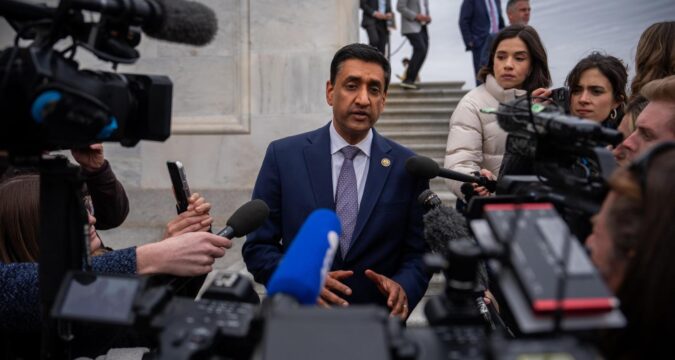
WASHINGTON (AP) — El presidente estadounidense Donald Trump firmó un proyecto de ley que obliga al Departamento de Justicia a hacer públicos sus archivos sobre el caso del delincuente sexual convicto Jeffrey Epstein, un suceso que podría tener amplias repercusiones en la lucha de años de las víctimas de Epstein para lograr un ajuste de cuentas público.
Tanto la Cámara de Representantes como el Senado aprobaron el proyecto de ley esta semana por márgenes abrumadores después de que Trump revirtiera su oposición de meses al proyecto y señalara que lo firmaría. Ahora que el mandatario ha promulgado el proyecto de ley, hay una cuenta regresiva de 30 días para que el Departamento de Justicia dé a conocer los que suelen llamarse archivos de Epstein.
“Este proyecto de ley es un mandato para que el presidente sea completamente transparente, para que diga toda la verdad y dé honestidad total al pueblo estadounidense”, declaró el miércoles Chuck Schumer, el líder de los demócratas en el Senado.
Schumer añadió que los demócratas están listos para presionar si perciben que el presidente está haciendo algo que no sea adherirse a la “transparencia total”.
En una publicación en redes sociales el miércoles, al anunciar que había firmado el proyecto de ley, Trump escribió: “Los demócratas han utilizado el tema ‘Epstein’, que les afecta mucho más que al Partido Republicano, para intentar distraer de nuestras asombrosas victorias”.
El veloz trabajo bipartidista en el Congreso esta semana fue una respuesta a la creciente exigencia pública de que se liberen los archivos de Epstein, especialmente a medida que la atención se centra en sus vínculos con destacados personajes a nivel global, incluidos Trump, el expresidente estadounidense Bill Clinton, Andrew Mountbatten-Windsor —quien ya ha sido despojado de su título real de príncipe a consecuencia del asunto—, y muchos otros.
Hay mucha expectativa pública sobre qué más podrían revelar los archivos. Sin embargo, el proyecto de ley probablemente desencadenará una extensa investigación federal rara vez vista, creando también el potencial de que haya consecuencias no deseadas.
¿Qué hace el proyecto de ley?
El proyecto de ley obliga a la secretaria de Justicia Pam Bondi a liberar esencialmente todo lo que el Departamento de Justicia ha recopilado a lo largo de varias investigaciones federales sobre Epstein, y sobre su antigua confidente y novia Ghislaine Maxwell, quien cumple una sentencia de 20 años de prisión por atraer a adolescentes para el deshonrado financiero. Esos registros suman unas 100.000 páginas, según un juez federal que ha revisado el caso.
Obligará también al Departamento de Justicia a dar a conocer todas sus comunicaciones internas sobre Epstein y sus asociados, y sobre su muerte en 2019 en una celda de una cárcel de Manhattan mientras aguardaba a que le presentaran cargos por abuso sexual y tráfico de docenas de chicas adolescentes.
Sin embargo, el proyecto de ley exime algunas partes de los archivos del caso. Sus autores se aseguraron de incluir que el Departamento de Justicia podría retener información personalmente identificable de las víctimas, materiales de abuso sexual infantil e información que el gobierno considera secreta debido a su relevancia para la defensa nacional o la política exterior.
“Seguiremos apegándonos a la ley con la máxima transparencia mientras protegemos a las víctimas”, manifestó Bondi en una conferencia de prensa el miércoles cuando se le preguntó sobre la liberación de los archivos.
El proyecto de ley también le permite al Departamento de Justicia retener información que pondría en peligro investigaciones o enjuiciamientos activos. Eso ha creado cierta preocupación entre los defensores del proyecto de ley de que el departamento abriría investigaciones activas sobre personas mencionadas en los archivos de Epstein con el fin de proteger ese material de la vista del público.
La representante Marjorie Taylor Greene —leal a Trump desde hace mucho tiempo, pero que se encuentra en una notoria discrepancia con él con respecto al proyecto de ley— declaró el martes que le parecía que el que el gobierno cumpla la ley sería su “verdadera prueba”.
“¿Liberará el Departamento de Justicia los archivos, o todo permanecerá maniatado en investigaciones?”, preguntó.
En julio, el FBI señaló en un memorando sobre la investigación de Epstein que “no descubrimos evidencia que pudiera justificar una investigación contra terceros no acusados”. Pero la semana pasada Bondi cumplió con las exigencias de Trump y le ordenó a un fiscal federal investigar los vínculos de Epstein con los enemigos políticos del presidente, incluido Clinton.
Aún así, el representante Thomas Massie, un republicano que patrocinó el proyecto de ley, dijo: “no hay forma de que puedan tener suficientes investigaciones para abarcar” a todas las personas que él cree que están implicadas en el abuso de Epstein.
“Y si lo logran, entonces qué bien”, añadió.
El proyecto de ley también requiere que el Departamento de Justicia dé a conocer informes sobre qué materiales retuvo, así como las censuras realizadas, dentro de los 15 días posteriores a la liberación de los archivos. Estipula que los funcionarios no pueden retener ni censurar nada “sobre la base de vergüenza, el daño a la reputación o la sensibilidad política, incluyendo a cualquier funcionario gubernamental, figura pública o dignatario extranjero”.
¿Quién podría ser nombrado?
Existe una expectativa generalizada de que muchas personas podrían ser mencionadas en los archivos del caso para investigaciones que se extendieron por más de una década, y hay cierta preocupación de que tan sólo porque alguien sea nombrado, se asumiría que esa persona es culpable o cómplice.
Epstein era una figura destacada que se relacionaba con jefes de Estado, personajes políticos influyentes, académicos y multimillonarios. La liberación de sus correos electrónicos y mensajes por parte de una investigación de la Comisión de Supervisión de la Cámara de Representantes la semana pasada ya ha mostrado sus vínculos con —y conversaciones privadas sobre— Trump y muchas otras figuras muy poderosas.
Sin embargo, los fiscales federales siguen directrices cuidadosamente elaboradas sobre qué información dan a conocer al público y en juicios, tanto para proteger a las víctimas como para mantener la equidad del sistema jurídico. El presidente de la cámara baja, Mike Johnson, planteó objeciones al proyecto de ley sobre esas bases esta semana, argumentando que podría revelar información no deseada sobre las víctimas, así como sobre otras personas que estuvieron en contacto con los investigadores.
Aún así, Johnson realmente no intentó hacer cambios al proyecto de ley, y votó a favor en el pleno de la Cámara de Representantes.
Para los defensores del proyecto, un ajuste de cuentas público sobre la investigación es precisamente el punto. Algunas de las sobrevivientes del tráfico de Epstein y Maxwell han intentado hallar formas de nombrar a las personas que acusan de ser cómplices o involucradas, pero temen enfrentar demandas de los hombres a los que acusan.
Massie indicó que quiere que el FBI libere los informes de sus entrevistas con las víctimas.
Dichos informes suelen contener información no verificada, pero Massie señaló que está decidido a nombrar a aquellos que están acusados. Él y Greene han ofrecido leer los nombres de los acusados en el pleno de la cámara baja, lo que protegería su discurso de consecuencias jurídicas.
“Necesitamos nombres”, expresó Massie.
——-
Esta historia fue traducida del inglés por un editor de AP con la ayuda de una herramienta de inteligencia artificial generativa.

Wanted Terror Suspect Entered U.S. Under Biden Admin, Got Commercial Truck License
Wanted Terror Suspect Entered U.S. Under Biden Admin, Got Commercial Truck License
Federal officials say Akhror Bozorov, a 31-year-old wanted terrorist from Uzbekistan, illegally entered the US in February 2023, was released by the Biden administration, and later obtained both work authorization and a commercial truck driver’s license in Pennsylvania, according to the NY Post.
He was arrested in Kansas this month while working as a trucker, according to the Department of Homeland Security.
DHS Assistant Secretary Tricia McLaughlin condemned the sequence of events, saying, “Not only was Akhror Bozorov — a wanted terrorist — released into the country by the Biden administration, but … he was also given a commercial driver’s license by Governor [Josh] Shapiro’s Pennsylvania,” adding, “This should go without saying, but terrorist illegal aliens should not be operating 18-wheelers on America’s highways.”
The NY Post writes that authorities say Bozorov had an active warrant in Uzbekistan for belonging to a terrorist group, recruiting members, and spreading jihadist propaganda online. Despite that, officials said he was granted work authorization in 2024 and then a Pennsylvania commercial license under Gov. Shapiro.
McLaughlin also accused current leadership of failing to protect national security, stating, “Biden and Mayorkas allowed countless terrorists to come into our country. President Trump and Secretary [Kristi] Noem unleashed ICE to target these national security threats.”
Tyler Durden
Wed, 11/19/2025 – 21:45
https://www.zerohedge.com/markets/wanted-terror-suspect-entered-us-got-commercial-truck-license
Organizaciones de DDHH buscan documentar y crear memoria sobre criminalización en Centroamérica
Por SONIA PÉREZ D.
CIUDAD DE GUATEMALA (AP) — Varias organizaciones defensoras de derechos humanos de Centroamérica anunciaron el miércoles la creación de “Plataforma Guatemala contra la Persecución Política” con el fin de registrar y documentar la criminalización que defensores sufren aquí y otros países de la región.
“El inicio de este registro es sobre la situación de Guatemala”, dijo en conferencia de prensa René Valiente de la organización salvadoreña Cristosal. Explicó que lo que se busca es establecer un registro o memoria que permita dejar para el futuro y para procesos judiciales por venir una base de evidencia sólida para ser usada por víctimas en sus procesos legales nacionales o internacionales.
“Ante el abandono de las instituciones es necesario establecer criterios y referentes independientes que permitan dar cuenta de lo que pasó y de la falta de accionar de las instituciones que debieron proteger a las personas”, agregó Valiente.
La abogada Claudia González, ex funcionaria de la Comisión Internacional Contra la Impunidad en Guatemala (CICIG) —una misión de Naciones Unidas que trabajó en Guatemala durante 12 años y que logró desbaratar varias estructuras del crimen organizado y de corrupción integradas incluso por funcionarios públicos— ha denunciado haber sido criminalizada por su trabajo como abogada del organismo.
“Hemos visto cómo se ha transformado el tema penal, usado como una herramienta de control y castigo contra aquellos actores que trabajan en materia de derechos humanos”, afirmó González y recordó que la criminalización empezó hace varios años contra defensores de la naturaleza en el interior del país. Actualmente González enfrenta dos procesos judiciales por su trabajo como abogada.
González dijo que es importante tener una memoria de los patrones que se utilizaron para criminalizar, como el uso de los mismos jueces para los procesos judiciales contra defensores de derechos humanos; las fiscalías, uso de la prisión preventiva larga o envío a prisiones en condiciones de aislamiento.
Unos 100 operadores de justicia, defensores de derechos humanos y periodistas salieron al exilio desde 2022 durante el pasado gobierno del presidente Alejandro Giammattei tras acusar a la fiscalía de criminalización.
En mayo, la Relatora Especial sobre la Independencia de los magistrados y abogados de Naciones Unidas, Margaret Satterthwaite, visitó el país y al terminó de su visita cuestionó a la fiscalía del país, según dijo, por mantener una política de criminalización contra colectivos, como operadores judiciales, líderes sociales o periodistas, por sus denuncias contra la corrupción.
Esta semana, la Comisión Interamericana de Derechos Humanos con sede en Estados Unidos celebra audiencias temáticas sobre la criminalización que exjueces, exfiscales y exmagistrados exiliados han sufrido en varios países de la región, donde exiliados guatemaltecos denunciarán prácticas de hostigamiento, persecución y represalias por sus trabajos como operadores de justicia.
Rick Armstrong’s 2 high school football games to watch in Aurora-Elgin area and state semifinal predictions
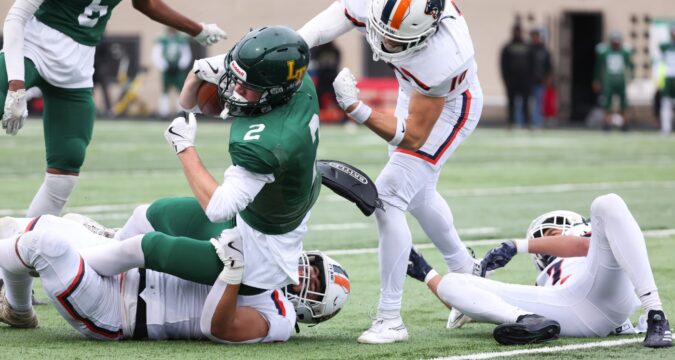
Oswego and Batavia are the picks to click for the state semifinals.
Lockport (9-3) at Oswego (10-2)
Kickoff: 5 p.m. Saturday.
Matchup breakdown: They’re two of a kind.
Two-way senior starters — Oswego cornerback/receiver Mariano Velasco and Lockport safety/receiver Colton Benaitis — lead their respective teams into this Class 8A semifinal matchup.
Safe to say the 6-foot, 180-pound Velasco, who has scored touchdowns on pass receptions, interception returns and kickoff returns, can pretty much do it all. He’s caught 27 passes for 692 yards, made 35 tackles, intercepted six passes and forced a fumble.
“What doesn’t show is his physicality,” Oswego coach Brian Cooney said. “He’s popped people.”
Oswego’s Teddy Manikas (1) and Mariano Velasco (10) celebrate a TD against Lane Tech during a Class 8A second-round playoff game at Lane Stadium in Chicago on Saturday, Nov. 8, 2025. (Talia Sprague / The Beacon-News)
Velasco caught two TD passes last week and returned an interception for another TD as the Panthers rallied to beat Maine South 24-21.
The Porters were 1-3 when Benaitis returned from a broken collarbone and have now won nine straight behind the Central Michigan recruit. His interception last week set up a TD and sparked he Porters to a 35-0 win over Barrington.
“We’re undefeated with him on the field,” Lockport coach George Czart said. “He plays offense, defense, special teams. He could be our long snapper if we needed him. He can do it all.”
Senior quarterback Brendan Mecher is a dual-threat player who led the Porters to a Southwest Valley Blue title.
Junior quarterback Drew Kleinhans, who has completed 60% of his passes and thrown for 1,610 yards, relies on his arm but has shown that he can also run the ball during this playoff run.
Oswego is making its first semifinal appearance since winning the Class 7A state title in 2003. That same year, Lockport repeated as the Class 8A champ. The Porters won again in 2021 but didn’t make the playoffs last season.
X-factor: Gianni Casurella, Oswego, senior, defensive tackle.
Rick Armstrong’s prediction: Oswego.
Batavia quarterback Michael Vander Luitgaren (8) throws a pass against South Elgin during a nonconference game in South Elgin on Friday, Sept. 5, 2025. (Mark Black / The Beacon-News)
Batavia (10-2) at St. Rita (8-4)
Kickoff: 2 p.m. Saturday.
Matchup breakdown: Here they go again.
With this Class 7A matchup, the 13th-seeded Bulldogs have reached the semifinals of the playoffs for a fourth straight season, looking to reach the state championship game for the third time in four years.
It won’t be as easy as things might appear. St. Rita, the 25th seed, squeaked into the playoffs, but heading into the first round, the Daily Southtown was on the money, predicting “the Mustangs could be the most dangerous 5-4 team in the state.”
St. Rita’s losses have come against Mount Carmel, Brother Rice, St. Francis and Nazareth in a powerhouse schedule.
The Mustangs went to the road and beat Rockford Guilford 30-20 in the first round, slipped past Lincoln-Way Central 31-28 and then last week topped Hersey in a barnburner 56-42 for a 117-90 overall scoring edge in the postseason.
Batavia got here with a 56-0 rout of Hoffman Estates, doubling up Glenbard East 42-21 and then topping Glenbard North 42-27 for a 140-48 scoring advantage in the playoffs.
Senior quarterback Steven Armbruster has completed 57% of his passes (102 of 180) for 1,317 yards with 12 TDs and five interceptions for St. Rita. He’s playing his best football of the season.
Senior receiver Walter Jones, who contributed TD receptions of 62 and 79 yards last week, has pulled in 29 passes for 569 yards, averaging 19.6 a catch.
Junior running back Brandon Johnson Jr. leads St. Rita;s ground game, averaging 6.0 yards a carry with 1,036 yards and 19 TDs.
Batavia’s Brett Berggren (11) pulls in a pass for a TD against Glenbard North in the second quarter of a Class 7A state quarterfinal game in Batavia on Saturday, Nov. 15, 2025. (H. Rick Bamman / The Beacon-News)
Batavia counters with strong-armed junior quarterback Michael Vander Luitgaren, who has been here before after leading the Bulldogs to last year’s Class 7A championship game.
This season, Vander Luitgaren has completed 67% of his passes (169 of 252) for 2,412 yards with 29 TDs and just three interceptions.
His favorite targets are senior receiver Brett Berggren with 53 catches for 841 yards and junior receiver Darin Ashiru with 50 catches for 736 yards.
Senior running backs Henry Hahn and Preston Brummel lead the ground game with 780 and 732 yards, respectively.
X-factor: Gavin Pecor, Batavia, senior, defensive lineman.
Rick Armstrong’s prediction: Batavia.

DOJ Sues California Over Mask Ban, ID Rules For Feds
DOJ Sues California Over Mask Ban, ID Rules For Feds
The US Department of Justice has sued the state of California and its leading officials over two new state laws that make it a misdemeanor for local and federal law enforcement officers to wear face coverings on the job, which they use to prevent them from being doxxed by activists.
The complaint, filed on Monday, argues that the “No Secret Police Act” and “No Vigilantes Act” discriminate against the federal government – and pose considerable safety risks to agents, who are being rammed with cars, doxxed, and generally targeted.
“Law enforcement officers risk their lives every day to keep Americans safe, and they do not deserve to be doxed or harassed simply for carrying out their duties,” Attorney General Pam Bondi said in a statement. “California’s anti-law enforcement policies discriminate against the federal government and are designed to create risk for our agents. These laws cannot stand.”
The legislation was signed into law by California Gov. Gavin Newsom on Sept. 20, and takes effect Jan. 1, 2026. Newsom said during the signing that the state was “pushing back against the authoritarian tendencies in action this administration.”
“The impact of these policies all across this city, our state, and nation are terrifying,” Newsom said. “It’s like a dystopian sci-fi movie. Unmarked cars, people in masks, people quite literally disappearing. No due process, no rights in a democracy where we have rights.”
So what happened to J6 protesters?
As the Epoch Times notes further, federal agents have been wearing masks to protect their identities and prevent them and their families from being doxxed by activists. Doxxing a federal agent, by posting their personal information on social media or other channels, is a felony.
A federal grand jury on Sept. 26 indicted three women for following an ICE agent home, livestreaming their pursuit, and then posting the agent’s home address on Instagram.
Earlier in September, Newsom downplayed concerns about doxxing, saying that such claims are unfounded and unproven, and that the Department of Homeland Security (DHS) hasn’t provided the data to substantiate the alleged increase in violence against federal agents.
“All they have provided is misinformation and misdirection,” Newsom said.
In July, a DHS memo said assaults on federal agents were up 830 percent from last year. Two months later, DHS reported a 1,000 percent increase in assaults. Agents have been ambushed, shot at, and attacked with rocks, glass bottles, and other objects.
The federal lawsuit filed Monday argues that California’s statutes overstep principles of federal supremacy by seeking to regulate how federal officers conduct their duties. In the complaint, the Justice Department alleges not only that the statutes are discriminatory, but also that they could lead to prosecutions against officers for taking action to maintain their privacy and the privacy of their families.
The Justice Department says the statutes undermine the enforcement of federal laws, including in immigration matters. The laws, according to the Justice Department, have the potential to compromise ongoing investigations and law enforcement efforts in general.
“Assaults against federal agents have exploded over the last few months, thanks in part to … political rhetoric aiming to delegitimize our brave agents,” First Assistant United States Attorney Bill Essayli of the Central District of California said. “Unconstitutional laws such as this one further endanger our brave men and women protecting our community. Our immigration enforcement will continue unabated and unhindered by unconstitutional state laws enacted by irresponsible politicians.”
The current suit follows prior actions against obstructive measures in jurisdictions including New York, New Jersey, and Los Angeles.
In February, Bondi announced that the Justice Department would sue New York officials and said the state prioritized illegal immigrants over U.S. citizens.
“If you don’t comply with federal law, we will hold you accountable,” she said.
The DOJ also filed a lawsuit against four Democrat-led cities in New Jersey over their sanctuary policies.
“They have all adopted policies for the clear object of making it harder for the United States to enforce federal immigration law,” the complaint alleges. “These efforts to shield illegal aliens within the Garden State are unlawful.”
In a lawsuit against the City of Los Angeles, Bondi invoked the Supremacy Clause of the U.S. Constitution, which renders federal laws and treaties as the law of the land.
The Trump administration sued Los Angeles in June, arguing that the city’s sanctuary policies prevented immigration officers from carrying out federal law.
“Sanctuary policies were the driving cause of the violence, chaos, and attacks on law enforcement that Americans recently witnessed in Los Angeles,” Bondi wrote in a statement posted on X. “Jurisdictions like Los Angeles that flout federal law by prioritizing illegal aliens over American citizens are undermining law enforcement at every level—it ends under President [Donald] Trump.”
Joseph Lord and Brad Jones contributed to this report.
Tyler Durden
Wed, 11/19/2025 – 21:20
https://www.zerohedge.com/political/doj-sues-california-over-mask-ban-id-rules-feds
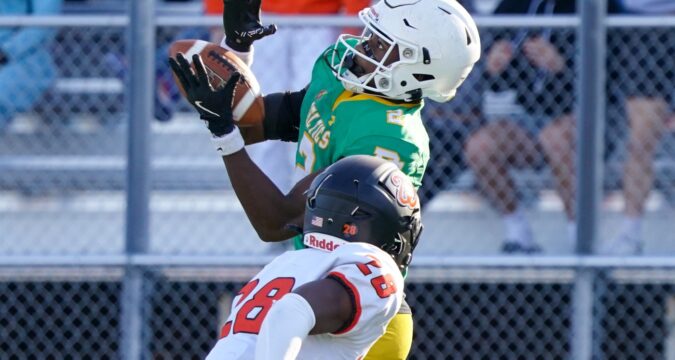
Steve Millar’s 6 high school football games to watch in the Southland and state semifinal predictions
Providence, East St. Louis, St. Rita, Brother Rice, Mount Carmel and Lockport are picks to clicks for the state semifinals.
Oak Forest (11-1) at Providence (9-3)
Kickoff: 1 p.m. Saturday.
Matchup breakdown: Oak Forest held a high-flying Peoria team in check for a 34-20 win last week to advance to this Class 5A semifinal.
The Bengals are in the final four for the first time since doing it in back-to-back years in 2006 and 2007. A victory would send them to the first state championship game in program history. Senior quarterback Daniel Chopp looks to lead the way.
The Celtics are two wins away from their 11th state title and first since 2014.
In contrast to veteran-laden Oak Forest, Providence is young. But sophomore quarterback Dominic Vita and others have played beyond their years.
X-factor: Xavier Coleman, Providence, senior, receiver/defensive back.
Steve Millar’s prediction: Providence.
Oak Forest quarterback Daniel Chopp (4) looks to pass the ball against Tinley Park during a South Suburban Blue game in Oak Forest on Friday, Sept. 26, 2025. (James C. Svehla / Daily Southtown)
East St. Louis (9-3) at St. Laurence (8-4)
Kickoff: 1 p.m. Saturday.
Matchup breakdown: St. Laurence is a big underdog against defending Class 6A state champion East St. Louis, which is looking to advance to its sixth straight championship game and trying to win its fourth title since 2019.
In order to shock the state, the Vikings will need another strong performance from senior running back Cory Les. The defense will look to continue to be opportunistic as well.
Led by all-state junior running back Myson Johnson-Cook, the Flyers are 8-0 against Illinois opponents, averaging 56 points.
X-factor: Sean Rice, St. Laurence, junior, tight end/linebacker.
Steve Millar’s prediction: East St. Louis.
St. Laurence’s Sean Rice (3) keeps his feet inbounds for a TD catch against Oak Lawn during a Class 6A first-round playoff game in Oak Lawn on Friday, Oct. 31, 2025. (Gary Middendorf / Daily Southtown)
Batavia (10-2) at St. Rita (8-4)
Kickoff: 2 p.m. Saturday.
Matchup breakdown: St. Rita is in the Class 7A semifinals for the fourth time in the last five seasons and looking to advance to the championship game for the first time since 2021.
The Mustangs have leaned on their running game and defense often, but they produced several explosive plays through the air to win a 56-42 shootout over Hersey last week. Senior quarterback Steven Armbruster is playing the best football of his career.
Batavia is seeking a return to Normal after a runner-up finish last season. There’s a family tie here with junior quarterback Michael Vander Luitgaren, whose father, Brian, quarterbacked Marian Catholic to a Class 4A state championship in 1993.
X-factor: Langston Smith, St. Rita, senior, receiver/defensive back.
Steve Millar’s prediction: St. Rita.
St. Rita’s Langston Smith (3) hurdles a would-be tackler against Willowbrook during a Class 7A second-round playoff game in Villa Park on Friday, Nov. 8, 2024. (Vincent D. Johnson / Daily Southtown)
Downers Grove North (10-2) at Brother Rice (11-1)
Kickoff: 4 p.m. Saturday.
Matchup breakdown: Brother Rice enters this Class 7A semifinal looking to advance to its first state championship game since 2018 and hoping to win its first title since 1981.
Led by Illinois recruit King Liggins and Brayden Parks on the defensive line, the Crusaders have allowed only 18 points through three playoff games.
The Trojans, looking to reach their second championship game in the last three years, are led by senior quarterback Owen Lansu, a Minnesota commit.
X-factor: Damari Thigpen, Brother Rice, junior, defensive back/kick returner.
Steve Millar’s prediction: Brother Rice.
Brother Rice’s Damari Thigpen (28) returns a punt against Marist during a nonconference game in Chicago on Friday, Sept. 5, 2025. (Troy Stolt / Daily Southtown)
Fremd (11-1) at Mount Carmel (12-0)
Kickoff: 5 p.m. Saturday.
Matchup breakdown: This Class 8A semifinal features two of the state’s most productive senior quarterbacks.
Johnny O’Brien, a Northwestern recruit, leads a Fremd offense that’s averaging 40 points in the playoffs.
Relative to O’Brien, Mount Carmel’s Emmett Dowling was an unproven commodity coming into the season, but he has been spectacular all fall. The Caravan have scored 48 points in back-to-back weeks.
Mount Carmel is looking to win its fourth straight state championship and first in 8A.
X-factor: Quentin Burrell, Mount Carmel, junior, receiver/kick returner.
Steve Millar’s prediction: Mount Carmel.
Mount Carmel’s Quentin Burrell (4) hauls in a pass against Brother Rice during a CCL/ESCC Blue game in Chicago on Friday, Oct. 3, 2025. (Vincent D. Johnson / Daily Southtown)
Lockport (9-3) at Oswego (10-2)
Kickoff: 5 p.m. Saturday.
Matchup breakdown: One of these teams will be a surprise Class 8A finalist.
Since senior defensive back Colton Benaitis, a Central Michigan recruit, returned from injury, Lockport has won nine straight, allowing an average of just 13 points during the streak. Senior linebacker Andre Labuda has been a force for the Porters.
Senior receiver/defensive back Mariano Velasco is the star for Oswego, which is allowing an average of just 11 points on the season.
X-factor: Khairi Sias, Lockport, junior, receiver.
Steve Millar’s prediction: Lockport.
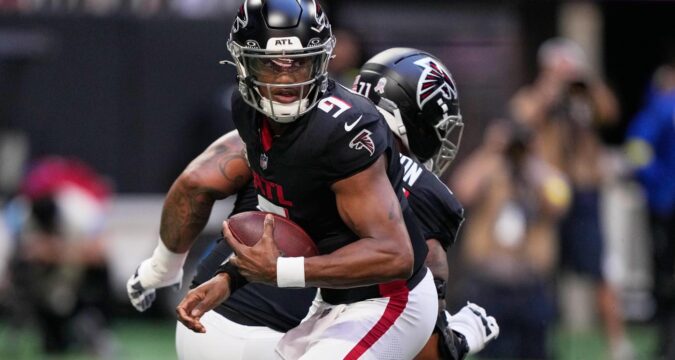
El quarterback Michael Penix se someterá a cirugía de rodilla, confirman los Falcons
Por CHARLES ODUM
FLOWERY BRANCH, Georgia, EE.UU. (AP) — La temporada de los Falcons de Atlanta, que ya estaba en caída libre, sufrió otro golpe el miércoles, cuando se confirmó que el quarterback Michael Penix Jr. se someterá a una cirugía para reparar el ligamento cruzado anterior de su rodilla izquierda, lo que pondrá fin a su temporada.
Los Falcons anunciaron los planes de cirugía de Penix dos días después de informar que el jugador de 25 años sería colocado en la lista de lesionados y se perdería al menos cuatro encuentros mientras esperaba una segunda opinión sobre la gravedad de la lesión. El equipo explicó que la segunda opinión confirmó que Penix tiene un ligamento parcialmente desgarrado en la rodilla.
La pérdida de Penix deja al veterano Kirk Cousins como titular para el resto de la temporada mientras los Falcons (3-7) se preparan para jugar el domingo en Nueva Orleans.
“Nunca lo di por sentado, pero ciertamente cuando estás fuera por un tiempo y regresas, entiendes que es un privilegio”, expresó Cousins después de la práctica del miércoles.
Penix sufrió la lesión en la derrota de la semana pasada por 30-27 en tiempo extra contra Carolina, lo que extendió la racha de tropiezos de los Falcons a cinco juegos.
Easton Stick fue firmado para el roster activo desde el equipo de práctica para servir como respaldo de Cousins. El exjugador de Tampa Bay, Kyle Trask, fue firmado para el equipo de práctica.
El entrenador Raheem Morris reconoció que no se sabe si Penix se recuperará a tiempo para el inicio de la temporada 2026.
“Sería difícil para mí decir que no en este momento”, manifestó Morris, quien agregó que “confía que Mike se recuperará, haciendo las cosas que necesita hacer para llegar a ese punto, para poder salir y jugar para nosotros”.
Morris también dijo que la cirugía de fin de temporada de Penix impactaría “al 100%” el plan del equipo en la posición durante el receso previo a la próxima campaña.
“Definitivamente tienes que salir y hacer algunos planes diferentes cuando hablamos del receso, pero hablaremos de eso y lo abordaremos cuando lleguemos allí”, comentó Morris.
Si hay incertidumbre sobre el calendario de recuperación de Penix, es probable que el equipo busque ayuda en la agencia libre o en el draft.
Penix se sometió a dos cirugías de ligamento en la rodilla derecha durante su carrera universitaria. Su última cirugía de fue en 2020 en Indiana. Se transfirió a Washington en 2021.
“Me da gran tranquilidad por Michael, primero que nada sabiendo que ha pasado por esto”, dijo Morris.
Se espera que los Falcons también estén el domingo sin su principal receptor, Drake London. Morris dijo el miércoles que London, quien también tiene una lesión de rodilla, no jugará contra los Saints y su estado se analizará “semana a semana”.
___
Deportes AP: https://apnews.com/hub/deportes
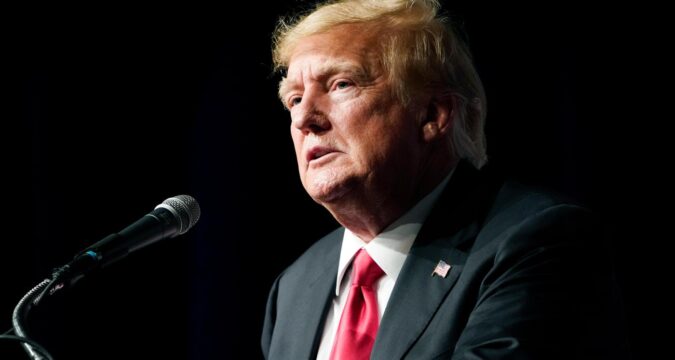
President Trump signs bill to release Jeffrey Epstein case files after fighting it for months
WASHINGTON — President Donald Trump signed legislation Wednesday that compels his administration to release files on convicted sex offender Jeffrey Epstein, bowing to political pressure from his own party after initially resisting those efforts.
Trump could have chosen to release many of the files on his own months ago.
“Democrats have used the ‘Epstein’ issue, which affects them far more than the Republican Party, in order to try and distract from our AMAZING Victories,” Trump said in a social media post as he announced he had signed the bill.
Now, the bill requires the Justice Department to release all files and communications related to Epstein, as well as any information about the investigation into his death in a federal prison in 2019, within 30 days. It allows for redactions about Epstein’s victims for ongoing federal investigations, but DOJ cannot withhold information due to “embarrassment, reputational harm, or political sensitivity.”
It was a remarkable turn of events for what was once a farfetched effort to force the disclosure of case files from an odd congressional coalition of Democrats, one GOP antagonist of the president, and a handful of erstwhile Trump loyalists. As recently as last week, the Trump administration even summoned one Republican proponent of releasing the files, Rep. Lauren Boebert of Colorado, to the Situation Room to discuss the matter, although she did not change her mind.
What’s next once President Trump signs bill releasing the Epstein files
But over the weekend, Trump did a sharp U-turn on the files once it became clear that congressional action was inevitable. He insisted the Epstein matter had become a distraction to the GOP agenda and indicated he wanted to move on.
“I just don’t want Republicans to take their eyes off all of the Victories that we’ve had,” Trump said in a social media post Tuesday afternoon, explaining the rationale for his abrupt about-face.
The House passed the legislation on a 427-1 vote, with Rep. Clay Higgins, R-La., being the sole dissenter. He argued that the bill’s language could lead to the release of information on innocent people mentioned in the federal investigation. The Senate later approved it unanimously, skipping a formal vote.
It’s long been established that Trump had been friends with Epstein, the disgraced financier who was close to the world’s elite. But the president has consistently said he did not know of Epstein’s crimes and had cut ties with him long ago.
Before Trump returned to the White House for a second term, some of his closest political allies helped fuel conspiracy theories about the government’s handling of the Epstein case, asserting a cover-up of potentially incriminating information in those files.
https://www.chicagotribune.com/2025/11/19/trump-signs-epstein-files-bill/