Category: News

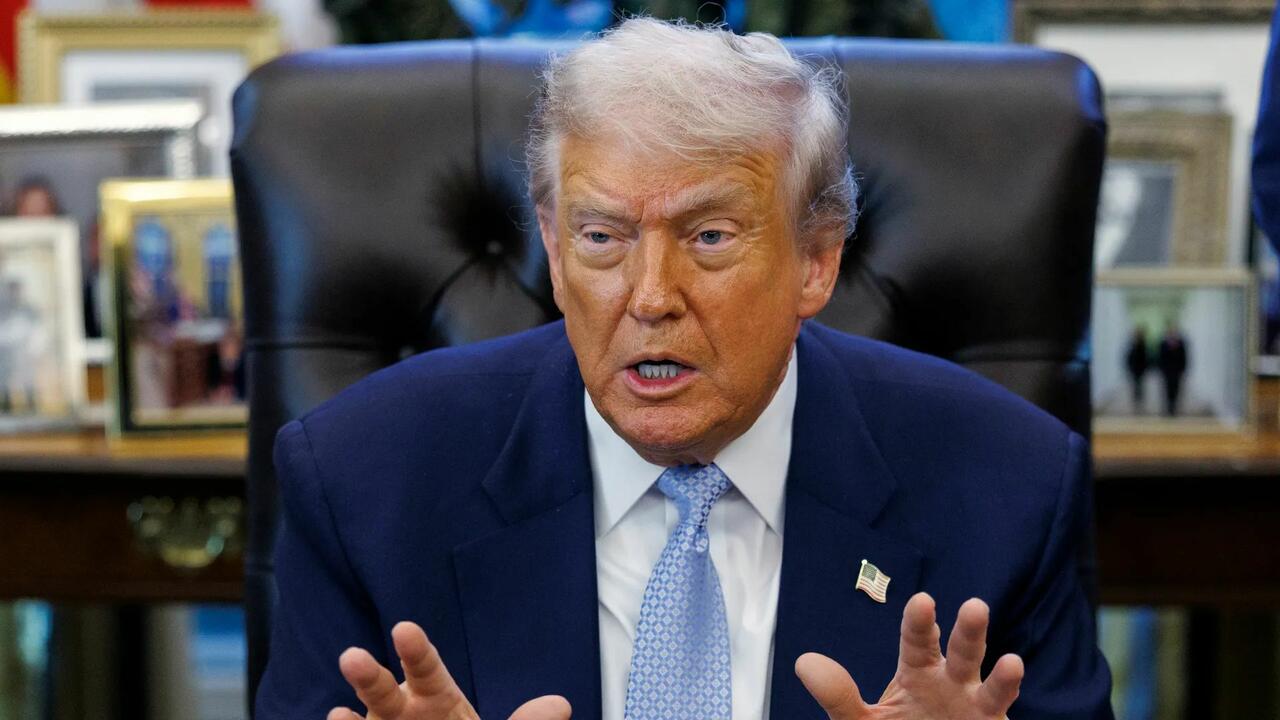
Trump Derangement Syndrome Is Real And It’s Driving Therapists Crazy
Trump Derangement Syndrome Is Real And It’s Driving Therapists Crazy
The strange psychological anomaly first appeared in 2016 – Psychotherapists across the US and even Europe began reporting a sharp rise in patients with “anxiety” about the US elections and, specifically, a potential win by Donald Trump. This “Trump Anxiety” was greatly exacerbated by the establishment media, which was relentless in their propaganda narrative painting Trump as the next “Hitler”; a racist, misogynist monster who was hellbent on “destroying democracy.”
Another group that was feeding the national hysteria over a Trump presidency was psychotherapists. At the time, Politico asserted that Trump’s “crude” behavior could give “new fuel to the charge that his candidacy might be normalizing aggressive, disparaging talk and behavior.” They cited a manifesto published by 3000 therapists declaring “Trump’s proclivity for scapegoating, intolerance and blatant sexism a threat to the well-being of the people we care for…”
The same therapists urged others in the profession to speak out against Trump, enumerating a variety of effects therapists reported seeing in their patients:
“That Trump’s combative and chaotic campaign has stoked feelings of anxiety, fear, shame and helplessness, especially in women, gay people, minority groups and nonwhite immigrants, who feel not just alienated but personally targeted by the candidate’s message…”
The manifesto also made a subtler point: that all the attention heaped on Trump is actually making it harder for therapists to do their jobs. Why? Ironically, they claimed that Trump’s campaign “legitimized the tendency of people to blame others for their fears and anxieties instead of taking responsibility…”
That’s right, far-left therapists were accusing Trump of promoting projection and scapegoating – While those same therapists were projecting onto Trump and scapegoating him for the unhinged mental illnesses of their patients.
This mindless and obsessive rage over Trump, MAGA and conservative culture in general has become so prominent and so easily identifiable that it now has a common name: Trump Derangement Syndrome (TDS). After Trump’s return in 2025, therapists once again report an uptick in Trump anxiety. They have also revealed that the surge in Trump related fears is overwhelming many of them and causing “burnout.”
One therapist writing for US News in April noted:
“In just the last few months, we have exchanged COVID-19 tests for litmus tests on political beliefs. People are scrubbing their social media pages instead of scrubbing their hands to feel safe. I understand that my patients want to recoil from the chaos. The combination of depression and anxiety is palpable as people try to move forward but have no road map. And as law firms and universities capitulate to the demands of the administration, individuals feel increasingly powerless and helpless. But we must find ways to fight this despair lest we become paralyzed…”
You might think therapists would be more inclined to question their own hysteria and find a more balanced view, but clearly this is not the case. In spring of this year, the National Association of Scholars admitted that therapists were “in crisis” over Trump’s election win and that they had lost their objectivity.
“…Our field is gripped by a collective complex triggered by Trump’s win—a fixation so overwhelming it risks overshadowing the real, immediate concerns of our clients’ lives.”
“…What the post-election reaction exposes is that political bias among psychiatrists, therapists, counselors, and social workers is reaching a critical point. Many in the general public remain unaware of these tensions, but they could have a profound effect on the therapeutic process, potentially skewing the focus away from clients’ individual needs and toward a broader, politically charged narrative.”
At least one psychotherapist is finally acknowledging that Trump Derangement Syndrome exists and that it is the fault of patients, not the fault of Trump. He says that at least 75% of his patients are obsessed with Trump and project their life problems onto the President.
Jonathan Alpert, whose office is out of Manhattan, also argues that psychotherapists are actually encouraging TDS and irritating the condition by politicizing their therapy sessions.
“This is a profound pathology, and I would even go so far to call it the defining pathology of our time,” Alpert said.
It’s important to understand that 2016 was perhaps the height of the liberal order. Coming off of 8 years of Barack Obama and the rapid spread of third-wave feminism, the woke left believed themselves invincible. Like a spoiled child that has throws a tantrum because she knows the parents will relent and give her whatever she wants, Zennial feminists and progressives grew up in an America where their ideology was rarely is ever questioned.
Their delusions led them to believe that they were the overt majority of the population. They thought that their movement was absolute and that political power was theirs to claim without substantial opposition.
It’s not that Trump has any uniquely dark or evil effect on people, this idea is absurd. Instead, Trump has come to symbolize an uncomfortable wake-up call for leftists: They are not the majority. The world does not belong to them. Their power is not guaranteed. They don’t get to do whatever they want whenever they want, and, in fact, they are going to have to obey certain historical (conservative) boundaries if they want to function in society.
This realization has driven them to madness. An eternal temper tantrum. A mental breakdown that compels their every feeling and action.
Trump, like him or not, represents a social and political reckoning that is absolutely necessary. Children need to wake up from their fantasies and delusions. Children need to grow up. TDS is the political left’s struggle to avoid growing up; to avoid accepting the reality that they do not run the world.
Tyler Durden
Wed, 11/19/2025 – 23:00
https://www.zerohedge.com/political/trump-derangement-syndrome-real-and-its-driving-therapists-crazy
Powell anota 25, Adebayo suma 20 y Heat vence 110-96 a Warriors diezmados
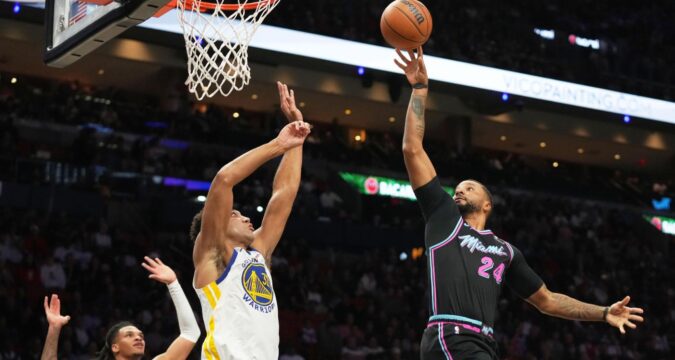
MIAMI (AP) — Norman Powell anotó 25 puntos, Bam Adebayo regresó para conseguir 20 y el Heat de Miami se despegó al final para derrotar el miércoles 110-96 a unos Warriors de Golden State extremadamente diezmados.
El exalero de los Warriors, Andrew Wiggins, anotó 17 unidades, en tanto que Kel’el Ware capturó 16 rebotes por Miami, que superó a Golden State 38-22 en el último cuarto.
Los Warriors, al final de una gira de seis encuentros en nueve días, estuvieron sin sus cuatro jugadores mejor remunerados: Stephen Curry (tobillo), el exdelantero del Heat Jimmy Butler (espalda), Draymond Green (enfermedad) y Jonathan Kuminga (rodilla).
Se trata de un grupo que gana alrededor de 162 millones de dólares esta temporada. El dominicano Al Horford, quien no está jugando en días consecutivos y apareció el martes en la derrota de Golden State en Orlando, también se ausentó.
Brandin Podziemski anotó 20 tantos por Golden State, que obtuvo 19 de Quinten Post y 18 de Buddy Hield. Los Warriors cometieron 23 pérdidas de balón que Miami convirtió en 34 puntos, 20 más de los que Golden State anotó a partir de los 14 regalos de Miami.
_____
Deportes AP: https://apnews.com/hub/deportes

Treasury Sanctions Former Olympian Snowboarder Turned ‘Cocaine Kingpin’
Treasury Sanctions Former Olympian Snowboarder Turned ‘Cocaine Kingpin’
The U.S. Department of the Treasury’s Office of Foreign Assets Control (OFAC) sanctioned Ryan Wedding, the former Canadian Olympic snowboarder turned cocaine kingpin, now on the FBI’s Ten Most Wanted list, along with nine associates and nine front companies spanning Mexico, Canada, Italy, and the UK.
Wedding sits on the FBI’s Ten Most Wanted list and is accused of operating a multi-ton cocaine trafficking operation that spanned worldwide and left a trail of murders with hired hits across the Americas.
Treasury, the FBI, the DOJ, and Mexico’s financial intelligence unit coordinated sanctions targeting his criminal organization.
According to the FBI, Wedding’s organization uses cryptocurrency to move and launder the proceeds of drug trafficking.
OFAC claims:
Wedding operates a Colombia-to-Mexico-to-U.S./Canada cocaine pipeline
Launder millions using crypto, jewelry fronts, and luxury-vehicle holdings.
Ordered numerous assassinations, including of U.S. citizens and a federal witness.
Employs ex-law-enforcement operatives, high-end escorts, and corrupt professionals to locate targets, clean money, and hide assets.
Besides Wedding, OFAC also sanctioned:
Edgar Aaron Vazquez Alvarado (“the General”) – ex-Mexican law enforcement, provides armed protection, intel, and owns three Mexico-based fuel companies used as fronts.
Miryam Andrea Castillo Moreno – Wedding’s wife; money laundering and violence facilitator.
Carmen Yelinet Valoyes Florez – runs a Mexico prostitution ring; assisted in a federal witness murder.
Daniela Alejandra Acuna Macias – Wedding’s Colombian girlfriend; collected money and gathered intel on rivals.
Deepak Balwant Paradkar – Canadian attorney who arranged drug connections, bribery, and murder plans while violating attorney-client privilege.
Money-Laundering Network:
Rolan Sokolovski – Canadian jeweler who moved millions through crypto and his “Diamond Tsar” storefront.
Gianluca Tiepolo – ex-Italian special forces; managed luxury-vehicle assets, operated tactical-training camps used for hitmen, and ran multiple auto/motorcycle firms.
Cristian Diana and John Anthony Fallon – executives involved in Tiepolo’s companies and linked to laundering entities.
All U.S.-linked assets belonging to Wedding and his associates have been frozen, and U.S. persons are prohibited from doing business with any of them, including any entities they own 50% or more of.
The Bureau’s Sam Cooper brought Wedding to our attention in early September, highlighting the “missed opportunities” Canada had to capture the former Olympian snowboarder turned cocaine kingpin.
Tyler Durden
Wed, 11/19/2025 – 22:35
Rockets consiguen su quinta victoria seguida al vencer 114-104 a Cavaliers
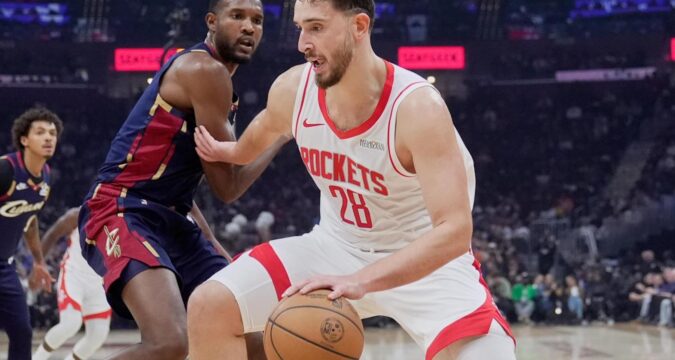
CLEVELAND (AP) — Alperen Sengun tuvo 28 puntos y 11 rebotes, Kevin Durant anotó 20 unidades, y los Rockets de Houston extendieron su racha a cinco victorias al superar el miércoles 114-104 a los Cavaliers de Cleveland.
Aaron Holiday anotó 14 de sus 18 puntos en el último cuarto para Houston, que tiene un récord de 10-1 desde que comenzó la temporada con dos derrotas. Jabari Smith Jr. anotó 14 y Amen Thompson tuvo 12 tantos, nueve tablas y cinco robos.
De’Andre Hunter anotó 25 puntos para liderar a los Cavaliers. Donovan Mitchell agregó 21, incluyendo 19 en el período final cuando se acercaron a 77-76 antes de que los Rockets respondieran con canastas consecutivas de Sengun y Thompson.
Evan Mobley tuvo 18 tantos, pero falló seis de sus diez intentos de tiro libre para Cleveland, que cayó a 2-2 en una serie de seis partidos en casa, la más larga de la temporada. Jarrett Allen agregó ocho puntos y siete rebotes.
El base de los Cavaliers, Darius Garland (dedo gordo del pie izquierdo) y el alero Jaylon Tyson (conmoción) se perdieron su quinto partido consecutivo, mientras que el escolta Sam Merrill (esguince en la mano derecha) se lesionó el lunes contra Milwaukee. Tyson podría regresar el viernes.
___
Deportes AP: https://apnews.com/hub/deportes

Hallan más cuerpos tras deslizamientos en Indonesia; suman 23 muertos y 28 desaparecidos
Por NINIEK KARMINI
YAKARTA, Indonesia (AP) — Los rescatistas recuperaron más cuerpos enterrados por deslaves en dos áreas de la isla de Java, en Indonesia, con lo que el número de muertes confirmadas por los deslizamientos de tierra se elevó a 23, dijeron funcionarios el jueves.
Abdul Muhari, portavoz de la Agencia Nacional de Mitigación de Desastres, afirmó que los trabajadores cavaron entre toneladas de lodo y escombros con casi dos docenas de excavadoras en el distrito de Cilacap, en la provincia de Java Central, y recuperaron cuatro cuerpos el miércoles después de que deslizamientos de tierra provocados por lluvias torrenciales la semana pasada afectaran decenas de casas en tres aldeas.
Los hallazgos elevaron el número de muertos a 20 en esa área. Añadió que aún buscan a tres personas que se reportan como desaparecidas.
Funcionarios locales también dijeron que 296 casas serían reubicadas de la zona propensa a deslizamientos de tierra en los próximos seis meses, y que cada familia que espere una nueva casa recibirá 600.000 rupias (36 dólares) al mes como compensación.
El miércoles, los rescatistas también recuperaron un cuerpo de un deslizamiento de tierra en otra parte de Java Central, elevando el número de muertos allí a tres.
Más de 500 rescatistas han sido desplegados para buscar a 25 personas reportadas como desaparecidas después de un deslave que se registró en el distrito de Banjarnegara el sábado, sepultando al menos 54 casas, señaló Muhari. Casi 1.000 personas tuvieron que trasladarse a refugios gubernamentales.
Las imágenes publicadas por la agencia mostraban campos de arroz transformados en lodo turbio y a socorristas cavando en aldeas cubiertas por lodo espeso, rocas y árboles arrancados de raíz.
Las lluvias estacionales causan frecuentes deslizamientos de tierra e inundaciones en Indonesia, un archipiélago de 17.000 islas donde millones de personas viven en áreas montañosas o en llanuras aluviales. ___
Esta historia fue traducida del inglés por un editor de AP con la ayuda de una herramienta de inteligencia artificial generativa.

As receiver, linebacker or on special teams, Andrew Dawson makes plays for Oak Forest. ‘Big part of who I am.’
Oak Forest’s Andrew Dawson grew up with a vivid, keen sense of action-driven performance.
The senior receiver was never one for enjoying idle moments or time spent just lounging around and watching TV, unless it happened to be an engrossing football or baseball game.
“There were no video games around my family,” Dawson said. “Competition is a big part of me. I can’t just not do anything. I can’t just sit around. Sports keeps me busy all the time.
“My parents always put a ball in my hand, and always having an older brother to compete with was a big part of who I am.”
Dawson played the part Saturday, catching the go-ahead touchdown pass and recovering a crucial onside kick for the host Bengals in a 34-20 win over Peoria in a Class 5A state quarterfinal game.
The 6-foot-2, 190-pound Dawson — who never played tackle football until freshman year, when he was immediately promoted to varsity — leads Oak Forest (11-1) into its first state semifinal since 2007.
Oak Forest’s Andrew Dawson (13) tries to break up a pass to Hillcrest’s Andre Bowers (22) during South Suburban Blue game in Country Club Hills on Friday, Oct. 17, 2025. (John Smierciak / Daily Southtown)
The Bengals will travel to Providence (9-3) for a 1 p.m. Saturday kickoff in New Lenox.
An all-purpose standout who also plays outside linebacker and on special teams, Dawson has 14 receptions for 316 yards and eight touchdowns while averaging 22.5 yards a catch.
Dawson also has run for a 44-yard TD. Defensively, he has totaled 54 tackles with six interceptions and three sacks. On top of that, he has produced three defensive TDs.
“Everything he does, he wants to win,” said Zac Sadek, who’s in his first year as Oak Forest’s coach. “There’s not a kid who is more competitively driven in everything he’s done.
Oak Forest’s Andrew Dawson (13) returns a fumble recovery against Champaign Centennial in a Class 5A first-round playoff game in Oak Forest on Saturday, Nov. 1, 2025. (Gary Middendorf / Daily Southtown)
“He’s worked through pain. He’s worked through injury. In our second-round playoff game, I said we should get him out. I knew he wasn’t going to take that very well. I didn’t think we were going to get him off the field.”
Senior quarterback Daniel Chopp has been his closest friend since they were 5 years old. In baseball, Chopp is the catcher who handles the right-hander’s 90-mph fastball.
Their roles reverse in football.
“We have a great energy and dynamic,” Chopp said of Dawson. “In football or baseball, I always try to reassure him and make sure he knows how good he is out there.
Oak Forest’s Andrew Dawson (13) closes in for a tackle on Tinley Park’s Justin Bulter (11) during a South Suburban Blue game in Oak Forest on Friday, Sept. 26, 2025. (James C. Svehla / Daily Southtown)
“I just love how he plays. He’s aggressive. He loves to get in there and bring high energy. I’ve been around him for so long and I always trust him to be his own person.”
Family was destiny with Dawson. His father, Michael, played college baseball in his native Oklahoma. His mother, Stephanie, was a standout softball player.
His brother, Joshua, is two years older and was his most profound influence. Joshua, an Oak Forest graduate, is now in the U.S. Army.
His older brother also played quarterback and was a pitcher. Andrew had the perfect education with watching and studying his brother.
“You have no idea how much he helped me,” Andrew said. “Sometimes, I didn’t want to get up in the morning and work out, but he’d pull the blankets off me and tell me I had to get to work.
“I used to play soccer, and then in third grade, I went to flag football. My brother was my quarterback. I didn’t know how good I was. I did great in flag and everything just worked out.”
Oak Forest’s Andrew Dawson (13) takes down Tinley Park’s Jack Stahowicz (6) during a South Suburban Blue game in Oak Forest on Friday, Sept. 26, 2025. (James C. Svehla / Daily Southtown)
After taking off his junior year in basketball to focus on baseball, Dawson is set to make his return this winter as a small forward. His future is in either football or baseball, but he’s considering his options.
On Saturday, however, he will be on the field as Oak Forest seeks the football program’s first appearance in the state championship game.
“We’re going in with the will to win,” Dawson said. “I always go after it 100%, even if I’m blocking.
“I’ll do anything for this team and this program.”
Patrick Z. McGavin is a freelance reporter for the Daily Southtown.
https://www.chicagotribune.com/2025/11/19/andrew-dawson-oak-forest-ihsa-football/

Bennedict Mathurin guía a Pacers a su 2da victoria, 127-118 sobre Hornets
DETROIT (AP) — Bennedict Mathurin totalizó 24 puntos y 12 rebotes para que los Pacers de Indiana cortaran una seguidilla de ocho derrotas al vencer el miércoles 127-118 a los Hornets de Charlotte.
Los Pacers, que han tenido el peor inicio en la historia de la franquicia con 12 derrotas en sus 13 duelos anteriores, se despegaron en el segundo cuarto, cuando Mathurin anotó nueve de los últimos 11 puntos de su equipo para una ventaja de 70-54 al medio tiempo.
Indiana ha carecido incluso de siete jugadores debido a lesiones. Entre ellos ha figurado Mathurin, quien regresó el lunes después de perderse diez compromisos por una lesión en un dedo de un pie.
Pascal Siakam anotó 22 puntos y el pívot suplente Jay Huff agregó 20 por los Pacers, quienes tuvieron a seis jugadores con cifras de dos dígitos.
Indiana encestó 16 de 38 tiros desde más allá del arco, mientras que los Hornets acertaron 13 de 45.
El base novato Kon Knueppel lideró a los Hornets con 28 puntos, incluidos cinco triples. Miles Bridges anotó 25.
Los Hornets (4-11) tienen un récord de 1-7 como visitantes.
_____
Deportes AP: https://apnews.com/hub/deportes
CIDH otorga medidas cautelares por incomunicación a 9 extranjeros detenidos en Venezuela
CARACAS (AP) — La Comisión Interamericana de Derechos Humanos otorgó el miércoles medidas cautelares a nueve extranjeros privados de su libertad en Venezuela, y le pidió al gobierno que vele por su integridad y les facilite la comunicación con familiares y abogados de confianza.
El capitán neerlandés de la embarcación N35 –identificado como Willem Frederik de Rhoodes–, su esposa neerlandesa y siete tripulantes, de nacionalidad paquistaní, húngara, española, panameña y tres de Honduras, fueron detenidos a mediados de junio mientras buscaban pedazos de buques hundidos durante la Segunda Guerra Mundial en el mar Caribe, cerca de la costa oriental de Venezuela.
Según la resolución, los tripulantes de la embarcación permanecerían “sin posibilidades reales de activar mecanismos internos para la protección de sus derechos frente a las condiciones de detención”.
La Comisión “no cuenta con información por parte del Estado que permita apreciar las acciones que se estarían tomando para atender o bien mitigar la situación de riesgo” de los detenidos. En consecuencia, solicitó a Caracas que adopte medidas necesarias para proteger sus derechos, e indique si “se les han imputado delitos y si han sido presentados ante un tribunal competente”.
La CIDH “respondió a nuestra solicitud y concedió medidas de protección a los tripulantes de la embarcación N35 arbitrariamente detenidos en Venezuela”, declaró la organización humanitaria local Foro Penal..
La Comisión también le solicitó a Venezuela que facilite a las autoridades consulares de sus respectivos países el “pleno acceso a sus expedientes judiciales, de existir”.
Las autoridades venezolanas no respondieron de momento a una solicitud de comentarios sobre el caso.
Funcionarios venezolanos interceptaron la embarcación en aguas de su zona económica exclusiva, un tramo de 370 kilómetros (200 millas náuticas) en el que un Estado con litorales como Venezuela tiene derechos exclusivos para explorar y explotar recursos. Las embarcaciones extranjeras cuentan con un derecho reconocido internacionalmente, conocido como “paso inocente”, siempre que la seguridad del Estado costero no se vea amenazada.
La CIDH es un órgano autónomo de la Organización de los Estados Americanos dedicado a supervisar y promover el respeto a los derechos humanos en el continente americano.
Hace años Venezuela se retiró unilateralmente de la OEA, pero aun así la CIDH ha reafirmado su competencia para “recibir y tramitar peticiones y casos y otorgar medidas cautelares” en materia de derechos humanos en el país sudamericano.
After Flip-Flopping Tantrum, Trump Signs Bill To Release Epstein Files
After Flip-Flopping Tantrum, Trump Signs Bill To Release Epstein Files
Let’s review…
On the campaign trail, Trump promised to release ‘the Epstein files’ – i.e. the list of powerful men who partook of Jeffrey Epstein’s network of sex-trafficked young women.
After a few months in office, a brave reporter asked Trump ‘hey what about those Epstein files you promised?’ – which drew a hostile response from the Commander-in-Chief. ‘Why are we still talking about that DEAD guy? Who cares anyway?’
That was the record-needle scratch heard ’round the world – the ‘vibe shift’ that split the base along weirdly partisan lines that seems to have, for some reason, pitted pro-Israel conservatives like Ted Cruz against America First conservatives like Reps. Marjorie Taylor Greene and Thomas Massie – who have both vehemently pushed for the release of ‘the Epstein files’ while also criticizing Israel’s influence in DC – the latter of which has been used as a cudgel to try and discredit the former.
After Trump’s first tantrum at the journalist, which split the base, Pam Bondi insisted that she ‘had the Epstein files on her desk‘ (and alluded to VIDEO evidence), only to release binders of old information to a group of conservative influencers.
Over the last two weeks things have gotten interesting. Democrats released a cache of Epstein emails mentioning Trump – which essentially established that Trump and the dead pedo were pals. Then, House Republicans released a motherlode of 20,000 documents from Epstein’s estate which – in addition to the Democrat release – paints the following picture (in broad brush strokes):
– Trump and Epstein were pals
– They had a falling out
– Epstein then worked with Democrats and (oddly) his good friend Steve Bannon to help the ‘Get Trump’ industrial complex… get Trump.
Then Epstein was arrested by Bill Barr (whose pedocentric author father hired Epstein to teach at the Dalton School) and died in custody.
What the actual…
That said, it largely backfired on Democrats, as we learned:
Stacey Plaskett was texting back and forth with Epstein during Michael Cohen’s ‘get Trump’ congressional testimony – asking Cohen questions prompted by Epstein.
House Minority Leader Hakeem Jeffries was hitting Epstein up for a dinner and fundraising (like a direct private dinner) after he was convicted of sex trafficking.
Larry Summers (Bill Clinton’s former Treasury sec. and Harvard president) just went into hiding because Epstein was coaching him on how to cheat on his wife with the daughter of a former CCP official and mentee at Harvard.
Leading up to last week’s release, Democrats, MTG, and Massie have been pushing for the release of the Epstein files – which would consist of everything the DOJ has compiled on Epstein and his network, while Trump has called MTG a traitor, and slandered Massie’s dead wife.
We also note that Democrats didn’t care about the Epstein files – and covered for his Democrat associates, until now.
And just like that, after House lawmakers dumped both sets of files, Trump flip-flopped and now supports the release of the (rest of the) Epstein files.
Related:
Jeffrey Epstein Had Secret ‘Panopticon’ Recording Room To Monitor ‘Guests’: Lawsuit
Leaked Cell Phone Location Data Reveals 200 Mystery Guests On Epstein’s “Pedo Island”
Epstein: Mossad or CIA?
Release The Files!
On Wednesday evening, Trump said that he signed legislation allowing the DOJ to release the files – after both the House and the Senate passed Massie’s bill to do just that.
“I HAVE JUST SIGNED THE BILL TO RELEASE THE EPSTEIN FILES!” Trump wrote in a lengthy screed on Truth Social. “As everyone knows, I asked Speaker of the House Mike Johnson, and Senate Majority Leader John Thune, to pass this Bill in the House and Senate, respectively. Because of this request, the votes were almost unanimous in favor of passage.
“At my direction, the Department of Justice has already turned over close to fifty thousand pages of documents to Congress. Do not forget — The Biden Administration did not turn over a SINGLE file or page related to Democrat Epstein, nor did they ever even speak about him.”
If we had to guess, the files are more likely to show that Epstein was a Mossad honeypot operation than Trump was a john.
Can’t wait to learn that [redacted] did all that sh*t!
Discuss…
Tyler Durden
Wed, 11/19/2025 – 22:10

Bravos renuevan contrato con el cerrador veterano Raisel Iglesias por 1 año y 16 millones
ATLANTA (AP) — Los Bravos de Atlanta atendieron una de sus prioridades para la próxima campaña al firmar de nuevo al cerrador Raisel Iglesias mediante un contrato por un año y 16 millones de dólares.
Atlanta anunció el acuerdo el miércoles. El derecho cubano de 35 años había completado un contrato de cuatro temporadas por 58 millones que le pagó 16 millones en cada una de las últimas tres campañas.
Los Bravos también adquirieron a Mauricio Dubón, procedente de los Astros de Houston a cambio de Nick Allen en un canje de jugadores de cuadro.
Dubón, de 31 años, participó en 133 juegos con Houston la temporada pasada y bateó para .241, además de ganar su segundo Guante de Oro como jugador multifuncional de cuadro. También ganó un Guante de Oro en 2023.
El hondureño devengó un salario de 5 millones de dólares este año y es elegible para el arbitraje salarial. Puede convertirse en agente libre después de la Serie Mundial.
Allen es elegible para el arbitraje por primera vez y puede convertirse en agente libre después de la temporada 2029.
Iglesias logró 29 salvamentos en 34 oportunidades en 2025. Cerró fuerte después de un comienzo irregular.
Registró una efectividad de 4.42 en 39 juegos en la primera mitad antes de un final dominante. Su promedio de carreras limpias admitidas fue de 1.76 en la segunda mitad y tuvo éxito en sus últimas 18 oportunidades de salvamento después del 28 de julio.
Fue la racha más larga sin un rescate fallido durante el cierre de la campaña en las mayores.
En general, Iglesias tuvo una efectividad de 3.21. Sus 29 salvamentos ocuparon el noveno lugar en las mayores y el cuarto en la Liga Nacional.
El acuerdo con Iglesias libera al gerente general de Atlanta, Alex Anthopoulos, para centrarse en otras necesidades, incluido el campocorto.
Iglesias se convirtió en el 40º lanzador con 250 salvamentos en su carrera el 16 de septiembre contra Washington. Es uno de apenas cinco relevistas activos en alcanzar este hito. Terminó la temporada con 253 salvamentos en su carrera.
En general, a lo largo de cuatro temporadas con Atlanta, Iglesias tiene una efectividad de 2.35. Comenzó su carrera con Cincinnati en 2015 y lanzó para los Angelinos de Los Ángeles en 2021 y 2022.
_____
Deportes AP: https://apnews.com/hub/deportes