Category: News
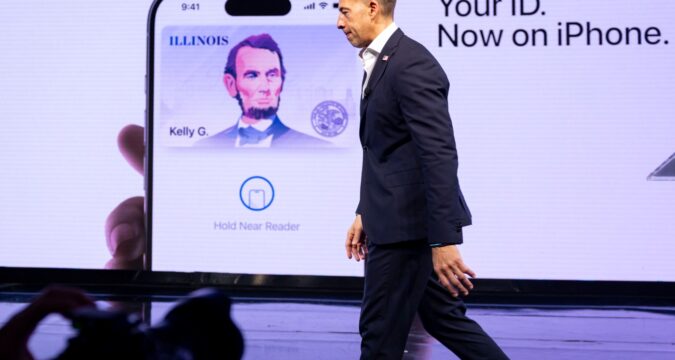
Editorial: Digital Illinois driver’s licenses are here. Except when you are actually driving.
Illinois Secretary of State Alexi Giannoulias stood before cameras Tuesday and declared a historic day.
“For anyone who’s ever left the house without their wallet,” he said, “fumbled for their ID at airport security or wished government services were just a little more modern, today changes everything.”
Giannoulias paused for dramatic effect before delivering the news. “For the first time ever, Illinoisans will be able to add their driver’s licenses or state ID to their Apple Wallet,” he said.
“This is government innovation at its best,” he went on, sounding like he was, oh, maybe running for something. He even went so far as to say that this represented “a new way to think about identity.”
That was a bit much. Certainly, Giannoulias deserves credit for pushing on with the technology that now allows Illinoisans to add their IDs to their phones and the levels of encryption are indeed impressive: the door person at the bar now can see you are over 21 years old without ogling the other information on your license. Better yet, the online ID will update in real time, unlike its physical sibling. You also will be able to use your license at TSA checkpoints at the airport, which is probably where you already store your boarding pass. Most convenient.
In many ways this looks like another nail in the coffin for the wallet, or the purse; a thick one is fast becoming a marker of age, or of Luddism. And another reminder that if and when you leave your phone at home — or God forbid, somewhere else — you are likely to be rendered dysfunctional in our brave new world. Better start carrying an extra battery.
But once prompted with a question, Giannoulias had a big caveat: You cannot use your shiny new digital driver’s license for its originally intended purpose.
Namely, driving.
If you are getting behind the wheel, you still need to pull out the physical license. So you’ll either need to keep it in your glove compartment (not ideal) or still carry that purse or wallet after all.
“That’s not gonna happen for the foreseeable future,” Giannoulias said of a scenario where officers pulls you over for speeding and you just show them your phone. “The legislation that was passed does not allow law enforcement to use it as of now.”
“No other state that has Apple Wallet allows law enforcement to use it,” he added.
That’s not entirely true — it appears that, in some cases, other states are already allowing drivers to use digital IDs during traffic stops.
Regardless, the traffic stop issue is a big caveat and one that we suspect will need more reinforcing.
Some people now are likely to think they can just pull out their phones after a traffic stop and they then will find themselves walking away with a ticket or a demand to head to the police station to show their physical licenses. So consider yourself duly warned.
“Consider it complementary for now,” Giannoulias said of the physical and digital twins, albeit nonidentical.
So the true revolution has yet to be televised. We see no reason why police officers can’t deal with digital licenses; it’s not that different from the TSA use thereof, especially since cops can look up driving and criminal records by way of inputting license numbers into their own databases. When that day comes, you really can leave your driving license in a desk drawer.
Submit a letter, of no more than 400 words, to the editor here or email letters@chicagotribune.com.
Willie Wilson: Illinois politicians party as Black communities fall further behind
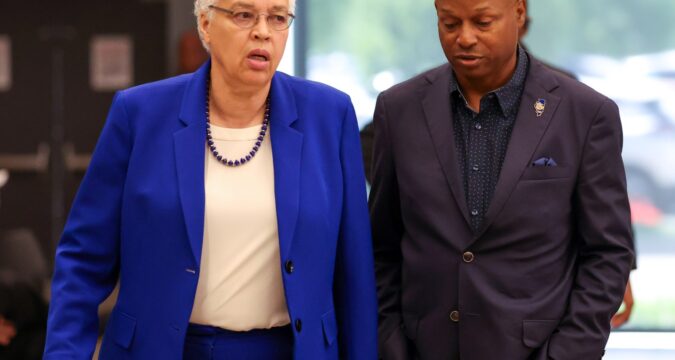
Elected leaders turned out en masse on Nov. 8 for the Chicago Urban League’s annual Golden Fellowship Dinner. The star-studded black-tie event drew Chicago’s elite Black citizens, including Mayor Brandon Johnson, Cook County Board President Toni Preckwinkle, Illinois House Speaker Emanuel “Chris” Welch, Lt. Gov. Juliana Stratton and a host of Black federal and state legislators. Interestingly, they were comfortable having a great time while seemingly oblivious to the figurative fire raging in the Black community.
How can they party as a 2025 State of Black Chicago report released by the Chicago Urban League paints a grim picture of economic progress for Black Chicagoans? As the report notes, the median net worth for Black households in Chicago in 2024 was zero dollars, whereas the median worth for their white counterparts was $210,000.
Perhaps elected leaders do not understand that Black households may be living paycheck to paycheck with no financial savings or assets to fall back on. Black politicians party while their constituents struggle to make ends meet.
As someone who grew up in the Jim Crow era, I am appalled at seeing Black politicians who are more loyal to a political party than their constituents. Prioritizing migrants over Black citizens is an example. This go-along-to-get-along attitude has produced very little tangible progress for the Black community. Too many Black citizens remain plagued by economic despair, poor education opportunities and crime-ridden communities. Where are the profiles of courage among modern-day Black political leaders?
Black leaders promise to fight for their constituents, but in the end, material conditions remain unchanged.
The school-to-prison pipeline will continue as long as politicians support low education standards and block options for children. The Illinois legislature allowed to sunset in 2023 the Invest in Kids tax credit program, which helped thousands of children, including those in low-income Black communities. The following year, an Illinois Policy Institute analysis found that Welch and Senate President Don Harmon each received $600,000 in political contributions from the Illinois Federation of Teachers, which opposed continuing Invest in Kids.
This year’s Illinois Report Card shows that only 17.4% of Black fourth graders and 36.7% of Black eighth graders scored proficient or better in math, compared with 55.4% and 66.6% of white students.
It is unreasonable to expect children to succeed in life if they are denied the opportunity of a proper education, as one-time Supreme Court Chief Justice Earl Warren observed. It must be made available to all on equal terms.
Elected leaders are quick to applaud high graduation rates. However, if children who receive diplomas cannot read or do basic math, the education system has failed. Even worse, such a reality ensures a perpetuation of the school-to-prison-pipeline.
Related Articles
Willie Wilson: Don’t be fooled by Mayor Brandon Johnson’s irresponsible budget proposal
Willie Wilson: Victims of crime are often forgotten by lawmakers
The Black population in Illinois is about 14%, but Black people represent 54% of the prison population in Illinois. How long will Black leaders fail to address this? How long will Black politicians be beholden to white politicians?
In Cook County, property tax bills began hitting mailboxes after being four months late: Black neighborhoods are being hit the hardest with higher bills. According to a report released by Cook County Treasurer Maria Pappas, tax bills rose the highest in West Garfield Park, North Lawndale and Englewood.
Working-class families who have experienced redlining pay the highest costs for mortgages and car and property insurance. They face rising health insurance premiums, coupled with higher costs for groceries and utilities. How do politicians expect working-class families with no net worth to pay those taxes? This is another example of Black politicians being complicit in the fleecing of the Black community through an unfair property tax system.
Black elected leaders have shown little sense of urgency to deal with high crime in communities they represent. The crime is traumatizing everyday people, including senior citizens and children.
I support reparations for the Black community as a way to repair the harm of slavery, segregation, Jim Crow, trauma and disinvestment. My idea for reparations consists of free education, health care and job training, for residents in poor communities.
The following are some suggestions to help Black families:
Gov. JB Pritzker, Johnson, Welch and Harmon must fix the broken education system in Illinois.
Welch and Illinois Black Caucus members must demand equity in contracts for Black business owners through the procurement process.
Pritzker, Welch and Harmon must fix the unfair property system that burdens the working class. Exempt senior citizens from paying property taxes.
Pritzker and the state legislature should pass a reparations bill that includes free education, health care, child care, housing and job training for Black citizens living in poverty.
Black leadership that does not prioritize economic infrastructure, such as schools, banks, construction companies, grocery stores, businesses and skilled trades, will continue to oversee poorer and economically fragile communities.
We celebrate the historic number of Black elected officials, but without any real tangible progress for the Black community, there is no reason to party.
I write this commentary to make those Black leaders comfortable with continuing the status quo uncomfortable.
Willie Wilson is a business owner, philanthropist and former mayoral candidate.
Submit a letter, of no more than 400 words, to the editor here or email letters@chicagotribune.com.
https://www.chicagotribune.com/2025/11/20/opinion-black-wealth-chicago-urban-league/
Liam Stanton: Chicago government should choose planning over panic
Chicagoans plan their lives with care. Families budget months ahead. Small businesses track payroll and inventory long before bills come due. Neighborhood organizations stretch every dollar and every volunteer hour. People in this city plan early, honestly and without needless drama.
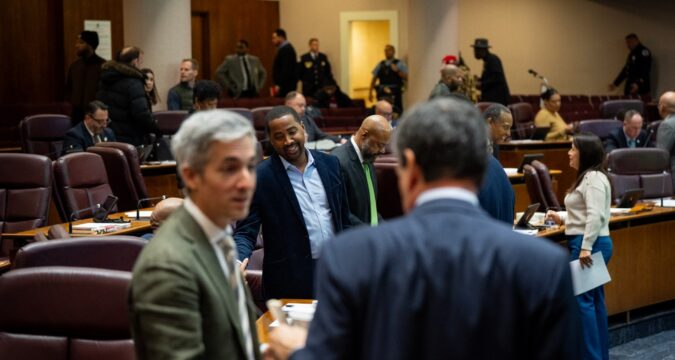
City government should meet that same standard. Instead, this year’s budget process has shown a lack of planning, foresight and coordination. As a result, the City Council is being asked to resolve a $1.19 billion deficit on a compressed timeline. At the same time, residents are receiving delayed and higher-than-expected property tax bills from the county due to issues with a technology upgrade. While the two issues are unrelated, they land together for Chicagoans and create a broader impression that government is not managing the basics.
This is not a story about taxes alone. It is a story about management. Across communities and business corridors, we hear the same thing again and again. Chicagoans can deal with difficult choices when they are laid out clearly. What they cannot deal with is being caught off guard. And lately, that has become routine: late information, shifting proposals and decisions made with little time for public or council review. That is no way to run a major American city.
The administration pushed forward a compressed and constantly changing budget process that left the City Council with little time to evaluate, amend or build consensus around major decisions. That lack of early engagement created avoidable pressure and set the stage for the Finance Committee’s overwhelming rejection of the revenue package. When planning breaks down at the top, everything else becomes reactive. And Chicagoans feel the consequences.
City Hall’s fifth floor also had months of data pointing to a historic shortfall. It had the EY analysis. It had internal projections that made this moment avoidable. The City Council did not receive that information early enough to develop alternatives or weigh tradeoffs before the fall calendar closed in. Aldermen are now doing their jobs under difficult conditions, but they should never have been put in this position. Chicago is strongest when the mayor and the council operate as partners. Partnership is impossible when one side receives critical information only after the runway has nearly disappeared.
Several of the administration’s proposals arrived not only late but also out of step with the day-to-day realities of working people. The head tax is the clearest example. It was rewritten multiple times in the span of a week and introduced without clear detail, and it would have swept in midsize employers, restaurants and neighborhood businesses that are already struggling with higher costs. Other ideas, from higher lease taxes to expanded fees and surcharges, would have landed directly on the backs of residents who are stretched thin.
The City Council’s resistance is not dysfunction. It is a sign that aldermen understood these proposals were rushed, disconnected from economic reality and lacked the trust needed to move forward. When ideas arrive this way, the council has no responsible choice other than to slow them down.
Chicago’s governing structure is built for collaboration. We do not have a mayor who rules by decree. We have 50 wards filled with lived experience and neighborhood expertise. That structure only works when the mayor’s office engages early, works transparently and treats aldermen as partners from the start. When that does not happen, decision-making becomes reactive instead of thoughtful. Urgency replaces strategy.
There is a better model. Cities such as Denver and Boston rely on multiyear budgeting that brings financial realities into public view long before the fall. They publish long-range forecasts, host hearings early, and invite residents and businesses into the process while ideas are still forming. These cities still face hard choices, but they face them with planning rather than improvisation.
Chicago can adopt these same habits. The fifth floor can release projections in the spring. Working groups can be tasked with real authority and real information. Aldermen can be included at the beginning instead of the end. Our work has shown how differently discussions unfold when people feel informed early rather than asked to react to decisions that are already halfway decided.
Longer term, Chicago should consider a formal city charter. Most major cities operate with one. A charter would create clear expectations for transparency, timelines and roles. It would give the public a predictable process and give elected officials a reliable structure. It would reduce the improvisation that has defined recent years.
Related Articles
Editorial: Death of Mayor Brandon Johnson’s head tax should lead to negotiations with unions
Kam Buckner: A city charter is the reform Chicago actually needs, not recall powers
As the budget debate continues, the City Council deserves the space to deliberate carefully. They are doing their jobs under compressed conditions they did not create. Chicagoans deserve a process that treats them as stakeholders in the future of their city, not as spectators waiting for the next surprise. When people feel respected and informed, they respond with the steadiness and seriousness that defines Chicago.
Hard choices were always ahead. Surprise never had to be part of it. Chicago can make difficult decisions. We can also make them the right way, with preparation, honesty and the same level of care that Chicagoans show in their own lives.
That is the standard we should expect. And it is the standard the fifth floor must meet.
Liam Stanton is a lifelong Chicagoan, entrepreneur and founder of The Chicago Style Project, a neighborhood advocacy group focused on bold, practical solutions for Chicago’s biggest challenges.
Submit a letter, of no more than 400 words, to the editor here or email letters@chicagotribune.com.
https://www.chicagotribune.com/2025/11/20/opinion-chicago-city-budget-planning-charter/

Lakeview 5-bedroom house with 3 terraces and 4 wet bars: $2.6M
Address: 1446 W. Belle Plaine Ave., Chicago
Listed: Oct. 21, 2025
Price: $2,599,000
Listing agent: Tory Rezin and Bari Mill, Coldwell Banker, 847-414-9944
This Lakeview home has five bedrooms, four full bathrooms, two half-baths and a top floor that functions as a second family room, guest suite or home office. The house has three landscaped terraces and four wet bars across multiple floors. Interior features include mahogany millwork, coffered ceilings, full wood-paneled walls and wide-plank, quarter-sawn oak floors. The living room has a 9-foot, tiered Calacatta Borghini marble fireplace. On the main level, the living and dining area flows into a kitchen with French doors leading to a bluestone patio. The kitchen has a 16-foot Tiffany blue quartzite waterfall island, a La Cornue range and a satin brass hood. The second level has three en suite bedrooms with Juliet balconies, including a primary suite with a walk-in closet and double vanities. A paneled office has a wallpapered ceiling and brass built-ins. The top level has pitched ceilings, a powder room and access to two rooftop terraces. The lower level has a theater room, a recreation area and a bedroom. The house includes a two-car garage with a rooftop deck.
Interior features of this house at 1446 W. Belle Plaine Ave., Chicago, include mahogany millwork, coffered ceilings, full wood-paneled walls and wide-plank, quarter-sawn oak floors. (Dustin Halleck)
Interior features of this house at 1446 W. Belle Plaine Ave., Chicago, include mahogany millwork, coffered ceilings, full wood-paneled walls and wide-plank, quarter-sawn oak floors. (Dustin Halleck)
Interior features of this house at 1446 W. Belle Plaine Ave., Chicago, include mahogany millwork, coffered ceilings, full wood-paneled walls and wide-plank, quarter-sawn oak floors. (Dustin Halleck)
Interior features of this house at 1446 W. Belle Plaine Ave., Chicago, include mahogany millwork, coffered ceilings, full wood-paneled walls and wide-plank, quarter-sawn oak floors. (Dustin Halleck)
Interior features of this house at 1446 W. Belle Plaine Ave., Chicago, include mahogany millwork, coffered ceilings, full wood-paneled walls and wide-plank, quarter-sawn oak floors. (Dustin Halleck)
Interior features of this house at 1446 W. Belle Plaine Ave., Chicago, include mahogany millwork, coffered ceilings, full wood-paneled walls and wide-plank, quarter-sawn oak floors. (Dustin Halleck)
Interior features of this house at 1446 W. Belle Plaine Ave., Chicago, include mahogany millwork, coffered ceilings, full wood-paneled walls and wide-plank, quarter-sawn oak floors. (Dustin Halleck)
Interior features of this house at 1446 W. Belle Plaine Ave., Chicago, include mahogany millwork, coffered ceilings, full wood-paneled walls and wide-plank, quarter-sawn oak floors. (Dustin Halleck)
Interior features of this house at 1446 W. Belle Plaine Ave., Chicago, include mahogany millwork, coffered ceilings, full wood-paneled walls and wide-plank, quarter-sawn oak floors. (Dustin Halleck)
Interior features of this house at 1446 W. Belle Plaine Ave., Chicago, include mahogany millwork, coffered ceilings, full wood-paneled walls and wide-plank, quarter-sawn oak floors. (Dustin Halleck)
Interior features of this house at 1446 W. Belle Plaine Ave., Chicago, include mahogany millwork, coffered ceilings, full wood-paneled walls and wide-plank, quarter-sawn oak floors. (Dustin Halleck)
Some listing photos are “virtually staged,” meaning they have been digitally altered to represent different furnishing or decorating options.
To feature your luxury listing of $1,000,000 or more in Chicago Tribune’s Dream Homes, send listing information and high-res photos to ctc-realestate@chicagotribune.com.
https://www.chicagotribune.com/2025/11/20/dream-home-lakeview-belle-plaine/
What to do in Chicago: Paul McCartney, Magnificent Mile Lights Festival and more to open the holidays
Our picks for events in and around Chicago this weekend.
Magnificent Mile Lights Festival
Mickey Mouse and Minnie Mouse will light up Michigan Avenue, once again, during the Magnificent Mile Grand Tree-Lighting Parade. The day kicks off with family activities and live entertainment, including performers from Cirque de Solieil’s “‘Twas the Night Before” in Pioneer Court. Be sure to warm up before the big event: the parade will feature illuminated floats, balloons, marching bands and, of course, Santa Claus. As the procession makes its way down Michigan Avenue, holiday lights flicker on, before the day wraps up with fireworks over the Chicago River at the DuSable Bridge. It’s one of Chicago’s most magical holiday traditions.
11 a.m.-4 p.m. Nov. 22 in Pioneer Court, 401 N. Michigan Ave., with the Grand Tree-Lighting Parade running from 5:30 p.m.-7:15 p.m. southbound on Michigan Avenue from Oak Street to Wacker Drive; details on the free event at themagnificentmile.com
Christmas Tree Lighting
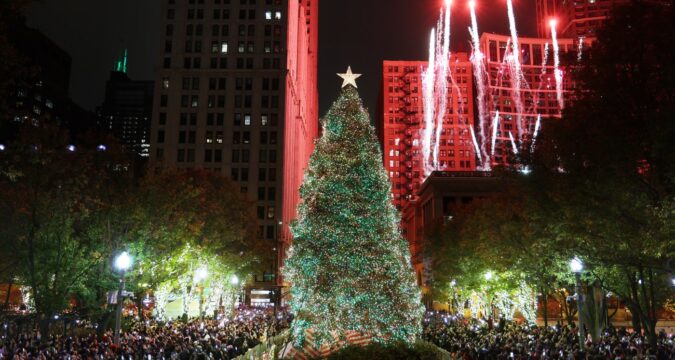
Millennium Park kicks off its holiday season by lighting up the City of Chicago Christmas Tree. The huge spruce will be illuminated on Nov. 21, followed by a fireworks display. This weekend also marks the opening of the McCormick Tribune Ice Rink and the Millennium Park Holiday Market (Nov. 21-23). Can’t make it, but love a good tree lighting? Greektown also will light up its blue-and-white tree on Nov. 23 as well as its traditional Holiday Karavákia Display — or decorated Christmas boats.
City of Chicago tree: 6 p.m. (pre-show at 5 p.m.) Nov. 21 in Millennium Park, near Michigan Avenue and Washington Street; details on the free event at chicago.gov. Greektown Tree Lighting: 5 p.m. Nov. 23 at Elysian Field, southeast corner of Halsted and Van Buren streets; details on the free event at greektownchicago.org
Paul McCartney
The Beatles legend wraps up his “Got Back” tour in Chicago this weekend with a two-night stand. He’s played 20 nights in 17 cities — at age 83 — and the reviews have been glowing. Go see him while you can.
8 p.m. Nov. 24-25 at United Center, 1901 W. Madison St.; resale tickets from $1,628.70 at unitedcenter.com
Paul McCartney performs at Lollapalooza on July 31, 2015. (Chris Sweda / Chicago Tribune)
El Alfa
Get your dance on this weekend with El Alfa, aka Emanuel Herrera Batista, aka the king of dembow. The Dominican rapper who’s collaborated with Bad Bunny and Cardi B brings his “Ultimo Baile” tour to the Rosemont Theatre. But will this truly be the last dance? The 34-year-old announced earlier this year that he’s retiring from music, following the death of his grandmother. “I could’ve spent more time with her,” he wrote in Spanish on Instagram, “but my work wouldn’t allow it.”
9 p.m. Nov. 21 at Rosemont Theatre, 5400 N. River Road, Rosemont; tickets from $57.98 at rosemont.com
Jeff Arcuri
Stand-up comedian Jeff Arcuri may have left Chicago (he started his career here) but he’s back this weekend with his “(Un)scripted” show. Known for crowd work, Arcuri has appeared on “The Late Show With Stephen Colbert” and Comedy Central’s “Roast Battle.”
7 p.m. and 10 p.m. Nov. 22 and 8 p.m. Nov. 23 at the Chicago Theatre, 175 N. State St.; tickets from $34.85 at msg.com
Juliana Yu rehearses for a Ruth Page School of Dance production of “The Nutcracker,” at the Ruth Page Center for the Arts on the Near North Side, Nov. 16, 2025. (Eileen T. Meslar/Chicago Tribune)
Ruth Page’s “The Nutcracker”
Looking for a more traditional version of “The Nutcracker”? You have several opportunities to catch a version featuring choreography dating back to 1962 by the late Ruth Page, dubbed Chicago’s “grand dame of dance.” For little ones, consider a special one-act version this weekend at the Beverly Arts Center.
1 p.m. and 5 p.m. Nov. 22 at the Beverly Arts Center, 2407 W. 111th St.; 1 p.m. and 5 p.m. Dec. 6 and 3 p.m. Dec. 7 at Governors State University Center for the Performing Arts, 1 University Parkway, University Park; 1 p.m. and 5 p.m. Dec. 13 and 1 p.m. Dec. 14 at Northeastern Illinois University’s Salme Harju Steinberg Fine Arts Center, 3701 W. Bryn Mawr Ave.; and 1 p.m. and 5 p.m. Dec. 20 and 1 p.m. Dec. 22 at College of Lake County’s James Lumber Center for the Performing Arts, 19351 W. Washington St., Grayslake; tickets from $20 at ruthpage.org
“American Prophets: Writers, Religion, and Culture”
See Flannery O’Connor’s rosary and more, as the American Writers Museum opens an exhibit exploring how religion has guided creative expression. “American Prophets” considers the work of “modern-day prophets — poets, rebels, and truth-tellers — (who) invite us to see our culture, and ourselves, through new eyes.” Featuring five, interactive installations, the show runs for about a year.
Through November 2026 at the American Writers Museum, 180 N. Michigan Ave.; tickets from $10 at americanwritersmuseum.org
Top 50 holiday concerts and shows in Chicago, from Cirque du Soleil to ‘Holly Dolly Christmas’
Christkindlmarket
Mug-collectors, take note: Christkindlmarket opens this weekend in Daley Plaza — as well as in Wrigleyville and Aurora. Indulge in glüwein (hot, mulled wine), any number of sausages, pierogi, pretzels, döner kebab and more, as you browse the Christmas ornaments and gift stalls. Check the schedule for special events, including the Dec. 14 “Haus of Krampus,” where you can meet Krampus himself. In Wrigleyville, Christkindlmarket is part of Winterland, which features the an ice rink, a holiday train and (from Nov. 28) visits with Santa.
Through Dec. 24 in Daley Plaza, 50 W. Washington St., and RiverEdge Park, 360 N. Broadway, Aurora; Nov. 23-Dec. 31 at Gallagher Way, 3635 N. Clark St.; details on the free event at christkindlmarket.com and gallagherway.com
ZooLights
Grab your hat and mittens and head to the Lincoln Park Zoo for its beloved, annual holiday light display. This year’s event features a reimagined South Lawn light show, “Zooltide,” as well as the usual Ferris wheel, s’mores and hot chocolate. Select nights feature carolers and ice sculptures. New this year: Flexible ticketing. Pay a little more to go when the whim—or the weather—strikes you.
Through Jan. 4 at Lincoln Park Zoo, 2001 N. Clark St.; tickets from $7.73 at lpzoo.org
People walk through an illuminated archway on the first night of ZooLights at Lincoln Park Zoo on Nov. 15, 2024, in Chicago. (John J. Kim/Chicago Tribune)
Holiday Mercadito
Get a jump on shopping at a Rogers Park craft fair featuring art, jewelry, candles, and much more. Between 10:30 a.m.-2 p.m., get free gift-wrapping for two gifts, courtesy of St. Jerome Church.
10 a.m.-3 p.m. in Grow/Progresando, 7056 N. Clark St.; details on the free event at business.rpba.org
Have something to do around Chicago? Email events to day.chitribevents@gmail.com.
https://www.chicagotribune.com/2025/11/20/what-to-do-chicago-nov-22/
Editorial: The bizarre slandering of Google by Mayor Brandon Johnson’s City Council allies
Nearly seven years ago, then-Mayor Rahm Emanuel announced that Google had chosen Chicago as a new hub for its finance operations and planned to add hundreds of new jobs to a city workforce that already numbered 1,000.
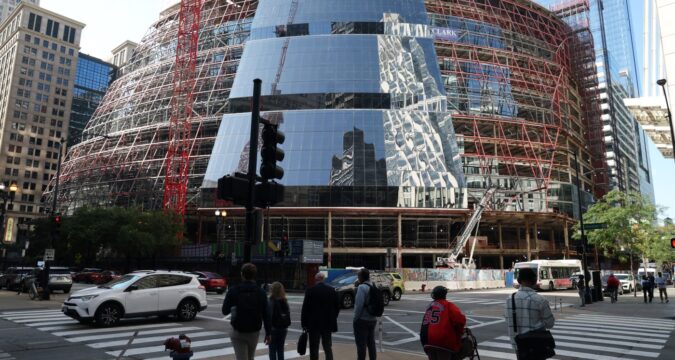
A little over three years later, in 2022, Google said it would purchase the Thompson Center in the heart of Chicago’s Loop from the state of Illinois and establish a new office at that Helmut Jahn-designed building. The deal with Google marked an improbable rescue for an architecturally significant and generally exciting structure that a few years earlier had been at significant risk of demolition.
Beyond aesthetics and preservation, Google’s move also was a desperately needed jolt of good news for a moribund downtown sapped by the vestiges of the pandemic. Politicians ever since — including Mayor Brandon Johnson, who had nothing to do with the Google deals — have placed Google’s investment in downtown Chicago close to the top of their meager lists of examples of how Chicago’s economy was performing well on their watch.
We retrace all of this recent history because numerous Chicago politicians, including Mayor Johnson, seem to have conveniently forgotten these facts as they now highlight Google as one of the many greedy corporations unwilling to “pay their fair share” to solve the city’s budget woes.
On Monday, as the City Council’s Finance Committee was considering (and eventually rejecting) the mayor’s proposal to tax each Chicago job provided by Google and other large employers at a rate of $21 per month, Budget Committee Chair Ald. Jason Ervin, 28th, had this to say to his fellow aldermen: “Are you helping Google out? Or are we going to help grandma?”
So Google’s $280 million investment to overhaul the Thompson Center and shift a publicly owned building occupying much of a downtown city block onto the tax rolls is somehow robbing our seniors? Got it, Ald. Ervin.
Chicago Ald. Jason Ervin, 28th, prepares to leave the City Council chamber after Mayor Brandon Johnson’s proposed head tax was voted down in a committee meeting, Nov. 17, 2025. (Terrence Antonio James/Chicago Tribune)
During the same committee session, another Johnson ally, Ald. Anthony Quezada, 35th, noted that Google reported net income of $100 billion last year and that it had donated $22 million to President Donald Trump’s planned new ballroom at the White House earlier this year.
What Quezada failed to disclose was that Google made that contribution as part of a legal settlement between its subsidiary, YouTube, and Trump. Trump had sued YouTube for removing him temporarily from the platform after the Jan. 6, 2021, attack on the U.S. Capitol by Trump supporters.
Quezada also bizarrely made Google’s Thompson Center investment sound like something nefarious.
“They’re building a big, massive (local) headquarters,” he said. “They have a lot of money. They can pay a corporate head tax.”
In his budget address last month, the mayor called out Google among a list of tech giants he said should put “more skin in the game” in solving the city’s budget woes.
We’re written before about the self-defeating nature of this continued demonization of corporations employing well over 100,000 people in Chicago. We remain flabbergasted that this administration dismisses the tens of millions of dollars Chicago’s business community has contributed to public-safety initiatives like community violence intervention.
Frankly, it smacks of desperation.
But Google stands out to us precisely because it’s not a long-standing corporate citizen of Chicago like, say, McDonald’s or Walgreens. Why smear such a successful company that has decided Chicago is a big part of its future?
We have no idea what Google’s position is on the head tax. As far as we know, the company hasn’t weighed in publicly. We also don’t know (nor do members of the City Council) just how many people Google eventually will move into the former Thompson Center in 2027 when it’s supposed to be ready for occupancy. In 2022, Google had about 2,000 Chicago workers housed in two buildings in the Fulton Market District west of the Loop. The company hasn’t said how many of those will be moved downtown or detailed its other hiring plans.
But here are some facts about Chicago and its relationship to Big Tech, particularly Google. Google is the only Silicon Valley giant that has made such a substantial commitment to this city. On Tuesday, The Wall Street Journal suggested that the so-called “Magnificent Seven” of tech stocks has now shrunk to the “Magnificent Three”: Nvidia, Microsoft and Alphabet, the Google parent. Just in case someone at City Hall is questioning their importance to our city.
For the record, we’ve not seen Nvidia knocking on many Chicago doors. The closest regional office is in Champaign.
Google didn’t have to invest so significantly here. From corporate giants to midsize manufacturers and distributors, there always are alternative options for business location, and progressive politicians — especially the mayor — consistently fail to comprehend that even great cities like Chicago exist in a competitive landscape.
In trying to score points with Chicagoans understandably frustrated by the financial state of the city, the officeholders choosing to verbally trash the one Big Tech player that has planted a significant flag here in order to force through an unpopular agenda is … well … stupid. There’s really no other way to put it.
Google bet big on Chicago while the mayor was Emanuel, who placed a high priority on showcasing the city as business-friendly. Emanuel understood that Chicago only could ultimately surmount its immense fiscal challenges through economic growth.
What does Google think of its wager now? We’d surely love to hear, but we have a strong suspicion the view from the Mountain View, California, headquarters of Google parent Alphabet has changed some in the intervening years.
More important, we’d bet that some of its hiring decisions are still live and in process. Anyone with a clue can see what needs to be done.
Submit a letter, of no more than 400 words, to the editor here or email letters@chicagotribune.com.
Parkinson’s patients get a little choreographic help from a dance captain of the Neil Diamond musical
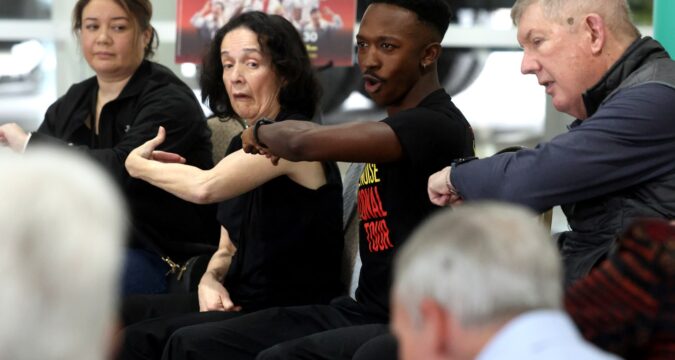
Patients at the Rush University Medical Center swayed and stretched as they followed choreography from one of the dance captains of “A Beautiful Noise: The Neil Diamond Musical.”
The medical center held a movement workout for patients with Parkinson’s disease on Wednesday with the help of J’Kobe Wallace, the instructor. About two dozen people came out to learn and create some of their own dances. Patients partnered up and made up their own eight-count dance moves and followed the motions of Wallace.
For over 12 years, Anna Pasteris, 67, has lived with Parkinson’s disease and to have an event centered around her and others that are diagnosed felt great, she said, but feels otherwise about a lack of a cure.
“The disease has been around like 200 years and yet we still don’t have a cure for it, so it’s kind of frustrating,” Pasteris said.
Without a cure for Parkinson’s disease, patients are dependent on treatments and medication for a better way of living, and exercise has been evident in slowing down the progression of the disease, according to Jori Fleisher, associate professor of neurological sciences and movement disorder specialist at Rush University Medical Center.
Nonetheless, it still helps to know that research is being done to find one, she said.
The cast of the Neil Diamond show have been fundraising and pursuing their goal of collecting $1 million to donate to the Parkinson’s Foundation for research. Currently, they have raised approximately $750,000, according to Gabrielle Perruzzi Sovers, a spokesperson for the Parkinson’s Foundation and the development manager for the Midwest chapter of Parkinson’s Foundation.
“Beautiful Noise” is based on the life of American singer-songwriter Neil Diamond, who in 2018 announced that he had been diagnosed with Parkinson’s disease.
Wallace chose the dance he wanted to show accordingly.
“To teach that choreography to other people that are experiencing a similar trajectory as (Diamond), and I think this choreography lends itself to just community, and I think that’s what I’m most excited for,” Wallace said ahead of the workout.
“Stadium Medley” is from the second act of the musical and doesn’t require great technique, Wallace said, which allowed everyone to take part. He showed a modified version of the dance and later showed the actual version that he does on stage.
Wallace talked about how he got to where he is in life and how he got into theater and dancing, but he called showing the dance to other people “the highlight of my career.”
There is no specific exercise that impacts the disease’s progression, but dance is beneficial to those that are diagnosed, Fleisher said. “There have been plenty of dancers out there who are differently abled this whole time and I love that this is an opportunity to shine a spotlight on that.”
Music is a motivator for patients, Fleisher said. Sometimes she will tell them to think of a song in their head, which leads them to move when they had been stuck, an example of mind over matter or mind over body, she said.
Mary Ellen Oliver, one of the participants, has had Parkinson’s for 25 years. She had a great time participating with others while having live and contagious energy, she said. “Having a group of people together and they all have Parkinson’s, it reinstates that you can still do things even though Parkinson’s steals from you.”
“A Beautiful Noise: The Neil Diamond Show” runs through Nov. 30 at the Cadillac Palace Theatre, 151 W. Randolph St.; tickets and more information at www.broadwayinchicago.com
https://www.chicagotribune.com/2025/11/20/parkinsons-neil-diamond-musical/
Supuesto hacker ruso buscado por el FBI, detenido en una isla turística de Tailandia
Por JINTAMAS SAKSORNCHAI y DAVID RISING
BANGKOK, Tailandia (AP) — La policía arrestó en la isla turística tailandesa de Phuket a un presunto hacker ruso buscado por el FBI por su supuesta participación en ciberataques a agencias gubernamentales de Estados Unidos y Europa, dijeron las autoridades.
El hombre, de 35 años y que entró en Tailandia el 30 de octubre por el aeropuerto de Phuket, fue detenido a principios de mes en su hotel y está retenido a la espera de una posible extradición, informó la policía tailandesa.
La identidad del sospechoso no ha sido revelada, pero la agencia noticiosa estatal rusa Russia Today lo identificó como Denis Obrezko, natural de Stavropol. La familia confirmó su arresto el 6 de noviembre y tenía previsto recurrir a su extradición a Estados Unidos, agregó.
En un correo electrónico el jueves, el Departamento de Justicia de Estados Unidos se negó a realizar comentarios acerca de la posible extradición o a ofrecer otros detalles. El Departamento de Estado de Estados Unidos y funcionarios estadounidenses en Tailandia también rechazaron comentar el caso.
El Ministerio de Exteriores ruso y la embajada del Kremlin en Tailandia tampoco respondieron a los pedidos de comentarios, pero el cónsul general de Rusia en Phuket, Yegor Ivanov, dijo a la agencia noticiosa estatal rusa Tass que el consulado “recibió notificación del arresto de un ciudadano ruso acusado de cometer un delito informático”.
“Fue arrestado el 6 de noviembre y trasladado a Bangkok ese mismo día”, indicó Ivanov, que no ofreció más detalles.
Ilya Ilyin, jefe de la sección consular de la embajada rusa en Tailandia, declaró a Tass el lunes que diplomáticos rusos visitaron al sospechoso en un penal en la capital tailandesa.
“El personal de la embajada realizó una visita consular al ciudadano ruso detenido a solicitud de Estados Unidos”, dijo Ilyin, añadiendo que se estaban realizando los trámites pertinentes para que pudiera reunirse con sus familiares.
La Oficina de Investigación de Delitos Cibernéticos de Tailandia señaló en un comunicado del 12 de noviembre que fue una pista del FBI sobre el viaje del “hacker de talla mundial” al país lo que condujo a su arresto en Phuket bajo una orden internacional.
En la redada en su hotel, la policía incautó computadoras portátiles, teléfonos móviles y billeteras digitales, según la nota, que explicó que funcionarios del FBI estuvieron presentes en el arresto.
Varios medios reportaron que un segundo ruso sospechoso de hackeo y buscado por el FBI —con vínculos con la inteligencia militar rusa— había sido arrestado en Phuket al día siguiente, pero la policía tailandesa afirmó que solo se había producido una detención.
La solicitud formal para la extradición del sospechoso ha sido presentada, la duración del proceso no estaba clara aún.
___
Esta historia fue traducida del inglés por un editor de AP con la ayuda de una herramienta de inteligencia artificial generativa.
Today in History: Francisco Madero leads a revolt against Mexican President Porfirio Díaz
Today is Thursday, Nov. 20, the 324th day of 2025. There are 41 days left in the year.
Today in history:
On Nov. 20, 1910, Francisco Madero led a revolt against Mexican President Porfirio Díaz, marking the beginning of the decade-long Mexican Revolution.
Also on this date:
In 1945, 22 former Nazi officials went on trial before an international war crimes tribunal in Nuremberg, Germany. (Almost a year later, the International Military Tribune sentenced 12 of the defendants to death; seven received prison sentences ranging from 10 years to life; three were acquitted.)
1947, Britain’s future queen, Princess Elizabeth, married Prince Philip, Duke of Edinburgh, at Westminster Abbey.
In 1969, Native American activists began an occupation of Alcatraz Island that would last 19 months before they were forcibly removed by federal authorities.
In 1982, the University of California, Berkeley, football team defeated Stanford University by scoring a touchdown on a lateral-filled kickoff return on the last play of the game, despite the Stanford marching band entering the field of play, thinking Stanford had already won. In college football lore, the bizarre finish is often referred to simply as “The Play.”
In 1992, fire seriously damaged Windsor Castle, the favorite weekend home of Britain’s Queen Elizabeth II.
Related Articles
Today in Chicago History: Antioch’s Kyle Rittenhouse acquitted after fatally shooting 2 people during unrest in Kenosha
Today in History: Ford halts production of Edsel
Today in History: ‘Steamboat Willie’ debuts on screen
Today in Chicago History: Standard Time adopted during convention at the city’s Grand Pacific Hotel
Chicago weather: How our 2025-26 seasonal snowfall compares with previous years
In 2003, music producer Phil Spector was charged with murder in the shooting of actor Lana Clarkson at his California home. (After a first trial ended with a hung jury in 2007, Spector was convicted of second-degree murder in 2009 and sentenced to 19 years to life; he died in prison at age 81 on Jan. 16, 2021.)
Today’s Birthdays: Actor Estelle Parsons is 98. Author Don DeLillo is 89. Comedian Dick Smothers is 87. Former President Joe Biden is 83. Broadcast journalist Judy Woodruff is 79. Musician Joe Walsh is 78. Actor Bo Derek is 69. Actor Ming-Na Wen is 62. Rapper Michael “Mike D” Diamond (Beastie Boys) is 60. Actor-comedian Joel McHale is 54. Country singer Dierks Bentley is 50. Olympic gold medal-winning gymnast Dominique Dawes is 49. Rapper Future is 42.
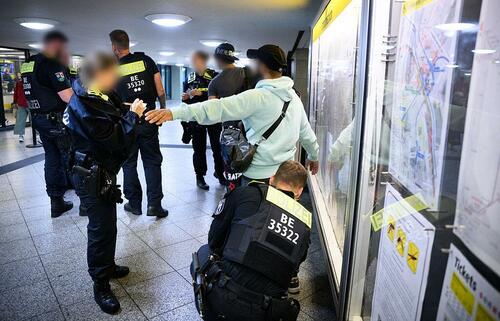
“Increasingly Becoming No-Go Areas” – Violent Crime Explodes At German Train Stations
“Increasingly Becoming No-Go Areas” – Violent Crime Explodes At German Train Stations
Exploding violence in Germany has long been tied to mass immigration, as the statistics clearly show, and German train stations are becoming another perfect illustration of this worrying trend.
The number of violent crimes at Berlin central station in 2024 has tripled compared to 2019, which was the last year before the coronavirus crisis. In Cologne, violent crime has grown 70 percent in the same timeframe, according to Welt newspaper.
Those are just two cities, but the same trend is seen everywhere.
“Look at a main train station, in Duisburg, in Hamburg, in Frankfurt. Neglect, drug dealers, young men, mostly with a migrant background, mostly from Eastern Europe or Arab-Muslim cultural areas. This also has to do with irregular migration, as it looks in our inner cities, in the marketplaces“, said Jens Spahn, the CDU parliamentary group leader, in a BILD interview. Remarkably, his own party is massively responsible for Germany’s incredible demographic transformation and crime crisis.
As the left promotes public transport as a big part of the solution to climate change, the reality is that taking public transport is becoming more and more dangerous.
According to police data, the total number of violent crimes at train stations rose from 25,640 in 2023 to 27,160 last year. Meanwhile, women are more and more at risk. Sexual crimes increased from 1,898 to 2,262 within a year, while property damage jumped from 30,961 to 32,671.
This follows data from earlier in the year that showed foreigners commit 59 percent of all sexual crimes on German trains and at train stations, with serious sexual crimes doubling since 2019.
According to a statement, Alternative for Germany (AfD) MP Martin Hess warned: “Train stations, once places of mobility and peaceful encounters, are increasingly becoming no-go areas.“
“In many areas of crime, foreigners are disproportionately represented among the suspects,” he added.
Saxony, which has far fewer foreigners, sees huge crime increase
Even in German states with far fewer migrants, foreigners are contributing to a massive rise in crime and sexual assaults. In Saxony, for instance, crime has jumped massively in just one year at German train stations.
Citing the new data, just released a few days ago, AfD MP Matthias Rentzsch states:
“The sharp rise in crime (total offenses: 11,065 in the first half of 2025) at Saxon train stations is alarming. Whether property crimes, vandalism, or violent offenses: virtually all forms of crime show massive increases. Violent offenses at Saxon train stations rose by a good 42 percent, sexual offenses by over 15 percent, and weapons offenses by almost 87 percent. At some individual Saxon train stations, there were enormous increases in crime. For example, the number of offenses at Dresden Central Station rose by 24.6 percent, at Leipzig Central Station by 57.2 percent, and at Bischofswerda Station by 100 percent,” he said.
Rentzsch points out an especially shocking statistic in one German city: “The Chemnitz Central Station is the unfortunate leader, with an increase of 212.5 percent.”
As with every single German state, migration is the biggest driver of this crime surge.
“The uncontrolled mass immigration, largely driven by the CDU/CSU and SPD, is clearly having an effect: almost Foreign nationals account for 50 percent of all crimes committed at Saxon train stations, and there is a significantly above-average proportion of foreign suspects in violent, property, sexual, and drug-related offenses,” he said.
Notably, in Saxony, only 8 percent of the population is made up of foreigners, yet they are responsible for 50 percent of all crimes in train stations. Another 5 percent or so of the population are German citizens with a migration background.
Government avoids talk of mass deportation, focuses on mass surveillance
Due to the drastic increase in acts of violence around the train stations, Federal Interior Minister Dobrindt (CSU) says he wants to take action, even as the police union speaks of “intolerable“ conditions.
Knives also play an increasingly large role in train stations. During just one year, the number of weapons offenses rose from 589 to 808, and property damage from 16,786 to 17,595. As Welt notes, “Foreign nationals are overrepresented across all crime groups.”
Meanwhile, German police unions are calling train stations across the country “crime hotspots.”
The fact that public space is closing to Germans is becoming more and more apparent, as young men from foreign lands, along with Germans with a migration background, increasingly dominate these vital areas. As with the case of swimming pools and Christmas markets, the solution is more surveillance that increasingly relies on artificial intelligence and a large police state presence.
As Welt notes, “Cameras are now running in many train stations, which are also intended to detect abnormalities at an early stage with AI support and can help emergency services assess the situation. According to Dobrindt, 200 cameras are now in use in Munich alone, which ‘contributes to de-escalation.’ The interior minister announced an expansion of video surveillance – technology has tripled the number of suspects identified in recent years.”
Remarkably, even as these technologies increase more suspects, crime keeps rising. In part, suspects are likely given light or no criminal sentence at all, and many of those who are caught are never deported.
The government admits itself it is not partaking in a mass deportation drive, but instead more “control” and “surveillance” to police the imported population.
“Control, surveillance, motivated emergency services. This is our model against crime and our model for an increasing sense of security in Germany,“ said Dobrindt to describe his campaign.
Tyler Durden
Thu, 11/20/2025 – 05:00