Category: News
Hombre de Washington muere por rara cepa de gripe aviar
GRAYS HARBOR COUNTY, Washington, EE.UU. (AP) — Un hombre del estado de Washington es presumiblemente la primera persona en morir por una rara cepa de gripe aviar, pero los funcionarios de salud estatales dijeron el viernes que el riesgo para el público es bajo.
El hombre, un adulto mayor con problemas de salud subyacentes, estaba siendo tratado por una gripe aviar llamada H5N5 después de convertirse aparentemente en el primer humano conocido infectado por esta cepa, según un comunicado del Departamento de Salud del Estado de Washington.
El hombre del condado de Grays Harbor, a unos 125 kilómetros (78 millas) al suroeste de Seattle, tenía aves de corral domésticas en su jardín trasero que habían estado expuestas a aves silvestres, dijeron los funcionarios de salud.
“El riesgo para el público sigue siendo bajo”, asevera el comunicado de los funcionarios de salud estatales. “Ninguna otra persona involucrada ha dado positivo a influenza aviar”.
Los funcionarios de salud indicaron que monitorearán a cualquier persona que haya estado en contacto cercano con el hombre, pero que “no hay evidencia de transmisión de este virus entre personas”.
Los Centros para el Control y la Prevención de Enfermedades de Estados Unidos emitieron hace unos días un comunicado sobre la infección que decía que no había información que indicara “que el riesgo para la salud pública haya aumentado como resultado de este caso”.
No se cree que el H5N5 sea una amenaza mayor para la salud humana que el virus H5N1, el cual fue responsable de una ola de 70 infecciones reportadas en personas en Estados Unidos en 2024 y 2025. La mayoría de esos casos han sido enfermedades leves en trabajadores de granjas lecheras y avícolas.
La distinción entre H5N5 y H5N1 radica en una proteína involucrada en la liberación del virus de una célula infectada y en fomentar su propagación a las células circundantes.
___
Esta historia fue traducida del inglés por un editor de AP con la ayuda de una herramienta de inteligencia artificial generativa.
https://www.chicagotribune.com/2025/11/21/hombre-de-washington-muere-por-rara-cepa-de-gripe-aviar/
Actor Anthony Mackie: “We’ve Been Living Through Death Of American Male For Twenty Years”
Actor Anthony Mackie: “We’ve Been Living Through Death Of American Male For Twenty Years”
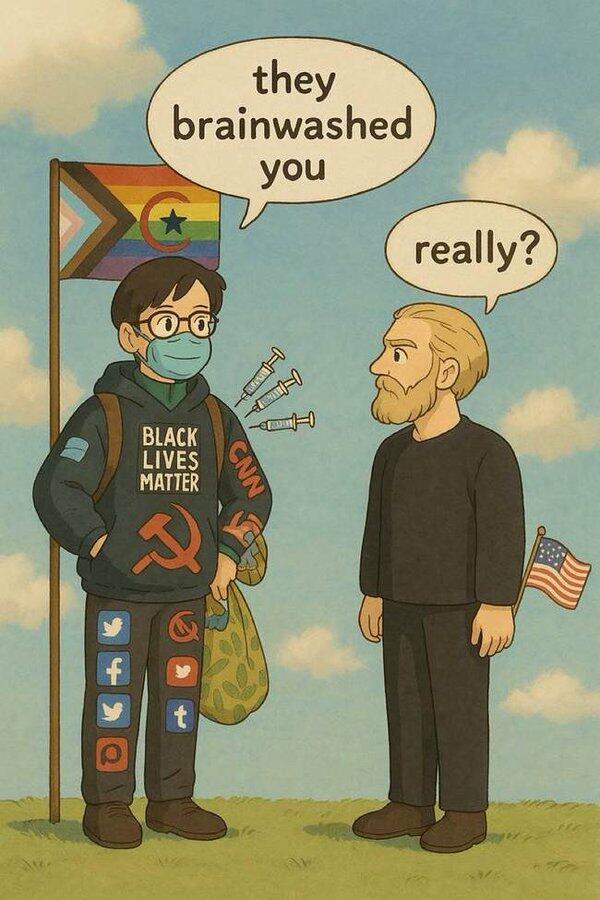
The left’s war on men has spectacularly backfired as young men, once a reliably Democratic voting bloc, have led an exodus from the left to the right.
Democrats are scrambling to figure out why, but the answer isn’t complicated: the party is increasingly driven by Marxist ideology, embraces assassination culture, promotes anti-male values, pushes extremist pro-trans rhetoric, and promotes an anti-American agenda.
Young men are gravitating toward the America First movement because its leaders project strength and advocate for common sense: two genders, the family unit, law and order, faith, and the core principles that have made the West exceptional.
In a recent interview, Anthony Mackie – star of the 2025 film Captain America: Brave New World – told the hosts of The Pivot Podcast that “for the past 20 years, we’ve been living through the death of the American male; they’ve killed masculinity in our communities.”
“But I raise my boys to be young men and however you feel about that you feel about that. My boys will always be respectful. They will always say yes sir yes ma’am no sir no ma’am. They will always say thank you. They will always open a door for a lady. They will always make sure that their mother is taken care of and provided for. They will always be men, and that’s always been the case since they were young,” Mackie said.
Actor Anthony Mackie: “For the past 20 years, we’ve been living through the death of the American male, they’ve killed masculinity in our communities…”pic.twitter.com/5GlC9xR6JK
— Joe Rogan Podcast News (@joeroganhq) November 21, 2025
Perhaps now that the Overton Window has shifted away from “woke and weak,” it’s time to confront the mess created by the Democratic Party’s globalist agenda, which has waged a war on men and, with their Marxist nonprofits, such as Black Lives Matter, that declared war on the nuclear family (read here).
Brandon Smith: Men Of The West, We Are At War
“There’s absolutely nothing wrong with a man who is manly and boys shouldn’t be taught that there is. We’re screwing up an entire generation here. We’re politically correcting ourselves into extinction,” Daisy Luther of the Organic Prepper blog noted many years ago.
There has been a war on masculine men for decades.
Weak men are easy to govern.
Weak men are easy to manipulate.
Weak men are easy to control.
Weak men are easy to attack.
Weak men are easy to steal from.
Weak men are easy to kill.
Dad’s need to be strong, but they also need to… pic.twitter.com/BRgKaQFnOZ
— Tim Kennedy (@TimKennedyMMA) June 9, 2025
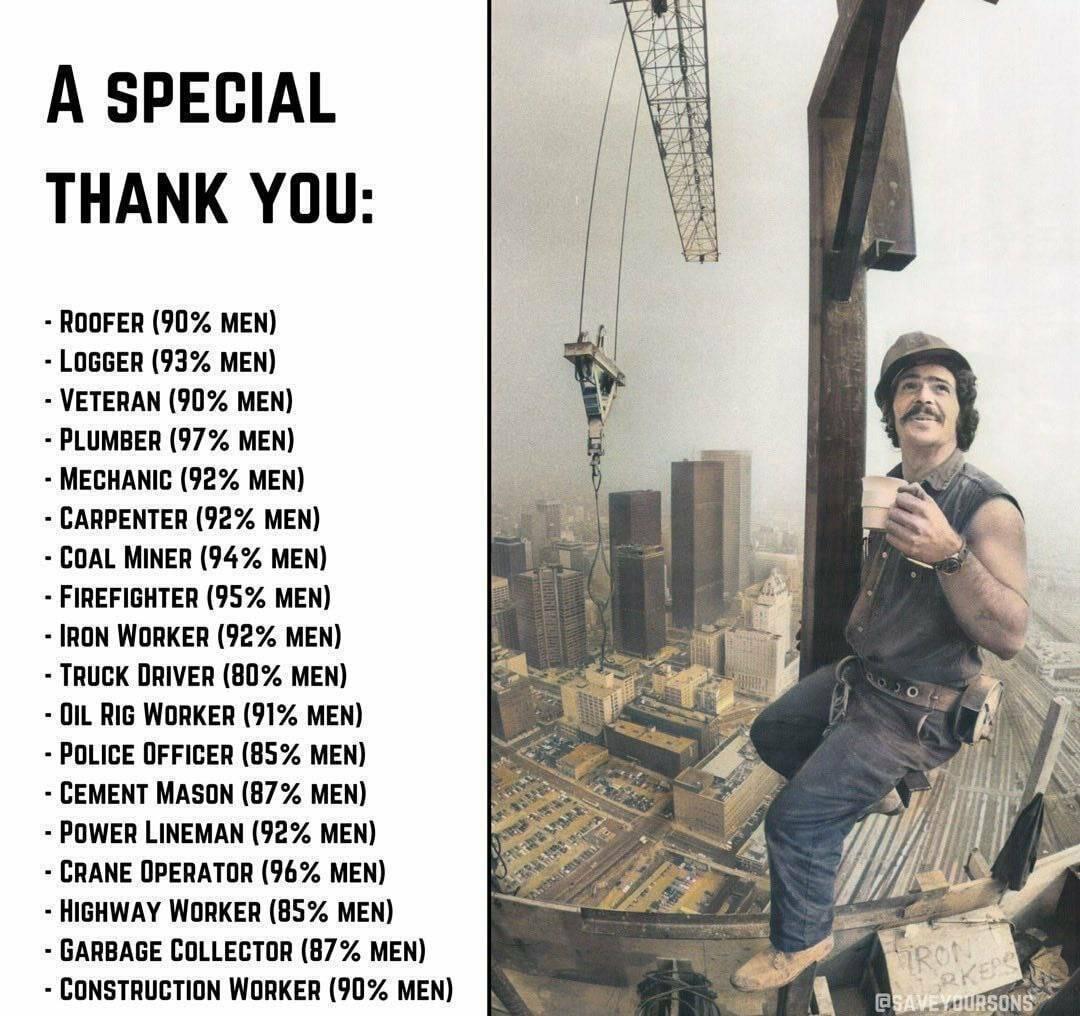
There is nothing wrong with masculinity; in fact, it built the nation – that’s what men do.
And with that understanding, it’s fair to raise serious questions about the Democratic Party’s war on men – and why it exists in the first place. If the goal is to undermine the nation by weakening men, confusing them about their identity, and eroding the foundations that hold the country together, then it becomes alarmingly clear that this agenda is aimed at destabilizing America from within.
Seriously, what happened to men? pic.twitter.com/cUSifBKY2F
— Woke Archive (@WokeArchive) July 24, 2024
Why do globalists fear healthy men who eat beef and eggs? Clearly, they don’t fear soy boys.
Tyler Durden
Fri, 11/21/2025 – 22:10

Bill, Hillary Clinton visit Rev. Jesse Jackson at Northwestern Memorial Hospital
Former President Bill Clinton and former Secretary of State Hillary Clinton stopped by Northwestern Memorial Hospital on Friday to pay a visit to the Rev. Jesse Jackson, who remains hospitalized.
The visit comes more than a week after the civil rights leader and Rainbow/PUSH Coalition founder was admitted to Northwestern with a rare neurological disorder. On Monday, Jackson, 84, was moved out of intensive care, but as of Friday, he remained in “stable condition and under good care” at Northwestern, according to a statement from the Jackson family issued by Rainbow/PUSH.
The family stated that during their visit, “the Clintons expressed their support for Rainbow PUSH’s ongoing work and mission, and Reverend Jackson’s leadership and commitment to protecting and defending civil rights, promoting peace and justice around the world.”
For over half a century, Jackson has been one of the nation’s foremost civil rights leaders and a central figure in national politics, twice running for president.
This is the latest in a series of health setbacks the reverend has experienced in recent years. In 2013, Jackson was diagnosed with Parkinson’s disease. However, his diagnosis changed to progressive supranuclear palsy (PSP) in April.
PSP is a rare neurological disorder caused by damage to nerve cells in the brain that affects body movements, walking, balance and eye movements, according to the National Institute of Neurological Disorders and Stroke.
In recent months, his relatives, including sons U.S. Rep. Jonathan Jackson and Jesse Jackson Jr., a former Illinois congressman who recently announced he was seeking office again, have been providing the reverend 24-hour care in shifts, The Associated Press reported.
Jesse Jackson Jr. told AP last month that his father has struggled to keep his eyes open and is unable to speak but has found ways to communicate with visitors, including squeezing hands.
The Jackson family stated Friday they extend “heartfelt appreciation for the many prayers and kind messages offered during this time.”
https://www.chicagotribune.com/2025/11/21/bill-hillary-clinton-visit-jesse-jackson-hospital/
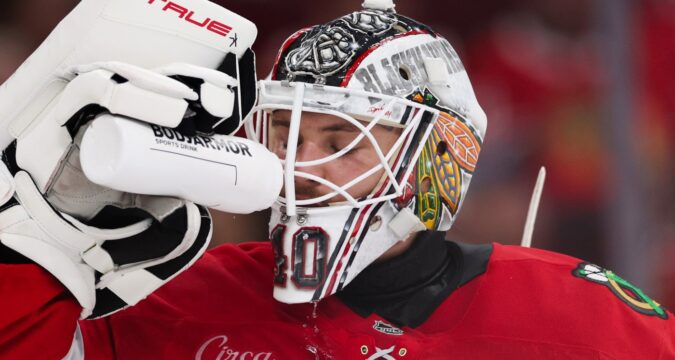
Chicago Blackhawks fall to Buffalo Sabres 9-3 — their most goals allowed in 14 years — for 2nd loss in 2 nights
BUFFALO, N.Y. — Josh Doan scored twice for his second multigoal game of the season, Alex Tuch had a career-high four assists and the Buffalo Sabres routed the Chicago Blackhawks 9-3 on Friday night.
Jason Zucker, Bowen Byram, Ryan McLeod, Mattias Samuelsson, Tage Thompson, Jack Quinn and Jacob Bryson also scored to help the Sabres win for the third time in four games. Ukko-Pekka Luukkonen made 20 saves.
Tyler Bertuzzi had two goals and Alex Vlasic also scored for the Hawks, who have lost two in a row following a six-game point streak. The fell to the Seattle Kraken 3-2 on Thursday night at the United Center.
The nine goals allowed — all by goalie Arvid Söderblom on 30 shots — were the Hawks’ most since a 9-2 road loss to the Edmonton Oilers on Nov. 19, 2011.
Doan opened the scoring with 6:03 left in the first period when he banged home his own rebound. Zucker made it 2-0 1:22 later scoring in his first game back since Nov. 1 because of an illness.
Byram’s power-play goal with 2:27 to go made it 3-0, but Bertuzzi’s 11th goal of the season 39 seconds later made it 3-1 after the first.
McLeod and Samuelsson scored eight seconds apart in the second period to make it 5-1. They were the fastest goals by the Sabres since Cody Hodgson and Nathan Gerbe scored six seconds apart on April 19, 2013.
Vlasic made it 5-2 with 5:15 left in the second, and Doan had his second of the game and seventh of the season with 2:29 remaining.
Thompson extended his goal streak to five games in the third with his 11th.
Up next
Blackhawks: Play host to the Colorado Avalanche on Sunday night.
Sabres: Host the Carolina Hurricans on Sunday.
https://www.chicagotribune.com/2025/11/21/chicago-blackhawks-buffalo-sabres-loss/
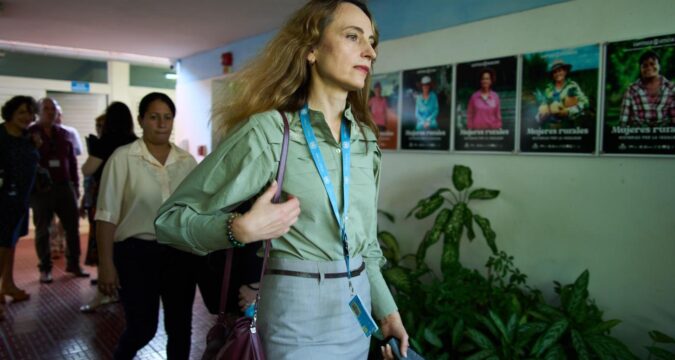
Relatora de la ONU insta a EEUU a levantar sanciones que impuso a Cuba
LA HABANA (AP) — Una experta en derechos humanos de la ONU instó el viernes a Estados Unidos a levantar las sanciones que le impuso a Cuba, diciendo que afectan a toda la población de la isla, impactando sectores como la atención médica, la nutrición y la educación.
Alena Douhan, relatora especial del Consejo de Derechos Humanos de Naciones Unidas, indicó que esta era su segunda visita a Cuba —la primera fue en 2023—, y que ha observado un mayor deterioro en todos los sectores debido a las medidas más estrictas impuestas por Washington.
“Para las comunidades de bajos ingresos, la inflación más elevada, así como la escasez de recursos, hacen que sea muy difícil incluso obtener una nutrición adecuada”, expresó, instando a Estados Unidos a dejar de usar sanciones y “restricciones de máxima presión”.
A finales de octubre, la Asamblea General de la ONU votó abrumadoramente en favor de condenar el embargo económico de Washington a Cuba por 33er año.
Desde 2020, Cuba enfrenta una crisis económica y energética. Su producto interno bruto se ha contraído, y sus 10 millones de residentes han soportado apagones, escasez de alimentos e inflación. Los funcionarios cubanos han culpado del deterioro económico a los cierres por el COVID-19, las sanciones más estrictas por parte de Estados Unidos y otros factores.
“Al hablar de los niños como un grupo muy vulnerable, el hecho de que esos chicos no estén recibiendo comidas suficientes significa que los programas educativos y culturales, así como la participación en cualquier actividad de desarrollo infantil, se reducen sustancialmente” porque no hay recursos para hacerlo, señaló.
Douhan denunció que los cubanos están siendo afectados por una escasez de medicinas.
“Según lo reflejé en mi informe, el 69% de los medicamentos necesarios para la población en Cuba no están disponibles, y por ello estamos observando el aumento de la tasa de mortalidad”, manifestó.
El embargo fue impuesto en 1960, luego de que Fidel Castro encabezara una revolución que derrocó al dictador Fulgencio Batista y nacionalizara propiedades pertenecientes a ciudadanos y corporaciones estadounidenses.
En 2016, el presidente cubano Raúl Castro y el mandatario estadounidense Barack Obama restablecieron oficialmente las relaciones bilaterales. Ese año, Estados Unidos se abstuvo, por primera vez, en la resolución de la Asamblea General que pedía el fin del embargo.
El sucesor de Obama, Donald Trump, criticó duramente el historial de Cuba en el respeto a los derechos humanos. Washington volvió a votar en contra de la resolución en 2017, y desde entonces.
Las sanciones aumentaron significativamente durante el primer mandato de Trump, continuaron bajo su sucesor, el presidente Joe Biden, y se endurecieron nuevamente después de que Trump regresara al cargo este año.
———
Esta historia fue traducida del inglés por un editor de AP con la ayuda de una herramienta de inteligencia artificial generativa.
How The Avalanche Of Academic Papers Threatens Scientific Research
How The Avalanche Of Academic Papers Threatens Scientific Research
Authored by Vince Bielski via RealClearInvestigations,
This is the third part of a series on academic publishing. Read part one here and part two here.
For many years, the prestigious journal Philosophy & Public Affairs published about 14 peer-reviewed articles annually. So its small volunteer staff of renowned scholars was shocked to learn that its publisher, Wiley, was demanding a significant increase in production, at one point requiring 35 new articles within 60 days.
Instead of compromising its peer-review process and rushing low-quality papers into print, then-Editor-in-Chief Anna Stilz at the University of California, Berkeley, led a revolt that culminated in the mass resignation of the journal’s entire editorial staff and board.
“Wiley told me if I didn’t publish more, I wouldn’t have a journal for long. These conversations were very hostile,” said Stilz, explaining the mass resignations. “I wanted to give our readers high-quality pieces. We were selective.”
The rebellion is one of the latest examples of the crisis engulfing the influential world of scholarly journals, which have been a foundation of research and learning for centuries. In recent years, Wiley and four other major publishers of academic literature, called the Big Five, have generated robust profit margins by ushering in large and unprecedented increases in the number of published papers. The globalization of research, with China emerging as the world’s leader a few years ago, and the ongoing ethos of “publish or perish” that’s the lifeblood of academic success, have generated an avalanche of scholarship. The Big Five has accommodated and encouraged it by launching new journals and special issues and fattening others.
Even scientists admit that much of academic publishing has run amok, overwhelming the quality-control methods of many of the 12,000 journals owned by Elsevier, Springer Nature, Taylor & Francis, Wiley, and Sage. As RealClearInvestigations has reported, unscrupulous paper mills are exploiting the publishing breakdown, producing a growing number of fraudulent articles with fake data and AI-generated text that’s tainting the world of science.
The publishing mess has consequences outside the hallowed halls of academia. The $12 billion in annual revenue that the Big Five and smaller publishers collect from research papers is also an issue for taxpayers. A sizeable chunk of this revenue comes from public universities and federal grants that pay fees to publishers for making scholars’ articles available to readers through either journal subscriptions or freely on the internet. The fees, coupled with the low production costs – journal editors typically work for free – have given the Big Five profit margins in the 30%-40% range, matching Microsoft and Alphabet and surpassing Apple last year.
“The biggest problem is that taxpayer money that was supposed to be spent on research instead goes to these publishing companies,” said University of Ottawa Professor Stefanie Haustein, a leading researcher of the publishing market. “I’m not saying publishing should be free, but these companies are making an insanely high profit. They are price gouging taxpayers.”
NIH Moves To Rein In Fees
The Trump administration is moving to rein in the fees. Jay Bhattacharya, the director of the National Institutes of Health, said in July that the publishers’ article processing charges (APC) are “unreasonably high.” These charges are an increasingly popular alternative to subscriptions because papers become “open access,” or freely available to the public. To protect taxpayers, Bhattacharya said price caps or other restrictions will be placed on the publishing charges for NIH-funded papers starting in January.
The Big Five oppose the caps, saying their fees fairly reflect the many costs involved in publishing. “An APC funding cap is a blunt instrument that would create more problems than it solves, restricting author choice, exacerbating inequities, and destabilizing the publishing ecosystem,” a Taylor & Francis spokesperson told RCI.
Some critics are looking beyond price caps for a “radical change in academic publishing,” according to a report by Cambridge University Press. It surveyed the views of 3,000 researchers, librarians, and funders and came to a conclusion that it admits is “surprising” for a publisher: The industry should churn out fewer articles, and focus on quality over quantity, while the academic community builds out lower-cost alternatives to commercial publishing.
“[T]he sheer volume of publications threatens to overwhelm the ecosystem. Important work risks being lost or drowned out by a surge of low-quality or AI-generated content,” Mandy Hill, managing director of the press, wrote in the October report.
Academic Publishing’s Secret Sauce
It’s hard to imagine a better business model than commercial academic publishing. The Big Five’s dominance, accounting for more than 50% of indexed published papers, has given them the market power to raise fees often above inflation, research shows. Universities are caught in a costly vicious circle: Although they often protest the fees that have increased to about $11 million a year on average, or about a third of a library’s total budget, they also pressure their scholars to publish at a brisk pace. That, in turn, ensures robust demand for space in journals, particularly the prestigious ones such as the Big Five’s Nature and Cell with the highest fees.
In addition to a captive market, academic publishers also enjoy a sizable cost savings particular to their industry. Publishers have various operational costs, but they don’t pay researchers who write the papers, editors who revise them (with the exception of a small honorarium for the editor-in-chief), and academic peer-reviewers who provide basic quality control.
All told, the publication cost on average for a paper is about $400, while the average article processing charge collected by journals is $1800, according to a 2021 study by Alexander Grossmann of Leipzig University in Germany.
“[T]he scholarly community must eventually make a number of decisions if it is to tackle the affordability problem,” writes Grossmann, a professor of publishing. “Are profit margins of 30-40% on taxpayer funds tolerable?”
The Big Five deny they are gouging taxpayers. A Taylor & Francis spokesperson told RCI that the charges are needed to cover “the full spectrum of publishing services, including submission and peer review management, editorial development, ethics checks and investigations, metadata tagging, indexing, metrics, content preservation, technology development and much more.”
A Springer Nature spokesperson told RCI its article processing charges are in line with the expenses associated with publishing an article. “The outreach and editorial support we provide, the promotion of scientific work we conduct, and the infrastructure we maintain and invest in are all undertaken with one goal in mind: enhancing the reach and impact of research,” the spokesperson said.
Growth of the Big Five
The crisis in academic publishing has been decades in the making. In the 1970s, the Big Five controlled less than 10% of the market – sharing it with scientific societies and university publishers – mostly through journal subscriptions to libraries. The subscription model was controversial from the get-go, with the Library of Congress calling out the “sharp and alarming increases” in subscription prices – hovering between 5% and 12% in most years, well above inflation – that were “damaging to the development of the library’s” collections.
With stagnant university library budgets crushed under with weight of increasing subscription prices, a rebellion of academics and librarians gave rise to the open access movement in the early 2000s. It sought to both lower publishing costs and freely share papers with an expanding global research community in the developing world whose universities couldn’t afford multi-million-dollar subscriptions. Under open-access deals, universities or researchers would pay a one-time article-processing charge for each published paper, which would be freely available to the public forever, made possible by the internet.
The Big Five, having expanded their market share almost fivefold after two waves of consolidation in the 1990s, resisted the new open-access model first rolled out by a few smaller publishers, such as BioMed Central. But as open access gained steam, Springer gobbled up BioMed in 2008, a first step in the Big Five’s embrace of the model, giving it a second revenue stream. Today, researchers applaud the growth of open access, which accounts for almost half of all published papers globally, as a triumph for the dissemination of knowledge. But rather than reducing the costs of publishing, they keep going up.
In an extensive study of fees from six major publishers for the period 2019-2023, Haustein, who codirects the Scholarly Communications Lab at Ottawa, found that researchers paid $2.5 billion in article processing charges to these publishers in 2023, triple the amount in 2019. Almost 90% of the journals had increased the charges, often above inflation. The average charge was about $2,900 per paper, with a high of $11,700 for high-profile journals.
“Our analysis demonstrates that there is a massive amount of money spent on APCs and that this amount is growing at a rate that is almost certainly unsustainable,” co-author Haustein wrote.
When publishers are paid by the article, it provides an incentive to maximize production and helps explain the boom in papers. The total number of indexed articles soared 47% between 2016 and 2022 to 2.8 billion, according to a study by University of Exeter’s Mark Hanson.
The publishing spike was led by MDPI, a big publisher devoted to open-access papers. It made most of its revenue from article processing charges for special issues built around a research theme. They epitomize the crisis of quantity over quality. For special issues, guest editors drive demand by soliciting articles from researchers, breaking with the standard practice of allowing researchers to submit papers when they are ready. The turnaround time from submission to acceptance is also sped up, according to Hanson’s study, allowing less time for editors to scrutinize articles for weaknesses and even fraud. And MDPI stood out among the publishers for having lower rejection rates of papers.
“If a publisher lowers its article rejection rates, all else being equal, this will lead to more articles being published,” Hanson wrote. “Such changes to rejection rate might also mean more lower-quality articles are being published.”
The blowup at Hindawi, another publisher focusing on special issues, alerted the publishing world to the magnitude of its fraud problem. Wiley bought Hindawi for $298 million in 2020, calling it an “innovator in open access publishing,” to expand into that fast-growing market and reap the article processing charges. Three years later, Wiley discovered that Hindawi had been heavily infiltrated by paper mills, forcing the retraction of 8,000 suspect articles and ending the Hindawi brand. It lives on as Exhibit A for an out-of-control publishing industry.
Detecting Fraudulent Paper Mills
The Big Five now say they are serious about curbing the publication of fraudulent papers, which are growing at an even faster rate than legitimate publications, according to a 2025 study. Springer Nature, which received 2.3 million submissions last year, has invested many millions in technology and a team of 75 experts to identify suspicious articles, such as AI-generated text and images, before publication and ensure the credibility of its research, the spokesperson said. Taylor & Francis says its integrity team prevents “thousands of fraudulent articles from being published every year.”
But plenty of flawed and fake papers continue to be published, which raises the question of whether the Big Five could be investing more in the battle against paper mills. For example, it can take years for journals to retract junk science articles after they have been flagged as suspicious, and by then it’s often too late, said Nancy Chescheir, chair of the Committee on Publication Ethics (COPE), which recently issued new guidelines to speed up the retraction process. “Editors need to act more quickly in retracting papers before they get included in systematic literature reviews and clinical care, which is happening,” Chescheir told RCI.
Cleaning up the scientific literature, however, is at loggerheads with the exponential growth of papers each year. Busy editors, particularly at less prestigious journals that are most vulnerable to paper mill infiltration, don’t have the time and resources to promptly handle the complexities of figuring out if a paper should be retracted, said Chescheir, who has served as the editor in chief of two biomedical journals.
Chescheir says publishers do need to devote more resources to protecting integrity, particularly for underfunded journals in the developing world. Wiley, for example, owns journals in China through its acquisition of Hindawi.
“The globalization of research is a wonderful thing, but as for providing resources that are adequate to deal with integrity problems across the globe, we are far away from that,” Chescheir said.
Breaking Away From the Big Five
A small number of journals have decided that the best way to protect their integrity is to break away from commercial publishing. Since the 1980s, the editorial boards of about 38 journals have declared their independence, mostly from the Big Five, and gone on to operate, typically under a new name, says Saskia van Walsum, a Ph.D. student researching this trend at the University of Ottawa. In the recent wave of breakaways, including Stilz’s philosophy journal, the push by publishers for more papers was a major complaint.
Stilz’s successor journal, Free & Equal, embraces an alternative approach to academic publishing called “diamond open access” that harkens back centuries to a time when scholars were in charge. It’s a growing movement of thousands of small journals based on the principles that scholars shouldn’t pay to publish papers and the public shouldn’t pay to read them.
The Open Library of Humanities (OLH), a nonprofit that publishes Free & Equal, started in 2013 to address the rising fees of the Big Five. Some 350 libraries, including the Ivies and major public universities in the U.S. and U.K., are backing OLH because they only pay a relatively small fee to the nonprofit, compared to what the Big Five charge, to enable the publication of its 34 titles.
While the economics of nonprofit publishing can work, breakaway journals like Free & Equal, founded in 2024, face a significant reputational challenge. Younger scholars need to publish in prestigious journals to build careers, and it can take several years for new titles like Free & Equal to receive an Impact Factor rating that signals their influence among researchers. Stilz says her new political philosophy journal has started strong, getting almost as many submissions as her former Wiley title.
“You have to trust that your community will come with you when you do a mass resignation,” she said. “You don’t have a brand.”
Tyler Durden
Fri, 11/21/2025 – 21:45
https://www.zerohedge.com/political/how-avalanche-academic-papers-threatens-scientific-research
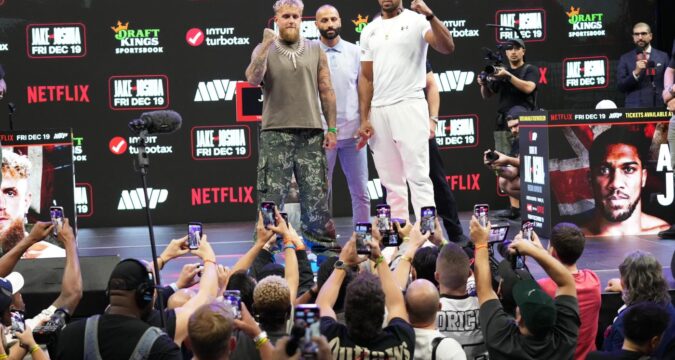
El youtuber convertido en boxeador Jake Paul predice gran victoria sobre el bicampeón Anthony Joshua
MIAMI (AP) — Jake Paul prevé audazmente que su marca no se deteriorará con su última aventura en el boxeo.
De hecho, el YouTuber convertido en boxeador espera que su trayectoria florezca, y predice que el resultado de su próxima pelea contra el reciente campeón mundial de los pesados Anthony Joshua rivalizará con la victoria por nocaut de Buster Douglas sobre Mike Tyson en proporciones de sorpresa.
Paul incluso pronostica que el combate terminará con una victoria por nocaut en el quinto asalto.
Esas son palabras temerarias, considerando que Paul no se enfrentará a un campeón retirado hace mucho tiempo, un ex poseedor del cinturón de la UFC, exjugadores de la NBA o un luchador que cede 25 kilogramos.
Muchos en el mundo del boxeo se preguntan por qué se programó el combate Paul-Joshua para el 19 de diciembre en el Kaseya Center en Miami. Paul y Joshua, dos veces campeón de la máxima categoría, se reunieron el viernes para anunciar oficialmente el combate programado a ocho asaltos que se mostrará en Netflix.
“Estoy aquí para salir y sorprender al mundo”, dijo Paul. “Sé de lo que soy capaz. La gente dice: ‘¡Oh, está fuera de sí!’. He llegado a donde estoy hoy gracias a un optimismo delirante. Nadie piensa que voy a ganar, así que únete a la lista y prepárate para sorprenderte”.
Paul tiene un récord de 12-1 cinco años después de comenzar su carrera en el boxeo. Su calendario de peleas se destaca por un triunfo por decisión tras ocho asaltos sobre Tyson, de 58 años, en un evento que atrajo a 72.300 personas al AT&T Stadium en Arlington, Texas.
A sus 28 años, Paul también tiene victorias sobre Julio César Chávez Jr., así como sobre los retirados luchadores de la UFC Anderson Silva y Nate Díaz. En su segundo combate, Paul derrotó al exjugador de la NBA Nate Robinson en dos asaltos.
Pero Joshua ofrece un desafío mucho más diferente e imponente. Es cierto que el aura de invencibilidad de Joshua se ha borrado tras las derrotas consecutivas por decisión contra el actual campeón Oleksandr Usyk en 2021 y 2022, y un revés por nocaut en el quinto asalto ante su compatriota inglés Daniel Dubois el año pasado.
Pero Joshua (28-cuatro, 25 nocauts) posee el arsenal de golpes que reditúan victorias por nocaut. Lo más interesante en la pelea sería ver la manera en que Paul, quien ha peleado principalmente en la categoría de peso crucero de 200 libras en la mayoría de sus combates, evade el golpe que podría demoler su sueño.
“Es uno de los mejores pesos pesados de la historia”, dijo Paul. “Pero creo que pelear contra un hombre más pequeño a menudo es más difícil para un peso pesado debido a la diferencia de velocidad y debido a la velocidad de los pies, debido a los ángulos. Todo ese poder es genial. Sólo tengo que evitar ese golpe. Creo que puedo hacerlo. Sé que puedo desarmarlo y sumar puntos”.
Será el primer combate de Joshua desde la derrota ante Dubois en septiembre de 2024. Durante su alejamiento del ring, Joshua, de 36 años, también se sometió a una cirugía de codo.
“No puedes subestimar a nadie. Voy a tomarlo en serio”, dijo Joshua. “Después de un año fuera, he realineado muchas cosas en mi vida. Recuperé mi concentración y la puse donde debe estar”.
Joshua reconoció que cualquier cosa que no sea una rápida victoria por nocaut será percibida como una erosión adicional de su posición entre los pesos pesados de élite.
“Lo he visto. Lo he escuchado”, dijo Joshua. “Como le dije a Jake respetuosamente, necesito cortarlo. Necesito romperlo y necesito lastimarlo. Eso es simplemente lo que hacemos”.
Paul originalmente tenía previsto enfrentar al campeón de peso ligero Gervonta Davis en una exhibición el 14 de noviembre en el Kaseya Center. Pero el evento fue cancelado después de que una demanda civil presentada contra Davis por una exnovia incluyó acusaciones de agresión agravada, encarcelamiento falso y secuestro.
“Joshua siempre estuvo en los planes después de Gervonta”, dijo Paul. “Simplemente comenzamos a hablar con miembros de su equipo”.
_____
Deportes AP: https://apnews.com/hub/deportes
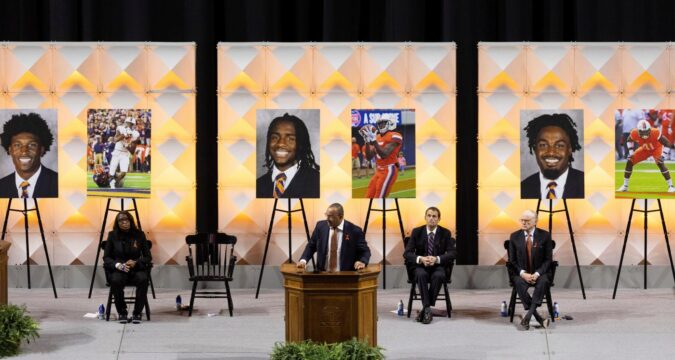
Former University of Virginia student gets 5 life sentences for fatally shooting 3 football players
CHARLOTTESVILLE, Va. — A former University of Virginia student was sentenced on Friday to life in prison for fatally shooting three football players and wounding two other students on the campus in 2022.
Judge Cheryl Higgins gave Christopher Darnell Jones, Jr., who had been on the football team, the maximum possible sentence after listening to five days of testimony. Jones pleaded guilty last year.
The penalty includes five life sentences, one each for the killings of Devin Chandler, Lavel Davis Jr. and D’Sean Perry, and the aggravated malicious wounding of Michael Hollins and Marlee Morgan, Cville Right Now reported.
Authorities said Jones opened fire aboard a charter bus as he and other students arrived back on campus after seeing a play and having dinner together in Washington, D.C. The shooting erupted near a parking garage and prompted a 12-hour lockdown of the Charlottesville campus until the suspect was captured. Many at the school of some 23,000 students huddled inside closets and darkened dorm rooms, while others barricaded the doors of the university’s stately academic buildings.
Jones’ time on the team did not overlap with the players he shot and there was no indication they knew each other or interacted until briefly before the shooting.
Jones will be able to apply for parole when he turns 60, WTVR reported.
Higgins said no one was bullying Jones that night and no was threatening him. The sentence was not “vindictive” but rather based on a logical analysis, said Higgins, who is an Albemarle County Circuit Court judge.
Jones had “distortions in his perception” or reality, but understood his actions, she said, noting that he texted people before the shooting that he would either “go to hell or spend 100-plus years in jail.” Jones discarded clothing and the gun afterward and lied to police he ran into five minutes later, the judge said.
Within days of the shooting, university leaders asked for an outside review to investigate the school’s safety policies and procedures, its response to the violence and its prior efforts to assess the potential threat of the student charged. School officials acknowledged Jones previously was on the radar of the university’s threat-assessment team.
The university last year agreed to pay $9 million in a settlement with victims and their families. Their attorney said the university should have removed Jones from campus before the attack because he displayed multiple red flags through erratic and unstable behavior.
Jones tearfully addressed the court for 15 minutes during his sentencing hearing, apologizing for his actions and for the hurt he caused “everyone on that bus.” Some victims’ family members got up and walked out as he spoke.
“I’m so sorry,” Jones said. “I caused so much pain.”
Speaking to the families, Jones said: “I didn’t know your sons. I didn’t know your boys. And I wish I did.”
Michael Hollins, a football player who was wounded and survived, told reporters after the sentencing that justice was served “for the most part.”
“Even though that no amount of time on this earth in jail will repay or get those lives back, just a little bit of peace knowing that the man that committed those crimes won’t be hurting anyone else,” Hollins said.
https://www.chicagotribune.com/2025/11/21/virginia-football-players-fatal-shooting-sentence/
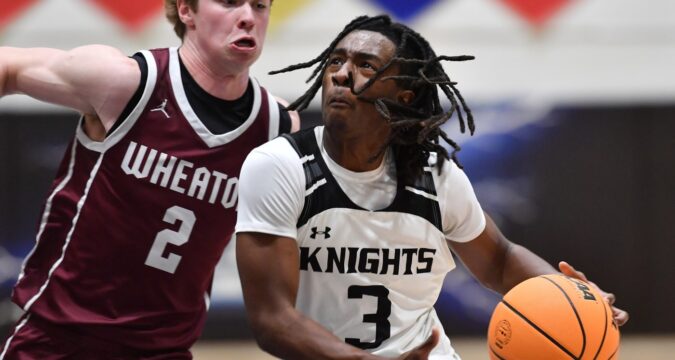
Fresh off picking Grand Valley State, Marshawn Cocroft provides winning mindset for Kaneland. ‘Be even better.’
Can you guys top it?
Kaneland’s Marshawn Cocroft didn’t hesitate when answering in the affirmative.
Last season, Cocroft was definitely the glue — Super, not Elmer’s — for the Knights after transferring in from Aurora Christian. He earned all-state honors for a second straight winter, leading his new team to a third straight conference title and a program record for wins.
Now, the 6-foot senior point guard believes Kaneland can take another step after Kaneland made its first supersectional appearance in 43 years.
“I think we can,” Cocroft said. “We have a lot of underclassmen that are pretty good, but I feel like we can be even better.”
The Knights finished with a 32-2 record after a 68-28 loss in March to DePaul Prep, which went on to win its third straight state title.
Kaneland’s Marshawn Cocroft (3) powers his way to the basket against Crystal Lake South during a Class 3A Rochelle Sectional championship game on Friday, March 7, 2025. (Sean King / The Beacon-News)
“They beat us pretty badly,” Cocroft said. “But they moved up to 4A. A lot of good 3A teams did.”
DePaul Prep isn’t in the way anymore, but clearing that final hurdle to reach state is never easy. Locally, talented Geneva is also moving down to Class 3A due to declining enrollment.
Cocroft is ready to roll for the Knights after averaging 17 points, 3.5 assists and 2.0 rebounds last winter while being named Interstate Eight Player of the Year and Plano Christmas Classic MVP.
His college decision also is out of the way after he committed earlier this month to a scholarship offer from NCAA Division II Grand Valley State.
Kaneland’s Marshawn Cocroft (3) dribbles the ball up the court against Crystal Lake South during a Class 3A Rochelle Sectional championship game on Friday, March 7, 2025. (Sean King / The Beacon-News)
“He’s a leader by example,” Kaneland coach Ernie Colombe said of Cocroft. “Having your best player be your hardest worker in practice always helps.
“He’s a great kid, works really hard and stepped in right away. He was one of our leaders right away, which doesn’t always happen in that situation.”
Cocroft’s transfer situation was unique. He grew up in the same Montgomery neighborhood with several of his Kaneland teammates. Cocroft’s father also had coached several players in AAU.
“He played with a number of our guys in middle school,” Colombe said. “We didn’t know how things would fit together, but it was easy to see rather quickly he would become a big piece.”
Kaneland’s Marshawn Cocroft (3) beats DePaul Prep’s Rykan Woo (4) to a loose ball during the Class 3A Hoffman Estates Supersectional at NOW Arena on Monday, March 10, 2025. (Rob Dicker / The Beacon-News)
Speaking of pieces, seven key players return for this winter, but 6-7 Freddy Hassan has graduated and moved on to college at nearby Waubonsee. His brother, Jeffrey, is a 6-9 junior forward.
According to Colombe, Cocroft and Hassan are the Knights’ most improved players heading into the season, but keep an eye on senior guards Evan Frieders, Isaiah Gipson and Connor Kimme.
“We’ve taken big steps because we’ve spent a lot of time in the weight room,” Colombe said. “Jeffrey has probably come on the most, but you could say the same about Marshawn.”
Cocroft also credited his move to the Illinois Wolves for AAU.
“We had some long practices and I played with kids from DePaul, Benet and others,” Cocroft said. “We made each other better. I wouldn’t say my defense was bad, but I built on it.
“That and just knocking down shots off the dribble, too.”
Kaneland’s Marshawn Cocroft (3) comes up with the ball as DePaul Prep’s Rob Walls (14) hits the deck in the Class 3A Hoffman Estates Supersectional at NOW Arena on Monday, March 10, 2025. (Rob Dicker / The Beacon-News)
He has also noticed the strides taken by Hassan.
“He didn’t shoot that much last year, but this year, he’s improved out to the arc,” Cocroft said of Hassan. “He can dribble now and make moves off the dribble, not just straight-up post moves.”
As far as Cocroft’s future goes, Grand Valley State graduates two senior point guards. He spoke with some Division I schools but didn’t have any offers for that level.
“I wanted to make my decision by December or January and felt right where I belonged on my visit,” he said “I’m not disappointed. I think many are looking more at the portal for transfers.”
Colombe thinks they’re missing the boat.
“I’m biased,” he said. “But I’ve seen some of these local D-I schools play. I think Marshawn could have an impact, but Grand Valley is a great fit.”
Atléticos ofrecen contratos a lanzadores Medina y Waldichuk; jardinero Bleday será agente libre
WEST SACRAMENTO, California, EE.UU. (AP) — El lanzador dominicano Luis Medina y el también pitcher Ken Waldichuk llegaron a sendos acuerdos con los Atléticos para la próxima temporada, con lo que evitaron el arbitraje salarial.
Medina recibirá un salario de 835.000 dólares y Waldichuk devengará 825.000.
El club anunció el viernes que no ofreció un contrato a JJ Bleday, quien se convierte en agente libre tres días después de que el jardinero de 28 años fue dado de baja. Bleday bateó para .212 con 14 jonrones y 39 carreras impulsadas para los A’s durante tres períodos en las mayores este año.
Ni el derecho Medina ni el zurdo Waldichuk lanzaron en las Grandes Ligas en 2025 mientras se recuperaban de sus respectivas cirugías reconstructivas de codo Tommy John.
Medina tiene un récord de 5-14 con una efectividad de 5.35 en 25 aperturas y 31 apariciones para los A’s en dos años.
Waldichuk comenzó este año en la lista de lesionados de 60 días y regresó de su asignación de rehabilitación en julio para lanzar en la sucursal de la Triple-A en Las Vegas. Tuvo un récord de 2-3 con una efectividad de 8.38 en diez aperturas y 11 salidas en total.
___
Deportes en español AP: https://apnews.com/hub/deportes