Category: News
Trump Set To Propose Framework To Halt “Surprise” Obamacare Price Hikes
Trump Set To Propose Framework To Halt “Surprise” Obamacare Price Hikes
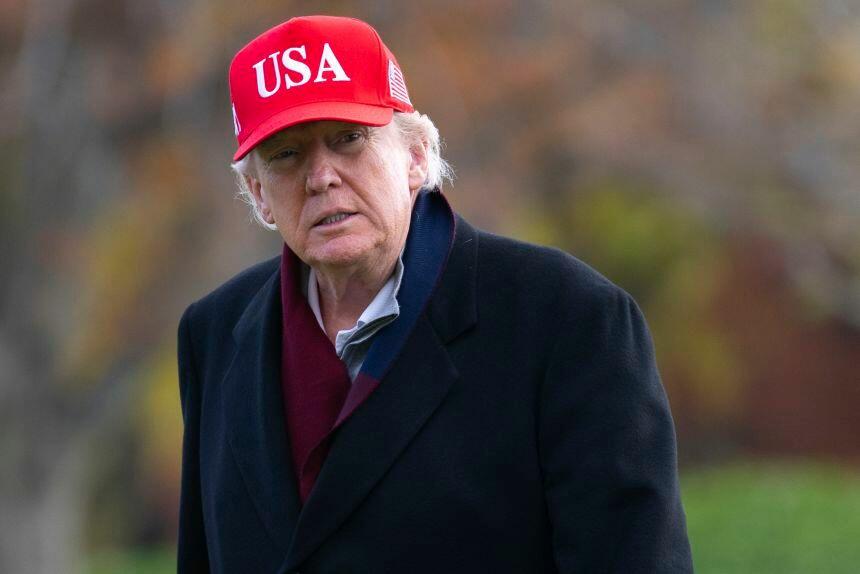
President Trump is expected to announce a general framework to address health care costs, and wants Congress to send a bill to his desk that would halt Affordable Care Act premium spikes, according to MS Now, citing two White House officials familiar with the plans.
Trump’s proposed framework – the “Healthcare Price Cuts Act,” would seek to terminate what White House officials referred to as “surprise premium hikes” due to the ACA, and would eliminate “zero-premium” subsidies currently offered under the ACA – as well as stopping “ghost beneficiaries” – which would require a small premium payment as a means to verify eligibility to receive benefits in order to minimize fraudulent recipients.
The plan also features a deposit program that would incentivize lower-premium options on the ACA exchange. For those who downgrade coverage, the difference in costs would be distributed to a “Health Savings Account” that would be funded by the taxpayers.
The move comes as pandemic-era ACA subsidies are set to expire at year’s end, which will send prices back up for nearly 22 million Americans. News of Trump’s plan comes amid a bipartisan proposal from the House for a two-year extension of Obamacare subsidies. If premiums expire, premiums are expected to more than double next year, while an estimated 2 million more people will become uninsured, the Congressional Budget Office found.
The announcement, which could come as soon as today, is slated to feature remarks from Trump and Dr. Mehmet Oz – administrator for the Centers for Medicare and Medicaid Services, the officials said, adding that Senate Majority Leader John Thune (R-SD) and House Speaker Mike Johnson (R-LA) were expected to have been briefed Sunday afternoon. As CNN reports, however, ” a White House official said that “until President Trump makes an announcement himself, any reporting about the Administration’s healthcare positions is mere speculation.”“
But the framework under discussion envisions temporarily extending the ACA subsidies in some form, while incorporating a series of guardrails aimed at limiting their scope — potentially including new income limits and a requirement that all enrollees pay some form of premium.
Those provisions would address two of the main critiques that Republicans have about the enhanced subsidies, including that so-called zero premium plans drive fraudulent behavior. But it would also set up the ACA for a more fundamental overhaul down the road along the lines of what Trump has been demanding in recent weeks.
Democrats notably kept the government shut down for more than a month over their demand for an extension of the enhanced ACA subsidies. In exchange for their vote to finally reopen through January, Senate Republicans agreed to hold a mid-December vote on an extension, spurring Trump and his team to develop their own competing proposal.
Republicans, meanwhile, have wanted to restore an income cap for the Obamacare subsidies, which had been at 400% of the federal poverty level before the enhancement took effect in 2021. The elimination of that cap made plans more affordable for the middle class.
According to recent polling from KFF, almost 75% of Americans support extending the ACA tax credit, including 50% of Republicans.
GOP Sens. Rick Scott of Florida and Bill Cassidy of Louisiana have rolled out their own proposals that would allow consumers to take at least part of their federal subsidies and put that money into health savings accounts – with Scott’s plan calling for allowing enrollees to use all the aid to buy coverage, including potentially less comprehensive and less expensive plans outside the ACA. Cassidy wants to shift the enhanced subsidies to HSAs and allow enrollees to use the funds to pay for health care services, including doctors visits, prescriptions and glasses.
Question: If the plan allows some people to choose a lower-tier insurance plan on the exchanges to redirect some federal aid into a health savings account, why can’t we also have cheap catastrophic coverage that kicks in after someone’s spent, say $25,000 out of pocket?
Tyler Durden
Mon, 11/24/2025 – 11:00
https://www.zerohedge.com/political/trump-set-propose-framework-halt-surprise-obamacare-price-hikes
Cronología de secuestros en escuelas de Nigeria
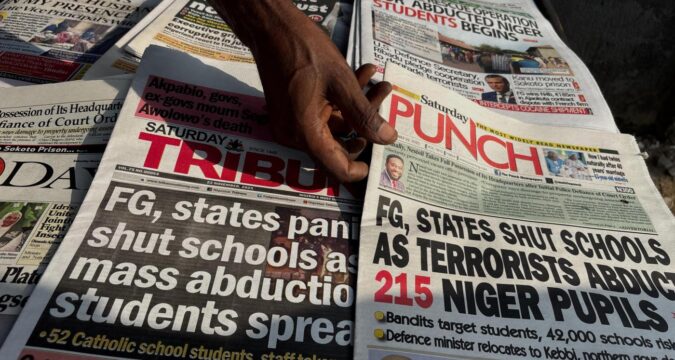
LAGOS, Nigeria (AP) — Nigeria ha sido estremecida por dos secuestros masivos en escuelas en la última semana, con más de 300 niños secuestrados por bandas armadas en el inestable norte del país.
Un recuento de The Associated Press muestra que al menos 1.799 estudiantes han sido secuestrados en una docena de secuestros desde el ataque de Chibok en 2014, en el que guerrilleros de Boko Haram secuestraron a 276 niñas, provocando indignación mundial. La mayoría de los niños han sido liberados, muchos después de que se pagaran rescates. Otros han escapado.
Aquí una cronología de los principales secuestros de estudiantes en Nigeria:
14 de abril de 2014
Miembros del grupo islámico Boko Haram secuestran a 276 estudiantes femeninas en un ataque nocturno en una escuela secundaria gubernamental en Chibok, en el estado de Borno. Más de 90 de las estudiantes aún se reportan como desaparecidas.
19 de febrero de 2018
Una facción de Boko Haram secuestra a 110 niñas de una escuela de ciencias en Danchi, en el estado de Yobe. Casi todas fueron liberadas posteriormente, pero cinco de las niñas fueron asesinadas.
11 de diciembre de 2020
Hombres armados en motocicletas atacan una escuela secundaria gubernamental en Kankara, en el estado de Katsina, y secuestran a más de 300 niños. El gobierno estatal anunció su liberación seis días después tras negociaciones.
17 de febrero de 2021
Hombres armados vestidos con uniformes militares atacan una escuela de ciencias en Kagara, en el estado de Níger, y secuestran a 27 estudiantes, tres empleados y otros. Fueron liberados más de una semana después.
26 de febrero de 2021
Hombres armados secuestran a más de 300 niñas en un asalto nocturno a una escuela secundaria gubernamental en Jangebe, en el estado de Zamfara. Todas fueron liberadas en semanas posteriores al aparente pago de un rescate.
11 de marzo de 2021
Hombres armados secuestran a 39 estudiantes del Colegio Federal de Mecanización Forestal en Afaka, en el estado de Kaduna. Son liberados en las semanas siguientes.
20 de abril de 2021
Hombres armados atacan la Universidad Privada Greenfield en el estado de Kaduna y secuestran al menos a 20 estudiantes. La mayoría fueron liberados, pero cinco fueron asesinados, aparentemente porque las negociaciones de rescate estaban tardando demasiado.
5 de julio de 2021
Hombres armados secuestran a más de 100 estudiantes de la Escuela Secundaria Bautista Bethel en el área de Chikun, en el estado de Kaduna. Los estudiantes son liberados a lo largo de varios meses.
7 de marzo de 2024
Hombres armados en motocicletas secuestran a 287 estudiantes en la escuela secundaria gubernamental en Kuriga, en el estado de Kaduna.
9 de marzo de 2024
Hombres armados irrumpen en un internado en Gidan Bakuso, en el estado de Sokoto, y secuestran a 15 niños mientras duermen.
17 de noviembre de 2025
Hombres armados atacan una escuela en el estado de Kebbi y secuestran a 25 estudiantes mientras matan al menos a un empleado.
22 de noviembre de 2025
Bandas armadas asaltan una escuela católica en el estado de Níger y secuestran a más de 300 estudiantes y personal.
___________________________________
Esta historia fue traducida del inglés por un editor de AP con ayuda de una herramienta de inteligencia artificial generativa.
https://www.chicagotribune.com/2025/11/24/cronologa-de-secuestros-en-escuelas-de-nigeria/

Record number predicted to travel this week for Thanksgiving: ‘The big crowds are coming’
Those planning to travel for Thanksgiving this week should expect a crowd as a record number are predicted to be on the move from Tuesday through next Monday, travel experts said.
Molly Hart, a spokesperson for the AAA Motor Club in Illinois and Indiana, said there will be record numbers traveling “both nationally and here in Illinois.”
“The big crowds are coming. Thanksgiving is always a popular holiday and people want to spend time with their friends and loved ones and that’s not a surprise,” Hart said. “Part of it could be that people do have the ability to work remotely and it gives them a little more affordability and they can leave early before the busiest days on the road which include Tuesday, Nov. 25, and also Wednesday.”
Hart said that flexibility might also allow travelers to return the Monday after Thanksgiving – Dec. 1 – rather than on Sunday which, predictably, will also be a busy day for traveling.
According to a press release from AAA, “over 4.1 million Illinoisans will travel at least 50 miles from home during the Thanksgiving holiday period, which runs from Tuesday, Nov. 25, to Monday, Dec. 1. This marks a 1.8% increase over last year and sets a new record for Thanksgiving travel in Illinois.”
Nationwide, the travel group said just under 82 million people are expected to travel this year for Thanksgiving, an increase of 1.6 million travelers compared to 2024, adding that, “Thanksgiving remains the busiest travel holiday of the year, surpassing both Memorial Day and Independence Day.”
Hart said that in Illinois, according to predictions, nearly 3.7 million will travel by car, “the most popular mode of transportation for Thanksgiving.”
“That’s a 1.5% increase, and 360,666 are going by air, a 3.3% increase from a year ago,” she said.
Beyond those traveling by car, Hart said that an interesting development this year is that people in the state traveling using “the other modes – bus, train, cruises – are estimated to be 128,455 – an 8.4% increase here in Illinois for this holiday.”
“There are a couple ways we can look at that,” she said. “Number one, there was uncertainly earlier this month whether or not people could catch their flights due to delays or cancelations so some opted to drive. Amtrak numbers are up this year and cruises are really popular this season and people are looking to take multi-generational trips.”
Hart said the recent end of the federal government shutdown likely is affecting car travel “which seemed more dependable than air travel during the government’s closing.”
“There is also the issue where some people thought they couldn’t get away and some seats opened on planes because people chose to drive instead,” she said.
While consumer costs are up, Hart said people are pressing on “with many hosting dinners at home as opposed to going out and spending a lot of money.”
“It’s about being together,” she said. “People prioritize family and friends and being with one another.”
Gas prices are basically the same as a year ago with a national average of $3.06 a gallon.
Hart advises that motorists get their cars serviced before traveling.
The busiest travel times coming up will be Tuesday from noon until 9 p.m. and Wednesday from 11 a.m. until 8 p.m., she said.
“Just get up and go. Minimize the traffic you’re going to hit,” Hart said. “Sunday (Nov. 30) it’s going to be busy all day but especially again at 11 a.m. until 8 p.m. and again on Monday (Dec. 1) from noon until 8 p.m. will be the worst time to travel.”
David Sharos is a freelance reporter for The Beacon-News.

Taiwan Center Stage In Trump-Xi Phone Call, As State Media Touts Island’s ‘Return To China’
Taiwan Center Stage In Trump-Xi Phone Call, As State Media Touts Island’s ‘Return To China’
At a moment US-ally Japan is in a rare full-blown diplomatic and (increasingly) military showdown with China, the country’s President Xi Jinping held a phone call with US President Donald Trump on Monday, both sides have confirmed. The last time the two leaders met and talked in detail, which was on the sidelines Asia-Pacific Economic Cooperation (APEC) summit in late October, they had declared a “tariff truce” in an effort to de-escalate trade tensions.
But the Taiwan issue is once again taking center stage, at a moment Tokyo has quite provocatively decided to place medium-range missiles on an island which lies less than 70 miles east of Taiwan. The White House has so far into its term been relatively quite on the issue.
Trump, rather than stoking tensions further, appears to be striking a conciliatory position:
Chinese leader Xi Jinping and US President Donald Trump discussed bilateral cooperation and the issue of Taiwan in a phone call on Monday, Beijing’s state news agency Xinhua reported.
Xi told Trump that the two countries should “maintain momentum in ties” after the two leaders met last month in South Korea, and “stressed that Taiwan’s return to China is an important part of the post-war international order”, according to Xinhua.
And so it appears Trump is content to maintain Washington’s longstanding doctrine of ‘strategic ambiguity’ regarding the Taiwan crisis. Trump’s Taiwan policy has been a big question mark, but arguably this is precisely what strategic ambiguity seeks to convey.
Still, MIT has featured some recent analysis, also citing the non-interventionist Quincy Institute, suggesting Trump could be ready to abandon the US policy which has been in place for decades:
Despite uncertainty in the Trump administration’s China policy, dangerous trends across the Taiwan Strait continue to raise the chance of crisis. Tensions are deepening in the overall U.S.–China relationship, and the credibility of Washington’s One China policy and Beijing’s support for peaceful unification is mutually eroding. While China continues to expand its military capabilities and intimidate Taiwan, the U.S. is keen to mobilize its regional alliances to enhance warfighting against China.
These developments raise the question of whether the longstanding U.S. policy of strategic ambiguity, which contains the possibility of U.S. military intervention to defend Taiwan against China, remains the best approach to preventing war over the island.
Quincy Institute senior research fellow Michael Swaine recently published two policy briefs arguing that Taiwan is not a sufficiently vital interest for the United States to go to war over. He contends that Washington should begin transitioning to a policy beyond strategic ambiguity — a new approach that seeks to enhance support for Taiwan but rules out the possibility of joining a war over the island.
And Nikkei has recently published a report in a similar vein, suggesting Trump could be listening more to those voices which urge a more hands-off approach in China’s backyard, and that the US would be unwilling ultimately to commit military forces to aid in the self-ruled island’s immediate defense:
Trump’s rhetorical vagueness on Taiwan, compounded by the continued absence of any authoritative policy documents on the topic, has prompted observers to look elsewhere for possible reflections of the administration’s views.
One such report that has gone viral on both sides of the Taiwan Strait came from researchers at my former home organization, RAND. Their report from last month, “Stabilizing the U.S.-China Rivalry,” contained the following sentence within its recommendations: “Stabilizing the Taiwan issue should focus on creating the maximum incentive for Beijing to pursue gradual approaches toward unification [my emphasis added].” Although it seems like the authors are advocating Chinese unification with Taiwan, this is hardly the case. Rather, they were highlighting the importance of slowing Beijing’s unification efforts down and basically encouraging Washington to trick China into thinking this is possible, even if the U.S. would still severely complicate forceful unification, to buy more time for the uneasy status quo to persist.
Despite Trump not having raised the issue much with Xi, there have still been a couple of Trump-approved weapons sales to Taipei of late. For now though it looks like Trump is playing nice with Xi on the issue, given the sensitivity of the subject could sour positive momentum in trade relations.
Tyler Durden
Mon, 11/24/2025 – 10:45

Review: Better buildings for all — what to see at the 6th edition of the Chicago Architecture Biennial
The best news in architecture is the sixth edition of the Chicago Architecture Biennial. “SHIFT: Architecture in Times of Radical Change” has put up 100-plus projects from around the globe at sites across the city through the end of February. Led by Florencia Rodriguez, an Argentinian who most recently directed UIC’s School of Architecture, CAB 6 surveys how architecture can help make the world more sustainable, more affordable, and more just for everyone. There’s even a hot pink neon billboard, by R&R Studios of Miami, proclaiming “Beauty for All.” Plus it’s free.
The worst news in architecture is the reliance on fossil fuels and unsustainable raw materials, a global epidemic of homelessness and the kind of destruction that occurs in wartime. CAB 6 stands for the opposite of all this, so it was unsettling to learn that some of its funding has come from the Crown Family Philanthropies, which owns a 10% stake in General Dynamics, the fifth-largest defense company and maker of military hardware in the world. The day before CAB 6 opened, a coalition of participants withdrew in protest.
If “SHIFT” could be said to have a single guiding principle, it would be reuse. The concept is applied broadly throughout the biennial’s multiple “capsules,” or mini-exhibits within the mega-exhibit, and offers innovative approaches to outmoded structures, common supplies, and vernacular styles. Subjects include the discothèque and also the traditional adobe fireplaces of Central Europe, a 285-foot-long bench made of Lake Titicaca reeds and a study of the self-organized markets of Lagos. Something worthwhile can be learned from each.
Chicago Architecture Biennial opens this weekend, bringing a world of architectural ideas to town
Some of the exhibited reuse ventures have already succeeded. An elegant, slatted wooden tower with built-in seating stands in for a decommissioned wood granary in Sturgeon Bay, Wisconsin, slated for demolition but remade by the architecture firm La Dallman into a site for cultural events and educational tours. Tearing it down would have dumped tons of wood, metal and concrete, as well as a central part of the town’s history, into the landfill. Other reuse ideas are purely speculative, like a dream of New York City as a genuinely accessible place, with colorful exterior ramps and elevators encircling existing tenement blocks. There’s Buenos Aires circa 2075, with favelas taking to the skies, suspended above a sea of mud on scaffolding attached to no-longer-inhabitable buildings. The display models could not be more charming, though the situations addressed are dead serious.
Many of the materials used by participating architects will go back into circulation when the biennial is over: bricks bound together with web straps to form a giant makeshift playground on the lawn of the Museum of Science and Industry, glass offcuts tiled into a gleaming pavilion in the Cultural Center, heavy-duty corrugated pipe fashioned into cool lobby furniture at 840 N. Michigan Avenue, CAB’s felicitous new venue. A shuttered H&M store, it serves as a model for what to do with all that empty Loop property. No doubt the owners hope to have it commercially leased again soon.
The U.N. recently reported that nearly 3 billion people worldwide are inadequately housed, hence the prominence accorded to housing innovations in “SHIFT.” These vary widely in scale, from a 38-story tower that sensitively adds 500 units in central Buenos Aires to a modest floating platform designed to harvest solar power, collect rainwater, and provide basic hygiene needs for river dwellers in Latin America. The latter is presented via a simple video; Natura Futura used its CAB 6 budget to actually build and install “The Collector” on the Babahoyo River in Ecuador. Indeed, housing is the one area in which “SHIFT” presents mostly completed, real-world projects, primarily via “Inhabit, Outhabit,” a smartly produced three-channel film, projected huge in a dedicated space on the fourth floor of the Cultural Center. It features 29 collective housing projects from around the world, among them a cohousing facility for artists and their families in London, where rent is reduced in exchange for residents offering free creative programing to the neighborhood; 16 new bioclimatic dormitories for students at the University of Dakar; a 15-apartment complex in central Basel erected on a seemingly impossible lot hemmed in by parking lots and party walls; and a rounded apartment tower with ample communal spaces in Shenzhen inspired by the Hakka, a traditional southern Chinese dwelling. If you don’t already want to be an architect, you will after watching this inspiring documentary. Or at least, I did.
As with any large cultural event these days, multiple conferences and panels and lectures have been programmed, and since this is an architecture biennial, clever spaces for all that public discourse have been built. At 840 N. Michigan Avenue, the Los Angeles firm of Johnston Marklee constructed a three-sided grandstand from the engineered wood commonly used in home construction and board-ups, then made it snazzy by sheathing the outside with mirrored cladding. Plenty of other seating is scattered throughout “SHIFT,” including some heady stuff at the Graham Foundation, like a punched metal library and matching pew dedicated to the architectural writings of Stan Allen, and a series of aluminum benches, by the artist Tony Cokes and MOS Studio, literally made out of choice bits of found text. Sitting on one means resting atop the words “how antisocial” or “it’s a joke.” Not so comfy, that.
Finally, there are all the inflatables. Architects seem to have a thing for them, probably as an antidote to all those heavy, hard, permanent edifices. “SHIFT” provides enough for an alternative Thanksgiving Day parade. They take the form of a megalithic stone monument, down at the Stony Island Arts Bank; giant rectangular bubble-wrap, but twisted; a trio of towering brick walls that rise and fall; a quintet of colossal, colorful blobs; and a 30-foot plastic bag, filled with air, sealed, and, if you were lucky enough to catch one of a pair of performances, mesmerizingly activated by dancer Irene Hsiao.
Some of this is about air as a component of architecture, some about softness as a novel quality for the field. Looking for somewhere quiet to curl up and contemplate these or any of the other myriad ideas of CAB 6? Head to the Cultural Center, up past the fuzzy, stuffed window curtains, through the three-story-tall sewn and zippered puffer arches, and look for Jason Campbell’s “The Linen Closet,” a hand-carved wooden frame hung with dozens of old quilts. Attached to each is a bespoke label printed with a tiny story. Ever build a blanket fort? They’re still some of the most comforting structures around.
Lori Waxman is a freelance critic.
“CAB 6: SHIFT” runs through Feb. 28, 2026, at the Chicago Cultural Center and venues throughout the city, chicagoarchitecturebiennial.org.
https://www.chicagotribune.com/2025/11/24/review-chicago-architecture-biennial/
Key Events This Holiday-Shortened Week: PPI, Retail Sales, Jobless Claims, And Ukraine Ultimatum
Key Events This Holiday-Shortened Week: PPI, Retail Sales, Jobless Claims, And Ukraine Ultimatum
It should be another busy, holiday-shortened, week after a volatile one last week as markets whipsawed around big moves in Fed pricing and AI bubble risk fears. Before we get to Thanksgiving, DB’s Jim Reid writes that in the US, delayed post-shutdown data will be compressed into the first three days because of the holiday. Tomorrow brings September’s retail sales and PPI, followed on Wednesday by jobless claims and durable goods orders. The claims data will be particularly important as they cover the November survey week, and the Federal Reserve is expected to lean heavily on these figures and other alternative indicators ahead of its December meeting, given there’ll be no more payroll data prior to the FOMC.
Globally, attention will turn to inflation reports from Europe and Japan, as well as the long-awaited UK Budget, which could prove pivotal for the country’s fragile fiscal outlook. Perhaps the most significant geopolitical development will be Ukraine’s response to the US ultimatum to accept the 28-point peace plan agreed with Russia, with an ultimatum set for before Thanksgiving on Thursday, although the US seem to have indicated over the weekend that there is some room for negotiation.
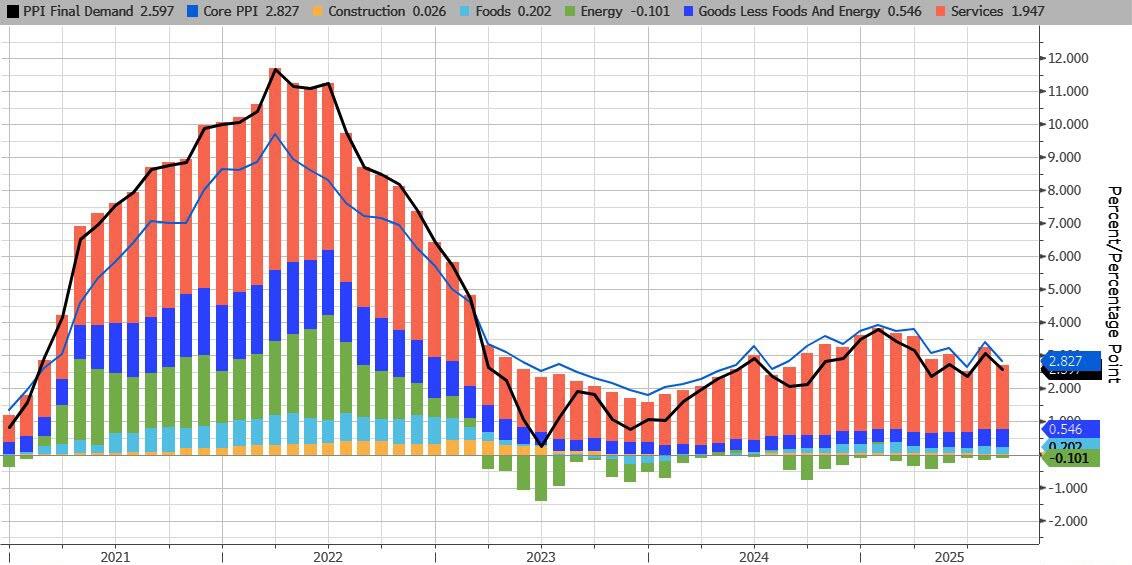
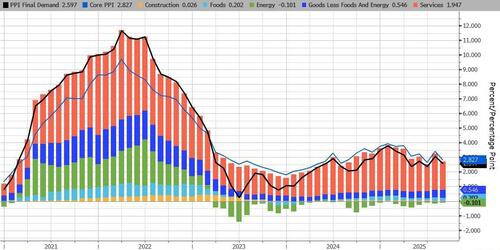
Let’s start with the US, and for tomorrow’s September PPI data, benign prints are expected by DB economists for headline (+0.2% vs -0.1% last) and core (+0.2% vs -0.1%), echoing recent CPI trends. Categories feeding into core PCE will be in focus, with forecasts pointing to a 0.26% monthly gain, keeping the annual rate near 2.9%. This will be the last inflation update before the Fed’s December decision, as October CPI and November CPI have been pushed back to mid-December.
Retail sales are forecast by DB economists to show modest gains after strong summer spending: headline +0.1% (vs +0.6% last), ex-auto +0.2% (vs +0.7%), while retail control may dip slightly (-0.1% vs +0.7%). Even so, Q3 retail control growth is tracking at 6.8% annualized —the strongest since early 2023—supporting expectations for robust goods spending once GDP data is published. Factory sector updates arrive Wednesday with durable goods orders for September and the Chicago PMI for November (45.0 vs 43.8). Headline orders are expected to fall (-2.4% vs +2.9%), but ex-transportation (+0.2% vs +0.4%) and core orders (+0.2% vs +0.6%) should post moderate gains, implying a solid 5.3% annualised increase for Q3. Don’t forget Black Friday where we will start to see early evidence of how strong consumer spending is into the important Christmas period.
No Fed speakers are scheduled at this stage. The blackout period begins on Saturday ahead of the December meeting but with Thanksgiving on Thursday, it will start a lot earlier than it normally would.
European data highlights include preliminary November CPI prints for Germany (2.6% YoY expected), France (0.92%) and Italy (1.23%) on Friday, alongside Q3 GDP releases for Norway, Sweden and Switzerland. Germany’s Ifo survey kicks off the week today, followed by consumer confidence on Thursday and retail sales Friday. France will also report confidence and spending data that day. In the UK, the Autumn Budget on Wednesday will be the main event. Expectations point to roughly £35bn in fiscal consolidation, marking a second historic tax-raising budget under Chancellor Reeves. See our economist Sanjay Raja’s preview here in what is one of the most hotly anticipated UK budgets in recent memory. Sanjay may need a lie down in a dark room after Wednesday as it’s fair to say he’s been in high demand of late.
From central banks, the ECB will publish its October meeting account on Thursday and its consumer expectations survey Friday. In New Zealand, the RBNZ meets Wednesday, with a 25bps rate cut anticipated. Elsewhere, Australia reports October CPI (Wednesday), Canada releases Q3 GDP, and China publishes October industrial profits. Japan’s focus will be on November Tokyo CPI and October activity data (Friday).
With Q3 earnings season winding down, results from Alibaba, Meituan, Analog Devices, Dell and HP will draw attention.
Day-by-day calendar of events, courtesy of DB
Monday November 24
Data: US October Chicago Fed national activity index, November Dallas Fed manufacturing activity, Germany November Ifo survey
Central banks: ECB’s Lagarde and Nagel speak
Auctions: US 2-yr Notes ($69bn)
Tuesday November 25
Data: US November Conference Board consumer confidence index, Richmond Fed manufacturing index, business conditions, Philadelphia Fed non-manufacturing activity, Dallas Fed services activity, October pending home sales, September retail sales, PPI, FHFA house price index, Q3 house price purchase index, August business inventories, Japan October PPI services, EU27 October new car registrations
Central banks: ECB’s Villeroy, Makhlouf, Sleijpen and Cipollone speak
Earnings: Alibaba, Analog Devices, Dell, HP, Workday, Zscaler, Nio
Auctions: US 2-yr FRN (reopening, $28bn), 5-yr Notes ($70bn)
Wednesday November 26
Data: US November MNI Chicago PMI, September durable goods orders, initial jobless claims, Australia October CPI, Norway Q3 GDP
Central banks: RBNZ decision, Fed’s Beige Book, ECB’s financial stability review, ECB’s Muller, Vujcic and Lane speak
Auctions: US 7-yr Notes ($44bn)
Other: UK autumn budget
Thursday November 27
Data: China October industrial profits, Japan November Tokyo CPI, October jobless rate, job-to-applicant ratio, retail sales, industrial production, Germany December GfK consumer confidence, Italy November economic sentiment, September industrial sales, Eurozone October M3, November economic confidence, Canada Q3 current account balance
Central banks: ECB’s account of October meeting, BoJ’s Noguchi speaks, BoE’s Greene speaks
Other: US Thanksgiving Day holiday
Friday November 28
Data: UK November Lloyds Business Barometer, Japan October housing starts, Germany November CPI, unemployment claims rate, October retail sales, import price index, France November CPI, consumer confidence, October PPI, consumer spending, Q3 total payrolls, Italy November CPI, Canada Q3 GDP, Sweden Q3 GDP, Switzerland Q3 GDP
Central banks: ECB October consumer expectations survey, ECB’s Nagel speaks
Earnings: Meituan
Looking at just the US, Goldman writes that the key economic data releases this week are the September retail sales report on Tuesday and the September advanced durable goods report on Wednesday. There are no speaking engagements by Fed officials this week, with the FOMC’s blackout period scheduled to start on November 29.
Monday, November 24
There are no major data releases scheduled.
Tuesday, November 25
08:30 AM Retail sales, September (GS +0.3%, consensus +0.4%, last +0.6%); Retail sales ex-auto, September (GS +0.2%, consensus +0.3%, last +0.7%); Retail sales ex-auto & gas, September (GS +0.2%, consensus +0.3%, last +0.7%); Core retail sales, September (GS +0.1%, consensus +0.3%, last +0.7%): We estimate core retail sales increased 0.1% in September (ex-autos, gasoline, and building materials; month-over-month SA), reflecting mean reversion after an outsized increase in the prior month and a slight headwind from potential residual seasonality. We estimate headline retail sales increased 0.3%, reflecting a boost from an increase in gasoline prices.
08:30 AM PPI final demand, September (GS +0.2%, consensus +0.3%, last -0.1%);PPI ex-food and energy, September (GS +0.1%, consensus +0.2%, last -0.1%); PPI ex-food, energy, and trade, September (GS +0.1%, consensus +0.3%, last +0.3%)
09:00 AM S&P Case-Shiller home price index, August (GS flat, consensus +0.1%, last +0.2%)
10:00 AM Conference Board consumer confidence, November (GS 93.0, consensus 93.3, last 94.6)
10:00 AM Pending home sales, October (GS +3.0%, consensus +0.1%, last flat)
Wednesday, November 26
08:30 AM Initial jobless claims, week ended November 22 (GS 230k, consensus 230k, 220k); Continuing jobless claims, week ended November 15 (last 1,936k)
08:30 AM Durable goods orders, September preliminary (GS +1.5%, consensus +0.5%, last +2.9%); Durable goods orders ex-transportation, September preliminary (GS +0.2%, consensus +0.2%, last +0.4%); Core capital goods orders, September preliminary (GS +0.1%, consensus +0.3%, last +0.6%); Core capital goods shipments, September preliminary (GS +0.2%, last -0.3%): We estimate that durable goods orders increased 1.5% in the preliminary September report (month-over-month, seasonally adjusted), reflecting an increase in commercial aircraft orders. We forecast a 0.1% increase in core capital goods orders—reflecting an improvement in the new orders components of manufacturing surveys but potential payback for the outsized increase in the prior month—and a 0.2% increase in core capital goods shipments—reflecting the increase in orders in the prior month.
02:00 PM Fed Releases Beige Book, December meeting period: The Fed’s Beige Book is a summary of regional economic anecdotes from the 12 Federal Reserve districts. The Beige Book for the September FOMC meeting period noted that three districts had reported modest activity growth, while five districts had reported no change and four districts noted a slight softening, and that uncertainty remained elevated, weighing down activity. In this month’s Beige Book, we look for anecdotes related to the evolution of labor demand and firms’ expectations of activity growth for the remainder of the year.
Thursday, November 27
There are no major data releases scheduled.
Friday, November 28
There are no major data releases scheduled.
Source: DB, Goldman
Tyler Durden
Mon, 11/24/2025 – 10:35

Volcán entra en erupción en norte de Etiopía; arroja cenizas hacia Yemen y Omán
Por SAMUEL GETACHEW
ADÍS ABEBA, Etiopía (AP) — Un volcán que había estado inactivo durante mucho tiempo entró en erupción en el norte de Etiopía durante el fin de semana, enviando columnas de ceniza a través del Mar Rojo hacia Yemen y Omán.
El volcán Hayli Gubbi, en la región de Afar de Etiopía, entró en erupción el domingo por la mañana, dejando al pueblo vecino de Afdera cubierto de polvo.
Mohammed Seid, un administrador local, afirmó que no hubo víctimas, pero que la erupción podría tener implicaciones económicas para la comunidad local de pastores de ganado.
Seid comentó a The Associated Press que no había registros previos de una erupción del volcán Hayli Gubbi y que teme por los medios de vida de los residentes.
“Aunque no se han perdido vidas humanas ni ganado hasta ahora, muchos pueblos han quedado cubiertos de ceniza y, como resultado, sus animales tienen poco que comer”, expresó.
El Centro de Asesoramiento sobre Cenizas Volcánicas de Tolosa, en Francia, también reportó la erupción, la cual detectó en imágenes satelitales.
La región de Afar es propensa a los sismos y un residente, Ahmed Abdela, afirmó que escuchó un estruendo y lo que describió como una onda de choque.
“Se sintió como si de repente hubieran lanzado una bomba con humo y ceniza”, señaló.
El pueblo cerca del desierto de Danakil, que es una atracción turística, seguía cubierto de ceniza el lunes y los turistas y guías que se dirigían al desierto quedaron varados en el pueblo, según Abdela.
Las autoridades locales compartieron fotos y videos de una imponente columna de ceniza que se elevaba desde el volcán.
___
Esta historia fue traducida del inglés por un editor de AP con la ayuda de una herramienta de inteligencia artificial generativa.
Caso de acceso de periodistas de AP a Trump llega a tribunal de apelaciones
Por DAVID BAUDER
WASHINGTON (AP) — The Associated Press y la administración Trump regresan el lunes un tribunal federal de apelaciones en su pugna por el derecho de la agencia a cubrir al presidente Donald Trump, con la AP argumentando que un medio de comunicación no debería ser castigado por su punto de vista y la Casa Blanca insistiendo en que el presidente tiene derecho a decidir quién lo cubre en el Despacho Oval.
La AP demandó a tres funcionarios de la administración Trump, incluida la secretaria de prensa de la Casa Blanca, Karoline Leavitt, en febrero después de que sus reporteros fueran excluidos del “pool” de periodistas que cubren al presidente. La acción de la administración fue, según dijo, en respuesta a una decisión institucional de la AP de continuar usando el término “Golfo de México” como su estilo predeterminado después de que Trump lo renombrara como el “Golfo de Estados Unidos”.
En lo que va de año el caso ha ido a un tribunal de distrito y a un tribunal de apelaciones.
Julie Pace, editora ejecutiva de la AP, escribió en un artículo de opinión el lunes por la mañana que la lucha no es solo por la AP, es el acceso de todos al gobierno que trabaja para la colectividad.
“Cuando hablamos de libertad de prensa, realmente estamos hablando de tu libertad. Los reporteros hacen preguntas, los fotógrafos toman fotos y los periodistas de video graban la historia en tu nombre para asegurarse de que estés informado sobre las cosas que no tienes tiempo de descubrir, ver o aprender por ti mismo”, escribió Pace.
“Permitir que el gobierno controle qué periodistas pueden cubrir la oficina más alta del país y establecer reglas sobre lo que esos periodistas pueden decir o escribir es un intento directo de socavar la Primera Enmienda. Debería preocuparnos a todos”, añadió.
La administración Trump dice que le corresponde a la Casa Blanca, no a la prensa, decidir el acceso a áreas donde el espacio es limitado. La Asociación de Corresponsales de la Casa Blanca tradicionalmente, desde la administración Eisenhower, ha decidido quién está en los pools de prensa. La Casa Blanca trastocó esa tradición en febrero, diciendo que quería ampliar el acceso para incluir a otros medios de comunicación.
“Si la AP pretende sugerir que la Casa Blanca carece de autoridad para limitar quién puede participar en actividades de recopilación de noticias desde áreas sensibles de la Casa Blanca, está legalmente equivocada”, declaró el gobierno en su expediente judicial.
Un tribunal inferior falló esta primavera que el gobierno no podía tomar represalias contra una organización de noticias por su discurso, pero el tribunal de apelaciones detuvo cualquier respuesta al fallo hasta que se lleve a cabo una apelación.
El estilo de la AP también recomienda reconocer el cambio de nombre del Golfo por parte de Trump. El presidente le ha seguido prohibiendo el acceso a la AP hasta que la agencia cambie su estilo de redacción.
Casi cuatro docenas de organizaciones de prensa y medios de comunicación, desde ProPublica hasta Fox News Channel, junto con The New York Times y The Washington Post, presentaron un escrito en apoyo de la AP.
“Cuando cualquier medio de comunicación se ve afectado… la prensa y el público en general pierden, sin importar cuántos reporteros o cámaras queden en la sala”, dijeron los medios.
___________________________________
David Bauder cubre temas de los medios de comunicación y prensa para The Associated Press.
___________________________________
Esta historia fue traducida del inglés por un editor de AP con ayuda de una herramienta de inteligencia artificial generativa.
Chicago-based celebrity video site Cameo gets temporary restraining order against OpenAI
A California federal judge issued a temporary restraining order Friday blocking OpenAI from using the word “Cameo” in connection with its Sora AI-generated video products.
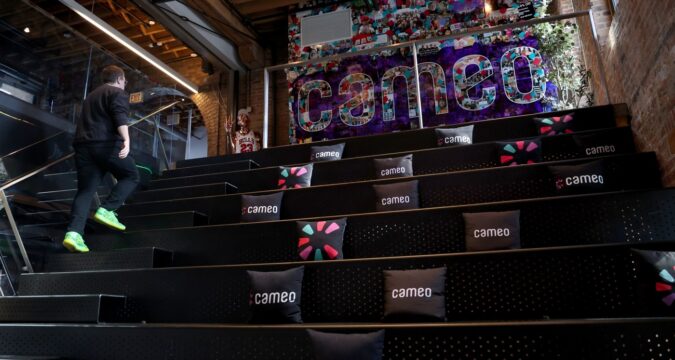
Chicago-based Cameo, the celebrity video messaging website, filed a trademark infringement lawsuit last month alleging the recent rollout of OpenAI’s “Cameo” feature has created growing “consumer confusion” with its widely shared computer-generated videos.
The temporary restraining order, which expires Dec. 22, prevents OpenAI from using the Cameo name in connection with any of its Sora video products and services ahead of a court hearing on the matter next month.
“We are gratified by the court’s decision, which recognizes the need to protect consumers from the confusion that OpenAI has created by using the Cameo trademark,” Steven Galanis, Cameo’s co-founder and CEO, said in a statement. “While the court’s order is temporary, we hope that OpenAI will agree to stop using our mark permanently to avoid any further harm to the public or Cameo.”
Launched in September, the Cameo feature enables users of OpenAI’s Sora app to incorporate celebrity likenesses into their own AI-generated text-to-video creations. Jake Paul and Mark Cuban are among the celebrities that have “opened” up their likenesses to use on the platform.
Videos using deceased celebrities have also been popping up online, employing everyone from children’s TV host Fred Rogers to PBS painting guru Bob Ross in creative and unusual Sora-generated Cameo vignettes.
OpenAI, the privately held San Francisco-based technology company behind ChatGPT and a leader in the artificial intelligence space, issued an emailed statement in response to the temporary restraining order.
“We disagree with the complaint’s assertion that anyone can claim exclusive ownership over the word ‘cameo’, and we look forward to continuing to make our case to the court,” an OpenAI spokesperson said.
Cameo, the Chicago-based company that launched in 2017, pioneered an online platform for fans to buy personalized video greetings from an eclectic group of stars. It rocketed to unicorn status during the pandemic as virtual commerce took off, but the company has struggled with red ink and downsizing in the post-pandemic landscape.
The company currently has about 40 employees at its Fulton Market office and 60 overall, making it something of a David v Goliath lawsuit against OpenAI to address what Galanis called an “existential” threat to his business in a Tribune interview last month.
Meanwhile, OpenAI has rapidly grown into a tech behemoth with more than 800 million weekly active users on ChatGPT and a valuation north of $500 billion. It has also spawned numerous lawsuits, including one filed last year by the Chicago Tribune and seven other newspapers alleging copyright infringement. The case, brought against OpenAI and Microsoft for allegedly using articles “without permission and without payment” to drive their generative artificial intelligence programs, is ongoing in a New York federal court.
The Cameo trademark lawsuit is seeking OpenAI be enjoined from using the words “Cameo” or “Cameos” in connection with its video services, as well as undisclosed damages.
A hearing on the potential issuance of a preliminary junction is scheduled for Dec. 19.
rchannick@chicagotribune.com
https://www.chicagotribune.com/2025/11/24/cameo-restraining-order-openai-lawsuit/
Jimmy Cliff, gigante del reggae y estrella de “The Harder They Come”, muere a los 81 años
Por HILLEL ITALIE
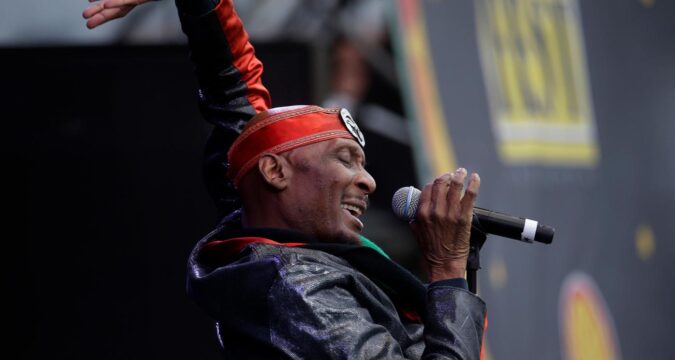
NUEVA YORK (AP) — Jimmy Cliff, el carismático pionero del reggae y actor que predicó alegría, desafío y resiliencia a través de clásicos como “Many Rivers to Cross”, “You Can Get it If You Really Want” y “Vietnam”, además de protagonizar la emblemática película “The Harder They Come” (“Caiga quien caiga”), ha fallecido a los 81 años.
Su familia publicó un mensaje el lunes en sus redes sociales informando que murió debido a una “convulsión seguida de neumonía”. No se disponía de información adicional de momento.
“Para todos sus fans alrededor del mundo, por favor sepan que su apoyo fue su fortaleza a lo largo de toda su carrera”, se lee en parte del anuncio. “Realmente apreciaba a cada uno de sus fans por su amor”.
Cliff era un originario de Jamaica y tenía un carácter animado y un don para las frases pegajosas y letras temáticas que se unió a la emergente escena musical de Kingston en su adolescencia y ayudó a liderar un movimiento en los años 60 que incluyó a futuras estrellas como Bob Marley, Toots Hibbert y Peter Tosh. A principios de los años 70, aceptó la oferta del director Perry Henzell para protagonizar una película sobre un aspirante a músico de reggae, Ivanhoe “Ivan” Martin, que recurre al crimen cuando su carrera se estanca. Henzell nombró la película “The Harder They Come” después de sugerir el título como una posible canción para Cliff.
“Ivanhoe era un personaje real para los jamaicanos”, dijo Cliff a Variety en 2022, con motivo del 50 aniversario de la película. “Cuando era niño, solía escuchar sobre él como un hombre malo. Un verdadero hombre malo. Nadie en Jamaica, en ese momento, tenía armas. Pero él tenía armas y disparó a un policía, así que era alguien a quien temer. Sin embargo, ser un héroe era la manera en que Perry quería hacer su nombre, un antihéroe en la forma en que Hollywood convierte a sus malos en héroes”.
“The Harder They Come”, retrasada por unos dos años debido a financiamiento esporádico, fue el primer gran lanzamiento comercial que salió de Jamaica. Vendió pocas entradas en su estreno inicial, a pesar de los elogios de Roger Ebert y otros críticos. Pero ahora se considera un referente cultural, con una banda sonora ampliamente citada como una de las mejores de todos los tiempos y como un punto de inflexión en el ascenso mundial del reggae.
Por un breve tiempo, Cliff rivalizó con Marley como el artista más destacado del género. En un álbum que incluía a Toots and the Maytals, los Slickers y Desmond Dekker, Cliff fue el artista destacado en cuatro de las 11 canciones, todas bien ubicadas en el canon del reggae.
“Sitting in Limbo” era una reflexión melancólica pero esperanzadora sobre una vida en movimiento inquieto. “You Can Get it If You Really Want” y la canción principal eran llamados a la acción y promesas de pagos finales: “The harder they come, the harder they fall, one and all” (Cuanto más duro vienen, más duro caen, todos y cada uno). Cliff, por otro lado, deja escapar un grito cansado en “Many Rivers to Cross”, un testimonio al estilo gospel que escribió después de enfrentar el racismo en Inglaterra en los años 60.
“Fue un momento muy frustrante. Llegué a Inglaterra con grandes esperanzas, y vi cómo mis esperanzas se desvanecían”, dijo a Rolling Stone en 2012.
La música sigue viva
La carrera de Cliff alcanzó su punto máximo con “The Harder They Come”, pero, después de un descanso a finales de los años 70, trabajó constantemente durante décadas, ya sea en sesiones con los Rolling Stones o colaboraciones con Wyclef Jean, Sting y Annie Lennox, entre otros. Mientras tanto, su música temprana seguía viva. Los sandinistas en Nicaragua usaron “You Can Get it If You Really Want” como tema de campaña y Bruce Springsteen ayudó a expandir la audiencia de Cliff en Estados Unidos con su versión en vivo de “Trapped” del astro del reggae, incluida en el álbum benéfico de un millón de ventas de 1985, “We Are the World”. Otros que interpretaron sus canciones incluyeron a John Lennon, Cher y UB40.
Cliff fue nominado a siete premios Grammy y ganó dos veces por mejor álbum de reggae: en 1986 por “Cliff Hanger” y en 2012 por el bien llamado “Rebirth”, ampliamente considerado como su mejor trabajo en años. Sus otros álbumes incluyeron “The Power and the Glory”, “Humanitarian” y el lanzamiento de 2022 “Refugees”, todos nominados al Grammy. También participó en el himno de protesta de Steve Van Zandt, “Sun City”, y actuó en la comedia de Robin Williams “Club Paradise”, para la cual contribuyó con varias canciones a la banda sonora y cantó con Elvis Costello en el rockero “Seven Day Weekend”.
En 2010, Cliff fue incorporado al Salón de la Fama del Rock and Roll.
Su nombre verdadero era James Chambers, nació en los suburbios de Saint James y, al igual que Ivan Martin en “The Harder They Come”, se mudó a Kingston en su juventud para convertirse en músico. A principios de los años 60, Jamaica estaba consiguiendo su independencia de Gran Bretaña y los primeros sonidos del reggae, primero llamados ska y rocksteady, ganaban popularidad. Llamándose a sí mismo Jimmy Cliff, tuvo varios éxitos locales, incluyendo “King of Kings” y “Miss Jamaica”, y, después de superar las barreras que derribaron a Martin, fue llamado para representar a su país en la Feria Mundial de 1964 en Nueva York.
“(El reggae) es una música pura. Nació de la clase más pobre”, dijo a Spin en 2022. “Surgió de la necesidad de reconocimiento, identidad y respeto”.
Cerca del estrellato
Su popularidad creció en la segunda mitad de los años 60, y firmó con Island Records, el sello de reggae líder en el mundo. El fundador de Island, Chris Blackwell, intentó en vano comercializarlo para audiencias de rock, pero Cliff aún logró llegar a nuevos oyentes. Tuvo un éxito con una versión de “Wild World” de Cat Stevens, y alcanzó el top 10 en el Reino Unido con la edificante “Wonderful World, Beautiful People”. El ampliamente escuchado canto de protesta de Cliff, “Vietnam”, fue inspirado en parte por un amigo que había rendido servicio en la guerra y volvió sumamente dañado.
Su éxito como creador de álbumes e intérprete en vivo llevó a Henzell a buscar una reunión con él y halagarlo para que aceptara el papel: “Sabes, creo que eres mejor actor que cantante”, recordó Cliff que le dijo. Consciente de que “The Harder They Come” podría ser un avance para el cine jamaicano, deseaba abiertamente el estrellato, aunque Cliff seguía sorprendido por lo conocido que se volvió.
“En aquellos días éramos pocos los descendientes africanos que logramos algún tipo de reconocimiento”, dijo a The Guardian en 2021. “Era más fácil en la música que en las películas. Pero cuando empiezas a ver tu cara y nombre en el costado de los autobuses en Londres, era como: ‘¡Guau!, ¿qué está pasando?’”.
___
Esta historia fue traducida del inglés por un editor de AP con la ayuda de una herramienta de inteligencia artificial generativa.