Category: News
Rockies de Colorado ascienden a Warren Schaeffer como mánager a tiempo completo
Associated Press
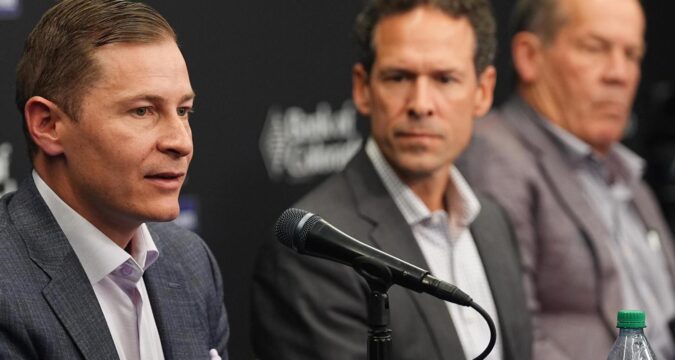
DENVER (AP) — Los Rockies de Colorado anunciaron el lunes que han promovido a Warren Schaeffer a manager a tiempo completo.
Schaeffer asumió el cargo de manera interina después de que los Rockies despidieran a Bud Black, el manager más exitoso en la historia de la franquicia, en mayo tras un inicio de 7-33.
Los Rockies terminaron la temporada con un récord de 43-119 y en último lugar en la División Oeste de la Liga Nacional.
Schaeffer se convierte en el octavo manager a tiempo completo en la historia del club. A sus 40 años, ha sido miembro de la organización de los Rockies por más de una década.
“Estamos seguros de que Warren es la persona adecuada para liderar nuestro club en el futuro. Ha establecido relaciones sólidas con nuestros jugadores, comprende la cultura de esta franquicia y encarna la energía y la ética de trabajo que queremos dentro y fuera del campo”, añadió Paul DePodesta, presidente de Operaciones de Béisbol de los Rockies.
___
Deportes en español AP: https://apnews.com/hub/deportes
J Balvin presenta su auto Rayo y celebra el reggaetón mexicano en el Flow Fest
Por BERENICE BAUTISTA
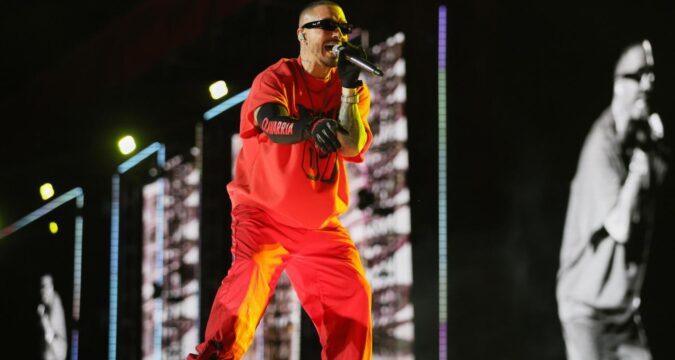
CIUDAD DE MÉXICO (AP) — J Balvin llegó con el impulso de su auto Rayo para apoderarse del escenario principal del Coca-Cola Flow Fest el domingo por la noche. Siguiendo la temática de su más reciente álbum, el astro colombiano presentó un auto Golf negro en la pasarela principal del escenario sobre cuyo toldo bailó rodeado de bailarines.
Como era de esperarse, Balvin interpretó sus éxitos, como “Safari” y “Azul”, y también incluyó “Doblexxó” de su álbum “Rayo” para buena parte de los 84.000 asistentes que se dieron cita en el segundo y último día del festival en su edición 2025.
En su show Balvin se dio tiempo para tener invitados estelares como Farruko para “6 AM” y Jowell & Randy para “Bonita”, así como una sección especial con reggaetoneros mexicanos para “G Low Kitty (Remix)” que tuvo a Uzielito Mix, Yeri Mua, El Malilla y El Bogueto.
“Estoy feliz por lo que está pasando con su movimiento, mi gente, por el reggaetón mexa; de verdad que siéntanse orgullosos que tienen los suyos, apoyen a sus artistas, los artistas de su tierra que ellos son los que van a salir a representar su tierra por el mundo entero”, dijo Balvin.
Balvin le cedió el micrófono a El Bogueto para que cantara su éxito “Cuando no era cantante”.
“Yo hoy celebro que por primera vez el reggaetón mexa tiene una canción en el top 50 con tanto monstruo y tanto artista duro que tiene México, hoy celebramos que El Bogueto es el artista número 1 metiéndole en el Spotify de México; es algo que tenemos que celebrar todos como latinos y como mexicanos, así que vamos a darle”, señaló el artista originario de Medellín, Colombia.
J Balvin cerró su concierto con una sección energética de sus propios temas como “Mi gente”, “RITMO”, “Qué calor” e “In da Getto”.
Natanael Cano
El Flow se ha caracterizado por ser un festival especializado en música urbana latina, pero poco a poco comienza a abrirse más a otros géneros. Este año recibió en su escenario principal al astro de los corridos tumbados mexicanos Natanael Cano, quien además de cactus de neón e imágenes del antiguo Egipto en sus visuales para el concierto estuvo acompañado de su banda con charchetas, acordeón, tololoche y una guitarra.
El concierto de Cano tuvo la peculiaridad de casi ser una presentación en conjunto con su “compa” Gabito Ballesteros, quien como él es originario del estado norteño de Sonora. Juntos cantaron varios temas incluyendo, “El Boss”, “AMG”, “Presidente”, “Cuerno Azulado”, “Tipo Gatsby”, “Ch y la Pizza” y “Perlas Negras”.
Algunos estados de México han impuesto sanciones para los artistas que interpreten canciones que hacen apología del delito, como algunas de las más populares de Cano, pero no es el caso para la Ciudad de México.
Otros artistas destacados de la jornada
La reggaetonera mexicana Bellakath se emocionó hasta las lágrimas al ver que había llenado la Curva 4 del Autódromo Hermanos Rodríguez con su presentación en el escenario principal del Flow. Otros que se presentaron con éxito en el día fueron el chileno Cris MJ, la artista catalana Bad Gyal y los mellizos venezolanos Mau y Ricky. Sech, Young Miko y De La Ghetto también destacaron en el día.
El Bogueto
El Bogueto subió al escenario principal del Flow, pero probablemente habría sido mejor para el festival no recibirlo el domingo.
Apenas horas antes, cinco personas habían sido atropelladas en un evento convocado por el artista y el streamer mexicano Maestro Shifu en el centro de la ciudad. Originalmente, habían invitado a sus fans para regalar gorras tras lo cual planeaban una rodada con motocicletas, pero llegó una multitud y se salió de control.
El conductor y los tripulantes de un auto, que había sido vandalizado por la muchedumbre, arremetieron contra la gente y dejaron un saldo de cinco atropellados que resultaron con lesiones en la piel y distintas contusiones (lesiones dermoabrasivas y policontundidos,) de acuerdo con paramédicos del Escuadrón de Rescate y Urgencias Médicas que acudieron en su auxilio. La policía detuvo al conductor y a los dos pasajeros del auto de 21, 18 y 15 años.
También hubo disturbios, daños a puestos de comerciantes y se tuvo que cerrar una estación del Metrobús.
La policía detuvo a decenas de motociclistas por infracciones de tránsito cuando asistieron al evento, que fue realizado sin los permisos necesarios.
Market Bubbles: A Rational Guide To An Irrational Market
Market Bubbles: A Rational Guide To An Irrational Market
Authored by Lance Roberts via RealInvestmentAdvice.com,
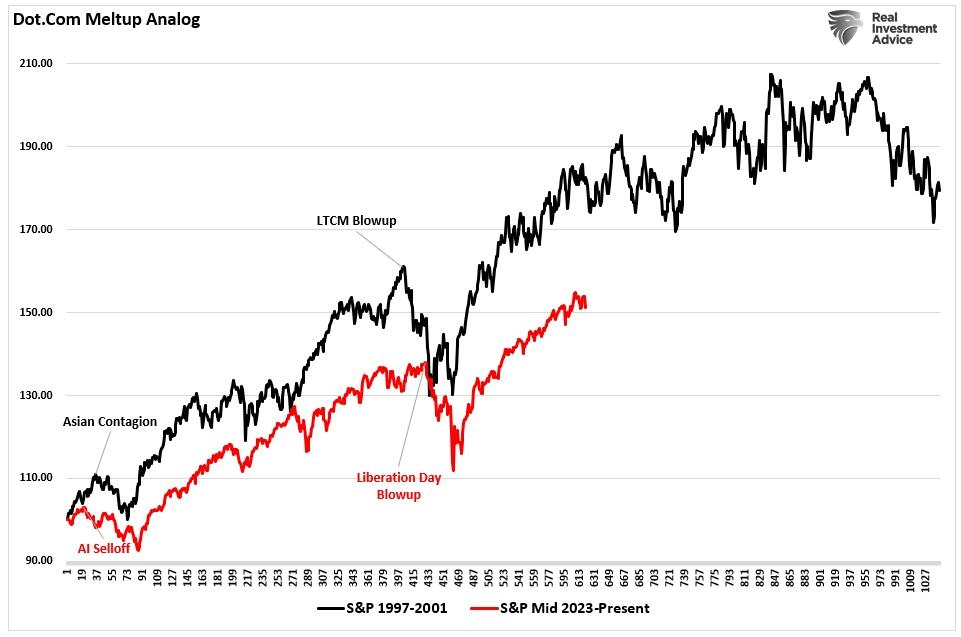
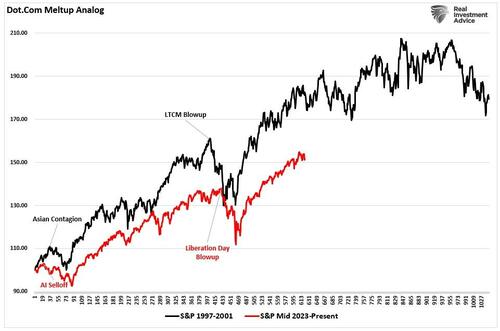
We’re hearing it everywhere: AI is in a bubble. The surge in capital, the parabolic stock charts, and the bold claims from CEOs all have a familiar rhythm. Nvidia’s valuation has soared, along with AI-related startups raising billions with little to no revenue. Investment in data centers, chips, and infrastructure is happening at a scale not seen since the internet boom of the 1990s, which immediately reminds investors of what happened next. The question isn’t whether AI is important; it’s whether the price of that importance is being inflated beyond reason. That is the nature of market bubbles.
Voices in the market are split. Some, like Jared Bernstein, former Biden CEA chairman, said:
“We point out that the share of the economy devoted to AI investment is nearly a third greater than the share of the economy devoted to internet related investments back during the dotcom bubble. So, we think there are enough analogies there to make the call.”
Others argue this is not a bubble, at least not yet.
“Macro bubbles” – asset price distortions with large economy-wide consequences – have generally involved not just overvalued asset prices but also dramatic impacts on spending and capital flows that have been both clues that a bubble is under way and forces that serve to undermine it.
The 1990s was a classic example. Alongside soaring equity prices, investment spending boomed, leverage rose, capital poured in, and profitability and balance sheet strength declined, while credit spreads and equity volatility moved higher. The macro and market imbalances that we saw then, particularly from 1998 onward, are not generally visible yet.” – Goldman Sachs
This split is normal. Every major innovation cycle creates a divide between skeptics who see overvaluation and optimists who see a new era of growth. The challenge for investors is not to take sides, but to understand what bubbles do, why they’re so hard to identify in real time, and how to benefit from them without being destroyed by them.
Yes, we may be in the second market bubble of this century. Alternatively, the market may be pricing in a shift as fundamental as the transition to either electricity or the internet. Either way, investors must think clearly, act deliberately, and avoid the kind of blind speculation that turned past booms into bloodbaths.
Market Bubbles Aren’t All Bad
Market bubbles carry a negative reputation because we witness the devastation in the aftermath of their collapse.
However, from a broader perspective, market bubbles also carry active value. During the inflation of a bubble, you see excessive optimism, capital flowing rapidly, and valuations detached from fundamentals. This is undoubtedly the case with respect to Artificial Intelligence as we currently see it.
Still, this environment often gives rise to genuine innovation. As Jeremy Grantham once argued:
“Bubbles are wonderful at generating new technologies.”
His point echoes through history.
Take the British railway mania of the 1840s. Investors poured capital into rail lines, many of which failed. However, in the end, the result was a vast transport network that transformed the economy. Or consider the late‑1990s dot‑com boom. The always wrong Paul Krugman once said:
“The Internet’s impact on the economy has been no greater than the fax machine.”
That quote was made during the height of the dot-com bubble, a period that many now consider a textbook example of financial excess. However, it also laid the foundation for the modern digital economy. The infrastructure that powers Amazon, Google, and Microsoft was created because billions of dollars flowed into companies, many of which failed. Yet their collective capital expenditures left behind fiber optic cables, server farms, and developer tools that enabled the next wave.
When capital floods into a technological frontier, many bets fail. But some win. That outcome sets a foundation for future growth.
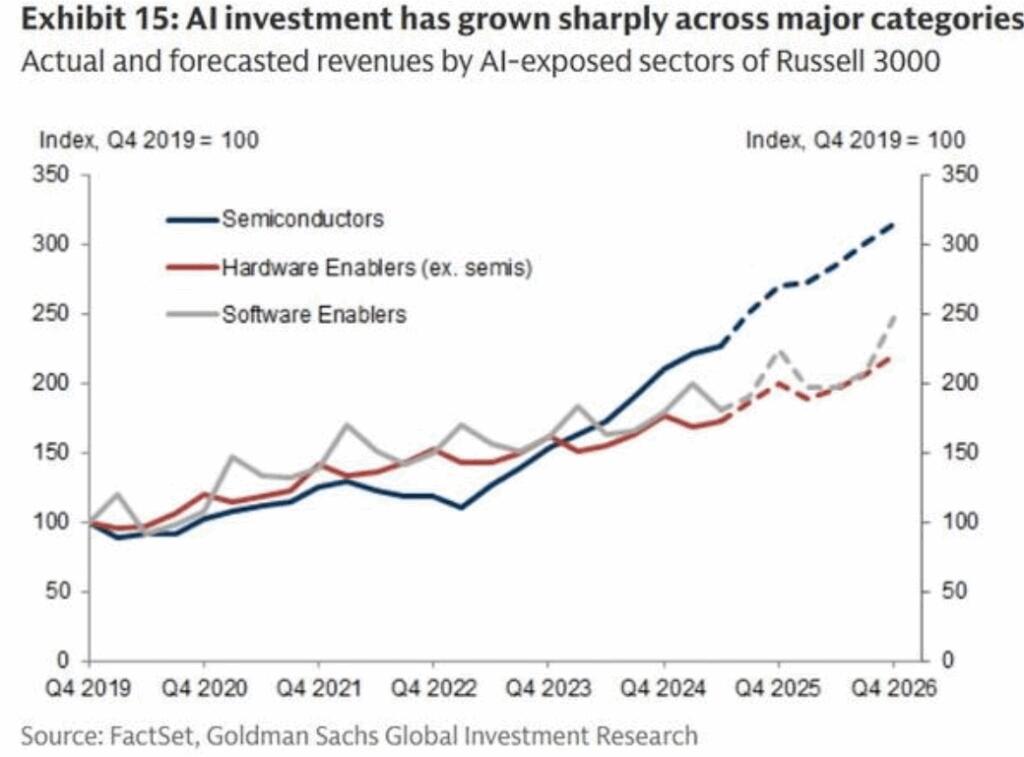
The AI boom is following a similar path. Companies are spending heavily on GPUs, data centers, and custom models. Most of them will not survive, but their investments are accelerating real capabilities. AI is being integrated into products, streamlining operations, and driving the creation of new business models. Nvidia, Microsoft, and Meta are racing to build the next layer of compute infrastructure. This isn’t abstract theory; it’s already showing up in earnings reports and productivity metrics.
Understanding that a bubble can be beneficial involves recognizing two key points.
You don’t dismiss the boom simply because it is speculative. You acknowledge that capital is being deployed and that it will have future positive implications.
You accept that risk is inherent during such periods. From one angle, the bubble looks reckless. However, from another, it seems like the stage where breakthroughs become possible. By appreciating the positive aspect, you gain clarity about what is happening and why it matters for investors.
You should treat a bubble not as a spectacle to be ignored, but as a phenomenon to be studied. Market bubbles are periods where capital loses discipline, but that loss of discipline funds the future. The value created during inflation often matters more than the value destroyed during the burst.
That’s why you don’t ignore market bubbles; you study them, respect them, and use them to your advantage.
Why Bubbles Are Only Obvious in Hindsight
Currently, many predict that the AI market bubble is set to burst. Every time the technology sector wobbles, the media is quick to push headlines of the end of the AI boom. However, each time, those warnings turned false and impaired investors who paid attention to them.
This doesn’t mean the warnings aren’t valid. Yes, current valuations are very high in many cases, and many of the companies either in the market today, or coming to it, likely won’t succeed. The problem is always the “timing” of the call.
For most investors, bubbles are never evident until they pop.
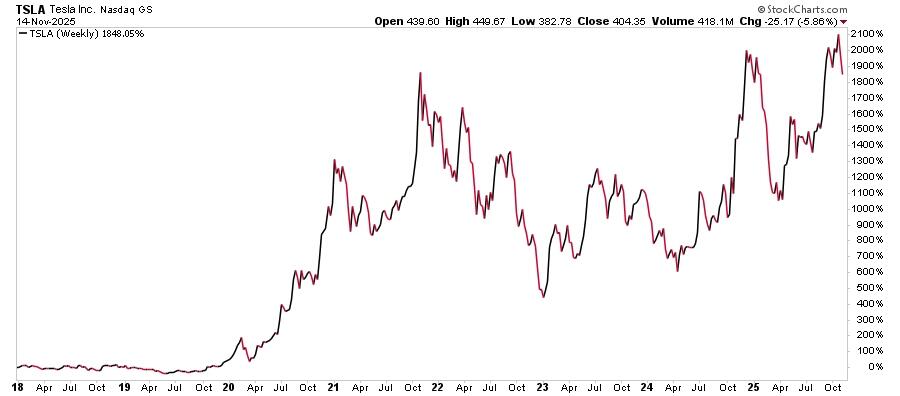
While rising prices may seem like evidence of irrational behavior, this may not be the case today or in the future if the future turns out as expected. Of course, there are a lot of “ifs” in that forecast. A good example was from Research Affiliates discussing Tesla (TSLA) in 2018:
“Tesla’s current price is arguably fair if most cars are powered by electricity in 10 years, if most of these cars are made by Tesla, if Tesla can make those cars with sufficient margin and quality control and can service the cars properly, and if Tesla can raise additional capital sufficient to cover a $3 billion annual cash drain and another billion to service its debt.”
As noted, there were many “ifs” in that statement. However, as we approach that 10th anniversary, TSLA is still operating and growing, but doesn’t sell MOST of the cars in America. However, for investors who bailed on Tesla in 2018, assuming it was a bubble, they have paid a price for that decision.
As noted, while the RA’s analysis was sound, that is what makes market bubbles so hard to identify. Valuations can exceed what you consider reasonable and remain elevated for longer than you anticipate.
In real-time, a bubble appears to be a trend backed by solid fundamentals. The early phases attract smart capital. The next phase brings in copycats and momentum traders. But by the time people start warning about a bubble, the narrative is fully established. Calling a market bubble too early can be just as costly as calling it too late. As Howard Marks wrote:
“Being too far ahead of your time is indistinguishable from being wrong.”
Even seasoned investors misjudge it. During the late 1990s, Warren Buffett was widely mocked for sitting out of the tech rally. His response was simple: he didn’t understand how to value the companies. He was right, eventually, but missed a massive run. Others, like Julian Robertson, tried to short the bubble and suffered enormous losses before it burst.
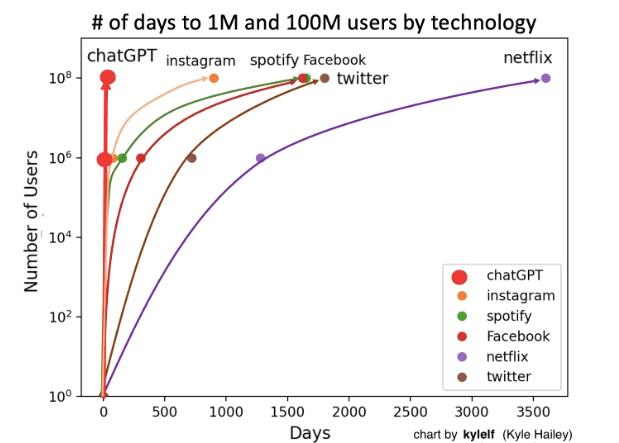
The AI surge fits the classic pattern. A legitimate breakthrough in computing power and algorithmic capability has led to rapid adoption. OpenAI’s ChatGPT reached 100 million users faster than any consumer product in history. Nvidia’s revenue tripled in a year. These facts are real. What’s unknown is how much of this growth is sustainable.
You only know it was a bubble when prices collapse and companies disappear. But by then, it’s too late to protect your capital. The Spyglass article put it well:
“You never really know it’s a bubble until the knife is already halfway through your chest.”
That’s why humility is essential.
If you think it might be a bubble, you’re already ahead of most investors. But timing it? That’s luck, not skill.
How to Participate During the Inflation and Avoid the Deflation
Participating in a bubble doesn’t mean going all in. It means allocating resources wisely, managing risk effectively, and knowing when to step back. The goal is not to call the top. It’s to avoid the worst of the collapse while capturing some of the upside..
Recognize the structural backdrop.
AI is a genuine transformative technology. The AI surge entails substantial capital expenditures in data centers, chips, computing capacity, and cloud services. That means there is real substance beneath the hype.
Nonetheless, the valuations and the speed of investment suggest that the market is pricing in extremely optimistic scenarios, characterized by high growth, low risk, and rapid monetization.
How you should position your investment. To participate while managing risk, you might follow these steps:
Focus on companies with strong fundamentals and realistic business models. Since bubbles bring many “spray and pray” investments, your edge lies in filtering.
Allocate only a portion of your portfolio to the “bubble zone,” and recognize the high-risk/high-reward nature.Do not rely on it for core returns.
Use this bubble to invest in infrastructure and enabling technologies rather than pure “moonshot” names. The infrastructure often survives the bust. For example, in the dot‑com era, the winners included those who built the backbone rather than the most hyped storefronts.
Consider time‑horizon and liquidity. If you invest in bubble‐type assets, you must be prepared for high volatility and potential loss of capital if the bubble deflates.
How to avoid the consequences of the eventual deflation. Since bubbles eventually correct, you must adopt safeguards:
Set exit rules. Define ahead of time the conditions under which you’ll reduce exposure (e.g., valuation multiple, margin of safety erosion, fundamental deterioration).
Diversify across themes. Do not place all your bets in one bubble. If the bubble bursts, you want other anchors in your portfolio.
Monitor fundamentals. The bubble phase often disconnects from fundamentals. When you observe that the disconnect is widening, the risk rises.
Avoid leverage. Borrowing into a bubble makes the downside much steeper. Many historic bubble collapses were amplified by excessive debt.
Keep long‑term winners in view. Some companies will emerge stronger post‑bubble. Try to identify them now, hold them, but be wary of paying hype‑driven valuations.
Start with this: focus on quality. In every bubble, a few companies emerge stronger. Amazon fell by over 90% during the dot-com crash but survived because it had a real business model and strong execution. The rest disappeared. Today, investors should look for companies with free cash flow, pricing power, and tangible applications of AI. Nvidia might be expensive, but it’s selling the picks and shovels in this gold rush. That’s a more sustainable model than a startup burning cash to fine-tune a chatbot.
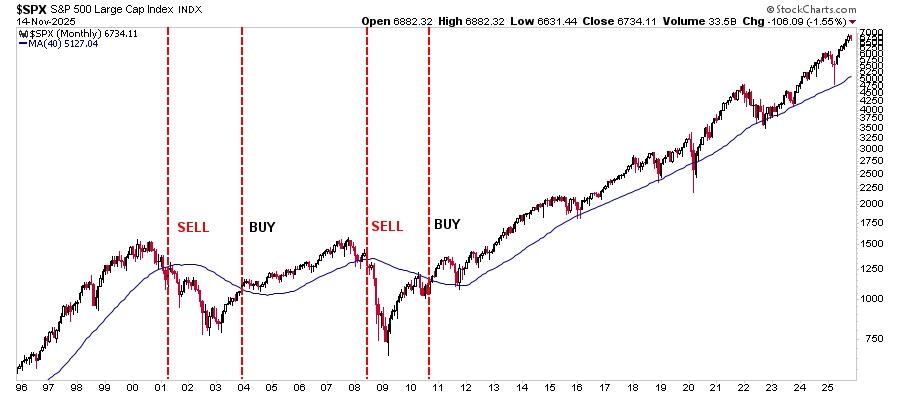
Even using something as simple as a 40-week moving average can help you navigate both the inflation and deflation of a bubble.
No, you won’t get in at the bottom, or out at the top. But remember what is most important: participation is optional, but survival is mandatory.
Tyler Durden
Mon, 11/24/2025 – 13:45
https://www.zerohedge.com/markets/market-bubbles-rational-guide-irrational-market
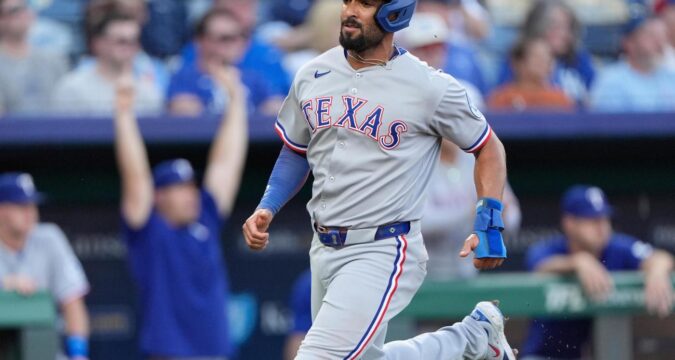
Rangers traspasan a Marcus Semien a Mets por Brandon Nimmo y dinero en efectivo
Por STEPHEN HAWKINS y RONALD BLUM
ARLINGTON, Texas, EE.UU. (AP) — Los Rangers de Texas han intercambiado al segunda base ganador del Guante de Oro, Marcus Semien, a los Mets de Nueva York a cambio del jardinero Brandon Nimmo y dinero en efectivo.
El acuerdo anunciado el lunes pone fin a la carrera de diez años de Nimmo con los Mets. Una persona con conocimiento del acuerdo le dijo a The Associated Press que Nimmo aceptó renunciar a la cláusula de no intercambio en el contrato por 162 millones por ocho años que firmó después de convertirse en agente libre por primera vez tras la temporada 2022. La persona habló con AP bajo condición de anonimato porque ese detalle no fue divulgado.
Nimmo tiene salarios anuales de 20,25 millones cada temporada hasta 2030, y el bateador zurdo de 32 años recibirá un bono adicional de un millón de los Mets por renunciar a la cláusula de no intercambio. Como parte del intercambio, los Mets enviarán a Texas cinco millones antes del 18 de septiembre.
Semien tiene tres temporadas y 72 millones restantes en el contrato de 175 millones por siete años que firmó con los Rangers en diciembre de 2021. Eso fue al mismo tiempo que, también en la agencia libre, añadieron al campocorto MVP de la Serie Mundial Corey Seager con un contrato de 325 millones por diez años.
Eso ayudó a los Rangers a ganar su único título de la Serie Mundial en 2023. Pero ese fue el único récord ganador en las últimas nueve temporadas para el equipo que este año terminó .500 (81-81) por primera vez en la historia de la franquicia.
El jardinero cubano Adolis García, el receptor ambidiestro Jonah Heim y el relevista derecho Josh Sborz, otros tres jugadores que tuvieron roles significativos en el campeonato de la Serie Mundial, se convirtieron en agentes libres el viernes cuando los Rangers no les ofrecieron contratos para 2026.
Semien, de 35 años, ganó su segundo Guante de Oro esta temporada, aunque se perdió las últimas cinco 1/2 semanas, sin volver a jugar después de golpear una pelota con su pie el 20 de agosto. Esa fue solo la segunda vez en sus 13 temporadas en las Grandes Ligas que ha estado en la lista de lesionados.
Antes de esa lesión, Semien solo había perdido seis de los 615 juegos de los Rangers desde que se unió a ellos antes de la temporada 2022. Bateó .230 con 15 jonrones, 62 carreras impulsadas y 62 carreras anotadas en 127 juegos este año, y .249 con 93 jonrones y 319 carreras impulsadas en sus cuatro temporadas en Texas.
En 1.629 juegos de carrera con los Medias Blancas de Chicago (2013-14), Oakland (2015-20), Toronto (2021) y Texas, el tres veces All-Star tiene un promedio de bateo de .253 con 253 jonrones y 801 carreras impulsadas. Estableció máximos de carrera con 45 jonrones y 102 carreras impulsadas en su única temporada con los Azulejos antes de ir a Texas en la agencia libre.
Nimmo fue seleccionado en el puesto 13 en general de la escuela secundaria por los Mets en el draft amateur de 2011. Tiene un porcentaje de embasado de carrera de .364, incluyendo 583 aperturas como primer bate. Ha anotado al menos 81 carreras en cada una de las últimas tres temporadas desde un máximo de carrera de 102 en 2022.
La mayoría de sus turnos al bate esta temporada fueron desde el medio del orden de bateo, y bateó .262, el mismo que su promedio de carrera, con máximos de temporada de 25 jonrones y 92 carreras impulsadas en 155 juegos. Tiene 135 jonrones y 463 carreras impulsadas en sus 1.066 juegos.
___
Ron Blum informó desde Nueva York.
___
Deportes en español AP: https://apnews.com/hub/deportes
Solid 2 Year Treasury Auction Prices At Lowest Yield In Over 3 Years
Solid 2 Year Treasury Auction Prices At Lowest Yield In Over 3 Years
The first coupon auction of the holiday-shortened week just priced and it was a snoozer, which came in right as expected.
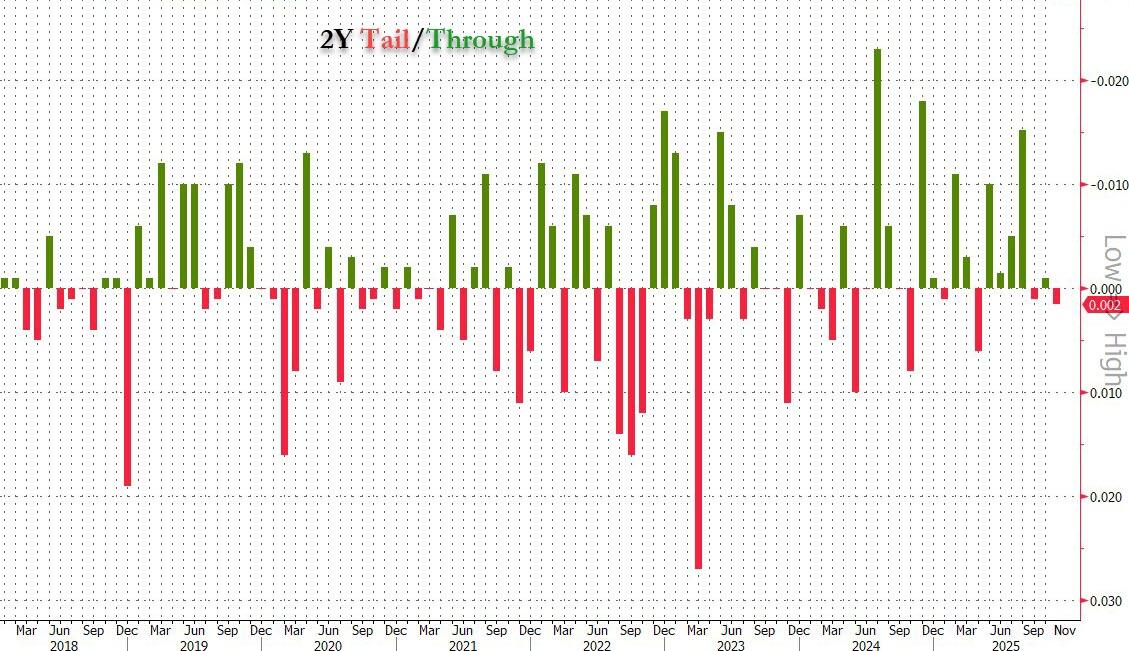
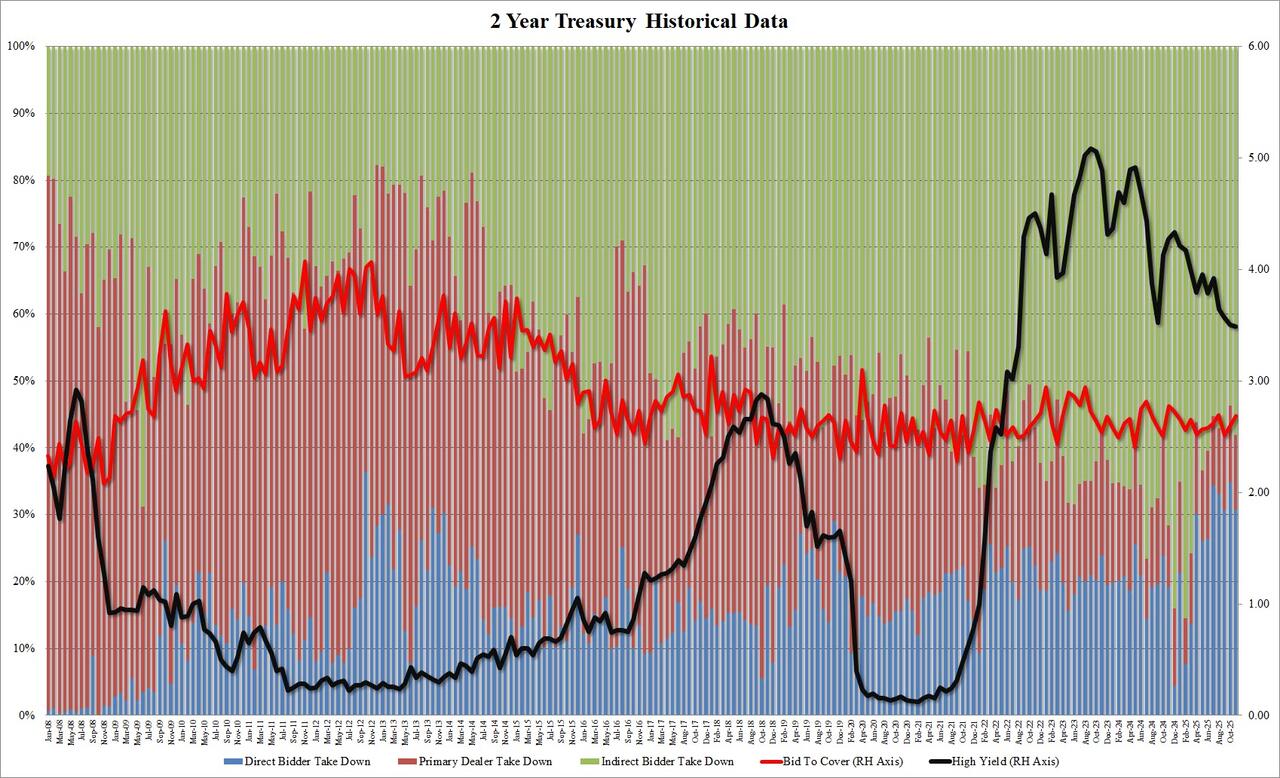
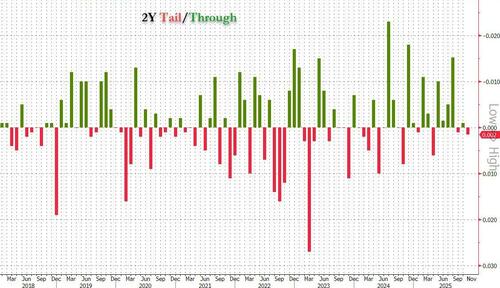
The sale of $69BN in 2 year notes, priced at a high yield of 3.489%, down from 3.504% in October and the lowest since August 2022; it also priced on the screws with the 3.489% when issued.
The bid to cover was 2.684, up from 2.590 and the highest since August.
The internals were also solid, with Indirects awarded 58.1%, the highest since June, and above the six auction average of 57.9%. And with Directs taking 30.7%, in line with the recent average of 30.9%, Dealers were left with 11.2%, also right on top of the recent average of 11.1%.
Overall, this was a solid auction, which came in line with expectations on most metrics, which explains why the market reaction was non-existent with yields trading near session lows after news of the auction priced, and why traders took one look at the results and went on their merry way.
Tyler Durden
Mon, 11/24/2025 – 13:35
https://www.zerohedge.com/markets/solid-2-year-treasury-auction-prices-lowest-yield-over-3-years
Arizona jumps to No. 2 behind Purdue in men’s Top 25 — while Alabama lands in top 10 after win over Illinois
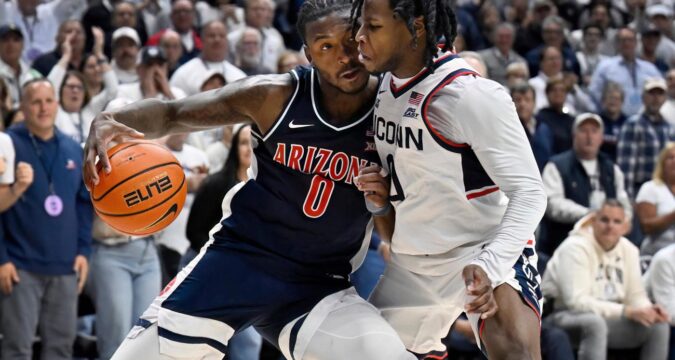
Purdue remained at No. 1 in The Associated Press men’s college basketball poll, while Arizona jumped to No. 2 to continue its opening-month rise after another impressive win against a ranked opponent.
The Boilermakers (6-0) earned 46 of 61 first-place votes in Monday’s poll to remain at the top after beating then-No. 15 Texas Tech by 30 to win the Baha Mar Championship in the Bahamas.
The Wildcats (5-0) earned 11 first-place votes to jump two spots. That came after last week’s win at then-No. 3 UConn, part of run that began with a victory over reigning NCAA champion Florida in Las Vegas and a win against a ranked UCLA team in Los Angeles.
Arizona was ranked No. 13 in the preseason AP Top 25, but jumped to No. 5 after the Florida win before inching up to No. 4 last week.
Houston, which spent a week at No. 1 earlier this month, slid a spot to No. 3 to make room for the Wildcats, while Duke and UConn rounded out the top five. Louisville, Michigan, Alabama, BYU and Florida rounded out the top 10, with the Crimson Tide rising from No. 11.
Illinois dropped from No. 8 to No. 14 following its first loss of the season, a 90-86 loss to then-No. 11 Alabama at the United Center on Wednesday.
No. 24 Vanderbilt and No. 25 Indiana were the new additions to the poll, replacing Wisconsin and Kansas. It is the second straight year the Jayhawks have fallen out of the poll at least once. Before last season, Kansas had been ranked in every poll but one dating to the 2009-10 season.
https://www.chicagotribune.com/2025/11/24/mens-college-basketball-poll-purdue-arizona/
UConn stays No. 1 in women’s AP Top 25 after 1st big test — and Notre Dame moves up after 2-point win over USC
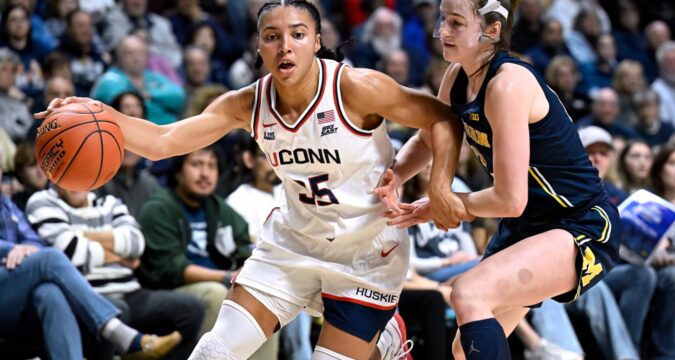
UConn passed its first test of the season to remain No. 1 in The Associated Press Top 25 women’s basketball poll on Monday.
The Huskies received 30 of the 32 first-place votes from a national media panel after beating No. 6 Michigan 72-69 last Friday in the Naismith Hall of Fame Women’s Showcase.
South Carolina, UCLA and Texas followed UConn. That trio heads to Las Vegas this week for a Thanksgiving tournament that will have the Bruins and Longhorns facing each other. The Gamecocks play Duke in the other game Wednesday. The second day of the tournament is the next day.
LSU remained fifth with Michigan staying in the sixth spot after the close loss to the defending champions.
Maryland, TCU, Oklahoma and Iowa State rounded out the top 10. The Cyclones are in the top 10 for the first time this season.
Rising Hawkeyes
Iowa made the biggest jump in the poll this week, climbing eight places to No. 11. The Hawkeyes knocked off then-No. 7 Baylor in the WBCA Showcase in Florida to remain unbeaten. It’s the team’s best ranking since Caitlin Clark led them to the NCAA championship game in 2024.
Falling down
North Carolina State, Baylor, Southern California and Oklahoma State all dropped in the poll after losses. The Wolfpack were stunned by Rhode Island and fell nine places to No. 25. The Bears fell eight spots to 15th after losing to Iowa.
The Trojans dove seven places to 18th after a two-point loss to Notre Dame; the Irish jumped to No. 19 from No. 24 after the win. The Cowgirls dropped to 24th after a loss at St. John’s.
Conference supremacy
The Southeastern Conference has eight teams in the rankings again this week, including three of the top five. The Big Ten has seven schools in the poll, the Big 12 five and the Atlantic Coast Conference four. The Big East has one.
Game of the Week
No. 3 UCLA vs No. 4 Texas, Wednesday
A top-five showdown in Las Vegas with two teams that made the Final Four last season. The Bruins have a size advantage with Lauren Betts while the Longhorns have one of the top players in the country in wing Madison Booker.
https://www.chicagotribune.com/2025/11/24/womens-college-basketball-poll-uconn/
Pentágono investiga a senador demócrata que pidió a militares desobedecer “órdenes ilegales”
Por KONSTANTIN TOROPIN
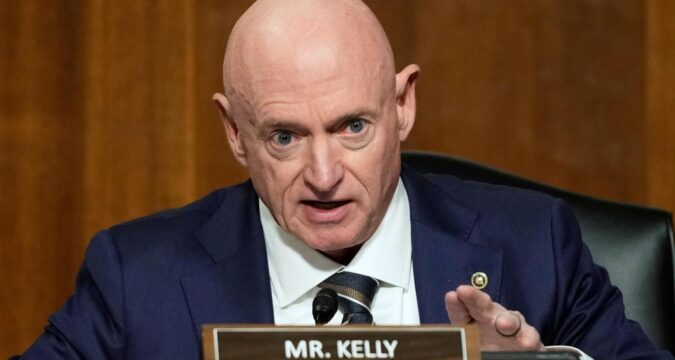
WASHINGTON (AP) — El Pentágono dice que está investigando al senador demócrata Mark Kelly de Arizona por posibles violaciones de la ley militar después de que Kelly se uniera a otros legisladores en un video que instaba a los militares estadounidenses a rechazar órdenes ilegales.
La declaración del Pentágono, que se publicó en las redes sociales el lunes, citó una ley federal que permite que los miembros retirados del servicio sean llamados de nuevo al servicio activo por órdenes del secretario de defensa para un posible consejo de guerra u otras medidas. Kelly sirvió en la Marina como piloto de combate antes de convertirse en astronauta. Se retiró con el rango de capitán.
Es extraordinario que el Pentágono, que hasta el segundo mandato de Trump generalmente se ha esforzado por actuar y parecer apolítico, amenace directamente a un miembro en funciones del Congreso con una investigación.
En su declaración, el Pentágono sugirió que las declaraciones de Kelly en el video interferían con la “lealtad, moral o buen orden y disciplina de las fuerzas armadas” al citar la ley federal que prohíbe tales acciones.
“Se ha iniciado una revisión exhaustiva de estas acusaciones para determinar acciones adicionales, que pueden incluir el llamado al servicio activo para procedimientos de consejo de guerra o medidas administrativas”, dice la declaración.
En el video que se publicó el martes pasado, Kelly fue uno de seis legisladores que sirvieron en el ejército o en la comunidad de inteligencia para hablar “directamente a los miembros del ejército”.
En el video Kelly le dice a los militares que “pueden rechazar órdenes ilegales”. Los demás legisladores instaron a la fuerza armada a “defender nuestras leyes… nuestra Constitución”.
El secretario de Defensa Pete Hegseth, en una publicación en su cuenta personal de redes sociales, dijo que Kelly era el único legislador investigado porque es el único que se retiró formalmente del ejército y, por lo tanto, todavía está bajo la jurisdicción del Pentágono.
“La conducta de Kelly desacredita a las fuerzas armadas y se abordará adecuadamente”, agregó Hegseth.
Días después de que se publicara el video, el presidente Donald Trump acusó a los legisladores de sedición “castigable con la MUERTE” en una publicación en redes sociales.
El portavoz principal del Pentágono, Sean Parnell, también emitió una declaración, diciendo: “Los militares siguen órdenes, y los civiles dan órdenes legales”.
“Estos políticos están fuera de sus cabales”, agregó Parnell.
Hablando el domingo en “Face the Nation” de CBS, Kelly declaró que las palabras de Trump eran “muy serias” y “tienen un peso tremendo”. Kelly añadió que “a raíz de sus declaraciones ahora hay amenazas contra nosotros”.
La oficina de Kelly no ha respondido a una solicitud de comentarios sobre la investigación del Pentágono.
Los militares en Estados Unidos, especialmente los comandantes uniformados, ciertamente tienen la obligación expresa de rechazar órdenes ilegales si determinan que lo son.
Mientras que los comandantes tienen abogados militares para consultar sobre tal determinación, los soldados de menor rango rara vez están en una posición similar y a menudo deben confiar en sus superiores.
También existe el precedente legal que sostiene que simplemente seguir órdenes — la llamada “defensa de Núremberg” porque fue la frase utilizada por los nazis para justificar sus acciones bajo Adolf Hitler — no absuelve a los militares.
Sin embargo, la reacción de las tropas al video ha sido casi inexistente.
Un exmiembro del servicio que ayuda a administrar un foro militar en línea dijo que es poco probable que el mensaje de los legisladores llegue siquiera a los soldados porque el video se publicó solo en X y era demasiado largo para ser republicado en plataformas como TikTok, donde los uniformados realmente consumen información. Habló bajo condición de anonimato para hablar con franqueza y evitar represalias.
___________________________________
Esta historia fue traducida del inglés por un editor de AP con ayuda de una herramienta de inteligencia artificial generativa.
Dallas Fed Manufacturing Survey Sees Production Soaring As Tariff Terrors Fade
Dallas Fed Manufacturing Survey Sees Production Soaring As Tariff Terrors Fade
“Signs indicate business activity is improving,” according to one respondent from The Dallas Fed’s Manufacturing survey in November. However, the comments and the mixed data could leave readers confused…
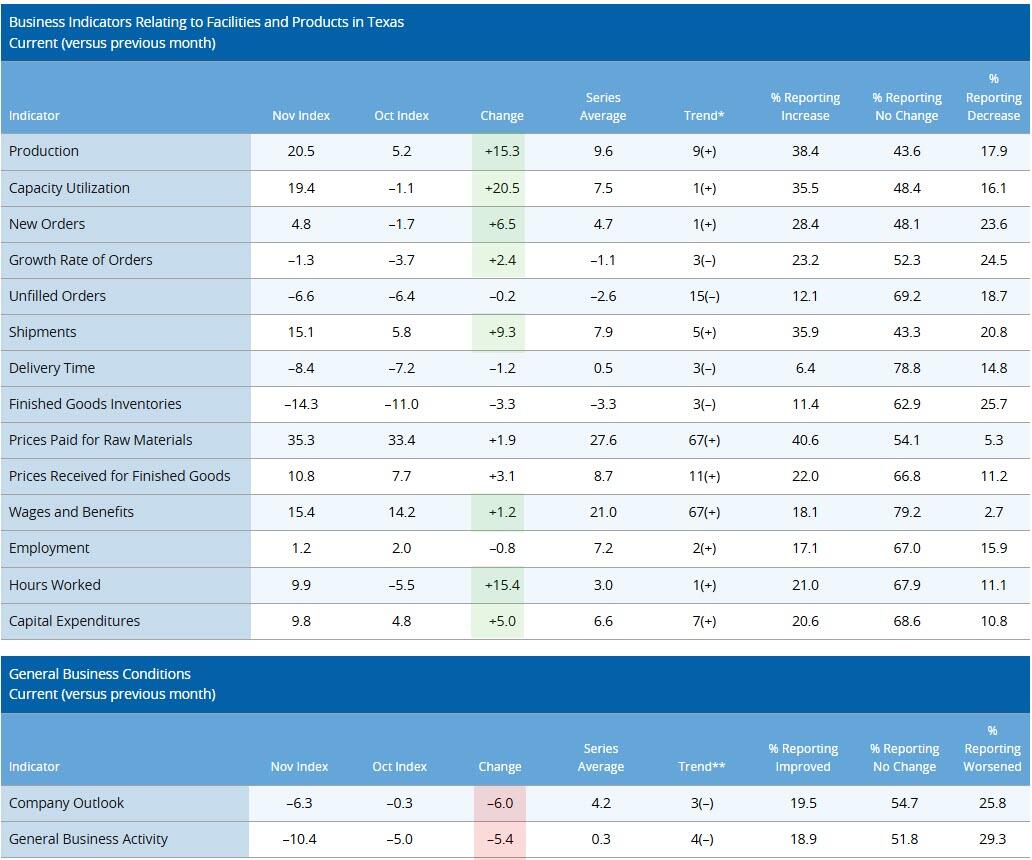
Texas factory activity expanded at a markedly faster pace in November, according to business executives responding to the Texas Manufacturing Outlook Survey.
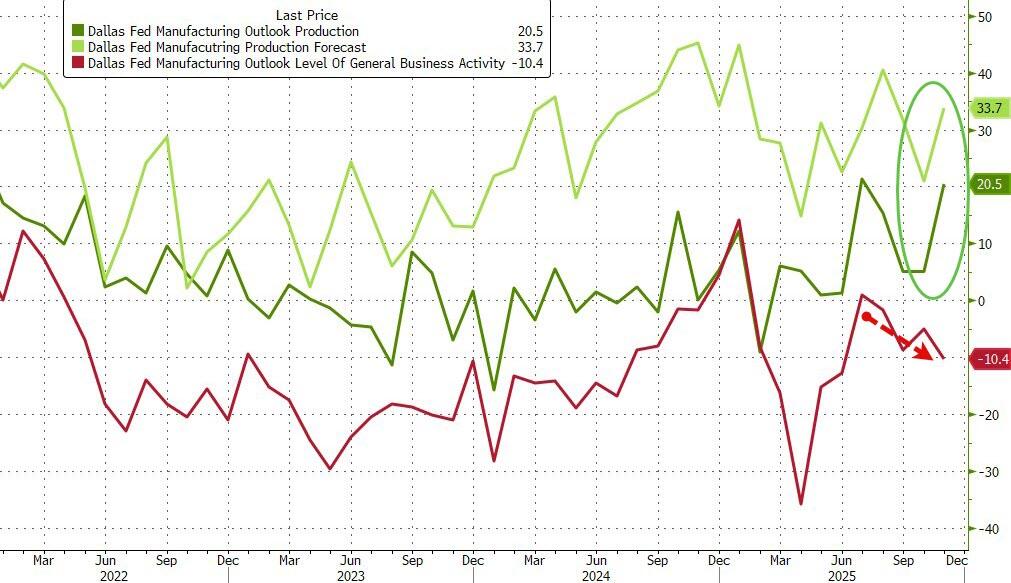
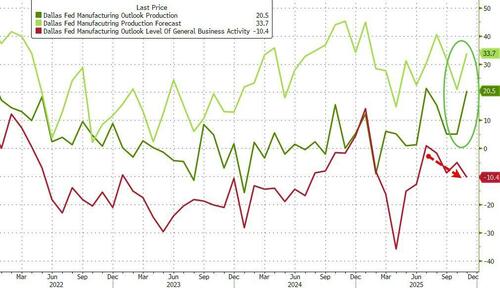
The production index, a key measure of state manufacturing conditions, rose 15 points to 20.5, indicating a notable pickup in output growth. Expectations for manufacturing activity six months from now remained positive. The future production index increased notably, to 33.7 from 21.0, while the future general business activity index edged up to 11.
Other measures of manufacturing activity also pointed to faster growth this month. The new orders index increased to 4.8 from -1.7. The capacity utilization index jumped 21 points to 19.4, and the shipments index increased nine points to 15.1. Price pressures remained flat as tariff talk in the survey’s respondents reduced significantly.
However, perceptions of broader business conditions worsened this month. The general business activity index fell further into negative territory to -10.4 from -5.0. Outlooks also worsened, with the company outlook index falling six points to -6.3 in November.
In pictures, it looks like this: Texas manufacturers are pumping production higher (and expect more in the future) but their headline sentiment above business activity is tumbling to its lowest since June…
Choose your own adventure…
The respondents comments continue the dissonance. Bear in mind that data were collected Nov. 10–18 (right as the shutdown ended), and 70 of the 115 Texas manufacturers surveyed submitted responses.
Bad news (but hopeful)
We don’t know if it’s the shutdown or just that demand has dropped, but our orders have dropped in half.
We continue to see soft incoming orders, with poor general activity in our industry. It’s as if all the chaos in Washington is creating a lot of wait-and-see attitude among our customers’ customers. We are very hopeful that things will improve in the next 6 months.
Business is as delicate today as it was under the previous administration. Small, established businesses have nowhere to turn for help when suddenly paying new tariffs.
We’re currently facing challenging business conditions on several fronts…
There is a continued weakness in the retail consumer market.
Good News:
November was our most profitable month this year. We are seeing increased business activity and many new projects.
Looking forward to a tax rebate for the month of government shutdown.
It seems even the modest decrease in interest rates has assuaged fears of inflation and provided comfort that we are indeed headed in the right direction. Tariff revenue has not dramatically impacted opportunity to grow in our industry, and it has seemingly improved our overall economy. We remain hopeful of continued progress through 2026.
Signs indicate business activity is improving, i.e. lowering of interest rate, improving economy and consumer confidence for major purchases.
And finally, we have a simple question that raises our own doubts about how ‘real’ these responses are:
A ‘Beverage and Tobacco product manufacturer’ is worried about Fed Independence and is unsure about uncertainty?
Concerns about the economy, the independence of the Fed and tariffs continue to cause uncertainty. We are not certain that [uncertainty] has actually increased as much as it has remained at an uncomfortably elevated level.
Perhaps they’d be better off just worrying about ‘beverages’?
Tyler Durden
Mon, 11/24/2025 – 13:15
Trump y Xi hablan por teléfono sobre comercio, Taiwán y Ucrania
Por SEUNG MIN KIM y DIDI TANG
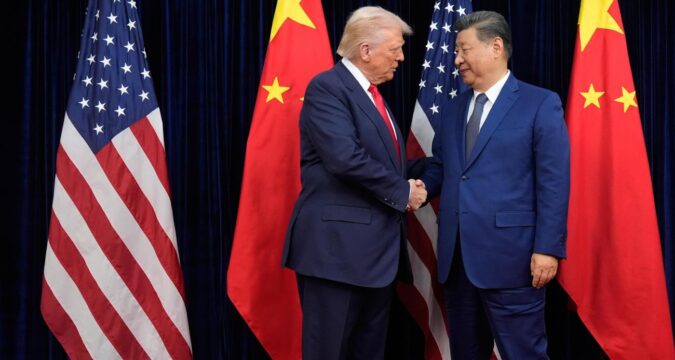
WASHINGTON (AP) — El presidente estadounidense Donald Trump y el presidente chino Xi Jinping hablaron por teléfono el lunes sobre comercio, Taiwán y Ucrania, según funcionarios de ambos países, casi un mes después de que se reunieron en persona en Corea del Sur.
Xi le dijo a Trump que la reintegración de Taiwán a China es “una parte integral del orden internacional de posguerra”, según la cancillería china.
Por su parte, Trump dijo que visitará Beijing en abril y organizará una visita de Estado para Xi más adelante en 2026.
Un funcionario de la Casa Blanca confirmó que la llamada ocurrió el lunes por la mañana, pero no ofreció detalles sobre la conversación.
La conversación se produjo después de que la primera ministra japonesa, Sanae Takaichi, dijo recientemente que el Ejército de Japón podría involucrarse si China toma medidas contra Taiwán, una isla autónoma que Beijing reclama como propia. Japón es un aliado importante de Estados Unidos en la región.
Beijing rechazó los comentarios de Takaichi, y las relaciones entre China y Japón han desmejorado.
El lunes, Xi dijo que China y Estados Unidos, que lucharon juntos durante la guerra contra el fascismo y el militarismo, deberían “salvaguardar conjuntamente la victoria de la Segunda Guerra Mundial”. Estados Unidos no ha tomado partido sobre la soberanía de la isla autónoma, pero se opone al uso de la fuerza para tomar Taiwán. Está obligado por una ley interna a proporcionar suficiente equipamiento a la isla para disuadir cualquier ataque armado.
Trump ha mantenido una ambigüedad estratégica sobre el envío de tropas estadounidenses en caso de una guerra en el Estrecho de Taiwán. Su administración ha instado a la isla a aumentar su presupuesto de defensa.
A principios de este mes, el Ministerio de Relaciones Exteriores de Taiwán dijo que recibió una notificación oficial de que la administración Trump aprobó una venta de armas a Taiwán por 330 millones de dólares, incluyendo partes de aviones de combate. Beijing protestó de inmediato, diciendo que esto “viola gravemente” el principio de una sola China.
Los dos líderes también hablaron sobre comercio, pero la declaración china no reveló ningún acuerdo concreto sobre asuntos como la compra de soja estadounidense.
En la llamada, Xi dijo que la relación bilateral ha “mantenido en lo general una trayectoria estable y positiva” tras la cumbre de octubre en Busan, Corea del Sur, y afirmó que ambas partes deberían esforzarse por lograr “más progresos positivos”, según el Ministerio de Exteriores chino.
Los dos líderes también discutieron la crisis de Ucrania, dijo la parte china. Xi expresó que la crisis debería resolverse “en su raíz”.
_______
Esta historia fue traducida del inglés por un editor de AP con la ayuda de una herramienta de inteligencia artificial generativa.