Category: News

Today in Chicago History: ‘Galloping Ghost’ Red Grange plays first game for the Bears
Here’s a look back at what happened in the Chicago area on Nov. 26, according to the Tribune’s archives.
Is an important event missing from this date? Email us.
Weather records (from the National Weather Service, Chicago)
High temperature: 67 degrees (1990)
Low temperature: 2 degrees (1898)
Precipitation: 1.63 inches (1988)
Snowfall: 7.5 inches (1975)
On Nov. 22, 1925, less than 24 hours after his last game with the Fighting Illini, Harold “Red” Grange, second from right, signed a contract to play pro football with the Chicago Bears at the Morrison Hotel in Chicago. Surrounding Grange as he signed were Bears managers Edward C. Sternaman, from left, and George C. Halas. Grange’s agent Charles C. Pyle, is on the right. (Chicago Herald and Examiner photo)
1925: Just days after he abruptly left the University of Illinois to don the navy and orange of the Chicago Bears, three-time All-American Harold Edward “Red” Grange played in his first NFL game.
More than 36,000 fans packed Wrigley Field to see Grange, who signed with the Bears less than 24 hours after his last college game. It was then the largest crowd in professional football history. They came away disappointed as the Bears and Chicago Cardinals — the oldest rivalry in the NFL — tied 0-0.
Paddy Driscoll, later Grange’s teammate on the Bears, punted the ball away from Grange all game, drawing a chorus of boos, and Grange rushed for only 36 yards.
The Chicago Bears and Chicago Cardinals played to a 0-0 tie before more than 36,000 fans on Thanksgiving 1925, at Wrigley Field in Chicago. (Chicago Tribune)
“I decided if one of us was going to look bad, it wasn’t going to be me,” Driscoll told the Tribune’s David Condon 40 years later. “Punting to Grange is like grooving a pitch to Babe Ruth.”
After the game, Driscoll went to see his future wife, Mary, in the stands. He lamented fans were wrong to boo Grange for his uninspiring debut. “Don’t feel sorry for Grange,” Mary said. “It’s you they’re booing.”
The teams faced each other on Thanksgiving in 1926 — with the game resulting in another scoreless tie.
Though Red Grange didn’t score a touchdown during his Chicago Bears debut on Nov. 26, 1925, at Wrigley Field, he did make roughly $12,000 (or more than $216,000 in today’s dollars) for his efforts. (Chicago Tribune)
Grange sustained a knee injury in 1927 that greatly affected his speed. He sat out the next season and joined the vaudeville circuit but returned to George Halas’ team in 1929. He turned down an offer from Halas to become the team’s head coach after his last game in January 1935.
Grange owned a night club on Sheridan Road, became a sales manager of a bottling company, sold insurance and was a radio and TV sportscaster before he retired to Florida. Both he and Halas were inducted into the Professional Football Hall of Fame’s inaugural class in 1963. Grange died in 1991 at age 87.
A rare Red Grange Chicago Bears jersey from the 1930s sells for $548,100 at auction
Want more vintage Chicago?
Subscribe to the free Vintage Chicago Tribune newsletter, join our Chicagoland history Facebook group, stay current with Today in Chicago History and follow us on Instagram for more from Chicago’s past.
Have an idea for Vintage Chicago Tribune? Share it with Kori Rumore and Marianne Mather at krumore@chicagotribune.com and mmather@chicagotribune.com
https://www.chicagotribune.com/2025/11/26/chicago-history-november-26/

These Are The Largest Bodies Of Water In Our Solar System
These Are The Largest Bodies Of Water In Our Solar System
From the icy crusts of distant moons to the oceans beneath their surfaces, the solar system is teeming with hidden water.
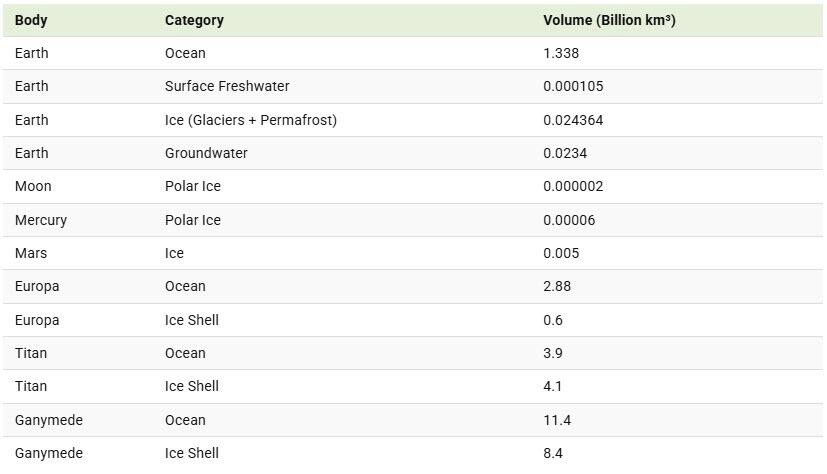
This visualization from Made Visual Daily, via Visual Capitalist, compares all known and estimated bodies of water in our solar system, including those beneath the surface, on a volumetric scale.
The data comes from sources including USGS, NASA’s Ocean Worlds program, and a variety of planetary science missions, like Cassini and MESSENGER.
Comparing Water Volumes in the Solar System
Below is the full breakdown of water volumes by celestial body or source:
Earth’s ocean holds 1.3 billion km³ of water, but that’s dwarfed by subsurface oceans on other moons. Ganymede, for instance, is believed to host 11.4 billion km³ in liquid water beneath its ice shell—nearly nine times the volume of Earth’s oceans.
The Surprising Abundance of Extraterrestrial Water
When thinking of water in space, Mars or icy comets may come to mind, but some of the most significant reservoirs lie within the interiors of moons orbiting the gas giants. Jupiter’s Europa, with its estimated 2.88 billion km³ ocean, and Saturn’s Titan, with nearly 4 billion km³ beneath its surface, are standout examples.
These “ocean worlds” are central to current astrobiological research. According to NASA’s Ocean Worlds program, the presence of water increases the potential for life, making these moons high-priority exploration targets. Missions like Europa Clipper and Dragonfly are being developed to investigate these alien seas further.
How Do We Know There’s Water Out There?
Scientists use a combination of techniques to detect extraterrestrial water: gravitational field measurements, ice-penetrating radar, and spectroscopy are just a few. For instance, the Galileo and Cassini missions provided crucial insights into the internal oceans of Europa and Titan.
More recently, researchers have proposed new techniques to identify liquid water on exoplanets, using infrared signals from water clouds or oceans to analyze distant worlds.
Reframing Earth’s Place in the Water Hierarchy
While Earth is often dubbed the “blue planet,” it’s far from the wettest body in the solar system. Including underground and frozen sources, Earth’s total water volume still trails several icy moons.
This context reshapes how we think about planetary habitability. As our understanding grows, it’s increasingly likely that life-supporting conditions may exist far from the traditional “habitable zone” around stars.
Check out similar space explorations like Top 10 Star Systems with Earth-Like Exoplanets on the Voronoi app.
Tyler Durden
Wed, 11/26/2025 – 05:45
https://www.zerohedge.com/technology/these-are-largest-bodies-water-our-solar-system

Today in History: National Hockey League founded
Today is Wednesday, Nov. 26, the 330th day of 2025. There are 35 days left in the year.
Today in history:
On Nov. 26, 1917, the National Hockey League was founded in Montreal, succeeding the National Hockey Association.
Also on this date:
In 1791, President George Washington held his first full cabinet meeting; in attendance were Secretary of State Thomas Jefferson, Secretary of the Treasury Alexander Hamilton, Secretary of War Henry Knox and Attorney General Edmund Randolph.
In 1864, English mathematician Charles Dodgson presented the illustrated manuscript “Alice’s Adventures Under Ground” to his friend Alice Pleasance Liddell, 12, a book later published under the pen name Lewis Carroll as “Alice’s Adventures in Wonderland.”
In 1941, U.S. Secretary of State Cordell Hull delivered a note to Japan’s ambassador to the United States, Kichisaburo Nomura, setting forth U.S. demands for “lasting and extensive peace throughout the Pacific area.” The same day, a Japanese naval task force of six aircraft carriers left the Kuril Islands, bound for Hawaii, days before the attack on Pearl Harbor.
In 1942, the film “Casablanca,” starring Humphrey Bogart and Ingrid Bergman, premiered at the Hollywood Theater in New York City.
In 1973, President Richard Nixon’s personal secretary, Rose Mary Woods, told a federal court she’d accidentally caused part of the 18 1/2-minute erasure of a key Watergate tape. The gap was in a 1972 recording of a conversation between Nixon and his chief of staff.
In 1998, two trains collided in the northern town of Khanna, India, killing 210 people in one of that country’s deadliest rail disasters.
In 2000, Florida Secretary of State Katherine Harris certified Republican George W. Bush the winner over Democrat Al Gore in the state’s presidential balloting by a 537-vote margin. The U.S. Supreme Court ultimately stopped recounts of the vote, and Bush won Florida’s 25 electoral votes and the presidential election.
In 2008, teams of heavily armed militants from the terrorist group Lashkar-e-Taiba stormed luxury hotels, a popular restaurant and a crowded train station in Mumbai, India, leaving at least 175 people dead (including nine of the attackers) in a rampage spanning four days.
In 2011, a rocket carrying NASA’s Mars Science Laboratory Curiosity rover lifted off from Cape Canaveral, Florida.
Related Articles
Today in Chicago History: Mayor Harold Washington dies at his desk just 9 months after reelection
Today in History: USS Enterprise commissioned
One of the 1921 Tulsa Race Massacre’s last survivors, Viola Ford Fletcher, dies age 111
Chicago weather: How our 2025-26 seasonal snowfall compares with previous years
Today in Chicago History: Dashcam video released in shooting of teenager Laquan McDonald
In 2019, a 6.4-magnitude earthquake struck Albania, killing at least 49 people, injuring some 2,000 others and leaving at least 4,000 homeless.
Today’s Birthdays: Impressionist Rich Little is 87. Football Hall of Famer Jan Stenerud is 83. Author Marilynne Robinson is 82. Bass guitarist John McVie (Fleetwood Mac) is 80. Football Hall of Famer Art Shell is 79. Sen. Shelley Moore Capito, R-W.Va., is 72. Football Hall of Famer Harry Carson is 72. NASCAR Hall of Famer Dale Jarrett is 69. Country singer Linda Davis is 63. Actor-TV personality Garcelle Beauvais is 59. Actor Peter Facinelli is 52. DJ-music producer DJ Khaled is 50. Country musician Joe Nichols is 49. Pop singer Natasha Bedingfield is 44. Actor-singer-TV personality Rita Ora is 35.
https://www.chicagotribune.com/2025/11/26/today-in-history-national-hockey-league-founded/

UK Schools Locked Down In Secret “Pegasus” Pandemic Drills
UK Schools Locked Down In Secret “Pegasus” Pandemic Drills
Authored by Steve Watson via Modernity.news,
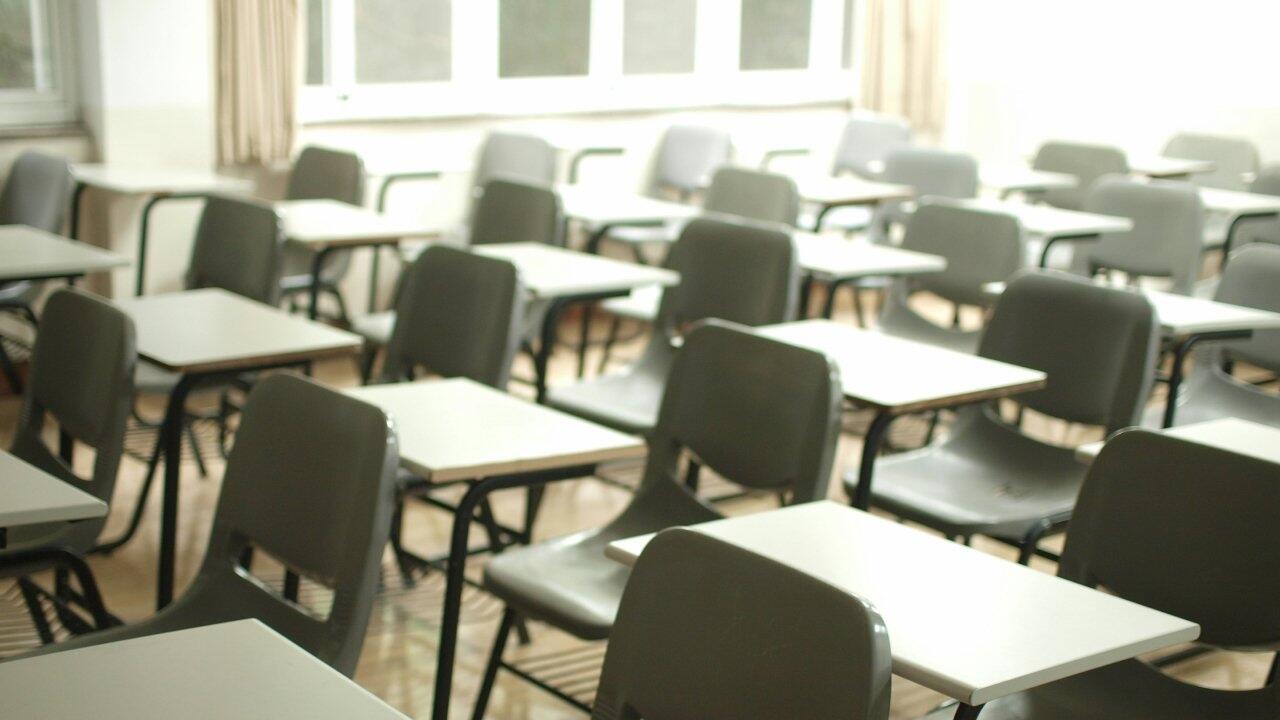
In a eerie redux of 2020’s chaos, UK schools are being thrust into unannounced lockdown simulations under the guise of “pandemic preparedness drills”—with children herded into classrooms, doors barricaded, and parents left in the dark, sparking whispers of social engineering rehearsals for the next big scare.
The covert operations, exposed in The Telegraph’s bombshell report, mirror pre-COVID “Event 201” tabletop exercises that eerily foreshadowed global shutdowns—raising the specter: Was the pandemic a trial run for something far more insidious?
Schools locked down again in secret pandemic drills
Exclusive: Exercise Pegasus imagined a virus deadly to children spreading around the world from an in south east Asia
?? @PaulNuki @sneweyy @maeve_cullinan https://t.co/e7cyemYWcl
— Telegraph Global Health Security (@TelGlobalHealth) November 25, 2025
We’ve seen this play out previously, complete with mass fear campaigns, soap-opera psyops, and “totalitarian” compliance tools.
The drills, rolled out across England without fanfare, involve “sudden” alerts forcing pupils to seal rooms, switch off lights, and hunker down—ostensibly to test readiness for “biohazards” or “chemical attacks.”
From the Telegraph report:
Exercise Pegasus, which concluded last month and involved all major government departments, was the biggest pandemic simulation exercise the country has ever held.
Those participating in the drill were told a novel enterovirus had broken out on a fictional Island in southeast Asia before spreading across the world.
Unlike Covid-19, which disproportionately affected older age groups, the new virus was most lethal in the young. The virus, “EV-D68”, was said to cause respiratory failure, brain swelling and – in rare cases – paralysis in infants, children and teenagers.
One parent fumed to the outlet: “It was completely unannounced and caused unnecessary panic among the children and parents.”
A teacher at a Midlands primary school echoed the trauma: “The children were terrified. Some were crying and asking if it was real.”
Headteachers, bound by government edicts, stayed mum—until FOI demands cracked the silence, revealing the exercises as part of a broader “resilience” push by the Department for Education (DfE) and UK Health Security Agency (UKHSA).
These unheralded lockdowns aren’t born in a vacuum; they hark back to October 2019’s Event 201 simulation, co-hosted by Johns Hopkins, the World Economic Forum, and the Bill & Melinda Gates Foundation—where global elites war-gamed a coronavirus outbreak, complete with media blackouts, mandatory quarantines, and economic shutdowns, mere months before COVID crashed the world stage.
As we’ve previously highlighted, that “exercise” eerily scripted real-world responses: supply chain collapses, “misinformation” crackdowns, and vaccine rollouts—tools later deployed with ruthless efficiency.
Fast-forward to 2025: The DfE’s “secret” drills, piloted in 20 schools since September, mandate “no-notice” activations to “build muscle memory” for crises, per UKHSA guidelines.
One directive, leaked via FOI, instructs: “The exercise should be as realistic as possible, including the use of sirens or announcements to simulate an emergency.”
Critics, including shadow education secretary Bridget Phillipson, slammed it as “overreach,” but insiders whisper it’s beta-testing compliance for the next wave—be it bird flu, mpox, or a lab-leak encore.
This resurgence reeks of the behavioral blueprints we’ve previously dissected, with UK officials admitting to having scripted BBC and ITV soaps like EastEnders and Emmerdale to “covertly shape public opinion” on vaccines—embedding pro-jab narratives to “coerce compliance” without overt propaganda.
New FoI shows how the government used TV soaps to push pro-vaccine storylines. ??
We’re being entertained into compliance.
My latest in the Telegraph ?? @sarahknapton https://t.co/UovyTQ8iTX
— Laura Dodsworth (@BareReality) June 13, 2025
We highlighted this in 2022, three years before it was confirmed to be scripted propaganda:
In 2021, SAGE advisors like Prof. Susan Michie revealed that the UK health authority deployed “totalitarian” fear tactics—exaggerating threats via “frightening” messaging to enforce lockdowns, admitting: “We used emerging evidence to increase the perceived level of personal threat… A substantial number of people still did not feel sufficiently personally threatened.”
“Use of fear to control behaviour in Covid pandemic was ‘totalitarian’, admit scientists”
?From ‘A State of Fear: how the UK government weaponised fear during the Covid-19 pandemic’ https://t.co/gD6HFUkQqW
— Laura Dodsworth (@BareReality) May 14, 2021
The UK Government leaned on “mass formation psychosis,” a hypnotic herd mentality to justify controls—turning isolated anxieties into collective obedience, ripe for mandates.
Was COVID just a warm-up—a global dry run for engineered pandemics that lock down dissent as deftly as schools? With UKHSA eyeing “annual exercises” and whispers of EU-wide sims, the stage feels set.
Your support is crucial in helping us defeat mass censorship. Please consider donating via Locals or check out our unique merch. Follow us on X @ModernityNews.
Tyler Durden
Wed, 11/26/2025 – 05:00
https://www.zerohedge.com/medical/uk-schools-locked-down-secret-pegasus-pandemic-drills

Sindicatos en India celebran protestas nacionales contra las nuevas normas laborales
Por RAJESH ROY
NUEVA DELHI (AP) — Una coalición de 10 importantes sindicatos indios organizó protestas a nivel nacional el miércoles contra la implementación de nuevas normas laborales aprobadas por el gobierno, afirmando que los cambios radicales son un “engaño fraudulento” contra los trabajadores.
En manifestaciones en varias partes del país, los sindicatos que representan a millones de trabajadores y agricultores acusaron al gobierno de impulsar la reforma a pesar de las preocupaciones generalizadas de que el nuevo marco erosiona la seguridad laboral, debilita la negociación colectiva y aumenta el control de los empleadores.
Es la primera acción laboral coordinada desde que las nomas entraron en vigor la semana pasada, subrayando las profundas tensiones entre los sindicatos y el gobierno sobre la dirección de las reformas económicas.
Mientras que los funcionarios indios dijeron que el nuevo marco modernizará leyes obsoletas, mejorará la eficiencia y ampliará las protecciones sociales, los sindicatos argumentaron que les despojaría de salvaguardas esenciales y favorecería a los empleadores en un momento de creciente inseguridad laboral.
“Los derechos de los trabajadores están siendo aplastados, y el gobierno justifica la medida con una avalancha de mentiras de que los códigos beneficiarán a los trabajadores”, afirmó Tapan Sen, secretario general del Centro de Sindicatos de la India, alineado con el partido comunista y un sindicato clave en el grupo que convocó la huelga, afirmó.
Los cuatro códigos —que cubren salarios, relaciones industriales, seguridad social y seguridad laboral— reemplazan 29 leyes laborales que anteriormente regulaban la contratación, los beneficios y los estándares laborales en los sectores formal e informal de la India.
Cuando presentó las normas, el gobierno dijo que la estructura consolidada simplifica el cumplimiento, reduce la fragmentación y brinda a los trabajadores mejor acceso a la seguridad social, contribuciones al fondo de previsión y normas de seguridad.
Los códigos hacen obligatorio para los empleadores emitir cartas de nombramiento y fijan un plazo para el pago de salarios. También permiten que las mujeres trabajen turnos nocturnos con arreglos de seguridad por parte de los empleadores.
Los beneficios de seguridad social se han extendido al sector irregular y a los trabajadores de plataformas digitales. Los empleados a término fijo recibirán los mismos beneficios que los trabajadores permanentes, incluidas licencias, prestaciones por maternidad y pagos adicionales después de completar un año de servicio.
Sin embargo, los sindicatos argumentan que la implementación ha revelado que las reformas están profundamente inclinadas a favor de los empleadores. Señalan disposiciones que permiten despidos fáciles para empresas más grandes, amplían el empleo a término fijo y endurecen las condiciones para formar sindicatos o convocar huelgas.
“Es un intento de devolver a los trabajadores a la era colonial donde ni siquiera pueden alzar la voz ni luchar para formar o legalizar un sindicato”, dijo Amarjeet Kaur, secretaria general del Congreso de Sindicatos de Toda la India, otro sindicato prominente que participa en la huelga.
El gobierno no ha comentado formalmente sobre la huelga. Normalmente desestima las afirmaciones hechas por los sindicatos.
Nueva Delhi ha defendido los códigos como algo muy esperado y afirma que un marco laboral moderno es esencial para atraer inversiones y aumentar los empleos formales. Espera que las empresas se sientan incentivadas a expandir sus operaciones, creando más empleos seguros con el tiempo.
____
Esta historia fue traducida del inglés por un editor de AP con la ayuda de una herramienta de inteligencia artificial generativa.
Un incendio atrapa a gente en un rascacielos de Hong Kong y deja al menos 8 heridos
Associated Press
HONG KONG (AP) — Un incendio que provocó una columna de llamas y humo espeso atrapó a personas en un complejo de viviendas de gran altura en Hong Kong el miércoles, según medios.
La policía dijo que ocho personas habían resultado heridas, según informes iniciales, incluidas tres que estaban inconscientes. Los medios hongkoneses dijeron que varias tenían quemaduras graves.
El incendio se propagó por un andamio de bambú instalado alrededor del exterior del complejo en el distrito de Tai Po de la ciudad, según medios hongkoneses. Un video en vivo desde la escena mostraba a los bomberos dirigiendo agua hacia las intensas llamas desde lo alto de camiones con escalera.
El incendio se reportó a media tarde y fue clasificado como de nivel 4, el segundo más grave, según el Departamento de Servicios de Bomberos de la ciudad.
La policía dijo que recibió múltiples informes de personas atrapadas en los edificios afectados.
Tai Po se encuentra en la parte norte de Hong Kong, en los Nuevos Territorios y cerca de la frontera con la ciudad china continental de Shenzhen.
Economists’ Warning: Germany’s Costly Pension Package Must Be Scrapped Immediately
Economists’ Warning: Germany’s Costly Pension Package Must Be Scrapped Immediately
Submitted By Thomas Kolbe
Germany’s public pension system is under mounting pressure. Amid a deepening economic crisis, uncontrolled poverty migration, and a rapidly aging population, a shrinking workforce is being forced to shoulder an ever-growing burden. Meanwhile, the number of pension recipients continues to rise and has now smashed through the 21-million mark.
The widening deficit in the pension fund — and the surging federal subsidies needed to stabilize it — shows the system is slipping out of control. Political pressure for reform is intensifying, yet Berlin offers nothing but costly giveaways, ignoring the structural rot turning the pension system into a fiscal nightmare.
Germany’s statutory pension scheme is revealing its true nature: a Ponzi structure drained by politically motivated “non-insurance” payouts and kept alive by constant cross-subsidies — a political shell game at its finest.
The Economists’ Appeal
Into this crisis step 22 leading economists and pension specialists. In a joint statement, they urge the government to take the pension package “off the table immediately.”
“For stability, reliability, and trust, we need long-term pension policy that is predictable and fiscally sustainable,” the document reads. The experts argue the government’s current proposal fails on every count and should therefore be abandoned.
Released Monday morning and obtained by Handelsblatt, the paper is a long overdue wake-up call in a debate trapped in coalition infighting.
High-Profile Critics
The list of critics — including pension experts like Bert Rürup, ifo chief Clemens Fuest, and Michael Eilfort of the Stiftung Marktwirtschaft — is long. Their main targets include the fiscally reckless “active pension,” which would allow retirees to earn additional tax-free income; a further expansion of the mothers’ pension; and a political fix that would lock in the current pension level at any cost.
According to the economists, these measures would raise the federal subsidy to the pension system by €10–15 billion annually — a burden Germany’s recession-ridden public finances can no longer tolerate.
The economists also condemn the political choice to shift the costs onto the young: higher payroll taxes, higher income taxes, all to sustain benefits for an older generation. In doing so, they side with young CDU/CSU lawmakers who have recently ramped up pressure on Chancellor Friedrich Merz.
Short-Term Political Bribery
The experts don’t mince words: The pension package is not a reform but a short-term political bribe. With sinking poll numbers for both CDU/CSU and SPD and the steady rise of the AfD, the strategy is obvious: stabilize the voter base with last-minute giveaways.
What’s missing is a long-term, demographically sound strategy that addresses retirement age, private savings, and company pensions. The economists are particularly blunt about the minimum pension level: preserving a 48% benchmark through 2031 is unrealistic and likely untenable.
They highlight a deeper issue: years of economic decline have eroded Germany’s productive base. As prosperity shrinks, all groups — workers and retirees — will lose purchasing power. Political shell games no longer work in a shrinking economy.
“Non-Insurance” Burdens
The debate exposes another long-ignored truth: Germany’s pension system has been hollowed out for decades by political giveaways and ideological trench warfare. “Non-insurance” payouts — including benefits for illegal immigrants — have drained a fund intended solely to manage contributors’ money.
The pension system posted a €2 billion deficit last year. This year, losses may hit €7 billion. If current trends continue, the Bundesbank expects the deficit to exceed €10 billion by 2030 — assuming the economy doesn’t deteriorate further, which is far from guaranteed.
The contributor-to-retiree ratio is collapsing: from 5-to-1 in 1965 to 2-to-1 in 2022. The imbalance will worsen. The pension system is heading into severe turbulence. A looming loss of purchasing power will hit the working population through skyrocketing contributions while retirees see their real pensions erode.
A Moral and Economic Breaking Point
Germany now faces an ethical and economic impasse: How does a shrinking economy deal with rising old-age poverty? Politics offers no answers — this question has never been seriously
confronted.
That the country has reached this point is the result of decades of politicians living off the postwar system’s accumulated substance — while acting as a global welfare provider absorbing external crises into domestic social systems.
Now that the crisis can no longer be ignored, German society must fundamentally reassess. Without statist ideologues and welfare-state engineers, a new intergenerational contract is needed — one that acknowledges the growth needs of the young, the necessity of market-driven reforms, and the dignity of a minimum living standard for the old.
The 22 economists provide an important first step: Germany faces one of the most complex socio-economic challenges of the coming years — a balancing act between responsibility, realism, and morality. And economically, it means one thing: both young and old will have to make concessions.
* * *
About the author: Thomas Kolbe, born in 1978 in Neuss/ Germany, is a graduate economist. For over 25 years, he has worked as a journalist and media producer for clients from various industries and business associations. As a publicist, he focuses on economic processes and observes geopolitical events from the perspective of the capital markets. His publications follow a philosophy that focuses on the individual and their right to self-determination.
Tyler Durden
Wed, 11/26/2025 – 04:15
La presión de China sobre Japón es una táctica conocida que podría durar un tiempo
Por KEN MORITSUGU y AYAKA McGILL
BEIJING (AP) — Pocos días después de que China emitiera una advertencia contra viajar a Japón, comenzaron las cancelaciones.
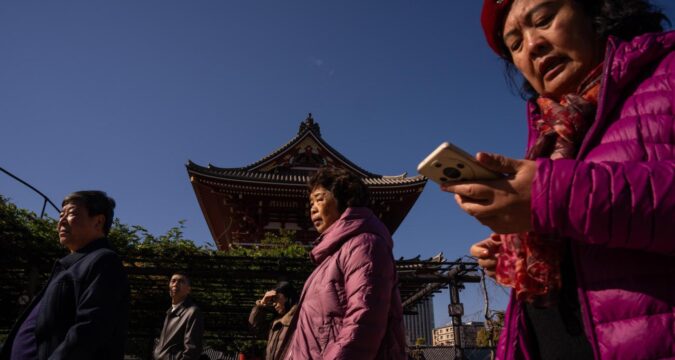
Cada año, alrededor de 3.000 chinos visitan la casa de té de Rie Takeda en un callejón del histórico distrito de Asakusa en Tokio. Unos 200 ya han cancelado reservas para su clase de ceremonia del té, hasta enero.
“Solo espero que los turistas chinos regresen para el Año Nuevo Chino”, expresó, refiriéndose al importante periodo festivo en febrero. La experiencia pasada sugiere que podría tardar más que eso.
El gobierno de China está recurriendo a un manual ya conocido para expresar su descontento con Japón por negarse a retractarse de una declaración de su nueva primera ministra sobre el tema candente de Taiwán.
Al igual que con sus aranceles sobre los vinos australianos en 2020 y las restricciones a las importaciones de bananas filipinas en 2012, Beijing está utilizando su influencia económica para presionar a Tokio mientras lanza una avalancha de críticas contra su gobierno. La única pregunta es hasta dónde llegará China y cuánto durarán las medidas.
“Las contramedidas de China se mantienen en secreto y se implementarán una por una”, dijo Liu Jiangyong, profesor de relaciones internacionales en la Universidad de Tsinghua en Beijing. “Todo es posible, porque esto involucra el núcleo de los intereses fundamentales de la nación”.
Las disputas pueden prolongarse más de un año
China se enfureció por una declaración de la primera ministra de Japón, Sanae Takaichi, a principios de este mes, en la que dijo que su ejército podría involucrarse si China tomara medidas contra Taiwán, una isla autónoma que Beijing dice debe estar bajo su dominio.
Japón está tratando de evitar que la disputa se intensifique, pero no ha mostrado señales de retroceder. Eso coincide con la forma en que algunos otros gobiernos han reaccionado ante la presión de China: Mantener sus posiciones y soportar las represalias, permitiendo que las disputas se prolonguen durante un año o más.
“El desafío diplomático para ambas partes es que tienen sus propias audiencias internas y, por lo tanto, no quieren que se perciba que dan un paso atrás”, dijo Sheila A. Smith, miembro senior del Consejo de Relaciones Exteriores y autora de “Intimate Rivals”, un libro sobre las relaciones entre Japón y China.
Con varios países, las disputas persistieron hasta que un cambio político trajo a un nuevo líder no cargado con el bagaje de declaraciones pasadas.
El comercio de Australia con China ha vuelto gradualmente a la normalidad desde la elección del primer ministro Anthony Albanese en 2022; el último paso fue la reapertura del mercado de langostas. Canadá es otro país que comenzó a reparar relaciones bajo el nuevo primer ministro, Mark Carney.
La advertencia contra viaja comienza a hacerse nota
No es la primera vez que Japón enfrenta la ira económica de China. En 2012, los manifestantes atacaron negocios japoneses en China y boicotearon sus productos después de que estallara una disputa sobre un grupo de islas deshabitadas que ambos países reclaman. Se cancelaron los viajes en grupo a Japón.
Basándose en lo que sucedió entonces, cuando el número de visitantes chinos cayó en un cuarto, el economista del Instituto de Investigación Nomura Takahide Kiuchi ha estimado que la actual advertencia de viaje podría costarle a Japón 1,8 billones de yenes (11.500 millones de dólares), restando 0,3 puntos porcentuales a su ya bajo crecimiento económico anual.
En esta ocasión también se han cancelado muchos viajes en grupo, lo que afecta a los negocios que dependen de ellos. El Hotel Gamagori en la prefectura de Aichi, en el centro de Japón, dijo que había perdido más de 2.000 huéspedes. Nichu Syomu, una empresa de viajes con sede en Japón especializada en turistas chinos, dijo que se habían cancelado 300 reservas, y describió la pérdida como comparable a 2012.
China iba camino este año de desplazar a Corea del Sur y regresar a su posición previa a la pandemia como la principal fuente de turistas a Japón. Más de ocho millones de chinos visitaron el país en los primeros 10 meses de este año, o el 23% del total, según la Organización Nacional de Turismo de Japón.
“Es una pena”, dijo Nana Enomoto, operadora de viajes de Nichu Syomu, señalando que el turismo chino apenas se estaba recuperando.
Algunos turistas chinos cancelan. Otros no
Kyren Zhu, que nunca había estado en Japón, lo pasó mal para tomar la decisión. Sus padres le advirtieron que no fuera. Al final, la contable canceló un viaje con una amiga para ver el follaje otoñal. Su amiga siguió adelante y le dijo que no había pasado nada inusual.
“Si lo hubiera sabido, probablemente habría ido”, dijo. “Pero es difícil de decir. La situación realmente está fuera de nuestro control”.
Livia Du, residente de Beijing, que abrió un alojamiento de esquí el año pasado en el norte de Japón, recibió dos cancelaciones, pero otros visitantes chinos cubrieron rápidamente las plazas.
Un cliente le dijo que, dado que China había tomado una postura clara, tenía que alinearse con ella. Otro trabaja en una empresa estatal y dijo que el personal había recibido instrucciones de no visitar Japón en el corto plazo.
Los huéspedes parecen estar en modo de espera, dijo Du, quien dejó su trabajo e invirtió más de dos millones de yuanes (280.000 dólares) con su esposo para construir el alojamiento en Hokkaido. Estaba preocupada de que la situación pudiera empeorar.
China advierte que podría tomar más medidas
La presión pareció extenderse a otros sectores la semana pasada. El estreno en China de dos películas japonesas de caricaturas fue repentinamente pospuesto: la comedia “Hataraku Saibō” (“Cells at Work!” y “Eiga Crayon Shin-chan Chô Karei!” (“Crayon Shin-chan the Movie: Super Hot! The Spicy Kasukabe Dancers” en inglés).
Un festival de comedia en Shanghái canceló espectáculos de una compañía de entretenimiento japonesa, mientras que un editor de libros dijo que su jefe le había dicho que suspendiera un proyecto para importar un manga japonés.
Las perspectivas para las exportaciones de mariscos a China seguían siendo inciertas, incluso después de que Tokio negara los reportes en medios de que Beijing había dicho que estaba revirtiendo su decisión de poner fin a una prohibición de dos años sobre los mariscos japoneses.
Japón no ha proporcionado la documentación técnica necesaria para reanudar las exportaciones, dijo la portavoz del Ministerio chino de Exteriores, Mao Ning, cuando se le preguntó sobre los informes.
China también podría apuntar a su exportación de tierras raras, que son vitales para la producción de automóviles y otras industrias. Beijing descubrió que los minerales eran un punto débil estadounidense cuando restringió su exportación a principios de este año.
“Japón debería primero retractarse de sus comentarios erróneos y tomar acciones concretas para mantener la base política de las relaciones entre China y Japón”, dijo Mao la semana pasada. “De lo contrario, China tendrá que tomar más medidas”.
___
McGill informó desde Tokio. La periodista de Associated Press Fu Ting en Washington contribuyó a este despacho.
___
Esta historia fue traducida del inglés por un editor de AP con la ayuda de una herramienta de inteligencia artificial generativa.
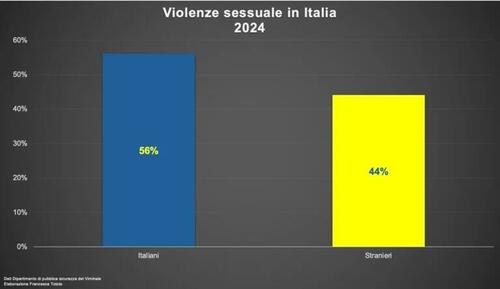
Foreigners Commit 44% Of Sexual Violence Cases In Italy, Half Of Gang-Rapes, While Only Representing 9% Of Population
Foreigners Commit 44% Of Sexual Violence Cases In Italy, Half Of Gang-Rapes, While Only Representing 9% Of Population
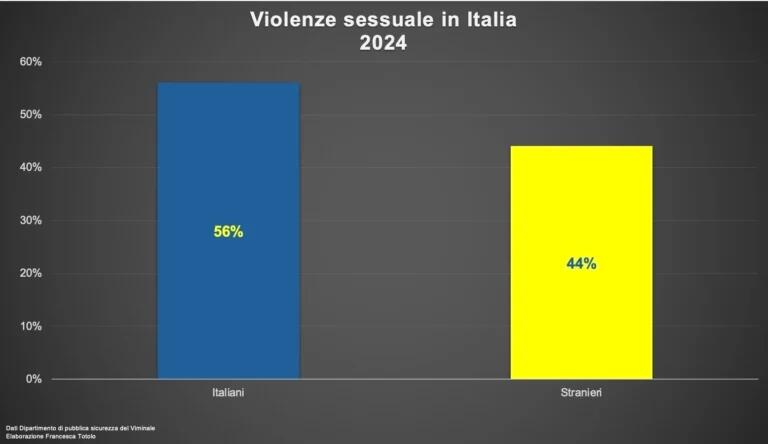
Data from Italy’s Interior Ministry for 2024 shows that foreigners commit nearly half of all rapes, while only representing 9 percent of the country’s resident population.
Specifically, the graph shows they are arrested in 44 percent of cases.
Sexual Violence cases, Italy, 2024
The troubling data, which was cited by Italian journalist Francesca Totolo, also shows that when it comes to gang rapes, “50 percent of perpetrators were foreigners.”
The situation is reportedly “even more of an emergency” when analyzing data concerning minors. In 2023, 56 percent of the arrests and reports for the crime of sexual violence concerned minor foreigners.
A report titled “Young People and Gender-Based Violence” by the Ministry of the Interior’s Department of Public Security analyzed data from 2020 to 2023 for the 14-34 age group. It documented the following:
59 percent of known perpetrators of “sexual violence” were “foreigners.” This is highly disproportionate, as foreigners in that age group represented only 12 percent of all residents aged 14 to 34 in Italy.
In cases of “forced or forced marriage,” which rose from eight cases in 2020 to 28 in 2023, “One hundred percent of the perpetrators of this crime are foreigners.”
For “abuse against family members and partners” between 2020 and 2023, 36 percent of perpetrators aged 14 to 34 were foreigners.
Totolo then goes into a range of cases, from just the beginning of November to Nov. 19, to illustrate the crisis in the country. For all sources, please consult Totolo’s piece, where she links to the local news stories covering each incident. It is important to remember this is only a selection that Totolo compiled and is likely omitting many incidents.
In Parma in early November, writing that a girl was followed, harassed, and groped by a group of young foreigners in the city center. She escaped into an apartment building, saying later about the incident: “They told me to stop. And then they made advances, harsh words. They were a group, they smelled of alcohol and smoke. They were touching me. I was just inches away from them, and speeding up was no use. They followed me for meters, I had them glued to my neck. Yes, I was scared.”
In Borgo Panigale in early November, a 50-year-old woman was threatened, beaten, and choked by a young foreigner who held a knife to her throat while demanding money on a bike path. The victim stated: “I couldn’t breathe. I had to free myself with all my strength.”
Prato (Nov. 1): A 48-year-old Chinese man attacked his Chinese wife with a cleaver, nearly amputating her hand.
Bitonto (Nov. 1): A woman was followed and harassed by a foreigner, described as “mulatto, tall and thin,” who exposed himself to her. The victim lamented: “I love my Bitonto and I want to feel safe being able to return home without feeling violated by the sight of a horrid and vulgar spectacle.”
Padua (Nov. 2): A woman was surrounded by three young North Africans who attempted to steal her dog and spat on her. She said: “I no longer go out alone, and if there’s no one to accompany me, I put absorbent mats on the floor at home.”
Arcore (Nov. 2): Brazilian model Stephanie Amaral was attacked and beaten on a regional train by Balde Abdulaye, a 26-year-old Gambian illegal immigrant with a deportation order and a criminal record. After seeing his photo, another woman, 25-year-old Ilaria Fancellu, said she was subjected to persecution by the same man, stating: “In a year, I filed four or five complaints, not counting those of my family members, and I always found myself faced with him. I wonder if things can only be resolved when a case becomes media news.”
Milan (Nov. 2): A young woman was attacked by an African man she had reprimanded for urinating on a church wall.
🇮🇹✝️An Italian woman found a migrant outside her house urinating on a church in Milan.
She told him, “The church is not a bathroom!”
At that point, he pulled down his pants and began chasing her. He told her he also “pisses on the police.”
She stated that he approached her in… pic.twitter.com/7J8K6EaMBu
— Remix News & Views (@RMXnews) November 4, 2025
San Fermo della Battaglia (Nov. 4): A 49-year-old Iraqi illegal immigrant groped two nurses’ private parts and harassed them with explicit gestures and words at the hospital. He locked one victim in an office before she escaped.
Terranuova Bracciolini (Nov. 4): A 42-year-old Tunisian man with a criminal record attacked, beat, and stabbed a female acquaintance in the face after breaking into her home. He then attempted to stab responding Carabinieri officers.
Cremona (Nov. 5): A foreigner beat and threatened his partner with a knife.
Lucca (Nov. 5): A female driver was threatened, attacked, and spat on by a gang of North African minors who tried to board her bus with alcohol bottles. One gang member yelled: “Bitch, if you were in Tunisia, I would have already slit your throat.”
Cremona (Nov. 5): A 28-year-old Salvadoran illegal immigrant was arrested on suspicion of domestic abuse against his partner and children, as well as sexual assault against the woman.
Perugia (Nov. 6): An African man harassed passengers on a bus with sexually oriented behavior, including touching his genitals and approaching young girls. After being confronted by university students, he displayed a knife and later stalked one of the harassed girls, who was forced to take refuge in the minimetrò as the man could not pass the turnstiles without a ticket.
Rome (Nov. 7): A 37-year-old woman was groped by a 42-year-old Albanian man while having breakfast at a café.
Florence (Between Nov. 7 and 8): A 35-year-old Panamanian tourist was raped by a 26-year-old Egyptian man and a 32-year-old Moroccan man, both with criminal records.
Cantù (Nov. 9): A 23-year-old sales assistant was attacked by a foreigner who attempted to undress and rape her as she arrived to open her store; colleagues intervened and saved her.
Bressanone (Nov 10): An illegal immigrant previously reported for attempting to solicit 10-year-old children was discovered during a check and ordered to be expelled to a repatriation center.
Turin (Nov. 12): A 23-year-old student was sexually assaulted and groped by a 30-year-old Bangladeshi man while walking downtown. He attempted to kiss her and pulled her hair.
On a Bus (Nov. 14): A 22-year-old Pakistani asylum seeker, who landed illegally in Lampedusa in 2024, harassed and groped a minor student.
Milan (Nov. 16): At the San Siro stadium during the Italy-Norway match, a 24-year-old Norwegian woman was harassed and groped in the restrooms by a 20-year-old Egyptian cleaner.
Lecce (Nov. 18): A 24-year-old Moroccan man was arrested, accused of stalking, solicitation, and aggravated sexual assault against a 16-year-old girl in Anzio over a month.
Rieti (Nov. 19): A 34-year-old Nigerian serial molester was arrested after allegedly harassing a woman and then a student.
The piece concludes by stating that Italy “is a country that is sacrificing thousands of women on the altar of open ports and a multicultural society.”
Tyler Durden
Wed, 11/26/2025 – 03:30
A 100 días, Juegos Paralímpicos de Invierno de Milán-Cortina serán ‘un avance’ para el movimiento
Por DANIELLA MATAR
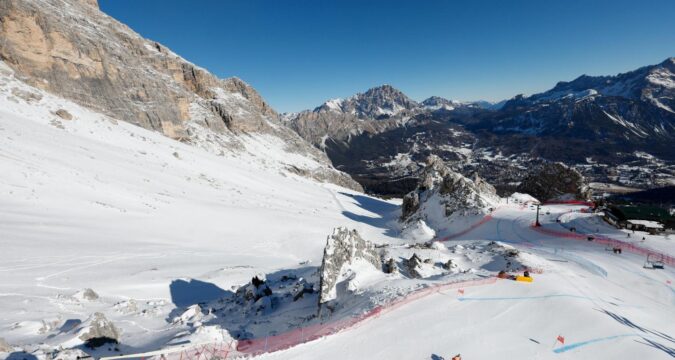
MILÁN (AP) — Esquiadores ciegos que descienden a toda velocidad por montañas, snowboarders amputados, jugadores de hockey sobre hielo en trineos de doble hoja en lugar de patines. Y el espectacular escenario del paisaje montañoso de Italia.
A 100 días del inicio, Italia se está preparando para albergar lo que podría ser los mejores Juegos Paralímpicos de Invierno de la historia.
“Estoy realmente emocionado con lo que Milán Cortina podría representar para nosotros en términos de hacer que el movimiento avance y también establecer nuevos estándares para los Juegos Paralímpicos de Invierno”, dijo Andrew Parsons, presidente del Comité Paralímpico Internacional, durante una entrevista con The Associated Press.
Los Juegos Paralímpicos de Milán Cortina se llevarán a cabo del 6 al 15 de marzo del próximo año, poco después de los Juegos Olímpicos.
Ambos se celebrarán en una vasta extensión del norte de Italia con múltiples grupos de sedes, y Parsons admite que eso ha planteado problemas.
“En términos de las instalaciones y las sedes, estamos seguros de la calidad y creo que los atletas, en general, agradecen”, expresó. “Estamos muy satisfechos con el comité organizador en cuanto a los preparativos. Obviamente entendemos los desafíos de estos juegos.
“El hecho de que las sedes estén lejos unas de otras representa desafíos operativos para determinar cómo podemos mantener el espíritu de los Juegos Paralímpicos para que los atletas tengan la experiencia de esto y no de un campeonato mundial, pero hemos estado trabajando con el comité organizador durante años en eso y creo que tenemos una buena solución para todo eso”.
Parsons tiene la esperanza de continuar con la tendencia de apoyo creciente a los Juegos Paralímpicos de Invierno en las ediciones recientes, especialmente después del éxito de los Juegos Paralímpicos de Verano realizados en París en 2024.
“Es importante que también demos crédito a París porque los juegos fueron realmente espectaculares e hicieron que el movimiento paralímpico fuera aún más conocido y relevante que antes”, comentó.
“Así que tener los juegos nuevamente en Europa, un año después, es una muy buena oportunidad para nosotros en estos Juegos de Invierno en Italia”.
Además, después de Sochi (2014), Pyeongchang (2018) y Beijing (2022), los juegos regresan al corazón histórico de los deportes de invierno, con el impresionante paisaje de los Alpes y los Dolomitas.
“Creo que todo eso y el deporte paralímpico de invierno ha sido más fuerte que nunca antes… El deporte que vamos a ver en Milán estará al más alto nivel que hemos visto en los Juegos Paralímpicos de Invierno”, manifestó Parsons.
“Con buenas sedes, un paisaje impresionante, después del éxito de París… Creo que Milán Cortina será un paso adelante en el desarrollo de los Juegos Paralímpicos de Invierno”.
Rusia reinsertada
Hace dos meses, el Comité Paralímpico Internacional votó de manera controvertida para levantar las suspensiones parciales de Rusia y Bielorrusia.
Sin embargo, no habrá atletas de esos países en los Juegos Paralímpicos del próximo año porque los organismos rectores de los deportes son, en última instancia, responsables de determinar su camino de clasificación, así como la elegibilidad de los deportistas.
La Federación Internacional de Esquí y Snowboard, la Unión Internacional de Biatlón y el organismo rector del curling en el mundo mantienen prohibiciones, mientras que es demasiado tarde para que Rusia se clasifique para el hockey sobre hielo paralímpico. Bielorrusia no tiene un equipo de hockey sobre hielo paralímpico a nivel internacional.
“Obviamente, la decisión no es sólo sobre Milán Cortina”, dijo Parsons. “Es levantar una suspensión de membresía para que tengan todos sus derechos de nuevo, incluida la capacidad de participar en eventos deportivos de verano”.
Rusia y Bielorrusia fueron reinstauradas después de que la asamblea general del Comité Paralímpico Internacional primero votó en contra de una suspensión total y luego se pronunció también contra una medida parcial.
La votación en contra de una suspensión parcial de Rusia fue particularmente ajustada, de 91-77 (con ocho abstenciones).
Rusia y su aliada Bielorrusia han sido vetadas de eventos deportivos internacionales después de la invasión a Ucrania a principios de 2022. El Ministro de Deportes de Ucrania, Matvii Bidnyi, criticó el levantamiento de los castigos y se habló de un posible boicot.
“Esas son las dos caras de la democracia: aceptamos el resultado, pero también entendemos las opiniones fuertes en contra de la decisión”, dijo Parsons.
“Entendemos que los países no están contentos, pero también creemos que nuestro movimiento necesita democracia, algo muy importante, así que aunque los países que votaron en contra no estén contentos, no creo ni por un segundo que boicoteen los juegos y no permitan que sus atletas compitan en ese escenario increíble”.
_____
Deportes AP: https://apnews.com/hub/deporte s