Category: News
Man accused of planting pipe bombs before Jan. 6 attack on Capitol charged with explosives offense
WASHINGTON — A man was arrested on Thursday in the FBI’s nearly 5-year-old investigation into pipe bombs placed outside the headquarters of the Republican and Democratic national parties in Washington on the eve of the Jan. 6, 2021, riot at the Capitol and has been charged with an explosives offense, prosecutors said.
The arrest marks the first time investigators have identified a suspect in an act that had long vexed law enforcement, spawned a multitude of conspiracy theories and remained an enduring mystery in the shadow of the dark chapter of American history that is the violent Capitol siege.
The suspect in custody has been identified as Brian Cole Jr., according to Attorney General Pam Bondi. He has been charged with the use of an explosive device, and more charges are possible as part of the ongoing investigation.
“Let me be clear: There was no new tip, there was no new witness. Just good diligent police work and prosecutorial work,” Bondi said.
Calls to relatives of Cole listed in public records were not immediately returned on Thursday. Hours after Cole was taken into custody, unmarked law enforcement vehicles lined the cul-de-sac where Cole’s home is while FBI agents helped shoo away onlookers. Authorities were seen entering the house and examining the trunk of a car nearby.
FBI says the bombs could have killed people
The pipe bombs were placed on the evening of Jan. 5, 2021, near the offices of the Democratic and Republican national committees. Nobody was hurt before the bombs were rendered safe, but the FBI has said both devices could have been lethal.
In the years since, investigators have sought the public’s help in identifying a shadowy subject seen on surveillance camera even as they struggled to determine answers to basic questions, including the person’s gender and motive and whether the act had a clear connection to the riot at the Capitol a day later when supporters of President Donald Trump stormed the building in a bid to halt the certification of the Republican’s 2020 election loss to Democrat Joe Biden.
Seeking a breakthrough, the FBI last January publicized additional information about the investigation, including an estimate that the suspect was about 5 feet, 7 inches tall, as well as previously unreleased video of the suspect placing one of the bombs.
The bureau had for years struggled to pinpoint a suspect despite hundreds of tips, a review of tens of thousands of video files and a significant number of interviews.
Lack of evidence spawns conspiracy theories
In the absence of harder evidence, Republican lawmakers and right-wing media outlets promoted conspiracy theories about the pipe bombs. House Republicans also criticized security lapses, questioning how law enforcement failed to detect the bombs for 17 hours. Dan Bongino, the current FBI deputy director, floated the possibility last year before being tapped for his job that the act was an “inside job” and involved a “massive cover-up.”
The FBI’s top two leaders, Bongino and Director Kash Patel, sought to breathe new life into the investigation despite having openly disparaged the bureau’s broader approach to the Jan. 6 siege and despite Trump’s pardons on his first day back in office of the rioters who stormed the Capitol, including those who violently attacked police with poles and other makeshift weapons.
In a long Nov. 13 post on X, Bongino wrote that the FBI had brought in new personnel to examine the case and “dramatically increased investigative resources” along with the public reward for information “to utilize crowd-sourcing leads.” He said in the same post, addressed to Rep. Thomas Massie, R-Ky., that “a week of near 24-hour work on RECENT open source leads in the case has yet to produce a break through.”
Investigators hunt for clues
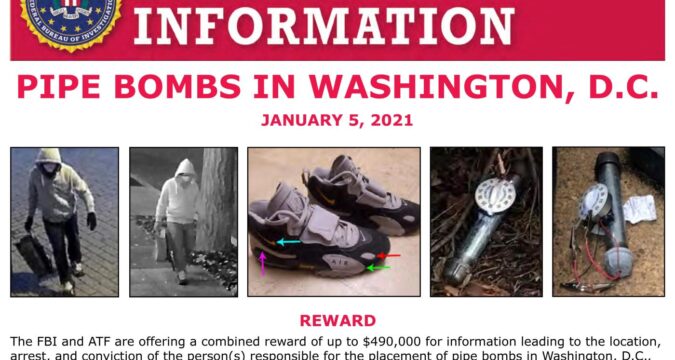
Public attention over the years had centered in part on surveillance video taken the night before the riot showing the suspect spending close to an hour moving through the surrounding blocks, pausing on a park bench, cutting through an alley and stopping again as a dog walker passed.
The person wore a light sweatshirt, dark pants and sneakers, with a dark backpack slung over one shoulder. Investigators have long said the gait suggested the person was a man, but a surgical mask and hood rendered the face all but impossible to see.
Agents paired their video review with a broad sweep of digital records. They gathered cell tower data showing which phones were active in the neighborhood at the time and issued subpoenas to several tech companies, including Google, for location information.
Investigators also analyzed credit card transactions from hobby shops and major retailers to identify customers who had purchased components resembling those used in the two explosive devices — each roughly 1 foot (0.3 meters) long and packed with gunpowder and metal, according to two law enforcement officials familiar with the investigation.
Another avenue of the investigation centered on the suspect’s shoes, believed to be Nike Air Max Speed Turfs. After learning from Nike that thousands of pairs had been distributed through more than two dozen retailers, agents filed subpoenas for credit card records from Foot Locker and other chains as they worked to narrow down potential buyers. Still, for years, they had no solid breakthroughs.
https://www.chicagotribune.com/2025/12/04/pipe-bomb-jan-6-capitol/
Gennadiy Golovkin, Antonio Tarver y Nigel Benn ingresan al Salón de la Fama del Boxeo
Por BRIAN MAHONEY
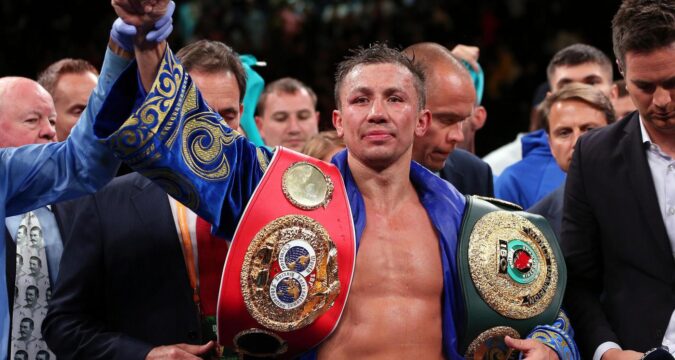
Gennadiy Golovkin, el fajador kazajo que igualó el récord de 20 defensas consecutivas del título de peso mediano, fue elegido el jueves para el Salón de la Fama del Boxeo Internacional.
Los ex campeones Antonio Tarver y Nigel Benn son los otros nombres destacados en la clase que será consagrada en el museo en Canastota, Nueva York. También ingresará la boxeadora mexicana Jackie Nava.
La ceremonia de exaltación se realizará el 14 de junio de 2026.
Golovkin fue elegido en su primer año en la boleta en la votación por miembros de la Asociación de Escritores de Boxeo de América y un panel de historiadores internacionales del boxeo.
Tuvo una foja de 42 victorias, dos derrotas y un empate, con 37 nocauts. Después de conquistar su primer cetro en 2010 en su 19na pelea, se mantuvo como campeón en las 160 libras hasta que el mexicano Saúl “Canelo” Álvarez lo superó en 2018 en su segundo enfrentamiento. Las 20 defensas consecutivas igualaron el récord de la división establecido por Bernard Hopkins, miembro del Salón de la Fama.
“Este es el mayor honor en el boxeo y la última pieza del rompecabezas en mi carrera. Estoy orgulloso de tener un legado en el boxeo”, dijo Golovkin tras ser informado de que será exaltado al Salón.
“Triple G” empató con Álvarez en su primer combatiente y perdió contra el ídolo mexicano en un desafío por el título de peso supermediano en su última pelea en 2022 después de recuperar la corona de peso mediano.
Medallista de plata en los Juegos Olímpicos de 2004, Golovkin fue elegido el mes pasado como presidente de World Boxing, la organización que busca organizar los torneos olímpicos en los Juegos de Los Ángeles 2028.
Tarver (31-6-1, 22 nocauts) tuvo múltiples reinados de título en el peso semipesado, uno de ellos después de noquear a Roy Jones Jr. en el segundo asalto de su combate de 2004. Ganó dos de sus tres enfrentamientos con Jones, quien durante mucho tiempo fue considerado el mejor boxeador libra por libra. Tarver, medallista de bronce de los semipesados en los Juegos Olímpicos de 1996, también interpretó al campeón de peso pesado Mason Dixon en la película “Rocky Balboa”.
Benn ganó títulos en peso mediano y supermediano, manteniendo el último cinturón durante cuatro años, y tuvo un récord de 42-5-1 con 35 nocauts. Hijo del peleador británico Conor Benn, recientemente venció a Chris Eubank Jr. después de que sus padres pelearan dos veces en la década de 1990, con el mayor Eubank obteniendo una victoria y un empate contra Nigel Benn.
Jimmy Clabby, quien acumuló un récord de 86-21-23 con 46 nocauts antes de retirarse en 1923, así como Nava y Naoko Fujioka.
Nava ganó títulos en peso gallo y supergallo en peleas consecutivas en 2005, el momento cumbre de una carrera con foja de 40-4-4 con 16 nocauts.
Fujioka fue la primera campeona de cinco divisiones de Japón y tuvo un récord de 19-3-1 con siete nocauts.
También serán consagrados los entrenadores y cutmen Russ Anber y Jimmy Glenn, el árbitro Frank Cappuccino y el doctor Edwin “Flip” Homansky, quien se convirtió en el segundo médico en ser incluido. La primera es su esposa, la doctora Margaret Goodman.
El periodista Kevin Iole y el difunto locutor Alex Wallau fueron incluidos en la categoría de Observador.
___
Deportes AP: https://apnews.com/hub/deportes
Robert F. Kennedy Jr.’s vaccine advisory committee delays vote on hepatitis B shots for newborns
A federal vaccine advisory committee on Thursday voted to delay a decision on whether newborns should still get the hepatitis B vaccine on the day they’re born.
The Advisory Committee on Immunization Practices, meeting in Atlanta, voted to delay the decision until Friday after committee members voiced confusion about voting language — and some voiced concern about taking such a step.
For decades, the government has advised that all babies be vaccinated against the liver infection right after birth. The shots are widely considered to be a public health success for preventing thousands of illnesses.
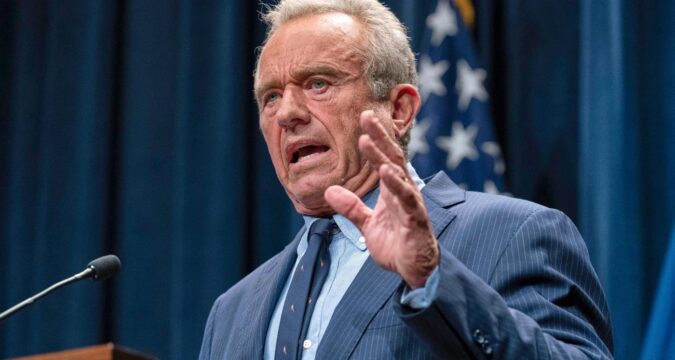
But U.S. Health Secretary Robert F. Kennedy Jr.’s committee is considering whether to recommend the birth dose only for babies whose mothers test positive, which would mark a return to a public health strategy that was abandoned more than three decades ago. For other babies, it will be up to the parents and their doctors to decide if a birth dose is appropriate.
Committee member Vicky Pebsworth said a work group was tasked in September with evaluating whether a birth dose is necessary when mothers tested negative for hepatitis B.
“We need to address stakeholder and parent dissatisfaction” with the current recommendation, she said.
The committee makes recommendations to the director of the Centers for Disease Control and Prevention on how already approved vaccines should be used. CDC directors almost always adopted the committee’s recommendations, which were widely heeded by doctors and guide vaccination programs. But the agency currently has no director, leaving acting director Jim O’Neill to decide.
Kennedy, a leading anti-vaccine activist before he became the nation’s top health official, fired the entire 17-member panel earlier this year and replaced it with a group that includes several anti-vaccine voices.
The panel has made several decisions that angered major medical groups.
At a June meeting, it recommended that a preservative called thimerosal be removed from doses of flu vaccine even though some members acknowledged there was no proof it was causing harm.
In September, it recommended new restrictions on a combination shot that protects against chickenpox, measles, mumps and rubella. The panel also took the unprecedented step of not recommending COVID-19 vaccinations, even for high-risk populations such as seniors, and instead making it a matter of personal choice.
Several doctors groups said the changes were not based on good evidence, and advised doctors and patients to follow guidance that was previously in place.
They renewed some of that criticism. Dr. Jason M. Goldman, president of the American College of Physicians, commented during the meeting, calling it “political theater” and adding that “you are basing this on concerns of individuals who don’t want the vaccine.”
Some committee members argued that safety studies in the past were limited and it’s possible that larger additional studies could uncover a problem with the birth dose. But two other committee members — Dr. Joseph Hibbeln and Dr. Cody Meissner — saw no documented evidence of harm from the birth doses and wondered whether the concern behind the discussion is just, as Hibbeln said, “speculation.”
Hepatitis B is a serious liver infection that, for most people, lasts less than six months. But for some, especially infants and children, it can become a long-lasting problem that can lead to liver failure, liver cancer and scarring called cirrhosis.
In adults, the virus is spread through sex or through sharing needles during injection drug use.
But it can also be passed from an infected mother to a baby. As many as 90% of infants who contract hepatitis B go on to have chronic infections, meaning their immune systems don’t completely clear the virus.
In 1991, the committee recommended an initial dose of hepatitis B vaccine at birth. Over about 30 years, cases among children fell from about 18,000 per year to about 2,200.
But members of Kennedy’s committee have voiced discomfort with vaccinating all newborns.
Cynthia Nevison, an autism and environmental researcher, presented at the meeting. Nevison has written opinion pieces published by Children’s Health Defense, an anti-vaccine advocacy organization Kennedy previously led. She also co-authored a 2021 article in the Journal of Autism and Developmental Disorders that the publication retracted after concerns were raised about the paper’s methodology and about nondisclosed ties between the authors and anti-vaccine groups.
Another presenter was Mark Blaxill, a co-author of the retracted paper, who spoke about vaccine safety.
In the past, committee meetings have relied on presentations by the CDC scientists involved in tracking vaccine-preventable diseases and assessing vaccine safety. The agenda for this meeting listed no CDC scientists, but rather featured a prolonged public airing of anti-vaccine theories that most scientists have deemed as discredited.
Kennedy is a lawyer by training. Aaron Siri, a lawyer who worked with Kennedy on vaccine litigation, is listed as a presenter on Friday on the topic of the immunization schedule for U.S. children.
U.S. Sen. Bill Cassidy, a Louisiana Republican who is a doctor, on Thursday posted on social media; “The ACIP is totally discredited. They are not protecting children.”
The current guidance advises a dose within 24 hours of birth for all medically stable infants who weigh at least 4.4 pounds (2 kilograms), plus follow-up shots to be given at about 1 month and 6 months. The committee is expected to vote on language that says when a family decides not to get a birth dose, then the vaccination series should begin when the child is 2 months old.
https://www.chicagotribune.com/2025/12/04/robert-kennedy-vaccine-hepatitis-b-newborns/
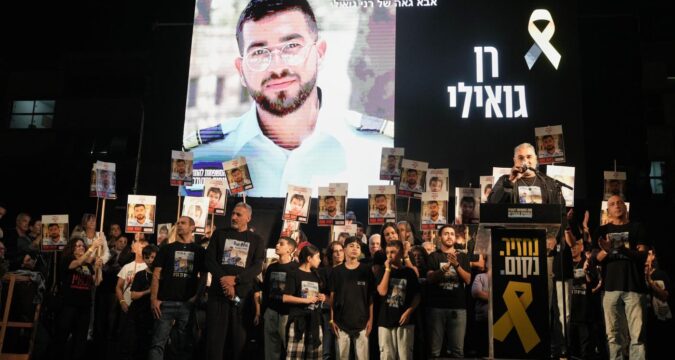
Último rehén retenido en Gaza fue capturado cuando defendía kibutz
Por JULIA FRANKEL
JERUSALÉN (AP) — Había cientos, luego docenas, y después sólo unos pocos. Ahora queda un rehén israelí en Gaza: Ran Gvili.
Gvili, un policía de 24 años conocido cariñosamente como “Rani”, fue asesinado cuando combatía contra milicianos de Hamás durante el ataque del 7 de octubre de 2023 que desencadenó la guerra. Después de una serie de intercambios de rehenes por palestinos detenidos por Israel, como parte de un acuerdo de alto el fuego, el cadáver de Gvili aún no ha sido recuperado.
Sus restos están en algún lugar de Gaza. El jueves, cuando Israel despertó con la noticia de que los restos devueltos por los milicianos el día anterior pertenecían a otro rehén, el país lloró a Gvili como un héroe que murió luchando para salvar un kibutz que no era el suyo.
“El primero en irse, el último en volver”, escribió su madre, Talik Gvili, en Facebook el jueves. “No pararemos hasta que regreses.”
“El Escudo de Alumim”
En la entrada del Kibutz Alumim, uno de los muchos pueblos fronterizos atacados por los milicianos el 7 de octubre, hay un cartel con una foto de Gvili sonriendo en su uniforme, con su nombre debajo.
“Luchó una batalla heroica, salvando las vidas de los miembros del kibutz”, se lee en el cartel. “Desde entonces se le conoce como ‘Rani, el Escudo de Alumim’”.
A diferencia de los de otros kibutzim israelíes atacados ese día, los residentes de Alumim sobrevivieron. Atribuyen eso a hombres como Gvili, quien se unió a un grupo de miembros del equipo de respuesta de emergencia, soldados y policías que repelieron ataques de oleadas de milicianos intrusos.
Sin embargo, los trabajadores migrantes en el kibutz tuvieron un destino diferente. Al ser dejados expuestos en áreas agrícolas fuera del perímetro defensivo del kibutz, 22 ciudadanos extranjeros fueron asesinados, según el periódico israelí Haaretz.
Gvili murió en batalla
La mañana del 7 de octubre, Gvili estaba en casa, dijo su hermana menor Shira Gvili en una entrevista con The Associated Press. Había estado de baja médica de su unidad de policía de élite por una fractura en el hombro.
Aun así, cuando escuchó que hombres armados estaban atacando a asistentes aterrorizados en el sitio del Festival de Música Nova, se dirigió directamente al lugar, junto con otros hombres de la unidad.
Nova se convirtió más tarde en el sitio de la mayor masacre civil en la historia de Israel, cuando los milicianos mataron al menos a 364 personas y tomaron a más de 40 como rehenes.
Gvili y los otros policías nunca llegaron allí, señaló su hermana. En cambio, se encontraron con los combatientes en el Kibutz Alumim.
El sargento Richard Schechtman, un compañero policía que también luchó en la batalla, dijo que Gvili parecía saber inmediatamente qué hacer.
“Rani estaba al frente del equipo, porque así era él”, indicó Schechtman de acuerdo con citas del sitio de noticias israelí Ynet. “Rani y yo estábamos parados en la carretera. Vi a los terroristas, pero dudé porque era la primera vez en mi vida que veía a un terrorista cara a cara, y tuve un momento de, ‘Espera, ¿Qué estoy viendo?’ Entonces Rani quitó el seguro y abrió fuego, y todo el equipo lo siguió”.
En un momento de la batalla, Gvili corrió al flanco occidental del kibutz para enfrentar a milicianos que llegaban en camiones, dijo su madre, quien ha hablado con otros que combatieron con él ese día. Ahí fue donde resultó herido en la pierna.
“Se comunicó por radio con su equipo para advertir que más vehículos con terroristas se acercaban”, dijo su madre en una entrevista con Ynet. “Abrió fuego, y ellos vinieron hacia él. Los enfrentó solo, herido en la pierna y el brazo, y derribó a esos monstruos”.
El ejército de Israel afirma que el cuerpo de Gvili fue secuestrado a Gaza por los milicianos poco después. El ejército confirmó su muerte, basándose en una evaluación de inteligencia, cuatro meses después.
Último paso en primera fase del alto el fuego
El regreso de los restos de Gvili marcará la finalización de la primera fase del plan de alto el fuego de 20 puntos del presidente estadounidense Donald Trump. La primera fase también exige la liberación de miles de palestinos de Israel, tanto vivos como muertos, y un aumento de los envíos de ayuda a la devastada Gaza.
Las siguientes fases del acuerdo de alto el fuego serán mucho más complicadas de cumplir. Los elementos clave incluyen el despliegue de una fuerza internacional para asegurar Gaza, el desarme de Hamás y la formación de un gobierno palestino temporal para gestionar los asuntos diarios bajo la supervisión de una junta internacional liderada por Trump.
La familia teme que restos de Gvili no regresen
La familia de Gvili, que incluye a su hermano, Omri, mantiene la esperanza de que pronto recibirán los restos.
“Vemos a todas las otras familias cuyos hijos regresaron y vemos en sus ojos que tienen alivio”, dijo su hermana. “Por eso es tan importante. Porque queremos seguir adelante con nuestra vida y sólo recordar a Rani”.
Ran fue un héroe, pero era más que eso, recordó su hermana: Era protector y divertido; ocasionalmente contaba chistes malos de los que todos se reían; le encantaba tocar la guitarra y cantar “The House of the Rising Sun”; y en una pierna tenía un tatuaje de su perro, Luna, a quien la familia ahora cuida.
Tanto su madre, Talik, como su padre, Itzik Gvili, dicen que temen un escenario peor, del tipo experimentado por las familias de los soldados israelíes Hadar Goldin o Ron Arad.
Goldin fue asesinado en Gaza en 2014. Su cuerpo fue devuelto a Israel hace aproximadamente un mes como parte del alto el fuego. Arad fue secuestrado en Líbano en 1988 después de eyectarse de su avión. Nunca ha sido encontrado.
“Rezamos, por supuesto, para que no sea otro Ron Arad o (Hadar) Goldin”, dijo Itzik Gvili a Kan News. “Que no lo alarguemos por muchos más años”.
“En lo que a mí respecta, hasta que Ran regrese, está vivo”, dijo el padre. “No tengo nada más por lo que esperar”.
___
Esta historia fue traducida del inglés por un editor de AP con la ayuda de una herramienta de inteligencia artificial generativa.
NCAA-backed effort to reshape college sport regulations hits a wall in Congress
WASHINGTON — An effort to regulate college sports backed by the NCAA, the U.S. Olympic organization and the White House has faltered in Congress, with opponents raising concerns over the wide-reaching power it gives the NCAA and its most powerful programs.
House Republican leaders had planned to push the bill, known as the SCORE Act, to a final vote this week. But those plans were abruptly scrapped after a procedural vote to advance the bill earlier this week nearly failed.
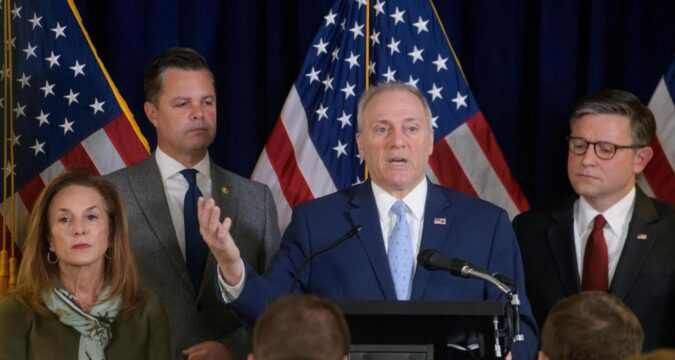
“There were a few members that had some questions and wanted to know more about the bill,” Majority Leader Steve Scalise, R-La., said Thursday. “So we’re just going to take our time with it to make sure we can get the coalition finalized.”
It’s only the latest delay for a bill that had appeared headed for passage over the summer before repeatedly hitting roadblocks. Scalise would not commit to bringing the bill back to the floor this year, saying the House has a “busy agenda.”
Opponents say bill is ‘not ready for prime time’
The NCAA and Division I conferences portray the legislation as codifying the rules created by the multibillion-dollar lawsuit settlement that allows college players to be paid, providing clarity that supporters say is long-needed. On Tuesday, the U.S. Olympic and Paralympic Committee joined the White House in lending support to the bill.
“Urgent federal action is necessary to provide the stability, fairness and balance that will protect student-athletes and preserve collegiate athletic opportunities,” the White House said.
But the bill has generated vocal opposition from both unions and athletes, in addition to multiple states’ attorneys general. While the legislation has some Democratic cosponsors, House Democratic leaders were urging their members to oppose it. And Republicans have increasingly soured on the bill this week, complaining that it was rushed to a vote and that there are other priorities to pass before the end of the year.
“I just don’t think it was ready for prime time and we’re trying to work through some of the lingering issues,” Rep. Chip Roy, R-Texas, said Wednesday.
Opponents have warned that the bill would grant sweeping authority to the NCAA and top conferences, particularly through antitrust protections and a provision preventing college athletes from being classified as employees. AFL-CIO President Liz Shuler called the measure “union-busting policy in action” in a statement.
The bill would also preempt state laws that regulate the payments to players.
“I don’t think we should be doing anything to help the NCAA. They created this mess,” said GOP Rep. Byron Donalds of Florida, who is running for governor. He said the NCAA is “coming here crying poverty, saying that they need to fix the save college sports.”
“Last time I checked, every stadium was full last Saturday. We’re going to have a new national champion in a month. College sports is making more money than they ever have. But the control factor of the NCAA and other major conferences is not what it used to be,” added Donalds, who is a graduate of Florida State University, which is not part of the two most powerful conferences.
Congress is likely to punt
The latest round of trouble for the bill began on Tuesday, when a procedural vote to advance multiple bills to a final vote was held open for over an hour as Republicans debated changes. Since then, Republican dissent has only seemed to grow — with some members who previously supported the bill now wavering.
“I was initially for it. I hear the arguments against it. So, I’m undecided,” said GOP Rep. Anna Paulina Luna of Florida. She added that she doesn’t think the bill is a “top priority issue right now for us.
With this week’s delay, House action on the SCORE Act seems nearly certain to slip into the new year. After Speaker Mike Johnson kept the chamber out for nearly two months during this fall’s government shutdown, the House is now racing to clear a backlog of must-pass measures, including a defense authorization bill and a potential fix for expiring Affordable Care Act subsidies.
For now, helping the NCAA and the sport’s most powerful conferences appears far from a unifying priority for GOP members who have grown more willing to buck leadership.
“We’re in the infancy of what college athletics is because of the changes in NIL,” Donalds said. “We shouldn’t just come in and cut that off because the NCAA wants to be able to have your cake and eat it too.”
Associated Press national sports writer Eddie Pells contributed to this report.
https://www.chicagotribune.com/2025/12/04/ncaa-reshape-college-sport-regulations-congress/
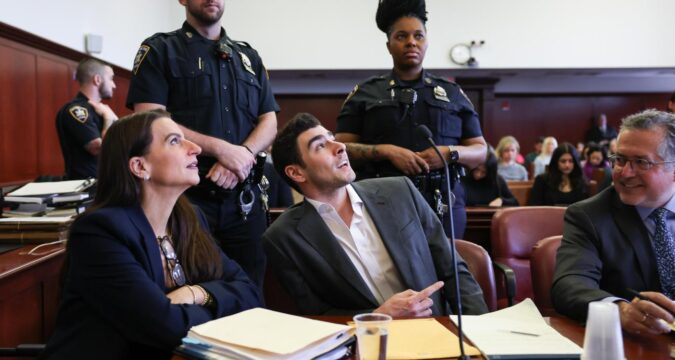
Nuevas revelaciones sobre el arresto del acusado de asesinar al CEO de UnitedHealthcare
Por JENNIFER PELTZ
NUEVA YORK (AP) — Minutos después de que la policía abordara a Luigi Mangione en un McDonald’s de Pensilvania, él le dijo a un agente que no quería hablar, según el video y el testimonio presentados el jueves en una audiencia judicial del hombre acusado de asesinar al CEO de UnitedHealthcare, Brian Thompson.
Aunque en la audiencia realizada a principios de esta semana surgieron algunos videos y relatos de las interacciones policiales con Mangione, la sesión del jueves ofreció nuevas perspectivas sobre los momentos previos a su arresto el 9 de diciembre de 2024 en Altoona, Pensilvania.
La policía recibió informes de que un cliente en el McDonald’s se parecía al sospechoso del asesinato de Thompson, cuya imagen había sido muy difundida, pero un par de agentes inicialmente se acercaron a Mangione con un tono discreto, diciendo solo que alguien había dicho que parecía “sospechoso”. Al pedirle su identificación, él entregó una licencia de conducir apócrifa de Nueva Jersey con un nombre falso, según los fiscales.
Momentos después, tras cachear a Mangione, el agente Joseph Detwiler se alejó para comunicarse con los despachadores sobre la licencia, dejando al oficial novato Tyler Frye junto a la mesa de Mangione.
”¿Qué tal? ¿Qué te trae aquí desde Nueva Jersey?”, preguntó Frye, según el video de su cámara corporal.
Mangione respondió en voz baja. Al preguntarle qué había dicho el sospechoso, Frye testificó el jueves: “Dijo algo como que no quería hablar conmigo en ese momento”.
Mangione luego agregó que “solo trataba de usar el Wi-Fi”, según Frye.
El acusado, de 27 años, se declaró no culpable de los cargos de asesinato estatales y federales. Antes de que se programen los juicios, sus abogados tratan de evitar que los posibles jurados escuchen sobre sus supuestas declaraciones a los agentes de la ley y los objetos, entre los que había un arma y un cuaderno, que supuestamente incautaron de su mochila.
Las pruebas son claves para el caso de los fiscales. Han dicho que la pistola de 9 mm coincide con el arma utilizada en el asesinato, que los escritos en el cuaderno describían el desdén de Mangione por las aseguradoras de salud e ideas sobre matar a un CEO en una conferencia de inversores, y que dio a la policía el mismo nombre falso que el presunto pistolero usó en un hostal de Nueva York días antes del tiroteo.
El proceso del jueves coincidió con el aniversario del asesinato. Thompson, de 50 años, fue atacado por la espalda mientras caminaba hacia una conferencia de inversores. Se convirtió en CEO de UnitedHealthcare en 2021 y había trabajado en de la empresa matriz UnitedHealth Group Inc. durante 20 años.
La audiencia, que comenzó el lunes y podría extenderse hasta la próxima semana, se aplica solo al caso estatal. Pero proporciona al público un extenso adelanto de algunos testimonios, videos, audios del 911 y otros registros relevantes para ambos casos.
La policía interactuó con Mangione durante unos 20 minutos antes de decirle que tenía derecho a permanecer en silencio. Los agentes le preguntaron su nombre, si había estado recientemente en Nueva York y otras cuestiones, como ”¿Por qué estás nervioso?”
Los agentes intentaron mantener la calma y ganar tiempo insinuando que simplemente respondían a una queja por merodeo y charlaban sobre su sándwich de carne. Aun así, cachearon a Mangione y alejaron su mochila de él. Unos 15 minutos después, le advirtieron que estaba siendo investigado y que sería arrestado si repetía lo que, según determinaron, era un nombre falso.
Tras darles su nombre real, le leyeron sus derechos, lo esposaron, lo cachearon de nuevo y, finalmente, lo arrestaron por un cargo de falsificación relacionado con su identificación falsa.
En el video también se da un vistazo a la labor de los agentes cuando registraron la mochila del acusado, un asunto que probablemente se explorará más a fondo a medida que avance la audiencia.
Los abogados de Mangione argumentan que sus declaraciones no deberían permitirse como evidencia en el juicio porque los agentes comenzaron a interrogarlo antes de leerle sus derechos. Dicen que los objetos de su mochila deberían excluirse porque la policía no obtuvo una orden de cateo antes de registrarla.
La fiscalía de Manhattan aún no detalla sus argumentos para permitir la evidencia disputada. Los fiscales federales han sostenido que la policía tenía una razón justificada para registrar la mochila con el fin de asegurarse de que no hubiera nada peligroso dentro, y que las declaraciones del acusado a los agentes fueron voluntarias y las hizo antes de que estuviera bajo arresto.
En muchos casos penales se presentan impugnaciones sobre evidencia y los complicados estándares legales que rigen los registros policiales y las interacciones con posibles sospechosos.
___
Esta historia fue traducida del inglés por un editor de AP con la ayuda de una herramienta de inteligencia artificial generativa.

Casa Blanca presentará planes para nuevo salón de baile
Por GARY FIELDS
WASHINGTON (AP) — La Casa Blanca presentará los planes para su nuevo salón de baile a una comisión de planificación este mes, afirmó el jueves el jefe del panel designado por Trump.
“Una vez que se presenten los planes, es realmente cuando comenzará el papel de esta comisión y su personal profesional”, declaró el jueves Will Scharf, presidente de la Comisión Nacional de Planificación de la Capital.
El salón de baile de 8.300 metros cuadrados (90.000 pies cuadrados) eclipsará a la propia Casa Blanca, con casi el doble de tamaño, y el presidente Donald Trump ha dicho que podrá albergar a 999 personas. Tendrá un costo estimado de 300 millones de dólares, un costo que ha aumentado desde las proyecciones iniciales.
Trump comentó en las redes sociales que el salón de baile no costará ni un centavo a los contribuyentes porque está siendo financiado de manera privada por “muchos generosos Patriotas, Grandes Empresas Estadounidenses, y su servidor”.
___________________________________
Esta historia fue traducida del inglés por un editor de AP con ayuda de una herramienta de inteligencia artificial generativa.
https://www.chicagotribune.com/2025/12/04/casa-blanca-presentar-planes-para-nuevo-saln-de-baile/

Model Collapse: The Entire Bubble Economy Is A Hallucination
Model Collapse: The Entire Bubble Economy Is A Hallucination
Authored by Charles Hugh Smith via OfTwoMinds blog,
The conclusion that soaring asset prices mean the economy is strong is a hallucination that goes unrecognized because the entire financial system is hallucinating.
Consider the data that the financial sector bases conclusions / decisions on (i.e. the data that the financial sector “trains” on) in a Bubble Economy like the present. The Bubble Economy’s core goal is to inflate the valuation of assets not by increasing utility-value or productivity but by artificially expanding credit and leverage.
This benefits those who already own assets, as their collateral (i.e. “wealth”) expands without any effort, and this swelling collateral enables them to borrow money to buy more assets.
This also benefits those with high incomes and modest debt, as these boost their credit rating, enabling them to borrow at lower rates than the bottom 90% of the workforce–credit they can use to outbid the bottom 90% to snap up assets which are soaring in value.
This Bubble Economy dynamic is a self-reinforcing series of iterations: the central bank expands credit and leverage, goosing asset prices higher, which boosts the collateral foundation for further credit expansion. This flood-tide of credit flows to those whose assets are generating more collateral, enabling them to buy more assets and outbid the less creditworthy while also increasing their consumer spending.
Since the top 10% own most of the assets bubbling higher, this “wealth effect” is concentrated in the top 10%, who account for roughly 50% of all consumer spending.
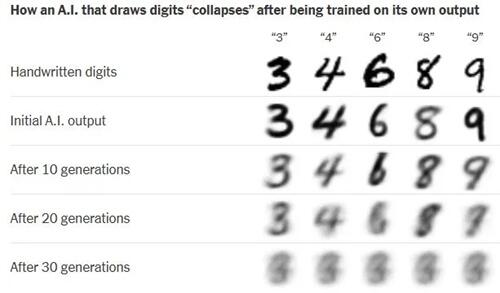
The Bubble Economy financial system uses this self-referential data to “train” its responses and conclusions. This is analogous to the way that AI systems “train” on data they generated in previous iterations.
This leads to the topic of Model Collapse, the degradation of AI’s output (answers) when it starts training on its own curated output rather than raw data. This then leads to a provocative Unified Theory of Model Collapse (via Tom D.), which posits that model collapse is not limited to AI, it applies equally well to humans, mice and pretty much every other system.
The basic idea is that raw, unadulterated data–“in the wild” data that hasn’t been “cooked,” curated or massaged–is the foundation of model stability and utility. We can call this authentic data, as it includes outliers, conflicting data points, ambiguous readings and all the messiness of the real world.
Once the “raw” data has been “cooked” (channeling French anthropologist Claude Lévi-Strauss), its authenticity is lost and the “cooked” / curated / processed data is increasingly artificial.
Each iteration of curating / processing data further distances the new output from “raw” / authentic data. Over time, the coherence and meaning of the output is degraded to the point at AI generates hallucinations that are presented as “accurate answers.”
This is the dynamic I describe in my book Ultra-Processed Life: the substitution of authenticity with artifice leads to system collapse, not just in the digital realm but in the realm of human experience.
As artifice–data and models drawn from “cooked,” curated, massaged, processed sources–replaces “raw” authenticity, entire populations and systems start hallucinating while believing the artificial model is “real.” In this state of delusion, they believe their hallucinations are reflecting “the real world”: they’re blind to the distance between the Ultra-Processed Life they accept as “real” (i.e. “raw”) and the actual raw real world.
In this state, the conclusions / answers provided by both AI and humans are hallucinations that are presented as “fact.” Those who have lost touch with “raw” real world data then accept these hallucinations as “fact” until the inevitable collision with reality.
The conclusion that soaring asset prices mean the economy is strong and so all is well is a hallucination that goes unrecognized because the entire financial system is hallucinating because it’s “training” on artificial data that it generated in a self-referential feedback loop of artificial stimulus and the resulting rise in asset valuations and spending. That none of this stimulus boosted utility value or productivity is left out of the “training,” which focuses solely on curated data that supports the hallucination.
Here is how the author of the Unified Theory of Model Collapse describes this process:
“Training on AI-generated data causes models to hallucinate, become delusional, and deviate from reality to the point where they’re no longer useful: i.e., Model Collapse.
The more ‘poisoned’ the data is with artificial content, the more quickly an AI model collapses as minority data is forgotten or lost. The majority of data becomes corrupted, and long-tail statistical data distributions are either ignored or replaced with nonsense.
Those models lose the capacity to understand long-tail information (improbable, but important data) that is no longer represented. Information on topics like serious injuries, getting punched in the nose, how dangerous wild animals can be, and what it’s like to truly be hungry because you can’t find food. Their models default to synthetic human artifice instead of understanding real implications.
The proposed thesis is that AI models, human minds, larger human cultures, and our furry little friends, all train on available data.
Brains (or brain regions) undergo model collapse just like AI systems. They become unable to reference reality, they become delusional, and hallucinate things that make no sense. Hence, the ‘Why do we need farmers when food just comes from the store’ level of disconnection observed in urban populations.
In a heavily urban setting, humans train on ‘data sets’ that are nearly wholly artificial. The less time spent outside, the less time spent interacting with the real physical world around them, the less accurate their model of reality becomes. A rocky slope up a hill may be 100% real, a grass playing field may be 70% real, and a concrete sidewalk may be around 40% real. At some point, however, the ‘salted’ artificial data is sufficient to corrupt the real-world knowledge of individuals and cause model collapse.
I am reminded of an anecdote from when I was a child. A cousin came to play with my siblings and I. My family had been raised going camping and hiking and wandering the wilds since before I can remember. Somewhere around age 3 or 4, our cousin came to visit and we went cruising up a hill hiking with our fathers in tow.
This cousin, however, had grown up in a suburban hellhole where everything was artificial. As such, he found it nearly impossible to navigate a sloped hill. His experience with walking and running had only ever consisted of flat, soft, curated environments produced by other people. He had no experience, or ability, in navigating a dirt trail at a 20 degree incline. His neurological model of the world was trained on human-produced data, and could not function when confronted with reality.
The universal thesis for model collapse is that advanced modeling systems, when trained on information produced by entities of their own class, lose information fidelity inter-generationally. After multiple generations of training on poisoned datasets, the models themselves become delusional, hallucinate false information, and cease to function.
In the same way that AI models become delusional and hallucinate when too much AI-generated data is in the training dataset, humans also become delusional when too much human-generated data is in their training dataset.”
The author then applies this to the famous Mouse Utopia experiment of John Calhoun, in which a handful of breeding-pair mice were put in a large artificial “world” with unlimited food and water and space for 6,000 mice. The researchers anticipated the mice would proliferate to the maximum limit of 6,000 and then experience some version of population overshoot.
But this isn’t what happened. The mice population reached 2,200 and then collapsed as anti-social behaviors exploded and reproduction ceased. A wide variety of causal factors have been posited and discussed over the decades since the 1962-72 experiments. The Unified Theory of Model Collapse suggests the core causal mechanism is the mice born in this artificial world of endless abundance “trained” on increasingly artificial data and this disconnect from “raw” real-world experience deranged not just individual mice but the entire society of the artificial world of abundance in a crowded, artificial “urban” environment.
The author suggests the current human population has reached the urban population density (roughly 60% of humanity lives in urban settings) that triggers anti-social behaviors and a rapid decline in fertility / reproduction. Many explanations for the current sharp decline in birth rates in most developed-world economies have been offered, and the Unified Theory of Model Collapse shed important light on the causal mechanisms of artificial environments and abundance.
In my latest book, Investing in Revolution, I explore this irony of abundance: since abundance was only temporary for 99% of humanity’s existence, an artificial world of abundance degrades our core survival mechanisms of adaptation to the point that we’ve lost the capacity to adapt that was kept sharp by scarcity and daily exposure to authentic experiences.
Ultra-Processed Life is artificial because the entire point is to replace messy authentic experiences with convenience and abundance. Just as AI programs cannot differentiate between “facts” and hallucinations, advanced economies /societies cannot recognize or explain their derangement because the implicit goal of Progress is to replace authentic experiences in the “raw” real world with artificial (and highly profitable) convenience and abundance.
The conclusion here is striking: the entirety of the modern world of Progress–urbanized, detached from the “raw” real world in service of convenience and abundance, a world where we “train” our mental models on “cooked,” curated, processed artifices–is all a vast, inter-connected, self-reinforcing hallucination bound for a collision with an inconveniently “raw” real world.
The Bubble Economy will be the first point of contact. Prepare accordingly.
* * *
AI models collapse when trained on recursively generated data (nature.com)
My new book Investing In Revolution is available at a 10% discount ($18 for the paperback, $24 for the hardcover and $8.95 for the ebook edition). Introduction (free)
Tyler Durden
Thu, 12/04/2025 – 13:45
https://www.zerohedge.com/markets/model-collapse-entire-bubble-economy-hallucination
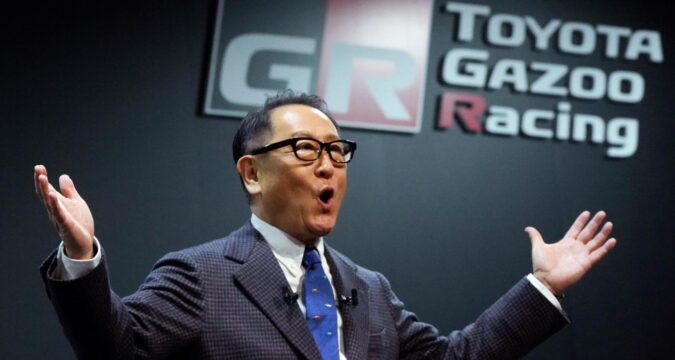
Toyota refuerza vínculos en la F1 al patrocinar al equipo Haas en 2026
Por STEPHEN WADE
TOKIO (AP) — Toyota incrementó su presencia en la Fórmula 1 tras asumir el jueves el patrocinio principal del equipo Haas.
Este es el segundo compromiso de alto perfil con la F1 por parte de un importante fabricante de automóviles para 2026. El equipo Cadillac debutará el año próximo con el respaldo de General Motors.
El nombre oficial de Haas en 2026 será TGR Haas F1 Team. TGR significa Toyota Gazoo Racing, la división de carreras de Toyota Motor Corporation.
Asumir el patrocinio principal significa que Toyota está más involucrada en la F1 que en cualquier momento desde que el equipo se retiró después de la temporada 2009. Desde entonces, sus esfuerzos en carreras de circuito se centraron principalmente en las 24 Horas de Le Mans, de 2018 a 2022.
Haas y Toyota firmaron una asociación técnica hace un año para investigación, ingeniería y desarrollo de pilotos, y el monoplaza de Haas ha llevado algo de la marca Toyota desde entonces. Pilotos japoneses vinculados a Toyota han participado en pruebas utilizando autos antiguos de Haas.
Haas continuará usando motores Ferrari el próximo año bajo un acuerdo que se extiende hasta 2028, como lo ha hecho cada año que ha competido en la F1. Haas ha trabajado estrechamente con Ferrari durante mucho tiempo y dijo el año pasado que Ferrari fue consultado sobre el establecimiento de la sociedad con Toyota.
Toyota tuvo su propio equipo en la F1 de 2002 a 2009, pero no ganó ninguna carrera a pesar de la gran inversión. Finalmente se retiró de la serie cuando la empresa matriz estaba bajo presión financiera.
“Es naturalmente un privilegio profundizar nuestra relación con TGR a través de este nuevo acuerdo de patrocinio principal”, dijo Ayao Komatsu, director del equipo Haas, en un comunicado del equipo y agregó que la asociación técnica existente ya “nos ha beneficiado enormemente”.
“A lo largo de nuestros desafíos en la temporada 2025, vi a jóvenes pilotos e ingenieros de TGR comenzar a creer en su propio potencial y fijar sus miras en sueños aún mayores”, indicó Akio Toyoda, presidente de Toyota Motor Corporation. “Ver esta transformación me conmovió profundamente. Y hoy puedo decir esto con confianza: Toyota ha comenzado a moverse. Realmente moverse”.
Toyota ha dicho anteriormente que tuvo dudas sobre retirar al equipo de la F1. Comentó que parte de su arrepentimiento fue no dar a los jóvenes pilotos una mejor oportunidad de competir en la F1.
No especificaron la duración del acuerdo de patrocinio y el comunicado mencionó solo 2026.
Haas ha estado en la F1 desde 2016 y está en el octavo lugar en la clasificación de constructores esta temporada, que incluyó el cuarto lugar de Oliver Bearman en México. Ese fue el mejor resultado de Haas desde 2018, aunque no logró alcanzar el primer podio del equipo.
La carrera final de 2025 se disputa el domingo en Abu Dhabi y tres pilotos están en contienda por el campeonato mundial.
Lando Norris de McLaren lidera por 12 puntos sobre Max Verstappen de Red Bull. Oscar Piastri de McLaren está 16 puntos detrás. Norris y Piastri intentan conseguir sus primeros títulos de temporada, mientras que Verstappen busca su quinto consecutivo.
___
El escritor de deportes de AP James Ellingworth en Düsseldorf, Alemania, contribuyó con este despacho.
Deportes AP: https://apnews.com/hub/deportes

Cronología de la actividad diplomática en torno a la guerra en Ucrania
The Associated Press
El último esfuerzo de Estados Unidos para poner fin a la guerra de casi cuatro años de Rusia en Ucrania ha desatado un frenesí de actividad diplomática.
Negociadores y funcionarios de Estados Unidos, Ucrania y Rusia han recorrido el mundo en las últimas semanas en una serie de reuniones para discutir un posible acuerdo.
Aquí una cronología de la actividad diplomática:
19 de noviembre: El presidente ucraniano Volodymyr Zelenskyy viaja a Turquía en lo que dice es un esfuerzo por reactivar las negociaciones para poner fin a la guerra. Poco después, surgen informes de un plan de paz de 28 puntos redactado por Estados Unidos y Rusia que, según los críticos, favorece en gran medida a Moscú.
20 de noviembre: El secretario del Ejército de Estados Unidos, Dan Driscoll, viaja a la capital ucraniana y se reúne con Zelenskyy para informarle sobre la propuesta de paz norteamericana.
23 de noviembre: El secretario de Estado de Estados Unidos, Marco Rubio, se reúne con una delegación ucraniana encabezada por el entonces jefe de gabinete presidencial Andrii Yermak para conversaciones en Ginebra. Ambas partes dicen que se ha logrado progreso, pero proporcionan pocos detalles. Yermak también se reúne con funcionarios de seguridad europeos.
24-25 de noviembre: Driscoll se reúne con funcionarios rusos en Abu Dabi, Emiratos Árabes Unidos. El asesor de política exterior del presidente ruso Vladímir Putin, Yuri Ushakov, dice que las partes no discuten el nuevo plan de paz en detalle.
30 de noviembre: Una delegación ucraniana liderada por Rustem Umerov se reúne con funcionarios estadounidenses en Florida. Umerov reemplazó a Yermak, quien renunció en medio de un escándalo de corrupción que involucra al sector energético del país.
1 de diciembre: Zelenskyy viaja a París para reunirse con el presidente francés Emmanuel Macron y lo informa sobre el resultado de las conversaciones en Florida, mientras una delegación estadounidense se dirige a Moscú para conversaciones con funcionarios rusos.
2 de diciembre: Putin se reúne con Witkoff y el yerno del presidente estadounidense Donald Trump, Jared Kushner, en el Kremlin durante cinco horas. El enviado ruso Kirill Dmitriev y Ushakov, el principal asesor de Putin, también estuvieron presentes. Ushakov describe la reunión como constructiva, pero dice que aún queda mucho trabajo por hacer.
2 de diciembre: Zelenskyy se reúne en Irlanda con la delegación ucraniana que regresa de Florida. En una conferencia de prensa, dice que Ucrania está esperando señales de la delegación estadounidense después de sus reuniones en Rusia.
4 de diciembre: Una delegación ucraniana vuela de regreso a Florida para una reunión con miembros del equipo estadounidense que visitó Moscú.
___________________________________
Esta historia fue traducida del inglés por un editor de AP con ayuda de una herramienta de inteligencia artificial generativa.