Category: News
Exagente de la DEA es acusado por presunto acuerdo para lavar millones de dólares del narcotráfico
Por DAVE COLLINS
Un exagente de alto nivel de la DEA y un asociado han sido acusados de asociación delictuosa para lavar millones de dólares y obtener armas de fuego y explosivos para un cártel narcotraficante de México que ha sido designado por Estados Unidos como organización terrorista extranjera, según un acta de acusación revelada el viernes en la Ciudad de Nueva York.
Paul Campo, de 61 años, de Oakton, Virginia, quien se retiró de la DEA en 2016 después de una carrera de 25 años, enfrenta cuatro cargos federales de asociación delictuosa relacionados con presunto narcoterrorismo, terrorismo, distribución de narcóticos y lavado de dinero. Los mismos cargos fueron presentados contra su asociado, Robert Sensi, de 75 años, de Boca Ratón, Florida.
La acusación presentada por un jurado investigador federal en Manhattan dice que Campo y Sensi hicieron tratos con una fuente confidencial que se hacía pasar por miembro del Cártel Jalisco Nueva Generación, pero que en realidad estaba siendo dirigida por funcionarios policiales. El secretario de Estado Marco Rubio designó al grupo como organización terrorista extranjera en febrero.
Campo presumió de su experiencia previa en la policía durante conversaciones con la fuente, dijeron las autoridades. Comenzó su carrera como agente de la DEA en Nueva York y ascendió a subdirector de operaciones financieras de la agencia, según la acusación.
Él y Sensi acordaron lavar alrededor de 12 millones de dólares para el cártel y convirtieron alrededor de 750.000 dólares en efectivo a criptomoneda para el grupo, dice la acusación. También proporcionaron un pago por aproximadamente 220 kilogramos de cocaína que, según les dijeron, se distribuiría y vendería en Estados Unidos por alrededor de 5 millones de dólares, y obtendrían una parte de las ganancias, según las acusaciones.
También dijeron que investigarían cómo adquirir drones comerciales y armas de grado militar para el cártel, incluyendo rifles semiautomáticos AR-15, carabinas M4, lanzagranadas y granadas propulsadas por cohetes, alega la acusación.
Se dejaron mensajes en teléfonos listados para Campo el viernes. No se pudo encontrar de momento información de contacto para Sensi. Los registros judiciales no enumeraban abogados para ellos. Se prevé que ambos comparezcan en el tribunal federal de Manhattan el viernes por la tarde.
“Según la acusación, Paul Campo y Robert Sensi se asociaron para ayudar al CJNG, uno de los cárteles mexicanos más notorios que es responsable de innumerables muertes a través de la violencia y el tráfico de drogas en Estados Unidos y México”, dijo Jay Clayton, fiscal federal para el Distrito Sur de Nueva York, en un comunicado. “Al participar en este ardid, Campo traicionó la misión que se le confió durante su carrera de 25 años con la DEA”.
El administrador de la DEA, Terrance Cole, agregó en el mismo comunicado que, aunque Campo ya no está empleado por la DEA, la actividad de que se le acusa deshonra a los actuales oficiales de la ley y socava la confianza pública en la policía.
La DEA ha sido sacudida en los últimos años por varios casos embarazosos de mala conducta en sus filas. The Associated Press ha contabilizado al menos 16 agentes en la última década acusados de cargos federales que van desde pornografía infantil y tráfico de drogas hasta filtración de inteligencia a abogados defensores y venta de armas a asociados de cárteles, lo que pone de relieve grandes huecos en la supervisión de la agencia.
En 2021, la agencia implementó nuevos controles sobre cómo se pueden usar los fondos de la DEA en operaciones encubiertas de lavado de dinero, y advirtió a los agentes que ahora pueden ser despedidos por una primera ofensa de mala conducta si es lo suficientemente grave, un cambio respecto a administraciones anteriores.
___
El periodista de The Associated Press Joshua Goodman en Miami contribuyó a este despacho.
___
Esta historia fue traducida del inglés por un editor de AP con la ayuda de una herramienta de inteligencia artificial generativa.

Chicago Bears LB T.J. Edwards set to return after missing 4 games — but WR Rome Odonze ruled out for Sunday
It was good news and bad news Friday for the Chicago Bears on the injury front.
Starting linebacker T.J. Edwards appears set to return Sunday after missing four games with hand and hamstring injuries, but wide receiver Rome Odunze will miss his first career game with a foot injury.
The loss of Odunze is a significant setback with the Bears facing the Green Bay Packers for the first of two games between the longtime division rivals in 14 days.
The second-year wideout, who leads the Bears in receptions (44) and yards (661), has been dealing with a heel injury that has been “progressive” throughout the season.
“Obviously he’s a big part of the passing game, we know that,” receiver Olamide Zaccheaus said. “It’s just next-man-up mentality. We’re confident in our room and the abilities that we have. Whoever needs to step up will.”
Meanwhile, Edwards told reporters Friday that he’s “absolutely” eager to return to game action — just in time to face the Packers.
“Feels like it’s been a long time,” he said. “Excited to get out there. Good week of practice. Now going up to Lambeau (Field), no better way to do it.”
After being listed as a limited participant Wednesday and Thursday, Edwards was upgraded to a full participant after Friday’s practice and carries no injury designation for Sunday’s game at Lambeau Field.
Fellow linebacker Noah Sewell (elbow) practiced in full for the entire week and projects to start alongside Edwards, reinforcing a unit that has been banged up in recent weeks. Starting linebacker Tremaine Edmunds (groin) was placed on injured reserve Nov. 22 and will miss his third straight game.
Last season, Edwards was second on the team in tackles (129) and third in sacks (four). He has 31 tackles this season.
Bears wide receiver Rome Odunze runs into the end zone for a touchdown reception in the first quarter against the Lions at Ford Field on Sept. 14, 2025, in Detroit. (John J. Kim/Chicago Tribune)
Edwards missed the season opener against the Minnesota Vikings and games against the Dallas Cowboys and Las Vegas Raiders because of a lingering hamstring injury. He had surgery on his broken right hand in early November but went on injured reserve because he was dealing with two injuries.
“I think if it was just the hand, I would’ve come back the next week,” he said. “But (I was) dealing with that hamstring still, and it’s finally starting to feel really good.”
Edwards said he plans to wear protection for his hand.
“Nothing crazy, just like a little pad on there,” he said.
The Bears defense managed to hold up despite missing its top three linebackers — Edmunds, Edwards and Sewell — with special teamers D’Marco Jackson and Amen Ogbongbemiga leading the game in tackles against the Pittsburgh Steelers on Nov. 23.
“I was honestly super excited for them,” Edwards said. “It’s a game where injuries happen and I’ve been in their roles before. So I think for us to step up and us not miss a beat on defense, it’s really cool to see.”
https://www.chicagotribune.com/2025/12/05/chicago-bears-tj-edwards-rome-odunze/

Former Cook County Judge Patricia Martin sentenced to probation after stealing from former Tuskegee Airman
Former Cook County Judge Patricia Martin on Friday was sentenced to four years probation after she admitted to stealing hundreds of thousands of dollars from the bank accounts of an elderly former Tuskegee Airman to purchase cryptocurrency.
Martin, 66, who previously served as presiding judge in the Child Protection Division of Cook County Circuit Court, pleaded guilty to one felony theft count, marking a quiet end to a legal saga that involved a lawsuit, a petition for criminal contempt of court, a $1.1 million default judgment and a disbarment.
The accusations against Martin, who retired from the judiciary in 2020, were first revealed in a lawsuit and attorney discipline complaint that alleged she took nearly $250,000 from the bank accounts of 95-year-old Oscar Wilkerson, a friend whose financial affairs she was supposed to manage.
In November 2020, a doctor who held a power of attorney for Wilkerson asked Martin, the niece of the man’s former spouse, to help the doctor manage his affairs as they recommended he move to an elder care facility.
On Dec. 26, 2020, Martin, the complaint alleged, holding herself as his power of attorney, closed out two of the man’s bank accounts, withdrawing $115,353.45. A few days later, Martin used the funds to purchase $110,000 in cryptocurrency in her own name.
Between February 2021 and October 2022, Martin used more of the man’s money “without authority, to make additional cryptocurrency purchases for her own benefit, as well as towards her own personal purposes,” the complaint said.
In July 2022, the senior living facility contacted the doctor to let him know that the man’s bills had not been paid in about two months, and his account was more than $41,000 in arrears, according to the complaint.
After that, the facility terminated the man’s residency.
Then, the doctor discovered the closed bank accounts with zero balances and hired an attorney.
The attorney corresponded for several weeks with Martin “without obtaining answers to his questions.”
The attorney filed a civil claim in 2022, and a judge later ordered a default judgment of more than $1.1 million when Martin failed to respond to the allegations.
Wilkerson died on February 8, 2023. A grand jury in 2023 indicted Martin on seven felony counts of theft, money laundering and financial exploitation of an elderly person.
Because of Martin’s status as a former judge, the case was assigned to McHenry County Judge Tiffany Davis.
https://www.chicagotribune.com/2025/12/05/former-judge-sentenced-probation/

Was The J6 “Insurrection” A Government-Sponsored Seditious Conspiracy?
Was The J6 “Insurrection” A Government-Sponsored Seditious Conspiracy?
Authored by James Howard Kunstler,
Cold Case Heats Up
“[The current FBI] was competent at cracking the case; [Christopher Wray’s] was competent at corruption and obstructing it.”
– Mike Benz
Do you have any idea what tapestry of corruption and crime is attached to the little thread of the J6 / DNC / RNC pipe bomber suspect arrested yesterday by the FBI? Consider this: suspect Brian Cole, Jr., is alive and probably talking, unlike, say, Jeffrey Epstein and Thomas Matthew Crooks in other matters of public interest. Let’s hope he is under FBI protection in custody, lest something. . . say. . . happen to him.
Dressed for government work?
As of early this morning, the country knows next to nothing else about Cole and what he was up to the night of Jan. 5, 2021.
The FBI has not even said how he is employed. But his photo shows a young man dressed for office work. . . he lives in a nice house in the DC suburbs of Virginia. . .and you might infer that he is, possibly, a federal government worker. Oh, and the FBI was unable to catch him through the whole four years of “Joe Biden?”
You can suppose at this point that the story of that four-year botched investigation will be a way bigger thing than the pipe bomber’s little prank itself.
It probably leads to the story of wholesale corruption in Christopher Wray’s FBI, and even more consequentially, to the realization that the so-called J6, 2021 “insurrection” was a government op from top to bottom, aimed at eradicating Trump and Trumpism.
First, what was supposed to happen in a joint session of Congress that day?
Answer: certification of electoral college votes in the 2020 election. What else was liable to happen that day? Answer: under the Electoral Count Act of 1887 (3 U.S.C. §§ 5–6, 15–18) — as amended, and by the rules laid out in the U.S. Constitution (Article II and the 12th Amendment) — objections to several states’ slates of electors were expected to be entertained, triggering debate and possible rejection of those states’ electors on the basis that the votes were not “lawfully certified” (under 3 U.S.C. § 6), or not “regularly given” (meaning the vote was marred by fraud, corruption, or violence). Any state’s electoral votes could be rejected if both the House and Senate voted by simple majority, after up to two hours of separate debate.
At mid-day, objections meeting the written requirement (one House member + one Senator) were filed for Arizona and Pennsylvania. The objection to the Arizona vote (Rep. Paul Gosar + Sen. Ted Cruz) was the first scheduled to be debated shortly after 1:00 p.m. It was not allowed to happen. Instead, Congress evacuated the chamber. When Congress returned at 8:00 p.m., votes objecting to Arizona and Pennsylvania slates failed and no others were taken up. Senators who previously had committed to debating the votes of several other swing states demurred, citing the breach of demonstrators into the Capitol. The full tally concluded at 3:44 in the morning, Jan 7, “Joe Biden” and Kamala Harris were certified as winners of the 2020 election.
Here are some things to know about the pipe bomb subplot in the J-6 story.
Kamala Harris, vice president-elect, still a sitting Senator (CA), was not in the chamber for the certification process. She arrived at the DNC headquarters some blocks away from the Capitol by motorcade at 11:30 a.m. and stayed until she was evacuated from the DNC at 1:14 p.m. Couple of questions about that? 1) did she not want to be present in the chamber at the momentous instant that her election as veep was certified? 2) Did she not have a duty to be present for voting on any of the procedure? Weird, a little bit. She has never explained what she was doing at the DNC that day.
Kamala Harris was in the DNC building when the pipe bomb was discovered there, around 1:07 p.m. The pipe bomb at the RNC had been discovered some 20 minutes prior, and it was the discovery of that bomb, at 12:44 p.m. that prompted the evacuation of the joint House / Senate session in Congress, not any breach of the Capitol building, which did not occur until 2:13, p.m., more than an hour later.
Now, to the FBI response to all this.
They quickly collected tons of closed-circuit video of a suspect planting these pipe bombs. The footage they released showed the suspect at a one-frame-per-second recording rate which, as Mike Benz points out, is a hundred times slower than any common gas station closed circuit camera nowadays. The FBI also doctored the recordings, specifically blurring out the section of the suspect’s face at one angle captured by a CC camera about eight meters away. The rectangular blur patch over his eyes can be clearly seen. How’d that happen?
The FBI also managed to botch every other aspect of the investigation into the act that actually triggered the evacuation of Congress that day — which was (repeat) not the breach of the Capitol building but the pipe bombs. In the months afterward, FBI Director Wray took agents off the case. He had in place as chief of the FBI’s Washington office an assistant director named Steven D’Antuono who had been in charge previously, as Detroit field chief, of the Gretchen Whitmer kidnapping case in which at least 12 confidential informants and three FBI agents were involved in what looked like an entrapment scheme. D’Antuono had demonstrated considerable skill in constructing skeezy FBI ops when he was put in charge of the DC office. The agency managed to lose the chain-of-custody for much of the evidence in the case, including originals of the videos, cell phone records, communications records between Capitol police, DC metropolitan police, Secret Service, and the FBI, and more.
So, the pipe bomber has been a cold case lo these many years. And now we’re informed as of yesterday’s FBI / DOJ press conference, that the FBI under Director Patel cracked the case using only information and evidence already in the FBI files. So, get this: there must be a record of exactly which agents were on the pipe bomber case those four years under Christopher Wray. There must be a record of who, by name, was in charge of chains-of-custody for all that evidence. And there must be a record of the senior agents and deputy directors who oversaw all their activities, all the way up to Director Wray. Why would they not be subject to charges of obstruction of justice?
All of this is just the pipe bomber subplot of the J6 story. There remains the weird business with then House Speaker Nancy Pelosi and her failure to request national guard protection at the US Capitol that day. And there remains the question of how many agents, assets, and confidential informants the FBI had in-place at the Capitol on J6, 2021, including Antifa members, and which actions, including the breach inside the building, they instigated. Then there is the question of the House J6 committee, how it was constructed with the help of lawfare ninja Norm Eisen, and how it deliberately destroyed all the evidence it collected over the months of its existence.
Be prepared to learn how the J6 “insurrection” was a government-sponsored seditious conspiracy and then ponder who, by name, will be held responsible for it. That’s the tapestry that Brian Cole, Jr.’s little thread leads to.
Shout out to Mike Benz for his nearly four-hour discussion about the pipe bomber case on “X”.
Tyler Durden
Fri, 12/05/2025 – 16:20
https://www.zerohedge.com/political/was-j6-insurrection-government-sponsored-seditious-conspiracy
El hijo mayor de Bolsonaro dice que se postulará a la presidencia de Brasil en 2026
Por GABRIELA SÁ PESSOA
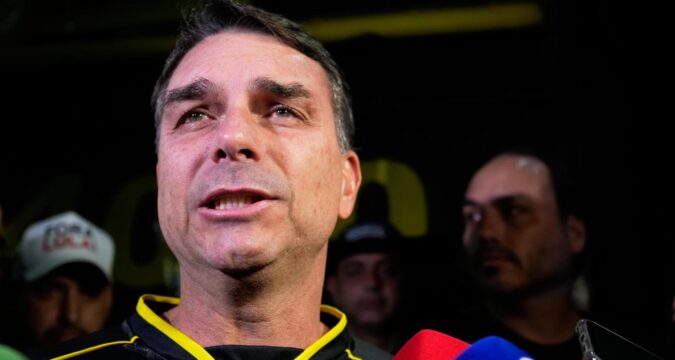
SAO PAULO (AP) — El senador brasileño Flávio Bolsonaro, hijo mayor del expresidente Jair Bolsonaro, dijo el viernes que su padre decidió que él debería representar a su grupo político y postularse para presidente de Brasil en 2026.
El exmandatario fue arrestado el mes pasado y comenzó a cumplir una sentencia de 27 años en prisión tras ser declarado culpable de intento de golpe de Estado. El líder derechista ya había sido inhabilitado para postularse a un cargo público hasta 2030 como parte de un proceso separado en su contra.
“Es con gran responsabilidad que confirmo la decisión del mayor líder político y moral de Brasil, Jair Messias Bolsonaro, de encomendarme la misión de continuar nuestro proyecto nacional”, escribió Flávio Bolsonaro en X.
La oficina del senador Bolsonaro confirmó a The Associated Press que competirá contra el presidente Luiz Inácio Lula da Silva como candidato del Partido Liberal. La oficina también informó que Flávio Bolsonaro visitó a su padre en prisión el martes.
Flávio Bolsonaro fue elegido senador en 2018 para un mandato de ocho años, tras una carrera como legislador estatal en Río de Janeiro. El político estuvo en el centro de acusaciones de malversación de fondos públicos que involucraban las oficinas políticas de la familia. Los fiscales lo acusaron, pero el caso fue desestimado por los tribunales. El senador ha negado haber cometido delito alguno.
Muchos políticos en Brasil veían al gobernador de Sao Paulo, Tarcísio de Freitas, quien fuera miembro del gabinete de Jair Bolsonaro, como el sucesor natural. Sin embargo, enfrentó resistencia de los allegados de Bolsonaro, que también han considerado a su hijo, Flávio Bolsonaro, como una opción presidencial.
Las encuestas de opinión muestran que Bolsonaro sigue siendo central en el panorama político de Brasil. Incluso tras las rejas, podría determinar quién lleva la bandera de su coalición en las elecciones de 2026. Los observadores dicen que, para convertirse en un contendiente competitivo contra Lula, cualquier candidato de la oposición debe primero ganarse a la base electoral y el apoyo explícito de Bolsonaro.
___
Esta historia fue traducida del inglés por un editor de AP con la ayuda de una herramienta de inteligencia artificial generativa.
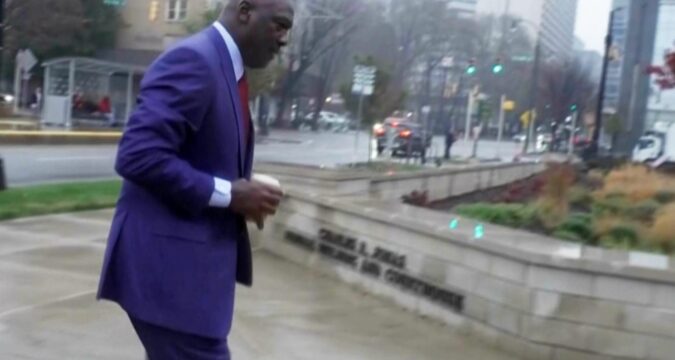
Michael Jordan testifica en juicio antimonopolio de NASCAR, dice que no tuvo opción más que demandar
Por JENNA FRYER
CHARLOTTE, Carolina, del Norte, EE.UU. (AP) — Michael Jordan subió al estrado en el histórico caso de antimonopolio de NASCAR y testificó el viernes que ha sido fanático de la serie de autos de carrera desde que era niño, pero sintió que no tenía otra opción más que radicar una demanda para forzar cambios en un modelo de negocio que considera que perjudica a los equipos y conductores que arriesgan sus vidas para mantener el deporte en marcha.
El retirado astro de la NBA testificó durante una hora ante una sala de audiencias llena. Su celebridad provocó comentarios del juez e incluso de un abogado defensor mientras explicaba por qué el equipo que co-propietario, 23XI, se había unido a Front Row Motorsports para ir a los tribunales contra la principal serie de carreras de autos en Estados Unidos.
“Alguien tenía que dar un paso adelante y desafiar a la entidad”, dijo Jordan al jurado. “Estuve en esas reuniones con propietarios de larga data que fueron intimidados durante tantos años tratando de hacer cambios. Yo era una persona nueva, no tenía miedo. Sentí que podía desafiar a NASCAR en su totalidad. Sentí que, en cuanto al deporte, necesitaba ser visto desde una perspectiva diferente”.
La muy anticipada aparición de Jordan siguió a un dramático testimonio de Heather Gibbs, la nuera del propietario del equipo de carreras Joe Gibbs, sobre el caótico período de seis horas en el que los equipos tuvieron que firmar una extensión o perder los contratos de fletamento que garantizan ingresos semana a semana durante la temporada de 38 carreras de NASCAR.
“El documento era algo que en los negocios nunca firmarías”, dijo Heather Gibbs, quien también es agente de bienes raíces con licencia. “Era como tener un arma en la cabeza: si no firmas, no tienes nada”.
Las contratos de fletamento son el equivalente al modelo de franquicia utilizado en otros deportes y en NASCAR garantizan a cada auto con los mismos un lugar en cada carrera, además de un pago definido de la serie. El sistema fue creado en 2016, y durante los más de dos años de amargas negociaciones sobre una extensión, los equipos suplicaron que las contratos renovables se hicieran permanentes para la estabilidad de los ingresos.
Cuando NASCAR se negó a hacerlas permanentes y dio a los equipos seis horas en septiembre de 2024 para firmar la extensión de 112 páginas, 23XI y Front Row Motorsports fueron las únicas dos organizaciones de 15 que se negaron. En su lugar, presentaron la demanda antimonopolio y el juicio se abrió el lunes para escuchar sus argumentos de que NASCAR es un monopolio. 23XI es co-propiedad de Jordan y el tres veces ganador de Daytona 500, Denny Hamlin, y Front Row es propiedad del franquiciador de comida rápida Bob Jenkins.
Jordan testificó que 23XI compró una tercera carta a finales de 2024 por 28 millones de dólares incluso con toda la incertidumbre.
“Estoy bastante seguro de que saben que me encanta ganar”, dijo el seis veces campeón de la NBA. “Denny me convenció de que conseguir un tercer conductor mejoraba nuestras posibilidades de ganar, así que me lancé”.
Como otros testigos esta semana, Jordan describió un NASCAR que se negó a discutir opciones o posibles cambios al sistema de contratos, que él apoya. Se le preguntó por qué 23XI no firmó las extensiones el otoño pasado.
Jordan se refirió al modelo de negocio de la NBA, que comparte aproximadamente la mitad de sus ingresos con los jugadores, mucho más que NASCAR.
___
Deportes AP: https://apnews.com/hub/deportes
Pakistán y Afganistán intercambian disparos en su frontera sin reportar víctimas
Por MUNIR AHMED y ABDUL QAHAR AFGHAN
ISLAMABAD (AP) — Las tropas paquistaníes y las fuerzas afganas intercambiaron disparos el viernes por la noche a lo largo de la frontera entre ambos países, pero no se reportaron víctimas ni daños. Ambos bandos se culparon mutuamente de desencadenar el enfrentamiento pese a un frágil alto el fuego que ha estado en vigor durante los últimos dos meses.
Las negociaciones entre Kabul e Islamabad destinadas a aliviar las tensiones fronterizas y mantener la tregua se rompieron en noviembre, pero el alto el fuego —mediado por Qatar en octubre— se ha mantenido en gran medida.
Los disparos se produjeron un día después de que Pakistán dijera que permitiría a las Naciones Unidas enviar suministros de ayuda a Afganistán a través de los cruces fronterizos de Chaman y Torkham, que han estado mayormente cerrados durante casi dos meses en medio de crecientes tensiones.
Mohammad Sadiq, un oficial de policía local paquistaní, afirmó que los disparos comenzaron desde el lado afgano y que las tropas paquistaníes respondieron cerca del cruce fronterizo de Chaman.
En Kabul, el portavoz del gobierno talibán afgano, Zabihullah Mujahid, acusó a Pakistán de iniciar el enfrentamiento.
“Desafortunadamente, esta noche, el lado paquistaní una vez más lanzó ataques contra Afganistán en el distrito Spin Boldak de Kandahar, obligando a las fuerzas del Emirato Islámico a responder”, escribió Mujahid en X. Los talibanes que gobiernan Afganistán se refieren a su administración como el Emirato Islámico.
Abidullah Farooqi, portavoz de la policía fronteriza afgana, dijo que las fuerzas paquistaníes primero lanzaron una granada de mano en el área fronteriza de Spin Boldak hacia el lado afgano, lo que provocó una respuesta. Afirmó que Afganistán sigue comprometido con el alto el fuego.
Mosharraf Zaidi, portavoz del primer ministro paquistaní Shehbaz Sharif, dijo en X que más temprano en la noche, “el régimen talibán afgano recurrió a disparos no provocados a lo largo de la frontera de Chaman”. Añadió que las fuerzas paquistaníes permanecen completamente alertas y comprometidas a garantizar la integridad territorial del país y la seguridad de sus ciudadanos.
Las tensiones aumentaron después de mortales enfrentamientos fronterizos en octubre que mataron a decenas de soldados, civiles y presuntos combatientes, y dejaron heridos a cientos más en ambos lados. La violencia estalló después de explosiones en Kabul, la capital afgana, el 9 de octubre, por las que el gobierno talibán culpó a Pakistán y prometió vengar.
Fue la peor lucha entre los vecinos en los últimos años. El alto el fuego mediado por Qatar alivió las tensiones en cierta medida, pero las posteriores conversaciones de paz en Estambul no lograron producir un acuerdo.
Pakistán ha atribuido la mayoría de los ataques dentro del país al Talibán paquistaní, también conocido como Tehrik-e-Taliban Pakistán o TTP. Aunque separado de los talibanes afganos, el TTP está estrechamente aliado con ellos, y se cree que muchos de sus combatientes se han refugiado en Afganistán desde que los talibanes tomaron el poder allí en 2021, lo que ha tensado aún más las relaciones.
___
Afghan informó desde Jalalabad, Afganistán. El periodista de The Associated Press Abdul Sattar en Quetta, Pakistán, contribuyó a este despacho. ___

East Chicago man convicted of shooting trucker will appeal sentence
A man convicted of shooting a trucker in a busy intersection during the morning rush three years ago plans to appeal the sentence handed down to him Thursday.
Lake Superior Court Judge Gina Jones sentenced Paul Michael Sloat, 29, of East Chicago, to 25 years, 20 of which will be served in prison, two in Community Corrections and three on probation. Sloat was accused of shooting Don Munson once in the chest on Aug. 22, 2022, as his father, Robert Sloat, tried to prevent Munson from taking off after allegedly clipping the mirror off their SUV.
Sloat in October was convicted of attempted murder, aggravated battery, battery by means of a deadly weapon and battery resulting in serious bodily injury. Jones in the sentencing, however, dropped all but the attempted murder charge.
Deputy Prosecutors Judith Massa and Lauren Lanham asked for a 32-year sentence, arguing that they disagreed with the defense’s position that Sloat was “unlikely” to offend again. Among their reasons was that Sloat claims to have three untreated mental illnesses for which he doesn’t take medication because “it makes him feel worse.”
“The state has to wonder if he’d been medicated, would this have happened?” Massa said.
Massa added that the jury “knew” that the Sloats should’ve called the police when it happened and that after listening to the evidence, they understood Paul Sloat should be charged with attempted murder. She also said Paul Sloat is easily swayed by others, as shown by his listening to his father to get aggressive when Paul Sloat himself said, “It was only a mirror, no big deal.”
Defense attorney Scott King maintained that the Sloats followed Munson after he pulled away because they wanted to get Munson’s license plate number and that Paul Sloat was provoked because he thought Munson was going to run over Robert Sloat. He said he would be filing a Motion to Correct and that he’ll be working with Paul Sloat’s appellate public defender during the appeal.
Robert Sloat during the sentencing appeared agitated and at one point said, “She wasn’t even born yet!” from the audience when Don Munson’s wife, Tina Munson, asked why Paul Sloat couldn’t have been a better role model for his daughter during her victim-impact statement. Robert Munson kept quiet after the bailiff told him he would be removed but kept mumbling to his wife.
For his part, Paul Sloat said he “instantly regretted” the incident and that “he’s not the violent person people make him out to be.”
“I only did what I thought I had to stop what I thought was going to happen,” Paul Sloat said. “It was a moment that went completely wrong.”
Jones didn’t disagree with him but said the fact that he shot a man in broad daylight “shocked her.”
“When you carry a gun to confront someone, there’s a high probability that you’re going to use it. It was a choice to walk to the truck, and it was a choice to cock the gun. This is the consequence of that choice,” Jones said. “The very first time I watched the video (of the shooting), I heard the gun rack before you got to the truck, and my heart jumped because I knew what was coming next.”
The top of the bullet that hit Don Munson in the chest now tops a cross pendant he wears; it was surfacing from his right shoulder, and he decided last New Year’s Eve that he didn’t want to live with the reminder of that day any longer. He went to his bathroom with a knife and cut it out, he said.
He, Tina Munson and niece Mandy Underhill said they were satisfied with the sentencing, especially since they wouldn’t have been as harsh.
“At the beginning, the prosecutors asked us what we hoped to get out of this, and we told them that if Paul could serve five years in prison with no parole, we would accept that. They drew up a plea agreement for eight years,” Tina Munson said. “He should’ve taken the plea, because the rest of this is icing on the cake.”
Sloat was turning onto 5100 Melton Road when Don Munson went around them and clipped off the mirror. Robert Sloat told him to “go get the truck” to get the license number, the Post-Tribune previously reported.
About a half-mile east, near Lake Street and Melton Road, the two men got out and confronted the driver at a stoplight, who spat on the father, a point the Munsons deny.
When Robert Sloat went in front of the cab, Munson tried to leave, so Paul Sloat jumped on the cab and fired about five shots, one of which hit Munson in the chest and lodged in his shoulder. He drove to an INDOT building, 7601 Melton Road, to get help.
Munson later denied following too closely and didn’t realize he may have hit the mirror.
Judge Gina Jones declared a mistrial in August after a woman complained to other jurors that she couldn’t be fair and impartial while she missed an appointment that week.
Michelle L. Quinn is a freelance reporter for the Post-Tribune.
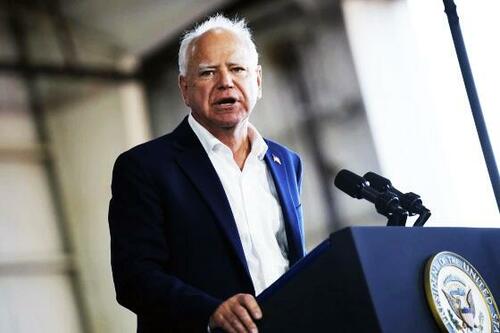
Full Metal Retard: Walz Rolls Out Taxpayer-Funded Paid Leave For Illegals
Full Metal Retard: Walz Rolls Out Taxpayer-Funded Paid Leave For Illegals
Less than one week after the NY Times (of all rags) torched Minnesota governor Tim Walz over a massive and sprawling fraud scandal involving Somalians that federal prosecutors say siphoned over $1 billion from the state’s social safety net programs, Walz is opening yet another avenue for fraud – giving taxpayer-funded leave illegal immigrants.
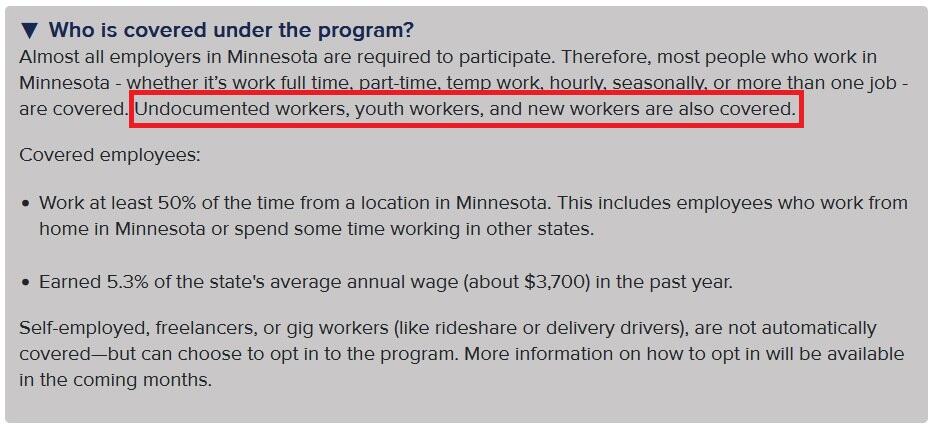
Under the Minnesota Paid Family and Medical Leave Program which Walz signed into law ahead of its Jan. 1 start date, “undocumented workers” will receive benefits, according to the Minnesota Chamber of Commerce’s FAQ page.
The program provides payments to Minnesota residents who need time away from work for “serious health” reasons, or to take care of a family member – be it an infant or an ill relative, the Washington Examiner reports. What’s more, if an individual qualifies for both medical and family leave, they can “double dip” – getting taxpayer funds for a total of 20 weeks or 5.5 months, each year. These receiving benefits can also “top off” paid leave by using paid time off (PTO), sick days, and vacation hours in addition to their leave of absence.
Program beneficiaries will receive between 55% and 90% of their regular wages while on paid leave – up to a maximum amount of $5,692 per month.
“Are people going to abuse the program?” Walz replied when questioned on Tuesday at an event about potential fraud. “How disrespectful to people to assume that ailing Minnesotans are scamming. That’s what I hear from [critics] all the time. I trust Minnesotans.”
“I believe they know you’re not gonna get rich, and it’s not your full salary. You’re not gonna scam and take time off,” Walz continued.
Meanwhile, Walz continues to downplay growing concerns after a $1 billion fraud was uncovered by City Journal, in which Somali immigrants were stealing welfare funds and funneling the money home to Somalia.
The fraud involved a series of schemes that federal authorities say took root over the past five years, many centered within Minnesota’s Somali diaspora, where individuals established companies that billed state agencies for services that were never performed. Prosecutors say 59 people have been convicted across various cases so far, in three separate plots.
Minnesota’s fraud scandal stood out even in the context of rampant theft during the pandemic, when Americans stole tens of billions through unemployment benefits, business loans and other forms of aid, according to federal auditors. – NYT
Federal prosecutors have emphasized the seriousness of the cases being prosecuted by career federal attorney Joseph H. Thompson – who warned that the scale of fraud threatens public confidence. “No one will support these programs if they continue to be riddled with fraud,” Mr. Thompson said. “We’re losing our way of life in Minnesota in a very real way.”
Also meanwhile, Minnesota is awarding public outreach grants to community groups that are focused on “equity” and helping “priority populations” including minorities, LGBT people, immigrants, and people who can’t speak English.
Funding for the grants comes from a portion of the annual projected PFML payments. For fiscal 2026, grants will be awarded from an available fund of $1.9 million, increasing to $3.7 million the following year.
‘The next big fraud scandal in Minnesota’
Some policy experts are raising fraud-related concerns about bad actors abusing the paid leave program, especially exploiting the minimal eligibility criteria that allow illegal immigrants to benefit from the coverage plan.
“Why are Minnesota taxpayers, which I’m one, funding people who, legally speaking, should not be in America or in Minnesota?” questioned Bill Glahn, a policy fellow at the Minnesota-based Center of the American Experiment.
Proponents of PFML, however, believe that illegal migrants should reap the rewards if they pay into the program via the payroll tax, which is split between employers and employees, whose half is deducted from their wages. –Washington Examiner
Evidence continues to mount that Walz is, as President Trump claims, a complete retard.
Tyler Durden
Fri, 12/05/2025 – 15:40

Estudiante universitaria deportada en Acción de Gracias pudo haber evitado su expulsión, dice EEUU
Por HOLLY RAMER
CONCORD, Nueva Hampshire, EE.UU. (AP) — Una estudiante universitaria de Massachusetts que fue deportada mientras intentaba visitar a su familia para el Día de Acción de Gracias perdió muchas oportunidades para impugnar una orden de expulsión emitida cuando era pequeña, según un abogado del gobierno.
Any Lucía López Belloza, de 19 años y estudiante de primer año en Babson College, fue enviada en avión a Honduras dos días después de ser detenida en el aeropuerto de Boston el 20 de noviembre, a pesar de una orden judicial emitida al día siguiente que indicaba que debía permanecer en Massachusetts.
El fiscal federal adjunto, Mark Sauter, presentó el miércoles una respuesta sobre el caso, diciendo que el juez de Boston que emitió la orden carecía de jurisdicción porque, para entonces, López Belloza ya estaba en Texas a punto de salir del país.
Su abogado argumenta que ella nunca supo sobre la orden de expulsión, y mucho menos cómo impugnarla, y que el Servicio de Inmigración y Control de Aduanas (ICE, por sus siglas en inglés) hizo casi imposible localizarla mientras era deportada.
El fiscal federal dijo que, aunque el caso de López Belloza podría haberse transferido a Texas, eso no es necesario porque el gobierno ya la ha liberado de la custodia, en Honduras.
“El ICE no ‘escondió’ a la peticionaria en un lugar desconocido ni dejó de revelar su paradero después de su arresto el 20 de noviembre”, escribió Sauter. Afirmó que ella pudo llamar a su familia esa tarde, dar aviso de dónde presentar una petición, y que su traslado a Texas fue para prepararla para su expulsión, no para ocultar su ubicación.
Su abogado, Todd Pomerleau, dice que después de la llamada inicial a casa, el ICE no proporcionó una forma significativa de encontrarla. Señaló que, en una base de datos del ICE que mostraba que ella estaba en Massachusetts el 20 de noviembre, no se tenía información sobre su paradero al día siguiente, nadie contestó el teléfono en la oficina local, y las llamadas a la oficina se colgaban tras emitir un mensaje automatizado.
“Literalmente tenemos que adivinar no solo dónde está nuestra cliente, sino por qué la tienen detenida, ya que no nos dan ninguna información”, dijo en una entrevista telefónica el viernes.
López Belloza, quien ahora se encuentra con sus abuelos, llegó a Estados Unidos en 2014 a los ocho años y se ordenó su expulsión varios años después. Su abogado dice que la orden fue emitida “sin su conocimiento personal”.
Según el gobierno, un juez ordenó la expulsión de la estudiante y su madre en marzo de 2016, y que en febrero de 2017la Junta de Apelaciones de Inmigración desestimó una apelación. Sauter escribió que ella podría haber apelado al Quinto Circuito, presentar una moción para reconsiderar o solicitar al ICE una suspensión de la expulsión.
Pomerleau argumenta que esas opciones eran inútiles porque López Belloza era una niña y no sabía que existían. Otro abogado les dijo a sus padres “que no se preocuparan por eso”, afirmó. “Ella tenía todas estas formas de ganar, pero vivía su vida completamente con los ojos vendados”.
El tribunal le dio a Pomerleau hasta el 11 de diciembre para responder formalmente. Dijo que su cliente sigue traumatizada, pero trabaja con Babson College para presentar sus exámenes finales y terminar su primer año de forma remota.
“Es simplemente una joven extraordinaria”, dijo, “y nos aseguraremos de que continúe teniendo un futuro brillante”.
___
Esta historia fue traducida del inglés por un editor de AP con la ayuda de una herramienta de inteligencia artificial generativa.