Category: News
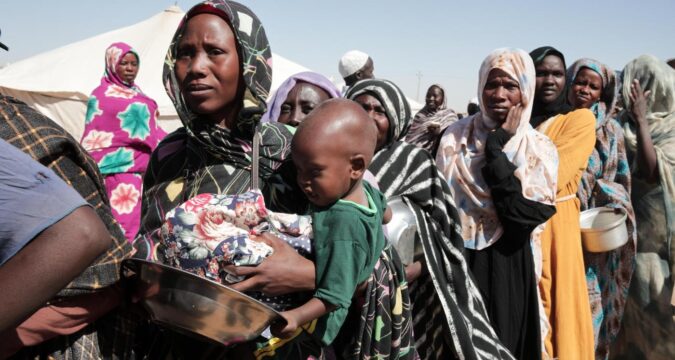
Agencia ONU reduce solicitud de ayuda para 2026 a 33.000 millones tras registrar un mínimo de fondos
Associated Press
GINEBRA (AP) — La oficina de coordinación de ayuda humanitaria de la ONU ha reducido su solicitud de financiación anual para 2026 después de que el apoyo de este año, principalmente de gobiernos occidentales, cayera al nivel más bajo en una década.
La Oficina de las Naciones Unidas para la Coordinación de Asuntos Humanitarios dijo el lunes que busca 33.000 millones de dólares para ayudar a unos 135 millones de personas a enfrentar las consecuencias de guerras, desastres climáticos, terremotos, epidemias y escasez de alimentos. Este año recaudó 15.000 millones de dólares, el nivel más bajo en una década.
La oficina dice que el próximo año quiere más de 4.100 millones de dólares para llegar a tres millones de personas en áreas palestinas, otros 2.900 millones de dólares para Sudán —donde se produce la mayor crisis de desplazamiento del mundo— y 2.800 millones de dólares para un plan regional en torno a Siria.
“En 2025, el hambre aumentó”, afirmó Tom Fletcher, jefe de la OCHA. “Los presupuestos alimentarios se redujeron, incluso mientras las hambrunas afectaban a partes de Sudán y Gaza. Los sistemas de salud se desmoronaron. Los brotes de enfermedades se dispararon. Millones quedaron sin alimentos básicos, atención médica y protección. Los programas para proteger a mujeres y niñas fueron recortados, cientos de organizaciones de ayuda cerraron”.
El coordinador de ayuda de la ONU pidió 47.000 millones de dólares para este año y aspiraba a ayudar a 190 millones de personas en todo el mundo. Debido al menor apoyo, él y sus socios humanitarios llegaron a 25 millones de personas menos este año que en 2024.
“Sé que los presupuestos están ajustados en este momento. Las familias en todas partes están bajo presión”, dijo Fletcher. “Pero el mundo gastó 2.700 millones de dólares en defensa el año pasado, en armas y armamento. Y estoy pidiendo un poco más del 1% de eso”.
Ha llamado a una “transformación radical” de la ayuda reduciendo la burocracia, aumentando la eficiencia y dando más poder a los grupos locales. Fletcher mencionó “conversaciones muy prácticas y constructivas” casi a diario con el gobierno del presidente de Estados Unidos, Donald Trump.
“¿Quiero avergonzar al mundo para que responda? Absolutamente. Pero también quiero canalizar este sentido de determinación e ira que tenemos como humanitarios, que seguiremos entregando con lo que recibimos”, afirmó Fletcher.
___
Esta historia fue traducida del inglés por un editor de AP con la ayuda de una herramienta de inteligencia artificial generativa.

How Resilient Is BRICS In The Storm Of Geopolitics?
How Resilient Is BRICS In The Storm Of Geopolitics?
Authored by Peter Hanseler / René Zittlau via ForumGeopolitica.com,
BRICS is a huge power factor whose members, partners, and candidates are currently undergoing a severe test. Today, we look to the future.
Introduction
In the first part of this series, we looked at the facts about BRICS and the major economic trends that can currently be observed.
The second part dealt with the environment in which BRICS must develop as the most important organization of the Global South. We assessed the warlike circumstances in general, the great danger that would arise from a nuclear war, and the unpredictability of the geopolitical situation, which leads us to describe the current situation as a “storm.”
In this third and later fourth part, we will first highlight the aggressive attitude of the US toward its friends. We will then point out the difficult economic situation in the US, which appears better than it is due to the AI hype. Finally, we will describe the US’s efforts to maintain its hegemonic status in various geographical catchment areas.
Aggression Above All – Against Everyone
It does not take a genius to see that the tug-of-war between the Global South and the Collective West is already in full swing. We will discuss this further below, using specific examples.
“If you have America as a friend, you don’t need enemies.”
However, the aggressive approach of the United States is not limited to members of the Global South or BRICS exponents, but is directed against anyone from whom there is something to be taken. This includes countries that are “friends” of America – such as Switzerland – or American colonies, such as most members of the G7 and others. See my thoughts on the “colonial empire of the US” in the article “The war between two worlds has begun – Part 1.”
Trump’s approach toward friends and allies is so aggressive that one is inclined to say, “if you have America as a friend, you don’t need enemies.” There are solid reasons for this aggressive behavior. On the one hand, Trump has set himself the goal of reindustrializing his country. This comes after Wall Street bankers, supported by President Clinton and his successors, deliberately deindustrialized the country just to line their own pockets in the short term.
This strategy also had the side effect of exacerbating income inequality among different social classes, which meant that a few people benefited greatly from this strategy while many industrial workers lost their jobs and became impoverished. Another consequence of this is the loss of industrial expertise among the population.
Trump has realized that he needs to do something. However, I doubt that he intellectually understands multipolarity and thus the concept of BRICS. He doesn’t even have a clue which countries belong to BRICS. On January 21, 2025, he asked journalists whether Spain was a BRICS nation.
Furthermore, in January 2025, Trump still believed that he could bring BRICS to its knees simply by imposing tariffs and sanctions. He also threatened BRICS for not using the dollar:
“We are going to require a commitment from these seemingly hostile Countries that they will neither create a new BRICS Currency, nor back any other Currency to replace the mighty U.S. Dollar or, they will face 100% Tariffs,”
President Trump, January 30, 2025
Trump seems to have recognized that BRICS poses a threat to the US dollar’s hegemony. The fact that the US has its own behavior to blame for the avoidance of the US dollar in the Global South, because the hegemon uses its own currency as a weapon, seems to be lost on Americans in their hubris, which makes the situation all the more threatening for the US. We have commented on this behavior by the US and its consequences on several occasions, including in the section “The use of the US dollar as a weapon leads to a decline in the use of the US dollar as a reserve currency” in our article “How BRICS could overcome its biggest challenge – payment settlement.”
The behavior of the US so far does not suggest that it recognizes the danger posed by a BRICS payment system without the US dollar. If that were the case, Trump would try to make the use of the US dollar as attractive as possible for the Global South, but he is not doing so.
His actions to date have been aimed purely and simply at generating revenue through tariffs and extortion. Extortion because, in the case of the EU, for example, in addition to imposing 15% tariffs, investments and arms purchases in the trillions were extorted (see, for example, Reuters). This approach looks like a typical American “quick fix,” probably to avert the complete collapse of the US federal budget.
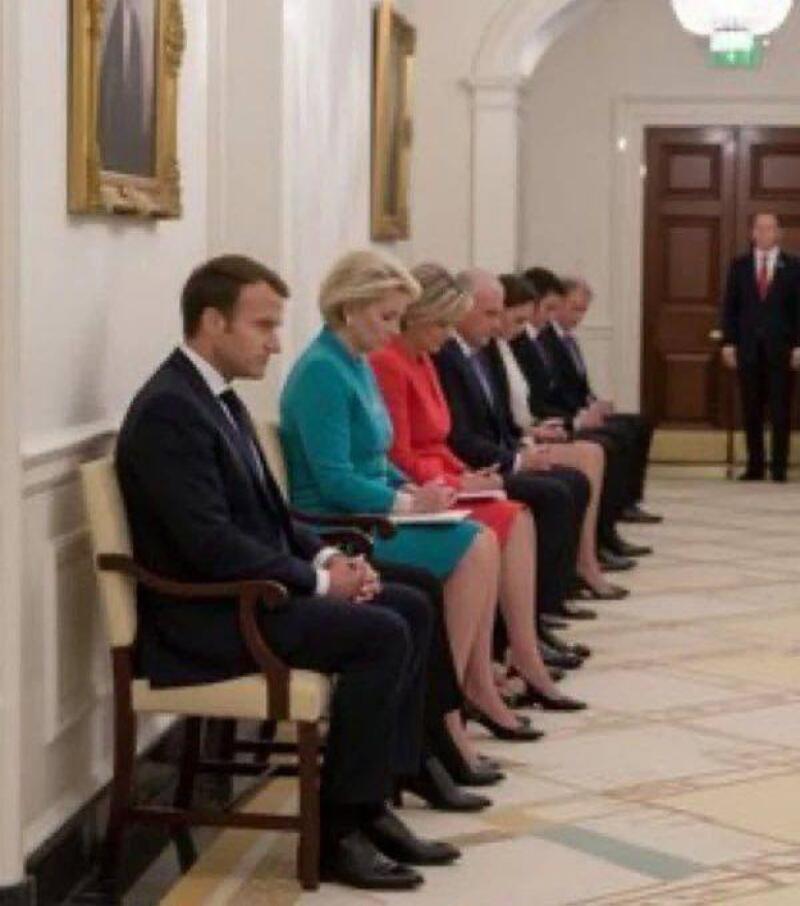
Fake but funny – AI can also be amusing – submissive European leaders wait to be dismissed by Trump – Source: Lucifer
The lack of intellectual understanding of the dangers that BRICS actually poses is also the reason why Trump sees China as a major adversary and fears that the Chinese are seeking to knock the US off its pedestal as the world’s dominant power. For Trump, who prefers simple paradigms, this is easier to understand and communicate than the BRICS constellation, which the US population neither knows nor comprehends.
The Economic Situation in the US
If we are to believe the statements made by Jerome Powell, Chairman of the US Federal Reserve, at his last press conference on October 29, there is no cause for concern—at least that is how it sounds.
“the economy looks like it’s solid and stable and hasn’t really changed”
Transcript of Chair Powell’s Press Conference October 29, 2025
The term “looks like” already indicates that this whitewashing is built on sand.
Anyone who does not get his information from sources sponsored by banks and other financial organizations, such as CNBC and other mass media outlets that claim to be “experts,” but instead looks behind the scenes and occasionally visits ZeroHedge, is well aware of the pitiful financial situation of the US, or rather the Collective West. We described this catastrophe and its origins from a geopolitical perspective in our article “The war between two worlds has begun – Part 1.” It is not the purpose of our blog to analyze economic data; others are better at that. Nevertheless, today we would like to point out a phenomenon that is characteristic of our time.
AI – The Mother of All Bubbles?
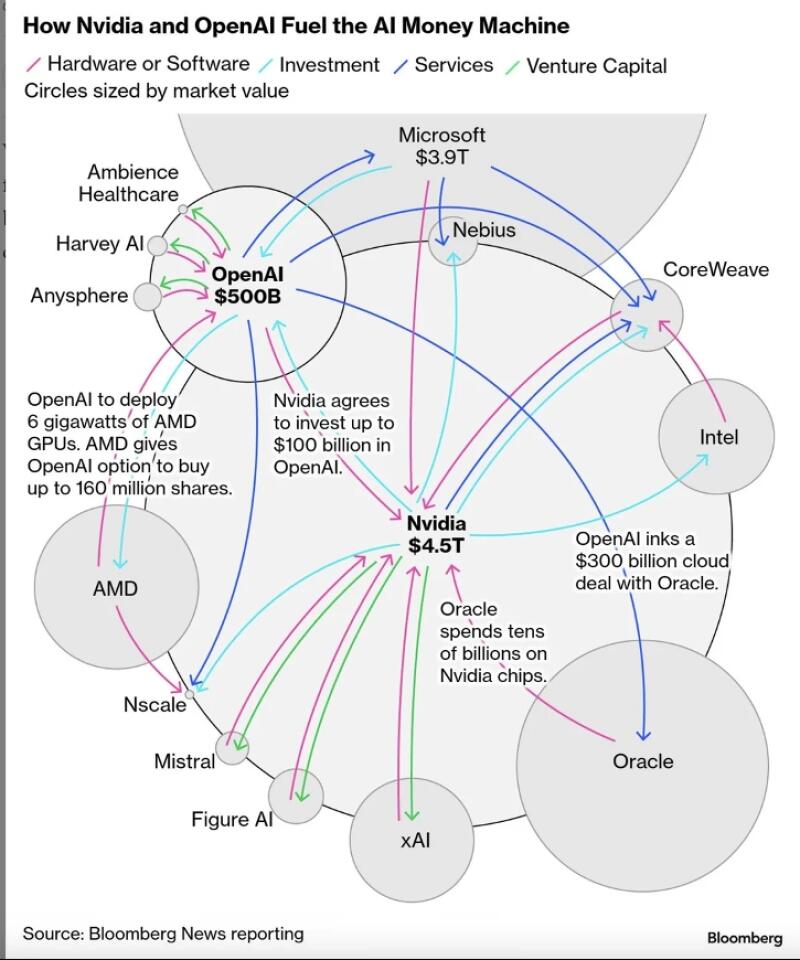
Those who view American stock indices as a benchmark for the economy are still cheering, albeit more hoarsely than before, as the price bonanza is limited to fewer and fewer stocks and AI is not only the savior, but must be the savior in order to keep the dance around the golden calf alive. The drivers of the stocks – people who tie their careers to this hype – dismiss objections that question how the predicted huge investments on which the valuations are based can even be raised and how a business model can be created in which users are supposed to amortize these huge investments. Most users pay a few dollars to use these artificial brains – nothing more. It is also striking that gigantic investments are passed around in a circle – according to the motto: You send me 100 billion under the heading X and I send the money back under the heading Y: Total investments then amount to 200 billion, but nothing has been invested. Instead of many: New York Times.
For those who want to have a laugh: Ronny Chieng explores the promises of AI
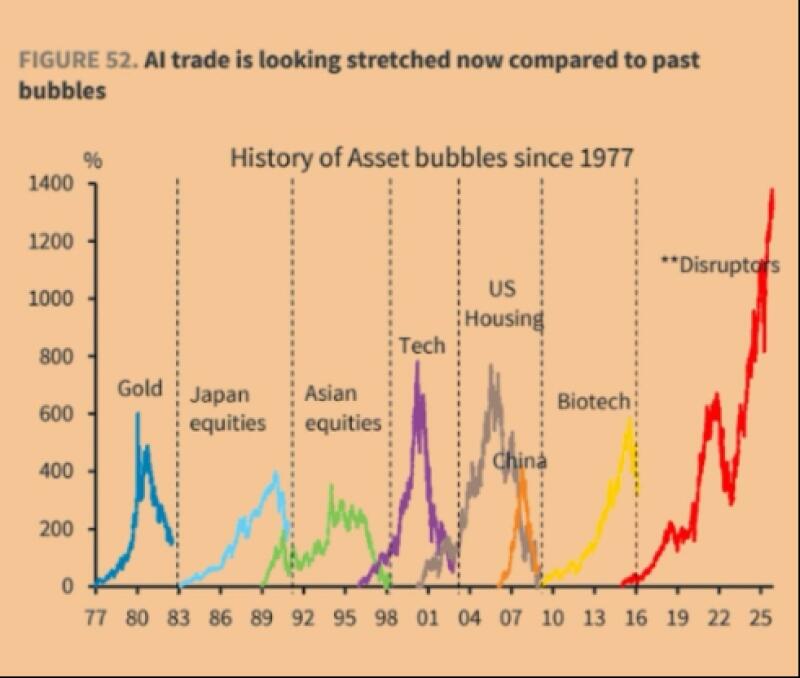
In 2000, there were companies listed on NASDAQ that had nothing to do with the internet, but added “.com” to their names and then saw their share prices jump by 500%. Something similar is happening again now. With these valuations, everyone can be sure that every pension fund in the Western world is invested in this bubble, because the big difference to the dot-com bubble is that back then, it was mainly high-earning doctors and lawyers who lost a lot of money when the bubble burst. Today, every pensioner is caught up in it.
According to the Swiss business newspaper Finanz & Wirtschaft, the current AI bubble (red) is almost twice as big—or rather, twice as bad—as the dot-com bubble of 2000.
Source: Finanz & Wirtschaft
No one knows when this bubble will burst, but it will burst, and this will lead to such upheavals on the financial markets that the geopolitical plans of the Collective West will be called into question.
How Ill-informed is Trump?
To what extent Trump is aware of the catastrophic situation facing his nation and the financial markets in the Collective West seems once again difficult to assess. Trump himself—as a real estate mogul—loves the leverage of credit, which has made him rich and has repeatedly ensured that it was not he personally but his lenders who had to write off billions. Trump therefore loves debt and low interest rates. On December 3, 2025, the New York Times wrote:
“Mr. Trump has made clear that he wants a Fed chair who will support substantially lower interest rates, something that the central bank under Mr. Powell’s leadership has rebuffed given the economic backdrop. Inflation has picked back up with Mr. Trump’s tariffs, while the labor market has shown signs of slowing.”
Source: New York Times
He is therefore unaware that lower interest rates will not only harm the US dollar in the long term, but that he will soon find no buyers for this currency. This circumstance would further reinforce the aversion of the Global South to the US dollar described above, as the US dollar would be shunned not only for geopolitical reasons, but also for purely economic reasons.
A close friend of mine is acquainted with someone who regularly dines with Donald Trump at the Mar-a-Lago dinner club. The talkative president speaks freely about many topics at these private gatherings. A few days ago, for example, he said that the Russian economy was in ruins and that the Russians were suffering catastrophic losses. I am on the ground here and can confirm to our readers that both statements are simply false. This is not about assessing the Russian economy or the situation on the front lines, but this example shows that President Trump is being misinformed by his advisors. Whether this is intentional or due to the incompetence of his administration, I have no way of knowing, but it does make his many suboptimal decisions this year seem more comprehensible, and one can assume that the president, who believes in simple thought patterns, sees the insane rally of a few AI stocks as a sign of a healthy and resilient economy.
How Will Trump Deal with BRICS?
Short-term Solutions to Money Problems
We have established so far that Trump is extremely aggressive economically and also very ruthless toward friends and allies in order to achieve his goals. His most pressing short-term goal is easy to identify: money. In May, we published the article “Mar-a-Lago will fail—without credibility, nothing works anymore.” In it, we critically analyzed Trump’s economic plans. We demonstrated that these plans are partly contradictory and will ultimately fail due to the greatest weakness of the US: Americans are completely unreliable partners and only honor contracts as long as they benefit from them, only to break them afterwards for the flimsiest of reasons. We have already commented on this weakness of the US several times, for example in June in “Diplomacy on its deathbed,” where we quoted Professor Mearsheimer as follows:
“Any country on the planet to trust the United States is remarkably foolish.”
Professor Mearsheimer
Medium- and Long-Term Solutions – Weakening BRICS
To achieve its medium- and long-term goals, the US is employing other means. As we have already outlined in our series “The war between two worlds has already begun,” the Americans are avoiding direct military confrontation with China and Russia. With regard to Russia, we believe that the confrontation in Ukraine is a direct one—see our comments in the second part of this series, “Has World War III already begun?” However, the Americans disagree, and the Russians are letting the Americans believe this for diplomatic reasons.
The US can only maintain its status as a hegemon if it destroys BRICS as an organization or weakens it to such an extent that it becomes what the West describes it as: a failed or embarrassing attempt by a few developing countries to rise above insignificance. In doing so, they are taking action against BRICS members, partners, and candidates, using every means imaginable. They are courting them to get them to switch sides (e.g., Saudi Arabia), weakening or destroying them (e.g., Venezuela).
Below, we outline the pressure points divided into geographical catchment areas on which the Collective West has or intends to exert massive influence.
Catchment Area: Western Flank of Russia
Ukraine
Currently, the Collective West is working on Russia in Ukraine in the Western catchment area. For the origins, I refer to my lecture of March 22, 2024.
The West has been conducting military operations for almost four years with absolutely no success. The losses suffered by the Ukrainians are horrendous, and it looks as though it will be the Russians who determine where their future borders will lie. It is very possible that Russia will turn Ukraine into a landlocked country by capturing Odessa, partly because of the ongoing attacks on Russian ships in the Black Sea, which are probably coordinated from London. Professor Mearsheimer’s argument on this subject is compelling (AI-generated).
It is also obvious that it is the Europeans who are torpedoing the US’s peace efforts; the reasons for this are multi-layered:
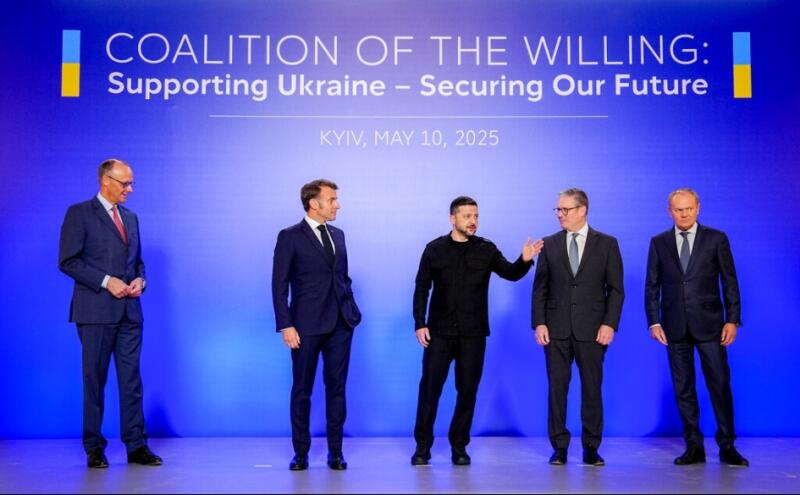
Firstly, the leaders of the EU and the leaders of the coalition of the willing are acting as ministers of war, protecting Europe from the evil Russians.
A Muppet show for the Western press – Coalition of the Willing, May 10, 2025
The moment peace “breaks out,” these leaders will lose their raison d’être, as it will quickly become apparent that the clamor for war was not staged to protect the countries concerned or the EU, but to preserve the jobs of this caste.
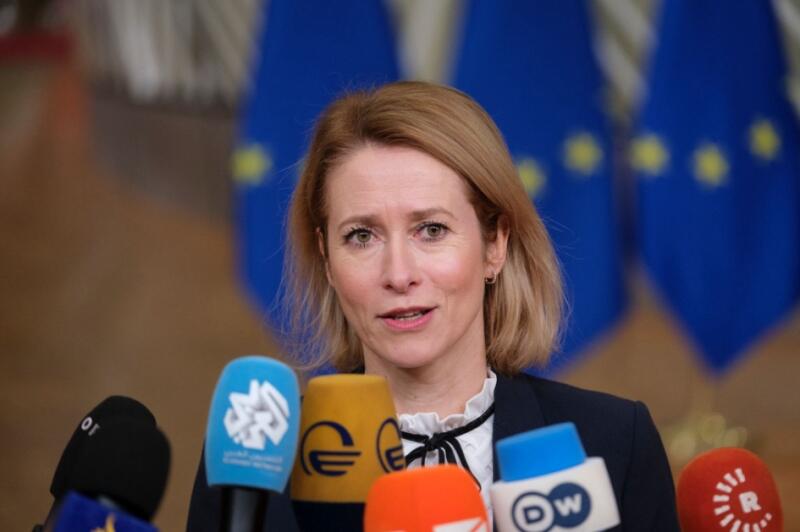
Furthermore, it appears that it was not only the ladies and gentlemen in Kiev who helped themselves to the money flowing in from Washington, the EU, and European countries. The official figure cited in relation to corruption, around 100 million euros, is a drop in the ocean when viewed realistically. It can be assumed that between 40% and 60% of all funds have disappeared. We are therefore talking about a figure of up to 100 billion that has been stolen. Why much of the aid money had to flow through Estonia, for example, raises questions. Did Ms. Kaja Kallas, the spoiled girl, also have her hand in the till? She does have experience with sleazy scandals.
Has experience with sleaziness – Kaja Kallas
We will soon report on these unsavory stories, which have not yet been proven. If Zelensky’s power passes to others, the chances of the ladies and gentlemen in Europe being convicted of corruption increase exponentially. Another reason for Europeans to continue the war.
Romania/Moldova/Transnistria
We have pointed out several times that Transnistria could well be drawn into this conflict, which would directly involve both Moldova and Romania. For more on this, see our article “Moldova – EU testing ground for political reprisals against non-Western forces.”
The Collective West achieved its goals in Romania and Moldova not through military means, but through NGOs and blatant election fraud. We discussed this in our article “Review of the parliamentary elections in Moldova.”
In Moldova and Transnistria, too, the West is provoking confrontation with Russian and Russian-speaking citizens and their culture in order to create the conditions for open confrontation with Russia.
Baltic States
The Baltic states are a particular focus. By demonizing large sections of their own population—Russians—and depriving them of their legitimate rights under EU law, attempts are being made to weaken Russia. These citizens, who are not citizens, are in fact called “non-citizens,” do not have EU passports, and their right to vote and stand for election is restricted. They are also only allowed to use their own language to a very limited extent; there is even a language police force, and Russian-speaking citizens have had to take language tests, failure of which can lead to expulsion from the country for pensioners living there. As a result, more than 800 pensioners living in Latvia with valid residence permits have been expelled from the country for these reasons, as the news portal News.ru credibly reports.
The information that Estonia intends to increase the fines for the incorrect use of language—meaning the use of the Russian language—to €1,280 for natural persons and €10,000 for legal entities also points in the same direction. The dubbing of films into Russian is now also to be banned in Estonia.
Estonia is the homeland of the EU’s top diplomat, Kaja Kallas. Under normal circumstances, diplomacy also involves maintaining and developing cultural relations and preventing discrimination. Article 21 of the EU Charter states:
« 1. Any discrimination based on any ground such as sex, race, colour, ethnic or social origin, genetic features, language, religion or belief, political or any other opinion, membership of a national minority, property, birth, disability, age or sexual orientation shall be prohibited.»
EU-Charta Article 21
Have you heard any criticism of the Baltic states’ treatment of their Russian-speaking citizens over the past 30 years? That’s how long this violation of the law has been going on. In this respect, the Baltic states are on a par with the regime in Kiev.
Hungary/Slovakia
Hungary and Slovakia are the only EU countries striving for a non-aggressive relationship with Russia. This is due, among other things, to their continuing close economic ties with Russia. The Collective West is interfering massively in the internal affairs of Hungary and Slovakia via NGOs and direct pressure from the EU. In this way, attempts are being made to get rid of Prime Ministers Orban and Fico, if necessary by physical means. In Fico’s case, this almost succeeded when an assassination attempt was made on him in Banska Bystrica on May 15, 2024.
Serbia
As a non-EU country completely surrounded by NATO countries, a landlocked country, the traditionally pro-Russian enclave is exposing itself to a significant extent in favor of Russia. The pressure is mounting. On the one hand, the country wants to become part of the EU, but on the other hand, there is considerable resistance to this in Serbia. Furthermore, Serbia’s only refinery, which is majority-owned by Lukoil, has fallen victim to new American sanctions. Serbia has not yet found a solution, i.e., no buyer for Lukoil’s stake. Russia was then given one and a half months to sell Lukoil’s stake in order to have the US sanctions lifted.
In any case, this problem will lead to higher energy prices, which could cause unrest. Whether the West will succeed in turning Serbia into an enemy of Russia is uncertain and probably depends on whether Vucic finds a way to defend his policies and remain firmly in the saddle.
Catchment Area – Caucasus
Azerbaijan/Armenia
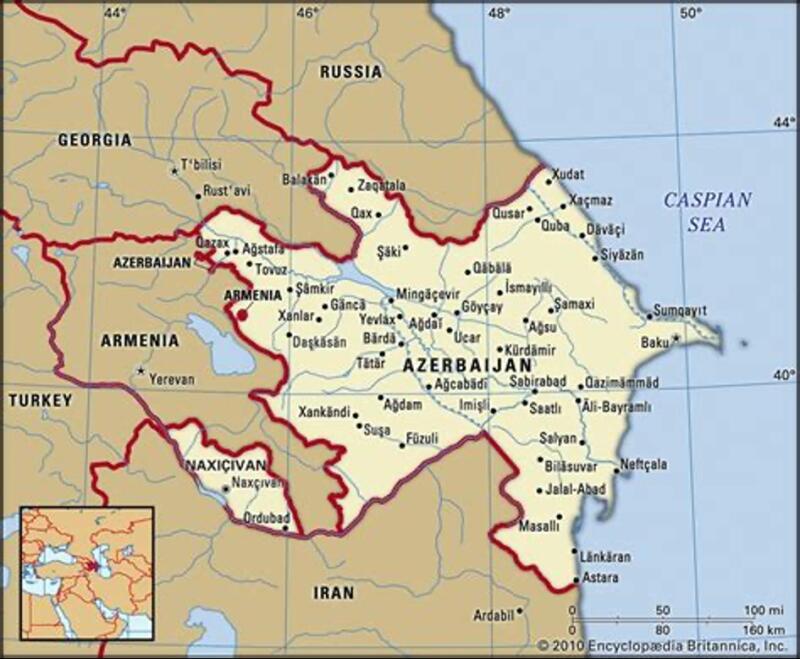
The two Caucasus states have been striving toward the West for several years. The reasons for Azerbaijan’s efforts lie in its close alliance with Turkey, which in turn works very closely with Great Britain in the Caucasus. This is reflected in Azerbaijan’s procurement of Western weapons for its conflict with Armenia. Furthermore, the country is Israel’s main energy supplier, via Turkey. The energy sources (gas and oil) themselves are mostly under British control (BP). This also applies to other mineral resources (gold, copper, etc.). Azerbaijan is also a huge producer of fruit and vegetables. Russia remains the main buyer of these products. The fruit and vegetable trade in Russia is dominated by Azerbaijanis. Since Russia accounts for around 50 percent of the country’s agricultural production, the political leadership must take this constellation into account, especially since well over 30 percent of the workforce is employed in this sector. Another factor to be taken into account is the large number of Azerbaijani migrants in Russia. For Russia, they fill a gap in the labor market, while for Azerbaijan, they fill the state coffers with their substantial remittances. These examples illustrate the complexity of mutual dependencies.
The illegitimate seizure of power by the current Prime Minister Pashinyan accelerated Armenia’s shift away from Russia. As in the case of Azerbaijan, this trend does not reflect the opinion of the majority of the population, but rather the interests of a small segment of the political class. The latest step in this direction is Yerevan’s announcement a few days ago that it will leave the Russia-led Collective Security Treaty Organization (CSTO), which includes Belarus, Kazakhstan, Kyrgyzstan, and Tajikistan in addition to Russia and Armenia. This step is also the logical consequence of the signing of an agreement with the US to regulate the situation on the Armenian-Azerbaijani-Iranian border following the loss of Nagorno-Karabakh after the war with Azerbaijan over this region.
The border strip between the Azerbaijani enclave of Nakhchivan and the Azerbaijani mainland on the Iranian border will in future be controlled by a private American military company. Armenia itself gains practically nothing from this. Azerbaijan gains American-controlled land access to its enclave and thus to Turkey and NATO.
For 100 years, the US will receive approximately 75 percent of all revenue from traffic volume and control of a key region on Iran’s northern border. What was secretly established during the Israeli-Iranian war in June 2025—the complicity of Azerbaijan and Turkey in the attack on Iran—is hereby given a veneer of legality.
Kazakhstan
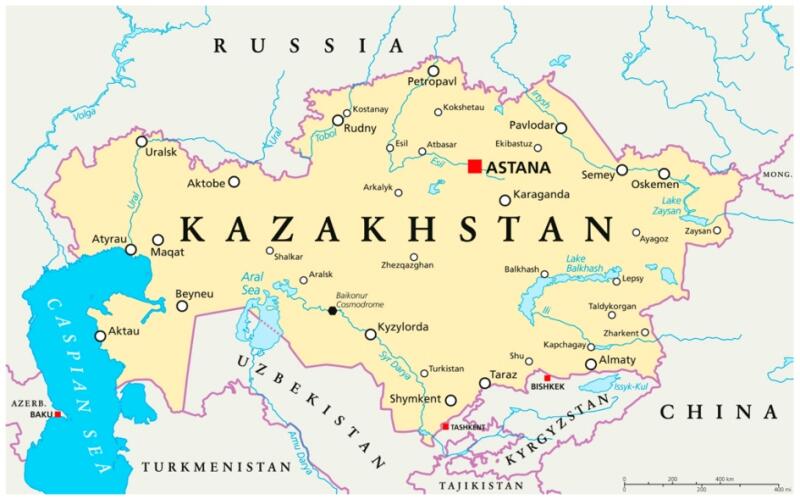
Kazakhstan is an extremely important strategic partner for Russia, and Russia is an extremely important strategic partner for Kazakhstan.
The land border is enormous (7,644 km) and the population density on both sides is low. It is therefore essential for both countries to have good relations, as it is impossible to guard such a long border. Both states are among the world’s raw material giants. The Kazakh company Kazatomprom, for example, produces 40% of the world’s uranium. Kazakhstan also produces natural gas, oil, coal, iron ore, etc. The list is almost as long as Russia’s.
Politically speaking, Kazakhstan is performing a balancing act. On the one hand, the country is strategically important as a member of the CSTO, while on the other hand, as a member of the Organization of Turkic States and a Turkic-speaking country, it also plays a significant role in Turkey’s strategic considerations. In addition to Kazakhstan and Turkey, this organization includes the post-Soviet states of Kyrgyzstan, Uzbekistan, and Azerbaijan. Hungary and Turkmenistan have observer status. And American experts recommend that only with the accession of Tajikistan and Armenia would the organization reach its full potential and strength.
Just a few days ago, Kazakh President Kassym Tokayev signed a memorandum of understanding in Washington on deepening cooperation with the US, particularly in the field of raw materials, before stopping off in Moscow on his return journey to sign a strategic partnership agreement with Russia.
The overlap between the strategic interests of the West on the one hand, Russia and China on the other, and the particular interests of Turkey and a number of other states is obvious.
Kazakhstan is a good example of how the Americans – through companies such as Halliburton – want to exert peaceful influence (for the time being). If this does not succeed, which we assume will be the case due to the pro-Russian sentiment of the population – Kazakhs speak Russian without any accent, as Russian is also an official language – the Americans will probably resort to more aggressive means. The reason for this is simple: a Kazakhstan under American control would be a dream for the US and hell for the Russians.
Our journey continues…
Tyler Durden
Mon, 12/08/2025 – 02:00
https://www.zerohedge.com/geopolitical/how-resilient-brics-storm-geopolitics

Las exportaciones de China crecen un 5,9% en noviembre, mientras los envíos a EEUU caen un 29%
Por CHAN HO-HIM
HONG KONG (AP) — Las exportaciones de China volvieron a crecer en noviembre tras una contracción inesperada el mes anterior, aunque los envíos a Estados Unidos cayeron casi un 29% en comparación con el año anterior, marcando el octavo mes consecutivo de descensos de dos dígitos.
Las exportaciones totales de China en noviembre fueron un 5,9% más altas que el año pasado en términos de dólares, según los datos de aduanas publicados el lunes, alcanzando los 330.300 millones de dólares, superando las estimaciones de los economistas. Esto representa una mejora respecto a la contracción del 1,1% en octubre.
Subrayando una brecha cada vez mayor entre las exportaciones e importaciones totales, los datos de aduanas mostraron que el superávit comercial de China para los primeros 11 meses superó la marca de un billón de dólares, alcanzando casi 1,08 billones de dólares. Esto es un récord para cualquier año y supera el superávit de 992.000 millones de dólares en todo 2024, según datos oficiales compilados por FactSet.
Aunque las exportaciones de China a Estados Unidos han caído durante la mayor parte del año, los envíos han aumentado a otros destinos, incluyendo el sudeste asiático, América Latina, África y la Unión Europea.
Las importaciones de China aumentaron un 1,9% en noviembre, superando los 218.600 millones de dólares, mejor que el crecimiento del 1% en octubre, aunque una recesión persistente en el sector inmobiliario sigue afectando el gasto del consumidor y la inversión empresarial.
A finales de octubre se alcanzó una tregua comercial de un año entre China y Estados Unidos en una reunión entre el presidente estadounidense, Donald Trump, y el líder chino, Xi Jinping, en Corea del Sur. Estados Unidos ha reducido sus aranceles sobre China, y China ha prometido detener sus controles de exportación relacionados con tierras raras.
“Es probable que las exportaciones de noviembre aún no reflejen completamente la reducción de aranceles, lo cual debería manifestarse en los próximos meses”, escribió Lynn Song, economista jefe de ING Bank para la Gran China, en un informe.
La actividad fabril de China se contrajo por octavo mes consecutivo en noviembre, según una encuesta oficial, y los economistas dijeron que aún era temprano para determinar si había un verdadero repunte en la demanda externa tras la tregua comercial entre Estados Unidos y China.
Con las exportaciones aún fuertes, los economistas generalmente esperan que China cumpla más o menos con su objetivo de crecimiento económico de alrededor del 5% para este año.
Los líderes chinos habían delineado un enfoque en la manufactura avanzada para los próximos cinco años tras una reunión de alto nivel en octubre.
El lunes se celebró una reunión anual de planificación económica, liderada por Xi, para trazar planes de crecimiento económico para 2026, según la agencia estatal de noticias Xinhua, mientras los líderes chinos reiteraron un enfoque en “buscar el progreso mientras se asegura la estabilidad”.
Chi Lo, estratega de mercado global de BNP Paribas Asset Management, afirmó que un entorno de comercio global estable probablemente no durará mucho, ya que las relaciones entre China y Estados Unidos “permanecen en un punto muerto” a pesar de su tregua comercial temporal.
Aun así, algunos economistas creen que China continuará ganando cuota de mercado de exportación en los próximos años.
Morgan Stanley predice que para 2030, la cuota de mercado de China en las exportaciones globales alcanzará el 16,5%, frente al aproximadamente 15% actual, impulsada por su ventaja en la manufactura avanzada y sectores de alto crecimiento como los vehículos eléctricos, la robótica y las baterías.
Chetan Ahya, economista jefe de Asia de Morgan Stanley, señaló en una nota reciente que “a pesar de las persistentes tensiones comerciales, el proteccionismo continuo y las economías del G20 adoptando políticas industriales activas, creemos que China ganará más cuota en el mercado global de exportación de bienes”.
___
Esta historia fue traducida del inglés por un editor de AP con la ayuda de una herramienta de inteligencia artificial generativa.
Asking Eric: He is too cheap
Dear Eric: My son is turning 40 on December 22. My husband and I are at a quandary as to how to celebrate him.
There have been issues between my husband and him over things from his childhood. We did a special trip for his older brother when he turned 40 and would like to do something special for this son’s 40th as well.
Our daughter-in-law has made special plans for him and we are not included. I understand that, but I need some ideas as to how to celebrate this extra special year without rocking the boat.
I love my son with all my heart, as I do all my children, and want his 40th birthday to be memorable in a positive way. Any suggestions?
– Mom Who Wants to Celebrate
Dear Mom: The issues your son and your husband are having may be an obstacle, but they aren’t insurmountable. And the thing that can get them on the path to resolution is the same thing that can get you answers about how to celebrate your son: open communication.
It’s not within your purview to try to fix things between them, but you have your own relationship with your son and so I’d encourage you to reach out and tell him what you told me: you want to celebrate him, you know things are difficult, and you’re looking for options.
This is deceptively simple and it’s something that all of us so often neglect to do. It can feel awkward to acknowledge tension in a relationship or to ask someone what they want or how they want to feel valued, but that kind of vulnerability is the cornerstone of healthy communication.
Your son may not have a concrete idea about what you can do to celebrate him; that’s OK, too. But by bringing it up, you introduce the idea that you want to celebrate him, that he’s important to you, and that you’re putting his needs first here. That’s going to go a long way.
Your celebration with your son may not end up happening for the actual 40 th birthday, but by laying the groundwork now, you keep the lines of communication open for a meaningful celebration when everyone is ready.
Dear Eric: my husband, 67, of 15 years has many sterling qualities. The issue? He is cheap! He’ll graciously allow me to treat him to expensive meals and say, “thank you,” while overtipping the cute young server, but when he’s anxiously asking if I am “sure” about paying, he somehow never thinks to offer to pay for his own meal!
He hasn’t worked a real job since 2020. I am still freelancing and both of us get Social Security, but mine is about half of his amount.
He apologizes for being cheap, but it doesn’t mean he’s willing to pony up, and he often exaggerates the cost of things such as the house insurance and bemoans having to pay for items post-pandemic. Meanwhile, he has significant bank accounts from dead relatives and “forgets” about the interest payments that mean that I don’t get a tax refund anymore.
For my last birthday, we went to a bistro and shared a sandwich, while he chose a pricey new Thai restaurant for his. Our anniversary meal? At home.
Before retiring, he used to treat me to a restaurant meal, either breakfast or lunch, two or three times a month. Now he says he’s too aggravated when we leave the house, so eating lunch out is stressful for him.
Should I simply start going out to eat alone?
– Picking Up the Check
Dear Check: For many people, fears of financial insecurity can often trump the reality of their financial situation. This might be what’s going on with your husband. Feelings aren’t facts, but they can masquerade as such and drive our actions.
You may not be able to reason with him enough to rid him of the cheapness, especially when he seems to pick and choose things about which to be cheap. But you can give yourself and him tools to combat that mindset.
Talk with a financial adviser together. It sounds like you keep your accounts separate, so a conversation with a financial adviser can help with the process of creating a budget for shared expenses. Budgets are often reflections of our values, so this can be a safe space to talk about the value you place on going out to eat.
A budget will also give you concrete numbers to point to when his anxiety about the cost of something creeps up. Things may feel too expensive, when in reality they’re well within the range of affordability.
Related Articles
Asking Eric: How can I fix my relationships?
Asking Eric: I’m not invited to Friendsgiving
Asking Eric: How should I handle when people bring food to gatherings?
Asking Eric: Why does she not ‘like’ me?
Asking Eric: Do we say nothing and accept the gift graciously?
Lastly, do take yourself out now and then. You’ve earned this money, and you should have the meals you want to have.
(Send questions to R. Eric Thomas at eric@askingeric.com or P.O. Box 22474, Philadelphia, PA 19110. Follow him on Instagram and sign up for his weekly newsletter at rericthomas.com.)
https://www.chicagotribune.com/2025/12/08/asking-eric-he-is-too-cheap/

Candidata oficialista en Honduras denuncia manipulación del conteo y pide anular los comicios
Por MARLON GONZÁLEZ
TEGUCIGALPA (AP) — La candidata del partido que gobierna Honduras, Rixi Moncada, pidió el domingo la nulidad de las elecciones presidenciales en el país alegando una manipulación del sistema de conteo y presiones a la población durante los comicios, sin presentar pruebas.
“Libre no reconoce las elecciones celebradas bajo injerencia y coacción del presidente de los Estados Unidos, Donald Trump, y la oligarquía aliada que han embestido al pueblo hondureño con un golpe electoral en curso”, expresó la candidata de la formación de izquierda Libertad y Refundación (Libre) mientras leía un comunicado de su partido.
Los datos parciales publicados por el momento sitúan a Moncada en tercer lugar, muy por detrás de dos candidatos conservadores. El proceso de conteo lleva paralizado desde el viernes, lo que ha producido inquietud entre los hondureños.
Moncada afirmó que se había adulterado la soberanía nacional porque el Sistema de Transmisión de Resultados Preliminares (TREP) fue manipulado en su código fuente.
“Sin utilizar las tres llaves del sistema de seguridad, a espalda de los técnicos responsables, fue adulterado e intervenido el software, violando la Ley Electoral y los protocolos de seguridad”, expresó sin demostrar pruebas.
La misma denuncia fue realizada más temprano en conferencia de prensa por el consejero oficialista del Consejo Nacional Electoral (CNE), Marlon Ochoa, también sin presentar pruebas. Moncada afirmó que eso demostraba la violación en los módulos de “escrutinio de divulgación y escrutinio de procesamiento de actas”.
Incertidumbre por un conteo paralizado
Los hondureños votaron el domingo 30 de noviembre para elegir al nuevo presidente, tres designados presidenciales o vicepresidentes, 128 diputados propietarios e igual número de suplentes y los 298 alcaldes y vicealcaldes.
Tras un conteo preliminar que comenzó con el cierre de urnas, el proceso permanece paralizado desde el viernes debido a “problemas técnicos” en el sistema de escrutinio, según las autoridades electorales, lo que ha generado suspicacia en el proceso e incertidumbre entre la población.
De acuerdo con los datos parciales, los dos candidatos en cabeza son Nasry Asfura, del conservador Partido Nacional, que a la fecha lleva el 40,19% de los votos y Salvador Nasralla, del también conservador Partido Liberal, que obtiene el 39,49%. Moncada habría obtenido apenas el 19,3% de los votos, según los datos parciales.
Asfura y Nasralla han respetado el llamado del órgano electoral a no declararse ganadores, aunque aseguran tener todas las actas y ambos han dicho que se consideran triunfadores.
En otra conferencia de prensa casi simultánea a la de Moncada, las consejeras del CNE Ana Paola Hall y Cosette López anunciaron que se reiniciaría el sistema de divulgación de actas. Ochoa no estaba presente en esa intervención, y las funcionarias no mencionaron las acusaciones de manipulación.
La Organización de Estados Americanos en un comunicado llamó al CNE a agilizar el proceso de escrutinio, garantizando las medidas de trazabilidad que otorguen certeza en los resultados.
Sin embargo, el CNE tiene un máximo de 30 días para emitir una declaratoria final sobre el ganador de los comicios, tiempo en el cual debe realizar todo el proceso de conteo, procesamiento y subsanación.
Libre anuncia m
ovilizaciones
Moncada afirmó que en el marco del proceso electoral se enviaron millones de mensajes por diferentes plataformas amenazando al pueblo con recortar las remesas que llegan desde Estados Unidos, para que no votaran por ella.
Trump otorgó días antes de la elección su respaldo a Asfura, diciendo que era el único candidato con el que podía trabajar. También indultó al expresidente hondureño Juan Orlando Hernández, que cumplía una sentencia de 45 años por narcotráfico en una prisión federal estadounidense.
La candidata oficialista condenó el indulto a Hernández y pidió que las autoridades hondureñas lo procesaran por crímenes contra el territorio a través de la ZEDE (Zonas Especiales de Desarrollo Económico) y por violar la Constitución por reelección ilegal.
Libre, por unanimidad, también ordenó a sus candidatos electos en cualquiera de los niveles electivos a no integrar ningún organismo sin autorización del partido.
Moncada manifestó que “el partido Libre desautoriza a todo funcionario público que se ponga a la orden y anuncie cooperar en la transición gubernamental con los enemigos del pueblo, autores de este golpe electoral en curso”.
También convocó a una asamblea extraordinaria para el sábado 13 de diciembre para tomar acciones contra lo que consideran elecciones fraudulentas.
“La máxima autoridad del partido Libre es su asamblea nacional extraordinaria convocada para el próximo sábado 13 de diciembre. Se convoca a movilizaciones, asambleas locales, departamentales, protestas, paros y plantones”, confirmó.
En la conferencia estuvo la diputada Hortencia Zelaya Castro, hija de la presidenta Xiomara Castro y del coordinador de Libre, el también expresidente Manuel Zelaya derrocado en un golpe de Estado en 2009, quien anunció tomas y plantones en el país.
El escolta del Heat Terry Rozier será procesado en Nueva York por esquema de apuestas deportivas
Por PHILIP MARCELO
NUEVA YORK (AP) — El jugador de Miami Heat, Terry Rozier, comparecerá en un tribunal de Nueva York acusado de ayudar a apostadores a realizar apuestas sobre su desempeño en partidos de la NBA.
El base de 31 años será formalmente procesado en el tribunal federal de Brooklyn el lunes por la noche por cargos de conspiración para cometer fraude electrónico y lavado de dinero. También se unirá a otros cinco coacusados y sus abogados para una audiencia previa al juicio más tarde ese día en el caso.
Rozier compareció previamente ante un juez federal en Orlando el 23 de octubre, cuando los fiscales anunciaron por primera vez la acusación.
En ese momento, fue liberado con condiciones. Uno de sus abogados, Jim Trusty, negó los cargos, diciendo que el nativo de Ohio “no es un apostador” y “espera ganar esta batalla”.
Los fiscales dicen que Rozier conspiró con amigos para ayudarlos a ganar apuestas sobre su desempeño en un partido de marzo de 2023 cuando jugaba para los Hornets de Charlotte.
Afirman que informó a los apostadores que tenía la intención de abandonar el juego contra los Pelicans de Nueva Orleans temprano con una supuesta lesión, permitiendo a los apostadores realizar apuestas que les generaron decenas de miles de dólares.
Rozier jugó los primeros nueve minutos y 36 segundos del partido antes de salir, citando un problema en el pie. No volvió a jugar esa temporada.
Más de 30 personas han sido arrestadas en relación con la amplia operación federal contra las operaciones de juego ilegal vinculadas a deportes profesionales, incluidos varios miembros de la mafia.
Rozier fue uno de los tres jugadores actuales o antiguos de la NBA atrapados en la investigación.
El entrenador de los Trail Blazers de Portland y miembro del Salón de la Fama de la NBA, Chauncey Billups, fue uno de los acusados de participar en un esquema para arreglar juegos de póker ilegales de alto riesgo respaldados por la mafia.
El exjugador de la NBA y entrenador asistente Damon Jones también ha sido acusado en ese esquema de póker, así como en el esquema separado para ayudar a los apostadores a ganar apuestas en juegos de la NBA que también implicó a Rozier.
Billups y Jones se declararon no culpables durante sus procesamientos separados el mes pasado. Tanto Billups como Rozier han sido suspendidos sin sueldo de sus equipos mientras se desarrollan sus casos judiciales.
Rozier ha ganado alrededor de 160 millones de dólares a lo largo de una carrera de diez años en la NBA.
Había sido una selección de primera ronda para los Boston Celtics en 2015 después de destacar en la Universidad de Louisville. Charlotte lo traspasó al Heat el año pasado.
___
Deportes en español AP: https://apnews.com/hub/deportes

Sophomore Noah Corro takes control at point guard for St. Laurence at Credit Union 1 Arena. ‘Put on a show.’
Sophomore point guard Noah Corro felt a strong sense of urgency for St. Laurence.
Playing on a college court, Corro recognized the stakes of competing in a marquee game so early in the season. That it came on the Illinois-Chicago campus certainly added to the moment.
“I just wanted to put on a show,” Corro said. “I didn’t get many minutes last year playing behind a great player, but I learned what I had to do. When it became my turn, I knew I had to be ready.”
Ready, willing and able, Corro scored a career-high 21 points Saturday night to rally the Vikings to a 57-55 win over Rich Township in the Chicago Elite Classic at Credit Union I Arena.
Junior forward Markese Peoples added 13 points and eight rebounds for St. Laurence (6-0).
Senior guard Kavon Ammons tallied 16 points and four rebounds for the Raptors (4-1). Junior forward Taijon Eaton contributed 11 points, six rebounds and a blocked shot off the bench.
St. Laurence’s Noah Corro (5) starts setting up a play against Rich Township during the Chicago Elite Classic at UIC’s Credit Union 1 Arena in Chicago on Saturday, Dec. 6, 2025. (Vincent D. Johnson / Daily Southtown)
Corro never left the floor Saturday and helped mitigate unrelenting full-court pressure by Rich Township that forced 21 turnovers. The Vikings trailed 45-34 midway through the third quarter.
Afterward, Corro proudly wore a customized gold chain for being named the game’s MVP.
“Noah really brought the team together when we went down,” Peoples said. “He got everybody settled and playing together. His IQ, his patience and his scoring ability really stand out.
“He got everybody open, got himself open, and he made plays.”
St. Laurence’s Noah Corro (5) goes to the basket as Rich Township’s Amari Winters (10) defends in the Chicago Elite Classic at UIC’s Credit Union 1 Arena in Chicago on Saturday, Dec. 6, 2025. (Vincent D. Johnson / Daily Southtown)
St. Laurence coach Roshawn Russell confirmed that the savvy and poise have helped Corro overcome his youth and relative inexperience.
“What he’s doing as a sophomore is really incredible,” Russell said. “Noah does a great job of handling pressure and his work ethic is extraordinary. His future is very bright.
“When you see somebody work as hard as he does and it translates on the court, that’s special.”
The 6-foot-1 Corro has the size to see the court and a smooth shot that opens up multiple possibilities in his game.
St. Laurence’s Noah Corro (5) pushes the ball up the court against Rich Township during the Chicago Elite Classic at UIC’s Credit Union 1 Arena in Chicago on Saturday, Dec. 6, 2025. (Vincent D. Johnson / Daily Southtown)
“I’d describe myself as a shot-maker who plays with pace,” Corro said. “When I hit my threes, the defense has to extend. That’s when my ball-handling and speed really take over.
“I can get by guys and make plays.”
Last season, Corro learned the intricacies of the position behind four-year starter EJ Mosley, who’s now a freshman playing for Purdue Fort Wayne.
Effectively taking the baton from Mosley, Corro plays the point as the orchestrator who is tasked with having the pulse of his team and how to play to their strengths.
“Going up against EJ every day prepared Noah for this moment,” Russell said.
The other significant player in Corro’s development has been his older brother Caleb, a senior guard at Olivet Nazarene in Bourbonnais.
Despite a seven-year age gap, Noah watched while honing his game and hard-working habits through Caleb’s tutelage.
St. Laurence’s Noah Corro (5) pulls up for a jump shot against Rich Township during the Chicago Elite Classic at UIC’s Credit Union 1 Arena in Chicago on Saturday, Dec. 6, 2025. (Vincent D. Johnson / Daily Southtown)
“I really fell in love with the game watching and learning from him,” Noah said of his brother. “Working out and playing against him helped me take a huge leap.
“When you go up against a college guard and then come back to high school, the game just feels different.”
If playing time is often essential to early development, Corro worked around that aspect by getting stronger during a rigorous offseason weight-lifting program. He also played high-level AAU.
According to Corro, point guard is more than just a position, it’s a state of mind — and the mentality of working the court can be like a chess master.
“I knew last season, once our seniors graduated, this was going to be my chance,” he said. “I was prepared for it. I’m still learning when to shoot and when to pass, but I think I’m improving.
“I’m always just working on my game.”
Patrick Z. McGavin is a freelance reporter for the Daily Southtown.
https://www.chicagotribune.com/2025/12/07/noah-corro-st-laurence-rich-township-ihsa-boys-basketball/

Photos: Golden State Warriors 123, Chicago Bulls 91
The Chicago Bulls lost to the Golden State Warriors 123-91 at the United Center on Sunday, Dec. 7, 2025.
Chicago Bulls forward Trentyn Flowers (00) celebrates an alley-oop that was assisted by Chicago Bulls guard Jevon Carter (5) in the fourth quarter during a game against the Golden State Warriors, Sunday, Dec. 7, 2025, at the United Center in Chicago. (Dominic Di Palermo/Chicago Tribune)
Golden State Warriors forward Jimmy Butler III (10) celebrates his three-point field goal with Golden State Warriors guard Pat Spencer (61) in the fourth quarter during a game against the Chicago Bulls, Sunday, Dec. 7, 2025, at the United Center in Chicago. (Dominic Di Palermo/Chicago Tribune)
Chicago Bulls forward/center Zach Collins (12) goes up for a layup contested by Golden State Warriors center Quinten Post (21) in the fourth quarter, Sunday, Dec. 7, 2025, at the United Center in Chicago. (Dominic Di Palermo/Chicago Tribune)
Golden State Warriors guard Brandin Podziemski (2) throws the ball inbounds in the fourth quarter during a game against the Chicago Bulls, Sunday, Dec. 7, 2025, at the United Center in Chicago. (Dominic Di Palermo/Chicago Tribune)
Golden State Warriors forward Jimmy Butler III (10) drives the lane in the fourth quarter during a game against the Chicago Bulls, Sunday, Dec. 7, 2025, at the United Center in Chicago. (Dominic Di Palermo/Chicago Tribune)
Chicago Bulls guard Ayo Dosunmu (11) makes a pass in the fourth quarter during a game against the Golden State Warriors, Sunday, Dec. 7, 2025, at the United Center in Chicago. (Dominic Di Palermo/Chicago Tribune)
Golden State Warriors forward Jimmy Butler III (10) makes a three-point field goal over Chicago Bulls forward Matas Buzelis (14) in the fourth quarter, Sunday, Dec. 7, 2025, at the United Center in Chicago. (Dominic Di Palermo/Chicago Tribune)
Chicago Bulls guard Jevon Carter (5) goes up for a layup in the fourth quarter during a game against the Golden State Warriors, Sunday, Dec. 7, 2025, at the United Center in Chicago. (Dominic Di Palermo/Chicago Tribune)
Golden State Warriors guard Pat Spencer (61) makes a layup in the fourth quarter during a game against the Chicago Bulls, Sunday, Dec. 7, 2025, at the United Center in Chicago. (Dominic Di Palermo/Chicago Tribune)
Golden State Warriors forward Jimmy Butler III (10) grabs a rebound in the fourth quarter during a game against the Chicago Bulls, Sunday, Dec. 7, 2025, at the United Center in Chicago. (Dominic Di Palermo/Chicago Tribune)
Chicago Bulls forward Trentyn Flowers (00) drives the lane in the fourth quarter during a game against the Golden State Warriors, Sunday, Dec. 7, 2025, at the United Center in Chicago. (Dominic Di Palermo/Chicago Tribune)
Chicago Bulls guard Jevon Carter (5) goes up for a layup in the fourth quarter during a game against the Golden State Warriors, Sunday, Dec. 7, 2025, at the United Center in Chicago. (Dominic Di Palermo/Chicago Tribune)
Chicago Bulls guard Josh Giddey (3) misses a layup in the fourth quarter during a game against the Golden State Warriors, Sunday, Dec. 7, 2025, at the United Center in Chicago. (Dominic Di Palermo/Chicago Tribune)
Chicago Bulls center Nikola Vučević (9) shoots the ball in the fourth quarter during a game against the Golden State Warriors, Sunday, Dec. 7, 2025, at the United Center in Chicago. (Dominic Di Palermo/Chicago Tribune)
Chicago Bulls forward Matas Buzelis (14) makes a layup in the fourth quarter during a game against the Golden State Warriors, Sunday, Dec. 7, 2025, at the United Center in Chicago. (Dominic Di Palermo/Chicago Tribune)
Chicago Bulls guard Coby White goes up for a layup in the third quarter during a game against the Golden State Warriors, Sunday, Dec. 7, 2025, at the United Center in Chicago. (Dominic Di Palermo/Chicago Tribune)
Chicago Bulls forward/center Zach Collins (12) grabs a rebound in the third quarter during a game against the Golden State Warriors, Sunday, Dec. 7, 2025, at the United Center in Chicago. (Dominic Di Palermo/Chicago Tribune)
Chicago Bulls guard Jevon Carter (5) drives the lane in the third quarter during a game against the Golden State Warriors, Sunday, Dec. 7, 2025, at the United Center in Chicago. (Dominic Di Palermo/Chicago Tribune)
Chicago Bulls guard Josh Giddey (3) goes up for a layup against Golden State Warriors forward Gui Santos (15) in the third quarter, Sunday, Dec. 7, 2025, at the United Center in Chicago. (Dominic Di Palermo/Chicago Tribune)
Chicago Bulls guard Jevon Carter (5) goes up for a layup in the third quarter during a game against the Golden State Warriors, Sunday, Dec. 7, 2025, at the United Center in Chicago. (Dominic Di Palermo/Chicago Tribune)
Chicago Bulls forward Dalen Terry (7) makes a layup in the third quarter during a game against the Golden State Warriors, Sunday, Dec. 7, 2025, at the United Center in Chicago. (Dominic Di Palermo/Chicago Tribune)
Chicago Bulls guard Jevon Carter (5) tries to block a pass by Golden State Warriors guard Pat Spencer (61) in the third quarter, Sunday, Dec. 7, 2025, at the United Center in Chicago. (Dominic Di Palermo/Chicago Tribune)
Chicago Bulls guard Dalen Terry (7) in the drive the lane in the third quarter during a game against the Golden State Warriors, Sunday, Dec. 7, 2025, at the United Center in Chicago. (Dominic Di Palermo/Chicago Tribune)
Fans cheer in the third quarter during a game between the Chicago Bulls and the Golden State Warriors, Sunday, Dec. 7, 2025, at the United Center in Chicago. (Dominic Di Palermo/Chicago Tribune)
Chicago Bulls guard Josh Giddey (3) drives the lane in the third quarter during a game against the Golden State Warriors, Sunday, Dec. 7, 2025, at the United Center in Chicago. (Dominic Di Palermo/Chicago Tribune)
Chicago Bulls guard Josh Giddey (3) falls in the third quarter during a game against the Golden State Warriors, Sunday, Dec. 7, 2025, at the United Center in Chicago. (Dominic Di Palermo/Chicago Tribune)
Chicago Bulls guard Ayo Dosunmu (11), right, and Chicago Bulls center Nikola Vučević (9) celebrate Chicago Bulls guard Josh Giddey’s three-pointer in the third quarter during a game against the Golden State Warriors, Sunday, Dec. 7, 2025, at the United Center in Chicago. (Dominic Di Palermo/Chicago Tribune)
Chicago Bulls forward Dalen Terry (7) passes the ball in the second quarter during a game against the Golden State Warriors, Sunday, Dec. 7, 2025, at the United Center in Chicago. (Dominic Di Palermo/Chicago Tribune)
Golden State Warriors forward Jimmy Butler III (10) leaves the crowd after falling into it in the second quarter during a game against the Chicago Bulls, Sunday, Dec. 7, 2025, at the United Center in Chicago. (Dominic Di Palermo/Chicago Tribune)
Chicago Bulls guard Coby White fumbles the ball while running into Golden State Warriors guard De’Anthony Melton (8) in the second quarter, Sunday, Dec. 7, 2025, at the United Center in Chicago. (Dominic Di Palermo/Chicago Tribune)
Chicago Bulls forward Patrick Williams (44) makes a three-pointer in the second quarter while Golden State Warriors guard Pat Spencer (61) attempts a block during a game, Sunday, Dec. 7, 2025, at the United Center in Chicago. (Dominic Di Palermo/Chicago Tribune)
Chicago Bulls forward Matas Buzelis (14) misses a layup over Golden State Warriors center Quinten Post (21) in the second quarter, Sunday, Dec. 7, 2025, at the United Center in Chicago. (Dominic Di Palermo/Chicago Tribune)
Chicago Bulls forward Matas Buzelis (14) drives the lane in the second quarter during a game against the Golden State Warriors, Sunday, Dec. 7, 2025, at the United Center in Chicago. (Dominic Di Palermo/Chicago Tribune)
Chicago Bulls forward Matas Buzelis (14) makes a layup over Golden State Warriors center Quinten Post (21) in the second quarter, Sunday, Dec. 7, 2025, at the United Center in Chicago. (Dominic Di Palermo/Chicago Tribune)
Chicago Bulls guard Coby White shoots the ball while falling in the first quarter during a game against the Golden State Warriors, Sunday, Dec. 7, 2025, at the United Center in Chicago. (Dominic Di Palermo/Chicago Tribune)
Golden State Warriors forward Jimmy Butler III (10) dunks the ball in the first quarter during a game against the Chicago Bulls, Sunday, Dec. 7, 2025, at the United Center in Chicago. (Dominic Di Palermo/Chicago Tribune)
Chicago Bulls guard Jevon Carter (5) throws a pass while Golden State Warriors guard Brandin Podziemski (2) tries to block it in the first quarter during a game against the Golden State Warriors, Sunday, Dec. 7, 2025, at the United Center in Chicago. (Dominic Di Palermo/Chicago Tribune)
Chicago Bulls guard Josh Giddey (3) shoots the ball in the first quarter during a game against the Golden State Warriors, Sunday, Dec. 7, 2025, at the United Center in Chicago. (Dominic Di Palermo/Chicago Tribune)
Chicago Bulls guard Coby White makes a layup in the first quarter during a game against the Golden State Warriors, Sunday, Dec. 7, 2025, at the United Center in Chicago. (Dominic Di Palermo/Chicago Tribune)
Chicago Bulls guard Ayo Dosunmu (11) makes a layup in the first quarter during a game against the Golden State Warriors, Sunday, Dec. 7, 2025, at the United Center in Chicago. (Dominic Di Palermo/Chicago Tribune)
Chicago Bulls head coach Billy Donovan gestures at his players in the second quarter during a game against the Golden State Warriors, Sunday, Dec. 7, 2025, at the United Center in Chicago. (Dominic Di Palermo/Chicago Tribune)
Chicago Bulls head coach Billy Donovan gestures at his players in the second quarter during a game against the Golden State Warriors, Sunday, Dec. 7, 2025, at the United Center in Chicago. (Dominic Di Palermo/Chicago Tribune)
Chicago Bulls head coach Billy Donovan gestures at his players in the second quarter during a game against the Golden State Warriors, Sunday, Dec. 7, 2025, at the United Center in Chicago. (Dominic Di Palermo/Chicago Tribune)
Chicago Bulls forward Patrick Williams (44) stands during player introductions before a game against the Golden State Warriors, Sunday, Dec. 7, 2025, at the United Center in Chicago. (Dominic Di Palermo/Chicago Tribune)
The Chicago bulls stand for the National Anthem before a game against the Golden State Warriors, Sunday, Dec. 7, 2025, at the United Center in Chicago. (Dominic Di Palermo/Chicago Tribune)
https://www.chicagotribune.com/2025/12/07/photos-golden-state-warriors-123-chicago-bulls-91/
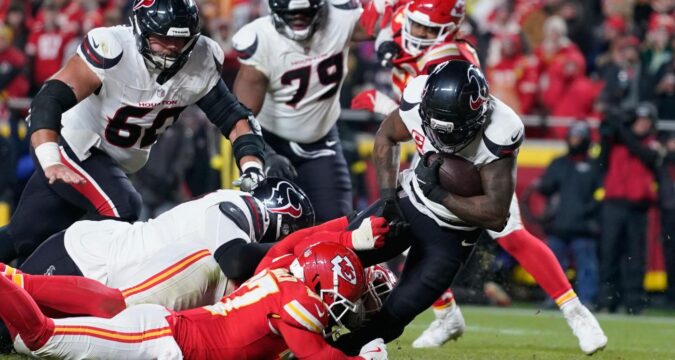
Texans frenan a Mahomes y los Chiefs en victoria 20-10 para seguir en la pelea por el Sur de la AFC
Por DAVE SKRETTA
KANSAS CITY, Missouri, EE.UU. (AP) — C.J. Stroud lanzó para 203 yardas y un touchdown, los Texans se apoyaron en la defensiva mejor clasificada de la NFL para neutralizar a Patrick Mahomes y los Chiefs, y Houston se llevó una victoria de 20-10 sobre Kansas City en el Arrowhead Stadium la noche del domingo.
Nico Collins contribuyó con cuatro recepciones para 121 yardas, y Dare Ogunbowale añadió una carrera de touchdown que puso a los Texans (8-5) por delante en el último cuarto, logrando su quinta victoria consecutiva y manteniéndose a un juego de los Jaguars de Jacksonville en la AFC Sur.
Mahomes, operando detrás de una línea ofensiva debilitada, completó solo 14 de 33 pases para 160 yardas sin touchdowns y con tres intercepciones, la última de ellas al final del cuarto período cuando Kansas City estaba perdiendo por un touchdown e intentaba llevar el juego a tiempo extra.
Mientras que la victoria dio un gran impulso a las posibilidades de Houston en los playoffs, ya sea por el título de división o un puesto de comodín, asestó un golpe devastador a los campeones defensores de la AFC. Kansas City cayó a 6-7, su peor récord en 13 juegos desde un inicio de 2-11 en la temporada 2012.
Los Chiefs habían ganado cinco seguidos contra los Texans, incluyendo un enfrentamiento de playoffs divisionales en enero pasado en su camino a otra aparición en el Super Bowl. Pero eran dos equipos completamente diferentes cuando regresaron para la revancha la noche del domingo.
Los Texans, en racha, intentaban mantener su impulso y quizás unirse a un raro club de equipos que incluye la versión de Houston de 2018 que comenzó 0-3 y llegó a los playoffs. Y los Chiefs, una vez dominantes, simplemente intentaban mantenerse en la lucha por la postemporada en medio de una temporada desastrosa marcada por lesiones, actuaciones decepcionantes y demasiados errores en general.
___
Deportes en español AP: https://apnews.com/hub/deportes
The Key To Understanding The Cult Of Globalism’s War On The West
The Key To Understanding The Cult Of Globalism’s War On The West
Authored by Brandon Smith via Alt-Market.us
The culture war in the western world is currently hitting a crescendo. At first the media said it was all “conspiracy theory” being amplified by a “fringe minority” of radical right wingers. Then, they admitted the conflict was real but claimed that conservatives were monsters trying to “dismantle democracy”. Today, the culture war has become the dominant issue of our age with the debate echoing through the halls of the White House.
Leftists hoped they could make it all go away by dismissing it. They hoped they could continue with their ideological takeover at their leisure. They failed. The rebellion in the US is a product of decades of effort by liberty advocates and it is finally bearing fruit.
However, I think many Americans and some Europeans are discovering that movements like progressive wokism (essentially Cultural Marxism) are much more than a mere reaction to the return of conservatives to the cultural space. The fight that’s happening in front of the curtain is only a dim reflection of the fight that’s going on behind the curtain.
Almost every facet of leftist political and social activism is bankrolled by some of the wealthiest organizations and individuals on the planet. In fact, I would argue that without the billions of dollars in global funding provided by NGOs, government entities and corporations, the political left as we know it would not exist and the world would be much quieter.
A prime example is anti-ICE organizations: These groups have access to extensive cash reserves to finance call networks, they pay for hundreds or even thousand of protesters and agitators, they pay for legal representation and bail to get their activist agents out of jail, and they often obtain inside information on ICE operations before those operations occur.
These groups function less like homegrown civil rights efforts and more like clandestine government agencies. And, if you check the tax backgrounds of all of them you will find, without fail, that they’re propped up by NGOs like the Open Society Foundation, Ford Foundation, Rockefeller Foundation, global corporations like Vangaurd and Blackrock, and government bureaucracies like USAID (before it was shut down).
Nothing about these movements is natural, they are purely astroturf. It might look like chaos, but every time you see leftist mobs on the news trying to interfere with ICE arrests and deportations, what you are watching is a highly organized machine flush with globalist cash working to undermine US sovereignty.
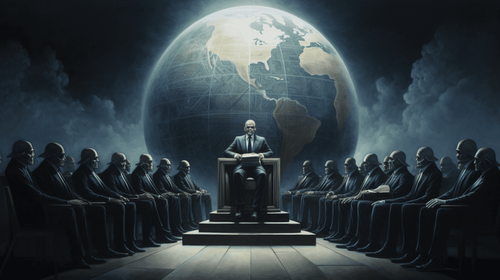
The mass immigration of third worlders is coordinated by globalists. The protests against deportations are funded by globalists. The politicians that promote open border policies and enable the invasion of the west are closely associated with prominent globalists. The war on the west is a globalist war; radical activists are mindless soldiers and paid mercenaries. They are not the source of the conflict; they shield the source.
Unfortunately there are too many conservative commentators out there that REFUSE to accept the reality that the actions of the political left are coordinated by a deeper conspiracy. I don’t know why they deny the existence of this cabal, I can only surmise that the idea of an top-down conspiracy to bring about the downfall of western culture is too frightening for them to ponder.
There is also the problem of motive. There’s plenty of conservatives and patriots with a vague notion of why the globalists do the things they do. Evil exists, that’s not up for debate. But beyond the underlying mental factors of psychopathy and delusions of godhood, the issue of relativism is ever present. It is a globalist obsession.
Globalism is rooted in cultural relativism, moral relativism, legal relativism, even biological relativism. Western culture is basically the antithesis of relativism, and thus, it must be destroyed in order for globalism to thrive. Everything else is just a tactic, a strategy to destroy the west while taking none of the blame.
Only the west codifies the idea of inherent liberties into its legal framework. Only the west (specifically the US) places individual citizen rights as equal to or greater than the policies of government. Only the west values free thought over uniformity. Only the west (largely the US) preaches the necessity of popular revolt in the wake of collectivist tyranny.
The problem is, most of the world has no concept of these ideals. They have spent their lives acclimating to cultures where “rights” are also relative – Relative to the whims of socialist and authoritarian regimes.
It therefore makes perfect sense for globalists to fund the importation of millions of foreigners, mostly from the third world, into the west. These are people whose minds are already enslaved by a lifetime of submission to collectivism and oligarchy. The migrants go along with the plan because the incentives are too enticing. Their masters are aiming them at the west and saying:
“Go and pillage, take what you can! We will let you plunder these wealthy places as long as you do as we say after the coffers are looted and the blood in the streets is dry in the sun…”
In other words, the globalists are giving the oppressed third worlders a steam valve, an opportunity to “chimp out” and act on their worst impulses. It is a sad but pervasive observation that the majority of enslaved minds HATE the existence of free people, even if those people live on the other side of the planet.
This doesn’t only apply to hostile migrants, it also applies to the progressives that live next door to us. Look at what happened during the pandemic. Look at how they act when faced with facts that contradict their political beliefs. They snap, they crash out, they go insane. The spit and froth and rage like animals. They revile us and nothing would make them happier than to see us dead. All because we don’t blindly embrace their doctrine.
Wokeness, along with multiculturalism, is a globalist construct adapted as a new world religion and all of its tenets are designed as an attack on western values. We respect meritocracy, so they create DEI and equity. We promote personal responsibility, so they promote narcissism and self worship. We revere free markets, so they enable expanding socialism. We respect biological science and the biblical definitions of man and woman, so they create gender fluid ideology. We respect moral objectivity and the reality of good and evil, so they conjure up the philosophy of moral relativism as a license for ubridled degeneracy.
To be sure, there are other cultures that do not embrace wokeness, but they don’t present a legitimate threat to globalism. They don’t have a legacy of free thought, they have no interest in rebellion and they are mostly disarmed so they wouldn’t be able to fight back if they wanted to.
Wokeness was specifically tailored as a weapon against the west; a weapon that targets our belief in liberty and attempts to use it against us. For if an individual has a right to choose their own path, how far does this right extend? Do individuals have the rights and the freedom to congregate into mobs and systematically burn the west down? Liberals would say “yes”, and if anyone tries to stop them those people are tyrants.
Are we tyrants if we fight back? Are we fascists if we defend out culture and borders from erasure? Are we hypocrites if we ignore the sovereignty of people whose only goal is to eliminate our sovereignty?
My counter-argument to this philosophy is that leftists and globalist have no right to socially engineer the west. They only have the right to leave the west and start their own systems somewhere else. If they hate the west so much, why don’t they relocate instead of staying here, or inviting in millions of immigrants that also have no respect for our heritage?
Because this is not a civic disagreement between citizens with a mutual love of country – This is a war between mortal enemies who share nothing in common. They don’t want to live peacefully in another place where they can experiment with socialism to their heart’s content. They want to conquer and subjugate. Globalism must be global. If any competing systems are allowed to exist they will act as proof that the relativist method is an inferior method.
The key to understanding the globalist war on the west is first to recognize that a conspiracy of “elites” is a hard, irrefutable fact. Second, we must accept that war has been declared on us and this war is one of total conquest. We are not allowed to live separately and peacefully, our very existence is seen as a threat to the establishment. Third, globalists view western culture as antithetical to their future aims. Globalism cannot prevail as long as western ideals exist.
Finally, as noted, most of the world is against us whether they know it or not. Even old allies in Europe are becoming enemies. Import masses of third worlders into America and they don’t become American, America becomes the third world. Import millions of socialists into the US and the US becomes increasingly socialist. This is very simple to understand, but leftists (and some libertarians) refuse to acknowledge the truth.
Not all cultures are equal. Some are better than others. It’s fascinating how liberals continue to pretend as if different nations and cultures don’t produce tribes that are contrary to each other. We are not the same and natural coexistence is a myth. Coexistence of such groups is created through intimidation, extortion and force. The liberal Utopian ideal of multiculturalism requires oppressive centralization and tyranny.
Globalism is the mechanism by which total and eternal oligarchy is achieved. They use open borders, mass immigration, woke cultism, economic crisis, international conflagration, engineered pandemics, anything you can think of and more to tear their enemies down. We are their enemy. We didn’t choose this fight, they did, and they will continue changing strategies until they find one that works (or until we end their little experiment).
Tyler Durden
Sun, 12/07/2025 – 23:55
https://www.zerohedge.com/political/key-understanding-cult-globalisms-war-west