Category: News

The Kitchn: Peppermint martinis go down extra smooth during the holidays
When I think of the holidays, I immediately think of peppermint-flavored candy canes. While I love to look at those cheerful stripes of white and red, I rarely want to eat the sweet candies. Instead I use up the candy canes I receive in creative ways, from sprinkling them on top of chewy brownies to turning them into peppermint bark.
By far, my favorite way to enjoy candy canes is to use them in cocktails — especially in a creamy peppermint martini. My peppermint martini is extra festive, as it uses the candy canes as both a garnish and flavoring. Here, it takes the cocktail to the next level, transforming the drink into a pretty pink color, which makes it feel like a holiday in a cup — well, a martini glass in this case.
What is a peppermint martini?
A peppermint martini is a creamy, delicious cocktail that’s perfect for winter and holiday parties. This minty martini is made with heavy cream and white crème de cacao, so it’s not super spirit-forward, which means it goes down easy.
Ingredients in a peppermint martini
Candy canes: Use crushed candy canes to decorate the rim on a martini glass. You can also add a crushed candy cane to the cocktail shaker.
White creme de cacao: This sweet chocolate liqueur makes for a delightfully creamy cocktail. Compared to other dark-colored creme de cacao, this one is a clear liqueur, so the drink will come out frosty-colored.
Heavy cream: You can adjust the amount of heavy cream, depending on how creamy you want the cocktail to be.
Peppermint vodka: It’s essential to use peppermint vodka for a pleasant minty flavor. Just be sure to find a flavored vodka that doesn’t taste too artificial.
Vodka: A combination of peppermint vodka and regular vodka balances the alcohol without overpowering the peppermint flavors.
Peppermint extract: You can control how minty you want it to be by adding a little bit of peppermint extract, which is more assertive than peppermint-flavored vodka.
Vanilla extract: A little bit of vanilla extract can help offset the flavors of peppermint extract and creates a wonderful balance with the heavy cream.
3 tips for making a peppermint martini
1. Experiment with the amount of peppermint extract. A little bit of extract can make it taste incredible, but too much can easily ruin the cocktail. Have fun with it, but just make sure that you aren’t adding too much!
2. Add more flavor in the cocktail shaker. My peppermint martini includes crushed candy canes in the cocktail itself to infuse it with more color and flavor. It’s a fantastic way to add more flavors subtly. If you want to add more pine-y, winter flavors, feel free to add real mint or peppermint to this.
3. Find balance with heavy cream. If you want more liqueur taste, add less heavy cream. If you don’t want to taste too much alcohol, add more heavy cream.
What to serve with a peppermint martini
This peppermint martini will go well with something sweet like baked Brie with cranberry sauce or whipped eggnog loaf cake.
Peppermint Martini
Makes 1
2 regular-size candy canes
1 ounce white chocolate (see notes)
1 1/2 ounces white creme de cacao, such as Hiram Walker Creme de Cacao White Liqueur
1 1/2 ounces cold heavy cream
1 1/4 ounces peppermint vodka, such as Smirnoff Peppermint Twist
1 1/4 ounces vodka
1/4 teaspoon vanilla extract
1/4 teaspoon peppermint extract
Ice
1. Unwrap two regular-size candy canes and place in a plastic zip-top bag. Using a rolling pin or flat side of a meat tenderizer, crush the candy canes into fine pieces (about 1/4 cup). Place on a flat plate and spread into an even layer.
2. Finely chop 1 ounce white chocolate and place in a small microwave-safe bowl. Microwave in 20-second intervals, stirring in between each, until melted and smooth, 40 seconds to 1 minute total. Scrape onto a flat plate that’s wider than a martini glass.
3. Invert a 6-ounce or larger martini or stemmed cocktail glass into the white chocolate, turning it as needed, to coat the rim. Dip the glass, still inverted, into the crushed candy canes, turning it as needed, to coat the rim. Place the glass in the refrigerator or freezer to chill for at least 5 minutes.
4. Place 1 tablespoon of the remaining crushed candy canes, 1 1/2 ounces white creme de cacao, 1 1/2 ounces cold heavy cream, 1 1/4 ounces peppermint vodka, 1 1/4 ounces vodka, 1/4 teaspoon vanilla extract, and 1/4 teaspoon peppermint extract in a cocktail shaker. Add enough ice to fill the shaker halfway. Seal the shaker and shake vigorously until the outside of the shaker is frosty, 30 seconds.
5. Pour through a fine-mesh strainer into the chilled glass.
Recipe notes
Only white chocolate chips that contain cocoa butter, such as Guittard Choc-au-Lait, will melt smoothly enough for this recipe; no need to chop before melting. If you can’t find white baking chips with cocoa butter, opt for chopped-up bars or discs of white chocolate instead. Don’t use white candy melts, which aren’t as flavorful as white chocolate.
(James Park is a culinary producer for TheKitchn.com, a nationally known blog for people who love food and home cooking. Submit any comments or questions to editorial@thekitchn.com.)
©2025 Apartment Therapy. Distributed by Tribune Content AGency, LLC.
https://www.chicagotribune.com/2025/12/09/the-kitchn-peppermint-martinis/

La ONU dice que el mundo necesita abordar junto los desafíos medioambientales
Por TAMMY WEBBER
El mundo necesita un nuevo enfoque para las crisis ambientales que amenazan la salud de las personas y del planeta adoptando políticas para abordar conjuntamente el cambio climático, la pérdida de biodiversidad, la degradación del suelo y la contaminación, según un reporte de la ONU publicado el martes.
Esos problemas están vinculados de forma inextricable y requieren soluciones que incluyan un aumento del gasto y de los incentivos financieros para alejarse de los combustibles fósiles, fomentar prácticas agrícolas sostenibles, reducir la contaminación y limitar los residuos, dijeron los autores del Informe Global sobre el Medio Ambiente del Programa de las Naciones Unidas para el Medio Ambiente.
“No se puede pensar en el cambio climático sin pensar en la biodiversidad, la degradación del suelo y la contaminación”, indicó Bob Watson, uno de los autores principales y excientífico climático de la NASA y de Reino Unido. “No se puede pensar en la pérdida de biodiversidad sin considerar las implicaciones del cambio climático y la contaminación”.
Watson expresó que todos estos factores “están socavando nuestra economía”, empeorando la salud y la pobreza y amenazando la seguridad alimentaria y del agua e incluso la seguridad nacional.
Casi 300 científicos de 83 países contribuyeron al reporte de este año, considerado la evaluación global del medio ambiente más completa jamás realizada, que se presentó durante la Asamblea de las Naciones Unidas para el Medio Ambiente en Nairobi, Kenia.
Los expertos han advertido que el mundo se acerca a un punto de inflexión en cuanto al cambio climático, la pérdida de especies y de tierras y otros daños. Sin embargo, los esfuerzos para abordar esos problemas se han llevado a cabo principalmente a través de acuerdos individuales que no han logrado avances significativos, señalaron.
En cambio, abogan por un enfoque que involucre a todas las áreas del gobierno, el sector financiero, la industria y los ciudadanos, y una economía circular que reconozca que los recursos naturales son limitados.
“Lo que estamos diciendo es que podemos ser mucho más sostenibles, pero se requerirá un cambio sin precedentes para transformar estos sistemas” indicó Watson. “Debe hacerse rápidamente ahora porque se nos está acabando el tiempo”.
Punto de inflexión global
El informe describe un futuro sombrío si el mundo continúa en su rumbo actual.
Las emisiones de gases de efecto invernadero que atrapan el calor, principalmente de la quema de combustibles fósiles como el carbón, el gas y el petróleo, alcanzaron un nuevo máximo en 2024, a pesar de décadas de negociaciones entre países para reducir las emisiones.
Hace diez años, casi 200 naciones firmaron el Acuerdo de París con el objetivo de limitar el calentamiento futuro a no más de 1,5 grados Celsius (2,7 grados Fahrenheit) desde tiempos preindustriales para evitar o mitigar los efectos más catastróficos del cambio climático. Pero en la trayectoria actual, el clima podría calentarse en 2,4 ºC (4 ºF) para 2100, dijo Watson.
Los científicos dicen que el cambio climático está contribuyendo a extremos climáticos más extremos, incluidas tormentas más intensas, sequías, calor e incendios forestales.
Además, el cambio climático es un multiplicador de amenazas, lo que significa que empeora problemas como la degradación del suelo, la deforestación y la pérdida de biodiversidad, dijo Katharine Hayhoe, científica climática de la Universidad Tecnológica de Texas y científica principal de The Nature Conservancy, quien no participó en el reporte.
“Si no solucionamos el cambio climático, no vamos a poder solucionar estos otros problemas también”, señaló Hayhoe.
Entre otros desafíos: hasta el 40% de la superficie terrestre a nivel mundial está degradada; más de un millón de especies de plantas y animales enfrentan la extinción; y la contaminación contribuye a unas nueve millones de muertes al año.
Los científicos reconocen que adoptar un enfoque integral sería costoso, pero costaría mucho menos que los daños que podrían resultar de no hacerlo.
El informe dice que para lograr el objetivo de emisiones netas cero para 2050 y restaurar la biodiversidad, se necesitan alrededor de ocho billones de dólares en inversión global cada año. Pero a partir de 2050, los beneficios económicos superarán el gasto, creciendo a 20 billones de dólares al año para 2070 y 100 billones de dólares al año a partir de entonces.
Las naciones también deben mirar más allá del producto interno bruto como barómetro de la salud económica, porque no mide si el crecimiento es sostenible ni reconoce sus posibles daños, dijo Watson.
Watson también señaló que los problemas ambientales no son las únicas cosas interrelacionadas. También dijo que los gobiernos, las organizaciones sin fines de lucro, la industria y el sector financiero deben asegurarse de que haya incentivos y financiamiento para la energía renovable y las prácticas agrícolas sostenibles, por ejemplo.
El científico climático de la Universidad de Pensilvania Michael Mann, quien no participó en el informe, acogió con satisfacción su énfasis en abordar los problemas en todos los gobiernos y la sociedad.
“Debemos hacer lo que es correcto, en lugar de lo que parece políticamente conveniente”, afirmó Mann. “Las apuestas son simplemente demasiado altas”.
La cooperación internacional se tambalea
A pesar del llamado urgente a la acción del informe, los científicos dicen que la cooperación internacional está lejos de estar garantizada, especialmente porque el presidente de Estados Unidos, Donald Trump, se ha negado a participar en muchas de las conversaciones.
Trump, quien retiró a Estados Unidos del Acuerdo de París, ha calificado el cambio climático como un engaño. Ha promovido el uso de combustibles fósiles, cancelado permisos para energía renovable y está abandonando los estándares de eficiencia de combustible para automóviles.
“La acción y los acuerdos internacionales se están volviendo cada vez más difíciles”, indicó Watson, señalando que la conferencia climática de la ONU de este año en Brasil no logró “moverse en la dirección que necesitábamos” con compromisos más fuertes para reducir las emisiones de gases de efecto invernadero y otros temas.
Las conversaciones de este verano sobre un tratado para abordar la contaminación plástica en Ginebra terminaron sin un acuerdo, aunque una conferencia de la ONU a principios de año obtuvo compromisos de financiamiento para proteger la biodiversidad global.
Watson dijo que Estados Unidos no asistió a la reunión intergubernamental en Nairobi, pero se sumó a las conversaciones el último día y “dijeron que no estaban de acuerdo con nada en el informe”.
“Algunos países podrían decir que si Estados Unidos no está dispuesto a actuar, ¿por qué deberíamos actuar nosotros?”, dijo Watson.
Aun así, cree que algunos países avanzarán, mientras que otros, incluidos Estados Unidos, podrían quedarse atrás.
Hayhoe, la científica de Texas Tech, dijo que confía en que se producirán cambios, porque lo que hay en juego se está volviendo demasiado grandes.
“No se trata de salvar el planeta. El planeta seguirá orbitando el sol mucho después de que nos hayamos ido”, comentó Hayhoe. “La pregunta es, ¿habrá una sociedad humana saludable y próspera en ese planeta? Y la respuesta a esa pregunta está muy en juego en este momento”.
___
La cobertura climática y ambiental de Associated Press recibe apoyo financiero de múltiples fundaciones privadas. AP es la única responsable de todo el contenido. Encuentre los estándares de AP para trabajar con filantropías, una lista de patrocinadores y áreas de cobertura financiadas en AP.org.
___
Esta historia fue traducida del inglés por un editor de AP con la ayuda de una herramienta de inteligencia artificial generativa.

The best feeders and fountains for happy, well-fed pets
Simplify pet care with these top fountains and feeders
If you have trouble keeping your cat out of the bathroom sink or your dog out of the toilet, a water fountain could be the solution. And if you’re a busy pet parent, an automatic pet feeder could help keep your pet from pestering you about their next meal. If you have a cat that gets bored easily, an interactive pet feeder might help. We’ve reviewed some of the best of each to help you keep your pet happy and healthy.
Best automatic dog feeders
This affordable gravity feeder can feed your dog even when there’s no electricity. It has a 12-pound capacity, so it can keep your dog’s bowl consistently full. It’s also made of environmentally friendly PET plastic, and the base and lid are dishwasher-safe.
PetSafe Healthy Pet Simply Feed Automatic Dog Feeder
With its large, 24-cup capacity, you can keep lots of food stored in this automatic feeder. You can schedule up to 12, portion-controlled meals per day, with portions ranging from 1/8 cup to 4 cups per serving.
Best automatic cat feeders
This high-tech cat feeder is easily programmable, so you can put your cat on a regular feeding schedule. It holds 21 cups of food and can dispense up to 10 portions a day. It’s even got a battery backup power source in case your electricity goes out.
If you have multiple cats, both with different dietary needs, this is the automatic feeder for you. It scans your cat’s microchip, allowing only the designated cat to access the food. If your cat isn’t microchipped, it also comes with a collar tag that opens the feeder.
Best interactive cat feeders
Doc & Phoebe’s Cat Co. Indoor Hunting Cat Feeder
This interactive cat feeder is not only fun for cats to use, but it’s also easy to keep clean. It plays on your cat’s hunting instinct to make finding the food into a game.
Cat Amazing Interactive Treat Maze & Puzzle Feeder
Your cat can play hide-and-seek using treats using this affordable cardboard puzzle feeder. It can keep your cat’s mind sharp, which can help their mental health.
The Company of Animals Interactive Slow Feed Bowl
This slow-feed bowl can help your cat to slow down if they eat too much too quickly. It’s made of BPA-free plastic and is easy to clean. A heavy base keeps it in place.
Best pet water fountains
PetSafe Drinkwell Seascape Ceramic Pet Water Fountain for Cats and Small Dogs
This modern, minimalistic ceramic water fountain is dishwasher-safe and holds up to 70 ounces of water. The water pump and filter ensure the water stays flowing and clean.
Catit Senses 2.0 Flower Cat Water-Drinking Fountain
This cute flower drinking fountain is designed especially for cats. It features three water flow speeds, an LED night light and a water level indicator.
ORSDA Stainless Steel Pet Fountain for Cats and Small to Medium Dogs
This quiet stainless-steel fountain is scratch-resistant and includes a locking lid that won’t spill when tipped. It’s perfect for homes with multiple pets.
Catit Fresh & Clear Stainless Steel Cat Water Fountain
Cats will love drinking out of the metal water bowl on top of this fountain. The fountain cools and aerates the water, while the carbon filter keeps the water fresh. It can hold up to 64 ounces of water.
PETKIT Cat Eversweet Solo SE Water Fountain with Wireless Pump
Monitor your cat’s water intake easily with this fountain’s transparent sides and indicator light. It’s quiet and can hold half a gallon of water.
Petdiary Automatic Cat Water Fountain
This 101-ounce fountain has five filtration layers to keep your cat’s water extra fresh. The transparent sides allow you to keep an eye on the water level. It also has a light that turns on when its surroundings grow dark.
If you have a large dog or multiple dogs, this water fountain could be just what they need. It holds 7 liters of water, it’s made of stainless steel, and it’s dishwasher-safe. It also has a triple filtration system.
NautyPaws Ceramic Cat Water Fountain
This aesthetically pleasing ceramic cat water fountain will upgrade the look of any room. It comes in several colors and runs quietly.
PetSafe Drinkwell Platinum Dog and Cat Water Fountain
This large pet fountain’s reservoir holds 168 ounces of water, making it ideal for bigger dogs. You wash all parts on the top rack of the dishwasher, so it’s easy to clean. It comes with a replaceable carbon filter.
This pet water fountain’s design is ideal for cats. It holds up to 85 ounces of water and has an LED light that you can switch on for extra light at night. It has triple filtration and a window to help you monitor the water level.
Prices listed reflect time and date of publication and are subject to change.
Check out our Daily Deals for the best products at the best prices and sign up here to receive the BestReviews weekly newsletter full of shopping inspo and sales.
BestReviews spends thousands of hours researching, analyzing and testing products to recommend the best picks for most consumers. BestReviews and its newspaper partners may earn a commission if you purchase a product through one of our links.
Distributed by Tribune Content Agency, LLC.
https://www.chicagotribune.com/2025/12/09/the-best-feeders-and-fountains-for-happy-well-fed-pets/
La Corte Penal Internacional condena a líder de milicia sudanesa a 20 años por atrocidades en Darfur en 2003 y 2004
Associated Press
LA HAYA (AP) — La Corte Penal Internacional condena a líder de milicia sudanesa a 20 años por atrocidades en Darfur en 2003 y 2004.

Zelensky Definitively Shuts Door On Trump Peace Plan, Won’t Cede Territory
Zelensky Definitively Shuts Door On Trump Peace Plan, Won’t Cede Territory
Ukrainian President Volodymyr Zelensky while meeting with so-called ‘coalition of the willing’ European leaders in London on Monday definitively ruled out that his country will agree to cede territory as part of a peace deal.
He specified that the question of territorial compromise is why he has not reached agreement on Donald Trump’s peace deal. “There are visions of the US, Russia and Ukraine – and we don’t have a unified view on Donbas,” Zelensky told Bloomberg.
Zelensky also wants much firmer security guarantees in the Washington plan. “There is one question I — and all Ukrainians — want to get an answer to: if Russia again starts a war, what will our partners do,” he said shortly before meeting with British Prime Minister Keir Starmer, France’s Emmanuel Macron and Germany’s Friedrich Merz.
But the US peace plan hinges precisely on offering some level of significant territorial compromise, given that Moscow – which has the clear upper hand militarily – considers anything less to be an automatic non-starter not worth even discussing.
President Trump has recently declared that if Zelensky rejects the US plan, he should be ready to fight Russia alone and with much less Washington help. But is Trump ready to cut off weapons supplies altogether?
Likely he’ll be content with Europe buying them, and still transferring them to Kiev. But all of this could mean that US intel sharing is finally cut off.
Meanwhile Trump has belittled ‘weak’ Europe for seeking to scrap together a counter-plan:
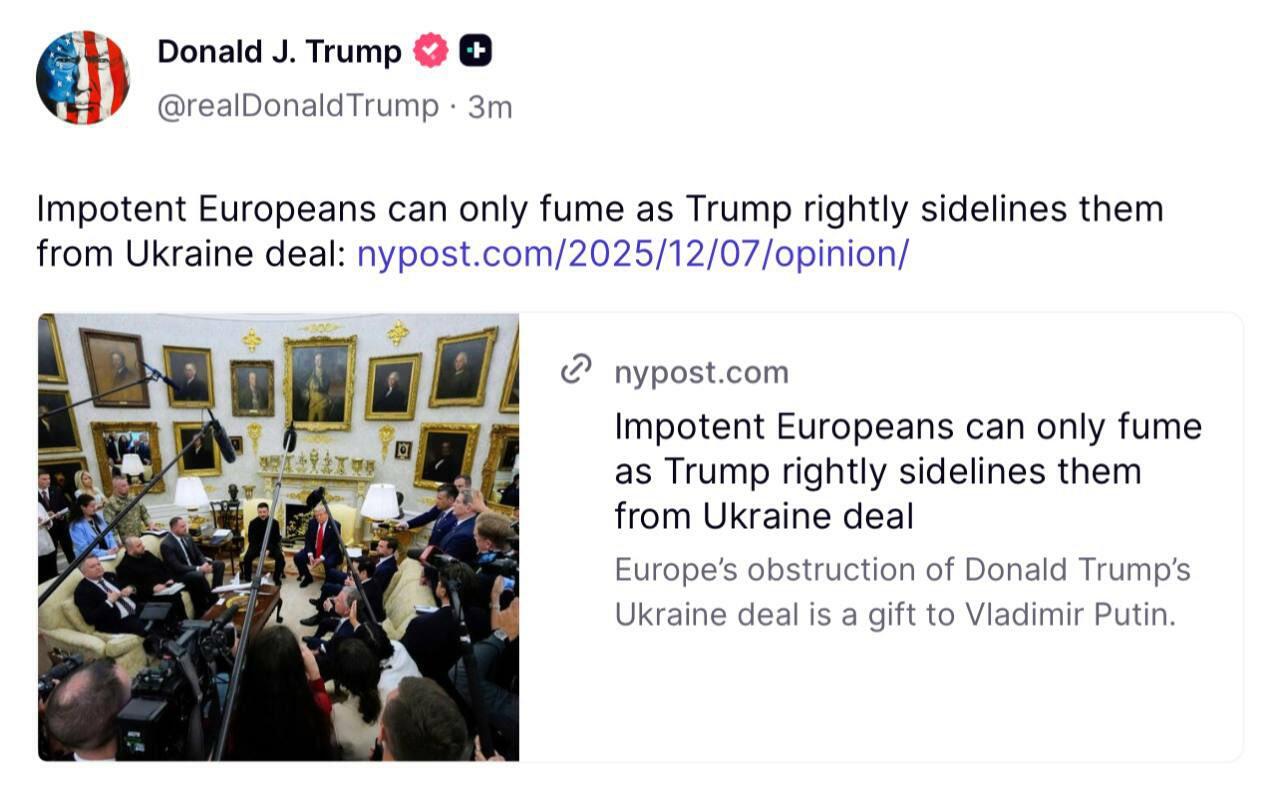
President Trump mocked Europe’s involvement on Monday, sharing an opinion piece which praises him for sideling “impotent Europeans” from the Ukraine peace talks. Trump has also criticized Zelensky, accusing him of not reading the latest peace proposals.
As for the US peace plan, it appears to have been primarily drafted by White House special envoy Steve Witkoff and Russian special envoy Kirill Dmitriev – but so far the Zelensky government has complained that it’s being cut out of the process.
Zelensky has throughout the war consistently rejected any proposal which features territorial concessions. He is supported especially be Ukrainian hardliners, both in the military and in parliament.
Kiev and EU’s maximalist counter-demands…
European counter-plan. Ukraine NATO membership up to NATO; no territorial concessions; ceasefire along contact line; no cap on Ukrainian military; EU membership; reconstruction to be paid by Russia. pic.twitter.com/YBEDLPydFp
— Michael Weiss (@michaeldweiss) November 23, 2025
Now he’s seeking to get European leaders to back him up, and they appear to be doing so. This is all a recipe for keeping the endless war going with no end in sight, and the proxy conflict nature of it continues to get dangerously out of hand.
Tyler Durden
Tue, 12/09/2025 – 04:15

Al menos 17 muertos en un incendio en un edificio de oficinas en la capital de Indonesia
Associated Press
YAKARTA, Indonesia (AP) — Un incendio arrasó un edificio de oficinas en la capital de Indonesia, Yakarta, el martes, y mató al menos a 17 personas, según informó la policía.
Las llamas envolvieron el edificio de siete pisos, enviando densas columnas de humo negro al cielo y provocando pánico entre los residentes y trabajadores cercanos en un vecindario del centro de Yakarta.
___
Esta historia fue traducida del inglés por un editor de AP con la ayuda de una herramienta de inteligencia artificial generativa.
La policía reporta al menos 17 muertos en un incendio en un edificio de oficinas en la capital de Indonesia
Associated Press
YAKARTA, Indonesia (AP) — La policía reporta al menos 17 muertos en un incendio en un edificio de oficinas en la capital de Indonesia.

Rick Steves’ Europe: Tivoli: For 2,000 years, Rome’s great escape
When travel dreams take people to Europe, Italy is often their first stop. There’s something seductively charming about this country, its people, and la dolce vita. I always feel at home in Italy, whether struggling onto a crowded bus in Rome, navigating the fun chaos of Naples, sipping a cocktail in a Venetian bar, or sitting on the banister of Florence’s Ponte Vecchio for a midnight street-music concert.
But I also seek escapes from Italy’s urban intensity. When I’m in Rome, I like to travel about 20 miles east to the hill town of Tivoli, a popular retreat since ancient times. Today it’s famous for two very different villas: Hadrian’s Villa, a Roman emperor’s countryside getaway, and Villa d’Este, the lush and watery 16th-century residence of a Catholic cardinal.
Hadrian (ruled AD 117-138) had a perfectly good villa in Rome, but he preferred to live outside the capital, and toward the end of his reign, he lived full-time at Tivoli. Just as Louis XIV governed France from Versailles rather than Paris, Hadrian ruled Rome from this villa complex of more than 300 evocative acres.
An architect, lover of Greek culture, and great traveler, Hadrian envisioned the site as a microcosm of the lands he ruled, which at that point stretched from Great Britain to Iraq. In the spirit of Legoland, Epcot, and Las Vegas, he re-created famous structures from around the world, producing a kind of diorama of his empire.
By the time Hadrian was finished, he’d erected more than 30 buildings and created extensive gardens. With libraries, temples, baths, theaters, and palaces for himself and his friends and staff, the estate was completely self-contained.
Although most buildings have long since vanished, you can feel Hadrian’s hand in some remaining structures. The emperor surrounded a rectangular water basin – meant to represent the Nile – with columns and statues, including copies of the caryatids he had admired at the Acropolis. At one end he built a temple in memory of his close friend (and perhaps lover) Antinous, who had tragically drowned in the Nile.
Regrettably, with the fall of the empire, this “Versailles of Ancient Rome” was first plundered by barbarians and then by Renaissance big shots, who all wanted something classical in their courtyards. They even burned the marble to make lime for cement. While some of the scavenged art ended up across town at the Villa d’Este, much of it wound up far away in museums throughout Europe.
Much later, in 1550, another patron of the arts, Cardinal Ippolito d’Este, further transformed the Tivoli landscape. Even though he was a man of the cloth, Ippolito, cultured and wealthy, lived like a secular prince. When he lost a closely contested election to be the next pope in 1549, he consoled himself by building his sumptuous villa in Tivoli. He cleared a Benedictine convent from the site and erected a luxurious Renaissance palace, with elaborately frescoed walls and ceilings.
But the main attraction is the spectacular garden (which wasn’t fully installed until after Ippolito’s death). A hallmark of Italian design, it clings to a steep hill cascading with pools, streams, waterfalls, and thundering fountains. Towering cypress, boxwood hedges, Roman statuary, and pleasant paths direct the eye toward stately vistas all around.
Creating such an elaborate water park required the collaboration of an architect (to lay out the garden), a hydraulic engineer (to get water to the site), and a plumber (to make sure the fountains worked). At Tivoli, the hillside site was massively excavated and re-engineered so the water features could be gravity-fed.
Pirro Ligorio, Tivoli’s architect, was conveniently also excavating Hadrian’s Villa at the same time. That site provided much in inspiration – and raw material – for the fountains of Villa d’Este. Ligorio basically used Hadrian’s Villa as a quarry to provide statuary and decorative stonework for his vision.
After Ippolito’s death, the estate was passed down in the Este family, but by the 19th century the house was in disrepair and the fountains plugged up. Now in the hands of the Italian state, it’s been completely restored, with all its fabulous water features flowing again.
While Hadrian’s Villa is about haunting ruins and a storied history, Villa d’Este is simply beautiful and relaxing (and is especially appealing when it’s sweltering in Rome). The two sights complement each other well and combine to make a satisfying day trip from Rome. An easy subway/bus combination gets you from the city to Tivoli, where a public bus connects the two villas.
Related Articles
Rick Steves’ Europe: Oslo, where Norway’s nature, history and culture mix it up
Travelers without Real ID will incur $45 fee, TSA says
Airlines work to fix software glitch on A320 aircraft and some flights are disrupted
Bruce Goff is having a moment
Rick Steves’ Europe: The sips and sounds of a Greek taverna
When I’m in Italy, I savor my cappuccino and imagine what it was like centuries ago. At Tivoli, I can ramble through the rabble and rubble, mentally resurrecting those ancient stones. Escaping the hubbub in Rome, I get chummy with the winds of the past – and connect with the pleasures of the moment.
(Rick Steves (www.ricksteves.com) writes European guidebooks, hosts travel shows on public TV and radio, and organizes European tours. This column revisits some of Rick’s favorite places over the past two decades. You can email Rick at rick@ricksteves.com and follow his blog on Facebook.)
Machine-Speed Warfare: When Drones Decide Faster Than Humans
Machine-Speed Warfare: When Drones Decide Faster Than Humans
Authored by Tamuz Itai via The Epoch Times,
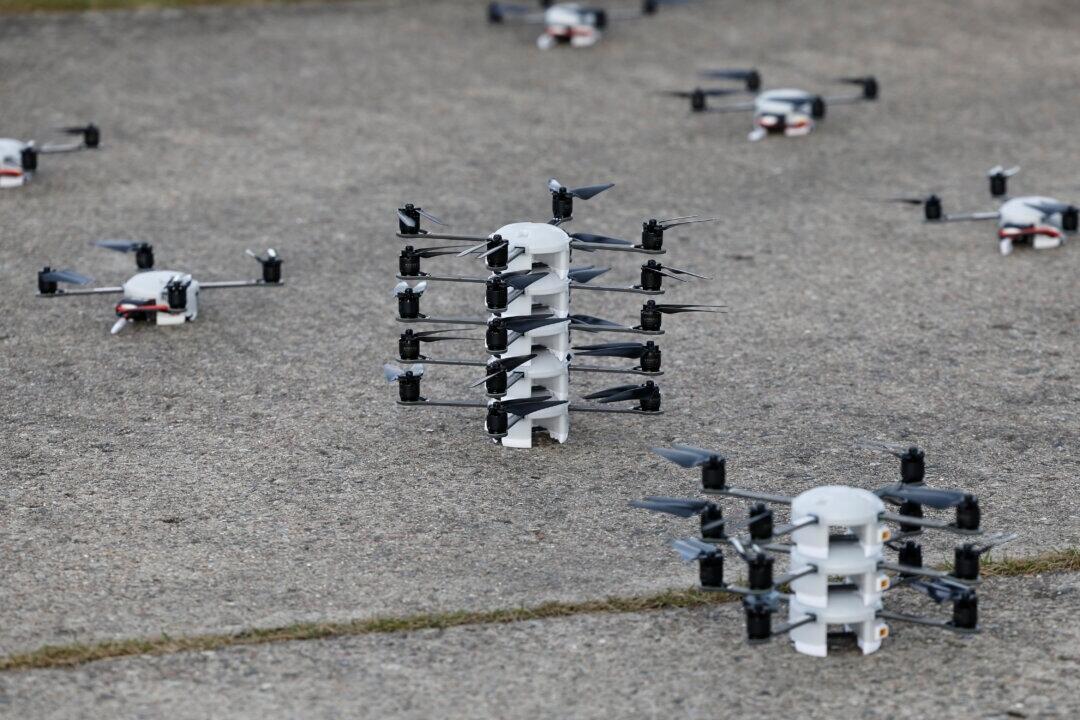
On June 1, 2025, 117 quadcopters—total cost under $120,000—flew from hidden launchers inside Russia and crippled 10 strategic bombers across five air bases in a single morning.
Operation Spiderweb, as Ukraine called it.
It was a public demonstration of a new form of conflict: When the price of precision falls far enough, scale becomes inevitable, and scale forces autonomy. That autonomy, in turn, moves the battlefield faster than human minds can reliably follow. We seem to be entering the era of machine-speed warfare.
Quiet Arrival
For decades, militaries and the defense industrial base followed a rule: Better always meant more expensive. A modern fighter costs $100–120 million; its predecessor cost half that. The pattern held from tanks to submarines. Drones broke the pattern. A competent kamikaze drone now costs $400–$1,000 and can reliably kill a $5–10 million tank. A long-range one-way drone costs perhaps $30,000 and can sink a frigate. The cost curve of creating a precision threat has collapsed; the cost of defending against it has not.
Once the economics flip, quantity becomes quality all of its own. Ukraine says it already has the ability to produce drones at a rate of 4 million per year. Russia, Iran, and China are racing to match or surpass those numbers. When you are fielding not dozens but thousands of armed aircraft simultaneously, no human staff can micromanage them. You must delegate.
Delegation quickly becomes autonomy. Collision avoidance, target recognition, route replanning, reaction to jamming—these decisions migrate from human operators to software running on the drone itself. The more drones you have, the less you can afford to keep a human in the loop for every micro-decision. The battlefield begins to run at machine time.
High-Frequency Warfare
The closest civilian analogy is high-frequency trading, where humans merely set strategy, risk limits, and circuit-breakers. After that, algorithms trade at microsecond speeds with no realistic possibility of human intervention. Modern drone swarms are evolving into the military equivalent. Ukraine already retrains its targeting models weekly using fresh combat footage; Russia and China are likely doing the same. An 8 percent improvement in a computer-vision model on Tuesday can translate into battlefield dominance by Thursday.
That speed is terrifying. Machines do not get tired, do not hesitate, and do not ask whether escalation is politically wise. They simply execute. In a noisy, deceptive environment, small errors can compound rapidly. The cost in our case is not just money, but lives.
Control Theory
In a nutshell, the core idea is: a system measures something, decides what that measurement means, and reacts. Then it measures again and adjusts. Take, for example, a thermostat.
Every drone is a feedback control system: measure → decide → act → measure again. The enemy’s entire job is to break that loop—jam the measurement, spoof the decision, or block the action. When hundreds of such loops are running in parallel, all under deliberate attack, the default state is instability unless the loops were deliberately designed to be extraordinarily robust.
This is why purely technological answers are probably insufficient. Advantage also lies in strategy and doctrine—in the rules, restraints, and architectures nations choose to build into their systems from the beginning.
Robust Versus Loose
Not all autonomous systems are created equal. Some states and actors design robust systems: conservative rules of engagement baked into code, multiple verification layers before lethal action, and strong de-escalation biases under uncertainty. Others design loose systems: faster reaction times, higher tolerance for collateral damage, and a willingness to treat ambiguity as an opportunity rather than a red flag.
On current evidence, robust systems are winning the cost-exchange war. Ukraine, fighting with strict rules of engagement and heavy reliance on human oversight, has consistently achieved better loss ratios than Russia despite being vastly outnumbered in almost every traditional category. Restraint, paradoxically, forces greater precision, faster learning cycles, and more effective active defenses—all of which can compound into strategic advantage.
Loose systems look terrifying on paper, but in practice they bleed money, invite sanctions, and generate atrocity footage that fuels the other side’s alliances and recruitment. Every war crime committed by a loose actor is a strategic gift to the robust one.
The Flash-War Risk
Tom Clancy understood the danger of misinterpretation under time pressure. In “The Sum of All Fears” (1991), the plot hinges on a false-flag nuclear attack, masterminded by a third party, designed to make the United States and the Soviet Union blame each other and stumble into war. Today, we do not need a nuclear weapon to create the same cascade. Two hundred spoofed drones launched from a fishing boat, carrying the electronic signature of a great power, could do it in 20 minutes.
The battlefield is already producing miniature versions of this story dozens of times per day: A drone drifts across a sensitive line because of wind or jamming, an opposing swarm interprets it as a probe, automated defenses react, and within seconds both sides have taken irreversible actions that no political leader ordered. By the time a human sees the trend, the adversary’s intent seems to be clear, and escalation unavoidable.
The Real Race
The technological race is real, but it is not the only race. Free countries cannot and should not copy the loose model. But they can build systems that are simultaneously fast, open, and disciplined. That means, for instance:
treating drones as consumable ammunition, not exquisite platforms
supporting innovation and startups
shortening feedback loops to weeks, not decades
encoding clear, shared rules of engagement into software from day one
investing heavily in active defenses (lasers, jammers, and cheap interceptors
creating pre-agreed crisis mechanisms—digital hotlines, shared telemetry standards, forensic rapid-response teams
Ukraine has shown that a motivated society can out-innovate a much larger adversary even when heavily outnumbered. The $800 quadcopter has already rewritten the rules of war. The next question is whether we can rewrite our systems fast enough to win and keep the machines on a leash.
Views expressed in this article are opinions of the author and do not necessarily reflect the views of The Epoch Times or ZeroHedge.
Tyler Durden
Tue, 12/09/2025 – 03:30
https://www.zerohedge.com/military/machine-speed-warfare-when-drones-decide-faster-humans
Lituania declara una emergencia nacional de seguridad por globos enviados desde Bielorrusia
Associated Press
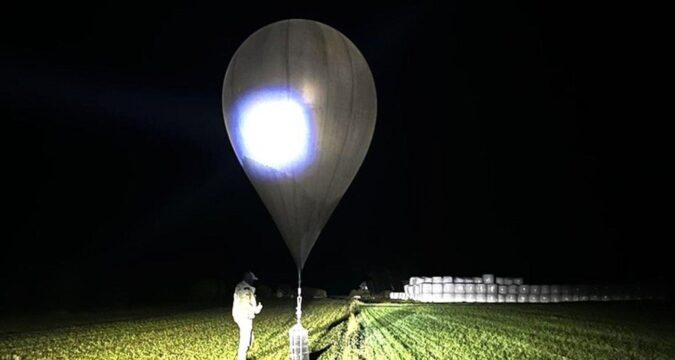
VILNA, Lituania (AP) — El gobierno de Lituania declaró el martes una emergencia nacional debido a los riesgos de seguridad que representan los globos provenientes de Bielorrusia, aliada de Rusia, que han violado su espacio aéreo en las últimas semanas.
Las tensiones entre Lituania y Bielorrusia han escalado después de que globos meteorológicos de Bielorrusia obligaran a Lituania a cerrar repetidamente su principal aeropuerto en las últimas semanas, dejando a miles de personas varadas.
En un comunicado, el gobierno mencionó “intereses de seguridad nacional” y “el peligro” para la vida humana, la propiedad y el medio ambiente debido a los globos que han transportado “contrabando” desde el vecino exsoviético, acciones que algunos consideran una forma de guerra híbrida.
El anuncio siguió a una reunión del gabinete del estado báltico, que es miembro de la OTAN y un fuerte partidario de Ucrania en su lucha contra las fuerzas rusas que lanzaron una invasión a gran escala en febrero de 2022.
“La emergencia fue declarada debido a las interrupciones en la aviación civil y por preocupaciones de seguridad nacional. Hay una necesidad de una coordinación más estrecha entre las instituciones”, dijo en la reunión el ministro del Interior, Vladislavas Kondratovičius.
Kondratovičius dijo que las medidas de emergencia serían de alcance limitado.
Si bien los globos se utilizan para llevar cigarrillos de contrabando a Lituania, los funcionarios en Vilna ven su número y trayectorias como actos deliberados de interrupción orquestados por Bielorrusia.
Europa en general ha estado en alerta máxima después de que las intrusiones de drones en el espacio aéreo de la OTAN alcanzaran una escala sin precedentes en septiembre, mientras la invasión rusa de Ucrania se acerca a su cuarto año.
___
Esta historia fue traducida del inglés por un editor de AP con la ayuda de una herramienta de inteligencia artificial generativa.