Category: News
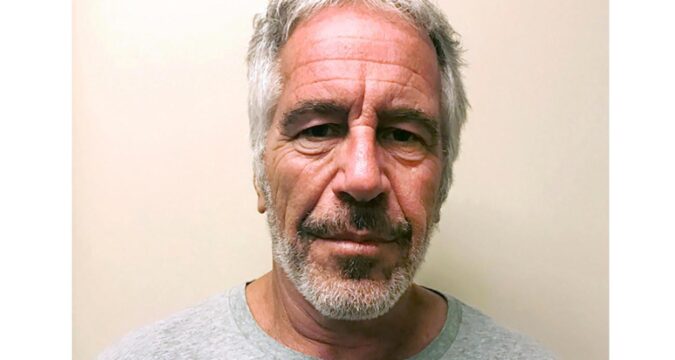
House Democrats release photos of Donald Trump, Bill Clinton and former Prince Andrew from Jeffrey Epstein’s estate
WASHINGTON — House Democrats released a selection of photos from the estate of Jeffrey Epstein on Friday, including some of Donald Trump, Bill Clinton and the former Prince Andrew.
The 19 photos released by Democratic lawmakers on the House Oversight Committee were a small part of more than 95,000 they received from the estate of Epstein, who died in a New York jail cell in 2019 while awaiting sex trafficking charges. The photos released Friday were separate from the case files that the Department of Justice is now under compulsion to release, but anticipation is growing as the Trump administration faces a deadline next week to produce the Epstein files that have been the source of conspiracy theories and speculation for years.
The photos were released without captions or context and included a black-and-white image of Trump alongside six women whose faces were blacked out.
Rep. Robert Garcia, the top Democrat on the House Oversight Committee, did not say whether any of the women in the photos was a victim of abuse, but he added, “Our commitment from day one has been to redact any photo, any information that could lead to any sort of harm to any of the victims.”
A spokesperson for the Republican-controlled House Oversight Committee accused Garcia and Democratic lawmakers of “cherry-picking photos and making targeted redactions to create a false narrative about President Trump,” adding that nothing in the documents the committee has received shows “any wrongdoing” by the president.
Many of the photos have already circulated in the public. Democrats pledged to continue to release photos in the days and weeks ahead, as they look to pressure Trump over his Republican administration’s earlier refusal to release documents in the Epstein probe. Garcia said that his staff had looked through about a quarter of the images it had received from Epstein’s estate, which included photos that were sent to him or that he had in his possession.
“Donald Trump right now needs to release the files to the American public so that the truth can come out and we can actually get some sense of justice for the survivors,” Garcia added.
The White House did not immediately respond to a request for comment about the photos.
Trump, once a close friend of Epstein, has said that he parted ways with him long before he faced the sex trafficking charges. Clinton, too, has minimized his relationship with Epstein, acknowledging that he traveled on Epstein’s private jet but saying through a spokesperson that he had no knowledge of the late financier’s crimes. Clinton also has never been accused of misconduct by Epstein’s known victims. However, Republicans on the House committee are pushing him and Hillary Clinton to testify in their investigation.
Andrew lost his royal titles and privileges this year amid new revelations of his ties to Epstein, though he has denied wrongdoing.
The photo release also included images of the right-wing political operative Steven Bannon, billionaires Richard Branson and Bill Gates, filmmaker Woody Allen, former Treasury Secretary Larry Summers and law professor Alan Dershowitz. The men have denied any wrongdoing in their associations with Epstein, who kept many high-profile figures in his circle of friends.
Amid an earlier release of emails between Summers and Epstein, Summers stepped away from his teaching position at Harvard University and faced other fallout to his standing in academic circles.
Allen has faced allegations from his adopted daughter, Dylan Farrow, of molesting her as a child. He has denied the allegations.
Some lawmakers, however, believe that other high-powered figures could be implicated in Epstein’s abuse if the full case files from the Justice Department are released.
Rep. Thomas Massie, a Kentucky Republican who was instrumental in passing a bill to require the public release of the files, said it was a good sign that the Department of Justice has sought to have grand jury material released from several courts.
“The grand jury material is just a small fraction of what the DOJ needs to release, because the FBI and DOJ probably has evidence that they chose not to take to the grand jury because the evidence they’re in possession of would implicate other people, not Epstein or Maxwell,” he said.
https://www.chicagotribune.com/2025/12/12/trump-clinton-epstein/

Los primeros episodios del documental de Taylor Swift sobre la gira Eras están aquí
Por MARIA SHERMAN
NUEVA YORK (AP) — “The Eras Tour fue una vida dentro de mi vida”, Taylor Swift le dijo a la sala durante la proyección de los dos primeros episodios de su nueva docuserie de Disney+, “The End of an Era” (“El fin de una era: Los secretos del Eras Tour”). “Se siente como una locura”.
Swift habló con el pequeño público en Nueva York el martes — un año y un día después de que concluyera su histórica gira Eras. En la sala estaban sus padres Scott y Andrea Swift y su hermano Austin, unos pocos miembros selectos de la prensa (incluyendo a Hoda Kotb, Willie Geist y Gayle King), así como sus bailarines de gira, la coreógrafa Mandy Moore, los directores de la docuserie Don Argott y Sheena M. Joyce y algunos otros. La proyección fue brevemente interrumpida por alarmas de seguridad cuando se extinguió un pequeño incendio en otra parte del edificio.
“Los directores ampliaron las historias no solo de mí, sino de todos los que formaron parte de esto”, dijo Swift, antes de tomar asiento entre el público.
A continuación, los puntos clave de los dos primeros episodios de la docuserie de seis episodios, que se estrena el viernes en Disney+. Dos episodios se estrenarán semanalmente, hasta el 26 de diciembre.
El origen del Eras Tour
El episodio de estreno comienza en Vancouver, Canadá, 15 minutos antes de la fecha final de la gira. Swift, de pie en un círculo con sus bailarines, da un discurso apasionado, recordándoles que el Eras Tour no se trataba simplemente de que las piezas encajaran. “Ustedes ponen las piezas donde están”, les dice. Esto establece el tono de lo que sigue: “The End of an Era” es la única mirada detrás de escena de su gira y lo que la impulsó.
Desde el principio, Swift afirma que hubo dos catalizadores distintos para el Eras Tour. Uno fue que su catálogo anterior fue vendido sin su consentimiento, lo que inspiró el proyecto de regrabación que le mostró el valor de “celebrar tu pasado”. El otro fue la pandemia, que aumentó el deseo de volver a los eventos en vivo.
Entradas muy solicitadas
El primer episodio también celebra la increíble demanda que creó la gira — mencionando a Ticketmaster, pero sin profundizar en la frustración que causó. El vendedor de entradas provocó indignación en noviembre de 2022 cuando su sitio colapsó durante un evento de preventa. La compañía dijo que el sitio fue abrumado tanto por fanáticos como por ataques de bots que se hacían pasar por consumidores para acaparar entradas y venderlas en sitios secundarios. El fiasco provocó audiencias en el Congreso y proyectos de ley en las legislaturas estatales dirigidos a proteger mejor a los consumidores.
Las secuelas de un fallido complot terrorista
En agosto de 2024, se cancelaron tres fechas en Viena debido a un aparente complot para lanzar un ataque en los conciertos.
“Es como una fuerza ser reconocida en la cultura global”, dice Swift sobre la gira en el primer episodio. “Nunca pensé que tendríamos un complot terrorista”.
El episodio continúa con Swift en Londres, preparándose para actuar por primera vez desde las cancelaciones — menos de una semana después. “Evitamos una situación de masacre”, dice.
“Tener miedo de que algo le pase” a su público, dice, “este es un nuevo desafío”.
Los apuñalamientos de Southport
Aproximadamente una semana antes de las cancelaciones en Viena, un adolescente mató a tres chicas e hirió a diez personas en un ataque con cuchillo en una clase de baile y yoga con temática de Swift en la ciudad costera inglesa de Southport. Swift en ese momento dijo que estaba “completamente en shock” por la violencia.
Mientras Swift se prepara para sus primeros shows desde Austria, menciona el ataque de Southport y comienza a llorar al describir a las “pequeñas niñas” atacadas.
“Voy a conocer a algunas de las familias esta noche”, dice, emocionándose antes de recordarse a sí misma “cerrarlo”, y entrar en modo de intérprete pop. Lo compara con ser un piloto que necesita adoptar una actitud “calmada, fría, serena”. Más tarde, se revela que Swift se reunió en privado con las familias de las víctimas de Southport. Eso no está en cámara, pero las secuelas sí: Swift en lágrimas, dándose cuenta de que el espectáculo debe continuar.
Sí, Travis Kelce está aquí…
El prometido de Swift, el campeón del Super Bowl Travis Kelce, aparece por primera vez como una voz tranquilizadora en el teléfono, mientras Swift expresa sus ansiedades sobre los shows en Londres y lograr una actuación sorpresa con Ed Sheeran. Su llamada eleva inmediatamente su estado de ánimo.
“Gracias por hacer mi día mejor”, le dice. “Algunas personas toman una infusión de vitaminas”, responde ella. “Yo tengo esta conversación”.
… Así como otros invitados especiales
Sheeran y Swift pasan el rato detrás del escenario y trabajan en su set en Londres. Florence Welch también aparece en la serie. “La el personaje es enorme, pero la persona es suave”, dice Welch sobre sus similitudes con Swift. Más tarde, describe ser arrastrada por la magia del Eras Tour. Swift es su amiga, pero cuando se unió al fenómeno pop en el escenario, no pudo evitar pensar: “Oh Dios mío, es (expletivo) Taylor Swift”.
La escena con Sheeran es particularmente reveladora. Ella le dice que estará fuera por dos meses después de la gira en Londres, y planea usar ese tiempo para ir a algún lugar donde nadie pueda encontrarla.
“No quiero ser rastreada como un animal”, le dice, admitiendo sentirse “cazada” últimamente.
Los miembros de la banda y los bailarines toman el centro del escenario
Aquellos en la órbita de Swift cuentan sus historias a lo largo de los dos primeros episodios. Los fans conocerán a Amos Heller, su bajista desde 2007. Aprenderán que Mandy Moore, la famosa coreógrafa de Hollywood, se unió a la gira de Swift después de que Emma Stone sugiriera que Swift trabajara con ella. Verán a otra coreógrafa/exbailarina Amanda Balen regresar al escenario. “No quiero bailarines que se borren”, dice Swift sobre su equipo.
Los fans conocerán más sobre Kameron Saunders, el querido bailarín, y su historia — de ser menospreciado en su campo por su tamaño, del apoyo interminable de su madre y de cómo su hermano, el jugador de fútbol profesional Khalen Saunders, pagó su vuelo para hacer audición para la gira. (Un dato curioso — el hermano de Saunders jugaba para los Chiefs de Kansas City en ese momento, el mismo equipo que Kelce).
En cuanto al propio baile de Swift, dice, “me ha llevado mucho tiempo incluso estar bien con la coreografía”. No hace “cuentas de ocho” — aprende el movimiento basado en la sílaba de la letra que está cantando.
… Y también los bonos del equipo de Swift
La decisión de Swift de dar bonos a su equipo, que People informó que totalizaron 197 millones de dólares, se destaca en la serie. En el segundo episodio, Swift dice que dio a cada miembro del equipo una carta escrita a mano y la selló con un sello de cera. Es un anuncio convincente de la generosidad de Swift — particularmente cuando la cámara se acerca a un joven asistente de producción, que parece atónito mientras sostiene su nota y dice que va a “desmayarse”. No se revelan los montos individuales de los bonos.
La preparación para el segmento de “The Tortured Poets Department” precedió al álbum
Leíste bien. Para agregar un segmento del “The Tortured Poets Department” a la gira, Swift y su equipo “construyeron una instalación de ensayo ultrasecreta”, dice. Los bailarines tuvieron que aprender la coreografía sin la música sonando por los altavoces, ya que el álbum aún no había sido lanzado públicamente. Mantener las sorpresas en secreto es un asunto serio.
___
Esta historia fue traducida del inglés por un editor de AP con la ayuda de una herramienta de inteligencia artificial generativa.
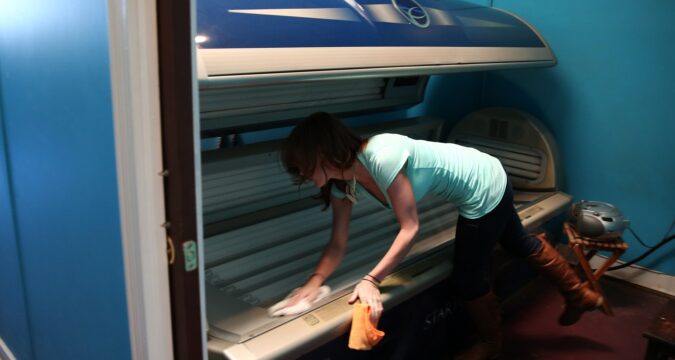
Tanning bed use damages DNA of skin cells across the body, Northwestern study finds
Though tanning may be far from the minds of chilly Illinois residents at the moment, a new study out of Northwestern Medicine is highlighting the risks of tanning beds, and showing how they can lead to skin cancer.
Not only does the use of tanning beds nearly triple the risk of developing melanoma, but it also damages the DNA of skin cells across the body, according to the study published Friday in the peer-reviewed journal Science Advances.
Dr. Pedram Gerami, a professor of skin cancer research at Northwestern University Feinberg School of Medicine, decided to look into the issue of tanning beds and melanoma after noticing that an unusually large number of his patients were women younger than 50 who had melanoma multiple times.
Melanoma is the deadliest form of skin cancer, though it is highly curable if caught early.
“You’d see the common thread linking all these women was a history of tanning bed exposure,” said Gerami, who is also director of the Pigmented Lesion and Melanoma Clinic at Northwestern Medicine.
Gerami teamed up with researchers from the University of California San Francisco to examine the medical records of nearly 3,000 patients who used tanning beds at least 10 times in their lives and nearly 3,000 patients who never used tanning beds. They found a 2.85-fold increase in melanoma risk for patients who used tanning beds compared with those who did not, after adjusting for age, sex and sunburn and family history, according to the study.
The researchers then sought to find out how much DNA damage may be caused by tanning beds by examining skin samples from 27 patients. Eleven of those patients reported that they had used tanning beds at least 50 times in their lives, nine patients were at high risk for skin cancer but not from frequent tanning bed usage, and six of the skin samples were taken from cadavers, to augment the control group.
The researchers used relatively new technology to perform single-cell DNA sequencing on melanocytes, which are the skin cells that produce pigment.
They found that skin cells from patients who used tanning beds had nearly twice as many mutations as skin cells from patients who didn’t use tanning beds, and they were more likely to have melanoma-linked mutations.
“In the skin that looks normal in a tanning bed patient, you can find that their skin cells will have the DNA mutations that we know predispose (a person) to melanoma,” Gerami said.
“(For) a lot of these patients, the majority of their tanning bed exposure occurred in their youth, maybe even when they were minors,” he said. “Now, as adults, often early adults or mid-adult life, is when they’re finally dealing with the consequences of those exposures.”
That’s what happened to Heidi Tarr, a patient of Gerami’s who agreed to be part of the study.
In high school and college, Tarr said she used tanning beds multiple times a week. At the time, she thought it was safer than potentially burning in the sun.
“My friends and I, in high school and through college we used tanning beds regularly,” Tarr said. “It was part of feeling beautiful, I guess, having a tan.”
In 2011, she noticed that a mole on her back had changed in color and size. She underwent a biopsy, and learned that she had melanoma. Luckily, she caught it early, underwent surgery and has been cancer-free ever since. But she must continue to get her skin checked every six months for the rest of her life, she said.
Related Articles
Gov. JB Pritzker signs controversial Illinois medical aid-in-dying law amid strong debate and opposition
Gary, IUN collaborate on food security study that will shape city actions
The Senate voted down dueling health proposals. Here’s what’s at stake for Americans.
Planned addiction recovery program on Crete horse ranch launches fundraising campaign
Senate rejects extension of health care subsidies as costs are set to rise for millions of Americans
“You think you’re getting a tan but what you don’t see is you’re damaging your skin cells, and that damage can lead to melanoma,” Tarr said.
Tarr didn’t hesitate to participate in Gerami’s research. “I wanted to help the medical community and his research, but I really wanted to help other patients,” she said. “I just wanted to do anything I could to give back.”
Pedrami would like to see more states limit use of tanning beds among minors and stronger warnings of the risks of tanning beds. Illinois, like a number of states, prohibits people younger than 18 from using tanning beds.
The U.S. Food and Drug Administration already requires tanning beds to have labels informing people of the risks of using them and urging against their use for people younger than 18.
Industry group the American Suntanning Association has criticized past research on tanning beds and skin cancer, saying on its website that many of the studies have relied on self-reported survey data and fail to “isolate independent variables, such as assessing whether subjects sunburned repeatedly or exposed themselves responsibly.”
“We acknowledge that there are risks associated with overexposure to the sun and sunbeds, including skin cancer,” the association says on its website. “But it’s important that we keep these risks in perspective while determining public health policy decisions. Discussion of the nuance and critical confounding factors in the research isn’t happening yet.”
Meanwhile, the American Academy of Dermatology Association opposes indoor tanning and would like to see a ban on the production and sale of indoor tanning equipment for nonmedical purposes.
https://www.chicagotribune.com/2025/12/12/tanning-beds-skin-cancer-northwestern/

Reales y el tercera base Maikel García acuerdan contrato de 5 años, según fuente de AP
Por DAVE SKRETTA
KANSAS CITY, Missouri, EE.UU. (AP) — El tercera base venezolano Maikel García y los Reales de Kansas City han acordado un contrato de cinco años que incluye una opción del club para una sexta temporada, informó el viernes a The Associated Press una persona con conocimiento del acuerdo.
La persona habló bajo condición de anonimato porque el contrato está pendiente del reconocimiento médico. No se disponía de los términos financieros, pero se espera que el acuerdo sea lucrativo para el All-Star, que sería elegible para arbitraje por primera vez en 2026.
El acuerdo esencialmente compra sus años de arbitraje y potencialmente sus primeros dos años de agencia libre.
El jugador de 25 años viene de una temporada destacada tanto en el campo, donde ganó su primer Guante de Oro jugando junto al campocorto All-Star Bobby Witt Jr., como en el plato, donde bateó para .286 con un récord personal de 16 jonrones y 74 carreras impulsadas.
Aunque los Reales han dado prioridad conseguir ayuda en los jardines en la temporada baja —acordaron un contrato de 5,25 millones con Lane Thomas el jueves— también querían asegurarse de mantener a sus pilares de la franquicia. Eso comenzó con la renovación del contrato del receptor venezolano Salvador Pérez por 25 millones y dos años en noviembre, y ahora atan a García al menos hasta la temporada 2030.
También es capaz de jugar como campocorto y segunda base, e incluso García experimentó defendiendo en los jardines la temporada pasada.
Al mantenerlo en el equipo, los Reales también consolidan el que ha sido uno de los mejores grupos de infielders en las mayores. Witt viene de su segunda aparición consecutiva en un Juego de Estrellas y un Guante de Oro, Pérez acumula nueve selecciones All-Star en nueve ocasiones cinco Guantes de Oro, el primera base Vinnie Pasquantino acaba de tener la mejor temporada de su carrera de cuatro años en las grandes ligas, bateando para .264 con 32 jonrones y 113 carreras impulsadas.
Esto también sigue una tendencia de los Royals de retener a sus propios jugadores. Cada uno de esos cuatro jugadores fue firmado y desarrollado por Kansas City.
Los Reales no lograron clasificarse a los playoffs la temporada pasada, pero terminaron 82-80, la primera vez que han tenido años consecutivos con balance positivo de victorias y derrotas desde que fueron a Series Mundiales consecutivas en 2014 y 2015. Y con un talentoso cuerpo de lanzadores intacto, y jóvenes jugadores de posición en ascenso, hay optimismo de que Kansas City pueda repetir en la postemporada en 2026.
___
Deportes AP: https://apnews.com/deportes

Kane County considers solar field pitch for vacant former jail site in Geneva
A long-unused property in Geneva may get a new life as a solar field, as Kane County considers what to make of the site of its old jail.
While the proposal is still in its early stages, some county staff and officials are looking at whether a county-owned property off of Fabyan Parkway could be turned into a solar field, sold for development purposes or a combination of both.
“This opportunity came to our attention that the land that’s lying fallow at the old jail, like a ghost town, could possibly be producing clean, green energy and revenue and tax revenue for the county,” Kane County Board member Mavis Bates said at a Committee of the Whole meeting on Wednesday, at which the board considered the site’s past and future.
Jodie Wollnik, director of the county’s Environmental and Water Resources Department, explained that there has been some discussion of how the property could generate revenue and potentially help alleviate the county’s revenue concerns.
The land in question is around 32 acres of county-owned property in Geneva off of Fabyan Parkway. It was last used as the site of a jail in 2014, according to Wollnik, who presented the proposed plans at Wednesday’s meeting.
The jail complex on Fabyan was built in the 1970s. But, in 2006, after years of discussion about the jail’s future, the county board approved plans for a new facility in the Judicial Center complex in St. Charles, which was completed in 2008.
But what to do with the Fabyan property has been a question almost two decades in the making.
The jail complex was eventually demolished, Wollnik explained, but the property continued to be used for some county purposes. Repurposing the land has been under consideration in the county over the years — with ideas like a resort hotel and a new government center in the mix — but none of the ideas ultimately came to fruition.
In October, Wollnik said on Wednesday, the county released a request for proposals to determine whether a community solar project might be feasible. It got back several proposed projects that indicated it may be a viable way for the county to use the land.
Community solar is a sort of solar project or purchasing program in which customers subscribe to, or sometimes own, a portion of the energy generated by a collection of solar panels, according to the U.S. Department of Energy. Those customers then receive a credit on their electric bill for the power generated by their share of the community solar system.
This proposed solar field wouldn’t be the first solar project the county has taken on in recent years. In 2023, Kane County began operating a solar field near the county’s Judicial Center — where the new jail site is. At the time, county officials touted it as a money-saving initiative.
At Wednesday’s meeting, the board considered several possibilities and their financial implications: the proposed solar field, whether to sell some or all of the land and whether to keep a portion vacant for future use.
Kate Coxworth of real estate company JLL offered information on the potential value of the property, indicating that the county’s best option for selling would likely be for an industrial user.
Board member Michelle Gumz asked about that recommendation, and Coxworth indicated it was based on the market in the surrounding area.
“Industrial development has continued to be a very big push from finance companies, and we expect that to continue,” Coxworth said at the meeting.
Board member Jon Gripe asked about the difference in future tax generation from the different kinds of development that could occur on the property — industrial, residential or commercial.
“Just seems to me that it’s not just what we get today, it’s what we get five years from now, 10 years from now, 20 years from now,” Gripe said.
Wollnik said residential, industrial or commercial development for Geneva on the property would generate around $30,000 per year in tax revenue, whereas community solar would generate only about $3,000 annually.
As for the possibility of using some or all of the land for a solar field, Arnie Schramel of Progressive Energy discussed some of the options for the property.
The site of the potential solar field would be around 11 to 22 acres of the total property — the portion of the property behind the front portion along Fabyan, which was set to be left for other uses, Schramel noted. A solar field could generate annual lease payments to the county of $3,500 to $9,500 per acre.
“The big winners on community solar are the landowners and the community solar subscribers,” he said.
In light of those considerations, Wollnik presented four potential options for the land.
First, the county could sell the whole property, for a total estimated value of the land at around $2.9 million to $4 million, according to Wollnik’s presentation. But that would mean no revenue from lease payments to the county, and no savings to electricity bills.
Alternatively, per Wollnik’s presentation, the county could sell the front portion of the land along Fabyan, and build a solar field on the 22 acres behind it, for a total estimated value of around $3.5 to $4 million for the property, factoring in the lease payments’ present day value, according to Wollnik.
The county could also sell the front portion, use a portion for solar and leave a third portion vacant for future county use, for a total estimated value of around $2.1 million to $2.6 million. Or it could use the back portion for solar and keep the portion along Fabyan vacant, for an estimated value of a little under $2.3 million
Those figures do not include the future electricity bill savings, which could be in the range of around $20,000 to just under $38,000 per year, per the presentation.
“Really, there’s not a huge, huge difference in selling the property versus doing part of the property in solar, and then leaving part of the property as vacant land,” Wollnik said. “The maximum value, probably, you’re going to get is doing the solar and then selling a portion of the property.”
But she emphasized that the revenue from the solar options would be stretched over the course of years.
Board member Clifford Surges asked if there was consensus among the board that this property is “in play and that we have an urgency to do something with this.”
“We’re floating a balloon here,” Bates said in response. “This land has laid fallow for … years, and we would like to make good use of it.”
A few board members expressed some concerns.
“I’m still up at 30,000, 40,000 feet about what to do with this place, and I think some of us are, you know … down at 100 feet,” Gripe said.
Bates, however, reiterated her support for the idea.
“It would make money for the county with the leasing, it would make money, savings for anybody who signs up for this community solar as a subscriber receives a 10% discount,” Bates said. “And, to me, one of the biggest benefits is it keeps the land in the family, in our family. It keeps the land for future use by (the) Kane County Board.”
Gumz said they should consider the proposal as an option, as well as look into other possibilities.
“I think we have started a great conversation,” she said.
And board member Vern Tepe applauded the solar project at the Judicial Center, citing the money it is saving the county annually. He expressed support for a mixed-use concept with solar and leasing out the front portion of the property.
“We’ve got land back there that’s doing nothing and we have (had) no plans on it for quite some time,” Tepe said of the property. “Let’s put some money back in the coffers. Lord, we can use the income.”
Wednesday’s Committee of the Whole meeting was a discussion, so the county board did not take any action on what to do with the property. Bates said the county leadership involved in the proposal will take the board members’ feedback to the Energy and Environmental Committee to consider next steps.
mmorrow@chicagotribune.com
https://www.chicagotribune.com/2025/12/12/kane-county-solar-field-former-jail-site/

Illinois Philharmonic Orchestra to use $40,000 OpenAI grant for trainings, development of AI policy
The Illinois Philharmonic Orchestra has been awarded a $40,000 grant from the OpenAI Foundation as part of a multimillion dollar disbursement to hundreds of nonprofits across the country.
Executive Director Christina Salerno said the orchestra doesn’t anticipate using artificial intelligence in its live performances at all.
“What we’re looking to do is use AI behind the scenes to help amplify what we do and get the word out, even more, to communities,” Salerno said.
The issue of if and how generative AI technology should be used in the arts has been a source of substantial controversy.
High-profile uses of AI-generated visuals, such as in the opening credits of Marvel’s “Secret Invasion” and more recently in “Call of Duty: Black Ops 7,” have generated waves of backlash and criticism. The use of AI in the movie industry was a central issue to the 2023 actors’ strike.
“It is a very interesting time, and that’s why we want to be at the forefront of trying to decide for ourselves how we’re going to utilize AI, without kind of putting our head in the sand and saying that we’re just not going to engage with the technology at all,” Salerno said. “Because I think the technology is very much here to stay, and will be moving forward.”
Salerno said the orchestra plans to use the grant funds to train staff on AI literacy and to develop an organizational policy for its use.
“We’re really anticipating this mostly being on the administrative side,” she said. “Things like helping us with our budgeting, messaging, our communications, how staff interact, if there’s ways to be able to cut down on some of the task-oriented busywork that needs to get done.”
OpenAI will distribute $40.5 million in unrestricted grants from its People-First AI Fund to 208 nonprofits by the end of the year, it announced Dec. 3.
“This cohort includes organizations that are mission-driven, community-centered, and ready to move,” OpenAI’s announcement said. “Many have never used AI or are early in their exploration, reflecting the Fund’s goal of supporting trusted local organizations at the front lines of community impact.”
A second wave of grants totalling $9.5 million will be announced in the coming months, the announcement said.
The Illinois Philharmonic Orchestra, based in Park Forest and mostly performing in Palos Heights, was one of 18 arts and culture organizations chosen as grant recipients, and one of only five performing arts organizations, according to a news release announcing the award.
There is one other orchestra organization, Three Rivers Young Peoples’ Orchestras in Pennsylvania, included on the list of recipients.
“It’s going to be very interesting to watch how the arts field deals with AI moving forward,” Salerno said. “Hopefully we can all find a way to be able to utilize the technology to increase access and opportunity.”
Two other Chicago-area organizations were awarded grants: DJM Community Outreach in Frankfort and the Emerald South Economic Development Collaborative on Chicago’s South Side.
elewis@chicagotribune.com
https://www.chicagotribune.com/2025/12/12/illinois-philharmonic-orchestra-ai-grant/
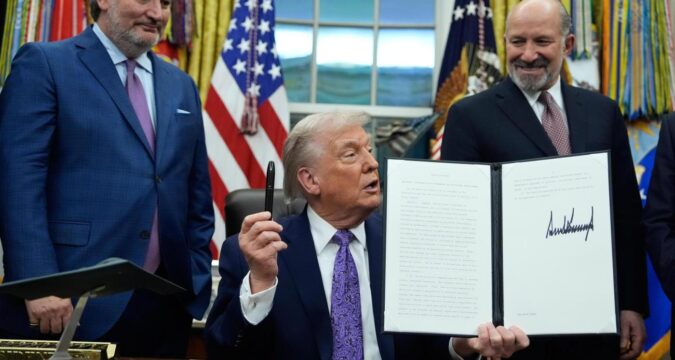
Trump signs executive order to block state AI regulations
President Donald Trump signed an executive order Thursday aimed at blocking states from crafting their own regulations for artificial intelligence, saying the burgeoning industry is at risk of being stifled by a patchwork of onerous rules while in a battle with Chinese competitors for supremacy.
Members of Congress from both parties, as well as civil liberties and consumer rights groups, have pushed for more regulations on AI, saying there is not enough oversight for the powerful technology.
But Trump told reporters in the Oval Office that “there’s only going to be one winner” as nations race to dominate artificial intelligence, and China’s central government gives its companies a single place to go for government approvals.
“We have the big investment coming, but if they had to get 50 different approvals from 50 different states, you can forget it because it’s impossible to do,” Trump said.
The executive order directs the Attorney General to create a new task force to challenge state laws, and directs the Commerce Department to draw up a list of problematic regulations.
It also threatens to restrict funding from a broadband deployment program and other grant programs to states with AI laws.
David Sacks, a venture capitalist with extensive AI investments who is leading Trump’s policies on cryptocurrency and artificial intelligence, said the Trump administration would only push back on “the most onerous examples of state regulation” but would not oppose “kid safety” measures.
What states have proposed
Four states — Colorado, California, Utah and Texas — have passed laws that set some rules for AI across the private sector, according to the International Association of Privacy Professionals.
Those laws include limiting the collection of certain personal information and requiring more transparency from companies.
The laws are in response to AI that already pervades everyday life. The technology helps make consequential decisions for Americans, including who gets a job interview, an apartment lease, a home loan and even certain medical care. But research has shown that it can make mistakes in those decisions, including by prioritizing a particular gender or race.
States’ more ambitious AI regulation proposals require private companies to provide transparency and assess the possible risks of discrimination from their AI programs.
Beyond those more sweeping rules, many states have regulated parts of AI: barring the use of deepfakes in elections and to create nonconsensual porn, for example, or putting rules in place around the government’s own use of AI.
https://www.chicagotribune.com/2025/12/12/trump-signs-executive-order-to-block-state-ai-regulations/

Lake County Chamber of Commerce celebrates 110th anniversary: ‘There was always … a vision of leadership’
Over its 110 years of existence, Lake County Chamber of Commerce members have seen the commercial environment of the area undergo massive changes.
From farmers bringing their crops to Waukegan’s harbor to ship them to market, to a lakefront heavy with manufacturing providing jobs and prosperity, to modern distribution centers opening, members of the chamber and its activities evolved with the times.
Throughout its history, Marvin Bembry, a longtime Board of Directors member and the chamber’s president from 2004 to 2007, said basic tools of leadership and collaboration enabled the chamber to evolve from the early 20th century into the first quarter of the 21st century.
“There was always a resilience and a vision of leadership,” said Bembry, an executive with Abbott Laboratories and then AbbVie when they became two separate companies. “We have ideas we share with each other.”
The Lake County Chamber of Commerce celebrated 110 years of helping to grow commerce in the county on Dec. 1 in Mundelein, as Gov. JB Pritzker issued a proclamation making it Lake County Chamber of Commerce Day in Illinois.
“It reinforces our commitment to continue seeking new and innovative ways to elevate and respond to the needs of our growing business community,” Chamber Executive Director Shaunese Teamer said of the proclamation.
Visiting at the Lake County Chamber of Commerce’s 110th Anniversary celebration are, from left, former Chair Marvin Bembry, Maria Lopez, former Chair Horacio Lopez and former Chair Tim Walsh on Dec. 1 in Mundelein. (Photo by DonBarge.com courtesy of the Lake County Chamber of Commerce)
Bembry, Tim Walsh, the president from 2007 to 2010, and Horacio Lopez, the president from 2010 to 2013, have more than 60 years of service to the chamber among them. They helped guide the organization through an economic downturn and a pandemic. Collaboration was a key.
What was established as the all-volunteer Waukegan Commercial Association in 1915 became the Waukegan Chamber of Commerce in 1917, and evolved several more times until it adopted its present name, according to the proclamation.
Taking its current name in the 1990s, Lopez said the chamber stems from the original Waukegan Chamber of Commerce, the Gurnee Chamber of Commerce and the Hispanic Chamber of Commerce of Lake County. It is the parent organization of the Hispanic Chamber.
A separate Waukegan Chamber of Commerce is active in that city today. It was started around 22 years ago by local merchants. Michael Reed, the Waukegan Chamber’s president, said it both collaborates with the Lake County Chamber and has its own activities.
Through its various programs, ranging from the annual economic forecast presented by an economist, often from the Federal Reserve Bank of Chicago, to lunch-and-learn gatherings and breakfasts, Bembry said the education and personal contact take everyone a long way.
“They’re great for networking,” Bembry said. “The training and education lead to a higher level of thinking. Talking to each other helps us acquire a lot of benefits.”
Lopez, who operates a payroll processing business, said the programs offer some formal education, but when he talks to other members, he realizes they all experience similar challenges and can offer each other solutions.
From executives with large corporations to members who operate small businesses, Bembry said the annual economic forecast lunch gives everyone an idea of how economic events on a national or global scale impact people locally. There is also contact with public officials.
“It’s helpful to hear an expert’s view on the state of the economy,” he said. “Our legislative dinner gives us access to our legislators and what’s going on with the government.”
Walsh, a retired certified public accountant who is now a consultant, said different kinds of businesses have similar issues. The ability to talk to like-minded people from other industries can offer help for what he does.
Teamer said the organization is continually using technology changes to benefit its members. There are times meeting virtually in specialized groups is productive. It opens communication further.
“We have tapped into the internet across new communication and social media platforms offering webinars, Zoom meetings for in-office meeting convenience and considerate meeting times,” Treamer said.
Recently launching Podcase Lake County, Teamer said it has become both a communication and marketing tool. Interviews are conducted, enabling business owners and executives to talk about what they offer.
“It expands the opportunity for our business community to learn more about each other beyond the elevator pitch,” Teamer said. “Podcast interviews with businesses provide a more detailed snapshot of the business, their history, their mission and the products and services they provide.”
https://www.chicagotribune.com/2025/12/12/lake-county-chamber-of-commerce/

Trump administration delays decision on federal protections for monarch butterflies
MADISON, Wis. — President Donald Trump’s administration has delayed a decision on whether to extend federal protections to monarch butterflies indefinitely despite years of warnings from conservationists that populations are shrinking.
The U.S. Fish and Wildlife Service announced during the waning days of then-President Joe Biden’s term in December 2024 that the agency planned to add the beloved backyard pollinator to the threatened species list by the end of 2025, calling the insect “iconic” and “cherished across North America.”
Got milkweed? Field Museum study shows how Chicago gardeners can help monarch butterflies
But the Trump administration quietly listed the effort as a “long-term action” in a September report on the status of federal regulatory initiatives from the Office of Management and Budget. The designation does not mean the administration has blocked the fish and wildlife service from making the decision, only that it will not come within the year that began in September.
“The administration remains committed to a regulatory approach that is transparent, predictable and grounded in sound science,” an agency spokesperson wrote in an email to The Associated Press on Friday. “Any listing must follow the (Endangered Species Act’s) statutory requirement that determinations be based on the best scientific and commercial data available. At the same time, the administration continues to emphasize voluntary, locally driven conservation as a proven tool for supporting species and reducing the need for additional federal regulation.”
No one at the agency immediately returned follow-up emails inquiring about the specific rationale for the delay. The first Trump administration named the monarch a candidate for listing in December 2020. His second administration has made oil and gas production a centerpiece and has been working to strip away environmental regulations that impede development.
His administration moved in November to roll back blanket protections for threatened animals and plants, requiring government agencies to instead craft species-specific rules, a potentially lengthy process. Other proposals call for bypassing species protections for logging in national forests and on public lands.
Monarch butterfly numbers have dropped this summer in Illinois, Upper Midwest, experts say
The Center for Biological Diversity and other conservation groups started pushing for federal protections for the butterfly in 2014, petitioning the fish and wildlife service to list the insect. The center sued in 2022 to force the agency to make a listing decision.
Tierra Curry, the center’s endangered species co-director, said Friday that she’s not surprised the Trump administration has delayed the decision. She said it can take more than a decade to get a species listed. For example, she said, the Miami Blue Butterfly was finally listed as endangered in 2012 after waiting on the candidate list since 1984. The Dakota Skipper butterfly became a candidate in 1984 but was not listed as threatened until 2014, she added.
The long-term action designation doesn’t mean the end for monarch protections but it does place them in “bureaucratic limbo,” she said.
“It’s absolutely disappointing because monarchs need all the help they can get,” Curry said.
Monarchs are found across North America. Known for their distinctive orange-and-black wings, they’re a symbol of sunny summer days.
But environmentalists have warned that monarch populations are shrinking due to climate change and rural development. Fish and wildlife service experts said when they announced in December 2024 that they planned to list the butterfly that monarchs east of the Rocky Mountains face a 57% to 74% probability of extinction by 2080. Monarchs west of the Rockies have a 95% chance of becoming extinct by then.
The monarch listing proposal would generally prohibit people from killing or transporting the butterfly. People and farmers could continue to remove milkweed, a key food source for monarch caterpillars, from their gardens, backyards and fields but would be barred from making changes that would make the land permanently unusable for the species.
Monarch butterflies are in trouble. Here’s how you can help.
People could continue to transport fewer than 250 monarchs and could continue to use them for educational purposes.
The proposal also would designate as critical habitat 4,395 acres in seven coastal California counties where monarchs west of the Rocky Mountains migrate for winter. The designation would prohibit federal agencies from destroying or modifying that habitat. The designation doesn’t prohibit all development, but landowners who need a federal license or permit for a project would have to work with the wildlife service to mitigate damage.
https://www.chicagotribune.com/2025/12/12/monarch-butterfly-protections/

Border Tsar Homan Announces Investigation Into Rep. Omar: A Case For Fraud Or Defamation?
Border Tsar Homan Announces Investigation Into Rep. Omar: A Case For Fraud Or Defamation?
This week, the lingering allegations over the marital history of Rep. Ilhan Omar (D., Minn.) took an ominous step when Border Tsar Tom Homan publicly acknowledged that the government is looking into the matter.
Rep. Omar has long denied that she married her brother to gain his entry into the United States, but the allegation has continued to rage on the Internet and among her critics.
The question is whether this is a substantive case of fraud or defamation.
Homan stated that he was investigating whether Omar committed immigration fraud, but also noted that the statute of limitations has been an issue.
In his comment to Newsmax, Homan stated:
“I just got advised by a fraud investigator the other day on that. I asked the question, can we review the files? You know, there was immigration fraud involved. The statute of limitation became an issue in the last four years when this was first brought up…Pulling the records now, pulling the files, and we’re looking at it. But this fraud investigator, who I know personally, one of the best fraud investigators in HSI, Homeland Security Investigations, said there’s no doubt he’d review the file. So, I’m running that down this week as a matter of fact, and we’ll see.”
According to her congressional biography, Omar came to the United States with her family in the 1990s. As I have previously noted, the election of a young immigrant to Congress is genuinely remarkable and commendable.
The questions arose regarding her marriage to Ahmed Elmi in 2009. Elmi was back in the news this week with postings highlighting his lifestyle as a “dirty dandy.” Critics charged that he is actually her brother. The couple divorced in 2017, and no DNA evidence has been offered to support the claim that they are siblings.
President Donald Trump and others have been ratcheting up the rhetoric against Omar and the Somali population in Minnesota. Many of us have objected to some of the attacks on Omar as offensive. As I have previously written, the call for foreign-born U.S. citizens to “go back to their own country” has been made for decades against foreign-born U.S. citizens. However, such attacks are generally protected speech.
The allegation against Rep. Omar is not opinion, but a statement of fact.
Many news organizations have referred to the allegation as “debunked” and “unsupported.”
In defamation, truth is a defense. The truth of the matter, however, has never been easy to establish. In fairness to Rep. Omar, a person should not be in a position of having to “prove a negative.” It is not her obligation to prove that she is not a fraud or that she did not marry her brother. Her critics have never produced compelling evidence to support the claim.
Despite years of such statements by various people, Omar has never sued for defamation. It is a curious omission, since a successful lawsuit would dramatically reduce such claims, and even as a public official she could likely show actual malice in many of her critics.
Conversely, such litigation would also expose Omar to a lengthy discovery process regarding her family’s immigration history and related family issues.
I have taught defamation for over three decades, and it is rare for such an allegation to linger without some legal action by the subject. On its face, this would be a strong defamation case if the allegation is false.
The allegation would fall into one of the “per se” categories of defamation. Under the common law, these per se categories of defamation allow for presumed damages and include: (1) disparaging a person’s professional character or standing; (2) alleging a person is unchaste; (3) alleging that a person has committed a criminal act or act of moral turpitude; (4) alleging a person has a sexual or loathsome disease; and (5) attacking a person’s business or professional reputation. The language differs among the states, but the Omar allegation would constitute a criminal act as well as an attack on her character and reputation.
As a threshold matter, Omar would face a higher standard of proof due to her status as a public official. In New York Times v. Sullivan, the Supreme Court established the actual malice standard, requiring public officials to shoulder the higher burden of proving defamation. Under that standard, an official would have to show either actual knowledge of its falsity or a reckless disregard of the truth. That standard was later extended to public figures.
Many critics are calling the “allegations” worthy of investigation. That is certainly protected. However, it is common to see people on television claim that she married her brother as a factual statement.
The publication of DNA results would disprove these allegations. (There are no allegations of an adopted status for the brother).
If such evidence exists, it would not just be conclusive but compelling for a jury. The question is why Omar has not elected to bring such a case, given the vast array of choices of potential defendants within the statute of limitations. It is a target-rich environment for a defamation lawyer.
As for the president, he has continued to raise the allegation: “If I married my sister to get my citizenship, do you think I’d last for about two hours or something less than that? She married her brother to get in. Therefore, she’s here illegally. She should get the hell out.”
However, he would not be a good target for such an action. The Federal Tort Claims Act, 28 U.S.C. § 2680(h), expressly bars libel, slander, or defamation claims against the United States or a federal employee acting within the scope of their employment. It is possible to sue a government employee acting outside of the scope of their employment. However, the Westfall Act protects federal employees from personal lawsuits for torts committed within the scope of their employment and substitutes the U.S. government as the defendant under the FTCA. Since the FTCA bars liability, it works to force dismissal in cases.
Moreover, this is not just another federal employee. The President also has immunity under Article II and prevailing Supreme Court caselaw. In 1982, the Supreme Court handed down Nixon v. Fitzgerald, holding that former President Richard Nixon was immune from civil suits concerning actions within the “outer perimeter” of his official duties. In 1997, the Court ruled in Clinton v. Jones that President Bill Clinton was not immune from a civil suit filed by Paula Jones — who had accused Clinton of sexual harassment — because the case involved unofficial conduct on the part of the president.
This issue is still being litigated in the case of E. Jean Carroll, who won a significant civil award against the President in New York. The United States Court of Appeals for the Second Circuit rejected the applicability of the 2024 Supreme Court ruling recognizing broad criminal immunity for former presidents as inapplicable to the civil case.
These are statements being made during a presidency and can be claimed as privileged and immune by President Trump.
The same cannot be said for a myriad of pundits and commentators who have stated this allegation as fact.
In the end, such litigation would come down to truth as a defense. These critics are saying that Omar did marry her brother. Even if they did not have a good-faith basis for the assertion, proof that it was indeed true would still be a complete defense.
On the other hand, a defamation lawsuit could offer a dispositive judgment of a court on this lingering question. The question is now whether Rep. Omar will sue.
Tyler Durden
Fri, 12/12/2025 – 13:25