Category: News

Ex-NY Aide Did China’s Bidding To ‘Get Rich’, Prosecutor Says In Closing Arguments
Ex-NY Aide Did China’s Bidding To ‘Get Rich’, Prosecutor Says In Closing Arguments
Authored by Nicholas Zifcak & Eva Fu via The Epoch Times (emphasis ours),
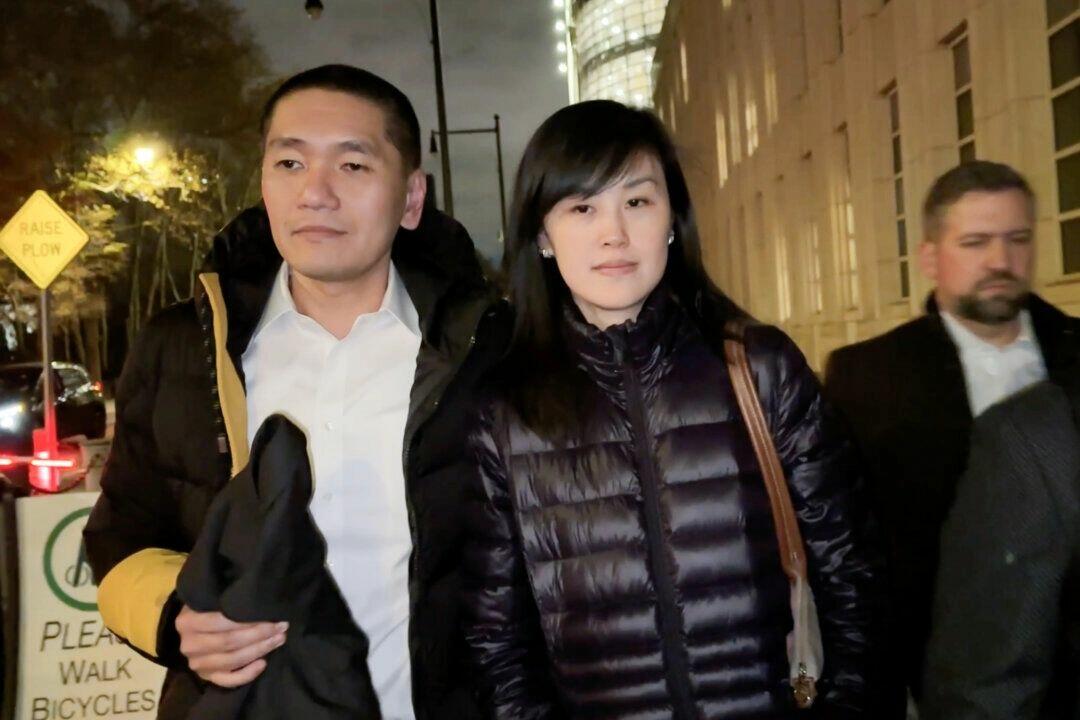
Linda Sun, former aide to New York governors, did Beijing’s bidding to enrich herself and her family, prosecutors said in closing arguments on Dec. 10 after a month-long trial.
In his summing-up, Assistant U.S. Attorney Alexander Solomon described Sun, who served under both New York Gov. Kathy Hochul and former New York Gov. Andrew Cuomo, as a “valuable asset” for New York state’s Chinese Consulate.
Sun faces allegations of acting as a Chinese agent and of bribery in connection with state contracts, among other charges. Her husband, Chris Hu, is charged as a co-conspirator.
Due to procedural delays, the jury will begin deliberating on her case on Dec. 12.
The prosecution alleged that Sun sold her access in the state government to China to “grease the wheels” and aid her husband’s seafood export business in that country.
Hu’s business was a flop in early 2016, but when a Chinese businessman with state connections stepped in, Hu’s business boomed, Solomon said.
“[Sun] did the bidding of the Chinese government so that she and her husband, Hu, could get rich,” he said.
The defense argued that the government failed to provide evidence of a clear quid pro quo agreement between Sun and Chinese Communist Party officials. The defense argued that there was no link between Hu’s business and Sun’s assistance to the consulate.
“The government wants you to assume that because Chris Hu’s business started doing well, it was connected to Linda,” said Ken Abell, Sun’s attorney, in closing arguments.
Abell said Sun’s actions were not contrary to the interests of the United States or New Yorkers. Sun’s connection with the consulate helped secure a donation of 1,000 ventilators at the start of the COVID-19 pandemic, he said.
However, the government characterized Sun’s work at the start of the COVID-19 pandemic as self-interested.
“As COVID-19 was wreaking havoc on New York City, she thought to enrich herself,” Solomon said.
Sun first received benefits from Chinese officials in May 2016, Solomon said. As a representative of New York state, she traveled to Jiangsu Province, China, to promote business ties with New York state, according to prosecutors. While in China, Sun allegedly met with the chairman of the China Council for the Promotion of International Trade, an organization under the United Front Work Department. The chairman agreed to hire Sun’s cousin, who was looking for a job, according to prosecutors.
Almost immediately thereafter, Sun began to reciprocate, prosecutors said. In June 2016, she alerted the Chinese Consulate that Taiwan had invited then-Lt. Gov. Hochul to a banquet in Washington. Hochul ended up attending a banquet hosted by the Chinese Embassy instead, the prosecution said.
Solomon cited several other incidents in which Sun allegedly exerted her influence to thwart Taiwan from reaching the governor’s office, including blocking an invitation to Cuomo to join a banquet with Taiwanese President Tsai Ing-wen in New York City and convincing Hochul’s staff to decline an invitation to visit Taiwan.
Sun’s attorney Abell said the “government left out facts that didn’t fit its narrative.” He argued that important context was not presented and that Sun, at times, had pushed back on Chinese Consulate requests.
The defense argued that Sun was just doing her job and that the Asian American community was her portfolio.
Linked to Consul
Solomon said Sun was answerable to Huang Ping, the consul general of the Chinese Consulate in New York from 2018 to 2024.
“But who’s the boss?” Solomon asked. “The people she keeps in the dark, or the people she’s reporting back to? She’s talking to her real boss, Huang Ping.”
Sun was in frequent contact with Huang, as email communications released by prosecutors show.
After assisting Huang with a welcome event for Chinese officials at John F. Kennedy International Airport, she told the consul general, “I want to eat salted duck,” according to text messages.
Sun was telling Huang that “she did her job” and should be compensated, Solomon said.
“[Sun] bragged repeatedly to her handlers [about] what a good asset she had been,” he said.
Solomon said that in communications with the Chinese Consulate, Sun did not hesitate to share the inner workings of the governor’s office, including the fact that in 2018, Cuomo was considering replacing Hochul on the ticket in the coming election.
“Did she want to be viewed as an important person in the relationship between New York state and the Chinese consulate?“ Abell asked. ”Maybe she did.”
He argued that Sun did make inappropriate comments in text messages but that they should be seen as self-promotion, not as betrayal.
Sun also revealed to the Chinese Consulate that the governor was reconsidering a trip to China in 2018 when Chinese leader Xi Jinping was getting rid of term limits, telling the Chinese officials that she spent a long time arguing on their behalf, Solomon said.
Solomon argued that revealing such internal discussions of the governor’s office is an example of Sun’s familiarity with the consulate, demonstrating which team she was really on.
Tyler Durden
Fri, 12/12/2025 – 17:00
Trump downplays Indiana redistricting loss, but funds could be in doubt
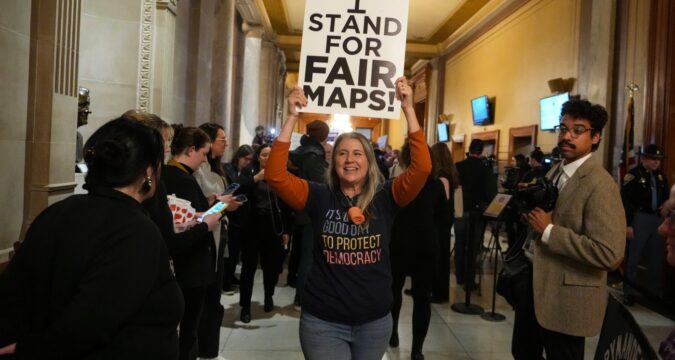
After Indiana defeated mid-census redistricting Thursday afternoon, President Donald Trump downplayed the loss, while Gov. Mike Braun and Lieutenant Gov. Micah Beckwith shared their disappointment and alluded to potential repercussions for the state from the Trump administration.
House Bill 1032, which would have given Republicans an advantage in all nine congressional districts, was introduced and passed in the House last week in a 57-41 vote.
On Thursday, the Senate defeated the measure with 31 senators voting against it and 19 in favor of the proposed map, which would have split the 1st District, currently held by U.S. Rep. Frank Mrvan, D-Highland, into two, and the 7th District, currently held by U.S. Rep. André Carson, D-Indianapolis, into four districts.
Jennifer Hora, a professor of political science at Valparaiso University, said many political analysts thought the bill wouldn’t pass the Senate, but that it would be a close vote.
“The most surprising element was that it was 31 to 19 and that a majority of Republicans voted against this. That part, I did not expect,” Hora said. “There was not great enthusiasm for this issue, and they didn’t want to be on the losing side.”
All members of the Northwest Indiana Senate delegation, Republican and Democrat, voted against mid-census redistricting and the proposed map, which would have shifted the northern part of Porter County and Michigan City into the Second District..
State Sen. Rick Niemeyer, R-Lowell, said he voted against the map because it didn’t follow the typical redistricting process. In 2021, when Indiana last completed redistricting, legislators held public hearings in each district, the maps were considered by the legislature, and courts found the maps to be legally sound, he said.
In the proposed map, the 1st District stretched too far into Central Indiana, Niemeyer said.
“I understand the rationale why they wanted it done — to protect Congress. The reason I didn’t vote yes was because … the map came out Dec. 1 and I didn’t like the new map,” Niemeyer said.
State Senators Dan Dernulc, R-Highland, and Ed Charbonneau, R-Valparaiso, did not immediately respond to requests for comment.
After the vote, Trump said he won Indiana three times “by a landslide,” so “there’s no reason” not to redistrict all nine of Indiana’s Congressional districts to have a Republican advantage.
“I wasn’t working on it very hard. Would’ve been nice, I think we would’ve picked up two seats if we did that,” Trump said. “I wasn’t very much at all.”
Over the last four months, the Trump administration has been pressuring Republican-led states, starting with Texas, to complete mid-census redistricting to ensure a Republican majority in the House after the 2026 midterm elections. Vice President JD Vance visited Indianapolis twice to meet with Republican leadership to talk about mid-census redistricting, and Trump met with Senate President Pro Tem Rodric Bray, R-Martinsville, and House Speaker Todd Huston, R-FIshers, in the Oval Office.
In his remarks Thursday, Trump denied knowing who Bray was and expressed his hope that he faces a primary challenger when he’s up for reelection in 2028.
Bray said the Senate Republican caucus supports Trump, especially on issues like immigration and public safety, and the Senate Republican caucus will present bills that work with the Trump administration on those issues.
“It’s time to turn the page. Hoosiers need leadership from their state government that will continue to improve our education system and make life more affordable for Hoosiers,” Bray said.
Braun criticized the result on X/Twitter shortly after the vote.
“I am very disappointed that a small group of misguided State Senators have partnered with Democrats to reject this opportunity to protect Hoosiers with fair maps and to reject the leadership of President Trump,” Braun’s statement read. “Ultimately, decisions like this carry political consequences. I will be working with the President to challenge these people who do not represent the best interests of Hoosiers.”
The Senate had been a hurdle for mid-census redistricting, as Bray told multiple news outlets since October that the chamber did not have the votes to pass the measure. Since that announcement, and an initial cancellation of the Senate’s December session due to lack of votes, many Senators – including Niemeyer and Dernulc – received swatting calls.
Heritage Action, the lobbying arm of the conservative Heritage Foundation, posted on X/Twitter hours before the Senate gaveled in Thursday that Trump “has made it clear to Indiana leaders” that if the Senate doesn’t pass the map the state won’t receive federal funding.
“Roads will not be paved. Guard bases will close. Major projects will stop. These are the stakes and every NO vote will be to blame,” according to the organization.
Beckwith shared Heritage Action’s post on X/Twitter Thursday night and said that the Trump administration “was VERY clear” with state leaders that federal funding would be withheld from the state if the mid-census redistricting bill didn’t pass. He has since deleted the post.
By Friday, Beckwith posted a long list of Trump’s accomplishments and accused “Indiana politicians” for deciding to “grow timid.” The post included pictures of the 21 Senate Republicans who voted against redistricting.
“Yesterday, the Indiana Senate faced a simple choice: Stand and fight a Marxist movement … or choose dishonor. They choose dishonor,” Beckwith said.
Niemeyer said he heard that the Trump administration has made threats of withholding funds from Indiana because mid-census redistricting failed. But, Niemeyer said he can’t control the federal government’s reaction, all he could control was his vote.
“I’m concerned about what may happen. All we can do at this point is wait and see what happens,” Niemeyer said. “I hope they don’t use that as something that shows they didn’t like our vote.”
It would be difficult for the federal government to withhold funds from Indiana, Hora said. While the federal government could try to withhold grants, it’s likely interest groups would file lawsuits against that, she said.
“They’re definitely going to be watching if any of their funding changes or disappears,” Hora said.
It’s unusual, in Indiana, for a governor and lieutenant governor to draft social media posts with “inflammatory” language against members of their party, Hora said.
“There are many ways to concede gracefully, to say, ‘I disagree with their vote, but this is over,’” Hora said. “I have not seen the Republican Party so angry at other members of the Republican Party, and so prominently.”
Braun’s political pull with Senate Republicans has been exposed as weak as the majority of Republican Senators didn’t vote for mid-census redistricting, Hora said.
“This is a huge loss for the governor of the state to take such a strong position on this issue, and then to lose so publicly,” Hora said.
As the bill was discussed in the Senate, Republican supporters of the bill argued that mid-census redistricting is constitutional because while the Indiana Constitution states that redistricting can take place after the release of the decennial census, it doesn’t say that redistricting has to occur one time within that period, Hora said.
The bill’s Senate sponsor, Sen. Mike Gaskill, R-Pendleton, said that Democrats “declared war” on Republicans by keeping congressional maps with Democratic advantage. Gaskill contended the nation’s sharp political divisions represented a “second Civil War” as he urged Republicans in the chamber to “stand up and fight” against Democrats, telling them they could either be “Churchills” or “Chamberlains.”
“The rhetoric that we hear from the national Democrat Party is absolutely insane. I know you guys don’t support that,” he told Republican members, “but they’re riling up people to commit heinous acts. We have to stop evil right now.”
With his fighting language, Gaskill was trying to scare Republicans into supporting the bill, Hora said.
“When your own party votes 21 to 19, that’s a pretty strong rebuke of you are not going to scare us,” Hora said.
State Sen. Rodney Pol Jr., D-Chesterton, said he “really didn’t know what the votes were going to be until they were on the board.” Ultimately, Pol said the threats, from within the state and nationally, against Senators backfired.
If the Trump administration decides to withhold funding from Indiana, then Indiana’s nine Congressional leaders should work together to ensure funding is appropriated for the state, Pol said.
“The state legislature has done the will of the people. Now, the nine congressional leaders need to ensure funding comes through,” Pol said.
Hoosiers testifying, calling, emailing and sending letters to legislators against mid-census redistricting made the difference, Pol said.
“I think people were relieved to be heard,” Pol said. “This is a historic win for all Hoosiers.”

‘Turn a game around’: Oswego’s Mariano Velasco is the 2025 Beacon-News/Courier-News Football Player of the Year
Look at him now.
Making his varsity debut last season playing only on defense, Oswego cornerback Mariano Velasco often was a target in the game plans of many opponents.
This season, the 5-foot-11, 180-pound senior became a scourge for those same tacticians who tried to avoid the hard-hitting Velasco. He also expanded his role to include receiver on offense.
“I’m definitely always trying to play the ball, make a play on it,” said Velasco, who had an area-best six interceptions and returned four for touchdowns. “I was really proud of my pick-sixes.
“I know I can do something with the ball in that situation. The receiver and running back in me comes out. I flip to offense, which I played when I was younger, and just try to score every time I get the ball in open space.”
Big plays on both sides of the ball by Velasco — the 2025 Beacon-News/Courier-News Player of the Year — sparked the Panthers time and time again on their drive to taking second in Class 8A.
Oswego’s Mariano Velasco (10) gets taken down in the backfield by Mount Carmel’s Roman Igwebuike (32) during the Class 8A state championship game in DeKalb on Wednesday, Dec. 3, 2025. (Vincent D. Johnson / Daily Southtown)
Velasco, a two-way threat, had 51 1/2 tackles, 11 for loss, and broke up nine more passes this season for Oswego (11-3). He also caught 30 passes for 753 yards and 10 TDs.
“It’s not that he didn’t have an impact last year,” Oswego coach Brian Cooney said of Velasco. “He showed he could be physical and stick his nose in there. We knew he would progress, but to think he would have a year like this would have been overreaching.
“I would be hard-pressed to remember any player I’ve coached have a year like this.”
A TD reception in a 31-15 opening win at Naperville Central and pick-six on the second play of a 35-6 win over Geneva got the ball rolling. He ended up averaging 25.1 yards a catch this fall.
Oswego’s Mariano Velasco (10) runs after the catch for a TD against Oswego East during a Southwest Prairie Conference game in Oswego on Friday, Oct. 17, 2025. (Sean King / The Beacon-News)
“His football IQ stands out,” Oswego East coach Tyson LeBlanc said of Velasco. “You can tell by the way he’s reading and in the right place. The game seems slow for him. He’s where he needs to be before you expect him to be there.
“For two years, it was impossible to run a bubble screen at him. I know because we’ve tried and he blows it up. Last year, he was the guy we were trying to attack because they had Jeremiah Cain on the other side.”
While Cain was a freshman receiver this year at Northern Iowa, Velasco provided his team’s only points with a TD catch in a 16-6 loss to Yorkville.
“You design a beautiful play and one little thing wrong can turn it into six the other way because of his ability to make those plays,” Yorkville coach Dan McGuire said. “Those are backbreakers when you score those unconventional TDs. They can turn a game around.”
Oswego’s Mariano Velasco (10) celebrates a TD with Luke Hernandez (20) against Geneva during a nonconference game in Oswego on Friday, Sept. 5, 2025. (Sean King / The Beacon-News)
Velasco’s personal highlight was a 24-21 quarterfinal playoff upset of Maine South after the Panthers trailed 14-0. He caught two TD passes and had his fourth pick-six of the season.
“I’ve seen running backs score three TDs in a game,” Cooney said. “But to have the same kid score two on one side, then one on the other, all being impactful in a quarterfinal. That’s big time.”
That also summed up his season.
Velasco had a NCAA Division II offer last summer from Northern Michigan but has seen an uptick in recruiting, with recent offers from Air Force and Butler. Other schools are calling as well.
Oswego’s Mariano Velasco (10) hauls in a long TD pass against Yorkville in the fourth quarter of a Southwest Prairie Conference game in Oswego on Friday, Sep. 26, 2025. (Jeremy Toney / The Beacon-News)
According to Velasco, making the Illinois High School Football Coaches Association all-state team and playing for the Class 8A state title helped. He projects to be a safety at the next level.
“It got me a lot more traction,” Velasco said of recruiting. “And I got the call from Air Force on the bus to DeKalb.”
The 20-3 loss to powerhouse Mount Carmel stung, but it was the fewest points the high-powered Caravan scored this season.
“Just like Maine South, we had nothing to lose and were able to hang with them,” Velasco said. “Things just didn’t go our way.”

2 Wisconsin congressional redistricting lawsuits may not resolve by 2026 midterm election
MADISON, Wis. — A pair of lawsuits seeking to redraw congressional boundary lines that currently favor Republicans in Wisconsin are on track to be resolved after the 2026 midterms, even as attorneys for one case argued Friday in court that there’s still time to enact new maps for the November election.
Court hearings in both cases came the day after Indiana Republicans soundly rejected President Donald Trump’s demand that they redraw congressional lines in that deep red state. Trump is waging a national redistricting battle as he tries to preserve a slim Republican majority in the House in next year’s elections.
An attorney for Democrats who brought one of the Wisconsin challenges argued for the panel to issue a ruling by around March 1, the deadline given by the state elections commission in order to have new maps in place.
“It’s absolutely possible,” Julie Zuckerbrod, an attorney with the liberal Elias Law Group, told a three-judge panel in support of the more aggressive timing.
But Dane County Circuit Judge Julie Genovese pushed back on the pressure to act quickly.
“We’ll decide them when we can decide them,” she said of the pending motions to issue a ruling or dismiss the case without further arguments.
Attorneys for Wisconsin’s six Republican congressmen and other conservative defendants pushed for a schedule that would not result in a trial until March 2027.
“Seeking relief in time for the 2026 election would be unfair,” said Kevin LeRoy, an attorney for the congressmen.
The three-judge panel in that case will first decide early next year whether to dismiss the case or rule in favor of those who brought it without further argument.
Both of the Wisconsin cases are before newly assigned three-judge panels, the first time that process has been used under a 2011 law enacted by Republicans. The dual hearings on Friday afternoon were two hours and two floors apart in the same courthouse, just blocks from the state Capitol.
The Wisconsin Supreme Court last month ordered that the redistricting cases be first heard by the three-judge panel over objections from Republicans.
Attorneys in the case brought by a bipartisan coalition of business leaders submitted a proposed schedule with a potential trial in March 2027. A different three-judge panel was to consider that request later Friday.
Any final rulings of those panels on the merits of the cases can be appealed to the Wisconsin Supreme Court, which is controlled 4-3 by liberal justices.
The Wisconsin Business Leaders for Democracy argues in its lawsuit that Wisconsin’s congressional maps are unconstitutional because they are an anti-competitive gerrymander. The lawsuit notes that the median margin of victory for candidates in the eight districts since the maps were enacted is close to 30 percentage points.
“In a 50-50 state, it makes no sense that 75% of Wisconsin seats in the House of Representatives are controlled by one party,” Law Forward said in a summary of its lawsuit on its website.
The other case, filed on behalf of Democratic voters, contends the current maps discriminate against Democrats. They do so by packing a substantial number of Democrats into two districts while breaking up other Democratic areas into six Republican-favorable districts.
In 2010, the year before Republicans redrew the congressional maps, Democrats held five seats compared with three for Republicans. Republicans hold six of the state’s eight U.S. House seats, but only two are considered competitive.
The current congressional maps, which were based on the ones drawn in 2010, were approved by the state Supreme Court when it was controlled by conservative judges. The U.S. Supreme Court in March 2022 declined to block them from taking effect.
A top target for Democrats is the western Wisconsin seat held by Republican Rep. Derrick Van Orden. He won in 2022 after longtime Democratic Rep. Ron Kind retired. Van Orden won reelection in the 3rd District in 2024.
The other seat Democrats are hoping to make more competitive is southeastern Wisconsin’s 1st District, held by Republican Rep. Bryan Steil since 2019. The latest maps made that district more competitive while still favoring Republicans.
https://www.chicagotribune.com/2025/12/12/wisconsin-congressional-redistricting-lawsuits/
EEUU retira a magistrado brasileño y a su esposa de la lista de sancionados
Por FATIMA HUSSEIN y MAURICIO SAVARESE
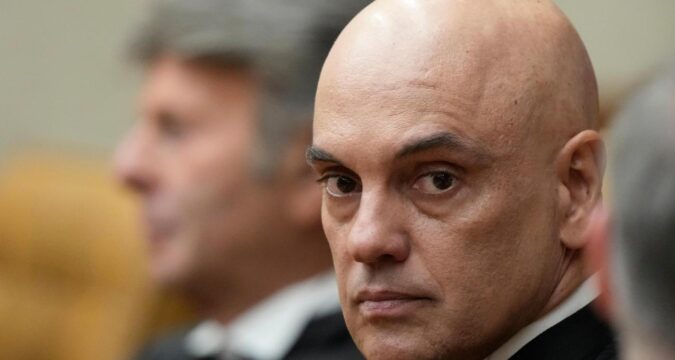
WASHINGTON (AP) — Estados Unidos retiró el viernes de su lista de sancionados al juez Alexandre de Moraes del Supremo Tribunal Federal de Brasil, luego de haberlo incluido por su papel en el juicio al expresidente brasileño Jair Bolsonaro.
La esposa de De Moraes y el Instituto Lex, que ella dirige, también fueron retirados de la lista, según documentos de la Oficina de Control de Activos Extranjeros del Departamento del Tesoro. El gobierno de Brasil elogió la medida, concretada después de una conversación telefónica el fin de semana entre el presidente Donald Trump y su homólogo brasileño Luiz Inácio Lula da Silva.
“Fue Lula quien puso esta revocación (de las sanciones) en el escritorio de Donald Trump, en un diálogo digno y soberano”, declaró Gleisi Hoffmann, ministra de Relaciones Institucionales de Brasil. “Es una gran derrota para la familia de Jair Bolsonaro, traidores que han conspirado contra Brasil y el poder judicial”.
Un alto funcionario del gobierno de Trump indicó que las sanciones fueron canceladas, ya que Washington considera que la aprobación de un importante proyecto de ley de amnistía por parte de la cámara baja de Brasil es un indicio de que las condiciones de guerra judicial en el país sudamericano están mejorando. El funcionario habló a condición de guardar el anonimato para poder declarar acerca de las opiniones del gobierno con respecto a sus intereses en política exterior.
El gobierno de Trump sancionó al juez en julio, acusándolo de usar su posición para autorizar detenciones preventivas arbitrarias y suprimir la libertad de expresión en Brasil.
El gobierno izquierdista de Lula ha acusado desde hace tiempo a Eduardo Bolsonaro —legislador e hijo del expresidente— de engañar a Trump sobre De Moraes y otros miembros del poder judicial. Por su parte, Eduardo Bolsonaro indicó que recibió “con pesar” la noticia de la suspensión de las sanciones a De Moraes.
____
Savarese informó desde Sao Paulo.
____
Esta historia fue traducida del inglés por un editor de AP con la ayuda de una herramienta de inteligencia artificial generativa.
Presidentes de Ecuador y Perú priorizan el combate conjunto al crimen organizado y la minería ilegal
Associated Press
QUITO (AP) — Los presidentes de Ecuador, Daniel Noboa y de Perú, José Jerí, acordaron el viernes luchar conjuntamente contra las organizaciones criminales que actúan en la frontera común durante un encuentro oficial en Quito.
Los mandatarios se reunieron por varias horas en esta capital en el marco del XVI gabinete binacional, tras el cual suscribieron una declaración conjunta que fija la hoja de ruta en las relaciones bilaterales de cara a 2026.
Ante la delincuencia organizada transnacional “nuestras fronteras tienen que ser reforzadas y hemos coincidido en usar tecnología para resguardar nuestras fronteras”, sin dejar de lado la presencia de las fuerzas del orden, anunció Jerí en una rueda de prensa tras la firma del documento.
Sin dar detalles, el gobernante peruano agregó que también se definieron acciones para la lucha contra la minería ilegal que afecta a las poblaciones de la zona limítrofe.
En tanto, Noboa destacó como “imperativo trabajar unidos y realizar acciones conjuntas entre nuestras Fuerzas Armadas”, así como buscar cooperación internacional para combatir la delincuencia organizada transnacional, el terrorismo, el narcotráfico, el tráfico de armas, el contrabando y la minería ilegal, entre otros delitos.
“Mientras más juntos estemos, mejor nos va a ir, mientras más juntos trabajemos, mejor van a estar las familias ecuatorianas y peruanas”, finalizó.
El documento con los acuerdos alcanzados no se dio a conocer de inmediato.
Tanto Ecuador como Perú sufren el embate del crimen organizado y el ascenso de la violencia, lo que ha llevado a sus gobiernos a dictar estados de excepción en zonas de alta conflictividad, incluidas ciudades fronterizas.
Uno de los problemas comunes ha sido la expansión de la minería ilegal.
Autoridades ecuatorianas han señalado que la minería ilegal es actualmente la segunda amenaza más grave para el Estado al destruir territorio, desplazar comunidades, financiar al crimen organizado y contaminar los ríos. De acuerdo con cifras oficiales, en 2025 se han realizado operativos en zonas críticas que dejaron la destrucción de 1.300 bocaminas y asestaron un golpe por más de 2.000 millones de dólares a las economías ilegales.
En tanto, según la fiscalía peruana, en ese país la minería ilegal genera unos 7.000 millones de dólares anuales, mucho más que los 1.200 millones de dólares anuales aproximados del narcotráfico.
Esta es la primera cita oficial entre Noboa y Jerí desde que éste último asumió la presidencia de Perú en octubre, tras la destitución de Dina Boluarte.
Ecuador y Perú iniciaron diálogos binacionales 27 años atrás luego de la firma de paz que zanjó disputas territoriales.
En julio de 2024 Noboa y Boluarte firmaron el Plan de Acción de Lima, que incluyó 49 compromisos cuyos avances fueron revisados este viernes por las delegaciones de ambos países.
“Queda mucho por hacer, estamos buscando soluciones integrales en las cuales los dos países puedan proteger su frontera y bloquear cualquier actividad ilícita”, recalcó Noboa.

Can Anyone Believe Anything?
Can Anyone Believe Anything?
Authored by James Howard Kunstler,
“The fire consuming you is the fire that tempers.”
– EKO on “X”
‘Tis the season to be flummoxed.
Now you see what it’s like when all authority is suspect and nobody can believe anything.
The question, of course, is how much of that is engineered by interested parties. . . and who are those parties?
There’s the legion of monied orgs and foundations supported by sinister billionaires, starting with George and Alex Soros’s Open Society Foundations, a bewildering matrix of worldwide political activism ops aimed at sowing Marxist-inflected chaos wherever a polity is threatened by stability and coherence. Or Singapore-based Neville Roy Singham, the American tech honcho (Thoughtworks) who funds the Socialist Revolutionary Workers Party, the Shut It Down for Palestine org, and Code Pink, for spicing up every political quarrel in Western Civ with Feminist psychodrama. Or Arabella Advisors (re-branded in November as Sunflower Services), founded by Clinton alum Eric Kessler, a “dark money” spigot for social justice and equity initiatives (i.e., race and gender hustles), climate agitation, ballot harvesting, and anti-deportation efforts. Or Linked-In billionaire Reid Hoffman’s cattle-drive of Democratic party-aligned political action committees, starting with super-PAC Future Forward — more ballot harvesting and other election shenanigans. (Hoffman notoriously financed the E. Jean Carroll fake rape defamation lawsuit brought against Donald Trump — for denying the incident took place.) Or the Bill and Melinda Gates Foundation with its tentacles suckered onto Big Pharma and government medical bureaucracies around the world, including the USA (until Robert F. Kennedy, Jr., came on the job), especially vis-a-vis Covid-19 vaccine advocacy.
All of the above orgs have a bought-media component, meaning news designed to subvert reality.
The object is to prevent Mr. Trump from interfering with any of the racketeering activities run by the Democratic Party benefitting its clients (the “marginalized”).
Case in point: the recently revealed billion-dollar welfare fraud case perped for years by Somali Immigrants in Minnesota through fake billing for undelivered services in child nutrition, autism therapy, and housing programs, all under the watch of Governor Tim Walz.
The state’s news media ignored the story until it got too garish to cover up. Now they’re suitably humiliated.
At the national level, it’s unclear who is serving whom.
Do the managers of The New York Times actually still believe the Russia Collusion story they were awarded a Pulitzer for, or their 1619 Project Woke-rewrite of US history?
Or their mulish defense of the Covid vaccines. Or their florid esteem for the leadership of “Joe Biden.” Or are they simply ruled by blind Trump derangement?
(Or do they receive instructions from nefarious others about how to report and opine on things?)
The so-called deep state is a set of interested parties not directly controlled by billionaires but with agendas of their own. For instance, the millions of bureaucrats at every level — federal, state, and local — who receive comfortable salaries and first-rate benefits (pensions, medical insurance), in many cases for doing little-to-nothing in their offices all day every day (or else obstructing Americans not in government from making a living).
Mr. Trump, who would like to fire many of them, is a clear and present danger to their cushy sinecures. Unsurprisingly, they have taken to styling themselves as “the Resistance.”
There are the mysterious denizens of the furthest, darkest backwaters of the Swamp: the CIA, with its fabulous black budget for black ops, and the purported sixteen other nodes of the Intel Community, the folks who have — as Sen. Schumer mis-put it to Mr. Trump years ago — “. . . six ways from Sunday to get you. . . ”).
Rumors are flying around that John Brennan is still running the CIA, or at least some operational wing of it. CIA Director John Ratcliffe has not been exactly reassuring on this.
There are likewise rumors that Mr. Ratcliffe is “compromised.” Something about a “honeypot.”
This is no time to lack faith in the authority of the CIA Director, but you must for now because hardly anybody commands authority except Mr. Trump, the president, and he has been busy frittering it away on childish tweets, calling his enemies names as though we were back in the third grade.
He better cut that out and show some decorum or his enemies will peel away the authority that he has left in this epic battle to preserve the republic from utter ruin.
His role in this ghastly melodrama is to play the lonely figure that people still have faith in. Perhaps the strain is getting to him.
He’s had his moments of remarkable pluck, but the forces arrayed against him are many, and vicious, and determined, and a bit worried about going to jail for their crimes, and this is no time for presidential tantrums.
And, just sayin’, perhaps he might also shut up about how much people love him.
(There are plenty who don’t, and who would like to act-out how much they don’t.)
Mr. Trump needs to take a cue from the name of that desk he sits behind in the Oval Office: it’s called Resolute.
Please stop yapping idly and just be resolute in the face of your enemies.
Tyler Durden
Fri, 12/12/2025 – 16:20
https://www.zerohedge.com/markets/can-anyone-believe-anything

Chicago Bears injury updates: CB Tyrique Stevenson set to return, while WR Rome Odunze listed as questionable
The Chicago Bears could get a boost for Sunday’s matchup against the Cleveland Browns. Cornerback Tyrique Stevenson holds no injury designation on the team’s Friday injury report and is likely to return to action after missing two games with a hip injury.
Additionally, Rome Odunze is listed as questionable with a foot injury but returned to practice in a limited capacity this week. That is a step in the right direction for the second-year receiver, who sat out all last week and missed Sunday’s game against the Green Bay Packers.
Cornerback Kyler Gordon, on the other hand, has been ruled out with a groin injury. Gordon suffered the injury during pregame warmups Sunday in Green Bay. Asked earlier this week if Gordon would play again this season, coach Ben Johnson said it was “to be determined.”
If Gordon were to go on injured reserve ahead of Sunday’s game, he would be required to miss the final four regular-season games. The earliest he could play again would be the wild-card round of the playoffs.
Gordon has played in only three games this season. Without him, veteran C.J. Gardner-Johnson likely will continue to handle snaps as the nickel corner.
The Bears also ruled out running back Travis Homer with an ankle injury. Receiver Olamide Zaccheaus (hamstring), linebacker Ruben Hyppolite II (shoulder) and cornerback Jaylon Johnson (groin) hold no injury designations.
For Odunze, last week marked the first time in his NFL career that he has missed a game. The Bears certainly missed his presence against the Packers. Odunze leads the Bears in receptions (44), receiving yards (661) and receiving touchdowns (six).
Odunze was not made available for comment Friday. Receiver DJ Moore, who is coming off the least-productive game of his career after totaling one catch for minus-4 yards in Green Bay, said nothing changes whether Odunze is available or not.
“We had Luther (Burden III) go off and you see him doing his thing,” Moore said. “So I mean, I can’t be mad when the whole group is eating.”
The rookie Burden led the Bears with four catches for 67 yards against the Packers.
Bears cornerback Tyrique Stevenson warms up before a game against the Giants on Nov. 9, 2025, at Soldier Field. (Eileen T. Meslar/Chicago Tribune)
Stevenson has missed two straight games because of the hip injury. He initially suffered the injury during a collision with teammate Jaquan Brisker on Nov. 16 in Minnesota. Stevenson attempted to play the following week against the Pittsburgh Steelers but exited the game after only 12 snaps of action.
Related Articles
Brrrrr down: The 10 coldest Chicago Bears games played at Soldier Field
5 things to watch in the Chicago Bears-Cleveland Browns game at Soldier Field — plus our Week 15 predictions
Today in Chicago History: Bears’ Gale Sayers scores 6 TDs against the 49ers at Wrigley Field
Bears are chill about frigid forecast for Sunday’s game: ‘It’s Chicago, man. It’s cold here every day.’
Chicago Bears honor Little Village grassroots leader Matt DeMateo with Inspire Change Changemaker Award
Stevenson said he was “trying to push it and it just wasn’t (right).” He wound up sitting out the Eagles and Packers games.
“(I) felt pretty bad just sitting at home watching film and everything and not being out there with the guys when I’ve been putting in work all year with them,” Stevenson said Friday. “Just to go out here and cherish the small moments and the big wins that we’ve been winning this year. So it definitely feels better.”
Stevenson’s potential return could mean some more juggling for the Bears in the secondary. The coaching staff will have to divvy up the outside cornerback snaps among Stevenson, Jaylon Johnson and Nahshon Wright.
Wright began the year as a backup but has started 12 games and totaled eight takeaways. His emergence has been one of the more remarkable storylines of the 2025 season. Jaylon Johnson returned from a core muscle injury and has appeared in the last two games, although he has yet to play a full snap count.
“End of the day, everybody’s playing good balls,” Stevenson said. “So whoever’s out there helping this team win, I’m happy and satisfied with that.”
Stevenson said it’s possible he could be on a limited snap count in his return.
https://www.chicagotribune.com/2025/12/12/chicago-bears-rome-odunze-tyrique-stevenson/
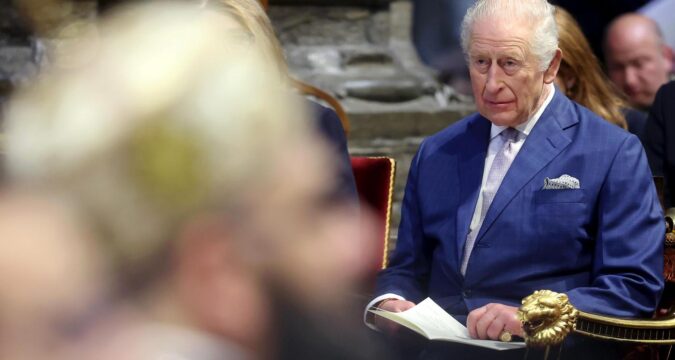
El rey Carlos III habla en TV sobre su tratamiento contra el cáncer y su recuperación
Por DANICA KIRKA
LONDRES (AP) — El rey Carlos III declaró el viernes que su tratamiento contra el cáncer se reducirá el próximo año debido a un diagnóstico temprano, una intervención efectiva y su apego a las indicaciones médicas.
Carlos, de 77 años, reveló esta información en un mensaje grabado transmitido en la televisión británica, parte de una campaña para alentar a las personas a aprovechar las pruebas de detección que pueden identificar el cáncer en sus etapas iniciales, cuando es más fácil de tratar.
“El diagnóstico temprano simplemente salva vidas”, afirmó el rey.
“Sé también la diferencia que ha hecho en mi propio caso, permitiéndome continuar llevando una vida plena y activa incluso mientras recibo tratamiento”, añadió.
El mensaje grabado le dio al monarca la oportunidad de reflexionar sobre sus experiencias en los 22 meses desde que anunció que se sometería a tratamiento por un tipo de cáncer no revelado.
La decisión de Carlos de divulgar su diagnóstico fue un cambio para los miembros de la realeza británica, quienes tradicionalmente han considerado que su salud es un asunto personal y han compartido pocos detalles con el público.
“Su majestad ha elegido compartir su diagnóstico para evitar especulaciones y con la esperanza de que pueda ayudar a la comprensión pública para todos aquellos en el mundo que se ven afectados por el cáncer”, declaró el Palacio de Buckingham en ese momento.
Desde entonces, Carlos ha utilizado su propia historia para resaltar la necesidad de un diagnóstico y tratamiento tempranos. El organismo independiente de investigación Cancer Research UK registró un aumento del 33% en las visitas a su sitio web en las semanas posteriores al diagnóstico del rey, ya que las personas buscaban información sobre cuáles son los indicios de que se padece cáncer.
Aunque el palacio no ha especificado qué tipo de cáncer tiene el rey, los funcionarios dijeron que se le descubrió después de que un tratamiento para un agrandamiento de la próstata revelara “un problema aparte de preocupación”.
———
Esta historia fue traducida del inglés por un editor de AP con la ayuda de una herramienta de inteligencia artificial generativa.
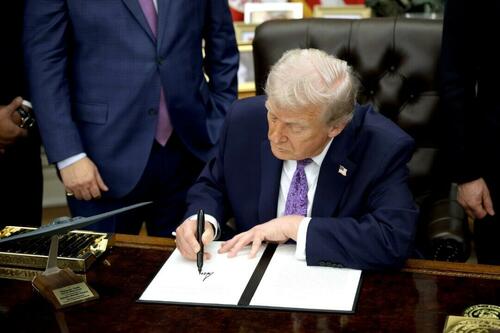
Trump Signs Order Cracking Down On ‘Politically Motivated Agendas’ Of Proxy Advisors
Trump Signs Order Cracking Down On ‘Politically Motivated Agendas’ Of Proxy Advisors
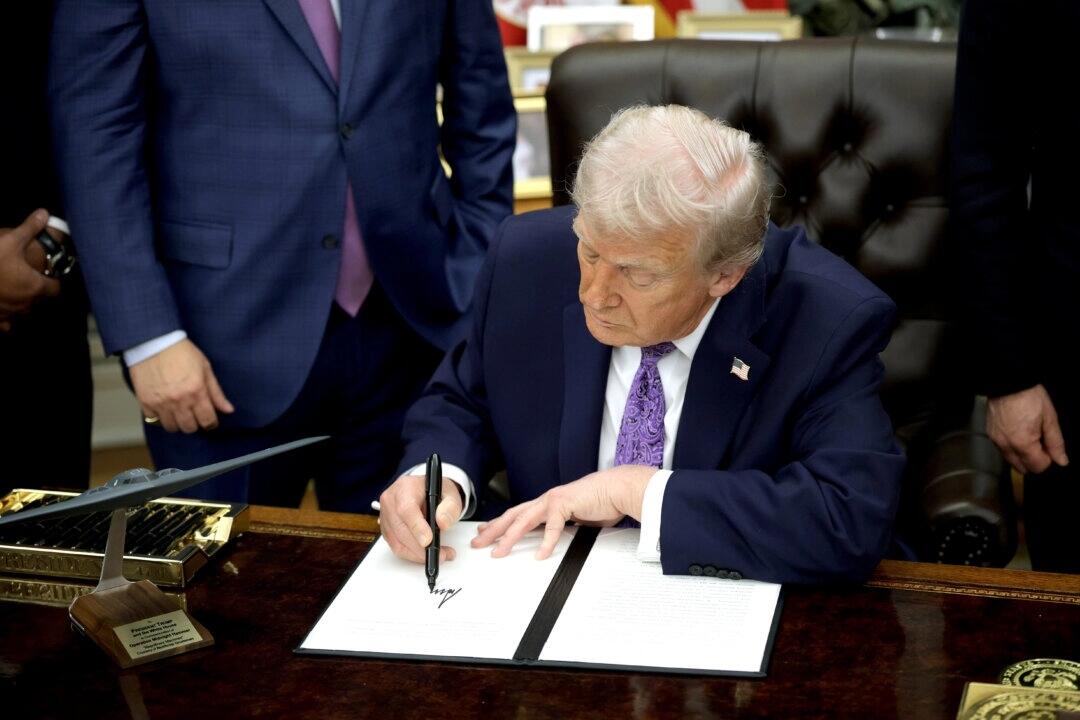
President Donald Trump on Dec. 11 signed an order directing the Securities and Exchange Commission (SEC) to review rules on proxy advisors, saying they wield influence that “prioritize radical political agendas over investor returns.”
Trump’s order directs the SEC to conduct a review and potentially revise or rescind any rules, guidance, bulletins, and memoranda related to proxy advisors that implicate “diversity, equity, and inclusion” or “environmental, social, and governance” policies.
Under the directive, the SEC must enforce anti-fraud provisions in securities laws against proxy advisors, evaluate whether they should be required to register as investment advisers or to provide increased transparency on conflicts of interest, and examine “whether proxy advisors serve as a vehicle for investment advisers to coordinate their voting decisions.”
The regulator is also required to assess whether investment advisers breach their fiduciary duties by hiring proxy advisors to advise on “non-pecuniary factors” in investment decisions and following their recommendations, according to a White House fact sheet.
As Alkdgra Fredly details below for The Epoch Times, in his order, Trump singled out two foreign-owned proxy advisors—Institutional Shareholder Services and Glass, Lewis & Co.—that advise clients on how to vote their shares, alleging they use their influence to advance “radical politically motivated agendas” by supporting shareholder proposals that require U.S. companies to conduct racial equity audits and reduce greenhouse gas emissions.
“Their practices also raise significant concerns about conflicts of interest and the quality of their recommendations, among other concerns,” the order states.
“The United States must therefore increase oversight of and take action to restore public confidence in the proxy advisor industry, including by promoting accountability, transparency, and competition.”
The order states that the Institutional Shareholder Services and Glass Lewis control more than 90 percent of the proxy advisor market, and their clients’ holdings represent “a significant ownership stake in the United States’ largest publicly traded companies.”
In addition, Trump instructed the Federal Trade Commission (FTC) chairman, currently Andrew Ferguson, to consult with the attorney general to review ongoing state antitrust probes into proxy advisors for violations of federal law and determine whether proxy advisors are engaged in “unfair methods of competition” or deceptive practices.
The Epoch Times reached out to both of the proxy advisors for comment and did not receive any response by publication time.
Institutional Shareholder Services is majority-owned by Deutsche Börse Group, a Germany-based company, while Glass Lewis is owned by Canadian private equity firm Peloton Capital Management.
JPMorgan Chase CEO Jamie Dimon said in his chairman and CEO letter to shareholders last year that the two companies are the main proxy advisors in the United States with potential “undue influence” on shareholder votes.
“These proxy advisors started out providing reams of data from companies to help their institutional investor clients vote on proxy matters (information on executive compensation, stock returns, detail on directors, policies and so on). However, they soon also began to provide advice on how shareholders should vote on proxy matters,” he stated.
Tyler Durden
Fri, 12/12/2025 – 15:45