Category: News

The 100 best photos of 2025 by Chicago Tribune photographers
From documenting immigration enforcement, to covering the highs and lows of Chicago’s sports teams and photographing the lives of everyday residents, Chicago Tribune photographers and editors strive to provide a fair account of the lives and events we witness.
In 2025, we covered an extraordinary year defined by joy, sadness and turmoil. Our photo editors curated some of the best images from 2025 in this collection.
Operaton Midway Blitz
Sept. 19: Curtis Evans, of Evanston, carries a U.S. flag through gas deployed by federal officers as they clear protesters from the entrance of the U.S. Immigration and Customs Enforcement holding facility in Broadview. Evans was a Marine during President Ronald Reagan’s term. (Stacey Wescott/Chicago Tribune)
Oct. 19: Resident Lisa Porter screams at federal agents and tells them to leave as they sit in their SUV along East Busse Avenue in Mt. Prospect. Porter and several neighbors and local patrollers were upset to see many federal agents in their community searching on public and private property for a man agents claim is a dangerous criminal. (Stacey Wescott/Chicago Tribune)
June 4: Handcuffed detainees are led into a van by federal agents on South Michigan Avenue as protesters demonstrate outside a Intensive Supervision Appearance Program office run by Immigration and Customs Enforcement in the South Loop. (Brian Cassella/Chicago Tribune)
June 4: People in handcuffs are escorted by federal agents to white vans parked outside the Intensive Supervision Appearance Program office operated by Immigration and Customs Enforcement. (Eileen T. Meslar/Chicago Tribune)
June 4: Alds. Rossana Rodriguez Sanchez, 33rd, Anthony Quezada, 35th, and Ald. Byron Sigcho Lopez, 25th, comfort Carlos Pimeda, while he breaks down speaking about his family friend he brought to his immigration check-in at the Intensive Supervision Appearance Program office (ISAP) run by Immigration and Customs Enforcement, in the South Loop. (Eileen T. Meslar/Chicago Tribune)
June 4: A family walks away in tears after their mother was detained outside a Intensive Supervision Appearance Program office run by Immigration and Customs Enforcement in the South Loop. (Brian Cassella/Chicago Tribune)
Oct. 20: Ofelia Torres, 16, left, and her mother Sandibell Hidalgo sit in their Chicago home. Torres’s father and Hidalgo’s husband, Ruben Torres Maldonado, was taken by Immigration and Customs Enforcement officers over the weekend. Torres was diagnosed with rhabdomyosarcoma cancer in December 2024. (Armando L. Sanchez/Chicago Tribune)
Oct. 31: Border Patrol officers detain a person in Chicago’s Albany Park neighborhood. (Armando L. Sanchez/Chicago Tribune)
Oct. 31: Border Patrol agents detain painter Krzysztof Klim while verifying his identification next to Halloween decorations outside a house in Chicago’s Edison Park neighborhood. Klim, originally from Poland and now a U.S. citizen, was briefly detained and then released. (Brian Cassella/Chicago Tribune)
Oct. 4: A woman is given milk after federal officers threw canisters of chemical agents at residents and protesters from their vehicles while leaving Chicago’s Brighton Park neighborhood. (Armando L. Sanchez/Chicago Tribune)
Oct. 4: Federal agents detain a person while members of the community and activists protest in Chicago’s Brighton Park neighborhood. (Armando L. Sanchez/Chicago Tribune)
Sept. 19: Protesters are enveloped in a cloud of gas and pepper balls shot by federal agents as they block a federal vehicle leaving the Immigration and Customs Enforcement facility in Broadview. (Stacey Wescott/Chicago Tribune)
Sept. 19: A protester is shot by ICE agents with a pepper ball outside the Immigration and Customs Enforcement building in Broadview. (Armando L. Sanchez/Chicago Tribune)
Sept. 19: The Rev. David Black, center, yells towards federal law enforcement officers after being shot with pepper balls outside the Immigration and Customs Enforcement facility in Broadview. (Armando L. Sanchez/Chicago Tribune)
Oct. 10: Illinois State Police troopers and Cook County sheriff’s deputies push protesters from the road near a U.S. Immigration and Customs Enforcement facility in Broadview. (Armando L. Sanchez/Chicago Tribune)
Sept. 19: Protesters tussle with federal agents as they block a federal vehicle from entering the U.S. Immigration and Customs Enforcement facility in Broadview. (Stacey Wescott/Chicago Tribune)
Sept. 28: Residents watch while U.S. Border Patrol Cmdr. Gregory Bovino and other federal agents finish their march along North Clark Street by the Newberry Library in Chicago’s Gold Coast neighborhood, as part of an immigration blitz show of force. (Brian Cassella/Chicago Tribune)
Oct. 14: A person is detained by a U.S. Customs and Border Patrol agent after community members faced off against the agents at 105th Street and Avenue N in Chicago. (Terrence Antonio James/Chicago Tribune)
Sept. 19: Federal law enforcement officers spray mace before detaining protesters outside the Immigration and Customs Enforcement facility in Broadview. (Armando L. Sanchez/Chicago Tribune)
Oct. 30: U.S. Border Patrol agents detain landscapers Armando Lagunas, left, and Crispin Pérez who were mulching outside a building in Oak Park. Three days later, the men had been deported to Mexico. (Brian Cassella/Chicago Tribune)
Sept. 16: Ismael Cordová-Clough, left, hugs Delani Hernandez, both members of a volunteer patrol group in the Elgin area, as Hernandez cries after witnessing a man pulled from his truck and detained by federal agents. As Hernandez cried she said “I couldn’t stop them, I couldn’t stop them.” It was her first day on patrol with the group which posts and live streams any suspected ICE activites in and around Elgin. (Stacey Wescott/Chicago Tribune)
Oct. 18: Demonstrators listen to speakers during the “No Kings” rally at Butler Field in Chicago. (John J. Kim/Chicago Tribune)
April 19: John Rizzo, dressed as the Statue of Liberty, during “The People’s Protest: Joy as Resistance,” protests Donald Trump’s presidency in downtown Chicago. (Audrey Richardson/Chicago Tribune)
June 10: An activist is detained in in Chicago’s Loop after protests take place across the country following recent immigration raids on immigrant communities. (Armando L. Sanchez/Chicago Tribune)
June 10: A demonstrator yells a chant at police during a rally and march in the Loop against nationwide immigration raids by federal law enforcement. (John J. Kim/Chicago Tribune)
News and politics
April 11: Josephine Beauchane, left, and D’Artagnan Corsello react during a funeral service at Fox Valley Baptist Church in East Dundee for their three children, Xander, 2, and his one-year-old twin brothers, Kayden and Jayden. The boys died as a result of a fire in their Carpentersville home in March. (Audrey Richardson/Chicago Tribune)
May 26: Chicago police officers work at the scene where a 42-year-old man was shot in the North Lawndale neighborhood. (Armando L. Sanchez/Chicago Tribune)
June 22: From left, Perezia Solomon, Ariel Brown and Bri Wilson embrace as dozens gather for a balloon release in North Lawndale in honor of Zahrie Walls, who tragically died in Lake Michigan the previous day. Walls was 27 and a well-known hair stylist in the community. (Audrey Richardson/Chicago Tribune)
Sept. 19: Schoolmates of Anakin Perez gather outside McNair Elementary in Chicago’s Austin neighborhood where the fourth grader was fatally struck by a vehicle. (E. Jason Wambsgans/Chicago Tribune)
Oct. 13: 11-year-old Tamar cuts yellow ribbons from a tree during a release ceremony outside the Skokie Valley Agudath Jacob Synagogue to honor those captured and held hostage by Hamas.(Armando L. Sanchez/Chicago Tribune)
Lucy V., 12, dressed as President Donald Trump, right, and her sister, Trixie V., 9, dressed as the Secret Service, join others during a protest in favor of the Trump & Truth Store, owned by Lisa Fleischmann, staying open on May 31, 2025. (Audrey Richardson/Chicago Tribune)
July 30: Jimmy Soto, right, hugs his cousin and co-defendant, David Ayala, after a court hearing for their certificates of innocence while celebrating with family, supporters and their attorneys at the Leighton Criminal Court Building. Released in 2023, Soto and Ayala earned the unfortunate distinction of becoming the longest-serving wrongfully convicted people in Illinois after 42 years behind bars. (Brian Cassella/Chicago Tribune)
June 23: Bella Medina, daughter of Chicago police Officer Krystal Rivera, is presented with the City of Chicago flag by CPD Superintendent Larry Snelling following the funeral of her mother at Living Word Christian Center in Forest Park. (Antonio Perez/Chicago Tribune)
April 16: A police dog sniffs newly arriving detainees in an underground tunnel at Cook County. (Antonio Perez/Chicago Tribune)
Feb. 19: Former Cook County prosecutor Nicholas Trutenko hugs his son, Joey Trutenko, after being acquitted on charges of perjury, official misconduct, obstruction of justice a by Lake County Judge Daniel Shanes at the Cook County courthouse in Rolling Meadows. At right is Andrew Horvat, also a former county prosecutor, who was also acquitted. (Stacey Wescott/Chicago Tribune/pool)
Sept. 6: Rose pedals are seen floating in DuSable Harbor in Chicago as loved ones of Nabil “Captain Bill” Abzal are reflected in the water following a private memorial for the charter boat captain on the harbor dock. Divers recovered the body of Abzal from Lake Michigan near the harbor with his death being ruled a homicide by police. (Chris Sweda/Chicago Tribune)
April 30: Mayor Brandon Johnson walks through a basement tunnel after arriving at the Illinois State Capitol to meet with lawmakers in Springfield. (Brian Cassella/Chicago Tribune)
Feb. 12: Former Illinois House Speaker Michael Madigan, flanked by daughters Nicole, left, and Tiffany, leaves the Dirksen U.S. Courthouse after jurors found him guilty on 10 counts in his racketeering case. (E. Jason Wambsgans/Chicago Tribune)
Aug. 24: U.S. Sen. Bernie Sanders walks to the stage before speaking during a rally at the University of Illinois at Chicago Forum in Chicago. (Armando L. Sanchez/Chicago Tribune)
June 25: Chicago police Superintendent Larry Snelling attends the funeral for Officer Krystal Rivera at Living Word Christian Center in Forest Park. (Antonio Perez/Chicago Tribune)
Feb. 17: Sen. Dick Durbin appears with U.S. Rep. Jan Schakowsky, 9th, and U.S. Rep. Danny Davis, 7th, as Illinois officials gathered to oppose federal budget cuts to services. (Brian Cassella/Chicago Tribune)
The installation of Pope Leo XIV
May 15: A woman holds a picture of Pope Leo XIV while visiting St. Peter’s Basilica before the installation at the Vatican. (Brian Cassella/Chicago Tribune)
May 18: Pope Leo XIV greets cheering crowds as he arrives for his installation Mass in St. Peter’s Square. (Brian Cassella/Chicago Tribune)
May 21: People pray while Pope Leo XIV holds his first general audience in St. Peter’s Square at the Vatican. (Brian Cassella/Chicago Tribune)
May 8: Sisters Vivian, from left, Lucia, and Isabel Fitzgerald stand in St. Mary of the Assumption Church in Chicago’s Riverdale neighborhood on May 8, 2025. The Fitzgeralds are members of St. Cajetan Parish in Beverly, so they and their mother stopped by the church since they were so close. (Eileen T. Meslar/Chicago Tribune)
May 23: Andrea Burns, left, and Martina Maggiore find the recently-installed mural of Pope Leo XIV in section 140 before a White Sox-Rangers game at Rate Field in Chicago. (John J. Kim/Chicago Tribune)
Travelling the US along Route 66
June 3: Roy’s Motel and Café is a motel, cafe, and gas station, currently being restored in the ghost town of Amboy, California on Route 66. (E. Jason Wambsgans/Chicago Tribune)
June 1: Visitors pose for pictures at the Santa Monica Pier where Route 66 ends. (E. Jason Wambsgans/Chicago Tribune)
June 9: Navajo Code Talker Thomas H. Begay, who is at least 100, sits at a war memorial in Albuquerque, New Mexico. (E. Jason Wambsgans/Chicago Tribune)
June 13: Becka Wallace and her daughter Briar, 7 months, Bowen, 3, and Baron, 4, wait for the movie to start at the Tascosa Drive In Amarillo, Texas. (E. Jason Wambsgans/Chicago Tribune)
June 6: Horses graze near the Aubrey Cliffs on Old Route 66 on the outskirts of Seligman, Arizona. (E. Jason Wambsgans/Chicago Tribune)
June 4: Wild burros wander on Route 66 near Oatman, Arizona. The burros are believed to be descended from ones that served as pack animals from gold miners. (E. Jason Wambsgans/Chicago Tribune)
June 6: Austrian tourist Mike Antosch takes shelter from the rain under the porch at the Hackberry General Store on Route 66 in Hackberry, Arizona. (E. Jason Wambsgans/Chicago Tribune)
Sports
Sept. 23: New York Mets first base Pete Alonso falls while attempting to catch a foul ball hit by Chicago Cubs catcher Carson Kelly during the fifth inning at Wrigley Field. (Armando L. Sanchez/Chicago Tribune)
Jan. 5: Green Bay fans yell at Chicago Bears linebacker Amen Ogbongbemiga as he celebrates Cairo Santos’ game-winning 51-yard field goal against Green Bay at Lambeau Field. (Eileen T. Meslar/Chicago Tribune)
Oct. 13: Chicago Bears teammates hoist kicker Jake Moody as they celebrate his game-winning field goal as time expired in the fourth quarter to defeat the Washington Commanders, 25-24, at Northwest Stadium in Landover, Maryland. (Brian Cassella/Chicago Tribune)
Sept. 28: Bears fans celebrate in the stands after a blocked kick secured a victory for Chicago over the Las Vegas Raiders at Allegiant Stadium in Las Vegas. (Chris Sweda/Chicago Tribune)
Nov. 19: Illinois head coach Brad Underwood yells at an official on a possession call in the second half against Alabama at the United Center in Chicago. (John J. Kim/Chicago Tribune)
Jan. 26: Henry Loher, of the New York Ski Education Foundation, hits a monster jump on the 70-meter ski jump at the 120th Annual Norge Winter Ski Jump Tournament at the Norge Ski Club in Fox River Grove. Loher won the Under 20 Male division and tied with Norwegian jumper Espen Olsby for the longest jump of the day with 77.5 meters. (Stacey Wescott/Chicago Tribune)
Aug. 24: Participants in the international race enter Lake Michigan at sunrise to begin the swim section of the Chicago Triathlon. (Brian Cassella/Chicago Tribune)
May 6: Chicago Sky center Kamilla Cardoso (10) falls on Minnesota Lynx forward Anastasiia Olairi Kosu (7) during the second half of the Sky’s first pre-season game at Wintrust Arena in Chicago. (Armando L. Sanchez/Chicago Tribune)
April 9: From left, Chicago Bulls center Nikola Vucevic, Miami Heat center Bam Adebayo and Chicago Bulls forward Matas Buzelis look to recover a free throw rebound during the second half of a game against the Miami Heat at the United Center in Chicago. (Audrey Richardson/Chicago Tribune)
July 3: Cubs third baseman Matt Shaw, left, and center fielder Pete Crow-Armstrong celebrate after Shaw hit a game-winning RBI sacrifice fly ball for a 1-0 win over the Cleveland Guardians in ten innings at Wrigley Field. (John J. Kim/Chicago Tribune)
Sept. 21: Chicago Bears safety Elijah Hicks (22) and teammates take the field to face the Dallas Cowboys at Soldier Field. (Brian Cassella/Chicago Tribune)
Sept. 21: Chicago Bears wide receiver DJ Moore, right, tumbles after making a catch against the Dallas Cowboys at Soldier Field. (Brian Cassella/Chicago Tribune)
Sept. 23: Davin Strouse awards “Clark” with his free hot dog as Bears fans, and hot dog fans, line up as the Wieners Circle fulfills its promise to give out free hot dogs after Caleb Williams threw for four touchdowns in Week 3. (E. Jason Wambsgans/Chicago Tribune)
Nov. 26: Chicago Blackhawks defenseman Artyom Levshunov scores a goal on Minnesota Wild goaltender Filip Gustavsson in the third period of a game at the United Center in Chicago. (Chris Sweda/Chicago Tribune)
Nov. 28: Chicago Bears quarterback Caleb Williams celebrates the win over the Philadelphia Eagles at Lincoln Financial Field in Philadelphia. (Brian Cassella/Chicago Tribune)
Climate and environment
Jan. 28: Steam and flames are emitted from the BP Whiting Refinery in Whiting, Indiana. (E. Jason Wambsgans/Chicago Tribune)
March 30: People battle the wind as heavy rain begins during a Trans Day of Visibility march along Wacker Drive in Chicago. (Brian Cassella/Chicago Tribune)
May 15: Sheila Sutton stretches along the lakefront at Diversey Harbor in Chicago as a storm front arrives. (Chris Sweda/Chicago Tribune)
Sept. 13: The sun sets over a country road near Olney in Richland County. (E. Jason Wambsgans/Chicago Tribune)
July 31: An overhead view of the wetlands at Milan Bottoms Preserve in Rock Island County. (E. Jason Wambsgans/Chicago Tribune)
Dec. 4: Trey Stewart heads back to the water after a break while surfing under a supermoon at Montrose Beach in Chicago. The air temperature at the time was 17 degrees. (John J. Kim/Chicago Tribune)
Nov. 26: People battle strong winds while crossing South Wabash Drive at Jackson Boulevard in Chicago’s Loop. (Dominic Di Palermo/Chicago Tribune)
Nov. 29: People walk through the snow along North Michigan Avenue as a winter storm passes through the Chicago area. (Armando L. Sanchez/Chicago Tribune)
Nov. 30: People ice skate in Millennium Park after Chicago recorded over 8 inches of snow. (Brian Cassella/Chicago Tribune)
Nov. 5: The supermoon, the brightest full moon of the year, rises between a pair of residential towers near the lakefront in Chicago. (John J. Kim/Chicago Tribune)
Life in Chicago
Aug. 18: New kindergartner Raemond Kellum lines up for the first day of school at the Courtenay Language Arts Center in Chicago’s Uptown neighborhood. (E. Jason Wambsgans/Chicago Tribune)
June 21: Joseph Perez reacts as water pours over the 6-year-old as families cool off at the McKinley Park pool on Chicago’s Southwest side. Temperatures reached into the mid 90’s for the day. (Chris Sweda/Chicago Tribune)
March 15: Rose Genry, right, sings with Kate Liebelt in a boat in the Chicago River during the annual river dyeing for St. Patrick’s Day. (Audrey Richardson/Chicago Tribune)
Oct. 15: Karriem Muhammed, left, hugs Marina Lovato, who specializes in inclusion for students with specialized needs, at the Mitzi Freidheim Child Center in Chicago. (Terrence Antonio James/Chicago Tribune)
July 3: Soraya Alem and Jarvi Schneider, founders of Otter Oaks Farm, stand at one of their plots at Legends Farm in Chicago. Alem and Schneider are a part of the Windy City Harvest Apprenticeship program, which is organized through the Chicago Botanical Gardens, offering marginalized groups of people farming education and eventually a farm site to build their businesses. (Audrey Richardson/Chicago Tribune)
June 11: A pile of sand lands on the face Mark Bennett Jr., 2, of Joliet, as he throws sand in the air with his shovel while enjoying his first summer beach day at Montrose Beach in Chicago with his parents, Mark Bennett and Elizabeth Gonzalez. (Audrey Richardson/Chicago Tribune)
July 24: Alicia Saucedo, left, and Selena Sanchez participate in the potato dance as the American Indian Center presents songs and dances during a community powwow to celebrate indigenous culture at Harrison Park in Chicago’s Pilsen neighborhood. The duo who can prevent their potato from falling to the ground for the longest amount of time without touching each other or touching the potato with their hands wins the game. The program was part of the Chicago Park District’s Night Out in the Parks series. (Chris Sweda/Chicago Tribune)
Aug. 12: Day’zhane Anderson, visiting from Cincinnati, crosses West Adams Street at South Dearborn Street in Chicago. (John J. Kim/Chicago Tribune)
April 19: A person crowd surfs during a performance by Everyone Asked About You at Metro in Chicago. (Chris Sweda/Chicago Tribune)
June 26: Iraqi-American artist Wafaa Bilal photographed within the neon sign which is part of his “Virtual Jihadi” installation in his exhibition “Indulge Me” at the Museum of Contemporary Art. (Stacey Wescott/Chicago Tribune)
July 4: The Ring of Hope double dutch team performs along the parade route as people celebrate the Fourth of July with the “4th on 53rd” parade and festival in Hyde Park. (Audrey Richardson/Chicago Tribune)
Aug. 1: A girl celebrating a quinceañera and her escorts walk through Ping Tom Park in Chicago’s Chinatown neighborhood to take formal photos. (Terrence Antonio James/Chicago Tribune)
Sept. 21: Swimmers race towards Clark Street Bridge during the Chicago River Swim in Chicago. Over 300 swimmers gathered for the first organized swim in the Chicago River in 98 years. (Dominic Di Palermo/Chicago Tribune)
June 20: Waka Flocka Flame leans over the barricades while performing at Lyrical Lemonade’s Summer Smash Festival in Bridgeview. (Audrey Richardson/Chicago Tribune)
Aug. 15: U.S. Air Force Thunderbirds perform over Oak Street Beach during rehearsal day for the Chicago Air and Water Show. (E. Jason Wambsgans/Chicago Tribune)
April 18: Sofia Lemus, 13, bears the titles during the 48th annual Via Crucis procession down 18th Street in Chicago’s Pilsen neighborhood. (E. Jason Wambsgans/Chicago Tribune)
Jan. 31: 2hollis performs at the Metro in Chicago. (John J. Kim/Chicago Tribune)
Aug. 21: Bill Kurtis, reknowned anchorman and author of a new autobiography, writes in the backyard of his home in Mettawa. (E. Jason Wambsgans/Chicago Tribune)
Feb. 21: Students from Peirce School of International Studies cheer on teacher Joshua Lerner during a school parade to celebrate Lerner being named the Cook County Co-Regional Teacher of the Year. Lerner teaches bilingual education, math, and is a bilingual English as a Second Language coordinator. (Chris Sweda/Chicago Tribune)
Jan. 1: Jerod Jensen kneels as he proposes to his girlfriend Janelle Cota at North Avenue Beach in Chicago on New Year’s Day. The Phoenix, Arizona couple are visiting Cota’s sister Jemma in Chicago over the holidays. Jemma placed the roses in the sand prior to the arrival of Jerod and Janelle at the beach. (Chris Sweda/Chicago Tribune)
Dec. 11: The CTA Holiday Train stops at the outbound Damen Blue Line station, as seen from The Robey hotel in Chicago. (John J. Kim/Chicago Tribune)

Las costureras de Sheinbaum: arte indígena en la Presidencia de México
Por FERNANDA PESCE y MARÍA VERZA
SAN ISIDRO BUEN SUCESO, México (AP) — En la sede de la Presidencia de México, el estilismo no está marcado por el glamour de la alta costura francesa o los diseños exclusivos italianos, sino por el trabajo de un pequeño círculo de mujeres mexicanas, entre ellas varias indígenas de distintos estados del país que diseñan, bordan, cosen o reciclan el vestuario de la mandataria Claudia Sheinbaum de forma mucho más original y a menor coste.
Portar su arte ha sido una decisión consciente de Sheinbaum que acaba de ser reconocida internacionalmente por su estilo. The Associated Press habló con tres de estas mujeres que se sienten orgullosas por un reconocimiento que nunca imaginaron.
Olivia Trujillo: Reciclar y reinventar la tradición
Olivia Trujillo siempre tiene las medidas de la presidenta a mano pero reconoce sonriente que “ya me la conozco de memoria” después de años de trabajar para ella.
Su primer encargo llegó en 2022 en una escueta nota de su equipo —entonces era la alcaldesa de México y aspirante a la presidencia— preguntándole si podía preparar un traje que transmitiera confianza pero fuera discreto.
A partir de ese momento, la diseñadora asumió sin darse cuenta un papel que nunca había imaginado: contribuir a crear el estilo de quien sería la primera mujer en presidir México.
Ahora los materiales le llegan directamente a su taller de San Pedro Mártir, en el sur de la Ciudad de México, para poder tener la pieza lista cuanto antes: rollos de tela, bordados cuidadosamente elaborados en distintos puntos del país, esbozos de los diseños que tiene que elaborar.
Muchas veces su trabajo es darle nueva vida a huipiles ya usados por Sheinbaum o que le regalan y que ella transforma, por ejemplo, en trajes formales. Además, se enorgullece de que sus prendas resuman el trabajo de muchas personas más que pasaron tiempo ideando y confeccionando cada detalle.
“Ahora distintas personas de todos los niveles sociales quieren un vestido como el de la presidenta. Una blusa como la de la presidenta. Es un orgullo enorme”.
Claudia Vásquez: e
l orgullo de ser valoradas
El día de su toma de posesión, Sheinbaum eligió un vestido marfil con elegantes bordados de colores que resume su concepto de vestuario: el trabajo conjunto de distintas artesanas para crear algo diferente.
Claudia Vásquez, indígena zapoteca del istmo de Tehuantepec, en el sureño estado de Oaxaca, fue la encargada de realizar los bordados en el diseño creado por Trujillo. El único requisito: “Que yo hiciera la parte que más me encantara”, dice. Libertad total.
“Hice los dibujos a mano, empecé a plasmar estos dibujos sobre la tela y empezamos a bordar”. El resultado fue espectacular.
Cuando el reconocimiento llegó, ella pensó que por fin, después de décadas de malvender su trabajo textil tradicional, las mujeres indígenas zapotecas eran vistas como lo que eran: creadoras de arte.
“No tienen ustedes idea lo significativo que resulta para cada artesana”, explicó esta mujer que todavía recuerda como de niña cambiaban su ropa cuando iban a la ciudad para evitar burlas.
“Llegamos hasta ese extremo de quitarnos el huipil, ponernos una blusa casual o un pantalón… no queríamos llegar a la capital como viéndonos como una mujer indígena”, explica. “Hoy todo cambió”.
Virginia Arce: alta costura indígena
Virginia Verónica Arce comienza cada día en su casa de San Isidro Buen Suceso, en las montañas de Tlaxcala (al este de la capital) sentada frente a su antigua máquina de coser Singer, guiando hilos de colores vivos para crear intrincados diseños transmitidos de generación en generación como parte de la cultura del pueblo nahua.
Aunque Arce ya había elaborado huipiles para Sheinbaum, su encargo más relevante llegó el verano pasado entre mucho hermetismo. La presidenta conocía sus bordados, siempre motivos de la flora y la fauna de sus montañas, pero en ese caso había cuatro personas trabajando en un vestido, armando y desarmando piezas, modificando bordados que la presidenta elegía.
Cuando Sheinbaum salió al balcón del Palacio Nacional para su primer “Grito” del Día de la Independencia, el acto anual más protocolario de un jefe de Estado en México, millones de mexicanos vieron el bordado de Arce en la parte superior del vestido largo y morado.
“Fue una emoción muy grande al verla con el bordado de Tlaxcala y de mi comunidad”, comenta Arce al recordar cómo su familia se reunió frente al televisor para ver el fruto de su trabajo.
Fue entonces cuando cambió su forma de ver la moda. “Lo que hago pues también es alta costura”, reivindica.
——
Verza reportó desde Ciudad de México.

Štulić anota su primer gol en la Serie A y da a Lecce una victoria vital sobre Pisa
LECCE, Italia (AP) — El delantero serbio Nikola Štulić anotó su primer gol en la Serie A para darle a Lecce una victoria vital en casa por 1-0 contra Pisa, otro equipo en apuros, el viernes.
El partido presentó a dos de los tres clubes con menos goles en la liga italiana y contó con solo dos tiros a puerta en total.
Lecce tuvo una ligera ventaja en un primer tiempo aburrido, pero fue más incisivo después del descanso.
El suplente Štulić anotó a los 72 minutos tras ser asistido por Lameck Banda.
Pisa, que estaba sin su máximo goleador M’Bala Nzola después de que fuera expulsado la semana pasada, sufrió su tercera derrota consecutiva. El equipo de Alberto Gilardino sigue buscando su primera victoria fuera de casa en la máxima categoría desde marzo de 1991.
Permanece en el antepenúltimo lugar de la liga con diez unidades.
Lecce sube cuatro posiciones hasta el puesto 13.
___
Deportes en español AP: https://apnews.com/hub/deportes

Newsom’s ‘National Model’ For Homeless Wracked By Fraud
Newsom’s ‘National Model’ For Homeless Wracked By Fraud
Authored by Ana Kasparian via RealClearInvestigations,
Gov. Gavin Newsom has made reducing the homelessness crisis in California a top priority, saying the scale of the state’s efforts is “unprecedented” and calling for the continued expansion of his signature effort – Project Homekey – that has already cost $3.75 billion.
But in a state with more than 181,000 homeless individuals, or about one-third of the U.S. total, Homekey has been marred by failures and scandals, including a lack of government oversight and accountability as well as a federal investigation into allegations of fraud in Los Angeles.
Newsom, who appears to be preparing for a presidential bid in 2028, could make Homekey, which he calls a “national model,” a talking point in his campaign. The state claims the program has created almost 16,000 permanent housing units that will serve over 175,000 people. But since the state doesn’t track outcomes – whether people placed in housing saw their lives improve or if they returned to the streets – the program’s effectiveness is unclear, according to a critical 2024 state auditor’s report.
“[Our budget] is bloated with homeless spending, a bottomless pit and taxpayer boondoggle that doubles down on failure year after year,” the Republican-turned-Democrat Los Angeles Councilwoman Traci Park said at a meeting in May. “Hundreds of millions of dollars on bridge homes and Homekeys and interim housing sites, and no one can even tell us which ones are operational.”
What is clear is that homelessness in California has skyrocketed in the five years Homekey has been in place, growing by more than 20%, according to the Public Policy Institute of California. That’s an increase of some 36,000 people between 2019 and 2024.
Homekey has been touted by officials as a more cost-effective way to house the homeless. By hiring developers to convert excess motel and hotel rooms and other existing structures into permanent housing, the costs are two to three times lower than building new units, according to the auditor’s report.
But with huge contracts available to developers and very little oversight of their activities, some of that cost savings was lost to fraud, according to federal prosecutors. First Assistant U.S. Attorney Bill Essayli for the Central District of California launched a fraud and corruption task force to find out where the money went, and in October filed criminal charges involving two developers who allegedly defrauded the system.
In one case, Cody Holmes, the former CFO of developer Shangri-La Industries, allegedly falsified bank records to obtain $26 million in Homekey funds, only to siphon off more than $2 million to pay his own credit card bill, Essayli told the media.
“Accountability begins today,” Essayli said. “Too often, this money has been wasted, mismanaged or outright stolen.”
A COVID Baby
Homekey began in 2020 as a FEMA-funded program to provide temporary housing in response to the COVID-19 emergency. Hotel rooms were rented to get homeless people out of encampments and shelters where the virus could spread rapidly. The high rental costs were justified to avoid mass casualties from infection. In San Francisco, City Journal reported that rooms were rented at $6,000 a month, nearly double the average cost of a one-bedroom apartment.
Before the emergency measure ended in late 2020, Newsom announced that the program would morph into a provider of permanent housing for the homeless. “We’ve long dreamed about scooping up thousands of motel rooms and converting them into housing for our homeless neighbors,” Newsom said at the time. “The terrible pandemic we’re facing has given us a once-in-a-lifetime opportunity to buy all these vacant properties, and we’re using federal stimulus money to do it.”
Under Homekey, the California Department of Housing and Community Development (HCD) began administering grants to local governments to help fund the purchase of commercial buildings to be converted into housing units. The money came from federal and state sources, including the American Rescue Plan and California’s general fund. Critics say one problem with Homekey is that it didn’t pay for the mental health and drug treatment services that most homeless people desperately need to truly benefit from housing and get back on their feet.
A 2023 study found that 66% of California’s homeless population suffers from mental illnesses. Twelve percent reported experiencing hallucinations. And 31% reported regular use of methamphetamines and 11% non-prescribed opioids. Sixteen percent reported heavy episodic drinking.
Rather than helping the homeless, Homekey units have allowed people to privately take drugs and overdose. Drug overdose was the cause of death in seven out of eight cases at the Airtel Plaza Hotel in Van Nuys from April 2020 through June 2021, according to L.A. agencies.
“I think local leaders knew that there was a risk in placing people addicted to hard drugs like heroin or fentanyl or meth into private rooms where no one is around to act in case of an overdose,” a former Homekey service provider from Oakland said on the condition of anonymity. “Think about how stupid it is to place an addict in a room alone where no one can administer Narcan,” a medicine that can prevent overdose death.
Homekey relied on local governments to provide mental health services, although they have a severe shortage of treatment spots, according to an L.A.-based mental health professional whose office provides services at several Homekey buildings. Social workers and therapists meet with clients assigned to Homekey units and sign them up for Medicaid, but most of them haven’t received the treatment they need, the professional said.
State officials didn’t return calls seeking comment about Homekey.
The latest version of Homekey aims to bolster mental health services. Newsom recently announced Homekey+, made possible by a $6.4 billion Behavioral Health Bond approved by voters. Half of the money is for projects that serve homeless veterans, and some of the resources will help fund other mental health services within Homekey.
Overpaying and Underperforming
Homekey’s main pitch was that it would save taxpayers money by rehabbing existing buildings rather than constructing new housing. But those calculations are based on developers charging market rates and units being occupied, which hasn’t always been the case.
L.A. County received $550 million in Homekey funds between 2021-2024, which was used to acquire 32 buildings with 2,157 rooms. An investigation by Westside Current found that 71% of units remained vacant as of May 2025 due to construction delays.
In the city of L.A., the housing authority used $48.9 million in Homekey money to acquire and complete a building that was under construction. Developer Haroni Investments was chosen to construct a 75,105-square-foot building with 127 housing units. A similar project in the area would typically cost roughly $18.8 million, according to experts who spoke to local reporters. HACLA’s purchase price of $48.9 million represents a 165% profit at taxpayer expense, the story noted.
A June 2025 memo from L.A. Mayor Karen Bass’ office estimated that the building would be completed later that month. In August, city officials held a ribbon-cutting ceremony even though the building was not yet finished. As of December, the LA Housing Department’s website says the building “is not yet built,” and there are no listings for available units. Requests for comment from Bass’ office have not been returned.
In addition to overspending and delays, there are allegations of fraud. One case involves homeless service provider Weingart Center Association using $27.3 million in Homekey grants to purchase a 76-unit senior living complex in L.A., which it planned to convert into housing units with additional funding from the city.
But federal prosecutors say the deal was shady and shrouded in secrecy. Steven Taylor, the real estate developer who sold the property to the Weingart Center, used fake bank statements to obtain loans and credit to buy the property for $11.2 million, just months before flipping it for a $16.1 million markup. Taylor made no improvements or renovations to the building. A contract clause ensured that his involvement would be kept secret.
While the property was in escrow, the Weingart Center submitted an application for additional Homekey funds. The application, according to prosecutors, made no mention of the pending sale involving Taylor. Bass allocated $20 million in city dollars toward the project.
Bass and Newsom celebrated the purchase as a critical tool in solving homelessness. A spokesperson with the Weingart Center said the property isn’t expected to open until next year, even though the grant agreement required it to be fully occupied by February 2025.
In August, federal authorities arrested Taylor, who is facing nine felony counts of bank fraud and money laundering. Taylor maintains his innocence and is free on a $3.6 million bond. Bass is cooperating with the ongoing federal investigation.
The case highlights the lack of oversight into Homekey-related grants to the Weingart Center, which has been out of compliance with federally required annual audits. The most recent audit, submitted in July 2025 for fiscal year 2023, did not disclose over $50 million in federally funded Homekey grants. A 2023 fiscal audit of the Weingart Center found that it has repeatedly failed to properly document cash flows into the organization.
Calls for comment to the Weingart Center were not immediately returned. In November, the homeless service provider placed its CEO, Kevin Murray, who was previously a state senator, on leave as an independent law firm investigates the valuation of its homeless housing projects.
Homekey ran into other problems with L.A.-based developer Shangri-La Industries, which was hired to purchase and convert properties across the state. Federal prosecutors allege that the developer defrauded the HCD by misrepresenting its financial assets in order to qualify for a $26 million Homekey grant related to a housing project in Thousand Oaks. After securing the money, Holmes, the CFO, allegedly spent lavishly on himself and his girlfriend. Prosecutors say that Holmes rented a sprawling $46,000-a-month mansion in Beverly Hills, where Holmes was ultimately arrested.
Overall, the HCD awarded the Shangri-La a total of $117 million in grants for seven housing projects. The only two projects that Shangri-La managed to complete amount to 174 homeless housing units, costing the state $672,000 a pop. Holmes pleaded not guilty in November, and a trial is set for Jan. 5.
Essayli says his investigation into Shangri-La is “just the beginning” in the Justice Department’s quest to recoup billions in misused public funds for the homeless.
Newsom Rejects Accountability
By the summer of 2024, the lack of progress in reducing homelessness in California spurred Newsom to issue a threat to local leaders across the state. The governor gathered a group of reporters at a homeless encampment in the Pacoima neighborhood of L.A. so cameras could capture him picking up piles of trash.
“If we don’t see demonstrable results [in reducing homelessness], I’ll start to redirect money,” Newsom said.
But today, Californians continue to see headlines revealing more alleged fraud within the state’s prolific homeless housing programs, most of which involve the misuse of Homekey funds.
The latest example involves the nonprofit Urban Alchemy, which was awarded a $2.3 million Project Homekey contract to provide 88 designated tent spaces in a parking lot so homeless individuals can legally set up tents and access meals, bathrooms, and other services. A city inspection revealed that the lot was operating at half capacity, with only 44 bare wooden platforms on site.
One of the state audit’s main critiques centered on how officials weren’t tracking the progress of its homeless programs. California is not ensuring “that it collects accurate, complete, and comparable financial and outcome information from homelessness programs,” according to the report.
Following the audit, California’s lawmakers unanimously passed legislation requiring the Newsom administration to submit annual evaluations of the homeless programs that receive public grants. But Newsom vetoed the bill, saying it “creates an unnecessary ongoing workload for the Department without providing additional accountability or transparency to taxpayers.”
“Our state has spent billions of taxpayer dollars in recent years only to see homelessness get worse,” Republican Assemblyman Josh Hoover said in a September 2024 statement. “We will not solve this crisis and get people the help they need until we get serious about accountability.”
One year later, Newsom hasn’t lost faith in Homekey. He announced the allocation of $106.2 million toward six Homekey+ awards to pay for the development of 321 permanent supportive homes.
“No more excuses,” Newsom declared in a press release announcing the grants. “Everyone must step up to address this crisis.”
Tyler Durden
Fri, 12/12/2025 – 17:40
https://www.zerohedge.com/political/newsoms-national-model-homeless-wracked-fraud

Five Naperville stores accept paint for free recycling under new program
JC Licht Paint & Decor, Buikema’s Ace Hardware and Sherwin-Williams stores in Naperville are among the DuPage County locations where residents can drop off unwanted or unusable paint, county officials said.
There is no drop off fee to residents for the recycling service, which is funded by a state fee charged on new paint sales through the Illinois Paint Stewardship program launched Dec. 1, officials said.
Illinois has partnered with the nonprofit organization PaintCare to administer the program.
Residents can drop off up to five gallons per visit. The program is available at 29 DuPage County locations.
Naperville stores offering the service include JC Licht Benjamin Moore Paint & Decor, 419 S. Washington St.; Buikema’s Ace Hardware stores at 1030 N. Washington St., 963 W. 75th St. and 5035 Ace Lane; and Sherwin-Williams, 44 W. Gartner Road.
Acceptable items for recycling are interior and exterior architectural paints, latex, acrylic, water-based, oil-based and enamel, including textured coatings. Other items that will be accepted are deck coatings, floor paints, primers, sealers, stains, shellacs and lacquers. Rust preventatives, waterproofing concrete, masonry and wood sealers, and field and lawn paints are also included.
Not all locations will take all types of paints and stains, county officials said.
Paint is accepted during regular business hours, and residents are advised to call ahead for hours and to make sure the store can accept the amount and type of paint they would like to recycle.
Large volume generators should reach out to PaintCare directly and must comply with federal and state hazardous waste generator rules, the county said.
For more recycling locations, go to www.paintcare.org/drop-off-sites.
Michelle Mullins is a freelance reporter for the Naperville Sun.
https://www.chicagotribune.com/2025/12/12/dupage-paint-recycling-naperville-ace/
Angers somete 4-1 a un Nantes en apuros en la liga francesa
PARÍS (AP) — Angers se colocó en la mitad superior de la liga francesa con una victoria en casa por 4-1 sobre el Nantes, que atraviesa por dificultades.
El visitante llegó al partido con un nuevo entrenador después de que Ahmed Kantari reemplazara a Luís Castro, pero no hubo mejora para un equipo que ahora lleva siete partidos sin ganar en la Ligue 1.
Himad Abdelli abrió el marcador para Angers desde el punto de penalti después de 17 minutos y Sidiki Cherif añadió un segundo gol a los 60.
Nantes albergó esperanzas de remontar cuando Fabien Centonze redujo la diferencia a uno después de 81 minutos.
Pero el delantero camerunés de Angers, Harouna Djibirin, hizo el 3-1 a falta de cinco minutos y Lilian Raolisoa añadió un cuarto con un esfuerzo en solitario en el tiempo de descuento.
El resultado deja a Nantes en el penúltimo lugar con 11 puntos en 16 partidos.
Angers consiguió su cuarta victoria en cinco partidos de liga y ascendió al noveno lugar en la liga de 18 equipos, por encima de Toulouse y Brest.
___
Deportes en español AP: https://apnews.com/hub/deportes
Leaked Video: Woke Elite College Held “Disgusting” Sexual Orientation Performance
Leaked Video: Woke Elite College Held “Disgusting” Sexual Orientation Performance
Amherst College, proudly one of America’s wokest institutions, has once again outdone itself in the name of “sexual respect.”
A group of traumatized students claim they were effectively coerced into a mandatory orientation spectacle where student performers humped under blankets, moaned theatrically, and pelted the audience with condoms “like confetti,” footage leaked to the Washington Free Beacon shows.
Junior Isabella Niemi, who endured an earlier edition of the show, told the Free Beacon the “grossly sexual” skit nearly broke her impeccable rule-following streak.
“I thought about leaving 10 minutes in. I’m not someone who breaks rules or skips mandatory events, but it was disgusting enough it almost forced me to leave,” Niemi lamented.
Even some students who normally cheer the de-tabooizing of everything admitted the administration may have gone off the deep end.
“I understand that Amherst is trying to remove the taboo behind sex on campus, but this has gone way too far,” John Collier, a student at the school, said. “The way it’s forced in our faces does the exact opposite.”
On the anonymous campus app Fizz, posts ripping the performance racked up hundreds of upvotes—663 on one alone, roughly 35 percent of the entire student body, according to screenshots shared by the Beacon.
“WTFF WAS THAT SEX PERFORMANCE AT VOICES,” a user wrote.
“Seeing the Voices’ actors around campus is giving me involuntary flashbacks to the scarring experience that was the Voices of the Class of 2029,” another post said.
The Free Beacon added:
Every first-year was urged to attend the performance by their orientation leader. The administration advertises the event as a “lighthearted tradition” to “celebrate the humor, creativity, and individuality of your class.” The school funds the performance, and Amherst administrators work closely with the student performers, offering feedback and approving the script.
“‘Voices of Amherst’ has been part of New Student Orientation since 2007 and is coordinated by New Student and Family Programs in Student Affairs. Each year, the script is newly written by junior and senior students using excerpts from the incoming class’s admissions essays,” the Office of Student Affairs told the Free Beacon. “The final script is reviewed and approved by staff before the performance. Funding for production comes from the Orientation budget; student performers are not paid, and Johnson Chapel serves as the traditional venue.”
In a surprising twist, Amherst College’s Office of Student Affairs pushed back against the criticism, claiming that the “Voices of the Class” performance is “not graphic.”
Amanda Vann, the college’s director of health and wellbeing education, also defended the event in a statement to the Free Beacon.
“The skits are part of our broader commitment to promoting wellbeing and sexual respect on campus,” Vann said. “They encourage conversations about topics that can sometimes feel difficult to discuss, from sexual health and communication to harm reduction and self-care. By presenting these subjects in a relatable, engaging format, the skits help students build the skills and awareness needed to care for themselves, support one another, and contribute to a healthy, respectful community.”
Sure, Vann.
Tyler Durden
Fri, 12/12/2025 – 17:20

Union Berlin vence 3-1 a Leipzig en la Bundesliga con ráfaga en el segundo tiempo
BERLÍN (AP) — Union Berlin venció 3-1 al Red Bull Leipzig, que venía en buena racha, en la Bundesliga el viernes, tras una ráfaga de goles al inicio del segundo tiempo.
Oliver Burke adelantó a Berlín después de 57 minutos con su primer gol en nueve partidos. Pero Tidiam Gomis, quien había reemplazado a Janik Haberer solo un minuto antes, anotó el empate para Leipzig al llegar a la hora de juego.
El péndulo se inclinó de nuevo a favor de Berlín casi de inmediato, cuando Christopher Trimmel se encontró sin marca en el área de Leipzig y centró para que Ilyas Ansah rematara de cabeza.
Luego, Tim Skarke aseguró los tres puntos con un tercer gol en el tiempo de descuento.
Fue la primera victoria de Berlín después de una serie de tres derrotas consecutivas en la liga y la copa, y lo eleva cuatro lugares hasta la octava posición.
No ha perdido un partido de la Bundesliga en viernes por la noche desde su primer encuentro de este tipo en 2019, una racha de 11 cotejos.
Para Leipzig, que ocupa el segundo lugar, la derrota fue una oportunidad perdida para cerrar una brecha de ocho puntos con el líder de la liga, Bayern Múnich.
Caerá al tercer lugar si el Borussia Dortmund, que está un punto detrás, vence al Freiburgo el domingo.
___
Deportes en español AP: https://apnews.com/hub/deportes

Wall Street registra su peor día en tres semanas por caída de acciones tecnológicas
Por STAN CHOE
NUEVA YORK (AP) — Más caídas en las estelares acciones de inteligencia artificial el viernes provocaron que la Bolsa de Valores de Nueva York descendiera de sus alturas récord.
El S&P 500 bajó 73,59 puntos, o 1,1%, a 6.827,41 desde su máximo histórico, en el que fue su peor día en tres semanas. La debilidad de las acciones tecnológicas arrastró al compuesto Nasdaq con una caída de 398,69, o 1,7% —la mayor en el mercado—, para cerrar en 23.195,17, y el promedio industrial Dow Jones retrocedió 245,96 puntos, o 0,5%, con lo que se ubicó en 48.458,05, luego de que el día anterior estableció su propio récord.
Broadcom arrastró al mercado al desplomarse 11,4%, pese a que la compañía de circuitos integrados reportó una mayor ganancia para el último trimestre de lo que los analistas tenían previsto. De todas formas, éstos consideraron que la empresa tuvo un desempeño sólido, y su director general Hock Tan indicó que un excelente crecimiento del 74% en los ingresos de semiconductores de IA ayudó a liderar el camino.
Pero a los inversionistas podrían preocuparles algunas de las previsiones financieras de Broadcom, incluido cuánto beneficio puede obtener de cada dólar que gana. Esta destacada empresa de inteligencia artificial también podría haber perdido impulso luego de que, hasta el viernes, sus acciones han registrado un incremento de 75,3% en lo que va del año, más del cuádruple de las ganancias del S&P 500.
La caída de Broadcom se sumó a las preocupaciones sobre el auge de la IA que surgieron un día antes. Fue entonces cuando Oracle se desplomó casi 11%, pese a que también informó de una mayor ganancia para el último trimestre de lo que los analistas esperaban.
Persisten las interrogantes sobre si todo el gasto que Oracle está haciendo en tecnología de IA producirá el tipo de beneficios que justifiquen el gasto, y cómo hará el gigante tecnológico para financiarlo. Tales dudas están afectando a la industria de la IA en general, incluso cuando continúan fluyendo hacia ella muchos miles de millones de dólares.
Broadcom fue el mayor lastre para el S&P 500 el viernes, seguido por Nvidia. La compañía de chips —que se ha convertido en el símbolo del auge de la IA— cayó 3,3%, mientras que Oracle descendió otro 4,5%.
El mercado de valores también sintió cierta presión por parte del mercado de bonos, donde el rendimiento del bono del Tesoro a 10 años subió de 4,14% a 4,18%. Los rendimientos más altos en este sector pueden desalentar a los inversionistas a pagar precios altos por acciones y otras inversiones, especialmente cuando los críticos dicen que ya parecen demasiado caras.
La mayor ganancia en el S&P 500 provino de Lululemon Athletica, que saltó 9,6% después de reportar mejores ganancias e ingresos para los tres meses que concluyeron el 2 de noviembre de lo que los analistas tenían previsto. También indicó que su director general, Calvin McDonald, planea renunciar a finales de enero tras verse bajo presión para incrementar los ingresos.
___
Los periodistas de la AP Teresa Cerojano y Matt Ott contribuyeron a este despacho.
___
Esta historia fue traducida del inglés por un editor de AP con la ayuda de una herramienta de inteligencia artificial generativa.
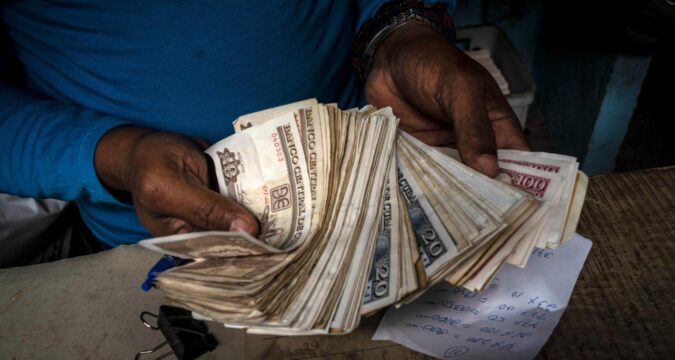
Cuba defiende medidas que permitirán transacciones en dólares para estimular una economía en crisis
Por ANDREA RODRIGUEZ
LA HABANA (AP) — Funcionarios cubanos defendieron el viernes un paquete de medidas financieras que permitirán transacciones en dólares en operaciones y actividades comerciales, principalmente las exportaciones, en un esfuerzo por estimular una economía en crisis.
Las medidas —publicadas esta semana en la Gaceta Oficial— buscan “dinamizar la actividad económica e incrementar los ingresos externos”, dijo el viernes en una entrevista con The Associated Press Ian Pedro Carbonell, director de Políticas Macroeconómicas del Banco Central de Cuba (BCC).
El conjunto de cuatro nuevas leyes dadas a conocer y que entrarán en vigor el 17 de diciembre tiene como objetivo incrementar la entrada de divisas extranjeras, estimular la producción nacional de bienes y los servicios, hasta lograr que la situación económica permitan que el peso cubano vuelva a ser la única moneda de curso legal en el país, detalló el texto de la norma.
Las normas aplican para las personas naturales y jurídicas que realizan operaciones de negocios, pero no para la población.
Cuba sufre actualmente una dramática crisis económica que se profundizó a partir de la paralización por la pandemia de COVID-19 y un incremento de las sanciones de Estados Unidos que según las autoridades cubanas buscan un cambio de modelo político en la isla y que han ocasionado desde desabastecimiento de alimentos y medicinas, hasta una migración récord.
En paralelo, en 2021, las autoridades lanzaron una reforma financiera de unificación monetaria –entonces había dos monedas emitidas por Cuba: el peso nacional y el CUC en paridad del dólar–, que disparó la inflación y el déficit público agudizando la crisis.
Ahora lejos de aquella ansiada unificación de monedas y tasas de cambio, existen varias de estas últimas, por ejemplo oficialmente el Estado cotiza a 24 pesos cada dólar para empresas, a 120 pesos para personas naturales y en el mercado negro cada dólar se paga a 440 pesos.
Los salarios son en pesos cubanos, per o mucho del abastecimiento doméstico se consiguen en dólares, incluyendo el combustible y alimentos.
El paquete de medidas de esta semana establece desde qué actividades económicas pueden operar en divisas extranjeras, cómo se trabajarán sus cuentas y las condiciones para el ingreso de los recursos, entre otros.
Las autoridades prometieron que habría un mercado cambiario oficial de tasa flotante hace meses y que entraría en vigor este año, pero hasta ahora no se sabe la fecha exacta.
Pese a haber oficializado estas operaciones en moneda extranjera, Carbonell explicó que el objetivo del gobierno es recuperar las funciones de la moneda nacional.
“Eso es un proceso que no es de golpe, en las condiciones de la economía cubana ir a una unificación cambiaria… de golpe, realmente sería catastrófico”, señaló.
“La dolarización es una medida de carácter transitoria”, expreso, por su parte, a la AP Suset Rosales, directora general de Planificación del Ministerio de Economía y para quien aunque el paquete de medidas de este semana no se aplica a la población directamente, sí la beneficiaría en la medida que incremente “los ingresos externos y los niveles productivos del país”.
Las dudas sobre las medidas no se hicieron esperar.
“El gobierno cubano institucionaliza, regula y amplía la dolarización parcial de la economía, y crea las bases para un mercado cambiario y acceso a las divisas con una alta carga de decisiones centralizadas y espacios para la discrecionalidad”, escribió el economista Pavel Vidal, del no gubernamental Observatorio de Monedas y Finanzas de Cuba (OMFi).
Vidal y algunos otros dijeron que no estaba claro para ellos cómo se autorizaría y a quién el uso de divisas, lo cual podría desestimular a los emprendedores.
“Persistir en la dolarización parcial es un craso error de política económica”, comentó en redes sociales el economista cubano Maricio De Miranda, profesor de la Pontificia Universidad Javeriana en Cali.
Para el experto es un “golpe de muerte” para el peso cubano, no solucionará realmente el problema de la parálisis de producción nacional y al final encarecerá los productos para la población.