Category: News
Seized Tanker Reveals Cuba’s Secret Oil Lifeline As Trump Turns To Gunboat Diplomacy
Seized Tanker Reveals Cuba’s Secret Oil Lifeline As Trump Turns To Gunboat Diplomacy
Secretary of State Marco Rubio has realized that it is all about following the money. If the U.S. military posture in the Caribbean is one of “gunboat diplomacy” aimed at ushering in regime change in Caracas, Venezuela’s capital, against the country’s autocratic leader, Nicolás Maduro, then one way to accelerate regime instability is to weaken Cuba materially.
During President Trump’s first term, there was a brief moment in which the Maduro regime appeared close to being overthrown, but it was countered by support from Cuba. According to The New York Times reporters Michael Crowley and Edward Wong, that failure frustrated Trump, his advisers, and then Senator Rubio, who had backed regime change.
“Their theory of change involves cutting off all support to Cuba,” said Juan S. Gonzalez, who was President Joe Biden’s top White House aide for Western Hemisphere affairs. “Under this approach, once Venezuela goes, Cuba will follow.”
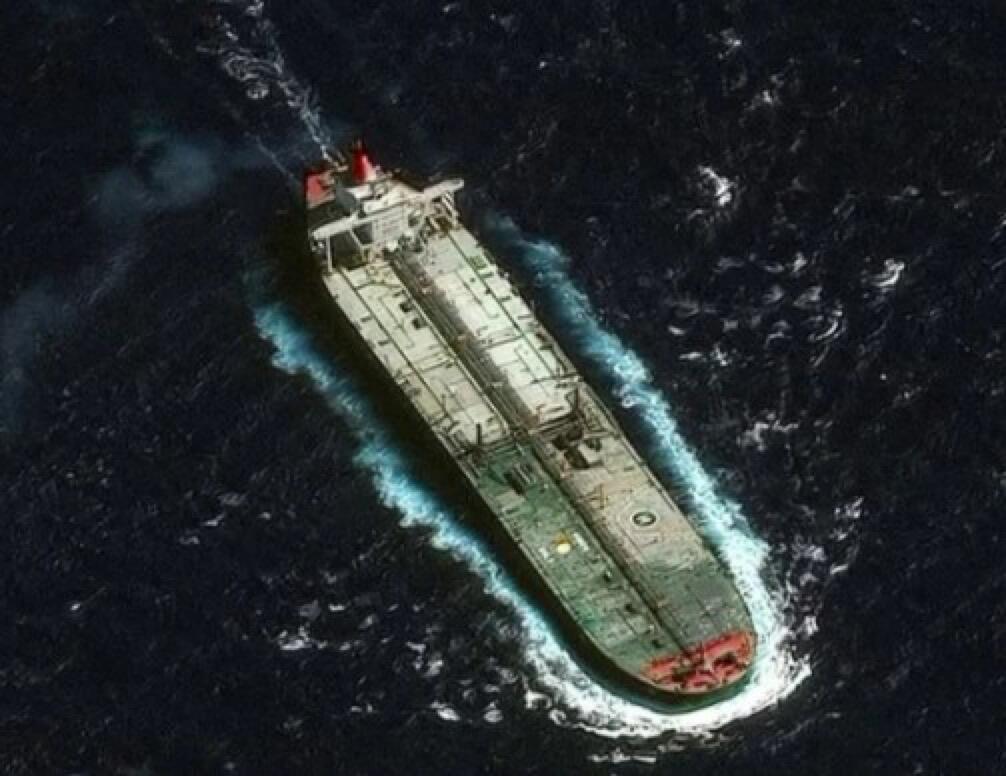
In a separate NYT report, journalists Anatoly Kurmanaev, Nicholas Nehamas, and Farnaz Fassihi explained that the seized tanker Skipper, which was carrying crude contracted by Cubametales, Cuba’s state-run oil trading firm, is a critical part of how Cuba benefits from its oil trade with Venezuela.
The reporters cited internal data from Venezuela’s state oil company, PDVSA, showing that Skipper’s destination was listed as the Cuban port of Matanzas.
They continued:
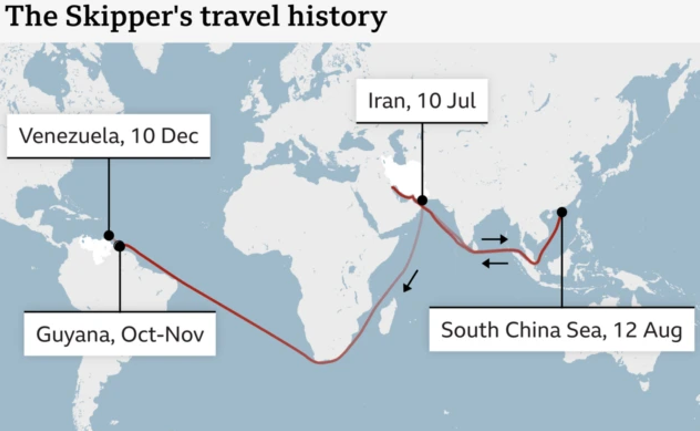
Two days after its departure, Skipper offloaded a small fraction of its oil, an estimated 50,000 barrels, to another ship, called Neptune 6, which then headed north toward Cuba, according to the shipping data firm Kpler. After the transfer, Skipper headed east, toward Asia, with the vast majority of its oil on board, according to a U.S. official briefed on the matter.
President Nicolás Maduro of Venezuela and his predecessor, Hugo Chávez, have for decades sent oil to Cuba at highly subsidized prices, providing a crucial resource at low cost to the impoverished island.
In return, the Cuban government over the years has sent tens of thousands of medics, sports instructors, and, increasingly, security professionals on assignments to Venezuela. That exchange has assumed special importance as Mr. Maduro has leaned on Cuban bodyguards and counterintelligence officers to protect himself against the U.S. military buildup in the Caribbean.
In recent years, however, only a fraction of Venezuelan oil set aside for Cuba has actually reached the island, according to PDVSA documents and tanker tracking data. Most of the oil allocated for Cuba has instead been resold to China, with the money providing badly needed hard currency for the Cuban government, according to multiple people close to the Venezuelan government.
And noted Panamanian businessman Ramón Carretero is at the center of the Venezuela-Cuba oil flow:
The main person managing the flow of oil between Cuba and Venezuela is a Panamanian businessman named Ramón Carretero, who in the past few years has become one of the largest traders of Venezuelan oil, according to PDVSA data and people close to Venezuela’s government.
The U.S. Treasury Department imposed sanctions on Mr. Carretero on Thursday for “facilitating shipments of petroleum products on behalf of the Venezuelan government.” Mr. Carretero, through a legal representative, declined to comment on the government’s decision. He did not respond to detailed questions for this article.
Mr. Carretero’s role as an economic intermediary between Cuba and Venezuela was first reported by Armando.info, a Venezuelan investigative news outlet.
Skipper was also part of Iran’s dark tanker fleet:
Before shipping Venezuelan oil, Skipper spent four years as part of Iran’s covert fleet, transporting Iranian oil to Syria and China, according to data from Kpler, the shipping data firm, and a senior Iranian oil ministry official, who discussed sensitive issues on condition of anonymity.
What’s likely happening is that the Trump administration is in the early innings of disrupting large volumes of crude that flow from Venezuela to Cuba to China. That strategy could trigger falling dominoes across the region, pushing Cuba’s economy deeper into collapse while also meaningfully weakening Venezuela and tipping the balance of power away from Maduro.
So far, Beijing has yet to lash out over the Skipper seizure and the resulting disruptions to crude flows to Asia. One has to wonder whether Bessent worked out a secret deal with Beijing; otherwise, this type of maneuvering by the Trump administration risks triggering turmoil that could derail any upcoming Trump-Xi talks.
Tyler Durden
Sat, 12/13/2025 – 09:55

24-year-old man fatally wounded overnight in Humboldt Park
A 24-year-old man was fatally wounded early Saturday morning in the Humboldt Park neighborhood, Chicago police said.
Shortly after 3 a.m., officers responded to a call of someone shot in the 700 block of North Lawndale Avenue. A 24-year-old man had suffered a gunshot wound to the chest and was dropped off by his friends to Stroger Hospital where he was later pronounced dead.
Police said the witnesses were uncooperative with providing the circumstances leading up to the fatal shooting.
No one was in custody and detectives were investigating.
https://www.chicagotribune.com/2025/12/13/man-fatally-wounded-humboldt-park/

Trump Team Denies Leaked ‘Secret Plan’ To Break EU Nations Away From Brussels’ Grip
Trump Team Denies Leaked ‘Secret Plan’ To Break EU Nations Away From Brussels’ Grip
Authored by Thomas Brooke via Remix News,
The Trump administration’s new National Security Strategy was published last week, setting out the U.S.’s broad foreign policy direction for the remainder of his term. It focused on ending what it calls a “perpetually expanding NATO,” establishing “conditions of stability within Europe,” and encouraging European allies to “stand on [their] own feet” in security matters.
The document also warned that Europe faces “civilizational erasure,” citing migration, censorship of speech, declining birthrates, and what it described as a loss of national identity and self-confidence.
Days after the official release, however, the Defense One website reported that a longer, unreleased version of the NSS had circulated in Washington. According to the site, the unpublished version contained far more explicit political goals for reshaping Europe’s future and reducing the influence of the European Union. Defense One wrote that the extended draft urged the United States to “Make Europe Great Again,” proposing that Washington realign its attention toward a select group of governments ideologically closer to the Trump administration.
The unpublished version, Defense One reported, stated that Austria, Hungary, Italy, and Poland were countries the United States should “work more with… with the goal of pulling them away from the [European Union].” It also said the United States should support “parties, movements, and intellectual and cultural figures who seek sovereignty and preservation/restoration of traditional European ways of life… while remaining pro-American.”
There is a longer, unpublished version of the NSS in which the Trump administration sees Austria, Hungary, Italy, and Poland as core partners for the future, but the US will also attempt to pull them away from the EU.https://t.co/3jl9ZhjImw pic.twitter.com/42WLqqSngm
— Ralph Schoellhammer (@Raphfel) December 10, 2025
None of this language appears in the officially released NSS, which focuses instead on broader themes of strategic stability with Russia, the need for Europe to regain its self-confidence, and continued American support for democracy and free expression. The official document argues that Europe’s loss of confidence is particularly visible in its approach to Russia. It states, “Managing European relations with Russia will require significant U.S. diplomatic engagement, both to reestablish conditions of strategic stability across the Eurasian landmass, and to mitigate the risk of conflict between Russia and European states.” It adds that stabilizing the continent will require “an expeditious cessation of hostilities in Ukraine” to prevent escalation, restore stability, and support Ukraine’s survival as a viable state.
The text also warns that the war has increased Europe’s exposure to external dependencies, particularly Germany’s, and criticizes what it describes as unrealistic expectations held by some European officials. It concludes that despite Europe’s internal crises, the continent remains strategically and culturally vital to the United States. America, it says, “encourages its political allies in Europe to promote this revival of spirit,” asserting that the growing influence of patriotic European parties “gives cause for great optimism.”
After the Defense One report appeared, the White House moved quickly to deny the existence of any longer or alternative NSS. Spokeswoman Anna Kelly said, “No alternative, private, or classified version exists. President Trump is transparent and put his signature on one NSS that clearly instructs the U.S. government to execute on his defined principles and priorities.” She added that “any other so-called ‘versions’ are leaked by people distant from the President who, like this ‘reporter,’ have no idea what they are talking about.” Her reference to leaks suggests that other versions of the report may have been discussed, albeit not endorsed or included in the final publication.
Speaking to the American Conservative website about the strategy report, Krzysztof Bosak, a Polish MP, leader of the right-wing Confederation, and deputy speaker of the Sejm — Poland’s lower parliamentary chamber — said, “I can’t say that I disagree with anything there. It’s a continuation of Vice President J.D. Vance’s Munich [Security Conference] speech, which I agreed with completely.
“Maybe Europe needs a shock from our good old friend America to start a true debate, because there was no debate in the European mainstream. In America, you have both sides of the political spectrum. In Western Europe, there’s only one side. If you have politically incorrect views, you can find yourself in prison, because you said too much, for example, in England or sometimes in Germany,” he added.
Italian newspaper La Repubblica also reported on the Defense One findings, highlighting the claim that the United States planned to use Italy, Austria, Hungary, and Poland “as tools to dismantle the European Union” by drawing them into a broader, ideologically aligned group. It noted Defense One’s summary that the unpublished draft viewed Europe’s immigration policies as driving an “erasure of its civilization,” and that Washington should engage with European actors seeking “sovereignty” and the restoration of traditional ways of life.
La Repubblica separately noted that Matt Schlapp, chairman of the Conservative Political Action Conference (CPAC), recently expressed interest in holding a major CPAC event in Italy to promote a sovereignist agenda. While government sources suggested a lack of enthusiasm, Schlapp told the newspaper, “We will get it done.”
CPAC has grown in stature among European conservatives in recent years, most notably in Hungary, where its annual event in Budapest now attracts major players, both from Europe and across the Atlantic.
Tyler Durden
Sat, 12/13/2025 – 09:20

1 in custody after a 39-year-old man was critically wounded overnight
A person was arrested overnight after a 39-year-old man was critically wounded in the Grand Crossing neighborhood, Chicago police said.
Officers responded to a call of someone shot around midnight in the 6600 block of South Stewart Avenue. The victim was involved in an argument that turned into a fight when a firearm was pulled and he was shot, police said.
The victim suffered a gunshot wound to the chest and he was taken to UChicago Medicine where he was listed in critical condition, police said. The gunman was taken into police custody.
Charges were pending while detectives investigate, police said.

Child, 10, found safe Friday night after being in back seat of stolen vehicle
A 10-year-old child was found safe after being in the rear sit of a vehicle stolen Friday night in the Grand Crossing neighborhood on the South Side, Chicago police said.
Shortly before 11:30 p.m., a 30-year-old man exited his running vehicle in the 7300 block of South Lafayette Avenue where a 10-year-old child sitting in the back seat. When the man returned he saw two people enter his car and flee the scene.
A description of the vehicle was sent over police scanner radio and a short time later the stolen vehicle was discovered in the 7400 block of South Stewart Avenue with the child inside, police said.
No injuries were reported, and no one was in custody.
Detectives were investigating.
https://www.chicagotribune.com/2025/12/13/child-safe-stolen-vehicle30633660/
Ukraine War Comes To… The Caspian Sea
Ukraine War Comes To… The Caspian Sea
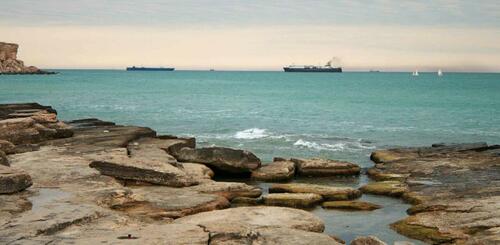
Ukraine has extended the war to a far flung body of water and unexpected place. Ukraine’s military has newly revealed that its special forces conducted successful operations against Russian oil, military, logistics assets in the Caspian Sea.
The Caspian Sea is some 700 miles from the front lines in Ukraine, and is the world’s largest inland body of water, which is bordered by Russia and Kazakhstan to the north and Iran to the South, among other small countries.
Ukraine revealed Thursday its long-range drones targeted and hit major offshore oil platform in the Caspian Sea. The offshore oil field run by Lukoil had to effectively halt production, according to Oil Price. It is said to be the single biggest oil field in the Russian sector of the Caspian.
The Security Service of Ukraine (SBU) said its forces targeted the Vladimir Filanovsky field which lies in the northern sector of the sea. Four drones reportedly struck the offshore platform, causing a stoppage over over 20 wells.
“This is Ukraine’s first strike on Russian infrastructure related to oil production in the Caspian Sea,” a Ukrainian official told CNN. The person described “another reminder to Russia that all its enterprises working for the war are legitimate targets.”
In parallel, Ukraine’s special forces are touting that an additional operation has taken place: it says it struck two Russian military-linked ships in the Caspian Sea near Kalmykia – a republic in southern Russia, north of the North Caucasus.
The vessels have since been identified as the Composer Rakhmaninoff and the Askar-Sarydzha, which are both sanctioned by the Washington for transporting military cargoes between Iran and Russia.
Apparently in this case, Ukraine had help from a local proxy militia group, per Ukrainian media:
Ukrainian Special Operations Forces (SSO) said they carried out a joint operation with the insurgent group Chornaya Iskra (“Black Spark”), targeting two Russian vessels close to Russia’s Kalmykia coast. The ships were identified as the Kompozitor Rakhmaninov and Askar Sarydzha. Both had been sanctioned by the US…
International monitors have indicated that between August and the end of November of this year, Ukraine has struck nearly 80 Russian energy facilities in total.
Next big news, for the 2nd successive day, is from the Caspian Sea.
Ukraine says it’s hit 2 more Russian ships on intnl sanctions lists, off the coast of Kalmykia which I highlighted on the map. Kyiv says the “Kompositor Rachmaninov” + “Askar-Sarydzha” were transporting weapons pic.twitter.com/sp4TEYMwxy
— Tim White (@TWMCLtd) December 12, 2025
Kiev is desperately trying to play the only card it has – choking off energy revenue and funding for Russia’s war machine. But so far the Kremlin has weathered the storm, but still may feel the squeeze down the line – especially amid slowed repair efforts given the sheer volume of incidents.
Russia has taken desperate measures, even draping refineries and oil depots with giant netting – or else ramping up ground anti-drone forces. But throughout the war, small long-range drones have proven devastating and able to oftentimes penetrate even the most sophisticated defensive measures.
“What used to be occasional strikes meant to cause damage has become a sustained effort to keep refineries from ever fully stabilizing,” said Nikhil Dubey, senior refining analyst at data and analytics firm Kpler.
Tyler Durden
Sat, 12/13/2025 – 08:45
https://www.zerohedge.com/energy/ukraine-war-comes-tocaspian-sea
France’s Fiscal Death Spiral: A Nation Incapable Of Reform
France’s Fiscal Death Spiral: A Nation Incapable Of Reform
Submitted By Thomas Kolbe
What is now unfolding in France may soon drag the entire Eurozone into deep turmoil. The country is staggering through a fiscal crisis while locked in a political stalemate that seems impossible to break. In the bond market, the clock is ticking loudly as France’s public debt spirals out of control.
This week, Prime Minister Sébastien Lecornu celebrated a textbook Pyrrhic victory. On Tuesday, the National Assembly narrowly approved his draft for next year’s social budget. But the win came at a steep price: sweeping concessions that will only worsen an already explosive fiscal situation.
Strange coalitions
With 247 votes in favor, 234 against, and 93 abstentions, the Assembly passed a plan projecting a €20 billion deficit in the social budget – significantly worse than the originally planned €17 billion. Marine Le Pen’s party and the far-left bloc around Jean-Luc Mélenchon both rejected the proposal.
It is surreal: political gridlock has driven France into a place where the far-left and the right vote together – and collectively push the government toward collapse. For President Emmanuel Macron, this could soon mean assembling yet another fragile government, as there is no indication France can lift itself out of its catastrophic stalemate.
The bill now moves to the Senate, where the governing coalition holds a majority. It will likely pass without major obstruction. On December 23rd, the Senate begins negotiations for the 2026 budget. It may provide drama, but no one seriously expects the political blockade to change.
Pension reform on ice – permanent reform paralysis
Lecornu was forced to freeze the planned pension reform, which would have raised the retirement age from 62 to 64. Instead, France will raise it only to 62 years and nine months. The country maintains the largest social budget in the EU while keeping one of the lowest retirement ages. Once again, France sidesteps its growing pension crisis, following Germany down the same dangerous path of a collapsing pay-as-you-go system. Paris also refuses to address the fiscal consequences of illegal migration – a social time bomb whose fuse is already burning.
This decision exposes the deep political denial embedded in France’s leadership: they continue living at the expense of future generations, consuming economic substance that no longer exists. France has become fundamentally incapable of reform and is drifting straight into a severe fiscal crisis.
This year’s budget deficit is roughly 5.6% of GDP. The government’s wildly optimistic projection for next year is 5%. With huge gaps in the social accounts, no one can explain how this number could be reached. It is pure fantasy. A far more realistic expectation is a deficit between 6% and 7%.
France’s political crisis mirrors its economic paralysis. Economic productivity has been shrinking for years. With a state share of 57% of GDP, the government blocks the free allocation of capital and absorbs the very resources required to revive the economy. France has never been comfortable with market economics and now, like a Siamese twin of Berlin’s disastrous policies, pushes central planning deeper into the economy.
Economic ossification
With 68,000 corporate insolvencies over the past twelve months and an industrial sector stuck in contraction, the country is heading directly into a severe social crisis – already reflected in an inescapable fiscal trap.
France is experiencing a bankruptcy wave of biblical proportions, likely costing 400,000 jobs this year. The economy is on its knees, and the French retreat into the illusion that endless debt can somehow restore their welfare system.
We have seen what this means for Eurozone stability: fifteen years ago, tiny Greece lost access to markets and triggered a debt crisis that spread like wildfire across Europe.
Back then, the credibility of Eurozone monetary policy was sacrificed to keep the highly interconnected credit markets liquid through massive ECB intervention and years of bailouts.
If the Eurozone’s second-largest economy experiences an “air pocket” on its bond market – a sudden collapse in demand for its swelling debt issuance – the traditional toolkit of the European Central Bank will not be enough to contain the fallout.
A secular shift in global bonds
In an acute crisis, the ECB would be ready to intervene. Its main tool would be sovereign bond purchases under the PSPP (Public Sector Purchase Programme). Additional liquidity could be injected through targeted long-term refinancing operations or via support for banks holding large volumes of French sovereign debt.
The Outright Monetary Transactions (OMT) program could also be activated, allowing direct purchases of crisis-country bonds – though only under strict fiscal-conditionality rules. But in the next crisis, those conditions will almost certainly be ignored to prevent the Eurozone from disintegrating. The ECB already provided the playbook when Mario Draghi uttered his famous “whatever it takes.”
Yet the ECB’s actual influence has limits: the long end of the bond market – maturities beyond ten years – is the deepest and most liquid segment. No single central bank can truly control it.
For months, long-term yields have been rising – first in Japan, now increasingly across parts of the Eurozone. The market is signaling a fundamental loss of confidence in the debt sustainability of fiscally undisciplined states.
A secular turning point in global bond markets has already occurred. At its climax, it will mark the final full stop on every pending fiscal crisis. Think Argentina. The age of the chainsaw is approaching.
Tyler Durden
Sat, 12/13/2025 – 08:10
https://www.zerohedge.com/political/frances-fiscal-death-spiral-nation-incapable-reform

Europe Continues To Interfere In Ukraine’s Last Chance For Peace
Europe Continues To Interfere In Ukraine’s Last Chance For Peace
For those who understand the basics of attrition warfare, the outcome of the fight in Ukraine was obvious a long time ago. Russia’s superior logistical position along with its grinding offensive tactics have worn down Ukraine’s defenses and left the country with a desperate manpower shortage. The recent capture of the vital hub of Pokrovsk has now opened the door to an accelerating Russian advance.
The Russian offensive is gaining significant ground from Pokrovsk to the north, all the way to Kupiansk. The strategic city of Siversk is now largely under control of Russia according to geo-location mapping. Myrnohrad, also near Pokrovsk, has been flattened by artillery and FABs.
Ukraine’s ability to stall Russian forces is faltering, allowing the Kremlin to move troops in a swift manner closer to maneuver warfare instead of the slow and methodical process of attrition. Ukraine continues to deny they are in trouble, but the writing is on the wall.
This helps to explain Europe’s sudden interest in “peace negotiation”, but not for the purposes of establishing actual peace. First and foremost, we know Europe is not interested in peace because they largely refuse to engage directly with Putin and Russia in negotiations.
Instead, European leaders continue to pretend as if they can establish a peace deal unilaterally without involving the Kremlin. They have also consistently tried to sabotage Donald Trump’s efforts for a quick resolution by deluding Zelensky with promises of access to Russian assets.
The Europeans have in fact announced their plan to confiscate Russian assets that have been frozen since the beginning of the war, using them to help fund Ukraine’s military and infrastructure. Trump had initially planned to use those assets as a bargaining chip to convince the Russians to support his peace plan.
Zelensky and European officials have spoken often about sustaining the war for at least another two years, which is foolish given the current state of Ukraine’s front lines. Russia does not need to conquer vast swaths of territory to win, all Russia needs to do is kill Ukrainian troops until there aren’t enough left to maintain a proper defensive line. After that, Zelensky will lose the whole country, not just the eastern third.
Europe also continues to push for troop deployments, using NATO as a “peacekeeping force” as part of the negotiations. Putin has repeatedly stated that this would lead to wider war. After all, it was the encroachment of NATO into Ukraine over a decade ago that ultimately triggered the current war.
In a recent admission, Trump asserted that there will be no more handouts from the US to Ukraine, ending speculation on whether or not the hundreds of billions of dollars in US aid would continue under his administration. The statement comes just after Trump’s revelation that Zelensky “had not even read the US peace proposal” despite other Ukrainian officials supporting the plan.
NATO and EU leaders claim that Russia is in financial peril due to sanctions and other measures, but there isn’t enough evidence to support this theory. Russia has seen a slowdown in GDP and PMI, but so has 70% of all other national economies in the face of a global decline in economic activity.
Ukraine drone strikes on Russian infrastructure have been increasingly ineffective. Their most recent attack involved nearly 300 drones with minimal success. Ukraine called for a truce on attacks on energy infrastructure, indicating that their strikes are not doing as much damage as they would like. The Kremlin rejected the offer.
🚨🇬🇧 “The Defence Minister said – the UK is rapidly developing plans to prepare the whole country for war”
“The sense that war isn’t that far away from us – what does that do to people here?”
EU & UK Politicians along with NATO have seriously been ramping up the wartime… pic.twitter.com/N4DUWlptbS
— Concerned Citizen (@BGatesIsaPyscho) December 13, 2025
It would appear that the Europeans are trying to use peace negotiations as a way to stop Russia’s advance, arguing that there can be no peace until Russia agrees to a ceasefire. As any tactician knows, ceasefires are often nothing more than a way to stall an offensive in order to gain an advantage over an enemy who thinks you are sincere.
Europe’s behavior indicates they have no intention of ending the war. Instead, they seem hellbent on expanding the conflict and turning it into a world war.
Tyler Durden
Sat, 12/13/2025 – 07:35
https://www.zerohedge.com/geopolitical/europe-continues-interfere-ukraines-last-chance-peace

New Lenox Library opens care cabinet with essential items and Narcan, no questions asked
Michelle Krooswyk says the New Lenox Public Library meets far more than literary needs and its most recent initiative, a library cabinet, is offering support for people who might be scared to ask for help directly.
The care cabinet, which opened Dec. 4 in the library lobby, provides free resources such as shower products, deodorant, toothpaste, gloves, chap stick, first-aid supplies, socks and Narcan, said Krooswyk, the executive director. The initiative was funded by a $1,000 grant from the Friends of The New Lenox Library.
Krooswyk said the cabinet was scheduled to open in January 2026, but Melissa Seaberg, administrative library coordinator, requested moving the opening to December after lower-income residents began facing cuts to needed federal programs, such as food benefits in early November.
Krooswyk said she wants the community to be able to rely on the library in times of need and said, while not a social service agency, library staff can connect people to assistance.
“There’s people from all walks of life that come here, and no matter who you are, as long as you behave yourself, we want to be welcoming to you and we want to support you,” Krooswyk said.
Seaberg said the idea is allowing people can receive assistance without judgement and with no questions asked, which she said helps people get what they need in a dignified way. She said sometimes asking for help can be a sensitive topic.
The cabinet has already make an impact, Seaberg said. She said many items have been depleted, especially lip balm, gloves, deodorant and toothbrushes, which she said demonstrates the community need.
The library also partnered with the Heroin Epidemic Relief Organization, a group dedicated to combating the opioid epidemic, to distribute Narcan, the brand name for naloxone, a medication used to rapidly reverse the effects of an opioid overdose.
Krooswyk said Heroin Epidemic Relief Organization reached out to the library when officials heard about the care cabinet and offered Narcan packages at no cost. Krooswyk said the medication can be life saving, and she encouraged people to attend a training on Narcan.
Krooswyk said the community’s support has been overwhelming, so much so that people started filling the cabinet with their own supplies from home, and Krooswyk said the library had to begin regulating donations.
The New Lenox Public Library’s care cabinet offers shower products, deodorant, toothpaste, gloves, chap stick, first-aid supplies, socks, Narcan and more. (Addison Wright/Daily Southtown)
The library staff would prefer people not directly place donations in the care cabinet, because they want to make sure the items are hygienic. They also want to place items in gift bags, Krooswyk said.
She said people can donate to the care cabinet through a monetary donation at newlenoxlibrary.org or through the Amazon wish list.
Krooswyk said the inspiration came when the Rock Island Public Library presented about its care cabinet at a meeting for PrairieCat, a large, shared library technology system and consortium for more than 130 public, school, academic and special libraries.
“We are always trying to share ways or give ideas that, you know, this worked at my library here, try this,” Krooswyk said. “So it’s very collaborative and that’s one of the great things that I’ve seen working in libraries for almost 25 years. We just like to find and share ways to support the community.”
Krooswyk said she and other New Lenox library staff chose to launch the cabinet after the summer season, which she said is the library’s busiest time. When they moved up the launch date to December, she said she was amazed by the speed Seaberg got everything together. Seaberg ordered the cabinet, the bins and supplies.
Seaberg also started a fundraiser for people to donate and enter a chance to win one of the library’s six crocheted holiday kittens. Seaberg said the idea came from a joke with another library staff member about there being a mysterious library kitten, which Seaberg said she embraced as the library’s mascot.
Seaberg crocheted several small kitten-like characters, such as the gingerbread kitten and snowman kitten, and posted photos of these kittens on the library’s website. She said she was surprised by the community’s interest and said she wants to continue it quarterly with different themes, such as summer kittens.
New Lenox Library administrative coordinator Melissa Seaburg crocheted holiday cat figurines to raise funds for the library’s new care cabinet. (Addison Wright/Daily Southtown)
“We’re just trying to find fun lighthearted ways of just being different and interesting and letting people know that we’re welcoming, and it should be a fun experience if you come to the library,” Krooswyk said.
Krooswyk said other resources nonliterary resources include tech support for older adults, a warm space for unhoused residents, help for job seekers, a gathering space for homeschool families, tutoring for students, remote work space for businesses and even a place for people who just need someone to talk to.
The New Lenox library had a referendum in 2020 that asked voters to approve a 7-cent increase to the library district’s tax rate, continuing a levy from a $10 billion bond issue in 1999 for a new building.
“We’re really proud of that because we are being fiscally responsible, but also finding a way to sustain the library,” Krooswyk said.
Krooswyk said the care cabinet will be open indefinitely during library hours, and the crocheted cat fundraiser ends Dec. 16.
She also said the community can look forward to a new cafe space set to open in January and a winter reading program.
The library will celebrate its 25th anniversary next year. Krooswyk said staff plan to talk with the library board about more renovations because the building is 25 years old.
awright@chicagotribune.com
https://www.chicagotribune.com/2025/12/13/new-lenox-library-care-cabinet/

12 teams, 11 games — and 1 champion: A guide to the College Football Playoff
The 12-team College Football Playoff bracket is set, and the games begin on Dec. 19. The first round is hosted by the higher seed before the games shift to neutral sites.
Here is what you need to know.
Who is playing and what time are the games?
11 games are set between Dec. 19 and Jan. 19, and each will be broadcast nationally. Here’s how the first round shakes out.
No. 9 Alabama at No. 8 Oklahoma, Dec. 19, 7 p.m. (ABC, ESPN)
BetMGM College Football Odds: Oklahoma by 1.5
What to know: The CFP kicks off with an SEC rematch: The Sooners got the best of Alabama with a 23-21 road win in mid-November. Oklahoma’s defense led the charge, helping OU score 17 points off three turnovers, one of which was an 87-yard pick-six. Alabama comes off a lackluster SEC title game loss to Georgia. Quarterback Ty Simpson and Alabama’s offense will look for redemption against one of the nation’s top defenses while Oklahoma’s John Mateer will try to continue his storybook season.
The winner: Advances to the Rose Bowl to play No. 1 Indiana.
No. 10 Miami (Fla.) at No. 7 Texas A&M, Dec. 20, 11 a.m. (ABC, ESPN)
BetMGM College Football Odds: Texas A&M by 3.5
What to know: Texas A&M and Miami meet for the sixth time overall and first time in two years. The Aggies and Hurricanes were the only teams to knock off Notre Dame this year, which played a major factor in Miami earning a CFP bid and the Irish being left out. The Hurricanes stumbled with a pair of bad conference losses but bounced back with four straight wins to end the season. Texas A&M had a perfect season up until the very last week, when they lost 27-17 to in-state foe Texas.
The winner: Advances to the Cotton Bowl to play No. 2 Ohio State.
No. 11 Tulane at No. 6 Ole Miss, Dec. 20, 2:30 p.m. (TNT, HBO Max)
BetMGM College Football Odds: Ole Miss by 17.5
What to know: Tulane punched its playoff ticket with a 34-21 American Conference championship win against North Texas. The Green Wave heads to Oxford to face Ole Miss for the second time this season. The two last met in September, and Ole Miss cruised to a 45-10 victory. The Rebels will be without head coach Lane Kiffin, whose request to lead the team before he leaves for LSU was turned down.
The winner: Advances to the Sugar Bowl to play No. 3 Georgia
No. 12 James Madison at No. 5 Oregon, Dec. 20, 6:30 p.m. (TNT, HBO Max)
BetMGM College Football Odds: Oregon by 21.5
What to know: James Madison’s trip to the CFP accounts for several firsts. It marks the Dukes’ first time in the playoff, it will be the first time James Madison and Oregon meet in football and JMU made history with Tulane as the CFP has two Group of Five teams for the first time. The Dukes were crowned Sun Belt champions with a 31-14 win against Troy, finishing the season with a 12-1 record. Oregon finished third in the Big Ten with an 11-1 record. The Ducks’ only loss of the season was to Indiana in October.
The winner: Advances to the Orange Bowl to play No. 4 Texas Tech.
Who are the favorites?
Ohio State is the betting favorite with plus-225 odds (9-4) to win the national championship for the second straight year, according to BetMGM Sportsbook. Indiana (+275, or 11-4) and Georgia (+500, 5-1) are next.
The rest of the odds: Oregon (8-1), Texas Tech (9-1), Texas A&M (17-1), Miami (22-1), Ole Miss and Alabama (both 25-1), Oklahoma (50-1) and Tulane and James Madison (each 500-1).
How does the playoff work?
A 12-member CFP selection committee finalized the highly anticipated bracket on Sunday, Dec. 7.
Five spots were reserved for the highest-ranked conference champions, regardless of their overall CFP ranking. Duke won the ACC championship but was left out because of its five losses, clearing a path for the two G5 schools (Tulane and James Madison).
This year, first-round byes were awarded using a straight-seeding approach. No. 1 Indiana, No. 2 Ohio State, No. 3 Georgia and No. 4 Texas Tech await opponents in the quarterfinals. The rest play first-round games on campus: No. 5 Oregon, No. 6 Ole Miss, No. 7 Texas A&M, No. 8 Oklahoma, No. 9 Alabama, No. 10 Miami, No. 11 Tulane and No. 12 James Madison.
The CFP began with four teams in January 2015 and was expanded to 12 teams before the start of the 2024 season.
How much money is at stake?
Each conference earns $4 million per team in the CFP bracket. The eight teams that advance to the quarterfinals earn their conference an additional $4 million. No. 1 Indiana, No. 2 Ohio State, No. 3 Georgia and No. 4 Texas Tech are already on the books for $8 million apiece as the top four.
The SEC has already accumulated $24 million, with five teams making the playoff and one already in the quarterfinals. With three teams in the bracket and two earning first-round byes, the Big Ten starts with $20 million.
Conferences earn an additional $6 million for teams advancing to the semis and another $6 million for making the finals. There’s also a $300,000 stipend per team that is academically eligible for the playoffs. Teams that make the playoff get $3 million to cover expenses for each round.
https://www.chicagotribune.com/2025/12/13/college-football-playoff-guide/