Category: News
Abren las mesas de votación para un polarizado balotaje presidencial en Chile
SANTIAGO (AP) — Abren las mesas de votación para un polarizado balotaje presidencial en Chile.

Richard C. Longworth: Donald Trump wants a resurgence in European nationalism
To fix what he sees wrong in Europe, President Donald Trump has prescribed the continent’s ancient and most lethal poison — nationalism.
Nationalism is a patriotism, a love of one’s own country, that has curdled into a hatred both of other countries and of minority groups at home. In the 20th century, nationalism was the driving force behind the two world wars that destroyed Europe. For 80 years since then, Europeans have worked, with considerable success, to leach this poison. Now Trump wants to return it to its prewar domination of European politics.
All this is in the Trump administration’s new national security strategy, a broad overview of America’s place in the world, its friends and enemies, its priorities and how to promote them. It sweeps across the planet, arguing for U.S. dominance in the Western hemisphere, promoting Vladimir Putin’s Russia not as an adversary but as a potential partner and, in general, truncating American foreign policy from its traditional goal of spreading and protecting democracy to a series of business deals. The main theme is “America First” — a nationalistic slogan if there ever was one.
Europe takes up only three of the document’s 33 pages, but they make frightening reading. Basically, Trump sees Europe committing “civilizational erasure.” By this, he means a “loss of national identities and self-confidence,” brought about mostly by immigration, which is transforming the continent. In the end, some “NATO members will become majority non-European.”
This is, obviously, pure racism, a frequent handmaiden of nationalism. It is the theory of the great replacement, a trope of American white supremacists in which white people become a minority in the United States, but was transported without shame to Europe.
This racist backlash is already a force in Europe, where parties such as the Alternative for Germany (AfD) and France’s National Rally threaten to become majority parties. It should be American policy to repel these neofascist germs: After all, when Europe went to war twice in the last century, the U.S. had to intervene, at huge cost in lives and treasure, to end the wars and restore decency.
A supporter of Rassemblement National (National Rally) rallies for Marine Le Pen, of the far-right French party, in Narbonne, France, on May 1, 2025. (Lionel Bonaventure/Getty-AFP)
But no. As the strategy paper says, the U.S. stands for “unapologetic celebrations of European nations’ individual character and history. America encourages its political allies in Europe to promote this revival of spirit, and the growing influence of patriotic European parties indeed gives cause for great optimism.”
In other words, what’s good for these neo-Nazi parties in Europe is good for the United States.
The great foe of these parties is the European Union itself, which Trump says undermines “political liberty and sovereignty” and promotes the Europeans’ open immigration policies. In fact, the EU is the most successful economic and political experiment of the past century, a union of 27 countries that stopped fighting each other and turned themselves into a continent of peace and real, if uneven, prosperity.
The purpose of the EU is to bury nationalism by submerging these countries into a larger union. It’s often misunderstood as just an economic union, a glorified trade bloc. In fact, its essence is historic, an attempt by its founders to overcome the continent’s tragic history, by uniting the economies of the member nations so they can never wage war on each other. Its unofficial motto has been “never again” — never again an Adolf Hitler, never again a Holocaust. From the start, the U.S. has backed this process and project, kick-starting it with the Marshall Plan and supporting it through its growing pains, simply because that goal — never again — was in our national interest, too.
Trump clearly understands none of this or, if he does, doesn’t care. What he wants is to run this country in the authoritarian model of Viktor Orbán’s Hungary, itself an awkward member of the EU. To this end, the poison of nationalism is his tool.
Richard C. Longworth is the former chief European correspondent for the Chicago Tribune and a distinguished fellow at the Chicago Council on Global Affairs.
Submit a letter, of no more than 400 words, to the editor here or email letters@chicagotribune.com.

Lady palm can perform well in your living room
I am looking for an easy-to-grow houseplant for my living room. I’d like something with green foliage to soften a corner.
— Lester Coleman, Riverwoods
I am a big fan of plants that are easy to grow since I do not have a lot of spare time, but like having houseplants around. The lady palm (Rhapis excelsa) is a small fan palm that can perform well indoors due to its tolerance of lower light intensity, lower humidity and colder temperatures that are typical of a home’s growing conditions. It grows from multiple stems — each topped with upright fronds (large, divided leaves). As the name implies, the fronds are split into fan-like segments. The lady palm is one of the best-suited of all the fan palms to indoor cultivation, so it would be a good choice for your home.
This plant grows best in bright, indirect light from a window or skylight all day long. They will slowly decline if the light is too low. Remove lower leaves on the fronds as they turn yellow and trim off brown tips while keeping the natural shape of the leaf as needed. Sharp scissors work well for this maintenance task. Palms lose inner and lower fronds in low light, so remove them as they thin out and begin looking bad. Avoid cutting back the tips of the stems, since that is where the growing points are located. Cut out the entire stem when most of the fronds have been pruned off. This will encourage new growth at the base of the plant if light conditions are adequate.
Lady palms are relatively slow-growing plants and need light fertilization that is best applied during the growing season. Use a slow-release fertilizer in spring or a biweekly diluted liquid fertilizer. A plant that has an overall yellowish color may need fertilizer. Avoid fertilizing during the winter. Water the palms thoroughly as they prefer to stay moist but not waterlogged. If the growing medium is kept too wet, root rot and damage will eventually show up in the foliage with browning tips or spotting on the new growth. Palms that are kept too dry can develop gray foliage and burned tips. Roots are typically clustered at the bottom of the container, so they may still be moist when the top of the medium is dry. Reduce watering to once a month or every other week, depending on temperature and light levels during the winter. Palms that are grown in low light levels require less watering year-round. Keep them out of cold drafts in the winter.
If the light levels are too low in the corner of your living room, the lady palm will slowly decline. Keep one plant in the corner and another in a sunnier location for rotating every couple of months. If you do not have a sunnier spot, I’d suggest buying a new plant as needed.
For more plant advice, contact the Plant Information Service at the Chicago Botanic Garden at plantinfo@chicagobotanic.org. Tim Johnson is senior director of horticulture at the Chicago Botanic Garden.
https://www.chicagotribune.com/2025/12/14/lady-palm-home-garden/

Editorial: Porch piracy is costly and frustrating. And Chicagoland is a hotbed of parcel theft.
You’ve probably seen those doorbell-camera videos of petty thieves dashing up to homes and swiping freshly delivered packages, sometimes getting caught in booby traps that end up covering them in paint. Porch pirates, as they’re known, might be a staple of Tiktok. But they get especially busy during the holiday season, preying on an astonishing number of victims across Chicagoland.
We recognize that such small-scale stealing does not rise to the level of serious crime by Chicago standards. Every week, gun violence claims multiple lives. Homicides, assaults and armed robberies have marred our city’s reputation worldwide.
But the theft of parcels from the doorsteps of honest citizens isn’t harmless either. Even though crime rates are declining overall, Chicagoland has the unfortunate distinction of being a leader in this annoying category of crime.
A recent survey from security company SafeWise pegs Chicago as the No. 1 metropolitan area for parcel theft, based on the financial toll it takes: the metro area apparently will lose an estimated $254 million in packages to porch pirates this year.
SafeWise, which has tracked package theft for eight years, estimates that American consumers will lose $15 billion to stolen packages in 2025, with retailers out another $22 billion. That’s below the more than $100 billion estimated annual loss from traditional shoplifting, but hardly pocket change.
A competing online survey by a different security company unearthed some interesting details. Fewer than 1 in 4 victims of package theft bother to report the crime to law enforcement, assuming correctly that the police aren’t going to stage a manhunt every time a package goes missing. Instead, most complain to the retailer or delivery services such as FedEx and UPS, according to the Security.org report.
Theft rates tend to be high in some rural areas and suburbs where security is looser than in cities. People living in apartments and condos without a doorman or mailroom are among the most vulnerable, as they attract thieves aiming to steal a bunch of packages at once.
What to do? There’s plenty of advice available, starting with the simple choice of buying stuff (or at least picking it up) in brick-and-mortar stores, as opposed to getting online orders delivered to the home. E-commerce is still growing, but it’s possible that frustration with package theft could be a factor in slowing it down.
E-commerce companies take porch pirates seriously enough to offer services such as Amazon Key, which lets drivers leave packages inside locked garages, doors or gates. That requires a lot of trust, however, compared to less-intrusive steps such as tracking a delivery to ensure someone is available to receive it.
Outdoor cameras and smart lighting have become very popular. They can also help solve crimes.
Chicago police Superintendent Larry Snelling told us recently that technology has revolutionized crime-fighting techniques. “We police differently now,” he said during a meeting with the Tribune Editorial Board in September. “Everything we do is intelligence-based. The use of technology is the key.”
During a separate session with the Tribune on Dec. 9, Cook County State’s Attorney Eileen O’Neill Burke said the prevalence of cameras has provided some of the best possible video evidence for convicting criminals. And she acknowledged that package thefts aren’t trivial, as they can make people feel unsafe, telling us, “There has to be a feeling of safety all over the system.”
You can say that again. Porch pirates, technology is gaining on you and your infuriating violations of our personal spaces. Keep your mitts off our baby formula, pet food, medication, work supplies, holiday presents and all the other packages arriving in the days ahead.
Submit a letter, of no more than 400 words, to the editor here or email letters@chicagotribune.com.
https://www.chicagotribune.com/2025/12/14/porch-pirates-theft-chicago-crime-amazon/

Aurora’s proposed campaign ethics reform measures moving forward with changes
Aurora Mayor John Laesch’s proposed campaign ethics reforms, which have been held for weeks, are now moving towards final approval with significant changes.
Under the current proposal, Aurora would cap at $1,500 per year donations made to candidates running for city office from those doing business with the city. It would also expand economic interest disclosures required of candidates and elected officials.
Recent changes to the proposal upped the donation limit from the originally-proposed $500 cap, removed further limits on cash donations and removed guidelines on how city property could be used for political purposes.
The donation limit was increased to be more in line with other cities, including Chicago, according to Aurora Chief of Staff Shannon Cameron. The guidelines for city property use were taken out to simplify things, since discussions around them got stuck in details that weren’t the “true meaning” of the ethics reforms, she said at the Aurora City Council’s Rules, Administration and Procedure Committee meeting earlier this month.
According to Laesch, the campaign ethics reform package was designed to increase transparency and “reduce the influence that outside money has on city contracts.”
But some aldermen have questioned if the new rules really would achieve that goal, particularly since there would be no limit on contributions from political figures or organizations, and others have voiced concerns about the potential increase in paperwork they said might come from the expanded disclosure requirements.
The proposed changes to city code were held at the Rules, Administration and Procedure Committee starting in October, but on Dec. 2 the committee again took the measure up for discussion and recommended it for approval. The proposal could go before the Aurora City Council for a final vote as early as Tuesday, potentially at a meeting that was rescheduled from Dec. 23.
If approved by the Aurora City Council, the city would limit contributions to candidates or elected officials from those doing business or looking to do business with the city to $1,500 per year. Counting towards the cap would be donations made by the business itself as well as any made by parent companies or subsidiaries, and in some cases donations made by employees themselves.
Those who do not follow these proposed rules could be barred from doing business with the city for up to four years.
Campaign ethics reform was a campaign promise for Laesch, who won the mayoral seat over former Mayor Richard Irvin in April. During the most recent campaign and in a previous unsuccessful run for mayor, Laesch claimed Irvin prioritized government contracts or incentives to those who donated to his campaign, which Irvin consistently denied.
Laesch has said he does not believe state law around campaign financing is strict enough. There aren’t restrictions for those doing business with the city, “which is where the appearance of ‘pay-to-play’ exists,” he previously said.
Also under Laesch’s proposed code changes, those in city office and those running for a city elected office would need to provide more information than what is typically required in economic interest filings.
That includes not only their occupation but also if their employer has ever done work for or received any financial assistance from the city of Aurora, all real estate they own within the city or nearby, any organizations or businesses they own, any city-funded or affiliated organizations they are involved with and any gifts they’ve received from those doing business with the city or looking to.
The filings would only need to be turned in once per year, rather than each quarter, and would continue to be available for the public to view online.
The proposal considers as a candidate anyone who has begun circulating petitions or has started receiving donations, according to Chief of Staff Cameron. Candidates then have 15 days to submit their disclosure statements to the city, she said on Dec. 2.
rsmith@chicagotribune.com
2 Illinois election board Democrats who blocked Senate President Don Harmon fines have ties to his donors
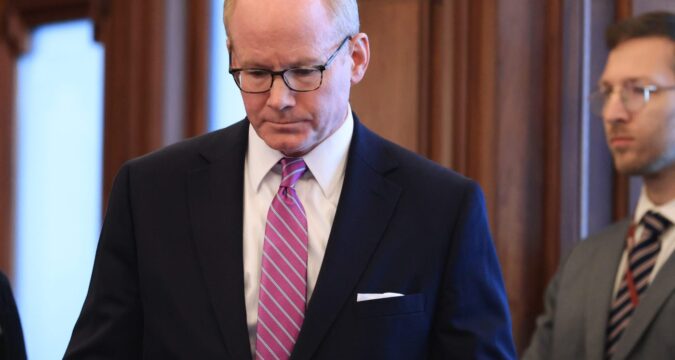
Two Democratic members of the Illinois State Board of Elections who helped block nearly $10 million in campaign fines against Democratic Senate President Don Harmon have political ties to organizations that contributed disputed, above-limit donations to Harmon and continued giving to him even as the case was pending before the board.
Vice Chair Rick Terven Sr., appointed in 2021, and board member Tonya Genovese, appointed in 2022, joined their two Democratic colleagues in October and November in rejecting penalties recommended by the board’s staff and an independent hearing officer against Harmon’s Friends of Don Harmon for State Senate campaign committee.
The board staff concluded Harmon violated state campaign law by collecting $4 million in unlimited contributions after fundraising caps he took steps to lift were reinstated, and they recommended Harmon’s campaign committee be fined $9.8 million. The action followed a Tribune inquiry to board officials about Harmon’s fundraising practices.
Related Articles
Illinois elections board remains deadlocked on Senate President Don Harmon fundraising case, drops $9.8M fine
Illinois Senate President Don Harmon faces potential $9.8 million fine for improperly accepting campaign cash
Illinois Senate President Don Harmon improperly accepted $4 million in campaign cash, election authorities say
A hearing examiner later rejected Harmon’s appeal. Still, the financial penalty was not imposed because the eight-member state panel repeatedly deadlocked 4-4 along party lines, short of the five votes required for final action. On Nov. 18, the board voted 5-3 to strike the matter from its docket. A separate complaint filed by the Liberty Justice Center, a libertarian-leaning group that frequently advocates for Republican causes, remains pending and could bring the matter to court.
At the center of the dispute is a loophole in Illinois campaign finance law that Harmon helped author.
Although Illinois law generally limits how much money politicians can raise from campaign contributors, the loophole allows candidates to accept unlimited contributions when facing wealthy, self-funded opponents. But many politicians, including elected legislative leaders like Harmon, have long used it to contribute money to their own campaigns and artificially lift caps, thereby building large political war chests to help themselves and loyal members in individual campaigns.
Harmon triggered the provision to lift the campaign caps by contributing more than $100,001 to his campaign in January 2023. At the time, Harmon indicated that he thought it allowed him to accept unlimited contributions throughout the November 2024 general election cycle. But board officials told him the loophole would close after the March primary, meaning any campaign contributions he received after the primary that exceeded the donation limits were prohibited.
Harmon was not a 2024 candidate but is on the ballot next year and contended that an election cycle runs until his office is up for election. Unlike state House members, who are up for election every two years, state senators run in staggered two- and four-year terms.
The $9.8 million in penalties proposed by the board staff included a payment to the state’s general fund equal to the more than $4 million election officials said Harmon raised in excess of the contribution limits, plus a nearly $5.8 million fine calculated based on 150% of that amount.
Among the contributions that the board staff flagged were donations from a labor union with connections to Terven and a law firm where Genovese works.
Even if the two had recused themselves, the sanction would still not have met the five-vote threshold for approval. But Terven and Genovese’s votes underscore that there is no formal conflict-of-interest policy for board members, although some members have recused themselves from matters if they had a relationship to an individual or organization with ties to a case.
Terven has a long history in organized labor, including previously directing all organizing, marketing and political activities for the Illinois Pipe Trades. He later became the legislative and political affairs director of the United Association of Plumbers, Pipe Fitters and Sprinkler Fitters and went on to become the international union’s executive vice president until he retired in 2017.
Terven’s son, Rick Terven Jr., is the $186,596-a-year lobbyist and political director for the Illinois Pipe Trades Association, according to U.S. Department of Labor records. The association represents 21 local unions and over 30,000 union members across Illinois and parts of Iowa and Indiana. Terven Jr. is also a member of Pipe Fitters Association Local 597 of Chicago. That local’s political action committee was noted by the elections board staff for giving Harmon $100,000 on Nov. 1 of last year, $31,500 above contribution limits, and Harmon’s committee was assessed a $47,250 fine.
Additionally, while the elections board was still debating the matter, the United Association of Journeymen & IL Pipe Trades Association PAC on Nov. 13 contributed $250,000 to the Friends of Don Harmon campaign committee, election board records show.
Overall, state election board finance reports show various entities of the pipe trades have given the Friends of Don Harmon committee more than $3 million since 2004, including $821,700 directly from the Illinois Pipe Trades Association PAC, where Terven Jr. is political director and $550,000 from the Pipefitters Local 597, where Terven Jr. is a member.
During the board’s Nov. 18 meeting, where it once again deadlocked on the issue, Terven Sr. made a point of noting his labor background. But he didn’t mention the labor contributions, and in voting against the Harmon fines, he said, “We as a board represent both sides of the aisle, and we must act impartially.”
“I worked in the past for my international union as their national political director and their executive vice president … and our general counsel have always advised me, when I was working for them under this premise, that our union was approximately 47% Democrat, 47% Republican and 6% independent, and we were successful at the end of the day by serving everyone fairly as I feel I am doing here today,” he said.
“To be honest, in my decision, most of this is common sense in the best interest for all the citizens represented in Illinois, no matter what party we’re in,” he said.
Genovese, a former 15-year assistant state’s attorney in Madison County and now senior counsel at the Gori Law Firm, also voted against the fines. She joined the Gori Law Firm in 2019, three years before her board appointment, and is listed as a senior counsel at the firm.
The board staff cited a $25,000 Gori contribution in August 2024 that exceeded campaign limits by $11,300 and recommended a $16,950 penalty.
State Board of Elections reports show the Gori firm has given three campaign committees controlled by Harmon a total of $177,800 since October 2020, including $139,800 to his Friends for State Senate leadership committee.
In September of this year, while Harmon’s case was still pending before the elections board, records show the Gori firm gave another $25,000 to the Friends of Don Harmon committee.
Given the information in the board members’ meeting packets and agendas, Terven Sr. and Genovese would have known in advance about the Pipefitters’ and Gori’s contributions before the matter came before the board.
Neither Terven Sr. nor Genovese responded to requests for comment about their board votes on the Harmon matter.
Reform for Illinois, a nonpartisan, nonprofit government watchdog group, has been critical of the board’s action in stalemating fines against Harmon.
Alisa Kaplan, the group’s executive director, has called the Harmon case an “important” one for the board.
It was “a chance for the board to prove it could rise above politics and serve the people of Illinois instead of protecting party bigwigs. Instead, we saw circled wagons, a party-line vote, and glaring conflicts of interest,” Kaplan said.
“These members had clear conflicts and should never have been involved in this case,” Kaplan said of the Tribune’s findings.
“The board urgently needs a meaningful conflicts-of-interest policy and structural reforms to make it less susceptible to partisan bias and deadlock,” she said. “As it is now, the board looks — at best — unable to fully enforce our ethics rules, and at worst, more interested in shielding the powerful from them.”
https://www.chicagotribune.com/2025/12/14/illinois-elections-board-conflicts-harmon/

Edward Keegan: Robert A.M. Stern wrote 7,000 pages about New York architecture. Who can write Chicago’s tome?
Chicagoans know Robert A.M. Stern better than they might realize; his ubiquitous designs for bus stop shelters and other street furniture for JC Decaux have graced streets throughout the city since 2002.
The noted New York-based architect passed away on Thanksgiving at the age of 86.
The bus shelters are an amalgam of varied historical influences and reveal a bit of the contradictory forces that shaped Stern’s most intriguing work. The structures deploy largely traditional columns that support shallow arched roofs above glass partitions — save for a single wall that always holds the ever-changing supersized advertisements that financially supported the wholesale replication of the structures at most CTA stops. They are memorable while being quiet and discreet, becoming thoughtful background players in the larger Chicago story.
Vivian Loving dances under the shade of a Robert A.M. Stern bus shelter while viewing the Chicago Labor Day parade along South Cottage Grove Avenue in the Pullman neighborhood Sept. 2, 2023. (John J. Kim/Chicago Tribune)
Stern was no stranger to Chicago. His father was raised here and attended the Dwight Perkins-designed Carl Schurz High School — a building that a young Stern visited with his dad. Beyond the bus shelters, he designed a handful of notable buildings here including the old Banana Republic on North Michigan Avenue (now demolished), the One Bennett Park residential tower in Streeterville and a new south portico for the Griffin Museum of Science and Industry that’s slated to be completed in 2027. In the early 1980s, Stern produced a memorable “late entry” to the Chicago Tribune Tower competition and was among a group of architects and planners who worked on the proposed 1992 World’s Fair on Northerly Island. In 2011, Stern won the Chicago-based Richard H. Driehaus Prize — the Pritzker Prize alternate conceived by the Chicago businessman and philanthropist with the University of Notre Dame to recognize practitioners in traditional and classical architecture.
Stern built throughout the country and around the world, but his connection to his home city of New York was paramount. Perhaps no single architect since Stanford White during the Gilded Age symbolized New York City as well as Stern, who always spoke of his enchantment with the city starting during his childhood in the 1940s and 1950s.
The architect would complete four dozen or so buildings in the city during his career, but his magnum opus is an epic six-volume, almost 7,000-page series of books that form the definitive history of New York’s architecture and urbanism. It was a collaborative effort with an evolving cast of contributors and Stern at the helm that saw the books released sporadically starting in 1983. The series was built around specific dates: 1880, 1900, 1930, 1960, 2000 and 2020. The final volume, titled “New York 2020: Architecture and Urbanism at the Beginning of a New Century,” appeared just weeks before his death.
Initially conceived as a three-part series that would span from the Civil War to the start of World War II, the scope was broadened to reach the end of the 20th century and later extended to 2020. The final volume spans the period from 9/11 to COVID. It’s not something you’ll ever contemplate reading from cover to cover, but it’s sensibly written much like a city — you can jump in anyplace, look around a bit, learn and enjoy the scenery. It is a remarkably pleasurable read that packs tons of information about individual projects while setting each into its particular architectural and social contexts through copious primary source material. A difference from earlier volumes is the exclusion of floor plans in lieu of more photography. It seems to reflect Stern’s personal agenda; he could mine the more historically oriented material for his own architecture, but the more contemporary work had less to offer him.
Until just a few days before his passing, Stern and I had planned to chat about this column. I had planned to ask him why Chicago — where we consider ourselves superior to New York in architectural matters — doesn’t have a similar series of historical record. Alas, that conversation never happened, but I turned to others for their insights.
John Zukowsky was the Art Institute of Chicago’s first curator of architecture from 1978 to 2004. He says that Stern’s books “are absolutely amazing surveys — something that no one else has done for any American city” and notes that “the early ones inspired the two large volumes that I organized … for the Art Institute.” Those books, “Chicago Architecture 1872-1922: Birth of a Metropolis” and “Chicago Architecture 1923-1993: Reconfiguration of an American Metropolis” remain the closest analogue we have.
Architect Robert A.M. Stern at his office in New York on Oct. 31, 2007. He died Nov. 27, 2025, at his home in Manhattan. He was 86. (Richard Perry/The New York Times )
Related Articles
Edward Keegan: Frank Gehry’s generous and democratic architecture
Edward Keegan: Frank Lloyd Wright’s chairs get a thoughtful presentation in Wisconsin
Edward Keegan: Architecture becomes real through construction at Revolution Workshop
Edward Keegan: Columbus, Indiana’s architecture festival embraces the spirit of Chicago improv with ‘Yes And’
Edward Keegan: The Obama Presidential Center promises to be a very un-Chicago building
New York-based architect John Hill began his career in Chicago and has written seven books, including a “Guide to Chicago’s Twenty-First-Century Architecture” and “Guide to Contemporary New York City Architecture”. When asked who might play a similar role in creating a Chicago version of Stern’s series, Hill suggests Chicago former cultural historian Tim Samuelson or MAS Context Editor In Chief Iker Gil. “Perhaps it’s up to organizations like the Chicago Architecture Center or Society for Architectural Historians to take the reins and put a team together with the goal of creating an expansive and exhaustive reference on a city deserving of such a series,” Hill says.
“It should be a collaborative effort,” Chicago-based architectural historian and preservationist Elizabeth Blasius agrees. “It is always exciting when architects, journalists, critics and historians get together and provide both information and perspective on the built environment.”
If New York merits a comprehensive six-volume architectural history, certainly Chicago deserves something of similar scope. The easiest version would be to adopt the earlier books from the Art Institute and produce a third volume that covers from 1994 to the present. Even better would be the launch of a more epic series that would reconsider the city’s architectural legacy anew from start to finish.
Now where can we find the next Robert A.M. Stern who can do as much for us?
Edward Keegan writes, broadcasts and teaches on architectural subjects. Keegan’s biweekly architecture column is supported by a grant from former Tribune critic Blair Kamin, as administered by the not-for-profit Journalism Funding Partners. The Tribune maintains editorial control over assignments and content.
Submit a letter, of no more than 400 words, to the editor here or email letters@chicagotribune.com.

Condo Adviser: Board has right to access units for insect abatement treatment
Q. I live in a high-rise and my association is battling multiple rounds of insect infestations. While most unit owners have allowed the association access to perform pest control abatement services, some units have refused to allow the association’s exterminator access to their unit. Can a condominium association require abatement treatments in a unit?
A. Under the Condominium Act, and association governing documents, a condominium board of directors administers its condominium property, which is comprised of common elements and units. In fact, section 18.4(j) of the Condominium Act expressly grants condominium boards access to every unit as maybe necessary for the maintenance, repair and replacement of the common elements or for making emergency repairs necessary to prevent damage to the common elements or to other units.
An insect infestation qualifies as a situation for a condominium board to have legal right to enter a unit to abate the infestation that is damaging the common elements and other units. Pursuant Sections 9.2 and 18.4(l) of the Condominium Act, a unit owner refusing the association access to perform pest control services to abate an insect infestation from spreading throughout the building will subject the unit owner to: significant fines, if necessary; a lawsuit by the association to obtain a court order for access to the unit; and liability for all legal fees and costs incurred to enforce the governing documents to abate the infestation.
Q. My association’s plumber discovered a cracked vent pipe that leaks sewer smells into my unit and neighboring units. The cracked pipe services my unit exclusively and the association has advised me the cost to access and repair the cracked pipe is my responsibility. While I understand the cost of repairing the pipe is my responsibility under the governing documents, shouldn’t the association have to pay for the cost to access the cracked pipe?
A. A pipe that exclusively serves a unit is defined as a limited common element under the Condominium Act and condominium governing documents. Condominium declarations universally state that the maintenance, repair and replacement of limited common elements shall be assessed back to the unit owner affected thereby. As such, the cost to access the cracked pipe, including removal of drywall and any other behind-the-wall impediments for access is part of the maintenance, repair and replacement of the cracked pipe, and thus, properly a unit owner expense.
Q. I am the board president of a small, self-managed condominium association. I am aware of applicable Illinois case law that prohibits a quorum of a condominium board from discussing association business outside of a properly called board meeting. However, is it a violation of law if the condominium property manager discusses association business with all board members individually and provides a summary of the discussion?
A. In 2014, the Illinois appellate court rendered its opinion in Palm v. 2800 N. Lake Shore Drive Condominium Association, which held that a quorum of a condominium board cannot discuss association board business outside of a properly called board meeting.
However, it is not a violation of the Palm case ruling if a discussion of less than a quorum of the board members occurs among board members themselves or the condominium property manager discusses association business with individual board members and provides a management report containing a summary of such discussions.
Got a question for the Condo Adviser? Email ctc-realestate@chicagotribune.com.
https://www.chicagotribune.com/2025/12/14/condo-adviser-insect-abatement/
Records reveal husband who shot and killed Berwyn assistant principal had his firearm license revoked by Illinois State Police
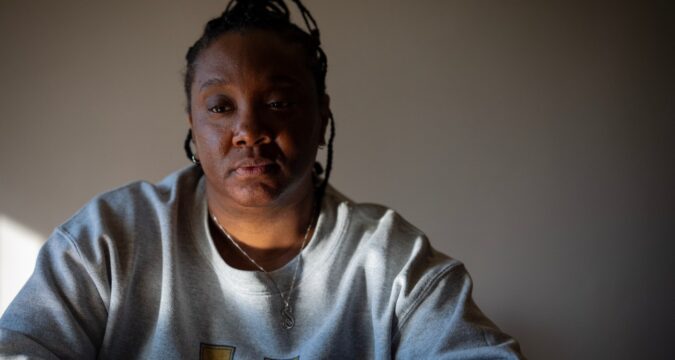
Shana Everage was in bed when she heard the back door of her Broadview home open in the early morning hours of Sept. 16. She didn’t know it at that moment, but it was her older sister Nerissa, who lived just up the street, letting herself in.
Shana got up to use the bathroom wondering what the noise was. That’s when she saw Nerissa in the room where they used to sleep when they were little. She was sitting on the bed with her head in her hands, their mom Joycelyn in the room with her.
That was the last night the three of them spent together.
Three months ago, Nerissa Lee and Joycelyn Everage were fatally shot outside of the Berwyn middle school where Nerissa worked as an assistant principal. They were killed, police say, by Nerissa’s husband, Steven Lee, who then turned the gun on himself. Berwyn police have since closed their investigation into the shooting, deeming their deaths “domestic-related” and Steven the sole offender.
“When I wake up each morning,” Shana said, “I wake up to that reality.”
Tensions had been building for weeks ahead of the shooting, interviews with loved ones of the couple and records obtained by the Tribune show. Because of Steven’s erratic behavior, Illinois State Police had revoked his firearm license and local authorities tried at least twice to remove guns from the couple’s home.
But their story is not theirs alone.
To date, tens of thousands of Illinois residents with revoked firearm licenses may still have guns, a gap born out of an enforcement process that on paper seems strong but in effect, is extremely limited, experts say. The public safety risk is one authorities have warned about — and seen the implications of — for years.
The broken system was exposed in 2019, when a disgruntled employee opened fire at the Henry Pratt Co. warehouse in Aurora, killing five co-workers and wounding five officers before dying in a shootout with police. The gunman, a convicted felon, had his FOID card revoked in 2014 but was never forced to relinquish the handgun he used in the shooting.
Seven months after the Pratt fatalities, a Joliet man fatally shot his 18-month-old son with a .22-caliber Ruger — one of at least three handguns in his possession despite having his FOID card rescinded more than a year earlier.
Still, despite the mounting deaths and even money funneled toward closing the gap, the state has remained unable to ensure that people surrender their weapons after their FOID cards are rescinded.
The consequence of the unchecked risk is one Shana knows intimately. She now has no immediate family, having lost her father to illness six years ago.
“It’s just me now,” she said.
Eleven weeks
The crisis began this summer.
On June 30 at 1:42 p.m., Nerissa called 911 for a well-being check on her husband, according to police reports obtained by the Tribune through a Freedom of Information Act request. The couple lived in Broadview, just up the street from Nerissa’s family home.
Nerissa told dispatch that Steven sent her a text message threatening to end his life. She also stated that her husband had several firearms in the home, including a rifle.
Nerissa Lee, who was shot and killed by her husband Steven in September outside of the middle school where she worked as an assistant principal. (E. Jason Wambsgans/Chicago Tribune)
Nerissa was not home when officers arrived to check on him, records state. Steven told officers that he didn’t need a medical or mental health evaluation.
Police took no further action.
The next day, police verified that Steven was licensed to purchase and carry a firearm, and contacted the state police firearms safety unit over Steven’s alleged threat of suicide, records state. Statute requires law enforcement officers to inform the state police when someone poses a “clear and present” danger to themselves or others.
On July 2, in a phone conversation with police, Nerissa said Steven had been acting unusual for two weeks, though she denied any physical abuse. She also said she had temporarily moved out because of his behavior — which was later described by family as accusatory and irate — but recently returned. Steven had plans to see a doctor. Police went to the couple’s home, but no one answered.
A day later, police officially filed a clear and present danger report with the state police. Affirming Broadview’s report, state police revoked Steven’s firearm license on July 7, spokeswoman Melaney Arnold confirmed to the Tribune.
Ten weeks
Illinois is one of 11 states that require gun owners to get a license — a firearm owner’s identification (FOID) card — before buying a firearm. Cards can be revoked for a number of reasons, from felony indictments to mental health concerns but the bulk are due to an affirmed clear and present danger report, according to Arnold.
When a FOID card is revoked, state police notify the cardholder by email and written notice. Rescinded cardholders are then required by law to surrender their cards to their local police department within 48 hours and turn in any guns they have to police — or to someone who is a legal gun owner — then self-attest they’ve met those requirements to the state.
Alongside notifying the cardholder, state police also alert local authorities.
In practice, enforcement is a difficult process, said Kristen Ziman, former police chief of Aurora who, after leading the department through the Pratt mass shooting, has become a speaker and author on law enforcement risk management. The problem is that while FOID revocation removes the legal right to possess firearms, Ziman said, it does not remove the firearms themselves. That onus, when people are noncompliant, falls to law enforcement officers.
Arnold, in a statement to the Tribune, maintained the state police are not the only agency statutorily mandated by the law to bring residents under compliance with firearm enforcement, noting that noncompliance is a Class A misdemeanor and that “every law enforcement agency in Illinois is responsible for enforcing the law.”
But with thousands of revocations surfacing each year, authorities must weigh resources, risk and available information to determine when ensuring compliance is urgent and beyond that, feasible.
State police sent the first notification to municipal and county law enforcement that Steven was not in compliance on July 8.
A day later, after determining that Steven had two firearm transactions on his record, a Broadview investigator made a home visit but there was no response, police records show.
The investigator left a business card.
Police again returned to the couple’s home July 14 and this time, Steven answered. Officers advised Steven that his FOID card had been revoked and that he must turn over the card and any firearms in his possession. Steven refused and asked why. Police reiterated that he was no longer deemed eligible to possess either and that he needed to reach out to the state police for further information.
Steven stated he was calling the state police and closed the door.
Nine weeks
As the summer passed, neighbor Carissa Gillespie was in the dark about the risk next door.
For eight years, her family lived behind Nerissa and Steven. Their backyards were divided by a fence. A longtime teacher, Gillespie had met Nerissa years before they were neighbors, when they both worked at Proviso West High School in Hillside. But it was across the shared fence that Gillespie met Steven. He was doing yardwork.
“He was always very polite,” she said. “Very soft-spoken.”
She couldn’t imagine him with a gun.
Carissa Gillespie in her backyard where she would talk across the fence with her neighbors Nerissa Lee, and her husband Steven Lee, in Broadview. (Armando L. Sanchez/Chicago Tribune)
Per state police data going back to 2009 through Dec. 4, there are 107,342 Illinois residents who have lost their right to own guns but a backlog of about 74,733 of those revoked cardholders, or nearly 70%, have yet to tell the state they aren’t in possession of any firearms.
Since 2022, the state police have awarded grants to help local authorities conduct revocation enforcement. The Broadview Police Department has been a consistent grantee since state support became available, receiving just over $31,700 between fiscal years 2024 and 2026 according to state police reports. Still, budget-wise, the sum is relatively small, with the village’s public safety expenditures for 2026 totaling more than $16 million alone, per budget reports online.
Because the agency covers the entire state, state police prioritize conducting firearm enforcement in communities that have not received grants, according to Arnold. But the agency will step in when asked by local authorities, she said.
Broadview police did not communicate with or request help from state police in Steven’s case, according to Arnold.
State law also allows — but does not require — local authorities to seek a warrant to search for and seize a person’s revoked FOID card and any firearms they have if they refuse to obey.
However, officers cannot get a search warrant based on suspicion alone, said Ziman. Even if police believe a person has firearms, they need probable cause, she said. That could include police observations or, say, a witness attesting to the presence of guns.
Broadview spokesperson David Ormsby did not answer questions whether police sought or acquired a search warrant in Steven’s case, choosing instead to send an email statement that read, “This was a tragic event and should further show how important (it is) we all continue to support domestic violence initiatives and all the victims.”
A spokesperson for the Cook County state’s attorney’s office, when asked if the office had been contacted over a search warrant for Steven, stated, “We were not contacted by police regarding this matter.”
By July 22, state police had sent a second notification to local authorities that Steven was not in compliance.
The Cook County sheriff’s office, in a written statement to the Tribune, noted that its primary area of responsibility for FOID enforcement is unincorporated Cook and that it has no backlog of cases. As for investigating cases in other jurisdictions, the sheriff’s office stated that it routinely does but in parts of the county where local police departments do not have the resources or grant funding to engage in this kind of work.
“In this case,” the office said, “Mr. Lee was a resident of the village of Broadview and the sheriff’s office had no involvement” with investigating.
State police sent a third noncompliance notification Aug. 5.
It was around then that Gillespie last saw Steven in the yard.
“We gave each other gardening … advice. We (didn’t) go to the fence and talk about what guns … you have in your house,” she said. “And that’s the part that’s scary. That it’s that close, yet in your mind it’s so far away.”
19 hours
Police arrived at the couple’s home late in the evening on Sept. 15. Steven wasn’t there, Broadview police records show. Nerissa, speaking with a responding officer, stated that before calling, Steven threatened to hurt her if she didn’t hand him the key to a safe that had two firearms inside. Nerissa gave him the key.
Steven took the safe and briefly walked away, only to return and point two guns at Nerissa.
Nine weeks had passed since Steven refused police. By then, state police had sent two more noncompliance notifications.
Broadview did not address questions over whether additional checks were made after mid-July or what capacity local authorities had to further pursue compliance. Questions about whether police responded to the state police noncompliance notifications also went unanswered.
Records provided to the Tribune do not reflect further checks after July 14.
After Steven pointed at Nerissa the guns he was deemed too dangerous to have, he threw her on the bed and choked her. Ultimately, he left with a gun in hand and drove away in her car, Nerissa told police.
Steven sent Nerissa a text that night that read, “Love you.” Police took Nerissa to her family home down the street.
The next morning, Nerissa was still keen to go to work at Lincoln Middle School, Shana said. Their mother dropped Nerissa off at the Berwyn campus. That was the last time Shana saw her big sister.
At 1:30 p.m., Broadview police spoke with Nerissa and advised her to come into the police station immediately. Police also informed her that they would be seeking an arrest warrant against Steven for aggravated domestic battery. Nerissa agreed to go after work around 5 p.m.
At 2:50 p.m., police made contact with Steven and likewise told him to come speak with police, to which Steven said he’d come by that evening.
The plan was for both Shana and her mother to pick up Nerissa from school so together, they could take her to the police station, Shana said. But after what Shana called a “divine intervention,” she didn’t get in the car. Her mother left to pick Nerissa up alone.
Police work the crime scene near Lincoln Middle School in Berwyn where Nerissa Lee, her mother Jocelyn Everage were fatally shot by Lee’s husband Steven before he turned the gun on himself on Sept. 16, 2025. (Armando L. Sanchez/Chicago Tribune)
At 4:05 p.m., Berwyn police officers responded to Lincoln Middle after hearing gunfire nearby, the department said in a news release at the time. When officers arrived, they found a man, later identified as Steven, firing a rifle into another vehicle. The school was placed on lockdown.
Five o’clock came and went and Nerissa didn’t show up at the Broadview station.
By 5:15 p.m., Nerissa, Joycelyn and Steven had all been pronounced dead, Cook County medical examiner records show. Nerissa and Joycelyn died of multiple gunshot wounds in a homicide, the medical examiner’s office determined through an autopsy. Steven died of a shot in the head in a suicide, the office said.
State police sent a sixth, and final, noncompliance notification that day.
‘I thought we had time’
Born and raised in Arkansas, Joycelyn moved to Chicago at 18 years old. That’s where she met Shana and Nerissa’s father, Sherman Everage Jr., an Alabama native who had landed in the city after a stint in the military. They were together 52 years, married for 50, Shana recalled in a series of interviews with the Tribune. As she spoke, she wore a gray sweatshirt with the family name: “Everage.”
Joycelyn spent her career working with medical records in hospitals while Sherman was a grade school teacher. Shana and Nerissa were in elementary school when their parents moved into the Broadview home where Shana and Nerissa grew up, and where Shana still lives.
Family photograph from the eighth grade graduation of Nerissa Lee with her mother Jocelyn Everage. (E. Jason Wambsgans/Chicago Tribune)
Joycelyn’s loved ones described her as a God-fearing woman who didn’t tolerate nonsense. But she loved flowers, and Nona McCullum, who knew Joycelyn for more than 40 years, said she was a good friend.
Over the decades, between kids and different addresses and deaths, it was hard to see each other often, McCullum said. But this summer, they had made a plan to have lunches on the regular. They only made it once.
McCullum’s voice broke: “I thought we had time.”
As an adult, Nerissa followed in her father’s footsteps and pursued a career in teaching. Over the years, she climbed the ranks from teacher to administrator. Along the way, she met Steven when she taught at the same school he did janitorial work, according to Shana.
A private person, she and Steven married in the courthouse in 2014.
Nerissa loved her work, Shana said. Former colleagues remembered Nerissa as funny, a good listener and thoughtful. Students built a natural rapport with her.
It was just two years ago that Nerissa became assistant principal of Lincoln Middle School. Shana said their father especially, who died in 2019, would have been proud of Nerissa.
Shana recalled, in the months after their father’s death, gifting Nerissa a small apple-shaped keychain that read “No. 1 Teacher” for Christmas. Nerissa carried the keychain everywhere. She had it up until the day she died.
After
Two days after the shooting, the Berwyn North School District 98 Board of Education met for its monthly meeting. The agenda called for discussions on extending school playground hours and student uniforms but first, board members said a thank you to the community — and a goodbye to their friend.
“While to reporters (Nerissa) was a story,” Superintendent Michelle Smith said at the meeting, “to us she is so much more than that. … To her students, she was the voice that said, ‘You matter, you belong and you can.’ To her peers, she was just a steady hand.”
The afternoon they were killed, Shana and her mother had planned to help Nerissa secure an order of protection, Shana said. She wishes her sister had acquired one earlier.
Earlier this year, Gov. JB Pritzker signed legislation that requires law enforcement agencies to promptly remove guns and FOID cards from those subject to orders of protection. Known as Karina’s Law, the legislation was named after a woman who was shot and killed in Chicago’s Little Village neighborhood in 2023 after she had filed a restraining order against her husband. The action should have required him to give up his gun as the case went through the court system.
“Karina’s Law was designed to support law enforcement in removing firearms from people who are quite likely to commit acts of violence, shootings and homicide,” said Amanda Pyron, executive director of The Network, a Chicago-based organization whose mission is to end gender-based violence.
But there are times — in Nerissa’s case, for example — that people do not secure orders of protection before tensions escalate, leaving them in a liminal space where stopgaps allotted by Karina’s Law don’t yet kick in. In those instances, the hope is that law enforcement, where possible, refer to community-based services that can help, Pyron said.
Sheila Craig, Steven’s sister, told the Tribune in a brief phone call she doesn’t know what happened to her brother and that she wishes there was something she could have done.
“I’m so sorry. … I really hate that this happened,” she said. “He was my brother. I loved him. And I loved Nerissa.”
On a recent afternoon, with the midday sun slipping through her blinds, Shana flicked through the decades of a family album.
“I’m strong,” she said to herself. “I can do this.”
Carefully, she paused to pull prints from the plastic sleeves, from Nerissa in her grade school days sporting red stockings, to her parents, smiling wide, dressed in their Sunday best.
One after another, the memories fanned out before Shana, her loss on full display.
https://www.chicagotribune.com/2025/12/14/berwyn-principal-foid-shooting/
Handel’s ‘Messiah’ wasn’t meant to be Christmas music, but it still became a Chicago holiday staple
For nearly a century and a half, voices have rung out in Chicago each December, proclaiming: “Hallelujah! Hallelujah! Hallelujah, hallelujah, hallelujah!”
The German-British composer George Frideric Handel’s “Messiah” is a fixture of the winter holiday season, although Handel didn’t originally intend for his 1742 oratorio to serve as Christmas music. He had written the score for performance shortly after Easter.
A choral group called the Chicago Musical Union performed it at Chicago’s Metropolitan Hall in April 1859, marking the centennial of Handel’s death. The group hoped this concert would “make the performance of Oratorios a permanent feature in the Musical Entertainments of our city,” the Tribune noted.
But two decades passed before the next noteworthy Chicago rendition of “Messiah.” The Apollo Musical Club, which had formed in 1872, sang the complete oratorio in June 1879 at McCormick Hall, receiving a mixed review from the Tribune.
“Considering the numbers of the chorus, the ‘Hallelujah’ was given with great power and effect,” the newspaper’s anonymous critic wrote. “In accordance with the English custom, the audience stood during its performance. The accompaniments were abominable. The orchestra was out of tune and out of time, and was sadly in need of leading instruments in the principal parts.”
That famous “Hallelujah” portion of “Messiah” was heard again on Dec. 9, 1889, during the grand opening of the Auditorium Theatre, an event considered so important that it filled the Tribune’s entire front page. Handel’s chorus “closed the program with a splendid volume of tone from the great chorus, orchestra, and organ,” the newspaper noted.
The famous “Hallelujah” portion of “Messiah” was heard on Dec. 9, 1889, during the grand opening of the Auditorium Theatre, an event considered so important that it filled the Tribune’s entire front page the following day. (Chicago Tribune)
By that time, the Apollo Music Club’s annual December performances of “Messiah” had become a beloved local tradition. For an 1891 show on Christmas Day at the Auditorium, the club added accompaniment by 54 members of the Chicago Orchestra, as the Chicago Symphony Orchestra was known then. A Tribune critic said this was a great improvement over “the many rough performances one had been obliged to endure in seasons past.”
For its part, the Inter Ocean newspaper praised the Apollo Music Club for exerting a “moral influence” on Chicago through its performances of “Messiah” and other religious music — “an effective answer to the hordes of atheists, socialists, and agnostics that throng our city.”
That Christian element of the music remained important decades later, when the renowned Black singer William Warfield began his annual tradition of singing in “Messiah” concerts at Bronzeville’s Monumental Baptist Church. With Warfield, Monumental’s sold-out “Messiah” concerts drew visitors from all over the country.
After Warfield performed the oratorio’s “Thus Saith the Lord” recitative in 1967, Chicago Defender critic Earl Calloway wrote that Warfield had sung “with the power and spiritual conviction that he was the vessel of ‘The Lord’ speaking to the children of Israel.”
The baritone William Warfield, shown here circa 1963, drew crowds to his performance of Handel’s “Messiah” at Monumental Baptist Church in Chicago. (Chicago Symphony Orchestra)
Warfield’s serious delivery of Handel’s question, “Why do the nations so furiously rage together?” prompted Calloway to comment: “The vigor and force of his expression enticed the congregation to commune with him. The famous baritone obviously enjoyed this performance and sang with a freedom seldom witnessed by this columnist. This was a great act of professional kindness on the part of the artist, who came to sing at the invitation of his friend Rev. D.E. King, pastor of Monumental.”
But as time went on, some Chicagoans came to appreciate “Messiah” as a piece of music with appeal that extended beyond its Christian themes. It was a Jewish cantor’s son, Al Booth, who brought the “Do-It-Yourself ‘Messiah’” to Chicago in 1976. Booth, who worked as a real estate agent, got hooked on the idea when he took part in similar sing-along Handel concerts in England. “It was great, marvelous,” he told the Tribune. “Instead of being a listener, you’re a participant.”
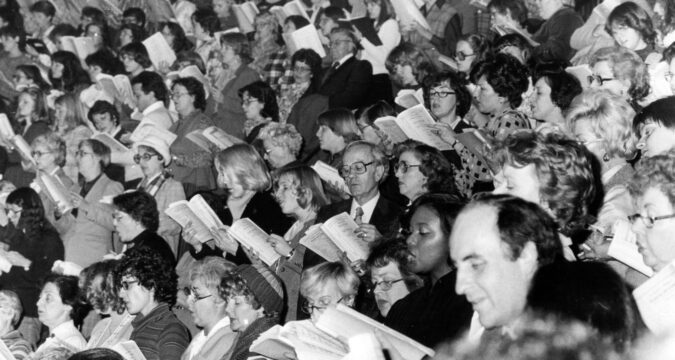
Three thousand people would turn out for DIY “Messiah” performances in the late ’70s led by Chicago Symphony Chorus conductor Margaret Hillis, joining their voices together into huge choruses.
“Some members are serious music lovers; some just like to sing in a group, the bigger the better; others are frankly ‘Messiah’ freaks,” the Tribune reported in 1978. “Each year there is a full house of amateur singers who are detectives, teachers, sales clerks, homemakers, truck drivers, used car dealers, bankers, lawyers, businessmen, police officers, postal clerks, and clergy. They come from Illinois, Iowa, Indiana, and Wisconsin.”
Margaret Hillis conducts the “Do-It-Yourself ‘Messiah’” at Orchestra Hall on Dec. 9, 1980, in Chicago. (John Bartley/Chicago Tribune)
Leonore Levitt, a clinical psychologist who’d taken part in the concerts, said in 1978, “It’s a real high to hear this wonderful sound coming out of thousands of people who’ve never sung together before.”
By 1981, Chicago had nine different DIY “Messiah” shows. “If the ‘Messiah’ were sung at any other time, it wouldn’t have quite the same meaning,” Booth said. “But done at Christmas it wakens the feeling among the participants that maybe brotherhood is attainable. Most people want to live in peace.”
That DIY trend has waned in recent years. In 2025, one of the few “Do-It-Yourself ‘Messiah’” shows was staged by the Waukegan Symphony Orchestra and Concert Chorus. But the Apollo Chorus of Chicago — as the Apollo Musical Club is known today — continues its annual tradition of performing “Messiah,” including a concert Sunday at Alice Millar Chapel in Evanston.
Sue Robisch, right, of Hinsdale, sings with 1,400 other participants at a “Do-It-Yourself ‘Messiah’” event with the Chicago Chamber Orchestra at Fourth Presbyterian Church in Chicago on Dec. 21, 1986. The event was sponsored by the Chicago Tribune. (Carl Wagner/Chicago Tribune)
John von Rhein, who retired in 2018 after 40 years at Tribune’s classical music critic, often reviewed performances and recordings of Handel’s oratorio.
“‘Messiah’ is one of those rare musical masterpieces that are genuinely tamperproof,” he wrote in 1977. “Abridge it, bowdlerize it, overlay its dramatic urgency with a thick blanket of sedate piety and you will have a masterpiece. The appeal of ‘Messiah,’ with its ‘Hallelujah’ Chorus, cuts across all differences of age, musical taste, and religious persuasion.”
Robert Loerzel is a freelance writer and the co-author of “The Uptown: Chicago’s Endangered Movie Palace.”
Have an idea for Vintage Chicago Tribune? Share it with Marianne Mather at mmather@chicagotribune.com and Kori Rumore at krumore@chicagotribune.com.
https://www.chicagotribune.com/2025/12/14/handels-messiah-diy-chicago/


