Category: News
CorteIDH condena a México por caso de violación, tortura y muerte de mujer indígena ocurrida en 2007
Associated Press
CIUDAD DE MÉXICO (AP) — La Corte Interamericana de Derechos Humanos (CorteIDH) declaró al Estado mexicano responsable en el caso de la violación sexual, tortura y muerte de una indígena nahua ocurrido hace casi dos décadas en el que presuntamente participaron militares, y ordenó a las autoridades investigar el hecho y sancionar a los responsables.
Así se determinó en una sentencia que dio a conocer el martes la CorteIDH en la que se señala a México como “responsable internacionalmente” por “la violación sexual y graves lesiones” cometidas contra Ernestina Ascencio Rosario, y por la “falta de atención médica” que causó la muerte de la mujer de 73 años en febrero de 2007.
La decisión se da a un año de otra sentencia que emitió el tribunal regional contra México por la desaparición forzada en 1999 del indígena maya ch’ol Antonio González Méndez.
La CorteIDH reconoció que México “incumplió el deber de investigar con debida diligencia reforzada estos hechos y garantizar el acceso a la justicia” a los hijos de Ascencio Rosario.
Durante una audiencia del tribunal regional que se realizó a inicios de año en San José de Costa Rica, una delegación del gobierno mexicano admitió la gravedad de los hechos y se acordó continuar con la investigación para determinar las causas que llevaron a la muerte de Ascencio Rosario.
Un crimen sin responsables
Según constató el tribunal, la mujer que vivía en un poblado de la Sierra Zongolica, en el estado oriental de Veracruz, “fue violada por miembros del Ejército mexicano” el 25 de febrero de 2007, señala un comunicado de la CorteIDH.
El hecho ocurrió un día después que militares instalaron un campamento cerca de la vivienda de la mujer como parte de la estrategia de lucha contra el narcotráfico que activó en 2006 el presidente de ese entonces Felipe Calderón (2006-2012).
La Corte determinó que la violación sexual que sufrió la mujer constituyó un “acto de tortura, toda vez que fue intencional, causó severos sufrimientos físicos y mentales y se cometió con el propósito de intimidar, degradar, humillar y controlar a la víctima”.
Luego de diez horas de traslado Ascencio Rosario fue ingresada a un hospital de Veracruz donde no había ningún interprete del náhuatl que facilitara la comunicación con la víctima. La mujer falleció el 26 de febrero del 2007 antes de que pudiera ser intervenida quirúrgicamente.
En la búsqueda de justicia por el caso, los familiares de Ascencio Rosario “enfrentaron barreras” por su condición de personas indígenas monolingües, y fueron objeto de “presiones e intimidaciones”, reconoció el tribunal, y agregó que la investigación ministerial “no cumplió con el estándar de debida diligencia reforzada”.
Ante esos hechos, la CorteIDH ordenó al gobierno mexicano investigar de nuevo el caso para identificar, juzgar y sancionar a los responsables materiales e intelectuales de los hechos, brindar tratamiento médico y psicológico a los familiares, y realizar un acto público de reconocimiento de responsabilidad internacional.
Otro caso contra militares
En coincidencia con esa decisión, la Comisión Nacional de los Derechos Humanos (CNDH) de México reconoció las violaciones graves a los derechos humanos relacionados con el asesinato de las niñas Leidy y Alexa, de 7 y 11 años, presuntamente cometidas en mayo pasado por elementos del ejército mexicano en el estado occidental de Sinaloa, informó el martes la organización local Centro de Derechos Humanos Miguel Agustín Pro Juárez (Centro Prodh).
Como parte de sus recomendaciones, la CNDH pidió medidas reparatorias y una disculpa de parte de la Secretaría de la Defensa Nacional.
El Centro Prodh dijo en un comunicado que este caso refleja los “riesgos” del despliegue militar en tareas de seguridad pública que el gobierno de la presidenta Claudia Sheinbaum decidió mantener siguiendo los pasos de su antecesor y padre político, Andrés Manuel López Obrador (2018-2024).
Por el asesinato de las dos niñas fueron detenidos seis militares. El secretario de Defensa, general Ricardo Trevilla Trejo, declaró el mes pasado que la fiscalía federal investiga el caso junto con los fiscales militares.
Llueven donaciones a sirio que frenó a atacante en Australia y se convirtió en héroe nacional
Por CHARLOTTE GRAHAM-McLAY
WELLINGTON, Nueva Zelanda (AP) — Como muchos australianos que pasean por la playa de Bondi en las largas y cálidas noches de verano, Ahmed al Ahmed solo quería una taza de café con un amigo. A su alrededor, estalló una masacre cuando dos hombres armados atacaron a judíos durante las festividades de Hanukkah en un parque cerca de la costa.
Pronto, al Ahmed se arrastraba, agachado, entre dos coches estacionados, antes de lanzarse directamente hacia uno de los tiradores desprevenidos. En imágenes que han sido vistas millones de veces en todo el mundo, se puede ver al padre de 44 años enfrentándose a uno de los hombres armados, arrebatándole la escopeta de sus manos y apuntando al atacante.
La historia del comerciante musulmán sirio-australiano que frenó a uno de los atacantes el domingo ha sido acogida por un país que busca desesperadamente consuelo tras una de sus horas más oscuras: el asesinato de 15 personas mientras celebraban su fe judía.
Millones han sido recaudados para el héroe de Bondi
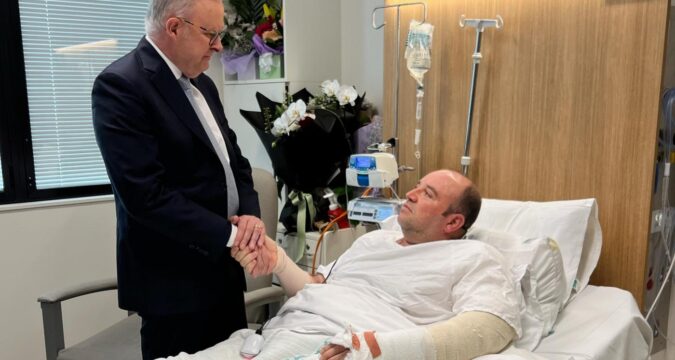
“En un momento en el que hemos visto el mal perpetrado, él brilla como un ejemplo de la fortaleza de la humanidad”, afirmó el martes el primer ministro Anthony Albanese, al salir de un hospital de Sydney donde al Ahmed es tratado por heridas de bala. “Somos un país valiente. Ahmed al Ahmed representa lo mejor de nuestro país”.
Una página de recaudación de fondos establecida por australianos que nunca habían conocido a Al Ahmed había recaudado hasta el martes por la noche donaciones de unas 40.000 personas, que sumaban 2,3 millones de dólares australianos (1,5 millones de dólares). Entre los partidarios se encontraba el multimillonario gestor de fondos de cobertura William Ackman, quien prometió 99.000 dólares australianos.
Padre de dos enfrenta una larga recuperación
Al Ahmed, quien está casado y tiene dos hijas pequeñas, enfrenta una larga lucha por delante, dicen quienes han hablado con él desde la masacre del domingo. Fue baleado varias veces en el brazo izquierdo, aparentemente por el segundo agresor mientras disparaba indiscriminadamente desde un puente peatonal.
Ya lo operaron y le han programado más cirugías, dijo Lubaba alhmidi Alkahil, portavoz de la Asociación de Australianos por Siria, quien anoche visitó a Al Ahmed en el hospital. El hombre “tranquilo y humilde” estaba consciente, pero débil y enfrenta al menos seis meses de recuperación, dijo Alkahil.
Un primer ministro y un presidente son admiradores
Desde el día del ataque, la pila de arreglos florales y notas de agradecimiento ha crecido fuera de la pequeña tienda de tabaco que Al Ahmed posee frente a una estación de tren en un suburbio de Sydney. Mientras tanto, ha recibido visitas en el hospital de los líderes de Australia, y al parecer le dijo a Chris Minns, el primer ministro del estado de Nueva Gales del Sur, que volvería a hacer lo mismo.
Ha sido aclamado como un héroe por líderes mundiales, incluido el presidente de Estados Unidos, Donald Trump, y el gobernador general de Australia, quien es el representante del rey Carlos de Gran Bretaña en el país. Minns dijo que Al Ahmed salvó “innumerables” vidas en lo que el funcionario describió como “la escena más increíble que he visto”.
Al Ahmed fue policía en Siria
Al Ahmed vivía en la ciudad de Nayrab en la región de Idlib en Siria antes de llegar a Australia, dijo su primo Mohammad al Ahmed a The Associated Press. Dejó Siria en 2006 después de terminar sus estudios, antes de las protestas masivas de 2011 contra el gobierno del entonces presidente Bashar Assad, que fueron enfrentadas con una brutal represión y se convirtieron en una guerra civil de casi 14 años.
Nayrab fue fuertemente bombardeada por las fuerzas de Assad, y la mayoría de las casas de la ciudad quedaron reducidas a escombros. El martes, Al Ahmed era el tema de conversación de la ciudad.
“Ahmed hizo realmente un trabajo heroico”, dijo su primo, Mohammad al Ahmed, a The Associated Press. “Sin ninguna vacilación, enfrentó al terrorista y lo desarmó solo para salvar a personas inocentes”.
Los padres de Ahmed al Ahmed, que llegaron a Sydney este año para reunirse con su hijo, dijeron a la Australian Broadcasting Corp. que su hijo había servido en la policía y en las fuerzas de seguridad central en Siria. El padre, Mohamed Fateh al Ahmed, dijo que la “conciencia y el alma” de su hijo lo impulsaron a actuar el domingo.
“Siento orgullo y honor porque mi hijo es un héroe de Australia”, dijo el padre.
Historias de heroísmo dan esperanza en medio de la tragedia
Tras la matanza, un país sacudido por uno de los peores ataques motivados por el odio en su suelo —presuntamente cometido por un residente australiano que llegó de India en 1998 y su hijo nacido en Australia— busca esperanza en medio de su dolor. Han comenzado a surgir historias de heroísmo.
Estos relatos incluyen la historia de Boris y Sofia Gurman, un matrimonio que fue asesinado mientras intentaban detener a uno de los tiradores cuando comenzaba la masacre, contó la familia de la pareja a los medios australianos.
Reuven Morrison, de 62 años, también fue asesinado mientras intentaba detener el horror, según su hija, Sheina Gutnick. Después de que Al Ahmed le quitó el arma a un tirador, una persona que Gutnick identificó como Morrison es vista lanzando objetos al hombre armado, antes de que el segundo hombre le disparara.
Actos de valentía como estos fueron citados por muchos en las redes sociales y en los medios de comunicación como ejemplos de lo que debería significar ser australiano.
“Cuando hizo lo que hizo, no estaba pensando en absoluto en el origen de las personas que estaba salvando, las personas que estaban muriendo en la calle”, dijo Mohamed Fateh al Ahmed sobre su hijo. “Él no discriminó entre una nacionalidad y otra, especialmente aquí en Australia no hay diferencia entre un ciudadano y otro”.
______
Los periodistas de The Associated Press Abdelrahman Shaheen en Damasco y Abdulmajeed Darweesh en Nayrab, Siria, colaboraron con esta historia.
______
Esta historia fue traducida del inglés por un editor de AP con la ayuda de una herramienta de inteligencia artificial generativa.

Christensen y Rashford dan triunfo al Barcelona sobre el modesto Guadalajara en la Copa del Rey
Por TALES AZZONI
MADRID (AP) — El Barcelona necesitó goles tardíos de Andreas Christensen y Marcus Rashford para derrotar al Guadalajara de la tercera división Guadalajara en la ronda de 32 dieciseisavos de final, un partido que se retrasó debido a problemas con la tribuna temporal del estadio.
El inicio del partido se demoró media hora porque las autoridades locales inicialmente no permitieron el acceso de los aficionados a la tribuna recién construida en el estadio Pedro Escartín en la ciudad de Guadalajara, cerca de Madrid.
Hubo largas filas fuera del estadio hasta que la policía finalmente permitió la entrada de los aficionados. La capacidad del estadio aumentó de casi 6.000 a aproximadamente 8.000 con la nueva tribuna.
El Barcelona tuvo el control desde el principio, pero sufrió para generar ocasiones de peligro contra su oponente de menor categoría.
Christensen finalmente rompió el empate a los 76 minutos con un cabezazo tras un centro de Frenkie De Jong. El cabezazo de Christensen se desvió en un defensor antes de entrar en la red.
Los anfitriones tuvieron algunas oportunidades para igualar, pero no pudieron capitalizar, y Rashford selló la victoria en un contragolpe a los 90 minutos.
El técnico azulgrana Hansi Flick hizo descansar a algunos de los titulares habituales del equipo antes de la visita del líder de La Liga española al tercero Villarreal el domingo.
Otros resultados
En la sorpresa de la noche, el Deportivo La Coruña de segunda división eliminó 1-0 al Mallorca de primera división.
Los otros clubes de primera división avanzaron. La Real Sociedad derrotó 2-1 a Eldense con un gol en el tiempo de descuento, mientras que el Valencia venció 2-0 al Sporting de Gijón.
El miércoles, el Real Madrid visita al Talavera de la tercera división, mientras que el Atlético de Madrid se enfrenta al Atlético Baleares de cuarta categoría.
___
Deportes AP: https://apnews.com/hub/deportes
Illinois should recommend hepatitis B vaccines for all newborns, committee says, despite federal guidance
Illinois should continue to recommend that nearly all newborns be vaccinated against hepatitis B, a state advisory committee decided Tuesday, in a move that could represent another break with federal vaccine guidance.
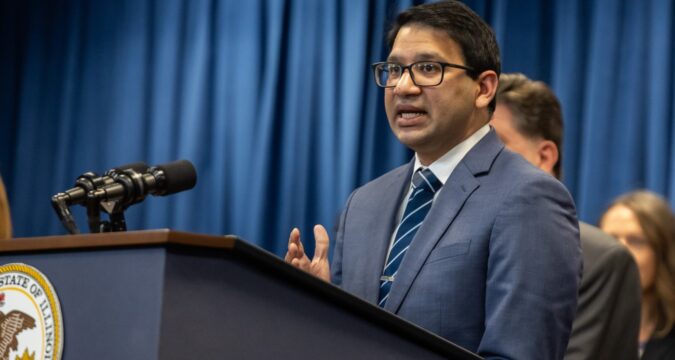
The Illinois Department of Public Health Immunization Advisory Committee voted unanimously Tuesday that Illinois “reaffirm and maintain” the recommendation that nearly all babies be given the vaccine within 24 hours of birth. The committee’s recommendations aren’t final, but will be considered by the director of the state health department, who can issue official guidelines for the state.
The committee’s vote Tuesday followed a decision by a federal vaccine advisory committee earlier this month to no longer recommend hepatitis B vaccines for all newborns. That federal committee voted 8-3 to recommend that it be left up to parents and doctors to decide whether to vaccinate newborns if the infants’ mothers test negative for hepatitis B. Infants of mothers who test positive for hepatitis B or who aren’t tested would continue to receive the vaccine shortly after birth.
The federal committee also voted to suggest that when a family decides not to vaccinate their newborn against hepatitis B, that the first dose of the vaccine be given at no earlier than 2 months old. The federal committee’s recommendations will become official once they’re approved by the director of the Centers for Disease Control and Prevention.
For years, the federal government had recommended all newborns receive the shot to prevent serious liver damage that can be caused by the infection. Most adults who contract hepatitis B make a full recovery, but newborns and babies infected with the virus during the first year of life have a 90% chance of developing chronic hepatitis B, and chronic hepatitis B can lead to liver damage, liver failure, liver cancer or death, according to the American Academy of Pediatrics.
Members of Illinois’ Immunization Advisory Committee said during their meeting Tuesday that they did not think changes were needed to previous federal hepatitis B vaccine recommendations for newborns.
“I have trouble seeing that this is a public health problem,” said committee chair Dr. Marielle Fricchione, of vaccinating newborns against hepatitis B. “To me, it looked like a successful public health policy and appropriate for our country and the health care system that we have.”
Though pregnant women are typically tested for hepatitis B as part of their prenatal care, doctors warn that the illness, which is typically spread through bodily fluids, can be spread by others as well. Dr. Brian Borah, with the Chicago Department of Public Health, also noted that there can be gaps when it comes to catching all cases of hepatitis B among pregnant women.
The Chicago Department of Public Health identified 808 infants who were exposed to the illness from 2015 to 2024, Borah said. Over that time, the number of babies identified as exposed each year decreased significantly, dropping from 114 in 2015 to 40 in 2024. Only one newborn in Chicago during that time was identified as actually having caught the illness from their mother. When babies are exposed to the illness at birth they’re typically given antibodies as well as the vaccine.
“There are people who may become infected and will not trigger a positive test because of the timing of when the tests were done,” said committee member Dr. Edward Linn. “We’ve seen a diminishing number of cases, but it’s a devastating disease and leads to very significant long term problems and risks for those individuals that slip through.”
Illinois is not the only state to part ways with the federal government when it comes to vaccine recommendations after Robert F. Kennedy, Jr. – head of the U.S. Department of Health and Human Services and a longtime vaccine skeptic – fired and replaced all the members of the federal vaccine advisory committee earlier this year.
Illinois also previously broke with the federal committee’s recommendations for COVID-19 vaccines, after that committee voted to no longer recommend the shots and instead leave it up to individuals whether to get them.
Earlier this month, Gov. JB Pritzker signed a bill into law formally establishing the process for the state to issue its own vaccine guidelines.
Dr. Sameer Vohra, director of the state health department, also reaffirmed at the vaccine advisory committee’s meeting Tuesday that, for other routine vaccinations, Illinois will continue to recommend CDC immunization schedules for children and adults issued as of Aug. 7, 2025, before the federal vaccine advisory committee began making controversial changes.
https://www.chicagotribune.com/2025/12/16/hepatitis-b-vaccine-illinois/

Trump Considering Executive Order To Reclassify Marijuana
Trump Considering Executive Order To Reclassify Marijuana
Authored by Jacob Burg via The Epoch Times (emphasis ours),
President Donald Trump said on Dec. 15 that he’s considering an executive order to reclassify marijuana out of Schedule I of the Controlled Substances Act (CSA), a category reserved for drugs deemed to have no medical value and a high potential for abuse.
The president was asked about the plan during a ceremony at the White House on Monday, presenting the Mexican Border Defense Medal, which recognizes service members deployed to the U.S.-Mexico Border.
“We are considering that,” the president said. “Because a lot of people want to see the reclassification, because it leads to tremendous amounts of research that can’t be done unless you reclassify. So we are looking at that very strongly.”
A review process started by President Joe Biden in 2022 could reclassify marijuana as a Schedule III drug, but if finalized, it would not legalize or decriminalize the drug.
Trump told reporters in August that his administration was “looking at reclassification,” but that a determination would not come until later.
“We’re looking at it. Some people like it. Some people hate it. Some people hate the whole concept of marijuana, because if it does bad for the children, it does bad for people that are older than children,” Trump said. “But we’re looking at reclassification, and we’ll make a determination over the next, I would say, over the next few weeks, and that determination, hopefully, will be the right one.”
The president added that marijuana is a “very complicated subject” and that he believes the plant has done great things in the medical field, even if there are “bad things having to do with just about everything else but medical.”
“For pain and various things, I’ve heard some pretty good things, but for other things, I’ve heard some pretty bad things,” Trump said.
Picking Up Where Biden Left Off
If the president proceeds with the executive order, it could mean picking up where his predecessor left off, as it wasn’t clear if the federal government would proceed with reclassifying marijuana as a Schedule III substance after Biden urged the Department of Health and Human Services (HHS) to review the drug’s status in 2022.
Once the agency completed its review in 2023 and considered recommendations from the Food and Drug Administration (FDA), HHS endorsed moving marijuana to Schedule III.
Biden’s Justice Department followed suit in May 2024 and announced it was formally moving to reclassify marijuana out of Schedule I, which requires directing the Drug Enforcement Administration (DEA) to change its classification status.
However, after the Democratic Party lost control of the executive branch in last year’s election, it was uncertain if the Justice Department and DEA would continue the process of moving marijuana into Schedule III with widely used medications, such as anabolic steroids, testosterone, and ketamine.
Schedule I, by contrast, is reserved for drugs with no “currently accepted medical use and a high potential for abuse,” including LSD, ecstasy or MDMA, and heroin.
Supporters of reclassifying marijuana point out the decades of anecdotal reports of its medical benefits treating ailments like insomnia, anxiety, and pain, but recent research has called into question the plant’s efficacy for treating non-neuropathic pain, according to the Centers for Disease Control and Prevention.
However, some of the compounds found in the plant—known as cannabinoids—have led to the creation of new FDA-approved drugs, including Epidiolex, made from cannabidiol, or CBD, which treats severe childhood epilepsy.
“These kids have seizures maybe 100 times a day, and this drug can reduce the number of seizures and, in a small percentage, abolish the seizures,” Kent Vrana, director of the Penn State Center for Cannabis and Natural Product Pharmaceuticals, said during a university Q&A in August.
A poll released in March by Fabrizio, Lee, & Associates found that 72 percent of all voters, and 67 percent of Republican voters, support moving marijuana from Schedule I to Schedule III.
Legal Implications
Putting marijuana in a different category of the Controlled Substances Act does not legalize or decriminalize the plant, but it can ease red tape on legal markets in states with recreational or medical marijuana laws.
Some banks refuse to do business with companies in the industry because marijuana is still a Schedule I substance at the federal level.
Additionally, marijuana being on Schedule I has made it difficult for universities and organizations to conduct authorized clinical studies that involve giving the drug to participants, sometimes relying on self-reported experiences with the drug that are less empirically rigorous for medical research, according to Vrana.
“I can only get cannabis and cannabinoids from a handful of federally approved sources,” he said in August, adding that it puts the university’s funding at risk.
“It makes it harder for us to conduct clinical trials that would help us better understand the potential benefits—and harms—of cannabis.”
Tyler Durden
Tue, 12/16/2025 – 17:40
https://www.zerohedge.com/political/trump-considering-executive-order-reclassify-marijuana
Chicago Bulls trade talk: Is it time to move Coby White? Is there still a market for Nikola Vučević?
It’s speculation season in Chicago.
The Bulls are in a rut. It’s more than their 10-15 record. They haven’t won consecutive games in four weeks and struggle to compete with even the bottom-rung teams in the league.
This was always meant to be a transitional season. Now it’s clear that the most the Bulls can get out of this season is a restructuring of the roster to speed along progress toward the flexibility the front office so deeply prizes.
With seven expiring contracts on the books, there’s plenty for vice president of basketball operations Artūras Karnišovas to work with as the Feb. 5 trade deadline nears. Let’s look at some of the biggest questions facing the Bulls in the two months before the deadline.
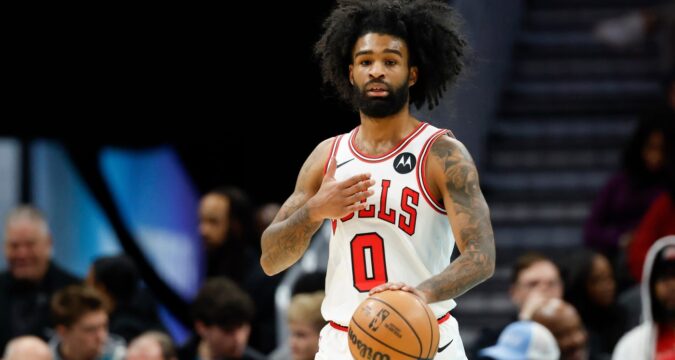
Is it time to trade Coby White?
The Bulls may have run their course with White, now the longest-tenured player on the roster. Although Karnišovas has said publicly they plan to keep White for the long term, there’s internal uncertainty about whether the Bulls can or will pay the 25-year-old guard when he enters unrestricted free agency this summer.
The Bulls have been fairly upfront about their realignment around guard Josh Giddey. While neither player has reached the level of consistent All-Star-caliber play that should be a requirement for a roster centerpiece, that’s currently beside the point.
If the Bulls don’t plan to give White a similar deal this summer to the four-year, $100 million contract Giddey received in September as a restricted free agent, then it’s time to pick up the phone and start shopping White far and wide. Although his season was delayed and then limited by an offseason calf injury, White is a career 36.7% 3-point shooter whose handles and playmaking have developed to where he could be a strong third or fourth option on a contending team.
Teams in the Western Conference especially will be looking to load up on offensive weapons to make a run — and White should be the answer for someone in the league. Finding a trade partner should be Priority No. 1 for the Bulls in the next two months.
Should the Bulls (finally) move Nikola Vučević?
Bulls center Nikola Vučević keeps the ball away from Hawks forward Jalen Johnson on Oct. 27, 2025, at the United Center. (Dominic Di Palermo/Chicago Tribune)
The best time to trade Vučević would have been last January, when he was at the tippy-top of a resurgent season while shooting 39.4% from 3-point range.
The second-best time is, quite literally, any day now.
The Bulls waited too long. Sure, Vučević never drew the offers they wanted for their starting center. But they had an opportunity to maximize his value and do right by a longtime veteran before moving on to their youth movement.
Now the Bulls and Vučević are stuck together like a recently broken-up couple with four months left on their shared lease. It’s awkward. And it’s making for some pretty rough basketball.
The risk in waiting too long to move a veteran is Vučević, whose contract is up at the end of the season, is now a tough sell on the trade market. His rebounding numbers and shooting efficiency have fallen back to earth, and the Bulls’ inability to defend at the perimeter has exposed Vučević’s weaknesses as a rim defender. A team looking to add a shooting big to its bench could view Vučević as an option at the deadline, but he’s considerably less tempting this winter than he was a year ago.
If the Bulls really wanted to part with Vučević, they could opt to buy him out. But that path typically requires a hard push from the player, something Vučević — who has been reliably resigned to his fate despite the frustration of this season — is unlikely to request.
Could the Bulls make a bid for Giannis Anteto… (yanked off stage by a massive vaudeville hook)
Bucks forward Giannis Antetokounmpo goes up to score against the Wizards on Dec. 1, 2025, in Washington. (AP Photo/John McDonnell)
This is the longest of long shots for the Bulls, who aren’t considered to be even remotely near the top tier of potential suitors. If Giannis Antetokounmpo really wanted to come to Chicago, and if the Milwaukee Bucks were prioritizing a trade that sent him to his preferred market, then maybe the Bulls could figure out a deal. But there’s zero evidence either of those possibilities is true.
And even if they fully bankrupted their future draft stock, the Bulls don’t have the additional assets necessary to pry that caliber of star away from Milwaukee. The Bulls have been wary of offering up players such as Giddey and Matas Buzelis in trade packages. And even if they did, would that pairing outweigh a trade package from a suitor such as the Miami Heat involving an All-Star like Tyler Herro?
It also has become fairly clear from national reporting that the initial flurry of urgent trade speculation — which suggested Antetokounmpo might be moved by the deadline — has calmed down. Antetokounmpo is reportedly “uncomfortable” with the rumors surrounding his future, according to NBA insider Chris Haynes, and the complexity of securing a trade partner midseason could make both sides pump the brakes.
Wait — will the Bulls actually do anything?
This is actually the most pressing question of the season — which is concerning, right?
The Bulls haven’t inspired any confidence in their ability to pull the trigger at the trade deadline. This is a front office that went three years without making a single midseason move before dealing Zach LaVine last February.
Related Articles
Chicago basketball report: Angel Reese on ‘young and turnt’ Team USA — and Bulls’ numbers tell a bleak story
3 takeaways from the Chicago Bulls’ latest loss, including dueling bigs and a quiet night from Matas Buzelis
Could Nikola Vučević lose his starting job with the struggling Chicago Bulls? ‘We all have a part in this.’
Nikola Vučević benched as Chicago Bulls snap 7-game skid with 129-126 win: ‘We just had to play desperate’
The Chicago Bulls offense is built on getting to the rim. So why aren’t they able to finish?
In his limited media availability, Karnišovas has continued to emphasize the flexibility the roster will offer next summer after clearing out those seven expiring contracts, but he hasn’t shown a particular interest toward flipping any of those players this season into potential future value.
History suggests the Bulls could sit out yet another trade deadline, let all of their expiring contracts walk off into the sunset and then tout their “flexibility” after wasting the trade value of players such as White, Vučević, Ayo Dosunmu, Zach Collins and Kevin Huerter.
There’s an argument against letting the Bulls roster become a dumping ground. The team wouldn’t benefit from taking on bad money — i.e. sending out expiring contracts to take on an aging or injured or devalued star from another team — for no reason. And for this reason, it’s not realistic to expect all, or even most, of these expiring deals to get moved.
But complete inaction would be just the latest misstep by the Karnišovas-led front office, whose hesitancy has been its downfall for the last five years.
https://www.chicagotribune.com/2025/12/16/chicago-bulls-trade-possibilities-coby-white/
Olaf de Real McCoy sobre la fascinación pop por los 90: “Me encanta, es genial”
Por BERENICE BAUTISTA
CIUDAD DE MÉXICO (AP) — Real McCoy, el grupo alemán de eurodance, creador de los éxitos “Run Away”, “Automatic Lover”, “Another Night” y “One More Time” se presentará el fin de semana en la Ciudad de México como parte del festival I Love Dance.
Su fundador, rapero y productor Olaf “O-Jay” Jeglitza conversó sobre el gran regreso a las pistas de baile y los clubs nocturnos que ha tenido en últimos años la música dance de los años 1990.
En el festival I Love Dance, que se presentará el viernes en el Palacio de los Deportes, también participan Ace of Base, Dr. Alban, Crystal Waters, Reel 2 Real, Whigfield y otros tantos.
“No se trata sólo de un concierto de Real McCoy, es como un festival de los 90, tienes a los más grandes y todos tienen sus éxitos”, señaló Jeglitza por videollamada desde Berlín.
Real McCoy se creó en Berlín en 1989. Cuando explotó la popularidad de su música en la década siguiente, Jeglitza tenía unos 30 años, en la actualidad tiene 60.
Jeglitza explicó que los años en los que el público no lo vio sobre los escenarios se dedicó a producir.
“Sí, claro que hubo un gran éxito y hubo muchas giras y en total para mí fueron 10 años”, señaló. “Pero luego, desafortunadamente, un incidente privado, mi padre murió y todo esto se juntó. Y yo dije, bueno, ahora es el momento de las cosas reales, las más importantes. Y aun así seguí en la música, me convertí en productor, y tuve éxito con eso”.
Pero la demanda por la música de los 90 fue en aumento y al cabo de los años comenzaron a pedirle que volviera de gira.
“Ahora es una situación diferente. Es muy divertido. Tocas los éxitos. La gente conoce estas canciones, no hace falta que te esfuerces tanto. Ya sabes, es como, oye, y aquí viene esta canción y la gente está muy emocionada. Así que es algo bueno que haga esto ahora mismo porque también me mantiene joven”, apuntó.
Para mantenerse en activo, Jeglitza señala que suele escuchar mucha música nueva y ve con buenos ojos el crecimiento a nivel mundial que ha tenido la música electrónica.
“No me considero demasiado artista de música electrónica, como EDM o algo así. Es más bien que ese era el estilo en aquella época”, señaló. “Esta música es solo música para mí, sabes, hago música, me encanta y sabes que no necesitas hacer negocios para la música, puedes cantar en la ducha, puedes quedarte en casa y cantar con todos, si esto te hace feliz, esa es la parte importante”.
La cultura pop actual tiene mucho interés, respeto y también fascinación por los 90, ¿qué opina de esto?
“No me sorprende en general”, señaló Jeglitza. “Cuando era joven, escuchaba cosas de los 50, 60 … Los jóvenes descubren melodías con las que quizá crecieron sin saberlo, los padres las escuchan, así que puede que les provoque algo a ellos y en TikTok y todo eso, ya sabes, pero me encanta, es genial”.
Estar actualmente de gira por el mundo también le hace comparar a los diferentes públicos. Para su presentación en el Palacio de los Deportes espera muchos vestidos coloridos y baile.
“Si vas a un concierto de los 90 en Alemania tienen que hacer mucho para que suban y consigan energía, si vas a México, América y Australia, la fiesta ya está”, dijo. “Y espero el sonido perfecto, un gran cartel, buena organización y luego la mejor audiencia del mundo. Quiero decir, es Ciudad de México, será fantástico. ¿Y qué más? Buena comida”.
Cardenal brasileño ordena a un popular sacerdote evitar las redes sociales por ataques derechistas
Por MAURICIO SAVARESE
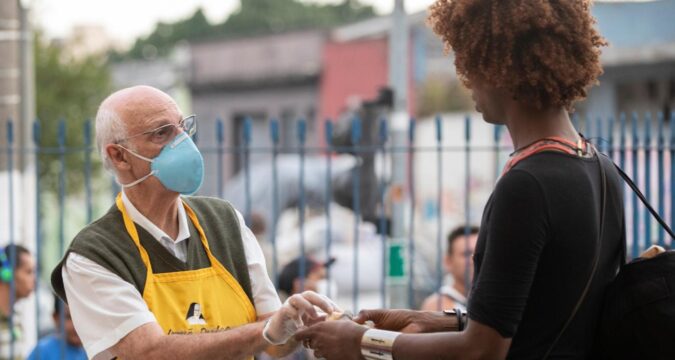
SAO PAULO (AP) — Un renombrado sacerdote católico brasileño confirmó el martes que el arzobispo de Sao Paulo le ordenó dejar de transmitir sus misas y evitar por completo las redes sociales después de ser objeto de ataques de figuras derechistas, quienes denuncian sus acciones como izquierdistas.
Con 2,3 millones de seguidores en Instagram, Júlio Lancellotti, de 76 años, es famoso en todo Brasil por su extensa labor de activismo y alcance con las personas sin hogar en Sao Paulo. Lancellotti dijo el martes a los periodistas que recibió la noticia del cardenal Odilo Scherer, arzobispo de Sao Paulo, “en un espíritu de obediencia y resiliencia”.
La arquidiócesis de Sao Paulo señaló en un comunicado que “los temas discutidos entre el arzobispo y un sacerdote son un asunto interno de la iglesia y se llevan a cabo directamente entre ellos”.
Las misas de Lancellotti se transmitían regularmente los domingos por la mañana, y en una de las más recientes advirtió a los feligreses que sus seguidores en línea no podrían ver el servicio si no asistían en persona.
Más tarde el martes, más de 40 organizaciones brasileñas que trabajan con indigentes enviaron una carta al cardenal Scherer para solicitarle que reconsidere su decisión de suspender las transmisiones y la actividad de Lancellotti en redes sociales.
La carta, a la que The Associated Press tuvo acceso, no cuestiona la autonomía de la Iglesia y gira en torno al impacto social de la decisión del cardenal. Las organizaciones firmantes enviarán representantes a la misa del próximo domingo como una muestra de apoyo público hacia el padre Lancellotti.
Lancellotti ha acumulado adversarios políticos en todo Brasil desde la pandemia de COVID-19, aunque ha realizado un trabajo similar en Mooca, un distrito de Sao Paulo, durante casi 40 años.
El vicealcalde de Sao Paulo, el coronel Ricardo Mello Araujo, ha acusado a Lancellotti de empoderar a los consumidores de drogas del centro de la ciudad, una afirmación que el sacerdote rechaza. Concejales aliados del expresidente Jair Bolsonaro han intentado abrir investigaciones en contra del trabajo del sacerdote.
Lancellotti niega cualquier irregularidad. Defensor declarado del presidente Luiz Inácio Lula da Silva, el sacerdote ha defendido durante años su trabajo como una “acción pastoral” de la arquidiócesis, argumentando que no pertenece a ninguna organización sin fines de lucro.
____ Esta historia fue traducida del inglés por un editor de AP con la ayuda de una herramienta de inteligencia artificial generativa.

Six men charged with robbery in September jail attack
Six men are facing charges for beating a Lake County Jail inmate who resisted turning over his commissary money.
Noble “BG” Uylaki, 25, of Gary; Emmanuel Pugh, 27, of Hobart; Erich Boone, 49, of Gary; Rommel Harris, 36, of Merrillville; Xavier Schlueb, 24, of Gary; and Shakur Brewer, 24, of Merrillville, are each charged with robbery resulting in serious bodily injury, a Level 2 felony; criminal confinement, a Level 3 felony; battery resulting in serious bodily injury, a Level 5 felony; and intimidation, a Level 6 felony.
Lake County Sheriff’s Department Det. Lt. Hardiman wrote the victim reported the attack at 10:35 a.m. Sept. 12 at the jail. He said he was being “extorted” and “threatened” for his commissary funds.
Surveillance video showed Boone slipped into the victim’s housing unit to attack him around 6 a.m., followed minutes later by Uylaki, who ordered everyone out. Both tried to conceal their faces with linens.
Uylaki helped get spit in a cup from inmates in a hallway that they later threw at the victim.
Brewer stood outside, trapping the victim inside. According to the affidavit, Uylaki and Harris dragged the victim out. Pugh, Schlueb and Uylaki kicked him outside. Cameras showed Schlueb went back into the cell to steal stuff from the victim. Uylaki threatened to kill the victim if he left his cell, charges state.
The victim told police the section was on lockdown. Earlier, Uylaki had told him about the section’s “rules,” but he couldn’t understand and asked questions. Uylaki thought the man was “playing dumb” and needed to “teach (him) a lesson,” the affidavit states.
The victim got an eye contusion and cuts, a head injury, neck pain, and a superficial cornea injury.
Police learned Brewer attacked the victim a week earlier and Brewer, Uylaki and other inmates extorted other inmates’ commissary accounts the prior day.
https://www.chicagotribune.com/2025/12/16/six-men-charged-with-robbery-in-september-jail-attack/
FBI Agents Thought Clinton’s Uranium One Deal Might Be Criminal – But McCabe, Yates Stonewalled Investigation: Report
FBI Agents Thought Clinton’s Uranium One Deal Might Be Criminal – But McCabe, Yates Stonewalled Investigation: Report
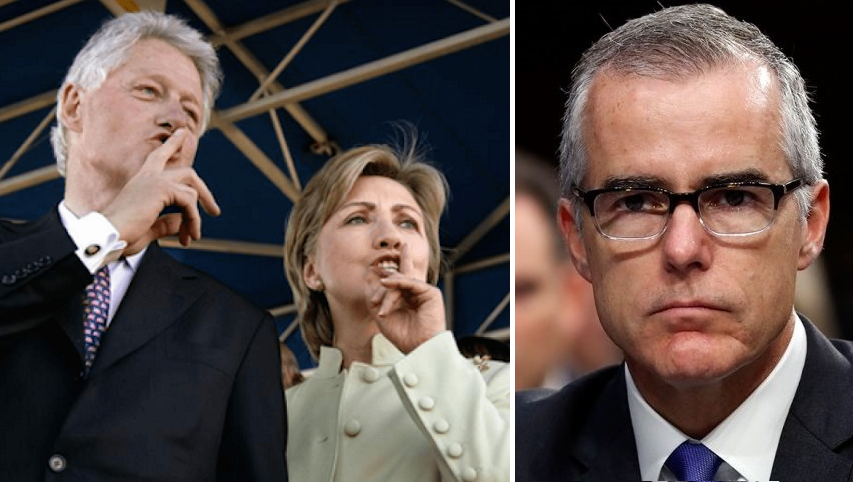
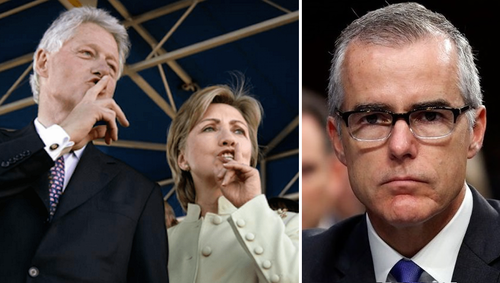
Remember Uranium One? The massive 2010 sale of US uranium deposits to Russia approved by Hillary Clinton and rubber-stamped by the Committee on Foreign Investment in the United States (CFIUS) – after figures linked to the deal donated to the Clinton Foundation?
Turns out rank-and-file FBI investigators thought there was enough smoke to launch a criminal investigation, but internal delays and disagreements within the DOJ and FBI ultimately caused the inquiry to lapse, newly released records reveal.
The materials, made public by Senate Judiciary Committee Chairman Chuck Grassley (R-IA) and first reported by Just the News, reveal that investigators argued internally over the delays – which allowed the statute-of-limitations to expire and ultimately halt the case.
The Uranium One transaction – involving the sale of a Canadian mining company with substantial U.S. uranium assets to Russia’s state-owned nuclear firm Rosatom – became a flashpoint during Hillary Clinton’s 2016 presidential campaign. Critics argued that then-Secretary of State Clinton, a member of CFIUS, helped approve the deal while donors connected to Uranium One made large contributions to the Clinton Foundation.
The New York Times reported in 2015 that “as the Russians gradually assumed control of Uranium One in three separate transactions from 2009 to 2013 … a flow of cash made its way to the Clinton Foundation. Uranium One’s chairman used his family foundation to make four donations totaling $2.35 million. Those contributions were not publicly disclosed by the Clintons, despite an agreement Mrs. Clinton had struck with the Obama White House to publicly identify all donors. Other people with ties to the company made donations as well.”
“And shortly after the Russians announced their intention to acquire a majority stake in Uranium One, Mr. [Bill] Clinton received $500,000 for a Moscow speech from a Russian investment bank with links to the Kremlin that was promoting Uranium One stock,” the Times reported. “At the time, both Rosatom and the United States government made promises intended to ease concerns about ceding control of the company’s assets to the Russians. Those promises have been repeatedly broken, records show.” -Just the News
Resistance from senior officials – including then-Deputy Attorney General Sally Yates and then-FBI Deputy Director Andrew McCabe – slowed the inquiry to the point where statute-of-limitations concerns were later cited to justify shutting it down.
Investigators disputed statute-of-limitations claims
Thanks to Grassley we now have a newly declassified FBI investigative timeline surround the deal, as agents in multiple field offices opened inquiries in early 2016 examining the Clinton Foundation’s intersection with the Uranium One deal. The Little Rock field office initiated a full field investigation, while New York and Washington opened preliminary investigations.
Internal records show that agents and prosecutors continued to debate whether the investigation was time-barred. Jonathan Ross, then First Assistant U.S. Attorney for the Eastern District of Virginia, argued in a 2018 email that “there is no legal barrier in continuing the present investigation.” Ross has served as U.S. Attorney in Arkansas since 2022.
Then-U.S. Attorney Cody Hiland of Arkansas echoed that view in a separate email to then-U.S. Attorney John Huber of Utah, stating that the team did not believe the case was barred by statute of limitations because payments to the Clinton Foundation “were made continuously from 2007 through 2014.”
The FBI timeline also noted that statute-of-limitations arguments “failed to include whether Acts of Concealment such as deleting emails in 2015” could have extended the filing window. Investigators pointed to possible statutes including the Racketeer Influenced and Corrupt Organizations (RICO) Act, major fraud against the United States, bank fraud, and the Wartime Suspension of Statute of Limitations Act.
Despite those arguments, senior DOJ officials expressed growing reluctance to proceed. In late 2016, then-U.S. Attorney Robert Capers and then-Criminal Chief James Gatta raised concerns about potential statute-of-limitations issues and urged moving on from the case.
Internal emails show morale collapse among agents
The records reveal frustration among investigators who believed conflicting legal guidance undermined their authority to continue the probe. Hiland wrote in June 2018 that an email circulated by then-First Assistant U.S. Attorney Patrick Harris, asserting that the statute of limitations expired on Feb. 1, 2018, “cast a permanent pall over the local agents’ attitude” toward the investigation.
Ross later disputed Harris’s conclusion, writing that Harris was unaware of 18 U.S.C. § 3287 when issuing his assessment. Ross warned that agents’ confidence had been damaged and urged additional resources or reassignment of the case to a new investigative team.
The timeline indicates that prosecutors believed additional interviews and investigative steps remained unfinished, including questioning Uranium One executives, foreign nationals, State Department officials involved in the CFIUS vote, and Department of Energy personnel who approved export authorizations after the deal closed.
Political scrutiny and congressional oversight
The Uranium One deal drew sustained attention from Congress. In 2010, Sen. John Barrasso (R-WY) warned that the transaction would give Russia control over a sizable share of U.S. uranium production capacity. Grassley repeatedly pressed DOJ officials to examine whether donations to the Clinton Foundation influenced the CFIUS process.
The Hill reported in 2017 that the FBI had gathered evidence as early as 2009 that Russian nuclear officials engaged in bribery, kickbacks, and money laundering connected to U.S. uranium interests. That reporting cited a confidential U.S. witness and financial records tied to the Russian nuclear industry.
Attorney General Jeff Sessions later tasked Huber with reviewing the Uranium One matter in 2017, but did not appoint a special counsel. By early 2020, reports indicated that Huber’s effort was winding down. Special Counsel John Durham later stated that his mandate did not include Uranium One.
Fallout continues amid uranium supply concerns
The release of the FBI records comes as U.S. reliance on Russian-sourced uranium remains a national security concern. Russia accounted for roughly 20% of U.S. enriched uranium supplies in 2024, according to the Energy Information Administration, down from prior years.
Congress banned Russian uranium imports following Moscow’s invasion of Ukraine, but experts have warned that decades-old policy decisions left the United States vulnerable.
The newly released documents suggest that the circumstances surrounding Uranium One were never fully investigated, leaving unresolved questions about how a strategic U.S. asset came under Russian control – and whether potential criminal conduct went unexamined due to internal delays and legal disputes.
Travis
Tue, 12/16/2025 – 17:20