Category: News

Luke Weaver acuerda por 22 millones de dólares y 2 años con Mets, según fuente de AP
NUEVA YORK (AP) — Luke Weaver llegó a un acuerdo de dos años y 22 millones de dólares con los Mets de Nueva York, informó el miércoles a The Associated Press una persona familiarizada con las negociaciones.
Weaver se unió así a Clay Holmes y Devin Williams como ex Yankees en un cuerpo de lanzadores renovado.
La fuente que dio la información habló bajo condición de anonimato porque el acuerdo estaba sujeto a un examen físico exitoso.
Weaver, derecho de 32 años, reemplazó como cerrador de los Yankees a Holmes, quien pasaba apuros, en septiembre de 2024. A inicios de 2025 fue sustituido por Williams, si bien el cambio se invirtió ante los problemas de este último a finales de abril pasado.
Pero el 1 de junio, Weaver sufrió una distensión en el muslo izquierdo.
Weaver tuvo una efectividad de 1.05 y ocho salvamentos en nueve oportunidades a lo largo de 24 juegos antes de lesionarse. Regresó a finales de junio y tuvo una efectividad de 5.31 sin salvamentos en tres oportunidades a lo largo de 40 juegos.
En 2024, Weaver tuvo un récord de 7-3 con una efectividad de 2.89 y cuatro salvamentos durante la temporada y 1-0 con una efectividad de 1.76 en cuatro juegos de postemporada. Permitió un jonrón de dos carreras a Jhonkensy Noel de Cleveland con dos outs en la novena entrada, para que se empatara el tercer juego de la Serie de Campeonato de la Liga Americana.
Los Yankees perdieron aquel encuentro cuando David Fry conectó un cuadrangular contra Holmes en la décima.
Weaver, un veterano de diez años en las Grandes Ligas, tiene un récord de 38-49 con una efectividad de 4.74 y 12 salvamentos para San Luis (2016-18), Arizona (2019-22), Kansas City (2022), Cincinnati (2023), Seattle (2023) y los Yankees.
Holmes alcanzó un contrato de tres años y 38 millones de dólares el pasado diciembre y fue movido a la rotación. Williams firmó un acuerdo de tres años y 51 millones de dólares este mes.
Otros ex Yankees que se han unido a los Mets en los últimos años incluyen al destacado jardinero dominicano Juan Soto, el receptor venezolano Luis Torrens y el manager Carlos Mendoza, también de Venezuela.
Después de no llegar a los playoffs, los Mets perdieron al cerrador boricua Edwin Díaz la semana pasada cuando acordó un contrato de tres años y 69 millones de dólares con los Dodgers de Los Ángeles, bicampeones vigentes de la Serie Mundial. Además, los Mets perdieron al primera base Pete Alonso ante Baltimore por un contrato de cinco años y 155 millones de dólares y cambiaron al jardinero Brandon Nimmo a Texas por el segunda base Marcus Semien, ganador del Guante de Oro.
___
Deportes en español AP: https://apnews.com/hub/deportes

Trump Expands Travel Ban To Block Palestinians, Others From Entering The US
Trump Expands Travel Ban To Block Palestinians, Others From Entering The US
President Donald Trump has once again expanded the U.S. travel ban, adding seven new countries and, for the first time, holders of Palestinian Authority passports to a growing list of nations whose citizens are barred from entering the United States. The move brings the number of countries facing travel restrictions to nearly 40, as the administration doubles down on its promise to tighten America’s borders and restore national security by strengthening control over who gets in—and who does not.
The new ban applies to Syria, Burkina Faso, Mali, Niger, Sierra Leone, South Sudan, and Laos, along with anyone traveling on a Palestinian Authority passport. The restrictions have no exceptions for individual circumstances.
Trump’s proclamation cites threats to the safety and stability of the United States as the justification.
“It is the policy of the United States to protect its citizens from foreign nationals who intend to commit terrorist attacks, threaten our national security and public safety, incite hate crimes, or otherwise exploit the immigration laws for malevolent purposes,” Trump said in his proclamation.
“The United States must exercise extreme vigilance during the visa-issuance and immigration processes to identify, prior to their admission or entry into the United States, foreign nationals who intend to harm Americans or our national interests. “
Trump added, “The United States Government must ensure that admitted aliens do not intend to threaten its citizens; undermine or destabilize its culture, government, institutions, or founding principles; or advocate for, aid, or support designated foreign terrorists or other threats to our national security.”
The inclusion of Syria comes in the wake of an attack earlier this week that killed two U.S. troops and a civilian.
Syrian authorities identified the perpetrator as a security officer set to be dismissed due to “extremist Islamist ideas.”
The attack reinforced long-standing concerns within the administration about the region’s volatility and the risk of infiltration by radicals.
The addition of Palestinian Authority passport holders formalizes what had functioned as an informal ban for years.
The other countries – Burkina Faso, Mali, Niger, Sierra Leone, and South Sudan – are plagued by weak institutions, Islamist militancy, and chronic instability.
Laos was included due to authoritarian consolidation and close ties to China.
Trump said all face “chronic vetting deficiencies” that pose risks to U.S. security.
Partial restrictions also apply to countries including Nigeria, the Ivory Coast, and Senegal.
While athletes will be allowed to enter for next year’s World Cup, no such guarantees have been made for fans or journalists.
Other countries – including Angola, Benin, Dominica, Gabon, The Gambia, Malawi, Mauritania, Tanzania, Zambia, Zimbabwe, Antigua and Barbuda, and Tonga – are also facing new forms of limited travel restrictions.
Trump had already banned the entry of Somalis.
Other countries remaining on the full travel ban are Afghanistan, Chad, Republic of the Congo, Equatorial Guinea, Eritrea, Haiti, Iran, Libya, Myanmar, Sudan, and Yemen.
Trump last month made the ban even more sweeping against Afghans, severing a program that brought in Afghans who had fought alongside the United States against the Taliban, after an Afghan veteran who appeared to have post-traumatic stress shot two National Guards troops deployed by Trump in Washington.
The White House acknowledged “significant progress” by one initially targeted country, Turkmenistan.
The Central Asian country’s nationals will once again be able to secure US visas, but only as non-immigrants.
Trump has also all but ended refugee admissions, with the United States now only accepting South Africans from the white Afrikaner minority.
A total of 39 countries now have a full or partial travel ban imposed.
Trump’s travel bans have routinely triggered fierce resistance from Democrats. In 2017, his first ban, driven by terrorism concerns, was immediately smeared as racist because the affected countries were Muslim majority countries. That charge rang hollow, given that the list of countries of concern was developed under the Obama administration. The problem wasn’t the ban, it was who was implementing it. The same pattern played out at the start of the COVID-19 pandemic, when Trump’s travel restrictions were attacked as xenophobic, only for governments around the world to adopt nearly identical measures shortly thereafter.
Tyler Durden
Wed, 12/17/2025 – 18:50
https://www.zerohedge.com/political/trump-expands-travel-ban-block-palestinians-others-entering-us
Cámara baja de EEUU rechaza resoluciones para limitar campaña de Trump contra Venezuela y cárteles
Por STEPHEN GROVES y BEN FINLEY
WASHINGTON (AP) — Los republicanos de la Cámara de Representantes rechazaron el miércoles un par de resoluciones respaldadas por los demócratas que habrían puesto un límite al poder del presidente Donald Trump para usar la fuerza militar contra cárteles narcotraficantes y contra Venezuela.
Los demócratas forzaron las votaciones debido a que Trump ha intensificado sus amenazas contra la nación sudamericana y el Congreso ha cuestionado cómo el ejército de Estados Unidos está llevando a cabo una campaña que ha destruido 25 lanchas que supuestamente transportaban drogas y ha matado al menos a 95 personas. La legislación habría obligado a la administración federal a pedir autorización del Congreso antes de continuar los ataques contra cárteles que considera organizaciones terroristas en el hemisferio occidental o de lanzar un ataque contra Venezuela en sí.
El representante Gregory Meeks, el principal demócrata en la Comisión de Asuntos Exteriores de la cámara baja, argumentó que las agresiones de Trump en la región eran realmente porque “el presidente está codiciando el petróleo venezolano”.
Fueron las primeras votaciones en la Cámara de Representantes sobre la campaña militar de Trump en Centro y Sudamérica. Una mayoría de republicanos en el Senado había votado previamente en contra de resoluciones similares, y Trump casi con certeza las vetaría si llegaran a aprobarse en el Congreso. Pero los demócratas forzaron las votaciones como una forma de abrir un debate sobre la campaña militar y obligar a los republicanos a pronunciarse oficialmente sobre su apoyo.
Los líderes republicanos han expresado cada vez más su apoyo a la campaña de Trump, incluso cuando potencialmente se enfila a una confrontación directa con el presidente venezolano Nicolás Maduro.
El líder de la mayoría del Senado, John Thune, dijo más temprano el miércoles que no sabía si el gobierno de Trump había “declarado públicamente” que quería un cambio de régimen, pero “ciertamente no tendría problema si esa fuera su posición”.
“Maduro es un cáncer en ese continente”, según Thune.
Aun así, el gobierno de Trump no ha pedido autorización del Congreso para sus acciones recientes en el Caribe, argumentando en cambio que puede destruir barcos que transportan drogas tal como manejaría amenazas terroristas contra Estados Unidos. Esa justificación, sin embargo, ha llevado a un profundo escrutinio de los ataques, especialmente después de que se reveló que una operación del 2 de septiembre mató a dos personas que habían sobrevivido a un ataque previo.
___
Esta historia fue traducida del inglés por un editor de AP con la ayuda de una herramienta de inteligencia artificial generativa.
Executives At Bankrupt Subprime Auto Lender Tricolor Charged With Fraud
Executives At Bankrupt Subprime Auto Lender Tricolor Charged With Fraud
Authored by Rob Sabo via The Epoch Times,
The former CEO and chief operating officer of subprime auto dealer and financier Tricolor Holdings were formally charged on Dec. 16 with bank and wire fraud for their alleged roles in what officials say was a years-long scheme to defraud banks and private credit lenders of hundreds of millions of dollars.
Tricolor founder Daniel Chu and David Goodgame were indicted in federal court in Manhattan for multiple financial schemes that started in 2018 and include double-pledging collateral to multiple lenders, as well as manipulating the characteristics of delinquent loans in order to meet lender requirements, the U.S. Attorney’s Office of the Southern District of New York said in a statement.
“CEO Daniel Chu was the leader of an elaborate scheme to defraud creditors of Tricolor,” U.S. Attorney Jay Clayton said.
“At his direction, Tricolor repeatedly lied to banks and other credit providers, including by falsifying auto-loan data and ‘double pledging’ collateral. Fraud became an integral component of Tricolor’s business strategy.”
Tricolor’s former CFO, Jerome Kollar, and financial executive Ameryn Seibold pled guilty to fraud charges for their roles in the scheme and have been cooperating with the investigation of the company’s top executives, the indictment noted.
According to the indictment, Chu directed Tricolor leadership to double-pledge loan collateral to multiple banks, as well as to manipulate data on nonperforming loans in order to bundle them and obtain additional lending. The executives also allegedly made up records that included false payments on loans.
By August, Tricolor had obtained roughly $2.2 billion from lenders and investors, though it only had about $1.4 billion in actual assets.
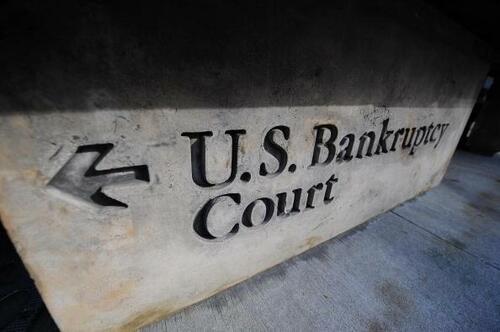
Founded in 2007 in Irving, Texas, Tricolor on Sept. 10 filed for Chapter 7 bankruptcy in the U.S. Bankruptcy Court for the Northern District of Texas.
The company operated more than 60 dealerships, primarily in California and Texas, and its buy-here-pay-here financing model proved attractive to subprime borrowers.
The scheme began to implode this past summer when lender JPMorgan Chase confronted Tricolor and Chu about the $800 million discrepancy. The banker in October recorded a $170 million charge-off in the third quarter due to its exposure to Tricolor debt.
“It is not our finest moment,” JPMorgan Chase CEO Jamie Dimon said at the time.
Other lenders include Barclays PLC, Zions, and Western Alliance. Fifth Third Bancorp recorded a similar $178 million charge-off in the third quarter based on its wholesale lending to Tricolor, while Zions said it would take a $50 million write-off.
As Tricolor began to unravel—the company in September placed more than 1,000 employees on unpaid leave and shuttered operations just before it filed for bankruptcy—Chu directed his chief financial officer to pay him a bonus of $6.25 million, the indictment said.
Chu allegedly used some of the funds to pay for a multimillion-dollar property in Beverley Hills in August.
Tricolor’s turbulent financial failure mirrors that of auto parts supplier First Brands Group, which filed for Chapter 11 bankruptcy protection on Sept. 28. First Brands Group listed debts between $10 billion and $50 billion.
Its collapse has roiled credit markets, a Moody’s Investors Services report said.
Tyler Durden
Wed, 12/17/2025 – 18:25
https://www.zerohedge.com/markets/executives-bankrupt-subprime-auto-lender-tricolor-charged-fraud

Two killed in plane crash at DuPage Airport in West Chicago
Two people were killed in a plane crash at DuPage Airport on Wednesday afternoon, officials said.
Shortly before 2 p.m., a two-engine aircraft with two people aboard crashed at the west suburban airport shortly after taking off, the DuPage Airport Authority said in a statement.
Both people aboard were pronounced dead on the scene, officials said. They did not provide identities, ages or genders for the victims.
DuPage Airport remained closed as of late Wednesday afternoon as emergency operations continued. West Chicago police and fire crews responded to the incident.
The cause of the crash is under investigation, officials said. The National Transportation Safety Board is leading the investigation in tandem with the Federal Aviation Administration, an FAA spokesperson said in an emailed statement. The FAA is expected to publish a preliminary accident report in the coming days, the spokesperson said.
Airport officials stated updates would be provided as warranted, adding, “Our thoughts are with the families and loved ones of those who lost their lives in this tragic incident.”
https://www.chicagotribune.com/2025/12/17/dupage-airport-plane-crash/

Liberan a abogado y líder comunitario tras ser procesados por plantón cerca de casa de Bukele
Associated Press
SAN SALVADOR (AP) — Un abogado ambientalista y el presidente de una cooperativa agrícola fueron liberados el miércoles luego de ser procesados por participar en un plantón en las proximidades de la residencia del presidente salvadoreño Nayib Bukele. Los dos activistas aceptaron los cargos que les imputaron, pero se les concedió el beneficio de la suspensión condicional de la pena.
El abogado defensor Oswaldo Feusier informó a los periodistas que el Juzgado Segundo de Instrucción de la localidad de Santa Tecla avaló un proceso abreviado en el caso contra el abogado ambientalista Alejandro Henríquez y el líder comunitario José Ángel Pérez, quienes confesaron haber cometido desórdenes públicos y resistencia agresiva al arresto.
El juzgado emitió una condena de un año de prisión por el delito de desódenes públicos y de dos años por el de resistencia agresiva, según Feusier.
El abogado defensor explicó que se les concedió el beneficio de la suspensión condicional de ejecución de la pena a cambio de que cumplan reglas de buena conducta durante tres años. “Ellos no deberán participar en hechos similares por los que fueron procesados”, es decir, en manifestaciones o concentraciones de protesta, agregó.
Henríquez y Pérez fueron detenidos en mayo por participar en un plantón cerca de la residencia de Bukele con el propósito de pedir ayuda del mandatario para que interviniera para evitar una orden judicial de desalojo de la cooperativa agrícola El Bosque, en un caso que atrajo la atención pública y de defensores de derechos humanos.
Tras la audiencia ambos procesados, vestidos con la ropa que usan los reclusos en El Salvador —pantalón corto y camisa color blanco— salieron del Centro Judicial Integrado de Santa Tecla, donde familiares y miembros de la comunidad los esperaban.
Mayor Brandon Johnson enters final budget stretch with diminishing options
To veto, or not to veto?
That is the question facing Mayor Brandon Johnson as an alternative budget plan from defiant aldermen marches toward a vote. And his public absence Wednesday spoke volumes.
The mayor’s office canceled an afternoon news conference less than an hour before it was supposed to start, citing “ongoing meetings and budget negotiations.” And he still has not made up his mind on a veto, possibly his only way to prevent opponents from using their current City Council majority to pass their plan, according to spokesperson Cassio Mendoza.
If Johnson caves on his earlier veto threats that would clear the path clear for aldermen to pass their plan without him.
“We’re still driving the process,” Ald. Scott Waguespack, a lead backer of the alternative plan, said Wednesday. “He’s moving full speed ahead without wanting to change the path that he’s on.”
Even as he stays quiet on the veto possibility, Johnson has tried to hold onto the moral and legislative high ground. The emboldened renegade bloc of council moderates say he is not negotiating with them, and as recently as Tuesday afternoon he characterized their spending package as a “Secret Budget” that was not only “immoral, it is simply not feasible.”
But underneath the rhetorical bombs being thrown on both sides was a mayor losing options with under two weeks to go before a government shutdown.
Ahead of a Wednesday Budget Committee hearing on the aldermen’s budget, many supporters of that package said they had not heard from him, despite his claims about ongoing talks.
Veteran Ald. Emma Mitts said no one from the mayor’s administration had called her for days, a sign, she said, that they were “giving up.”
“You can’t talk when you get on the phone anyway,” she added. “It’s all about their agenda.”
The final alternative package included plans to increase plastic bag taxes, sell around $1 billion in debt owed to the city, the legalization and taxation of video gambling machines across the city, liquor tax hikes and more.
Top Johnson finance officials blasted the aldermen’s proposal during the meeting, arguing many of the key items it relies on to close a late-stage budget gap will not bring in nearly as much money as aldermen predict.
While the aldermen say their revenue raisers would generate $176 million, Johnson officials said the plan would actually cost the city $8.3 million. Aldermen pushed back against the mayor’s office characterization of their plan.
Aldermen Emma Mitts 37th, from left,P at Dowell, 3rd, and Ray Lopez, 15th, confer during a meeting of the Budget Committee on Dec. 17, 2025. (Terrence Antonio James/Chicago Tribune)
Ald. Anthony Beale complained that “everything we have submitted has a red line through it,” while Ald. Brendan Reilly labeled the critical presentation a “dog-and-pony show.”
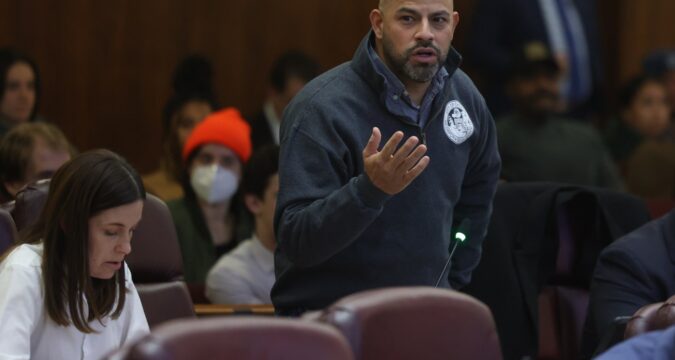
“I sort of feel like you’re hitting the budget over the head with a hammer,” said Ald. Pat Dowell, Johnson’s handpicked Finance Chair. “I stick with the numbers that we put on the table.”
Since Johnson officially kicked off his third budget fight in mid-October by introducing a $16.6 billion package that reinstates Chicago’s corporate head tax, he has found himself increasingly backed into a political corner.
Were the mayor to proceed with a veto, only to watch a supermajority of aldermen clear the 34-vote threshold to overrule him, he would suffer an astounding loss in his power struggle with the most antagonistic City Council that Chicago’s seen in decades.
His council foes sought to call his bluff earlier this week by revealing, then advancing their rival revenue package to the full council floor. Johnson had promised to veto any budget with a garbage fee hike, a component of the aldermen’s plan that they removed Monday.
Since then, Johnson has not directly answered when asked if he would nonetheless veto their budget, which does not include the head tax he has insisted be included. “We’re not at a point where I can make that assertion,” he said Monday.
While the process isn’t over yet, many in and around City Hall said the 2026 budget fight didn’t have to be this tough for the first-term mayor.
“Chicago’s budget challenges are hard and past mayors took a long, hard look at the chessboard before they made their move,” said Thomas Bowen, a Democratic strategist who advised Johnson’s predecessor, Lori Lightfoot. “This administration keeps shoving checker pieces up their noses.”
Chicago Budget Director Annette Guzman speaks during a Budget Committee meeting at City Hall on Dec. 17, 2025. (Terrence Antonio James/Chicago Tribune)
Johnson would be the first to say he “inherited” a host of issues when he entered the mayor’s office on the fifth floor. But he would get no mercy from opponents for a potential government shutdown — or for making things worse for his successors.
The dollars and dimes behind Johnson’s corporate head tax or the opposing aldermen’s bundle of liquor tax, plastic bag and Uber surcharge hikes and more made up much of the recent budget discussions. And by uttering a veto threat, Johnson has hardened the stances of the two sides.
Big mistake, according to Ald. Andre Vasquez, a frequent mayoral critic on the left. Johnson’s lack of negotiation pushed the council to this point, he said.
“It says something about the lack of confidence in the fifth floor that it has gotten to this point,” Vasquez, 40th, said.
The sticking point for several critical swing votes such as Vasquez is fiscal responsibility, which they say sets up future Chicagoans to inherit a better government than the one they are navigating. Despite the full court press from the Chicago Teachers Union, the mayor’s biggest ally, those aldermen say they’re nonplussed by the accusations they are siding with billionaires over the working class by not standing with Johnson’s proposal.
In the end, at least five progressives have avoided endorsing or outright criticized Johnson’s budget proposal: Vasquez, Matt Martin, Ruth Cruz, Desmon Yancy and Ronnie Mosley.
During Tuesday’s Finance Committee vote, Vasquez and Martin rejected the opposition’s revenue plan too, but that was more a sign they wanted to continue leveraging both sides.
Mosley sided with the aldermen after they dropped a controversial garbage fee hike. Cruz and Yancy are not on the Finance Committee but have previously said that they have fiscal concerns with the mayor’s plan.
Johnson’s proposal to nearly halve a previously planned $260 million advance pension payment and borrow money for police settlements and firefighter backpay is at the heart of those progressives’ concerns.
Vasquez, also the Progressive Caucus co-chair, said he has so far rejected both plans because their backers have failed to share data backing up their revenue assumptions.
He was skeptical of the aldermen’s proposal to raise $90 million by selling debt owed to the city. But he thinks the alternative group — and not the mayor — is more likely to listen to his issues and make changes to win him over.
“All they have done is talk about why they can’t do a thing, and then they wonder why you can’t get to a vote,” Vasquez said about the Johnson administration. “That’s the problem. They need to learn how to engage and negotiate.”
Meanwhile, Ald. Walt “Red” Burnett, a recent Johnson appointee who sits near the City Council’s ideological middle, also voted against the alternative budget Tuesday. He cited the plan to legalize video gambling machines to raise $6.8 million.
Ald. Walter “Red” Burnett, 27th, at a Budget Committee of the Chicago City Council on Dec. 17, 2025. (Terrence Antonio James/Chicago Tribune)
The move, likely to compel the operators of the future Bally’s Casino, which would be competing with thousands of slots-like machines in neighborhoods, to halt a voluntary annual $4 million payment to the city, is itself “a gamble,” Burnett said. He argued that it was “absurd” to expect those machines could be licensed and begin to bring in revenue within months, but the prospects of them cropping up on every corner would be intolerable.
“There were just things in there that I feel like are a bit half-baked, and getting that budget 15 minutes beforehand doesn’t make me feel comfortable,” Burnett, 27th, said of the alternative plan. “It’s kind of frustrating to have that done by one side of the coin, and then the other side continues to do the same thing.”
The newest member of City Council, who replaced his father after his July retirement, also represents the ward where Bally’s is located. But while the elder Burnett was one of Johnson’s biggest council allies as vice mayor, his son said he “can’t say” yet where he stands on his budget — another sign the mayor is fast losing ground on his sway over negotiations.
“If we can get the video gaming out of that budget, I can get a bit more comfortable,” Burnett said about the counterproposal.
Chicago Bears LB D’Marco Jackson continues his Cinderella story with NFC Defensive Player of the Week honor
When Chicago Bears linebacker D’Marco Jackson learned that he was named NFC Defensive Player of the Week, it was a special moment.
“So (we) broke down practice yesterday, and Coach (Ben) Johnson had just told us the NFC defense player was me, and I was just filled with a bunch of emotions,” Jackson told reporters Wednesday at Halas Hall. “It’s just been a roller coaster with my own journey, starting with high school to college, all my situations that I came through.
“And just to finally hear that it was just something like a deep reflection. Just to let you know, ‘Just keep going, keep going. … don’t look too far ahead. Just keep on track, and it’ll come.’”
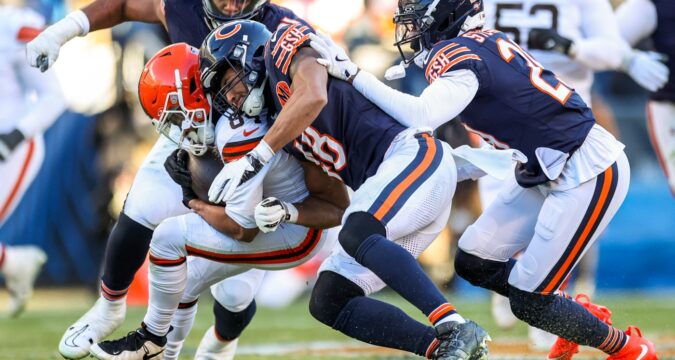
During the Bears’ 31-3 win Sunday against the Cleveland Browns, Jackson recorded seven tackles, two passes defensed, a sack and an interception, the only NFC player to produce at least those numbers in a game this season.
Jackson is the fourth Bear this season to be named player of the week, joining quarterback Caleb Williams (298 yards and four touchdowns in a Week 3 win over the Dallas Cowboys), special teamer Josh Blackwell (a game-clinching blocked field goal against the Las Vegas Raiders in Week 4) and tight end Colston Loveland (58-yard touchdown catch with 17 seconds left to secure a come-from-behind win against the Cincinnati Bengals in Week 9).
Jackson also is the first Bears linebacker to be named defensive player of the week since Danny Trevathan in Week 2 of 2018.
“Happy for him,” defensive coordinator Dennis Allen said. “He’s played well for us, whatever it has been, the last three, four weeks. … It’s a credit to him, and it’s a credit to those assistant coaches who have been able to get those guys ready.”
Jackson entered the season as a special teams player, but when the linebackers group was hit hard with injuries to Tremaine Edmunds, T.J. Edwards, Noah Sewell and others, Jackson has risen to the occasion.
He also shined in Week 12 against the Pittsburgh Steelers in his first career start. Despite being new to the role, Jackson called the plays for the defense and led all players with 15 tackles on a season-high 69 snaps. He received a game ball.
The New Orleans Saints drafted Jackson in the fifth round in 2022, when Allen was their coach. Last season, Jackson was plagued by injuries and was limited to 10 games. The Saints waived him Aug. 26.
Bears linebacker D’Marco Jackson (48) sacks Browns quarterback Shedeur Sanders in the first quarter Sunday, Dec. 14, 2025, at Soldier Field. (Brian Cassella/Chicago Tribune)
“It was unexpected. It put me down,” he said. “But then when Chicago called and said they were claiming me, I just felt like it was a new path and like a new journey for me.”
The Bears claimed him off waivers the next day, after the initial 53-man roster had been set.
Jackson recognized that Allen, whom the Saints fired in early November last year after a 2-7 start, had a hand in the Bears’ decision.
“He’s the guy that drafted me to New Orleans, and for him to come like pick me up and bring me here and just continue to develop me, believing in me to play in his system, it’s a huge blessing,” he said.
Related Articles
What to know about the Chicago Bears’ possible move from Soldier Field to suburban Arlington Heights
Chicago Bears say they’re looking into building a new stadium in northwest Indiana
Chicago Bears short-staffed at wide receiver as Rome Odunze and Luther Burden III remain sidelined
Chicago Bears Q&A: Why are Green Bay Packers favored on Saturday? What happens if a football hits a pigeon?
Chicago Bears QB Caleb Williams dubbed each offensive lineman an ‘Avengers’ character: Here’s who he picked
Before the Steelers game, Jackson hadn’t played more than 14 snaps on defense for the Bears, but he has started the last four games. It has been a dream come true, but one that was delayed.
“Just really staying focused and staying consistent to the path,” Jackson said. “Every kid, you want to get out there and just go straight to defense, and you want to be that guy. But honestly, it was just a long special teams road for me, making plays through special teams to keep my career alive.
“And finally came here, special teams was my role, and due to some injuries I finally got that chance to go out there and execute, and I did it. So it just probably took a couple years for me to finally get that chance.”
Special teams coordinator Richard Hightower admires Jackson’s work ethic and preparation.
“I’ve always thought very fondly of D-Jack,” he said of Jackson’s award. “Very proud of him. The room is proud of him. You should have seen the team today when they announced it. Everybody was just so fired up for him because they know the journey.
“It’s just another great example of guys being ready when their time is called upon.”
https://www.chicagotribune.com/2025/12/17/chicago-bears-dmarco-jackson-journey/
Chicago Bears say they’re looking into building a new stadium in northwest Indiana
The Chicago Bears are considering a move to northwest Indiana amid growing concerns that Illinois lawmakers will not approve the financial incentives needed to build a new stadium in Arlington Heights, a top team official told the Tribune.
In an exclusive interview, Bears President and CEO Kevin Warren confirmed the possibility of crossing state lines, but said the organization also would consider sites in other parts of Illinois. A letter to season ticket holders Wednesday outlined plans to look elsewhere, too, adding more fodder to the ongoing political debate over the franchise’s future and renewing an old threat to leave the state if the team doesn’t get its needs met.
“We’re looking at opportunities that may exist in the Chicagoland area including northwest Indiana,” Warren said. “We still believe that Arlington Park is the most viable location in Cook County, but now we’re putting everything back on the table and exploring all options.”
The news comes after Indiana lawmakers earlier this year created the Northwest Indiana Professional Sports Development Commission to attract a major sports organization such as the Bears.
“Northwest Indiana is in our home marketing area,” Warren said. “From a TV, media, radio rights standpoint and our fan base, it’s an extension of Chicago. It seems like it would provide a viable opportunity.”
Word that the team would begin exploring options across state lines appeared to come as a surprise to Gov. JB Pritzker’s office.
“Suggesting the Bears would move to Indiana is a startling slap in the face to all the beloved and loyal fans who have been rallying around the team during this strong season,” Pritzker spokesman Matt Hill said in a statement to the Tribune. “The governor’s a Bears fan who has always wanted them to stay in Chicago. He has also said that ultimately they are a private business that makes their own decisions, but the governor has also been clear that the bottom line for any private business development should not come at the full expense of taxpayers.”
Indiana Gov. Mike Braun welcomed the announcement.
“The Chicago Bears recognize Indiana’s pro-business climate, and I am ready to work with them to build a new stadium in Northwest Indiana. This move would deliver a major economic boost, create jobs, and bring another premier NFL franchise to the Hoosier State. Let’s get it done,” Braun said in a statement.
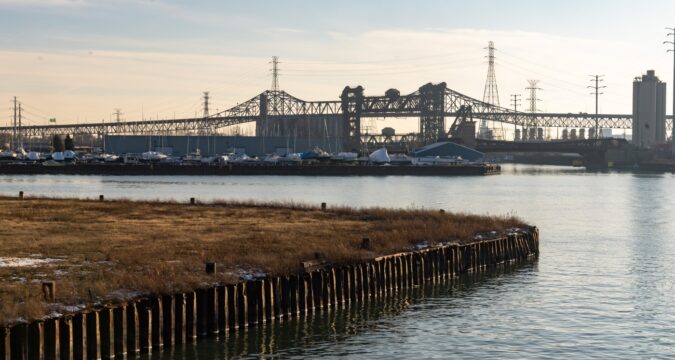
While the Bears did not name a specific site in Indiana, Hammond sits on Lake Michigan southeast of Chicago, and has a mayor who is vice chairman of the sports commission who is willing to play ball.
“I would bend over backwards to do anything I can to help the Bears come here,” Hammond Mayor Thomas McDermott Jr. said.
The mayor said he hasn’t talked to the team, but said business and residents increasingly are fleeing high taxes in Illinois for lower costs in Indiana and proximity to Chicago. While Hammond doesn’t have a site ready to host an NFL stadium, McDermott said he would “knock down buildings” to clear a spot.
It’s unclear whether the Bears would also consider moving its headquarters from Halas Hall in suburban Lake Forest if it played in Indiana.
To be sure, this isn’t the first time the Bears have threatened such a move. In 1995, the team explored moving to a proposed entertainment complex by Gary’s airport. But some fans expressed anger at the idea, and that plan went nowhere.
Critics then suggested the proposed move was a negotiating tactic to win more concessions to stay in Illinois. But Warren says it’s no ploy now, he still wants to build in Arlington Heights, but has to consider all options.
Warren had wanted to break ground on a new stadium in 2025, and finish the three-year construction in time for the 2028 season. The plan is contingent on the General Assembly letting the team negotiate its long-term property taxes with local schools and other taxing bodies.
Pritzker has expressed openness to the state paying for infrastructure costs, but said it’s up to the Bears, valued at nearly $9 billion, to pay for their stadium. Despite the team having the oldest and smallest stadium in the NFL, Warren said, state leaders have told the Bears that their project will not be a legislative priority in 2026.
The legislation would cost the state nothing, and could apply to any “megaproject,” like a stadium, large factory or corporate headquarters. But Chicago lawmakers have resisted the measure, with Pritzker and others suggesting the team should help pay off the more than $500 million debt from the renovation of Soldier Field in 2003.
The debt was supposed to be paid off by the city’s hotel tax, but that hasn’t made a dent in the amount owed. The team is under no obligation to pay the debt, other than its yearly rent of about $7 million and an $84 million penalty if it leaves in 2026, before its lease is up in 2033.
The Bears’ move to open the door to a possible move to northwest Indiana comes a few weeks after top team officials, including Warren, team Chairman George McCaskey and Chief Operating Officer Karen Murphy met with Pritzker and top aides in the governor’s Chicago office.
The Nov. 6 meeting, which team officials sought for months, lasted about an hour and was “a productive and honest conversation,” according to a source briefed on the discussions.
Pritzker and his staff shared their view of the political dynamics in Springfield and the challenges the team has faced in trying to gather support for proposed megaprojects legislation that Warren and other Bears officials have said is crucial to the proposed Arlington Heights stadium, said the source, who spoke on condition of anonymity to discuss the private conversations.
The biggest obstacle in the Bears’ path to Arlington Heights has been a lack of support from Chicago legislators for a proposal that would allow the team, and other businesses developing large-scale projects, to negotiate property tax payments directly with local taxing bodies.
Democratic lawmakers who represent Chicago are loath to aid the Bears in the team’s effort to leave for the suburbs.
Lawmakers were unimpressed with an offer from the Bears, which came late in the General Assembly’s fall veto session in October, to set aside $25 million to help pay down the debt.
Separately, the team met Friday with Cook County officials to hear a presentation on a proposal to build a new stadium on the former Michael Reese Hospital site. The team has long said the property near the Bronzeville neighborhood is too small for its needs.
Warren reiterated those reasons Tuesday in a letter to Cook County Board President Toni Preckwinkle, noting that “Arlington Park remains the only viable Cook County site for the project.”
“As we have shared privately and publicly, we are at a pivotal juncture to build a new world-
class stadium for our Chicago Bears fans,” Warren wrote to Preckwinkle. “There are significant costs associated with further delays. We have great respect for you and your position as President of Cook County and your commitment to making the world a better place for the residents of the southside of Chicago. We want to maintain a strong relationship with you because we serve the same community regardless of where the new Chicago Bears stadium is built. We appreciate your time and leadership.”
In a statement Wednesday, Preckwinkle said she was “proud to have recently hosted a productive meeting between the State, City and County and the Bears. It was important for us to bring everyone to the table and have a conversation around making a serious commitment to keeping the Bears in Cook County and Illinois. We’re shocked and disappointed that the Bears would discuss moving to Indiana at this time.”
Traffic moves along I-80/I-94 on Dec. 17, 2025, near the Indiana border in Lansing. (Dominic Di Palermo/Chicago Tribune)
Indiana state Rep. Earl Harris Jr., the East Chicago Democrat who authored the law that created the sports commission, said he has heard rumblings about the Bears’ interest in the area.
The commission is in the process of raising funds from Lake County and local municipalities to put together a strategic plan to attract a professional sports franchise. He was aware of potential sites near the Hard Rock Casino and on the lakefront in Gary.
“I’m ecstatic to hear the news,” Harris Jr. said. “If this conversation is getting serious, we will dive deeper into this.”
The Bears have reversed direction before on their plans for a new, world-class enclosed stadium.
It’s been more than four years since the team announced plans to buy the 326-acre former Arlington International Racecourse as a stadium site. The team pledged to spend more than $2 billion to build its own world-class enclosed stadium there. Officials later pivoted to Chicago, proposing a $4.7 billion new domed stadium to replace Soldier Field on the lakefront. After state leaders said they had no money to offer, Warren said the team’s focus was back on Arlington Heights.
The team planned to present its formal proposal to the Arlington Heights village board this fall, but when state lawmakers chose not to help the team with legislation, officials put the presentation on hold.
Wherever the stadium ends up, team officials are looking for government help to build the necessary infrastructure for it, such as roads and utilities, as is common with large projects. The Arlington Heights site would need an estimated $855 million in new construction, including expressway ramps to and from adjacent Route 53.
While the Bears have been stymied in their hopes for a new stadium, public officials in Nashville, Tennessee, and Buffalo, N.Y., have committed about $2 billion total for new NFL stadiums in each of those cities. Officials in Cleveland, Kansas City, Kansas, and Washington, D.C., are also considering building new football stadiums.
The idea of moving to another state is not unheard of, as the New York Giants and New York Jets both play in New Jersey. Several other teams play outside their namesake towns, such as the Dallas Cowboys in Arlington, Texas, and the Los Angeles Rams in Inglewood, California.
Research by economists generally shows that publicly financed stadiums are not a good deal for taxpayers. Polls have shown residents of both Chicago and Arlington Heights would love to have the Bears, but don’t want to pay for a new stadium.
The Bears estimate the economic impact of the stadium’s construction at about $6.6 billion statewide, with 33,000 construction job years and 9,000 permanent jobs, and generating $220 million annually from stadium operations.
Tribune reporter A.D. Quig contributed.
https://www.chicagotribune.com/2025/12/17/chicago-bears-stadium-northwest-indiana/

Imprisoned Jeffrey Epstein associate Ghislaine Maxwell seeks release, citing ‘new evidence’
NEW YORK — Jeffrey Epstein’s former girlfriend and longtime associate Ghislaine Maxwell asked a federal judge on Wednesday to set aside her sex trafficking conviction and free her from a 20-year prison sentence, saying “substantial new evidence” has emerged proving that constitutional violations spoiled her trial.
Maxwell maintained in a habeas petition she has promised to file since August that information that would have resulted in her exoneration at her 2021 trial was withheld and false testimony was presented to the jury.
She said the cumulative effect of the constitutional violations resulted in a “complete miscarriage of justice.”
A habeas petition (or writ of habeas corpus petition) is a legal request for a court to review the legality of someone’s detention, demanding that the custodian (like a prison official) bring the prisoner before a judge to justify the imprisonment, serving as a fundamental safeguard against unlawful confinement and arbitrary detention by ensuring due process. Filed by or on behalf of someone in custody, it challenges constitutional violations, such as ineffective legal counsel or unfair trials, and seeks release or other relief, often as a last resort after appeals are exhausted.
“Since the conclusion of her trial, substantial new evidence has emerged from related civil actions, Government disclosures, investigative reports, and documents demonstrating constitutional violations that undermined the fairness of her proceeding,” the filing in Manhattan federal court said. “In the light of the full evidentiary record, no reasonable juror would have convicted her.”
The filing came just two days before records in her case were scheduled to be released publicly as a result of President Donald Trump’s signing of the Epstein Files Transparency Act. The law, signed after months of public and political pressure, requires the Justice Department to provide the public with Epstein-related records by Dec. 19.
Forced to act by the new transparency law, the Justice Department has said it plans to release 18 categories of investigative materials gathered in the massive sex trafficking probe, including search warrants, financial records, notes from interviews with victims, and data from electronic devices.
Epstein, a millionaire financier, was arrested in July 2019 on sex trafficking charges. A month later, he was found dead in his cell at a New York federal jail and the death was ruled a suicide. Maxwell, a British socialite, was arrested a year later and was convicted of sex trafficking in December 2021. She was interviewed by the Justice Department’s second-in-command in July and was soon afterward moved from a federal prison in Florida to a prison camp in Texas.
After the Justice Department asked a New York federal judge to permit grand jury and discovery materials gathered prior to her trial to be released publicly, attorney David Markus wrote on her behalf that while Maxwell now “does not take a position” on unsealing documents from her case, doing so “would create undue prejudice so severe that it would foreclose the possibility of a fair retrial” if her habeas petition succeeds.
The records, Markus said, “contain untested and unproven allegations.”
Last week, Judge Paul A. Engelmayer in Manhattan granted the Justice Department’s request to publicly release the materials.
On Wednesday, U.S. Attorney Jay Clayton said during a news conference on another topic that he would follow the law and the judge’s orders pertaining to the records.
Engelmayer, who along with other judges had previously rejected Justice Department unsealing requests before the transparency law was passed, said the materials “do not identify any person other than Epstein and Maxwell as having had sexual contact with a minor.”
https://www.chicagotribune.com/2025/12/17/jeffrey-epstein-ghislaine-maxwell-seeks-release/