Category: News

Where Did Global Warming Go? US East Sees Snowiest Start In Nearly Two Decades
Where Did Global Warming Go? US East Sees Snowiest Start In Nearly Two Decades
The so-called “climate crisis” narrative was built on a house of cards and has been unraveling ever since Bill Gates acknowledged the risks were overstated, and a major study long used to project climate catastrophe was recently retracted.
In reality, the narrative became a vehicle for globalist Democrats to raid the U.S. Treasury and push de-growth policies that weakened the U.S. under the Biden-Harris regime. Meanwhile, China aggressively expanded coal-fired power generation, raising the question of whether the push for “green” policies amounted to little more than self-sabotage.
Another climate reality is that polar vortex mayhem across the eastern half of the U.S. this month has produced one of the snowiest starts to the Northern Hemisphere winter season in nearly two decades. This winter blast undermines the narrative pushed by Democrats, climate-aligned NGOs, and left-wing billionaires, as well as their favored youth spokesperson, Greta, who routinely promoted misinformation and disinformation of imminent planetary inferno unless higher taxes on working-class people, an urgent need to ban cow farts, and eliminate petrol-powered cars and gas stoves.
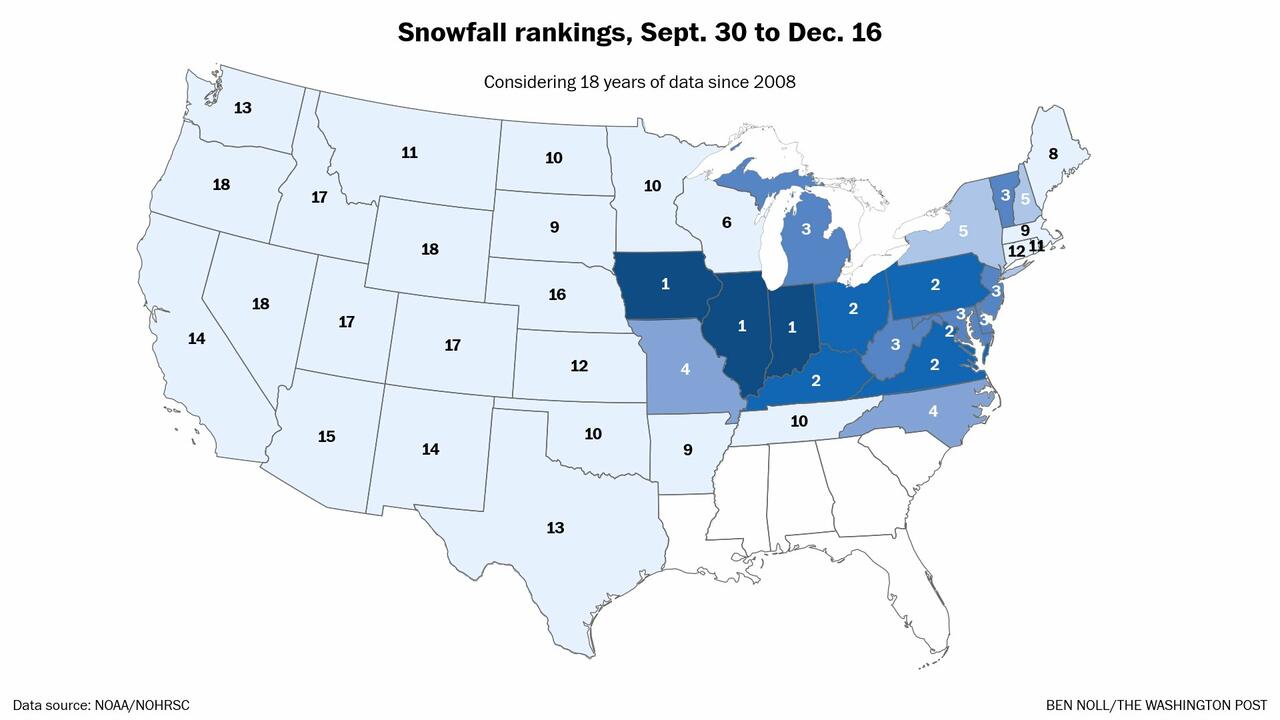
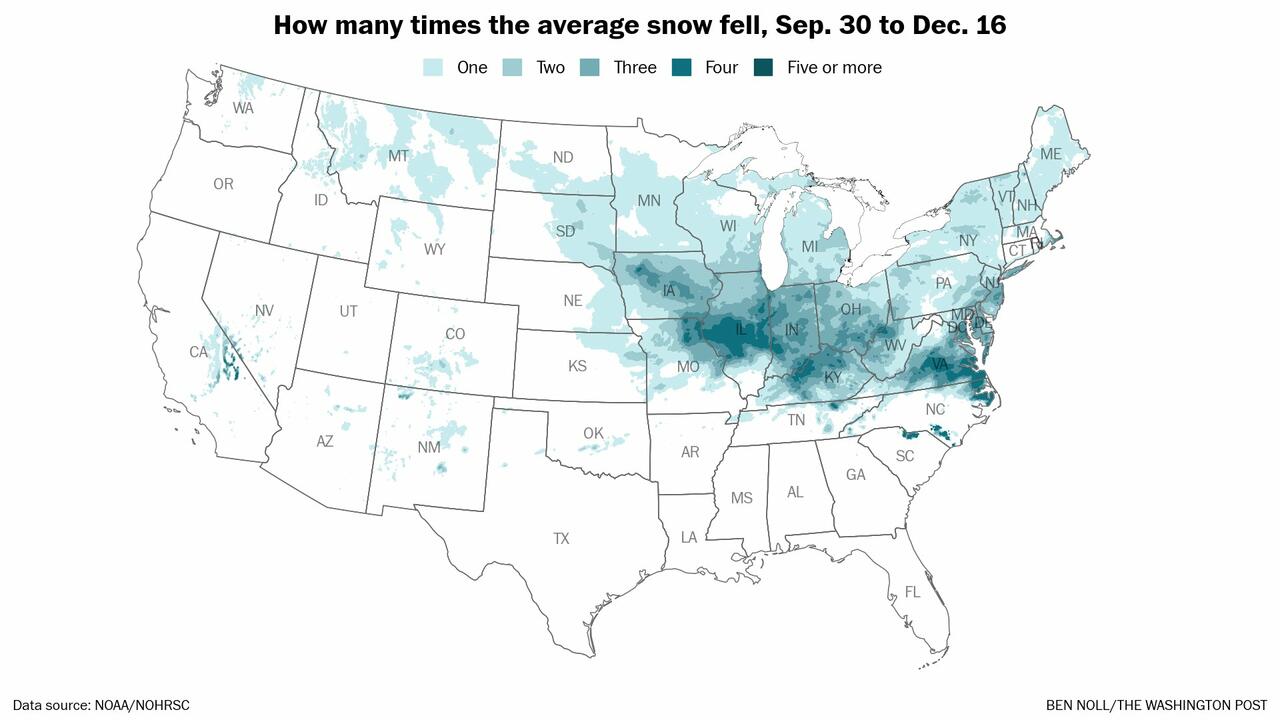
Meteorologist Ben Noll revealed the visually displeasing reality of a strong winter start for the eastern half of the Lower 48 that Democrats don’t want the mainstream to see…
“Fueled in part by an unusually early disruption to the polar vortex, 18 states and D.C. have experienced more snow than average so far this season. In some states, it’s been the snowiest start in almost two decades,” Noll wrote on X.
Noll noted, “States such as Iowa, Illinois, and Indiana experienced their snowiest start to the season since at least 2008. Michigan, Ohio, Kentucky, Pennsylvania, West Virginia, Virginia, Maryland, Delaware, D.C., New Jersey, and Vermont rank in the top three snowiest over that same period.”
“Snowfall has been two to five times the season-to-date average in a zone from Iowa to the Mid-Atlantic coast,” he said.
However, Al Gore’s global warming appears to be lingering in the western U.S.
The West has been a different story when it comes to snow.
Snowfall has been well below-average across California’s Sierra Mountains and also historically low in Oregon, Nevada, Wyoming, Idaho, Utah and Colorado. pic.twitter.com/Z9yuancYmb
— Ben Noll (@BenNollWeather) December 17, 2025
The good news for those in the Mid-Atlantic and Northeast is that relief, or “global warming,” will return ahead of Christmas. And now it is only a matter of time before the next polar vortex.
Tyler Durden
Wed, 12/17/2025 – 16:40

Actores sudcoreanos buscan el sueño de Hollywood
Por JUWON PARK
Cuando la actriz Amy Baik fue elegida para un comercial en Corea del Sur el año pasado, pensó que había conseguido un trabajo prometedor.
Pero después de que terminó la filmación, se sorprendió al enterarse de que tanto el director como el anunciante habían cortado sus escenas, no por su actuación, sino porque le faltaba una característica facial valorada en los estándares de belleza surcoreanos.
“La razón fue que no tengo párpados dobles”, dijo Baik, de 26 años.
“Después de recibir ese comentario, comencé a reconsiderar qué tipo de apariencia quiere Corea”, expresó, añadiendo que “me hizo preguntarme cómo puedo sobrevivir como actriz en Corea del Sur”.
Esa experiencia la empujó hacia un mercado diferente. El éxito global de “Parasite” (“Parasitos”), “Minari” y “Squid Game” (“El juego del calamar”) ha abierto puertas para los artistas surcoreanos en Hollywood y ha generado una industria de consultores que ayudan a los actores a navegar el casting estadounidense.
“Hollywood es el sueño (…) el pináculo máximo de los reconocimientos en actuación”, afirmó Julia Kim, una directora de casting coreano-estadounidense que trabajó en la película “Minari” y la serie “Butterfly” de Amazon Prime y “KPop Demon Hunters” (““Las guerreras K-pop”).
Mientras que estrellas establecidas como Park Hae-soo y Lee Byung-hun tienen representación tanto en Corea del Sur como en Estados Unidos, la mayoría de los actores coreanos aspirantes carecen de tales conexiones. Esa brecha es la que agencias de talento como Upstage Entertainment, con sede en Los Ángeles, están tratando de cerrar.
Alison Dumbell, cofundadora de Upstage con experiencia en Bollywood y Los Ángeles, dijo que ha notado más demandas de “personajes que son específicamente coreanos” que de “asiáticos del este” genéricos por parte de los productores occidentales. Atribuye ese cambio en parte a la popularidad global del entretenimiento surcoreano.
Aun así, los estereotipos persisten. “El que me irrita es el programador tecnológico nerd”, comentó Dumbell. “A veces ni siquiera presento a mi actor para eso porque sé que son mucho más matizados como actores”.
Múltiples desafíos
Para la mayoría de los actores surcoreanos sin conexiones o conocimientos, Hollywood sigue siendo un territorio inexplorado.
Kim, quien generalmente elige estrellas de alto perfil y trabaja con directores de casting locales para coproducciones, también encuentra actores a través de las redes sociales. “Usualmente, hago una convocatoria abierta en mi Instagram”, dijo.
Pero para los actores sin el respaldo de una agencia importante, los contactos adecuados son difíciles de encontrar. Las industrias estadounidense y coreana operan de manera diferente, y la información de casting en Estados Unidos rara vez llega a quienes están fuera de las redes establecidas.
Kim dijo que el talento surcoreano enfrenta una curva de aprendizaje pronunciada. “Recibía preguntas: ¿debería cambiar mi nombre coreano por uno occidental? ¿Pago para conseguir un agente? ¿Puedo mirar a la cámara cuando estoy haciendo una audición?”, comentó. Incluso la consistencia del nombre es un problema: Kim recordó a un artista de K-pop convertido en actor cuyo nombre aparecía de cinco maneras diferentes en línea.
Los estándares técnicos también difieren. La actriz Misun Youm señaló que las cintas de audición estadounidenses requieren fondos blancos limpios, mientras que “en Corea, no importa”.
Las fotos de perfil también divergen: los perfiles surcoreanos presentan imágenes tipo modelo, mientras que las fotos de perfil estadounidenses coinciden con tipos de personajes.
“En Corea, tomas fotos de perfil como un modelo de revista de moda”, dijo el veterano actor Shin Ju-hwan, quien se hace llamar Julian Shin. Interpretó a un soldado enmascarado en la segunda y tercera temporadas de “Squid Game” y protagoniza la tercera temporada de “Taxi Driver”.
Shin encontró Upstage por casualidad: su esposa, una productora, los descubrió en LinkedIn.
Su sueño de Hollywood fue motivado en parte por colegas de su antigua agencia: Han Yeri en “Minari” y Jung Ho-yeon en “Squid Game”.
“Aunque no era un personaje principal, solo era un ‘soldado’, las personas que vieron incluso esa breve aparición comenzaron a dejar comentarios en mi Instagram”, dijo Shin. “El impacto de ese programa fue realmente incomparable”.
Idioma y acentos
Shin adoptó un enfoque intensivo para el inglés, transcribió más de 30.000 palabras y expresiones en inglés de internet, luego usó IA para verificar si alguna frase estaba desactualizada. “Los modismos son realmente divertidos”, comentó. “’Break a leg’ (rómpete una pierna) o ‘hold your horses’ (calma) — aprender eso te hace sentir más cerca de ser nativo”.
La cuestión del acento es importante.
Devin Overman, otro cofundador de Upstage que entrena para los díalogos en inglés, dijo que “es perfectamente aceptable, incluso preferible, tener un acento porque el acento es parte de quién eres”.
Ella se enfoca en la entonación. “Cuando los hablantes nativos de coreano intentan leer líneas en inglés, suena como si estuvieran leyendo. Eso es lo más difícil de romper”, dijo.
Pero los consultores no están presionando a los actores para que borren su identidad. Shin recordó que Dumbell le aconsejó no sonar demasiado “americano”. “Dijo que la gente preferiría mi pronunciación genuina”, comentó.
Factores de impulso
Para Shin, el cambio se produjo cuando las oportunidades en Corea del Sur se contrajeron.
“Desde hace tres años, me di cuenta de que esta industria se estaba volviendo más difícil”, dijo. “Dado que el mercado coreano estaba luchando, pensé que debería ampliar mis horizontes hacia mercados internacionales”.
La discriminación por edad también está llevando a algunos actores al extranjero. Youm, de 29 años, dijo que en Corea del Sur “30 no se considera joven”.
“Hay algunas limitaciones cuando se trata de encontrar una agencia o hacer audición para un papel”, comentó.
Shin, en sus 40, tuvo la oportunidad de hacer la prueba para un personaje de veintitantos años para una producción internacional. “En las cintas de audición coreanas, usualmente dices tu edad”, señaló. “En Estados Unidos (…) no lo hacen”.
Los actores ven un cambio
Baik, quien consiguió un papel menor en la comedia romántica adolescente de Netflix “XO, Kitty”, ahora ve sus rasgos como activos en el extranjero.
Después de recibir comentarios de directores de casting estadounidenses, dijo que aprendió “que podría hacer papeles de acción y liberarme de la imagen ‘linda’”.
También encontró que trabajar con un equipo internacional fue una experiencia reveladora y llegó a apreciar aspectos de la cultura laboral estadounidense. “En Corea, las horas extras eran rutina. En el mercado estadounidense, fichas al entrar y salir como un trabajador de oficina”, comentó. “Era más eficiente”.
Dijo que su viaje continuo a Hollywood le ha enseñado a confiar en sí misma.
“Al principio, todos decían que sería imposible (…) ‘Solo los actores coreanos famosos pueden hacer esto’”, recordó. “Pero después de verme volar al extranjero y hacer que todo sucediera con mis propias manos… Puedo decir con certeza por mi experiencia que Hollywood está listo para abrir sus puertas a cualquiera”.
Shin, quien espera interpretar a un villano en producciones estadounidenses, ve un cambio.
“Hubo un tiempo en que parecía que tenías que pronunciar las R y actuar como un estadounidense… Pero ahora parece que puedes ser tú mismo, ser coreano si eres coreano”, dijo Shin. “Los estereotipos están desmoronándose gradualmente”.
___
Esta historia fue traducida del inglés por un editor de AP con la ayuda de una herramienta de inteligencia artificial generativa.
https://www.chicagotribune.com/2025/12/17/actores-sudcoreanos-buscan-el-sueo-de-hollywood/

Court news: Gary woman pleads guilty, but mentally ill to killing child’s father
A Gary woman pleaded guilty, but mentally ill Wednesday to the murder of her child’s father.
Shasta Young, 40, faces 45 years if the plea is accepted by a judge.
The victim, Willie Perry, 59, of Gary, was shot once in the chest. He was pronounced dead June 14, 2024 in his apartment at 12:10 p.m. His death was ruled a homicide.
The sentencing hearing is Jan. 12.
During Wednesday’s hearing, Young appeared hesitant. Why was the sentence “so high,” she asked. Judge Salvador Vasquez told her it was the lowest possible sentence for murder.
“I guess I’m guilty of it,” she said.
What do you mean “guess,” he responded. When asked, under standard questioning, if she was forced or intimidated to sign, she said no.
“I’m guilty of it,” she later said.
Police responded at 11:20 a.m. June 14, 2024 to the 5700 block of Cypress Avenue in Gary.
Lake County Prosecutor’s Homicide Task Force Detective David Moran wrote Young sat on the sofa while her 18-month-old daughter watched TV. She nodded to the door — where Perry lay outside — when he asked who the toddler’s father was.
“It’s up here,” Young yelled earlier to police officers who first arrived.
The gun was on the kitchen table.
“I was just defending myself, so it’s not a problem,” she told police later in an interview at the Gary Police Station.
Young was getting ready and Perry walked inside, holding the girl and a “camera.” He shoved it in her face and they “started tussling,” she said.
Three men sentenced in check-cashing scheme
Federal prosecutors said that three men were recently sentenced after plea deals in a multi-state check cashing scheme.
Carlos Aquino Sosa, 26, pleaded guilty to two counts of conspiracy to commit bank fraud. He was sentenced to 41 months and would have to pay $533,000 in restitution.
Edwin Palazios Sosa, 27, pleaded guilty to two counts of conspiracy to commit bank fraud and one count of illegal reentry. He was sentenced to 27 months and one year on supervised release. He would also repay $533,000 in restitution.
Delvin Velasquez Romero, 33, pleaded guilty to one count of conspiracy to commit bank fraud and illegal reentry. He got time served and was ordered to repay $233,000 in restitution.
All three were charged in an eight-man indictment. The three men are from Honduras and face deportation after their federal sentences.
Court documents allege the men and co-defendants used fake IDs in January 2023 to cash nearly 170 fake checks at a bank in Northwest Indiana for $233,000. The checks appeared to be issued by a “company that operates (local) dairy farms.”
The men went back in June 2023 to cash another 178 fake checks for nearly $300,000 at the local bank and a trio of Oklahoma check-cashing businesses. The checks looked like they were issued by a building supply company in Oklahoma.
“The sentences imposed by the court send a message that there are real consequences for engaging in fraud, particularly in Northwest Indiana,” Acting U.S. Attorney M. Scott Proctor said in a release.
In court filings, defense lawyer Mark Psimos wrote Aquino Sosa “deeply regrets” his involvement.
Defense lawyer Marc Laterzo wrote that Velasquez Romero fell into the check-cashing ring in Houston after work painting houses dried up. He left Honduras “to pursue a better life” and make money after a cartel moved into the area.
The scheme spanned over a dozen states, according to a release.
Former Gary cop’s disability fraud case dismissed
A former Gary police officer’s disability fraud case was dismissed Tuesday after he successfully finished a pretrial diversion program, filings show.
Nicholas T. Sanchez, 48, of Hobart, was charged in May 2023 with two counts of Level 6 felony fraud and two misdemeanor counts of fraud.
Prosecutors said he lied about his injuries — saying he slipped on snow-covered stairs on duty — while collecting $17,000 off duty, according to an affidavit.
Court records accuse him of gaming the system, caught on video playing pickleball, while on “no duty.”
Sanchez, a nearly 10-year veteran, quit the Gary Police Department on April 22, 2023, a mayor’s office spokeswoman said previously.
A pretrial diversion program is typically reserved for defendants who have little or no prior criminal history.
Appeals Court upholds man’s sentence in Cedar Lake robbery
The Indiana Court of Appeals recently upheld a Gary man’s conviction in a Cedar Lake robbery.
Alexander T. Marshall, 27, was sentenced to seven years in May for robbery and a separate auto theft case.
In a 3-0 decision, Appeals Judge Stephen Scheele rejected Marshall’s argument that the sentence was too harsh.
He and co-defendant Javonte Camell, of Matteson, Illinois, were each charged in the robbery.
Both men walked into the victim’s home July 27, 2020 on the 14000 block of Wheeler Street where they found him and the victim’s girlfriend in his bedroom, records state. After asking to “smoke some weed,” the victim was getting it out of a small safe when Marshall and Camell drew guns at him, documents show.
“That’s mine,” they said, referring to $600-$800 in the safe, according to charging documents.
Post-Tribune archives contributed.

In a break with federal guidance, Illinois will continue recommending hepatitis B vaccine for newborns
In a break with federal guidance, Illinois will continue to recommend that nearly all newborns receive hepatitis B vaccines, the state health department announced Wednesday.
The decision comes one day after the Illinois Department of Public Health Immunization Advisory Committee voted unanimously that Illinois should “reaffirm and maintain” the recommendation that nearly all babies be given the vaccine within 24 hours of birth, in order to help prevent serious liver damage that can be caused by hepatitis B. The state health department has endorsed that recommendation, the department announced Wednesday.
“Parents deserve clear, trustworthy, and science-based information when making decisions about their child’s health,” said Dr. Sameer Vohra, director of the Illinois Department of Public Health, in a news release. “Despite recent federal changes, our recommendation for universal birth vaccination ensures every newborn in Illinois receives the strongest protection against this potentially deadly infection.”
Unlike Illinois, the Centers for Disease Control and Prevention is no longer recommending the hepatitis B shot for all newborns, instead saying it should be up to doctors and parents to decide whether to vaccinate newborns if infants’ mothers test negative for hepatitis B. Babies of mothers who test positive for hepatitis B or who aren’t tested would continue to receive the vaccine shortly after birth.
The federal government is also recommending that, when a family decides not to vaccinate a child at birth, that the first dose of the hepatitis B vaccine be given to babies no earlier than 2 months of age.
The federal recommendations reflect a “rigorous review of the available evidence” said acting Director of the CDC and Deputy Secretary of Health and Human Services Jim O’Neill in a news release Tuesday. “We are restoring the balance of informed consent to parents whose newborns face little risk of contracting hepatitis B.”
Doctors and health care leaders, however, have widely criticized the federal government’s new guidance.
Hepatitis B can be especially severe in young children. Though most adults make a full recovery, newborns and babies who catch the virus during the first year of life have a 90% chance of developing chronic hepatitis B, which can lead to liver damage, liver failure, liver cancer or death, according to the American Academy of Pediatrics.
At their meeting Tuesday, doctors on Illinois’ vaccine advisory committee said that though pregnant women are typically tested for hepatitis B, some women with the illness may slip through the cracks. Babies can also catch hepatitis B, which spreads through bodily fluids, from other people, experts say.
Related Articles
Medline starts trading publicly after raising more than $6.2 billion in one of the largest initial public offerings of year
Illinois should recommend hepatitis B vaccines for all newborns, committee says, despite federal guidance
Big retailers didn’t pull ByHeart baby formula fast enough after botulism recall, FDA says
Nearly 23% of Illinois high school students say they drink, according to report
Indiana among states with cuts as EPA lessens oversight, report says
From 2015 to 2024, the Chicago Department of Public Health identified 808 infants who were exposed to the illness. Over that time, the number of babies in Chicago identified as exposed each year decreased significantly, dropping from 114 in 2015 to 40 in 2024, according to the Department of Public Health.
Dr. Marielle Fricchione, chair of the Illinois Immunization Advisory Committee said during the group’s meeting Tuesday that vaccinating newborns against hepatitis B is not a “public health problem,” despite the federal government’s stance. Rather, she said she sees it as a successful public health policy.
“The committee determined that any changes to the current recommendation would do more harm than good,” Fricchione said in a news release Wednesday.
Historically, states typically followed the federal government’s lead on vaccine recommendations. But this year, Illinois and a number of other states have been adopting their own guidelines after Robert F. Kennedy Jr. — head of the U.S. Department of Health and Human Services and a longtime vaccine skeptic — fired and replaced all the members of the federal vaccine advisory committee.
Illinois also parted ways with the federal government’s new recommendations for COVID-19 vaccines after the federal vaccine advisory committee voted to no longer recommend the shots and instead leave it up to individuals whether to get them. Illinois continues to recommend all adults and many children get the shots.
Gov. JB Pritzker recently signed a bill into law codifying the process for the state to issue its own vaccine guidelines.

It’s Affordability, Stupid?
It’s Affordability, Stupid?
Authored by Victor Davis Hanson via American Greatness,
The recent Democratic cry of “affordability” is ironic in many ways.
The left-wing narrative of Trump hyperinflation was one of desperation and came only after previous memes had failed to resonate.
The 2025 generic “dictator,” “fascist,” and “Nazi” smear points never helped the left much.
Nor did the nihilist government shutdown over the “Obamacare crisis” work other than perhaps to depress fourth-quarter GDP.
Nor did the earlier spring 2025 melodramatic predictions of an impending “Trade War,” “Recession,” and stock-market “Meltdown resonate.”
Nor did the “Gestapo,” “SS,” and “Nazi” ICE smears become effective talking points.
The “illegal orders” and “unconstitutional use of force” in destroying narcotraffickers’ shipments in transit of lethal drugs were mostly empty rhetoric.
Then the Democrats got smart and remembered how Trump had won in 2024.
He ran and triumphed on pointing out that gasoline had gone sky-high under Biden, who drained the Strategic Petroleum Reserve, put federal oil and gas lands off-limits, and wasted hundreds of billions on green subsidies.
Biden entered office with Trump’s national gas average of $2.39 a gallon and promptly doubled it to $5—until it settled down to a four-year average of $3.35-40 a gallon. That was roughly 35-40 cents higher than the present $3.00 Trump national average.
Biden’s four-year inflation had cumulatively hit 21.5% and it climbed much higher when staples like key foods, insurance, housing, energy, cars, etc., were tabulated separately.
Trump thundered that he had left Biden with a 2020 near-historically low 1.2-4% inflation rate—and then Biden’s four years had more than quadrupled it to an average of 5.2% per year.
In any case, in the 2024 campaign, the case was made that Biden had added $8 trillion to the national debt while making staples unaffordable to the middle class. Trump easily won on that economics/affordability issue.
The affordability case was seemingly closed, given that the Democrats never had an answer for Biden’s misery indices and thus turned to the other smears mentioned above.
But then a funny thing happened.
Trump had entered office with a monthly inflation rate of 3%, but did not somehow immediately lower it.
And the rate remains. After ten months of Trump’s tenure, it was still at the same 3%.
Yet suddenly, the left cried, “Affordability!”
Apparently, Trump was culpable because in months he had yet to undo all the damage Biden had inflicted over four years, despite the fact that Trump’s inflation was already 2.2 points less than the Biden four-year yearly average—and headed downward.
But the public was exhausted by high prices and wanted Trump not just to lower dramatically the average Biden inflation rate but also to reduce the Biden 21.5 aggregate inflation and to do so immediately.
The Trump team did not believe anyone would believe this yarn for a number of reasons.
One, no one could credibly believe that the party responsible for hyperinflation could dare to blame its successor for not immediately, in ten months, cleaning up the mess that Democrats had wrought over four years.
Two, Trump had enacted a series of dramatic initiatives that may soon not only lower inflation but could create a veritable boom from some $10 trillion in promised foreign investment. More deregulation, extended tax cuts, and additional reductions are in the big beautiful bill.
The administration has been fast-tracking new federal fossil fuel leasing, pipeline construction, and incentives for greater production of oil and gas, and massive natural gas exports. The borders are closed. Two million illegal aliens have left the U.S., lessening social welfare costs and increasing labor opportunities for U.S. citizens.
By year’s end, some $200-300 billion in 2025 tariff revenue will be collected, coupled with increased domestic opportunities for U.S. business expansion.
So, apparently, the Trump administration thought that the public was aware that mid- to long-term remedies were underway that would fuel the economy in mid-2025.
Thus, did they assume “affordability” was not yet really an issue and needed little explanation, given the good news to come was already self-evident?
Or, they were so consumed with foreign affairs—and indeed, dramatic successes abroad—that they thought such good news would naturally become force multipliers of the implicitly bright economic forecasts.
Indeed, efforts to end the Ukraine war, the elimination of the immediate threat of an Iranian nuclear bomb, and a ceasefire in the Middle East were in sharp contrast to the prior four years, when two theater wars broke out on Biden’s watch after the disastrous misadventure in Kabul.
Finally, all Israeli hostages who were still alive returned. Hamas, Hezbollah, the Houthis, and Iran’s military have all suffered terrible damage.
Each month, there seems to be a new announcement of more favorable trade agreements with major commercial partners.
Once dismal military recruitment is now at a historic high. There is not a reduction but a veritable end of all illegal immigration.
Trump tried to fashion cease-fires in wars all over the world: the Congo-Rwanda, India-Pakistan, Cambodia-Thailand, Azerbaijan-Armenia, and Ethiopia-Egypt.
So why did Trump people not see the left gaining some traction on the affordability issue?
The administration has so far not fully absorbed three realities.
One, their likely successful economic stimuli and reforms will not kick in fully until mid-2026. So they needed to argue for a little more patience or to explain in detail exactly how, why, and when the economy will correct the Biden catastrophe.
Two, they did not pound home enough the difference between Trump’s economic legacy in 2020, the ensuing Biden four-year failure, and now his own ten-month new efforts to build upon what he had once accomplished.
Third, even foreign successes, ironically, can detract from the economy. True, good coverage of a Trump ascendant abroad helped him at home. But when the economy is demagogued as “unaffordable,” Trump’s attention overseas is used as proof that he doesn’t care about those at home.
In other words, in an election cycle, a presidential Nobel Peace Prize is worth less than a one percent inflation rate.
There is a year left before the midterms. If the Democrats win the House, they will stall the entire Trump agenda. They will impeach him in their first month. And they will subpoena and wage lawfare against all major Trump appointees in hopes of either bankrupting them or putting them in jail.
Obviously, to continue the MAGA counter-revolution, all emphasis should be on the economy. Every policy initiative should be discussed in terms of its economic utility, from ending illegal immigration to recording oil pumping to foreign investment.
Detail matters.
Trashing Biden is far less effective than comparing the actual data of his four-year averages with Trump’s own first-term stats so far: gas prices, the inflation rate, illegal entries, deportations, foreign investment, and other economic indicators.
Foreign policy must be presented in domestic and preferably economic terms: blowing up a narco-trafficking boat saves thousands of lives.
Providing NATO leadership offers leverage with the far more hostile EU—as in “decide whether as Europe-NATO you wish for an American presence, or as Europe-EU you do not like us and wish us gone—but not both.”
What is the dollar effect of deportation on job growth and higher wages for Americans, or on vastly reduced entitlement costs?
In sum, the economy is already better than Biden’s yearly averages. Events are in play that will create substantial national wealth soon, which will make the middle class better off. And successes abroad translate to an enhanced economy at home.
But all that in a unified fashion has to be hammered home rather than assumed.
Tyler Durden
Wed, 12/17/2025 – 16:20
https://www.zerohedge.com/political/its-affordability-stupid
Gerente de la morgue de Harvard es sentenciado a 8 años en prisión por vender partes de cuerpos
Por ED WHITE
El exgerente de la morgue de la Facultad de Medicina de Harvard fue sentenciado el martes a ocho años en prisión por el robo y venta de partes de cuerpos humanos “como si fueran baratijas”.
Según las autoridades, Cedric Lodge era parte fundamental de un macabro esquema en el que enviaba cerebros, piel, manos y rostros humanos a compradores en Pensilvania y otros lugares después de que la universidad dejara de utilizar los cadáveres donados.
Su esposa, Denise Lodge, fue sentenciada a poco más de un año en la cárcel por ayudar a su marido. Ambos comparecieron el martes en un tribunal federal de Scranton, Pensilvania.
En un ejemplo, Cedric Lodge le vendió piel humana a un comprador para que pudiera curtirla para encuadernar un libro, una “realidad profundamente horripilante”, afirmó la fiscal federal adjunta Alisan Martin en un documento judicial.
“En otro caso, Cedric y Denise Lodge vendieron el rostro de un hombre, tal vez para que permaneciera en un estante, tal vez para ser utilizado en algo aún más perturbador”, declaró Martin.
La fiscal señaló que Lodge, de 58 años, trataba las partes de “seres humanos queridos como si fueran baratijas para ser vendidas con fines de lucro” y recolectó miles de dólares entre 2018 y marzo de 2020.
Después de que Harvard deja de utilizar los cuerpos donados para investigación o enseñanza, por lo general se devuelve el cadáver a sus familiares o es cremado. Lodge admitió haber retirado partes del cuerpo antes la cremación.
Lodge, quien fue gerente de la morgue durante 28 años, cometió actos “atroces”, afirmó el abogado defensor Patrick Casey.
“El señor Lodge reconoce la gravedad de su conducta y el daño que sus acciones han infligido tanto a las personas fallecidas cuyos cuerpos degradó insensiblemente como a sus familiares en duelo”, expresó Casey en un documento judicial.
Harvard suspendió la donación de cuerpos durante cinco meses en 2023, cuando se presentaron los cargos.
Los fiscales dijeron que al menos otras seis personas, incluido un empleado de un crematorio en Arkansas, se han declarado culpables en la investigación de tráfico de partes humanas.
___
Esta historia fue traducida del inglés por un editor de AP con la ayuda de una herramienta de inteligencia artificial generativa.

Gary man avoids prison after Chicago 5-year-old fatally shot himself
A Gary man avoided prison Wednesday after he left a loaded gun out, then went to sleep. His cousin’s son, 5, found it and fatally shot himself in the head.
Jacorri Danzy, 34, pleaded guilty last month to reckless homicide, a Level 5 felony.
Citing a lack of criminal history, no intent to hurt the child, and Danzy’s ill mother, Judge Samuel Cappas sentenced Danzy to one year in Lake County Community Corrections and one year on probation.
Edan Johnson, 5, of Chicago, was pronounced dead Aug. 30, 2023 at Methodist Hospitals Northlake in Gary.
Danzy stayed at his aunt’s home in Gary, who was the boy’s grandmother.
After the hearing, the child’s mother, Teresa Oliver, said she was put in a difficult position, because Danzy was a relative. On one hand, she didn’t wish him harm. He was devastated by what happened. But on the other hand, she wanted some sort of punishment for her son’s death.
“I’m a little angry,” she said, saying Danzy shouldn’t have gotten a “slap on the wrist.”
Earlier on the stand, Oliver said it was “not easy” to speak. She lost Edan’s twin brother during her pregnancy. The boy was her “only son.” He was “very intelligent” and “hilarious.”
“I don’t hate you, I love you,” she told Danzy, saying she forgave him when they ran into each other.
Danzy cried out that he loved her, too.
“You’re a good boy, you always have been,” she said. “I understand this was a mistake.”
After the shooting, the boy’s older sister ran down stairs and found him.
“I wish there was something I could have done to change the trajectory of what happened,” Oliver said.
She asked Danzy directly if anything “could have happened differently.”
Defense lawyer James Dillon let him answer.
I went to sleep and was awoken by a gunshot, Danzy said. I did everything I could to save the boy.
After a brief back-and-forth conversation, Oliver told Cappas she wanted a maximum sentence — three years in prison under the plea.
Alisha Green, Danzy’s mother, told the court she had been recently hospitalized. She appeared with an oxygen tank. Her son was her primary caregiver, she said.
Deputy Prosecutor Milana Petersen said Danzy was “reckless” for leaving the gun out and traumatizing the sister. She asked for three years in prison.
Dillon said it was a “tragedy.” He asked for his client to avoid prison, saying he had no criminal history and his kids and mother would suffer if he was in prison.
In the audience, Oliver shook her head and appeared to lift her arms briefly in disbelief.
Danzy told the court it was the “worst day of my life.”
That morning, he was “tired of life,” grieving his brother and working 85 hours per week.
His aunt and uncle were on a cruise and he didn’t think anyone else was home.
“That day, I wasn’t responsible for myself,” he said. “I want everyone to know I’m sorry for what happened.”
He had two kids the same age, Danzy said. The boy was “intelligent” and “great.”
Cappas said it was unusual, since a reckless homicide case was typically a “bad” person doing bad things. In this case, it was a “good person” being “reckless” with a gun.
After the hearing, Oliver said her son loved Spiderman, other Marvel characters like Black Panther, and monster trucks. He was “just a joy” who “loved to laugh.” His two older sisters adored him.
Green, Danzy’s mother, had been in touch and showed her compassion, she said.
She thanked Petersen, saying she “did her job” and “fought for me.”
Oliver believed the sentence was due to the setting in Indiana; If it was in a Chicago courtroom, Danzy would have served time in prison, she said.
Gary Police responded at 9 a.m. Aug. 30, 2023 to the 2400 block of Fillmore Street.
Danzy said he arrived at the house at 6 a.m. as the boy’s grandmother gave him a key. She usually watched the boy, but was away on a cruise that week. The boy’s mother was working an overnight shift at the hospital.
Danzy said he thought no one was home.
He put his Smith & Wesson .40-caliber handgun on the living room floor and fell asleep on a sofa. He woke up at some point, briefly spoke to his niece, 17, then went back to sleep.
He woke up around 8 a.m. to a “loud boom.” Danzy saw the boy “slumped over” and realized he shot himself with the gun. The niece told police that she and the boy woke up that morning, then went downstairs. The child was watching cartoons on TV in the living room.
She saw Edan “playing with something on the ground,” then realized it was a gun. She told him not to touch it, pushed it under the sofa, then went upstairs, before she heard a gunshot, according to the affidavit.
The boy’s mother told police that normally the grandmother watched the boy while she was at work. That morning, she usually got off around 7:15 a.m., but had to stay longer for training.
Danzy told police he forgot that he put the gun on the floor. It had 10 rounds and no safety. The grandmother told investigators she banned him from having a gun in her house.
Post-Tribune archives contributed.

Wall Street’s $4 Quadrillion Backbone To Roll-Out Tokenized US Treasuries
Wall Street’s $4 Quadrillion Backbone To Roll-Out Tokenized US Treasuries
Authored by Jesse Coghlan via CoinTelegraph.com,
The Depository Trust and Clearing Corporation said it is set to bring tokenized US Treasurys onchain, and plans to expand to a “broad spectrum” of assets in the future.
The DTCC said on Wednesday that it plans to “enable a subset of US Treasury securities” custodied at its subsidiary, the Depository Trust Company, to be minted on the Canton Network, a permissioned blockchain created by the fintech company Digital Asset.
“This collaboration creates a roadmap to bring real-world, high-value tokenization use cases to market, starting with US Treasury securities and eventually expanding to a broad spectrum of DTC-eligible assets across network providers,” said DTCC CEO Frank LaSalla.
The DTCC runs crucial market infrastructure for clearing, settlement and trading of US securities and reported that its subsidiaries processed $3.7 quadrillion in securities transactions last year.
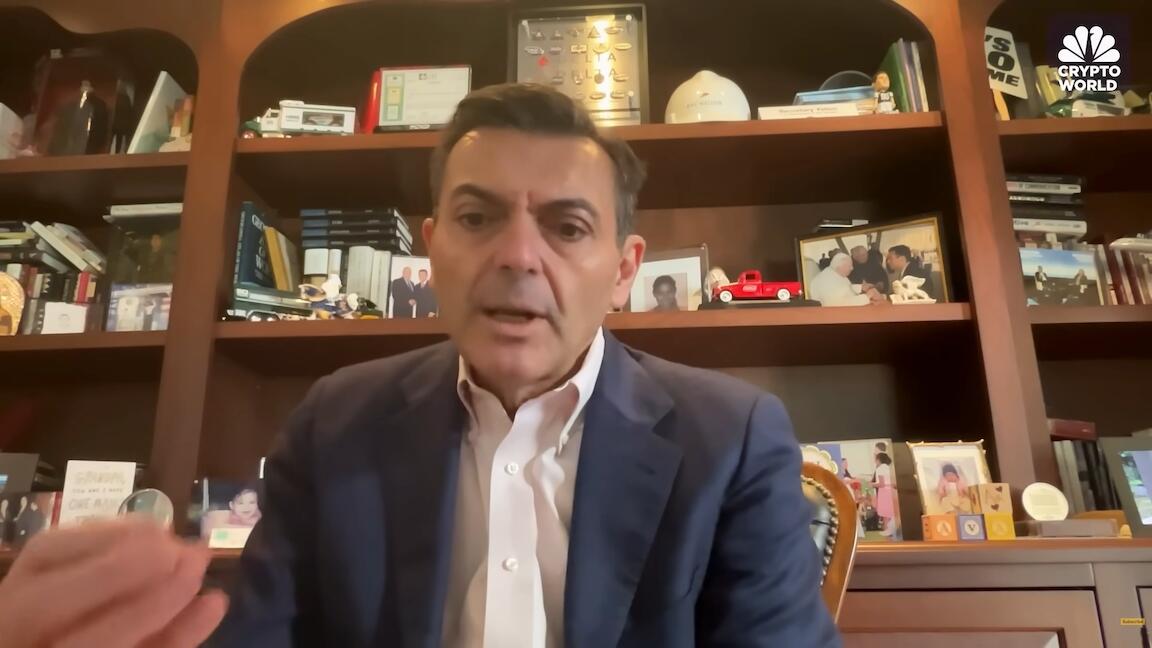
Frank LaSalla speaking with CNBC’s “Crypto World” on Friday after receiving the SEC’s no-action letter. Source: YouTube
The company received a rare “no-action” letter from the Securities and Exchange Commission on Thursday that greenlit a securities tokenization service “on pre-approved blockchains for three years,” and confirmed that the agency won’t take enforcement action against DTCC if its product operates as described.
More securities to be tokenized
The trio is working to launch a minimum viable product in a controlled environment by the first half of 2026, and the DTCC stated that it will “increase the size and scope of the project in the months that follow based upon client interest.”
It added that the whole partnership roadmap between the three companies would “unfold over multiple years,” but for now it aims to provide access to “digitized financial instruments in a secure and regulated environment.”
The DTCC said last week that the SEC’s letter “applies to a defined set of highly liquid assets,” including US Treasury bills, bonds and notes, exchange-traded funds (ETF) tracking major indexes and the Russell 1000, which tracks the 1,000 largest public US companies.
The company added that it would also join the Canton Network’s governance and would take up the position of co-chair alongside Euroclear on the blockchain’s backing organization, the Canton Foundation.
Markets are moving onchain, but analyst expects a slow burn
SEC chair Paul Atkins said on Friday after his agency gave DTCC a no-action letter that the company’s initiative “marks an important step towards onchain capital markets.”
“US financial markets are poised to move onchain,” he said, adding the SEC “is prioritizing innovation and embracing new technologies to enable this onchain future.”
The same day, NYDIG global head of research Greg Cipolaro said that the tokenization of securities won’t immediately be a major boon to the crypto market, but that could change if tokenized assets are allowed to better integrate on blockchains.
Cipolaro said that traditional finance structures are still required on tokenized assets; their designs can “differ greatly,” and most are hosted on private blockchains like Canton, meaning not all can work with the wider decentralized financial system.
“In the future, one could see these RWAs being part of DeFi (composability), either as collateral for borrowing, an asset to be lent out, or for trading,” he added. “This will take time as technology develops, infrastructure is built out, and rules and regulations evolve.”
Tyler Durden
Wed, 12/17/2025 – 15:40

Las mejores películas de 2025, clasificadas por críticos de cine de AP
Por LINDSEY BAHR y JAKE COYLE
Las personas que se fijan demasiado en las cifras podrían decir lo contrario, pero 2025 fue un buen año para el cine.
Los cineastas que trabajan dentro y fuera del sistema de estudios lograron crear obras audaces, personales, increíblemente imaginativas y singulares. Algunas incluso lograron llegar al público general: ¿qué tan extraordinario es que “Sinners” (“Pecadores”) esté entre las películas más taquilleras del año en América del Norte, junto a todas esas secuelas “seguras”, reinicios y marcas conocidas? Sin embargo, la mayoría probablemente esté destinada a alcanzar el estatus de clásico de culto.
Hollywood, tal como lo conocemos, está experimentando cambios sísmicos, cuando otro estudio, Warner Bros., enfrenta una posible fusión y el anuncio de la transmisión de los Oscar en YouTube a partir de 2029. Esta es una industria que siempre está bajo amenaza, pero que siempre parece encontrar una solución. Si acaso, 2025 también fue un año en el que el público demostró que todavía anhela la experiencia en las salas de cine, ya sea para gritar “chicken jockey” en la pantalla o, a pesar de toda lógica y encuestas en contra, ayudar a que “KPop Demon Hunters” encabece extraoficialmente las listas de taquilla dos meses después de llegar a Netflix.
Lamentablemente, otras grandes películas también fueron poco vistas. Pero en un año que también vio la muerte de íconos del cine como David Lynch, Robert Redford, Diane Keaton y Gene Hackman, es bueno recordar que la taquilla y los premios son solo medidas temporales. Las películas son lo que perdura.
A continuación, la selección de los críticos de cine de The Associated Press, Lindsey Bahr y Jake Coyle, para las mejores películas de 2025:
Las mejores películas de 2025 según Lindsey Bahr
1. “One Battle After Another” (“Una Batalla Tras Otra”) Paul Thomas Anderson nos llevó en el viaje del año con “One Battle After Another”, que es tantas cosas: una farsa ingeniosa, un frenético viaje de emociones, un drama conmovedor sobre la crianza monoparental, una comedia de amigos, que es casi imposible de describir de manera convincente o coherente. Las actuaciones son excelentes desde el protagonista hasta el personaje de apoyo más pequeño, la visión es ambiciosa y singular, y la recompensa es un gran momento y un recordatorio de una experiencia que solo realmente puede suceder en el cine.
2. “If I Had Legs I’d Kick You” (“Si pudiera, te daría una patada”) Mary Bronstein convirtió su propia pesadilla doméstica en una expresión cinematográfica cruda y surrealista del agotamiento y la locura materna en “If I Had Legs I’d Kick You”. Anclada por una actuación absolutamente intrépida de Rose Byrne, la película de Bronstein es un nervio expuesto, el miedo existencial manifestado. Además tiene a Conan O’Brien y A$AP Rocky.
3. “Marty Supreme” (“Marty Supremo”) Los grandes cineastas pueden hacer que cualquier cosa sea emocionante, como, por ejemplo, las aventuras de un jugador de ping-pong sin dinero y verdadero canalla, Marty Mauser, en el Nueva York de mediados de siglo XX. Josh Safdie y su coguionista y editor Ronald Bronstein (esposo de Mary) construyeron un espectáculo enormemente entretenido y lleno de adrenalina de ambición y ego, dándonos la actuación definitoria de Timothée Chalamet que hemos estado esperando.
4. “Sentimental Value” (“Valor Sentimental”) Los fantasmas del pasado y las cosas no dichas permanecen en las grietas y tablas del suelo de la tranquila casa en el corazón de la última obra de Joachim Trier, un retrato texturizado y maduro de la familia, el duelo, el perdón y la soledad de una vida en las artes. Con una conmovedora actuación de Stellan Skarsgård como un aclamado cineasta que intenta reconectar con las hijas que dejó de lado por su carrera, también es sorprendentemente divertida en su hábil exploración de lo difícil que puede ser expresar amor a quienes más importan, incluso para los artistas.
5. “The Naked Gun” (“¿Y dónde está el policía?”) Finalmente, una gran comedia de estudio y en el paquete más improbable: un reinicio/secuela/remake descaradamente consciente de sí mismo que se sostiene por sí solo gracias al compromiso total de Akiva Schaffer con la absoluta tontería. Solo “Hamnet” provocó más lágrimas.
6. “Sinners” (“Pecadores”) Otra película profundamente personal y arriesgada que (en este caso) solo Ryan Coogler podría haber hecho, “Sinners” es el musical de blues, vampiros y gánsteres que nunca supimos que necesitábamos. Filmada y narrada de manera vibrante, con un elenco extraordinario (y dos Michael B. Jordan), sus placeres superficiales por sí solos merecen ser celebrados, pero cada fotograma también está impregnado de historia y simbolismo, sumando uno de los thrillers más profundos y originales que han adornado nuestras pantallas de cine.
7. “In die Sonne schauen” (“Sound of Falling”) El pasado y el presente también se difuminan en el segundo largometraje inquietante y etéreo de Mascha Schilinski. Es tanto desorientador como fascinante al contar las historias de cuatro mujeres jóvenes, en cuatro tiempos diferentes, en la misma granja del norte de Alemania, de alguna manera tanto una historia de madurez como de fantasmas.
8. “Yek tasadef sadeh” (“Un simple accidente”) Tensa, devastadora e incluso oscuramente divertida, el cineasta iraní Jafar Panahi plantea un fascinante dilema moral en su primera película desde su propio encarcelamiento. ¿Cómo se ve la justicia después del encarcelamiento y la tortura? ¿Qué deberían hacer con el hombre que lo hizo? ¿Cómo pueden estar seguros de que tienen al tipo correcto?
9. “Sawt Hind Rajab” (“La voz de Hind Rajab”) Kaouther Ben Hania también confrontó atrocidades modernas usando el lenguaje de la narración cinematográfica, y el audio real de la llamada de auxilio de una niña, en “Sawt Hind Rajab” (“La voz de Hind Rajab”), un documento desgarrador de la guerra entre Israel y Hamás, ambientado completamente dentro del centro de despacho del servicio de rescate de la Sociedad de la Media Luna Roja Palestina.
10. “Urchin”, “The Chronology of Water” (“La cronología del agua, una película de Kristen Stewart”) y “Don’t Let’s Go to the Dogs Tonight”
Tres películas maravillosas vinieron este año de rostros familiares, todos haciendo sus debuts en largometrajes. Harris Dickinson canalizó el realismo social de Ken Loach y Mike Leigh para contar una historia compasiva pero clara sobre los ciclos de la falta de vivienda en “Urchin”. Kristen Stewart demostró ser tan audaz detrás de la cámara como lo es frente a ella con“The Chronology of Water”, una pieza de memoria absolutamente eléctrica y viva de trauma e inspiración. Y Embeth Davidtz, basándose en su propia experiencia, enfrentó una historia espinosa sobre la guerra del arbusto de Rodesia con valentía y gracia.
También: “Hedda”, “My Father’s Shadow”, “O Agente Secreto” (“El agente secreto”), “The Testament of Ann Lee” (“El testimonio de Anne Lee”), “Blue Moon”, “The Ballad of Wallis Island” (“La balada de la isla”), “The Mastermind” (“Mente maestra”), “2000 Meters to Andriivka”, “Splitsville”, “Sorry, Baby” (“Lo siento, cariño”), “Presence” (“Presencia”), “On Becoming a Guinea Fowl”.
Las mejores películas de 2025 según Jake Coyle
1. “One Battle After Another” (“Una Batalla Tras Otra”) Para una película que se siente tan fascinantemente del momento, lo último de Paul Thomas Anderson es curiosamente atemporal. Los ecos de los movimientos Pantera Negra y Weather Underground parecen pertenecer a otra era. Sin embargo, la desaliñada obra de Anderson hace su propia historia y su propia resistencia. La clave, creo, es que tanto las fuerzas de opresión como las de contracultura en la película están perdidas en rituales y palabras clave. Se trata de encontrar tu propia gramática de lucha. Y también se trata de lo imparable que es Teyana Taylor.
2. “Eojjeolsuga eobsda” (“No Other Choice”) En la magistral comedia negra de medianoche de Park Chan-wook, un hombre recién desempleado (Lee Byung-hun) decide que su mejor opción para superar a los solicitantes de empleo con calificaciones similares es matarlos, uno por uno. Es una narrativa ingeniosa (del novelista Donald E. Westlake de 1997, previamente adaptada por Costa-Gavras) que Park extrapola de maneras cada vez más profundas. Park, el director coreano de “Oldboy” y “Heojil kyolshim” (“La decisión de partir”), sigue en la cima de sus diabólicos poderes.
3. “Yek tasadef sadeh” (“Un simple accidente”) Jafar Panahi ha hecho muchas grandes películas, muchas de ellas en circunstancias extraordinarias. Todas ellas, a pesar de las dificultades que documentan y en las que existen, también son juguetonas y entretenidas. Así que vean esta no solo porque es una importante película iraní, llena de dolor y furia, y hecha por uno de los cineastas más valientes del planeta, sino porque es apasionante, divertida y humana.
4. “Marty Supreme” Los anales de las grandes películas de Nueva York tienen una nueva. La épica picaresca de ping-pong de Josh Safdie, protagonizada por Timothée Chalamet como un incansable luchador, es la película más vertiginosa y emocionante del año. Y no lo digo solo con la esperanza de que un resurgimiento del ping-pong inducido por Chalamet desplace al pickleball.
5. “Wake Up Dead Man: A Knives Out Mystery” (“Puñales por la espalda 3″) Subestimen los whodunits de Rian Johnson bajo su propio riesgo. El último capítulo en las aventuras interminablemente entretenidas de Benoit Blanc puede ser el mejor de todos. Ciertamente es el más conmovedor. Y tiene a Josh O’Connor, quien dejó su huella en el año cinematográfico con un puñado de actuaciones destacadas, especialmente esta y en el impecable retrato de Kelly Reichardt de un hombre muy defectuoso, “El Cerebro”.
6. “April” Fácilmente la película más inquietante del año. La segunda película de la cineasta georgiana Dea Kulumbegashvili trata sobre una obstetra solitaria, Nina (una extraordinaria Ia Sukhitashvili), que recorre el oscuro campo del país atendiendo a mujeres mientras soporta una vilificación opresiva. La implacable situación de Nina, quien absorbe y lleva todo el dolor a su alrededor, permanecerá conmigo por mucho tiempo.
7. “Sinners” Las combinaciones de géneros en la gran pantalla como esta no aparecen con frecuencia. Hollywood está desesperado por más de ellas. Debería comenzar con lo que Ryan Coogler quiera.
8. “Secret Mall Apartment”
El gancho de esta joya de documental es uno tonto: en 2003, ocho jóvenes de Rhode Island construyeron y a menudo vivieron en un espacio oculto dentro de un centro comercial de Providence durante años. Pero cuando el director Jeremy Workman profundiza en la historia más extraña que la ficción, revela mucho más que una broma, descubriendo algo reflexivo e inspirador sobre el arte, el comercio y la comunidad.
9. “Blue Moon”
Qué extraordinario compañero es Lorenz Hart para Ethan Hawke en el encantador y melancólico drama de cámara de Richard Linklater, una de las dos excelentes películas de 2025 del director, junto con la oda a la Nueva Ola Francesa “Nouvelle Vague”. Desde el primer monólogo en Sardi’s la noche en que su antiguo compañero de composición, Richard Rodgers, está estrenando “Oklahoma!”, el ingenio de Hart calienta el alma. Me habría sentado en el bar con él (como ‘Blue Moon’ te hace sentir) por horas más.
10. “Tardes de soledad” El documental de Albert Serra sobre la tauromaquia no hace ningún juicio explícito sobre las corridas de toros españolas. En cambio, se mantiene rigurosamente enfocado en un torero, Andrés Roca Rey, y los toros que enfrenta en el ruedo. Se acerca a una experiencia puramente cinematográfica. En composiciones ajustadas, Serra documenta un ritual persistente y el espectáculo del deporte sangriento.
También: “Caught by the Tides” (“A la deriva”), “One of Them Days” (“Uno de esos días”), “Eephus”, “My Father’s Shadow”, “The Testament of Ann Lee” (“El testimonio de Anne Lee”), “Kuraudo” (“Cloud”), “Sentimental Value”, “On Becoming a Guinea Fowl”, “Bugonia”, “Sorry, Baby”.
___
Esta historia fue traducida del inglés por un editor de AP con la ayuda de una herramienta de inteligencia artificial generativa.

Chicago man gets 68 years as accomplice in Hammond home invasion
A Chicago man was sentenced Wednesday to 68 years for his role as an accomplice in a November 2021 Hammond home invasion.
Garrett Whittenburg, 43, was convicted after a bench trial last month of rape, criminal confinement, armed robbery, burglary and sexual battery. He said he would appeal.
Whittenburg’s co-defendant Valentine Torrez initially told police he was a victim, too, on Nov. 13, 2021, when a masked man — i.e. Whittenburg — entered Torrez’s relative’s unlocked door in Hammond, blindfolded, then sexually assaulted her and the woman’s 12-year-old daughter.
The narrative soon changed.
Torrez was later charged after DNA tied him to the woman and her daughter’s assaults. Deputy Prosecutors Lindsey Lanham and Arturo Balcazar alleged Torrez helped plan the home invasion with Whittenburg to assault the female relative and take her credit cards. Whittenburg was accused of also assaulting the woman, not the girl.
On Wednesday, Balcazar read a letter from the mother, who wrote the trauma from the assault was “long-lasting.”
Defense lawyer Bradley Rozzi told Judge Salvador Vasquez the case was a “terrible situation” and asked for his client to avoid a maximum sentence.
Whittenburg had a “troubled” upbringing with an absent father and a mother who struggled with drugs, the lawyer said. He got into drugs early and his criminal record steadily grew. The home invasion was the “crescendo.” Whittenburg was formally diagnosed with a mental health disorder around 15 years ago, he said.
Over four years from the assault, the mother was still profoundly impacted, Balcazar said. He asked for 104 years, saying Whittenburg had been in-and-out of prison for years.
Whittenburg spoke in court for several minutes about his case — alleging at one point that Rozzi told him that he would lose the case.
The home invasion was “horrible,” Vasquez said, noting the mother was dragged from “room-to-room.” Whittenburg was “deceptive” and “manipulative,” and had worked together with Torrez.
During the case, Whittenburg rejected multiple plea deals. He was slated to testify against Torrez — as a condition of one plea — but had stopped cooperating with prosecutors months earlier.
After years of court filings, including mental competency evaluations, former defense lawyer Aaron Koonce’s bid for a mental health placement for Whittenburg was denied in October 2024.
On the day the bench trial was supposed to start, Koonce disclosed to Judge Natalie Bokota that Whittenburg had earlier sued him, her and most other lawyers in the case in federal court. Bokota recused herself. Koonce withdrew from the case.
The federal lawsuit was dismissed in June.
Torrez is serving 33 years after he was convicted in May 2024 of rape, a Level 3 felony; child molesting; and criminal confinement — about half his charges. The Indiana Court of Appeals rejected his bid to throw out his conviction.
Post-Tribune archives contributed.