
Category: News
Letters: Bears great Gale Sayers’ accomplishments deserve to be celebrated
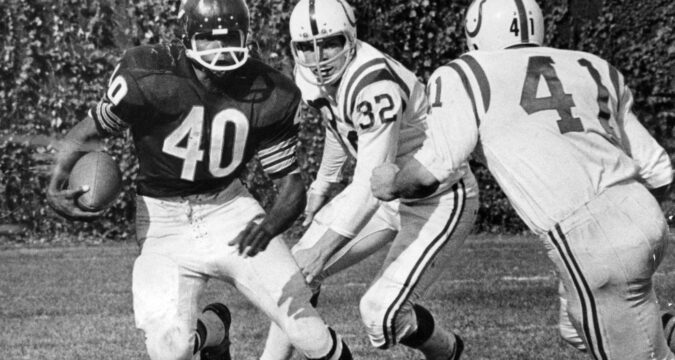
Regarding the op-ed “Gale Sayers and the greatest performance in Chicago sports history” (Dec. 12): Reflecting on Gale Sayers’ epic six-touchdown game as a Bears rookie provoked warm and wistful memories. I submit that there’s a technical reason that Sayers excelled amid the muck, the mud and the mire. He was a heel runner, not a toe runner, which enabled him to transform a screen pass into a 80-yard touchdown, a 50-yard touchdown run and an 85-yard punt return for a touchdown.
Op-ed writer Michael Peregrine mentions that Sayers was deemed the “Kansas Comet.” An apt nickname. Consider Halley’s Comet, which appears only every 75 to 80 years. Injury-ravaged, Sayers played only 68 career games; his career ground to a sad end at age 28. Oh but the thrills Sayers provided and still provides via YouTube.
Sayers led the league in rushing twice, and he led the league in kickoff return average in 1966. The Bears maximized Sayers’ touches: He ran from scrimmage, caught passes, and lugged the ball on punt and kickoff returns.
To watch Sayers at his Hall of Fame apex proved scintillating and startling. Although Bill Cosby is now a pariah, in 1970 as a respected celebrity, he wrote the introduction to the Sayers biography “I Am Third,” which was adapted into the tear-inducing saga “Brian’s Song.” Cosby wrote that Sayers was the only football player who split himself in two. He did; I witnessed it.
In the mid-1960s, CBS highlighted Sayers bedazzling and flummoxing NFL defenders. Sayers reduced them to perpetual haplessness and hopelessness.
Sayers repudiated the bombast and the braggadocio that pervade today’s sports landscape. However, he was endowed with a blowtorch-like desire to become great.
Fifty years later, it’s my distinct privilege to pay homage to the electrifying Sayers.
— Marc D. Greenwood, Opelika, Alabama
Connect historical dots
After reading Nina Metz’s perceptive review (“Chicagoans at work,” Dec. 9) of the WTTW-Ch. 11 program “Chicago Works,” I watched the show with even more disappointment than Metz acknowledged. Metz warned: “It would be unfair to expect something more along the lines of Studs Terkel’s ‘Working.’” Still, we needed more — and WTTW owed Studs more — than a show-and-tell.
It’s an odd contradiction that WTTW asks viewers to make donations toward its budget shortfall while it is willing to spend money on shows in which the program host admits he is getting paid to do things on his “bucket list.” WTTW’s seemingly endless pledge drives, which offer luxury “prizes,” seem oddly tone-deaf at a time when national and local politicians are arguing over issues of affordability, an issue called “a hoax” by our plutocratic president, the same president who caused the budget shortfall at WTTW by unjustly eliminating funding for PBS.
WTTW needs to connect the dots with a new show explaining why affordability issues are not a scam, but a continuation of the same exploitative policies behind the attempts to drive the Native population out of Illinois during the War of 1812 and again in the Black Hawk War in 1832. These policies continue to the Haymarket riot in 1886, the 1919 riots, the civil rights marches in the 1960s and the ongoing immigration raids.
Instead of shows in which the host pets Beluga whales and rides a Zamboni around the United Center or snorkels in Lake Michigan or enjoys a joyride in a helicopter, how about another episode of “Chicago Works” that explores the historical conflict between labor and management that still affects so many vital city services? This show could explain the commonalities linking Haymarket and Pullman and the stockyards to the current struggles of workers forming unions at Chicago museums, theaters, Starbucks, and the studios of WTTW and WFMT-FM 98.7.
These issues are worthy topics for a public media station claiming objective and accurate reporting in the age of affordability in “the city that works.” In the public interest, it’s time to move past the flashy scenery and witty soundbites and show what really makes the city work.
— Franz Burnier, Wheaton
Mag Mile lacks sparkle
I am writing to express my disappointment with this year’s Christmas decorations along North Michigan Avenue. For a street that has long been celebrated as a centerpiece of Chicago’s holiday spirit, this year’s display was underwhelming and failed to capture the joy and vibrancy the season deserves.
The decorations lacked creativity, cohesion and the festive charm that residents and visitors alike have come to expect. In a city known for its architectural brilliance and cultural richness, the holiday presentation on such a prominent avenue should reflect that same standard of excellence. Instead, it felt uninspired — earning, in my view, a failing grade. It was disappointing to see high-end stores not decorate.
It is a holiday tradition for many suburban families and visitors to come into the city to shop and view the lights and holiday windows. They spend a lot of money on parking, eating and shopping. I spent last Christmas in Madrid. That city went all out for the season. It was a well-spent eight-hour flight.
I hope future efforts will better honor the tradition and reputation of North Michigan Avenue, ensuring that Chicago’s holiday season shines as brightly as its people and history.
— Cammie McDaniel, Chicago
Personal mail a treat
Per Richard Dreger of Batavia’s Dec. 10 letter “Make effort for cards”: I, too, send out more than 50 holiday cards and always add a personal note in my cards. That is the point of sending out the cards each year, to keep in touch and share personal stories.
I love to get mail and must admit I send out five to 10 personal letters each week — I’m doing my part to keep the Postal Service in business. People love to get mail and letters. It is a nice surprise from the junk mail and bills in their mailbox each day.
So, Richard, please continue your tradition. I’m right behind you in line at the post office.
— Arlene C. Hogan, Naperville
Note to readers: We’d like to know your hopes for the new year. Please send us a letter, of no more than 400 words, to letters@chicagotribune.com by Sunday, Dec. 28. Include your full name and city/town.
Submit a letter, of no more than 400 words, to the editor here or email letters@chicagotribune.com.
https://www.chicagotribune.com/2025/12/20/letters-122025-gale-sayers-bears/
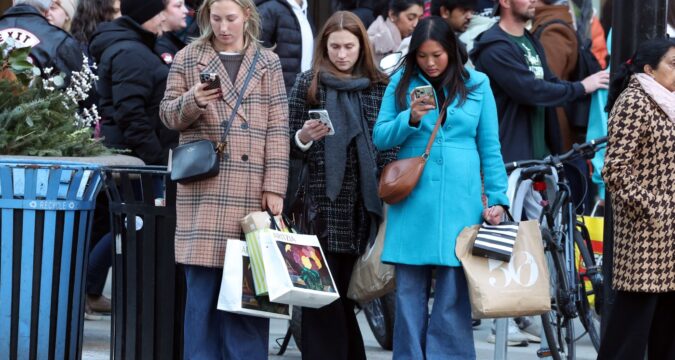
In his national address, President Trump claimed he’s bringing prices down. Here’s what the data shows.
After nearly two months without new consumer price data, the Bureau of Labor Statistics released its latest report Thursday, providing a glimpse at energy costs, food prices and other everyday expenses.
According to the consumer price index, inflation slowed in November, with prices rising 0.2% over the 0.3% observed in September. (BLS could not collect October data because of the government shutdown.)
Still, inflation remains stubbornly high. Compared with a year ago, consumer costs are up about 2.7%.
Thursday’s report came just a day after President Donald Trump delivered a prime-time address from the White House in which he largely discussed affordability concerns, from housing costs to grocery prices, saying the U.S. is “poised for an economic boom.”
“The last administration and their allies in Congress looted our treasury for trillions of dollars, driving up prices and everything at levels never seen before. I am bringing those high prices down and bringing them down very fast.”
In truth, of the 11 everyday costs tracked month to month by the consumer price index, only five have decreased since January.
Here’s a closer look at the president’s claims and how prices are changing, or not, during his second term in office.
To see the average U.S. price of a specific good, click on the drop-down arrow below and select the item you wish to view.
Eggs
In the wake of all-time highs set earlier this year, egg prices have collapsed in recent months.
That downward trend continued in November, with the price dropping a whopping 63 cents from September and settling at $2.86 per dozen. It’s the first time since June 2024 that the average nationwide price for a dozen large Grade A eggs registered below the $3 mark.
This steep drop-off in prices is a result of a declining number of bird flu cases in commercial and backyard flocks. In the first two months of 2025, tens of millions of birds were affected by highly pathogenic avian influenza across 39 states, according to U.S. Department of Agriculture data. With entire flocks culled to prevent the spread of the virus, the egg supply was strained, leading to shortages in stores and record costs for consumers.
Following another spike in cases in the early fall, the number of new infections appears to be subsiding again, with less than 2 million U.S. birds affected in the past two months. More notably, zero outbreaks among egg-laying chickens have been reported in November and December.
Consequently, costs are “falling rapidly” as highlighted by Trump in his prime-time address earlier this week.
“The price of eggs is down 82% since March, and everything else is falling rapidly. And it’s not done yet, but boy are we making progress. Nobody can believe what’s going on.”
While egg prices have dropped considerably from March’s record high of $6.23 per dozen, the difference of roughly $3.37 from March to November represents a 54% decrease — not the 82% cited by the president.
In a statement given to the Tribune, a White House official clarified that he was referring to wholesale costs, not retail prices.
Milk
The cost of milk also saw a measurable decrease from the previous month, falling 13 cents.
A gallon of fresh, fortified whole milk is now priced at $4.00 — that’s 2.5% less than it was in December 2024, before Trump took office.
Bread
The average price of white bread fell in November to $1.79 per pound, marking a three-year low for the pantry staple. Time for bread pudding, anyone?
Bananas
The cost of bananas fell slightly from September’s all-time highs, dropping just a fraction of a cent to $0.66 per pound in November.
Recent price inflation is likely a byproduct of the president’s trade war, with tariffs imposed on the country’s top banana suppliers like Guatemala, Ecuador, Costa Rica, Colombia, Honduras and Mexico — all of which are currently subject to an import tax of at least 10%.
But in mid-November, Trump took action to combat rising grocery costs, announcing that some agricultural products would be exempt from tariffs due to “current domestic demand for certain products” and “current domestic capacity to produce certain products.”
Both fresh and dried bananas were among the listed exemptions, indicating that lower prices may be around the corner.
Oranges
No data on orange prices was available for November.
However, in September, the cost of navel oranges was listed at $1.80 per pound, less than a cent shy of record highs and nearly 18% more than they were at the start of the Trump administration.
Drastically low domestic orange production combined with steep tariffs on foreign growers have been helping to push costs skyward. But, as with bananas, oranges are now exempt from most reciprocal tariffs.
Tomatoes
As of November, the cost of field-grown tomatoes was $1.83 per pound. That price is 8 cents lower than the previous month of data and down roughly 12% since Trump took power.
The change is somewhat abnormal given the growing season, as prices typically rise in the fall and peak in the early winter months, and could be attributable to the Trump administration’s recent course reversal on many of its tomato tariffs.
Chicken
The cost of fresh, whole chicken fell for a fourth consecutive month, to $2.04 per pound — its lowest price in a year.
Rising feed costs and the effects of bird flu on the poultry supply chain have driven persistently higher prices, but with the number of cases dropping again, we could see lower prices in the new year.
Still, the average cost is only about 2 cents less than it was when President Joe Biden left the White House.
Ground beef
Ground beef is getting more expensive.
After shoppers saw some relief in September from climbing costs, the price of ground beef jumped another 18 cents.
Rising costs can be attributed to a confluence of factors. The U.S. cattle inventory is the lowest it’s been in almost 75 years, and severe drought in parts of the country has further reduced the feed supply, per the USDA. Additionally, steep tariff rates on top beef importers also played a part in higher prices stateside, but as of Nov. 13 high-quality cuts, processed beef and live cattle are exempt from most countries’ levies.
Still, since the change of administrations, ground beef costs have ballooned by 18% — translating to $1 per pound price increases at the grocery store.
As of November, a pound of 100% ground beef chuck would set you back about $6.50.
Electricity
Electric costs have also been steadily rising.
At approximately 19 cents per kilowatt-hour, the current price of electricity is a fraction of a cent off August’s high. According to the U.S. Energy Information Administration, the average American household uses 899 kWh every four weeks, translating to a monthly bill of about $170.
Thankfully, the White House appears to be working to mitigate mounting costs. In his presidential address, Trump claimed that within the next 12 months his administration will have opened 1,600 new electrical generating plants.
“Prices on electricity and everything else will fall dramatically,” Trump said.
For many Americans, relief is needed. Since last December, the average price of electricity per kilowatt-hour has increased more than 7%.
Gasoline
Declining gas prices were another highlight of Trump’s Wednesday night remarks.
The cost of gasoline has tumbled from the record-setting prices Americans saw three summers ago under Biden, and just last month, the price at the pump dropped more than 10 cents per gallon.
“On day one I declared a national energy emergency,” Trump said. “Gasoline is now under $2.50 a gallon in much of the country. In some states, it by the way, just hit $1.99 a gallon.”
According to the latest CPI data, the average nationwide cost for a gallon of regular unleaded gasoline is $3.23. And though prices are noticeably lower than they were two to three years ago, that average remains higher than it was just a year ago and up nearly 3% during the Trump presidency.
Prices in Chicago, meanwhile, are about the same month-over-month, costing an average of $3.29 per gallon, according to EIA data.
Natural gas
Bucking its previous downward trend, piped utility gas, or natural gas, is another expense that’s climbing. The nationwide cost jumped 3 cents in November, landing at $1.64 per therm.
On average, Americans are paying close to 8% more to heat their homes, ovens and stovetops than when Biden left office. Year-over-year, that gap is even more drastic: a roughly 10% change or difference of 15 cents per therm.
https://www.chicagotribune.com/2025/12/20/november-us-consumer-goods-price-tracker/

Christmas cactus can flower time and again if cared for
I have a habit of buying cool-looking plants before understanding their care. Recently, I picked up a Christmas cactus. I would appreciate some guidance from someone with experience on how to grow it successfully and hope it is not too fussy of a plant.
— Amelia Nowak, Prospect Heights
You picked an interesting and great plant, in my opinion, and it’s beautiful when it flowers. Christmas cactus (Schlumbergera bridgessii) is a popular, long-lived, winter-flowering houseplant that’s associated with the holidays because it usually blooms between mid-November and late January. It does well with average home conditions and moderate care, so you should find it easy to grow. You’re lucky with your choice this time! Christmas cactus likes temperatures between 60 and 70 degrees Fahrenheit with average to high humidity for its general growing conditions; it can adapt to low light, but the plant will bloom more readily in brighter light. It’s native to the tropical rainforest, so it’s treated much differently than cacti that are native to arid desert climates, which need infrequent, sparse watering. Water a Christmas cactus when the top inch of soil in the container feels dry to the touch. Good drainage with this plant is critical, so be careful not to overwater it.
Hybridization over the past century has resulted in lots of new varieties of Christmas cactus with colors available in white, pink, red, salmon, yellow, and purple. They’re usually sold in full bud with at least a few blooms open, so try to keep the movement of the plant to a minimum to prevent the buds and flowers from dropping. Over-watering, lack of humidity, or insufficient light can also cause buds to drop before opening, so place it in a bright location away from heat vents, fireplaces, and drafts. You can ensure long-lasting blooms by keeping your cactus on the cool side with a little humidity.
After the plant is finished blooming, give it a rest period for about two months in a spot that gets moderate light; give it very little, if any, water while it’s resting. If the foliage or stems begin to shrivel during this time, just water them lightly and the leaves should recover quickly. As the days start to lengthen in spring, slightly increase how much you water it and move the plant to a location where it gets more light. After the danger of frost has passed and once outside temperatures are staying around 50 degrees Fahrenheit, move the plant outdoors, choosing a place that’s sunny or lightly shaded. Christmas cacti require bright sunlight for the best performance, but too much direct sunlight can burn their leaves; the leaves will bleach first if they’re getting too much sun.
A good time to pinch or prune your plant to shape it and encourage branching is in early spring, when new growth is starting. During the growing season, from April through September, fertilize your Christmas cactus with an all-purpose houseplant fertilizer — something with no more than 10% nitrogen.
The best time for repotting a Christmas cactus is in February, March or April. The plant will flower best if it’s kept in a container that keeps its roots more condensed; you’ll want to use a cactus mix for the container. If your Christmas cactus is given the right care and is placed in the right location, it might even flower several times throughout the year.
For more plant advice, contact the Plant Information Service at the Chicago Botanic Garden at
plantinfo@chicagobotanic.org. Tim Johnson is senior director of horticulture at the Chicago Botanic Garden.
https://www.chicagotribune.com/2025/12/20/christmas-cactus-care/

The Tribune’s Quotes of the Week quiz for Dec. 20
Happy holidays, quotes readers! We are days away from Christmas and the Bears reminded us that a new stadium is at the top of their wish list again this year.
The team told the Tribune this week that they are considering building a new stadium in Northwest Indiana amid growing concerns that Illinois public officials will not sign off on the financial incentives the Bears need to build in Arlington Heights as previously planned. The news comes to light as the Bears are preparing to take on the Packers for the second time in as many weeks. After the last week’s disappointing loss in Green Bay, the underdogs have a shot at redemption at home. Caleb Williams, DJ Moore and the rest of the crew (minus Rome Odunze and Luther Burden III) take on their division rivals (this time without star pass rusher Micah Parsons) in a rare Saturday night game at Solider Field. Here’s our reporters’ game-day predictions — and whether it’s make-or-break for Chicago’s playoff hopes.
Earlier this week, Bears fans who braved the freezing temps were rewarded with a win at home. The team handily beat the Cleveland Browns 31-3 on Sunday at Soldier Field, putting the Bears back at first in the NFC North and second in the conference.
Aldermen and City Hall staffers were busy checking different kind of lists this week while trying to avoid a city government shutdown at the end of the year. The alternative budget proposed by several aldermen, which does not include a corporate head tax, moved forward and is expected to face a full City Council vote Saturday. Meanwhile, in Springfield, Gov. JB Pritzker signed a massive transit bill that will help state agencies avoid service cuts as well as transform the governing structure of CTA, Metra and Pace services.
Border Patrol Cmdr. Gregory Bovino and his agents made a pre-holiday visit to Chicago this week, making several arrests in the city and suburbs. Before leaving town Thursday, Bovino and agents had a tense encounter in Evanston with Mayor Daniel Biss. The hundreds of Illinois National Guard troops under President Donald Trump’s control also will remain federalized until the spring, even though they have performed no missions in the state.
The week began with several shocking acts of violence. Sunday, two gunmen fired upon a Hanukkah celebration at Bondi Beach in Sydney, Australia killing 15 people. The only surviving suspect, Naveed Akram, was charged Wednesday with 59 offenses, including 15 charges of murder. Also on Sunday, filmmaker Rob Reiner and his wife Michele were found dead in their Brentwood, California home. Gov. JB Pritzker was with Reiner days before his death. A Massachusetts Institute of Technology professor was killed days after a shooting at Brown University that left two students dead. The man believed to be responsible for both shootings was found dead Thursday.
Americans got a new view into the inner workings of the White House this week after Vanity Fair published a two-part story looking at Trump’s inner circle. A federal official not part of the magazine’s story, the Deputy Director of the FBI Dan Bongino, will resign next month. The president also gave a speech this week from the White House, an attempt to rebuild his declining popularity.
Before we jump into it, the quotes team will be taking a break next week for the holidays. But we’ll have a special, end-of-year news quiz for you on Dec. 24, so keep an eye out for that! Otherwise, we’ll be back with your regularly scheduled quotes quizzes in the new year.
Until then, take care, stay warm and enjoy all the hot cocoa and egg nog you can manage!
Without further ado: The last Quotes of the Week quiz of 2025. Missed last week? You can find it here or check out our past editions of Quotes of the Week.
https://www.chicagotribune.com/2025/12/20/quotes-quiz-december-20/
CPS finds buyers for 3 closed schools, but repurposing remains a challenge
The low-slung building shows few signs of life: Ivy branches snake up the exterior walls, weaving through cracked brick and boarded-up windows. Its marquee sign reads like an epitaph, with faded block letters: “John G. Shedd Elementary School. A great place to learn!”
There were 46 buildings left vacant following Chicago’s mass school closures in 2013. At the time, district and city officials dreamed up ambitious repurposing plans: community centers, urban farms, and affordable housing. The lots were touted as a catalyst for future neighborhood investment.
But 12 years later, more than two dozen properties remain vacant. Some of those have been sold and are pending construction. But most are still managed by Chicago Public Schools, racking up millions in upkeep costs each year — between $75,000 and $150,000 per property.
The decade-long dilemma is without a clear solution. The Chicago Board of Education approved three new buyers this week, including a bid for Shedd. CPS will net just $125,000 from the three sales. Though more sales are expected in the coming months, the properties still face long, often rocky roads to redevelopment.
“It’s going to be drawn out at least for the next few years,” said Devereaux Peters, an affordable housing developer whose bid was approved for the former Bontemps Elementary School in Englewood. “It’s going through the processes of working with the city, getting our zoning correctly, getting our tax credits. … It’s definitely going to be a heavy lift.”
The nonprofit Peace for Preston plans to redevelop Shedd into a community center. The two other buildings, Bontemps in West Englewood and Henson Elementary School in North Lawndale, will be demolished to make way for affordable housing.
A total of 21 CPS-owned school buildings were returned to the market in May, most stemming from the 2013 closures. Despite the mountain of maintenance costs from the aging sites, it was the district’s first large-scale push to sell them since 2017. Eight failed to receive any bids at all.
The former Bontemps Elementary School, at 1241 W. 58th St. in Chicago, sits empty on Dec. 18, 2025. An affordable housing developer’s bid was approved for the former Englewood school. (John J. Kim/Chicago Tribune)
‘We stepped out in faith’
The dormant buildings are relics of a deeply divisive chapter in Chicago’s history. In 2013, CPS shuttered 49 elementary schools and one high school program — a move officials said would close the district’s budget deficit and more efficiently allocate resources.
But the controversial slate of closings sowed outrage and anguish across the city. Nearly all of the schools were located on the South and West sides, disproportionately affecting low-income Black families.
In the wake of the closures, an advisory committee of aldermen, civic leaders and district officials published a report projecting CPS could offload the properties within three years. But by mid-2017, just 10 sales had closed.
“(The report) was probably aggressive, given the number of buildings,” said Ron Clewer, a market president at Gorman & Co. who specializes in the adaptive reuse of schools.
Many of the properties that did sell were located on the North and Northwest sides. The first, the former Peabody Elementary School in West Town, was sold to a luxury real estate developer in October 2014 for $3.5 million.
For most buildings, though, attracting bidders proved to be difficult. Many of the aging schools were already in disrepair, rife with asbestos and structural issues. The district prioritized bids from community-based nonprofits, but those groups often lacked the capital for such costly projects.
Basketball hoops are covered in rust at the former Henson Elementary School at 1326 S. Avers Ave. in Chicago on Dec. 18, 2025. (John J. Kim/Chicago Tribune)
The Tribune identified at least eight cases in which a bid was approved by the Chicago Board of Education yet ultimately fell through. Among those was the Pilgrim Baptist Church of South Chicago, which bid $55,000 for the former Garrett Morgan Elementary School in Auburn Gresham in January 2018.
The Rev. Corwin Lasenby Sr. said he wasn’t able to tour the building before the sale. When he finally got inside, he saw the building was “destroyed” and that repairs would be too expensive, he said.
He had envisioned the space as a community hub for worship services, a food pantry and Sunday school. “I thought we might be able to redefine how the community looked,” Lasenby said. “We stepped out in faith, but weren’t set up to succeed.”
During the same bidding cycle, affordable housing developer MR Properties offered $50,000 for Paderewski Elementary School. That deal also didn’t close.
“We just couldn’t make the numbers work,” said developer Philip Mappa. “The windows have to be replaced, the roof has to be replaced. … We would have been off starting for scratch.”
‘They’re eyesores’
The majority of the closed school buildings remain dormant. Some have been repurposed periodically, like the former Wadsworth Elementary School in Woodlawn, which was temporarily converted into a migrant shelter in 2023. But others have been boarded up and vandalized.
The former Dett Elementary School on the Near West Side was demolished after a fire last year.
“The buildings are an ongoing liability,” Stephen Stults, the CPS director of real estate, said at a board meeting earlier this month. “They are continually broken into. Several of them have had fires set inside of them. An open building is very dangerous.”
A man watches as the former Dett Elementary School, at 2306 W. Maypole Ave. in Chicago, is demolished on Sept. 12, 2024. The school had been closed since 2013. (John J. Kim/Chicago Tribune)
Lasenby, the South Chicago pastor, put it bluntly. “They’re eyesores,” he said. “A city is driven by safety, economic development, and education. If you strip a community of those, you don’t have a community.”
A vacant building can lower surrounding property values — a harmful domino effect that can lead to urban blight and exacerbate population loss, particularly in Black communities. The eight schools that failed to receive bids during the most recent two-month bidding cycle are in South Shore, South Deering, Englewood, Auburn Gresham, Washington Park, Woodlawn and Garfield Park, according to the district.
A CPS spokesperson said in a statement that those sites may be repurposed for district needs, transferred to a sister agency or be offered again through additional bidding rounds beginning in early 2026. State law also allows CPS to directly solicit offers for properties valued below $25,000.
“CPS is dedicated to ensuring that the use of its properties aligns with educational programming and community needs, while also generating revenue for the District when possible,” the spokesperson said.
After a Board of Education vote, the bid must also receive approval from the City Council or the Public Buildings Commission to be finalized.
Several aldermen have held community meetings in their wards to gauge how redevelopment bids might meet neighborhood needs. The three recently approved buyers received letters of support from local leadership.
Planters are untended at the former Henson Elementary School at 1326 S. Avers Ave. in Chicago on Dec. 18, 2025. (John J. Kim/Chicago Tribune)
But board member Jitu Brown, District 5A, said CPS should take a more involved approach. He expressed concerns with the pace of redevelopment, describing the properties as an opportunity to right a previous wrong.
“What we’re encouraging CPS to do is a needs assessment with the people in the neighborhood, to find out what the community needs are, because these schools were closed against the wishes of people in the community,” Brown said.
‘Layer of complexity’
Even after buyers assume ownership, transforming a school takes years. Experts say redevelopment is a maze of financial and bureaucratic challenges.
The projects, particularly affordable housing developments, rely on several funding streams. Take the Earle School Apartments in West Englewood, for example, which is set to welcome its first residents in January. Developers used the Illinois Affordable Housing Tax Credit, tax increment financing and a municipal grant, on top of traditional debt. Each source had its own lengthy requirements and approval processes.
The century-old building was sold to developer Gorman & Co. for $200,000 in spring 2023. “It’s a game of figuring out, ‘How do you score to get the resources that are necessary to redevelop the site?’” said Clewer, the developer.
Conventional funding is rarely a simple alternative. In neighborhoods marked by chronic disinvestment, investors and banks may classify developments as high-risk, leading to loan denials or soaring interest rates.
“If you need private market financing, or if you need to get a loan from a bank, that financial institution is going to require a market analysis to understand the risk of getting repaid,” said Geoff Smith, executive director of the Institute for Housing Studies at DePaul University. “That is going to be an additional layer of complexity.”
It took eight years to redevelop the former Robert Emmet Elementary School in Austin into a sparkling community center. The Westside Health Authority purchased the lot in 2018 for $75,000. The $40 million renovation added a community plaza and a three-story, glass-walled entrance.
“There’s deferred maintenance on things like this,” said Max Komnenich, project lead and associate principal at the Lamar Johnson Collaborative. “(CPS) closed it without a huge plan for it. By the time we got in there, every bit of paint was peeled off the wall.”
When the Aspire Center for Workforce Innovation opened this summer, about a dozen former Emmet teachers visited the building. “They were just so thankful the building was back in the community,” Komnenich said. “It’s worth doing. You just have to have the right people involved, who really want to champion it.”
‘What better place than a school?’
Peace for Preston currently operates a mentoring program out of the Harold Washington Library Center. The new Shedd building will expand that programming, as well as offer mental health support, vocational training and youth recreational programming.
“It’s a community center, so what better place than a school?” bidder Dionne Mhoon said.
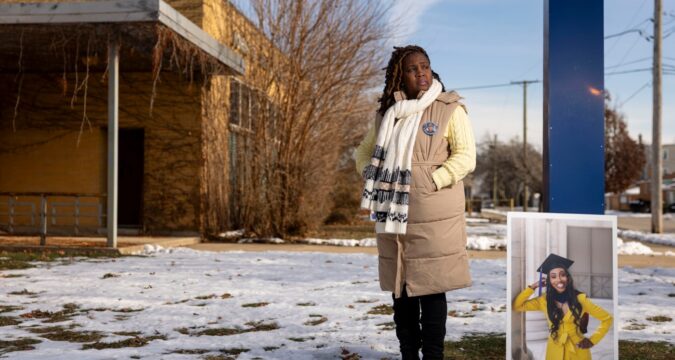
Dionne Mhoon stands on Dec. 15, 2025, in front of the former John G. Shedd Elementary School, which her nonprofit, Peace for Preston, plans to turn into a community center in honor of her daughter, slain Chicago police Officer Aréanah Preston. (Brian Cassella/Chicago Tribune)
Mhoon founded Peace for Preston in honor of her daughter, Aréanah Preston, a slain Chicago police officer. Preston, 24, was shot and killed as she returned home from a late-night shift in 2023. She loved to learn, Mhoon said, and had just completed her master of jurisprudence degree.
The nonprofit is still fundraising for the project, currently at almost half of its $150,000 goal.
“Hopefully someone will see this fixture in the community and know the work that she did,” Mhoon said. “She deserves to be honored.”
On a recent afternoon, Rachel Cooper, 32, stared at the Shedd from her bungalow across the street. She occasionally sees loiterers or vandals near the lot, and even periodic police activity. “It makes me a little bit nervous,” she said.
She moved to the neighborhood with her three young children in May. At the prospect of a community center, her eyes lit up. “If it’s something that my kids could go to, they would love that.”
https://www.chicagotribune.com/2025/12/20/shuttered-cps-schools-sold/

Biblioracle: Our 2025 Biblioracle Book Awards in fiction
When I tallied the contenders for my fiction Biblioracle Book of the Year Awards, I counted 32 contenders.
This means I had a great year, personally, when it came to reading fiction. It also means there are many books worthy of recognition that won’t be featured here, so keep that in mind and treat no list as definitive.
Here’s to another year of reading abundance!
Oh, the Things We Do to the People We Love Book of the Year (tie)
Both Erin Somers’ “The Ten Year Affair” and Hannah Pittard’s “If You Love It, Let It Kill You” feature funny, passionate, female protagonists who, like many of us, struggle with fully embracing the perceived boundaries of their own lives. Both are told with great wit and compassion and were probably my most enjoyable reading experiences of the year.
The Struggle of Being Male in the World Book of the Year (tie)
David Szalay’s Booker prize-winning novel, “Flesh,” has received significant and deserved acclaim for its portrayal of the struggles of manhood in the 21st century. But don’t sleep on “The Passenger Seat” by Vijay Khurana, a small-press novel that looks at these challenges through the lens of two teen boys who seek escape and meaning but find neither in a world that seems hostile to their desires.
Most Satisfying Old-School Character-Driven Noir Book of the Year
Ron Currie Jr.’s “The Savage, Noble Death of Babs Dionne” doesn’t break new ground in the world of noir, but why should it, when it gives us the indelible heroine of the title, a fierce, loving and ruthless drug kingpin of the Franco-American community of Waterville, Maine? Tense, emotional, and includes one of the most chilling killers in recent memory.
Best Unlikely Crime Solver Book of the Year
Laura Lippman is known for her considerably gritty fare, but with “Murder Takes a Vacation,” she turns to Mrs. Blossom, a secondary character from her Tess Monaghan detective series, and gives us a satisfyingly spunky and clever unwitting detective who gets entangled in a nest of international intrigue while on a French river cruise. A great new addition to the cozy category.
Could Become an Enduring Classic Book of the Year (tie)
The odds are against any book becoming a perennial touchstone for audiences, but two titles from this year are on my radar for such a future. “The Mind Reels” by Freddie deBoer and “Minor Black Figures” by Brandon Taylor. DeBoer’s book explores what it means to live with profound mental illness that arrives suddenly, but persists for a lifetime, doing so without romanticizing what it means to live this kind of life. Taylor’s novel of Wyeth, a painter who is disenchanted with the art world, and a gay man who is increasingly entangled with a beautiful man who very recently was going to be a priest, is a lasting portrait of a post-pandemic New York and the people who seek meaning and connection within it.
To Be Filled with Emotional Warmth Book of the Year (tie)
A feel-good book does not mean a book without conflict or strife; it means that the book ultimately affirms a potential for goodness in humanity in the telling. “Heart the Lover” by Lily King, a companion to her earlier “Writers & Lovers,” will fill you with the possibilities of romance. “Fonseca” by Jessica Francis Kane takes a real-life period from the life of the writer Penelope Fitzgerald and tells us the story of a British mother and her young son in the fantastical (fictional) Mexican town of Fonseca, where they seek fortune and experience adventure.
Biblioracle: It’s time for the 2025 Biblioracle Book Awards in nonfiction
John Warner is the author of books including “More Than Words: How to Think About Writing in the Age of AI.” You can find him at biblioracle.com.
Book recommendations from the Biblioracle
John Warner tells you what to read based on the last five books you’ve read.
1. “Homegoing” by Yaa Gyasi
2. “Off Course” by Michelle Huneven
3. “Cyclorama” by Adam Langer
4. “The Passage” by Justin Cronin
5. “The Frozen River” by Ariel Lawhon
— Jamie G., Crystal Lake
I think Adam Haslett’s “Imagine Me Gone” has the proper emotional heft for Jamie at this time.
1. “The Heaven & Earth Grocery Store” by James McBride
2. “A Gentleman in Moscow” by Amor Towles
3. “James” by Percival Everett
4. “The Charm School” by Nelson DeMille
5. “Plum Island” by Nelson DeMille
— Tom R., Algonquin
Dennis Lehane’s got a lot of good books to choose from, but I think “Since We Fell” is the right mystery for Tom.
1. “Who Is Government?: The Untold Story of Public Service” by Michael Lewis
2. “All About Love: New Visions” by bell hooks
3. “The Correspondent” by Virginia Evans
4. “Knife” by Salman Rushdie
5. “Giovanni’s Room” by James Baldwin
— Lisa S., Lake Bluff
Lisa enjoyed the epistolary form of “The Correspondent,” so I’m recommending a book that is written partly using this technique, “Possession” by A.S. Byatt.
Get a reading from the Biblioracle
Send a list of the last five books you’ve read and your hometown to biblioracle@gmail.com.
https://www.chicagotribune.com/2025/12/20/biblioracle-2025-book-awards-fiction/

Condenan a ex primer ministro paquistaní Imran Khan y su esposa a 17 años de prisión por corrupción
Associated Press
ISLAMABAD (AP) — Un tribunal paquistaní condenó y sentenció el sábado al ex primer ministro encarcelado Imran Khan y a su esposa a 17 años de prisión tras hallarlos culpables de retener y vender regalos del Estado, informaron funcionarios y su partido.
La pareja se declaró no culpable cuando fueron acusados el año pasado. Se les acusa de vender los regalos, incluyendo joyas del gobierno de Arabia Saudí, a precios muy por debajo de su valor de mercado cuando él estaba en el cargo.
Los fiscales dijeron que Khan y su esposa declararon el valor de los regalos en poco más de 10.000 dólares, muy por debajo de su valor de mercado real de 285.521 dólares, lo que les permitió comprar los artículos a un precio reducido.
Según la ley paquistaní, para que los funcionarios del gobierno y los políticos puedan conservar los regalos recibidos de dignatarios extranjeros, deben comprarlos al valor de mercado evaluado y declarar cualquier ganancia obtenida de su venta.
El portavoz de Khan, Zulfiquar Bukhari, sostuvo que el fallo en el caso de corrupción ignoró los principios básicos de justicia. En un comunicado, afirmó que “la responsabilidad penal se impuso sin prueba de intención, beneficio o perjuicio, basándose en una reinterpretación retrospectiva de las normas”.
Bukhari afirmó que el fallo judicial “planteó serias dudas sobre la equidad e imparcialidad del proceso, convirtiendo la justicia en una herramienta para el enjuiciamiento selectivo”.
El partido de oposición de Khan, Pakistan Tehreek-e-Insaf, denunció el veredicto en un comunicado, calificándolo como “un capítulo negro en la historia”, y señaló que Khan estaba presente en la corte cuando el juez anunció el fallo en la prisión de Adiala, en la ciudad de Rawalpindi.
Khan, de 73 años, fue destituido en una votación de censura en abril de 2022 y su partido está en la oposición en el Parlamento. Ha estado cumpliendo múltiples condenas de prisión desde 2023 por corrupción y otros cargos que el ex estrella de cricket y sus seguidores han alegado que están destinados a acabar con su carrera política.
___
Esta historia fue traducida del inglés por un editor de AP con la ayuda de una herramienta de inteligencia artificial generativa.
Abogados de Mangione cuestionan decisión de Bondi de buscar pena de muerte para su cliente
Por MICHAEL R. SISAK
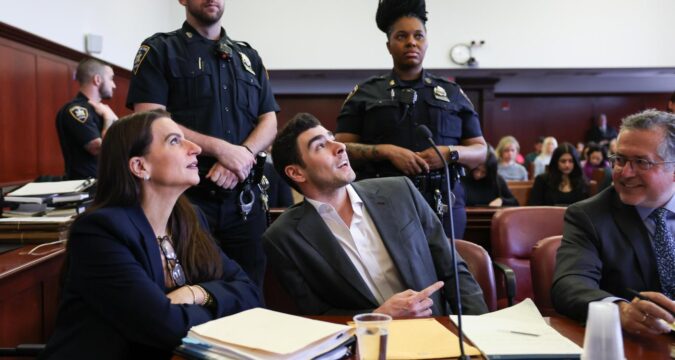
NUEVA YORK (AP) — Los abogados de Luigi Mangione sostienen que la decisión de la secretaria de Justicia Pam Bondi de buscar la pena de muerte contra su cliente por el asesinato del CEO de UnitedHealthcare, Brian Thompson, estuvo contaminada por su trabajo previo como cabildera en una firma que representaba a la empresa matriz del asegurador.
Bondi fue socia en la firma de cabildeo Ballard Partners antes de encabezar la iniciativa del Departamento de Justicia para convertir el enjuiciamiento federal contra Mangione en un caso de pena capital, lo que creó un “profundo conflicto de intereses” que violó su derecho al debido proceso, escribieron los abogados del acusado en un documento judicial presentado el viernes por la noche.
Los abogados solicitan que se prohíba a los fiscales buscar la pena de muerte y que se desestimen algunos cargos. La audiencia está programada para el 9 de enero.
Al involucrarse en la decisión de la pena de muerte y hacer declaraciones públicas sugiriendo que Mangione merece la ejecución, Bondi rompió una promesa que hizo antes de asumir el cargo en febrero de que seguiría las regulaciones éticas y se abstendría de asuntos relacionados con los clientes de Ballard durante un año, subrayaron los abogados de Mangione.
Argumentaron que Bondi se sigue beneficiando de su trabajo para Ballard Partners —e, indirectamente, del trabajo de la firma de cabildeo para UnitedHealth Group— a través de un acuerdo de participación en las ganancias con Ballard y un plan de contribución definida que administra.
La “misma persona” facultada para buscar la muerte de Mangione “tiene un interés financiero en el caso que está procesando”, escribieron los abogados del acusado. Su conflicto de intereses “debió haberla inhibido de tomar decisiones en este caso”, añadieron.
Se dejaron mensajes solicitando comentarios al Departamento de Justicia y a Ballard Partners.
Bondi anunció en abril que estaba dirigiendo a los fiscales federales de Manhattan a buscar la pena de muerte, declarando incluso antes de que Mangione fuera formalmente acusado que la pena capital estaba justificada para un “asesinato premeditado y a sangre fría que conmocionó a Estados Unidos”.
Thompson, de 50 años, fue asesinado el 4 de diciembre de 2024, cuando caminaba hacia un hotel en Manhattan para acudir a la conferencia anual de inversores de UnitedHealth Group. Un video de vigilancia mostró a un hombre enmascarado disparándole por la espalda. La policía indicó que las palabras “retrasar”, “negar” y “deponer” estaban escritas en las balas, imitando una frase utilizada para describir cómo los aseguradores evitan pagar reclamaciones.
Mangione, de 27 años, el vástago de una rica familia de Maryland educado en una institución de la prestigiosa “Ivy League”, fue arrestado cinco días después en un McDonald’s en Altoona, Pensilvania, a unos 370 kilómetros (230 millas) al oeste de Manhattan. Se ha declarado no culpable de los cargos de asesinato federales y estatales. Los cargos estatales conllevan la posibilidad de cadena perpetua. Aún no hay fecha para el inicio del juicio.
El documento presentado el viernes volvió a centrar la atención en el caso federal de Mangione un día después que terminara una audiencia maratónica previa al juicio en la que pretendían impedir que los fiscales en su caso estatal usen ciertas pruebas encontradas durante su arresto, como un arma que, de acuerdo con la policía, coincidía con la utilizada para matar a Thompson y un cuaderno en el que supuestamente describía su intención de “eliminar” a un ejecutivo de seguros de salud. No se espera un fallo hasta mayo.
El equipo de defensa de Mangione, liderado por el dúo de esposos Karen Friedman-Agnifilo y Marc Agnifilo, se centró en el trabajo previo de cabildeo de Bondi, en un intento por convencer a la jueza de federal distrito Margaret Garnett de descartar la pena capital, desestimar algunos cargos y excluir las mismas pruebas que quieren suprimir del caso estatal.
En un documento judicial presentado en septiembre, los abogados de Mangione argumentaron que el anuncio de Bondi de que estaba ordenando a los fiscales buscar la pena de muerte —que siguió con publicaciones en Instagram y una aparición en televisión— mostró que la decisión se basó “en la política, no en el mérito”. También dijeron que sus comentarios contaminaron el proceso del jurado investigador que resultó en su acusación unas semanas después.
Las declaraciones de Bondi y otras medidas oficiales —incluyendo una caminata de arresto altamente coreografiada en la que se vio a Mangione llevado a un muelle de Manhattan por agentes armados, y el desprecio del gobierno del presidente Donald Trump por los procedimientos establecidos de pena de muerte— “han violado los derechos constitucionales y estatutarios del señor Mangione y han perjudicado fatalmente este caso de pena de muerte”, dijeron los abogados.
En un documento judicial del mes pasado, los fiscales federales argumentaron que “la publicidad previa al juicio, incluso cuando es intensa, no es en sí misma un defecto constitucional”.
En lugar de desestimar el caso por completo o prohibir al gobierno buscar la pena de muerte, los fiscales resaltaron que las preocupaciones de la defensa pueden aliviarse mejor cuestionando cuidadosamente a los posibles miembros del jurado sobre su conocimiento del caso y asegurando que se respeten los derechos de Mangione en el juicio.
“Lo que el acusado reformula como una crisis constitucional es meramente una reformulación de argumentos” rechazados en casos anteriores, dijeron los fiscales. “Ninguno justifica la desestimación de la acusación o la exclusión categórica de un castigo autorizado por el Congreso”.
Los abogados de Mangione dijeron que quieren investigar los lazos de Bondi con Ballard y la relación de la firma con UnitedHealth Group y pedirán varios materiales, entre ellos detalles de la compensación de Bondi de la firma, cualquier dirección que ella haya dado a los empleados del Departamento de Justicia con respecto al caso o UnitedHealthcare, y los testimonios jurados de “todas las personas con conocimiento personal de los asuntos relevantes”.
___
Esta historia fue traducida del inglés por un editor de AP con la ayuda de una herramienta de inteligencia artificial generativa.
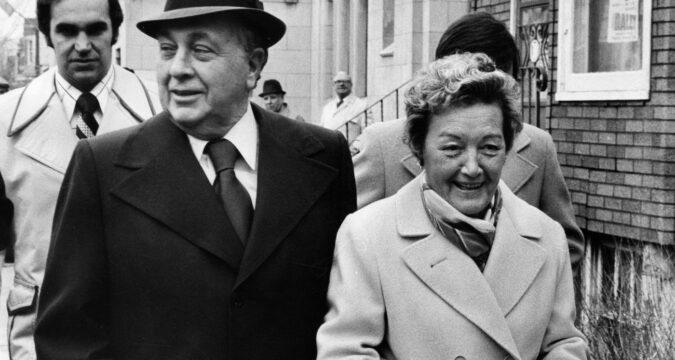
Today in Chicago History: Mayor Richard J. Daley, who held the office for 21 years, dies of a heart attack
Here’s a look back at what happened in the Chicago area on Dec. 20 according to the Tribune’s archives.
Is an important event missing from this date? Email us.
Weather records (from the National Weather Service, Chicago)
High temperature: 67 degrees (1877)
Low temperature: Minus 9 degrees (1963)
Precipitation: 1.67 inches (1895)
Snowfall: 11 inches (1960)
1951: The Edens Expressway opened during a snowstorm.
The “superhighway” was named in honor of Col. William G. Edens, a retired banker who is credited with having “taken Illinois out of the mud” by promoting the state’s first highway bond issues, which was voted on in 1918.
The first known use of atomic energy to produce electricity happened Dec. 20, 1951. This historic experiment took place at the Atomic Energy Commission’s National Reactor Testing Station in Idaho. Four, 200-watt light bulbs were lit by electricity from the generator at right which, in turn, operated on heat from the Experimental Breeder Reactor 1. The first “Breeder” reactor was operated by Argonne National Laboratory. On Dec. 21, 1951, the reactor power plant supplied all the electricity for the building in which it was housed. One of the bulbs was later presented to President Harry S. Truman. (AP)
Also in 1951: Scientists and engineers at Argonne National Laboratory in Lemont, under director Walter H. Zinn, created the first nuclear reactor to produce useful electricity. The Experimental Breeder Reactor-I (EBR-I) was turned on for the first time in Idaho. The facility remained in use until 1964.
The burned out hulk of a North Central Airlines DC-9 on the tarmac at Chicago’s O’Hare Airport, Dec. 21, 1972, where it came to rest after striking the tail assembly of a Delta Airlines plane while taking off Dec. 20. Ten people died in the collision. The Delta plane was taxiing to the passenger terminal when it was struck by the North Central plane. (Larry Stoddard/AP)
1972: Two planes collided on a fog-shrouded runway at Chicago’s O’Hare International Airport, killing 10 of the 138 aboard. All the victims initially survived the collision, but some were overcome by fumes from the burning North Central Airlines DC-9 jet.
Vintage Chicago Tribune: Plane crashes that stunned our city
Poor communications between controllers and the crew of the Delta Air Lines Convair 880, which caused the Delta plane to taxi across a runway being used by the North Central plane for a takeoff, were cited. The ensuing fire caused federal officials to recommend the use of less toxic materials and better lights in airline cabins.
Chicago Mayor Richard J. Daley died of a heart attack at his doctor’s office at 900 N. Michigan Ave. on Dec. 20, 1976. (Chicago Tribune)
1976: Chicago Mayor Richard J. Daley — who held the office for 21 years — died of a heart attack.
On that frigid Monday, Daley had attended a traditional Christmas breakfast meeting with his top Cabinet officers at the Bismarck Hotel.
After a morning of routine office business on the fifth floor of City Hall, Daley strolled at noontime with his top aide, Thomas Donovan, to the Civic Center Plaza, since named for Daley, to look at ice sculptures commissioned by the city for the Christmas season.
Daley then traveled in his limousine to Ald. Edward Vrdolyak’s 10th Ward on the Far South Side to help the alderman and Chicago Park District General Superintendent Edmund Kelly dedicate a new gymnasium in Mann Park, 130th Street and Carondolet Avenue. It is now part of Chicago legend that both Vrdolyak and Kelly made unsuccessful shots at a basketball hoop, but Daley, given the ball, tossed it up and scored.
People line up outside the Nativity of Our Lord Catholic Church in Bridgeport to pay their respects to Mayor Richard J. Daley on Dec. 21, 1976. (George Quinn/Chicago Tribune)
On his return ride to his downtown office, Daley complained of chest pains and was taken to the office of his personal physician, Thomas J. Coogan Jr., at 900 N. Michigan Ave. A quick examination convinced Coogan that Daley required hospitalization, and he went to a telephone to call Northwestern Memorial and tell them to prepare.
Daley, meanwhile, called his family from the examination room, and during that call, he dropped to the floor, stricken by a fatal heart attack. By mid-afternoon, Frank Sullivan, Daley’s press secretary, tearfully announced to the reporters that Daley was dead.
Want more vintage Chicago?
Subscribe to the free Vintage Chicago Tribune newsletter, join our Chicagoland history Facebook group, stay current with Today in Chicago History and follow us on Instagram for more from Chicago’s past.
Have an idea for Vintage Chicago Tribune? Share it with Kori Rumore and Marianne Mather at krumore@chicagotribune.com and mmather@chicagotribune.com
https://www.chicagotribune.com/2025/12/20/chicago-history-december-20/

Today in History: Sandra Cisneros turns 71
Today is Saturday, Dec. 20, the 354th day of 2025. There are 11 days left in the year.
Today in history:
On Dec. 20, 1954, Sandra Cisneros was born in Chicago. She went on to attend Loyola University Chicago then Iowa Writers’ Workshop at the University of Iowa before achieving acclaim through her novel, “The House on Mango Street.”
‘House on Mango Street’ is becoming an opera, with Sandra Cisneros’ help
Also on this date:
In 1803, the Louisiana Purchase was completed as ownership of the territory was formally transferred from France to the United States.
In 1860, South Carolina became the first state to secede from the Union on a vote of delegates at a secession convention, emboldening other Southern states to follow suit and helping to trigger the American Civil War.
In 1946, the classic holiday film “It’s a Wonderful Life” premiered at the Globe Theater in New York City.
In 1986, three Black men were attacked by a group of white youths in the Howard Beach neighborhood of Queens, New York, resulting in the death of one of the men, Michael Griffith.
In 1987, more than 4,300 people were killed when the Doña Paz, a Philippine passenger ship, collided with the tanker Vector off Mindoro island.
In 1989, the United States launched Operation Just Cause, sending troops into Panama to topple the government of Gen. Manuel Noriega.
In 1995, American Airlines Flight 965 from Miami to Cali, Colombia, crashed into a mountain near Buga, Colombia, at night while descending into the Cali area, killing all but four of the 163 passengers and crew aboard.
In 2019, the United States Space Force was established when President Donald Trump signed the National Defense Authorization Act for fiscal year 2020.
In 2024, a car slammed into a Christmas market in Magdeburg, eastern Germany, killing six people and injuring more than 200. The suspect, who was arrested, was a doctor originally from Saudi Arabia who had expressed anti-Muslim views and support on social media for a far-right party.
Today’s Birthdays: Rock drummer Peter Criss (Kiss) is 80. Producer Dick Wolf (“Law & Order”) is 79. Musician Alan Parsons is 77. Author Sandra Cisneros is 71. Actor Michael Badalucco is 71. Rock singer Chris Robinson (The Black Crowes) is 59. Filmmaker Todd Phillips is 55. Actor Jonah Hill is 42. Soccer player Kylian Mbappé is 27.
Related Articles
Edmund Ewoldt, Wheaton high school teacher, coach and wrestling expert, dies at 97
Lake Historical Society packs up more than a century of memories
Today in History: Bill Clinton impeached
Today in Chicago History: Uptown Theatre hosts its last concert — J. Geils Band
Vintage Chicago Tribune: Taxi drivers targeted in 1985 surprise immigration raids
https://www.chicagotribune.com/2025/12/20/today-in-history-sandra-cisneros-turns-71/


