
Category: News
500 Illegal Immigrants Arrested In Minnesota, 1,000 Immigration-Fraud Cases Investigated: DHS Official
500 Illegal Immigrants Arrested In Minnesota, 1,000 Immigration-Fraud Cases Investigated: DHS Official
Authored by Janice Hisle via The Epoch Times,
As additional investigators surge to fraud-plagued Minnesota, federal agents have already arrested 500 illegal immigrants and probed 1,000 immigration-fraud cases during the past two months, a Homeland Security official estimated.
Tricia McLaughlin, Homeland Security assistant secretary, gave those updated figures Dec. 30 during an interview with the Charlie Kirk Show.
Fraud was substantiated in about half of the immigration-fraud investigations, she said, and many of the arrested illegal immigrants were from Somalia.
Somalis dominate the list of nearly 100 people federally charged in various schemes to defraud the government, authorities have said.
McLaughlin gave additional details in a Dec. 30 Fox News interview. She said “hundreds” of investigators were on the ground in Minnesota.
They were knocking on doors of day care centers, health care centers, and “other organizations that take taxpayer dollars,” she said.
“These suspected perpetrators are really trying to cover their tracks,” McLaughlin said. She accused the suspects of “trying to whitewash” their operations to appear to be “legitimate” businesses, but they are shams, McLaughlin said.
U.S. Immigration and Customs Enforcement (ICE) has ramped up its operations in Minnesota in recent months, well before a media firestorm erupted over widespread Somali childcare fraud.
YouTuber Nick Shirley gained nearly 132 million views after he posted a Dec. 26 video saying he uncovered over $110 million in alleged fraud in a single day.
The video shows Shirley visiting day care centers that appeared to have no children present, yet these sites had received large payments from a federal childcare program run through the state of Minnesota.
Federal officials have since cut off funding to that program in Minnesota, and are demanding more solid documentation from day care providers nationwide.
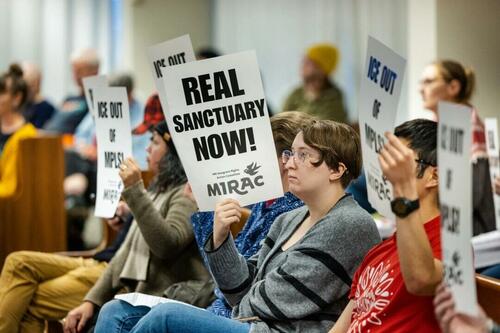
ICE has frequently encountered resistance and protesters in Minnesota, which is considered a “sanctuary” state that shields illegal immigrants.
And Minneapolis, the state’s largest city, recently beefed up a local law forbidding any city employees from cooperating with ICE or other federal immigration agents.
In a Dec. 30 statement posted to X, ICE accused Gov. Tim Walz and Minneapolis Mayor Jacob Frey of having “stoked nonstop riots and attacks against our officers.”
The Epoch Times sought comment from Walz and Frey on Dec. 31 and received no immediate reply.
Todd Lyons, ICE acting director, responding to criticism of recent ICE actions, told news reporters on Dec. 30, “If sanctuary cities would change their policies, and turn these violent criminal aliens over to us … instead of releasing them into the public, we would not have to go out to the communities and do this.”
Tyler Durden
Fri, 01/02/2026 – 06:20
Tinley Park considers new fees, fines and inspections to deter absentee landlords
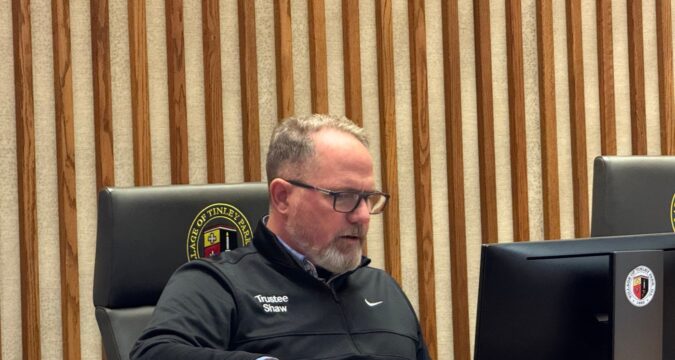
The Tinley Park Village Board is considering six proposals to add rules on rental housing in an effort to better prioritize “community health over corporate wealth,” said Trustee Ken Shaw.
Shaw said the policies, which include new fees and fines along with required in-person inspections for rental housing, aim to protect Tinley Park residents from absentee landlords and corporate speculation, and to ensure rental housing is safe and high quality.
The Village Board reviewed the proposals at a Dec. 16 committee meeting, and the concepts were supported by trustees and Mayor Michael Glotz. Shaw said the proposals need to be finalized and a final vote could be months down the road.
Shaw said if passed, the rules could be implemented in the next 12 to 18 months.
He said the policies would allow the village to be proactive in preventing rental housing issues, instead of just addressing issues as they come up.
He said he is especially concerned about corporations buying residential housing, pushing out first-time home buyers and becoming absentee landlords.
“They don’t take care of the place, they’re not responsive, mechanical systems fail and they can’t get it fixed,” Shaw said. “We can’t have people living in those conditions. We need to do what we can to protect them.”
Shaw said the village’s rental ordinance is skewed toward empowering property owners to kick out “bad tenants,” but said it’s important to go further and ensure residents live in quality properties.
The first proposal is particularly aimed at absentee and corporate landlords, he said. It would limit the individual or entity ownership of a single family duplex to two units, cap ownership for larger multifamily buildings, prohibit foreign ownership and require full disclosure of beneficial ownership.
The second proposal would require a thorough in-person inspection before license issue or renewal where staff would test the electrical outlets, plumbing, heating, gas, smoke alarms and the state of the windows and doors.
“This would provide a certain level of assurance to both the renter and the community that we’re on top of it,” Shaw said.
Shaw said the village would aim to conduct these inspections before tenants moved in. The village would charge property owners a higher fee for inspections conducted after tenants move in.
Shaw said the current ordinance states the village will not conduct interior inspections, which he equated to a “drive-by” inspection, where staff essentially look to see if a property is on a parcel of land.
The second proposal would increase fees to cover the cost of inspections and to discourage speculative ownership, along with implementing a tiered inspection schedule based on compliance history.
The third proposal would establish and enforce occupancy limits requiring all tenants to be listed on leases and license applications and prohibit unlicensed short term subletting in smaller residential units.
The fourth proposal would strengthen property maintenance and accountability with higher penalties for violations and require landlords to post contact information for complaints.
The fifth proposal, Shaw said, is aimed at increasing ownership transparency and would mandate the full beneficial ownership disclosure for rental licenses and property transfers. It would also deny licenses to entities that fail to comply.
The last proposal would increase rental license and inspection fees for a full cost recovery and apply escalating fines for repeat violations.
Trustee Michael Mueller recommended, and Shaw agreed, to prioritize implementing a registration process for rental licenses and property transfers, with heavy fines for not registering.
Shaw said the village needs to get a handle on the number of rental housing units in Tinley Park. He said administrators know how many rental units are signed up under the village’s Crime Free Rental Housing Program, which is required for rental owners under a 2008 ordinance.
But he said village officials do not know how many rental units are not signed up, and said officials need to identify rentals that are not part of the program.
Mueller said having rental units registered helps the village or Police Department contact the property owner quickly when complaints arise.
Shaw said he proposed a comprehensive solution because he wants to be careful not to rely on a single fix. He said a more comprehensive program might require an increase in staffing.
He also said he would like the implementation of the policies to be collaborative between village departments, but said those ideas are still in the early stages.
“This is not something I think we can do overnight,” Shaw said. “We’re going to have to plan this out and see how much of this we can do at once, in phases, but we have to agree to what the ultimate vision is going to be and then we do that.”
Rental housing inspections were also increased in Carpentersville in response to a March fire in which three young brothers died. The annual single-family home rental licensing fee will also increase from $125 to $300, beginning Jan. 1, in the northwest suburb.
Shaw said the Carpentersville fire is an extreme case of what the Tinley Park Village Board is trying to prevent.
“When you have absentee landlords and corporate ownership sometimes you will end up with those types of situations where it’s not a safe environment,” Shaw said. “It puts their health and safety at risk.”
Shaw said the series of proposals may be presented separately to the board, instead of one package, at an upcoming committee of the whole meeting.
awright@chicagotribune.com
https://www.chicagotribune.com/2026/01/02/tinley-park-fees-fines-rental-properties/

Letters: Children are still our hope and our future
Editor’s note: We asked readers to submit what their hopes are for the new year. We published a selection of those letters on Wednesday and Thursday. Here is the remainder.
Kids are our future
There are many things to hope for, but as a retired teacher and an active volunteer, I will stick to one topic: our children. It is they who are the real hope because they are the future. It’s a trite saying, but it is true.
I read about scores, failures, schools, behavior, video games and everything else that makes us worry about our youngest and most precious resource. So let me tell you my hope.
I hope that schools will remain child-centered with hands on books, crayons, music — and yes, even chalkboards. Technology has overtaken the art of teaching. Children look at screens to learn to read. Or Chromebooks. (I am not even sure what those are.)
We used to gather children in little groups to talk about books and stories, to share ideas, to draw a picture of the story, to act out the story. It was so real and so authentic. They were excited to read! There are teachers who still embrace this approach. I applaud them. Children had quiet time doing “seatwork,” which helped them build independence. Now they need to be entertained almost constantly.
I hope that all parents will put down their phones and devices occasionally.
I hope that children will not be sitting in front of tablets and looking at screens for lengths of time. I do know parents who monitor it all. Bravo to them. My hope is that more parents will do the same for their children. I hope that all parents read to their children on a regular basis. Take them to the library. It’s free! Also, remember it’s OK to say “no” to the child. They are not going to go through life getting everything they want. Help them understand that and learn how to cope.
My hope is that teachers who are dedicated to children will be respected and honored instead of criticized. There is too much pressure to increase scores and deal with behavior issues. Teachers are torn between knowing what is good for children and following administrative orders. My hope is that teachers will stay strong and stay committed to making schools child-centered, warm and caring. Not just in the early years but through all grades. No one said it’s easy. But it matters greatly.
Lastly, I hope that every child in the world feels loved, safe and nurtured.
That is a tall order, but hope is just that. Hope.
— Cynthia Marks, Palos Park
Our nation restored
My hope for 2026 is that my country be restored to what it was before 2025. A country led by a person who somewhat resembles the 14 other presidents I’ve experienced in my lifetime; men with civility, humility and maturity above the level of an angry child who must resort to name-calling for lack of better reasoning and vocabulary skills. A country presided over by a person who knows and understands the Constitution as the law of our land and adheres to it. A country where high-level government positions are filled by people with experience and qualifications.
I hope for a country where people who storm and desecrate our nation’s Capitol with the intent of killing our vice president and other government officials are not regarded as patriots and absolved of criminal activity, while our landscapers and nannies are hunted down and arrested.
I hope for a country where I am not reminded daily, by the pictures in the media, of the stories told by my father of his family fleeing Russia during a time when armed Cossacks stood on the street corners as he walked to school. A country where I do not see money wasted on armed boats patrolling the peaceful Chicago River on a beautiful Saturday afternoon.
My fundamental hope is that the sycophantic members of Congress will have used their holiday break to strengthen their backbones and return to work rested and clearheaded to remember the oath they took to uphold our Constitution. I hope they will see that the current White House occupant, who operates only with egoism, should return to Mar-a-Lago permanently, thus sparing me of daily reminders of the King Midas myth.
— Lenore Bernstein, Northbrook
America’s polarization
My hope is for the depolarization of America in 2026. Yes, our political leaders have given some of us reason to be resentful, cynical and even depressed. Still, one’s preference for the United States leadership should not lead to the elimination of relationships with families and friends.
I hope that we become less hypersensitive to others’ political opinions. Many of us believe that this administration is deeply flawed. Still, this should not mean that anyone who has a differing view than you on governmental policies should be erased from your contacts list or no longer be invited to family get-togethers.
My hope is that, whether you lean left or right, your politics do not let you lose sight of the importance of bonds with friends and family. While seldom a good idea, if you do elect to discuss politics with those close to you, endeavor to maintain respect and a dialogue with those who do not share your views.
I hope for Americans’ goodwill toward fellow Americans.
— Terry Takash, Western Springs
Hopes for government
I hope that in 2026, we will have a president who values honesty. Who exhibits empathy and compassion for all Americans. Who is not petty or vindictive. Who supports our allies and confronts our adversaries. Who understands what constitutes fact-based science and what is dogmatic nonsense. Who supports a strong democracy as our heritage and our right.
I hope that in 2026, we will have a Department of Justice that respects the law and rejects the whims of the president. I hope that we will have a Congress that addresses the fact that America is rapidly losing its status as a world leader in science, education and social justice. I hope that we will have a federal government that recognizes that diversity, equity and inclusion are strengths, not weaknesses. One that respects civil rights and acts to revamp our immigration system. One that realizes that a country ruled by one man is not a functioning democracy.
I hope that in 2026, we will find a way to effectively address gun violence. I hope that everyone recognizes that hatred in whatever form only leads to violence and discord and that acceptance gives everyone a chance to thrive.
I hope that in 2026, we will be a country that allows everyone to live and work freely and without fear and that everyone everywhere has a happy, healthy and prosperous year.
— Doug Steinman, Morton Grove
Ceasefires and a ban
My hopes for the new year include a lasting ceasefire in Gaza, Ukraine and the United States Congress. Also, a permanent ban on assault weapons and presidential pardons. Additionally, I would like to see an overhaul of our outdated Constitution that currently allows lifetime appointments for Supreme Court justices but has no retirement age for ailing presidents.
And lastly, I’d like to see a cap on expressway tolls, property taxes, Cubs tickets and a head of lettuce.
— Bob Ory, Elgin
Make it more sensible
I wish that:
Senior citizens would be invited to test the functionality of all websites. Everyone would drive as though the driver in front of them asked for patience, as if they are a new driver. On a child’s birthday, the child would give a gift to their parent(s). Signs would make sense (I’m reminded of the sign, “Trucks entering and leaving highway”). All computer monitors in any customer service setting would be low enough for you to actually speak face to face with the customer service representative. Waiting room chairs in health care settings would be high enough so that it’s easy to rise from them, and health care workers would walk beside you and not in front of you so that you can actually hear them while they speak. Postage stamps could be purchased at each register, not only the customer service desk, so that you need not wait in two lines. Soups and coffee would be served hot. Exit doors in all bakeries would open automatically. Newly hired food service workers would be served a meal so that they know how to serve others, as many food service workers have never been served a meal. When a friend confides in you, you ask, “Do you need an ear, a hug or a resource?”
And I wish that everyone would have a joyous 2026!
— Theresa M. Gargano-Adamski, Wilmette
Submit a letter, of no more than 400 words, to the editor here or email letters@chicagotribune.com.
https://www.chicagotribune.com/2026/01/02/letters-010226-hope-new-year/

City Hall hiring freezes, including under Mayor Brandon Johnson, have proved to be more of a chill
When Mayor Brandon Johnson faced a long-expected budget deficit this fall, he again turned to a government hiring freeze as a means to save money and show the public that City Hall was taking the problem seriously.
In practice, that “targeted” freeze has proved to be more of a chill, as hundreds of workers were nonetheless brought onto the payroll since the Johnson administration instituted the policy in August, according to city records.
While that follows the pattern of previous hiring freezes under Johnson and his predecessors, a leading mayoral critic nonetheless disapproved of the move when presented with the figures amid tense budget negotiations that only ended the weekend before Christmas.
“Everything with this budget, it’s about trust,” Ald. Matt O’Shea, 19th, said in November. “I don’t believe the math that they’ve come up with … and now to find out that they’ve hired (hundreds of) non-public-safety positions while we were in a hiring freeze? This is nothing but a shell game with them.”
Some financial experts stress that it’s unrealistic for local government to maintain the same level of services without new hires, even if police and fire are excluded. To that end, while no city hiring freeze has truly frozen all new additions to the workforce, the popular spending-control mechanism Johnson has used twice now does its main job of communicating belt-tightening to taxpayers, said Ralph Martire, executive director of the Center for Tax and Budget Accountability.
“Even the symbol of it is important, simply because when you have a difficult fiscal situation, you want to make sure that the public sector that’s facing it isn’t just running up costs for no apparent reason, right?” Martire said. “That’s just part of the deal, to make it clear to taxpayers you’re taking every step to solve your problem.”
Starting with the Aug. 1 kickoff of Johnson’s hiring freeze, his budget office approved 494 more employees in the following three months, according to employee data obtained by the Tribune via a Freedom of Information Act request. Just under half, or 223 workers, were not Police Department and Fire Department hires, the records through Nov. 18 show. Department of Family and Support Services Commissioner Angela Green, hired Aug. 7, netted the highest salary from that pool, at about $213,000.
However, Johnson spokesperson Cassio Mendoza noted the city’s hiring and onboarding process usually takes about three to five months, and if a job offer had already been made then that hire would be approved “so, looking at hire dates is not a good way to measure the impact of a hiring freeze.”
Johnson’s budget director, Annette Guzmán, announced a “targeted” hiring freeze at the end of July as the mayor headed into his third budget cycle with the tall task of closing a $1.19 billion projected deficit for 2026. It was the second hiring freeze his administration has enacted, and both exempted public safety positions. The memo carved out “critical public safety, revenue-generating, mission critical and legally mandated roles” as exceptions.
The freeze only applied to jobs under the city’s Corporate Fund or Community Development Block Grant. The just under 500 hires from the Tribune’s data analysis come solely from the Corporate Fund, which is the main part of the city’s budget that faces deficits every year, while other sources include special funds from the airports or federal and state grants. No CDBG-funded hires were recorded during that duration.
Mendoza said that as of mid-November, the hiring freeze had saved $53 million, with that number projected to rise to $75 million by the end of 2025. In 2024, an earlier city hiring freeze saved $65 million, Mendoza said, after Johnson’s office first anticipated saving about $100 million.
Since the latest freeze began in August, the mayor’s office has hired 16 new positions, the most recent in early November, and most of them were senior leadership and management roles. That office has 124 employees as of this week, according to the Office of the Inspector General dashboard, while the city payroll is about 32,400.
The highest-earning addition to the mayor’s office was Sheila Bedi, hired on Aug. 25 at $198,000 under the job title of chief operating officer, though her position was announced as a “director of strategy.” Records also show Johnson’s office tapping Sabeeha Quereshi as a deputy mayor that same day, announced as a “deputy mayor for Health and Human Services,” although she no longer appears on the city’s employee dashboard maintained by the OIG.
The departments that got the largest pools of new hires were: Chicago police at 256 and the Office of Emergency Management and Communications at 44. The Fire Department, where a significant share of jobs are also exempt, saw only 15 new hires.
Ahead of Johnson’s mid-October budget speech unveiling his $16.6 billion spending plan, which did not include structural layoffs, his budget team elaborated: “Exemptions to the hiring freeze will include positions related to public safety, revenue generation, legislative, elections, consent decree, IT, mental health and litigation savings.”
Aldermen ultimately made the historic move of passing a counterproposal on Dec. 20 over his objections. Among their complaints with the Johnson administration’s handling of this budget was what they said was a reluctance to implement every possible tool for savings and efficiency, including in the workforce.
The mayor’s budget team retorted in a letter to the aldermanic opposition this month that “a targeted hiring freeze … gives the Administration the opportunity to evaluate organizational structures, examine spans and layers, and assess where administrative functions can be centralized or shared across departments while still realizing the financial savings in 2026 that a deeper cut to vacancies would achieve.”
As for last year’s hiring freeze, 483 employees were added from the Corporate Fund by the end of 2024, including 156 who weren’t in the police and fire departments, according to city data from that period. That means the current hiring freeze is resulting in a larger share of positions that are not first responder roles added to the payroll so far, though it’s unclear whether there have been fluctuations in job applicant trends.
In 2019, then-Mayor Lori Lightfoot also implemented a citywide hiring freeze ahead of her first budget plan that faced a looming deficit. From Aug. 20 to the end of 2019, the city hired 583 additional employees, 307 of them outside the police and fire departments, records show.
Martire, the fiscal expert, said if the numbers don’t translate to enough fat-cutting to the average Chicagoan, that might be by design as “your private sector entity is accountable to do one thing, and that is generate a profit. Your public sector entity is accountable to … deliver core public services to everyone who needs them cost-free.”
David Merriman, a professor of public policy, management and analytics at the University of Illinois Chicago, added that the sweet spot for a taxpayer is for some hiring to support the programs most in demand, but said that, overall, “I would expect the total workforce to shrink.”
“In general, hiring freezes are a blunt tool to reduce spending,” Merriman wrote in a statement. “A much better approach is to prioritize city services and to curtail those that are least essential and most readily able to be cut.”
https://www.chicagotribune.com/2026/01/02/mayor-brandon-johnson-hiring-freeze/
Editorial: The Trump administration misapplies federal law to keep open coal-fired plants in Indiana
The Trump administration is badly stretching the law to keep open coal-fired power plants throughout the Midwest that otherwise would have shuttered under well-thought-out, long-term strategies.
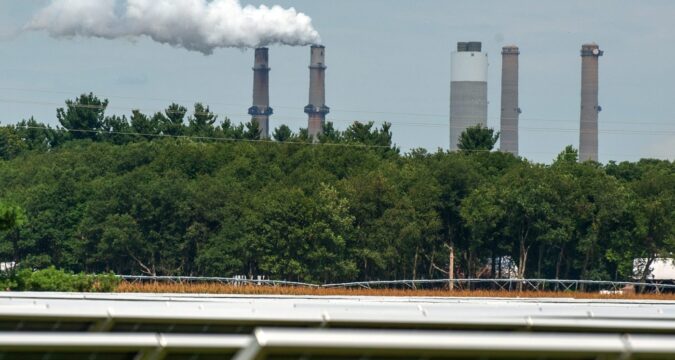
The latest examples are in neighboring Indiana, where the Department of Energy late last month ordered utilities not to close two aging power stations that otherwise would have been taken out of service by the end of last month. The orders mean that the Schahfer station in Wheatfield, Indiana, and the F.B. Culley station in Warrick County, Indiana, will remain open for 90 days.
If DOE’s previous actions in Michigan are a guide, where DOE saved a coal-fired plant about 35 miles east of Grand Rapids from closure beginning in May, those Indiana plants will likely get another 90-day reprieve after the current one expires and likely more such orders once the next 90 days pass by.
President Donald Trump long has supported the continued burning of coal to produce electricity despite risks to human health as well the emissions’ well-established contributions to Earth’s warming climate. At the same time, Trump recently acted to kill five large-scale wind farms already under construction in the Atlantic that are slated to generate enough power to serve 2.5 million household and business customers. Trump seems to detest wind power as much as he professes to love coal power.
In the case of the Michigan and Indiana coal plants, the Energy Department is ordering them kept alive under provisions of the Federal Power Act that are meant for reliability crises, such as those caused by natural disasters.
The Schahfer plant, located about 75 miles southeast of Chicago, was slated for closure years ago under a comprehensive plan put together by Northern Indiana Public Service Co. (NIPSCO), which serves much of the northern third of the state. While there are legitimate concerns throughout the Midwest about future reliability due to new data centers and their substantial power consumption, there is no looming emergency that justifies the administration’s action here.
Regional power-grid managers, in concert with utilities, have the ability to order plants on the chopping block to continue running if there are threats to reliability, and they use that authority from time to time. The Energy Department doesn’t get involved in those decisions ordinarily.
That’s how such decisions should continue to be made.
Heavy-handed government involvement in energy markets is not unique to Washington. We’ve seen governments at the state level, including in Illinois, get overly involved in determining the proper mix of power generation — usually to the detriment of ratepayers. Trump’s thumb on the scale to favor coal burners will have the same effect. After all, these plants were closing in part because they’re more expensive than other available energy sources. Ratepayers will shoulder that cost at a time when inflation and affordability are top public concerns.
Slowly but surely, the U.S. is moving in the direction of clean energy. With some exceptions, the market is doing a pretty good job of making that transition as cost effectively as possible. Government has a role to play — as a setter of environmental standards, for example — but shouldn’t be picking winners and losers.
That’s true in Illinois, where we’ve seen heavy-handed moves from those opposed to fossil fuels founder on realities of supply and demand. And it’s true of the Trump administration’s market interference in Indiana and Michigan.
Submit a letter, of no more than 400 words, to the editor here or email letters@chicagotribune.com.
https://www.chicagotribune.com/2026/01/02/editorial-indiana-coal-electricity-donald-trump-energy/

Starved Rock, Illinois’ most popular state park, to get $18M trail upgrades in new year
The new year will bring long-overdue upgrades at Illinois’ most popular state park and one of its top tourist destinations outside Chicago.
Preliminary work already is underway at Starved Rock State Park in LaSalle County for an $18 million project that will include the first major improvements in three decades to a 13-mile trail system that winds through sandstone canyons and bluffs along the Illinois River.
Starved Rock, roughly a 100-mile drive southwest from the Loop, sees more than 2 million visitors per year, many of whom spend their time trekking along the park’s wooden boardwalks, bridges and stairways.
“As you might imagine, with that much foot traffic, a lot of deterioration can occur to the trails, to the paths, to the bridges, stairways, boardwalks, retaining walls, all those things that support the trail system,” Todd Strole, assistant director of the Illinois Department of Natural Resources, said at a news conference this fall announcing the work. “The last major trail system upgrade to this park was in the 1990s, and a lot of features have seen a lot of wear and tear since that time.”
That wear and tear has led to closures of portions of the trail system, which in turn leads some hikers to venture off designated paths, putting themselves at risk, Strole said.
Last year, a 38-year-old man from southwest suburban Oswego fell to his death at the park, and in April, a 37-year-old Tinley Park woman and her 7-year-old son had to be rescued after falling into one of the park’s 18 canyons.
Aside from reopening closed sections of the trails and making the system safer and more accessible, the project, much of which is slated for completion in 2026, will help preserve the natural habitat and prevent erosion, officials said.
The park, marking its 115th anniversary in 2026, can protect an ecosystem that supports diverse wildlife and accommodate its millions of annual visitors, “if they’re staying on trails,” Strole said.
DNR officials and locals who rely on tourism hope the ongoing upgrades don’t deter visitors, even if they may encounter dead ends or detours while hiking.
Abby Farrell, area operations manager for ExplorUS, which operates the Starved Rock Lodge in the heart of the park, said the company is “thrilled to see this investment in the park’s future, ensuring safer, more accessible trails and the continued preservation of the natural wonders that draw visitors from Illinois and beyond.”
“We want to reassure our guests that Starved Rock Lodge, its hotel, restaurant, gift shop and event spaces will remain fully open through the entirety of this project,” Farrell said. “We will continue to host weddings, conferences, family getaways and seasonal events just as planned. We can encourage everyone to continue visiting, supporting local tourism and checking trail conditions online before planning your visit.”
Cynthia Zavala, of Berwyn, from left, and sisters Mariela Del Toro and Diana Izaguirre walk through Starved Rock State Park in Oglesby on Dec. 19, 2025. (Troy Stolt/for the Chicago Tribune)
Underscoring that the park will remain open and accessible to hikers and other visitors, Starved Rock is one of more than a dozen DNR sites across the state participating in the national First Day Hike program on New Year’s Day.
Organized by the America’s State Parks Foundation, the program encourages people to start the new year outdoors and this year will help kick off commemorations of the U.S.’s 250th anniversary.
Starved Rock is also scheduled to host its annual Eagle Watch Weekend on Jan. 24-25, an opportunity to view the bald eagles that take up residence in the area during the winter months.
According to state officials, planned trail upgrades in the coming year include:
Renovating or replacing 10 trail bridges and installing three new timber stairways and a new timber boardwalk with a fence on the Tonti Canyon and LaSalle Canyon trail system.
Replacing three existing bridges and several timber stairways and installing new timber stairways and fencing on the Lower French Canyon Trail, and expanding the boardwalk from the bridge to the existing stairway at Jacob’s Ladder.
Replacing the trail bridge, timber stairway and fence at Pontiac Canyon.
Replacing several existing bridges and installing new timber boardwalks with fencing on the River Trail.
Replacing the existing decking on the Lodge Bridge to St. Louis Canyon.
Work in some of the more remote parts of the park will require materials to be brought in by barges on the Illinois River or by helicopter, Strole said.
Construction will be staggered to avoid too many simultaneous trail closures, officials said.
The trail upgrades are part of $37.2 million in total improvements at Starved Rock, which also includes $19.2 million to construct a new sanitary sewer system, upgrade the water filtration system and replace vault toilets.
“That’s kind of like the foundation in your house,” Strole said. “It’s not all that glamorous, but it’s really important.”
Calling Starved Rock “one of the most beautiful and beloved places on Earth, my favorite,” Republican state Sen. Sue Rezin of Morris, whose district includes the park, said she was excited to see the work get going after years of advocating for the funding.
“Together, we are ensuring that Starved Rock will continue to be a world-class destination, a place where nature, community and history come together to showcase the very best of Illinois,” Rezin said at the news conference in the fall.
In 2019, Rezin introduced a Senate proposal to fund upgrades at Starved Rock by charging visitors a parking fee, but the measure fell one vote short of passing.
The General Assembly has included $10 million for trail upgrades at Starved Rock in each year’s state budget since 2021 as part of Gov. JB Pritzker’s $45 billion Rebuild Illinois construction program, but up until now, little of the money has been spent. The trail improvement project is also funded with $8 million from the federal Land and Water Conservation Fund.
The state also is paying for the sewer construction project through Rebuild Illinois, which was launched in 2019 and is funded through a mix of borrowing, increased taxes and fees, and a massive expansion of legal gambling.
https://www.chicagotribune.com/2026/01/02/starved-rock-state-park-trail-upgrades/
After a year of change, Cook County court cases to watch for in 2026
In 2025, Cook County began the year with a new state’s attorney and ended it with a new chief judge, ushering in another era for one of the largest court systems in the country.
Upon taking office in December 2024, State’s Attorney Eileen O’Neill Burke implemented policy changes that were cheered and criticized, including ordering prosecutors to automatically seek pretrial detention in certain circumstances and allowing police officers to bypass the office’s felony review process in some low-level gun-related felony cases.
By the end of the year, former Chief Judge Tim Evans’ nearly quarter-century reign heading the Cook County judiciary was ended when Judge Charles Beach defeated him in a secret-ballot election.
Evans’ historic eight terms as the first Black chief judge saw the county through reforms, changes and upheavals including the elimination of cash bail and the COVID-19 pandemic.
Well-liked among his judicial colleagues, Beach has pledged to improve communication among court stakeholders and increase transparency.
Charles Beach listens to speakers before being installed as the new chief judge of the Circuit Court of Cook County in a ceremony Dec. 1, 2025, at Chicago-Kent College of Law. (Brian Cassella/Chicago Tribune)
He takes the reins at a time when the court system faces a number of challenges, with his office overseeing the often-troubled Juvenile Temporary Detention Center and absorbing oversight for all electronic monitoring defendants.
With changes underway, here are some cases and issues to watch for in 2026:
Immigration protest cases
As Chicagoland was roiled this autumn by the Trump administration’s immigration crackdown, more than 100 people have landed in Cook County court facing protest-related charges.
The U.S. Immigration and Customs Enforcement facility in Broadview became a flashpoint for demonstrations opposing tactics by agents during Operation Midway Blitz, at times plunging into chaos and violence as federal agents deployed tear gas and other nonlethal measures into crowds of protesters.
That spurred a coalition of state and local authorities, including the Cook County sheriff’s office, Illinois State Police and the Broadview Police Department to set up command at the facility, with state officials saying the effort was meant to protect First Amendment-related activity.
Over the course of several months, the officers arrested at least 112 people, their crowd control tactics also eliciting criticism from protest groups.
Unlike the arrests initiated by immigration agents that have gone to federal court, these cases remain largely pending, and it remains to be seen how Burke’s office will resolve the matters.
In federal court, the cases have mostly gone uncharged or fallen apart when met with the scrutiny of the courtroom.
Most of the stateside arrests are misdemeanors, with police officers writing tickets and releasing people on scene.
A handful, though, have been charged with low-level felonies.
During an interview with the Tribune, Burke said the office is only just starting to see the cases in court and review each matter.
But she said the overall tactics of immigration agents in Chicago have made the job of policing and prosecuting more difficult.
“We’re having trouble getting victims and witnesses to come to court. When that happens, we don’t have a choice; we have to dismiss the case,” she said. “We would have to release a very violent predator into the community.”
Earl Wilson
In 2017, Cook County Judge Raymond Myles became the first Chicago-area judge to be shot and killed in more than three decades in a case that generated national news and a massive police investigation and stunned colleagues at the Leighton Criminal Court Building where he presided over cases for years.
Now, his alleged assailant is scheduled for one of the first major jury trials of the new year, slated to begin Jan. 12.
Myles rose early on April 10, 2017, at his West Chesterfield home on the Far South Side in order to hit the gym with his girlfriend before work, prosecutors said.
But as his girlfriend left the residence, she was confronted by a gunman who took her gym bag and shot her in the leg in an apparent robbery attempt, according to prosecutors.
Myles rushed outside and exchanged words with the attacker before he was shot and killed.
Family members console each other as Chicago police investigate the fatal shooting of Cook County Judge Raymond Myles in the 9400 block of South Forest Avenue on April 10, 2017. (Zbigniew Bzdak/Chicago Tribune)
The robbery was for naught in the end, prosecutors said at a 2017 bond hearing: After realizing the gym bag had no money, the gunman tossed it out the car window.
Earl Wilson, 54, is facing charges of murder and other felonies in the slaying. His co-defendant, Joshua Smith, pleaded guilty last year to armed robbery and was sentenced to 35 years in prison.
Nearly nine years since the killing, Wilson, barring any further delays, is finally set to face a jury, expressing frustration about the long wait in motions and court hearings.
In a handwritten motion filed in 2023, Wilson wrote: “Defendant requested for a speedy trial since being appointed counsel in 2017 and its now 2023 and nothing has been (done).”
Micheail Ward
The 2013 shooting death of Hadiya Pendleton, a 15-year-old honors student, spurred conversations about gun violence in Chicago that reached the highest echelons of the country when then-first lady Michelle Obama attended the teen’s funeral.
Pendleton, a majorette, had performed at President Barack Obama’s second inauguration days before she was killed.
Micheail Ward was convicted of first-degree murder and two counts of aggravated battery following a lengthy jury trial in 2018, but — despite an attempt by the Cook County state’s attorney’s office to salvage the conviction — an appeals court ordered a new trial, finding that the lead detectives continued to question him after he invoked his right to remain silent.
Now, prosecutors are back in court fighting for a conviction in the high-profile case, this time with significant headwinds.
The office no longer can present evidence of Ward’s confession.
And his attorneys are alleging misconduct on behalf of the detectives, which includes John Halloran, who has been accused of misconduct in multiple cases and worked under disgraced former police Cmdr. Jon Burge.
“Defendant also contends that the evidence presented against him, namely witness statements (virtually all of which were recanted) were false, fabricated, and a product of abuse, threats, and other forms of misconduct perpetrated by detectives John Halloran and Jose ‘Pepe’ Lopez,” a defense motion said.
https://www.chicagotribune.com/2026/01/02/courts-look-ahead-2026/

Art exhibitions for winter 2026: Don’t miss these 10 at the MCA, Art Institute and in Elmhurst
Go see art in 2026. Can’t hurt, might help, and it’s absolutely better than binge-watching trash television, click-buying things no one needs, doomscrolling the apocalypse or feeling helpless in the face of fascism. Remember, commercial galleries and community art centers are gratis entry and most museums have free days for locals. (And those that don’t, should.)
“Jessica Zawadowicz: Crossover”
Not every painter can incorporate leftover almonds, a just-played basketball, old clothing, a single Croc, or a chunk of parking lot into her canvases. Well, I suppose anyone could, but rare is the artist who does it well. The up-and-coming Zawadowicz can, and does. Enter with a sense of openness and humor, stay for the superbly considered abstract compositions. Definitely don’t eat the Skittles.
Through Feb. 7 at Regards, 2216 W. Chicago Ave.; regardsgallery.com
“Sight of Resistance”
The Center for Native Futures puts on its strongest group show yet, with otherworldly creations that are fierce, witty, and boldly recuperative of cultural traditions and histories. Including the clever Winnebago-dotted landscape collages of Henry Payer; the wrenching, exquisite ledger drawings of Chris Pappan; a fully beaded high-visibility emergency vest by Erin Genia; and fantastical cornhusk creatures by Erin Lee Antonak.
Extended through Feb. 28 at CFNF, 65 W. Adams St.; centerfornativefutures.org
“Luftwerk: The Sun Standing Still”
Amid the shortest days of the year, and with seasonal affective disorder in full swing, Chicago’s premiere light artists offer solace by way of new sculptures, wall reliefs and an installation regarding the relationship between sunlight and the revolution of the Earth. Don’t expect anything too sciencey — Petra Bachmaier and Sean Gallero, the duo known as Luftwerk, fashion simple-seeming artworks out of light, color and form, to create beautiful and surprising perceptual effects. Accompanied by “Luminous Matter,” an intergenerational exhibit of eight related artists, among them Yuge Zhou and Jan Tichy.
Through Feb. 28 at Secrist-Beach, 1801 W. Hubbard St.; secristbeach.com
The Center for Native Futures’ best group show yet includes “Winnebago Camp II,” a 2025 collage-painting by Henry Payer (Ho-Chunk).
“Firelei Báez”
Who knew post-colonial feminist rage could look so good? Báez paints huge, fiery, fabulous portraits deeply informed by her Dominican-Haitian heritage, with an emphasis on the critical possibilities of hair and its wrappings, recuperated historical documents, and especially decorative excess. Her first mid-career survey, organized by the ICA Boston, also includes a palimpsestic architectural sculpture, a silly immersive installation, and a mesmerizing array of 225 collage-drawings on old book pages.
Through May 31 at MCA Chicago, 220 E. Chicago Ave.; visit.mcachicago.org
“Chair-ish”
What exactly does chair-ish mean? Alex Chitty, an artist who makes sculptures that look a lot like interior decoration, and Norman Teague, a designer who makes furniture that looks a lot like sculpture, should have much to say on the subject in this, their first joint exhibition.
Jan. 22 to April 11 at Cleve Carney Museum of Art, 425 Fawell Blvd., Glen Ellyn; theccma.org
“MOCP at 50: Collecting Through the Decades”
On the occasion of its 50th anniversary, the Museum of Contemporary Photography looks back on the varied practices that led to its amassing of over 18,000 objects by more than 2,000 artists. Organized by decade according to when a work was acquired, not when it was made, the show promises to shed light on evolving ideas of what matters in terms of the photographic canon, and how that has changed over time.
Jan. 22 to May 15 at the MOCP, 600 S. Michigan Ave.; mocp.org
At the Elmhurst Museum, Edward Weston’s iconic images of the American West and his young lover are responded to by Kelli Connell, who offers parallels in photographs like “Betsy, Lake Ediza,” from 2015. (Kelli Connell)
“Living with Modernism: Kelli Connell’s Pictures for Charis and Double Life”
Between 1934 and 1945, Edward Weston photographed his young partner, the writer Charis Wilson, and the landscapes of the American West. Forty-eight of these now-iconic prints appear alongside a contemporary series they inspired, by Kelli Connell, also portraying a photographer’s spouse and shot while traveling the American West. Artistic power structures, shifting ecologies, and complex relationships figure everywhere, across gulfs of time and understanding. Also on view is Connell’s newest work, staged in the museum’s Mies van der Rohe house.
Jan. 24 to April 26 at the Elmhurst Art Museum, 150 Cottage Hill Ave., Elmhurst; elmhurstartmuseum.org
“Lucas Samaras: Sitting, Standing, Walking, Looking”
When Samaras died in 2024 at the age of 87, his greatest subject died too — namely, himself. Always unclassifiable, producing everything from mirrored environments to encrusted boxes to psychedelic Photoshop compositions, Samaras was especially well known for the innovative self-portraits he made using Polaroid instant process film. This posthumous exhibit focuses on those images, often manipulated with a finger before the chemicals set, placing them amid sculptures and paintings recently gifted to the museum by the artist’s estate.
Jan. 31 to July 20, Art Institute of Chicago, 111 S. Michigan Ave.; www.artic.edu
The Hyde Park Art Center’s solo show of paintings, drawings and collages by local artist Ann Toebbe includes “Northside Southside” from 2021. (Ann Toebbe)
“Ann Toebbe: Cooler by the Lake”
In the apartments of Toebbe’s Hyde Park, where the painter has lived for nearly two decades with her family, midcentury furnishings abound, plants sometimes wilt, and nearly all available surfaces are covered in patterns. Also, there are no people and everything is compressed, as if a giant hand had come down from the sky and harmlessly splayed the three-dimensional world out into two, for easier viewing. Flat has never felt so deep as in her meticulous drawings, paintings, and collages.
Feb. 28 to June 14 at the Hyde Park Art Center, 5020 S. Cornell Ave.; hydeparkart.org
“Alice Tippit: Rose Obsolete”
Tippit, as befits her name, is an artist of ambiguities. Her small, carefully rendered paintings, filled with simple floating shapes in perfectly odd solid colors, double as Rorschach Tests for the viewer. Are those leaves or a mustache, cheeks or nose? Half a grapefruit on a platter or a monster from a children’s book? Ram’s head or serpent still digesting its last meal? Sounds strange, looks deceptively straightforward, and is most assuredly deserving of the artist’s first museum show.
March 5 to Aug. 2 at the DePaul Art Museum, 935 W. Fullerton Ave.; resources.depaul.edu
Lori Waxman is a freelance critic.
https://www.chicagotribune.com/2026/01/02/art-chicago-winter-2026/

Anabel Mendoza and Dylan Blaha: Federal actions are hurting Illinois’ health care system and economy
Illinois’ 7th and 13th congressional districts may look different on a map, but their histories are deeply connected. The 7th District was shaped by the Great Migration, when Black families built communities on Chicago’s South and West sides while powering the city’s industrial and service economy. The 13th District, stretching across Springfield, Decatur and surrounding towns, has long anchored the state’s agricultural and manufacturing base. Both districts were built by working people who believed steady work should lead to stability, dignity and care for their families.
That promise is now under strain.
Across Illinois, health care access and economic stability are increasingly undermined by federal immigration enforcement policies that remove workers from communities, disrupt care networks and spread fear far beyond those directly targeted. These actions are not only about immigration. They are meant to destabilize the systems families rely on every day.
Immigrants make up nearly one quarter of Illinois’ workforce and are essential to industries that keep communities healthy and functioning. In the Chicago region, an analysis by WBEZ and the Sun-Times shows that roughly 65% of home care workers in 2024 were not U.S. citizens. These caregivers allow older adults to remain in their homes, reduce hospital admissions and support working families who depend on reliable care.
When immigration raids or prolonged delays in work authorization suddenly remove caregivers, nursing aides, food service workers and hospital support staff, the consequences are immediate. Home care agencies cancel shifts. Clinics and long-term-care facilities face staffing shortages. Families are forced to choose between missing work and leaving loved ones without care. As the American Hospital Association has warned, staffing instability directly undermines patient access, increases wait times and drives up health care costs.
The economic effects follow quickly. Immigrant households contribute billions in consumer spending and tax revenue, sustaining neighborhood business corridors and downstate town centers alike. When enforcement actions sweep through a community, fear suppresses economic activity almost overnight. Restaurants lose customers. Small manufacturers cut hours or production. Local governments collect less revenue just as demand for health care and social services rises, a dynamic highlighted in regional analyses by the Federal Reserve Bank of Chicago.
That pattern was clear in September, when federal agents carried out a militarized raid on a Chicago apartment complex, detaining 37 immigrants, most without criminal records. Business owners in surrounding neighborhoods saw sharp declines in foot traffic, and workers avoided hospitals and clinics for fear that seeking care could put them at risk of detention.
Avoided care has consequences. Fear of enforcement reduces preventive care use, increases uncompensated care and shifts higher costs onto hospitals, insurers and taxpayers.
Those costs are ultimately passed on to everyone.
We have heard this concern repeatedly while campaigning across both districts. Small business owners understand that fear is bad for business. When workers are terrified, turnover rises, productivity falls and long-term investment stalls. No economy grows under those conditions.
Illinois faces a choice.
We can continue allowing raids, delays and political games to destabilize our workforce and health care system or we can choose strength and growth. Federal backlogs that leave longtime residents waiting years for work authorization are not abstract administrative failures. They are economic bottlenecks that worsen staffing shortages, especially in health care, and drive up costs across the system, as reflected in U.S. Bureau of Labor Statistics data on foreign-born workers in essential industries.
Stability matters. When people have secure work authorization and legal protections, they are more likely to seek preventive care, remain employed and contribute consistently to the tax base that funds hospitals, schools and infrastructure. Communities become healthier. Businesses plan for the long term. Local economies grow stronger.
Unfortunately, too many elected officials have failed to act with that clarity. Last January, some Illinois members of Congress voted for the Laken Riley Act, legislation that expanded detention based on accusation rather than conviction. We know that detention-heavy approaches increase public costs without delivering corresponding economic or public safety benefits.
Illinois cannot build a healthy economy on fear. We cannot staff hospitals, care for seniors or grow local businesses while workers are driven into the shadows and families are afraid to seek care. Every raid, every delay, every act of political cowardice weakens our health care system and costs all of us more.
The choice is no longer abstract. Either we build stability and shared prosperity or we accept a cycle of disruption that keeps Illinois sicker, poorer and less secure than it needs to be.
Anabel Mendoza is a lifelong Chicagoan, an immigrant rights organizer and a candidate running for Illinois’ 7th Congressional District. Dylan Thomas Blaha is an Illinois Army National Guard captain, a former cancer research scientist and a progressive candidate running for Illinois’ 13th Congressional District.
Submit a letter, of no more than 400 words, to the editor here or email letters@chicagotribune.com.
https://www.chicagotribune.com/2026/01/02/opinion-illinois-health-worker-shortage-immigration-raids/

State lawmakers: Illinois will defy Donald Trump’s threat to responsible AI regulation
As Illinois legislators who have passed some of our state’s most significant legislation on artificial intellgence, we know what we’re talking about when we tell you President Donald Trump’s Dec. 11 AI executive order is unenforceable, dangerous and a nonstarter for our state.
With lightning speed, AI is reshaping our economy. The way we live, work, play and increasingly make some of our most intimate decisions all will involve AI now. These tools promise enormous benefits, but only if they are deployed responsibly.
States such as Illinois have enacted targeted, commonsense guardrails to protect children, prevent discrimination and ensure transparency when AI is used to make consequential decisions affecting people’s lives. These measures respond to real and documented harms and don’t stand in the way of innovation or competitiveness.
Here are a few examples. In 2025, we passed HB1806 to prevent AI from being used to diagnose or treat mental illness or marketed as if it does. SB243 prevents the misuse of AI tools by allowing local governments to verify that Freedom of Information Act requests come from real people. HB35 bans insurance companies from using AI to deny health insurance claims. In 2024, we passed HB4623 to ban the use of generative AI to create explicit and pornographic images of children and HB2123 to combat anyone who creates or distributes a digitally altered sexual image (deepfake) of an individual without their consent.
This is how you legislate on the AI issue. Use a thoughtful, consistent approach with input from stakeholders, advocates and regular people to address real problems.
We welcome this happening at the federal level to avoid a patchwork of state laws, provide developers of large AI language models a comprehensive national framework, and promote clarity and consistency across the market. This will ensure America leads on this important technological innovation.
But so far, it seems that Congress has sided with Big Tech’s “move fast and break things” attitude.
Earlier last year, Congress came close to adopting a 10-year total ban on any regulation of AI. Such a sweeping regulatory freeze would have been a disaster at a time when we are already behind the curve on regulating this new technology. Absent clear public standards, decisions about safety, transparency and accountability are left primarily to profit-seeking large corporations that have proved time and again they will prioritize the bottom line before people’s health and safety.
Rather than filling that gap, the Trump administration’s executive order attempts to roll back state laws in Illinois and elsewhere that are designed to protect the public.
Worse still, the order tries to bully states into abandoning their laws, threatening to illegally withhold federal dollars unless we stop addressing AI-enabled scams, deepfakes and other technologies that have already caused financial, reputational and personal harm to children and families. In reality, these threats have little legal footing. Time and time again, courts have slapped down these strong-arm tactics that lack the force of law. So much for this administration standing for “states’ rights.”
As AI evolves, we have already seen the real-world harm caused by releasing powerful systems without meaningful oversight, and we are living with the consequences of unregulated technology. Families have lost their life savings to AI phone scams that perfectly mimic loved ones’ voices. Deepfakes have destroyed reputations overnight. And most chilling of all, AI chatbots have interacted with vulnerable children in ways that encouraged self-harm, with tragic and fatal consequences. These are not bugs to be fixed later; they are foreseeable harms. Innovation without guardrails isn’t progress — it’s a reckless gamble with people’s lives.
AI has the potential to define the next era of American leadership. Whether it does so safely, ethically and democratically depends on the choices we make right now. But in the absence of meaningful congressional action, states must step up to confront real and documented harms.
We in Illinois have chosen to act responsibly; Washington should follow our lead instead of trying to punish us. If the response from D.C. is to set best practices for reasonable regulation, we will work constructively with them. If they instead want to disrupt bipartisan state-level efforts aimed at establishing basic safeguards, we won’t stand down and be bullied.
Our citizens deserve their leaders working hard on meaningful AI regulations to protect them. This is what we will do in our upcoming legislative session.
State Rep. Bob Morgan, D-Deerfield, represents the 58th District. Rep. Jennifer Gong-Gershowitz, D-Glenview, represents the 17th District. Rep. Daniel Didech, D-Buffalo Grove, represents the 59th District.
Submit a letter, of no more than 400 words, to the editor here or email letters@chicagotribune.com.



