Category: News

Boy, 7, wounded by gunshot inside Humboldt Park residence
A 7-year-old boy was wounded Thursday evening inside of a residence in the Humboldt Park neighborhood, Chicago police said.
Shortly after 7 p.m., a 7-year-old boy suffered a gunshot wound to his left bicep while inside a residence in the 3200 block of West Division Street. He was taken in serious condition to Stroger Hospital, police said.
A weapon was recovered on the scene, police said. No one was in custody and detectives are investigating.
https://www.chicagotribune.com/2026/01/02/humboldt-shooting/

Ørsted Sues Trump Administration Over Project Suspension
Ørsted Sues Trump Administration Over Project Suspension
Authored by Tsvetana Paraskova via OilPrice.com,
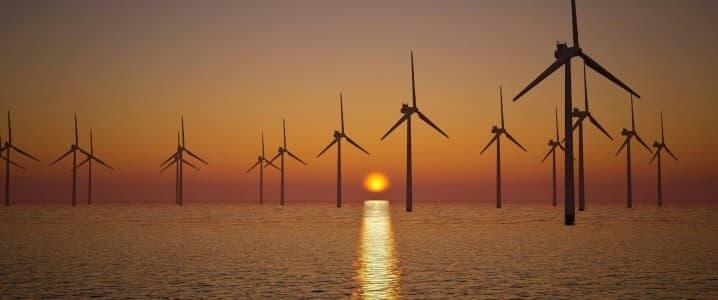
A joint venture of Ørsted, the world’s largest offshore wind developer, has challenged in court the Trump Administration’s lease suspension order to halt work on the Revolution Wind offshore wind project off the U.S. East Coast.
Revolution Wind LLC, a 50/50 joint venture between Global Infrastructure Partners’ Skyborn Renewables and Ørsted, filed a supplemental complaint in the U.S. District Court for the District of Columbia, challenging the lease suspension order issued on December 22, 2025 by the U.S. Department of the Interior’s Bureau of Ocean Energy Management (BOEM), to be followed by a motion for a preliminary injunction.
On December 22, the U.S. Department of the Interior paused leases for five offshore wind projects, due to national security concerns, said Secretary of the Interior, Doug Burgum.
The projects Vineyard Wind 1, Revolution Wind, CVOW – Commercial, Sunrise Wind, and Empire Wind 1 were paused by the U.S. Administration, which threw another curveball to developers of offshore wind projects, many of which are in advanced stage of development.
Revolution Wind, which secured all required federal and state permits in 2023, following extensive reviews, is currently about 87% complete and has already installed all offshore foundations and 58 of 65 wind turbines.
Sunrise Wind LLC, a separate project and wholly-owned subsidiary of Ørsted that also received a lease suspension order on December 22, continues to evaluate all options to resolve the matter, including engagement with relevant agencies and stakeholders and considering legal proceedings, the Denmark-based offshore wind giant said on Friday.
Last week, Norway’s Equinor suspended work on the Empire Wind 1 project following the stop-work order issued by the U.S. Administration.
The Trump Administration has made no secret of its attitude to wind energy, and especially offshore wind. Since President Trump took office, the federal government has clamped down on wind energy projects through stop-work orders and subsidy removals.
Tyler Durden
Fri, 01/02/2026 – 08:55
https://www.zerohedge.com/energy/orsted-sues-trump-administration-over-project-suspension
Futures Blast Off On First Day Of 2026 With Europe, Asia At Records
Futures Blast Off On First Day Of 2026 With Europe, Asia At Records
Stocks are set to break a four-day losing streak as markets start the new year with a bang across global markets, boosted by the same drivers that dominated much of 2025.As of 8:00am ET, S&P 500 futures were 0.6% higher with Nasdaq 100 contracts rallying 1% outperforming on renewed optimism around artificial intelligence.Nvidia rose 1.6% in premarket trading to lead gains among the Magnificent Seven, which were all green in premarket trading. Trading is likely to remain much lighter than usual, with many market participants not returning to their desks until Monday. As BBG notes, the setup has a familiar feel: Europe is green across the board and on course for a record high, while Asian stocks already hit a record, driven by gains in AI and chipmakers. The Bloomberg Dollar Spot Index is up 0.1% while the Aussie dollar is the best G-10 performer, rising 0.3% against the greenback; the euro underperforms and falls 0.3%. Treasuries inch higher, pushing US 10-year yields down 1bp to 4.15%. European yield curves bear steepen. Silver and gold are resuming their march higher, and copper is extending gains as miners in Chile go on strike. Aluminum touched $3,000 a ton for the first time in more than three years on expectations of tighter supply. And the dollar, following its worst year in eight, remains lackluster. US economic calendar includes December final S&P Global US manufacturing PMI at 9:45am. No Fed speakers are scheduled.
In premarket trading, Mag 7 stocks are all higher (Nvidia +1.6%, Tesla +1.3%, Alphabet +1.1%, Amazon +0.9%, Meta +0.6%, Apple +0.5%, Microsoft +0.4%)
Shares in RH (RH) gain 4.4% and Wayfair (W) advances 2.4% after President Donald Trump delayed tariff increases on upholstered furniture, kitchen cabinets and vanities.
ASML ADRs (ASML) gain 4.8% as Aletheia Capital double upgrades the chip equipment maker’s European shares to buy from sell due to investment expansions and capacity upgrades.
Baidu ADRs (BIDU) jump 11% after the company submitted a proposal to Hong Kong’s exchange to list its artificial-intelligence chip unit Kunlunxin.
NIO Inc. US-listed shares (NIO) rise 4.7% after the EV-maker reported deliveries for December that showed 33% growth month-over-month.
Outlook Therapeutics (OTLK) falls 60% after the FDA issued a complete response letter to the ONS-5010/LYTENAVA (bevacizumab-vikg) biologics license application resubmission, indicating that it cannot approve the application in its present form for the treatment of wet age-related macular degeneration.
Sable Offshore (SOC) jumps 19% after the company gets a go-ahead to restart a controversial California pipeline.
Vertiv Holdings (VRT) gains 4.3% as Barclays upgrades the power equipment company to overweight from equal-weight, saying its shares currently offer a good entry point following recent volatility.
China’s BYD met full-year sales targets and likely surpassed Tesla to become the world’s largest electric-vehicle maker in 2025. Its shares rallied 3.6% in Hong Kong.
In other corporate news, First Brands founder Patrick James said he’d likely plead his Fifth Amendment right against self-incrimination if compelled to answer questions from Jefferies at an upcoming deposition, citing a federal criminal investigation into the bankrupt auto parts supplier.
Friday’s upbeat mood is defying historic trends after the S&P 500 recorded declines on the first trading days of the previous three years. Since 1953, the S&P 500’s median change to kick off a new year has been a 0.3% drop, with gains less than half the time, according to a note by Bespoke Investment Group.
A strong debut in Hong Kong for chip designer Shanghai Biren Technology helped to set the buoyant tone early in the day. Baidu rallied after its AI chip unit confidentially filed for an IPO. Meanwhile, DeepSeek published a paper outlining a more efficient approach to developing AI. Tech and AI were among the dominant themes for stock investors in 2025, helping power the S&P 500 to a third year of double-digit gains. Forecasts signal more of the same for 2026 despite lingering wariness over already stretched valuations and fears that vast amounts of capital expenditure could fail to pay off.
“What we are seeing today is a continuation of the run higher in equities, with AI and tech again at the forefront,” said Tim Waterer, chief market analyst at KCM Trade. “Traders are still in a buying mood, with many of the bullish themes from 2025 carrying forward into 2026.”
At Barclays, strategists are warning equity markets could get choppy as they enter 2026 at record highs that are “over reliant on AI success.” But the team still expects further gains this year, thanks to resilient corporate earnings and a favorable trade off between growth and monetary policy.
“The first trading day has been an incredibly poor guide in recent times to how the rest of the year plays out,” wrote Deutsche Bank AG strategists including Henry Allen. In fact, “2022 saw an all-time high on the first day, before the index fell into a bear market and its worst year since 2008. Whatever happens today, we really shouldn’t overegg the day one moves.”
The strategists noted that several key themes apart from AI will shape markets in 2026, including new developments in US trade policies and specifically a Supreme Court case that will rule on the legality of levies. The Fed will be another major focus, with President Donald Trump expected to name a successor to Jerome Powell early in the year.
“The scope for further gains driven purely by valuation expansion in 2026 may be limited,” wrote Linh Tran, an analyst at XS.com. “Shocks related to interest rates, earnings, or policy could therefore trigger faster and more pronounced corrections than in earlier phases of the cycle.”
In Europe, the Stoxx 600 is up 0.4% and on course for a record close. Technology stocks are leading gains as they did in Asia after a fresh burst of optimism around artificial intelligence. Miners also outperform as metals rise across the board. The FTSE 100 earlier crossed 10,000 for the first time. Here are some of the biggest movers on Friday:
ASML shares gain as much as 3.9% in Amsterdam, the most since late November, as Aletheia Capital double upgrades the chip equipment maker to buy from sell and boosts its price target to a Street high due to investment expansions and capacity upgrades.
Vestas gains as much as 4%, reaching the highest since June 2024, as JPMorgan says the firm is set to deliver orders above expectations in the fourth quarter, supporting view that fundamentals for the wind industry are improving.
Munters shares gains as much as 11% after the Swedish industrial ventilation and cooling company received from the US its largest data center technologies order ever.
Bumech shares jump as much as 26% after a Polish government pledge offering support and job guarantees helped to end a workers’ strike at the machinery firm’s Silesia mine.
BE Semiconductor shares climb as much as 9.8%, the most since October, following a rally in Asian chipmakers and artificial intelligence-related stocks.
BAT shares fall as much as 2.7% after its Indian subsidiary ITC dropped in response to the government’s move to sharply raise excise duty on cigarettes.
Asian equities also advanced, led by gains in tech-heavy markets such as Taiwan and South Korea, as most regional markets reopened after a holiday. Hong Kong stocks also moved higher. The MSCI Asia Pacific Index advanced 1.1%, marking its best start to the year since 2012. Tencent, Samsung Electronics and TSMC were among the biggest contributors to the benchmark’s advance. Equities in South Korea and Hong Kong each climbed more than 2%. The Hang Seng China Enterprises Index gained more than 2.8%, posting its best start to a year since 2018. At the start of the year, investors rotated back into familiar leaders in artificial intelligence and technology, pushing the sector’s sub-index to a record high. Markets in Japan, mainland China, New Zealand and Thailand remained closed. Asian markets are edging higher today, but thin liquidity is exaggerating moves as many investors remain on the sidelines, Dilin Wu, a strategist at Pepperstone said.
“We are seeing a continuation of the run higher in equities, with AI and tech again at the forefront,” said Tim Waterer, chief market analyst at KCM Trade Global. “Asian indices delivered the goods in terms of gains in 2025, and there is reason to believe that this momentum will carry forward into the new year.”
In FX, the Bloomberg Dollar Spot Index is up 0.1% following its worst year in eight, while the Aussie dollar is the best G-10 performer, rising 0.3% against the greenback. The euro underperforms and falls 0.3%.
In rates, treasuries inch higher, pushing US 10-year yields down 1bp to 4.15%. US yields are richer by up to 2bp in intermediate sectors, steepening 5s30s spread by around 1bp on the day. 10-year is near 4.155% after peaking at 4.19% during London morning. European bonds lag Treasuries, with bunds and gilts cheaper by around 3bp and 3.5bp in the 10-year sector
In commodities, spot silver climbs 4% to above $74/oz while gold and most base metals are also green. Aluminum touched $3,000 a ton for the first time in more than three years on expectations of tighter supply. Oil, which suffered its steepest annual loss for five years in 2025, gave back early gains. This weekend, OPEC and its allies are expected to confirm plans to pause supply hikes. Oil traders are also watching developments in Venezuela, Ukraine and Iran. Trump says the US will “rescue” protesters if Iran shoots or kills them, according to a post on Truth Social.
Treasuries hold small gains, leaving yields slightly richer across the curve, after erasing declines that occurred during Asia session, when Australia’s bond market was hit as traders positioned for the possibility the Reserve Bank of Australia will raise rates to quell inflation. Scheduled events during Friday’s US session include only S&P Global US manufacturing PMI revision.
Bitcoin is on a firmer footing and holds just short of the $90k mark, with Ethereum also posting gains above $3k.
The US economic calendar includes December final S&P Global US manufacturing PMI at 9:45am. No Fed speakers are scheduled. Tesla is expected to report that it delivered about 440,900 vehicles in the fourth quarter, down 11% from a year earlier.
Market Snapshot
S&P 500 mini +0.6%
Nasdaq 100 mini +1%
Russell 2000 mini +0.7%
Stoxx Europe 600 +0.4%
DAX little changed
CAC 40 +0.2%
10-year Treasury yield -1 basis point at 4.16%
VIX -0.1 points at 14.83
Bloomberg Dollar Index little changed at 1204.54
euro -0.3% at $1.1716
WTI crude little changed at $57.37/barrel
Top Overnight News
Trump threatens Iran over protest crackdown as deadly unrest flares: RTRS
Threat of California Billionaire Tax Draws Criticism From Ultrawealthy: WSJ
The Next Class of Senators Won’t Be Able to Dodge the Social Security Crunch: WSJ
European factory activity ends 2025 in deeper contraction: RTRS
Tesla Closes Out Brutal Year in Europe With Sales Declines: BBG
U.S. Slashes Proposed Tariffs on Italian Pasta: WSJ
Russia says it can prove that Ukraine tried to strike Putin residence: RTRS
The Condo Market Hasn’t Been This Bad in Over a Decade: WSJ
Maduro suggests serious talks between Venezuela and US: RTRS
Venezuelan Exiles Root for U.S. Military Action. Those Left Behind Oppose It: WSJ
Bezos, Catz, Dell Cashed Out Billions as Top Insider Sellers of 2025: BBG
Zelenskiy offers chief of staff post to military intelligence boss: RTRS
Ozempic Users Actually Spend More Dining Out. Smart Restaurants Are Adapting; BBG
China taxes condoms, contraceptive drugs in bid to spur birth rate: RTRS
How Kraft Heinz Lost Its Lock on Mac and Cheese—and American Shoppers: WSJ
China AI chipmaker Biren soars in Hong Kong debut as IPO wave builds: RTRS
Oil steadies after biggest annual loss since 2020: RTRS
Trade/Tariffs
US President Trump signed a New Year’s Eve proclamation titled “AMENDMENTS TO ADJUSTING IMPORTS OF TIMBER, LUMBER, AND THEIR DERIVATIVE PRODUCTS INTO THE UNITED STATES”. This included a delay in tariff increases on upholstered furniture, kitchen cabinets and vanities for a year, which keeps the tariff levels for the aforementioned goods at 25%, instead of raising it to 30% for upholstered furniture and 50% for kitchen cabinets and vanities, citing ongoing trade talks, according to Associated Press.
Italy’s Foreign Ministry announced on Thursday that the US sharply lowered the proposed duties on several Italian pasta makers from the additional 92% duty proposed in October, with the tariff for La Molisana set to 2.26% and for Garofalo set to 13.98%, while 11 other producers will face tariffs of 9.09%.
US granted TSMC (2330 TT) an annual licence to import US chipmaking tools for its facilities in China’s Nanjing.
China’s Ministry of Commerce called the EU’s carbon border tax unfair and discriminatory, while it vowed to take countermeasures to defend the country’s interests, according to a statement on Thursday cited by Bloomberg.
China set quotas on beef imports as it seeks to protect domestic farmers and producers, in a blow to Brazil and other major shippers, including Australia and Argentina, while shipments exceeding the limits will be subject to a 55% duty, according to the Ministry of Commerce.
India extended tariffs on steel imports for three years with import levies of 11%-12% proposed for some products, according to Bloomberg. It was also reported that India imposed anti-dumping duties of USD 60.89-130.66/ton on low-ash met coke imports for six months.
A more detailed look at global markets courtesy of Newsquawk
ASX 200 posted mild gains of 0.2% in quiet trade, with hefty losses in gold miners hampering the gains from Energy and Financials. KOSPI jumped about 2% to a fresh record high, helped by a roughly 6% rise in Samsung Electronics, after reports said customers praised its HBM (high memory bandwidth) chips. Hang Seng surged ~2.6%, with gains led by education stocks, while AI chip designer Shanghai Biren gained in excess of 100% following a HKD 5.58bln Hong Kong IPO, which was said to be heavily oversubscribed.
Top Asian News
Chinese President Xi said in his annual New Year’s Eve speech that the year 2025 marked the completion of China’s 14th Five-Year Plan for economic and social development, while he added that they have pressed ahead with enterprise and fortitude, and overcome many difficulties and challenges. Xi added that they met the targets in the Plan and made solid advances on the new journey of Chinese modernisation, as well as noted that economic output has crossed thresholds one after another, and is expected to reach CNY 140tln for the year. Furthermore, he said their economic strength, scientific and technological abilities, defence capabilities, and composite national strength all reached new heights, while he also vowed to reunify China and Taiwan.
China’s State Council said it studied measures for facilitating cross-border trade, while it will promote green and cross-border e-commerce. Furthermore, it will speed up the review and approval of breakthrough therapeutic drugs, as well as boost investment in water network projects.
China’s industrial hubs are to lower power prices to support the economic recovery, with the eastern province of Jiangsu, which surrounds Shanghai, to cut rates by 17% vs 2025, while the southern province of Guangdong had recently announced to reduce power prices by 5%.
Chinese automakers’ market share of Europe’s electric-vehicle market in November reached a record 12.8%, despite the cost of European Union tariffs, according to Bloomberg.
South Korean President Lee plans to discuss economic ties and peace efforts in the Korean Peninsula during his upcoming summit talks with Chinese President Xi scheduled for early next week.
Japanese PM Takaichi and US President Trump may hold talks, via telephone on Friday night at earliest, according to Kyodo News citing sources.
European bourses (STOXX 600 +0.6%) began the session around the unchanged mark before rising to session highs soon after the cash open, without a clear driver. Since, indices have dipped off best levels, paring some of the earlier upside. European sectors hold a positive bias, led by Basic Resources (+1.7%), Technology (+1.8%), and Energy (+1.7%). The former is supported by higher metal prices, with gains in gold and copper. On the downside, Food Beverage & Tobacco (-0.3%), Real Estate (-0.3%) and Construction (-0.1%) lag.
Top European News
UK PM Starmer promised to “defeat the decline and division offered by others” in his new year message and insisted that people would feel a “positive change” in their lives in 2026, according to BBC.
French President Macron called for unity, strength and hope during his New Year’s Eve address, while he pledged to work until the ‘last second’ of his mandate and guard the 2027 presidential election from foreign interference.
FX
DXY resides closer to the upper end of a tight 98.14-98.42 in early European hours, following a rather subdued APAC session.
In terms of today’s trade, price action has been relatively muted as volume returns to the market from the holiday period. AUD and NZD outperform amid the broader risk-on sentiment, with the AUD also underpinned by a rebound in gold amid a myriad of geopolitical factors, including US President Trump’s warning to Iran this morning that the US is “locked and loaded and ready” to rescue peaceful protesters if Iran opens fire on them. Elsewhere, JPY is flat in a narrow 156.77-157.00 intraday range. Meanwhile, EUR and GBP saw little immediate move from their respective final Manufacturing PMIs.
2025 recap: 2025 proved a tough year for the index, which saw its sharpest annual drop in eight years, whilst most majors rallied. The JPY saw gains of under 1% over 2025, in a year rattled by political instability, fiscal woes, BoJ hawkish bias and haven flows. Antipodeans saw the AUD climb nearly 8% over 2025 (best since 2020) and the NZD gained almost 3% to snap a three-year losing streak. The EUR was up 13.5% in 2025 and GBP +7.7% (both their strongest yearly gains since 2017).
Fixed Income
A softer start for fixed benchmarks.
Bunds and USTs lower by 20 and a tick, respectively. Specifics are fairly light aside from Final PMIs which, thus far, have not had any real impact. USTs in the red but at the upper-end of a 112-05 to 112-13 band. If a move into the green occurs, resistance factors at 112-25. A similar picture for Bunds, in the red but just off highs in 127.08-49 parameters. Resistance at 127.57 and 127.83.
For Gilts, a softer open but the benchmark has since climbed off lows and is, as above, towards highs in 90.74-91.33 parameters. 91.37 would take Gilts back to unchanged on the day, thereafter resistance at 91.47.
Commodities
WTI and Brent trades slightly lower, with prices towards the lower ends of USD 57.08-57.93/bbl and USD 60.51-61.38/bbl, respectively. Focus for the complex lies more on oversupply risks as opposed to any geopolitical risks from the above, with traders also setting sights on this weekend’s OPEC+ confab. OPEC+ is expected to reaffirm its production pause through Q1, maintaining the halt to further supply increases, according to Bloomberg sources. The stance reflects concerns over a looming global oversupply backdrop, with crude prices sharply lower over 2025 and forecasters warning of a potential glut in 2026. Delegates indicate little appetite to resume hikes at this stage, according to reports. Recent Saudi–UAE geopolitical tensions have generated headlines, but are widely viewed as noise rather than a threat to OPEC unity, with no expectation that they will spill over into production policy.
Spot Gold kicked off 2026 on the front foot, with spot prices currently +1.5% intraday towards the upper end of a 4,326.28-4,397.84/oz range at the time of writing. The yellow metal printed a record high at ~USD 4,550/oz on Dec 26th before declining in the subsequent three sessions to a USD 4,274.03/oz trough on 31st Dec, with a near-USD 250/oz drop seen on Dec 29th.
Geopolitical updates have kept the precious metals complex underpinned, with US President Trump’s warning to Iran this morning that the US is “locked and loaded and ready” to rescue peaceful protesters if Iran opens fire on them. Further, tensions flared between OPEC members Saudi Arabia and the UAE, primarily due to an open military and diplomatic confrontation in Yemen, with the two nations now actively backing rival factions and engaging in direct hostilities. In terms of Russia-Ukraine, Ukrainian President Zelensky said they are 10% away from a deal to end the war with Russia, but not at any cost, according to The Independent. That being said, Ukrainian authorities in Zaporizhzhia on the morning of January 2nd noted over 700 Russian attacks on the territory of the province.
North Sea Buzzard oil field recommenced production on 1st January 2026, according to CNOOC.
Rail line in Australia used by Glencore (GLEN LN) requires a significant repair job.
Geopolitics: Ukraine
Ukrainian President Zelensky said they are 10% away from a deal to end the war with Russia but not ‘at any cost’, according to The Independent. Zelensky also announced that a meeting with national security advisors “focused on peace” will be held on January 3rd, and there will be meeting with the military chiefs of general staff on January 5th where the main issue is security guarantees for Ukraine, while he said there will be a meeting with European leaders and the leaders of the Coalition of the Willing on January 6th.
Ukrainian President Zelensky denied allegations made by Russia that Ukraine launched a drone attack on one of Russian President Putin’s residences last Sunday, and accused Moscow of trying to derail peace talks. Furthermore, Russia recently handed over to the US what it claimed was proof of the attempted strike on Putin’s residence, although it was separately reported that US officials determined that the Russian allegation that Ukraine targeted Putin in a drone strike is false, according to WSJ.
Ukraine’s military said on Thursday that it struck Russia’s Ilsky oil refinery and the Almetevskaya oil preparation facility, while Ukraine also announced that a Russian drone attack damaged power infrastructure, according to Reuters.
Russian-installed governor of Ukraine’s Kherson region said at least 24 were killed and over 50 were injured from a Ukrainian drone strike on a hotel and cafe during New Year celebrations, according to Reuters.
US envoy Witkoff said on Wednesday that he held a “productive call” with European allies on the next steps in the peace process, while he said they “also spent time on the prosperity package for Ukraine – how to continue defining, refining and advancing these concepts, so Ukraine can be successful, resilient and truly thrive once the war is over”.
Ukrainian authorities in Zaporizhzhia on January 2nd noted of over 700 Russian attacks on the territory of the province “in the past hours”, according to Al Jazeera.
Geopolitics: Middle East
US President Trump posted “If Iran shots and violently kills peaceful protesters, which is their custom, the United States of America will come to their rescue. We are locked and loaded and ready to go. Thank you for your attention to this matter!”.
Israeli Defence Minister Katz urged the IDF to be ready for a potential ‘Oct.7-style’ mass attack on West Bank settlements and called for the reestablishment of northern West Bank military bases which were evacuated as part of a US-backed deal, according to Times of Israel.
Iran’s defence export agency offered to sell ballistic missiles, drones and other advanced weapons systems to foreign governments in exchange for cryptocurrency and barter, according to FT.
UAE announced on Tuesday that it was pulling out its remaining forces in Yemen, after Saudi Arabia bombed the Yemeni port city of Mukalla following accusations that two ships from the UAE had delivered weapons and combat vehicles to separatist forces. It was separately reported that Yemen’s government imposed restrictions on flights between Yemen and the UAE to mitigate the ongoing escalation in the country, according to a Saudi source cited by Reuters.
Geopolitics: Others
US Treasury Department announced new sanctions related to Venezuela, targeting crude oil tankers.
Russia requested that the US stop pursuing an oil tanker identified as Bella 1, which was headed to Venezuela and was fleeing the US Coast Guard in the Atlantic Ocean, according to The New York Times on Thursday.
Taiwanese President Lai vowed to defend the nation’s sovereignty in his New Year’s speech days after China fired dozens rockets towards the island and deployed warships and aircraft near Taiwan as part of military drills and a show of force, while he stated that 2026 is a very critical year for Taiwan and that they must stand shoulder to shoulder with democratic countries.
China’s Taiwan Affairs Office said Lai’s New Year’s address was riddled with ‘falsehoods and reckless assertions, hostility and malice’, while it was also reported that China’s Defence Ministry said the PLA’s drills are completely justified and necessary.
US Event calendar
9:45 am: Dec F S&P Global U.S. Manufacturing PMI, est. 51.8, prior 51.8
DB’s Jim Reid concludes the overnight wrap
Happy new year and hope you all had a relaxing break. We’ll shortly look at what’s coming up in 2026, but as we usually do at the new year, we’ve just released our review looking at how markets fared in 2025. It was a strong year overall thanks to continued economic growth, optimism around AI, and more central bank rate cuts. So that meant global equities, bonds, credit and EM assets all advanced for the most part. However, those headline gains masked huge volatility, particularly in April when the Liberation Day tariff announcements sparked the 5th biggest two-day slump for the S&P 500 since WWII. Meanwhile, Germany’s fiscal stimulus announcement in March saw the biggest daily jump for the 10yr bund yield since German reunification in 1990. See the full review here for more details on the year just gone.
In terms of the last week-and-a-half whilst we’ve been away, it’s been a story of two halves for markets. Just before Christmas, the S&P 500 moved up to record highs on both Dec 23 and Dec 24, aided by some very strong US data. That included the Q3 GDP print, which was delayed because of the government shutdown, and showed the US economy grew at an annualised pace of +4.3% (vs. +3.3% expected). That was the fastest quarterly growth in two years, and the so-called “core GDP” measure of real final sales to private domestic purchasers was up by a robust +3.0% as well. So that led to a lot of optimism about the economy’s momentum into next year, and the Atlanta Fed’s GDPNow measure for Q4 currently stands at +3.0%.
However, after Christmas the tone became more negative, with the S&P 500 posting four consecutive declines that’s left the index -1.25% beneath its Christmas Eve record. So that took a bit of the shine off the full-year performance, with the index ending the year up +16.4% (and +17.9% in total return terms), falling short of the gains above +20% seen in 2023 and 2024. Meanwhile, there’s been some huge volatility in precious metals, with silver prices up +10.30% on Dec 26, marking their biggest daily jump since September 2008 in the week of Lehman Brothers’ collapse. And after the weekend, they then slumped by -9.00% on Dec 29, the biggest loss since 2020, before there were further swings of more than 5% each way on Dec 30 and Dec 31. That caps off a huge surge in precious metals prices over 2025, with both gold and silver experiencing their strongest annual gains since 1979, up +65% and +148% respectively.
This morning in Asia, markets have got 2026 off to a decent start in the places they’ve reopened. For instance, the KOSPI (+1.87%) is currently on track for a record high, whilst the Hang Seng (+2.18%) has also surged. Moreover, US equity futures are pointing to a strong start as well, with those on the S&P 500 (+0.43%) and the NADAQ 100 (+0.65%) both higher this morning. However, we shouldn’t extrapolate too far, as the first trading day has been an incredibly poor guide in recent times to how the rest of the year plays out. Indeed, 2023-25 each started with a negative session for the S&P 500, before the index then saw a double-digit annual gain. By contrast, 2022 saw an all-time high on the first day, before the index fell into a bear market and its worst year since 2008. So whatever happens today, we really shouldn’t overegg the day one moves.
When it comes to the year ahead, several themes will be high up the agenda for markets in 2026. First, there are still lots of tariff developments yet to come, most notably with the US Supreme Court case, who are set to rule on the legality of the tariffs imposed under the International Emergency Economic Powers Act (IEEPA). As a reminder, roughly half of the tariff increases under Trump have used IEEPA authority, and the legal challenges so far have been successful in the lower courts, but were appealed by the Trump administration. So we’re now awaiting the ruling from the Supreme Court. Our US economists think there’s a reasonable possibility the IEEPA powers are struck down, but they also expect that if they are, then the administration would pursue other legal avenues to impose its tariff policies. For instance, the sectoral tariffs under section 232 (e.g. to steel and aluminium) aren’t covered by this court challenge. Or another option could be Section 122 of the 1974 Trade Act, which permits temporary 15% tariffs for 150 days. So there are several options the Trump administration still have.
Aside from the court case, there are also a couple of other 2026 trade deadlines. One is the scheduled review of the USMCA agreement, six years after it first came into force in July 2020. The other is the US-China trade truce, which was extended by a year after the meeting between Presidents Trump and Xi back in October. So as it stands, the current US tariff reduction on China only runs until November 10, 2026. Nevertheless, there have been a few tariff reductions in recent weeks, particularly as concerns about affordability have risen up the agenda. So we’ve already seen exemptions for products like coffee and beef, and it was also announced on New Years’ Eve that higher tariffs planned on Jan 1 for upholstered furniture and kitchen cabinets were being delayed by a year until Jan 1 2027. Remember as well that the midterm elections are happening in November, so the political incentive to keep inflation down will rise as they approach.
Second, another key theme for 2026 will be the Federal Reserve, and Trump said on Monday that there’d be an announcement on Chair Powell’s replacement in “January sometime”. For reference, Powell’s term as Chair concludes in May, so the new Chair would be in place by the June FOMC decision, and futures are pricing in another 57bps of rate cuts by the December meeting. In terms of who the new Chair will be, the Polymarket odds continue to have NEC Director Kevin Hassett as the frontrunner (42%), followed by former Fed Governor Kevin Warsh (33%) and current Governor Christoper Waller (15%). Otherwise, the Supreme Court are also set to hear arguments on January 21 about President Trump’s attempt to remove Governor Lisa Cook from the Fed’s Board of Governors. So it’s a big year ahead for the Fed.
Third, we’ve got lots happening on the fiscal side in 2026, as we’ll see the fiscal impulse from the German stimulus, as well as from the One Big Beautiful Bill Act in the United States. All this comes at an interesting time, as 2025 saw periodic market flareups over loose fiscal policy, with sovereign bonds repeatedly seeing large losses before recovering again. That happened in May around the time of the US credit rating downgrade by Moody’s, which pushed the 30yr Treasury yield above 5%. And it was a similar story in Europe too, with a sharp selloff for UK gilts last summer when the government U-turned on welfare cuts, alongside losses for French OATs after PM Bayrou left office and new PM Lecornu resigned after 26 days, before he was reappointed again. So bond markets have been jittery across the board, and last year even saw the biggest jump for Japan’s 10yr yield since 1994 as the BoJ kept hiking rates and the new government under PM Sanae Takaichi announced a further stimulus package.
Fourth, on the political side we have a few elections to look out for. The biggest we know about is probably the US midterm elections, although they’re not until November 3. That will see the full House of Representatives up for election, along with a third of the Senate, and currently on Polymarket, the Democrats are the 81% favourites to retake the House. That would be in keeping with the historic pattern (link here), whereby the incumbent President’s party tend to lose House seats in the midterm votes. Meanwhile in the Senate, the Republicans are 66% favourites on Polymarket to keep control. However, the new Congress doesn’t come into office until January 2027, so in policy terms, that’s more of a story for next year.
Here in the UK, we also have a large set of local elections on May 7, which will be one of the most important midterm electoral tests for the political parties. Although that won’t change the government, PM Starmer’s position has been under increasing pressure, so these elections will be a crucial benchmark for whether he might face a challenge from within the Labour Party. Then in France, the presidential election isn’t until April 2027, but we know that 2026 will be the year that campaigning begins in earnest, with candidates announcing, so we’ll get a much better sense of the state of that race. And over in Japan, a general election isn’t due until 2028, but speculation has been rising about a potential snap election given PM Sanae Takaichi’s approval ratings.
Finally of course, it’s not a single event, but ongoing developments around AI will be critical for the path of markets in 2026. After all, as Jim has written previously, the concentration of the Mag 7 group in US equities means that global markets are incredibly sensitive to their performance. And we shouldn’t forget that AI developments have already led to big reactions in 2025, with the NASDAQ down over -3% on the day that markets reacted to DeepSeek’s new AI model last January. So any loss of momentum or signs that a bubble is bursting risk unwinding the positive wealth effects we’ve seen, as well as the wider surge in capital expenditures that’s helped to support growth.
Looking at the day ahead, there’s not much happening, but data releases include the December manufacturing PMIs from the US and Europe, along with the Euro Area M3 money supply for November.
Tyler Durden
Fri, 01/02/2026 – 08:41
https://www.zerohedge.com/markets/futures-blast-first-day-2026-europe-asia-records

There’s never been a better time to quit caffeine
Any time Katherine Howe drank coffee, her side effects would stack up like a midnight WebMD search: jitters, anxiety, acid reflux. But Howe, a 34-year-old model who lives in East Williamsburg, Brooklyn, kept up the habit for years — mostly because she couldn’t find a compelling alternative. “The only caffeine-free thing at the coffee shop was chamomile in a tea bag,” she said. “Even trying to order decaf sometimes, the response would be like, ‘Oh, no, sorry. Why would we do that?’”
Luckily for Howe, the culture has shifted. A renewed focus on health has inspired many people to examine their relationship with coffee and, more specifically, caffeine, mirroring changes in alcohol consumption. And the impulse to meet and linger at cafes has returned to, if not exceeded, pre-COVID-lockdown levels. “People love their third spaces, and more and more they want those spaces to adapt to how they want to feel in a given moment,” said Sara Gibson, an owner of Sightseer Coffee in Austin, Texas. “Sometimes that’s caffeinated, and sometimes it’s not.”
Many coffee shops across the United States have recently expanded their low- and no-caffeine beverage options, and the offerings are a far cry from dusty tea bags and rewarmed decaf. Instead, these drinks are just as thoughtful and social-media-ready as their stimulating counterparts, appealing to a wider range of dedicated consumers.
Matcha’s whirlwind rise and subsequent shortages can be credited, in part, to a desire for a gentler form of caffeine, sourced and prepared with care. Now, “decaf desirability” is peaking, said Haile Thomas, an owner of the cafe Matcha Thomas in Beacon, New York. “Even people who have an affinity for caffeinated drinks, when they see that we’re trying to creatively approach decaf options, are intrigued.”
Building an attractive menu of low- and no-caffeine drinks can be a challenge. Terrible coffee hits just as hard as the fancy stuff, but low-caf alternatives don’t have the high to hide behind. To succeed, they must over-index in other areas (flavor, ingredient quality, delight, aesthetics).
Sightseer, a roasting company with a cafe, holds the noncoffee side of its menu to the same standards as its in-house beans. “Our goal is to start with base offerings that taste great on their own, then build drink specials that enhance their flavors,” Gibson said.
Janet Lee, a managing partner of the Korean American cafe Sohn in San Francisco, thinks about low- and no-caffeine offerings as a matter of accessibility. “It’s kind of like when a vegan goes to a restaurant and all they can have is a salad,” she said. “People who are sensitive to caffeine should also have the option to get a cream top or a perilla espresso tonic.”
Sohn, which has been open for just three months, is among a wave of Asian and Middle Eastern cafes opening around the country that are inherently friendly to decaf drinkers. Through these shops, options like barley tea, Japanese sobacha, Turkish salep, Yemeni qishr and Kurdish qezwan have become more widely available, enticing those who might have otherwise never strayed from java.
At DAE, a Brooklyn cafe with Korean and Japanese influences on its menu, moody-hued mugwort lattes hit the bar alongside flat whites and pour-overs. “Noncaffeinated drinks have always been popular in Asia,” said Amy Zou, events director at DAE. Their growing traction in the United States, she said, stems from a Western instinct to “reach for culturally new experiences.”
One of the most popular orders at DAE is the low-caf drink of the moment: hojicha, a Japanese green tea often ground into a powder and prepared like matcha. Earthy and toasty with a subtle chocolate flavor, hojicha is roasted over charcoal rather than steamed, which accounts for its rich color and lower caffeine content (closer to a cup of decaf coffee than matcha).
Like its verdant sister, hojicha is increasingly available at Japanese and non-Japanese cafes alike, not only in drinks, but also in baked goods and ice cream. In April, Matcha Thomas temporarily switched its entire menu to hojicha drinks in an effort to ride out a matcha shortage. “We learned how low-caf-curious many consumers are,” Thomas said. “It felt like they were able to access something that fit their needs a bit more. For people who would visit us in the evening, hojicha felt like such a great option.”
Low- and no-caffeine drinks also provide cafes with fertile ground for experimentation. “There’s a lot of fusion and play that can happen in this space as demand rises,” Thomas said. “There isn’t as much structure or expectation as to how a decaf drink needs to be prepared.” She leans on ginger, elderberry, licorice, chamomile, lavender and tulsi, especially “right now with cold and flu season.” At Sightseer, the team “has been experimenting with rooibos tea and a piloncillo simple syrup with citrus zest,” Gibson said. “Maybe it’ll make its way onto our winter menu.”
And of course, there’s always decaf. Some cafes have started earnestly investing in their decaf game to the thrill of caffeine-cautious (but coffee-loving) consumers. “Decaf has always been overlooked, but we are sourcing really good beans,” Lee said of the Colombian decaf at Sohn. “It was an easy option for us to add, and we didn’t have to compromise on quality or taste.”
John Smith, a 38-year-old content manager who avoids caffeine for health reasons, is taking advantage of the shift. “I still get the ritual of the tiny espresso cup and the complex taste without all the side effects,” he said. In San Diego, where he lives, he looks out for Swiss Water beans, which are stripped of their caffeine through water instead of chemical solvents.
Despite growing interest in alternatives, customers and cafe owners agree: Caffeine isn’t going anywhere. Instead, cafe owners said that drinkers want to split the difference by balancing morning cold brews with afternoon turmeric lattes.
For many, this move is as much about a coffee shop’s role in their daily lives as it is the drinks themselves. After 1 p.m., orders of hojicha and decaf espresso spike at Sohn. “We’ve noticed people coming in to just unwind,” Lee said. “It’s definitely becoming more of a ritual than an errand.”
https://www.chicagotribune.com/2026/01/02/quitting-caffeine/

“Locked & Loaded”: Trump Says US Will Intervene If Iran Kills Protesters
“Locked & Loaded”: Trump Says US Will Intervene If Iran Kills Protesters
President Trump has just become the first sitting US President to explicitly warn that the United States stands ready to directly intervene in Iran if Tehran authorities begin killing peaceful protesters, as he wrote Friday that Washington “will come to their rescue”.
In a brief early morning post on Truth Social, he wrote: “We are locked and loaded and ready to go.” He gave no further details what course of action this might take, but it’s a pretty clear and provocative message to Iranian leadership – or comes very close to saying something akin to the ‘Ayatollah must go’.
Handout/Fars news agency via AFP
Trump’s full message is as follows: “If Iran shots [sic] and violently kills peaceful protesters, which is their custom, the United States of America will come to their rescue.”
Ayatollah Ali Khamenei did respond in very short fashion, with a senior aide from his office saying Trump should “be careful” if he intervened, warning of unleashing more chaos in the region.
“Trump should know that US interference in this internal matter would mean destabilizing the entire region and destroying America’s interests,” Khamenei adviser Ali Larijani stated.
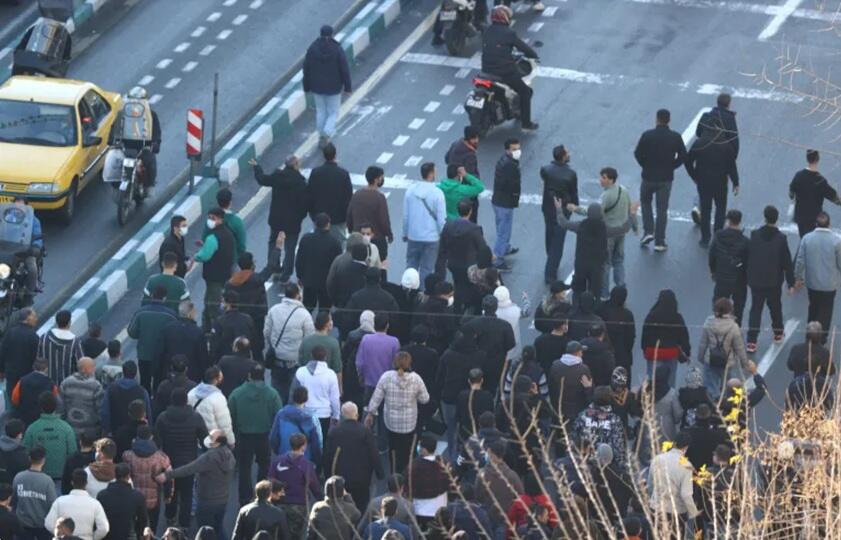
The economic protests which have been raging since Sunday, and have spread from the marketplaces to the universities, have turned deadly. International monitors and media have said six have been killed.
However, Iranian officials are saying at least one of these deaths and many among the injured are security forces. The slain officer was said to be a member of the Basij – a paramilitary force linked to Iran’s Revolutionary Guards (IRGC). In several locales Basij members have been observed supporting local police forces, as is typical whenever major anti-government protests flare up.
🇮🇷| Unprecedented: Iranians from cities where riots took place last night, have come in protest AGAINST the rioters
Iranians from Hamedan, Kavar, and other cities have come en masse to denounce and condemn the behaviour of rioters.
They condemn vandalism, destruction of… pic.twitter.com/AYAAbDhohv
— Arya – آریا (@AryJeay) January 2, 2026
Newsweek reviews of the violence so far in the country of over 90 million people:
Deaths were reported in Lordegan, Kuhdasht, and Isfahan, though casualty figures vary between state media and rights groups.
The Revolutionary Guards said one member of its Basij paramilitary unit was killed in Kuhdasht, with 13 others wounded.
Rights group Hengaw identified the man as a protester, contradicting official claims.
Demonstrations spread to Marvdasht in Fars province, while arrests were reported in Kermanshah, Khuzestan, and Hamedan.
Most of the protest deaths have come in the West of the country, and mounting casualties from the unrest has been confirmed in Iranian state media – though few details have been given in some instances on whether these are police or protesters.
The initial response from leadership in Tehran:
With the statements by Israeli officials and @realDonaldTrump, what has been going on behind the scenes is now clear. We distinguish between the stance of the protesting shopkeepers and the actions of disruptive actors, and Trump should know that U.S. interference in this… pic.twitter.com/uu9R20KFFv
— Ali Larijani | علی لاریجانی (@alilarijani_ir) January 2, 2026
Trump in openly siding with the protests may have just done one of two things: either he has just supercharged the protests and will given people in the streets motivation to provoke security forces even more – after some government buildings have already been broken into, or else his words serve to quash the protests fairly quickly.
After all, Iranian authorities have already warned against outside interference and meddling, at a moment they are eager to brand rioting youth in the streets as Israeli or American agents. But now they can be branded by officials as doing to bidding of Washington and of President Trump. The people in the streets are unlikely to want to be branded as in America’s corner, given it’s been the US all along decimating their economy through years of brutal sanctions.
Signs of pro-government and nationalistic ‘counter-protests’ have emerged:
Huge crowds are marching toward the resting place of General Soleimani in Kerman to mark the sixth anniversary of his martyrdom.
Follow: https://t.co/mLGcUTSA3Q pic.twitter.com/Y6hFmpdqZC
— Press TV 🔻 (@PressTV) January 2, 2026
It should also been questioned whether the United States actually cares about the ‘Iranian people’. Did Washington actually care about Syrians while fueling a decade-long plus proxy war by arming the hardline jihadi anti-Assad insurgency? Definitely not.
Iran’s military responds:
Iran’s Defence Minister dismissed Trump’s remarks, saying Tehran would retaliate decisively against any attack and insisting its military strength has grown since the last 12-day conflict.
“If any threat targets our country, we will respond with full force. Without hesitation,”… pic.twitter.com/12SeqoWQSe
— Open Source Intel (@Osint613) January 2, 2026
Trump’s new words just added heavy fuel to the fire, and this portends possibly the same Syria playbook applied to Iran.
Tyler Durden
Fri, 01/02/2026 – 08:20

Chicago Blackhawks coach praises ‘2-way player’ Connor Bedard after the center is left off Canada’s roster
Chicago Blackhawks coach Jeff Blashill praised Connor Bedard’s all-around game a day after the center was left off Canada’s roster for the upcoming Winter Olympics.
The 20-year-old Bedard is on injured reserve with a shoulder injury. He skated before practice on Monday and could return this month.
Bedard ranked among the NHL leaders with 19 goals and 25 assists in 31 games before he got hurt on Dec. 12 at St. Louis. Team Canada general manager Doug Armstrong said Wednesday that Bedard was in the mix “right there to the last second,” and the injury wasn’t much of a factor in the decision.
Connor Bedard skates before Chicago Blackhawks practice for 1st time since injuring his shoulder
While acknowledging the difficulty of finalizing Canada’s roster for the 2026 Games, Blashill took aim at some of the conversation surrounding Bedard in his third season since he was the No. 1 overall pick in the 2023 draft.
“I don’t think the rest of the league knows how good of a two-way winning hockey player Connor has become,” said Blashill, who was hired in May. “That’s the one thing probably, and I don’t know why. Maybe it’s based on previous years. But I don’t think they have a full understanding of how good a winning hockey player he is today.”
Bedard was a gifted offensive playmaker long before his NHL debut in October 2023. But the other parts of his game have come a long way since he first joined the Blackhawks.
He is a plus-eight this season after he had a plus-minus rating of minus-80 while playing on two last-place teams in his first two years in the league. He has won 47% of his faceoffs, up from 38.3% last season.
Blashill indicated that some of the reservations about Bedard have more to do with the limitations of defensive metrics than the center’s play on the ice.
The Blackhawks went 13-12-6 in their first 31 games with Bedard, who still could be added to Team Canada as an injury replacement. They are 2-6-1 since he got hurt.
“That’s the impact he’s had. That’s the type of two-way player (he is),” Blashill said before Thursday’s 4-3 victory over Dallas. “You don’t have that impact if you’re just a point-getter. You only have that impact if you’re a true two-way kind of winning player, and that’s what he’s become.”
The Hawks also have been playing without Frank Nazar, who was placed on IR on Sunday after he was hit in the face by a puck during a 6-4 loss at Ottawa on Dec. 20. He is expected to be sidelined for approximately four weeks.
The Blackhawks lost another center when Jason Dickinson left Tuesday night’s 3-2 shootout loss to the New York Islanders with an unspecified injury. But Dickinson skated on Thursday morning and played almost 19 minutes in the win against the Stars.
https://www.chicagotribune.com/2026/01/02/connor-bedard-canada-olympic-roster/
Germany’s Economic Collapse: 2025 In Review And What Lies Ahead
Germany’s Economic Collapse: 2025 In Review And What Lies Ahead
Submitted by Thomas Kolbe
Germany’s economy has endured a terrible 2025. Chancellor Friedrich Merz’s government has set the course for further decline in the coming year.
If German politicians’ salaries were linked to private sector growth, lawmakers would likely have to take out loans in the deeply recessive year of 2025 and compensate citizens for parliamentary inaction and ideological foolishness.
Although the term diät derives from the Latin dieta, loosely meaning “compensation,” in the context of Germany’s collapsing industry it more accurately reflects the German meaning: deserved frugality and material austerity. Economically, Germany is now facing the end of the illusion of prosperity, which follows the catastrophic policies of the government.
Shrinking Private Sector and Rising State Burden
After eight months under Chancellor Merz, the record is not just meager—it is pitiful. Assuming a 50% state quota and calculating real GDP growth of 0.2% with net new debt over 4%, the net result for 2025 is a roughly 3.8% contraction of the private sector compared to the previous year.
What is scarcely known in Berlin—likely a form of economic esoterica not taught in party seminars or union courses—is that only the private sector produces the goods and services people actually consume. It is no surprise that heavy regulation and crushing taxes—Germany is surpassed only by Belgium in the OECD in fiscal extraction—strangle private enterprise.
Investment fell roughly 6.5% below long-term averages—a quantum leap in the wrong direction, deeply impacting labor markets, public budgets, and social security. While Finance Minister Lars Klingbeil attempts to mask deficits and exemptions as mere cosmetic fixes, municipalities face a €35 billion shortfall this year.
Crisis Becomes Visible
At the lowest levels of the state, in cities and towns, the bill for decades of political mismanagement is now arriving first.
The trigger is collapsing business tax revenue, a direct result of a record number of corporate bankruptcies: 24,000 companies will have exited the market in 2025.
The labor market’s seeming stability is misleading. Hundreds of thousands of new public sector jobs and age-related retirements obscure the collapse of the real economy in official statistics. Merz executed the debt brake with the outgoing Bundestag in April, catapulting Germany into a debt spiral with a €500 billion special fund—a clear indication that policymakers knowingly ran the economy into a wall.
Neither the green “art economy” nor the heavily subsidized military sector will adequately fill freed industrial capacity. Core sectors such as chemicals operate at just 70% capacity, 10% below break-even—a stark signal that the creeping productivity erosion and economic depression since 2018 will worsen, regardless of state credit funneled into centrally planned subsidies.
Welfare State and Refusal to Reform
Berlin has fully submitted to Brussels’ dreadful climate-socialist doctrine and now faces the challenge of hiding its ideological failure. Merz and his team continue the known media-political strategy: as with migration, a continuous camouflage is maintained.
When it comes to deceiving the public, party headquarters show remarkable creativity, leaving no lie too bold. A deportation flight may be staged for optics, while borders remain wide open, family reunification is promoted, and German passports are handed out freely. The aim is to cultivate new voter bases and apply a “divide et impera” strategy to erode cultural and traditional societal cohesion.
Time is bought and the course maintained—just as in climate policy. Pseudo-reforms, such as the ostensible end to the combustion engine phase-out, serve only to give the struggling auto industry an illusion of technological openness while creating a new bureaucratic monster, ultimately fulfilling Brussels’ objective: halting German automotive production.
From the Eurocrats’ perspective, the results are impressive if the goal was deindustrialization. Around 300,000 industrial jobs were cut in the last five years. And when a nation loses its industrial core, much of its value creation disappears with it.
In 2025, German production hovered about 20% below the 2018 peak. An economic and social catastrophe looms, whose consequences seem intellectually incomprehensible to functionaries and eco-centric elites with regard to social cohesion.
Collision with Reality
If 2025 was already catastrophic, the coming year will likely be a collision with reality for many Germans. Social contributions and taxes must rise sharply to sustain social security amid migration and demographic pressures.
Merz’s government continues the legacy of Angela Merkel and Olaf Scholz: a Brussels-bound green central planner in the guise of the Ludwig-Erhard party, a political scarecrow devoted solely to consolidating power in Brussels.
The German people, particularly the shrinking class of economic achievers in the middle market, will face an accelerated decline after a dreadful 2025—one the government’s media games can no longer conceal.
Merz’s illustrious “Made for Germany” entrepreneur café was a media fake; “Made in Germany” increasingly belongs to the past. The bitter truth: Germany is done
* * *
About the author: Thomas Kolbe is a German graduate economist. For over 25 years, he has worked as a journalist and media producer for clients from various industries and business associations. As a publicist, he focuses on economic processes and observes geopolitical events from the perspective of the capital markets. His publications follow a philosophy that focuses on the individual and their right to self-determination.
Tyler Durden
Fri, 01/02/2026 – 08:05
https://www.zerohedge.com/markets/germanys-economic-collapse-2025-review-and-what-lies-ahead

From Abe Lincoln in Evanston to German POWs in Glenview, Winnetka History exhibit tells tales
Did you know Abe Lincoln gave an impromptu speech on a front porch at Ridge and Church in Evanston?
How about the Underground Railroad coursing through the North Shore to a safe house? And then providing transport to refuge via a lumber ship owned by the mayor of Lake Forest?
Or a World War II-era camp for German prisoners of war across the road from what is now Glenview Hackney’s?
And many more stories.
The Winnetka Historical Society’s “Surprising Stories of the North Shore” exhibit extends the affluent area’s historical narrative far beyond the nationally-prominent politicians, business titans, entertainers and sports figures who have lived here.
The exhibit opens Jan. 6, at both the Winnetka Library, 768 Oak Street, Winnetka, and the Winnetka Community House at 620 Lincoln Avenue. The 12 panels in the exhibit will be evenly split between them, and the locations will be swapped halfway through. It will run through the end of April.
The exhibit originally opened at the North Shore Senior Center in Northfield this past fall.
There, Megan McChesney, curator of the 97-year-old historical society, helmed a presentation about several of the more interesting stories.
Perhaps the story that surprised both curators and exhibit visitors was the existence of a POW camp in what was then a more rural part of the area.
“Camp Skokie Valley” was established for the Civilian Conservation Corps (CCC), an early New Deal agency meant to give work to the mass unemployed of the Great Depression in 1933. CCC built national parks and other public works projects throughout the country, with the Skokie Lagoons the main project for Camp Skokie Valley residents.
But after the CCC ended with World War II, the camp became available to house an overflow of German POWs from Ft. Sheridan. By June 1945, some 400 POWs were interned at the camp. They were put to work salvaging gas mask parts and packaging for re-use. The POW camp was closed in September 1945.
Lincoln’s visit to Evanston was detailed on one of the panels. After taking care of business in Chicago on April 5, 1860, he hopped a train to then-unincorporated Evanston to visit prominent citizen Julius White. Honest Abe was taken on a carriage ride around the community of 1,200 people. Returning to White’s home, residents beckoned Lincoln to give a speech from the front porch. He would soon receive the Republican presidential nomination in Chicago.
Until Lincoln’s election and the start of the Civil War, Underground Railroad operatives in the North had to carefully hide enslaved people who had escaped from the South, due to the Fugitive Slave Act passed in 1850. The Railroad secretly spirited the enslaved people to safety. One route led to Lake County, with the nearby Lake Michigan the final route to assured refuge in Canada.
McChesney detailed how one escapee, Andrew Jackson, came to the home of Lyman and Clarrissa Wilmot, then a winter-long hideout at the house of tailor Lorenz Ott in Deerfield. Eventually Jackson departed the area on a lumber ship — which transported other escapees –owned by Lake Forest Mayor Sylvester Lind.
The story of Nuremberg war crime trials attorney Roger Barrett also was relayed to the audience. Barrett was a U.S. Army intelligence officer recruited by Supreme Court Justice Robert Jackson, the lead prosecutor, to his staff. Barrett talked to top Nazi defendant Hermann Goering, whom he described as a charming storyteller – but also “completely amoral.”
The staff and board of the historical society figure a traveling exhibit such as this will boost interest in their permanent exhibits, which are regularly open only limited hours on Tuesdays and Thursdays at 411 Linden St., Winnetka. The society also operates the Schmidt-Burnham Log House, built in 1837 at what is now 1140 Willow Road.
The traveling exhibit is not just limited to Winnetka timelines. Staff and board members wanted to include the entire North Shore since the communities are so interconnected.
“It’s easily transportable,” said historical society president Carrie Hoza. “People here just don’t stay tied to Winnetka. The staff worked with other (area) historical societies.”
Wilmette, Glencoe, Lake Forest and Kenilworth historical organizations were given credit in the presentation.
The exhibit got prime exposure at the senior center. Tish Rudnicki, center executive director, said some “300 to 400” people pass through the exhibit area daily.
Hoza said exhibit was designed to be available beyond next summer for display by surrounding community historical organizations.
Not all the fascinating material the historical society possesses can be converted to traveling exhibits. At the 411 Linden building is a re-creation of the office of famed Winnetka village engineer Frank Windes, a co-founder of the society whose most famous project was the lowering of the then-Northwestern railroad tracks through the village and the building of overpasses over the right of way.
The exhibit was funded by top historical society benefactor Dr. Scholl Foundation.
Next on the agenda is a documentary in conjunction with filmmaker John Newcombe, a former Winnetka resident, on the history of the Schmidt-Burnham Log House. The home, built the same year Chicago was incorporated as a city in 1837, was the longest-occupied house in northern Illinois until the daughter of Anita Willets-Burnham gifted the structure to the historical society in 2001.
The traveling exhibit could also boost revenue to the nonprofit historical society, which in 2024 reported revenues of $353,000 and expenses of $316,000. In addition to the Dr. Scholl Foundation, top donors were Carol and Jim Hansen, Elizabeth Crown and Bill Wallace, Joan and Kevin Evanich, Helen and Paul Weaver, and Nan Greenough.
In conjunction with the exhibit, the library will be hosting a hybrid program, also called “Surprising Stories of the North Shore” on Feb. 17 at 4 p.m.
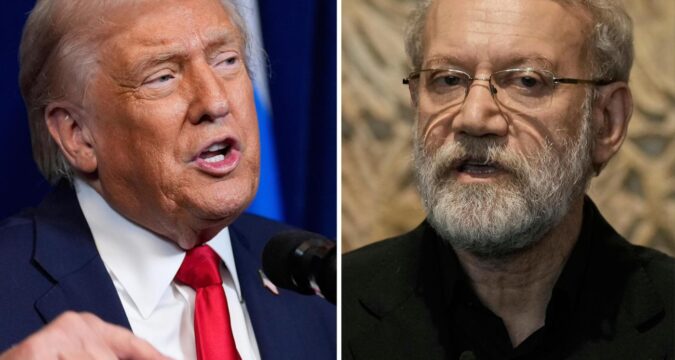
Trump and top Iranian officials exchange threats over protests roiling Iran
DUBAI, United Arab Emirates — U.S. President Donald Trump and top Iranian officials exchanged dueling threats Friday as widening economic protests swept across parts of the Islamic Republic, further escalating tensions between the countries after America bombed Iranian nuclear sites in June.
Trump initially wrote on his Truth Social platform, warning Iran that if it “violently kills peaceful protesters,” the United States “will come to their rescue.” At least seven people have been killed so far in violence surrounding the demonstrations, sparked in part by the collapse of Iran’s rial currency.
“We are locked and loaded and ready to go,” Trump wrote, without elaborating.
Shortly after, Ali Larijani, a former parliament speaker who serves as the secretary of Iran’s Supreme National Security Council, alleged on the social platform X that Israel and the U.S. were stoking the demonstrations. He offered no evidence to support the allegation, which Iranian officials have repeatedly made during years of protests sweeping the country.
“Trump should know that intervention by the U.S. in the domestic problem corresponds to chaos in the entire region and the destruction of the U.S. interests,” Larijani wrote on X, which the Iranian government blocks. “The people of the U.S. should know that Trump began the adventurism. They should take care of their own soldiers.”
Larijani’s remarks likely referenced America’s wide military footprint in the region. Iran in June attacked Al Udeid Air Base in Qatar after the U.S. strikes on three nuclear sites during Israel’s 12-day war on the Islamic Republic.
Ali Shamkhani, an adviser to Supreme Leader Ayatollah Ali Khamenei who previously was the council’s secretary for years, warned that “any interventionist hand that gets too close to the security of Iran will be cut.”
“The people of Iran properly know the experience of ‘being rescued’ by Americans: from Iraq and Afghanistan to Gaza,” he added on X.
The current protests, now in their sixth day, have become the biggest in Iran since 2022, when the death of 22-year-old Mahsa Amini in police custody triggered nationwide demonstrations. However, the demonstrations have yet to be countrywide and have not been as intense as those surrounding the death of Amini, who was detained over not wearing her hijab, or headscarf, to the liking of authorities.
Iran’s civilian government under reformist President Masoud Pezeshkian has been trying to signal it wants to negotiate with protesters. However, Pezeshkian has acknowledged there is not much he can do as Iran’s rial has rapidly depreciated, with $1 now costing some 1.4 million rials. That sparked the initial protests.
The protests, taking root in economic issues, have heard demonstrators chant against Iran’s theocracy as well.
Months after the war, Iran said it was no longer enriching uranium at any site in the country, trying to signal to the West that it remains open to potential negotiations over its atomic program to ease sanctions. However, those talks have yet to happen as Trump and Israeli Prime Minister Benjamin Netanyahu have warned Tehran against reconstituting its atomic program.
https://www.chicagotribune.com/2026/01/02/trump-iran-protests/

Federal employees file complaint against Trump administration’s ban on gender-affirming care
WASHINGTON — The Trump administration is facing a new legal complaint from a group of government employees who are affected by a new policy going into effect Thursday that eliminates coverage for gender-affirming care in federal health insurance programs.
The complaint, filed Thursday on the employees’ behalf by the Human Rights Campaign, is in response to an August announcement from the Office of Personnel Management that it would no longer cover “chemical and surgical modification of an individual’s sex traits through medical interventions” in health insurance programs for federal employees and U.S. Postal Service workers.
The complaint argues that denying coverage of gender-affirming care is sex-based discrimination and asks the personnel office to rescind the policy.
“This policy is not about cost or care — it is about driving transgender people and people with transgender spouses, children, and dependents out of the federal workforce,” Human Rights Campaign Foundation President Kelley Robinson said in a statement announcing the move.
The complaint, filed with the Equal Employment Opportunity Commission, includes testimonies from four current federal workers at the State Department, Health and Human Services and the Postal Service who would be directly affected by the elimination of coverage.
For instance, the Postal Service employee has a daughter whose doctors recommended that she get puberty blockers and potentially hormone replacement therapy for her diagnosed gender dysphoria, which would not be covered under the new OPM policy, according to the complaint.
The complaint notes that the workers are making the claim on behalf of themselves and a “class of similarly situated federal employees.”
The Trump administration has taken other steps to restrict care for transgender Americans, particularly minors. In December, the U.S. Department of Health and Human Services released proposals that would block gender-affirming care to minors, including a policy that would bar Medicare and Medicaid dollars to hospitals that provide such care to children.
Senior Trump officials, such as Health and Human Services Secretary Robert F. Kennedy Jr., call gender-affirming care “malpractice” for minors. But such restrictions go against recommendations from major medical groups such as the American Medical Association and the American Academy of Pediatrics.
Illinois joins states suing HHS over move that could curtail youth gender-affirming care