Category: News

Organized crime, butterflies and coyotes among topics during Fox River Valley lecture series
The River Corridor Foundation has announced the topics for this year’s “A River Flows Through It … Life in the Fox River Valley” lecture series that kicks off on Wednesday, Jan. 21.
The series, now in its seventh year, is offered by the foundation in partnership with The Conservation Foundation and the St. Charles Park District.
All lectures will be presented at the Baker Community Center at 101 S. Second St. in St. Charles at 7 p.m. on the third Wednesday of each month from January through April.
The topics for the monthly series include “The Majestic Migrators: Sandhill Cranes” on Jan. 21, presented by Amber Ross of the Forest Preserve District of Kane County; “The Roaring ’20s: Organized Crime and Prohibition in the Fox River Valley” on Feb. 18, presented by Chris Linden of Hughes Media; “Quiet Wings of the Watershed: Butterflies and Moths of the Fox River Valley” on March 18, presented by Kane County Naturalist Pam Otto; and “Coyotes Among Us: The Urban Coyote Research Project” on April 15, presented by Shane McKenzie of the Max McGraw Wildlife Foundation.
“The original series years ago had five topics, but we found that attendance in the May series was the lowest of the five months, probably because the weather was getting nicer and people weren’t looking for things to do indoors anymore by the middle of May,” board member and past president of the River Corridor Foundation Laurel Moad of St. Charles said. “Last year, we shortened the series to four lectures.”
Topics, she said, are based on feedback from audience members as well as discussions among the foundation members.
“Each year, we do a couple of things. We ask our attendees what they might be interested in hearing about in the coming year and we have a committee that gets together annually and discusses potential topics,” she said. “Everything that we select is centered around either nature or life in the Fox River Valley, so we truly try to focus on things related to our communities and our lifestyles.”
Moad added that from there, “we seek out topics and then we seek out the speakers.”
Most of the lectures draw a crowd of over 100, Moad said, because the organizers have “built our reputation of having quality speakers and interesting topics.”
Weather, Moad said, helps promote the series.
“It’s the middle of winter and there aren’t a lot of activities to do outdoors,” she said. “It’s something to do on a Wednesday night in the middle of the winter but the draw, mostly, are the topics of the speakers.”
She said as far as themes, “animal and insect topics remain popular because they live among us. We appreciate the nature around us, and I think the river draws a lot of it to the community. We have a unique ecosystem because of the river.”
Those looking to attend the lectures are asked to register in advance at www.signupgenius.com/go/10C0F4BA8A92FAAF5CE9-60892018-ariver
Walk-ins are also welcome to attend the events, organizers said. The programs are free to attend, but donations are appreciated.
For more information about the series, contact Laurel Moad at 630-631-7729 or email laurelmoad@gmail.com.
David Sharos is a freelance reporter for The Beacon-News.
Your Cholesterol May Look Normal… But This Hidden Particle Could Still Be Raising Your Heart Risk
Your Cholesterol May Look Normal… But This Hidden Particle Could Still Be Raising Your Heart Risk
Authored by Brendon Fallon & Lynn Xu via The Epoch Times (emphasis ours),
For decades, cholesterol screening has focused on a familiar set of numbers—LDL (“bad” cholesterol), HDL (“good” cholesterol), and triglycerides. When these values fall within the “normal” range, many people are reassured that their heart risk is low.
However, according to leading preventive cardiologist Dr. Seth J. Baum, that reassurance can sometimes be misleading.
In a recent episode of “Vital Signs,” Baum explained that a largely inherited cholesterol-related particle—lipoprotein(a), or Lp(a)—can quietly raise the risk of heart attack, stroke, and aortic valve disease, even in people whose standard cholesterol tests look perfectly fine.
“Lp(a) explains a lot of heart disease we used to call bad luck,” Baum said. “It’s not bad luck—it’s biology we weren’t measuring.”
What Is Lipoprotein(a)?
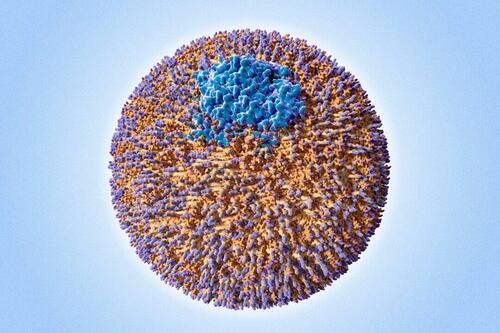
Lipoprotein(a) is structurally similar to LDL cholesterol, but with an added protein called apolipoprotein(a). This extra component makes the particle particularly harmful because it promotes plaque buildup, inflammation, and abnormal clot formation within blood vessels.
Unlike LDL cholesterol—which is strongly influenced by diet, exercise, and medications—Lp(a) levels are determined primarily by genetics. They remain relatively stable throughout life and are largely unaffected by lifestyle changes.
Because of this, Baum and other preventive cardiologists often refer to Lp(a) as “genetic cholesterol.” It is inherited, invisible on routine lipid panels, and easily overlooked—yet clinically powerful.
How Common Is High Lp(a)?
Elevated Lp(a) is not rare. Large population studies and expert consensus estimate that more than 20 percent of people worldwide—roughly one in five adults—have Lp(a) levels high enough to increase cardiovascular risk. In the United States, this translates to approximately 64 million adults.
That prevalence rivals or exceeds that of many conditions routinely screened for in primary care. Yet most Americans have never had their Lp(a) measured.
Baum said that this gap in testing helps explain why some people develop heart disease at young ages or despite healthy lifestyles.
“I see patients who’ve been told for years their cholesterol is fine,” he said. “Then they have a heart attack at 45. When we finally check Lp(a), the story suddenly makes sense.”
Normal Cholesterol Doesn’t Always Mean Low Risk
One of Baum’s central messages is that cholesterol numbers must be interpreted in context, not in isolation.
Lp(a) acts as a risk amplifier. When it is elevated, other risk factors—such as mildly high LDL, borderline blood pressure, insulin resistance, or smoking—become more dangerous in combination. The artery is not only accumulating plaque faster, but plaque is also more inflamed and more prone to forming clots. Two people with identical LDL levels may have very different outcomes, depending on their Lp(a) levels.
This helps explain why traditional risk calculators sometimes fail, particularly in people with heart attacks or strokes at unusually young ages, strong family histories of cardiovascular disease, or heart disease that seems disproportionate to lifestyle.
In Baum’s view, overlooking Lp(a) in these situations represents a major blind spot in prevention.
The Test Most People Never Get–But Probably Should
Because Lp(a) rarely changes over time, testing is usually only needed once. The result can meaningfully alter how clinicians assess risk and guide prevention—even before Lp(a)-specific drugs become widely available.
Lp(a) results may be reported in different units, but many experts consider levels greater than or equal to 50 mg/dL (or approximately 100 to 125 nmol/L, depending on the assay) to be clinically significant.
Importantly, high Lp(a) is not a diagnosis. It does not mean a heart attack is inevitable. Rather, it signals that cardiovascular prevention should be more proactive and individualized. “Lp(a) doesn’t act alone—it stacks on top of everything else,” Baum said.
He describes Lp(a) as a “triple threat” because it promotes plaque formation, enhances blood clotting, and intensifies vascular inflammation. “Inflammation is clearly involved in plaque progression and heart attacks,” he noted, explaining why Lp(a) carries risk beyond LDL alone.
Despite this, Baum estimates that only about 1 percent of the population has ever been tested for Lp(a). “The reason most doctors cite for not testing is that we don’t yet have an approved therapy to lower it,” he said. “But that’s not a good reason not to know the risk.”
Plaque builds silently over decades. “In the vast majority of patients with high cholesterol or Lp(a), you don’t see anything on physical exam,” he said. “You usually don’t see anything until there’s a heart attack or stroke.”
A Practical Prevention Plan
A common misconception is that high Lp(a) leaves patients powerless. Baum strongly disagrees. “You can’t change your genes, but you can absolutely change how aggressively you manage everything else.”
Lower LDL More Than Average
When Lp(a) is elevated, Baum often targets lower LDL or apoB levels than standard recommendations. Even modest LDL elevations can be more harmful in the presence of high Lp(a), so tolerance for “borderline” values is reduced.
Treat Risk Factors as Additive
Rather than viewing blood pressure, cholesterol, glucose, and lifestyle habits separately, Baum said that they compound one another.
With high Lp(a):
Mild hypertension matters more
Smoking carries greater danger
Poor sleep, inactivity, and metabolic dysfunction become more consequential
This cumulative perspective explains why clinicians may recommend earlier or more intensive intervention—even when no single risk factor appears extreme.
Use Imaging to Clarify Risk
Baum highlighted the value of coronary artery calcium (CAC) scoring, a specialized CT scan that detects and measures calcified plaque in the coronary arteries—the arteries that supply blood to the heart muscle.
Unlike blood tests, which estimate risk indirectly, CAC scoring provides direct visual evidence of atherosclerosis. A higher calcium score reflects a greater plaque burden and a higher likelihood of future cardiovascular events.
In people with elevated Lp(a) but otherwise uncertain risk, CAC can help determine whether genetic risk has already translated into physical disease. A positive CAC score suggests that plaque has begun to form, strengthening the case for earlier and more aggressive prevention. A CAC score of zero indicates no detectable calcified plaque at the time of testing and may allow for a more individualized approach, particularly in younger patients.
CAC does not replace blood testing, Baum said, but adds clarity when lab results and clinical history leave risk uncertain—helping tailor prevention to the person, not just the numbers.
Screen Your Family
Because Lp(a) is inherited, Baum strongly encourages cascade screening—testing close relatives once an elevated level is identified. “The youngest person in the family is often the one who shows up first with an event.”
Family-wide screening—including siblings, parents, and children—can improve early detection and prevention.
Advanced Options and Emerging Therapies
For patients with prior cardiovascular events and very high Lp(a), lipoprotein apheresis may be an option in specialized centers.
Lipoprotein apheresis is a blood-filtering procedure that removes atherogenic lipoproteins—particles that promote artery-clogging plaque. These include LDL cholesterol and Lp(a), the structural protein found on particles most responsible for atherosclerosis. It is currently available at about 50 centers in the United States.
“We can literally remove these particles from the blood every two weeks, and hopefully reduce the risk of another event.”
Several Lp(a)-lowering drugs are now in late-stage clinical trials, some showing 80 percent to 90 percent reductions in Lp(a) levels. Baum expects FDA-approved therapies in the coming years, though he cautions that outcome data—not just lab results—will determine their ultimate value.
Baum’s Top 3 Recommendations
After decades of treating patients with both typical and unexplained heart disease, Baum said that effective prevention begins not with fear, but with awareness, engagement, and early action. His top recommendations are practical steps anyone can take to better understand—and reduce—their cardiovascular risk.
1. Be Your Own Advocate
“The most important aspect of cardiovascular prevention is taking it seriously and advocating for yourself.”
That starts with asking questions, understanding your family history, and requesting appropriate testing—especially when something doesn’t add up. Knowing whether Lp(a) or apoB is elevated can reveal risks that routine cholesterol panels miss.
2. Work With a Knowledgeable Physician
Even with a trusted doctor, it’s reasonable to have a proactive conversation about cardiovascular risk. Baum encourages patients to ask about Lp(a) and apoB testing, particularly if there is a family history of early heart disease or unexplained events.
Patients with similar LDL levels may require very different treatment intensity depending on their genetic risk, imaging results, and overall clinical picture.
3. Talk to Your Family
When genetic risk is involved, one test result can help protect an entire family. Because Lp(a) is inherited, identifying it in one person often leads to early detection—and prevention—in siblings, parents, or children.
Lp(a) helps explain why heart disease sometimes strikes people who seem to be doing everything right. It is common, inherited, and invisible on standard tests—but no longer ignorable.
A single blood test can uncover hidden risk and reshape prevention for decades.
“You can’t manage what you don’t measure,” Baum said. “Lp(a) is one of the most important things we’ve been missing.”
Tyler Durden
Tue, 01/06/2026 – 21:45
Mapping US Interventions In Latin America
Mapping US Interventions In Latin America
A lot has changed over the past 72 hours.
For Venezuelans, the events will have been particularly momentous. In a rapid attack, U.S. special forces entered the compound of now-deposed Venezuelan president Nicolás Maduro and abducted both him and his wife, before flying them to the United States. The operation was accompanied by U.S. airstrikes targeting multiple sites in the capital of Caracas, with at least 80 people reportedly killed. Maduro is now in New York and is set to face trial today on drugs and weapons charges.
The capture has prompted a wide range of international reactions, from condemnation in Moscow to support from Argentina, where President Javier Milei is an ally of U.S. President Donald Trump. Among Venezuelans, both inside the country and within the diaspora, responses have been mixed, combining relief and celebration at the fall of Maduro with deep uncertainty over what will follow.
Although the abduction of Maduro was unexpected, the United States’ intervention in Venezuela is hardly the first in the region’s history.
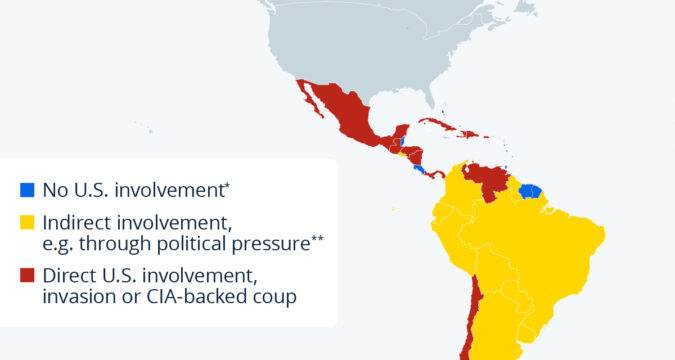
As Statista’s Anna Fleck shows in the following chart, several countries in Latin America and the Caribbean have experienced direct U.S. involvement, though to varying degrees.
You will find more infographics at Statista
Among these are Mexico, which was invaded in 1846 during the Mexican-American war following the U.S. annexation of Texas. Panama was invaded in 1989, when Washington sought to depose the country’s de facto ruler, General Manuel Noriega. Cuba was invaded and occupied by U.S. forces in 1898, during the Spanish-American War and later became the site of the failed U.S.-backed Bay of Pigs invasion in 1961.
Elsewhere, U.S. involvement took different forms.
In Guatemala, the CIA orchestrated Operation PBSuccess in 1954, a covert coup that overthrew the democratically elected President Jacobo Árbenz. In Chile, the United States supported the military coup that deposed President Salvador Allende in 1973.
Other countries experienced more indirect forms of involvement.
During the 1970s, the U.S. supported Operation Condor, a regional campaign of coordinated political repression carried out across Argentina, Bolivia, Chile, Paraguay, and Uruguay with Brazil, Peru and Ecuador joining later.
Many of the areas shown in blue on this map are not sovereign states, but rather territories and dependencies of the United Kingdom, the Netherlands and France.
Tyler Durden
Tue, 01/06/2026 – 21:20
https://www.zerohedge.com/geopolitical/mapping-us-interventions-latin-america

Morgan Stanley Lifts Gold Forecast To $4,800, Citing Fed Cuts And Global Risk
Morgan Stanley Lifts Gold Forecast To $4,800, Citing Fed Cuts And Global Risk
Authored by Tom Ozimek via The Epoch Times,
Gold prices are poised to climb to fresh record highs by the end of the year, with Morgan Stanley forecasting the bullion at $4,800 per ounce by the fourth quarter of 2026, as falling interest rates, central bank buying, and persistent geopolitical risk continue to drive demand for the traditional safe-haven asset.
In a research note on Jan. 5, the bank said the precious metal’s rally is being underpinned by a combination of macroeconomic and policy shifts, including an expected easing cycle by the U.S. Federal Reserve, a change in leadership at the Federal Reserve, and sustained purchases by central banks and investment funds.
Bullion has already delivered a historic run. Spot gold touched an all-time high of $4,549.71 per ounce on Dec. 26, 2025, and finished the year up 64 percent, marking its strongest annual performance since 1979.
Safe-Haven Demand Reignited
Gold prices jumped again this week after the capture of Venezuelan leader Nicolás Maduro by U.S. military forces heightened geopolitical uncertainty across energy and financial markets. Analysts say such flashpoints have revived safe-haven buying at a time when many investors were already positioned defensively.
“The situation around Venezuela has clearly reactivated safe-haven demand, but it comes on top of existing concerns about geopolitics, energy supply, and monetary policy,” said Alexander Zumpfe, a precious metals trader at Heraeus Metals Germany.
Investors typically seek gold during periods of economic and political stress, as the yellow metal tends to perform well in low-interest-rate environments, when the opportunity cost of holding a non-yielding asset declines.
Morgan Stanley said in its note that recent events in Venezuela were likely to reinforce gold’s appeal as a store of value, though it did not cite the developments as a formal input into its $4,800 forecast.
JPMorgan Chase also recently raised its gold price outlook, forecasting the metal at $5,000 an ounce by the fourth quarter of 2026 and $6,000 in the longer term.
“While this rally in gold has not, and will not, be linear, we believe the trends driving this rebasing higher in gold prices are not exhausted,” Natasha Kaneva, head of Global Commodities Strategy at JPMorgan, said in a Dec. 18 note, citing continued diversification into gold by central banks and investors, as trade uncertainty and ongoing geopolitical risk fuel safe-haven demand.
Analysts at ING also see more upside for gold. In a Jan. 6 note, the bank said gold purchases by central banks and expectations for further Fed rate cuts are underpinning the precious metal.
Fed Policy, Dollar Outlook Key Drivers
Morgan Stanley’s latest projection represents a sharp upgrade from its prior outlook. In October 2025, the bank lifted its 2026 gold forecast to $4,400 per ounce, citing expectations of U.S. rate cuts, a weaker dollar, and strong institutional inflows.
“Investors are watching gold not just as a hedge against inflation, but as a barometer for everything from central bank policy to geopolitical risk,” Amy Gower, Morgan Stanley’s metals and mining commodity strategist, said in the October note.
“We see further upside in gold, driven by a falling U.S. dollar, strong ETF buying, continued central bank purchases, and a backdrop of uncertainty supporting demand for this safe-haven asset.”
Gold also recently overtook U.S. Treasuries as a share of global central bank reserves for the first time since 1996, with Morgan Stanley characterizing this development as a “powerful signal” that investors are confident in the yellow metal’s long-term value.
Exchange-traded funds backed by physical gold have posted record inflows, signaling interest from both institutional and retail investors.
“Even non-professional buyers, or retail investors, are joining the rush for gold,” Morgan Stanley analysts wrote in the October note, adding that the demand for gold is further underpinned by expectations for a weaker dollar and a broader shift away from dollar-denominated assets.
The U.S. dollar ended 2025 down around 9 percent, marking its worst performance since 2017.
Silver, Copper Also in Focus
While gold remains Morgan Stanley’s top commodity pick, the bank also highlighted strength across other metals markets.
For silver, analysts said 2025 marked the peak of a structural supply deficit, with China’s new export licence requirements adding to upside risks. Silver surged 147 percent last year, its strongest annual gain on record, driven by a combination of industrial demand, investment inflows, and tight supply.
“Investor appetite remains strong, as silver-backed ETFs continue to attract inflows,” ING analysts said in a recent note, describing the 2026 outlook as “constructive,” underpinned by firm industrial demand from solar panels and battery technologies alongside sustained investment flows.
In base metals, Morgan Stanley said it favors aluminum and copper, both of which face ongoing supply constraints amid rising demand. Aluminum supply remains tight outside Indonesia, while signs of renewed U.S. buying have pushed prices higher.
Copper prices have also surged on the London Metal Exchange, with three-month copper hitting a record $13,387.50 per tonne this week. Morgan Stanley said U.S. import demand and persistent mine disruptions are keeping global markets tight heading into 2026.
Nickel was another standout, gaining 5.8 percent to $17,980 a tonne, its highest level since October 2024. Morgan Stanley said supply disruption risks in Indonesia are supporting prices, though it cautioned that much of the risk may already be priced in.
Tyler Durden
Tue, 01/06/2026 – 20:55
CIA turncoat Aldrich Ames, who sold US secrets to the Soviets, dies in prison at 84
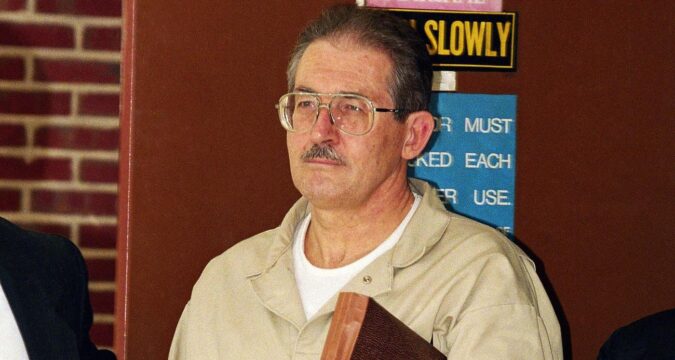
WASHINGTON — CIA turncoat Aldrich Ames, who betrayed Western intelligence assets to the Soviet Union and Russia in one of the most damaging intelligence breaches in U.S. history, has died in a Maryland prison. He was 84.
A spokesperson for the Bureau of Prisons confirmed Ames died Monday.
Ames, a 31-year CIA veteran, admitted being paid $2.5 million by Moscow for U.S. secrets from 1985 until his arrest in 1994. His disclosures included the identities of 10 Russian officials and one Eastern European who were spying for the United States or Great Britain, along with spy satellite operations, eavesdropping and general spy procedures. His betrayals are blamed for the executions of Western agents working behind the Iron Curtain and were a major setback to the CIA during the Cold War.
He pleaded guilty without a trial to espionage and tax evasion and was sentenced to life in prison without parole. Prosecutors said he deprived the United States of valuable intelligence material for years.
He professed “profound shame and guilt” for “this betrayal of trust, done for the basest motives,” money to pay debts. But he downplayed the damage he caused, telling the court he did not believe he had “noticeably damaged” the United States or “noticeably aided” Moscow.
“These spy wars are a sideshow which have had no real impact on our significant security interests over the years,” he told the court, questioning the value that leaders of any country derived from vast networks of human spies around the globe.
In a jailhouse interview with The Washington Post the day before he was sentenced, Ames said he was motivated to spy by “financial troubles, immediate and continuing.”
Ames was working in the Soviet/Eastern European division at the CIA’s headquarters in Langley, Virginia, when he first approached the KGB, according to an FBI history of the case. He continued passing secrets to the Soviets while stationed in Rome for the CIA and after returning to Washington. Meanwhile, the U.S. intelligence community was frantically trying to figure out why so many agents were getting discovered by Moscow.
Ames’s spying coincided with that of FBI agent Robert Hanssen, who was caught in 2001 and charged with taking $1.4 million in cash and diamonds to sell secrets to Moscow. He died in prison in 2023.
Ames’s wife, Rosario, pleaded guilty to lesser espionage charges of assisting his spying and was sentenced to 63 months in prison.
https://www.chicagotribune.com/2026/01/06/cia-turncoat-aldrich-ames-dies/

Ride-sharing congestion fee expands to Chicago’s North Side, Hyde Park
Ride-sharing passengers on Chicago’s North Side and in Hyde Park started paying more for Ubers and Lyfts on Tuesday.
The ride-sharing tax increase, called for in the city’s 2026 budget, expands Chicago’s downtown congestion zone.
The new, larger congestion zone is now generally bound by Foster Avenue, 31st Street, Western Avenue and the lakefront. A second, smaller congestion zone in Hyde Park and is bound by Hyde Park Boulevard, 60th Street, Cottage Grove Avenue and the lakefront.
The Chicago’s Department of Finance shows the expanded boundaries of the congestion zone. (City of Chicago)
Riders that are picked up or dropped off within either zone between 6 a.m. and 10 p.m. — any day of the week — will be charged an extra $1.50. Passengers taking shared rides will be charged an extra 60 cents and will only see that fee applied on weekdays.
McCormick Place and Navy Pier are excluded, though trips to or from those locations are already subject to a surcharge of $5 per ride, as are trips to and from the city’s airports.
The city’s downtown congestion fee for rideshares went into effect in 2020.
Last summer, Uber apologized after accidentally overcharging Chicago riders nearly $1.8 million in congestion fees, as first reported by Block Club Chicago. The company pinned the issue on a “technical misstep” and said it had refunded affected riders.
Chicago’s City Council relied on several other new tax and fee hikes to balance the budget this year.
Aldermen rocked City Hall convention by breaking from the budget proposed by Mayor Brandon Johnson, singling out the mayor’s proposed corporate head tax as a key reason. Johnson and his City Council opponents both generally backed the congestion fee, though the mayor declined to sign off on the final budget, even as he promised to not veto it.
The city’s tax on plastic bags jumped from 10 cents to 15 cents at the start of the year. Starting in March, taxes on alcohol sold for off-site consumption, previously assessed by volume, will be set at 1.5% of purchase price.
Boat mooring and docking fees are jumping this year from 7% to 23.25%, with a new carveout for nonprofit corporations. The tax on personal property leases — touching everything from leased cloud computing software to cars — rose from 11% to 15%.
City Hall also imposed a new 10.25% tax on the revenue major sportsbooks make from bets placed within the city online and in person. Aldermen also broadly agreed to raise property taxes earmarked for Chicago Public Libraries by about $9 million to avert staff and security layoffs.
https://www.chicagotribune.com/2026/01/06/rideshare-congestion-fee-expands-chicago/

Kim Jong Un Just Oversaw Hypersonic ‘Nuclear-Ready’ Missile Test, Blasts US As ‘Rogue’ State
Kim Jong Un Just Oversaw Hypersonic ‘Nuclear-Ready’ Missile Test, Blasts US As ‘Rogue’ State
North Korea announced that it had successfully carried out a test of a hypersonic missile on Sunday – coming within 24 hours following the Trump-ordered US military raid on Caracas to capture Venezuelan President Nicolas Maduro.
According to a statement released by North Korean state media, “A sub-unit under a major firing strike group of the Korean People’s Army conducted a missile launching drill on January 4.” The timing is unmistakably meant as a signal and warning to Washington, and to America’s staunchest allies in the region.
The statement continued, “The drill was conducted as part of the operational evaluation of the sustainability, effectiveness, and operation of the DPRK’s war deterrent while evaluating the readiness of the hypersonic weapon system, verifying and confirming its capability for fulfilling mission and developing the missile soldiers’ firing capability.”
Pyongyang framed it as a nuclear preparedness test, though thankfully there was no actual live test of a nuclear warhead, which hasn’t happened in some time.
The missile test was overseen by Kim Jong-un, who said, “To be honest, our such activity is clearly aimed at gradually putting the nuclear war deterrent on a highly developed basis.”
Importantly, Kim – who has long headed up a country Washington has dubbed a ‘rogue state’ – indirectly referenced the fresh US overthrow of Venezuela’s Maduro. He stressed: “The reason why it is necessary is exemplified by the recent geopolitical crisis and complicated international events.”
Internationally, most countries allied with the US and Europe see Kim as even ‘worse’ than Maduro – though of course the huge difference in the situation is Kim’s possession of nukes. The United States doesn’t dare try and start ‘invasions’ of nuclear-armed powers.
Kim has often reflected in speeches on the lessons of Iraq and Libya – where the US and West overthrew Saddam and Gaddafi. Had they possessed a nuclear capability, he argues, they would have never been removed and killed. Of course, he’s right from a strategic point of view – and the leadership of Iran is no doubt nervously taking all this in too.
As for the fresh Venezuela case, North Korea’s Foreign Ministry did make clear the country’s stance on the issue, in its statement saying:
“The incident is another example that clearly confirms once again the rogue and brutal nature of the US which the international community has so frequently witnessed for a long time.”
“The Foreign Ministry of the DPRK strongly denounces the U.S. hegemony-seeking act committed in Venezuela as the most serious form of encroachment of sovereignty and as a wanton violation of the UN Charter and international laws with respect for sovereignty, non-interference and territorial integrity as their main purpose.”
While the pace of North Korean missile tests has slowed of late, this latest follows a series of tests which marked an uptick late last year, including the launch of a long-range strategic cruise missile and testing of a newly developed anti-aircraft system.
Some past war-mongering from the Left, a longtime bipartisan orientation:
September, 2024. Rachel Maddow: Putin, Maduro, Trump, Kim Jong Un, and Xi Jinping are all the same.
Maddow: “They want no one anywhere to think it is possible let alone desirable to throw a strong man out.”
Nice call Madcow. pic.twitter.com/IH8hhu0VOF
— MAZE (@mazemoore) January 4, 2026
During the first Trump administration, Kim met the US president on a series of occasions. While historic, it didn’t lead to the kind of breakthrough on ‘de-nuclearization’ that Washington and Seoul were hoping for, and Pyongyang has gone back to being on the extreme defensive.
Tyler Durden
Tue, 01/06/2026 – 20:30

Environmentalists push back against US EPA plan to extend coal plant closings
The U.S. Environmental Protection Agency is facing strong public opposition to its proposed plans to extend closure deadlines until October 2031 for 11 coal plants across the country — three of which are in Illinois and one in northwest Indiana.
But many environmental experts, including Earthjustice senior attorney Mychal Ozaeta, say the proposal caters to the coal industry rather than protecting communities.
In November, the U.S. EPA proposed a deadline extension that would allow sites including Baldwin, Kincaid and Newton power stations in Illinois and Schahfer Generating Station in Wheatfield, Indiana, to remain open for an additional three years.
Baldwin and Schahfer plants are considered major polluters, and Baldwin is the nation’s largest emitter of sulfur dioxide, among other pollutants.
There are 13 coal ash impoundments at the 11 sites, all of which are unlined and leaking toxic contaminants into nearby groundwater, said Ozaeta. Coal ash, the hazardous byproduct of burning coal, creates a slurry of carcinogenic heavy metals including arsenic, mercury, chromium and lead.
“These 13 are the most dangerous coal ash ponds in the U.S. because they’re leaking,” Ozaeta said. “They’ve been doing so for decades.”
Ozaeta was among dozens who spoke during Tuesday’s public hearing, expressing concerns over the Trump administration’s rollback plan. Many speakers said this proposal would set a dangerous precedent for a country that should be moving beyond its reliance on fossil fuels.
In 2018, the EPA was directed by the D.C. Circuit Court of Appeals to strengthen the federal Coal Combustion Residuals Rule and require the closure of unlined, leaking coal ash impoundments across the country.
Thirteen years later, the EPA is now seeking to extend the closure deadlines for these sites and further evade closure and cleanup for utility companies, said Ozaeta.
“The longer that these units are allowed to continue to evade closure and cleanup, the increased risks of these ponds and the contaminants that they’re leaking into the groundwater and potentially the waterways, and the increased risk of harm to human health and the environment,” Ozaeta said.
In Illinois, three sites would be allowed to continue operating until 2031: Kincaid, which is south of Springfield, and Baldwin and Newton power stations in southern Illinois.
For a state with some of the highest numbers of coal ash ponds, this decision threatens to reverse years of progress as Illinois has made strides away from reliance on coal-fired power, according to Cate Caldwell, senior policy director of the Illinois Environmental Council.
“Communities throughout our state, particularly in downstate regions and near river systems, live in close proximity to coal ash disposal sites that threaten groundwater and surface water resources,” Caldwell said. “Every additional year that unlined, leaking coal ash ponds remain open increases the risk that these contaminants will migrate further into aquifers, rivers and drinking water supplies used by Illinois families.”
As Illinois tackles an already mounting backlog of closure delays at its 72 coal ash sites, Caldwell said this latest EPA proposal to extend the lives of Kincaid, Baldwin and Newton plants signals a move in the wrong direction when it comes to coal pollution.
Dynegy’s Baldwin Energy Complex in southern Illinois, shown here in 2012, is one of the biggest polluters in the Midwest. (E. Jason Wambsgans/Chicago Tribune)
“The agency should not be asking coal companies how long they would like to continue dumping toxic waste,” Caldwell said. “It should be enforcing closure requirements that are already long overdue.”
Related Articles
Plans to close dozens of toxic coal ash ponds in Illinois stuck in backlog
Illinois among states with most cuts to environmental agencies, report shows
Illinois coal plants get Trump exemptions from Biden-era rule limiting mercury, other toxic air pollution
But the EPA argued this deadline extension would resolve concerns of grid reliability as the country transitions beyond fossil fuels.
“This extension will promote electric grid reliability by allowing a small subset of baseload coal-fired power producers to continue operating for an additional three years beyond the Biden Administration’s disastrous attempt to pick winners and losers and destroy the coal industry,” said an EPA spokesperson in a statement.
During Tuesday’s hearing, Cecilia de Robertis, EPA deputy director of Waste Information, said the U.S. Department of Energy has warned that certain regions of the country would experience power grid issues if the closures were to occur in 2028, when previously required.
But Ozaeta said this is an unsurprising yet insufficient justification from the EPA.
“We’ve seen EPA attempt to paint this picture of the energy crisis to extend the life of these old, expensive coal plants,” Ozaeta said.
The EPA, Ozaeta said, hasn’t sufficiently proven the connection between grid reliability risks and extending timelines for these coal sites.
During Tuesday’s hearing, the sole supporter of the EPA’s ruling change was Indiana Department of Environmental Management Commissioner Clint Woods, who said he believes the EPA’s extension proposal is a necessary step to ensure reliable, affordable energy in Indiana.
The Northern Indiana Public Service Company’s R. M. Schahfer Generating Station is on the EPA’s list permitting it to remain operating until 2031, despite having an original Dec. 31 retirement date.
Last month, just two days before its original retirement date, the DOE ordered the Indiana plant to remain open to help power data centers in Jasper County.
Local advocates expressed their concerns over the decision to keep the Schahfer plant open during the hearing, including Ashley Williams, executive director of Just Transition NWI, an Indiana nonprofit advocating for clean energy transitions.
“Like every community, Wheatfield deserves to thrive,” Williams said. “Instead, it’s being sacrificed again for utility greed.”
In her testimony Tuesday, Williams highlighted that the Schahfer plant is considered a superpolluter and remains an ongoing environmental hazard for the community of Jasper County.
“Utilities see time as a commodity to be bargained over,” Williams said. “For my neighbors in Jasper County, time is minutes and restless nights they spend worrying about the toxins in their children’s bathwater. Time is the slow, irreversible seepage of coal ash into the aquifers that waters their crops. And they’re out of time.”
The EPA has extended the public comment period until Feb. 6 before finalizing the rule.
https://www.chicagotribune.com/2026/01/06/epa-coal-ash-ponds-extension/

Yorkville Sons of American Legion to host breakfast fundraiser
The Yorkville Sons of The American Legion is holding its monthly breakfast fundraiser from 7:30 to 10:30 a.m. Sunday, Jan. 11, at the Yorkville American Legion, 9054 E. Veterans Parkway in Yorkville.
The buffet will consist of biscuits and gravy, pancakes, scrambled eggs, potatoes, bacon, sausage, tomato juice, orange juice, milk, coffee and an omelet station, organizers said.
The cost to attend the event, which is open to the public, is $12 for adults 18 to 54 years old, $10 for those 55 years old and older and $8 for those 6 to 17 years old, according to organizers. Children 5 years old and younger get in free.
Bands asked to apply to perform at Last Fling festival
The application deadline for bands interested in performing at the Naperville Jaycees’ annual Last Fling festival is Saturday, Jan. 31.
The annual event, featuring a carnival, food vendors, live entertainment, a Labor Day parade and more, will take place from Friday, Sept. 4, through Monday, Sept. 7, in Naperville. It is the Jaycees’ largest fundraiser, which raises money to support area nonprofit organizations.
Musical artists can apply online through the event website at lastfling.org/schedule-of-events.
Bands are asked to provide information on how long they’ve been playing and the type of music they play. They should also include their availability during Labor Day weekend, their performance price and a music sample. Bands must have 90 to 120 minutes of material to be considered, organizers said.
Applications are open through the end of the day Jan. 31 and are online only. No other form of application will be accepted, organizers said.
The Death Row Priest
The Death Row Priest
Authored by Randy Tatano via The Epoch Times (emphasis ours),
“Bless me, Father, for I have sinned.”
It’s what Catholics say at the beginning of confession.
But few priests have listened to the kind of sins like those Father Pat Madden has heard.
That’s because his “parish” (if you want to call it that), consists of the men on Alabama’s death row.
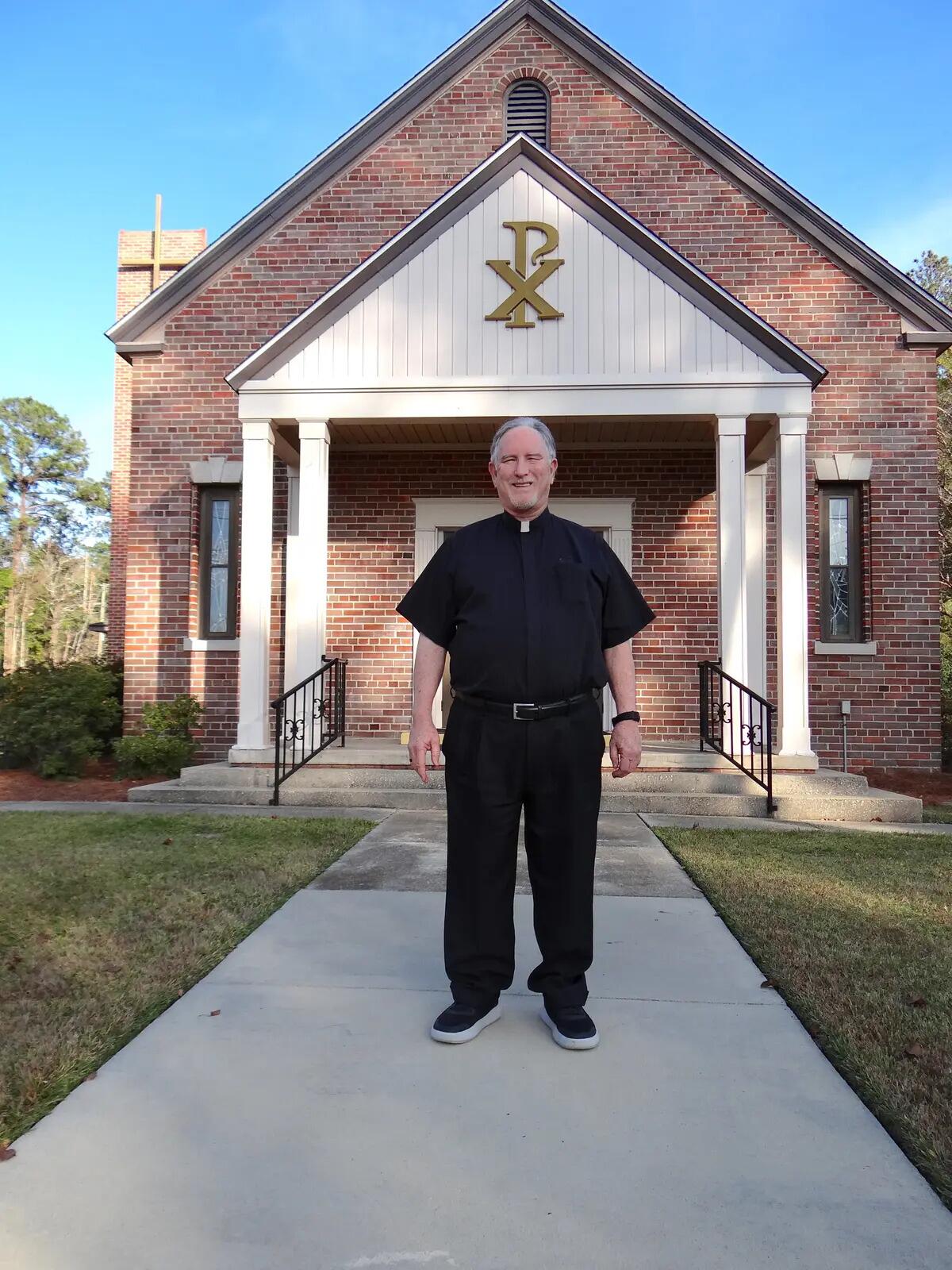
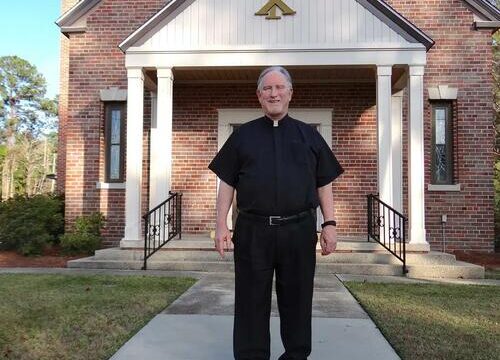
Father Pat, as he’s known in the area, recently retired after 42 years from St. Maurice Church in Brewton, Alabama. But he continues to preach the gospel, celebrate Mass, and minister to those facing execution at Holman Correctional Facility in Atmore, Alabama.
Father Pat Madden. Randy Tatano
He’s been visiting the Catholics in prison as a volunteer at Holman and nearby Fountain Correctional since 2002, but in September he had a new experience. “I’ve been doing the regular ministry for a long time, but it’s only been about a year now that I’ve really dealt with a prisoner who had an execution date and wanted me to be there in the execution chamber.”
In this case, Geoffrey Todd West was the inmate who wanted spiritual guidance. He was convicted in the 1997 capital murder of Margaret Parrish Berry, a store clerk who was the mother of two sons. At the time, prosecutors called this an execution-style killing as Berry was shot in the back of the head while lying on the floor. West was 21 at the time.
And, at the age of 50, he turned to God.
Though it is common for prisoners to claim they’ve found religion in an effort to get parole or a reduced sentence, Father Pat says this wasn’t the case for West. “There were no appeals left. He had no incentive, legally, to develop a deeper spiritual life. This was personal, a way in which to be reconciled with the family that he had committed that murder to and also to his family and himself.”
West started coming to Father Pat’s services about a year ago.
“He was interested in getting more deeply spiritual in his life and helping him to survive the experience of death row life. Later on, after I met him, that’s when he received his date to be executed. During that time, he had become Catholic, studied about the church, and joined the church.” While the specifics of confessions are sealed by the Catholic Church, Father Pat says West showed remorse for his actions. He baptized West this spring.
In Alabama, the condemned prisoner has a choice as to the method of execution: electrocution, lethal injection, or nitrogen hypoxia. West chose the latter. He would breathe pure nitrogen which would deprive his body of oxygen.
And, on Sept. 25, 2025, Father Pat Madden would be with him until the end.
11 a.m.: Father Pat arrives at the prison and meets with West and family members. They talk and pray until lunch arrives. The prisoner’s last meal request: quesadillas from Taco Bell. They all have lunch and continue their visit.
3:30 p.m.: West says goodbye to his parents and family members who leave. Father Pat and West’s lawyers remain.
4:20 p.m.: West is taken to his death row cell.
4:30 p.m.: Father Pat is taken to West’s cell. They spend the next hour talking and praying. “And that was a good time together of prayer, and he was able to really be in a better place.” He administers the Last Rites to West.
Approximately 6 p.m.: Father Pat is taken to a place few members of the clergy have been. “I was brought into the execution chamber. And we had talked earlier about the process of how the gas works and how this is his choice to be gassed and to die.” The priest and prison guards are the only ones in the chamber along with West. “We had eye contact during that time. And I often made a motion of pointing to heaven. He’s all strapped in, with each arm out, his legs together and wrapped with a sheet. He was very secure, and they had the gas mask on when I was brought in.”
While family members and media are allowed to witness the execution from an adjoining room, West could not see them through the one-way glass in the chamber. So he locked eyes with Father Pat. “He could see me through the whole thing. And I think that, for me, that’s what my job was. To be a prayer partner and somebody who was in the chamber that he could look at and know I represented his family. I think that gave him some peace and some comfort.”
The execution took about 20 minutes. Father Pat says West remained calm through it all. He didn’t cry, didn’t look scared. “There was no fighting or thrashing. He allowed it to happen, and he just went to sleep. So he would be taking some breaths, as he was unconscious, and that would slow down and slow down, and eventually, nothing.”
After the execution, Father Pat went home and watched a little TV to take his mind off what he had just seen. But the memory of what he experienced will linger. “I’ve got that image of him there, laying dead on the gurney with his arms out, and that’ll stay with me. But having that other experience of providing comfort to him, that’s where I’m going to put all my energy.”
So, is West in paradise or condemned to eternal damnation after breaking the commandment “Thou shalt not kill”? Father Pat has some thoughts on that. “I’d say that there’s two kinds of experiences when somebody commits murder. There’s a person who is caught up in drugs or whatever, some addiction. And then there’s those that really have evil and selfish intent to harm others and to kill others. That’s a whole different thing. But everything lays in God’s heart and hand. At one point, Geoffrey was talking about how he looked forward going to heaven and just sitting in the lap of God, being alone with God and letting God take care of his sins, his crimes, and all the things he’s regretting over through his life. And, you know, that healed him, and he was looking forward to that.”
Opinions on capital punishment have always been strong and divided. As it turns out, the son of the victim did not want to see West executed. Depending on your point of view, this story has elements of justice or compassion, remorse or closure, confession or forgiveness. But from Father Pat’s perspective, he’s simply fulfilling his duty as a priest, and leaving the final judgment up to God.
Tyler Durden
Tue, 01/06/2026 – 20:05