Category: News

Steve Chapman: The lawless president launches a lawless war
Donald Trump has embarked on one figurative war after another in the past year — with “the radical left,” blue state cities, Ivy League universities and even onetime ally Marjorie Taylor Greene. Now he has launched an actual military war, attacking Venezuela, abducting its president and announcing that he will run the country.
This invasion was the latest reminder that Trump never runs out of ways to shock. The same guy who promised to keep us out of debilitating foreign conflicts has volunteered for the job of nation-building in a place about which the great majority of Americans know little and, until recently, cared less.
It may be folly to look for consistency in someone as impulsive and volatile as Trump. But what sets his second presidency apart is a recurrent theme: his refusal to let any laws, domestic or international, stand in his way. He has already distinguished himself as the most lawless president in American history.
He set the tone on Inauguration Day, issuing pardons for more than 1,500 people who had been convicted or charged with crimes committed during the Jan. 6, 2021, mob attack on the Capitol. Several participants who were serving prison sentences had them commuted by Trump. He has also issued assorted pardons to business tycoons and political supporters.
The message is unmistakable: If you break the law or commit a crime that suits his purposes, even a violent crime, you will walk free. No federal judge or jury will be allowed to punish those who enjoy the president’s favor.
Every day, Trump exhibits his contempt for laws enacted by Congress — and for the Constitution itself. In an interview about the disregard for due process in his mass deportations, he was asked, “Don’t you need to uphold the Constitution of the United States as president?” Trump replied, “I don’t know.”
Whether he knows, however, doesn’t matter. What matters is that he doesn’t care. He will do as he pleases and dare anyone to stop him.
Numerous federal judges have ruled against Trump, but they are in the position of trying to put out a house fire with bottles of San Pellegrino. Judges have accused the administration of violating their orders in more than 160 cases, The Washington Post reported — and that was in July.
One infamous example is Kilmar Obrego García, who was living here without authorization and was shipped to a prison in El Salvador. Judge Paula Xinis ruled his expulsion illegal and ordered his return. Trump refused, and it took two months for the administration to bring him back, after repeatedly stonewalling the judge.
The disdain for law has been especially conspicuous in the deportation campaign, as Chicagoans know. During Operation Midway Blitz, Border Patrol Cmdr. Greg Bovino and his agents employed brutal tactics and, a federal judge found, lied about them.
Related Articles
Steve Chapman: Why is Donald Trump courting war with Venezuela?
Steve Chapman: No, Ronald Reagan did not love tariffs
Steve Chapman: Donald Trump wants Americans to be terrified of his wrath
Not all of Trump’s violations require violence or deceit. His handpicked Kennedy Center trustees added his name to the facility, ignoring the 1964 law naming it as a living memorial for the late president. The administration has not enforced a 2024 law requiring the Chinese company ByteDance to sell the social media platform TikTok or face a U.S. ban.
Trump has refused to spend money appropriated by Congress, which holds the constitutional power of the purse. He closed down the U.S. Agency for International Development, even though, as ProPublica noted, “no president in history has unilaterally shuttered an agency formally enshrined in law.”
The Supreme Court encouraged Trump’s approach by granting him broad immunity for crimes committed in the exercise of his official duties. That decision allows him to openly violate state and federal laws with no fear of ever being brought to justice. His lavish use of the pardon power gives his aides and allies every reason to think they can do likewise at no risk.
Until this past weekend, Trump’s lethal strikes on oceangoing Venezuelan boats for allegedly transporting drugs looked like the extreme of what he would do. These attacks snuffed out at least 115 lives last year. Those were not national defense. They were mass murder. Asked if the attacks constituted a war crime, Vice President JD Vance replied, “I don’t give a s— what you call it.”
But they were just the prelude to the Venezuela invasion on Saturday, which flagrantly abrogated international treaties the United States has signed. Never mind that the Constitution stipulates that “all treaties made, or which shall be made, under the authority of the United States, shall be the supreme law of the land.” (My emphasis.) In 2026, the only supreme law of the land is whatever Trump decides.
He and his subordinates are engaged in a relentless effort to demolish the rule of law, which has been the foundation of the republic for 250 years. And so far, there is nothing stopping them.
Steve Chapman was a member of the Tribune Editorial Board from 1981 to 2021. His columns, exclusive to the Tribune, now appear the first week of every month. He can be reached at stephenjchapman@icloud.com.
Submit a letter, of no more than 400 words, to the editor here or email letters@chicagotribune.com.
https://www.chicagotribune.com/2026/01/07/column-donald-trump-lawlessness-venezuela-chapman/

In appreciation: Chicago singer Josie Falbo had a voice bigger than her fame
Many of the people who substantially contribute to the rich fabric of the arts and entertainment realm do so in relative privacy. Though they are usually overshadowed by loud characters clamoring for attention and whatever they think stardom will get them, these people are easy to admire, actually to cherish.
This new year began without Josie Falbo, one of those people. Her death came peacefully on the first day of the year. She was 82, and ended her year-long fight with cancer in the company of family, including her adult sons, Sal Lepore and Anthony DeChristopher.
The internet exploded with memories and praise, for there were few people in the local musical world as admired as she was.
Singer and producer Joanie Pallatto told me, “Josie raised the bar, no matter what she was singing.”
When Bob Bowker, a musician, composer and producer, was forming the sadly now bygone group The Lakeside Singers in 1999, the first person he recruited was Falbo.
Critic Neil Tesser, who wrote the liner notes for Falbo’s final album, said, “She had a beautiful voice, angelic at the top of her range, but earthy too, so she could sing pretty much anything, from rock n’ roll in her youth to the whole jazz songbook. Then, when she pulled out the stops, her voice was gigantic. People seeing her for the first time were astonished to hear that voice coming from this lovely woman in her 70s, with the sweetest demeanor, who stood under five feet.”
She was a child of the then-vibrant, heavily Italian Taylor Street neighborhood. Before she was 2 years old, she was singing in both Italian and English, and by the time she was 9, she had performed on the Morris B. Sachs amateur hour, a popular local radio/TV program.
She won musical scholarships in both high school and Mundelein College, and performed solo at the Lyric Opera House. She did dip into the local club scene for a time, using her multi-range voice in both classical and pop idioms, playing with various groups. She also married and started a family and worked as a typist.
Then along came the jingle world. From the 1970s into the 1990s, this city was the vibrant center of the advertising world and work was plentiful.
Falbo’s voice and versatility made her an in-demand studio presence and she would sing in national advertising spots for such products as McDonald’s, Mr. Clean, Sara Lee, Oscar Mayer, Green Giant, United, Old Style, Bud Light, Kellogg’s, Pizza Hut and many more. Realize it or not, you have heard her voice.
As word of her talent spread, she was hired to work on recordings by such stars as Celine Dion, Michael Jackson, Dennis DeYoung, Michael Bolton, Ben Vereen, Vic Damone, Della Reese, Mavis Staples and Earth, Wind & Fire.
She came close to making her own recording in the mid-1960s when she was signed by Vee-Jay Records, famous as the label that introduced The Beatles to the U.S., but in the midst of creating an album, the company declared bankruptcy in 1966.
“I was pretty sure I would never make a record,” she told me a few years ago. “And I was probably a little scared because I was always surrounded by all these great artists in the studios. And, to tell the truth, I was perfectly happy to remain anonymous.”
But as the advertising work began to dry up, she finally made her first album, a selection of songs called “Taylor Street,” which one reviewer praised for the “incredible youthfulness of her voice. She can sound remarkably similar to the young Whitney Houston or Vanessa Williams.”
As Falbo told me, “There was a freedom in being on my own. But it took Dick Boyell, the owner of the production house, to keep pushing me. He just kept sending me songs he wanted me to record, song after song. I finally just gave in and am so glad I did.”
Still, it would be a decade until her next release, “You Must Believe in Spring.”
“I am hoping this will lead to new things,” she told me. “I feel a joy now in sharing my music and maybe this will serve as an introduction to new venues.”
Her latest, “Kickin’ It,” arrived in October, and Falbo was excited to start promoting it until her illness prevented that.
Released by that treasure of a local label, Southport Records, run by Pallatto and her husband, Bradley Parker-Sparrow, it’s an exciting, delightful 11-tune package.
It’s also shadowed by tender history, as when Pallatto says, “Josie threw me a surprise wedding shower when Sparrow and I were about to be married in 1982. Her kindness was only eclipsed by her amazing vocal talent. I learned of her business savvy and determination in 2010 as we were about to release that first CD. Sparrow gave it the title ‘Taylor Street.’”
The new CD has liner notes by Tesser, who writes, in part, “For those who’ve never heard her before, I envy you. You’ve waited your whole life to discover one of your favorite ‘new’ singers, and that experience — like falling in love for the first time — really can’t be beat.”
Falbo’s adult sons collaborated on a note they gave to me. It says, in part, “She had a sweet, beautiful voice — but look out if she was mad. That sweet little voice could quickly turn into one with words we probably can’t repeat here.”
And in another part, there was this: “She truly loved life and what she was doing. She was blessed to make a career out of what she loved and never felt like she had a job. She felt fortunate to do what brought her joy — performing and sharing music with others.”
It brought joy to plenty of people.
rkogan@chicagotribune.com
https://www.chicagotribune.com/2026/01/07/josie-falbo-appreciation/

Editorial: In coming elections, the Tribune Editorial Board will be endorsing problem solvers
After a breathless 2024 general election season in which the Democrats sidelined their incumbent from running for reelection with just months before votes were cast and Donald Trump was the target of an assassination attempt, many voters have welcomed the break from elections.
That’s over, folks. Time to focus and think about what you soon must do in the polling station.
There’s lots of evidence that Americans, both nationally and in Illinois and Chicago, are no happier now than they were in the lead-up to Nov. 5, 2024. So, while midterms typically aren’t as dramatic as presidential cycles, there’s more at stake in this year’s campaigns than is usually the case two years after a president is elected.
Congressional races, of course, will serve as a referendum on Trump 2.0, which has been considerably more, ahem, intense than the early stages of Trump’s first presidency. Illinois, in particular, will witness a true changing of the guard in terms of its representation in the nation’s capital, with senior Sen. Dick Durbin retiring after this term and five veteran Chicago-area Democratic House members opting not to stand for reelection, either, for various reasons.
We look forward to new blood in D.C., whoever emerges from the primaries in March, where voters in these open seats will struggle to keep all the players straight. We’ll try and help there.
Broadly speaking, from our vantage point the challenges for Democrats and Republicans both involve Trump, who sucks up most of the political oxygen, but they diverge after making that basic point. For the many Democrats vying to succeed veteran House members Jan Schakowsky, Danny Davis, Robin Kelly, Raja Krishnamoorthi and Jesus “Chuy” García, it won’t be sufficient to assert that they’ll oppose Trump. Of course they will. What we’ll seek are lawmakers who have practical ideas for overcoming the crippling partisan warfare on many crucial policy fronts long crying out for action. Think immigration reform, taxes, entitlement reforms, energy policy, health care. That’s for starters.
The same holds true in the race to succeed Durbin, where Krishnamoorthi and Kelly seek to move to the upper chamber along with Lt. Gov. Juliana Stratton.
For Illinois Republicans hunting long-shot victories in the blue districts that are up for grabs, as well as in the race for Senate, the challenge will be convincing voters they’d be problem solvers and compromisers rather than rubber stamps for Trump. Independence from an unpopular administration — and the governmental chaos that comes with the Trump presidency — is paramount.
That doesn’t mean Republicans shouldn’t stand for traditional conservative policies. After all, the last major immigration law was signed nearly four decades ago by a certain rock-ribbed Republican named Ronald Reagan. In many respects, traditional conservatism is just as “anti-Trump” as the prescriptions coming from Democrats.
As we begin our endorsement process leading to the March 17 primary, we’ll be looking for problem solvers rather than fire-breathers.
Shifting to state and local races, our views mirror our feelings about what’s at stake in the nation’s capital.
Gov. JB Pritzker is running for a third term, but his evident ambitions for the White House (assuming he wins this third term as governor) looms large over the race. Illinois under Pritzker has made fiscal progress in terms of clearing the massive backlog of unpaid bills left from the 2010s and strengthening the state’s credit.
But Illinois’ economic performance remains underwhelming, and even reasonably popular governors often struggle in third terms as voters simply begin tuning them out. In what has become a Groundhog Day experience, Illinois faces a budget deficit topping $2 billion for the fiscal year that begins July 1.
Along with Pritzker, the Democrats who dominate Springfield with supermajorities in both chambers, have plugged recent deficits mainly with a hodgepodge of taxes (sports gambling has proved a highly popular pot of cash for the Dems) that have enabled the ruling party (so far) to evade tapping more of ordinary Illinoisans’ incomes.
We believe Springfield Democrats need to think beyond the endless quest for new revenue sources about solutions to the state’s fiscal problems. The supermajorities — kept in place largely through gerrymandered districts that keep Republicans underrepresented in the Land of Lincoln — aren’t serving the state’s best interests. House Speaker Emanuel “Chris” Welch’s informal rule that nothing significant will be brought to a vote in the chamber he oversees unless Democrats alone can pass it keeps cost-cutting options and pension reform from getting serious consideration.
The election of more Republicans and more centrist Democrats in Springfield could force Welch to scrap that absurd requirement. He might not say so out loud, but we suspect even Pritzker would welcome more pragmatists in the legislature.
Locally, a pair of Cook County races is generating far more heat than they normally do. Cook County Board President Toni Preckwinkle, seeking a fifth term, is getting a spirited challenge from Chicago Ald. Brendan Reilly, 42nd, after cruising to reelection in her past campaigns. And Cook County Assessor Fritz Kaegi, seeking a third term, faces Patrick Hynes, nephew of former Assessor Tom Hynes. Hynes has the backing of the Cook County Democratic Party, much of the real estate industry and some influential unions while the independently wealthy Kaegi can bankroll his own race.
Anger over property taxes — particularly in Chicago, where tax bills soared late last year in some of the city’s poorest neighborhoods thanks to sagging downtown commercial property values — will be front and center in both those races.
Sure, Cook County government under Preckwinkle hasn’t raised its property tax levy. But an information-technology contract gone horribly awry on her watch resulted in late bills last year that required school districts throughout the county to borrow and pay substantial interest just to make payroll and cover basic expenses.
Chicago-area residents essentially have hit their limit on property taxes, which is the primary revenue source for most local governments.
State government bears a substantial share of the blame, as Springfield over the past several years has snatched portions of tax revenues it used to share with municipalities in order to balance its own budgets. We suspect these county races will begin to deliver that message of taxpayer anger well beyond the walls of the county building in downtown Chicago.
All of the other contests won’t lack for intensity either given how most Illinoisans feel. Just watch.
Submit a letter, of no more than 400 words, to the editor here or email letters@chicagotribune.com.

Aurora Public Library District gears up to renovate West Branch
The Aurora Public Library District is gearing up to renovate its West Branch as similar work continues at the Eola Road Branch.
Final plans for the $12.8 million redesign of the West Branch, which incorporated feedback from the public, were approved by the library district’s Board of Trustees last month. Notable changes will include a “substantial” addition onto the building, an improved reading area, a reworked entryway, better spaces for children and teens, an outdoor reading terrace, additional meeting rooms and improved signage.
While the branch currently does “really well” serving those who live in the community now, “every community changes,” said Library District Executive Director Michaela Haberkern.
“We’re seeing more and more kids and younger families on the West Side, and we want to be ready,” she said.
The Aurora Public Library District’s West Branch, which is set to be renovated, as seen on Jan. 5, 2026. (R. Christian Smith/The Beacon-News)
The improved children’s area is set to have vibrant colors on the walls up to the ceilings and spaces for “learning through play,” as well as a “book igloo” that is being custom designed for the West Branch library, according to Haberkern. The design feature is not only a place to display books, but also a place for children to play.
“We wanted to have some fun,” Haberkern said of the West Branch’s redesign. “We’ve learned that the customers there, and the staff, respond really well to that sense of play.”
The West Branch is also getting a new children’s programming room, something Haberkern said it currently lacks. The room is set to be a place for storytimes, craft events and anything else involving young children, she said.
Haberkern said one of the things the district heard a lot from public feedback was that “there’s no place for kids to be in this library.” So with the library’s redesign, the district wanted to embrace the fact that the branch is located right next to a middle school, she said.
A rendering of the “book igloo” being custom designed for the Aurora Public Library’s West Branch, to be installed during upcoming renovations. (Aurora Public Library District/Studio GC)
In keeping with that idea, the renovations will also move the teen area to be right near the front door. This will be a flexible space for socializing or studying, Haberkern said, with unique features on the ceiling to help dampen noise.
The noise dampening along with see-through physical dividers will help give the teen area a sense of privacy and separation without actually letting any teens go unsupervised, she said.
The large open reading and public computing area, which Haberkern said people call the “living room” of the library, will be made even more welcoming and inviting. Notably, the building’s skylights will be reworked to reduce some of the issues people have with them, such as heat and environmental concerns, she said.
A rendering shows what the open reading room in the West Branch of the Aurora Public Library is expected to look like after planned renovations. The furniture seen here does not necessarily reflect what the district will end up putting in. (Aurora Public Library District/Studio GC)
The building is getting a roughly 3,700-square-foot addition, taking the building closer to the nearby road, Constitution Drive. This addition is “substantial,” Haberkern said, as the building itself is only around 20,000 square feet now.
Adding on to the building will allow the library to offer four group study rooms as well as a new 10- to 12- person conference room and a maker space. On the other side of the building will be a large meeting room with seating for 80 people.
The renovations will also move the existing entryway closer to the road so that it opens up directly into the open reading area and so that people know that it is a library, according to Haberkern. She said one piece of feedback the district heard about the West Branch was that no one knew it was there, so this change along with others were made to address that issue.
The West Branch will also be getting a sensory room and a wellness room, along with completely renovated bathrooms, including single-user and family restrooms. The district is also taking the opportunity to do various maintenance projects the building needs, Haberkern said.
The plan is for construction of the project to be put out to bid in March, with construction hopefully beginning in the fall, according to Haberkern. She said that the timeline will depend on how many phases construction is split up into, but it will likely take 14 months to complete.
A rendering of what the outside of the West Branch of the Aurora Public Library is expected to look like after upcoming renovations. The signage shown here may not necessarily reflect what ends up being put on the building. (Aurora Public Library District/Studio GC)
The Library District will have enough money in savings to do the West Branch renovation, Haberkern said, so it doesn’t expect to ask for an increase in taxes to pay for the project.
Public information about the planned renovation project, including a website offering looks around the renovation plans through virtual reality, will be coming in the next few months, said Director of Marketing and Communications Miriam Meza-Gotto. Library officials will start going to community meetings in March, she said, and then will invite people to come see the renderings in April and May.
The West Branch is expected to stay at least partially open during renovations, similar to how renovations are currently being done at the Eola Road Branch.
According to Haberkern, the Eola Road Branch renovation project is expected to be completed later this year, around September to November. That’s longer than library officials originally expected it to take, but she said construction is moving along “really well.”
The district is trying to not overlap construction at the two branches as much as possible, Haberkern said, so that library services remain accessible to everyone.
rsmith@chicagotribune.com
Editorial: Illinois should not be punished for fraud in Minnesota
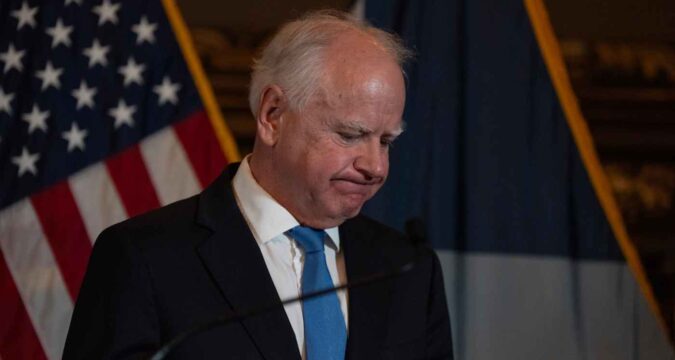
Yes, Mr. President, we know there was massive welfare-related fraud in Minnesota. We’ve written about it more than once and the beleagured governor up there rightly has said he now will not stand for reelection and is struggling to survive his current term, given the billions of dollars that have flowed to all the wrong places. Yes, there’s an argument that the state of Minnesota was such a poor steward of federal funds that some direct action by the feds was justified. In the state of Minnesota.
But that has nothing to do with Illinois.
Nonetheless, the Land of Lincoln (along with Minnesota, New York, California and Colorado) reportedly will collectively be cut off by the administration of President Donald Trump from some $10 billion in federal funding for welfare and social programs such as the Child Care and Development Fund (CCDF), the Temporary Assistance for Needy Families (TANF) program and the Social Services Block Grant program. The New York Post was the first to report the plan, citing “officials.”
The sins of these states? Ostensibly it will be that the funds were either inadequately protected or that they were being provided to persons in this country without authorization. But as any sentient being whose reading list goes beyond Truth Social well knows, the actual common denominator here is that all five of these states are controlled by Democrats.
Assuming this is something beyond Trumpian posturing, and that’s unclear, any such decision would not only be churlish and cruel but poorly targeted. Welfare and other kinds of fraud involving government funds reportedly have been widespread in Ohio and Georgia, to name but two other examples. As we have said several times, fraudsters come in many guises, weak protections know no political flavor and the need for governments to fight back against criminals should not be seen through a partisan lens.
Most of us recall from our youths a time when we were blamed for the actions of others. It led us not to trust those in positions of authority or who controlled the resources we needed for our lives. The perception of fairness and the application of hard evidence to any punishment is a vital part of the compact between the governing and the governed.
This especially applies when the most obvious victims of such a drastic action could end up being genuinely needy kids.
Take off your partisan blinkers, Mr. President, do the work and act responsibly.
Submit a letter, of no more than 400 words, to the editor here or email letters@chicagotribune.com.
Andy Shaw: Nonprofit hospitals and colleges in Illinois should not be exempt from property taxes
An annual January ritual, as Illinois lawmakers gather in Springfield to begin a new legislative session, is the search for another basket of politically safe but invariably business- and citizen-unfriendly tax and fee increases to support their bloated government bureaucracies.
That sad scenario is also a perfect opportunity to refloat an idea that needs to emerge in the rarefied Capitol air.
Taxes in Illinois on income, sales, real estate and everything else are higher than 47 of the 50 states, with exorbitant property taxes easily the most onerous.
But what rarely makes it into the script is a serious conversation about who doesn’t pay property taxes and why that sacred cow should finally be led into the policy barn.
Illinois grants broad property tax exemptions to nonprofit universities and medical institutions. In theory, that makes sense. These entities serve the public good. But times have changed, and many have become giant profit centers and some of the wealthiest and most powerful landowners in the state.
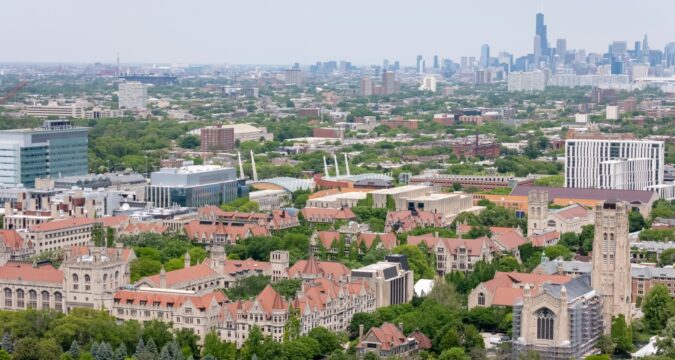
Northwestern University, the University of Chicago, Rush, Northwestern Medicine and others sit on billions of dollars in tax-exempt real estate while surrounding neighborhoods and local governments strain to fund basic services and the rest of us face ever bigger tax bills.
It’s time for the Illinois legislature to take a hard, grown-up look at whether blanket property tax exemptions for these mega-institutions still make sense or whether they should pay a fair share of property taxes, reducing the excessive load on every other taxpaying business and resident.
To be clear, this is not an attack on higher education or health care. These institutions do extraordinary work. They educate students, conduct world-class research, employ tens of thousands of people and save lives.
But they are also sophisticated corporate enterprises with massive endowments, expansive real estate portfolios and executive compensation packages that would make some Fortune 500 CEO’s blush.
Northwestern’s endowment hovers around $14 billion. The University of Chicago, roughly $11 billion. These universities aggressively acquire property — often removing it from local tax rolls forever — while expanding their hospitals, research parks, hotels and commercial ventures that look, feel and operate very much like for-profit businesses.
Meanwhile, who pays for the police and fire protection that safeguard those campuses? Who maintains the streets, sewers and transit lines that serve their students, patients and employees? Who picks up the tab for the public schools educating the children of their workforce?
You already know the answer: everyone else.
Homeowners in Evanston, Hyde Park, Streeterville and the Near West Side pay higher property taxes because enormous swaths of prime real estate are exempt. Small businesses pick up more of the load. Local governments either raise taxes, cut services or — more often — do both.
This is not just a Chicago problem. Across Illinois, hospitals and universities are often the largest landowners in their communities, yet contribute little or nothing directly to the property tax base. The burden shifts downward, hitting working families and retirees on fixed incomes the hardest.
Some defenders of the status quo argue that nonprofits already “pay back” communities through charity care, scholarships and economic activity. That argument deserves scrutiny.
First, charity care standards are often opaque and inconsistent. Second, scholarships and research benefits flow disproportionately to students and patients who are not local taxpayers. Third, economic activity is not a substitute for predictable revenue that local governments can budget against.
Other cities and states have figured this out. Boston, for example, uses “payments in lieu of taxes,” or PILOTs, to require large nonprofits to contribute to municipal services. They’re not perfect, but they acknowledge a basic reality: Services cost money, and everyone benefiting from them should help pay the bill.
Illinois lawmakers should consider a similar approach — one scaled to institutional wealth and footprint. No one is suggesting taxing classrooms or charity wards like luxury condos. But research labs, administrative towers, medical office buildings, parking garages and revenue-generating facilities are fair game for a serious reassessment.
The legislature could set thresholds based on endowment size, operating revenue or property holdings. Smaller nonprofits could remain exempt. The biggest players — those with billion-dollar balance sheets — could contribute proportionally.
And let’s dispense with the idea that this would somehow drive these institutions out of Illinois. Northwestern isn’t packing up in Evanston. The University of Chicago isn’t relocating from Hyde Park to Indiana. These institutions are rooted here because Illinois and Chicago are integral to their brand, talent pipeline and mission.
What this debate really comes down to is fairness. Illinois cannot continue to squeeze homeowners and small businesses while shielding some of the wealthiest institutions in the state from contributing to the communities they dominate.
It’s driving other struggling businesses and residents out of Illinois and discouraging outsiders from relocating here.
Springfield loves to talk about “shared sacrifice.” Here’s a chance to mean it.
The question for lawmakers is simple: Will they keep protecting a tax structure that no longer reflects economic reality or will they finally ask powerful nonprofits to help carry the load in a state that desperately needs a reform such as this?
If Illinois is serious about stabilizing local finances and restoring trust in government, this conversation can’t be postponed another decade. The exemptions may be traditional. They are no longer sustainable.
Andy Shaw is a retired Chicago journalist and good government watchdog.
Submit a letter, of no more than 400 words, to the editor here or email letters@chicagotribune.com.
Cristina Guevara: Panama’s warning for a post-Maduro Venezuela
The facts, familiar though they may be, deserve repeating: On Saturday, Venezuelan President Nicolás Maduro and his wife, Cilia Flores, were captured and removed from the country following a large-scale U.S. military operation involving elite forces and months of planning.
They appeared Monday in a New York court, facing charges including narcoterrorism, drug trafficking and weapons offenses, and both pleaded not guilty. Maduro declared he was still the legitimate president of Venezuela and called himself a “prisoner of war.” The hearing ended amid tense exchanges in the courtroom and protests outside, with the next court date set for March 17.
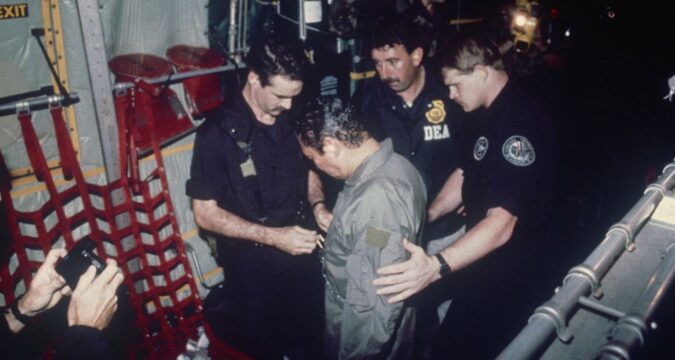
Jan. 3 resonated beyond Venezuela. Thirty-six years earlier, on the same date, Manuel Noriega — Panama’s dictator — was taken into U.S. custody after surrendering at the Vatican’s diplomatic mission, formally ending the country’s military regime.
The coincidence has invited an avalanche of historical analogies. Two authoritarian leaders accused in U.S. courts of narcotics trafficking and organized crime. Two governments subjected to prolonged diplomatic isolation and sanctions. Two interventions framed by Washington as necessary acts in defense of democracy, human rights and the rule of law. Even U.S. lawmakers have leaned into the symbolism, circulating images that place Noriega and Maduro side by side, reinforcing the idea that history is repeating itself — down to the calendar date.
Yet this focus on the moment of capture risks obscuring the more consequential lesson. The meaningful parallel between Panama in 1990 and Venezuela in 2026 is not the removal of an authoritarian leader. It is the governance vacuum that follows externally forced political rupture — and the profound difficulty of filling it.
To be clear, Venezuela is better off without Maduro in power. The removal of an authoritarian leader accused of grave crimes is a necessary condition for democratic recovery — but it is not a sufficient one. The issue is not whether his removal was justified; the issue is what follows.
Noriega’s capture came at the end of Operation Just Cause, launched by the United States on Dec. 20, 1989. Nearly 27,000 U.S. troops crossed into Panama in one of the largest military operations since Vietnam. Fighter jets bombed strategic targets in Panama City and Colón, while ground forces dismantled the Panamanian Defense Forces.
The invasion was justified by the George H. W. Bush administration on multiple grounds: protecting U.S. citizens, combating drug trafficking, defending democracy and human rights, and safeguarding the neutrality of the Panama Canal. Noriega himself embodied the contradictions of U.S. policy in the region. A longtime CIA collaborator during the Cold War, he simultaneously cultivated deep ties with narcotrafficking networks, including Colombia’s Medellín cartel. Testimony during his later trial in Miami revealed that he received payments for facilitating cocaine shipments and laundering drug money through Panama’s financial system.
When Noriega surrendered Jan. 3, 1990, his capture was widely interpreted as the definitive end of Panama’s authoritarian era. Symbolically, it was. Politically, it was not.
Democratic reconstruction was slow, and even today, Panama faces clientelism, corruption, low trust in institutions and fragile rule of law. The episode illustrates that externally imposed regime collapse cannot resolve the governance deficits left by authoritarianism.
Maduro’s capture follows a different operational script but raises similar structural questions. Operation Absolute Resolve was the result of months of intelligence gathering and interagency coordination. It involved the Drug Enforcement Administration, elite military units and more than 150 aircraft operating in precise synchronization. U.S. officials emphasized the operation’s “discreet” and “surgical” nature, contrasting it with large-scale invasions of the past.
It also followed years of legal escalation. Since 2020, the U.S. has accused Maduro and senior figures in his regime of narcotrafficking, money laundering and narcoterrorism, alleging collaboration with a Colombian guerilla group to traffic cocaine into the United States. The U.S. government placed multimillion-dollar bounties on Maduro and other officials, framing the Venezuelan state as a criminal enterprise. His arrest, U.S. authorities argue, represents the culmination of a long-standing law enforcement effort rather than a conventional act of war.
But here, too, the emphasis on operational success risks overshadowing the political aftermath. Venezuela’s crisis is not reducible to one man, however central his role may have been. Years of authoritarian consolidation have hollowed out state institutions, politicized the military, weakened the judiciary and fragmented political opposition. The boundaries between political authority, armed actors and criminal networks have become increasingly blurred. State capacity has eroded alongside economic collapse, mass migration and social disintegration.
In this context, the removal of Maduro creates not resolution but uncertainty. Who governs in the immediate aftermath? With what legitimacy? Under what institutional framework? And to what extent will Venezuelans themselves shape the transition, rather than external actors acting in their name?
The key parallel between Panama in 1990 and Venezuela in 2026 is not just the removal of an authoritarian leader, but the governance vacuum that follows externally imposed regime change. When power is taken from the outside, domestic institutions struggle to assert authority, legitimacy is contested and responsibility diffuses just when clarity is needed. Panama’s post-Noriega experience shows that while intervention toppled the military, democratic reconstruction was slow and uneven; external forces cannot create institutional coherence or political trust. Early signs in Venezuela suggest similar risks, with U.S. statements hinting at temporary stewardship.
The removal of Maduro was a necessary and long awaited break with authoritarian rule, but democratic recovery depends on what follows: the reconstruction of institutions, legitimacy and political inclusion. Whether this moment becomes a turning point or a prolonged limbo will be decided by how the governance vacuum is filled.
Cristina Guevara is a Latin America policy analyst and writer. She previously served as a policy and legislative adviser in Panama’s National Assembly.
Submit a letter, of no more than 400 words, to the editor here or email letters@chicagotribune.com.
https://www.chicagotribune.com/2026/01/07/opinion-venezuela-us-nicolas-maduro-manuel-noriega/
Letters: Community violence intervention programs are part of the solution to crime in Chicago
The Dec. 29 Tribune included a lengthy article (“Chicago violence down despite major incidents”) attributing the dramatic decline in violent crime in 2025 to the work of local law enforcement agencies. While law enforcement plays a central role in reducing crime, the article overlooks the crucial role of community violence intervention (CVI) organizations.
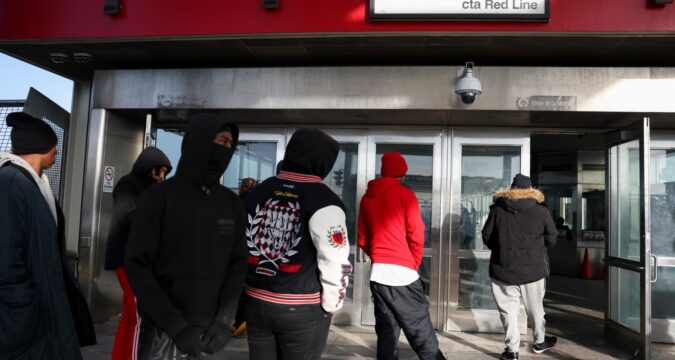
Today, thanks to the support of the philanthropic and business communities and government at the city, county and state levels, Chicago has a network of more than two dozen CVI organizations active in nearly half of Chicago’s 77 neighborhoods. In South, Southwest and West Side communities that account for a disproportionate share of gun violence, CVI organizations have served thousands of high-risk individuals with life coaching, trauma treatment, education and job training. Studies from Northwestern University show these programs are working.
It is also worth noting that, in addition to crime dropping dramatically, arrests are also way down compared to the pre-pandemic era, which affirms that we are not solely arresting and incarcerating our way to greater safety. The only logical conclusion is that thousands of individuals who were caught up in the street life have begun to change their behavior for the better — and that clearly points to CVI.
The article also says we are on track to our lowest crime levels in a decade. In fact, the current homicide total for 2025 is the lowest in 60 years.
As Chicago reflects on positive crime trends and looks ahead to an even better year, let’s salute the contributions of everyone involved, including staff, outreach workers and participants in CVI programs. They are a big part of the solution.
— Peter Cunningham, senior adviser, Chicago CRED, Chicago
Mayor’s abandonment
Another stunning act of political theater at City Hall.
Mayor Brandon Johnson, the self-anointed “collaborator in chief,” refused to sign the 2026 budget that took effect Jan. 1. By neither signing nor vetoing the City Council’s $16.6 billion compromise that was created and approved by aldermen who did collaborate, Johnson has abandoned his elected leadership role and his responsibility for the plan he labels “immoral” — without a sound moral or ethical justification for his judgmental characterization.
For months, Johnson pushed for a corporate head tax — arguably a job-killing measure that would punish employers and stifle growth. When the City Council, representing every neighborhood and every walk of life, rejected that tax in favor of a balanced and compromised approach, the “collaborator” withdrew from action. The mayor’s refusal to act and sign the budget isn’t principle — it’s a retreat. A retreat from leading. A retreat from governing. A retreat from accountability. And a retreat from listening to the diverse voices of Chicago — including voices of those “who look like me and my family” — as he likes to say — as well as those who don’t look like him and his family.
Following the presentation of the collaboratively proposed 2026 budget, rather than leading through action, our mayor sat back, preached and pushed rhetoric that deepens division and leaves Chicago drifting into 2026 under a budget without a mayor’s leadership and stamp of accountability.
Johnson has chosen his own ideological purity over practical leadership — proving once again that his version of “collaboration” applies only to those who agree with him.
The mayor’s style of governance isn’t collaboration. It’s abdication. All Chicago residents deserve better.
— Joe Bonaccorsi, Chicago
Chicago schools’ levy
Never missing a chance to burden Chicago taxpayers, the Chicago Board of Education voted to further increase its property tax levy. Instead of doing the hard work of seeking out difficult budget cuts, the board took the easy route and simply voted to increase its levy to the maximum allowed. There are at least 47 schools in Chicago Public Schools with enrollment at less than 30% capacity.
No one enjoys closing schools, and such measures should be considered only in dire circumstances. But given the budget problems facing CPS and the city, could anyone not consider our financial picture dire? It’s high time we address our spending problem and stop increasing property taxes.
— Dean Gerber, Chicago
Jackson, Pritzker deal
The Dec. 21 report “Political ties come to light” about U.S. Rep. Jonathan Jackson is shocking but not surprising.
For decades, the Jacksons have presented themselves as civil rights leaders and advocates for racial equity and justice. However, time and again, they have shown themselves to be opportunistic, publicity-seeking, egotistical, and morally and ethically corrupt.
Jonathan Jackson’s endorsement of JB Pritzker for governor, after receiving a lucrative consulting contract, has not resulted in any substantive, verifiable legislative outcomes for African American residents, in the areas of economic opportunity, education, criminal justice and health care.
Indeed, Illinois ranks last in matters of racial equity and justice, according to a WalletHub study.
— Audrey L. Davis, Niles
Clemency from governor
M.K. Pritzker, Illinois’ first lady, recently delivered a drawing I made to Pope Leo XIV in Rome, which was a great honor for me. Half of my drawing was in black and white, showing a woman walking away from barbed wire and a prison tower. The other half of the drawing was in bright colors, showing her walking toward flowers and a butterfly.
The pope, who has made the rights of prisoners a priority, told the Pritzkers that when he looked at my drawing, he saw a woman walking toward God.
I am serving a 33-year sentence in the Illinois Department of Corrections. I am 38 years old.
Last August, M.K. Pritzker sent word to women in prison in Illinois that we could submit artwork about how we relate to nature. She showed many pieces of the artwork at the Illinois State Fair. This was the second call for art submissions to those of us incarcerated over the past year. The other show was sponsored by the Women’s Justice Institute and focused on art created by incarcerated survivors of domestic violence and human trafficking.
I had the privilege of going around to the women who were submitting art to pick up their submissions, and I talked with many of them. I did not know most of the women, although we are housed in the same prison. Many told me that although they do not feel ready to talk about the abuse they suffered, they experienced a breakthrough in healing while creating their artwork. In many cases, there was a direct link between the violence they experienced and the crimes they were convicted of — in some cases, they acted in self-defense, and, in other cases, they were coerced into committing crimes by their abusers.
The first lady has said that she and Gov. JB Pritzker support programs and policies for incarcerated people. Many of the artists who submitted work to the first lady and to the justice institute have petitions for executive clemency pending before the governor.
It is my prayer in 2026 that the governor will show mercy in these cases and grant clemency, as many Illinois governors before him have done in similar cases.
— Yesenia Diaz, Logan Correctional Center
Submit a letter, of no more than 400 words, to the editor here or email letters@chicagotribune.com.

Soaring Silver Prices Force Solar Makers To Rethink Materials
Soaring Silver Prices Force Solar Makers To Rethink Materials
Longi Green Energy Technology Co. is preparing a major shift in how it makes solar cells, moving away from heavy reliance on silver and toward lower-cost base metals as the industry grapples with rising material prices and shrinking margins, according to Bloomberg.
The company said it will begin large-scale production using base metals in the second quarter, a step it expects will “further lower the costs of solar modules,” according to a regulatory filing on Monday.
The decision comes as solar manufacturers — the largest industrial users of silver — face intense competition and oversupply, making the recent surge in silver prices especially painful.
Investor demand tied to geopolitical uncertainty and US interest-rate cuts has driven prices sharply higher, turning silver into the most expensive component of solar cell production.
Bloomberg notes that silver prices almost tripled last year and climbed above $84 an ounce in late May. At October’s roughly $50-per-ounce level, the metal made up more than 17% of the cost of solar modules, compared with just 3% in 2023, data from BloombergNEF show.
Longi is not alone.
Jinko Solar Co. expects to roll out base-metal panels at scale this year, while Shanghai Aiko Solar Energy Co. has already launched commercial production of silver-free cells with 6.5 gigawatts of initial capacity.
Longi’s use of back-contact solar cells gives it more flexibility to replace silver than producers using the dominant TOPCon technology, though the company has said the transition still brings challenges.
BloombergNEF notes that copper and other alternatives raise assembly costs and create reliability concerns, particularly for TOPCon cells, whose manufacturing process makes substitution difficult.
Even with those hurdles, demand for silver from the solar industry is forecast to drop 7% next year, even as global solar installations climb about 15%, according to BNEF.
Tyler Durden
Wed, 01/07/2026 – 05:45
https://www.zerohedge.com/markets/soaring-silver-prices-force-solar-makers-rethink-materials

Best krill oil supplements for balanced nutrition
Which krill oil supplements are best?
There is a lot of buzz about omega-3 today and numerous options for consumers to sort through. Krill oil is one of the best sources of omega-3 fatty acids that offer health benefits for the heart, joints, and immune system.
Krill are tiny crustaceans resembling shrimp that live in the open ocean. How krill are harvested and encapsulated is essential for finding a high-quality supplement to help support your diet with omega-3 goodness. For a healthy daily dose without an aftertaste, the top choice is Dr. Mercola Antarctic Krill Oil.
What to know before you buy a krill oil supplement
Harvesting location
There are many places where krill grow and are harvested, but the best source is Antarctica. The Antarctic Ocean waters have lower levels of heavy metals and toxins.
You might want to consider krill oil supplements certified by the Marine Stewardship Council. The MSC certification indicates that krill have been sustainably harvested, and the manufacturer is not causing overfishing.
Manufacturing method
While most krill oil supplements are manufactured without a lot of filler ingredients, it is important to review the ingredient list for any substances that may be unnecessary or even harmful to humans.
You will often see eicosapentaenoic acid and docosahexaenoic acid listed, two common forms of omega-3 fatty acids found in krill oil. Astaxanthin, a powerful antioxidant, may be listed for some products too. Steer clear of products with color dyes and other fillers.
Dosage
The standard per serving dose of krill oil is 1,000 milligrams. Some products come in 300-, 500-, and 750-milligram packaging. Be sure to review the recommended serving, as some krill oil supplements require multiple pills to meet the 1,000-milligram threshold.
What to look for in a quality krill oil supplement
No aftertaste
In general, krill and fish oil supplements are known for having a fishy aftertaste commonly called “fish burps.” However, not all krill oil supplements cause fish burps. Many claim that their product does not have an aftertaste. Your best feedback is from other consumers, so look at product reviews for real-world experiences.
Purification
High-quality krill oil supplements will undergo a purification process to remove heavy metals and toxins that may have entered the krill from the ocean waters. Each manufacturer runs its own evaluations of purity. In addition, some manufacturers invest in third-party testing to verify the purity of their krill oil. Check the product label or company website for further information about purity testing.
Type of pill
Krill oils come in all shapes and sizes of pills. Many manufacturers are moving toward soft gels, which are easier to swallow. Some product labels show the type of pill inside, or you can look online. Make sure you know if you have to take one or multiple pills per day, as this may be a deciding factor if you have trouble swallowing large pills.
How much you can expect to spend on a krill oil supplement
Krill oil supplements typically cost between $15-$30 per bottle. The cost per serving is your most important calculation, with most supplement prices at $0.30-$0.50 per serving, depending on the amount of krill oil in each capsule.
Krill oil supplement FAQ
Are there side effects with krill oil supplements?
A. There can be digestive side effects, such as heartburn, bad breath, upset stomach, and the infamous fish burps. Nevertheless, higher-quality krill limits these side effects. You may also want to consider taking the supplement with food.
Are there any preexisting conditions that would prohibit taking krill oil?
A. Anyone with a shellfish allergy, taking blood thinners, or pregnant women should not take krill oil. As with any supplement, consult your health care professional before consuming.
Do krill oil supplements expire?
A. Yes, like most supplements, the ingredients will eventually lose their efficacy over time. Always check the expiration date on your krill oil supplement and never take the capsules if the expiration date has passed.
What’s the best krill oil supplement to buy?
Top krill oil supplement
Dr. Mercola Antarctic Krill Oil
What you need to know: Sustainably harvested with no aftertaste, this krill oil supplement provides a high-quality dose.
What you’ll love: Recommended for heart, joint, and immune function, some users claim their cholesterol and focus were helped, too. The supplement is certified by the MSC and comes with a 90-day money-back guarantee.
What you should consider: These capsules are higher priced than other similar products and require two soft gels per serving.
Top krill oil supplement for the money
MegaRed Superior Omega-3 Krill Oil
What you need to know: This supplement is affordable, and the daily serving is only one pill.
What you’ll love: With PureTech technology, the manufacturer claims that pills have extra purity by removing salts and other impurities. Quickly absorbed by the body, there are no extra sugars, gluten, or preservatives. The product is sustainably sourced with MSC certification.
What you should consider: The amount of krill oil is less per serving than many competing brands.
Worth checking out
BulkSupplements Pure Krill Oil Softgels
What you need to know: In addition to krill oil, this product offers a generous dose of the omega-3 fatty acids EPA and DHA.
What you’ll love: Each soft gel has 1,000 milligrams of krill oil. Affordably priced, this supplement does not cause fishy burps. The product is packaged in a resealable pouch.
What you should consider: There have been reports of soft gels leaking in the package.
Prices listed reflect time and date of publication and are subject to change.
Check out our Daily Deals for the best products at the best prices and sign up here to receive the BestReviews weekly newsletter full of shopping inspo and sales.
BestReviews spends thousands of hours researching, analyzing and testing products to recommend the best picks for most consumers. BestReviews and its newspaper partners may earn a commission if you purchase a product through one of our links.
Distributed by Tribune Content Agency, LLC.
https://www.chicagotribune.com/2026/01/07/best-krill-oil-supplements-for-balanced-nutrition/