Category: News

Gobierno de Venezuela anuncia que liberará a un número importante de venezolanos y extranjeros
Associated Press
CARACAS (AP) — El gobierno de Venezuela anunció el jueves que liberará a un “número importante” de venezolanos y extranjeros encarcelados como un gesto para consolidar la paz y la convivencia, cinco días después de la intervención militar estadounidense en ese país sudamericano y la captura del presidente Nicolás Maduro.
“Estos procesos de excarcelación están ocurriendo desde este mismo momento”, declaró a la prensa Jorge Rodríguez, presidente de la Asamblea Nacional y hermano de la presidenta encargada Delcy Rodríguez. Señaló que la decisión responde a un deseo de consolidar “la convivencia pacífica entre todas y todos, sin distingo de tinte político, religioso, económico, social”.
Rodríguez, cercano colaborador del depuesto mandatario venezolano, no especificó cuántas personas serían liberadas.
El Foro Penal, una de las organizaciones civiles más prestigiosas del país sudamericano, dijo que hasta el 29 de diciembre en Venezuela había 863 personas detenidas “por razones políticas”. Las autoridades niegan que existan “presos políticos” y acusan a los detenidos de planes para conspirar para desestabilizar al gobierno.
Después de que el Consejo Nacional Electoral (CNE), un organismo colegiado de mayoría oficialista, declaró a Nicolás Maduro ganador de los comicios presidenciales de 2024 —en medio del cuestionamiento de la oposición y la comunidad internacional— sectores de oposición alegaron un fraude, lo que derivó en protestas callejeras, represión, arrestos y denuncias de violaciones de derechos humanos. Al menos 2.000 personas fueron detenidas entonces, según cifras oficiales.
El gobierno estadounidense y la oposición del país han exigido la liberación de figuras de la oposición y críticos del gobierno.
Toluca buscará emular el tricampeonato de América en un atípico torneo por el Mundial
Por CARLOS RODRÍGUEZ
CIUDAD DE MÉXICO (AP) — Toluca procurará emular al América como los únicos equipos en conseguir un tricampeonato en torneos cortos en México en el torneo Clausura, que arrancará el fin de semana con condiciones atípicas debido a la Copa Mundial de 2026.
Los Diablos Rojos, dirigidos por el argentino Antonio Mohamed, comienzan la defensa de su corona el próximo sábado con una visita a Monterrey.
Toluca venció a Tigres en una dramática final en diciembre pasado para lograr el bicampeonato.
“Tenemos toda la ilusión, tenemos el sueño de poder hacerlo (el tricampeonato) y lo vamos a intentar con todo lo que tenemos”, dijo Mohamed. “Veremos al final si nos alcanza, pero de que lo vamos a intentar, lo vamos a intentar”.
Para lograr la misión el Toluca agregó a su plantilla a tres jugadores. Uno de ellos es el volante Sebastián Córdova, quien fue medallista de bronce en Tokio 2020 y arriba procedente de Tigres donde tuvo poco protagonismo el último torneo.
Estamos contentos con el mercado que hicimos, y ahora, a seguir compitiendo en este torneo para poder estar en ese escenario final, que es algo que nos proponemos,” indicó Mohamed.
¿Qué cambios habrá este torneo?
Para acortar la duración del torneo de cara al Mundial, que inicia el 11 de junio en el estadio Azteca, los dirigentes del fútbol local aprobaron la eliminación del repechaje conocido como Play In, que se disputó desde el torneo Apertura 2023 hasta el Apertura 2025.
Además, los equipos accedieron ceder a la selección mexicana anticipadamente a los jugadores de la liga local por lo que no podrán jugar en la liguilla por el título. Los jugadores que sean elegidos por Aguirre deberán abandonar sus clubes la última semana de abril para tomar una semana de vacaciones y reportarse el 4 de mayo a la concentración.
Para compensar esas posibles ausencias, en la liguilla los equipos podrán jugar hasta con nueve jugadores extranjeros en el campo y sólo dos nacionales. Esa medida aplica por igual y no depende del número de seleccionados.
Además de eso, Chivas y Monterrey se verán afectados porque tendrán que ceder sus estadios a la FIFA para el Mundial y si clasifican a liguilla tendrán que jugar en patios ajenos.
¿Quién es el más afectado?
Por su tradición de jugar sólo con jugadores mexicanos, Chivas será el cuadro que más resentirá jugar la liguilla sin seleccionados porque no puede reforzar su plantilla con foráneos como hará el resto.
El equipo, cuyo técnico es el argentino Gabriel Milito, viene de un torneo en el que fue sexto sitio de la clasificación y accedió a cuartos de final.
Aunque la nómina para el Mundial no se conoce, jugadores como el portero Raúl Rangel, el volante Luis Romo y el delantero Roberto Alvarado han sido citados recurrentemente por el entrenador nacional Aguirre. A ellos podría sumarse el delantero Armando González, campeón goleador del torneo anterior, que ya recibió su primer llamado al Tri.
Sin esos cuatro jugadores clave, la misión de Chivas por coronarse por primera vez desde el torneo Clausura 2017 se haría más difícil.
¿Quiénes podrían retar a Toluca?
La amenaza más seria para evitar el tricampeonato de los Diablos Rojos parece ser el Cruz Azul, que el torneo pasado cayó en semifinales, y reforzó su plantilla con las llegadas del argentino Nicolás Palavecino y del colombiano Miguel Borja, ambos ex de River Plate.
La Máquina, dirigida por el argentino Nicolás Larcamón, busca su primer campeonato desde el Clausura 2021.
América, que perdió la final del Clausura del año pasado con Toluca, volverá a pelear en liguilla, pero sus aspiraciones dependerán en gran medida de que varias de sus figuras recuperen su máxima forma.
Monterrey y Tigres son los otros dos equipos que tienen nóminas para meterlos en la discusión por un título.
___
Deportes AP: https://apnews.com/hub/deportes

Senate Advances Resolution Preventing Trump From Further Military Force In Venezuela Without Approval
Senate Advances Resolution Preventing Trump From Further Military Force In Venezuela Without Approval
The Senate issued a harsh rebuke of President Trump’s actions in Venezuela, voting 52-47 on a bipartisan measure to block him from using military force “within or against Venezuela” unless he obtains Congressional approval first.
The war powers measure came after an unsuccessful attempt by Republican leaders to kill the resolution and preserve Trump’s authority amid the president’s threats of a “second wave” of attacks. Trump has said the US would “run” the country on a temporary basis following last week’s military operation to capture and extradite leader Nicolás Maduro.
The legislation – which was introduced by Sen. Tim Kaine (D-VA), was cosponsored by Sens. Rand Paul (R-KY), Adam Schiff (R-CA) and Senate Minority Leader Chuck Schumer (D-NY).
Five Republicans joined all 47 Democrats in voting ‘yes’ on the motion to advance the resolution to the Senate floor; Paul, Susan Collins, Lisa Murkowski, Todd Young and Josh Hawley.
“Instead of responding to Americans’ concerns about the affordability crisis, President Trump started a war with Venezuela that is profoundly disrespectful to U.S. troops, deeply unpopular, suspiciously secretive and likely corrupt. How is that ‘America First?‘” said Kaine. “Trump’s war is also clearly illegal because this military action was ordered without the congressional authorization the Constitution requires.”
The procedural motion means that there will be a full Senate vote on the measure next week, which will require only a simple majority and is expected to pass. It will then require House approval and Trump’s signature, making it unlikely to become law as Trump would undoubtedly veto – but it still sends a symbolic message (and possible groundwork to impeach?) that could impact Trump’s foreign policy going forward.
“To my Senate colleagues: enough is enough,” said Kaine. “You were sent here to have courage and to stand up for your constituents. That means no war without a debate and vote in Congress.”
According to Paul, some members of Congress want to “shift the burden of war to the president” instead of taking responsibility.
“But make no mistake, bombing another nation’s capital and removing their leader is an act of war, plain and simple,” said Paul. “No provision in the Constitution provides such power to the presidency.”
The rebuke comes as Trump has suggested he’s open to boots on the ground in Venezuela, while also threatening action against Iran, Greenland and Colombia on Sunday – adding that Cuba “is ready to fall.”
Sen. Collins said in response to the measure: “I believe invoking the War Powers Act at this moment is necessary, given the President’s comments about the possibility of ‘boots on the ground’ and a sustained engagement ‘running’ Venezuela, with which I do not agree,” while Murkowski said Congress must “affirm our role under Article 1.”
In advance of the vote, Sen. Majority Whip John Barrasso (R-WY) urged Senators to reject the war powers measure, calling Maduro’s capture a law enforcement operation.
“It does not make America stronger. It makes America weaker and less safe,” he said in a written statement. “It would weaken the President’s legitimate, constitutional authority. This body, the United States Senate, is being asked whether the President of the United States has the authority to arrest indicted criminals. Of course he does.”
Tyler Durden
Thu, 01/08/2026 – 12:25

Isaiah Gipson knows how to get Kaneland fired up in key moment coming off bench. ‘Bring the energy.’
Give this kid the hot sauce.
Kaneland senior Isaiah Gipson knows better than to play with fire, but in his usual role coming off the bench, the 6-foot guard knows the importance of bringing the heat for his team.
“I bring the energy, push the ball and try to get it to my shooters or get it inside,” Gipson said. “Really, I just want to attack — make it hard for their defense to stay in front of us.
“I also want to take the pressure off Marshawn (Cocroft). I can do that by driving to the rim and trying to hit open shots when I have them.”
A third-year varsity player, Gipson filled the bill perfectly Wednesday night in a key sequence of the Knights’ 74-54 nonconference blowout of visiting Winnebago in Maple Park.
Cocroft, a senior point guard and Grand Valley State recruit, scored a game-high 28 points and senior forward Jeffrey Hassan added 13 points for the Knights (14-0).
Kaneland’s Isaiah Gipson (2) works for an opening off the dribble against Winnebago during a nonconference game in Maple Park on Wednesday, Jan. 7, 2026. (Mark Black / The Beacon-News)
Senior guard Myles Smith led Winnebago (8-9) with 16 points. He kept the outcome in doubt by sinking a two-point jumper with 2:42 left in the first quarter to cut the deficit to 12-10.
Gipson then scored all seven of his points on three straight possessions by making one free throw and following with back-to-back layups on two of those drives to the basket.
“He can get to the rim whenever he wants,” Hassan said in admiration. “He attacks it well and he’s good in transition, too. A really hard worker, he’s always trying to get in the gym.
“He helps us a lot with his scoring. He’s good in transition, too.”
Kaneland’s Isaiah Gipson (2) takes a shot over Winnebago’s Bryant Beck (24) during a nonconference game in Maple Park on Wednesday, Jan. 7, 2026. (Mark Black / The Beacon-News)
Gipson’s burst keyed a 15-0 run to close the first quarter with a 27-10 lead for the home team.
“It’s pretty important what he provides,” Kaneland coach Ernie Colombe said of Gipson. “The kid comes in, he’s very athletic. He gives us a boost off the bench, which a lot of team don’t have, so it’s nice when you sub and bring in a guy who can score.
“Isaiah is really good when he drives. That’s kind of his role right now,. He comes in and get’s a lot of minutes. He’s playing starter’s minutes, basically. He provides us a spark.”
Gipson wasn’t alone.
Kaneland’s Jake Buckley (55) maneuvers for a shot under the basket against Winnebago during a nonconference game in Maple Park on Wednesday, Jan. 7, 2026. (Mark Black / The Beacon-News)
Jake Buckley, a 6-4, 265-pound post, came off the bench and scored all eight of his points in the game on four straight possessions as the Knights put the game on ice at 42-20 at halftime.
Gipson finished with eight rebounds, two assists and a blocked shot. Buckley, a North Central College football recruit, closed with seven rebounds and one block.
“He’s been working hard,” Colombe said of Buckley. “Obviously, he’s a football guy. That’s his sport, but he puts a ton of time in in basketball and has really improved.
“If he gets the ball down inside in the box, like he did (Wednesday night), at 265 pounds, he’s tough. He plays with a lot of energy and is always cheering for his teammates.”
Buckley pointed out that he lifts weights every morning, following a program provided by NCC.
Kaneland’s Isaiah Gipson (2) moves ball up the court against the Winnebago during a nonconference game in Maple Park on Wednesday, Jan. 7, 2026. (Mark Black / The Beacon-News)
“Basketball is a way for me to get up and down and stay in shape,” he said. “Just a way for me to stay active. I’ve wanted to play basketball since I was 5. I knew football was going to be my track, but I never wanted to quit basketball for a second. I knew I’d stick to it through high school.”
Gipson, who wants to play basketball in college, has spoken with both junior college and NCAA Division III coaches.
Since the Knights’ supersectional run last season, he has focused on his game as well.
“I knew I had to make better decisions with the ball, work on my jump shot and also see the floor better,” Gipson said. “I was always a good drive but I had other parts I needed to fix.
“I’m just trying to get my name out there.”
https://www.chicagotribune.com/2026/01/08/isaiah-gipson-kaneland-winnebago-ihsa-boys-basketball/

Down to Business: Middle Eastern ‘sweets shop’ finds its niche in Naperville
Business: Juice Time
Address: 1624 Route 59, Naperville
Phone/website: 331-401-5145; www.juicetimenaperville.com
Manager: Amal Ali, 53, of Aurora
Years in business: 2 in March
What does your business do? “We do sweets. Fresh juice and fruit, 100% pure. Real good for you. We have milkshakes, ice cream,” Ali said.
When are you open? “From 12 p.m. to 12 a.m. every day.”
Is this a franchise? “Yes. They have 500 locations around the world. It’s based in the Middle East. … My brother, Waleed Alshammari, owns this store.”
Why did you open this store? “It’s something different. We give experience for other people to have different tastes. A lot of our materials come from the Middle East. The recipes. Even the syrup is from over there too.”
Is the quality better? “When we opened a shipment was late. We tried two companies here. The taste and colors were different. You can tell. They have nice colors and strong taste (from the Middle East).”
Hathaifah Marie, 20, of Montgomery, prepares an Oreo milkshake at Juice Time, a Naperville sweets shop with Middle Eastern roots on Route 59. (Steve Metsch/Naperville Sun)
What are some of the more popular items? “The Dubai-style menu. Dubai chocolate. Dubai milkshake. The Dubai chocolate strawberry is our top seller. People love it. … The material we use. Belgian chocolate. Very expensive. The pistachio is from over there. … We use vanilla ice cream, but the topping sauces are from over there. Mango. Cotton candy, the kids like it.”
What were you doing before this? “I managed shipping for a hearing aid company. Then my brother had this idea. I was not surprised. I like it. Before this one opened, they have a Juice Time (on Harlem Avenue) in Bridgeview. A different owner. Before we opened this one, I’d go over there.”
How is your business doing? “The first year was slow because nobody knew about this. But now, the second year, has been good. Very good. … Before, people didn’t know about us. Now, they do.”
What do first-time visitors say? “They say the menu is too big. They cannot choose. I tell them, ‘Tell me what you want’ and I give them my ideas.”
Why does the Middle East have so many good sweets? “They like sweets. The tradition over there is after a lunch or dinner, you have a sweet. And no one is fat over there. I don’t know why. No processing. The food over there, no one asks if it’s organic or not organic. It’s all organic.
“I heard about a man on Instagram. He said he went to Europe for three months, ate fast food and didn’t gain one pound. He said after he came back to the United States, he ate fast food. After six weeks he gained six pounds.”
Where are you from? “I’m from Iraq. I came here 15 years ago. … We have war in my country. I’m happy here. I like it.”
How many people work here? “Now I have three people.”
Are you here every day? “Yes.”
Is this a tough business? “No. It’s fun. … A lot of customers are in a good mood. I have a lot of return people. We have a rewards system. Come in 10 times, you get anything you want for free, except for the Crepe Kunafa.”
Do a lot of people come in for juice? “Yes, we have a lot of fresh juices.”
Do many families come in? “Yes. The children like the ice cream.”
What challenges do you have? “They’ve opened a lot of stores, coffee shops, since we opened. People come here for the quality.”
Any future plans? “If employees are available (we may open another location). Maybe Plainfield. It’s growing. Geneva. … But people don’t want to work. When we started, we hired 30 people who worked one day, two days, a week. … Honestly, this is an easy job.”
When are you busy here? “At night. Friday, Saturday and Sunday. Most people come here from 8 to 12 (at night).”
Is Route 59 a good location for business? “It’s very good.”
Juice Time in Naperville prides itself on having a wide range of fresh juices available. The franchised store based in the Middle East is one of about 500 around the world. (Steve Metsch/Naperville Sun)
What do you enjoy the most about your job? “I like to talk with the people. This is the fun thing for me.”
Is there anything you don’t like? “No. I’m good. I like working.”
Do you miss your old job? “The other job? I was working 10, 11 hours every day. Here, I open the place at noon. (The employees) close it. I have good employees.”
Is summer busier because the weather is hotter? “Yes. It’s slower in the winter because it’s colder.”
What’s your advice for someone starting a business? “Check the area. Don’t open the business if they have the same product, don’t open next to them.”
Steve Metsch is a freelance reporter for the Naperville Sun. If you know of a business you’d like to see profiled in Down to Business, contact him at metschmsfl@yahoo.com.
https://www.chicagotribune.com/2026/01/08/naperville-juice-time-sweets-shop/
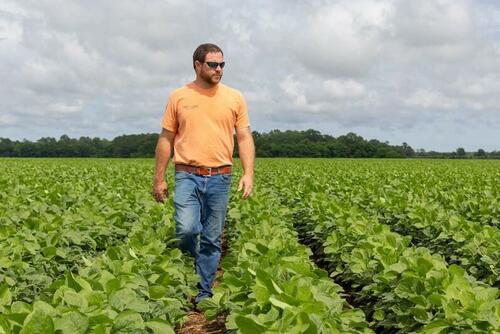
Farmland Shock: Georgia Grower Drops 3,000 Acres, Warns Of Unplanted Ground in 2026
Farmland Shock: Georgia Grower Drops 3,000 Acres, Warns Of Unplanted Ground in 2026
By Chris Bennett of Farm Journal
How deep is the farm crisis? Adios to acreage.
In November 2025, Alex Harrell, among the most highly reputed producers in the U.S., dropped an old-school grading scale, A to F, across his 6,000-acre operation and slashed almost half his ground, notifying 12 landlords in a three-week window. “I can’t speak to the rest of the country, but around here, generational growers are either cutting back, quitting, falling into Chapter 12, or grasping at straws.”
Spurred by crippling inputs, Harrell’s acreage drop is an alarming indication of an agriculture economy in dire straits. “There will be significant acres in my area that won’t be planted next year,” he says. “I’m seeing it with my own eyes in real time.”
“People don’t realize there was ground here in 2025 that didn’t get planted, but you can already see what’s developing for 2026. Guys are walking away.”
Down Comes the Ax
No fat left to trim. Nothing to burn but muscle. No way to outyield cold math.
“Something has to give when you go three years and more just spinning your wheels on net profit,” Harrell, 36, explains. “The numbers aren’t complicated. When fertilizer, chemical, and machinery costs go up 300% over a short span of time, everything is upside down, especially when commodities go in the tank.”
In 2025, Harrell grew 6,000 acres of corn, soybeans, cotton, and wheat in southwest Georgia’s Lee County. “Breaking even is bad enough in farming, but we’re all way below that around here. We are literally paying to farm—not getting paid to farm. Every year, it costs more to farm input-wise, and unless something changes with these retailers, I don’t see things changing. Based on that, I took a long look at my operation.”
But what to do when there’s nothing left to cut on the farm? Cut the farm itself.
In November 2025, Harrell put his leased acreage under the microscope, under a seven-category lens subject to grades A through F:
How many miles away was the land?
How productive is the soil?
What was the water source (pond, creek, or well)?
How was irrigation powered (electric or diesel)?
On base acres, how productive was the farm related to PLC and ARC?
How did wildlife depredation factor for deer and wild pigs (and whether landowners allowed for shooting with deer permits)?
How much was rent?
Harrell axed any piece of ground that scored C through F in more than two categories. The reduction totaled 45% of his crop ground.
“It’s pretty straightforward. The only way I could figure out to make things work was to break down those farms individually and grade them on a scale. Then I dropped the ones that didn’t pass—and that included the very first irrigated farm I ever rented, and ground we’ve put 16, 17 crops on that I’ve been working for years. It was time to turn them loose. Like I said, that’s how bad the farm economy is around here. In some ways, I think the worst part is still to come, but people don’t realize that yet.”
No Bidding War
Harrell’s acreage chop may go deeper. “I’ve still got considerations to make on some farms. I’ve still got ground flirting on the line. I may have to make more calls to landlords.”
Rent on irrigated ground in Harrell’s region typically runs $275-330 per acre. How did his landlords react when he dropped acres?
“I had one that offered to drop rent a little bit, but I understand because they’re used to having 10 guys sitting there waiting to rent that land. In my opinion, I don’t think they understand the shifting dynamic of the farm economy. This time, people are not going to be beating their doors down. I’m not saying their particular acres won’t get rented, but there’s definitely not going to be a bidding war.”
“Even last year in 2025, there was irrigated land down here that didn’t get worked. In 2026, there’ll be even more. I can’t speak for anyplace else in the U.S., but in southwest Georgia, this is what we’re seeing in farmland, especially marginal ground. It’s already happening.
Yield Forfeit
Prior to Harrell’s acreage slash, his operation stretched 21 miles east, 30 miles west, 15 miles north, and 15 miles south.
“I tightened the circle. I think my furthest farm is only going to be about 10 miles from me now. When you look at fuel, labor, time, and insurance involved in running up and down the road, that kills you whenever you put a tractor on a highway.
“Next, I’ve got to consider equipment and labor cuts to drop our insurance at least a little, at the same time keeping my eye on the fine line where I’ve got to keep enough acres to spread equipment over.”
Getting bigger and going longer is out—at least for Harrell. “Yeah, that’s how I used to think: Just go across more acres, make inputs cost less, and that’ll solve everything. Not anymore. What people come to see is that spreading too far in the Southeast means that nine times outta ten, you forfeit yield, because there’s no way to look after your crops like they need.”
Translated: Irrigation, weed control, repeated fungicide applications, labor logistics, and host of other management practices create a never-ending game of catch-up.
“There are Midwest farmers out there on big, big acres that do a fantastic job, but in the Southeast, we can’t get behind a single day on irrigation, or we lose yield,” Harrell notes. “Then factor in all the other aspects people don’t think about—like wildlife damage from deer and hogs, and countless spray trips across the field—and things get really complicated. I don’t think it’s an exaggeration to say a 15,000-acre operation in the Midwest compares to a 5,000-acre in the Southeast as far as demand on a farmer. That doesn’t mean anybody is better or worse, but it sure means things are very different.”
Walking Away
On Aug. 13, 2024, Alex Harrell fired the soybean shot heard round the farm world with a bin-busting 218.28 bushels per acre, shattering his own world record of 206.79 bushels set in 2023. Back to back, he grew the highest yielding soybeans in history.
Harrell has a tight grasp on agronomics, crop management, and bottom-line financials. The extreme rub endured by growers over successive years is down to the bone, he warns.
“We can grow most any variety of crop in the world right here, but we’re at the point of seeing what happens when none of them will turn a profit due to the crazy input prices. We’ve now got guys with all their land and equity burned up, and we’re seeing Chapter 12 bankruptcies every day. Guys are quitting and walking away, and that eventually leads to land that doesn’t get picked up. That’s how terrible things have gotten, even if some people don’t see it yet. Cropland with no crop.”
Tyler Durden
Thu, 01/08/2026 – 12:05
Italia condena incidente en que manifestantes propalestinos bloquearon a pasajeros que iban a Israel
ROMA (AP) — La autoridad de aviación de Italia condenó enérgicamente el jueves un incidente en el aeropuerto de Malpensa en Milán, en el que pasajeros con destino a Israel fueron temporalmente impedidos de abordar un vuelo a Tel Aviv por activistas propalestinos.
El presidente de la autoridad ENAC, Pierluigi Di Palma, ofreció la condena en persona durante una reunión que solicitó con el embajador de Israel en Italia, Jonathan Peled, en la sede de la agencia, informó ENAC.
ENAC había publicado un video en su sitio web del incidente del 4 de enero, en el que manifestantes descritos por ENAC como activistas propalestinos se tomaron de las manos y aparentemente bloquearon a los pasajeros para que no pudieran pasar el mostrador de la puerta de embarque y abordar su vuelo a Tel Aviv. Según el video, los manifestantes se enfrentaron con algunos pasajeros que lograron abrirse paso.
El incidente provocó un retraso de dos horas en el despegue, informó ENAC.
ENAC condenó firmemente la protesta, anunció una investigación para identificar a las personas responsables y prometió tomar medidas para evitar que algo similar ocurra en el futuro. Según informes de noticias italianas, los responsables estaban esperando abordar un vuelo a Marruecos desde una puerta cercana.
ENAC calificó el incidente como “particularmente grave” y uno que “contraviene los principios de seguridad, neutralidad, cumplimiento de las normas del sistema de transporte aéreo y el derecho a la movilidad de todos los ciudadanos”.
Di Palma, el jefe de la agencia, le expresó a Peled el “compromiso innegociable” de Italia para garantizar que cada pasajero pueda moverse libre y seguramente en los aeropuertos italianos.
“Italia es y seguirá siendo un país que rechaza firmemente todas las formas de odio y discriminación, y el transporte aéreo encarna esta visión como un lugar de encuentro para diferentes pueblos y culturas”, afirmó Di Palma.
ENAC citó a Peled expresando su agradecimiento por la condena. Peled manifestó su esperanza de que se fortalezcan las medidas de prevención “y que tales eventos no vuelvan a ocurrir”, informó ENAC.
___________________________________
Esta historia fue traducida del inglés por un editor de AP con ayuda de una herramienta de inteligencia artificial generativa.

Trump’s ‘beautiful’ new law means states have big decisions this year on Medicaid, SNAP and taxes
States have major decisions to make in 2026 about the social safety net and taxes in the aftermath of a sweeping law President Donald Trump signed last year.
The federal government is shifting more responsibilities to states over the next few years, and states must prepare for greater costs in the Medicaid health care and SNAP food aid programs. They also must decide whether to offset upcoming federal funding cuts with state tax dollars. And they must weigh whether to cut state taxes on tips, overtime wages and other items to remain in line with Trump’s big bill.
Though most states still have ample rainy day funds, the extra burdens are coming as many states face their tightest budgets since the early days of the coronavirus pandemic.
“There’s a big storm coming for state budgets — the radar is clear — and it’s going to hit almost every state,” said Tim Storey, CEO of the National Conference of State Legislatures. “It’s going to mean some hard choices.”
In most states, those determinations will begin in January, when legislatures convene and governors lay out their agendas.
Food aid will become a bigger expense for states
The Supplemental Nutrition Assistance Program, which is used by 42 million Americans to help buy groceries, is going to become more expensive for states to run and harder for some people to qualify for assistance.
Currently, the federal government picks up the full cost of benefits — around $94 billion in the fiscal year that ended in September 2024 — and splits the administrative costs with the states, which run the program. The federal share of administrative costs for 2024 was about $6 billion.
Starting Oct. 1, states will have to pay three-fourths of the cost to run the program. And starting in late 2027, some states that make errors in more than 6% of payments — often for paying a household more than it’s supposed to get after its income rises — will have to start paying some of the costs of benefits.
California already has allocated $84 million to try to reduce SNAP errors, plus additional money to help counties implement other new requirements.
The shift in administrative costs could come to around $50 million a year in Florida, said Sky Beard, the Florida director for No Kid Hungry. Paying for some SNAP benefits, if the state is forced to, could be in the neighborhood of $1 billion a year. She said that’s a reason lawmakers have a lot of questions about the details of error rates.
Other states are weighing whether to put more money into SNAP.
New Jersey Assembly Speaker Craig Coughlin, a Democrat, said the state has an obligation to help people access health care and food. But he said the magnitude of federal cuts — as much as a $36 billion reduction for New Jersey over the next decade for Medicaid alone, according to KFF, an organization that researches health policy — could make it hard to keep all the state’s social programs unchanged.
“What there will be is a commitment to doing our level best to make sure that all of the people’s needs get covered,” Coughlin said.
States could consider scaling back Medicaid
The federal law signed by Trump imposes work requirements for some adults on Medicaid, the joint federal-state health insurance program for low-income people. Most states must start those work mandates by January 2027, which means they must be accounted for in their next state budgets.
But states can start sooner if they desire.
Nebraska Gov. Jim Pillen announced that his state will launch Medicaid work requirements in May. The Republican said the state could handle the change without hiring more government employees and that the work mandate “can have a gigantic impact in helping lift people up.”
But many states face tens of millions of dollars of costs merely to prepare for the new Medicaid requirements.
The Missouri Department of Social Services has requested about $33 million in the next budget for technology improvements needed to comply with Medicaid work checks and more frequent eligibility reviews. It’s seeking more than $12 million to hire the equivalent of about 120 people to carry out the tasks.
The work requirement applies to people with slightly higher incomes who are eligible for Medicaid under a voluntary expansion included in President Barack Obama’s 2010 health insurance overhaul. Forty states and the District of Columbia took up the offer. The states that didn’t agree to the expansion all have legislatures controlled by Republicans.
The work requirement is the biggest piece in a series of Medicaid changes that the nonpartisan Congressional Budget Office forecasts will reduce Medicaid spending by $911 billion through 2034 and leave 10 million more Americans uninsured over that time frame.
States could respond by narrowing who is eligible for Medicaid, as the District of Columbia did in a policy that kicked in Jan 1. Or they could follow Colorado and Idaho and cut Medicaid reimbursements to medical providers.
Liz Williams, who analyzes Medicaid at KFF, said home care, dental benefits and coverage of GLP-1 drugs often used for weight loss, also could face restrictions in some states.
Some changes are expected to hit rural hospitals especially hard. The federal law seeks to partly offset that by spending $50 billion over the next five years. States will have to decide how to use their share of that money.
States also face decisions on tax cuts
The federal law temporarily halts federal income taxes on tips and overtime pay, provides new tax deductions for seniors and some people with auto loans, and enacts numerous new corporate tax breaks.
States can decide whether to incorporate those tax cuts into their own income tax codes.
Some states have income tax laws that automatically conform with changes to federal tax laws. But officials in other states have to decide whether to link up — and whether to do so partially or fully.
Michigan is the only state so far to vote to opt in to the tax breaks on tips and overtime. Those provisions automatically carry over to state income taxes in about a half-dozen other states.
Officials in Arizona are among those planning to conform to the federal tax cuts when their legislative session begins in January. Democratic Gov. Katie Hobbs said embracing the tax breaks can help “ease the cost of living crisis” and provide certainty to taxpayers. Republican legislative leaders say they stand ready to give their approval.

Miami Dolphins fire Mike McDaniel, the quirky, inventive coach they once viewed as their future
MIAMI GARDENS, Fla. — The Miami Dolphins fired coach Mike McDaniel on Thursday after a 7-10 season in which they missed the playoffs for the second straight year.
The decision ends McDaniel’s four-year tenure in Miami, a period defined by soaring expectations that ultimately went unfulfilled.
“After careful evaluation and extensive discussions since the season ended, I have made the decision that our organization is in need of comprehensive change,” Dolphins owner Stephen Ross said in a statement Thursday morning. “I informed Mike McDaniel this morning that he has been relieved of his duties as head coach.”
The Dolphins went 35-33 under McDaniel, reaching the playoffs in his first two seasons but losing in the first round each time. They missed the postseason in 2024 after being eliminated by the New York Jets in the regular-season finale.
This season their postseason hopes ended with a loss to the Pittsburgh Steelers in Week 15, ensuring that their 25-year playoff-win drought — the longest in the NFL — would continue.
The Dolphins parted ways with longtime general manager Chris Grier on Oct. 31 and began their search for a new GM this week. But a disjointed finish to the season that saw former first-round pick Tua Tagovailoa get benched proved to be the final straw for Ross, who decided to move on from McDaniel, the quirky, dry-witted wunderkind once viewed as the franchise’s future.
“I love Mike and want to thank him for his hard work, commitment, and the energy he brought to our organization,” Ross said in Thursday’s statement. “Mike is an incredibly creative football mind whose passion for the game and his players was evident every day. I wish him and his family the best moving forward.”
McDaniel, 42, arrived in Miami in 2022 after one season as the San Francisco 49ers offensive coordinator. Credited with adding inventive wrinkles to the 49ers running game, the first-time head coach was billed as the creative mind who, along with Tagovailoa, was supposed to lift the Dolphins out of years of mediocrity.
Initially, things appeared to be heading that way.
McDaniel won 20 of his first 33 games, including a 3-0 start during his first year with wins over the Baltimore Ravens, Buffalo Bills and New England Patriots. He took the Dolphins to the playoffs that season and nearly beat the Bills with rookie Skylar Thompson starting in place of the concussed Tagovailoa.
His off-the-cuff jokes, idiosyncratic sayings and flashy style were a refreshing deviation from the approach of many other head coaches — and they initially were met with needed results on the field.
Tagovailoa had credited McDaniel with rebuilding his confidence after former Dolphins coach Brian Flores tore it down as a young quarterback. Tagovailoa said last year that the constant criticism early in his career left him doubting himself. He was the fifth pick in the 2020 draft and won the starting job but was benched twice as a rookie and faced uncertainty his second year amid speculation the Dolphins were seeking a trade for Deshaun Watson.
“To put it in simplest terms,” Tagovailoa said in a 2024 interview on “The Dan LeBatard Show,” “if you woke up every morning and I told you you suck at what you did, that you don’t belong doing what you do, that you shouldn’t be here, that this guy should be here, that you haven’t earned this right … and then you have somebody else come in and tell you, ‘Dude, you are the best fit for us, you are accurate, you are the best,’ how would it make you feel listening to one or the other?”
With McDaniel tailoring Miami’s offense to his strengths, Tagovailoa led the NFL’s top offense in 2023, throwing for a league-best 4,624 yards and 29 touchdowns. He led the league in 2024 with a 72.9% completion rate.
Since that 2023 season, which ended in a 26-7 loss in a frigid wild-card game at Kansas City, the Dolphins have gone 15-19 and appear far from the franchise that just a couple of years ago spoke of contending for a Super Bowl.
They haven’t won a playoff game since 2000, the longest active drought in the NFL. And they have made headlines more for culture issues in the past year than on-field success.
Tyreek Hill, the star receiver whom the Dolphins acquired from the Chiefs in 2022, took himself out of last year’s regular-season finale and later told reporters, “I’m out,” expressing frustration with not making the playoffs for the first time in his career.
Hill — who suffered a season-ending knee injury in Week 4 — later apologized, walked back those comments and stated his commitment to the Dolphins. But his actions seemed to reflect behind-the-scenes culture issues with the Dolphins in 2024, which included instances of players repeatedly showing up late to meetings.
McDaniel, Grier and veteran players said during the offseason that many of those issues had been addressed, and they commended the new team camaraderie that they hoped would help them get off to a fast start in 2025.
The Dolphins opened the season with a 33-8 drubbing by the Indianapolis Colts and ended it with another blowout loss to the Patriots.
“Eventually, like everybody else in this league, you’re not entitled to this position,” McDaniel said Monday. “If I’m not able to win regular-season games, playoff games and Super Bowls, eventually the job won’t be mine.”
https://www.chicagotribune.com/2026/01/08/miami-dolphins-fire-mike-mcdaniel/

Zelensky Complains He Hasn’t Received A Clear Security Guarantee, Despite Big Talk From West
Zelensky Complains He Hasn’t Received A Clear Security Guarantee, Despite Big Talk From West
This week kicked off with France and the UK agreeing to send troops to Ukraine once a ceasefire with Russia is reached, and there have been unconfirmed reports that Washington is planning to do the same – but President Trump has not at all formally signed off on this.
Of course, such a move would result in a firm ‘no’ from Moscow, which would simply see this as NATO forces operating and constituting a threat right on its border. The big Paris conference hosted by France’s President Macron on Tuesday featured the usual hawkish bluster out of European leaders, but Ukraine’s Zelensky – who was present – has complained in the aftermath that a finalized agreement on security guarantees remains ambiguous and not yet confirmed.
When asked about security guarantees from the West in the event of a future post-truce Russian attack, Zelensky said, “I am asking this very question to all our partners and I have not received a clear, unambiguous answer yet.”
Still, President Trump’s envoy Steve Witkoff has claimed that “significant progress” had been made on the issue. “We have made significant progress on several critical workstreams, including our bilateral security guarantee framework and a prosperity plan,” Witkoff stated on X immediately after the summit.
“We agree with the Coalition that durable security guarantees and robust prosperity commitments are essential to a lasting peace in the Ukraine and we will continue to work together on this effort.” And yet rhetoric and statements out of Washington on the issue have been kept intentionally vague.
Zelensky has been frustrated all along: he gets robust (verbal) commitments out of the Europeans, while simultaneously Washington drags its feet or even resists – from Zelensky’s perspective. It’s been an enduring back-and-forth, and plenty of bickering, among the Western allies – but nothing in the end gets signed.
And Trump himself is likely to balk at anything which can be seen as violating his frequent campaign promise of no American ‘boots on the ground’ in Ukraine.
But speaking of something much delayed, Trump has wanted to see Zelensky swiftly hold elections. According to the latest in Ukrainian media:
Ukraine’s working group on preparing elections during a special or post-war period met for the second time on Thursday, Jan. 8, with the Central Election Commission (CEC) having prepared its proposals in advance.
The issue of holding elections in Ukraine is included among the 20 points of a peace plan developed between Washington and Kyiv.
Earlier, Ukraine’s parliament approved the creation of a cross-party working group tasked with drafting a one-off law regulating elections under martial law, amid growing domestic and international debate over how democratic processes can be preserved during Russia’s war.
This too seems a recipe for some intentional feet-dragging, and all the while Zelensky himself has piled on ‘requirements’ – such as a short-term truce which would allow the vote to proceed.
But Russia would have to agree to this, and it has often resisted proposals of merely short-term ceasefires. It wants a permanent, lasting political resolution and brings the war to an end. Also important that if Zelensky continues to test Trump’s patience, he won’t be getting any sought-after ‘security guarantees’ at all.
Tyler Durden
Thu, 01/08/2026 – 11:45