Category: News

What to know about the fatal shooting of a woman by an ICE officer in Minneapolis
MINNEAPOLIS — Protesters confronted federal officers Thursday in Minneapolis the day after a woman was fatally shot by an Immigration and Customs Enforcement officer.
The demonstrations came amid heightened tensions after President Donald Trump’s administration dispatched 2,000 officers and agents to Minnesota for its latest immigration crackdown.
The killing of 37-year-old Renee Good on Wednesday set off a clash between federal and state officials over whether the shooting appeared justified and whether a Minnesota law enforcement agency had jurisdiction to investigate.
Here’s what is known about the shooting:
How it unfolded
The woman was shot in her car in a residential neighborhood south of downtown Minneapolis, about a mile (1.6 kilometers) from where police killed George Floyd in 2020. Videos taken by bystanders and posted to social media show an officer approaching an SUV stopped in the middle of the road, demanding the driver open the door and grabbing the handle.
The Honda Pilot begins to pull forward and a different ICE officer standing in front of the vehicle pulls his weapon and immediately fires at least two shots into the vehicle at close range, jumping back as the vehicle moves toward him.
It is not clear from the videos if the vehicle makes contact with the officer. The SUV then speeds into two cars parked on a curb nearby before coming to a stop. Witnesses can be heard shouting in shock.
Victim was a ‘wife and mom’
Good died of gunshot wounds to the head.
She described herself on social media as a “poet and writer and wife and mom” from Colorado. Calls and messages to her family were not immediately returned.
Public records show Good had recently lived in Kansas City, Missouri, where she and another woman with the same home address had started a business last year called B. Good Handywork.
In a video posted from the scene on social media, a woman who describes Good as her wife is seen sitting near the vehicle sobbing. She says the couple had only recently arrived in Minnesota and they have a 6-year-old child.
Minneapolis protesters vent their outrage after an ICE officer kills a woman
Her killing is at least the fifth death to result from the aggressive U.S. immigration crackdown the Trump administration launched last year.
Noem says officer followed training
Homeland Security Secretary Kristi Noem said Thursday in New York that there would be a federal investigation into the shooting, adding that she believes the officer followed his training and the shooting was justified. She again called the woman’s actions “domestic terrorism.”
“This vehicle was used to hit this officer,” Noem said. “It was used as a weapon, and the officer feels as though his life was in jeopardy.”
Woman killed by ICE agent in Minneapolis was a mother of 3, poet and new to the city
The ICE officer has not been publicly identified. Noem said he was taken to a hospital after being hit by the vehicle and has since been discharged.
Minneapolis Police Chief Brian O’Hara gave no indication that the driver was trying to harm anyone when he described the shooting to reporters Wednesday.
Minneapolis Mayor Jacob Frey called Noem’s description of the events “garbage,” saying he had watched videos of the shooting that show it wasn’t self-defense and was avoidable.
Federal and state leaders dispute jurisdiction to investigate
Drew Evans, head of Minnesota Bureau of Criminal Apprehension, said Thursday that federal prosecutors have barred the state agency from jointly investigating the shooting alongside the FBI. He said state investigators were being denied access to evidence, witness interviews and other case materials.
Minnesota Gov. Tim Walz demanded that state investigators be given a role, telling reporters that residents would otherwise have a hard time accepting the findings of federal law enforcement.
“And I say that only because people in positions of power have already passed judgment from the president to the vice president to Kristi Noem,” Walz said.
Noem denied that Minnesota authorities were being shut out, saying: “They don’t have any jurisdiction in this investigation.”
Protest met with pepper spray, tear gas
Dozens of protesters Thursday morning outside a Minneapolis federal building being used a base for the immigration crackdown. Border Patrol officers fired tear gas and doused demonstrators with pepper spray to push them back from the gate.
Area schools were closed as a safety precaution.
A vigil Wednesday night for the victim drew hundreds of people. A march through the city concluded without violence.
Protests were also planned across the U.S. in cities including New York, New Orleans and Seattle.
https://www.chicagotribune.com/2026/01/08/what-to-know-fatal-shooting-ice-officer-minneapolis/

Porter County rationing road salt after supplies already running low
Porter County will begin rationing road salt after taking delivery of nearly half the salt for the season with three months of winter remaining.
The Porter County Board of Commissioners voted unanimously Tuesday morning on the recommendation of Highway Superintendent Jim Polarek to implement the ration that will start with subdivisions. “Keep doing what we’re doing and we’re going to run out of salt,” Polarek reported to the board Tuesday.
The highway department will strategically apply salt to intersections, hills, bridges and curbs in subdivisions, but aim for conserving on other stretches of subdivision roads. Straight-line county roads would be next in line for the same approach, while busy and notoriously dangerous roads such as 100 S, Smoke Road, Division and Meridian Road will continue to receive salt all the time.
“All it takes is one icy event and you’ll go through 1,500 tons of salt in one morning,” Polarek said.
He said the county had agreed to buy 7,000 tons and had already taken delivery of 3,300 tons, with predictions of February and March weather calling for below-average temperatures and above-average precipitation.
“Right now, we don’t have the money to buy on the open market additional salt,” Polarek said.
Commissioner Barb Regnitz, R-Center, asked what that might cost if it became necessary and Polarek recalled that one year before he was in charge, the county had to pay an additional $25 per ton to buy more salt at the end of the season, which would be an extra $37,500 for a 1,500-ton morning.
In other business, the board rearranged officers, with Commissioner Ed Morales, R-South, taking over the gavel as president. Regnitz will now serve as vice president and Commissioner Jim Biggs, R-North, will serve as secretary.
The three unanimously retained County Attorney Scott McClure for another year and asked him to put together guidelines for the creation of a South County Fire Feasibility Committee that will study the West Porter Township Fire Protection District and come up with some possible solutions to funding constraints.
McClure suggested the committee be modeled after the Opioid Committee the county formed for the distribution of opioid settlement funds. The committee will be made up of roughly nine members and Biggs said Mike Jabo, the county’s executive director of Development & Storm Water Management, will serve as chair.
“Organization and direction is going to be really important with this and I spoke with Mike Jabo, who is a south county resident,” Biggs said. “Mike was a volunteer firefighter for years.”
The board voted unanimously on his chairmanship.
The board also took on their assignments to various other county boards. Biggs will serve on Community Corrections, Child Protection, NIRPC and E–911; Morales will serve on Juvenile Justice, Redevelopment, Plan Commission and EMA; and Regnitz will serve on Storm Water, Center for Workforce Innovations, and Opioid.
The board also made a variety of citizen appointments. Alcohol Beverage – Bob Filipek; Board of Health – Amanda Pirowski-Alaniz and Linda Nowzaradan Boxum, DO; Board of Zoning Appeals– Pamela Mishler-Fish; Convention, Recreation, and Visitors Commission – Richard Connor Riley and George H.Topoll; Opioid Committee – Chuck Harris and Megan Wichlinski; Parks and Recreation Board – Bryan Waisanen; Plan Commission – Robert Gilliana and Arvid Merkner; PTABOA – Nancy Kolasa and Linda Zyla; Recycling and Waste Management – Jim Ton; Redevelopment Commission – Jason Gilliana and Bill Herring; Stormwater Advisory Board – Edward Spanopoulos; West Porter Fire Protection District Board – Nicholas Bickers and Greg Falkowski.
Shelley Jones is a freelance reporter for the Post-Tribune.
Did Dr. Spock’s Parenting Advice Kill 60,000 Babies?
Did Dr. Spock’s Parenting Advice Kill 60,000 Babies?
Authored by Ross Pomeroy via RealClearScience,
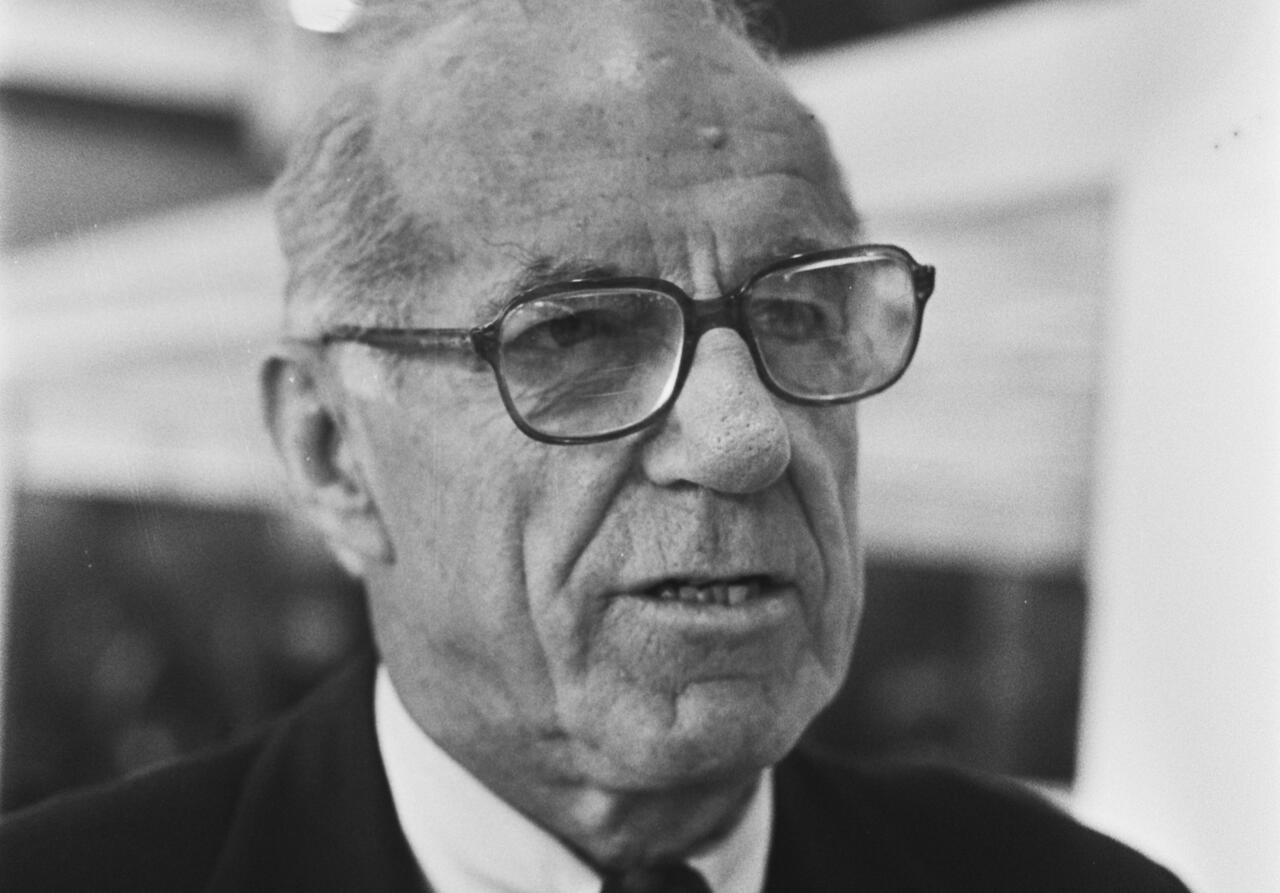
Dr. Benjamin Spock is remembered as one of the foremost authorities on raising children. His influential and prolific books, first published in the mid-1940s, advised parents to be more affectionate and flexible with their young kids, countering what was then the entrenched norm of being rigid and aloof.
Though most parents today are probably more familiar with a different, pointy-eared Spock, in his heyday during the 1950s and 60s, Dr. Spock was one of the most recognizable and respected public figures in the world. When he spoke or wrote, people – and particularly parents – listened intently.
Unfortunately, much of Spock’s guidance wasn’t grounded in scientific research, but rather his extensive clinical experience. While this generally produced helpful, or at least harmless, advice, in one major instance, it resulted in grave harm.
Starting with the 1958 edition of his bestselling tome, The Common Sense Book of Baby and Child Care, Spock recommended to parents that they put their babies to sleep on their front, rather than on their backs. “If he vomits, he’s more likely to choke on the vomitus,” Spock reasoned. “Also, he tends to keep his head turned to the same side—usually toward the centre of the room. This may flatten the side of his head.”
At the time, there was an active debate about whether front-sleeping or back-sleeping was healthier for infants, so Spock’s recommendation – which we now know to be dead wrong – could be excused. However, in the dozen years since Spock urged prone-sleeping, scientific studies made clear that the practice markedly raised the risk of sudden infant death syndrome (SIDS) compared to back sleeping. A 2005 historical analysis conducted by researchers with the Centre for Evidence-based Child Health in London showed that by 1970, the scientific literature indicated that front-sleeping tripled the risk of SIDS compared to back-sleeping.
Spock, however, neglected to consult this gathered scientific evidence and didn’t update his book Baby and Child Care to reflect the new reality for some time. As Marit L. Bovbjerg, an Associate Professor at Oregon State University focusing on maternity care in the U.S., wrote in 2011:
“Dr. Spock’s book was not the only popular book to advocate prone sleeping at the time, but further revisions continued to make the recommendation nine years after solid epidemiological evidence had accumulated regarding the increased risk of SIDS for babies being placed on their stomachs for sleep.”
Spock’s book was by far and away the most read parenting guide to advocate prone sleeping. According to the New York Times, for a half-century since its publication, Baby and Child Care was the second-best-selling book, behind only the Bible.
The researchers behind the aforementioned 2005 scientific review estimated that the collective failure, led by Dr. Spock, to alter the advice on safe-sleep for infants in a timely fashion, resulted in an extra 10,000 infant deaths in the UK and at least 50,000 in Europe, the USA, and Australasia after 1970.
With great influence comes great responsibility. In failing to change his mind on infant safe-sleep in the face of overwhelming scientific evidence, Dr. Spock showed that he was not worthy of the standing he garnered and the trust he earned from the world’s parents.
Tyler Durden
Thu, 01/08/2026 – 14:05
https://www.zerohedge.com/medical/did-dr-spocks-parenting-advice-kill-60000-babies
FDA Says Many Fitness Wearables, AI Tools Exempt From Regulation
FDA Says Many Fitness Wearables, AI Tools Exempt From Regulation
The Food and Drug Administration on Jan. 6 clarified that it will not regulate some artificial intelligence (AI) tools and wearables.
In a guidance document, the Food and Drug Administration (FDA) said tools used to help make clinical decisions are sometimes exempt from FDA oversight, such as those not intended to analyze medical images.
In a second document, the FDA said it does not regulate “low risk products that promote a healthy lifestyle,” including “low risk general wellness products” such as exercise equipment and software programs.
The agency listed as examples products that track and record a person’s sleep, work, and exercise and products that make claims about weight management and physical fitness.
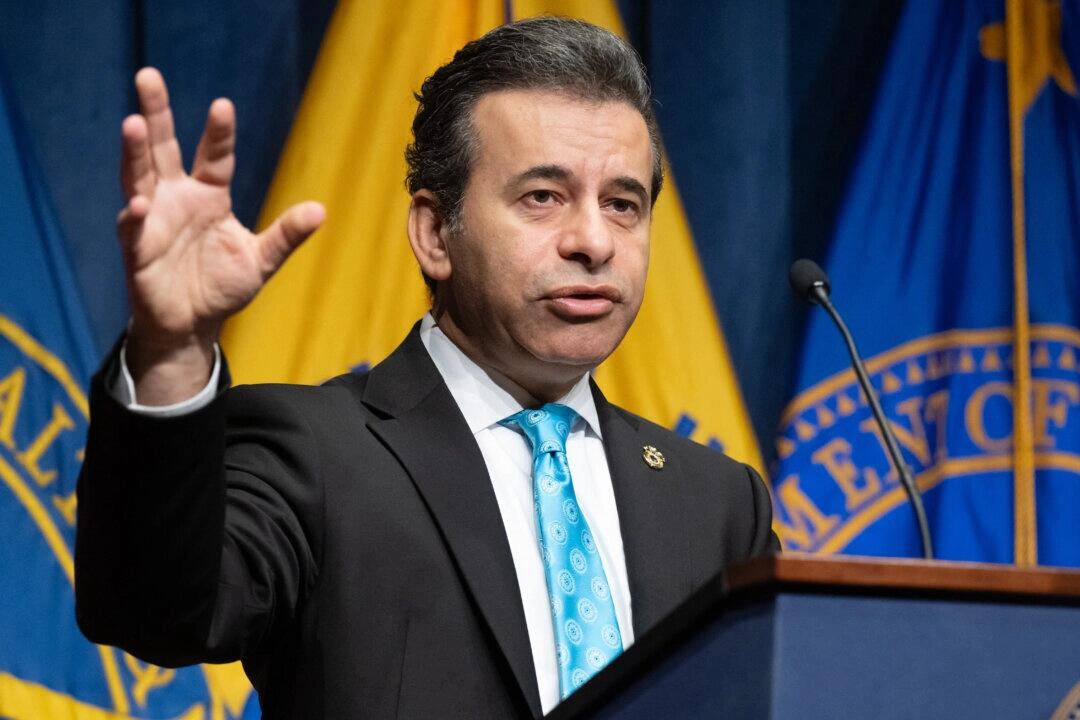
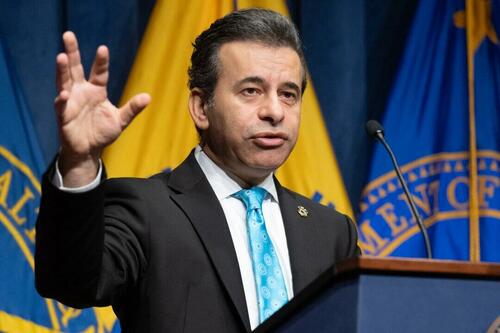
“For a lot of the decision support out there, we need to get out of the way as a regulator,” FDA Commissioner Marty Makary said in a video. “We have a clear lane for medical-grade products. But otherwise, we need to adapt with the times, and be proactive with guidance, so that companies and developers are not left confused about what they should be doing, or what the FDA wants.”
As Zachary Stieber details below via The Epoch Times, Makary said the FDA is “here to promote AI” and added during an appearance on Fox Business that at least some of the tools use AI.
“If something is simply providing information, like ChatGPT or Google, we’re not going to outrun that lion, we’re not going to go in there and say there is one result that is inaccurate and therefore we have to shut down,” Makary said. “We have to promote these products, and at the same time, just guard against major safety concerns.”
When asked about concerns regarding inaccurate information, Makary said, “We don’t believe in censorship.”
“If people are looking up a symptom on an AI-based tool, let’s have that conversation when they come in to see their doctor or do a virtual visit,” he said.
OpenAI, which developed ChatGPT, said this month that more than 5 percent of ChatGPT messages are about health care, with more than 40 million users turning to the AI bot with health care questions.
Researchers reported in 2025 that at least half of responses from AI models to health-related questions are not fully supported by their sources and that some answers are contradicted by the sources.
Wearables, a category that includes fitness trackers and glucose monitors, are also not subject to regulatory oversight if they are simply providing information, according to Makary.
“The only stipulation is if they make claims of something being medical grade, like a clinically appropriate clinical-grade blood pressure measurement,” he said on Fox. “We don’t want people changing their medicines based on something that’s just a screening tool or an estimate of a physiologic parameter.”
Health Secretary Robert F. Kennedy Jr. has said people should start using wearables as part of efforts to improve their health.
The FDA had in 2025 warned Whoop, which makes wearable products, that it was marketing monitoring of blood pressure without FDA approval.
“We believe the agency is overstepping its authority in this case by attempting to regulate a non-medical wellness feature as a medical device,” a Whoop spokesperson told news outlets at the time.
The FDA later issued consumer alerts telling people not to use unauthorized devices for monitoring blood pressure and infant vital signs.
Tyler Durden
Thu, 01/08/2026 – 13:45
https://www.zerohedge.com/political/fda-says-many-fitness-wearables-ai-tools-exempt-regulation

Colombia enviará nota diplomática a EEUU para concretar cita de Trump y Petro en la Casa Blanca
Associated Press
BOGOTÁ (AP) — El gobierno colombiano anunció el jueves que iniciará las gestiones diplomáticas para concretar con la secretaría de Estado de los Estados Unidos la fecha y agenda para el encuentro entre el presidente Gustavo Petro y su par estadounidense Donald Trump, luego de la tensión generada por la advertencia del líder norteamericano sobre una eventual acción militar en la nación andina.
La posibilidad de que los mandatarios se reúnan en Washington se dio el miércoles tras un giro inesperado luego de un diálogo telefónico entre Trump con Petro y la invitación formulada al mandatario colombiano para que visite la Casa Blanca.
“Fue un gran honor hablar con el presidente de Colombia, Gustavo Petro, quien llamó para explicar la situación de las drogas y otros desacuerdos que hemos tenido”, publicó Trump en redes sociales. “Agradezco su llamada y su tono, y espero reunirme con él en un futuro cercano”.
La llamada ocurrió poco antes de una multitudinaria marcha convocada por el presidente colombiano para la defensa de la soberanía nacional y en la que Petro admitió que debió cambiar el “duro discurso” que había preparado.
El jueves en un mensaje de X, Petro escribió que “sé que el presidente Trump no está de acuerdo conmigo, pero es más conveniente empezar un diálogo al respecto, que dirimirlo en campos de batalla”.
“Ahora hay que ver las consecuencias del restablecimiento de la conversación diplomática”, agregó el mandatario sudamericano.
La canciller colombiana Rosa Villavicencio anunció en una rueda de prensa que “hoy mismo mandaremos la nota” diplomática con el fin de encontrar una fecha y coordinar una agenda con la Secretaría de Estado de los Estados Unidos.
Villavicencio admitió que la normalización de la relación bilateral será una “senda larga y compleja”, pero se mostró confiada de que con “el respeto, el pragmatismo y la identificación de intereses compartidos llegaremos a buen puerto”.
En cuanto a las aspiraciones concretas la canciller espera que el diálogo “lleve a una reconsideración de decisiones y medidas punitivas pasadas como la descertificación de Colombia”, lo que fue una reprimenda de Estados Unidos ante la política antinarcóticos de Colombia que ha cuestionado.
Sobre los entretelones de la llamada, Villavicencio comentó que se consiguió tras al menos cuatro meses de gestiones y conversaciones sobre la necesidad de desescalar la tensión entre ambos países.
El malestar del oficialismo colombiano con Washington se profundizó tras la incursión militar en Venezuela del sábado que terminó con la detención del entonces presidente Nicolás Maduro y su esposa. Luego Trump arremetió contra Petro, al que acusó de tener “fábricas de cocaína” en el país andino.
Consultado por periodistas si podría ordenar una operación similar contra Colombia, Trump respondió: “Me suena bien”. Además, calificó a Petro como un “hombre enfermo al que le gusta hacer cocaína y venderla a Estados Unidos” y avisó que “no va a hacerlo por mucho tiempo”.
Las acusaciones y advertencias fueron rechazadas por el presidente colombiano que defendió su gestión en la lucha contra el narcotráfico.

Remembering Doris Knoch Wood, lifelong Naperville resident who led effort to build new Nichols Library
Naperville resident Doris Knoch Wood was a lifelong learner always looking to give back to the community, those who knew her say.
Her passion for reading and education was seen in many of her endeavors, and evident first in her work as a grade school teacher and later when she taught at Illinois Benedictine College and College of DuPage. Her friend and old neighbor Joan Stelle took a World War II history class that Knoch Wood taught at College of DuPage and described it as nothing short of excellent.
“She got her master’s (degree) when I was 10 years old,” said her daughter, Alice Wood, noting that the thesis was on Naperville during the Great Depression. “She spent hours and hours at the library … she had a permanent place at the kitchen table with her typewriter and she just banged it all out.”
That love for education extended not only to her own endeavors but to making sure other people had the opportunity to pursue it. She served as president of the Naperville Public Library District Board and helped lead the effort to have a new Nichols Library built on Jefferson Avenue in 1983.
“She knew that Naperville would need a bigger space because it was just that little library (on Washington Street) and now look at what it is,” Wood said of her mother, who died on Dec. 21 at the age of 95. “So she could see the growth and the need.”
Doris Knoch Wood as she appeared in a 1948 photo from her days as a student at Naperville High School, now known as Naperville Central High School. (Mary Lou Wehrli)
And that’s not the only way Knoch Wood would give back to Naperville. She would serve on the board of Edward Hospital and spent many years fundraising for Loaves & Fishes. She helped plan Naperville’s 150th anniversary celebration and for decades worked as a hospice volunteer. She and friend Rita Harvard, who also contributed significantly to Naperville, jokingly referred to each other as the “Queen of Naperville.”
“She and Rita grew up in Naperville and they were the same age. They would trade the title of ‘Queen of Naperville’ based on who did the last act of goodwill for the city,” said Wood, one of seven children Knoch Wood had with her husband, Warren. “So Rita always referred to mom as the queen but it was likewise.”
Born on Nov. 24, 1930, Knoch Wood was the second youngest child in her family, which included sisters Marge, Jean and Joanne. Her father, Win Knoch, was a lawyer who later became a federal judge and served on the U.S. Court of Appeals.
Knock Wood was born during the Great Depression but lived a relatively privileged life, according to longtime friend Mary Lou Wehrli.
“I think they recognized the incredible privilege they had because they did have a loving home. They did get together a lot. They did have a lot,” Wehrli said. “I think they recognized that a lot of people didn’t, and some people don’t have happy homes … and I think that was as much of a driver as the realities of individual situations around the community.”
The Knoch family in a photo taken on June 30, 1951. From left to right are Jean, Doris, Win, Irene, Marge and Joanne. (Mary Lou Wehrli)
It also reflected the reality of growing up in Naperville back when it was a small rural town, Wehrli said. People helped raise each other’s children and worked to make their community a better place, she said.
“Our grandfather always said, ‘Any community worth living in is worth doing for,’” Wood said.
Growing up, Knoch Wood attended Sts. Peter and Paul Catholic Church, which her family helped rebuild after it burned down in 1922. She was a member her whole life and and it would be the place where Knoch Wood and many of her family would be married, Wehrli said.
While she contributed to Naperville in myriad ways, her most notable accomplishment was persuading residents to approve a referendum to fund construction of new Nichols Library, a major step in the city’s progression and one that still meets the needs of its now 150,000-plus population, she said.
“I think she liked the holistic touch that a library could have on people. Those libraries are traditionally known as a poor man’s university,” Wehrli said.
The effort would fail once before being successful in 1983. The library opened in 1986.
“She was on the board, and then became president of the board when they built the new Nichols Library,” Wood said. “And what I do remember about it is she brought it in ahead of schedule and under budget, and she was so determined to do it right that she talked to people who had built libraries in other towns about what would you do different, that kind of thing.”
In her later years, Knoch Wood participated in Northwestern Memorial Hospital’s “SuperAgers” program, which researched adults over 80 who had brains 20 to 30 years younger than their physical age.
According to her obituary, she believed her participation in the study could have a meaningful impact on the lives of others. After she died, her body was donated to science.
Throughout it all, education was part of her life. She rewrote her graduate thesis because, according to her daughter, she just wanted to. Wehrli remembers taking her to the Morton Arboretum last October, and she spontaneously started reciting “October’s Bright Blue Weather,” a poem she learned in high school.
“It just flowed from her, you know, it was like breathing,” Wehrli said. “She just flowed with the moments. And if this came out of her, this was what was in her soul, and she was pleased to share it. And I’m sure at her advanced age — pretty darn pleased to remember it.”
cstein@chicagotribune.com
https://www.chicagotribune.com/2026/01/08/knoch-wood-naperville-nichols-library/

Data Centers Were 40% Of PJM Capacity Costs In Last Auction: Market Monitor
Data Centers Were 40% Of PJM Capacity Costs In Last Auction: Market Monitor
Submitted by Ethan Howland of Utility Dive
Data center load accounted for $6.5 billion, or 40%, of the $16.4 billion in costs from the PJM Interconnection’s December capacity auction, according to the grid operator’s independent market monitor. About $6.2 billion of those costs is related to data centers that haven’t been built but could come online by PJM’s 2027/28 delivery year that begins on June 1, 2027, Monitoring Analytics, the market monitor, said in a report released Monday.
In PJM’s last three base capacity auctions, costs related to data center forecasts above existing data center loads totaled $21.3 billion, or 45% of the $47.2 billion in the cost of the cleared capacity, according to the report.
The market monitor’s report highlights how data center load forecasts have affected PJM’s last three capacity auctions, which set price records and sparked political backlash in some states.
“The extreme uncertainty in the load forecasts based on uncertainty about the addition of large data center loads is also unique and unprecedented and raises questions about the meaning of clearing a capacity auction based on those forecasts,” Monitoring Analytics said.
Increasingly, utilities, state regulators and grid operators like PJM have been working to develop more accurate data center load forecasts amid concerns they may be overstated.
In its last base capacity auction, PJM fell 6,516.6 MW short of meeting its reliability target. However, PJM’s demand forecast for the auction was based on an estimate released a year ago. The grid operator is set to issue a new load forecast this month that could be significantly lower, partly based on stricter vetting of potential large loads, Stu Bresler, executive vice president for market services and strategy at PJM, said Dec. 17 after the auction results were announced.
Also, PJM’s board is expected to propose reforms, possibly this month, to the way the grid operator interconnects data centers, including changes to its process for considering large load forecasts.
The market monitor’s report echoes previously raised concerns that data center loads are largely responsible for the spike in capacity prices in PJM.
“Data center load growth is the primary reason for recent and expected capacity market conditions, including total forecast load growth, the tight supply and demand balance, the significant shortfall in cleared capacity, and high prices,” Monitoring Analytics said.
The effect data center loads have on PJM’s capacity auction will continue growing until the grid operator addresses large load interconnection issues in an “effective manner,” the market monitor said.
On the issue of a price cap and floor for PJM’s capacity auctions, the last auction would have been $9.9 billion, or 38%, higher except for a cost cap that grew out of an agreement between the grid operator and Pennsylvania Gov. Josh Shapiro, a Democrat, according to the market monitor’s report (see “Inside The PJM Auction Report, Something Crazy: Without Price Controls, Electricity Bills Would Explode“)
In the two auctions the price floor/cap was in effect, it reduced capacity costs by $13.1 billion, according to the market monitor’s estimate. The mechanism has expired and won’t be used in PJM’s capacity auction for the 2028/29 delivery year that is set to be held from June 30 to July 4.
PJM is the largest U.S. grid operator, running the power system and electric wholesale markets in the Mid-Atlantic and Midwest regions where about 67 million people live.
PJM holds capacity auctions to help ensure that it has adequate power supplies to meet future needs.
Tyler Durden
Thu, 01/08/2026 – 13:25
https://www.zerohedge.com/energy/data-centers-were-40-pjm-capacity-costs-last-auction-market-monitor
USW backs legislation that would increase veterans resource access
The United Steelworkers Union announced they support the creation of a bill that would help increase veterans’ access to various resources, which was sponsored by an Indiana senator.
“I’m proud to join my colleagues and American steelworkers in backing this common-sense, bipartisan effort to ensure veterans can easily access information about their benefits and crisis resources in their workplaces,” Sen. Jim Banks, R-Indiana, said in a statement.
If passed, the Thomas M. Conway Veterans Access to Resources in the Workplace Act would require federal agencies to create posters that provide information on how to access a mental health crisis line, Veterans Administration health care, and educational, legal, housing and other services. The posters would be displayed in workplaces with at least 50 employees.
“Research shows that when veterans are connected to the benefits and services available to them, outcomes improve and suicide rates decline,” USW President David McCall said in a news release.
The legislation has received bipartisan support, according to the USW, and similar legislation exists in 15 states, including New York, where the union helped advocate for the bill.
In addition to Banks, various legislators sponsor the bill, including Reps. Chris Deluzio, D-Pennsylvania; Nick LaLota, R-New York; and Sen. Angus King, D-Maine.
Rep. Frank Mrvan, D-Highland, stated, “I commend the leadership of Rep. Deluzio and my fellow Congressional colleagues for their bipartisan, bicameral approach to support our veterans and honor former USW President Tom Conway. I am proud to support this measure and will continue doing everything I can to ensure our veterans are aware of and able to access the benefits they have earned.”
The legislation is named after Thomas Conway, who was USW’s eighth international president and died at 71 years old on Sept. 25, 2023.
McCall said the union proudly supports the legislation and said it “honors the life and legacy” of Conway, who he called “a veteran, a leader and a tireless advocate for working people.”
“Tom Conway never forgot where he came from,” McCall said. “He understood the unique challenges facing working-class veterans and created the USW’s Veterans of Steel program in response to the growing crisis of veteran suicide. His vision continues to inspire us today, and this bill is a fitting tribute to his commitment to those who served.”
USW urges swift action for passage of the legislation, McCall said, adding that veterans have already done their job for the country and legislators must do theirs.
The legislation comes less than one year after President Donald Trump’s administration’s plans to cut 80,000 VA jobs leaked. VA Chief of Staff Christopher Syrek, in an internal memo, told the agency’s top level officials that it plans to cut enough employees to return to 2019 staffing levels of just under 400,000, according to Post-Tribune archives.
mwilkins@chicagotribune.com
One Fell Swoop: Lawsuit Eyes Death Blow To Racial Preferences
One Fell Swoop: Lawsuit Eyes Death Blow To Racial Preferences
Authored by RealClear Investigations’ Benjamin Weingarten,
Opponents of affirmative action hoped that the Supreme Court had delivered a death blow to the controversial policy in 2023 when Chief Justice John Roberts declared for the court’s majority that “Eliminating racial discrimination means eliminating all of it.”
But as sweeping as that pronouncement was, it came in a ruling in the landmark SFFA v. Harvard case, solely barring the use of racial preferences in college admissions. The practices that the court deemed illegal on campus have persisted elsewhere, including in programs across the federal government.
A lawsuit now wending its way through the courts, Revier v. Loeffler, aims to change that. Building on the SFFA ruling, the suit’s plaintiffs are taking aim at regulations that they allege direct agencies to unconstitutionally dole out tens of billions of dollars in awards on the basis of race – most prominently through no-bid or limited competition contracts reserved for so-called “Small Disadvantaged Businesses” and facilitated by the Small Business Administration. The case could have wide implications, as the SBA’s definition of disadvantage has been widely adopted by many other federal agencies.
The lawsuit’s thrust parallels a slew of related executive orders, policies, and probes the Trump administration has advanced to purge diversity, equity, and inclusion (DEI) from the public and private sectors. A future president with different priorities, however, could reverse them. Consequently, absent legislation from a razor-thin Republican congressional majority, opponents of racial preferences believe the courts may offer the best opportunity to end such practices.
Defenders of affirmative action, however, note that it is rooted in laws passed by Congress that reflected the belief that racial discrimination is a powerful source of disadvantage. And they believe that righting past wrongs through its implementation has redounded to Americans’ collective benefit. Massachusetts Sen. Ed Markey, the ranking Democrat on the Senate Small Business Committee, and Sen. Mazie K. Hirono of Hawaii sent a letter to the SBA defending minority companies, which they say “play a role in strengthening the industrial base by diversifying the supply chain.”
Biden Amped Up Racial Preference
The Revier case could be a game-changer in part because of the size, scope, and influence of federal contracting.
The U.S. government is the world’s largest buyer of goods and services. Historically, on a bipartisan basis, it has sought to use its buying power to benefit small businesses, for whom the feds earmark roughly one-quarter of all contract dollars. The SBA reported that in fiscal year 2024, federal authorities had inked $630 billion in small business eligible prime contracts.
Following the civil rights acts of the 1960s, the federal government sought to promote the development of minority-owned small businesses, with the Nixon administration initiating the policy to steer a subset of contracts to such enterprises.
The Biden administration significantly increased the value of federal government contracts extended to such businesses to “advance equity and build wealth in underserved communities,” more than doubling the statutorily-driven 5% contracting goal threshold that had been set by Congress. In 2024, the SBA awarded some $78 billion – or 12% of all contract dollars – to so-called “Small Disadvantaged Businesses,” often under no-bid or limited-competition arrangements.
Such contracts cover work in areas ranging from construction to professional services and information technology and are awarded across two dozen agencies, including the Departments of Defense, Health and Human Services, and Agriculture.
SBA sets forth who qualifies as “socially and economically disadvantaged” through regulations, instituted nearly 30 years ago, that have since spread government-wide. While white-owned businesses theoretically qualify for the program, the regulations created a “rebuttable presumption” that – irrespective of one’s individual circumstances – treated blacks, Hispanics, Native Americans, and Asians by default as “socially disadvantaged.”
Under its “Minority Small Business and Capital Ownership Development Program,” sometimes referred to as 8(a), SBA has historically rendered small firms owned and controlled at least 51% by those identifying as minorities, and who meet certain economic criteria, eligible for its minority business development program – giving them preferential entrée to more than $40 billion in annual awards over non-minorities.
Analyses show that in recent years, no individually owned firms led by a Caucasian have participated in the program.
Fraud Allegations
The program also has long been subject to allegations of fraud and abuse, reflected in a series of past Government Accountability Office and SBA Office of Inspector General studies and reports. Some of the initiative’s 4,300 participants have engaged in misconduct ranging from offering kickbacks to reportedly arranging “pass-through” work where purported minority-led companies effectively serve as fronts – winning business only to outsource the work to non-minority subcontractors.
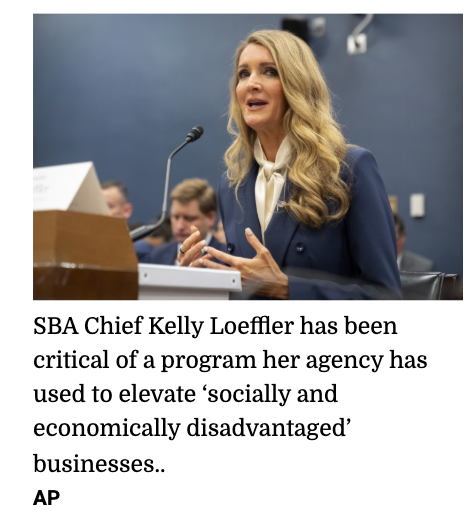
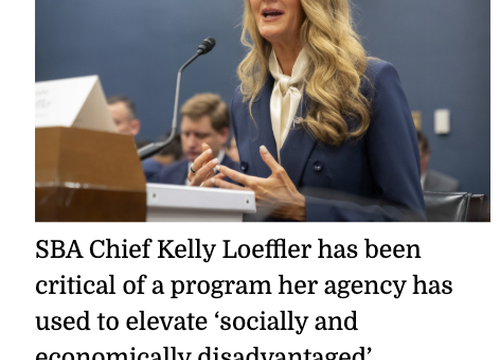
In June, after four individuals pled guilty to a $550 million bribery and fraud scheme enabled by a USAID contracting officer and involving multiple participants in the SBA program – one of whom would receive an additional $800 million in federal contracts even after being flagged by USAID as lacking “honesty or integrity” – SBA Administrator Kelly Loeffler ordered an audit of the program, focusing on high-dollar and limited-competition contracts.
Months later, in October, investigative journalist James O’Keefe released an undercover interview video indicating that one contractor, ATI Government Solutions, used its minority status pursuant to the program to win upwards of $100 million in contracts – only to outsource 80% of its work to subcontractors, including major corporations like Accenture. Shortly thereafter, the SBA would suspend ATI and its three executives.
In December, the administration intensified its scrutiny of the program, issuing letters to all participants demanding a slew of financial records dating back years under threat of losing their program eligibility, and/or facing investigative and remedial action.
“There is mounting evidence that the 8(a) Program designed for ‘socially and economically disadvantaged’ businesses went from being a targeted program to a pass-through vehicle for rampant abuse and fraud – especially during the Biden Administration, which aggressively prioritized DEI over merit in federal contracting,” SBA Administrator Kelly Loeffler said in a press release.
Days later, Senate Small Business Committee Chairwoman Joni Ernst announced during a hearing the launch of her own investigation of the SBA initiative, stating that “Unfortunately, the SBA’s 8(a) program has been a magnet for fraudsters since its inception.”
During that hearing, Ed Markey acknowledged that “Like any federal program, there have been rare cases of bad actors taking advantage of these resources. And they should be held accountable.”
“But,” he added, “these rare instances do not warrant an all-out assault on a program that has created good-paying jobs, provided pathways to success for small businesses, and created economic growth for our country.”
The Massachusetts Democrat also asserted that politics was at play – even while injecting a note of partisanship himself. The Senate, Markey said, was subjecting “the little guys, the minority small business owner, the black and brown small businesses,” to harsh oversight, in contrast with the administration’s dealings with foreign governments and large corporations, who allegedly participate in “President Trump’s pay-to-play system.”
Systemic Discrimination
The entities currently suing the SBA do not allege discrimination in the 8(a) program, but rather in other government programs that have adopted its regulations.
The two plaintiffs – Revier Technology, a small Louisiana-based software company, and Young America’s Foundation (YAF), a national conservative student organization – asked a Louisiana court in November to vacate the SBA’s 8(a) regulation, which they claim has harmed them in their efforts to access other government initiatives reliant upon it.
Revier, which says it is developing AI-based technology for use in construction, claims it was denied investment capital under a Treasury Department small business credit program, since its funding is limited to businesses owned and controlled by socially and economically disadvantaged individuals as defined by SBA regulation, and Revier’s owner, Matthew Schultheis, is white. “The…investment program I applied to was designed to help small entrepreneurs like me,” Schultheis told RealClearInvestigations. “When my application was rejected solely because of my race, I had to take action.”
Likewise, several students affiliated with Young America’s Foundation (YAF) claim discrimination under a Department of Homeland Security cybersecurity fellowship that requires applicants to be socially disadvantaged to be eligible to participate in the program, as defined by SBA regulation. That regulation’s definition of social disadvantage likewise flows through preferential contracting programs at NASA, research grants administered by the EPA, and elsewhere in the federal government, according to the Revier suit.
The Revier and YAF plaintiffs each claim they could “not benefit from a presumption of social disadvantage,” and therefore “could not apply on equal footing” in seeking to participate in relevant federal programs, violating their constitutional rights under the Fourteenth Amendment’s Equal Protection Clause and the Fifth Amendment’s Due Process rights to equal treatment.
“The federal government’s pervasive use of race as a proxy for determining who is ‘socially disadvantaged’ – and therefore who receives contracts, grants, loans, investment capital, opportunities, and other benefits – is unconstitutional, and it must be stopped,” the plaintiffs wrote in their complaint.
YAF is represented by the Wisconsin Institute for Law & Liberty. The conservative/libertarian-oriented public interest law firm, which has served plaintiffs in a number of related cases, has identified at least 60 racially discriminatory programs across the federal government.
Caleb Kruckenberg, litigation director at the Center for Individual Rights, which is co-counsel in the Revier case, told RCI that SBA’s challenged 8(a) regulation “remains on the books and has been incorporated in at least 20 other federal programs administered by multiple federal agencies.”
His colleague, Michael A. Petrino, said that if the plaintiffs were to prevail, minimally “all programs that incorporate the SBA regulation and its racial presumption could no longer administer those other programs using any portions of the regulation that are vacated.”
The Trump administration’s unwillingness to defend racial preferences in analogous cases – including challenges to the use of racial and sexual preferences in Department of Agriculture programs – suggests it may not defend the SBA’s regulations. Although the plaintiffs could achieve a limited victory if the administration rescinds the regulation or revises it to remove the alleged unconstitutional content, Petrino told RCI, “A judicial ruling that requires such revocation would prevent a future administration from reviving the same or similar rule.”
Courts Start Chipping Away
In the meantime, the judicial branch is already scrutinizing the SBA’s longstanding regulations mandating racial preferences.
In July 2023, a Tennessee U.S. federal district court judge enjoined SBA “from using the rebuttable presumption of social disadvantage in administering” the 8(a) program, finding that that presumption fails to pass the “strict scrutiny” standard required when setting out racial classifications. It “does not further a compelling governmental interest and is not narrowly tailored to achieve such interest,” the court ruled.
In March 2024, a Texas district court found that a race-based presumption of social disadvantage for applicants in a program run by the Commerce Department’s Minority Business Development Agency was unconstitutional.
Likewise, in October 2024, a Kentucky judge issued a preliminary injunction prohibiting the Department of Transportation “from mandating the use of race- and gender-based rebuttable presumptions” for department contracts impacted by certain “Disadvantaged Business Enterprise” goals when pursued by the plaintiffs who brought the case.
In response to that case, the Trump Justice Department stated that it would no longer defend the SBA-like rebuttable presumptions incorporated into the department’s Disadvantaged Business Enterprise program, finding it to be unconstitutional.
The Revier plaintiffs are seeking a more ambitious end in the elimination of that rule at SBA, and everywhere else it is incorporated.
Citing such litigation, Petrino told RCI that “any time would have been a good time to bring this case, but the Supreme Court’s rulings in recent years on both racial preferences and administrative law challenges make it easier.”
The Supreme Court declined to take up a challenge to the 8(a) program’s constitutionality back in 2017 on Fifth Amendment grounds. That case, however, challenged the relevant provisions of the Small Business Act authorizing the program. The statute defines socially disadvantaged individuals as those “subjected to racial or ethnic prejudice or cultural bias because of their identity as a member of a group without regard to their individual qualities.” And the statute includes a congressional finding that blacks, Hispanics, Native Americans, and other groups are “socially disadvantaged.” But, unlike the regulations that the Revier plaintiffs are challenging, the law contains no explicit rebuttable presumption of social disadvantage if an individual is a member of such a group.
Resistance Ahead
Any challenge to racial preferences in government programs – particularly at a Supreme Court that has already handed progressives defeats on racial matters – is likely to be met by significant resistance.
Democrats on the House and Senate Small Business Committees have continued defending it and related efforts.
Rep. Nydia M. Velázquez criticized the SBA following its announcement that it would be initiating an audit of the 8(a) program in June, and delivery of a warning letter to federal contracting officers in July calling on them to report potential program misconduct.
“The SBA’s decision to target the use of a key small business contracting program and pressure federal agencies is deeply disappointing,” Velázquez, the ranking Democrat on the House Small Business Committee, said in an August statement. “This move strays from the agency’s core mission. Instead of helping small businesses compete in the federal marketplace, SBA is stripping away the very tools that enable them to succeed.”
In addition to its political defenders and the businesses and individuals who are the direct beneficiaries of tens of billions of dollars in government awards annually, a constellation of trade associations, NGOs, law firms, and researchers support and/or rely on the continuation of the regime. Challengers have taken the Trump administration to court over a variety of anti-DEI executive actions – to mixed effect.
Regarding racial preferences in government programs more broadly, a witness selected by congressional Democrats in a relevant June 2025 House Oversight Committee subcommittee hearing captured the position of program proponents.
“Congress has never placed a ceiling on the debt it endlessly accumulates to African Americans, indigenous peoples, and other communities of colors,” University of Southern California Professor Shaun Harper told the panel, “These diverse citizens persistently appear at the bottom of just about every health indicator and statistical metric of thriving…Government and private sector investments into DEI efforts have never been anywhere close to covering the enormous sum of this unpaid, continuously accruing debt.”
“The real cost of racial inequities far surpasses spending on DEI programs, positions, and professional learning experiences,” Harper concluded.
By contrast, Judge Glock of the right-leaning Manhattan Institute wrote in a spring 2023 City Journal piece that “Instead of righting historical wrongs,” government minority contracting efforts have “enriched a small subset of already-wealthy businesses, bred corruption and fraud, deepened racial divisions, and cost taxpayers countless billions of dollars – while doing nothing to help the truly disadvantaged.”
Such “unconstitutional” programs, Glock said in testimony delivered opposite Harper, “should be removed from all levels of government as quickly as possible.”
* * *
This article was originally published by RealClearInvestigations and made available via RealClearWire.
Tyler Durden
Thu, 01/08/2026 – 12:45
https://www.zerohedge.com/markets/one-fell-swoop-lawsuit-eyes-death-blow-racial-preferences

Officials continue push to remove Waukegan coal ash ponds: ‘I’m not giving up’
For more than four years, local, state and federal officials have pushed NRG to remove two coal ash ponds and the grassy field at its decommissioned Waukegan power plant along Lake Michigan, yet the facilities remain in place.
Due to an understaffed Illinois Environmental Protection Agency (IEPA), protracted litigation with the Illinois Pollution Control Board, and potential delays by the U.S. Environmental Protection Agency (EPA), no action has been taken toward their removal.
NRG proposed capping one of the ponds and removing the other in December of 2021, but as the EPA moved to push for the removal of all coal ash around the country in 2024, NRG revised its permit request to cap both ponds.
Shortly after NRG introduced its initial plan, state Rep. Rita Mayfield, D-Gurnee, introduced legislation in the Illinois General Assembly to require the removal of all coal ash ponds and other deposits of the material along Lake Michigan. She remains five votes short of passage.
“It would be 10 times worse than Flint,” Mayfield said in June 2022, referring to the lead contamination of the drinking water in that Michigan city in 2014. “We’re not looking for solutions for today. We’re looking toward tomorrow.”
Waukegan Ald. Lynn Florian, 8th Ward, conducted an update session at a meeting of the City Council’s Environmental Committee on Monday at City Hall to update the community on the situation, citing a slow legal and administrative process.
“Despite efforts to get this cleaned up, the Illinois EPA is behind,” Florian said at the meeting. “They are underfunded and understaffed.”
During the committee meeting, Tom Maillard, the city’s director of government relations, said city officials — as well as Mayfield, state Sen. Adrianne Johnson, D-Buffalo Grove, and community members — have pushed for a satisfactory resolution. NRG has continually resisted, he said.
Along with the east and west ponds, which NRG wants to cap rather than close, Maillard said the grassy field is essentially an “unlined pond sitting in the groundwater.”
“The city says you need to get a closure permit for this,” he said. “You need to remediate this. You need to address this.”
Doug Ower, the chair of the Sierra Club’s Woods and Wetlands Group, said he fears the coal ash in the grassy field may already be contaminating Lake Michigan and, through it, potentially the rest of the Great Lakes.
“It’s leaking into the groundwater,” Ower said. “Now it’s leaking into the groundwater and gradually leaking into Lake Michigan.”
Maillard reviewed the proceedings with the Illinois Pollution Control Board, which ruled in March that NRG had to proceed to remove the ponds and grassy field.
“After years and years and years of fighting, the state denied (NRG’s) request to adjust this standard,” he said. “They said you must clean up this pond. They asked for a stay. The (board) ruled they had failed to present a substantial case and denied that appeal for a stay.”
Mayfield continually pushed her legislation through three iterations of the state legislature. First introduced in the 102nd General Assembly in early 2022, it quickly passed the state Senate but got no vote in the state House of Representatives because she could not get the assurance of 60 members.
Reintroducing her bill in the 103rd General Assembly in 2023 and the 104th in 2025, Mayfield continues to work with her colleagues to get the required 60 Democratic commitments to bring it to the floor for a vote and passage.
Though there are 78 Democrats in the House and she needs the commitment of 60 of them to get a vote on the bill, Mayfield said she only has 55 commitments. Each time she gets close to 60, she said someone backs away.
“I keep educating legislators on the issues,” Mayfield said Tuesday. “Every time we get close, NRG has its lobbyists keep the number under 60. I’m not giving up. I’m still optimistic we can get it passed.”
While the EPA was pushing for the closure of coal-fired power plants throughout the country in 2024, it is now looking to extend the deadline until 2031, including for three plants in Illinois and one in Indiana. Waukegan is not on the list. The NRG facility is decommissioned.
Maillard said the city is not standing still. It is taking all the steps it can to bring a quick resolution to the situation and get the ponds and grassy fields removed. City officials are working with the state.
“We are bolstering our technical knowledge,” he said. “We are in the process of bringing in an environmental lawyer with a background in this sort of work. We are pushing the state to increase its budget for the IEPA.”
Christiana Freitag of the Chicago Tribune contributed to this story.
https://www.chicagotribune.com/2026/01/08/waukegan-coal-ash-plant/