Category: News

Event focuses on affordability as key to fighting homelessness: ‘We’re not doing enough’
Affordable housing — defined as a residence where the income of an individual or a family is no more than 30% of the cost of rent or a mortgage — is what people like Betty Bogg, the CEO of Connections for the Homeless, see as a way to eliminate homelessness.
Though it may not be possible for everyone to reach Bogg’s ideal station in life at once, she said functional zero homelessness is achieved when a person forced out of their home for any reason finds an immediate bed in a shelter and has their own residence within 30 days.
“We have to move toward functional zero homelessness, and we’re not doing enough now to find the right solution to mitigate the situation,” she said. “People need to get energized, activated and come forward.”
Bogg and her organization are now on a mission to start a grassroots campaign to make functional zero homelessness a reality in Lake County.
The Committee for the Homeless held a Keys to Home event Saturday at the College of Lake County’s Lakeshore Campus in Waukegan, bringing together 52 people from around the county to localize plans to provide enough affordable housing to achieve functional zero.
While Illinois has laws about affordable housing and some municipalities have ordinances to help create homes that people who work in the town can afford, Bogg said ending homelessness and providing affordable housing are complementary.
Connections for the Homeless CEO Betty Bogg talks to the participants at the organization’s Keys to Home event Saturday in Waukegan. (Steve Sadin/For the Lake County News-Sun)
“Affordable housing is not adjacent to this issue,” she said. “It is not a side conversation. Affordable housing is the solution. The answer to homelessness is housing.”
With nearly half the people renting homes or apartments in Lake County spending more than 30% of their income to pay the landlord, Bogg said they are “one car repair, one medical bill, one missed paycheck away” from homelessness.
“Behind that number are real people,” she said. “People like the single mother who is juggling two jobs as a home health aide and clerk at a big box store are coming up short every month. She sleeps in her car and arranges for her kids to stay with friends so they can keep going to school.”
With communities in Lake County like Gurnee approving affordable housing projects like the village Board of Trustees did for Liberty Point late last year, Bogg said activists in the village came to public meetings and advocated for the project.
People from around Lakre County came to the Keys for Homeless event to help organize community members to combat homelessness with affordable housing. (Steve Sadin/For the Lake County News-Sun)
Designed for people like veterans, families and working people, Bogg said the trustees listened to people from the community who came to meetings and voiced their support for the project. She hopes to see the 52 people who came on Saturday do the same thing in their municipality.
“That did not happen by accident,” Bogg said. “It happened because people showed up, asked hard questions, told their elected officials what mattered to them, and chose solutions over fear.”
Liz Nelson, Connections for the Homeless’ assistant director of advocacy for Lake County, said there are currently advocacy teams active in Libertyville and Gurnee. She is also working with people in Waukegan to start one.
Nelson said those who came to the event represented 25 municipalities from all parts of the county. After listening to Bogg and keynote speaker Jawanza Malone, the executive director of the Wieboldt Foundation, they chose one of five breakout sessions on a variety of topics.
When the participants finished their breakout sessions, which included different subjects like planning, local housing problems, inclusionary housing and more, Nelson said they came together sitting with people from the same town or area to discuss potential organizing efforts.
“We want to develop community-based leaders,” Bogg said. “We want people to get energized and advocate.”
State Sen. Adriane Johnson, D-Buffalo Grove, who was at the event, said she considers affordable housing a right.
https://www.chicagotribune.com/2026/01/14/lake-county-affordability-housing/

Minnesota Stealing: Reason To Rethink Government Welfare
Minnesota Stealing: Reason To Rethink Government Welfare
Authored by Larry Elder via The Epoch Times,
As for the estimated $8 billion in government (taxpayer) money stolen by crooks in Minnesota, people demand answers to many questions.
But the 800-pound elephant/question goes unasked: Why is government in the business of welfare in the first place?
Where in the Constitution does it permit the federal government to extract money from taxpayers for charity?
Years ago, I worked full time one summer as a “loaned executive” for the United Way of Cleveland. My job was to meet with CEOs of companies, tell them the story of the United Way and hopefully arrange for me to make a presentation to the company’s employees, take questions and then ask for donations.
Through this process, the United Way raised and donated money to other nonprofits involved in community activities such as preschooling, counseling “at-risk” youths, after-school academic programs, care for the sick and elderly and youth sports programs, among other local initiatives. There was a rigorous application process before the nonprofit could receive any money. There was regular and rigorous follow-up to make sure the money was spent properly and efficiently based on previously agreed-on criteria. If, after receiving funds, the nonprofit did not meet these goals, it lost its funding.
The reason for the rigorous review and follow-up was simple. Donors are more likely to give if they feel their money is being spent effectively to achieve the promised result. In fact, “How do I know my money will be spent properly?” was my most frequently asked question.
Because so many worked for the United Way as volunteers, as I did, nearly 90 percent to 95 percent of each dollar donated reached the intended beneficiaries. Government welfare programs, riddled with waste, fraud and abuse, do not come close to this level of efficiency.
Government welfare represents what economist Milton Friedman called the least efficient, least effective and most wasteful spending: somebody else’s money on somebody else. Through most of our country’s history, charity was people to people—house of worship to people, nonprofit to people—not government to people.
James Madison, known as the Father of the Constitution, opposed a 1794 bill that would appropriate $15,000 for French refugees. “I cannot undertake to lay my finger on that article of the Constitution which granted a right to Congress of expending, on objects of benevolence, the money of their constituents,” Madison said.
In 1831, Madison said: “With respect to the words ‘general welfare,’ I have always regarded them as qualified by the detail of powers (enumerated in the Constitution) connected with them. To take them in a literal and unlimited sense would be a metamorphosis of the Constitution into a character which there is a host of proofs was not contemplated by its creators.”
Frenchman Alexis de Tocqueville, who traveled to America in the 1830s, marveled at the large number of volunteer “mutual aid societies.” Tocqueville wrote: “Americans of all ages, all conditions, all minds constantly unite. … Americans use associations to give fetes, to found seminaries, to build inns, to raise churches, to distribute books, to send missionaries to the antipodes; in this manner they create hospitals, prisons, schools. Finally, if it is a question of bringing to light a truth or developing a sentiment with the support of a great example, they associate.”
There is a question of whether no-questions-asked public welfare induces dependency and negatively affects the work ethic. A Center for Immigration Studies profile of Somalis in Minnesota found nearly half of working-age Somali adults who have lived In American more than 10 years cannot speak English “very well.”
You cannot watch television without seeing a pitch for money for wounded soldiers, for police officers and firefighters wounded in the line of duty, for a children’s hospital that does not charge patients, for cats and dogs in need of rescue and so on. Imagine the solicitations in a world where government got out of the business of welfare and allowed its citizens, the most generous in the world, to step in and step up.
Private welfare, compared to public welfare, is less likely to create a sense of entitlement, will get a bigger bang for a buck and is less dependency-inducing than no-questions-asked public welfare.
Tyler Durden
Wed, 01/14/2026 – 14:50
https://www.zerohedge.com/markets/minnesota-stealing-reason-rethink-government-welfare
More civilian investigators coming to CPD Internal Affairs to tackle backlog
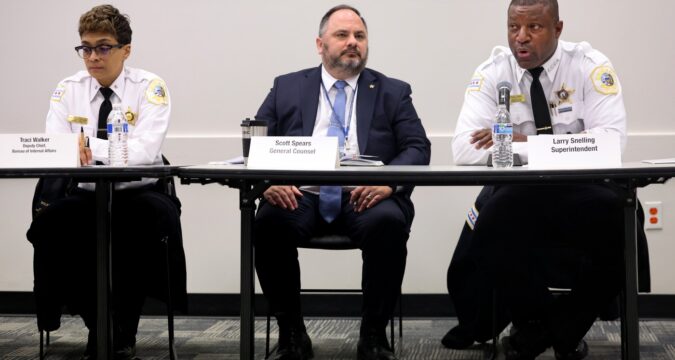
Chicago police officials this week said more civilian investigators will join the department’s Bureau of Internal Affairs as the office works to finish investigations more quickly and decrease its backlog of pending cases.
“Those investigations have to be done timely and they have to be taken seriously across the board,” Chicago Police Department Superintendent Larry Snelling said during a Tuesday status hearing on the city’s ongoing federal consent decree. “When we’re doing these investigations, we want to get them done as quickly as possible because if there’s a sustained finding (of misconduct), we want to be able to apply training or discipline as quickly as possible.”
Hastened internal affairs investigations would bolster both complainants’ and officers’ faith in the discipline process, Snelling said.
As is the case in most of CPD’s consent decree shortcomings to date, departmental staffing remains a key challenge. The long-awaited CPD workforce allocation study is expected to be unveiled in the coming weeks, and Snelling said he’s already received broader recommendations on “the needs of each district and the civilianization of some of our bureaus.”
While discussing the workload of internal affairs personnel, Deputy Chief Traci Walker told the court that BIA is budgeted for 144 positions, though 31 of those remained vacant as of last week. City attorney Allan Slagel later told U.S. District Judge Rebecca Pallmeyer that the city hoped to fill 25 of those vacancies with civilians by the end of 2026.
City data shows the number of complaints received by CPD internal affairs has steadily ticked up each year since at least 2020. That year, during the initial outbreak of COVID-19 and a summer of widespread unrest, internal affairs received 4,000 complaints. Last year, BIA received a little more than 5,300 complaints.
Assistant Illinois Attorney General Emily Hirsch highlighted for the court a recent audit of CPD internal affairs that found the bureau closed 834 disciplinary cases in 2024. However, less than half of those — 294 — were completed within six months of the initial complaint.
“These delays represent an ongoing and serious concern regarding accountability,” Hirsch said. “Often, delays mean officers will experience no consequences at all.”
Though BIA investigates the majority of complaints alleging officer misconduct, other mechanisms exist within CPD, too, though their efficacy remains in question.
Among its many mandates, the consent decree calls for the Police Department to assign two “accountability sergeants” to each of the 22 patrol districts to investigate officer misconduct.
However, those sergeants are frequently pulled away from their investigative work to address other time-sensitive needs of a given district. CPD is now revising a general order to ensure those sergeants remain focused on misconduct, and the department will promote at least two classes of sergeants and other supervisors in 2026.
Going forward, Snelling told the court, CPD’s 22 district commanders will face greater scrutiny over misconduct investigations involving officers and sergeants under their command. Snelling said those district-level complaints will be analyzed weekly, and district commanders will soon have to answer directly to Snelling for officers’ behavior and the resulting investigations by accountability sergeants.
“This isn’t a suggestion,” Snelling said.
Though Tuesday’s hearing focused largely on the investigations into alleged CPD misconduct, the future of adjudicating those cases remains murky.
For more than two years, the Chicago Police Board has been largely curtailed during a legal fight between the CPD officers’ union and the city over the future of public access to proceedings in the most severe cases of alleged misconduct. Arguments from the union and the city are expected this month, with a decision from the Illinois Supreme Court likely following later this year.
https://www.chicagotribune.com/2026/01/14/civilian-investigators-chicago-police-internal-affairs/

Ukrainians Fight Back: Family, Friends, & Neighbors Start Standing Up For Men Being Dragged Off To War
Ukrainians Fight Back: Family, Friends, & Neighbors Start Standing Up For Men Being Dragged Off To War
In Ukraine, ongoing forced conscription and violent practices by the military are provoking civilians to finally resist in unprecedented fashion: passersby, neighbors, and family members are blocking the recruiters’ path as they try to drag civilians off the streets.
Forced conscription is causing increasing fear and distrust among civilians, reports Magyar Nemzet, but many are also no longer standing idly by: More and more footage shows passersby, neighbors, and family members stepping in when the TCK recruitment authorities show up.
People are now openly confronting the authorities, with a few lucky ones escaping conscription. Sadly, other videos show men being forced into vehicles by recruiters or beaten to death.
This past summer, József Sebestyén, a Hungarian from Transcarpathia, died during his forced conscription. The Ukrainian authorities tried by all means to cover up his case.
In the video, recorded in Ivano-Frankivsk, Ukraine, a crowd of civilians surrounds a police car in which a man has been placed. In the recording, people can be heard protesting, standing in front of the car, and preventing the vehicle from leaving the scene.
Ukrainians are fed up with war and even more fed up with having to see their loved ones die for it. They are now openly speaking out against family members, friends, and neighbors being dragged away.
In another scene in Lviv, a woman unsuccessfully worked to stop recruiters from forcibly conscripting her son, and they drove away while she screamed.
A similar scene took place in Ungvár when TCK men pushed a young boy into their van, with locals intervening.
The woman’s scream sounded like the wailing for the dead.
In Lviv, a draft officer threw a woman into the snow when she tried to pull her man out of a van. pic.twitter.com/GiybPDbIPY
— Marta Havryshko (@HavryshkoMarta) January 11, 2026
In the footage, a woman, believed to be a relative of the boy, desperately boarded the bus, while an older man jumped in front of the vehicle to prevent it from leaving. Meanwhile, neighbors called and recorded the events. The civilians’ action was ultimately successful: the boy was freed.
The army is finding it increasingly difficult to fill its ranks, and fear and distrust are growing among the population. Just this past November, MN reports that near a school in Cherkasy, Ukraine, a mother reported that she was walking with her children in the playground when a man was surrounded by TCK men. Three men in military uniforms and one in a police uniform got out of the vehicle.
According to the witness, the group briefly greeted the man and then suddenly punched him in the face.
In downtown Kyiv, passersby witnessed violent scenes in December: TCK employees tried to drag a man out of a store while officers with machine guns stood in ambush. They are no longer even trying to maintain the appearance of legality.
🇺🇦❕ “If he catches ten men in a night, he’s already got 80 grand. Why the fuck would he go take bullets?”
A Ukrainian conscription officer boasts he can make a nearly $2,000 bonus per night for catching ten men to send to their deaths on the front line.
He says that, working… pic.twitter.com/JJpdvwiTfW
— Remix News & Views (@RMXnews) August 5, 2025
Recruiters seemingly couldn’t care less if their targets get injured or die during the operation.
Tyler Durden
Wed, 01/14/2026 – 14:30

Nuclear Reactors On The Moon By 2030
Nuclear Reactors On The Moon By 2030
First it was data centers in space. Now it’s nuclear reactors on the moon.
The global space race is heating up again, but it’s more than about just reaching the moon. International partners are teaming up to develop and establish remote posts on the moon utilizing nuclear reactors as the primary energy supply. The Russians are teaming up with the Chinese, the French are teaming up with the Italians, and the Americans are teaming up with… well, more Americans.
The US announced an intention to develop lunar nuclear reactors last summer along with a similar announcement from China and Russia. This was eventually followed up with an executive order titled Ensuring American Space Superiority which explicitly directed the initial establishment of a permanent lunar outpost, including the launch of a lunar reactor, by 2030.
The latest development involves the DOE and NASA signing an MOU to collaborate on deploying reactors on the moon. Instead of pairing up with an international ally in the same way other countries have, the US intends to accomplish this new mission on its own.
“History shows that when American science and innovation come together, from the Manhattan Project to the Apollo Mission, our nation leads the world to reach new frontiers once thought impossible,” said U.S. Secretary of Energy Chris Wright. “This agreement continues that legacy.”
It’s important to note that this is not the first time moon reactors have been discussed. Years ago, NASA launched a fission surface power project with the target of deploying a 40 kW reactor on the moon. The concept introduces unique challenges: due to the low gravity, the fluids used for coolants won’t behave exactly as they do on earth, and surface temperature swings on the moon introduce additional problems on top of that.
Premium subs are already well informed on the potential participants in the new space race, but this latest venture for deploying reactor technology on the lunar surface introduces new potential beneficiaries.
The earlier moon reactor program incorporated six major participants organized into three teams: Lockheed Martin paired with BWXT, Westinghouse joined Aerojet Rocketdyne, and X-energy teamed up with Intuitive Machines.
Given the environment on the moon, the reactor is most likely to be a high-temperature, gas-cooled design, limiting the field of possible reactor developers. There are other novel concepts being developed by companies like Antares Industries, but here are some potential public market participants to consider: BWXT, Westinghouse (Cameco), Lockheed Martin, Northrop Grumman, Boeing, Nano Nuclear, and Terra Innovatum.
Tyler Durden
Wed, 01/14/2026 – 14:10
https://www.zerohedge.com/markets/nuclear-reactors-moon-2030

Chicago considers selling naming rights at O’Hare and Midway International airports
Chicago is considering selling sponsorships and naming rights at O’Hare and Midway International airports, the city’s Department of Aviation announced in a news release Wednesday.
The city is inviting potential sponsors to describe their interest in sponsoring a range of airport assets, including parking lots, elevators, family restrooms and airport shuttle buses and stops.
The Aviation Department announced a Request for Information Wednesday. No contracts will be issued as a result of the RFI process, which is designed to evaluate the feasibility and potential value of a sponsorship program, the department said.
“The CDA is committed to thinking commercially and leveraging every opportunity to strengthen airport revenue in ways that support our airline partners and the traveling public,” Aviation Department Commissioner Michael McMurray said in a statement.
Department spokesperson Kevin Bargnes said the department did not yet have a “specific dollar figure in mind” in terms of how much revenue it thought a sponsorship program could generate.
“One of the key objectives of issuing the RFI is to better understand market interest and the potential financial opportunity,” Bargnes said in an email to the Tribune.
Airport sponsorships could be appealing to marketers because airports hold a captive audience of relatively high-income consumers, said Joseph Schwieterman, director of the Chaddick Institute for Metropolitan Development at DePaul.
“Air travelers have more spending power than the typical consumer,” Schwieterman said.
If the city pursues the strategy, he said, it would be important to set limits on what assets are available for sponsorship and keep signage “small and subtle” to prevent the city’s airports from becoming “akin to a large billboard.”
The sponsorship idea, first reported by Crain’s Chicago Business, comes in the midst of a long-awaited $8.2 billion redevelopment at O’Hare.
The airport saw its busiest summer in history last year with 24.3 million passengers traveling through it in June, July and August, according to the Aviation Department.
https://www.chicagotribune.com/2026/01/14/naming-rights-ohare-midway-airports/

Column: Trump just the latest president to push war powers
On Jan. 8, the U.S. Senate narrowly supported a procedural vote to move forward with a War Powers Resolution, limiting the president in using our military forces overseas. The vote was 52-47, with 51 needed to pass.
Five Republicans joined all Senate Democrats in support of the measure. They were Senators Susan Collins of Maine, Josh Hawley of Missouri, Lisa Murkowski of Alaska, Rand Paul of Kentucky and Todd Young of Indiana.
The 1973 War Powers Resolution is being revived. This passed over the veto of besieged President Richard Nixon, entangled in the self-inflicted Watergate scandal. This law stipulates that the president may use military force overseas for a maximum of 60 days without congressional authorization, with an additional 30 days available to conduct withdrawal. Under this statute, Congress can also order the immediate withdrawal of forces.
From the beginning, there has been tension between the executive and legislative branches over foreign policy and war. President Thomas Jefferson took independent initiative to protect American ships from armed attack, but informed Congress.
President Abraham Lincoln provides the most dramatic example of operating independently of Congress. He provoked the Confederacy into firing the first shots in the Civil War, then delayed convening Congress to preclude being limited or overruled.
Lincoln argued that the Constitution was never intended to facilitate national destruction. He assembled military forces and spent public funds without appropriation. Federal agents monitored and arrested people arbitrarily. A naval blockade was instituted. He insisted the conflict was a domestic disturbance.
President Franklin Roosevelt, while a reformer domestically, was relatively cautious in foreign affairs until World War II. Japan’s attack on Pearl Harbor ended powerful American isolationism. Successor Harry Truman significantly strengthened presidential authority regarding war.
In late June 1950, North Korean forces invaded South Korea. The United Nations Security Council (with the Soviet member absent) voted to repel the attack. Under this authority, and also a resolution of the Organization of American States, Truman committed American forces to the UN effort.
Congressional leaders were consulted, and concurred that a declaration of war was not necessary. This set a precedent for later executive branch independence in using force, most notably in Vietnam.
The memoirs of Secretary of State Henry Kissinger, who served both Nixon and successor Gerald Ford, describe careful consideration accorded to the War Powers Act during those turbulent years, but over time, this law faded in influence. The Ronald Reagan administration successfully resisted invoking the act in deploying U.S. military forces to the Middle East, bombing Libya and the invasion of Grenada.
President George H.W. Bush proved to be a particularly strong and decisive leader in reasserting executive authority. Operation Just Cause, the U.S. military intervention in Panama, was conducted without advance congressional approval. Bush did provide a report to Congress afterwards, noting in passing the War Powers Act.
Underscoring the importance of the Truman precedent, Bush explicitly declared the U.S. was authorized to participate in the First Gulf War under the authority of the United Nations. However, he also secured a resolution of support from Congress,
These precedents eased the use of force without congressional authorization. President Bill Clinton did so in the 1999 Kosovo War, and President Barack Obama in 2011 strikes in Libya. In both cases, NATO — and in the latter, the UN — authorized force.
Obama also declared chemical weapons use by Syria intolerable, though when they were used, he referred to Congress. Russia’s diplomats resolved that crisis.
Bipartisan congressional pressures may eventually limit President Donald Trump’s overseas adventures, though he vows otherwise. Stay tuned and very alert.
Arthur I. Cyr is author of “After the Cold War.”
Contact acyr@carthage.edu
https://www.chicagotribune.com/2026/01/14/column-venezuela-war-powers-act/

In Some Minnesota Schools, The Focus Is Reading, Writing, And Resistance
In Some Minnesota Schools, The Focus Is Reading, Writing, And Resistance
Authored by Aaron Gifford via The Epoch Times,
In the Twin Cities, schools play a key role in fostering a culture where resistance and anti-authoritarianism thrive.
A Minneapolis charter school located near where 37-year-old Renee Nicole Good was shot and killed last week by an Immigration and Customs Enforcement (ICE) agent is centered on social justice and has a long history of left-wing political activism, according to its website.
“We integrate social justice into every grade level, telling the stories of the people, not the people in power, and helping students understand history and their role in making the world a better place,” says the website for Southside Family Charter School.
The ongoing ICE protests coincide with a new statewide mandate requiring ethnic studies, which the state Department of Education defines as analyzing ways in which “race and racism have been and continue to be social, cultural, and political forces, and the connection of race to the stratification of other groups.”
Around the time of the Black Lives Matter protests in 2020, several schools in Minneapolis and St. Paul took it upon themselves to require one high school semester of ethnic studies courses before it became a state mandate.
The ethnic studies offerings in the Minneapolis district currently include a course on race and identity, and “culturally sustaining” African American, Chicanx/Latinx, American Indian, Asian American, Hmong, and Somali studies, according to its website.
Moreover, private schools and taxpayer-funded charters like Southside attract families seeking more progressive social justice-related curriculum than the public schools offer.
“Activist-bent parents chose the school knowing what they’re going to get,” Katherine Kersten, a senior fellow at the Minnesota-based Center of the American Experiment think tank and policy center. “Kids are being told to study left-wing activism and view the activists as models to follow.”
Other Twin City area schools that prioritize social justice beyond the level of traditional public schools include the St. Paul School of Northern Lights, the Angela Day School for Liberation and Progressive Education, and the Prairie Creek Community School.
Kersten said “identity and resistance” are two main pillars of the ethnic studies mandate. Approved instruction for stand-alone high school ethnic studies courses that must be implemented ahead of the fall semester—in addition to the embedded requirement for all other subject areas in K–12, as they are reviewed and then updated periodically—most likely include definitions and examples of identity and resistance, she said.
University of Minnesota’s Center for Race, Indigeneity, Disability, Gender, and Sexuality Studies developed a free curriculum for the state mandate endorsed by teachers unions and state officials. Its middle school instructional materials, “Protest Art & the Movement for Black Life,” require students to learn about the 13 guiding principles of the Black Lives Matter movement, create protest art “for a cause of their choice,” and “describe how mural artists transformed the landscape of Minneapolis during the 2020 Uprising,” according to the center’s webpage.
This kind of classroom rhetoric only emboldens anti-authoritarian sentiment in the community, even if protesters don’t fully understand their cause, Kersten said.
“We’ve seen people crossing the line, and destruction of property, and our elected leaders are encouraging this—[saying] that authority figures are racist and that this resistance is noble,” she said. “To have the state working with and relying on some of the most extreme, self-interested activists to create standards is so egregious.”
Kersten’s organization is urging public school districts across Minnesota to consider less extreme instructional materials that are endorsed by nonpartisan academic institutions and will still meet the state requirements, including 1776 Unites and the Foundation Against Intolerance and Racism (FAIR), both of which oppose identity politics.
The Center for the American Experiment recently presented its suggested instructional materials to Anoka-Hennepin schools, the largest district in the state, and was greeted outside by a long line of protestors summoned from Minneapolis and St. Paul, Kersten said.
“Anyone who criticizes is automatically called a racist,” she said, adding that, beyond a few parents who took advantage of a state law that allows them to opt their child out of instructional materials they find objectionable, there has been very little pushback against Minnesota’s ideological education movement.
“It’s so damaging to celebrate these events as a great Civil Rights statement,” she said. “It’s important for schools to push back and make the case for reasonable academic learning.”
In social media posts last week, Rep. Buddy Carter (R-Ga.) called on the executive branch to revoke all federal funding to the Southside Family Charter School.
“This institution radicalizes students and pushes a left-wing agenda that demonizes ICE agents,” his Jan. 9 posts on Facebook and X said. “The federal government should not subsidize anti-American education.”
The Epoch Times reached out to the Southside Family Charter School, Gov. Tim Walz’s office, the Minnesota Department of Education, and the Minneapolis and St. Paul school districts. No responses were received in time for publication.
Tyler Durden
Wed, 01/14/2026 – 13:55
https://www.zerohedge.com/political/some-minnesota-schools-focus-reading-writing-and-resistance

Indiana Senate tax committee hears testimony for library budgets bill
Julie Wendorf, director of the Crown Point Community Library, told Indiana senators during a committee meeting Tuesday that a current bill could be detrimental to state libraries.
“Senate Bill 8 places Indiana libraries at risk by removing critical fiscal guardrails that support stable and sustainable library operations,” said Wendorf, who is the past president of the Indiana Library Federation. “Indiana law already provides tools when concerns arise about library finances.”
Wendorf testified during a state Senate Tax and Fiscal Policy Committee hearing on Tuesday. The committee heard testimony and an overview of Senate Bill 8 — authored by state Sen. Gary Byrne, R-Byrnesville — which would require a county, city or town fiscal body to review the proposed budget and property tax levy of a public library, according to the Indiana General Assembly website.
Byrne said that public libraries with a majority of unelected board members and more than half of their assessed value in a city or town should submit their proposed budget and tax levy to their city or town’s elected fiscal body. If more than half of the parcels are outside a city or town, the library must go to the county fiscal body.
“Currently, each year, libraries will determine whether their budget will be adopted by the library board, or in some cases, an appropriate county, city or town fiscal body,” Byrne said. “The determination is based on the current year (Department of Local Government and Finance) certified budget, the maximum levy growth quotient and the ensuing year’s advertised budget.”
Throughout Indiana, Byrne said 236 libraries each year might not be bound to a budget that’s approved by a city, town or county fiscal body. With Senate Bill 8, governing bodies would have more power to cut library budgets or adjust levies, which library professionals believe could cut essential services.
He also said that, as of Jan. 1, 2025, libraries had a total outstanding debt of $367.6 million and $59 million in debt payments due that year.
“An unknown amount of this debt is attributed to libraries with no oversight by an elected fiscal body,” Byrne said. “Libraries are one of the only taxing units that can have a board containing a majority of unelected board members and impose a tax. All units with the power to tax should be made by elected officials, I believe.”
If an elected body doesn’t have to approve a library budget, Byrne considers it taxation without representation, he said Tuesday. Byrne also has not talked to any governing body that believes a review of library budgets is necessary, but he thinks most would embrace it.
“Potentially, (public libraries) could not necessarily be spending the money in the best interest of the taxpayer because they’re not held accountable,” he said. “There’s no way to hold them necessarily accountable in some situations.”
Lake County Public Library Executive Director Carol Daumer Gutjahr responded to Senate Bill 8 in a Tuesday statement.
“LCPL’s position on SB 8 is that the current budget adoption process is functioning well; there is existing oversight from the county council as, in addition to appointing library board members, the council has the ability to review and interrogate our annual budget recommendation,” Daumer Gutjahr said. “The Department of Local Government and Finance has additional oversight and the State Board of Accounts conducts regular audits to ensure accountability, maintain internal controls, and confirm that the tax dollars entrusted to LCPL are used appropriately.”
Porter County Public Library Executive Director Jesse Butz was unable to immediately respond to a request for comment about the bill.
During Tuesday’s hearing, Wendorf said Senate Bill 8 could lead to insufficient funding for libraries over a shorter period of time, which would place their ability to function and serve communities at risk.
“Libraries provide essential services, including early literacy programs, workforce development, support, broadband access and lifelong learning opportunities,” Wendorf said. “These services depend on predictable funding and informed fiscal decision making.”
State Sen. Chris Garten, R-Charlestown, asked Wendorf how the bill would remove fiscal guardrails, saying that it seems to add fiscal body oversight. Wendorf told Garten that she believes libraries have fiscal oversight because their board members are appointed by public officials and their budgets are submitted to county officials.
Wendorf also said the changes are concerning following the financial uncertainty libraries are experiencing because of Senate Enrolled Act 1, passed in the 2025 session. The impacts are still being evaluated, Wendorf said, and Senate Bill 8 could lead to a “more significant blow” to library budgets.
“Public libraries are not abstract budget lines,” Wendorf said. “They are community anchors. When funding becomes unstable, services are reduced, hours are cut and access is lost. (Senate Bill 8) does not strengthen libraries — it introduces instability.”
mwilkins@chicagotribune.com
Gaza is entering the second phase of the ceasefire plan Trump helped broker, envoy Steve Witkoff says
WASHINGTON — The United States said Wednesday that it is moving into the next phase of a Gaza ceasefire plan that involves disarming Hamas, rebuilding the war-ravaged territory and establishing the group of Palestinian experts that will administer daily affairs in Gaza under American supervision.
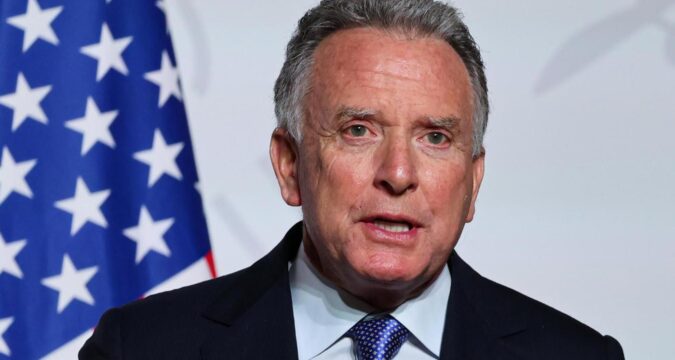
President Donald Trump’s envoy Steve Witkoff said in a post on X that the ceasefire deal that the Republican president helped broker was entering its second phase following two years of war between Israel and Hamas, including the establishment of a technocratic government in Gaza.
But Witkoff did not offer any details about who would serve on the new transitional Palestinian administration that would govern Gaza. Trump’s White House did not immediately offer any more information, either.
The mediators of the ceasefire deal — Egypt, Turkey and Qatar — welcomed the establishment of the committee and said it would be led by Ali Shaath, a former deputy minister in the Palestinian Authority.
“This is an important development to improve the humanitarian situation in Gaza,” they said in a joint statement.
The Gaza native served as a deputy minister for transportation with the internationally recognized Palestinian Authority. Shaath, an engineer, is an expert in economic development and reconstruction, according to his biography on the Palestine Economic Policy Research Institute’s website.
Witkoff said that the U.S. expects Hamas to immediately return the final dead hostage as part of its obligations under the deal.
While Wednesday’s announcement indicates a key step forward, a new government in Gaza and ceasefire face a number of huge challenges — including the deployment of an international security force to supervise the deal and the difficult process of disarming Hamas.
Appointees to a technocratic committee are part of a broader plan to end Hamas’ 18-year rule of Gaza. The appointees will run day-to-day affairs in Gaza, under the oversight of a Trump-led “Board of Peace,” whose members have also not yet been named.
The ceasefire reached under Trump’s 20-point plan took effect in October and stopped much of the fighting. Under the first phase of the three-phase deal, Hamas released all but one hostage it was holding in exchange for hundreds of Palestinians who were held by Israel.
The technocratic committee that Witkoff said would be established under the second phase will be tasked with providing public services to the more than 2 million Palestinians in Gaza, but it faces towering challenges and unanswered questions, including about its operations and financing.
The United Nations has estimated that reconstruction will cost more than $50 billion. The process is expected to take years, and little money has been pledged so far.
There also is the more immediate challenge of figuring out how to take over basic services after nearly two decades of Hamas-led rule in Gaza and repeated rounds of conflict with Israel.