Category: News
Venezuelan opposition leader is confident about return of democracy but says little of her plans
WASHINGTON — Venezuelan opposition leader María Corina Machado said on Friday she’s confident of her country’s eventual transition to democracy after the U.S. military ousted former President Nicolás Maduro.
But she acknowledged the challenge of holding free elections after decades of autocratic rule and declined to set any timetable. When pressed, she also took pains to avoid giving any details on her plans to return home, saying only that she would return “as soon as possible.”
Her struggle to offer clear answers in Friday’s news conference reflects how President Donald Trump’s endorsement of a Maduro loyalist to lead Venezuela for now has frozen out the nation’s Nobel Peace Prize -winning crusader for democracy.
With little choice but to put her faith in the U.S. and hope for an eventual transition, Machado has sought to cozy up to Trump, presenting her Nobel medal to him a day earlier at the White House.
As Machado was meeting with Trump, CIA Director John Ratcliffe was in Venezuela meeting with acting President Delcy Rodríguez, further confirmation that Maduro’s longtime second in command was the woman that Washington preferred to see managing Venezuela at the moment.
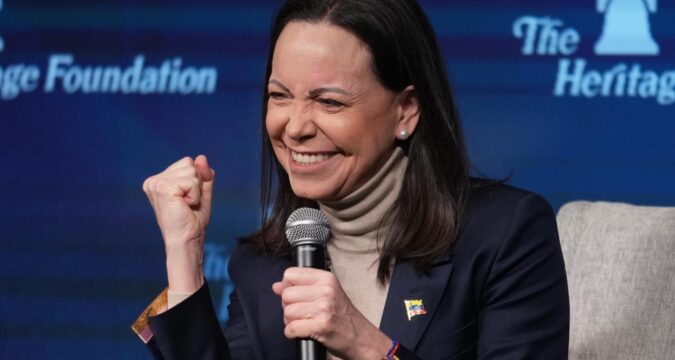
Speaking to reporters at the Heritage Foundation, a conservative think tank in Washington, Machado said she was “profoundly, profoundly confident that we will have an orderly transition” to democracy that would also transform Venezuela’s self-proclaimed socialist government long hostile to the U.S. into a strong U.S. ally.
She dismissed the perception that, in choosing to work with Rodríguez, Trump had snubbed her opposition movement, whose candidate was widely believed to have beaten Maduro in the 2024 presidential election.
“This has nothing to do with a tension or decision between Delcy Rodríguez and myself,” she said, but avoided elaborating in favor of more general assertions about her party’s popular mandate and the government’s dismal human rights record.
“The only thing they have is terror,” she said of Maduro’s government.
Machado waved away the suggestion that her movement wouldn’t be able to assert authority over security forces that remain loyal to Maduro and have long benefited from corruption under his government.
“There are not religious tensions within the Venezuelan society or racial or regional or political or social tensions,” she said.
But she also acknowledged “the difficulty of destroying a 27-year structure allied with the Russians and the Iranians.”
“We are facing challenging times ahead,” she said.
In apparent deference to Trump, she provided almost no details on Friday about what they discussed or even what she thought the U.S. should do in Venezuela, saying, “I think I don’t need to urge the president on specific things.”
Trump has said little about his administration’s plans for holding new elections in Venezuela and far more about its vision for reviving the nation’s crumbling oil infrastructure. He’s relying on a crippling oil blockade and threats of further military action to keep the interim government in line.
In a sign that the U.S. is exploring the restoration of relations with Venezuela, U.S. officials are considering reopening the U.S. Embassy in Caracas, which Trump closed during his first administration.
Machado traveled to Washington looking to rekindle the support for democracy in Venezuela that Trump showed during his first administration. She presented him with the prize she won last year, praising him for what she said was his commitment to Venezuela’s freedom. The Nobel Institute has been clear, however, that the prize cannot be shared or transferred.
Trump, who has actively campaigned to be awarded the prize, said Machado left the medal for him to keep. “And by the way, I think she’s a very fine woman,” he said. “And we’ll be talking again.”
That was of small comfort after Trump said it would be difficult for Machado to lead because she “doesn’t have the support within or the respect within the country.”
Machado crisscrossed Venezuela ahead of the 2024 presidential elections, rallying millions of voters looking to end 25 years of single party rule. When she was barred from the race, a previously unknown former diplomat, Edmundo Gonzalez, replaced her on the ballot. But election officials loyal to the ruling party declared Maduro the winner despite ample credible evidence to the contrary.
Machado, revered by millions in Venezuela, went into hiding but vowed to continue fighting until democracy was restored. She reemerged in December to pick up her Nobel Peace Prize in Norway, the first time in more than a decade that she had left Venezuela.
DeBre reported from Buenos Aires, Argentina. Darlene Superville in Washington and Meg Kinnard in Columbia, South Carolina, contributed.
https://www.chicagotribune.com/2026/01/16/venezuelan-opposition-leader-democracy/

Biden-Appointed Federal Judge Blocks Trump Admin’s Move To Withhold Minnesota Food Stamp Funds
Biden-Appointed Federal Judge Blocks Trump Admin’s Move To Withhold Minnesota Food Stamp Funds
A federal judge on Jan. 14 stopped the Trump administration from withholding $80 million in administrative costs for Minnesota’s Supplemental Nutrition Assistance Program (SNAP), ruling that the U.S. Department of Agriculture’s tight deadline for reviewing the eligibility of 100,000 households was likely illegal.
U.S. District Judge Laura Provinzino, appointed by President Biden in 2024, said during a hearing in Saint Paul that the U.S. Department of Agriculture (USDA) failed to justify why Minnesota needed to complete the review of recipient eligibility by Jan. 15, or face losing half its administrative costs. She noted the agency ignored laws limiting such reviews to once per year.
“USDA is asking the state to violate federal law, regulations, and the state’s own operational plan,” which had previously been approved by the agency, said Provinzino.
As Kimberley Hayek explains below via The Epoch Times, the injunction prevents the USDA from cutting the funds, including $20 million for the first quarter that was set to be withheld on Jan. 14, until the lawsuit is resolved.
The case focuses on administrative costs, not direct benefits to recipients.
Minnesota officials argued the USDA’s actions stem from political animosity by President Donald Trump toward the state and Gov. Tim Walz.
“This is part of an ongoing effort by the federal government to pummel our state,” Joseph Richie of the Minnesota Attorney General’s office said during the hearing.
Brian Mizoguchi of the U.S. Department of Justice argued that Minnesota’s issues with other federal programs justified the move, and the state could cover costs itself.
The move ties into broader allegations of fraud in Minnesota’s social programs. The USDA cited a scandal involving theft of federal welfare funds as a reason for the review.
The Trump administration has intensified scrutiny of SNAP nationwide, with around 118 arrests for fraud in one operation, Agriculture Secretary Brooke Rollins told Fox News in Nocember 2025.
Rollins has highlighted “massive fraud,” including thousands of dead people receiving benefits and duplicate payments.
She said in a Nov. 2, 2025, post on X that 21 states refused to send data for review to the Trump administration’s Department of Government Efficiency (DOGE).
The request was sent to all 50 states shortly after the Trump administration took over in January of that year, she said, and within the 29 states that cooperated, “massive fraud” was found in the form of thousands of cases of illegal immigrants and deceased individuals receiving benefits.
As a result of that audit alone, approximately 700,000 individuals have been removed from SNAP benefits, and more than 100 arrests have been made in connection with fraudulent SNAP benefits.
Minnesota is among 21 states that have failed to share SNAP data.
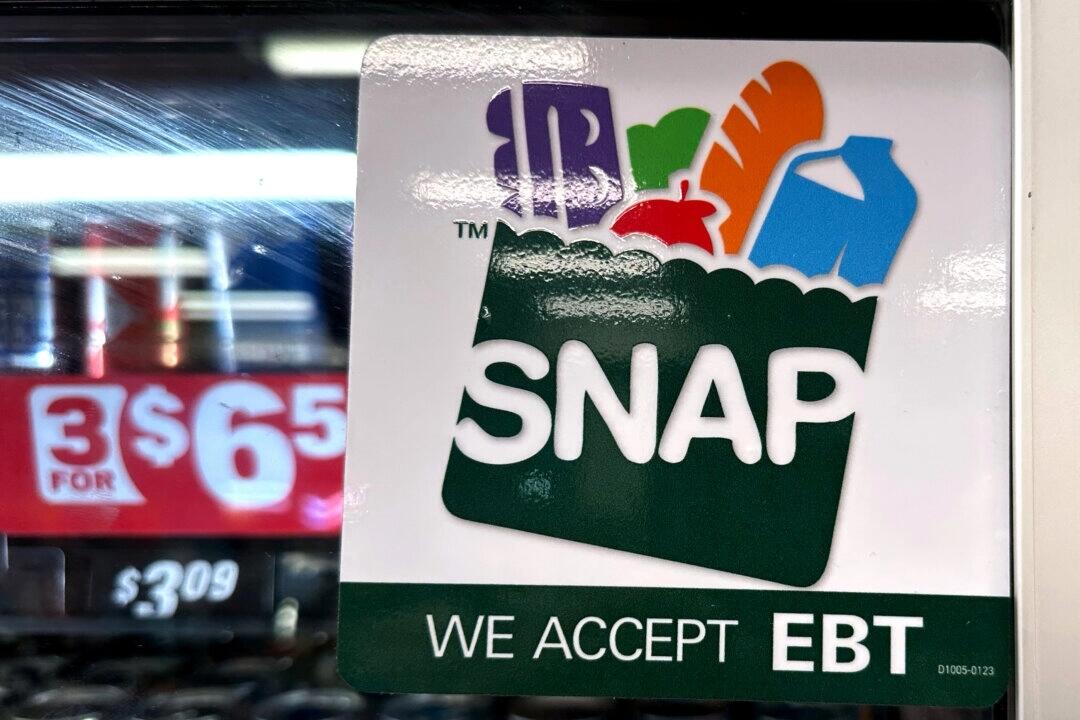
SNAP serves Americans below 130 percent of the poverty line with maximum benefits of $298 monthly for one person and $546 for two. States handle daily operations.
Similar court actions have occurred, such as a California ruling blocking USDA access to SNAP data.
The USDA did not respond to a request for comment by publication time.
Tyler Durden
Fri, 01/16/2026 – 18:50
Casos de sarampión superan los 550 en Carolina del Sur
Por MIKE STOBBE
Los casos reportados de sarampión en Carolina del Sur aumentaron casi 30% en los últimos días, dijeron el viernes funcionarios de salud del estado.
El departamento de salud de Carolina del Sur reportó 124 nuevos casos desde el martes, elevando el total del estado a 558, en una ola de infecciones centrada en un brote en el condado de Spartanburg.
Desde las fiestas de fin de año, el brote de sarampión en Carolina del Sur se ha convertido en el peor en Estados Unidos. También se han reportado casos de sarampión este año en Arizona, Florida, Georgia, Carolina del Norte, Ohio, Oregon, Utah y Virginia, según los Centros para el Control y la Prevención de Enfermedades.
El año pasado fue el peor para la propagación del sarampión en la nación desde 1991, según los CDC. Estados Unidos confirmó 2.144 casos en 44 estados. Tres personas murieron, todas ellas no vacunadas.
El sarampión es causado por un virus altamente contagioso que se transmite por el aire y se propaga fácilmente cuando una persona infectada respira, estornuda o tose. Es prevenible con vacunas y se ha considerado eliminado de Estados Unidos desde el año 2000, aunque el país está en riesgo de perder ese logro.
___
El Departamento de Salud y Ciencia de The Associated Press recibe apoyo del Departamento de Educación Científica del Instituto Médico Howard Hughes y de la Fundación Robert Wood Johnson. La AP es la única responsable de todo el contenido.
___
Esta historia fue traducida del inglés por un editor de AP con la ayuda de una herramienta de inteligencia artificial generativa.
https://www.chicagotribune.com/2026/01/16/casos-de-sarampin-superan-los-550-en-carolina-del-sur/

Eintracht Frankfurt y Werder Bremen empatan en un emocionante partido con seis goles
BREMEN, Alemania (AP) — Werder Bremen y Eintracht Frankfurt compartieron los puntos de la Bundesliga después de un dramático empate 3-3 que comenzó con un gol en el primer minuto y terminó con uno en el último el viernes.
El visitante Frankfurt tomó la ventaja después de 51 segundos gracias a un hermoso toque de Arnaud Kalimuendo, el delantero cedido por el Nottingham Forest.
Bremen luchó y Justin Njinmah igualó antes del descanso.
Sin embargo, volvió a verse en desventaja 11 minutos después del segundo tiempo cuando Nnamdi Collins recibió un pase bombeado al área y logró dirigir su disparo de primera al rincón lejano de la portería.
Bremen, no obstante, mostró la misma resiliencia que antes y Jens Stage empató a 12 minutos del final.
El delantero cedido Jovan Milošević aprovechó dos minutos después para poner a Bremen por delante por primera vez y parecía que se avecinaba la primera victoria desde noviembre para Die Grün-Weißen.
Sin embargo, una volea de Ansgar Knauff tras un pase retrasado en el tiempo de descuento le dio a Frankfurt el empate, aunque solo después de una tensa revisión de video que confirmó el gol.
El resultado fue justo dado el carácter cambiante del juego que deleitó a una multitud con entradas agotadas en el Weserstadion.
No obstante, el partido fue el séptimo para el Bremen sin una victoria y su forma en casa fue particularmente preocupante para el entrenador Horst Steffen. Se mantuvo en el 12do lugar.
Frankfurt estaba en séptima posición.
___
Deportes en español AP: https://apnews.com/hub/deportes

St. Stanislaus Kostka Academy to close after 151 years
After operating for 151 years, Chicago’s St. Stanislaus Kostka Academy said it will close its doors at the end of the 2025-26 school year.
The West Town Catholic elementary school is part of the Archdiocese of Chicago which represents 179 schools across the city.
The school cited years of declining enrollment and an anticipated $500,000 deficit as the reason for the closure.
“The school has been on life support for some time,” the Rev. Anthony Bus, the pastor, wrote in a letter to families and staff members. “Unfortunately, the financial burden on the Academy makes the school no longer sustainable.”
Bus also wrote that even with more than $500,000 raised by Kostka’s Kids to keep 85% of its students in school and more than $60,000 in donations from Mass attendees, the school will still have a looming deficit at the end of the school year.
He wrote that the parish, which has helped to financially support the school, is now facing its own deficit because of it.
“My heart breaks for all of you who have found a healthy and holy refuge for your children at St. Stanislaus Kostka Academy,” Bus wrote. “The dedication of the faculty and staff, their love for your children, and the sacrifices they have made are admirable.”
At the end of the letter, he wrote that the school “will work toward a fitting closure that honors the long legacy of St. Stanislaus Kostka Academy and what it has meant to generations of families since its opening 151 years ago.”
The academy’s last day will be June 4.
https://www.chicagotribune.com/2026/01/16/st-stanislaus-kostka-academy-to-close-after-151-years/

Hamilton tendrá un nuevo ingeniero de carrera tras difícil temporada de debut con Ferrari
MARANELLO, Italia (AP) — Lewis Hamilton tendrá un nuevo ingeniero de carrera que le hablará por radio en la Fórmula uno, después de que Riccardo Adami fue trasladado a otro puesto en Ferrari.
Los ingenieros de carrera son los miembros del personal que más a menudo están en contacto con los pilotos en la pista, discutiendo incidentes de la competición, configuración del bólido y estrategia. Las conversaciones por radio entre Hamilton y Adami fueron objeto de cuestionamientos durante la decepcionante temporada 2025 del piloto británico.
Este mes, antes del inicio de las pruebas de pretemporada, la escudería italiana informó que Adami trabajaría con su academia de pilotos y supervisaría las pruebas en coches antiguos de F1, sin nombrar a un reemplazo.
El equipo “desea agradecer a Riccardo por su compromiso y contribución en su papel en pista y le desea mucho éxito en su nueva posición”, añadió Ferrari en un comunicado que no mencionó a Hamilton por nombre.
“El nombramiento del nuevo ingeniero de carrera para el auto #44 se anunciará a su debido tiempo.”
Hamilton, siete veces campeón del mundo, negó tener problemas en su relación con Adami, quien anteriormente trabajó con el cuatro veces campeón Sebastian Vettel. Pero a veces sus conversaciones por radio daban indicios de frustración.
En su primera carrera juntos en el Gran Premio de Australia, Hamilton pidió a Adami que lo dejara en paz porque sentía que lo distraían con información que no necesitaba.
En el Gran Premio de Miami disputado en mayo, Hamilton preguntó si el equipo podría tener una “pausa para el té” mientras Ferrari se tomaba su tiempo para decidir la estrategia. En Mónaco, Hamilton preguntó si Adami estaba molesto con él y pareció no obtener respuesta.
Por primera vez en su carrera, el piloto británico no terminó en el podio en un Gran Premio durante todo el año, su primera temporada tras una mudanza que causó revuelo desde Mercedes.
_____
Deportes AP: https://apnews.com/hub/deportes

To Combat Academic Fraud, Scholars Confront Hallowed Tradition
To Combat Academic Fraud, Scholars Confront Hallowed Tradition
Authored by Vince Bielski via RealClearInvestigations,
This is the fourth part of a series on the crisis in academic research and publishing. Read the first three parts here, here and here.
The driving ethos of academia, “publish or perish,” is fighting for its life.
The requirement that scholars constantly publish or face academic ruin has been considered the primary engine of scientific discovery for decades. But a growing movement of universities and researchers is trying to banish the practice to the archives, saying it has perverted the pursuit of knowledge and eroded the public’s trust in science.
Reformers at top universities in Europe and the U.S., including Cambridge, Sorbonne, and UC Berkeley, say this traditional system of advancement has led to an explosion in the growth of low-quality research, with little meaningful impact on academic fields or society. It has also sparked the spread of fraudulent research, as “paper mills” churn out fake articles for sale to academics seeking to pad their CVs.
To weaken the “publish or perish” stranglehold on universities, hundreds of research institutions are reforming the incentive system that shapes academic careers. It currently rewards scholars for frequently winning grants and publishing papers, with extra points for landing in the most esteemed, high-impact journals, even when the articles are not themselves influential.
The new incentives vary at different universities and research centers, but tend to focus on the actual quality of the research rather than the quantity or the prestige of the journals. The research’s influence on academic fields and, when appropriate, on society and public policy, is also often rewarded. So is a commitment to share papers and data as widely and freely as possible with the public. The goal is to break science out of its self-serving and insular bubble and better connect the enterprise with the public that funds it.
“The incentives dictate how people behave, and we have a long tradition of rewarding publications in high impact journals,” said Ginny Barbour, a Cambridge-trained physician, medical journal editor, and co-chair of the Declaration on Research Assessment, or DORA. “If we don’t get research assessment right, then the whole foundation of academic life is undermined.”
The growing movement to revamp the rewards that set the direction of science is spearheaded in the United States by DORA, which is also the name of its declaration of principles. The declaration has gathered 3,500 signatures of support from organizations, and 23,000 from individuals, since its founding in 2012 at a cell biology conference in San Francisco.
In Europe, the Coalition for Advancing Research Assessment (CoARA) operates much like DORA. Some 700 organizations and 450 higher education institutions – and 27% of all Ph.D. awarding universities in Europe – have committed to its principles since 2022, according to a study co-authored by Alex Rushforth at Leiden University in the Netherlands.
“In Europe we have made a lot of progress in a short period of time. CoARA has been a very impressive catalyst,” said Rushforth. “Of course, signing CoARA is one thing and implementing culture change is quite another thing.”
Overturning an Entrenched Culture
Despite these significant inroads, reformers of the deeply embedded “publish or perish” culture face a huge challenge. High-ranking university officials, from presidents on down who would have to approve a new reward system, have greatly benefited from the current one. “This system worked for me so why wouldn’t it work for anyone else?” said Professor Mike Dougherty, explaining the thinking of those who questioned the assessment reforms he eventually won at the University of Maryland.
Defenders of the status quo, which is intended to bring out the best in scientists, can also point to notable progress as recently as the last decade, especially the dazzling breakthroughs in healthcare. A system that pushes researchers to aim high can get impressive results.
The iconic journal Nature is among the most influential drivers of this culture. The Nature family of journals is near the top of the publishing pyramid largely because of their “Journal Impact Factor,” or JIF, scores. JIF is a beauty contest based on the number of citations the articles in the journal receive. The more citations, the higher the JIF, and the greater the journal’s esteem. Publishing in journals with high JIF scores can make a career.
The Nature family is highly selective, attracting more than 50,000 scholarly submissions a year and publishing less than 10% of them. Nature’s tendency to report on major advances in many fields, famously illustrated by the Watson and Crick paper on DNA structure, has helped give the 157-year-old journal its magisterial reputation.
But the fact that prestigious journals publish important articles doesn’t mean everything they run is noteworthy. Studies show that a journal’s impact factor is often determined by a small number of influential articles that receive a lot of citations, reflecting glory on many less influential papers that are not cited much. In other words, many marginal papers make the cut. It’s as if Aaron Judge’s Yankees teammates got credit for his home runs.
JIF is also easy to manipulate: Authors are sometimes encouraged to include citations to articles in the same journal that they are publishing in to raise the JIF score. Even the publisher of Nature warns research institutions not to place too much emphasis on its own JIF, and DORA says the metric should be completely ignored.
As he was trying to convince his faculty in Maryland’s psychology department to support reforms that would sideline JIF, Dougherty examined 45,000 papers in a couple of hundred journals to determine if the journal metric and citation counts were indicators of research quality, based on factors like statistical errors and the strength of evidence. “What we found is that there is no evidence to support the claim that higher-impact journals publish higher quality research,” Dougherty said.
The need to be published in prestigious journals leads some scholars to shape their research to fit what they believe will be accepted. That means researchers take fewer experimental risks, jump on popular trends, and shelve negative findings that are very important to report, creating what DORA’s Barbour calls a “gap in the literature.”
The quest for glamour publications also delays by years the dissemination of knowledge and the possibility of breakthroughs, said Professor Steve Russell, who led the implementation of assessment reforms at Cambridge. “Young researchers in particular start at the highest impact factor journal, go through peer-review, get rejected, and then work their way down to the next highest impact factor, and on and on,” said Russell, who has bylines in both Nature and Science. “It’s a complete and utter waste of time.”
When researchers can’t clear this high bar, the fallback option is to maximize the quantity of papers to list on their CVs. This is enabled by what Dougherty calls “salami slicing” the data. Rather than producing the most substantial paper possible, scholars divide their experimental data into several small slices, allowing them to generate more papers that contribute little to science but add to the flood of publications that’s making quality control and fraud detection through the peer-review process almost impossible.
The publication of fraudulent articles full of fake data is growing at a faster rate than legitimate papers, according to a 2025 study, threatening the legitimacy of the scientific enterprise. “We know that the incentives for people to publish in high impact journals skews behavior,” said Barbour. “And at its worst, it skews behavior towards the fabrication and falsification of research, and that’s highly problematic.”
U.K. Funders Push Reform
Most universities in the U.K., which gave birth to the first academic journal in 1665, have embraced research reform, either in word or deed, along with many in the Netherlands, Norway, and Finland. Pressure from funders looking for more research with greater societal impact is one reason why.
UK Research and Innovation, the largest government funder of research and a signatory to DORA in 2019, runs a program that annually assesses universities’ research contributions to academic disciplines and society. It then divides £2 billion in grants based on those scores. The Wellcome Trust, which is the other major source of grants, restricts them to researchers at institutions that have reformed assessment practices, aiming to produce a bigger impact on people’s health and well-being from the billions of pounds it provides.
“Funding pressure was initially the driving factor. When the people giving money say this is what we expect, change happens very quickly,” said Cambridge’s Russell. “But there was also a group of academics who were very vocal that we needed to change the way that we assess researchers.”
At Imperial College London, a tragedy added to the impetus for reform. In 2014, Professor Stefan Grimm took his own life as he was struggling to win grants and publish papers needed to succeed in the faculty of medicine. It went as far as to list the high-impact journals that mattered most.
“People were shocked but not necessarily surprised,” said Stephen Curry, an emeritus professor of biology at Imperial who helped push through reforms.
The suicide catalyzed a review of assessment practices that, with the strong support of the vice provost of research, led Imperial to sign DORA in 2017 over the opposition of some engineering faculty. The changes discourage the consideration of metrics like JIF in hiring and promotion while placing greater emphasis on the quality of teaching and the impact of research.
Curry said mandates from the top don’t quickly erase ingrained habits. But in 2023, Curry sat in on dozens of recruitment and promotion interviews in different faculty groups and was impressed with what he observed.
“There has been a shift away from dwelling overmuch on numbers and journal impact factors,” he said. “These things haven’t gone away and people certainly still feel that heat of competition, but I think it is more evident now that the quality of one’s work, as well as one’s wider contributions to the university and to society, are more important than they were.”
U.S. Universities Slower to Change
While the U.K. is a success story for reformers, they have yet to deeply penetrate the biggest research system of all – the U.S. – where only a handful of major research institutions have joined the movement. Unlike in Europe, U.S. universities don’t face federal funding pressure from above to transform how they reward scientists. Under the Trump administration, federal agencies are mainly focused on ending what they deem, sometimes wrongly, as DEI-related research, and reducing overhead fees that add up to 70% to the cost of research grants.
Reformers in the U.S. also face resistance from below. University faculty wield much more power over academic affairs than their peers in Europe, where administrators are more likely to make the rules. Some U.S. scholars don’t see the case for abandoning long-standing reputational metrics, according to a survey by Leiden’s Rushforth. Even if JIF and the number of citations a paper receives aren’t perfect proxies for quality, survey respondents said, they offer a practical way for busy academics on hiring committees to efficiently evaluate a long list of candidates.
Maryland’s Dougherty says university departments are also wary of being on the cutting edge of reform in case it doesn’t work out. “A lot of the resistance comes back to people saying ‘We won’t do it until other universities do it, or until other people within our discipline are doing it,’” he said.
Even academics like Mark Hanson, who is critical of the “publish or perish” culture and has published papers about the misconduct it breeds, see some downsides to assessment reform. The University of Exeter professor’s fundamental research has overturned assumptions about genes and disease resistance, opening the door to rethinking therapeutic designs. Hanson is concerned that the reform movement’s emphasis on research that’s tied to practical problems will further diminish fundamental research that generates the new ideas that science needs to advance.
“With increasing pushes to fund only directly-applicable or policy-impacting research, we’re stuck in our current state of knowledge and we just iterate and explore its crevices endlessly,” said Hanson.
Reform in the U.S. has been mostly left to lone scientists with a passion for the cause. After Sandra Schmid enacted assessment changes to focus on research quality rather than metrics like JIF at the University of Texas Southwestern Medical Center, she became chief scientific officer in 2020 at Biohub, founded by Mark Zuckerberg and his wife, Priscilla Chan. One year later, Biohub, which creates AI tools for biological research, signed DORA.
Another research group, the Howard Hughes Medical Institute, signed DORA in 2013. In its competitions among researchers for employment and grants, and in evaluations for continued support, journal names are removed from applications, turning the focus on the quality of scholarship, not whether it was published in a prestigious journal.
Nonprofits like the Pew Charitable Trusts are also joining the movement. Pew is working with a group of philanthropic and public funders who want their grants to produce a bigger impact in healthcare, education, and other areas. To engage researchers in the effort, Pew has convened a group of 18 university leaders, including those at Brown, Duke, and UC Berkeley, who are redesigning their reward systems to encourage the public interest research that the funders seek.
At Maryland, Dougherty almost single-handedly championed the reforms. It took five years of meetings, his aforementioned study, and two rounds of assessment guideline revisions before Dougherty finally won the unanimous approval of his 27 faculty members. The new assessment practices, implemented in 2022, focus on measures of quality, such as the reproducibility of research, making papers and data widely accessible, and their impact on academic fields and, when applicable, on public policy.
Dougherty says so far, so good. Some faculty are more motivated to pursue important questions and take risks they would have avoided earlier because high-impact journals may not be interested in their work.
But is the overall quality of research improving in departments that have established new incentives? It’s the ultimate goal. But so far, no one has tried to answer this important question of whether the hard work of changing the culture of academia is producing better research, leaving a gap in understanding that needs to be filled, said Leiden’s Rushforth.
“We should be collecting data and testing our hypotheses and not taking for granted that if you change the incentives, you get a different type of academic research,” Rushforth said. “There should be some sort of accountability.”
Tyler Durden
Fri, 01/16/2026 – 18:25
https://www.zerohedge.com/political/combat-academic-fraud-scholars-confront-hallowed-tradition
Former suburban cop convicted of extorting motorists, stealing cash and drugs
A former south suburban police officer was convicted by a federal jury Friday of conspiring to rob motorists of cash and drugs during traffic stops and extorting people in exchange for declining to press charges or tow their vehicles.
After a two-week trial, the jury deliberated for about half a day before finding Antoine “Bell” Larry, 46, a former patrol officer for the tiny village of Phoenix, guilty on all four counts he faced, including bribery conspiracy, extortion and attempted extortion.
Larry’s attorney, Beau Brindley, told the Tribune after the verdict that the case was fraught with unreliable witnesses and investigative mistakes that they will “continue to fight for Antoine Larry’s exoneration.”
“After proving outright dishonesty from each of the witnesses who incriminated Mr. Larry, and exposing recordings of FBI agents pressuring a witness to change his story, we believe reasonable doubt was obvious and are disappointed with the jury’s verdict,” Brindley said in a statement.
Larry, of Bolingbrook, was charged in 2023 along with his then-sergeant, Jarrett Snowden, with agreeing to use their official powers and positions as officers to rob and extort people they pulled over in both Phoenix and the neighboring suburb of Harvey, about 19 miles south of downtown Chicago.
The officers stole firearms, drugs and cash from targeted vehicles and their occupants, and also solicited cash payments in exchange for “reducing, dropping or declining to press charges” against the occupants, as well as allowing them to keep their vehicles instead of having them towed, according to the four-count indictment.
In some instances, Larry and Snowden arranged for the victims to meet them at a nearby gas station with bribe payments, the indictment alleged.
To conceal the conspiracy, the officers at times used a “bagman” to collect the payments, and also had an agreement to sell the narcotics they’d stolen to a drug dealer and split any proceeds from the eventual street sales 50/50, the indictment alleged.
Snowden pleaded guilty to the conspiracy in January 2024 and testified against Larry last week. Preliminary sentencing guidelines call for up to about 5 1/2 years in prison for Snowden, but prosecutors have agreed to recommend a reduced prison term in exchange for his cooperation, court records show.
The trial also featured testimony from a handful of witnesses who said Larry and Snowden shook them down after traffic stops, mostly for minor or made up offenses.
One of them, Bernard Allison, told the jury last week that Larry and Snowden offered to make gun and assault charges go away for $2,000 after he was stopped in 2021 and resisted arrest while trying to flee. Larry later gave him a warning, Allison said.
“He said if I was any other skin color he wouldn’t be helping me like this,” Allison testified. “He told me don’t try to turn him in to the police cause ain’t nothing was gonna happen. People had tried to turn him in before and he was still working as a police officer.”
Asked why he agreed to pay them, Allison testified: “I was scared for my life, for one. And I just didn’t want to go to jail.”
Under cross-examination by Brindley, Allison admitted he was a drug dealer and convicted felon on the night Larry stopped him, and that when he first talked to the FBI he lied about the gun in his car and other incriminating evidence.
“Mr. Allison, when people lie, do you agree that it becomes hard to trust them?” Brindley asked.
“It all depends on the situation,” Allison said.
“In reality you were scared of getting caught with crack cocaine and a gun and going to prison, weren’t you?” Brindley asked.
“Absolutely,” Allison replied.
Phoenix and Harvey have long been hotbeds for corruption, with numerous police officers and politicians indicted over the years on charges ranging from extortion to murder.
The sensational 1979 murder of then-Phoenix Mayor William Hawkins was allegedly carried out by members of his own police department who were angry he wasn’t sharing siphoned-off government funds with them like he promised. A police lieutenant was convicted and sentenced to life in prison, while another officer was acquitted at trial.
In 2019, the U.S. attorney’s office announced an array of corruption charges against people close to then-Harvey Mayor Eric Kellogg, including Kellogg’s brother, Derrick Muhammad, a Harvey police officer, accused of falsifying a police report to protect two convicted felons from possibly facing weapons charges.
Muhammad pleaded guilty and was sentenced in 2020 to nine months in prison.
A spokesperson for Phoenix could not be reached Friday for comment on Larry’s conviction.
jmeisner@chicagotribune.com
https://www.chicagotribune.com/2026/01/16/former-suburban-cop-convicted-extortion/

New York Scammers Plead Guilty In $68M Adult Day Care Fraud Scheme
New York Scammers Plead Guilty In $68M Adult Day Care Fraud Scheme
Two scammers in Brooklyn pleaded guilty on Thursday to defrauding the state’s controversial Medicaid home care program to the tune of $60 million.
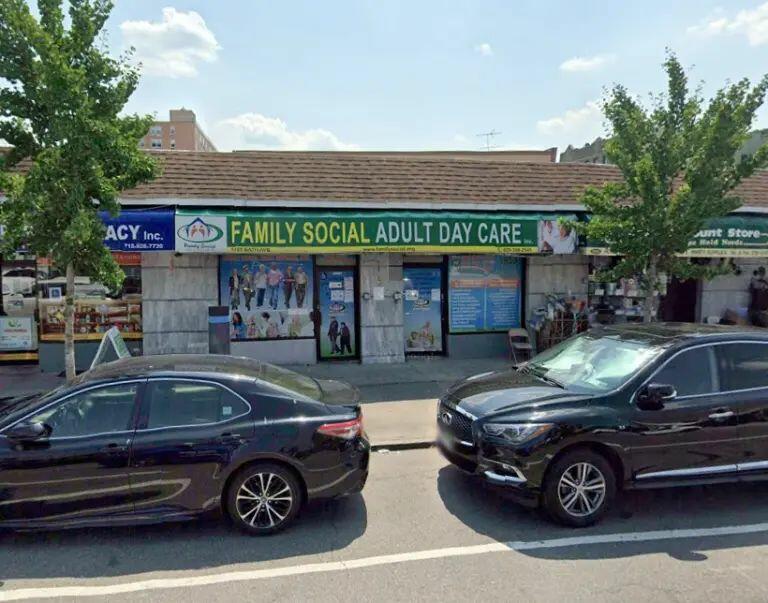
Manal Wasef and Elaine Antao, both 46, pleaded guilty to conspiracy to commit health care fraud. Their scheme involved referring Medicaid recipients to two Brooklyn social adult day care centers and a home health company in exchange for illegal kickbacks and bribes, the DOJ announced on Thursday.
Between approximately October 2017 and July 2024, in exchange for illegal kickbacks and bribes, Wasef and Antao referred Medicaid recipients to the social adult day cares and the home health company. The defendants also paid illegal kickbacks and bribes to Medicaid recipients for social adult day care services and home health care services that were billed to Medicaid but were not provided or that were induced by kickbacks and bribes. Wasef and Antao used multiple business entities to launder the fraud proceeds and generate the cash used to pay kickbacks and bribes. In connection with their guilty pleas, Wasef and Antao agreed to collectively forfeit approximately $1 million. Wasef and Antao are the sixth and seventh individuals, respectively, to plead guilty in this case. -DOJ
The pair were tapping into the Consumer Directed Personal Assistance Program (CDPAP), which allows people with minimal health care experience to care for their elderly disabled relatives and friends. According to the NY Post, hundreds of ‘middleman’ firms work as de-facto payroll agents between the caregivers and Medicaid – all with minimal oversight.
On top of their guilty plea, the pair agreed to pay back around $1 million.
“Today’s guilty pleas demonstrate the Department’s longstanding commitment to rooting out fraud in government health care programs by aggressively prosecuting those who steal from taxpayer-funded programs,” said Assistant Attorney General A. Tysen Duva of the Justice Department’s Criminal Division.
The pair are scheduled to be sentenced in May, where they each face a maximum penalty of 10 years in prison.
Overall, eight people were initially accused of participating in the yearslong scheme to defraud the state. Also charged were owners Zakia Khan and Ahsan Ijaz, as well as Oasmneah Hamdi, Ansir Abassi, and Amran Hashmi.
Tyler Durden
Fri, 01/16/2026 – 18:00
https://www.zerohedge.com/political/new-york-scammers-plead-guilty-68m-adult-day-care-fraud-scheme

Dembélé brilla ante Lille y devuelve al PSG la cima de la Ligue 1
PARÍS (AP) — Ousmane Dembélé dejó atrás los rumores de transferencia y anotó un doblete crucial para el Paris Saint-Germain en la victoria del viernes 3-0 sobre el Lille, que lo devolvió a la cima de la Ligue 1.
La semana pasada, los medios franceses informaron que el ganador del Balón de Oro 2025 rechazó una nueva oferta de contrato.
Su entrenador Luis Enrique calificó la especulación como noticias falsas y el enfoque de Dembélé fue agudo en un partido entre dos de los cuatro mejores equipos de la liga francesa.
Su gol a los 12 minutos desde la distancia no dio oportunidad al portero del Lille y su segundo, 18 minutos después del segundo tiempo, fue un recordatorio de por qué ganó ese Balón de Oro.
Con cuatro defensores frente a él, Dembélé de alguna manera encontró espacio para disparar el más audaz de los tiros que desconcertó al portero Berke Ozer y cayó justo debajo del travesaño.
El suplente Bradley Barcola, otro cuyo futuro ha sido objeto de especulación, completó la goleada en el tiempo de descuento cuando aprovechó una defensa floja y remató el tercero.
La victoria calmó los nervios del campeón defensor solo días después de que el rival de la ciudad, el Paris FC, lo eliminara de la Copa de Francia.
El triunfo del viernes elevó al PSG de nuevo a la cima de la tabla de la liga, dos puntos por delante del Lens, que tiene un partido pendiente el sábado contra el penúltimo Auxerre.
El Lille se mantuvo cuarto, a diez puntos de distancia.
Mónaco pierde de nuevo
El Mónaco csufrió su séptima derrota en ocho partidos tras otra pobre actuación, esta vez en casa por 3-1 ante el Lorient.
Bamba Dieng del Lorient tuvo un gol anulado en la primera mitad, pero consiguió uno que contó a mitad del segundo período. El delantero senegalés aprovechó un error de la defensa del Mónaco.
Ansu Fati igualó ocho minutos después, pero los goles de Jean-Victor Makengo en el minuto 85 y Dermane Karim a tres minutos del final le dieron al visitante Lorient los tres puntos y extendieron su racha invicta a nueve partidos en todas las competiciones.
El Lorient estaba a un punto detrás del Mónaco, que ocupa el noveno lugar.
Fue otro comienzo infeliz del fin de semana para el Mónaco, cuyo récord en los partidos de los viernes por la noche cayó a dos ganados, cinco empatados y nueve perdidos.
___
Deportes en español AP: https://apnews.com/hub/deportes