
Category: News
At one time, Illinois was a top oil producer. Today, that legacy is a $160M problem.
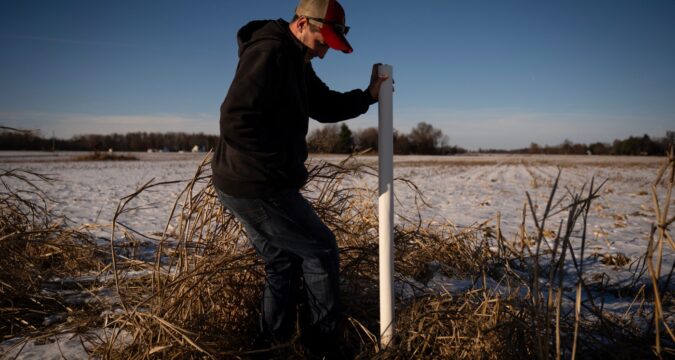
CRAWFORD COUNTY — Bill Rosborough and his son Jon stopped their pickup truck near a 40-acre cornfield and pointed to a white PVC pipe that rose 5 feet from the snow-covered ground on a windy December afternoon.
The Rosboroughs farm this land and placed the pipe to mark the spot where an oil well once stood.
“I don’t even know that we’ve found the casing yet,” Jon Rosborough said. “It’s just a hole.”
He crouched by a small pool of liquid near the pipe, obscured by stalks of dead grass. The faint rainbow sheen of oil was visible.
State records show the well extends 965 feet below ground, drilled in March 1916. Neither Rosborough knew who was responsible for it today.
“I don’t know what its official status is,” Jon Rosborough said, “but as you can see, they’ve not been here in a while, let’s put it that way.”
Thousands of similarly abandoned oil and gas wells are strewn across southern Illinois, remnants of a distant past when the state was one of the nation’s top oil producers. They litter farm fields, hide in woods and abut waterways. Many are called “orphans” by the state, their owners dead or unidentified, their companies bankrupted by a notoriously volatile global industry punctuated with booms and busts.
Left unplugged, some of these wells leak toxic chemicals hundreds of feet below the surface, potentially contaminating groundwater, and spit climate-warming methane gas into the atmosphere. They allow underground fluid called brine — several times saltier than seawater — to spill onto fertile farmlands, killing crops and leaving a virtually dead zone of soil that can take years to fix.
While oil companies are responsible for mitigating those risks by plugging wells that have stopped producing, there are nearly 4,000 abandoned oil and gas wells that are currently unplugged — holes, essentially, left behind for the Illinois Department of Natural Resources to close.
And for years, the state has fallen woefully short of the task, the Tribune has learned after reviewing hundreds of pages of public records and conducting more than two dozen interviews with southern Illinois farmers, oil industry representatives, environmental scientists and advocates. The paper’s three-month investigation found the state has mismanaged millions in operator fees designed to prevent orphan wells from becoming problems and has failed to document just how many abandoned wells exist.
Those who work in the oil business acknowledge the environmental threats posed by orphan wells and the role their industry has played in creating them. They admit that while some good-intentioned companies simply couldn’t survive when oil prices plummeted, there have been a few unscrupulous operators who, in past decades, have found ways to shirk their responsibilities for plugging wells once those assets become liabilities.
Still, industry representatives say oil production continues to play a vital role in southern Illinois, pumping millions of dollars every year into community coffers while extracting a crucial natural resource.
“Orphan wells are definitely something we take very seriously,” said Seth Whitehead, executive director of the nonprofit Illinois Petroleum Resources Board. “The vast majority of our operators do everything they can to address their wells when they stop producing and get them plugged.”
Consider, Whitehead and others say, that for the last 35 years, a portion of annual fees paid by Illinois oil operators has been deposited into a fund to plug wells and restore the land they once occupied. And yet, the state cannot account for where most of that money has gone over the years, only to say that much of it has been swept away for uses other than intended.
“We’re paying the penance for the people who didn’t follow the rules,” said Chuck Robinson, an Indiana-based oil operator whose company operates and plugs wells in Illinois, Indiana and Kentucky.
Illinois’ DNR calculates the cost to plug known orphan and abandoned wells in Illinois is $160 million. But in a state where 155,000 wells have been drilled since oil was discovered more than a century ago, and where most of the 23,000 or so active oil and gas wells today are considered “marginal” — producing less than two barrels a day — the price tag for plugging wells could end up being much higher.
In the last four years, Illinois received two separate federal grants totaling $50 million to bolster its well-plugging efforts through the Bipartisan Infrastructure Law under the administration of President Joe Biden, which earmarked $4.7 billion for similar efforts nationwide.
Environmental advocates and some downstate residents say much more is needed.
“If nothing changes, Illinois faces a perfect storm: aging wells leaking pollutants, rural communities left with contaminated land and groundwater and derelict well equipment that makes farmland unusable, and a state budget that cannot absorb the cleanup costs,” say the authors of a newly released report on unplugged oil and gas wells in Illinois, jointly created by the California-based environmental nonprofit ClientEarth USA and the Environmental Advocacy Center of the Bluhm Legal Clinic at Northwestern University’s Pritzker School of Law.
The 41-page report lays out what its authors call “critical flaws” in the state’s oil regulation, which have “created conditions for widespread abandonment of inactive and low-producing wells.”
Illinois’ DNR says it has done its best — often with limited resources — to protect the public from environmental hazards abandoned oil wells could pose while holding operators responsible for plugging wells before they can become orphans.
“As much as we can get people working with us to continue to be in compliance, the fewer wells (need to be plugged),” said Dan Brennan, director of the department’s Oil and Gas Resource Management division. “We’re all just doing the best we can to make sure everything is as safe as possible. … We try to work with all operators, and we try to do things as carefully and as thoughtfully as we can.”
A whiskey bottle and an oil boom
People have been trying to find oil under Illinois soil as far back as the 1850s. Some of the first wells were drilled a decade or so later in Montgomery and Clark counties. Despite some limited successes, commercial oil production wouldn’t take hold in the state until 1905, when two West Virginia wildcatters struck oil on a 50,000-acre farm in Crawford County.
A year later, three Pennsylvania men were supposedly searching for a place to drill on land leased from Crawford County farmer John W. Shire. After emptying a bottle of whiskey, the story goes, they tossed it over their shoulders, determined to drill a well wherever the bottle landed.
The well they drilled, called Shire No. 1, instantly yielded upward of 1,000 barrels of oil a day, catapulting Illinois to the nation’s third-largest oil producer.
The John Shire No. 1 derrick, which yielded upward of 1,000 barrels of oil a day, in an archival photo at the Illinois Oil Field Museum in Oblong. (Illinois Oil Field Museum)
Oil derricks sprang up seemingly overnight, as did the tent cities that housed oil field workers.
Production dropped sharply in the 1920s and ‘30s. By 1937, advancements in exploration and drilling brought a second boom to the state. Oil fields were discovered under land covering a dozen southern and southeastern counties. In Marion County alone, the Salem oil field produced 95 million barrels in 1940, which, according to the Illinois Petroleum Resources Board, made it the second-largest oil field in the country that year.
In referencing the oil field and the need for fuel during World War II, President Franklin D. Roosevelt is rumored to have said, “Thank God for Salem, Illinois.”
Illinois reclaimed its spot as the nation’s third-largest oil producer. Farmers, many of them having struggled through the Great Depression, were suddenly rich, leasing their fields to companies that would go on to have familiar names: Marathon. Texaco. Exxon.
Marathon Petroleum refinery in Robinson, on Dec. 17, 2025. It began as the Robinson Oil Refining Co. in 1906 and has been operated by Marathon since 1924. (E. Jason Wambsgans/Chicago Tribune)
An anecdote on the town of Salem’s website illustrates the change in fortunes. One young farmer had apparently been so excited by his newfound wealth that he drove his car into a pond. He had enough oil money to buy a new one the next day.
By the end of the year, the young man had bought three new Buicks.
How orphans were born
As the 1960s closed, the boom years were over.
National companies saw what was coming and looked elsewhere. To Texas and New Mexico, offshore and overseas. They sold their wells to smaller independent operators, some of them started by former big oil company employees who decided to stay in Illinois and strike out on their own.
These smaller operators gambled that, despite fluctuations in oil prices, their lower overhead costs would allow them to turn a profit even with lower producing wells.
Many did. Then the bust came.
Between 1980 and 1986, oil prices plunged 70%, throwing the industry into turmoil. Some Illinois operators went bankrupt or walked away from their leases, forfeiting the bonds they filed with the state in the event they could not plug their wells.
The state responded in 1991 with the creation of its plugging and restoration fund. Illinois operators pay an annual fee on every well they own: $100 per well for the first 100 and $75 for every well beyond that. At least half the money is deposited in the plugging and restoration fund. The rest is used for equipment such as vehicles, computers and gauges, as well as contract services and travel.
It’s unclear how much of that money has gone toward plugging abandoned oil wells since. Brennan, the state’s Oil and Gas Resource Management director, said he had been told by his predecessor that the state has, in years past, swept that money away for other purposes — a common practice in Illinois.
State law requires the department to submit yearly reports on plugging fund activity to an oil and gas advisory board. The department could only find reports from six fiscal years in the 2010s, Brennan said, adding that he was unaware of the requirement when he took the job in 2019.
The few state reports that have been compiled show that only a fraction of the funds have been used to plug wells.
“What I’ve been doing since I’ve been here is trying to make sure that we take any money we can for plugging and use it for that,” Brennan said.
Those assurances have done little to assuage the frustration felt by some southern Illinois farmers who have watched the number of abandoned oil wells that need plugging remain virtually unchanged for 30 years.
“It’s basically indicative of probably a failure in Springfield,” said Bill Rosborough, the Crawford County farmer and realtor who, along with other farmers, helped lobby for the state to plug abandoned oil wells in the 1990s. “It’s one of those things where it’s quite a ways from Springfield, and it’s not a high priority. The sad part is it’ll continue to get worse because they’re not going away.”
Environmental risks that ‘defy easy quantification’
Over 8,000 orphan wells pepper the Illinois Basin, a large swath of sunken land under Illinois that extends into parts of Indiana and Kentucky — a geological formation with layers of sediment, such as sand, mud and ash, that accumulated hundreds of millions of years ago. Trapped within are ancient animal and plant remains fossilized by intense heat and pressure, transformed into coal and oil deposits that became vital economic resources for the region.
But pollution from coal mining and oil drilling has tainted the state’s groundwater resources, which rural residents with private wells and most community water systems away from Lake Michigan rely on. In southern Illinois, where most oil activity occurred, groundwater is primarily found in sand and gravel aquifers between 300 and 500 feet below the surface. Fossil fuel extraction also poses unprecedented challenges for another of the state’s most enduring economic activities: agriculture. In the Illinois Basin, 60% of orphan wells are located in a farm area, according to data from the U.S. Geological Survey.
Even when they are no longer productive, oil wells can leak pollutants into groundwater, harming the farming economy, public health and ecosystems.
Related Articles
Cash crops, hidden costs: Inside Illinois’ complex agricultural system
Illinois farmers and environmentalists celebrate the defeat of $3 billion CO2 pipeline: ‘We have thrown so many stones at Goliath’
Forever chemicals: They’re in your drinking water and likely your food. Read the Tribune investigation
Across Illinois, wells that have been abandoned, are marginally productive or were plugged improperly by modern standards have leaked oil, saltwater and chemicals into waterways and farmland, according to hundreds of pages of citizen complaints obtained through a Freedom of Information Act request and reviewed by the Tribune. Farmers and oil workers recall a time when tree trunks and fence posts were used to plug wells. Even properly plugged wells can leak as the casing infrastructure deteriorates over time.
“Any open hole like that is an avenue for contamination,” said Brian Snelten, former president of the Illinois Association of Groundwater Professionals. “Anytime you punch a hole in the ground, you’re disturbing what nature put there.”
Oakley Shelton-Thomas, a senior researcher with the national nonprofit Food & Water Watch, said all abandoned wells should be treated as potentially dangerous.
“Because various pressures (and) underground conditions can change, and these wells can provide a pathway for contamination to the surface,” he said. “The fact that nothing is leaking from an abandoned well at one point in time doesn’t mean that abandoned well poses no risk.”
Existing issues and risks are top of mind for the IDNR’s Oil and Gas division, Brennan said, and are used to prioritize abandoned wells that need urgent attention. However, wells are not regularly monitored for leaks; instead, the agency relies on observations during annual inspections as its “biggest tool” and on citizen complaints to determine if and when an abandoned well is causing environmental damage.
“The salts, the brine, any oil (getting) into a groundwater supply or surface water supply has the most likely potential for harm,” Brennan said. “And, of course, that ties into the safety of any people nearby, any livestock or wildlife nearby. That’s our biggest concern. After that, it’s always the economics concern. Unfortunately, saltwater is rather destructive to plant life and to crops.”
For the last two decades, Kelly Aldrich has had to plant corn, soybean and wheat crops around a couple of dozen barely productive wells owned by an out-of-state company — some producing as little as half a barrel of oil a day, he says — on parts of land he farms where leaks of oil and brine have rendered several acres infertile.
“You can’t grow anything on it,” the Lawrence County farmer told the Tribune. Sometimes, leaks that have gone unnoticed at the surface still have impacts from below. “People just don’t realize what’s going on under the ground there … in several places on my farm, and other people’s, too. I mean, there’s a lot of land ruined here.”
Bill Rosborough drives through fields he farms near Oblong, Dec. 15, 2025. (E. Jason Wambsgans/Chicago Tribune)
Over in Crawford County, Jon Rosborough pulled up a production map for one 168-acre field his family farms. Two separate clusters of red, close to 4.5 acres in all, produced nothing. The culprit, he and his father said, was saltwater leaking from oil wells.
“I had a guy tell me it’s a lot like if your mother made mashed potatoes and she got too much salt in them and the only thing you can do is fix more mashed potatoes to blend the ratio back to something that’s livable,” Bill Rosborough said. “That’s basically what you have to do with these salt-damaged areas. You’ve got to try to leach it out and then blend something back into it.”
Contaminants from unplugged wells include components of brine from deep within land formations, such as chloride, which degrades aquatic ecosystems and can cause salt kills in agricultural land, and barium, which can cause gastrointestinal and cardiovascular issues if humans consume it in drinking water. Another contaminant of water and air, hydrogen sulfide can cause cardiovascular, neurological and respiratory issues.
Unplugged oil and gas wells can release benzene, a carcinogen, into the atmosphere and groundwater. According to the World Health Organization, there is no safe exposure level to this chemical in the air — even low quantities can lead to severe health effects. Inhaling it can irritate airways, causing coughing, wheezing and shortness of breath, and in the long term, it can contribute to neurological symptoms, a suppressed immune system and blood disorders.
“People would see these wells in their backyard and not even think about what they are or what it means. And now, when they learn about it, they realize, ‘Oh, this is a threat to my family’s health.’ It’s become a different story,” said Adam Peltz, energy director and senior attorney at the national advocacy nonprofit Environmental Defense Fund. “It’s not like everyone who lives near an orphan well is drinking poisoned water. But it’s definitely a risk vector.”
In a study published last year, USGS researchers set out to investigate precisely how vulnerable aquifers are to hazards from the more than 117,000 documented orphan wells across the country, a number they say could be three to five times higher.
“We don’t want to, like, scare people,” said Nick Gianoutsos, one of the study authors and a physical scientist at the USGS and project chief for the agency’s research into orphan wells. “When you look at a map, they’re kind of everywhere. … Probably the majority of the wells are benign for now — meaning not leaking gases or anything — but it’s hard to see what’s happening below the surface.”
The scientists found the Illinois Basin has 0.191 wells per square mile; for context, aquifer systems in the Appalachian Region and Oklahoma — historically top-producing areas — have densities two to three times higher. In addition, 3% of orphan wells in the basin are located within lakes, rivers or wetlands, and 3.5% are within a developed area, where they pose threats to the environment and human health.
Even on land, unplugged wells can pose serious problems for waterways. For instance, Aldrich worries that the oil and brine that the structures in his land often spill could reach far beyond, into a nearby slough, then a creek and ultimately the Embarras River.
Another factor in evaluating risks to groundwater is age; older wells are more prone to leaking or failing because they weren’t built with modern groundwater protections in mind, like the Clean Water Act of 1972 and the Safe Drinking Water Act of 1974, and have deteriorated over decades of wear and tear. Over 2,000 orphan or abandoned wells currently in the state’s plugging fund — that is, more than half — were permitted for drilling before 1972.
Unplugged wells can also release methane into the air, where it works as a potent greenhouse gas that can trap over 80 times more heat than carbon dioxide in the atmosphere during its first 20 years in the atmosphere. These leaks can sometimes cause explosions, which pose a serious safety risk to nearby communities.
“Now, they don’t all emit methane,” Peltz said. “Scientists think that maybe 10% to 20% (of orphan wells) emit appreciable amounts of methane.”
According to a Reuters investigation, orphan and abandoned oil and gas wells in the country emitted 281,000 tons of methane into the atmosphere in 2018. This is equivalent to approximately 7.9 million tons of carbon dioxide — the same amount released by 1.7 million gasoline-powered passenger vehicles in a year.
Still, the climate impact from orphan and abandoned wells is not greater than methane emissions from active wells.
“No one well is changing the climate. But when you add up maybe the 100,000 (orphan) wells that are leaking, that’s starting to have a material impact” across the country, Peltz said. “At least with the active oil and gas industry, you have someone who’s theoretically supposed to deal with it, a solvent operator. With these orphan wells, it means that there is no solvent, responsible party, and it just falls on the state.”
‘A kitchen table conversation’
The problem of orphan wells had for decades been largely unknown outside of the oil industry and the communities where those wells were drilled.
That started to change in 2021, when the Biden administration’s Bipartisan Infrastructure Law included $4.7 billion for states to plug orphan wells.
“And so,” Gianoutsos said, “that really kind of made orphan wells a household conversation, a kitchen table conversation.”
Oil-producing states refocused their efforts on identifying orphan wells, and as a result, their inventory lists grew.
Oil tanks on farmland in Crawford County near Oblong, Dec. 15, 2025. (E. Jason Wambsgans/Chicago Tribune)
A 2024 report published by the Interstate Oil and Gas Compact Commission noted a 54% increase in the number of orphan wells documented by states since 2020. The multistate government agency’s report identified 28 states with a combined 141,959 known orphan wells.
Illinois was one of nine states that reported fewer orphan wells. Its tally of 3,946, a 9% drop from 2020, was 12th most out of the reporting states. About half of the nation’s wells were found in three states: Ohio, Oklahoma and Pennsylvania. Kentucky reported nearly 16,000 orphan wells; Indiana had around 1,200.
Illinois’ federal grant application asked for around $163 million, which amounts to nearly $40,000 per well. In 2022, the state received an initial $25 million federal grant, enough to plug around 500 wells. Prior to federal intervention, the state plugged an average of 20 to 25 wells a year.
The state received a second $25 million federal grant in October 2024. Nearly 100 orphan wells have been plugged thus far using that money, Brennan said. That same year, the U.S. Department of Energy awarded IDNR another $17.3 million to address methane emissions from low-producing wells by plugging them.
Fixing ‘a failing system’
More money will be needed, the Northwestern and ClientEarth report’s authors contend, unless the state cures its “regulatory blindness” that has turned existing laws into “paper tigers” and has given oil operators too many avenues to avoid cleaning up their dying wells.
“At the end of the day, if we have a failing system, either the wells will remain unplugged forever, or the government will have to pay to close them,” said Robert Weinstock, director of Northwestern’s Environmental Advocacy Center and one of the report’s authors.
To start, the Northwestern and ClientEarth report advocates for Illinois’ DNR to track how much oil each well produces.
“The failure to collect production data is remarkable,” Weinstock said. “IDNR is depriving itself of the most basic and effective tool to identify inactive wells by failing to collect that data. It could do so much more, even with its existing limited resources, if it just did that.”
Fresh tracks in the snow lead to pumpjacks in an oil field in Clark County, Dec. 16, 2025. (E. Jason Wambsgans/Chicago Tribune)
Illinois’ DNR largely relies on operators to self-report any oil wells they need to plug. Or, they find abandoned wells through routine inspections — some 30,000 were conducted last year by 13 inspectors — or through public complaints, which typically happen only after a well causes a problem,such as an oil or saltwater leak.
Production data is one tool, the report argues, that could help the state sniff out any attempts to transfer dying oil wells to companies that don’t have the financing to keep them going or to companies designed to go bankrupt, all but ensuring those wells will become millstones hanging around the state’s neck.
Brennan recalled a case from some 20 years ago, before his time at the department, in which an oil company in Sangamon County was found to have created a smaller shell company to take on all its unproductive wells. The IDNR learned about it beforehand and thus was able to intervene and file suits with the attorney general, then negotiated with the company to plug most of the wells.
“We were able to stop the worst of it,” Brennan said. “In this industry, a small percentage, 5-10% of people, are going to try to get away with what they can, and we’re just trying to stay on top of it to see if we can stop them before it gets too bad.”
The state should publish production data, the report’s authors argue, so the public could better identify inactive wells and take action to have them plugged. That could be by making use of an IDNR grant program meant to reimburse landowners who pay for that work to be done. The grant program has not been used in at least two years, the report notes, and should be reformed.
“Folks who have the means to plug a well themselves and wait for the state to reimburse them can jump the line, even if (the well is) farther down the priority list based on public health factors,” said Ben Segal, an attorney with ClientEarth USA and one of the report’s authors.
Knowing how much oil is being pulled from Illinois reservoirs would also be a step toward creating a tax on that production, which the Northwestern and ClientEarth report notes could pay for plugging abandoned oil wells and repairing any environmental damage they caused.
Oil pumpjacks in Clark County, Dec. 15, 2025. (E. Jason Wambsgans/Chicago Tribune)
Thirty-four states either tax the market value of crude oil or the volume produced, or some combination of the two.
“There’s no doubt that the oil industry has been an important part of Illinois’ economy and oil wells that are still producing oil are certainly producing a useful product,” Weinstock said. “The problem is, how do we make sure that when those wells aren’t producing useful products, they also stop producing all the really dangerous and harmful byproducts? The industry that profits from these wells must pay for the consequences of those wells. That’s basic economics.”
As it is, Illinois lawmakers recently increased the bond amount operators are required to post with the state for each well, an insurance policy, of sorts, should they shirk their cleanup responsibilities.
The bipartisan law, passed unanimously in 2025, raises the per-well bond rate from $5,000 to $10,000 and removes the $100,000 cap on blanket bonds for operators with more than 100 wells. The change applies to new wells drilled and to operators who defaulted on fees in the preceding five years.
“(It) is a complicated way of very simply saying: ‘If you make a mess, clean it up,’” said state Sen. Erica Harriss, a Republican from Edwardsville who introduced the law. “And I think that’s not an unpopular opinion.”
The Northwestern and ClientEarth report authors say the new law doesn’t go far enough. Not all operators are required to post bonds, and the ones who meet the requirement are still able to post bonds far below the cost for well-plugging and site remediation. The new bond rate for an operator with 100 oil wells, for example, amounts to $1,000 per well.
Beyond strengthening financial requirements, the report’s authors say the state should reform the way it places inactive oil wells in temporary abandonment status. That designation lasts five years and carries an annual fee of $100 per well. Wells can be kept in that status indefinitely.
“To call it a temporary abandonment classification is really a wild joke because operators are legally permitted to keep a well temporarily abandoned forever,” Weinstock said, adding that the status is another way for operators to avoid plugging and remediation costs and a pathway toward oil wells becoming orphans.
A Tribune review of temporarily abandoned wells in an IDNR spreadsheet found at least two dozen that later became the state’s responsibility to plug. Just over 3,600 are currently classified as temporarily abandoned, according to agency records.
The state could limit how long a well can be in temporary abandonment status, the report’s authors suggest, or increase fees over time — as California does — to discourage long-term abandonment.
‘The fabric of small communities’
To be sure, any new regulations on oil production will face scrutiny from the industry.
“The industry has been much more responsible in their operations,” said Edward Cross, CEO of the Illinois Oil and Gas Association. Case in point, he said, its support for recent changes in the state’s bonding scheme showed it’s “stepping up to the plate to try to resolve these issues.”
The state’s existing guardrails are sufficient to prevent future orphan wells, Cross said. “It’s very difficult today to just say, ‘I’ll walk away and leave this with the state.’”
Cross and others in the oil business reject the suggestion that Illinois’ DNR needs to track how much oil each well produces or that it should tax that production, saying operators already pay millions in taxes every year to the state and the rural communities where they work.
Illinois’ reservoirs still yield around 19,000 oil barrels a day, making it the nation’s 16th largest producer. The companies producing that oil today are not the global conglomerates that most people picture when they think of the industry, Cross said. Rather, they’re mainly independent operators who form “a very important part of the fabric of small communities.”
Oil producer Chuck Robinson in an oil field in Wabash, Dec. 17, 2025. His family business operates around 500 oil wells in the Illinois Basin and runs an oil field services shop that has received contracts with Kentucky regulators to plug wells using federal grant money. (E. Jason Wambsgans/Chicago Tribune)
He may as well have been talking about people such as Chuck Robinson. The 42-year-old’s grandfather came from Louisiana to the Illinois Basin with Magnolia Petroleum Co. in the early 1960s. When the company left the area later that decade, C.A. Robinson opened his own shop. He bought a lease for some wells, a tank truck and slowly grew the operation.
Chuck Robinson grew up idolizing his grandfather and father, a petroleum engineer. He remembered being in fourth grade and going with both men at 10 p.m. on a Tuesday to watch a well being drilled to its target depth. Then, around sunrise, he’d head back home, armed with a story to excitedly tell his friends at school.
His dad and grandfather warned him to stay out of the business, with its punishing cycles of feast or famine, to use his Indiana University business education on anything else. He followed their advice, for a bit. But about 20 years ago, when C.A. Robinson told him the family business could use his help, he jumped at the chance.
“Even now, to see all of the equipment come together and to drill a well thousands of feet deep and produce a substance that has not been touched by a human. Who knows how many millions or billions of years this has been there?” he said. “And you kind of tame Earth. And this substance that we produce is so critical that we would literally be living in the Stone Age without it. Nothing that we qualify as modern would exist without it. You just think, man, I idolize that. It was heroic to me.”
From its base in Evansville, Indiana, Robinson’s company operates around 500 oil wells in the Illinois Basin and runs an oil field services shop that has received contracts with Kentucky regulators to plug wells using federal grant money. He estimates the process, which involves injecting cement into a well casing at different depths, costs around $15,000 — the federal program includes wage requirements that can elevate that figure.
Like others in his industry, Robinson said he feared overregulation could force more operators into bankruptcy and thus, create more orphan wells. “It can be a self-inflicted wound.”
Some southern Illinois farmers who spoke with the Tribune said they, too, worried that the state could drive oil companies out of business in the name of eliminating abandoned wells. It’s a tightrope, they acknowledge, but one that the state and the industry must learn to walk.
Jim Knollenberg inspects an abandoned oil well in a field he farms in Jasper County, Dec. 16, 2025. (E. Jason Wambsgans/Chicago Tribune)
On a Tuesday afternoon in December, Jim Knollenberg steered his truck onto a 165-acre field he farms in Jasper County. He stopped near two white PVC pipes standing in an overgrown patch, placed to alert tractor drivers of the rusted well casing in the ground.
He said there are perhaps seven other oil wells in similar condition on the field. In years past, they and other abandoned wells have caused some soil damage from salt leaks. He estimates farmland that shares ground with oil fields will see a 20% drop in crop yield.
“Ground that doesn’t have oil production on it is worth more to us as a farmer to rent it than ground that has oil wells,” he said.
Once, maybe five years ago, Knollenberg said he spoke to someone at the IDNR who told him the state didn’t have the money to plug them.
Those wells, like the one on the Rosboroughs’ farm, do not currently appear on the state’s list of wells that need to be plugged.
jbullington@chicagotribune.com
https://www.chicagotribune.com/2026/01/18/illinois-oil-wells-abandoned-contamination/
Baseball returns to Old Joliet Prison as part of Route 66 celebration
The inmates are still gone but baseball is coming back to the Old Joliet Prison.
The Joliet Slammers will play on the historic grounds against the Gateway Grizzlies of Sauget, Illinois, in an exhibition game April 30 as part of an official Route 66 Centennial kickoff celebration.
“You only get one chance to do something like this … why not do it with something fun like a baseball game at a prison,” said William Night Train Veeck, one of the owners of the Slammers.
Joliet is one of six communities nationwide — and the only one in Illinois — selected as an official Route 66 Centennial Kickoff city. It joins Santa Monica, California.; Albuquerque, New Mexico; Amarillo, Texas; Springfield, Missouri, and St. Louis in hosting events on April 30, 100 years after Route 66 received its name.
“Joliet is a city with a remarkable history and a bright future, and the ‘Big House Ballgame’ brings both of those stories together,” Joliet Mayor Terry D’Arcy said in a statement. “As a destination city along historic Route 66, we’re honored to open our doors to welcome visitors and share the progress and possibilities emerging in our city.”
Starting just steps from Lake Michigan and stretching 2,448 miles across eight states and three time zones, Route 66 was designed to connect Americans. In its 100-year history, it has offered safe passage to Dust Bowl refugees, World War II transports and vacationing families.
Though the “Big House Ballgame” will celebrate the road’s debut, it will not be the first ballgame in the prison yard.
Former Warden Edmund Allen first organized baseball games on the grounds of the prison in 1914 as a way to build morale and encourage good behavior among inmates. The games continued at the prison until it closed in 2002.
“Every hour of the day from 8 o’clock in the morning until 5 o’clock in the afternoon … there can be found about two hundred men playing baseball,” Allen wrote in one of his reports, according to documents provided by the Joliet Area Historical Museum. “Not a single prisoner has been taken from the recreation field for a violation of the rules of the prison.
“I am more proud of this record than any other thing that has come into my life,” he continued. “It has vindicated my hopes; it has proved that the man inside, when given a chance, knows how to take advantage of it. It has done more than this — it has practically wiped out the punishment records of the prison.”
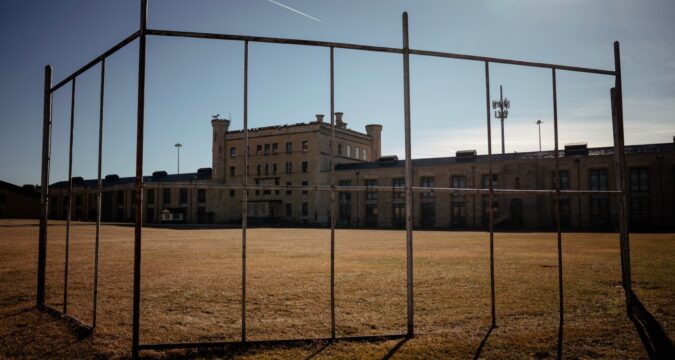
Noting that 1914 was the same year Wrigley Field opened, Joliet Area Historical Museum CEO Greg Peerbolte said the ball field at the old prison is one of the oldest in the country. The old backstop and chalkboard style scoreboard still remain.
“We’re eager to welcome Slammers fans and history buffs alike to the prison yard’s diamond, offering visitors a chance to experience both America’s pastime and our city’s remarkable heritage in a single, unforgettable event,” Peerbolte said.
Veeck said he would not be opposed to making the “Big House Ballgame” an annual event.
Ticket sales are expected to open in the coming weeks, but fans interested in getting on a wait list for tickets can email bighouseballgame@jolietslammers.com or visit the Joliet Slammers website at jolietslammers.com/bhbg.
The Joliet Area Historical Museum also offers tours of the Old Joliet Prison. Though closed for the winter, the prison reopens in March. For information about the tours or the prison, visit jolietprison.org.
https://www.chicagotribune.com/2026/01/18/old-joliet-prison-route-66-baseball/

Clarence Page: ICE has been accused of profiling Native Americans. What a cruel irony.
In a nation as diverse as ours, immigration enforcement inevitably tests whether equal protection means what it says. Some tribal leaders in the Upper Midwest say that test is being failed in the wake of the killing of Renee Good in Minneapolis on Jan. 7.
By the end of the week, claims of aggressive immigration enforcement actions, including door-to-door operations in some neighborhoods, poured in concerning agents not only tracking down those without legal status to reside in the U.S. but also questioning and detaining others, whether or not they were legal residents or citizens. Social media platforms were filled with video clips not only of Good’s killing but also of federal agents doing sidewalk and parking lot interrogations of Black, Latino and other nonwhite residents. Masked and kitted out for combat, the agents give the impression of being a law unto themselves as they demand to see identification papers.
On Jan. 10, the tribal governing board of the Lac Courte Oreilles Band of Lake Superior Chippewa Indians, based in northern Wisconsin, stated it was “closely monitoring recent events that took place in Minneapolis, and around the country involving Immigration and Customs Enforcement (ICE) Agents.”
That vigilance was not misplaced.
Related Articles
Clarence Page: Guess who fears impeachment? A guy who’s been through it twice.
Clarence Page: It’s hard to hide the dysfunction of the Trump White House
Clarence Page: President Donald Trump’s obsession with Somali immigrants takes a sinister turn
Clarence Page: Border Patrol decamps from Chicago to create disorder elsewhere
Clarence Page: Jeffrey Epstein case exposes divisions in MAGA unity
On Jan. 9, Oglala Sioux Tribe President Frank Star Comes Out said on Facebook that ICE had detained four homeless members of his tribe in Minneapolis, CBS reported. The Department of Homeland Security disavowed any knowledge of detaining members of the Sioux Nation, and Star Comes Out did not give the full names of the detained men. DHS told The Wall Street Journal it could not verify that any tribe members were arrested.
Meanwhile, The Washington Post reported that Jose Roberto “Beto” Ramirez, 20, a descendant of the Red Lake Nation of Ojibwe in Minnesota, was pulled out of a car in a Twin Cities suburb, roughed up, handcuffed and detained at ICE’s headquarters in Minneapolis.
Last year at this time, Navajo Nation officials were reporting that tribal citizens were being detained in Arizona and New Mexico.
For me, this reporting is not abstract. As an African American man, it has hit me like a blast from America’s past: the bad old days of Jim Crow segregation.
It also reminded me of the bad old days of being a reporter in South Africa in the mid-1970s during the era of racist apartheid before Nelson Mandela was released and elected president.
As a reporter who looked undeniably Black, I prudently carried my U.S. passport in my pocket just in case I was stopped by the authorities for the crime of reporting-while-Black.
Worse, as a longtime police beat reporter, I am appalled by the behavior of some federal agents I have seen. The worst appear to be more interested in fulfilling quotas than fighting crime.
And then there’s the gaslighting by the Trump administration. Leave aside the question of whether Jonathan Ross, the ICE agent who fatally shot Good, felt he was in danger when he pulled the trigger. Administration officials immediately set about characterizing Good as a terrorist, portraying other activists monitoring ICE actions as “paid,” and claiming that the door-to-door raids are really about investigating “fraud, human smuggling and unlawful employment practices.”
Racial profiling has long been a feature of law enforcement in the United States, and it persists despite periodic attempts to root it out. I don’t need to detail here the stress, anxiety and other ill effects it is known to cause (including post-traumatic stress disorder). These are well known.
What needs to be said is that these psychological wounds — the fear, alienation and mistrust they inspire in the victims — appear to be a central objective of Trump’s Department of Homeland Security at the moment.
Civil rights advocates argue that the Supreme Court’s stay in Noem v. Vasquez Perdomo effectively allows immigration agents to resume practices that critics call racial profiling, intensifying concerns about unchecked enforcement.
Such raids are a grave threat to half a century of progress toward racial peace and understanding in this country, and an insult to the people who were on this land first.
Email Clarence Page at cptimee@gmail.com.
Sign up to receive Clarence Page’s column in your inbox each week.
Submit a letter, of no more than 400 words, to the editor here or email letters@chicagotribune.com.
https://www.chicagotribune.com/2026/01/18/column-ice-immigrants-minnesota-native-americans-page/
Charles Billington: The Bears’ historic but largely forgotten 1963 championship
Chicagoans are justifiably excited and proud of the late-season heroics by their beloved Chicago Bears. Fans upset over the Bears’ lack of success over the last four decades have wistfully looked back at the legendary 1985 Super Bowl team. However, 22 years before that, the Bears thrilled the city with one of the most dominant championship teams of all time.
In 1963, the Monsters of the Midway ruled over the NFL. The team had a good supply of local boys on the roster. Linebacker Tom Bettis graduated from St. Mel High School before starring at Purdue University. Halfback Billy Martin went to the University of Minnesota after a great prep career at Wendell Phillips High School. Ed O’Bradovich, the young, take-no-prisoners defensive end, was a product of Proviso East High School. Center Mike Pyle went to Yale University after graduating from New Trier High School. Even northwest Indiana was well represented: Defensive tackle Johnny Johnson hailed from Hobart, and Ted Karras was a product of Gary Emerson High School. Research and planning director Paddy Driscoll came from Evanston Township High School. And head coach George Halas (Crane Technical High School) was a born-and-bred Chicagoan. So the city and its metropolitan area were well represented on the team.
The Bears’ Joe Fortunato (31) draws a bead on quarterback Y. A. Tittle (14) of the New York Giants, but Tittle has plenty of time to get off a pass on Dec. 29, 1963. (Chicago Tribune historical photo)
While 1963 is thought of as Papa Bear Halas’ last championship, the architect and mastermind of the team was actually George Allen. The defensive coordinator’s ability to build a championship roster was uncanny. He acquired several starters through the draft or by trades. He incredibly drafted consecutive NFL Rookies of the Year: Mike Ditka in 1961 and running back Ronnie Bull in 1962. Imagine the ballyhoo if a Bears general manager were to do that today. The ’63 team also had quarterback Billy Wade, who led the NFL in pass completions in 1962 and was a consummate field general.
In 1963, several Bears made the Pro Bowl — Ditka, Wade, Pyle, Doug Atkins, Joe Fortunato and Richie Petitbon. The top honors bestowed upon members of this team are remarkable: Coaches Allen, Halas, Sid Luckman and Joe Stydahar; director Driscoll; and players Atkins, Ditka, Bill George and Stan Jones are in the Pro Football Hall of Fame.
While our current Bears have a thrilling, albeit nerve-racking, habit of pulling out games late in the fourth quarter, in the 56 quarters of football the ’63 Bears played, they were behind in just nine of them. The defense pitched one shutout and allowed their opponents only a field goal in two games and a single touchdown in five games. Opponents averaged only 10.3 points against the Bears all season. Only two teams in NFL’s 124-year history, the ’76 Steelers and the ’71 Vikings, were more dominant than this peerless squad.
The championship was at Wrigley Field against the Bears’ bitter rival the New York Giants, in subfreezing temperatures reaching into the single digits. Tickets were $10 in the upper grandstand and $12.50 in the lower boxes and east stands. True to form, the Bears prevailed 14-10, intercepting Giants quarterback Y.A. Tittle five times, knocking him temporarily out of the game, and recovering two fumbles.
It is indeed exciting to follow our current heroes with their unexpected success this year, but let’s not forget those before our time who truly reached the summit.
Charles Billington is a sports historian and the author of three books, including “The 1963 Chicago Bears: George Halas & The Road to the NFL Championship.”
Submit a letter, of no more than 400 words, to the editor here or email letters@chicagotribune.com.
https://www.chicagotribune.com/2026/01/18/opinion-bears-1963-championship/

Editorial: Kids need to go to school. And schools need to give them a reason to show up.
We spend tens of billions of dollars each year on K-12 public education in Illinois. We argue endlessly about how best to invest that money to improve student outcomes, and we despair when those investments don’t produce an adequately literate and numerate student population. But our fixation on budgets and balance sheets may be obscuring something just as essential to learning — and far harder to buy.
Trust.
So says new research from the University of Chicago Consortium on School Research, which highlights “relational trust” as a critical factor associated with academic achievement and school improvement.
This feels like such an obvious revelation, and yet we rarely hear the concept discussed regularly in the politicized, day-to-day doings of our education system.
Trust is an important component of our adult lives. We try not to employ people without integrity or who lack basic competence. We don’t follow advice from someone we don’t respect. And we don’t spend time with people when we think they don’t really care about us.
When it comes to their classrooms, kids, of course, often have no choice — they’re required to go to a specific school, whether their teachers embody these positive virtues or not.
Many kids, however, opt not to go to class.
Today, over 40% of students at Chicago Public Schools miss 18 days of school or more per year, according to state data. Before COVID, in 2019, less than 25% of students were chronically absent, showing the problem has gotten far worse since the pandemic shutdowns that disrupted schools across the country.
It’s a serious problem, as “both grades and standardized test scores go up with higher attendance, and down with lower attendance,” according to the U. of C. report.
That’s certainly the case here in Chicago. In 2019, nearly 38% of CPS students in grades three through eight met or exceeded reading expectations, according to state data. By 2024, the final year before Illinois changed its proficiency standards, that figure had dropped to about 31%.
These post-COVID declines are well documented, and we’ve previously expressed concern about the downward trend in students’ ability to read and do math at grade level. What makes the attendance crisis especially troubling is that it compounds those academic losses.
So why are so many Illinois kids missing class?
For some students, absence isn’t defiance, it’s avoidance of a place that no longer feels safe or worth their time.
The flipside of that question, though, is: What would get kids to come to school?
Here’s what the University of Chicago researchers say matters the most: safety (first and foremost), strong relationships with teachers and peers, relationships between parents and teachers, and a classroom environment in which kids find value and meaning.
Nurture these things, the report implies, and better results should follow. Ignore them — or leave in place systems and problems that obstruct the development of trust — and good luck finding kids in school, where they are supposed to be.
A district of the size and complexity of CPS will always have its fair share of problems, but disturbing headlines in recent months show just how much work needs doing. Chicago’s challenges are far from unique, but they are at scale here.
Too often, students in Chicago deal with violence near school, such as the shooting near a Little Village elementary school earlier this week, as well as violence and bullying within the schools themselves. A 33-year-old Chicago mom, Corshawnda Hatter, said she told school officials her 9-year-old son had been the victim of bullying for years and saw no action. As a now-viral video reveals, a group of kids violently attacked Hatter and her children near Orville T. Bright Elementary School last November.
We wrote just a few days ago about the “pervasive” problem of adult-on-student sexual misconduct, a pernicious problem that rightly erodes kids’ ability to connect with the grownups in their schools.
COVID didn’t just disrupt learning, it accelerated the breakdown of routines, trust and students’ sense that school is a place worth being.
At the same time, we feel optimistic about the power of strong teachers, coaches and school leaders to encourage and influence kids in a positive way.
Many of us have had the good fortune to be taken under the wing of a caring teacher, or teachers, and can appreciate what a difference that makes. But we know teachers alone can’t be asked to solve the absenteeism problem.
As the U. of C. authors acknowledge, “schools alone are neither the cause nor the solution to increases in chronic absenteeism rates”: factors at home and in the community also affect students’ attendance.
But unlike transportation budgets, housing supply or health crises, school climate is something individual schools and educators can meaningfully influence and make dynamic change.
If Chicago wants kids back in its classrooms, it can’t treat attendance as a compliance problem or a spreadsheet metric. Trust between students and teachers, schools and parents isn’t some theoretical ideal. It’s a prerequisite for learning.
Submit a letter, of no more than 400 words, to the editor here or email letters@chicagotribune.com.

Diverse options, special deals on the menu for upcoming Restaurant Week in Aurora
Aurora’s second annual Restaurant Week, which will feature deals and fixed-price menu offerings from eateries across the city, will be taking place from Jan. 20–Feb. 3.
The two-week-long event is an opportunity for residents and visitors to explore what Aurora’s culinary community has to offer, according to the city’s Downtown Economic Development Manager Danielle Tufano. Last year’s pilot program was a “smashing success” with over 60 restaurants participating, far past the city’s goal of getting 20 restaurants involved, she said.
“Residents loved it. Visitors loved it. Restaurants loved it,” she said about last year’s event. “With more people being out and about, even our retail community benefited from it.”
The participation in last year’s event shows that the restaurant and culinary scene in Aurora is thriving, Tufano said. And this year’s Restaurant Week, she said, is set to have even more diverse options.
One of the new spots she mentioned was Foreign Exchange Brewing Company, located at 110 Cross St., which opened in the middle of last year. Owner Ricky Cervantes said that Restaurant Week will be a chance for his brewpub to deepen its roots in downtown and also to create more buzz around the restaurant, since word-of-mouth is the main way it has been advertising itself.
Although typically smash burgers outsell all other food on its menu, Foreign Exchange Brewing is looking to showcase the Indian-Mexican fusion side of its menu with its Restaurant Week special, according to Cervantes. Patrons will be able to get three tacos and two pints of beer, the two types of menu items Cervantes said he was most proud of, for $20.
Taco flavors include chicken tikka, paneer tikka, peri peri chicken and quesabirria, according to the restaurant’s website.
Foreign Exchange Brewing will be taking part in Aurora’s Restaurant Week event beginning Tuesday, Jan. 20. (R. Christian Smith/The Beacon-News)
Not only is the price affordable, Cervantes said, but it’s also not far off from the regular menu price of these items, showcasing the restaurant’s affordability.
Another new eatery participating in Restaurant Week this year is Touche French Creole, located at 6 N. River St.
Chef Ketone’ Tooles said the event matters because it supports local businesses “in a way that’s fun for guests and meaningful for restaurants.”
It lets restaurants showcase for new guests what they’ve been missing out on, he said, and also highlight new items for seasoned guests.
Touche is set to feature an exclusive, three-course “prix fixe” menu for $45 during Restaurant Week.
A first course option on Touche French Creole’s prix fixe menu offered during Aurora Restaurant Week will be Sweet Street Plantains, which is fried plantains with spicy pepper jam. (Sarah Cervantes)
The southern-inspired meal will begin with a choice between Creole Comfort Gumbo, Sweet Street Plantains and New Orleans Boudin, which is braised short rib with sautéed onions, peppers, garlic and mozzarella. For the main dish, patrons will get either Touche Blackened Chicken or Beef Bourguignon, then finish the meal with a choice between Bayou Brulee or Touche Bread Pudding.
The other restaurant within downtown’s historic Hobbs Building, Giardino Trattoria and Pizzeria, will also be participating in this year’s Restaurant Week, as it did last year. Chef Martin Balderas said he’s excited to do it again.
“We loved Restaurant Week last year because it felt like the whole city was out trying restaurants,” he said. “We had guests who’d never been to Giardino, and now we see them all the time.”
Similar to Touche, the Italian restaurant will feature a four-course “prix fixe” menu of Italian classics for $40.
The first course will be a choice between Meatballs al Forno and Arancini, which is crispy risotto balls stuffed with fontina, mozzarella, parmesan and roasted garlic. Patrons can choose a main dish between Pappardelle alla Bolognese, Rigatoni alla Vodka or Buffalo Margherita Pizza, then will finish the meal off with a choice of either tiramisu or gelato.
Those looking to visit either of the two restaurants located within the Hobbs Building are encouraged to make reservations ahead of time, a spokesperson said.
Another spot that participated in Restaurant Week last year, the downtown Society 57, is also doing it again this year. It is one of the cafe’s favorite moments of the year, said founder Scott Hodge, because it encourages people to intentionally explore local places and try things they ordinarily wouldn’t.
“In a lot of ways, it feels like a city-wide celebration of the food scene here in Aurora, and it just feels good to be a part of that collective energy,” he said.
For Society 57, Restaurant Week is about inviting people deeper into what the coffee shop already does well, according to Hodge.
He said that, for this Restaurant Week, the cafe is featuring flights and parings, which feels true to how people already experience the menu: slowly, thoughtfully and with room for comparison and conversation.
Some examples of specials Society 57 plans to offer include a toast flight, which will range from classic flavors to those that are more elevated, and a cortado flight, which will showcase the coffee shop’s housemade syrups and layered flavors, Hodge said. Plus, the cafe will offer some other “simple or approachable” specials that pair coffee and food, he said.
Society 57 in downtown Aurora will be taking part in the upcoming Restaurant Week event in the city. (Steve Lord/The Beacon-News)
“I hope that people take risks and try things they’ve never tried before,” Hodge said of Restaurant Week.
Aurora has a growing restaurant scene, he said, and some still haven’t tried some of these places, so this event is a great opportunity for those people to step out of their comfort zone.
Even after Restaurant Week officially kicks off, there will be new options, new specials and new deals, according to Tufano. So, she encouraged people to check the official website to see what’s being added.
That website, which features more information about the event as well as a full list of the participating restaurants, can be found at: www.aurorarestaurantweek.com
rsmith@chicagotribune.com
What makes a weed?
A gardening friend and I were having a debate over the weekend about what constitutes a weed in our gardens. Is there a biological difference between a weed and a perennial that one can buy at a garden center?
— Richard Anderson, Barrington
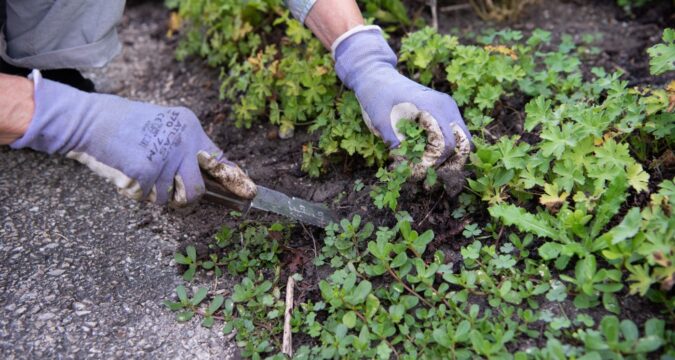
Different gardeners have different ideas about what plants are weeds in their gardens. I define a weed as a plant that is growing where it is not wanted in the garden, so I have lots of latitude for which plants I want to remove. For example, are violets in the lawn weeds, or are their flowers interesting spring color accents? I consider them weeds to be eradicated when there are lots of them, but I do not think that all need to be removed. My wife, on the other hand, thinks they are fine. Yes, there are still violets in our lawn and there will continue to be violets.
There is a biological difference between a weedy plant and an invasive plant. Weedy plants readily spread, especially in disturbed areas, but generally do not pose a threat to the integrity of native plant communities. Perennial flowers that are aggressive spreaders need routine thinning to keep them from taking over a border or plant bed. Flowers that are well-suited to your garden’s growing conditions and that have a tendency to spread aggressively will do so with vigor. The violet causing trouble in my garden was purchased as an ornamental flower and planted in a bed. Now it seeds all over the lawn and throughout my garden beds. It’s very happy in my garden. Invasive plants are defined by their impact on the integrity of the plant community. When plants are introduced to a new location, either intentionally or accidentally, they can spread prolifically, out-compete native species for resources, and eventually even dominate the landscape. Buckthorn is an example of an invasive plant in the Chicago region. The violet in my garden is weedy and annoying but not invasive. The buckthorn seedlings that germinate from fruit dropped by my neighbor’s buckthorns and bird feeding would quickly overtake my garden plants without regular intervention.
Some factors common to many invasive plants include rapid growth and early maturity, production of many seeds, wide dispersal of seeds by birds and wind, seeds that germinate quickly, few natural enemies, and an ability to reproduce vegetatively. Use regional resources for guidance regarding invasive plants. The Chicago Botanic Garden has an invasive plant policy and we encourage people to check our website for a list of invasive plants in the Chicago region.
For more plant advice, contact the Plant Information Service at the Chicago Botanic Garden at plantinfo@chicagobotanic.org. Tim Johnson is senior director of horticulture at the Chicago Botanic Garden.
https://www.chicagotribune.com/2026/01/18/weed-perennial-invasive-plant-garden/
‘Bear Down’: How a songwriter’s challenge became Chicago’s rallying cry
It will be a freezing cold Sunday night at Soldier Field, where the wind will be bitter and spectators warmed by libations and layers, and where, with any luck for those frigid, bundled masses, they will celebrate in unison as often as possible with their beloved anthem.
The song may well be louder that night, if the circumstances align. It may well be sung with more reverence. There may be more fervency upon its singing throughout the old stadium. And if it all happens the way the Bears and their supporters hope, the words may echo deep into the city:
BEEEAAAR DOOOWWWN, CHICAGO BEARS!
During home games, the music plays every time the Bears score. The familiar melody begins. The words erupt, with tens of thousands forming a kind of a giant church chorus defined not by denomination but devotion to a franchise that has long left its supporters questioning their faith.
Until now, that is. The Bears are in the midst of their best season in 15 years. It has been that long, since January 2011, that Soldier Field has hosted a playoff game this late into the NFL calendar. And so when an NFC Divisional playoff game begins against the Los Angeles Rams, kickoff timed perfectly for after dark, cold turning colder, a religious-like madness will grip Chicago.
Indeed, it will be time to Bear Down.
Jeremy Schmidt shows off his Bear Down fingernails while tailgating before the Chicago Bears face the Tennessee Titans in the season opener Sept. 8, 2024, at Soldier Field. (Brian Cassella/Chicago Tribune)
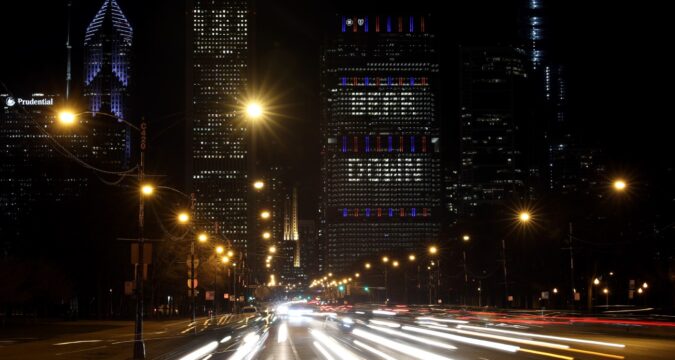
The words, stretched out into long, rhythmic notes at the beginning of the team’s fight song, have long been synonymous with the city. But it’s the playoffs now, and the Bears are a victory away from the NFC Championship game, and so “Bear Down” is even more ubiquitous than usual: on marquees at the front of city buses; in lights on the south-facing side of the Blue Cross Blue Shield tower downtown; on flags and in group texts and on shirts and everywhere, really.
Bear Down. Or, in song form: BEEEAAAR DOOOWWWN.
And all because, 85 years ago, a well-known composer accepted a challenge. A bet, of sorts.
Back then, Al Hoffman had made plenty of great music. He was in the midst of a career in which he had written. “worldwide smashes,” his great-nephew, Josh Max, told the Tribune. Some of Hoffman’s songs gained fame when the likes of Frank Sinatra, Perry Como and Tony Bennett, just to name a few, recorded them.
Hoffman, who died at 57 in 1960, often wrote his music with a colleague or two. And so in the early 1940s, one of his contemporaries offered a challenge. A kind of dare for Hoffman to prove himself: If he really was the songwriter he believed himself to be, it was time to write a solo hit.
Bears halfback George McAfee (5), running out of T Formation, scores a touchdown in the 73-0 win over Washington in 1940. (Chicago Tribune historical photo)
At the time, the Bears just so happened to be in the midst of dominance that allowed for cultural transcendence. A mythology was building. These were the Monsters of the Midway days, with George Halas as head coach and the 73-0 victory against Washington in the 1940 NFL championship game. And, after some thought, Hoffman had the subject of his attempt at a hit.
Who knows how easily the first two words came or how hard he labored.
Now they roll off the tongue, and will throughout Chicago on Sunday: Bear Down.
A boy from Minsk
Max, himself a musician and a performer, grew up hearing stories about his great uncle. About his music and talent for songwriting. About his appearance – how Hoffman was a “funny-looking guy, too,” with a crooked smile and a habit of writing songs while he smoked a carton of cigarettes.
Hoffman was born into a Jewish family in Minsk — now the capital of Belarus but then a part of Russia — in 1902. Six years later, amid oppression and political unrest, the family moved to America, Hoffman and his four siblings quickly needing to adapt to a new world. He developed a talent for words and music. A brother, David, became a stage and film actor.
When Al Hoffman wrote “Bear Down” he did so after returning from England, where he’d worked for years, and for unknown reasons he wrote it under the pseudonym of Jerry Downs. The song soon took off, like “bang, there you go,” Max said, and one of its most prominent early appearances came in October 1942, upon Halas’ departure to serve in World War II.
George Halas, owner-coach of the Chicago Bears, is presented a sword during halftime by Lt. Cmdr. Carl Olson, senior member of the Naval Aviation Cadet Selection Board, in October 1942. It was the Bears last game at Wrigley Field under Halas, who had been commissioned a lieutenant commander. (Chicago Tribune historical photo)
During halftime of a Bears-Eagles game at Wrigley Field, Halas, who was days away from assuming his role as a lieutenant commander in the Navy, received a ceremonial sword. A marching band serenaded him with “Anchors Aweigh” and “For He’s a Jolly Good Fellow,” and also with a new tune that was not yet two years old: “Bear Down, Chicago Bears.” With that, Halas was off to war.
Among the 1,500 songs that Hoffman wrote, or helped write, several endure. There’s “Mairzy Doats,” and “Takes Two to Tango,” and “Who Walks In When I Walk Out?” and “Papa Loves Mambo,” among a long list of others. But there’s a better than good chance that none of them will be sung in unison by about 62,000 people in a football stadium on Sunday night.
There’s a good chance that none of their lyrics have become as identifiable with a place either.
‘A nod to each other’
Brittney Payton cannot remember the first time she heard “Bear Down.” She was practically a newborn when the ‘85 Bears won the Super Bowl and became, arguably, Chicago’s most beloved team of all time. She was still a toddler when her dad, Walter, retired at the end of the 1987 season as the NFL’s all-time leading rusher.
She remembers the last time she heard the phrase, though, when she was out and about. It was just last weekend in Scottsdale, Arizona, where Brittney moved in the middle of the pandemic after about a decade working in Chicago television. Last Saturday, Brittney’s daughter had her first flag football game. (The name of her team is, you guessed it, the Bears.)
When the game ended, the kids requested a trip to Portillo’s. Brittney and her family walked in, she said, to a restaurant full of people in Bears gear. She was wearing hers, too, for her daughter’s game. Soon enough the greetings began — a steady stream of Bear Downs, with Phoenix-area locals likely not knowing they were bestowing them upon the daughter of the greatest Bear of them all.
In that moment, she said, she was “just another Bears fan.”
And all the exchanges of “Bear Down” was “like a nod to each other.”
“Kind of like Jeep drivers,” she said. “They always kind of salute each other when they’re driving by.”
Brittney Payton, from left, Connie Payton-Strotter and Jarrett Payton watch a video tribute to Walter Payton during halftime of the Bears vs Browns game at Soldier Field in Chicago on Nov. 1, 2009. (Scott Strazzante/Chicago Tribune)
When she was growing up in the 1990s, Chicago belonged to Michael Jordan and the Bulls. The Bears entered into a malaise in the post-Mike Ditka years, and though Brittney understood how much the city adored her father — she often attended Bulls games with him and her brother at the United Center — it wasn’t until she got older that she understood the meaning of Bear Down.
As a student at DePaul, living downtown, she often went to games at Soldier Field. She became “immersed,” she said, in the culture surrounding the team. She heard the fight song too many times to count. She better understood the symbolism of it all, and the large part her father and those 1980s Bears teams had in giving meaning to the song’s first two words.
“It’s like a rallying call,” she said. “It’s a sense of pride. It’s a sense of, just — a sense of team. Not just with the players, but with the fans, with the city. It means so much. And it’s a sense of like, “Let’s go, let’s go. Let’s get down. Let’s get to work, and let’s get to business and go out there and win.’”
Brittney was at Soldier Field for the Bears’ season-opener in early September, and watched a narrow Monday night loss against Minnesota. A blowout defeat six days later in Detroit might have rekindled a familiar feeling of disappointment and here-we-go-again among Bears supporters. But then came nine victories in 10 games, and a burgeoning resilience.
Then came more reason to play the song and say the words.
A Chicago Bears cheer team member waves a ‘Bear Down’ flag after a field goal in the third quarter of a preseason game against the Tennessee Titans at Soldier Field on Aug. 12, 2023, in Chicago. (John J. Kim/Chicago Tribune)
Bear Down became fashionable, again. Brittney plans to fly home for the game Sunday. To be there in person for the Bears’ first divisional playoff game in 15 years and “to see the electricity,” as she put it.
“And I just know that stadium is going to be abuzz. On fire,” she said. “It’s going to be amazing. And to hear that (song), and there’s going to be lots of Bear Downs going on on Sunday, that’s for sure.”
The song endures
Those words mean different things to different people, and signify pride for many. For Brittney Payton, Bear Down is a connection to family. For Bears fans and a great many Chicagoans, it’s a communal phrase that bonds; the NFL version of “Roll Tide”
When Max hears the words he thinks of his great uncle. He’s reminded of his family’s origin story.
“I feel proud to be a part of America,” he said. “In that, it’s atypical I guess these days — a guy with nothing, five kids coming from Belarus, because they’re getting chased out because of the pogrom, and two of them do really, really well, you know, like in show business. That’s a big deal.”
Al Hoffman wrote better songs. More artistic songs. He wrote more timeless lyrics than the line in “Bear Down” that goes: “We’ll never forget the way you thrilled the nation with your T-formation.” But did he write a more enduring song? The Bears’ version of the T-formation, after all, went out of style a long time ago. And yet the song lives on.
Chicago is a city in which sports and music have always been closely intertwined. It’s difficult to hear Alan Parsons’ “Sirius,” for instance, without thinking of the ’90s Bulls’ starting lineup introductions at home games. When the Cubs win, the sound of Steve Goodman’s 1984 song “Go, Cubs, Go” can be heard blaring throughout Wrigleyville.
“Bear Down, Chicago Bears,” meanwhile, remains the Granddaddy of Chicago sports anthems, one a marching band used to help send George Halas off to war more than 80 years ago, and one that will play on, again, at least for one more night on Sunday at Soldier Field. Max, who lives in Los Angeles and works music and stand-up gigs, wishes he could be there to hear it. To feel it.
To perform it, along with tens of thousands of others.
“Man, you know what?” he said at the thought of attending a Bears game. “If I could go there and be flown in there, and put up, I would sing, ‘Beeeaaaar Doooowwwwn, Chicago Bears!’”
And over the phone, he’d broken into a full-throated song.
https://www.chicagotribune.com/2026/01/18/bear-down-chicago-song-history/

Well-funded potential challengers already circling Mayor Brandon Johnson
Four years ago, the first Chicago mayoral hopefuls were months away from announcing their campaigns. This time around, the line is already out the door.
A large and growing field of candidates is angling to take out Mayor Brandon Johnson, who is seen as very beatable. New campaign finance records showing a couple of likely challengers holding commanding leads in fundraising over the freshman incumbent drive home the tough battle he faces.
And as members of the crowded slate jockey for money and support, many are casting Johnson as political carrion.
“I think the public’s made up their mind about him,” said U.S. Rep. Mike Quigley, who promised to jump in the competition earlier this month. “This is a city in crisis. I think people get it.”
As of the end of 2025, Johnson had $830,000 on hand, trailing potential candidates Illinois Comptroller Susana Mendoza and Secretary of State Alexi Giannoulias, who were sitting on $1.6 million and $6.35 million, respectively.
Altogether, six politicians who have declared for the race or signaled serious interest reported raising more than Johnson’s $70,000 last quarter. They range from relative unknowns to local political mainstays.
But Johnson’s camp maintains the mayor is in no dire straits.
“When and if Brandon Johnson makes the decision to run again, we will have more than enough funds to be competitive, just like we did last time,” Johnson’s political director, Christian Perry, said. “And I got outspent three-to-one.”
Some of Johnson’s opponents are angling to spend “obscene amounts of money to push a narrative to get working-class and poor people to vote against their interest,” Perry said. He urged a conversation about campaign finance reform.
Caps on campaign contributions are already off in the race, thanks to Joe Holberg, who lent his campaign $350,000 just after Christmas.
Johnson, for his part, recently sidestepped a question about whether he will even seek a second term, saying, “What I’m committing to doing is my job.”
“Look, the people of Chicago are not thinking about mayoral elections,” Johnson said at a City Hall news conference earlier this month. “My focus right now is doing the thing that I was elected in charge to do, which was to drive violence down in the city of Chicago, to build more affordable homes, to invest in young people, to invest in good paying jobs, to invest in our education system.”
The mayor has spent part of January highlighting the steep decrease in Chicago gun violence last year to levels not seen in a decade, though he and other leaders agree there is still work to do. However, that good news comes after Johnson suffered political blows from an obstinate City Council opposition over the recent budget, on top of other losses for his progressive agenda. His opponents are making no small haste in capitalizing on what they sense as weakness.
“The city doesn’t need Humpty Dumpty, and the city doesn’t need a six-pack with no brains,” Pappas told the Tribune Thursday, in apparent references to Johnson and Giannoulias. “The city needs somebody like me who could come in there with a plan and pass the baton on.”
Chicago mayoral elections often come down to demographic splits and political ground games as much as they do to candidates’ campaign platforms, however. With the Chicago Teachers Union still by his side, Johnson could find a clear lane to a second term in much the way he won in 2023: getting big support from mostly white lakefront liberals and Milwaukee Avenue progressives in the first round of the election, and from Black voters in the runoff.
So far, no Black — or progressive — contenders have officially raised their hands to challenge Johnson. But with the 2027 election still over a year away and a potential runoff even further off, it’s anyone’s guess how the race for Chicago’s next mayor will shape up.
For the 2023 cycle, the first candidates did not announce their bids until April of the previous year. Johnson, the eventual victor, threw his hat in the ring in October — after multiple other progressive candidates entered the fray.
Johnson went on to become the city’s first candidate to unseat an incumbent mayor in 40 years. His victory was hailed as a seismic rewriting of the status quo in Chicago politics, but his administration’s setbacks since assuming office have emboldened the political old guard to argue that time’s up for the progressive experiment on the fifth floor of City Hall. Within the leftist movement that propelled Johnson, cracks between the Chicago Teachers Union and Service Employees International Union team that primarily bankrolled his first run look more like a clean break.
Illinois Secretary of State Alexi Giannoulias leaves the lectern after speaking at the Cook County Democratic Party primary slating on July 18, 2025, in Chicago. (Stacey Wescott/Chicago Tribune)
Giannoulias declared Thursday a whopping $1.05 million in fourth quarter fundraising. The massive haul leaves him with $6.35 million as he seeks reelection in his current seat with no primary opponent.
A source close to Giannoulias touted the money as “just the tip of the iceberg” and said he will “most likely” enter the competition.
The potential candidate is increasingly taking jabs at the mayor, including in December as the mayor criticized investor Michael Sacks for helping to bankroll opposition to his corporate head tax proposal.
“Everyone that disagrees with you isn’t ‘protecting Trump,’” Giannoulias wrote in an X post in early December. “That rhetoric isn’t how you lead a city.”
Giannoulias could be bolstered by the reported $10 million held by the Common Ground Collective, a group backed by Sacks and other wealthy Chicagoans that is highly critical of Johnson.
Several of the circling challengers have sought to frame themselves as problem-solvers, especially when it comes to the city’s budget.
Illinois Comptroller Susana Mendoza greets people attending a news conference at Los Comales restaurant in Little Village on July 16, 2025, after announcing she would not run for reelection in 2026 as the state’s top fiscal officer. (Brian Cassella/Chicago Tribune)
Mendoza, who announced she would not run for reelection to her state position, has said she is “leaving the door open” to another mayoral run. Spokesman Abdon Pallasch said Mendoza is continuing a “thank you and listening” tour, but is not prepared to make an announcement yet.
In the most recent quarter that ended Dec. 31, Mendoza raised $178,000, leaving her with $1.6 million.
She was part of the 2019 scramble to succeed Mayor Rahm Emanuel but was cast by critics as too close to Ald. Ed Burke, who at the time was suspected of extortion. He has since been charged, convicted and released from jail for racketeering and bribery.
Mendoza has taken to TikTok and Instagram to make explainer videos throughout the city’s budget process, criticizing the drop in construction cranes across the city’s skyline and one-time deficit fillers.
In one video just after Halloween with a soundtrack of suspenseful music, she flashed a display skeleton to rally against the head tax, calling it a “job killer.”
“Make it more expensive to hire? Companies shrink or leave,” she said, removing fistfuls of candy from a glass bowl. “That means less opportunity, less jobs, everyone loses.”
U.S. Rep. Mike Quigley, 5th, speaks as Illinois officials gathered to oppose federal budget cuts to services on Feb. 17, 2025. (Brian Cassella/Chicago Tribune)
Quigley has carefully grown his own campaign, and made a clear pledge to run. The North Side congressman has flirted with mayoral bids in the past, only to opt out, but promised the Tribune he is staying in the race now.
He wants to focus on balancing the city’s budget by trimming spending, and grow the city by removing restrictions on housing construction.
“I know how to solve this. I think I can build coalitions to do it,” he said. “We can grow our way out of this problem easier than we can tax our way out of this problem.”
He raised over $150,000 in his mayoral fund last quarter and will be able to transfer in another $1.2 million from his congressional campaign account.
Cook County Treasurer Maria Pappas in her office on Jan. 10, 2024. (Brian Cassella/Chicago Tribune)
Pappas, meanwhile, vowed, “Under no circumstance will I get out of this race. Nobody is taking me out. I’m not going to be bullied or frightened. None of that, and that’s happening everywhere.”
Pappas, who has been reelected as Cook County treasurer six times, said she does not count Johnson out. But she said she was more focused on other opponents as she touted her experience.
She has $273,398 in her treasurer campaign account, a relatively small amount compared with other challengers. But the race will come down to who gets voters to the polls, not who has cash, she argued.
Ald. Bill Conway, 34th, speaks with reporters before a Chicago City Council committee hearing on April 30, 2025. (Antonio Perez/Chicago Tribune)
Conway, the freshman alderman representing the West Loop, said he is giving a run “serious consideration.” He has blasted Johnson’s financial plans from the council floor in recent months and hinted his campaign would take a similar line.
“You have some people who kind of talk about the city’s finances and future from afar, but I’m literally under the hood right now,” he said. “Our financial situation is so much worse than people realize, and if we don’t start getting it on the path right now, it will overwhelm community investments.”
The alderman also works as a Navy Reserve officer, and is sitting on nearly $700,000 with an ace up his sleeve: a billionaire father who co-founded the private equity firm Carlyle Group and bankrolled Conway’s unsuccessful 2020 Cook County state’s attorney race with over $10 million.
Attorney Bill Quinlan, known recently for representing fired former CPS CEO Pedro Martinez, and previously Jussie Smollett, began hosting events across the city in the fall through a 501(c)(4) nonprofit civic organization, Leading a Better Chicago.
Though Quinlan hadn’t publicly declared his intention about a mayoral run or formed a fundraising committee with the state, he was blunt with friends at a fundraiser at the Irish American Heritage Center in early November. “We started this not for profit, this plan, to move to the next level to run for mayor of Chicago,” he said.
“Brandon Johnson doesn’t stand for Chicago,” Quinlan said. “He stood for the teachers union, and at the end of the day, you need someone sitting on the fifth floor, on that side of the table, that stands for you.”
Entrepreneur Joe Holberg, the first candidate to officially declare for the race, has loaned himself over $400,000 to run and brought in $100,000 in contributions. The political neophyte said he has faced tough odds before, like living in his car while putting himself through the University of Michigan.
“It’s because I’m a political outsider, and it’s because I’m not tied to the shackles of the establishment that limit people’s ability to think critically,” Holberg said.
Lobbyist John Kelly Jr. raised over $400,000 for a potential run. And several other possible candidates round out the sure-to-grow field: Perennial candidate businessman Willie Wilson said he hasn’t made up his mind yet about another try, and activist-turned-entrepreneur Ja’Mal Green said he is “definitely exploring” another bid.
But despite the funds flying around the emerging race, Johnson still has critical working-class support, argued Perry, who predicted Johnson’s winning 2023 coalition will heal and coalesce again around shared values.
The idea that the mayor is weak comes from “ambitious politicians who want to obtain more power and status,” he said. But on South and West Side blocks, in churches and schools, the reaction to the mayor tells a different story, one of enthusiastic support, according to Perry.
“Organized people beat organized money,” he said. “Our focus is right now, making sure that the mayor has everything that he needs to lead Chicago from the seat that he’s in.”
https://www.chicagotribune.com/2026/01/18/well-funded-challengers-mayor-brandon-johnson/

Today in History: Jason Van Dyke sentenced
Today is Sunday, Jan. 18, the 18th day of 2026. There are 347 days left in the year.
Today in history:
On Jan. 18, 2019, Jason Van Dyke, the white Chicago police officer who gunned down Black teenager Laquan McDonald in 2014, was sentenced to nearly seven years in prison.
Also on this date:
In 1778, English navigator Captain James Cook reached the present-day Hawaiian Islands, which he dubbed the “Sandwich Islands.”
In 1803, President Thomas Jefferson asked Congress in a confidential message for $2,500 in funding for exploration of Western lands all the way to the Pacific, an early step in the eventual formation of the Lewis and Clark expedition that would ultimately accelerate American expansion westward beyond the Mississippi River.
In 1911, the first landing of an aircraft on a ship took place as pilot Eugene B. Ely brought his Curtiss biplane in for a safe landing on the deck of the armored cruiser USS Pennsylvania in San Francisco Harbor.
In 1958, Canadian Willie O’Ree became the first Black player in the National Hockey League as he made his debut with the Boston Bruins.
In 1977, scientists identified the bacteria responsible for the deadly form of atypical pneumonia known as Legionnaires’ disease.
In 1990, Washington, D.C., Mayor Marion Barry was arrested after FBI agents caught him smoking crack cocaine in a hotel room in a videotaped sting. (Convicted of drug possession, Barry spent a few months in prison, returning to win a D.C. Council seat in 1992 and his fourth and final mayoral victory in 1994. He died in 2014.)
In 1993, the Martin Luther King Jr. holiday was observed in all 50 states for the first time.
In 1996, Lisa Marie Presley filed for divorce from Michael Jackson, citing “irreconcilable differences” after less than two years of marriage.
In 2013, former Democratic New Orleans Mayor Ray Nagin was indicted on charges that he’d used his office for personal gain, accepting payoffs, free trips and gratuities from contractors while the devastated city was struggling to recover from Hurricane Katrina. (Nagin was later convicted, served time, and was released from prison in 2020.)
Related Articles
Elmhurst museum explores history of healthcare in DuPage County in new exhibit
Today in Chicago History: In this corner, Danny Bonaduce. His opponent: Donny Osmond.
Today in History: Prohibition begins
Flashback: When the Chicago Bears played the Los Angeles Rams in the NFC championship game 40 years ago
Today in Chicago History: Fire destroys McCormick Place
In 2025, a gasoline tanker exploded in Nigeria, killing at least 70 people as individuals sought to transfer gasoline from one tanker into another truck as numerous bystanders looked on.
Today’s birthdays: Actor-filmmaker Kevin Costner is 71. Actor Mark Rylance is 66. Hockey Hall of Famer Mark Messier is 65. Actor Dave Bautista is 57. Actor Jesse L. Martin is 57. Rock singer Jonathan Davis (Korn) is 55. Football Hall of Famer Julius Peppers is 46. Actor Jason Segel is 46. Actor Carlacia Grant is 35. Singer and activist Montana Tucker is 33. Spanish soccer star Aitana Bonmati is 28. Actor Karan Brar is 27.
https://www.chicagotribune.com/2026/01/18/today-in-history-jason-van-dyke-sentenced/


