Category: News
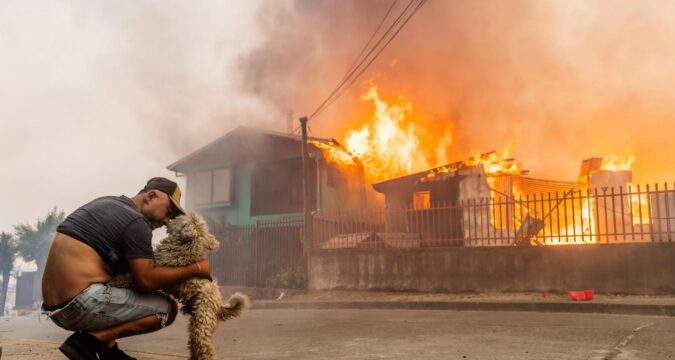
Chile: continúan los trabajos para contener voraces incendios; cifra de fallecidos asciende a 19
Por NAYARA BATSCHKE
SANTIAGO (AP) — Los equipos de bomberos intentaban el lunes contener los voraces incendios que ya han devorado más de 25.000 hectáreas en el centro y sur de Chile y han dejado hasta el momento 19 fallecidos y unos 1.500 damnificados.
El presidente Gabriel Boric decretó la víspera el estado de catástrofe en dos regiones del país —Ñuble y Bío Bío— debido a los múltiples focos que que han obligado además a la evacuación de cerca de 20.000 personas.
De acuerdo con el último balance divulgado el lunes por el Servicio Nacional de Prevención y Respuesta ante Desastres (Senapred), son cinco los megaincendios que siguen activos y que han consumido vegetación además de haber alcanzado viviendas, destruido vehículos y afectado infraestructuras.
El ministro de Seguridad, Luis Cordero, informó en una rueda de prensa que en la madrugada se registró un nuevo fallecimiento producto de los incendios, por lo que la cifra total de muertos ascendió a 19.
Por su parte, Boric indicó a través de su cuenta de X que la noche de combate a las llamas “fue mejor que lo proyectado”, pero advirtió de que “las condiciones climáticas durante el día no serán buenas por lo que es posible que se reactiven focos”.
“Estamos trabajando con los alcaldes y gobernadores en terreno con todas las instituciones del Estado desplegadas”, agregó el mandatario.
Las causas de los incendios aún son desconocidas, aunque los fuegos son habituales durante la temporada del verano austral en Chile debido a la combinación de altas temperaturas y sequedad del aire.
Las autoridades temen que la cifra de afectados y fallecidos aumente en las próximas horas debido a que las llamas sorprendieron a los habitantes dentro de sus viviendas en la madrugada del domingo y, en algunas regiones, la comunicación se vio afectada por el fuego. Casi 50.000 personas estaban asimismo sin suministro eléctrico, según Senapred.
Además de disponer albergues para los evacuados, se ha establecido un toque de queda nocturno en las zonas más afectadas mientras dure la emergencia, que se concentra sobre todo en Bío Bío, a unos 500 kilómetros al sur de Santiago.
Estos incendios ya son unos de los peores registrados en los últimos años en Chile, donde en febrero de 2024 las llamas segaron la vida de 131 personas en lo que se considera la peor tragedia en el país desde el terremoto de 2010.

Foro de Davos aborda problemas mundiales en medio de descontento por desigualdad económica
Por JAMEY KEATEN
DAVOS, Suiza (AP) — Jefes corporativos y líderes gubernamentales, incluido el presidente de Estados Unidos, Donald Trump, se congregan en Davos, Suiza, esta semana, uniéndose a una reunión anual que promueve el diálogo y el progreso económico, incluso cuando el tono dominante desde Washington ha trastornado el orden global y los multimillonarios han cosechado billones en nueva riqueza mientras los pobres se quedan atrás.
El Foro Económico Mundial, el grupo de expertos cuyo encuentro anual de cuatro días comienza el martes, tiene como lema declarado “mejorar el estado del mundo”, y el tema de este año es “Un espíritu de diálogo”. Una pregunta es si Trump hablará con los asistentes o hacia ellos.
Casi 3.000 funcionarios de negocios, defensa y política abordarán temas que incluyen la creciente brecha entre ricos y pobres; el impacto de la IA en los empleos; preocupaciones sobre el conflicto geoeconómico; aranceles que han sacudido relaciones comerciales de larga data; y una erosión de la confianza entre comunidades y países.
“Realmente será una discusión en un momento muy importante… la geopolítica está cambiando”, estimó Mirek Dušek, director de programación del foro. “Algunos piensan que estamos en una transición, algunos piensan que ya hemos entrado en una nueva era. Pero creo que es innegable que estamos viendo un panorama más competitivo y más disputado”.
Asistencia de Trump tiene alto perfil
La tercera visita de Trump a Davos como presidente se produce mientras los aliados de Estados Unidos se preocupan por su ambición de apoderarse de Groenlandia, América Latina lidia con sus esfuerzos por obtener el petróleo de Venezuela, y sus ataques contra el presidente de la Reserva Federal, Jerome Powell, han generado preocupación entre líderes empresariales y legisladores por igual.
Las credenciales de pacificador de Trump también estarán sobre la mesa: se avecina un anuncio sobre su “Consejo de Paz” para Gaza, y él y su administración tienen previsto tener reuniones bilaterales en las salas laterales del Centro de Congresos.
El líder estadounidense parece disfrutar paseando por el Centro de Congresos de Davos y entre ejecutivos que respaldan su enfoque político orientado a los negocios y la generación de dinero.
Los críticos también estarán cerca: el presidente colombiano Gustavo Petro, con quien Trump ha tenido altibajos, y el ministro de Relaciones Exteriores de Irán Abbas Araghchi, cuyo país enfrenta sanciones y ha lidiado con masivas protestas.
Los dos contrapesos más probables a la administración de Trump en la escena internacional, China y la Unión Europea, tienen un lugar destacado el primer día del evento: la presidenta de la Comisión de la UE, Ursula von der Leyen, hablará el martes por la mañana, justo antes del viceprimer ministro de Chine, He Lifeng.
El fundador Schwab se ausenta, mientras el jefe de Nvidia hace su debut
El foro estará sin su fundador, Klaus Schwab, quien organizó el primer evento en Davos hace 55 años centrado en los negocios, solo para verlo convertirse en un foro más amplio. Se retiró en abril. Los nuevos copresidentes Larry Fink, jefe de la firma de inversiones BlackRock, y Andre Hoffman, vicepresidente de la firma farmacéutica Roche, están a cargo.
Este año también marcará el debut del CEO de Nvidia, Jensen Huang, posiblemente el líder tecnológico más importante del mundo hoy en día, entre unos 850 CEOs y presidentes de empresas globales, junto con algunas celebridades como el actor de Hollywood y defensor del agua potable Matt Damon.
El futuro de la IA, su impacto en los negocios y el trabajo, y las perspectivas de la inteligencia general artificial serán temas clave.
Los presidentes de Argentina, Francia, Indonesia, Siria y Ucrania estarán entre las docenas de líderes nacionales presentes.
A medida que la brecha entre ricos y pobres se amplía, la confianza en las instituciones se tambalea
La destacada firma de relaciones públicas Edelman informa en su barómetro anual de confianza, lanzado hace un cuarto de siglo y que este año encuestó a casi 34.000 personas en 28 países, que los temores de comercio y recesión han alcanzado un máximo histórico, el optimismo está cayendo especialmente en los países desarrollados, y el “resentimiento” del año pasado se ha transformado en una “insularidad” más amplia.
“La gente se está retirando del diálogo y el compromiso, eligiendo la seguridad de lo familiar sobre el riesgo percibido del cambio”, declaró el CEO Richard Edelman. “Favorecemos el nacionalismo sobre la conexión global y el beneficio individual sobre el progreso conjunto. Nuestra mentalidad ha cambiado de ‘nosotros’ a ‘yo’”.
Dos tercios de los encuestados dijeron que su confianza se concentraba en los CEOs de las empresas para las que trabajan, sus conciudadanos o vecinos, mientras que casi el 70% cree que los líderes institucionales, ya sean de negocios o del gobierno, engañan deliberadamente al público.
El grupo antipobreza Oxfam emitió un informe antes del evento de Davos que mostró que la riqueza de los multimillonarios aumentó más del 16% el año pasado, tres veces más rápido que el promedio de los últimos cinco años, a más de 18 billones de dólares. Se basó en datos de la revista Forbes sobre las personas más ricas del mundo.
Oxfam dijo que el aumento de 2,5 billones de dólares en la riqueza de los multimillonarios el año pasado sería suficiente para erradicar la pobreza extrema 26 veces. Su riqueza ha aumentado en más de cuatro quintas partes desde 2020, mientras que casi la mitad de la población mundial vive en la pobreza, dijo el grupo.
La administración Trump ha liderado una “agenda pro-multimillonarios”, indicó el grupo, a través de acciones como recortar impuestos para los más ricos, fomentar el crecimiento de acciones relacionadas con la IA que ayudan a los inversores a hacerse más ricos, y frustrar los esfuerzos para gravar a las grandes empresas.
El grupo de defensa quiere más esfuerzos nacionales para reducir la desigualdad, impuestos más altos a los ultrarricos para reducir su poder, y mayores límites a su capacidad para influir en la política a través del cabildeo.
Trump, quien lidera la delegación más grande de Estados Unidos hasta la fecha y tendrá alrededor de media docena de secretarios del gabinete a su lado, está previsto a discutir la vivienda y la asequibilidad en su discurso en Davos el miércoles.
Críticos del Foro Mundial y de Trump toman las calles
Como de costumbre, los manifestantes se reunieron durante el fin de semana en y cerca de Davos antes del evento. Cientos de manifestantes escalaron una carretera alpina hasta la ciudad el sábado detrás de una pancarta en alemán que decía “No al lucro de la guerra” y junto a un camión que llevaba un cartel: Fracaso Económico Mundial.
Empresas como Microsoft, Tata Consultancy de India, TikTok y la firma de ciberseguridad CrowdStrike se han unido a gobiernos de países como Nigeria, Qatar, Ucrania y Estados Unidos para establecerse en la Promenade de Davos y promover sus servicios, productos y economías nacionales.
Los comerciantes de Davos alquilan sus locales para que los participantes del foro puedan tener el espacio durante la semana.
Los críticos han acusado durante mucho tiempo a la reunión anual en Davos de generar más retórica que resultados, y ven el regreso de Trump como una señal de la desconexión entre los que tienen y los que no tienen. Algunos dicen que los líderes suizos que apoyan el evento y acuden a Davos también están contribuyendo al problema.
“Es preocupante cómo los políticos suizos están cortejando a los belicistas y sus beneficiarios en Davos”, señaló Mirjam Hostetmann, presidenta de los Jóvenes Socialistas de Suiza, quienes han liderado protestas contra el evento. “El Foro Mundial de Davos nunca traerá paz, solo alimentará la escalada”.
___________________________________
Esta historia fue traducida del inglés por un editor de AP con ayuda de una herramienta de inteligencia artificial generativa.
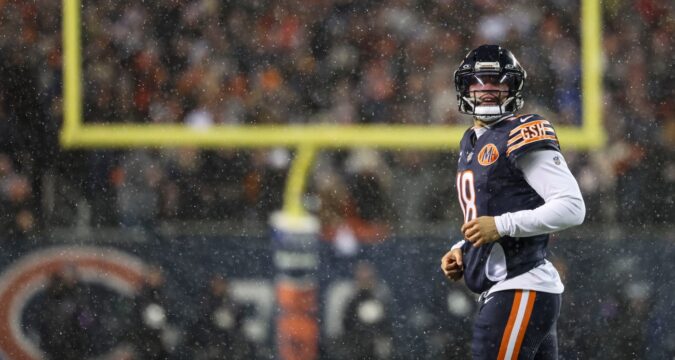
Remarkable season ends for Chicago Bears: Brad Biggs’ 10 thoughts on the playoff loss in overtime
It was former Chicago Bears coach John Fox, a decade ago, who said he wanted to “underpromise and overdeliver,” something that was difficult to do with a roster in transition and an unsettled quarterback situation.
Ben Johnson came to the Bears in 2025 and showed those who hired him, the rest of the franchise and the city what it looks like to have someone overdeliver. Because no one who has objectively watched this organization for any period of time figured the Bears would be here: hosting a divisional round playoff game with light snow falling on a bitterly cold night in the middle of January at Soldier Field.
“Our mission, starting this spring, is to win and to win now,” Johnson said in the closing of his introductory remarks on Jan. 22, 2025. “I get goosebumps right now just thinking about being the head coach of the Chicago Bears. I know exactly what this role and this responsibility requires, and I cannot wait to get to work. Thank you.”
The Bears (12-7) came up short despite Caleb Williams’ wild touchdown pass with 18 seconds remaining that’s crazier than the fourth-and-8 throw to Rome Odunze last week, you know, the one that just happened to be the greatest pass in franchise history in however long.
Harrison Mevis hit a 42-yard field goal to lift the Rams to a 20-17 overtime victory and send them to Seattle for the NFC championship game. The Bears made too many small errors, ones that when added up, are difficult to overcome against a tough opponent, but it was a remarkable season.
Here are 10 thoughts as it comes to an end.
Want the latest Bears news? Subscribe to the Chicago Tribune to read it all — and sign up for our free Bears Insider newsletter.
1. There was disappointment in the locker room, and there’s always a little uncertainty because it’s never going to look quite like it did for this game again.
Bears coach Ben Johnson walks in the tunnel before the NFC divisional playoff game against the Rams at Soldier Field on Jan. 18, 2026. (Eileen T. Meslar/Chicago Tribune)
There was clearly some pain. Players know how close they came to being one win away from the Super Bowl. It was right there too. The Bears had used yet another miraculous play — in a season chalked full of them — to reach overtime. When Dennis Allen’s defense forced Los Angeles to punt after just three plays at the start of overtime, all the Bears needed was a field goal to march on. So, you’re damn right this one stings.
“Overtime, losing on a field goal,” free safety Kevin Byard III said. “It’s kind of tough. But I’m so proud of this group. We went out swinging. So many times this year Caleb (Williams) makes a special play. You’re just like thinking we’re going to win the game. It just didn’t work out this time. We have nothing to hang our heads about. It was an awesome year.
“Tough the way it finished.”
The fifth-seeded Rams sort of set themselves up to fail too against Williams, who guided six fourth-quarter comebacks in the regular season before taking it to a new level in the wild-card round win over the Green Bay Packers.
Los Angeles held a 17-10 lead but couldn’t run an effective four-minute offense, giving Williams and the rest of the Bears offense plenty of time at the end of regulation. Just enough for the Bears to send it into overtime, where it looked like they were headed to victory before Williams was intercepted for the third time on a play that — at minimum — involved miscommunication with wide receiver DJ Moore.
We’ll cover the wild touchdown to Kmet, Williams’ costly final interception, perhaps Allen’s best gameplan all season, Joe Thuney’s position change and a lot more in a bit.
But first you have to acknowledge the success this season was for Ben Johnson and his staff, as well as general manager Ryan Poles and the front office. Things clicked at Halas Hall for the first time in a long time. There was synergy in the building and that was reflected in how many transactions became notable and how nearly every corner of the depth chart was developed from spring until now.
Related Articles
Chicago Bears season ends with no Ben Johnson postgame victory speech, only a ‘crushing’ loss
Caleb Williams’ season in a nutshell: Another miraculous TD and an overtime INT in Chicago Bears’ playoff loss
Playoff photos: Los Angeles Rams 20, Chicago Bears 17 (OT)
Playoff recap: Chicago Bears season ends with 20-17 OT loss to LA Rams after incredible tying TD
No one can guarantee what this season will mean for 2026. It ought to bode well, but the day after the “Double Doink” following the 2018 season, the future was balloons, seashells and seasons filled with double-digit victories, right? It feels like Johnson has made an enormous impact — and that was even before the team’s social media channels blasted out video of him dropping F-bombs after beating the Packers. Coarse language isn’t part of George McCaskey’s vernacular.
In all seriousness, Johnson’s focus is extraordinarily sharp. It was from Day 1. His staff and the players picked up on that. It never changed. Not one day. Not one week. Not for any opponent. I give Johnson credit. I thought the Bears would be a little emotionally drained after rallying from 21-3 down against Green Bay to advance. A second wild win over the Packers in a month with a young team? I figured that would take a toll on the roster. I didn’t sense it was an issue against Los Angeles.
Johnson has a vision for how he wants to build the program and he can say that a few boxes were checked off this season. There’s buy-in from folks in the building and the culture has been turned around. It was nice to win the NFC North. But for most of his real goals, the Bears aren’t there yet. He wants to build the kind of program that’s expected to reach the second week of the postseason — and more — on an annual basis.
The offseason will be fascinating. Johnson’s fingerprints are going to be on every significant move in the building. He was given extraordinary power with a $65 million, five-year contract, maybe as much as the great Mike Ditka once wielded. Johnson earned even more power over the course of the season. He’s got tangible evidence that his system, methods and ideas work. Will there be moves he wants to make? We’ll have to sit back and see.
“This will hopefully (be) a feeling in this locker room that we won’t forget,” Johnson said after the loss. “And we’ll be able to use it as fuel going forward.”
Johnson has called the group in the locker room “special” for weeks now. That’s what makes the ending, in the final game of the divisional round in playoffs that have been wonderfully entertaining over both weekends, so sudden.
“It’s the NFL, right?” Johnson said. “You make it to the tournament like this. We knew we had to win four in a row to actually feel good at the end of the thing and we didn’t get that done. This is what happens. It ends abruptly.
“For the young players in the room, it’s like, ‘OK, we’ll come in (Monday) and we go through the exit process and then we go on.’ But the veteran leadership has been outstanding all year long. Those guys are a key part of what we’ve done. All those guys in that locker room, they’ve all played significant roles in us getting here to this point. It ends quickly, and that’s life in this league.”
The Bears won a playoff game for the first time in 15 years under Johnson, finding out what life has been like for a lot of other NFL clubs. They accomplished quite a bit in his first season. But that doesn’t soften the blow of a loss like this when they could have been sharper in some key areas. That doesn’t make an offseason to-do list to improve the team any easier and, folks, we’ve got all sorts of time to get to offseason ideas. No need to knock them all out right away.
In the end, the Bears got themselves a coach who overdelivered in his debut season.
2. Take your pick. Fourth-and-4 to Cole Kmet or fourth-and-8 to Rome Odunze.
There’s no wrong choice between these two for the best throw you’ve seen by a Bears quarterback in forever. You could add in a few other throws from this season, but none had the stakes attached to them that these two plays did.
The Kmet play was probably the wackiest completion I’ve ever seen, certainly in a big game with everything riding on it. The Rams were leading 17-19 with 27 seconds remaining, and the Bears were facing fourth-and-4 at Los Angeles’ 14-yard line. The offense was hunting a first down so Ben Johnson could use his final timeout. It would give them enough time for at least three shots at the end zone, maybe four, provided no one was tackled in-bounds.
Kmet came in motion before the snap to the left side of the offense, where wide receivers Olamide Zaccheaus and, outside of him, DJ Moore were.
“I am really just clearing out and we’re trying to get a matchup for one of the slot receivers there,” Kmet said. “I could tell when I was motioning that they might be covered.”
Kmet’s premonition proved to be true. The Rams had Zaccheaus covered right away by safety Jaylen McCollough. Moore was covered immediately. On the other side, Rome Odunze was covered up and running back D’Ande Swift hadn’t released into the pattern that early.
There was no place for Williams to go and it proved to be one of the few bad snaps fill-in left tackle Joe Thuney had. Thuney was beaten by Jared Verse quickly. “I think I was held,” Verse said. “But the refs didn’t see it.”
With Verse turning the corner and then Josaiah Stewart getting around the Bears’ Darnell Wright on the other side, Williams was forced to eject from the pocket. And he went straight back. It’s probably a good thing he didn’t head toward the Bears sideline — he glanced that way for a second — and just kept retreating backward. This is one of the real no-nos of playing the quarterback position. That’s the last place he’s supposed to go. But with the season on the line — a do or die play — Williams needed to create some space, extend the play and hope, just hope, something emerged.
“I’m running a little comeback,” Kmet said. “Right when I turned, I saw Caleb and I knew he was going to do something crazy, so I just got in a viable area to go catch the football.”
Said Williams: “They did a good job containing me, so I just gained a little bit more depth and I saw Cole one-on-one over there with everybody else on the other side.”
Bears tight end Cole Kmet celebrates making the game-tying touchdown catch against the Rams in the final seconds of the fourth quarter on Jan. 18, 2026, in an NFC divisional playoff game at Soldier Field. (Brian Cassella/Chicago Tribune)
After retreating more than 25 yards — Williams had gone across the 40-yard line — he released the ball, firing it for the northwest corner of the end zone. Kmet and Rams cornerback Cobie Durant, who had two interceptions in the game, jockeyed for position a little. In the Los Angeles locker room, it was considered a push off by Kmet.
“It was weird,” Kmet said. “I kind of rubbed off him a little bit. Just nudged him. I could tell he judged the football wrong. It felt like he was contacting me a little bit. I just played it over the shoulder. It was crazy Caleb got the throw off. That was insane.”
Absurd really.
The 14-yard touchdown pass went 51.2 yards in the air, the longest completion by air distance for a red-zone snap in the NextGenStats era (2016). It’s the first time a quarterback has completed a pass from a depth of more than 22 yards since 2016. And this one was a completion with a playoff game on the line.
“Ridiculous,” coach Ben Johnson said. “That’s ridiculous. You talk about that fourth and 8 from last week and how outstanding that was. I think this one was probably even another level ahead of that. There’s some things that you just can’t coach. He’s got a knack, he’s clutch. He does so many good things. He’s an eraser.
“I have plenty of bad calls each and every week and he helps make it right for me. I know he’s feeling it because we didn’t win and had some turnovers mixed in there. But he’s one of those guys I’m talking about that will remember this feeling and he’s going to be stronger for it.”
Bears quarterback Caleb Williams celebrates after pushing through the Rams defense to get a 1st down on 4th and 1 in overtime of the NFC divisional playoff game at Soldier Field on Jan. 18, 2026. (Eileen T. Meslar/Chicago Tribune)
From the other sideline, MVP candidate Matthew Stafford just sort of marveled, knowing he’d have to help find a way to win it in overtime.
“To be honest with you, that’s what football is all about,” the Rams QB said. “Shoot, I thought that was a great play by our defense. Just a better play by Caleb and Kmet. Just a better play by those two guys. That happens in football. Is it a huge moment and a tough thing at the moment? Yeah, but, you move on.”
Kmet was still sort of stunned by it all, the magnitude of the play and just how out of the ordinary it was.
“Caleb is electric,” he said. “As he continues to develop, Year 2 with Ben, Year 3 with Ben, it’s going to be pretty crazy as they continue to kind of harness the talent a little bit. He’s unbelievable. He really is.”
3. Kam Curl made a heck of a play to intercept Caleb Williams in overtime, but that play was messed up for a few reasons.
Rams safety Kam Curl (3) celebrates an interception of Bears quarterback Caleb Williams in front of wide receiver Luther Burden III in overtime on Jan. 18, 2026, in an NFC divisional playoff game at Soldier Field. (Brian Cassella/Chicago Tribune)
DJ Moore ran a dagger route on the second-and-8 play from the Rams’ 48-yard line. Los Angeles had already possessed the ball, so the next score would win. The Bears were one play — maybe this one — away from being in Cairo Santos’ range for a field goal that would have sent them to Seattle.
It’s a staple concept in Ben Johnson’s offense. It’s what looks like a clear and replace on the snap, and Luther Burden III was running a corner route on the front side of the formation. He was jammed up pretty good.
Caleb Williams came off it and looked to the back side to the clear and replace. If Moore flattened off his route, there’s plenty of open space for a nice connection, the kind of play they’ve made numerous times this season. He would have been wide open.
Moore carried his route across the field at a steeper angle. Miscommunication? Missed assignment?
“I’ve got to go back and watch it,” Williams said. “Obviously, haven’t seen it and don’t really know, but in the moment, saw the front side safety down, the front side of the concept, ended up getting hemmed up a little bit. So I moved on and had DJ going over the top of all of it. Just a miscommunication between him and I. Tried to flatten him off under the safety and he kept it vertical from what I saw, obviously, in the moment.”
Maybe Moore was supposed to run vertically and didn’t get the cue to flatten it off? I do know the Bears will not be impressed by whatever speed they tracked Moore at on that route with their data. It didn’t look like his head was back around to the football and I don’t think he knew the ball was thrown. It looked like he was running the route as a back-side receiver who wasn’t expecting the football. And Williams threw it like he was expecting it to be there.
If Moore flattened the route, Curl cannot get there. Moore took a steeper angle and he brought the safety into play. Curl did a great job, reading it the whole way.
Bears middle linebacker Tremaine Edmunds (49) and wide receiver DJ Moore (2) walk off the field after the overtime loss to the Rams on Jan. 18, 2026, in an NFC divisional playoff game at Soldier Field. (Brian Cassella/Chicago Tribune)
“They were trying to take a shot to get into field goal range and I saw the route concept develop,” Curl said. “I went with Moore running the in-route and I took a shot at it. He threw the ball and I went and got it.”
Said Johnson: “I’ll have to see it. I stand behind the defense a little bit, so I did see space. I saw grass. I didn’t see that defender from my perspective, so I’ll have to see it. But I did think as the play was going on, ‘Oh, crap, we’ve got something.’ But great play by (Curl).”
It was a tough interception and a brutal point in the game for it to happen. Williams’ earlier interceptions were more of the poor throw variety. The Bears finished minus-3 in turnovers. That hasn’t been a pathway to victory for them — and it’s actually remarkable the game was as close as it was. According to Pro Football Reference, teams that commit three or more turnovers and don’t get a single takeaway are 1-40 in the playoffs since 2001 — and 33 of those losses have been by 10 or more points.
This final pick took the cold air out of Soldier Field as a completion there by the Bears comes as close to cinching a win with Cairo Santos ready to go.
“They knew what it was,” Curl said. “Giving the ball back to Matthew Stafford, it’s over with. Everybody knows that.”
4. Rams coach Sean McVay was kicking himself when this one was over. He knows he was outdueled by Dennis Allen.
Bears defensive coordinator Dennis Allen yells to his players in overtime against the Rams on Jan. 18, 2026, in an NFC divisional playoff game at Soldier Field. (Brian Cassella/Chicago Tribune)
If the Bears are going to hold the high-powered Rams to 17 points in regulation, they should win the game. The Rams had a 14-play, 85-yard touchdown drive on their opening possession and cobbled together another 14-play drive that went 91 yards for a touchdown at the outset of the fourth quarter.
The rest of the night, it was the Bears defensive coordinator being one step ahead of McVay — and that’s reflected in the numbers. Los Angeles had four three-and-punts, including on the opening possession of overtime. The Rams didn’t net 20 yards on nine of their 13 possessions.
“Defensively, kept us in it in spite of how poor of a job I did for our group,” McVay said. “Grateful for this group being able to find a way, stick with it and be able to overcome some bad coaching by me.”
On the other side of bad coaching was good coaching, and it’s too bad Allen won’t be available to the media for a while. This might be the best gameplan and tactical calling of a game he’s had this season.
I thought McVay’s play-calling was really lopsided in the first half. QB Matthew Stafford was 12 of 24 and was sacked three times. That’s 27 called passes with only seven run plays. That’s a nearly 4:1 ratio. It seemed like the Rams were hellbent on proving they could come from 80-degree weather in Los Angeles and handle all the cold, wind and fluffy snow being thrown at them.
The Bears did a really nice job of mixing man and zone coverage. Allen consistently used edge pressure for multiple reasons. First, to get after Stafford. Dime back Kyler Gordon, strong safety Jaquan Brisker and defensive ends Montez Sweat and Dominique Robinson each had one sack. Four sacks are the most the Bears have had in a playoff game since the Fog Bowl against the Eagles on Dec. 31, 1988.
“Lot of different disguises and perfect play calling,” said Brisker, who had a game-high 14 tackles. “Guys were executing and trusting each other. We did a wonderful job of executing it. He called the game so well. We were attacking Stafford, showing him different looks and really getting him frustrated. I appreciate DA for that.”
Probably more importantly, the Bears used that edge pressure to cut off the outside zone running game to prevent Kyren Williams and Blake Corum from getting to the corner. Bears defensive backs, most of them at one point or another, did a great job in those situations. The Rams ran the ball 31 times for 111 yards (3.6 average) and had only one explosive run — a 10-yard gain by Williams. That’s a big reason why Los Angeles was only 5 of 16 (31.3%) on third down.
Bears cornerback Kyler Gordon sacks Rams quarterback Matthew Stafford in the second quarter on Jan. 18, 2026, in an NFC divisional playoff game at Soldier Field. (Brian Cassella/Chicago Tribune)
Stafford was 20 of 42 for 258 yards with star receiver Puka Nacua held in check for the game: 10 targets, five receptions, 56 yards. Former nemesis Davante Adams had two catches for 24 yards. Stafford said the Soldier Field crowd made it difficult to communicate and gave props to Allen for mixing things up.
“That’s part of the shame,” Ben Johnson said. “Our defense played their tails off. They did. I thought they did a great job. That’s the No. 1 offense in football, both yards and points, and I thought Dennis and the defensive coaching staff, they had a great plan.
“They’ve got weapons all over the place on the perimeter, but also that running game is very efficient, and it can wear on you. They pose a lot of problems and yet our guys did a nice job taking the plan, bringing it to life. I thought they played with great emotion. I thought they played hard throughout that game and they certainly had us in it the whole time.”
Allen has been sort of patching it together all season. The pass rush had to be manufactured most of the year. The secondary was really never fully healthy. There were ups and downs, but the strategy most weeks makes you wonder what Allen can do if the Bears get a little more talent next season.
5. Jordan McFadden got a call on Tuesday, the players’ day off, from offensive line coach Dan Roushar.
Bears guard Jordan McFadden stretches during Family Fest at Soldier Field on Aug. 3, 2025. (Eileen T. Meslar/Chicago Tribune)
“You’re starting at left guard against the Rams,” McFadden was told.
Obviously, that phone call wasn’t placed until the team had explored conversations with Joe Thuney about moving from left guard, where he was just named All-Pro, to left tackle. Thuney spoke with Roushar and Ben Johnson, and he presented that chat as pretty straightforward.
“It was a conversation with the coaches and whatever position they want me to play, I’ll play,” Thuney said.
Don’t gloss over the significance of this decision, a fascinating one from the standpoint that Theo Benedet had started seven games at left tackle. He loomed as the likely replacement when rookie Ozzy Trapilo went out with a torn patellar tendon in his left knee against Green Bay.
But when the Bears started looking at Los Angeles’ front, they pivoted.
“A big part of that was predicated on you get going in the tape, and you see a guy like (Jared) Verse on their side and the type of rusher that he is,” Johnson said. “He’s very powerful. He’s very violent. He was that way coming out of college. That’s translated to the NFL and it showed up all over the tape where he’s taking tackles and just driving straight back on the quarterback’s lap.
“We just thought Joe had a great anchor and he was going to be able to help us in that regard. Credit to him..”
Thuney had a heck of a tough time in last year’s Super Bowl at left tackle against a talented Eagles defense. He struggled with speed in what was his sixth start at the position. I referenced Verse getting by him on the touchdown pass to Cole Kmet, but that was the only play that jumped out to me from the press box. At times, Thuney couldn’t reach Verse on outside zone runs, but he played really well.
“I didn’t get too much time to evaluate him this week,” Verse said. “I thought he was going to stay at left guard. He’s a great player. He knows exactly how to handle power. He knows how to use leverage.”
I called former Bears lineman Kyle Long, a Pro Bowl pick at right tackle and right guard, for his thoughts on the move. And he made a really good point from the jump: if Johnson was concerned about pass protection, he probably figured he needed to put up points.
“I’m of the thought that you never want to disintegrate your interior three in order to make a tackle position better,” said Long, who is working as an analyst for CBS. “The quarterback stands in front of the center and the guards. But, hey, I trust Ben. And they’ve seen him practice and this is the decision they made, and they don’t make these decisions willy nilly, particularly in the playoffs.
“The game is hard. There may be plays where (Thuney) is beat. But at the end of the day, he’s going to get them more than he gets gotten. He’s a quiet technician and that lends itself to having a good, boring game.”
That was probably a good prediction by Long — a good, boring game. Yes, Thuney has played left tackle before, but spending an entire offseason, training camp and season at one spot and then getting two practices before moving and having to play against Verse and Co.? That’s a tall task.
“Got some reps in practice and just lean on my teammates, lean on coaches,” Thuney said. “They thought it was best for the team and I’m happy to do it.”
Nothing was glaring from the initial viewing of McFadden, who started twice for the Los Angeles Chargers at the end of his rookie season in 2023 and had played just two offensive snaps since. The Bears struggled running the ball in short-yardage situations. That and dropped passes were the two biggest killers for the offense. But where McFadden fits in this puzzle, I don’t know yet. The offense churned out 160 yards on 39 rushes with Caleb Williams getting 40 on five carries. Rookie running back Kyle Monangai had a tough time, and the Rams played the Bears well up front.
I know the coaching staff has been pleased with McFadden this season and they like rookie Luke Newman too. Just because the Bears didn’t want to battle Verse with Benedet doesn’t mean they’re giving up on him. There are some interesting younger options around — and a good mentor for them in Thuney.
“First team All-Pro, Pro Bowler, team needs him in the biggest game of the year,” right guard Jonah Jackson said. “For him to go out on that island and play left tackle is incredible.
“He’s different. That’s why he is Joe Thuney. He’ll have a gold jacket.”
I made sure Thuney wasn’t interested in continuing at left tackle and he started laughing — that’s the first time I’ve gotten him to chuckle.
“Little more experience there (at left guard),” he said.
6. The thing that blows you away when watching Caleb Williams on a weekly basis is his ability to make plays most quarterbacks couldn’t try — and ones most quarterbacks would be told not to attempt by their coaches.
Bears quarterback Caleb Williams passes around Rams defensive end Kobie Turner in the third quarter on Jan. 18, 2026, in an NFC divisional playoff game at Soldier Field. (Brian Cassella/Chicago Tribune)
Flash back to last week’s fourth-and-8 throw to Rome Odunze for 27 yards with 5:07 remaining and the Bears trailing 27-16. Miss the throw and the Bears’ comeback bid is probably dead. Williams was chased out of the pocket to his left — the Packers didn’t want to allow him to move to his right if possible — by linebacker Isaiah McDuffie. With his momentum carrying him toward the Bears sideline — and with both feet off the ground — Williams launched a spiral downfield directly to Odunze, who was in the middle of a triangle of Packers defensive backs.
You’ve seen it dozens of times now. Considering the circumstances of the game — and the stakes — it will be remembered for decades in the Bears-Packers rivalry.
“Best throw until he makes the next best throw,” Odunze said.
Best throw until the 14-yard touchdown pass to Cole Kmet, maybe.
Three weeks earlier, Williams cut the wind to drop a dime to DJ Moore for a 46-yard touchdown in overtime with Packers cornerback Keisean Nixon in tight coverage. The week before that? Williams rolled out right against Cleveland, bought time, and with defensive tackle Shelby Harris bearing down on him, lofted a pass to the back of the end zone to Moore in the tightest of windows.
Even coach Ben Johnson was wondering about that high-risk attempt.
“It was no, no, no, no — yes,” Johnson said.
Williams’ rapid development under Johnson and his staff is what gives the Bears incredible hope moving forward — and makes this season feel different than the 2018 rise to an NFC North crown under Matt Nagy with Mitch Trubisky at quarterback.
There’s a lot Williams has to improve on, and my guess is that Johnson feels like the journey with Williams is only beginning. The Bears need Williams to be more accurate next season and a little more consistent with touch passes. The Odunze throw against Green Bay was remarkable. A fastball to tackle-eligible Theo Benedet against the Rams? Not ideal. The point is there’s growth needed. The Bears can start dialing in on the nuances of plays instead of learning everything from scratch.
I thought this would be a good time to look back at the profile I put together on Williams during the middle of the 2023 college season. I attended a game at Notre Dame when the Irish crushed USC 48-23, easily the worst game of Williams’ college career. The story, though, involved several weeks of work and involved conversations with a wide circle of folks, some of which I’m bringing back here.
“I hope that game turns 31 other teams off,” one national scout said.
“He is more mechanically clean than (Patrick) Mahomes was coming out,” a scouting director said. “Mahomes would put the ball in harm’s way a lot. He was throwing the ball 60 times a game sometimes because he was pressed to put points on the board. He didn’t have a conscience when he was in college. ‘So what if I throw three picks? I gotta throw eight TDs to win.’”
“He has that thing that the really good ones have that at any moment they can make a big play if you don’t play the defense perfectly,” an assistant general manager said. “That’s one of those tough to measure qualities but he’s got it and you see it time after time after time. There are some instances, just like last week, where it doesn’t work. But he just has that it, man. I don’t know what it is and I can’t put a value on it, but I know he’s got it.”
“This — is — Mahomes,” said one national scout of his first reaction watching Williams play in college.
“It’s almost like he’s where Mahomes was after two years in the league,” another national scout said.
Mahomes is Mahomes because he’s been to five Super Bowls and won three of them. The Bears fell two wins shy of making it there with Williams ascending throughout the season. The bar for comparisons has been set.
7. Rookie Ozzy Trapilo underwent surgery Thursday morning to repair his left knee.
Bears offensive tackle Ozzy Trapilo pulls during a play in the fourth quarter against the Ravens on Oct. 26, 2025, at M&T Bank Stadium in Baltimore. (Chris Sweda/Chicago Tribune)
It’s not difficult to imagine left tackle being a position of flux this offseason. Trapilo became the third starter at the position when he replaced Theo Benedet in Week 12. Joe Thuney became the fourth on Sunday night.
Ben Johnson was forthright throughout training camp about the position and how it might go. He hinted that Braxton Jones would get four weeks to be evaluated as the starter during the bye. Jones kept the job for 3 1/2 games.
Benedet was evaluated on a week-to-week basis. The Bears were walking that fine line of wanting to avoid musical chairs while also desiring the best option each week, a process that eventually led them to Trapilo. Benedet had a minor injury, Trapilo stepped in and was OK, and they rolled with it.
Trapilo has a potentially long road ahead to recover from a patellar tendon injury. You have to imagine the Bears will brace for the possibility that Trapilo will not be ready to go Week 1, as patellar tendon injuries can put players on grueling rehab schedules.
That’s not unlike how last offseason began for the new coaching staff when there were questions about when Jones would be available after surgery to repair a fractured ankle — and how he would look.
Trapilo logged 566 offensive snaps in the regular season and the Packers playoff game, so there’s some inventory to evaluate.
“Prior to the injury this last week, when you go back and watch the film, I thought it was one of his better games both run and pass,” offensive line coach Dan Roushar said. “And for the first time, I felt like he did a better job of sitting power down. He was able to strike, maintain contact to sustain the defender better than he has.
“I saw a little bit better change of direction. I thought he was much better on the back side than he’s been. He was getting to his landmark and his hands were getting better. So you were starting to see some of the things that you want to see out of that position.”
Depending on who you spoke to, there were mixed opinions on whether or not Trapilo projected as a long-term answer at left tackle. Trapilo is sharp, he’s got football IQ and can play with the kind of demeanor the team likes on the O-line. He’s impressed the Bears with being diligent. All of those are pluses. The hit ratio for guys who were primarily right tackles in college to become above-average left tackles in the NFL isn’t great. It was clear the Bears were doing a lot of things to work around his inexperience with game planning, play calls and really everything.
Now, Trapilo has a challenging rehabilitation road ahead of him and, when I chatted with Roushar about his development in early December, strength was one of the things he mentioned.
“The thing about Ozzy, he’s a smart player and I think he uses that to his strength,” Roushar said. “However, there are some times where right now, and I’ve talked to him about this and it’s not something we’re going to change immediately, but he’s going to have to gain lower body strength and get stronger to be able to sustain, redirect.”
With three big swings, the offensive line was turned around with Thuney, center Drew Dalman and right guard Jonah Jackson in the offseason. The Bears might need one player to take this unit to the next level. Left tackles are hard to find. I’m not looking forward to weekly questions about Darnell Wright switching to left tackle in the offseason. Wright’s been really good at right tackle; he’s fine there.
But this position is worth watching, with Trapilo’s injury and Johnson surely wanting things to be more settled up front.
8. The Bears have a total of 24 players who will be free agents, one more than they did last season — and one-third of the group is concentrated in the secondary.
Bears safety Kevin Byard III tackles Rams running back Kyren Williams in the fourth quarter of the NFC divisional playoff game at Soldier Field on Jan. 18, 2026. (Eileen T. Meslar/Chicago Tribune)
Twenty-one players will be unrestricted free agents, with two restricted free agents and one exclusive-right free agent. An outlook at how this will impact the roster:
The UFAs by position (started 8 or more regular-season games in bold)
QB Case Keenum
RB Travis Homer
TE Durham Smythe
WR Olamide Zaccheaus and Devin Duvernay
OL Braxton Jones and Ryan Bates
DL Andrew Billings, Chris Williams, Dominique Robinson and Joe Tryon-Shoyinka
LB D’Marco Jackson
CB Nahshon Wright, C.J. Gardner-Johnson, Nick McCloud and Jaylon Jones
S Kevin Byard III, Jaquan Brisker, Elijah Hicks and Jonathan Owens
LS Scott Daly
RFAs by position
OL Jordan McFadden
DL Daniel Hardy
ERFAs by position
OL Theo Benedet
The big one, in my mind, is Kevin Byard, who had an All-Pro season and led the NFL in interceptions. The Bears have to determine a value for the free safety who will turn 33 in August. Byard has been durable throughout his career and has provided strong veteran leadership in the locker room. He completed a $15 million, two-year contract, and the front office deserves credit for this one.
There was a glut of experienced safeties on the market when he was signed in 2024 — it’s usually a position where there’s plenty of guys to choose from — and the Bears moved quickly and paid him good money. At the time, reaction around the league was that the Bears overpaid because it was an extreme buyer’s market. It turned out to be a shrewd move and there’s no question the team has gotten its money’s worth.
It will be a pivotal decision with Byard because every safety on the Bears roster is coming out of contract. The team will go through a process of reviewing the season and then evaluating the open market. I doubt Jaquan Brisker returns, especially if Byard is re-signed, because it’s hard to pay two safeties good money even if you have a wide-open cap situation. Brisker’s history of concussions is significant and he didn’t have a lot of impact plays this season. The Bears need to restock the safety position while saving resources to build up the defensive front. Maybe re-signing Byard and pairing him with a draft pick is an option.
Bears safety Jaquan Brisker celebrates sacking Rams quarterback Matthew Stafford in the second quarter on Jan. 18, 2026, in an NFC divisional playoff game at Soldier Field. (Brian Cassella/Chicago Tribune)
On offense, Durham Smythe did a really good job in the third tight end role and was affordable on a $2.5 million, one-year contract. The Bears might want Devin Duvernay back as a returner. If the price is right for Olamide Zacceheaus, who knows?
On defense, linebacker D’Marco Jackson proved his value as a depth piece. He and cornerback Nahshon Wright are two to keep an eye on. Defensive end Daniel Hardy, one of the best special teams players on the team, might warrant a multi-year contract. Cornerback Josh Blackwell got a $5 million, two-year contract last year when he was a restricted free agent. Maybe the team pursues something along those lines. It wouldn’t be a surprise if another team attempted to entice Hardy with an RFA offer sheet.
Long snapper Scott Daly has been a steady performer for two seasons and could be another player the Bears want back.
8b. Not many folks are going to want to dig into special teams right now. It’s not the sexiest topic the day after, but it should be pointed out that nine of the 10 players with the most snaps on special teams will be free agents.
This isn’t an uncommon issue for teams at the bottom of the roster, where a handful of players on one-year contracts are used to stock core special teams positions. But the Bears — with their cap space more limited than it’s been for a few years now — might not be able to have as many veteran guys for the third phase in 2026.
The unit played pretty well for coordinator Richard Hightower this season and it should have — it’s experienced. Of the 10 players with the most snaps counts on special teams, defensive end Daniel Hardy — considered a third-year player — is the Bears’ least experienced. He has appeared in 40 regular-season games.
The average service time of the Bears’ 10 players with the most snaps counts is 5.1 years, with half of the group (defensive backs Josh Blackwell, Elijah Hicks and Jaylon Jones, linebacker D’Marco Jackson and defensive end Dominique Robinson) in Year 4.
Cornerback Josh Blackwell (39) blocks a field-goal attempt by Raiders kicker Daniel Carlson to give the Bears a 25-24 win Sept. 28, 2025, in Las Vegas. (Armando L. Sanchez/Chicago Tribune)
There’s a huge difference when comparing them to the Rams, who battled through lousy special teams. Linebacker Troy Reeder, in his seventh season, is the only player in the top 10 in special teams snaps (punter Ethan Evans excluded) who has more than three years of experience. The Rams have five second-year players and two rookies in the bunch, so their average service time is 2.3 years.
The Bears weren’t able to get that huge play they were hunting on special teams in the game. But Los Angeles’ inexperience when it comes to core players on special teams explains why the Rams have lost games in the third phase and why coordinator Chase Blackburn was fired in-season.
I don’t care how great you think a special teams coach is. If he doesn’t have any players, he’s like an offensive coordinator with a lousy quarterback.
This Bears vs. Rams comparison is notable because teams that have a quarterback on a large contract (Los Angeles) and are paying other star players have to find ways to pinch pennies here and there. Those teams wind up cutting out the middle class, having some very highly paid players, a bunch of players on rookie contracts and then not as much in the middle. The Bears signed players like Blackwell, Smythe, safety Jonathan Owens and running back Travis Homer to modest deals, but it all adds up when examining guys that were multi-phase, core players for Hightower.
One thing that absolutely jumps out about special teams is that a productive rookie class with many bright spots moving forward was barely involved on special teams. Linebacker Ruben Hyppolite II had 82 snaps, tied for the 21st most on the roster. Rookies accounted for only 6% of special teams snaps. Expect that figure to be much higher in 2026.
9. After entering the last few offseasons with plenty of salary cap space and the ability to create more, things are considerably more snug for the Bears.
Bears general manager Ryan Poles walks the field before the game on Dec. 20, 2025, at Soldier Field. (Brian Cassella/Chicago Tribune)
Spotrac.com listed the Bears as 22nd in the league with cap space for 2026. Over The Cap had them 21st. (The league hasn’t informed clubs what the cap number will be yet.) In this space a year ago, I reported the Bears had $82 million in available cap space, which ranked fifth in the league at the time. Again, don’t put too much stock in rankings and amounts. It’s all fluid, but it is a reality that the Bears aren’t in a position to be heavy-duty wheelers and dealers.
When the front office and coaching staff meet before the start of the new league year on March 11, the Bears are going to have a handful of difficult decisions to make. They’ll look at some veteran players who no longer have guaranteed money remaining in their contracts and then do some calculating.
I know everyone would like a list of names right now, but the Bears probably need to step away from the season for a bit before reviewing players. Then, they’ll have to consider what’s available in terms of free agency and the draft. It’s great to say, “If the Bears remove Player X, they create Y amount of cap space.” That’s the easy exercise. There has to be a replacement for Player X too, right?
There are some moves the Bears can make to create some more cap space — and they could always restructure a deal or two as they did with cornerback Jaylon Johnson before the start of this season. I wouldn’t expect a mass purging. I don’t think you’re going to have a scenario where they can clear a bunch of room by trading players who are a hard fit for their cap but would fit wonderfully on another roster.
A lot of the bigger contracts Matt Feinstein has constructed for the Bears are pretty much flat in terms of the cap hit once the player gets into the heart of their deal. That makes it easier to manage. The team will be in a good position to make some moves to improve the roster.
What should offer most hope is that the coaching staff did a really strong job developing talent this season. That’s not just the rookie draft class, but players across the board on the roster. Enhancing the development angle was really one of the keys to the success of the season.
10. The Bears called the proposal of a bill in the Indiana state senate to finance a stadium in Northwest Indiana as a “significant milestone” on Thursday.
Arlington Heights Mayor Jim Tinaglia speaks at a news conference about the Mega Project bill and how to keep the Bears in Illinois on Jan. 16, 2026, in Arlington Heights. Surrounding him are politicians, school district officials and labor unions. (Stacey Wescott/Chicago Tribune)
Well, yeah.
Progress in Arlington Heights since the Bears pivoted back to the original location in May has been nearly impossible to measure, but maybe the franchise shouldn’t have steered off the site in the first place to waste time saddling up with embattled Chicago Mayor Brandon Johnson. When the team had its ill-timed stadium announcement on the lakefront in April 2024 — the day before Caleb Williams was drafted — club officials said the cost of the project rises by more than $150 million every year it is delayed. So, that was an expensive 13 months spent idling with the fantasy of a domed stadium near Soldier Field — and maybe tariffs have impacted construction costs as well.
Arlington Heights calls for state lawmakers to act on Chicago Bears proposed new stadium
If it seems like the process has already been really drawn out and confusing (the Bears entered into a purchase agreement with Churchill Downs for the Arlington Park site on Sept. 29, 2021) well, this is just the latest in the franchise’s more than 50-year odyssey to secure its own stadium. Don’t overlook the fact that the Bears deserve some blame for the shortcomings of the remodeled Soldier Field — shortcomings that were serious enough for the team to begin considering a future elsewhere when it was halfway through the original 30-year lease.
Here’s what I know:
There has been frustration at Halas Hall that the stadium project has not already started.
There’s more optimism inside the building than there has been for some time that actual progress might not be far off.
Here’s what I think:
Indiana is moving quickly because the best chance the Hoosier state has is to play ball and prove the obstacles to a stadium in Illinois do not exist across the border.
The Bears, whose leadership and lobbyists haven’t been savvy enough to get traction in Springfield on their own, are now going to use maximum leverage on folks in Illinois.
“This is not about leverage,” President/CEO Kevin Warren wrote in a letter to fans last month.
Phooey.
To that end, shortly after the Indiana bill was introduced, Illinois Gov. J.B. Pritzker seemed to soften some of the rhetoric he’s been using when discussing the franchise’s bid for a new home.
I don’t believe the McCaskeys want to build a new stadium in Indiana, one that they would be paying rent to use, at least from the start. If it’s the only feasible location, OK, maybe they go that route. The team was plain out of moves in Illinois. Hammond, which seems like the most logical landing spot for a potential stadium, is 66 miles from Halas Hall. The Bears are not going to pick up their headquarters and move it. Never mind what their customer base thinks about playing in Indiana — and the organization sent a survey to season ticket holders on the topic just last week. The Bears do not want to have that kind of commute for home games.
The impetus for a new stadium isn’t to deliver a world-class stadium to fans. It’s to open up huge pipelines of new revenue for the organization. That’s easier achieved in Arlington Heights, where the Bears have made it clear they will fund the construction of the stadium before a sprawling entertainment district is filled in around it. They’d own the stadium, meaning every concert, every basketball game, every bowl game, every non-Bears event would pay the team to use the building. The Bears would be a tenant, at least from the get-go, in Indiana.
The greatest sticking point in Arlington Heights is taxes. The Bears say they are seeking tax “certainty.” Let’s call tax certainty what it is — tax breaks. This battle could be over a larger pile of money than you’ve imagined, if you’ve even thought about it. Some reports coming from the Indiana side have floated that this could approach $200 million annually. That seems off-the-charts high, but there’s a reason I’m a reporter and not an accountant. Illinois has said it is willing to assist with infrastructure costs to make a stadium there happen. The question that could be answered now — the one that could be the sticking point to the whole deal — is whether or not state leadership will give the Bears the kind of tax deal they’re seeking.
The Chiefs recently declared that the grass was greener on the other side of state lines. They are moving from Missouri to Kansas and will have a new stadium in Wyandotte County, Kan., in a multi-use district near the Kansas Speedway. It sounds like the headquarters will be built in Olathe, Kan.
This isn’t a perfect apples-to-apples comparison. A lot of Chiefs employees live in Kansas and commute to the facility adjacent to Arrowhead Stadium. A new facility in Kansas will be an equal or shorter commute for many, and the Chiefs badly need a new headquarters. Their current one is shabby compared to Halas Hall. The new stadium is projected to be a little more than 20 miles from Arrowhead.
Kansas rolled out a sweetheart deal to land the Chiefs. What’s being offered in Indiana could be similarly generous. It’s always a good idea to follow the money when it comes to the NFL and trying to figure out what move is next.
10a. Should Ben Johnson have gone for a two-point conversion after Cole Kmet’s touchdown with 18 seconds remaining?
That doesn’t really mesh with how things were working for the Bears in the game.
The red zone and short yardage were both trouble spots. Caleb Williams was intercepted on a fourth-and-2 play in the first quarter. I counted six plays where it was third-and-2 or less and fourth-and-2 or less where the Bears didn’t move the chains.
“Thought about it, yeah,” Johnson said. “Probably what played a little bit of a factor was our goal-to-go situations hadn’t gone very clean. Our inside-the-5 plan hadn’t worked out quite like we had hoped. Just felt better about taking our chances there in overtime.”
10b. The Bears will have the No. 25 overall pick in the NFL draft.
They’ve never picked at that spot in Round 1. The Bears held that pick in 1989 and traded it to Miami for picks in the second (36th overall) and third (65th overall) rounds. They turned those picks into linebacker John Roper and guard Jerry Fontenot.
10c. Defensive end Austin Booker was fined $46,371 for unnecessary roughness — specifically use of the helmet — from the wild-card round victory over the Packers. There wasn’t a flag thrown on the play, which happened in the second quarter, but the league doesn’t require a penalty for the enforcement of safety protocols.
It was a stiff fine for Booker because it was a second offense. Unless he’s successful with an appeal, the fine will take up most of the game check from winning in the wild-card round — $58,500.
Bears defensive end Austin Booker tackles Packers quarterback Jordan Love in the first quarter Dec. 20, 2025, at Soldier Field. Booker was called for roughing the passer on the play. (Chris Sweda/Chicago Tribune)
Booker was fined for two hits on Packers quarterback Jordan Love in Week 16: one for a blow to the head or neck and another for landing on Love with his body weight. Those were separate $5,818 fines. Booker got a $5,818 fine for use of the helmet from the Week 10 game against the New York Giants.
He’ll need to be more careful next season because the league will occasionally suspend repeat offenders — and he doesn’t want to fall into that category.
10d. What happens to established teams that have sustained success? They become a hot spot for teams looking to hire head coaches and coordinators. Rams defensive coordinator Chris Shula, offensive coordinator Mike LaFleur and passing game coordinator Nate Scheelhaase, a former Illinois quarterback, had a combined 11 job interviews on Friday and Saturday. The Bears didn’t have any to my knowledge. Down the road, this is a distraction that good teams regularly face.
10e. Thanks for reading along this season.
https://www.chicagotribune.com/2026/01/19/chicago-bears-brad-biggs-10-thoughts-rams-playoffs/
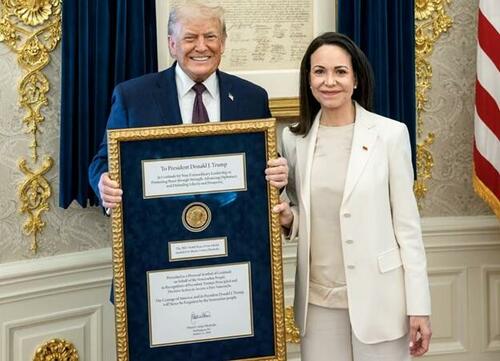
Trump To Norway: No Nobel, No Greenland? The Letter That Has Shocked Europe
Trump To Norway: No Nobel, No Greenland? The Letter That Has Shocked Europe
As news began breaking very early Monday of President Trump’s scathing letter to Norway over the country’s failure to award him the Nobel Peace Prize, some pundits and journalists immediately questioned whether it is real.
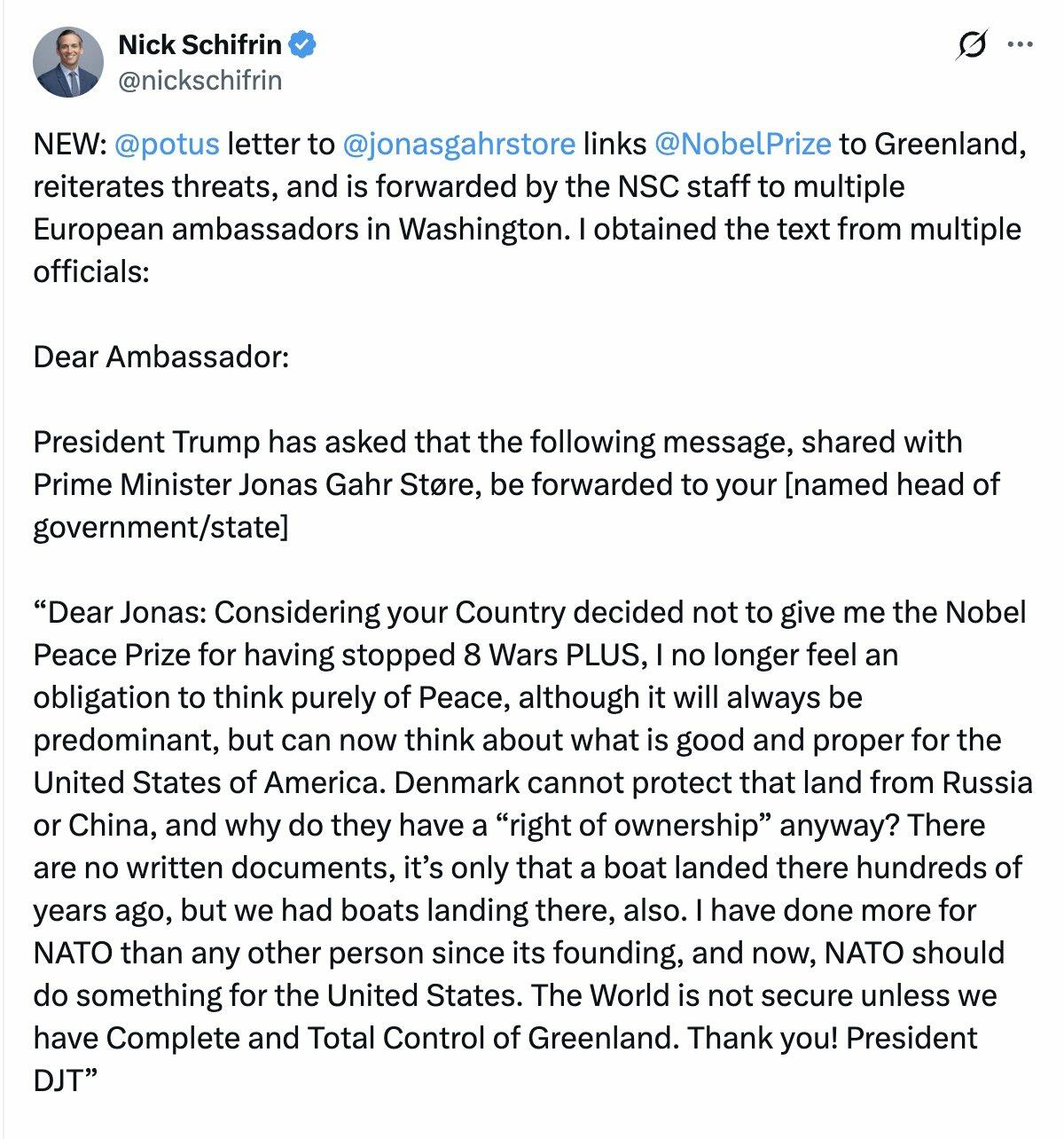
But confirmation came soon after. In the letter addressed to Norwegian Prime Minister Jonas Gahr Store, Trump explained that he no longer feels obligated to focus exclusively on peace, while repeating his intent for US control over Greenland. In essence he lays out that no Nobel might turn into no Greenland for Europe (as Denmark exercises control over the resource-rich autonomous territory).
“Dear Jonas: Since your country decided not to give me the Nobel Peace Prize for stopping 8 wars PLUS, I no longer feel an obligation to think purely of peace, although it will always be dominant, but can now think about what is good and proper for the United States,” the US President wrote.
Such is an example of kind of over the top and trolling-style rhetoric in the letter which has given people pause, questioning its authenticity.
“Denmark cannot protect this land from Russia or China… The world is not secure unless we have complete and total control of Greenland,” he added.
As for whether Trump indeed wrote it, and concerning the bombastic letter’s authenticity, Forbes has noted that “According to PBS Newshour’s Nick Schifrin, who first reported on the matter, the letter has been forwarded by the National Security Council staff to multiple European ambassadors in Washington.”
The President also in the letter takes the opportunity to bash Denmark, saying it cannot protect Greenland from Russia or China, and again questioned its legal rights to Greenland: “There are no written documents; it’s only that a boat landed there hundreds of years ago, but we had boats landing there, also.”
The message in full, as first reported by a PBS correspondent:
Norway’s PM Store has since explained that letter came in response to a joint message he had earlier sent to Trump together with Finnish President Alexander Stubb, rejecting White House plans to impose higher tariffs on Scandinavian countries. Other leading EU countries have also complained and are pushing back publicly:
MERZ: GERMANY, EU ALLIES DETERMINED TO AVOID TARIFF ESCALATION
“We pointed out the need to de-escalate the exchange and requested a phone call between President Trump, President Stubb and myself,” Store said, and reiterated Norway’s stance on Greenland is unchanged.
Tyler Durden
Mon, 01/19/2026 – 08:25
https://www.zerohedge.com/geopolitical/trump-norway-no-nobel-no-greenland-letter-has-shocked-europe

Tres ataques de tiburones dejan dos heridos en playas de Australia
Por ROD McGUIRK
MELBOURNE, Australia (AP) — Un hombre y un niño resultaron gravemente heridos y a otro niño le mordieron su tabla de surf durante tres ataques de tiburones en Sidney en poco más de 24 horas, informó la policía el lunes.
Un tiburón mordió en la pierna a un surfista de unos 20 años frente a la playa North Steyne en la costa del Pacífico, en el suburbio norte de Manly, a las 6:20 de la tarde hora local del lunes, según un comunicado de la policía.
Gente que estaba ahí lo sacó del agua antes de que una ambulancia lo llevara a un hospital en estado crítico, dijo la policía.
El domingo, un niño de 12 años sufrió heridas graves en ambas piernas después de saltar desde un saliente de 6 metros (20 pies) de altura conocido como Jump Rock, cerca de Shark Beach dentro del puerto de Sidney, en el suburbio oriental de Vaucluse. La policía dijo que los tres amigos del niño le salvaron la vida al saltar del acantilado durante el ataque y arrastrarlo de regreso a la orilla.
“Las acciones de sus amigos que entraron al agua para sacarlo han sido nada menos que valientes”, dijo el superintendente Joseph McNulty a los periodistas.
“Esas acciones de esos jóvenes son valientes dadas las circunstancias y las lesiones son muy impactantes para que esos chicos las vean”, agregó.
Los medios de comunicación han informado que el niño perdió ambas piernas en el ataque.
Alrededor del mediodía del lunes, un tiburón mordió una tabla de surf donde estaba un niño de 11 años en Dee Why Beach. El menor escapó ileso.
Las autoridades dijeron que las playas del norte de Sidney, incluidas North Steyne y Dee Why, permanecerían cerradas hasta nuevo aviso.
Las tres playas cercanas a donde ocurrieron los ataques tienen algún tipo de redes de protección contra tiburones. No estaba claro de momento dónde ocurrieron los ataques en relación con esas redes.
Las autoridades sospechan que los tiburones toro son responsables de al menos los dos primeros ataques.
La policía había advertido después del primer ataque que las recientes lluvias intensas sobre Sidney habían aumentado la cantidad de agua dulce y turbia dentro del puerto, aumentando el peligro de los tiburones toro.
Dee Why Beach está cerca de Ocean Reef Beach, donde al parecer un tiburón blanco mató a un surfista de 57 años en septiembre.
En noviembre, una turista suiza de 25 años fue asesinada y su pareja resultó gravemente herida al intentar salvarla mientras nadaban frente a un parque nacional al norte de Sidney. _______
Esta historia fue traducida del inglés por un editor de AP con la ayuda de una herramienta de inteligencia artificial generativa.
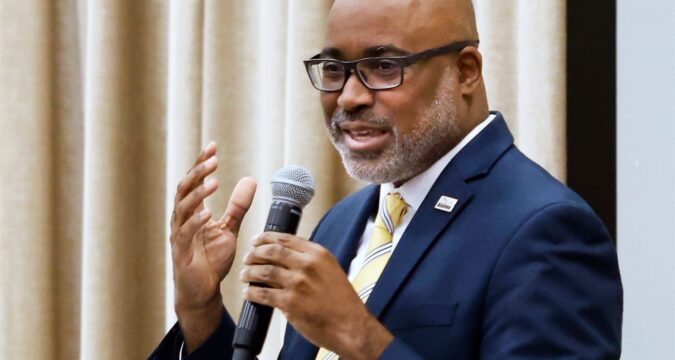
PNW professor urges public to embrace fullness of King’s message
While much of Rev. Dr. Martin Luther King Jr.’s work urged people to speak out strongly and clearly against injustice, Shontrai Irving learned that sometimes, silence carries the message further.
Irving, a local attorney and Business Law professor with Purdue Northwest and the keynote speaker for the first of the school’s MLK celebrations, recalled for a group gathered January 15 at the Hammond campus the time he won an essay contest honoring MLK while he was a student at Indiana University. His victory was reported in The Chronicle of Higher Education, and he and the other students who placed were asked to read their essays at a luncheon, he said.
Jamey Jones (left) and Kaylin Quarles, who are seniors at West Side Leadership Academy in Gary, listen to Purdue University Northwest law professor Shontrai Irving, give the keynote address at the Hammond campus’s MLK celebration on Thursday, January 15, 2026. (John Smierciak/for the Post-Tribune)
Shortly before the event, an administrator approached Irving and told him his essay was “too Afrocentric” and that he needed to modify it, Irving said. If he didn’t, the administrator told him that it would hurt funding for Black student initiatives all over campus.
“He wanted me to change my wording to ‘self-actualization’; I didn’t even know what that was at the time,” Irving said. “I called my mom, I called my grandma, I called my friends (about what to do). The day came; the third-place winner got up and gave their speech, and the second-place winner got up and gave theirs, and then they get to me.
“I got up and said, ‘I was told that if I didn’t change my speech, it would hurt funding opportunities for Black students, so I’m not going to give it’.”
The Indiana Daily Student published his essay, he said, which then attracted local and national media to the story of IU silencing a student voice. The whole experience was hard on him, but it also taught him a lot.
Jamey Jones, (right) a senior at West Side Leadership Academy in Gary, listens to Purdue University Northwest law professor Shontrai Irving, give the keynote address on the Hammond campus on Thursday, January 15, 2026. (John Smierciak/for the Post-Tribune)
“What matters most to me is not the disagreement itself, but what it revealed,” he said. “It revealed how even spaces dedicated to honoring Dr. King can struggle with the fullness of his message; it revealed how institutions sometimes prefer comfort to complexity; and it revealed how Dr. King’s legacy has always been, and remains, challenging.
“Dr. King himself was often asked to soften his tone or wait for a more convenient time. He responded by reminding the nation that justice delayed is justice denied. What I understand now, with time, perspective and experience, is that leadership is not only about speaking the truth, but about carrying it responsibly across time.”
Using slides to illustrate his point, Irving said that between King and his wife, Coretta Scott King, they knew his work would never be finished. More important, however, was that it can’t remain static; it must be examined and renewed constantly.
“Unlike many commemorations, this day does not ask us to look outward first. It asks us to look inward,” he said. “So perhaps the most meaningful way to honor them today is not simply to ask what they accomplished, but to ask what their example asks of us now.”
Purdue Northwest law professor Shontrai Irving (left) and PNW Chancellor Chris Holford great each other before the start of the MLK Day remembrance on Thursday, January 15, 2026. (John Smierciak/for the Post-Tribune)
And the nonviolence for which he advocated was never passive or weak, but a deliberate strategy that required “extraordinary discipline, especially in moments of provocation.”
“It demanded that participants resist not only physical violence, but the temptation to dehumanize opponents,” he said. “This approach reshaped the moral landscape of the Civil Rights Movement. It forced the nation to confront injustice without allowing the struggle to become a mirror image of the violence it opposed.”
Noah Shaffer, a student at Calumet Christian School in Griffith, said he hasn’t studied up on MLK yet, but Irving’s talk inspired him to do so.
“Listening to Dr. Irving talk, I don’t see a lot of people who speak up like he did,” Shaffer said. “People look up to me as a leader at school, so I need to speak up more.”
Kaylin Quarles, a Senior with West Side Leadership Academy, said she was struck by how much more needs to be done in terms of reaching King’s vision.
“This is not just one-and-done. You have to persevere,” she said.
Michelle L. Quinn is a freelance reporter for the Post-Tribune.

Column: Service group promotes literacy through Little Free Library in Harvey
A nonprofit organization serving the south suburbs has a big goal of promoting literacy with the opening of a Little Free Library in Harvey.
Unlike traditional libraries, the Little Free Library is open seven days a week, 24 hours a day, and readers may keep and donate books, said Camille Garrett, a member of Top Ladies of Distinction Will County Black Diamond Chapter, which established the library.
The Little Free Library is a book exchange box in Gloria Taylor Park next to the Gloria Taylor Banquet Hall at 14821 S. Broadway Ave. It’s big enough to hold about 30 books and contains books for children, youth and adults.
Garrett, of Country Club Hills, helped lead the initiative to open the library in late November while serving as chair of the Literacy Committee of Top Ladies of Distinction Will County Black Diamond Chapter.
The organization seeks “to promote reading and make it accessible and free right in the middle of the community where you can select books at any time of day from any community,” said Garrett. “It’s an open and free library to any and everyone.
“It’s getting back to the basics. Everything is so digital these days. Our hope is to promote literacy on every level.”
The Harvey library is part of St. Paul, Minnesota-based Little Free Library, a nonprofit with a global network of 200,000 registered volunteer-led book-sharing boxes in all 50 states and 128 countries. Its mission is to be a catalyst for building community, inspiring readers and expanding book access for all, according to its website. More than 400 million books have been shared through the libraries since the nonprofit was founded in 2012.
It grants Little Free Libraries filled with books to underserved communities through its Impact Library and Indigenous Library programs and champions diverse books through its Read in Color initiative. It is a member of the Banned Books Week Coalition, an international alliance of diverse organizations committed to increasing awareness about censorship attempts and to encourage the defense of the freedom to read.
Other coalition members include the American Library Association and the National Council of Teachers of English, the coalition website notes.
The mission of the Will County Black Diamond Chapter is to make a positive difference in communities through service. Its focus areas include service to teens, seniors and women; community beautification; and community partnerships, said chapter President Tracey Walker-Hines.
The Little Free Library in Gloria Taylor Park, Hinsdale. (Top Ladies of Distinction Will County Black Diamond Chapter)
The chapter is part of the national Top Ladies of Distinction, which has more than 125 chapters across the U.S., more than 7,500 members and approximately 3,500 teen members. The Will County Black Diamond Chapter has about 60 members and roughly 40 teen members, Walker-Hines said.
The library initiatives across the country are designed to address the literacy crisis in the U.S. According to the National Literacy Institute:
More than one in five adults in the U.S. are illiterate based on 2024 data.
54% of adults have a literacy proficiency below a sixth grade level.
20% of adults have a literacy proficiency below fifth grade level.
The more books in or near the home, the more likely a child will learn and love to read. But 61% of U.S. children living at or below the poverty line have no books at home, according to the nonprofit Reading is Fundamental. By providing greater, more equitable book access, the Little Free Library network is working to influence literacy outcomes and strengthen communities, the network notes.
“We hope to have children learn a love of reading,” said Walker-Hines, an elementary school teacher. “Reading provides so much empowerment.”
Top Ladies of Distinction Will County Black Diamond Chapter held a book drive ahead of the Harvey library’s opening and collected roughly 200 books, said Garrett. The chapter will manage and maintain the library, adding books as needed.
Here’s how it works: You walk up to the Little Free Library, and if you have books to share, open the door and put the books inside, and if you want to enjoy a book, you can take it to keep.
“It’s an opportunity for you to donate and give back,” said Garrett. “You can take books that you enjoy and enjoy them and share with anyone else.”
Camille Garrett, who chaired the Literacy Committee of the chapter, with Drema Lee Woldman. (Top Ladies of Distinction Will County Black Diamond Chapter)
The chapter received pivotal help from Cook County Commissioner Kisha McCaskill in finding a public location in Harvey, Garrett said. By being in a public park, next to a banquet hall, it will have good visibility and an opportunity for more visitors to use the books, Garrett said.
Among other activities the chapter has engaged in is the production of video vignettes of its members reading to children. The videos were added to a video library on the national Top Ladies of Distinction’s website, Garrett said. The chapter also helps prepare its teen members to participate in an annual Black History Bowl competition involving chapters across the country.
The chapter gave away coats to Taft Elementary School children in Joliet last month and, working with Court Appointed Special Advocates of Cook County, fulfilled Christmas wish lists for foster care children.
On the agenda for the Dr. Martin Luther King Jr. Day holiday weekend were plans to visit and give treats to first responders.
The chapter holds sickle cell awareness blood drives. It also holds an annual Hope in a Suitcase event. Regarding that event, Walker-Hines noted many children in foster care transport their belongings in trash bags when transitioning to foster homes. To address that, each year the organization solicits donations of new or gently used, high-quality luggage that they provide to foster care children to lift their spirits and help give them a sense of ownership, dignity and hope as they make their transitions.
Lynwood resident Drema Lee Woldman, for whom the Little Free Library in Harvey was dedicated. She is a former national president of Top Ladies of Distinction Inc. (Top Ladies of Distinction Will County Black Diamond Chapter)
The chapter’s Little Free library is dedicated to Lynwood resident Drema Lee Woldman in recognition of her life of service. Her community involvement and volunteer efforts include being a life member of the NAACP and the National Council of Negro Women, where she organized the South Suburban Chicago Section and served as president.
In 2020, Woldman organized 145 outstanding women to form the Chicago Metropolitan Chapter of the National Coalition of 100 Black Women, where she served as its charter president, and is a board member. She is a life member of Top Ladies of Distinction and a member of the national board.
She has held many other roles in the organization including serving as national president from 2015-2019 during which time she chartered 17 chapters. The first chapter she chartered during her administration was the Will County Black Diamond Chapter.
Garrett said the chapter hopes to establish more Little Free Libraries. For more information on the chapter, visit wcblackdiamondtlod.org, and for more information on Little Free Library, visit littlefreelibrary.org.
Francine Knowles at Fknowles.writer@gmail.com is a freelance columnist for the Daily Southtown.
https://www.chicagotribune.com/2026/01/19/column-little-free-library-harvey/
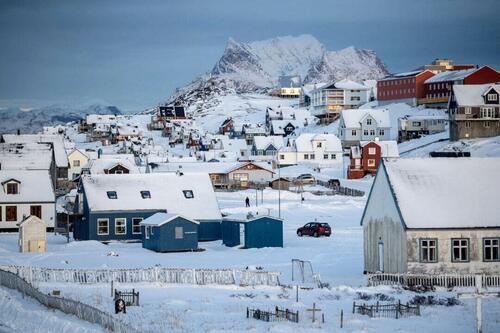
Market Risk Returns As Tariff Shock Jolts Stocks; Goldman Maps Three Retaliation Paths Against Trump Over Greenland
Market Risk Returns As Tariff Shock Jolts Stocks; Goldman Maps Three Retaliation Paths Against Trump Over Greenland
The Euro Stoxx 50 is down 1.5% on elevated volumes, while Nasdaq 100 futures are also lower amid overnight risk-off across Western markets. The selloff follows the latest trade escalation after President Trump said he would impose a 10% tariff on imports from eight European countries in retaliation for their opposition to U.S. control over Greenland.
On Sunday, Trump wrote on Truth Social that beginning on February 1, Denmark, Norway, Sweden, France, Germany, the UK, the Netherlands and Finland will be charged with a 10% tariff on all goods sent to the US. That tariff rate would be increased to 25% by June 1.
“This Tariff will be due and payable until such time as a Deal is reached for the Complete and Total purchase of Greenland. The United States has been trying to do this transaction for over 150 years. Many Presidents have tried, and for good reason, but Denmark has always refused. Now, because of The Golden Dome, and Modern Day Weapons Systems, both Offensive and Defensive, the need to ACQUIRE is especially important,” Trump said.
European countries released a joint statement opposing US control of Greenland, blasting Trump’s move, saying the president’s threats “undermine transatlantic relations and risk a dangerous downward spiral.”
The statement from the European countries said that troops deployed to Greenland for the operation “Arctic Endurance” pose “no threat to anyone.”
Late Sunday, Trump posted on Truth Social that “NATO has been telling Denmark for 20 years that you have to get the Russian threat away from Greenland. Unfortunately, Denmark has been unable to do anything about it. Now it is time, and it will be done!!! — President Donald J. Trump.”
It’s important to note that Europeans cannot compete militarily, but Brussels can wield reciprocal tariffs and other economic weapons. This tariff threat prompted Goldman analyst Adam Crook to tell clients Monday that a 10% tariff rate on EU goods would “lower real GDP in the affected European countries by 0.1-0.2% via lower exports. The inflation effects would likely be very small and a Taylor rule would point to modestly lower policy rates, all else equal.”
Crook outlined three potential levels of EU trade retaliation:
stalling the implementation of last year’s EU-US trade deal,
imposing counter-tariffs on US goods, and
launching the Anti-Coercion Instrument, which would allow for a broader range of non-tariff retaliation options
Also on Sunday, Treasury Secretary Scott Bessent defended Trump’s proposal to impose tariffs on the European countries. He told NBC News’ “Meet the Press” that the move to acquire Greenland is to avert a future national emergency.
“It is a strategic decision by the president,” Bessent said. “This is a geopolitical decision, and he is able to use the economic might of the U.S. to avoid a hot war.”
In response to Trump’s tariff threat, European Council President António Costa told EU members that he would convene “an extraordinary meeting of the European Council in the coming days” (more details here).
Commentary from Deutsche Bank’s chief FX strategist George is key (view note here):
Europe owns Greenland, it also owns a lot of Treasuries. Saravelos spent most of last year arguing that for all its military and economic strength, the US has one key weakness: it relies on others to pay its bills via large external deficits. Europe, on the other hand, is America’s largest lender: European countries own $8 trillion of US bonds and equities, almost twice as much as the rest of the world combined.
. . .
Remember the Munich Security Conference. It was the US Vice President’s Munich speech last year that proved the proxy catalyst for an acceleration in European defence spending. Could it be Greenland this year that catalyses an acceleration in European political cohesion?
UBS analyst Joe Dickinson told clients earlier, “The renewed trade conflict also feeds broader geopolitical concerns, including NATO cohesion and the durability of US defence guarantees, with probabilities of a Russia‑Ukraine ceasefire continuing to drift.”
Major European stock indexes were hit by overnight tariff headlines, as were US main equity index futures (US holiday)…
The US-EU spat over Greenland underscores how rapidly escalating geopolitical tensions are reshaping the Western hemisphere in the era of the ‘Donroe Doctrine.’
Tyler Durden
Mon, 01/19/2026 – 07:45
Un vistazo a los accidentes de tren más mortales en Europa en los últimos años
Associated Press
MADRID (AP) — El descarrilamiento de un tren de alta velocidad en el sur de España ha dejado al menos 39 personas muertas y más de 150 heridas, según las autoridades.
Viajar en tren en Europa es una forma común, relativamente asequible y conveniente para que muchos europeos y turistas se desplacen. Los accidentes ferroviarios importantes han disminuido desde 2010, según la Unión Europea, sin embargo, el accidente en España es un recordatorio de lo mortales que pueden ser cuando ocurren.
A continuación, un vistazo a algunos de los accidentes de tren, tranvía y metro más mortales en Europa en los últimos años.
Septiembre 2025: Un popular tranvía en Lisboa se descarriló y chocó contra un edificio, dejando 16 personas muertas y 21 heridas. Un informe preliminar sobre el accidente del funicular encontró que un cable subterráneo que actuaba como contrapeso entre los dos coches del tranvía no era adecuado para su uso y se rompió.
Febrero 2023: Un tren de pasajeros en el norte de Grecia que transportaba a cientos de personas colisionó a alta velocidad con un tren de carga que venía en dirección contraria, resultando en un incendio que mató a 57 personas. Un informe de investigación lo atribuyó a un error humano, la infraestructura obsoleta y fallos sistémicos importantes.
Julio 2016: Dos trenes de cercanías italianos chocaron de frente entre pueblos en la región sureña de Puglia, dejando 31 personas muertas y muchas más heridas. Una investigación encontró un error de comunicación entre las estaciones de las que había partido cada tren.
Julio 2013: Un tren de cercanías en España se salió de las vías al tomar una curva cerca de la ciudad noroeste de Santiago de Compostela, matando a 80 personas e hiriendo a otras 145. Una investigación mostró que el tren viajaba a 179 km/h (111 mph) en un tramo con un límite de velocidad de 80 km/h (50 mph) cuando se salió de las vías y se estrelló contra un muro.
Febrero 2010: Dos trenes de cercanías a las afueras de Bruselas chocaron durante la hora punta de la mañana cuando uno se pasó un semáforo en rojo. En total, 19 personas murieron y 171 resultaron heridas en el peor accidente ferroviario de Bélgica.
Junio 2009: Un tren de carga en Italia que transportaba gas se descarriló en la estación de Viareggio, cerca de la ciudad toscana de Lucca, y explotó, matando a 32 personas. Se culpó al mal mantenimiento de los ejes del tren.
Julio 2006: Un tren de metro que viajaba a velocidad excesiva se estrelló en un túnel subterráneo en la ciudad oriental española de Valencia, matando a 43 personas e hiriendo a muchas más. Se tardaron 13 años en que un tribunal encontrara culpables de homicidio negligente a cuatro gerentes del sistema de metro de la ciudad por no tomar las medidas de seguridad necesarias para prevenir la tragedia.
Enero 2006: La falla de un sistema de frenos en un tren en Montenegro causó que se descarrilara y cayera en un barranco a las afueras de la capital, Podgorica. El accidente mató a 45 personas, incluidos cinco niños, y dejó heridas a otras 184. Fue el peor desastre ferroviario en la historia de Montenegro.
Noviembre 2000: Un teleférico en un funicular en Austria se incendió en un túnel de montaña en Kaprun, matando a 155 personas. Los fallecidos eran esquiadores que se dirigían a las pistas de la montaña Kitzsteinhorn.
Octubre 1999: Un tren que salía de la estación de Paddington en Londres pasó un semáforo en rojo y chocó contra un tren de alta velocidad que venía en dirección contraria, matando a 31 personas. Alrededor de 400 personas resultaron heridas.
Junio 1998: Un tren de alta velocidad en Alemania que viajaba a 200 km/h (125 mph) colisionó con un puente en Eschede, causando su colapso. El accidente mató a 101 personas y dejó heridas a otras 100. Fue el desastre ferroviario más mortífero de Alemania en la posguerra.
________
Esta historia fue traducida del inglés por un editor de AP con la ayuda de una herramienta de inteligencia artificial generativa.

Kurds Withdraw From Syria’s Largest Oil Field As Jolani Forces Move In
Kurds Withdraw From Syria’s Largest Oil Field As Jolani Forces Move In
Kurdish-led forces pulled out on Sunday from Syria’s largest oil field as government troops expanded their control across large parts of the country’s north and east.
Government troops drove Kurdish forces from two Aleppo neighborhoods following clashes last week, and on Saturday announced they had captured an area east of the city, as well as Tabqa, in Raqqa province, on the southwestern bank of the Euphrates.
At dawn on Sunday, the Kurdish-led Syrian Democratic Forces (SDF) withdrew “from all areas under its control in the eastern Deir Ezzor countryside, including the al-Omar and Tanak oil fields”, the Syrian Observatory for Human Rights reported.
Al-Omar is the country’s largest oil field, and was home to the biggest US base in Syria.
The Kurds’ reported withdrawal there follows the government’s announcement that it had retaken two other oil fields, Safyan and Al-Tharwa, in Raqqa province.
The government’s advance has so far taken in predominantly Arab areas that fell under Kurdish control during the fight against the Islamic State group.
Clashes erupted after a deal for Kurdish forces to withdraw from areas near Aleppo to the east of the Euphrates collapsed, with both sides reporting casualties.
Each side blamed the other for breaching the agreement.
On Sunday, the Kurdish administration accused government forces of attacking its fighters on multiple fronts, while the army said the SDF had failed to honor a commitment to “fully withdraw” east of the river.
Kurdish authorities imposed a curfew in the Raqqa province after the army declared a stretch of land southwest of the Euphrates a “closed military zone”.
The government advances came as President Ahmed al-Sharaa issued a decree granting the Kurds official recognition in an apparent a goodwill gesture, as his government seeks to assert authority across Syria.
The Kurds’ de facto autonomous administration, which controls large parts of the northeast, has said the announcement fell short, and the implementation of a deal to integrate Kurdish forces into the state has been stalled for months.
Tyler Durden
Mon, 01/19/2026 – 07:20
https://www.zerohedge.com/geopolitical/kurds-withdraw-syria-largest-oil-field-jolani-forces-move